Returning to physical activity after an abdominoplasty (tummy tuck) is something I talk through with every patient before they go home. An abdominoplasty is major surgery, and the recovery process runs over months rather than weeks. The questions are almost always the same. When can I start walking? When can I pick up my baby? When can I get back to the gym, or to running after a toddler? This article sets out how I stage that return, exercise by exercise, from the first day after surgery through to full core work several months on.
A few things shape recovery specifically after pregnancy. Many of my abdominoplasty patients have had a rectus diastasis (abdominal muscle separation) repair as part of the operation, where the abdominal muscles that stretched apart during pregnancy are brought back together and stitched. That repair needs time to hold before it is loaded, which is why the core exercises are introduced slowly and late. Recovery also tends to happen alongside the demands of caring for a baby or young children, so the practical limits on lifting and carrying matter as much as the exercises themselves.

I plan this surgery once your family is complete and breastfeeding has finished, because a later pregnancy can change the result. The timing of each stage below is a general guide only. Every patient heals at a different pace, and what is right for you is decided at your follow-up reviews, not from a fixed calendar. I see you regularly through the early weeks, and we adjust the plan to how you are actually healing.
Why the Core Progression Is Staged After a Rectus Diastasis (Abdominal Muscle Separation) Repair
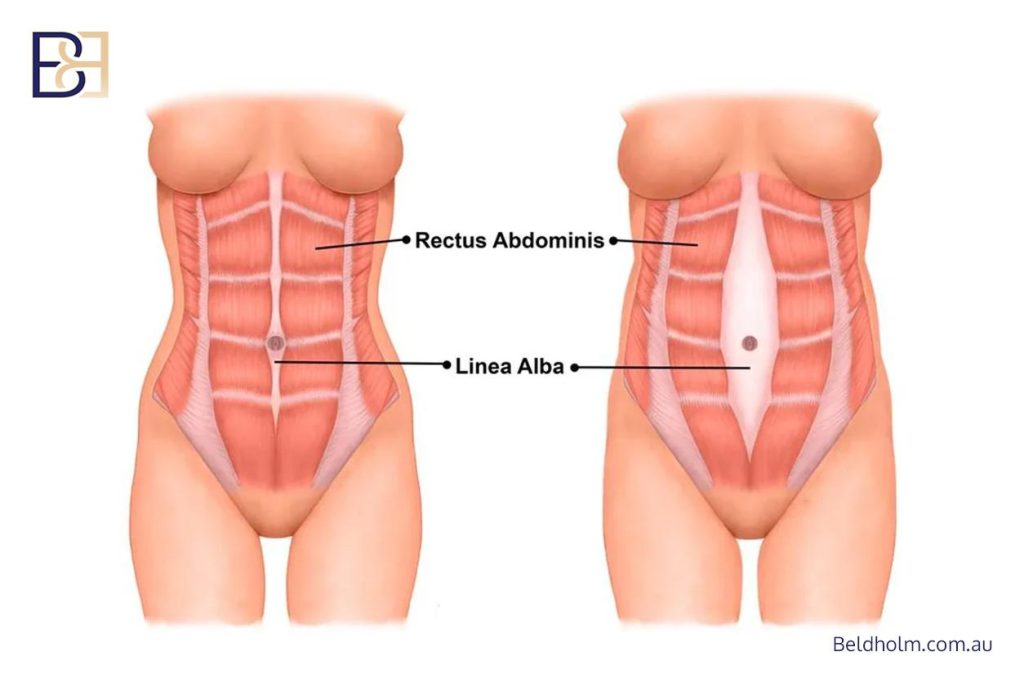
During pregnancy, the two halves of the rectus abdominis (the long muscles running down the front of your abdomen) stretch apart at the midline. When that separation is wide or has not closed on its own after birth, I repair it during the abdominoplasty surgery by stitching the muscle layer back together. This is the part of the operation that most affects how soon you can use your core again.
The repair is held by sutures. Until your own tissue heals across that line, the stitches are doing the work, and loading the area too early puts tension on it. That is the reason the exercises below are ordered the way they are. Walking, breathing and limb movements come first because they do not pull on the repair. Core exercises that load the abdominal muscles come much later, and only once the area has had time to settle.
This is also why I ask you not to rush back to anything that braces or strains the abdomen, including heavy lifting, sit-ups, planks or twisting, until we have talked about it at a review.
What this means with a baby or young children at home

The practical problem after pregnancy is obvious. You usually have a baby or small children to look after, and they need lifting, carrying and settling throughout the day. A newborn is often within the weight you can manage early on, but a toddler is not, and repeatedly bending, twisting and hauling a heavy child loads the repair in exactly the way I am asking you to avoid.
A few things help here:
- Plan support at home for the first couple of weeks if you can, particularly for lifting older children, prams, capsules and shopping.
- Set up so the baby comes to you at waist height rather than being lifted from the floor or a cot you have to bend into. A bedside bassinet, a change table at the right height and a chair with arms all reduce the strain.
- When you do need to lift, keep the load close, bend at the knees and hips rather than the waist, and breathe out as you lift rather than holding your breath and bracing.
- Expect to feel tired. Recovery while caring for children is demanding, and pacing the day matters more than pushing through.
None of this is about being fragile. It is about protecting a repair while it heals so it can hold over the long term. How you progress through the stages depends on your own healing and is decided at your follow-up reviews.
Phase 1, Week 1: Getting Moving Safely
The first week is about gentle, frequent movement, not exercise in the usual sense. There are three aims: keep the blood moving in your legs, keep the bases of your lungs open, and start walking. Most of my post-pregnancy patients have a drainless abdominoplasty, though not all do, and most stay in hospital for one to two days, where I see you each day before you go home. The exercises here begin on the day of surgery or the day after.
1. Walking
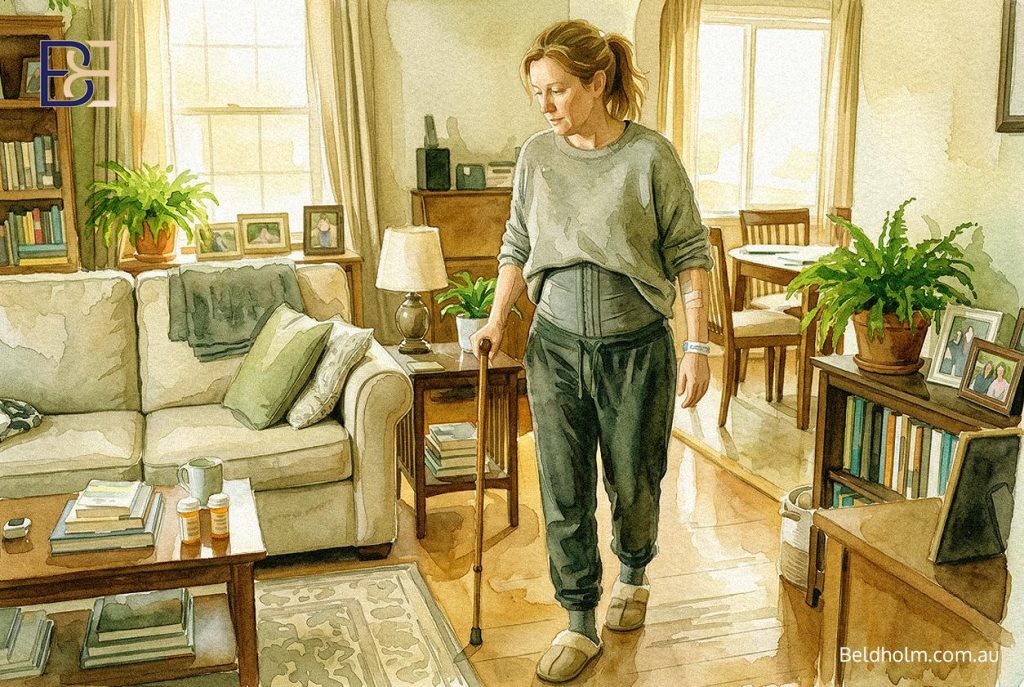
Walking is the single most important thing you do in the first week. I have you up and moving short distances within the first day, with help at first. Start with a few steps to the bathroom and back, then build to short, slow laps around the house several times a day.
You will be standing slightly bent forward at first to take tension off the wound and the muscle repair. That is expected and eases over the following weeks. Do not try to stand fully upright by force. Keep the walks short and frequent rather than long. Gentle, regular walking promotes blood circulation in your leg muscles, which lowers the risk of blood clots after surgery (1). It also helps your bowels recover from the anaesthetic.
2. Ankle pumps
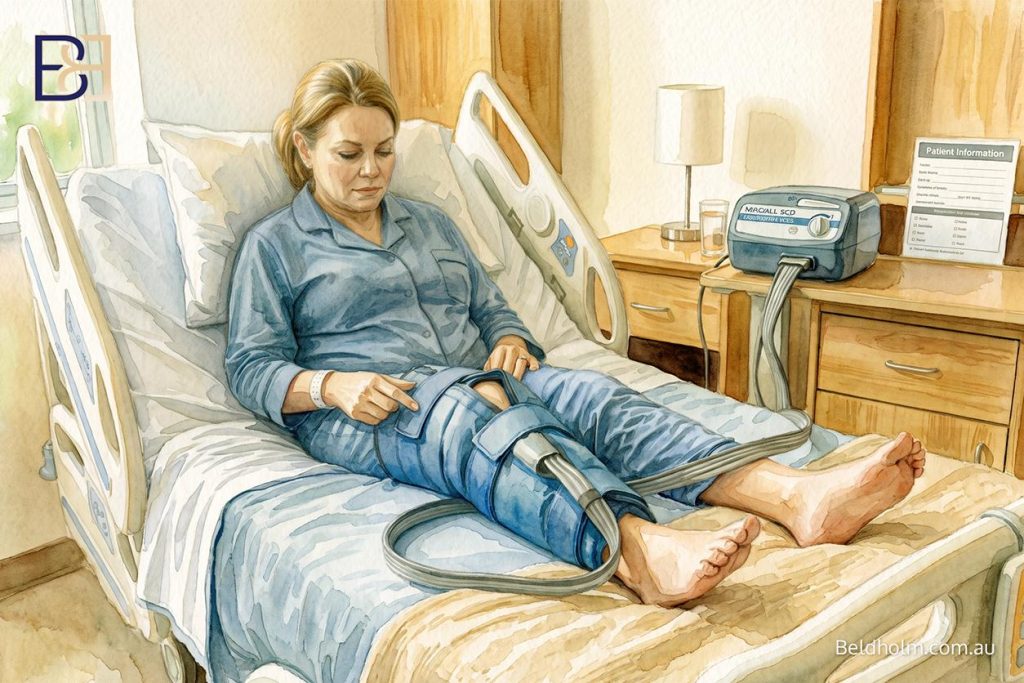
While you are in bed early on, before you are up and moving, you will have calf compressors on. These are sleeves that gently squeeze your calves to keep the blood moving and lower the risk of a clot. Once you are out of bed and the compressors come off, ankle pumps take over the same job between walks. Point your toes away from you and then pull them back towards you, slowly, and repeat. Doing this for a minute or two every hour while you are awake keeps the blood flowing in your calves. It is most useful in the periods when you are sitting or lying down for a while.
3. Deep breathing and incentive spirometry
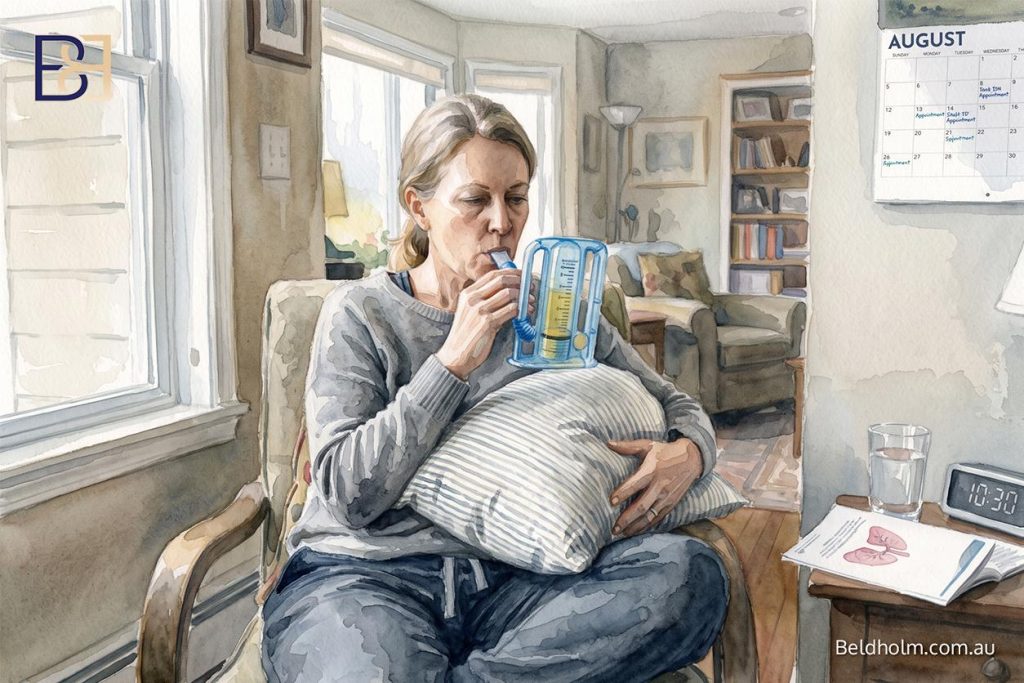
After an abdominal operation, it is common to take shallower breaths, because breathing deeply tugs on a sore abdomen. The problem is that shallow breathing lets the small air sacs at the bases of the lungs collapse down, which can lead to a chest infection (2). Deep breathing keeps those airways open.
You will usually be given an incentive spirometer to take home. This is a small handheld device you breathe in through, with a marker that shows how deep each breath is. I ask patients to use it regularly through the day, around ten slow, deep breaths every waking hour in the first few days, supporting the abdomen with a pillow if it feels tender. Even without the device, taking several slow, deep breaths every hour does the same job.
These three are the whole of week one for most patients. They are not strenuous on purpose. Doing them often is what matters.
Phase 2, Weeks 1 to 4: Light Movement
Once you are home and walking comfortably around the house, you can add a small amount of gentle movement on top of the walking. The aim in these weeks is still circulation and easing stiffness, not strengthening. Nothing here should pull on the abdomen or the muscle repair. If any of it tugs or hurts, stop and leave it for another week. As a general guide these suit the first few weeks, with gradual progression at the pace your healing allows, which we check at your reviews.
4. Seated marching

Sit upright in a supportive chair with your feet flat on the floor. Lift one foot a few centimetres off the ground, lower it, then the other, as if marching slowly on the spot while seated. Keep the movement small and led by your legs, not your stomach. This keeps your hips and legs moving and the blood circulating when you are sitting for feeds or rest. Aim for a slow set of ten to fifteen on each side, a few times a day.
5. Arm circles

Sitting or standing, let your arms hang by your sides, then make slow, small circles with them, forwards for a count and then backwards. This loosens the shoulders and upper back, which often stiffen in the first weeks because you are holding yourself carefully and standing slightly bent. Keep the circles gentle and within a comfortable range. There is no need to raise the arms high or move quickly.
6. Heel slides
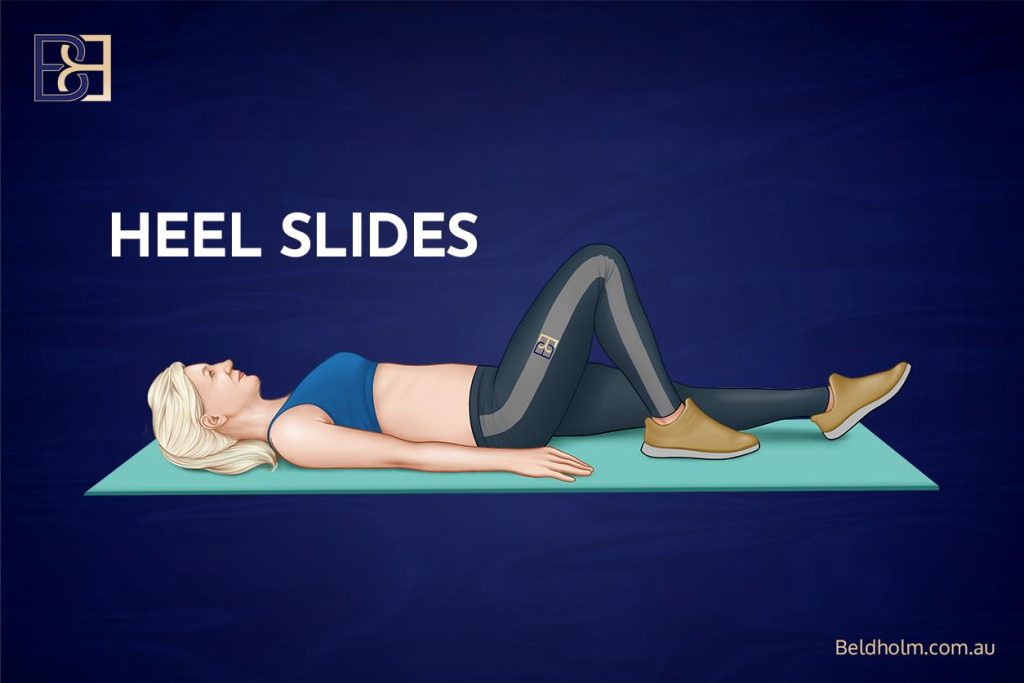
Lie on your back with your knees bent and feet flat. Slowly slide one heel away from you until the leg is straight, then slide it back, and repeat with the other leg. Move slowly and keep the effort in your legs. You may feel a light awareness in the lower abdomen, but you should not feel it pulling on the repair. If you do, this one can wait. Start with a few on each side and only add more if it stays comfortable.
These three are added on top of your walking, ankle pumps and breathing, not instead of them. Keep the walking going as your main activity through this phase.
Phase 3, Weeks 4 to 6: Starting Gentle Core Work
This is the first phase where you begin to wake up the deep abdominal muscles, and it is the point where the muscle repair becomes the main consideration. Do not start any of these until I have seen you and confirmed you are ready. Some patients are right for gentle core work around four to six weeks, others need longer. This is decided at your review, not by the calendar.
When you do start, the rule is small and slow. These exercises engage the deep core gently. They are not abdominal workouts, and there should be no straining, no holding your breath, and no sharp pulling at the repair. If you feel any of that, stop.
7. Pelvic tilts
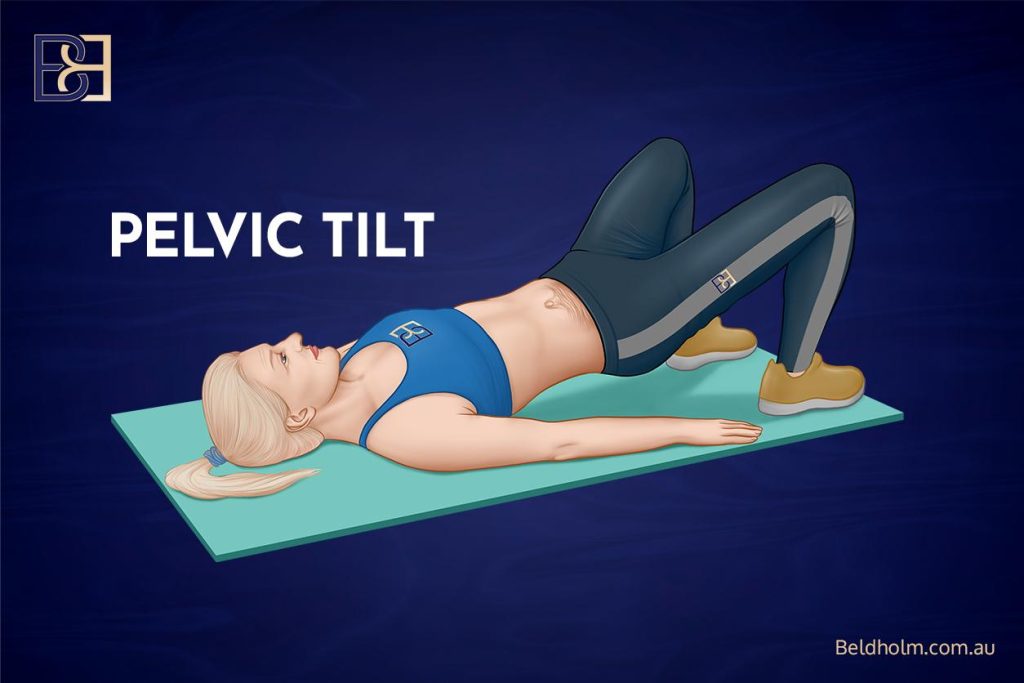
Lie on your back with your knees bent and feet flat. Breathe out and gently flatten your lower back into the floor by tilting your pelvis, as if drawing your belly button softly down towards your spine. Hold for a couple of seconds, breathe in and release. The movement is very small. This is the gentlest way to start reconnecting with the deep abdominal muscles after the repair. Start with five and build slowly.
8. Dead bugs (modified)
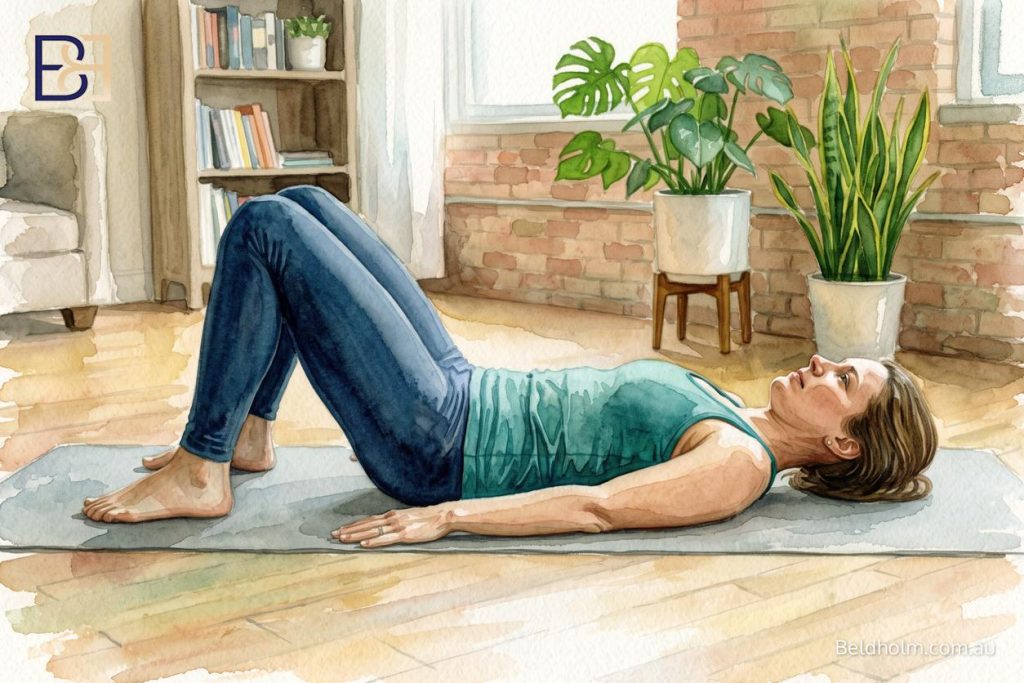
Still on your back with your knees bent and feet flat, and your lower back gently flattened as in the pelvic tilt. Slowly lower one foot to tap the floor, keeping the movement controlled, then bring it back and repeat with the other side. Keep your back flat and your core gently engaged throughout. This is a modified, low version of the exercise. Do not add the arm movements or lift both legs at this stage. A few controlled repetitions on each side is plenty to begin with.
9. Heel taps
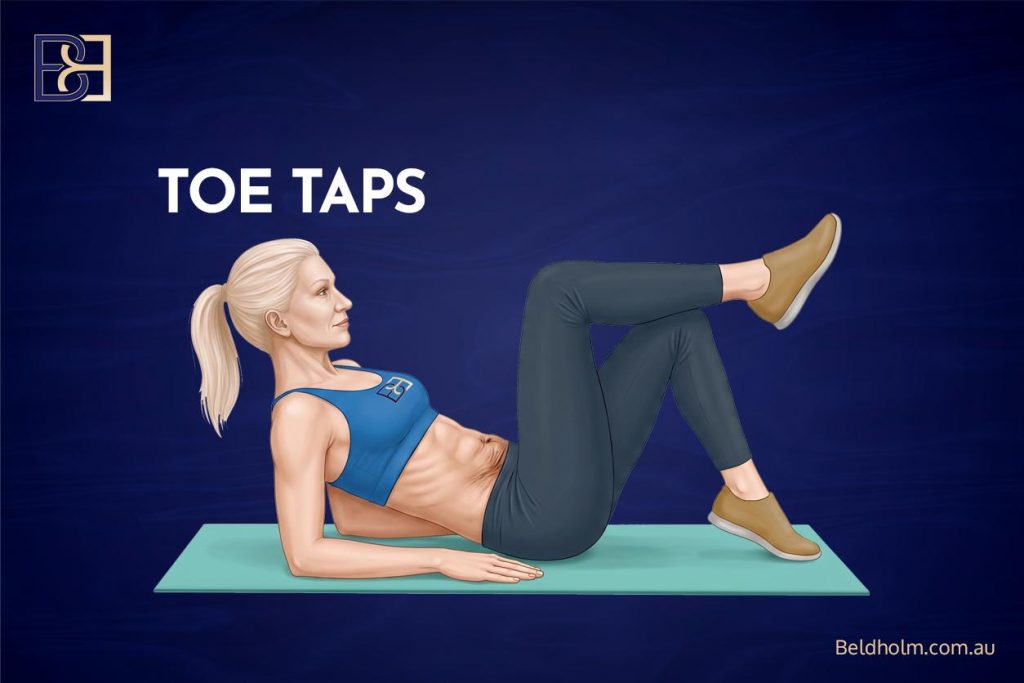
Lie on your back with your knees bent and lifted so your shins are roughly parallel to the floor. Slowly lower one heel to tap the ground and bring it back, then the other, keeping your lower back flat and your breathing steady. This is a step up from the modified dead bug and asks a little more of the lower abdomen. Only move on to it once the earlier two feel comfortable and controlled.
Through this phase, keep up your walking and keep the core work brief and gentle. Quality and control matter far more than numbers. If anything feels like it is straining the repair, leave it and raise it at your next review.
Phase 4, From 6 Weeks: Lower Body
From around six weeks, once I have reviewed you and you are healing well, you can begin light strength training more broadly across the main muscle groups. These lower body exercises are a good place to start because they work the leg muscles and hips without heavily loading the abdomen. As always, this is a general guide, and when you start depends on your own recovery.
Build up gradually. Start with one set of each, keep the movements controlled, and add repetitions or sets over the following weeks rather than all at once.
10. Glute bridges
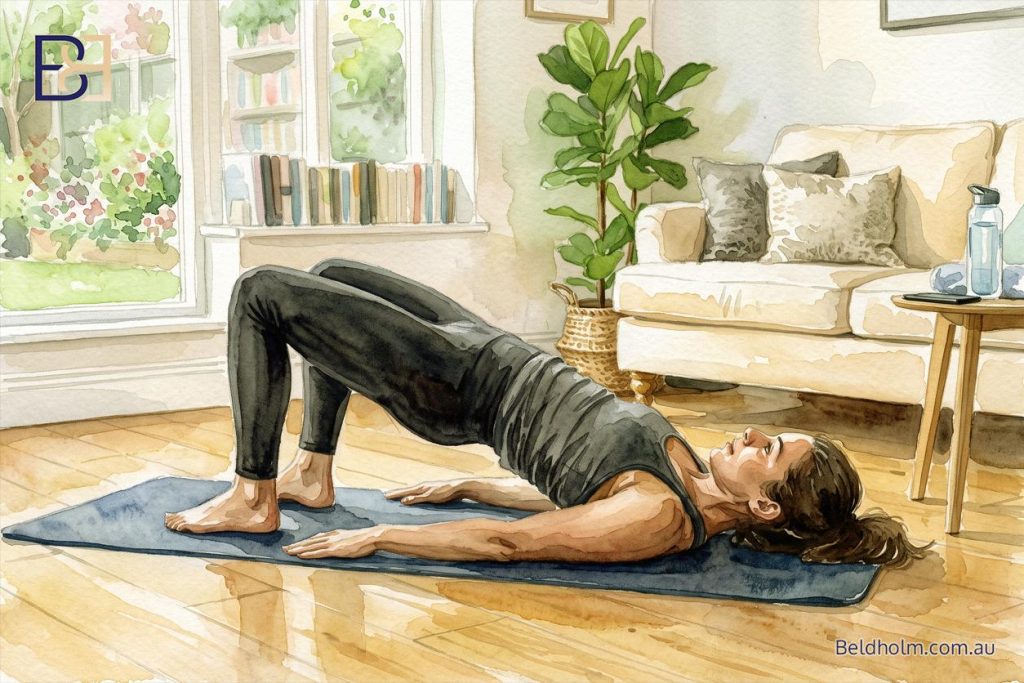
Lie on your back with your knees bent and feet flat, hip-width apart. Breathe out, gently engage your core as you did with the pelvic tilts, and lift your hips off the floor until your body makes a straight line from shoulders to knees. Hold briefly, then lower slowly. This strengthens the glutes and the back of the legs, which support your posture as you return to standing upright. Keep the lift smooth and avoid arching your lower back at the top.
11. Side-lying leg lifts

Lie on your side with your legs straight and stacked, head supported on your arm. Lift the top leg slowly towards the ceiling, keeping it straight, then lower it under control. Do a set, then roll over and repeat on the other side. This works the outer hips and thighs, which help with stability when you are walking, carrying a child or going up and down stairs. Keep your hips stacked and avoid rolling forwards or back.
12. Seated leg extensions
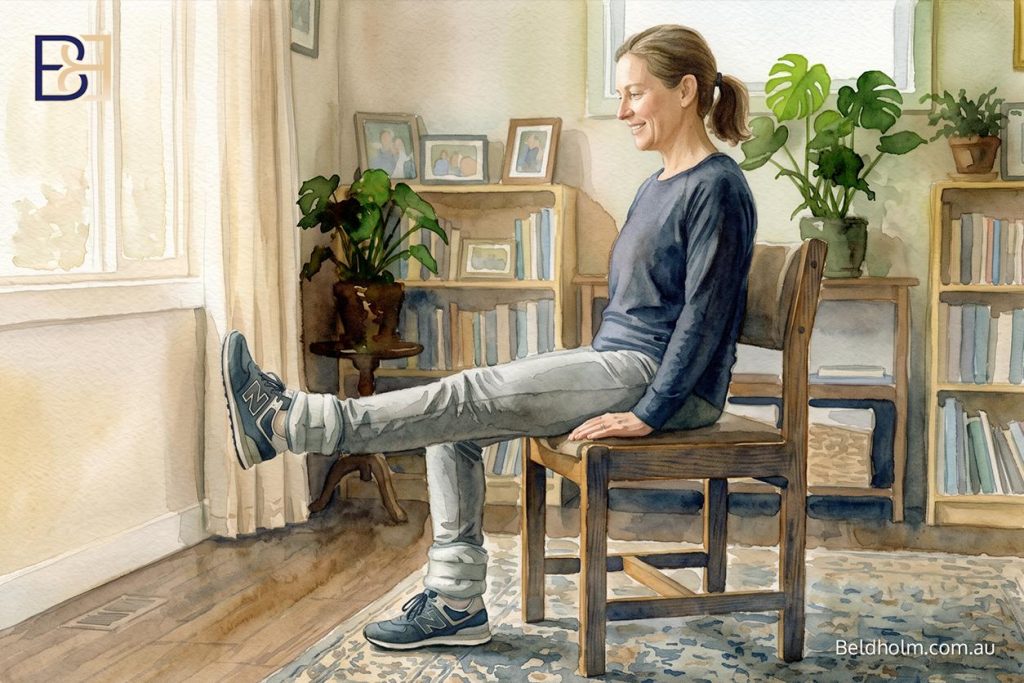
Sit upright in a chair with your feet flat. Slowly straighten one leg out in front of you until it is roughly level, hold for a moment, then lower it under control, and repeat with the other leg. This strengthens the front of the thighs in a stable, supported position. You can fit this one in during the day, and you can add light ankle weights later once it feels comfortable, not before.
Keep your core gently engaged through all of these, but the work should be in your legs and hips, not your abdomen. If any movement pulls at the abdomen, ease back on it.
Phase 4, From 6 Weeks: Upper Body
Upper body strength is worth rebuilding after pregnancy and surgery, because so much of caring for a baby involves the arms and shoulders: lifting, carrying, pushing a pram, fitting a capsule. Start these from around six weeks, once I have cleared you, and begin with very light weights or no weight at all.
The key with all of them is to keep your breathing steady and your abdomen relaxed. Do not hold your breath and brace your stomach to push a weight, as that raises pressure on the repair. If you cannot do a movement without bracing hard, the weight is too heavy.
13. Bicep curls
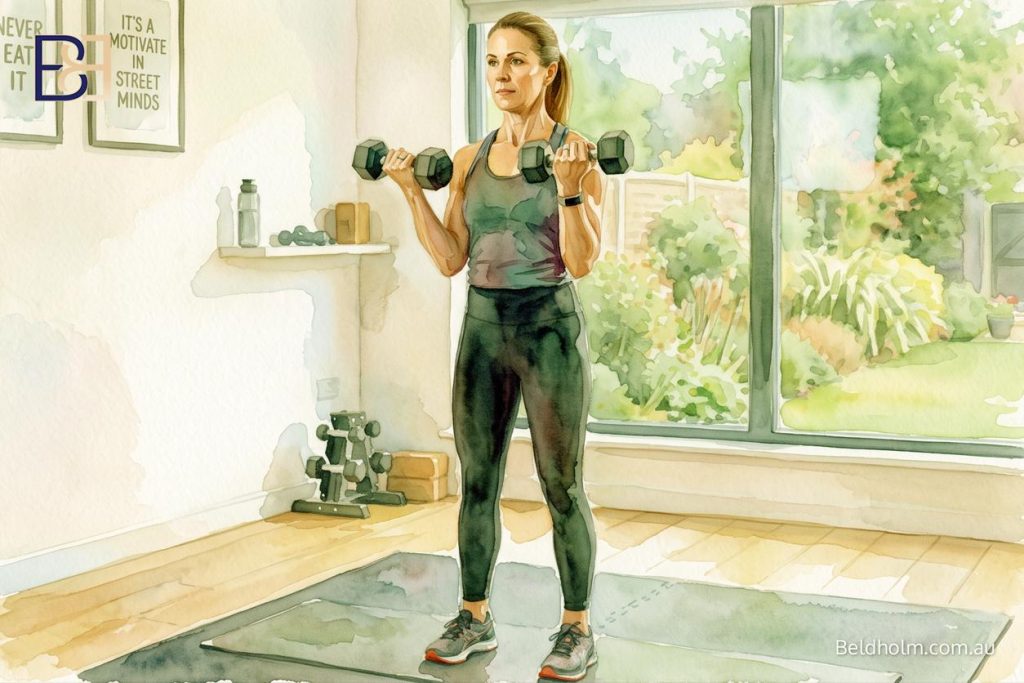
Stand or sit upright holding a light weight in each hand, arms by your sides, palms facing forward. Bend at the elbows to bring the weights up towards your shoulders, then lower them slowly. Keep your elbows tucked in and your upper arms still. Start with a weight you can lift easily for ten to twelve repetitions. A filled water bottle is fine to begin with.
14. Shoulder presses
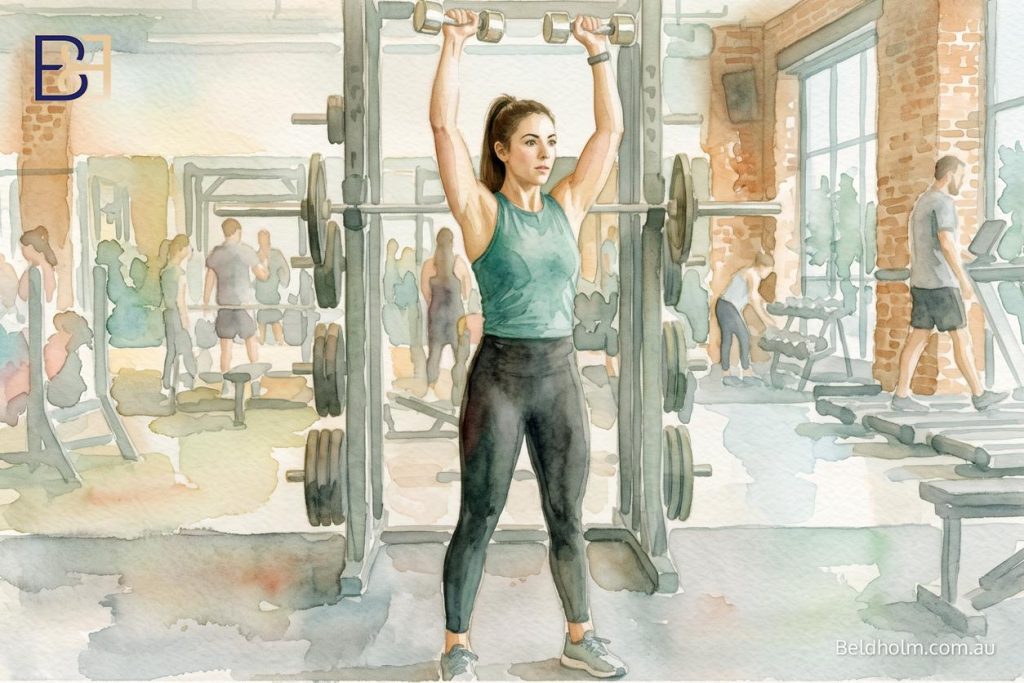
Sitting or standing tall, hold a light weight in each hand at shoulder height, elbows bent. Press the weights up overhead until your arms are almost straight, then lower them slowly back to shoulder height. Keep your core gently engaged and avoid arching your lower back as you press up. This one is easy to overload, so keep the weight light and the movement controlled.
15. Tricep extensions
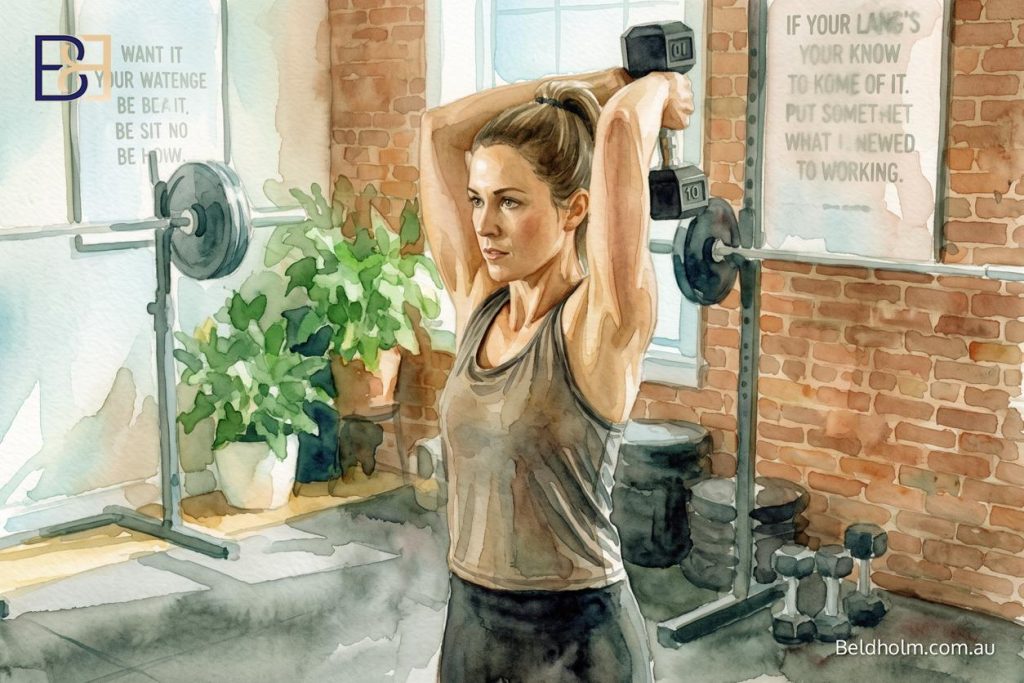
Hold a single light weight in both hands, raise it overhead, then bend your elbows to lower it behind your head, keeping your upper arms still and pointing up. Straighten your arms to lift it back up. This works the back of the upper arms. Keep the movement slow and stop if your shoulders or neck strain.
Build these up gradually over the weeks. Add a little weight or a few repetitions at a time, not both at once, and only when the current level feels comfortable and controlled.
Phase 4, From 6 Weeks: Cardiovascular
Returning to cardiovascular exercise helps your cardiovascular fitness, energy and blood circulation as you recover. Walking has been your cardio up to this point, and from around six weeks you can begin to add gentle structured cardiovascular exercise, once I have reviewed you. Build the duration and intensity slowly. Breathlessness that stops you holding a conversation is a sign to ease off.
16. Stationary cycling
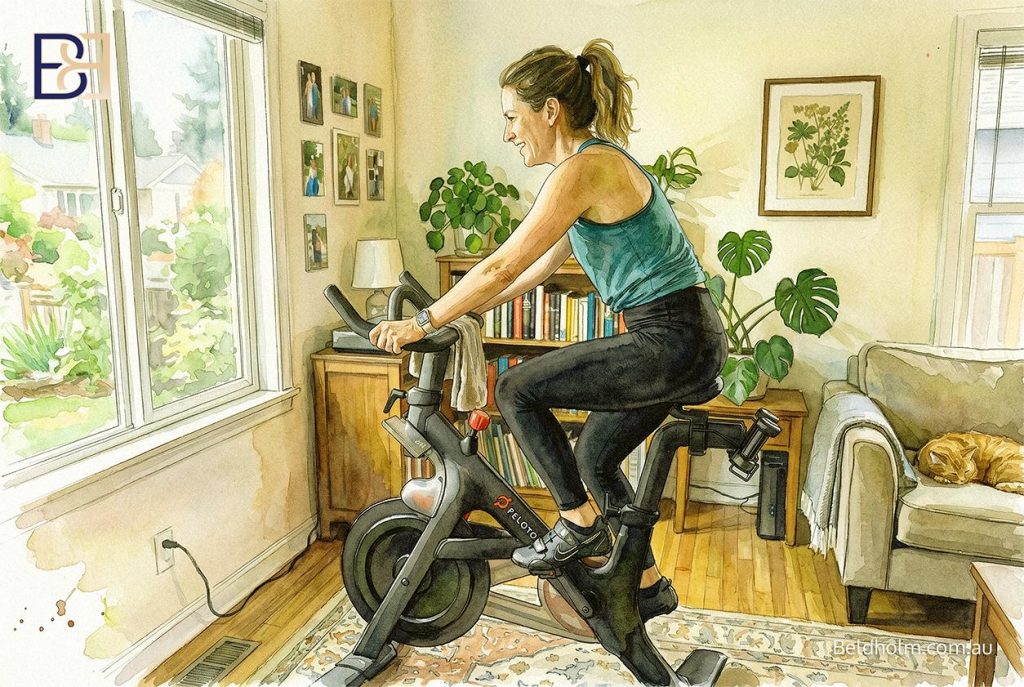
A stationary bike is a good first step back into cardio because it is low impact and supported, with no jarring through the abdomen. Start with short sessions of five to ten minutes at a light resistance, sitting upright rather than leaning forward over the handlebars. Build the time up gradually over the following weeks. Keep the resistance light at first so you are not straining to push the pedals.
17. Swimming and water exercise

Swimming is gentle on the body and good for overall fitness, but it has one firm rule. Do not get into a pool, the ocean or a spa until your incisions are fully healed and I have confirmed it is safe to do so, usually around eight weeks but sometimes longer. Submerging a wound that has not fully closed risks infection. Once you are cleared, start with gentle laps or walking in the water, and avoid vigorous strokes that twist or strongly engage the abdomen until later.
18. Light aerobics
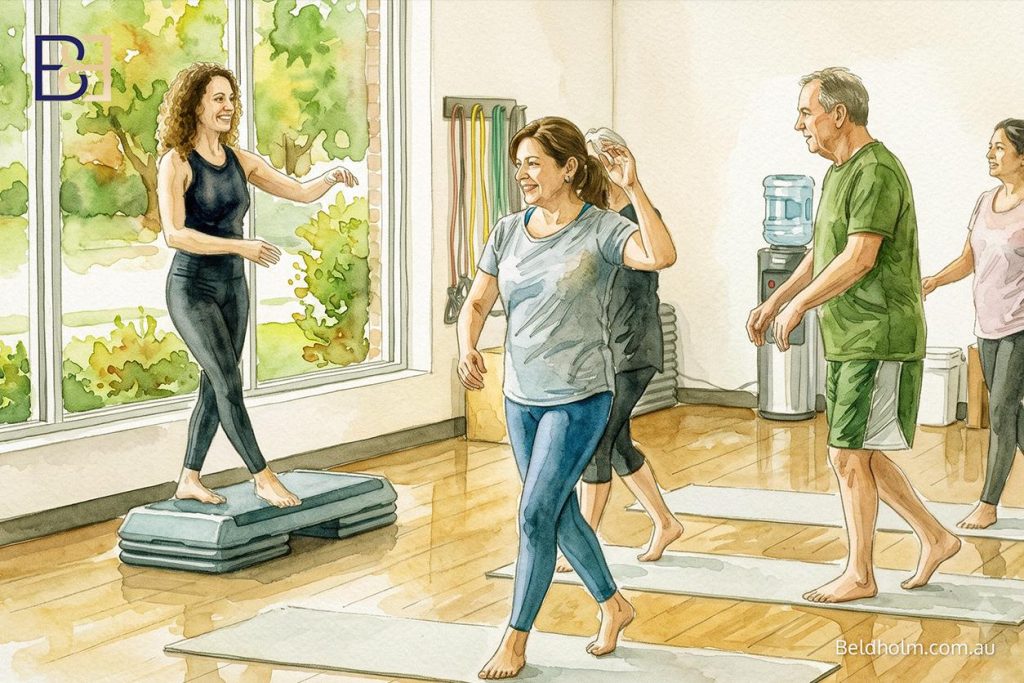
Low-impact aerobic movement, such as a gentle aerobics or dance-style session with no jumping, helps rebuild stamina. Keep both feet generally in contact with the ground, avoid high-impact moves like jumping or running at this stage, and skip anything that twists hard through the trunk. Start with short sessions and stop if you feel any pulling at the abdomen.
Across all your cardio, let how you feel guide the pace. Recovery after pregnancy and surgery, often on broken sleep, takes energy, so some days you will do less, and that is fine.
Flexibility and Mobility
Gentle stretching helps with the stiffness that builds up while you are holding yourself carefully and standing slightly bent in the early weeks. These movements ease the back, hips and shoulders. Introduce them once you are past the early healing phase and have moved into broader activity, generally around the six week mark and with my clearance.
The important point with stretching after a muscle repair is not to overdo the range. A gentle stretch is fine. Pulling into a deep stretch that strains the abdomen is not. Ease into each one and never force it.
19. Cat-cow
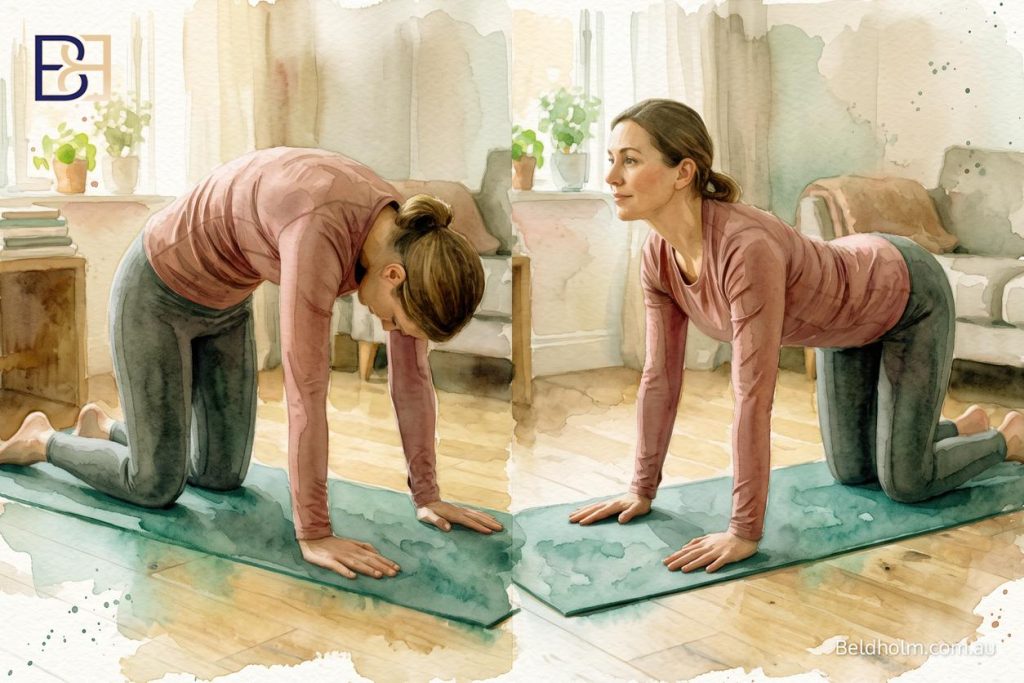
On your hands and knees, slowly round your back up towards the ceiling like a cat, then gently let it curve the other way as you lift your head and tailbone. Move slowly between the two with your breathing. This loosens the whole spine and feels good after weeks of guarding your posture. Keep the movement gentle and do not push into the curve that arches the lower back if it pulls at the abdomen.
20. Seated forward bend
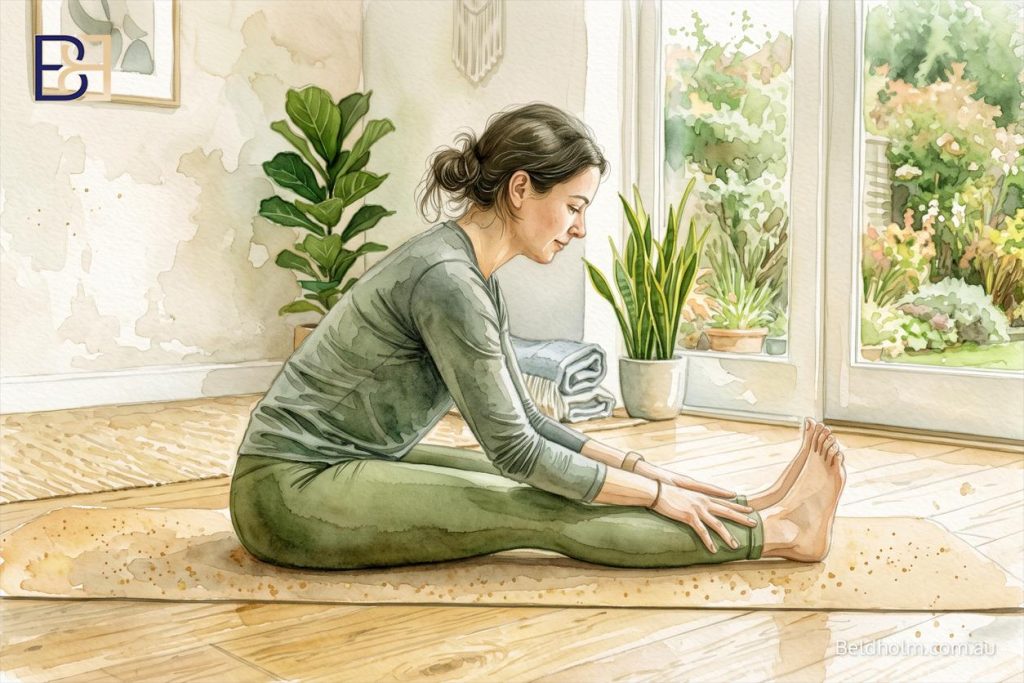
Sit on the floor or on a chair with your legs out in front. Keeping your back fairly straight, hinge forward at the hips a small way until you feel a light stretch down the backs of the legs. Do not curl down to reach your toes. The aim is a gentle stretch through the hamstrings and lower back, not a deep fold that compresses the abdomen. Hold briefly and ease back up.
21. Child’s pose
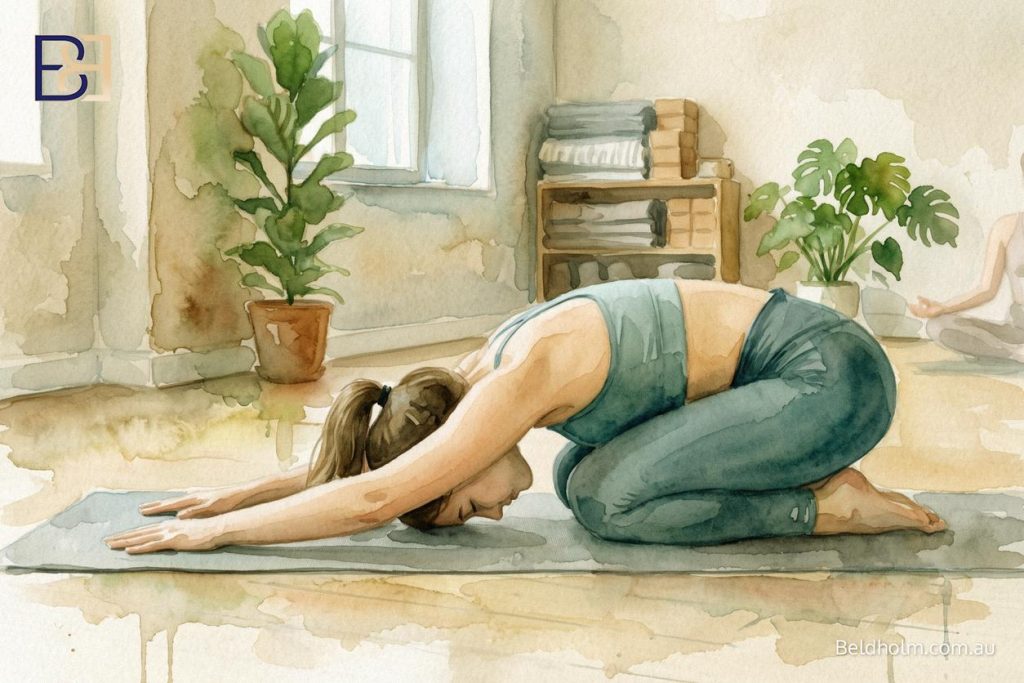
Kneel and sit back towards your heels, then walk your hands forward along the floor and let your upper body rest down between or over your thighs, arms stretched ahead. This is a restful stretch for the back, hips and shoulders. If resting your stomach against your thighs feels like too much pressure early on, widen your knees to make room, or leave this one until later.
Hold each stretch for a slow count rather than bouncing, and breathe through it. Stretching should feel like relief, not effort.
Phase 5, From 8 to 12 Weeks and Beyond: Advanced Core
This is the final stage of core rebuilding, and the one I am most cautious about. These exercises load the abdominal muscles directly, which is exactly what the repair needs protecting from until it is well healed. Do not attempt any of them until I have reviewed you and confirmed you are ready, which for most patients is somewhere from eight to twelve weeks, and for some is later. Returning to full core work too early is the main thing I want patients to avoid.
When you do start, go back to basics. Begin with the easiest version, focus on control rather than effort, and stop the moment you feel any doming, bulging or pulling along the midline.
22. Plank variations
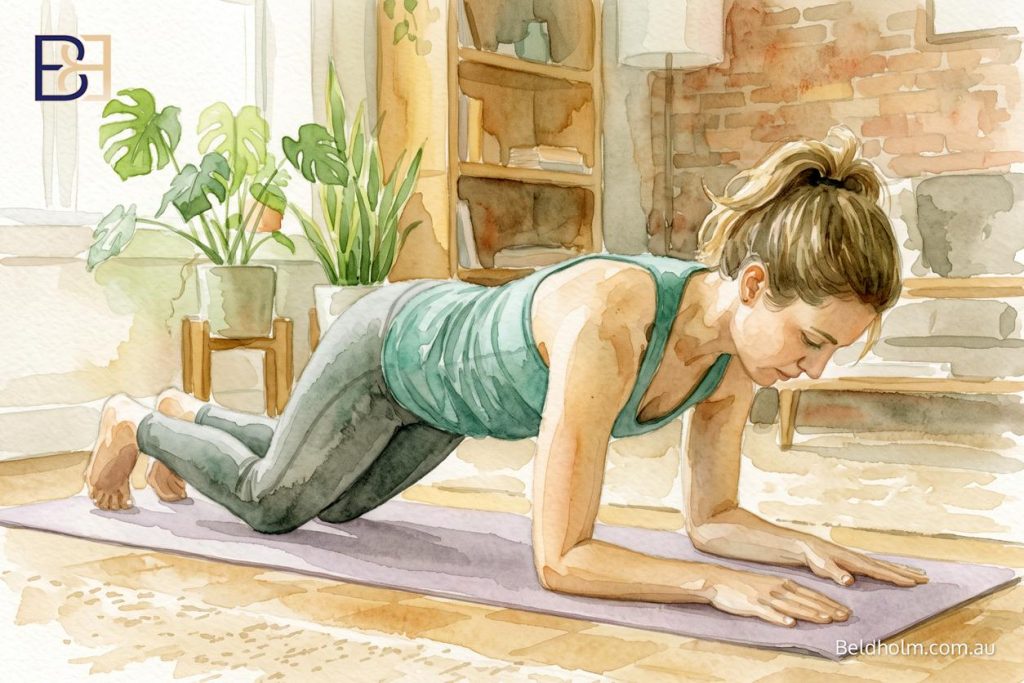
Start with a modified plank, not a full one. Hold yourself up on your forearms and knees, keeping a straight line from your head to your knees and your core gently engaged, and hold for a few seconds. Build the hold time slowly over weeks before progressing towards a full plank on your toes. If you see the midline of your abdomen push up into a ridge, or you cannot hold without straining, come back to an easier version.
23. Bird dog
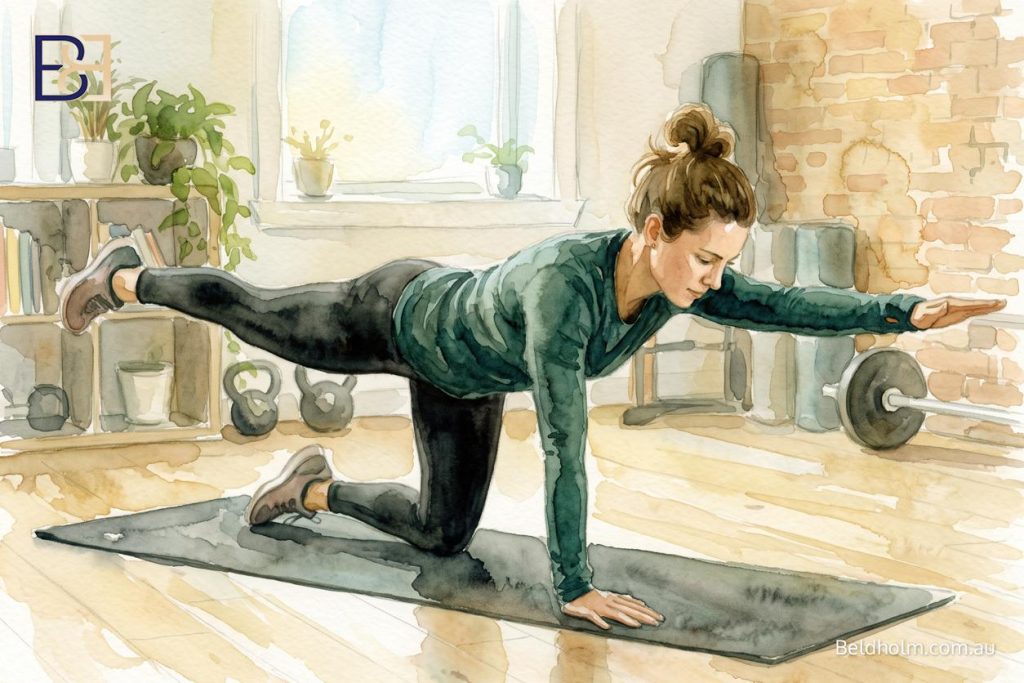
On your hands and knees, slowly extend one arm straight forward and the opposite leg straight back at the same time, keeping your back flat and your hips level. Hold briefly, return under control, then switch sides. This builds core and back strength in a stable, low-load position and is a good way to test your control before harder work. Keep your trunk steady and avoid letting your back sag or your hips rock.
24. Russian twists (gentle, later)
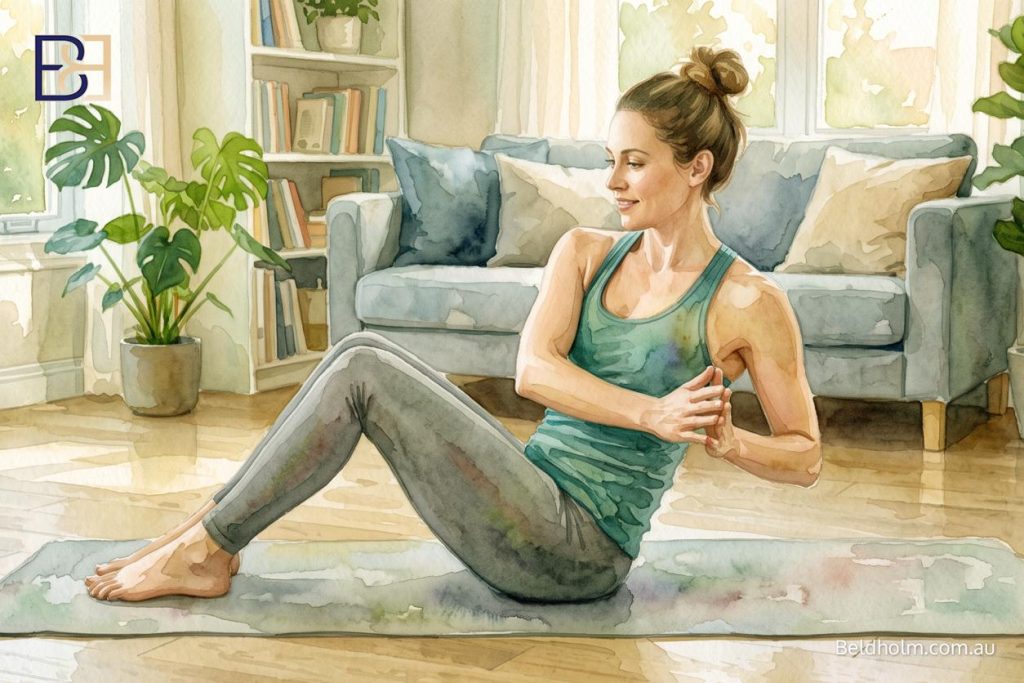
This is one of the last exercises to reintroduce, because it both loads and twists the abdomen. Sit with your knees bent and feet flat, lean back slightly to engage the core, and rotate your trunk slowly from side to side. Start with no weight and keep your feet on the floor. Only progress to lifting the feet or holding a weight much later, if at all. If twisting causes any pulling at the repair, leave this one out.
Take this phase slowly. There is no prize for rushing it, and the repair you are protecting is meant to last. If you are unsure whether you are ready for any of these, ask me at your review rather than guessing.
Phase 5, From 8 to 12 Weeks and Beyond: Full Body
These compound exercises bring the whole body back into work and round out your return to general strength. Like the advanced core work, they belong in the later phase, generally from around twelve weeks and once I have cleared you. Start light, focus on form, and build up over time rather than chasing where you were before.
Keep breathing through each repetition. The same rule applies as with the weights earlier: if you have to hold your breath and brace your abdomen hard to do a movement, it is too much for now.
25. Goblet squats
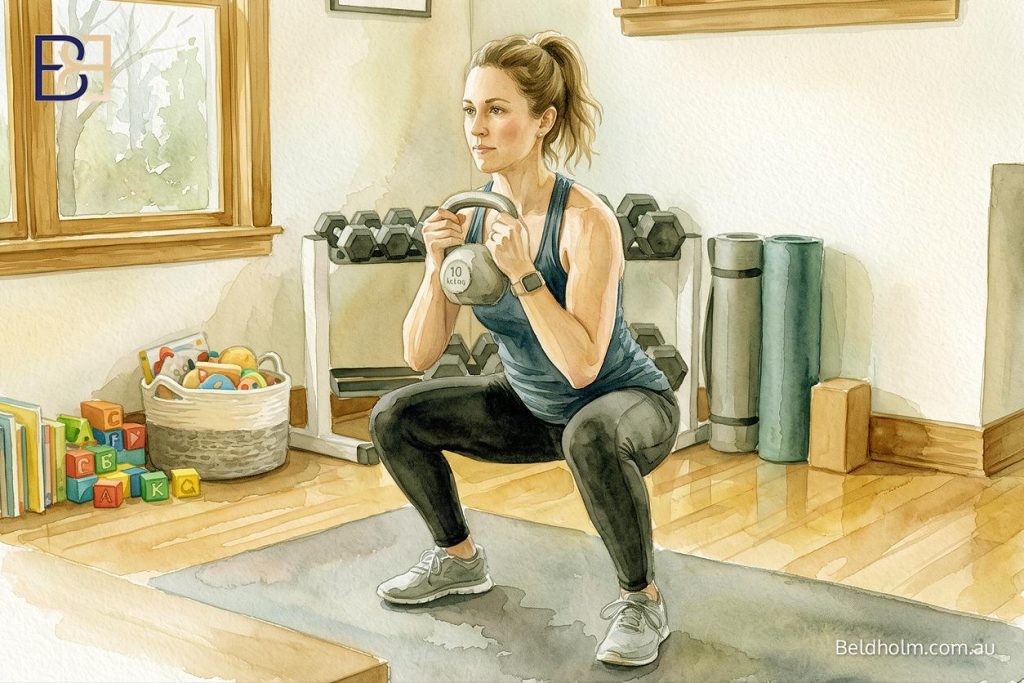
Hold a single light weight close to your chest in both hands. Stand with your feet a little wider than your hips, then sit back and down as if lowering into a chair, keeping your chest up and your weight through your heels, and stand back up. Go only as low as is comfortable at first. This rebuilds strength in the legs and glutes, which you use constantly lifting and carrying children. Keep the weight light until the movement feels comfortable.
26. Lunges
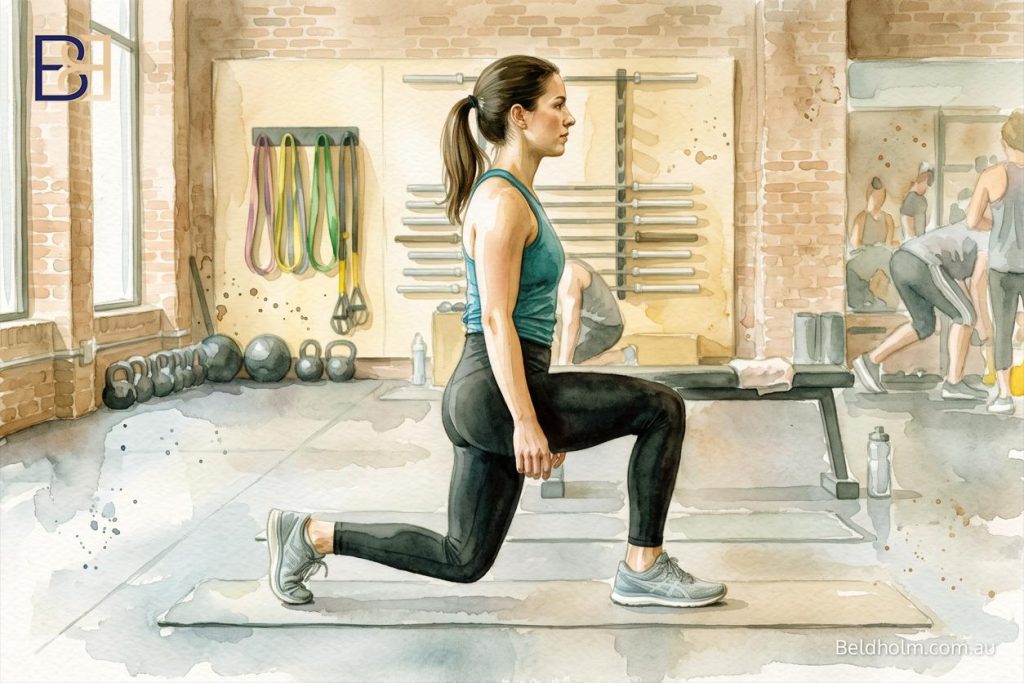
Stand tall, step one foot forward and lower your back knee towards the floor, keeping your front knee over your ankle, then push back up to standing and repeat on the other side. Start with body weight only and hold onto a bench or wall for balance if you need to. Lunges build single-leg strength and stability. Keep your trunk upright and your core gently engaged, and add light weights only once your balance and form are solid.
27. Push-ups
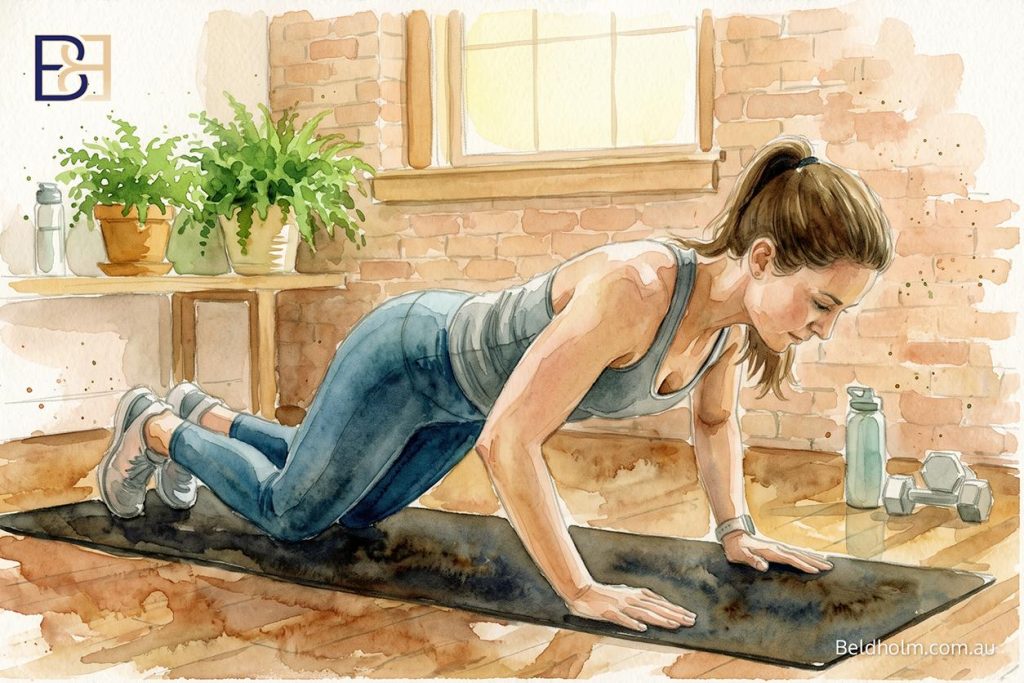
Begin in a push-up position against a wall or on your knees, not a full push-up on your toes. Keep your body in a straight line, lower yourself under control, and push back. This works several upper body muscle groups, including the chest, shoulders and arms. Because a push-up also asks the core to hold steady, watch for any doming along the midline of your abdomen, and stay with the easier versions until your core can hold a straight line without strain. Progress to harder versions slowly.
That is the full progression, from your first steps after surgery through to full-body strength. Move through it at your own pace, let your reviews guide what comes next, and remember that results vary from one person to the next.
Book your appointment online now
Recovering While Caring for Young Children
The exercises above assume one thing that sets post-pregnancy recovery apart: you are usually doing all of it while looking after a baby or small children. That changes what recovery actually looks like day to day, and it is worth planning for before your surgery rather than working it out afterwards.
The caesarean scar
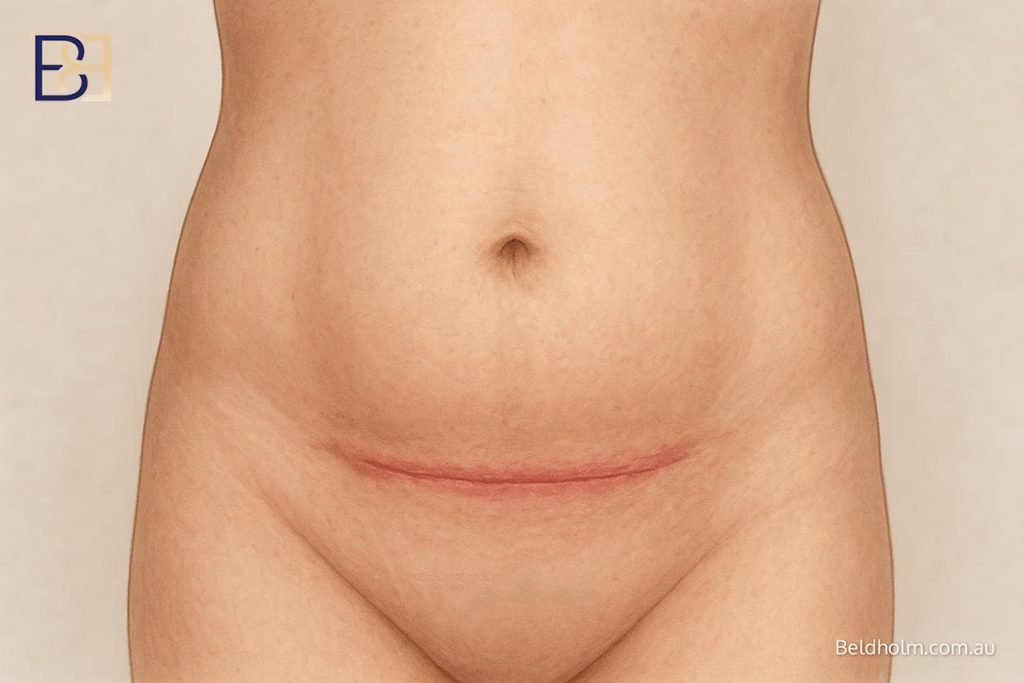
Many of my post-pregnancy patients have had one or more caesareans. The old caesarean scar is removed as part of the operation, along with the skin between it and the lower incision, so you are not left with the previous scar. The new abdominoplasty scar sits low across the lower abdomen, below where the caesarean scar was. The healing process in the early weeks runs across that lower abdominal area, which is part of why bending and lifting need care in the first few weeks, and why the gentle progression above starts where it does.
Lifting and carrying
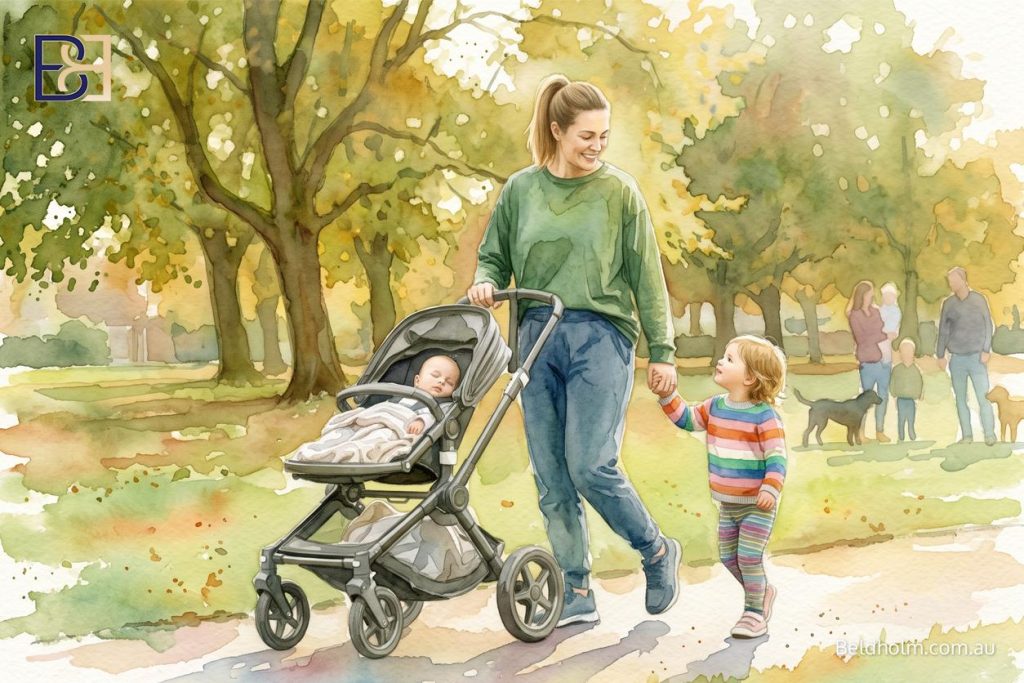
This is the hardest part for most parents, because children need lifting and it is not always optional. A few practical points:
- A newborn is usually within what you can manage carefully in the early weeks. A toddler or older child is heavier and squirmier, and repeatedly lifting them strains the repair. Arrange help with the bigger children where you can.
- Bring the child to you at waist height rather than lifting from the floor or a cot. A bedside bassinet, a higher change setup and a supportive chair all reduce bending.
- When you lift, keep the load close, bend at your knees and hips, and breathe out as you lift instead of holding your breath and bracing.
- Prams, capsules and shopping count too. Heavy one-sided loads and twisting to fit a capsule into a car are common ways patients overdo it without realising.
I will give you specific guidance on lifting limits at your reviews, based on how you are healing.
Pacing the day
Recovery takes energy, and so does parenting on broken sleep. You will have days where you do less, and that is part of it, not a setback. Trying to keep the household running exactly as before is the quickest way to overdo it. Lower the bar on housework, accept offers of help, and treat rest as part of the recovery, not time off it.
Planning support at home
If there is one thing I would ask you to organise before surgery, it is support at home for the first couple of weeks. A partner, family member or friend who can lift older children, manage the school run, do the heavier housework and let you rest makes a real difference to how the early recovery goes. Sort this out in advance, because it is much harder to arrange once you are home and tired.
Eating Well and Staying Hydrated

Recovery is not the time to diet or restrict. Your body is healing, and it needs reasonable nutrition to do that well. There is nothing elaborate to it. A balanced diet with enough protein, plenty of vegetables and fruit, and regular meals supports healing through the recovery weeks. Protein in particular supports tissue healing, so it is worth making sure each meal includes a good source of it.
If you are still breastfeeding while we are planning your surgery, we take that into account in the timing, since breastfeeding also draws on your energy and reserves.
Hydration

Staying well hydrated supports healing and helps with the constipation that is common after surgery, partly from the anaesthetic and partly from any pain relief you are taking. Keep water within reach, especially in the early days when getting up is an effort, and through the day when you are busy with the children and it is easy to forget. If you are breastfeeding, your fluid needs are higher again.
Final Thoughts
Recovery after a post-pregnancy abdominoplasty is a gradual process, and the exercise progression above is meant to be followed at your own pace, not raced through. The order matters more than the timing. Gentle movement and breathing come first, then light activity, then a slow and careful return to core and full-body strength once the muscle repair has healed enough to take it.
The single most important thing I ask of patients is patience with the core work. The repair I do during your operation is meant to last, and protecting it through the early weeks is what gives it the best chance to do that. Returning to sit-ups, planks and heavy lifting too soon is the main avoidable setback I see.
Every patient heals differently, and the timings here are general guides, not fixed rules. What is right for you is worked out together at your follow-up reviews, where I check your healing and tell you when you are ready for the next stage. If you are ever unsure whether you are ready for something, ask me rather than guessing.
Results vary from one person to the next. Use this as a map of the usual path, lean on the support around you, and give your body the time it needs.
Frequently Asked Questions
When can I start exercising after a post-pregnancy abdominoplasty?
Gentle movement starts straight away. Walking, ankle pumps and deep breathing begin in the first day or two. Everything beyond that is added in stages over the following weeks and months, and core and strength work come later. When you progress is based on how you are healing, which I check at your follow-up reviews.
When can I lift my baby or children?
A newborn is usually within what you can manage carefully early on. Heavier toddlers and older children need to wait, and arranging help with them for the first couple of weeks makes a real difference. I give you specific lifting guidance at your reviews, based on your healing. When you do lift, keep the load close, bend at the knees and hips, and breathe out rather than holding your breath.
When can I do core exercises and sit-ups again?
Not for a while, and not without my clearance. Gentle deep-core activation can sometimes begin around four to six weeks, but loaded core work like planks, sit-ups and twists belongs in the later phase, generally from eight to twelve weeks or beyond. This protects the muscle repair while it heals. Returning to core work too early is the main setback I want patients to avoid.
When can I get back to the gym, running or swimming?
Light structured cardio such as a stationary bike can usually start from around six weeks once I have reviewed you. Higher-impact and more strenuous activities like running come later. Swimming waits until your incisions are fully healed and I have confirmed it is safe, usually around eight weeks but sometimes longer, because of the infection risk from submerging a wound that has not fully closed.
Will exercise improve my surgical result?
Exercise is part of recovering your strength and general fitness after surgery and pregnancy, and following the staged exercise routine helps protect the repair through each recovery stage.
Is it normal to feel tightness or pulling early on?
Some tightness across the lower abdomen is common in the early weeks, and standing slightly bent at first is expected. Sharp pulling at the repair, a bulging or doming along the midline when you exert yourself, or pain that is getting worse rather than better are reasons to stop the activity and raise it with me. If something does not feel right, contact the practice.
References
- Alsuwaylihi A, O’Connor D, Joshi GP, Kehlet H, Lobo DN. Importance of early postoperative mobilization: comprehensive review. BJS Open. 2026;10(2):zrag016.
- Ababneh QM, Abdelrahman H, Abdelhameed ME. Effectiveness of incentive spirometry versus deep breathing exercises in preventing postoperative pulmonary complications after abdominal surgery: a comprehensive review. Cureus. 2025;17(3):e80149.