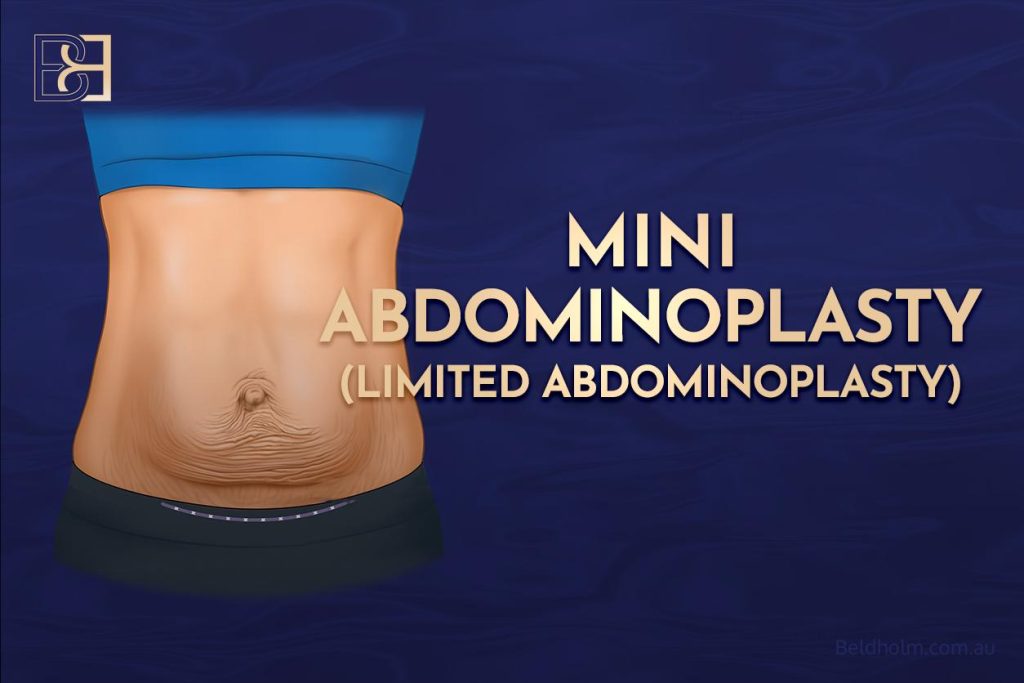
A limited abdominoplasty (mini tummy tuck) is an operation that treats the lower abdomen, the area below the navel. It is smaller in scope than a full abdominoplasty, which treats the whole abdominal wall and repositions the navel.
In my practice, I see women considering a limited abdominoplasty after they have had children. Pregnancy can stretch the skin of the lower abdomen, sometimes leaving stretch marks on the stretched skin, and in some women it separates the abdominal muscles down the midline. For a smaller number of women, the change is confined to the lower abdomen and a limited operation is enough to treat it. For many others, the changes extend above the navel or involve more muscle separation, and a full abdominoplasty is the more appropriate operation. Working out which group you fall into is the purpose of the consultation.
This article explains what a limited abdominoplasty involves, how it differs from a full abdominoplasty, who it may suit, the timing of surgery after pregnancy and breastfeeding, what recovery is realistically like, and the risks you need to weigh. I have written it in plain terms so you can take it into a consultation already understanding the choices.
Whether this operation is appropriate for you is a clinical decision made at consultation, after assessment. A GP referral is required before any consultation, and results vary from one patient to the next.
Key points
- A limited abdominoplasty treats the lower abdomen, below the navel. It is smaller in scope than a full abdominoplasty and does not reposition the navel.
- It may be appropriate for women whose excess skin or muscle separation (diastasis recti) after pregnancy is confined to the lower abdomen. It is not suitable for everyone.
- Where the changes extend above the navel, a full abdominoplasty is usually the more appropriate operation. This is assessed individually.
- A GP referral is required, surgery is a serious decision, and results vary between patients.
- Surgery is generally planned once your family is complete and breastfeeding has finished, because a later pregnancy can affect the result.
What a limited abdominoplasty involves
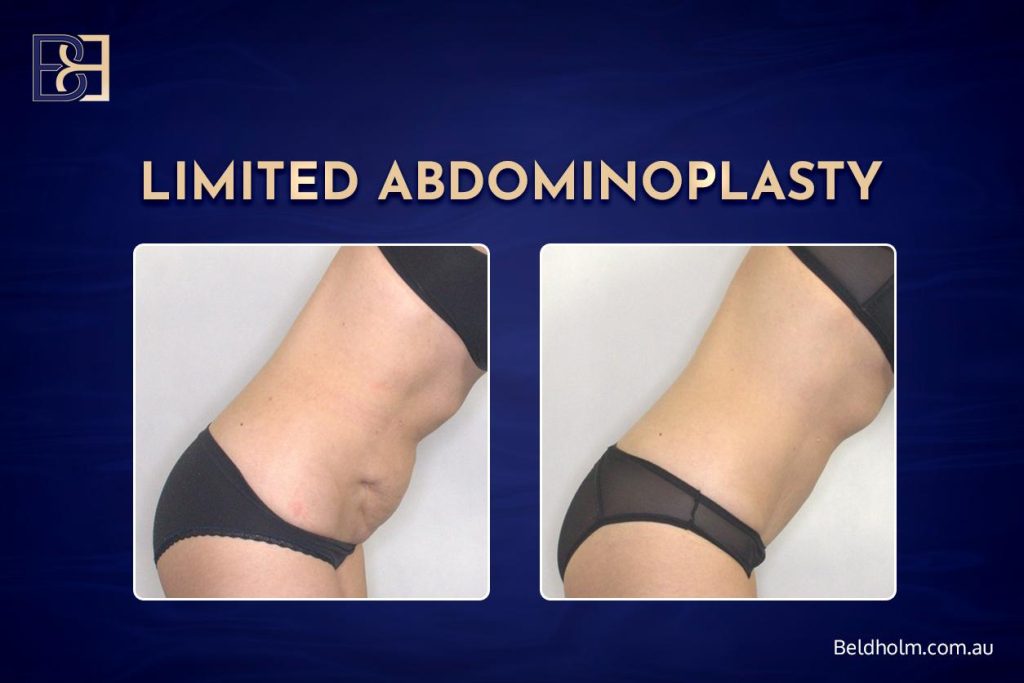
A limited abdominoplasty (tummy tuck), works on the lower abdomen only, the abdominal area between the pubic line and the navel. It is done through a low, horizontal incision across the lower abdomen, positioned to fall within the underwear line. Where a woman has had a caesarean, the incision can often be placed along the existing caesarean scar. The navel is not cut around or moved, which is one of the main differences from a full abdominoplasty.
For the women I see after pregnancy, there are two versions of this operation. Which one suits you depends on what is actually present in the lower abdomen, and that is assessed at consultation.
Skin-only limited abdominoplasty
This version removes excess skin from the lower abdomen and does not use VASER liposuction (ultrasound-assisted suction lipectomy). It tends to suit women who have only a limited amount of loose skin low down, most often skin that hangs over a caesarean scar. The excess skin is removed through the small incision and the remaining skin is closed. The underlying fat is not treated in this version, though lower muscle separation (diastasis recti) can still be repaired through the same incision if it is present.
Limited abdominoplasty with VASER liposuction (ultrasound-assisted suction lipectomy)
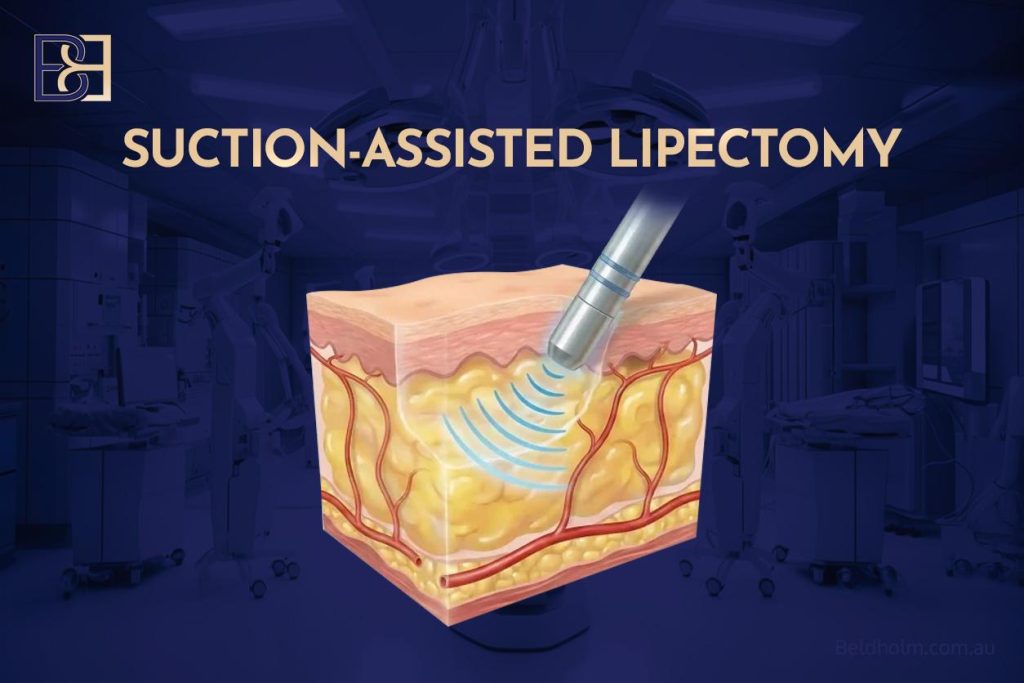
This version adds VASER liposuction so the excess fat and fatty tissue of the lower abdomen and flanks is treated at the same time as the loose skin is removed. The majority of the women I see have this version, because most have a combination of loose lower skin and fat that a skin-only operation would not treat.
In either version, where there is separation of the lower abdominal muscles after pregnancy, and that separation is confined to the lower abdomen, the muscles can be repaired through the same low incision. I cover muscle separation in more detail further on.
What a limited abdominoplasty does not do is treat the skin or muscle above the navel. If the loose skin extends up towards the ribs, or the muscle separation runs the full length of the abdomen, a limited operation will not treat it and a full abdominoplasty is the more appropriate choice. I cover that comparison next.
One point worth being clear on. This is a different operation from the limited abdominoplasty or apronectomy I perform for patients after major weight loss. Those patients usually carry a much larger volume of hanging skin, and the operation is planned around that. The post-pregnancy operation I am describing here is a different operation for a different pattern of change, and the two should not be thought of as the same thing.
How a limited abdominoplasty differs from a full abdominoplasty
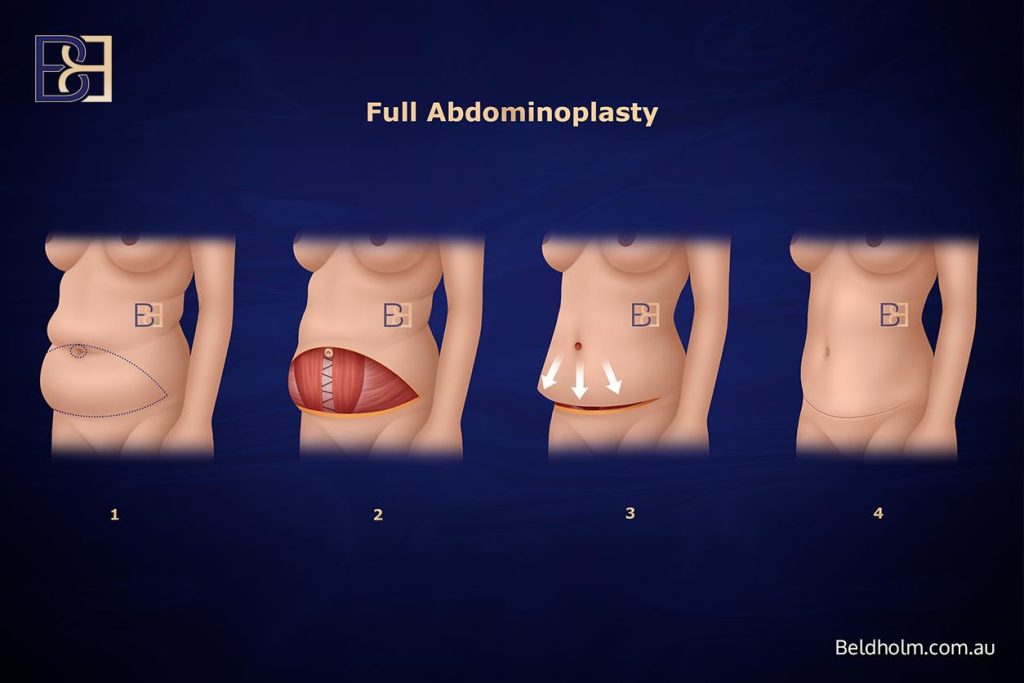
The two operations are not interchangeable. They treat different amounts of the abdomen and they suit different patterns of change after pregnancy. Here is how they compare.
- Area treated. A limited abdominoplasty works on the lower abdomen, below the navel. A full abdominoplasty treats the whole abdominal wall, from the lower abdomen up towards the ribs.
- The navel. In a limited abdominoplasty the navel (belly button) is left where it is. In a full abdominoplasty the navel is detached from the surrounding skin and brought out through a new opening once the skin has been redraped, which is why a full abdominoplasty leaves a scar around the navel as well as the lower incision.
- The incision. The incision for a limited abdominoplasty is generally shorter, because a smaller area is being treated. A full abdominoplasty usually needs a longer incision across the lower abdomen.
- Muscle repair. A limited abdominoplasty can repair muscle separation (diastasis recti) confined to the lower abdomen. Where the separation runs the full length of the abdomen, a full abdominoplasty is needed to repair it along its whole length.
- Time in theatre. A limited abdominoplasty is generally a shorter operation than a full abdominoplasty. Both are performed under general anaesthetic.
The deciding factor is what is present, not which operation sounds more appealing. A limited abdominoplasty is appropriate when the loose skin and any muscle separation are confined to the lower abdomen. Where the changes extend above the navel, where there is a larger amount of loose skin, or where the muscle separation runs the full length of the abdomen, a full abdominoplasty treats the abdomen more completely and is usually the better operation. In my experience a good number of women who come in asking about a limited abdominoplasty turn out, on examination, to be better suited to a full abdominoplasty, and the opposite happens too.
It is worth being clear that a limited abdominoplasty is still major surgery. It involves a general anaesthetic, an incision, removal of skin, and a recovery period that takes real time. It is a cosmetic procedure, and the word “limited” describes the area treated, not the seriousness of the surgery. I cover recovery and risks in detail further on.
Diastasis recti (abdominal muscle separation) after pregnancy
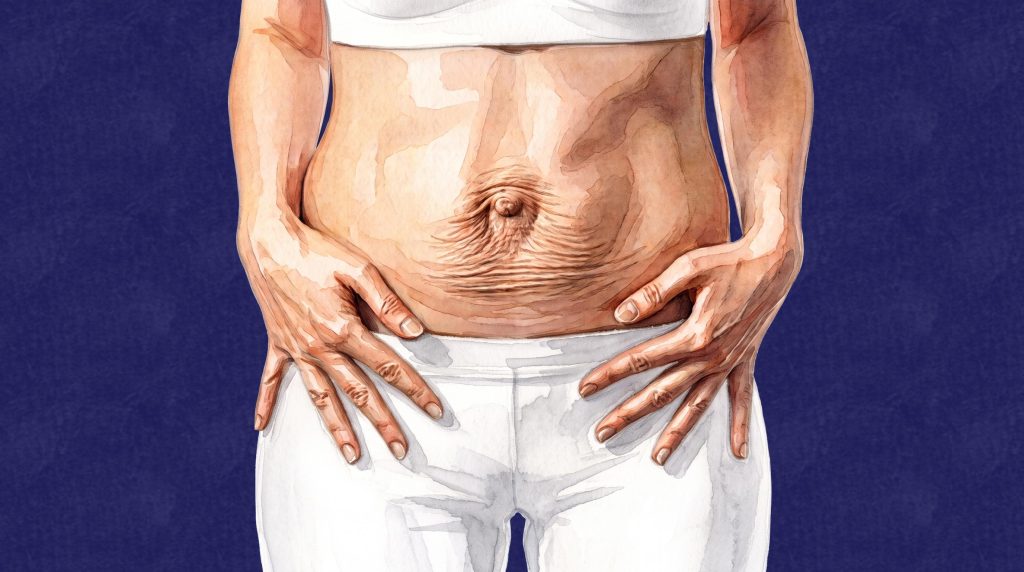
The two large abdominal muscles, the rectus muscles, run vertically down the front of the abdomen. A band of connective tissue called the linea alba sits between them. During pregnancy this band stretches as the abdomen accommodates the growing uterus, and the muscles move apart down the midline. This is diastasis recti, also called rectus abdominis diastasis, and it is a normal change that happens to a large proportion of women during and after pregnancy. The result is separated abdominal muscles down the midline. In many women the separation narrows on its own in the months after birth. In some it persists.
Some women notice their weakened abdominal muscles as a loss of strength in the core muscles, particularly when getting up from lying down. Whether that is the case for you is part of the assessment.
How I assess it
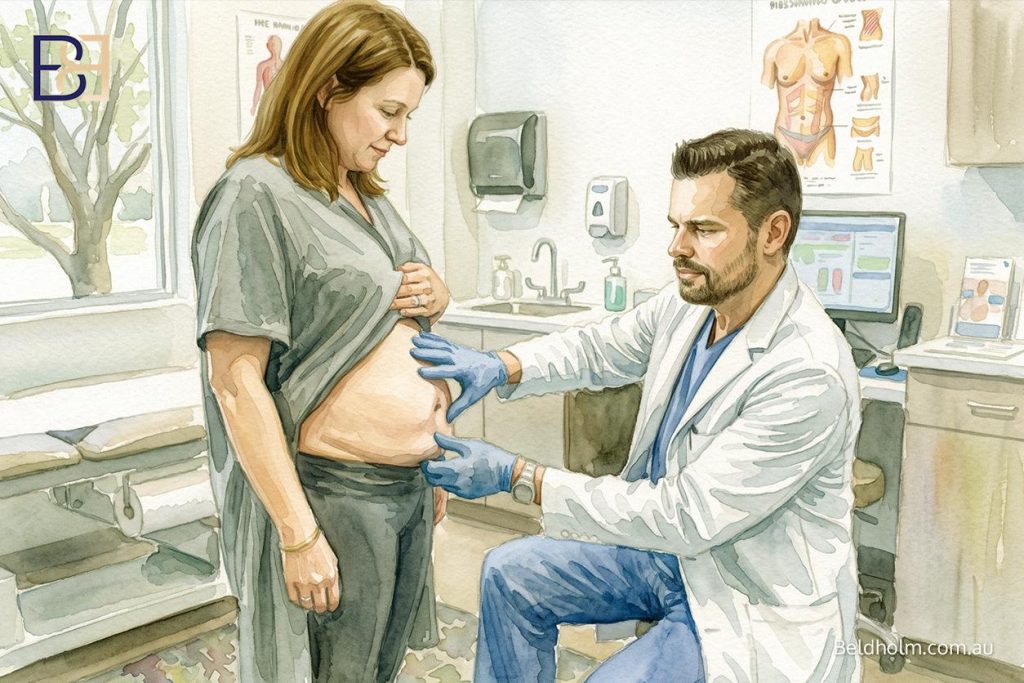
I assess muscle separation by examination at consultation. I feel for the gap between the muscles, where it sits, and how far it extends. It matters whether the separation is confined to the lower abdomen or runs the full length of the midline above and below the navel, because that is what determines which operation, if any, is appropriate. I do not routinely use scans to measure it.
Surgery is not the only response to muscle separation (diastasis recti). For some women, physiotherapy with a practitioner who works on the abdominal wall is a reasonable first step, and not everyone with diastasis recti needs or should have an operation. Whether surgery is appropriate at all is part of what we work through at consultation.
What a limited abdominoplasty can and cannot do for muscle separation (diastasis recti)
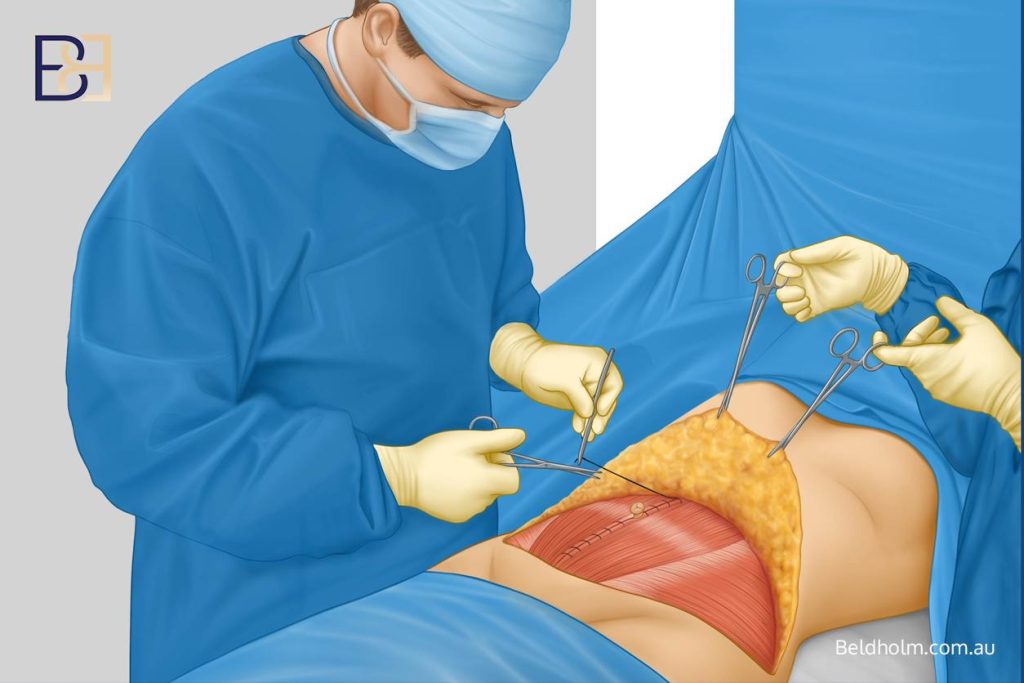
Where the separation is confined to the lower abdomen, I can repair it through the same low incision used for a limited abdominoplasty. The repair brings the lower part of the muscles back towards the midline and stitches them in their corrected position.
Where the separation runs the full length of the abdomen, a limited operation cannot reach the upper part of it. Repairing the full length needs the access of a full abdominoplasty. If I repaired only the lower part and left the upper separation, the result would be uneven, so in that situation a full abdominoplasty is the more appropriate operation.
If you want to understand the diastasis recti itself before considering surgery, I have also written about exercises that may help with diastasis recti after pregnancy. Results from any approach vary from one woman to the next.
Who a limited abdominoplasty may suit
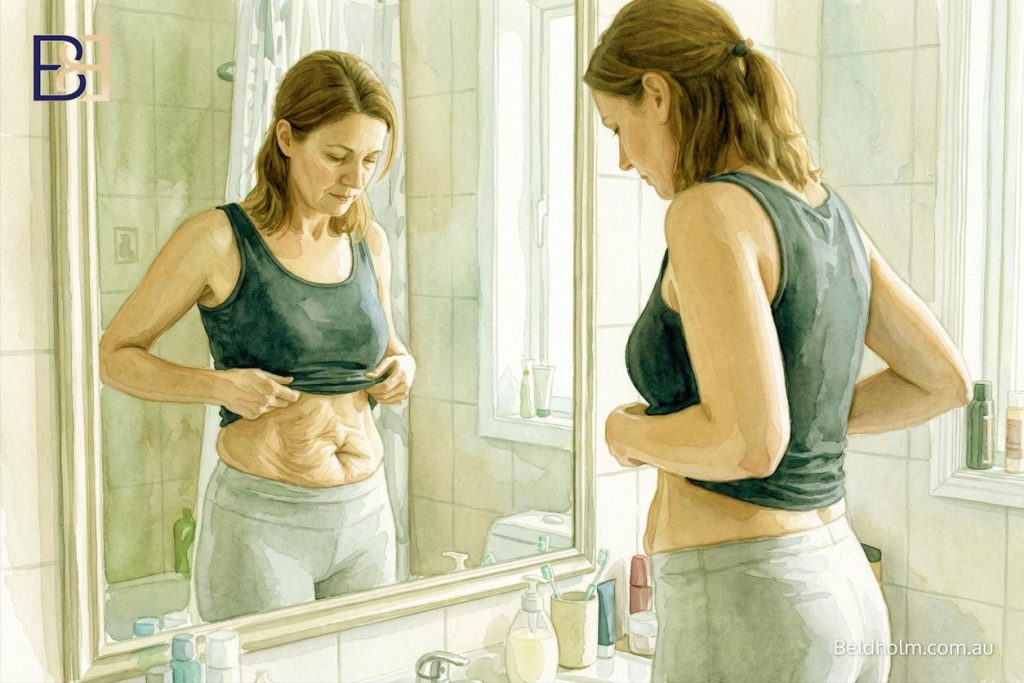
A limited abdominoplasty suits a narrow group of patients after pregnancy. The common thread is that the changes are confined to the lower abdomen.
It may be appropriate when:
- The loose skin is limited and sits low, below the navel, often hanging over a caesarean scar. A skin-only limited abdominoplasty may suit this pattern.
- There is loose lower skin together with fat that has not responded to diet and exercise. A limited abdominoplasty with VASER liposuction may suit this pattern.
- Any muscle separation (diastasis recti) is confined to the lower abdomen and can be repaired through the low incision.
Health and other factors
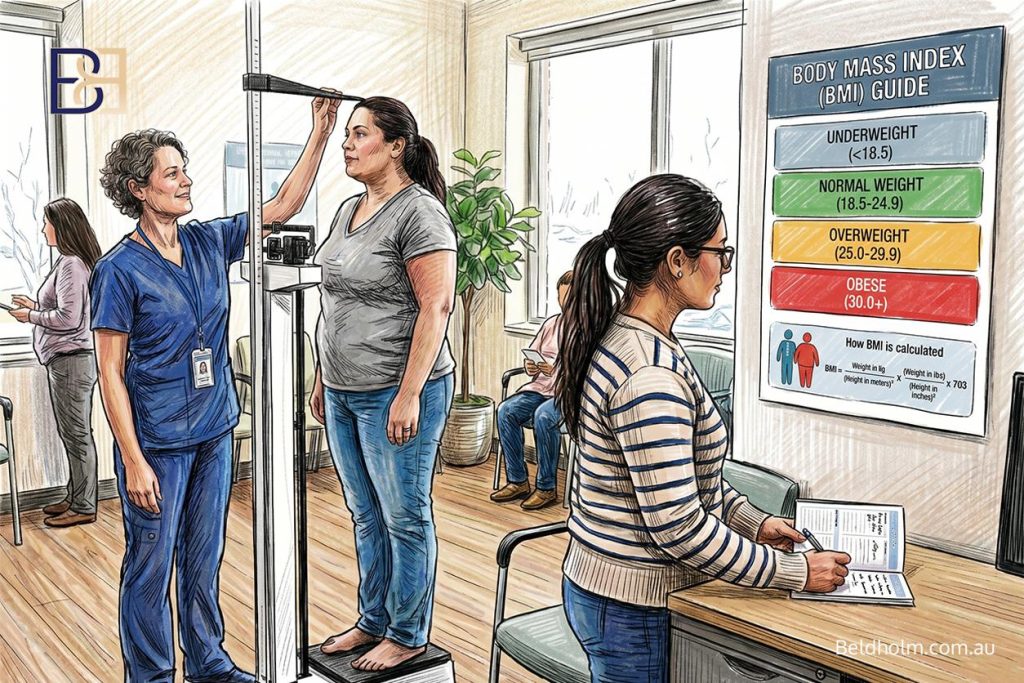
Beyond the pattern of change, a few things affect whether surgery is appropriate and how well you are likely to heal:
- Stable weight. Surgery is best considered once your weight has been stable for a while. Significant weight change afterwards can alter the result.
- Smoking. Smoking reduces blood flow to the healing tissues and increases the risk of wound healing problems. I ask patients to stop well before surgery.
- General health. You need to be well enough to have a general anaesthetic. Any ongoing medical conditions are part of the assessment.
- Body mass index. I use BMI as a rough guide only, not a hard cut-off. Your overall clinical picture matters more than a single number, and I do not use routine DEXA scans.
When it may not be appropriate
A limited abdominoplasty is not the right operation where the loose skin or muscle separation extends above the navel. That pattern is better treated by a full abdominoplasty. Where the change is very minor, surgery may not be warranted at all, and I will say so. Surgery is also generally deferred until your family is complete and breastfeeding has finished, which I cover in the next section.
How suitability is decided
Suitability is not something you or I can settle from an article. It is decided in person. Cosmetic surgery involves at least two pre-operative consultations, and at least one of these is in person with me. At those consultations I take your history, examine you, discuss your reasons for considering surgery and what you are hoping it will achieve, and screen for anything that would make surgery unwise. Part of my job is to talk through the alternatives, including not having surgery, and to decline if I do not think an operation is in your best interest.
When to have surgery after pregnancy
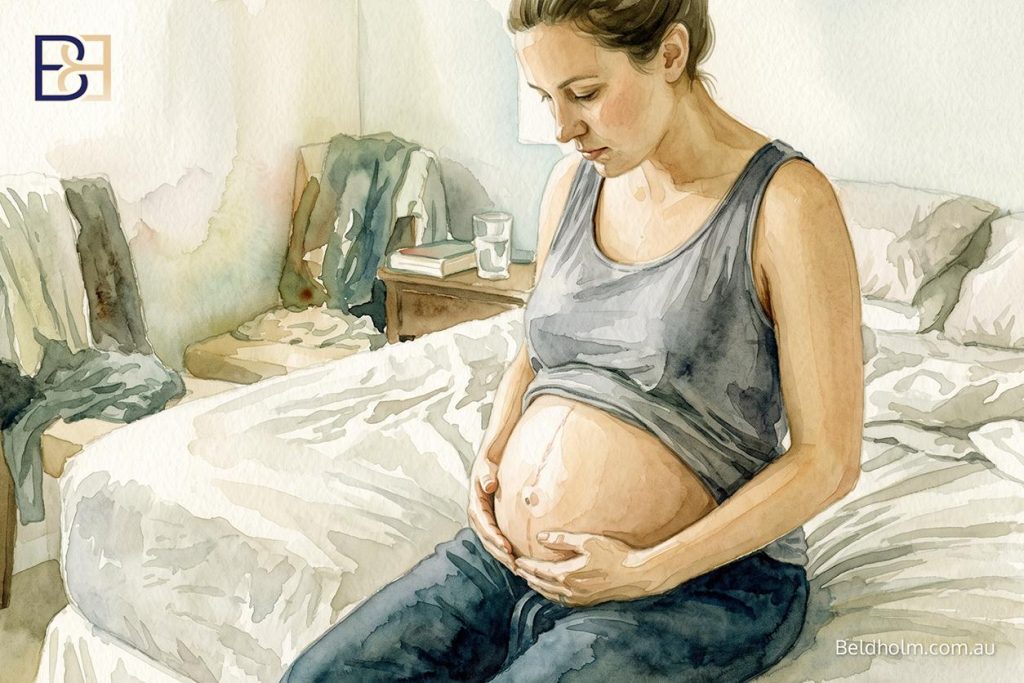
Timing matters with this operation, and it is worth thinking about before you book a consultation.
Letting the body settle, and finishing breastfeeding
The abdominal wall and skin change a great deal through pregnancy and the early months after giving birth, and they keep changing as your body recovers. I plan surgery once that settling has happened and once breastfeeding has finished. Operating before things have settled means operating on a moving target, and the result is harder to judge.
As a general guide I usually recommend waiting around 12 months after your pregnancy, which gives the abdominal wall and skin time to settle and usually allows breastfeeding to have finished. That is a guide, not a fixed rule. How long it takes varies from one woman to the next, and the right timing for you is assessed individually at consultation. Women who have had multiple pregnancies sometimes notice more change in the abdomen, but this does not shift the timing to a fixed number either.
Waiting until your family is complete
I generally recommend that this surgery is planned once you have finished having children. The reason is straightforward. A subsequent pregnancy can stretch the skin again and separate the abdominal muscles again, and that can change the result of an operation you have already had. The surgery itself does not affect your ability to conceive or carry a pregnancy. It is the other way around: a pregnancy after surgery can affect the result.
If you are thinking about more children, it is usually better to wait until afterwards. If your family is complete, that is one less thing working against the durability of the result.
The right timing for you is decided at consultation.
Caesarean scars and where the incision goes
Most of the women I see for this operation have had a caesarean and already have a low, horizontal caesarean scar across the lower abdomen, sometimes called a C-section scar. That existing scar is part of the planning.
Working with an existing caesarean scar
Where possible, I place the lower incision just below your existing caesarean scar. The caesarean scar, and the skin that overhangs it, are then removed within the tissue that is taken out, so you are not left with the old caesarean scar or with a separate scar in a different position. The incision line is planned to sit low, just above the pubic hairline and within the underwear line, so that the scar falls within the bikini line.
A common reason women come to see me is that skin sits over the top of the caesarean scar and folds over it. That skin can be removed during the operation, and the incision is planned to deal with the fold rather than leave it. How much skin is removed depends on what is present, which is why this is assessed in person.
Be realistic about scar length
The abdominoplasty scar is usually longer than your original caesarean scar, because more skin is removed across the width of the lower abdomen. It is not a like-for-like swap where you end up with the same short scar. I plan the incision site to sit low, within the underwear line, but it is a longer scar than a caesarean and it is permanent.
What affects the result
Scar tissue and adhesions from a previous caesarean can be present under the skin, and I take that into account during surgery. How a scar settles depends on your skin, your healing, and how the scar is cared for afterwards, which I cover in the next section. The position and length of the incision are planned for your anatomy at consultation, and the way a scar matures varies from one patient to the next.
Anaesthesia

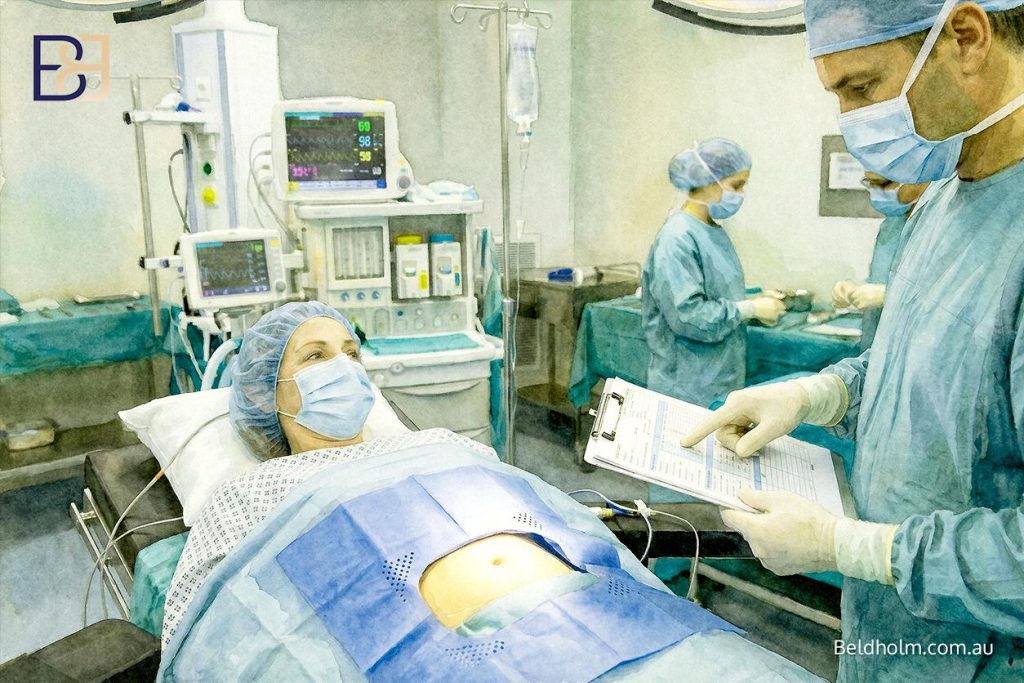
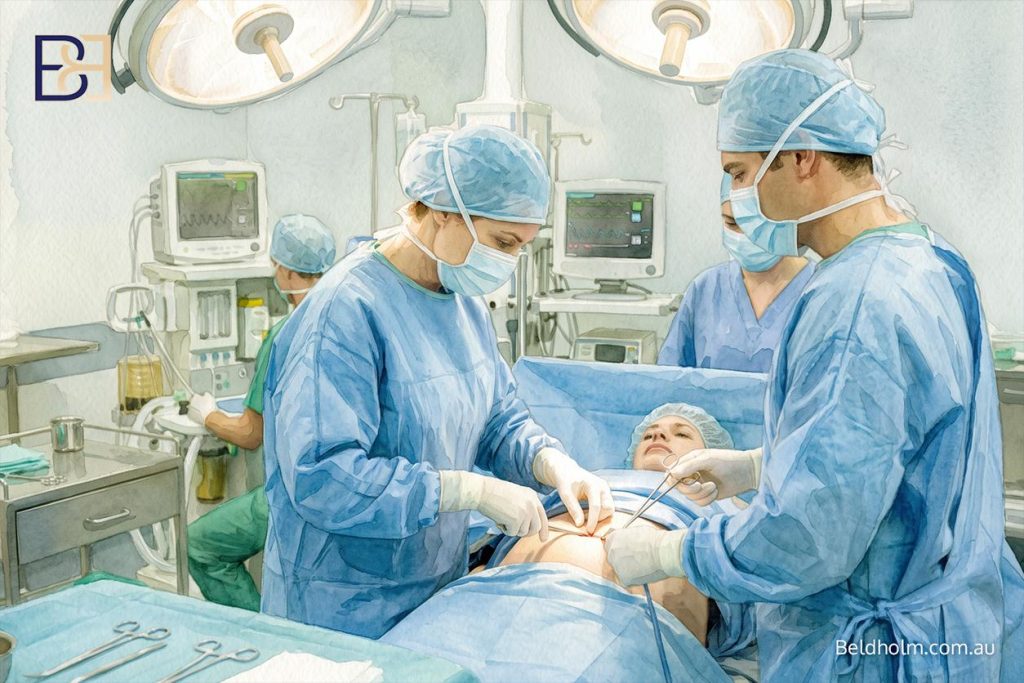
A limited abdominoplasty is performed under general anaesthetic, so you are fully asleep for the operation and feel nothing during it. A specialist anaesthetist looks after you throughout and monitors you closely.
You will speak with the anaesthetist before your surgery. For most patients this conversation happens by phone rather than at an in-person appointment. It covers your medical history, any medications you take, previous anaesthetics, and anything else relevant to your anaesthetic.
The physical part of the anaesthetic assessment, including checking your airway, is done on the day of surgery before you go to theatre. An in-person anaesthetic appointment in the weeks leading up to the operation is uncommon for this operation.
General anaesthesia carries its own risks, separate from the surgery itself. I include those in the risks section further on.
Book your appointment online now
Recovery: what to expect
Recovery from a limited abdominoplasty takes time and planning. Every woman’s body recovers at its own pace.
In hospital and the first days
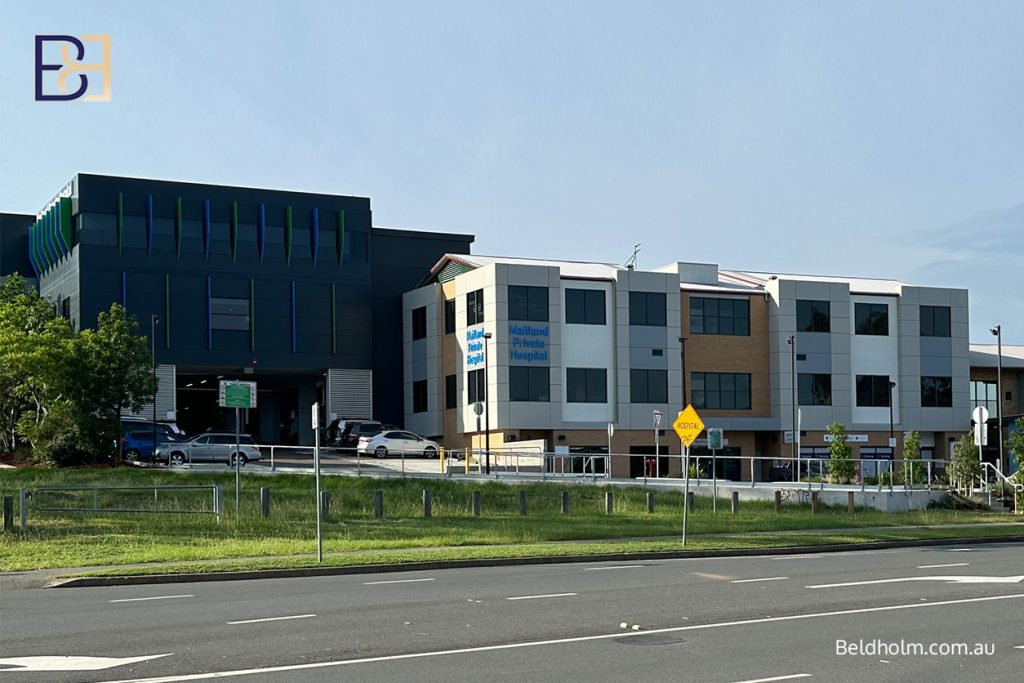
Depending on what is done, this may be a day procedure or a short admission at Maitland Private Hospital. The first several days involve soreness, swelling, and bruising of the lower abdominal region. You will be sore when you move, stand up, and get in and out of bed. Most women need regular pain relief in the early days. How much discomfort you feel, and for how long, differs from person to person.
Compression garments and movement
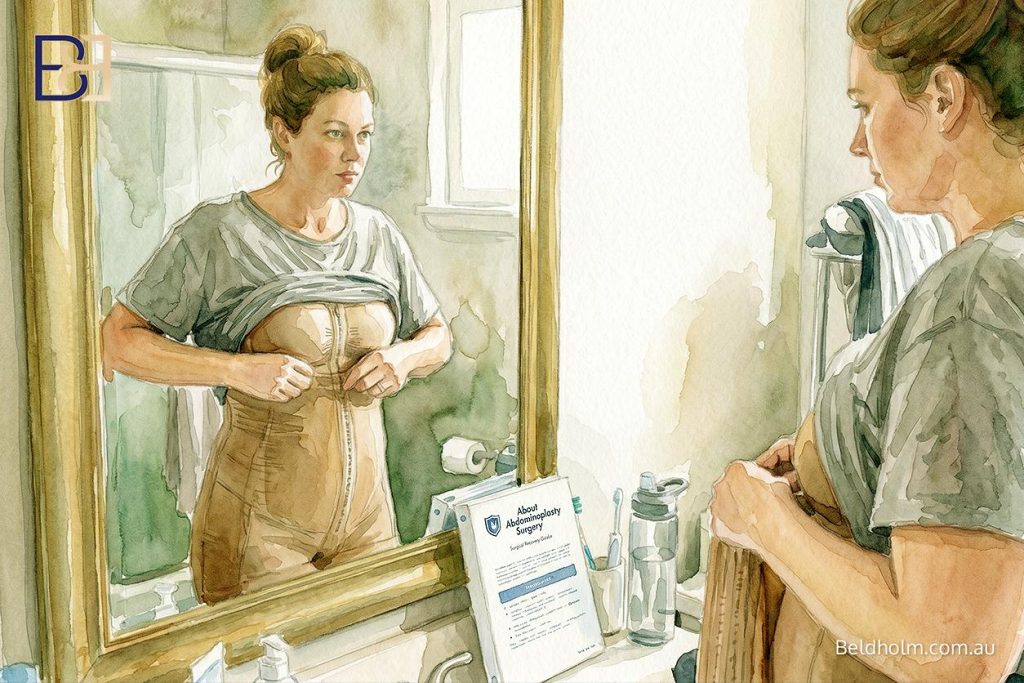
You will wear compression garments for several weeks, often in the range of three to six weeks, to support the area and help manage swelling. I want you up and walking soon after surgery, because moving reduces the risk of blood clots. At the same time, you need to avoid strenuous activity, heavy lifting, and core exercise for around six weeks while the healing process continues, longer if muscle repair was done.
Lifting and caring for young children
This is the part women most often underestimate. After this operation you will have lifting restrictions for several weeks, and that includes lifting toddlers and young children, car seats, prams, and shopping. If you have a baby or small children at home, you need real help organised in advance, for the first few weeks in particular. Recovering well and caring for young children at the same time is difficult without support, and it is worth sorting out who can help you before you book surgery, not after.
Going back to work and driving

Time off work depends on your job. Desk-based work is usually possible sooner than work that involves lifting or being on your feet all day. You should not drive until you are off strong pain relief and can move freely enough to perform an emergency stop, which is generally not in the first week or two, and longer if muscle repair was done. I give you specific guidance for your situation after abdominoplasty surgery.
The longer picture
Swelling settles gradually over weeks to months post surgery, and the final shape takes time to show. Early on, the area will look swollen and feel tight, and that is normal. How you recover, how you heal, and the final result all vary between patients. No two recoveries are identical, and I cannot promise you a particular timeline or outcome.
Looking after your scar
The scar from a limited abdominoplasty is permanent. What changes over time is how it looks. A new scar is usually firm and pink or red, and over many months it generally softens, flattens, and fades. This maturing takes a year or more, so the scar you have at six weeks is not the scar you will have at twelve months.
What helps a scar settle
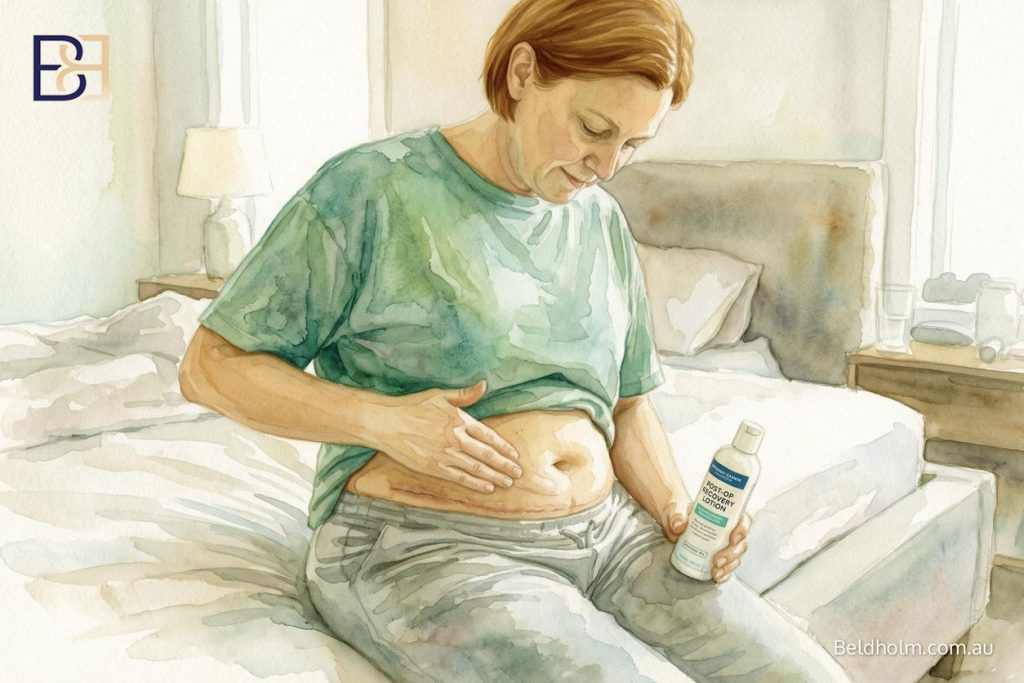
- Silicone. Silicone sheets or silicone gel, used consistently once the wound has healed, can help a scar flatten and fade over time.
- Sun protection. A new scar is sensitive to sunlight and can darken if it is exposed. Keep it covered or use sunscreen on it for the first year or so.
- Avoiding tension early. Heavy lifting and strenuous activity in the early weeks put tension on the healing scar, which can widen it. This is part of why the lifting restrictions matter.
What affects how a scar turns out
How a scar matures depends on your skin and your individual healing, which are largely outside anyone’s control. Some people are prone to thickened or raised scars. Smoking reduces blood flow to the healing tissue and worsens scarring, which is one of the reasons I ask patients to stop. I use modern dressings, including negative pressure wound dressings, to support healing in the early phase, and I review your scar at your follow-up visits.
Risks and complications
A limited abdominoplasty is surgery, and as with all surgical procedures it carries risks. The fact that it treats a smaller area than a full abdominoplasty does not make it risk-free. You should understand the following before you decide.
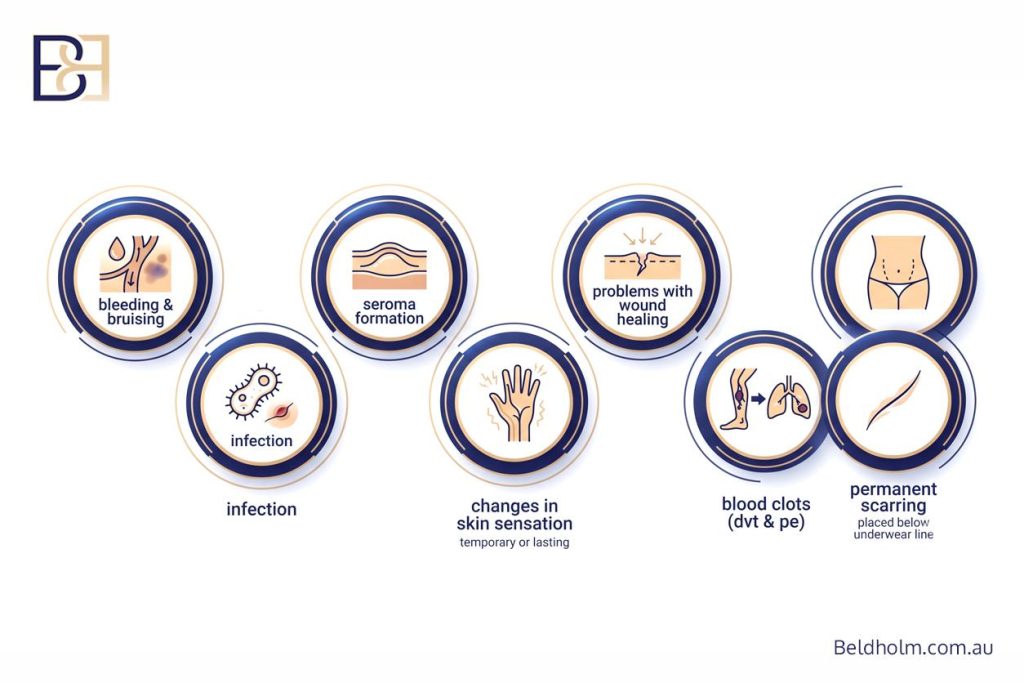
- Bleeding and haematoma. Bleeding under the skin can collect as a haematoma, which sometimes needs a return to theatre.
- Seroma. Fluid can collect under the skin after the operation. This is one of the more common issues after any abdominoplasty procedure and may need to be drained, sometimes more than once.
- Infection. Wound infection can occur and may need antibiotics or, less often, further treatment.
- Wound healing problems. The incision can be slow to heal or can partly break down, particularly in smokers. This can affect the final scar.
- Scarring. The scar is permanent. It can become thickened, raised, widened, or uneven, and you may need scar treatment or revision surgery to treat it.
- Changes in sensation. Numbness or altered sensation in the lower abdominal skin is common early on. It usually improves but can be permanent in places.
- Contour irregularities. The skin can heal unevenly, and small folds of skin (sometimes called dog-ears) can form at the ends of the incision. Where VASER liposuction is used, irregularities in the treated fat are also possible.
- General anaesthetic risks. A general anaesthetic carries its own risks, which the anaesthetist discusses with you.
Blood clots
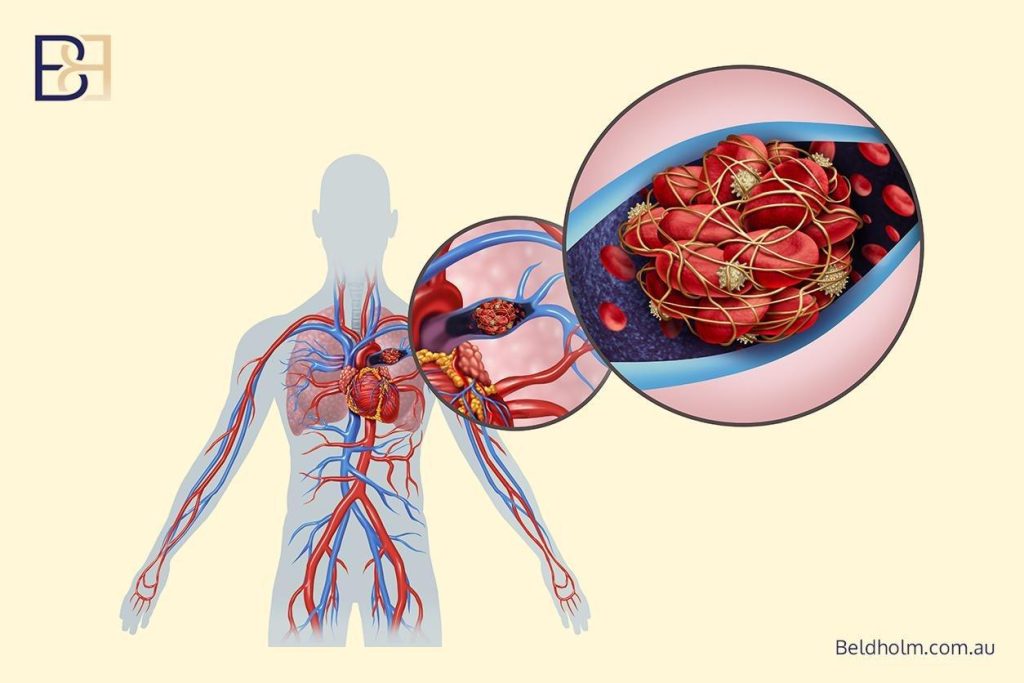
Deep vein thrombosis, a clot in the leg, and pulmonary embolism, a clot that travels to the lungs, are serious risks of this kind of surgery. I assess each patient’s risk of clots myself and decide on the appropriate measures to reduce it.
Revision surgery
Sometimes a further operation is needed to treat a complication or to adjust the result. This is not a guarantee of anything going wrong, but it is a possibility you should factor into your decision and your planning.
These are not all of the possible risks, and the risks that matter most for you depend on your health and your anatomy. I go through them with you in full at consultation, as part of deciding whether surgery is the right choice for you. Results vary between patients, and no outcome can be promised.
Combining abdominal and breast surgery, or staging them
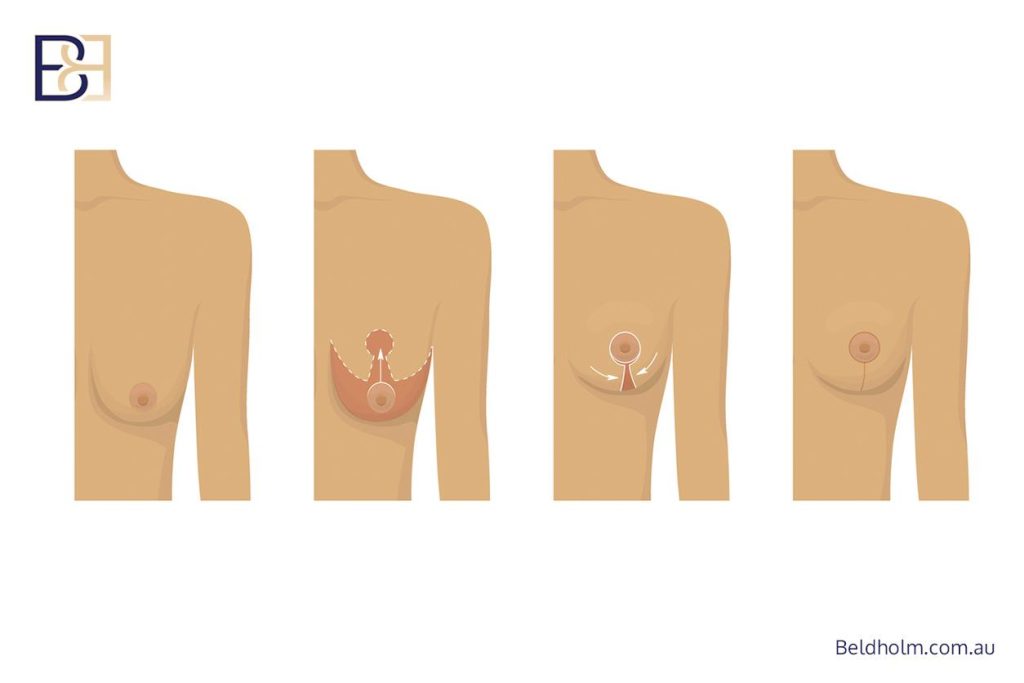
Some women who come to see me about abdominal surgery after pregnancy also ask about breast surgery, such as a breast lift (mastopexy), breast reduction (reduction mammoplasty), or breast augmentation (augmentation mammoplasty). Pregnancy and breastfeeding can change breast volume and position, and some women want to treat that at the same time. A common question is whether these can be done in the one operation or whether they are better done separately. There is no single answer. It depends on the individual.
What a single operation can mean
Where a patient is medically suited to it, treating the abdomen and breasts in a single comprehensive operation can mean one anaesthetic and one recovery period, rather than going through those steps more than once. That is the benefit for suitable candidates, and it is the only basis on which I would consider it.
A larger operation is a bigger event
Combining procedures means a longer operation and a greater physiological demand on your body, not a smaller one. The recovery is more, not less. If you are recovering from a combined operation while caring for young children, the planning and the support you need at home are greater again. I would rather be frank about that than gloss over it.
Staging is a legitimate choice
For some patients, doing everything at once asks more of the body than is sensible, and spreading the work across separate operations can be a safer and more appropriate path. Which approach suits you depends on your medical history, your nutritional status, the extent of what is being treated, and what can be done well in a single operating time.
Whether a single operation or staged surgery is right for you is decided at consultation, after assessment.
Preparing for surgery
There are a few steps between deciding to look into surgery and actually having it, and they are there for good reason.
Consultations and the cooling-off period

Cosmetic surgery in Australia involves at least two pre-operative consultations, and at least one of these is in person with me. You will not be asked to sign consent at your first consultation. After you have had your consultations and given informed consent, there is a cooling-off period of at least seven days before surgery can be booked. This is deliberate. It gives you time to sit with the decision rather than rush it.
Pre-operative checks
Before surgery you will have a standard set of pre-operative blood tests and any other checks your health calls for. Your GP is kept in the loop, and your general health is part of deciding whether surgery is appropriate for you. If you have ongoing medical conditions, managing them well in the weeks prior to surgery is part of the preparation.
Taking the preparation seriously is part of making surgery a sound decision, not an afterthought once a date is set.
Maintaining your result

The result of a limited abdominoplasty is not fixed in stone. A few things affect how well it lasts.
- A stable weight. A significant weight loss or weight gain after surgery can stretch or loosen the skin again and change the result. If you go on to lose weight, keeping it stable rather than letting it swing up and down gives the result its best chance.
- A subsequent pregnancy. As covered earlier, a pregnancy after surgery can stretch the skin and separate the abdominal muscles again, which is why surgery is usually planned once your family is complete.
- General habits. A healthy diet and healthy eating, along with moderate exercise once you are cleared to return to it, support your general health and help you hold a stable weight over time.
None of this is about chasing a particular look. It is about giving the result the best chance of lasting. Many women find the everyday habits that help here are the same ones that support general health.
My final thoughts

A limited abdominoplasty is a focused operation for the lower abdomen, and it suits a fairly narrow group of women after pregnancy: those whose loose skin and any muscle separation are confined to the area below the navel. For many women, the changes after pregnancy extend further than that, and a full abdominoplasty is the more appropriate operation. Which one fits, if either, is something I work out with you at consultation, not something that can be decided from a website.
The summary is this. It is a major operation under general anaesthetic. It leaves a permanent scar that is longer than a caesarean scar. Recovery takes time and planning, particularly with young children at home. It carries genuine risks. It is best timed once your family is complete and breastfeeding has finished. And results vary from one woman to the next, so nothing about the outcome can be promised in advance.
If you are weighing it up, the most useful next step is a consultation with a GP referral, where I can examine you and give you a frank assessment of your options, including the option of not having surgery.