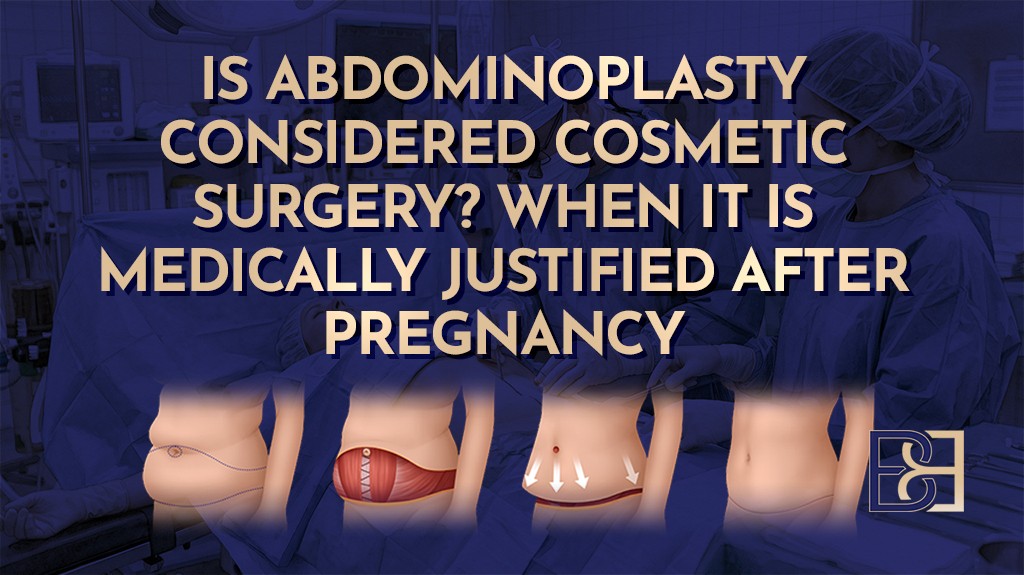
Patients ask me this often, so let me answer it directly. Whether abdominoplasty (tummy tuck) is cosmetic surgery depends on why it is being done. The label is not fixed to the operation. It is set by the reason for surgery and what the assessment finds.
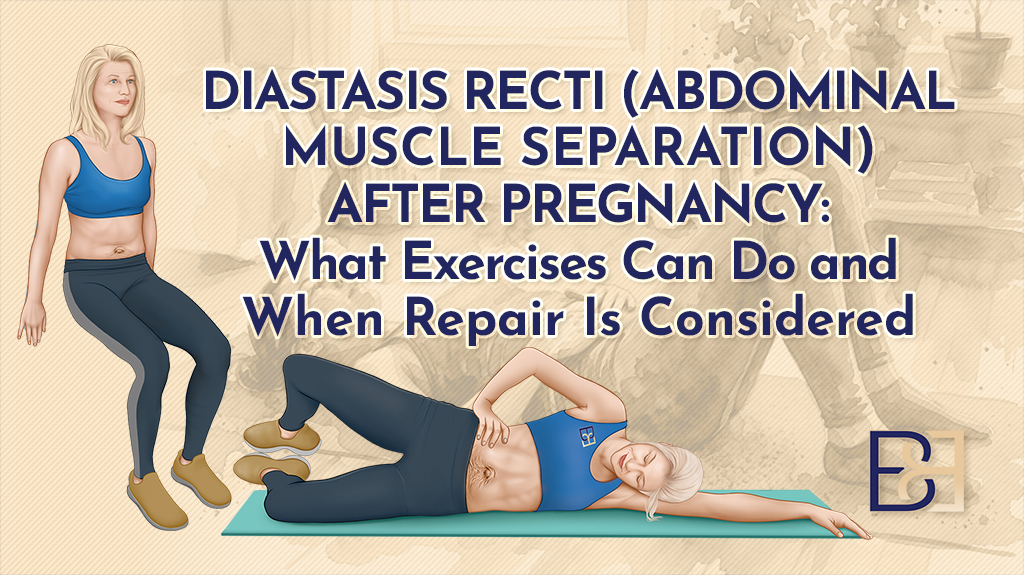
After pregnancy, the operation is frequently not about appearance alone. Many of the patients I see have separation of the abdominal muscles, known as diastasis recti (abdominal muscle separation), along with symptoms such as back pain, abdominal wall weakness or stress urinary incontinence. Repairing that separation has a functional purpose, not only a change to the appearance of the abdomen. Under the way Australian regulators define it, surgery carried out for a genuine medical reason sits outside the cosmetic category and closer to reconstructive surgery, and in some cases a Medicare item number may apply based on medical necessity.

In this article I explain how cosmetic and medically justified surgery differ, when each applies to a post pregnancy abdominoplasty, how Medicare item numbers and medicare eligibility fit in, and what the operation involves in terms of risks, recovery and timing.
What abdominoplasty (tummy tuck) involves after pregnancy
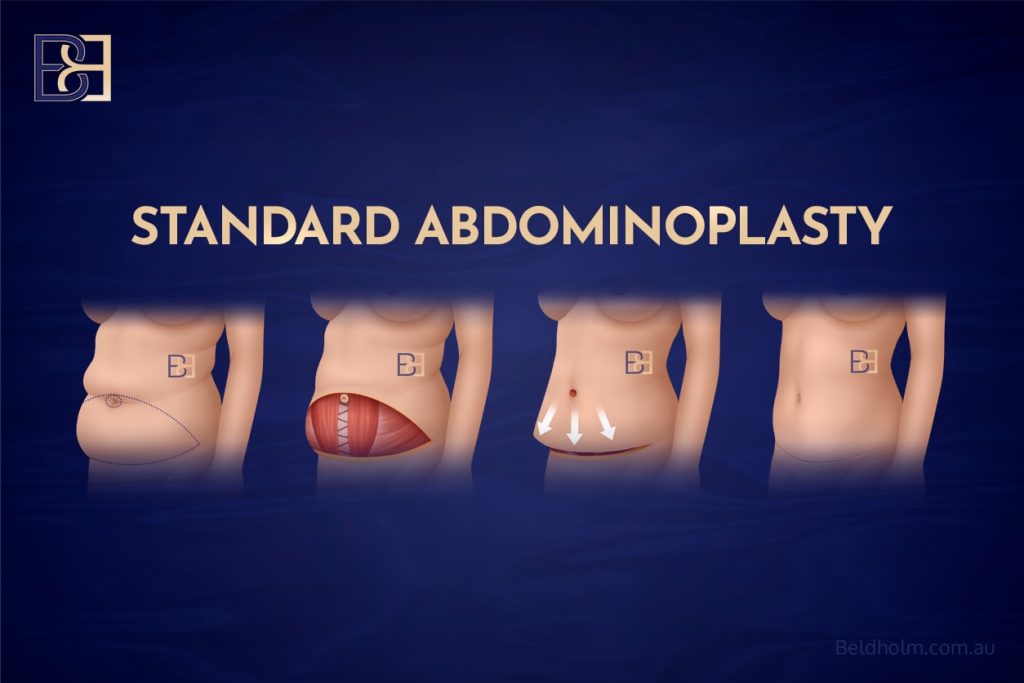
Pregnancy stretches the abdominal wall to make room for a growing baby. For many women the skin and muscles settle afterwards. For others, some changes remain. Abdominoplasty is the operation that deals with several of those changes, and exactly which ones depends on what the assessment finds.
The components I assess
There are five components I assess separately for every patient. A given patient may have some of these and not others.
- Skin. Removing excess skin is part of the operation. I remove the loose skin of the lower abdomen through an incision low across the abdominal wall, around the pubic hairline and usually at the level of a caesarean scar. The remaining excess skin is brought down and closed.
- Fat. Removing excess fat may also be part of the operation. Where appropriate I use ultrasound-assisted suction lipectomy (VASER liposuction) to contour and reduce excess fat at the same time. Whether this is included, and to what extent, depends on the individual.
- Muscle separation (diastasis recti). During pregnancy the two long muscles running down the front of the abdomen can separate along the midline, from the upper abdomen down past the navel. This is called diastasis recti (abdominal muscle separation), and it can leave weakened abdominal muscles. Where it is present, I bring the separated abdominal muscles back together along the midline and hold them with internal sutures. This part of the operation is the muscle repair, and it is called plication.
- Hernias. Pregnancy can be associated with an abdominal hernia, most often at the umbilicus (belly button). Where a hernia is present, it is identified and repaired during the same operation.
- Abdominal wall weakness other than hernias. Beyond muscle separation and discrete hernias, the fascia of the abdominal wall itself can be weak or lax. This is examined and managed as part of the repair.
Not every patient needs work on all five components, and the extent of each varies. What is appropriate is worked out at consultation after examination.
A serious operation, not a minor one
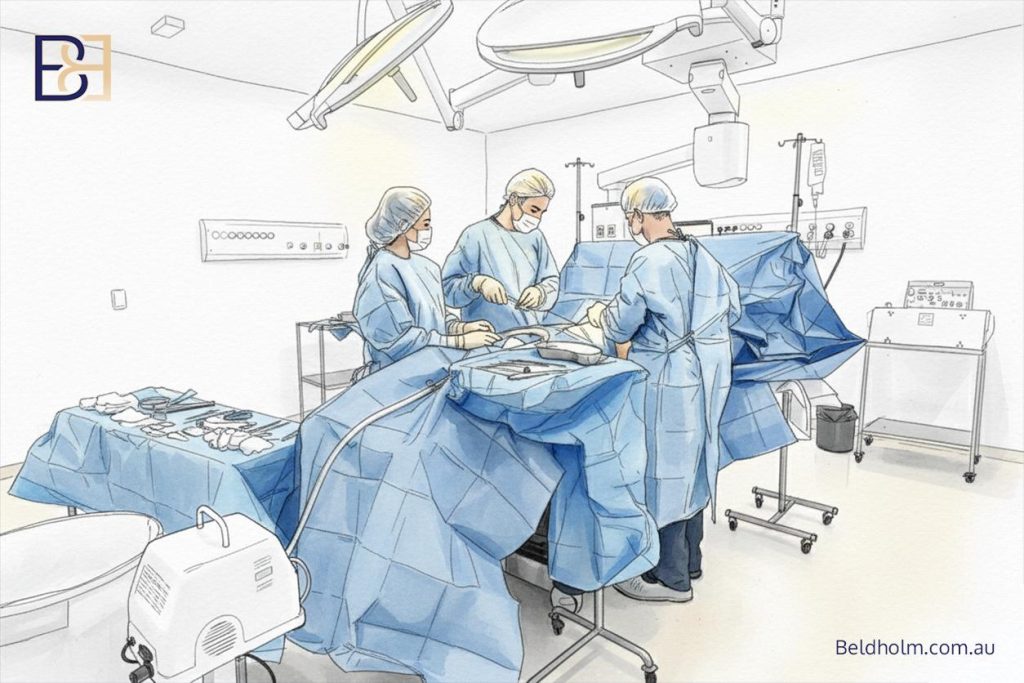
Abdominoplasty is major surgery carried out under general anaesthetic, involving an incision across the lower abdomen and, where diastasis is present, repair of the muscle layer. It carries real risks and a recovery period, both of which I cover later in this article. It is not a minor procedure, and the right approach for any individual is determined at consultation.
Cosmetic surgery versus medically justified surgery: the real distinction
The word “cosmetic” gets used loosely in everyday conversation. In Australia it has a specific regulatory meaning, and that meaning is what decides which category an operation falls into. The deciding factor is the dominant purpose of the surgery.
What counts as cosmetic surgery
The Medical Board of Australia, the body that registers every medical practitioner, defines cosmetic surgery as an operation that changes the appearance, structure or position of normal bodily features, where the dominant purpose is achieving what the patient sees as a more desirable appearance. Abdominoplasty is listed by name as an example of an operation that can be cosmetic surgery.
So when the main reason for surgery is the way the abdomen looks, the operation is cosmetic surgery. That is a legitimate reason to have surgery, and I treat it as a serious decision either way.
What counts as medically justified surgery
The same guidelines set out a separate category. Surgery may be medically justified when it involves correcting body structures that are not working as they should, for functional reasons, even where the operation also changes appearance. Surgery that has a genuine medical justification, including reconstructive surgery, is excluded from the cosmetic surgery definition. What matters is medical necessity, not appearance.
The key word is function. If an operation is done to deal with a functional problem, the fact that it also changes how the area looks does not make it cosmetic surgery.
The dominant purpose test, in plain terms

When I assess a patient, I am working out what the operation is mainly for.
- If it is mainly about appearance, it is cosmetic surgery.
- If there is a genuine functional problem driving it, it can be medically justified.
The two are not always neatly separated, because one operation can do both. The regulators deal with this by looking at the dominant purpose. So does the assessment I carry out at consultation.
Why the distinction matters
This is not just a labelling exercise. The category changes what you pay and how.
- Cosmetic surgery. When an operation is cosmetic, there is no MBS item number and no Medicare rebate. There is no private health insurance cover for it. Cosmetic surgery is also subject to GST. The cost is met by the patient.
- Medically justified surgery. Where an operation meets the criteria for an MBS item number, a Medicare rebate may apply, a private health fund or private health insurance may contribute towards the hospital fees and surgical fees, and the surgery is generally not subject to GST.
Whether a patient qualifies for an MBS item number is assessed individually and depends on meeting specific criteria. I set out the relevant item numbers, and how Medicare and health funds fit in, later in this article.
Where this lands after pregnancy
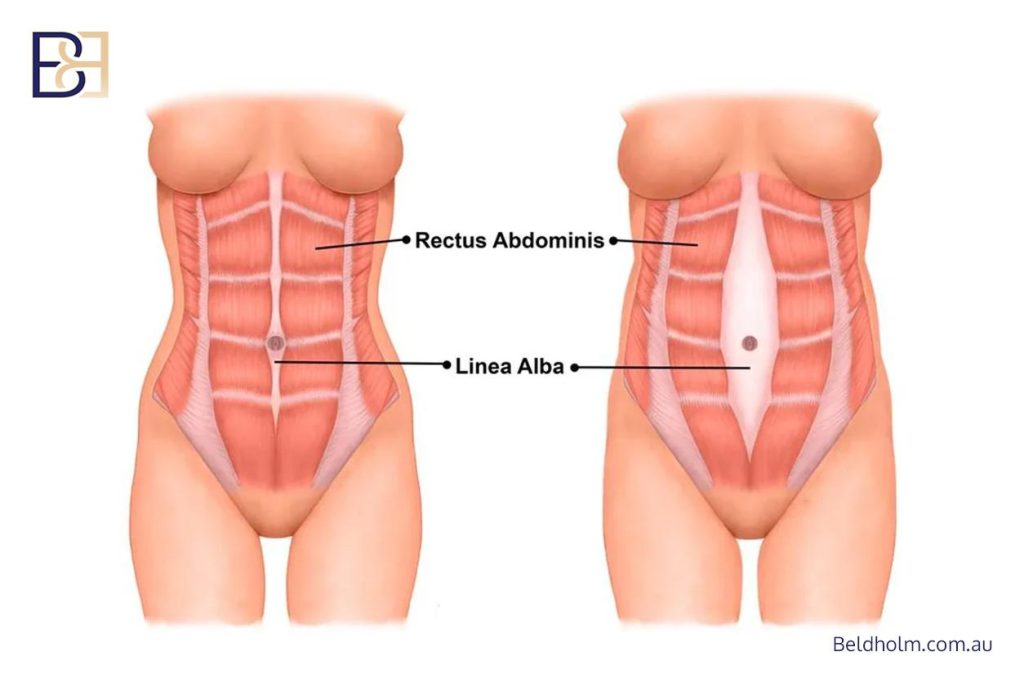
After pregnancy, the line usually comes down to whether there is a functional problem, not just a change in appearance. Separation of the abdominal muscles (diastasis recti) with symptoms, a hernia, or weakness of the abdominal wall can give an operation a medical justification. Where none of that is present and the operation is about appearance, it is considered cosmetic surgery. Where there is a functional problem, it may instead be deemed medically justified.
Which side of the line a particular patient sits on is not something that can be decided from a website or a photograph. It is determined at consultation after a GP referral, based on examination and history, and it differs from patient to patient.
When abdominoplasty after pregnancy is cosmetic surgery
Changes in the abdomen after pregnancy are normal. Loose skin and a change in the shape of the abdomen are part of how many bodies respond to pregnancy, and plenty of women are comfortable with them. Some women are not, and choose surgery to change the appearance of the area. That is a valid personal decision.
When appearance is the dominant purpose of the operation, and there is no functional problem driving it, the surgery is cosmetic surgery. It is a legitimate reason to have an abdominoplasty, and it means the cosmetic surgery rules apply in full.
What the cosmetic pathway involves

Cosmetic surgery in Australia has specific safeguards that I follow for every patient in this category.
- A GP referral is required before the initial consultation.
- At least two pre-operative consultations, with at least one of those in person.
- A cooling-off period of at least seven days after consultation and consent before surgery can be booked.
- Psychological screening, including a validated tool to screen for body dysmorphic disorder, because surgery is not the right answer for everyone.
- A discussion of your reasons and expectations, including the option of not having surgery at all.
These steps exist to make sure the decision is the right one for the individual, and that patients hold realistic expectations.
What it costs
As set out earlier, a cosmetic abdominoplasty has no Medicare rebate and no health fund contribution, and GST applies, so the full cost is met by the patient. I go through the fees in detail at consultation.
A serious decision either way

Choosing surgery for appearance reasons does not make it a small thing. It is still major surgery under general anaesthetic, with risks and a recovery period, which I cover further on. The aim of the cosmetic surgery safeguards is to give patients the time and information to make a considered decision.
When abdominoplasty after pregnancy may be medically justified
After pregnancy, a medical justification usually comes down to the abdominal muscles and the wall they form. Where there is a functional problem, not just a change in appearance, the operation can fall into the medically justified category.
The functional problems I look for
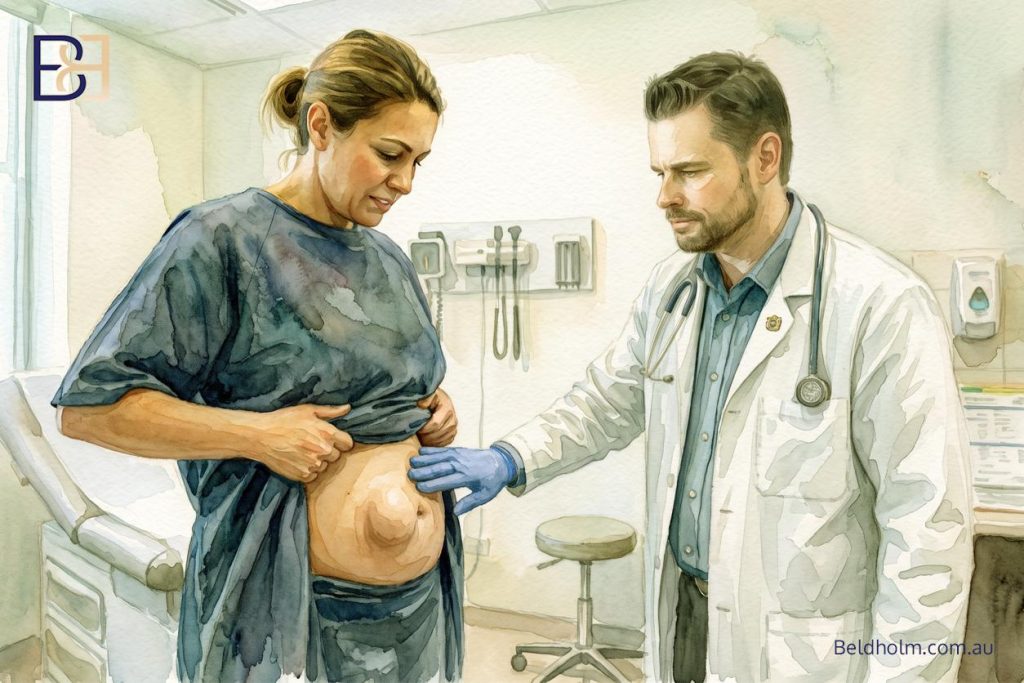
A few things can give an abdominoplasty a medical justification after pregnancy.
- Symptomatic diastasis recti (abdominal muscle separation). When there is a significant muscle separation and the abdominal wall no longer works as it should, some women have weakness through the core, difficulty with certain movements, and a sense that the abdominal wall offers no support.
- Hernia. An umbilical or other abdominal wall hernia is a clear medical problem and is repaired during the operation where present.
- Back pain and urinary symptoms. Some women report low back pain and stress urinary incontinence that they link to the muscle separation. These symptoms are common after pregnancy and have many causes, so they are assessed carefully rather than assumed to be caused by the diastasis.
What the research shows
There is published research on functional symptoms and abdominoplasty with muscle repair in women after pregnancy.
A multicentre Australian study of 214 postpartum women presenting for abdominoplasty after pregnancy used validated questionnaires to measure low back pain and urinary incontinence before and after surgery. It reported a statistically significant improvement in both back pain and urinary incontinence scores at six weeks and again at six months (1). A separate prospective study of abdominoplasty with diastasis recti correction found that the operation did not worsen stress urinary incontinence, as might be expected from the change in abdominal pressure, and was associated with improvement in this symptom at one year (2).
Research like this tells us there is a genuine functional dimension to consider. It does not mean surgery is the answer for any individual, and the results recorded in a study are averages across a group.
Surgery is not the first step for these symptoms

A functional symptom on its own does not mean surgery. Diastasis recti is often managed first with physiotherapy and a structured core program, and many women improve without an operation. These functional concerns are taken seriously. Surgery comes into the picture when there is a clear functional problem, conservative measures have been considered, and the assessment supports it.
Whether a particular patient has a medical justification, and whether the criteria for a Medicare item number are met, is decided at consultation after a GP referral. It is assessed individually, every time.
MBS item numbers and Medicare after pregnancy
If a post pregnancy abdominoplasty is medically justified, a Medicare item number may apply, and medicare eligibility comes down to item 30175.
What item 30175 covers
Item 30175 is the Medicare item for radical abdominoplasty with repair of the muscle separation following pregnancy. It was introduced on 1 July 2022. An earlier item for this was removed in 2016 over concerns it was being claimed for appearance-driven surgery, so the current item has tight criteria written specifically to keep it to genuine functional cases (3).
Let me be clear up front: this item is for a defined group of patients, not for everyone who has had children and wants an abdominoplasty.
The criteria the MBS sets
To qualify under item 30175, the MBS criteria require all of the following.
- An abdominal wall defect that is a consequence of pregnancy.
- A diastasis recti (abdominal muscle separation) of at least 3 cm, confirmed by diagnostic imaging.
- Either or both of: at least moderately severe pain or discomfort at the site of the separation during functional use; or low back pain or urinary symptoms likely due to the separation. The symptoms must be documented in your records by the surgeon performing the operation.
- Failure to respond to non-surgical conservative treatment, which must have included physiotherapy.
- No pregnancy in the last 12 months.
The item can be claimed once in a lifetime. The criteria are deliberately strict, and some women who have symptoms related to the muscle separation will not meet them. A woman who does not qualify can still choose to have the operation, but would self-fund the full cost.
How the rebate works

I am not going to put a dollar figure here, because the MBS schedule fee is indexed and changes on 1 July each year. For the current figure, the place to look is MBS Online.
What I can explain is the structure.
- Medicare pays a benefit set at 75% of the MBS schedule fee for the item.
- For a privately insured patient treated in hospital, the health fund covers at least the remaining 25% of the schedule fee.
- The schedule fee is not the same as the total cost of surgery. There is usually a gap between the schedule fee and the actual fees, which I set out in writing before surgery.
- Where the operation is medically necessary under this item, GST does not apply.
How eligibility is worked out

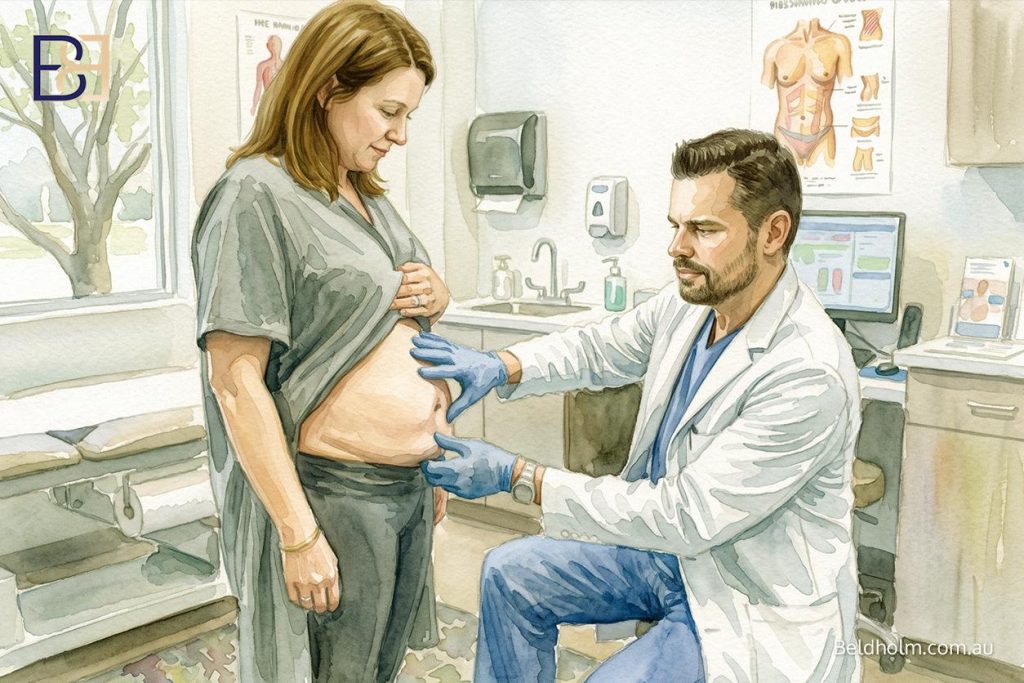
A GP referral is required before the consultation. At the initial consultation I take a complete medical history, including any previous abdominal surgery, examine the abdominal wall, arrange diagnostic imaging to measure the separation, and document the symptoms and the conservative treatment that has been tried. From there I prepare a surgical plan. Whether the criteria are met is assessed individually, and having some symptoms does not by itself mean the criteria are satisfied. You will receive a written quote setting out the item number, the rebate, the hospital and anaesthetist estimates, and any gap.
Book your appointment online now
Risks and recovery realities
Whether an abdominoplasty is cosmetic or medically justified, it is the same major surgical procedure, with the same risks and the same recovery. I want patients to go in with a clear picture of both.
A bigger physiological event
Abdominoplasty is carried out under general anaesthetic, and the more that is done in one operation, the larger the physiological event it is. That is the trade-off of doing the work in a single procedure.
The main risks
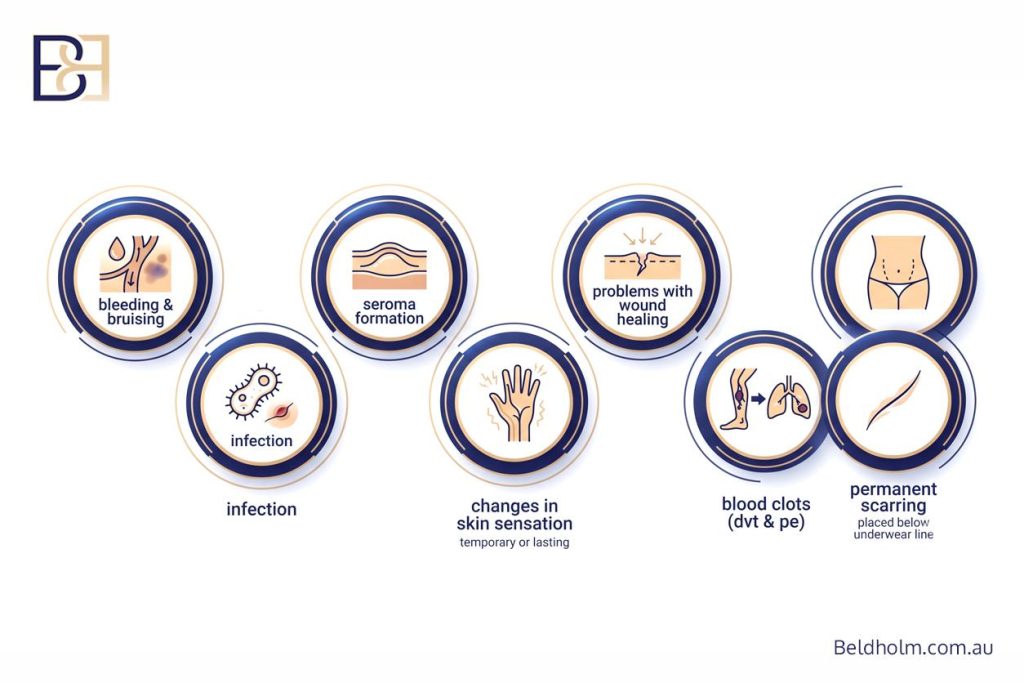
Every patient receives a full discussion of risks at consultation. The main ones include:
- Excessive bleeding and haematoma, a collection of blood that can need drainage.
- Infection, which may need antibiotics and, less often, further treatment.
- Seroma, a collection of fluid under the skin that can need draining.
- Poor wound healing, including delayed healing or separation of the wound edges. Smoking raises this risk considerably, which is why I ask patients to stop well before surgery.
- Changed sensation, with numbness across the lower abdominal region that is common early on and can be long lasting.
- Asymmetry or contour irregularity, which can sometimes need further surgery to revise.
- Anaesthetic risks, which the anaesthetist discusses with you.
- Scarring, which is permanent. I cover scars below.
This is not a complete list, and the risks that matter most for you depend on your health, history and any previous surgery. That is part of what the consultation is for.
Blood clots, and how I manage the risk
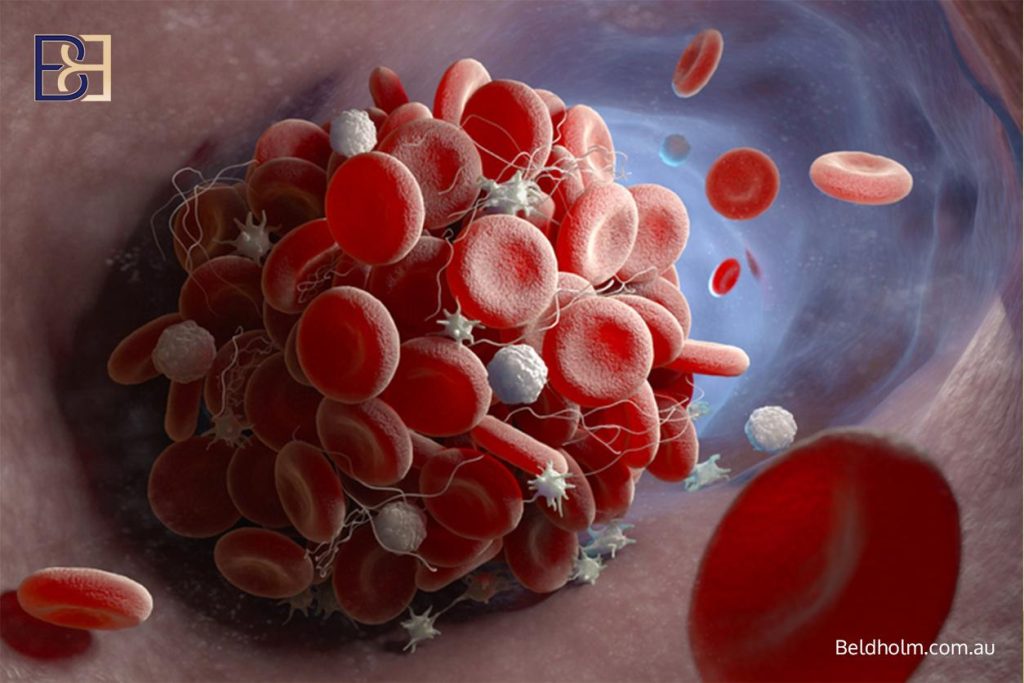
A clot in the leg (deep vein thrombosis) or lung (pulmonary embolism) is an uncommon but serious risk of this kind of surgery. I assess each patient’s clot risk myself and decide on the measures to lower it. Depending on your risk, that can include the timing of your medications, measures during and after surgery, and getting you moving early.
What recovery is actually like
Most patients stay in hospital for one to two days. In the early days you will move slowly and stand slightly bent forward, and a compression garment is worn for several weeks. Some patients have drains for a short period; many do not, and whether you need them depends on the extent of the operation.
I see patients frequently in the first couple of weeks for wound checks and dressing changes, then at set points over the first year. Most people need several weeks away from their normal routine, and heavy lifting and strenuous exercise are avoided for longer. These are general guides. Your recovery is assessed individually.
Recovery while caring for young children

This matters after pregnancy. For a period after surgery you will not be able to lift small children, push a heavy pram, or carry on as usual at home. That is a real constraint, not a minor inconvenience, and it is worth planning support at home before surgery rather than after.
Scars
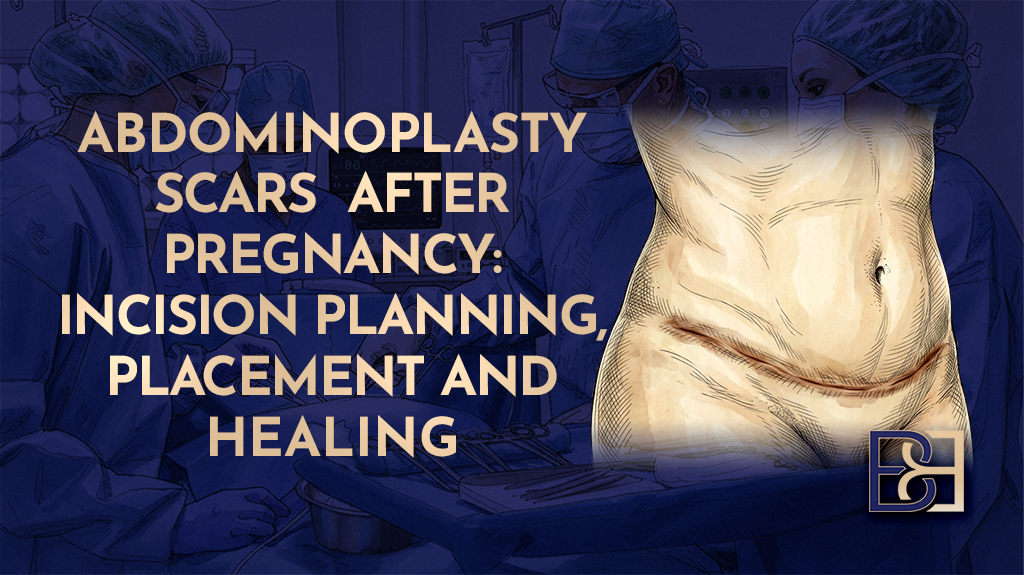
An abdominoplasty leaves a permanent scar low across the abdomen, usually around the level of a caesarean scar, and a scar around the umbilicus where the operation involves transposing it. Scars fade over many months but never disappear. How a scar matures varies between people, and some develop thickened or raised scars.
Results vary
The outcome of this operation differs from one person to the next, and depends on factors including your tissues, your health, your healing, and weight stability afterwards. No operation gives an identical result for everyone, and I do not promise a specific outcome.
Timing of surgery after pregnancy
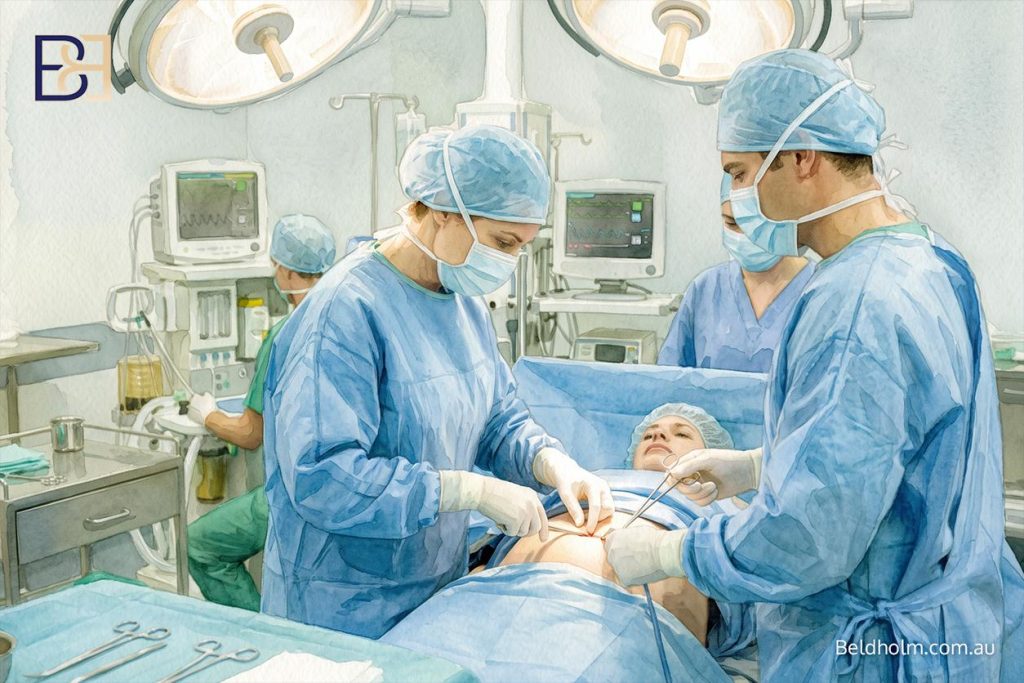
One of the first questions I am asked is how soon after having a baby abdominoplasty surgery can be done. Post pregnancy surgery is generally planned once the body has settled. The answer is not a fixed number of months. It depends on the body settling and on your plans for any further pregnancies.
Letting the abdominal wall settle
After pregnancy, the abdominal skin and muscles change over time on their own. A good deal of that settling happens in the months following birth, and operating too early means working on tissues that are still changing. As a rough guide I look at around 12 months from the most recent pregnancy, but this is a general starting point, not a rule, and it is assessed for each patient.
Why I generally wait until your family is complete
This is the bigger factor. A later pregnancy can stretch the repaired muscle and the skin again, which can change the result of an operation done beforehand. For that reason I generally plan abdominoplasty once a patient’s family is complete. It is not that surgery is impossible otherwise, but a further pregnancy can undo part of what the operation achieved, and most patients would rather not face that.
The Medicare criteria for item 30175 reflect this too. One of the requirements is that the patient has not been pregnant in the last 12 months.
Breastfeeding

Breastfeeding affects the breasts, not the abdominal wall, so it does not change the abdominal repair itself. Even so, I generally plan surgery once breastfeeding has finished, as part of the body settling after pregnancy and so that recovery is not competing with feeding. If you are breastfeeding, that is something we factor into timing at consultation.
It is decided individually

The right timing is worked out at consultation, after a GP referral, based on how your body has settled, your symptoms, your weight, and your plans for further children. There is no single answer that fits everyone, and results vary between patients.
Long-term results and what affects them
Patients want to know whether the result of an abdominoplasty procedure lasts. The answer is that some of it is durable and some of it can change over time, depending on what happens to your body afterwards.
What lasts, and what can change
The skin removed during the operation is gone and does not grow back. The muscle repair is designed to be long lasting, and in most patients it holds. It is not guaranteed to be permanent in every case, though. Recurrence of the separation after repair has been reported, with rates that vary by surgical technique, and some published series report it in around 1 in 10 patients (4). So the change to the abdominal wall is durable for most women, but not guaranteed.
What the operation cannot do is freeze the body in time. The remaining skin and tissues still respond to weight, ageing and any future pregnancy, the same as anyone else’s.
Weight
A stable weight gives the most stable result, and the change holds best when a stable weight is maintained. A significant gain or loss after surgery can change the shape of the abdominal area and the appearance of the skin. This is not about holding to any particular number, it is that large swings in weight affect the tissues the operation worked on.
Future pregnancy
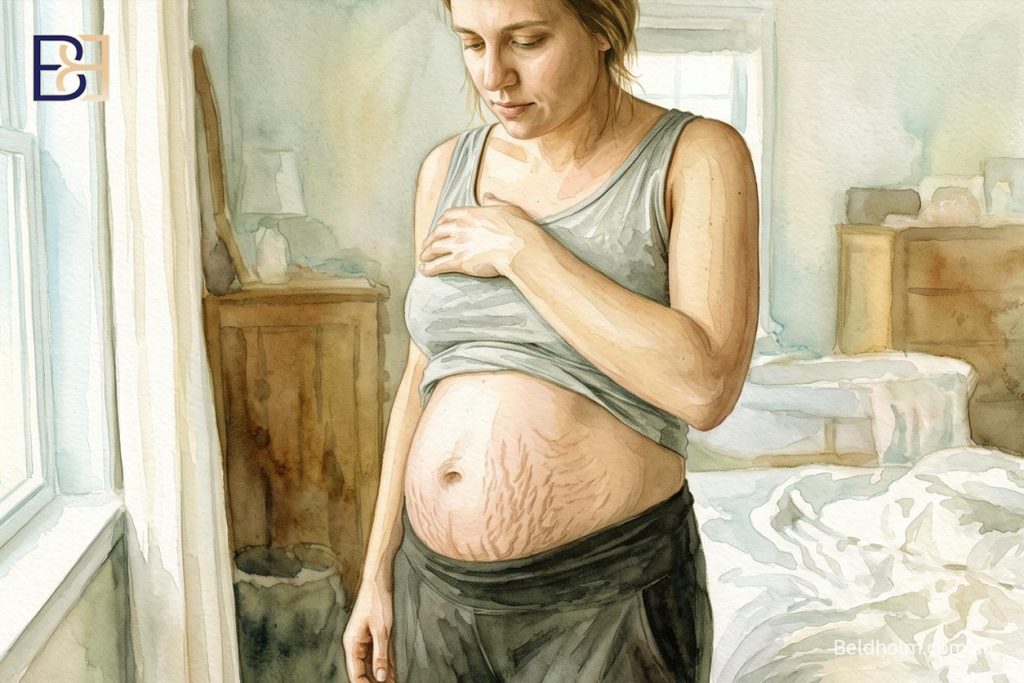
A pregnancy after an abdominoplasty can stretch the skin and the repaired muscle again, and can change the result. This is the main reason I generally plan surgery once a patient’s family is complete. If a further pregnancy does happen, it does not make the surgery dangerous, but the abdomen may not look the way it did before the pregnancy.
Ageing and scars
Skin changes gradually with age for everyone, and that continues after an abdominoplasty. The scars fade over many months as they mature, but they are permanent and do not disappear. How they settle varies from person to person.
Results vary
No two patients get the same result, and I do not promise a specific outcome. What your result looks like in the long term depends on your tissues, your healing, your weight, and your plans for further pregnancies. These are the things I talk through at consultation so that what you expect matches what the operation can realistically do.

Frequently asked questions
Is an abdominoplasty (tummy tuck) cosmetic surgery or medical surgery?
It depends on why it is being done. When the dominant purpose is changing the appearance of the abdomen, the abdominoplasty procedure is cosmetic surgery. When there is a functional problem driving it, such as a symptomatic muscle separation (diastasis recti), a hernia, or weakness of the abdominal wall, it can be medically justified. Which category your situation falls into is determined at consultation after a GP referral.
Will Medicare cover my abdominoplasty after pregnancy?
Only if you meet the criteria for MBS item 30175. These include a muscle separation (diastasis recti) of at least 3 cm confirmed on imaging, documented symptoms, a trial of conservative treatment including physiotherapy, and no pregnancy in the last 12 months. The criteria are strict, and not everyone who has had children will meet them. Whether Medicare or a health fund will cover abdominoplasty depends on meeting these criteria. Eligibility is assessed individually, and the current schedule fee is listed on MBS Online.
How long after having a baby can I have surgery?
There is no fixed number of months. As a general guide I look at around 12 months from the most recent pregnancy, so the abdominal wall has had time to settle, but this is assessed for each patient. I generally plan surgery once your family is complete and breastfeeding has finished, because a later pregnancy can change the result.
What are the main risks?
Abdominoplasty (tummy tuck) surgery, is major surgery under general anaesthetic. The risks include bleeding, infection, fluid collections, wound healing problems, changed sensation, blood clots, scarring, and the possibility of needing a revision. I go through the risks that are most relevant to you, based on your health and history, at consultation.
Will the muscle separation come back?
The repair is designed to be long lasting and holds in most patients. Recurrence of the separation has been reported in around 1 in 10 patients, and a later pregnancy or a large change in weight can also affect the result. This is one reason I do not promise a fixed outcome.
Does abdominoplasty help with back pain or bladder leakage?
Some women report improvement in low back pain and stress urinary incontinence after surgery, and there is published research on this. It is not guaranteed; the results in studies are averages across a group, and surgery is not the first step for these symptoms. Whether there is a functional problem that surgery might help is assessed individually.
References
- Taylor DA, Merten SL, Sandercoe GD, Gahankari D, Ingram SB, Moncrieff NJ, Ho K, Sellars GD, Magnusson MR. Abdominoplasty improves low back pain and urinary incontinence. Plast Reconstr Surg. 2018;141(3):637-645.
- Toto V, Faiola A, Pazzaglia M, de Donato F, Persichetti P. Could abdominoplasty with diastasis recti abdominis correction improve stress urinary symptoms? A 1-year follow-up prospective study. Aesthetic Plast Surg. 2024;48(19):3929-3935.
- Australian Government Department of Health and Aged Care. Medicare Benefits Schedule, item 30175. MBS Online. Available from: http://www.mbsonline.gov.au
- Du Y, et al. Diastasis recti abdominis: a comprehensive review. Hernia. 2025;29(1):222.