Diastasis recti, also called rectus diastasis or abdominal muscle separation, is a common and normal change during and after pregnancy. The abdominal wall stretches to make room for a growing baby, and in many women the two halves of the abdominal muscles move apart along the midline. For most women this settles over the months after birth. For some, a degree of separation remains.
In my practice I see women at every stage of this, from new mothers wanting to understand what they are feeling, through to women whose families are complete and who are weighing up their options. This article explains what diastasis recti is, how it is assessed, the role of physiotherapy and exercise, the non-surgical supports available, and when an operation such as abdominoplasty (tummy tuck) with diastasis recti repair becomes a reasonable thing to consider.
Whether any treatment is right for you is an individual question, and the clearest answers come from being assessed in person. A GP referral is required before a consultation with me, where we can go through your situation and your options together.
Understanding Diastasis Recti
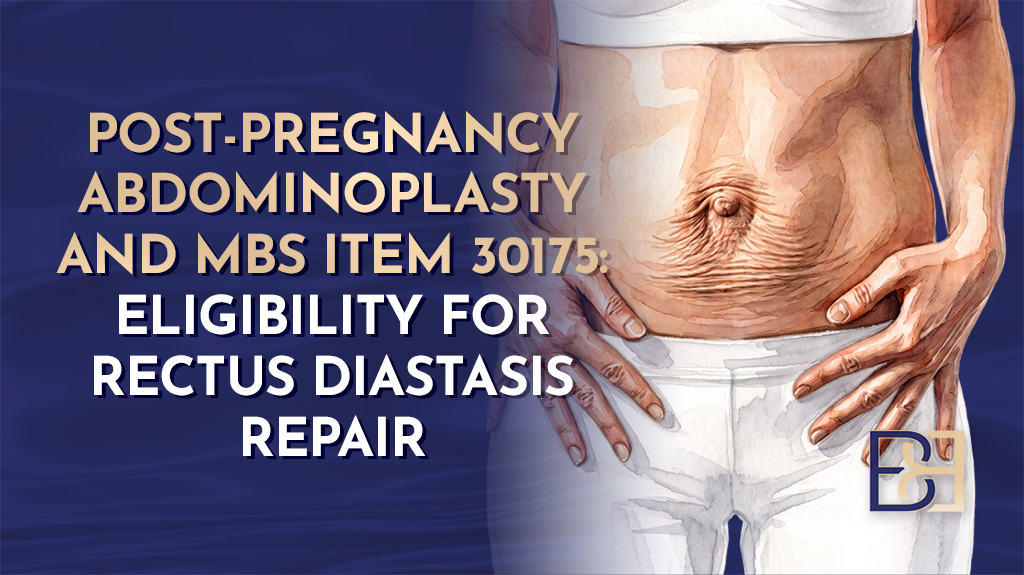
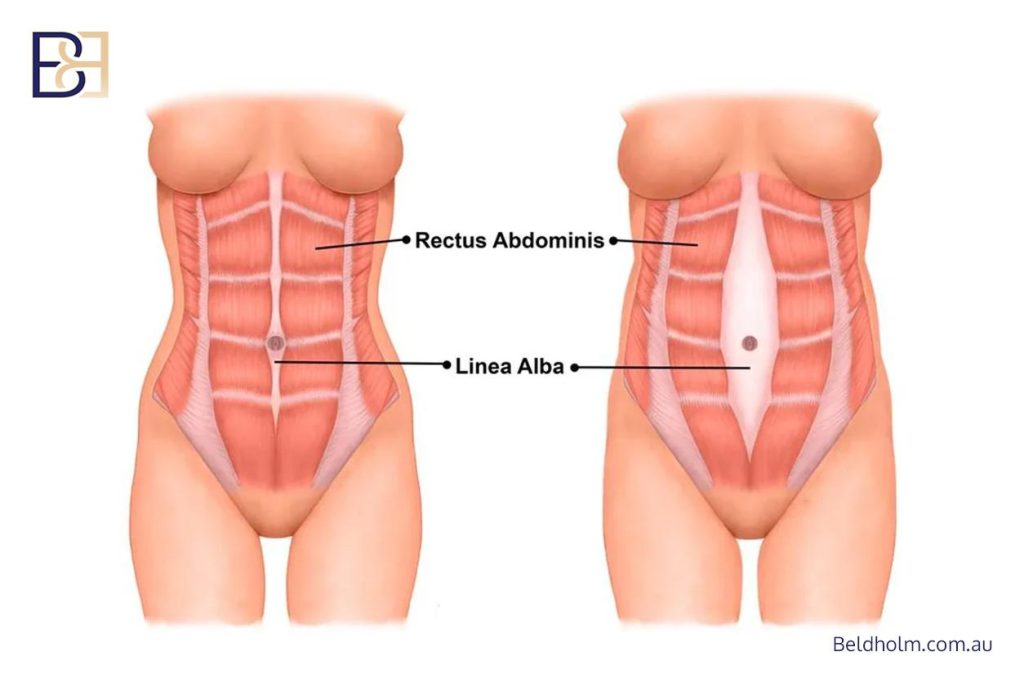
Diastasis recti, sometimes written in full as diastasis recti abdominis or rectus abdominis diastasis, is when the two sides of the rectus abdominis muscles separate along the connective tissue that runs down the midline of the abdomen. These are the long muscles down the front of the stomach. That midline band of tissue is called the linea alba. During pregnancy it softens and stretches under the influence of hormones and the growing uterus, and the muscles on either side move apart.
This is a normal part of how the body accommodates pregnancy. Research has shown it is very common, occurring in a large proportion of women in late pregnancy and in the early months after giving birth (1). In many women the gap narrows on its own over the first months postpartum. In others, some separation persists beyond that point (2).
What you might notice
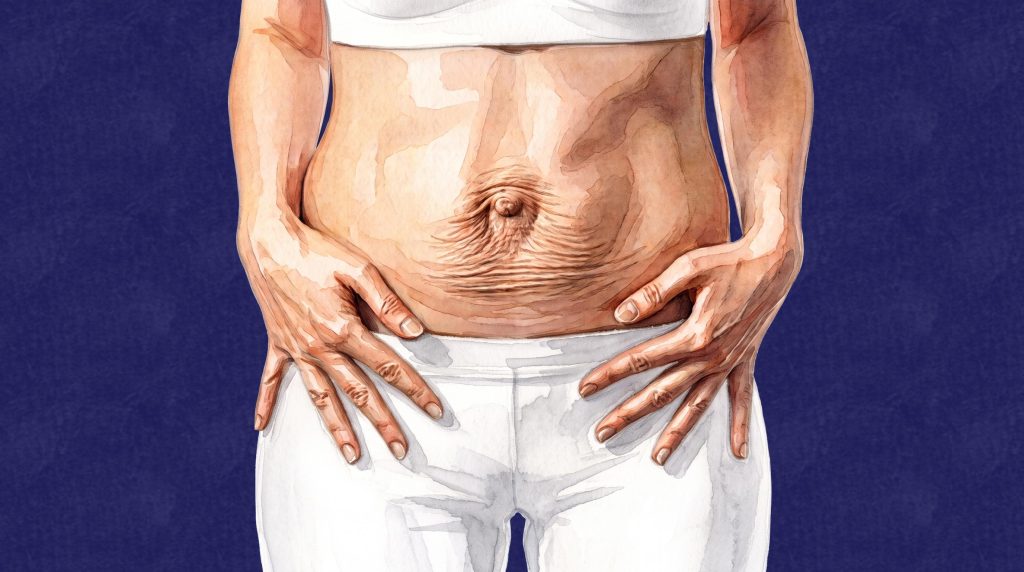
The way separation presents varies a lot from one woman to the next. Some women notice very little. Others describe:
- A visible or palpable abdominal gap down the middle
- A ridge or doming along the midline when sitting up or straining
- A feeling that the core is less stable than it used to be
- Lower back or pelvic discomfort
Published research has looked at the link between separation and low back pain or pelvic pain. The findings are mixed, and a wider gap does not automatically mean more symptoms (3,4). In other words, the size of the separation and how it feels are not always closely related.
Who it affects
Diastasis recti is most often discussed in the context of pregnancy, and that is the focus here. It can also occur for other reasons, including in men, but the pattern many women experience relates to carrying one or more pregnancies. Having more than one pregnancy, and larger babies, are among the factors associated with separation persisting (4).
How Diastasis Recti Is Assessed
A self-check at home
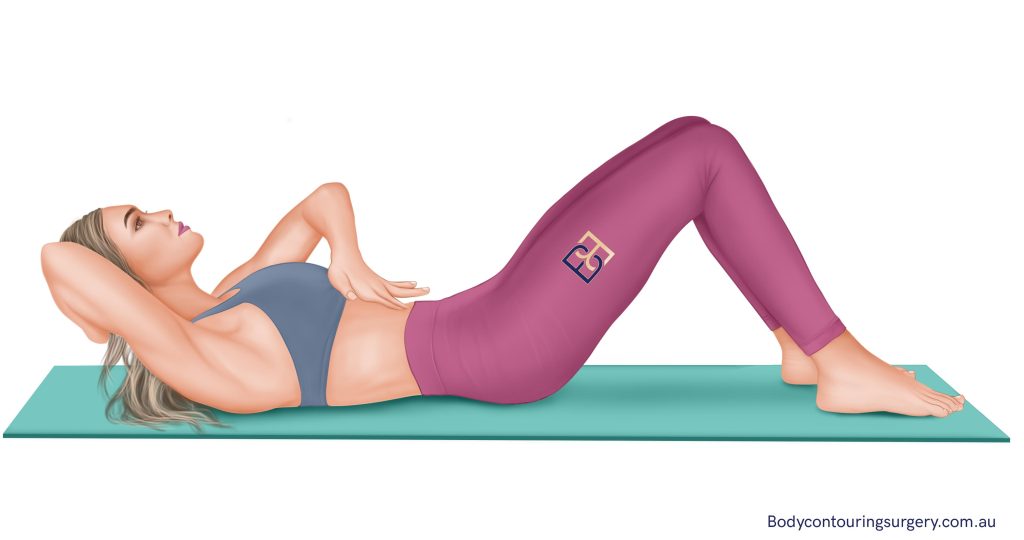
You can get a rough sense of separation at home. Lie on your back with your knees bent and feet flat on the floor. Lift your head and shoulders slightly off the ground and place your fingers along the midline of your abdomen, around the level of your belly button. As you raise your head, feel for a gap between the muscle bands on either side.
A separation you can feel is common after pregnancy. A self-check tells you something is there, but it does not tell you how it relates to your symptoms or what to do about it. It is a starting point, not a diagnosis.
Seeing a professional
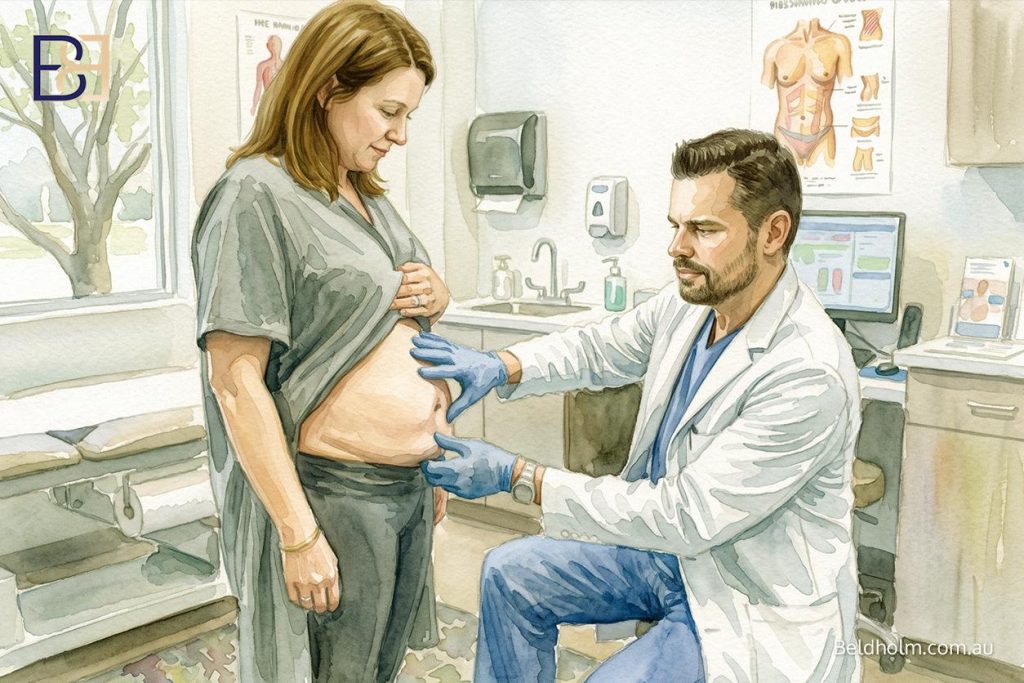
If the self-check raises questions for you, the next step is your GP. A GP referral is required before any consultation with me, and your GP is well placed to point you towards the right first step, which for many women is a women’s health physiotherapist.
A physiotherapist can assess the width of the separation, how the linea alba behaves when you load the abdomen, and how well your deep abdominal and pelvic floor muscles are working. That functional picture matters more than a single gap measurement on its own, and it guides the treatment plan that is likely to help.
Physiotherapy and Exercise
For many women, guided exercise is the right first approach, and it is where I encourage most new mothers to start. Research into exercise programs for abdominal separation suggests targeted strengthening exercises can help, particularly when the exercise program is tailored by a physiotherapist rather than followed from a generic plan (5,6). The focus is on the deep core muscles, the transverse abdominis and the pelvic floor, using slow, controlled movements and deep breathing.
Transverse abdominis activation
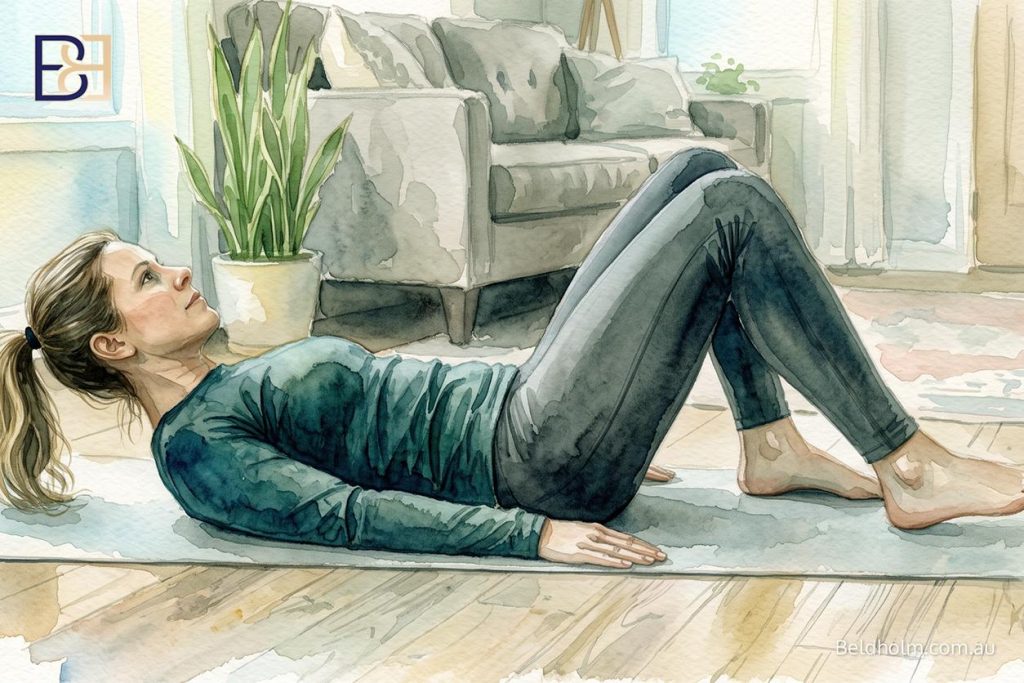
The transverse abdominis is the deep muscle that wraps around the trunk and supports the spine and pelvis. Learning to engage it is the foundation of most programs. A common starting exercise is the heel slide: lying on your back with knees bent, gently draw in the lower abdomen, then slide one heel away along the floor while keeping the core engaged, then return to the starting position. Abdominal bracing, where you gently tighten the abdominal wall as though preparing for light contact, is another way to build the same control.
Pelvic floor work
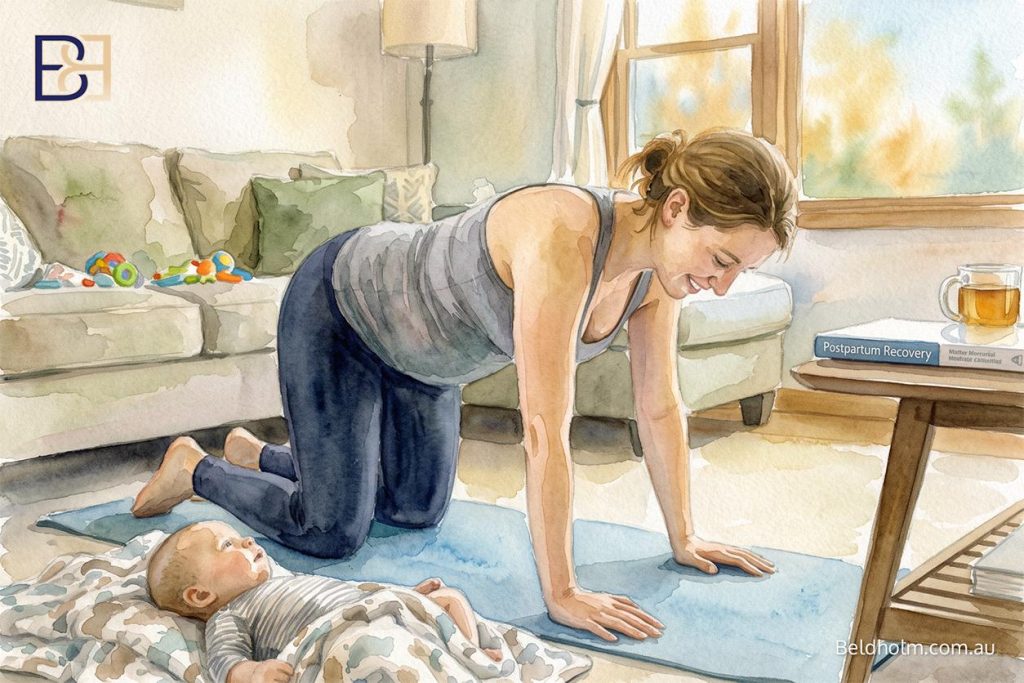
The pelvic floor and the deep abdominals work together, so pelvic floor exercises are usually part of the picture after pregnancy. Pelvic tilts, done on all fours or lying down, and pelvic floor contractions (often called Kegels) help rebuild that coordination. These can be fitted into a busy day with a baby, which matters when time is short.
Modified core exercises
As control improves, a physiotherapist may add graded progressions such as toe taps and modified planks. The aim is to build core strength gradually, without loading the midline in a way that makes the separation worse.
What to be cautious with
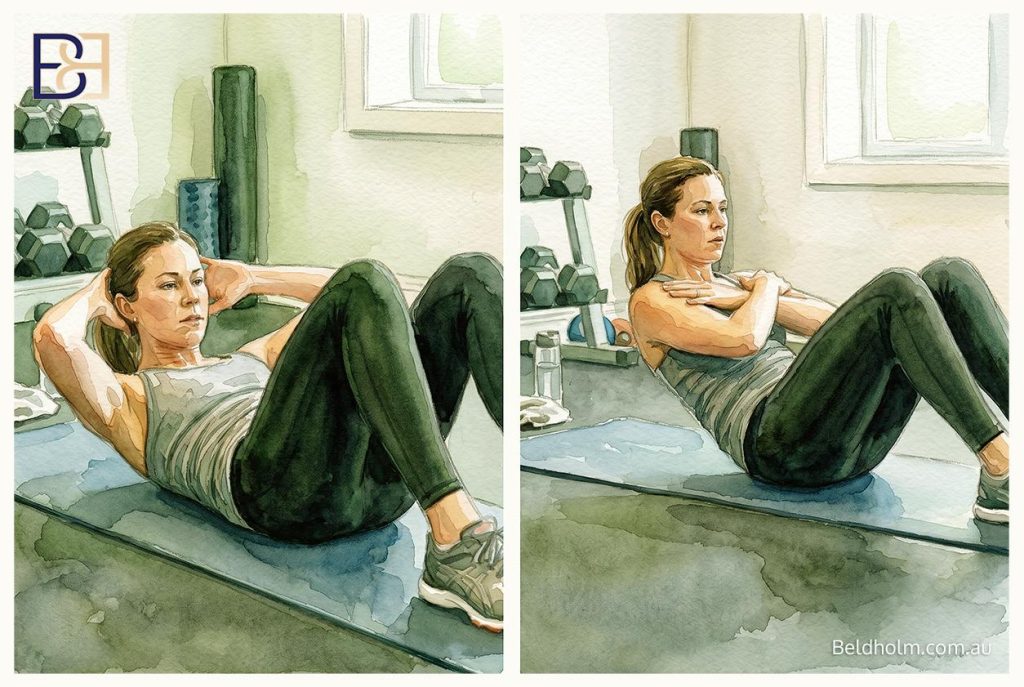
Some movements push the abdominal wall outward and can place more strain on the midline. These are generally best avoided until your physiotherapist advises otherwise:
- Traditional sit-ups and crunches
- Double leg lifts
- Heavy lifting
- Positions that cause the midline to dome, such as some yoga poses
This is general information. What is appropriate for you depends on your assessment, so it is worth having a program set by a physiotherapist who has examined you.
For a set of starting exercises designed for separation after pregnancy, see my guide to exercises for muscle separation after pregnancy.
Non-Surgical Supports
Alongside exercise, some women ask about garments and other supports. It helps to be clear about what these do and do not do.
Support garments and belts
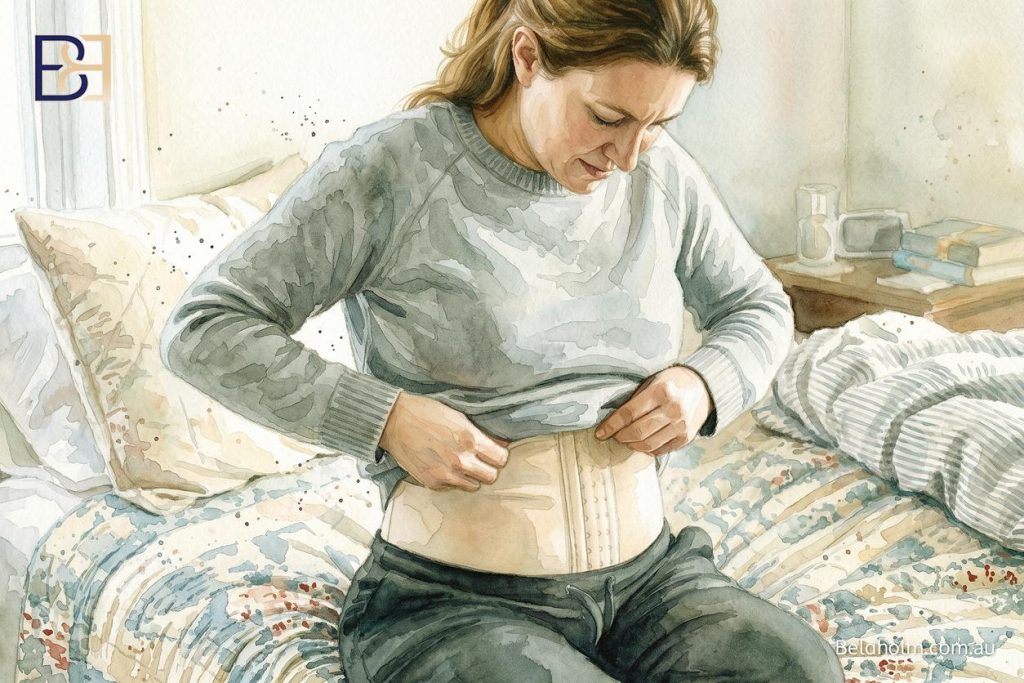
Abdominal support garments and postpartum belts can make the midsection feel more supported, and some women find them comfortable in the early weeks after birth, particularly when they are on their feet a lot. What they do not do is bring the separated muscles back together or strengthen the core. They are a comfort measure, not a treatment, and relying on a garment in place of guided exercise is unlikely to change the underlying separation.
Waist trainers and similar products
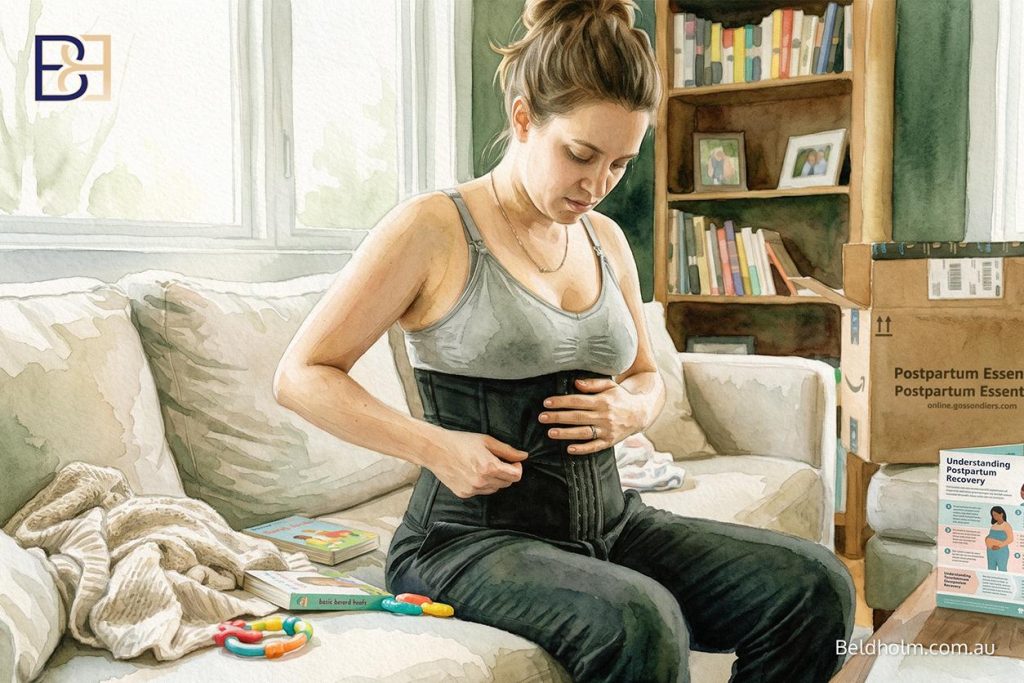
Waist trainers and tight shaping products are marketed widely to new mothers. There is no good evidence that they resolve abdominal separation, and worn tightly they can place pressure on the abdomen and pelvic floor. I would not rely on them for recovery.
Other approaches
Some women try treatments such as acupuncture or chiropractic care for related back or pelvic discomfort. The evidence for these helping abdominal separation specifically is limited. If you find something eases your symptoms and your treating healthcare professional is comfortable with it, that is a reasonable conversation to have, but it is sensible to keep your expectations realistic about what it can achieve for the separation itself.
The honest summary is that supports can help you feel more comfortable, but guided physiotherapy does more for the muscles. Where neither exercise nor supports resolve a separation that is bothering you, that is the point at which surgery is sometimes discussed.
When Surgery Is Considered
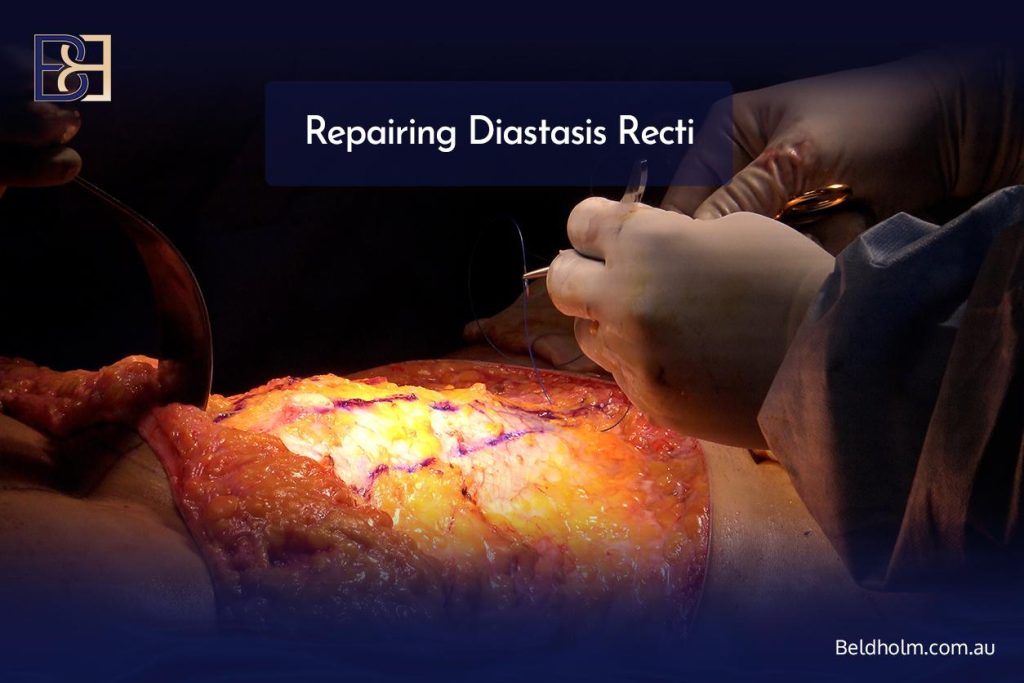
Surgery is not the starting point for diastasis recti, and it is not right for everyone. It comes into the conversation when a separation persists after a genuine attempt at guided physiotherapy, when it is associated with symptoms or a degree of skin laxity that bothers the patient, and when a woman’s family is complete.
What an operation can do is to treat the muscle separation (diastasis recti) and any excess skin. Whether that is a reasonable thing for you is a decision we make together, with a clear picture of the risks and the recovery involved.
Abdominoplasty with diastasis recti repair
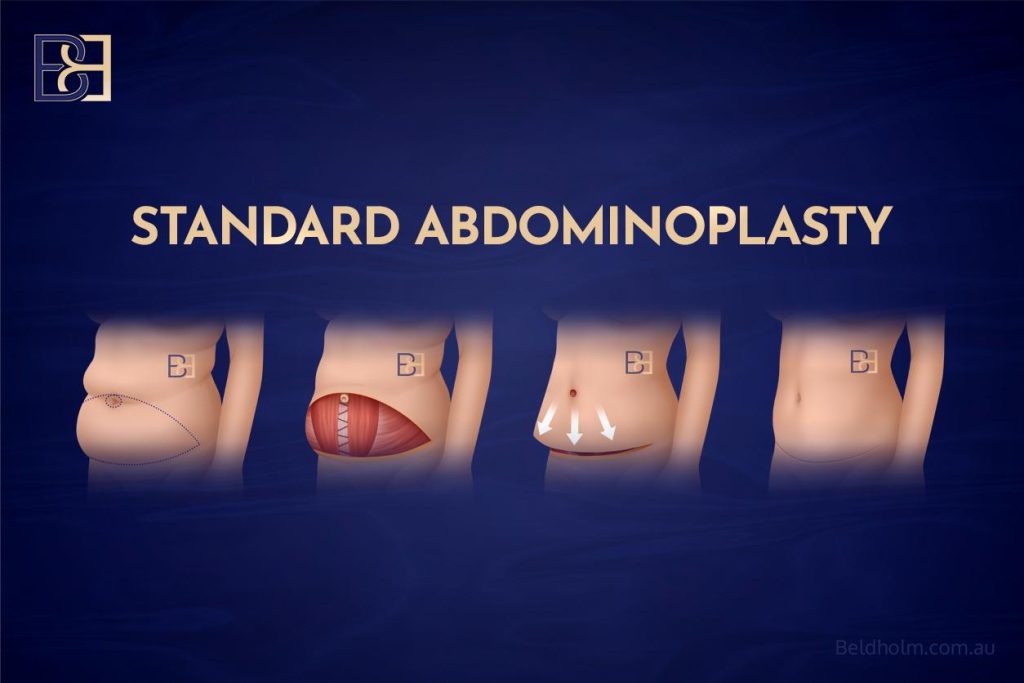
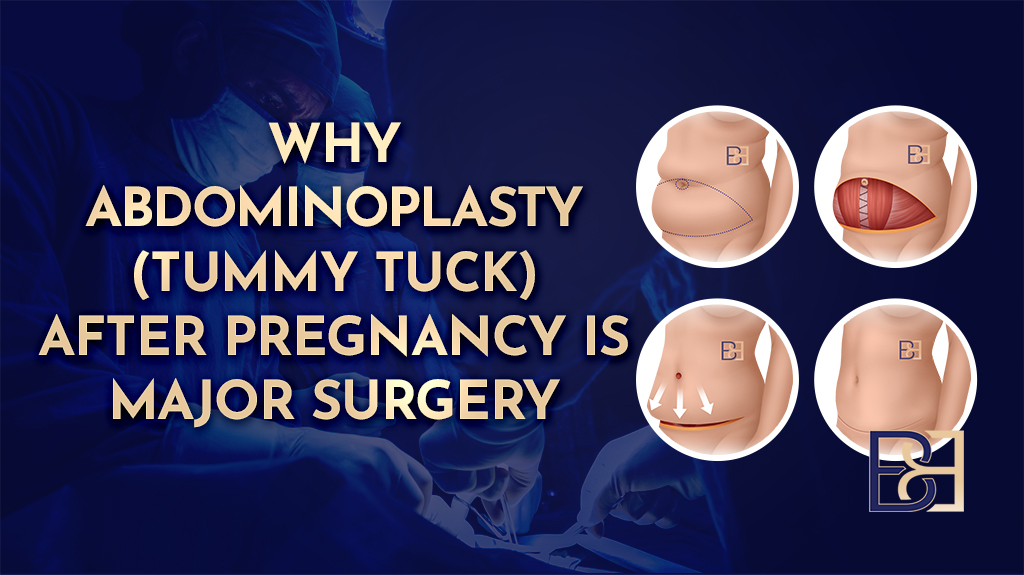
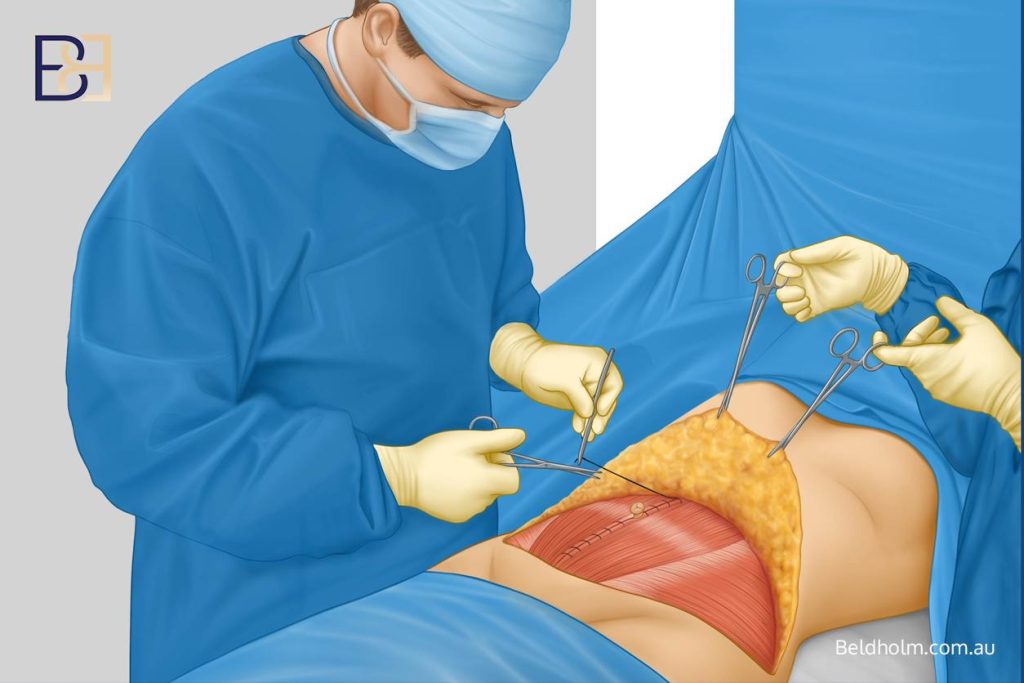
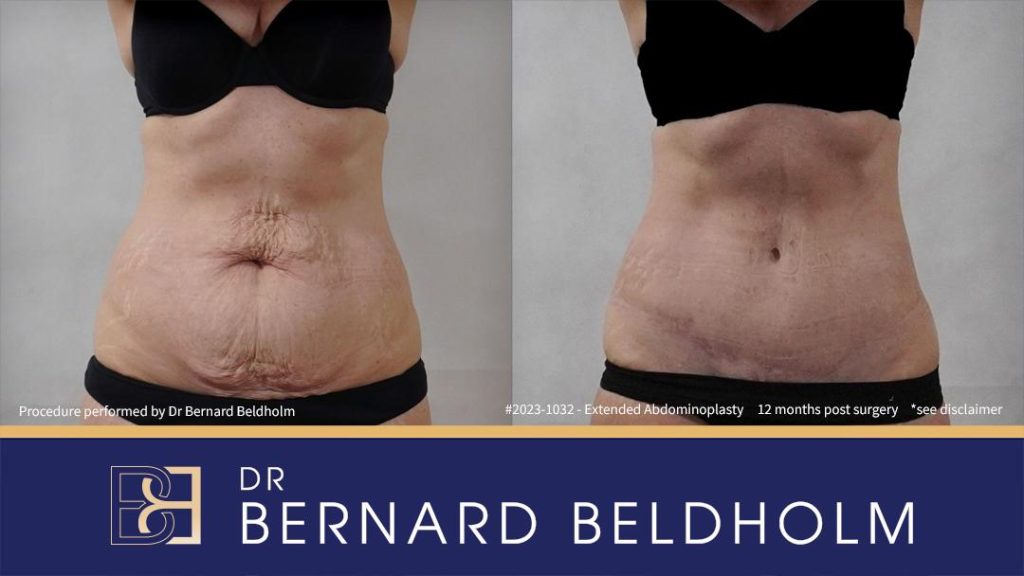
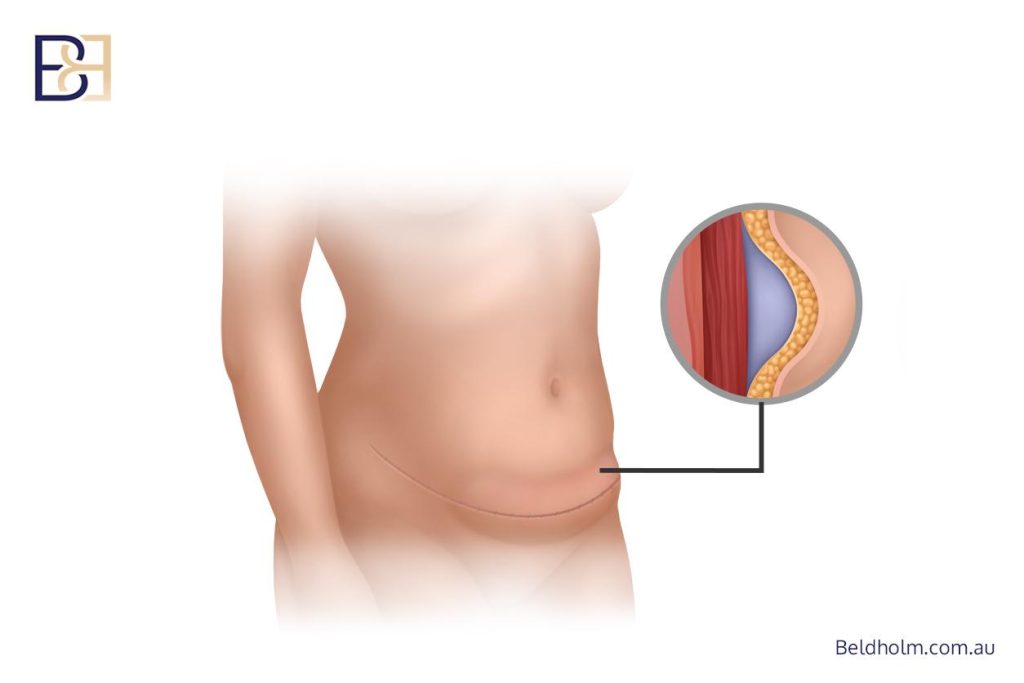
Abdominoplasty (tummy tuck) is the form of diastasis recti surgery I perform most often. It brings the separated abdominal muscles back together and removes excess skin. During the procedure I repair the separation by stitching the muscle edges back towards the midline, using strong sutures along the length of the linea alba. Loose skin below the belly button is removed, and the remaining skin is redraped.
The operation usually takes a few hours under general anaesthesia and involves an overnight hospital stay. The extent of surgery depends on how much skin is involved and the pattern of separation, which is why no two operations are quite the same.
Limited abdominoplasty (mini tummy tuck), where appropriate
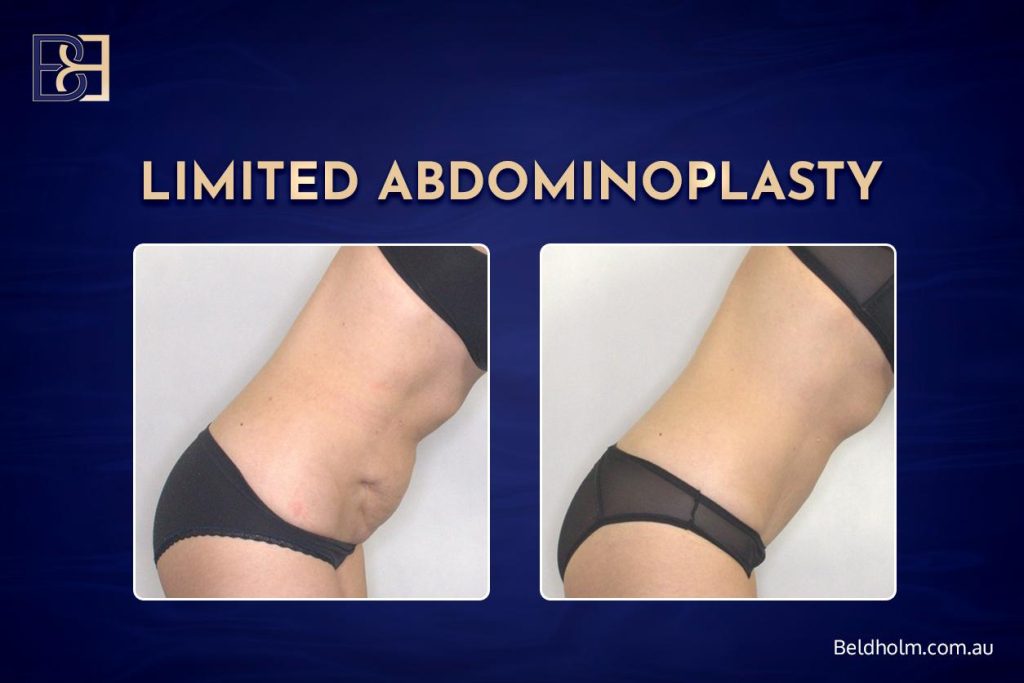
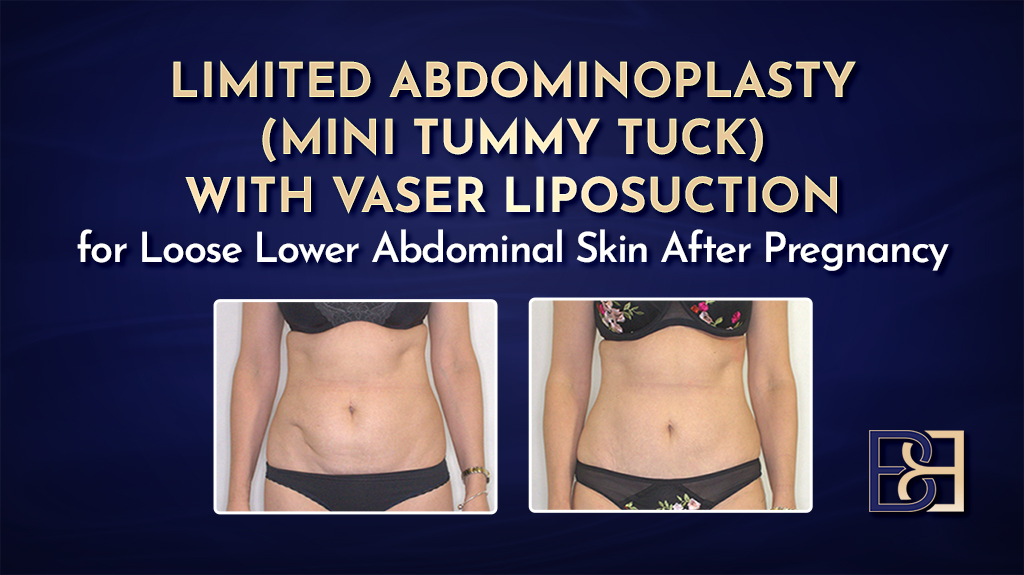
For a smaller number of women, where the separation and skin laxity sit mainly below the belly button, a limited abdominoplasty (mini tummy tuck) may be suitable. This is a smaller operation with a shorter scar, but it only suits a specific pattern of separation and skin. Most women who have carried a pregnancy to term have separation extending above the belly button, which a limited abdominoplasty does not reach. Whether it is an option for you is determined on examination.
When a hernia is also present
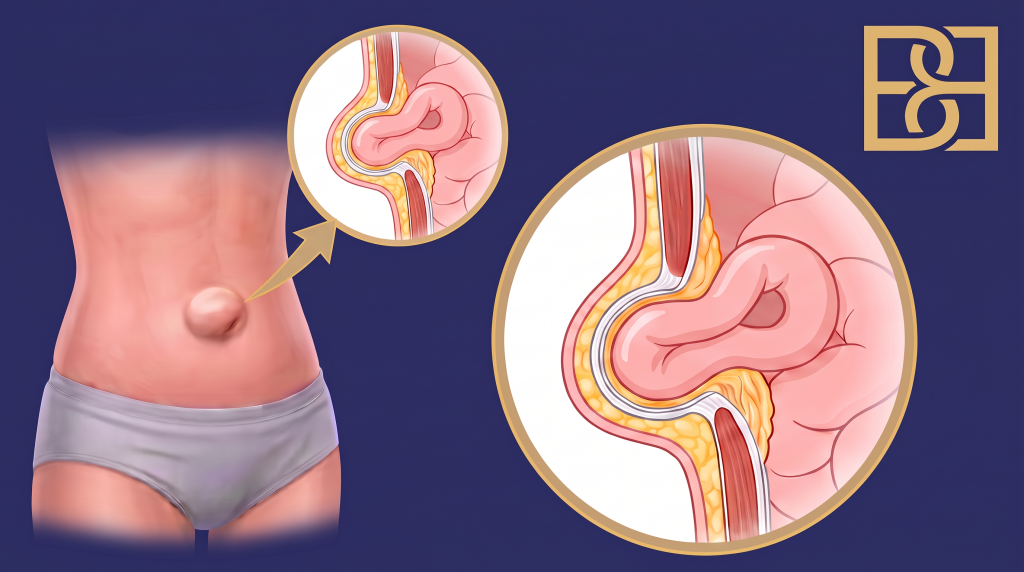
Some women have an umbilical or other abdominal wall hernia alongside the separation. Where that is the case, the hernia can usually be repaired during the same operation. This is assessed before surgery and discussed with you as part of planning.
The scar
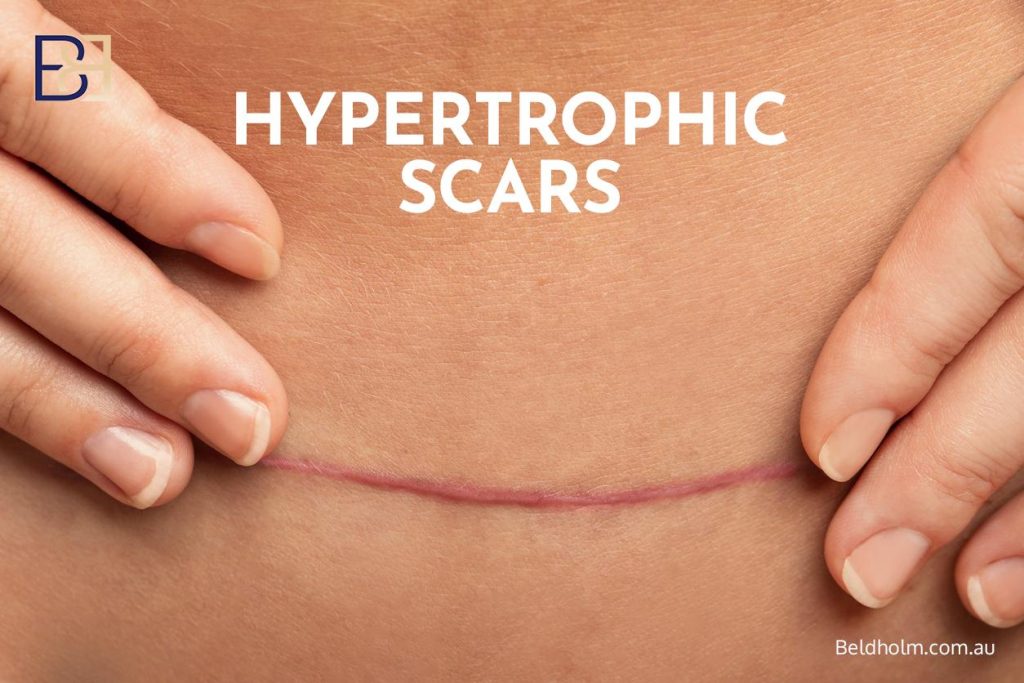
Abdominoplasty leaves a permanent scar. It runs low across the lower abdomen and is positioned so it can be covered by underwear. Scars fade over time but do not disappear, and how a scar settles varies from person to person. I plan incisions with care, and where a caesarean scar is present, it is removed as part of the operation.
If you are also thinking about breast changes
Some women considering abdominal surgery after pregnancy also wish to discuss changes to the breasts. Whether more than one procedure is appropriate, and whether it is done in a single operation or staged across separate operations, is an individual clinical decision made at consultation. I will write about the breast procedures separately.
Timing, Caesarean Scars and Future Pregnancy
When surgery is on the table, timing matters as much as the operation itself. A few things shape when it makes sense.
Timing after your most recent pregnancy
The abdominal wall keeps changing for months after birth as the tissues settle and any separation narrows on its own. As a general guide this is usually around 12 months after your pregnancy, though it is not a fixed rule. Operating before the abdomen has settled risks working on a moving target, so I plan surgery once things have settled rather than to a set deadline. The right timing is assessed for you at consultation.
Breastfeeding

Breastfeeding affects the breasts rather than the abdominal wall, so it bears more on the timing of breast surgery than on abdominal surgery. Even so, recovery from a larger abdominal operation is more manageable when you are not also feeding, and there are anaesthetic and medication factors to weigh while breastfeeding. I take your feeding status into account when planning timing, judged individually rather than tied to a set interval.
Future pregnancy
A pregnancy after surgery can stretch the abdominal skin and separate the repaired muscles again, which can undo part of what the operation achieved. Because of that, I recommend surgery once your family is complete. If you are thinking you may want another child, it is usually better to wait. This is something we talk through at your consultation, because it affects whether surgery is the right call now or later.
Caesarean scars and incision planning
Many women considering this surgery have had a caesarean birth, and some have had more than one. The good news is that the abdominoplasty incision sits in a similar low position to a caesarean scar, and the existing scar is removed as part of the operation. I assess the position and quality of any caesarean scar when planning, so the final scar is kept as tidy and low as possible.
Preparing for Surgery
A larger operation is a bigger physiological event, so what you do beforehand matters. Good preparation supports healing and a smoother recovery.
General health before surgery

Being in reasonable general health and at a stable weight before a larger operation helps your body cope with it and heal afterwards. If you smoke or vape, stopping well before surgery is one of the most useful things you can do, because it lowers the risk of wound healing problems.
Pre-operative assessment
Before surgery you will have routine pre-operative blood tests. These are general safety checks rather than vitamin or nutrition screens, and typically include a full blood count (FBC), kidney function and electrolytes (UEC), liver function tests (LFTs), a clotting screen (coagulation studies), and hepatitis B, hepatitis C and HIV serology. I arrange these and keep your GP informed throughout, with a formal handover back to your GP once your recovery is underway.
Medications and blood thinners

Tell me about all the medications you take. Aspirin and blood-thinning medications are usually stopped about a week before surgery, though some patients continue them through surgery when that has been planned in advance. The decision about blood thinners and clot prevention is mine to make with you, based on your individual risk. Do not stop or change any medication on your own.
Your anaesthetic

For most patients the anaesthetic consultation happens by phone. The physical examination, including your airway, is done on the day of surgery. An in-person anaesthetic review before the day is uncommon.
Planning for recovery
Recovery happens alongside the rest of life, which for many women means caring for young children. It is worth arranging help at home in advance, because the early weeks have real limits on lifting and activity. I cover what to expect next.
Risks and Recovery
Abdominoplasty is major surgery, and it is important to go into it with a clear picture of the risks and the recovery.
Risks and complications
Every operation carries risk. For abdominoplasty with diastasis recti repair, the possible complications include:
- Bleeding and collection of blood under the skin (haematoma)
- Fluid collection under the skin (seroma)
- Infection
- Problems with wound healing, including areas of the wound separating or healing slowly
- Scars that end up thicker, wider or more visible than hoped
- Altered sensation or numbness of the lower abdominal skin, which is common early on and can be lasting in patches
- Blood clots in the legs or lungs (deep vein thrombosis and pulmonary embolism), which are uncommon but serious
- Risks related to general anaesthesia
- Asymmetry or contour irregularities
- Issues with healing of the belly button
- The need for further surgery to treat any of the above
Your individual risk depends on your health, your medical history and other factors, which is part of why this is assessed individually. I take steps to reduce these risks, including clot prevention planned around your individual risk, but no surgeon can remove risk entirely. [Link to DVT and clot prevention after abdominoplasty.]
A later pregnancy or a significant change in weight can stretch the repaired muscles and skin again, which is why I recommend surgery once your family is complete.
What recovery is like
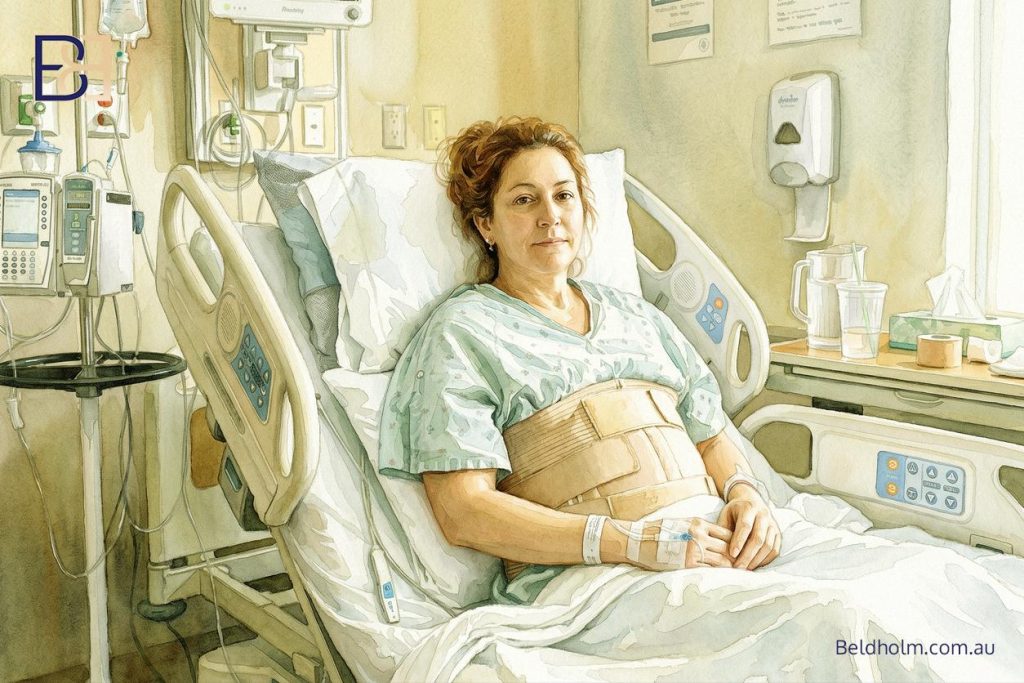
Recovery takes time, and it asks something of you. Most patients stay in hospital overnight after diastasis recti surgery. In the first week or two your movement is limited, and you will stand and walk slightly bent forward at first. A compression garment is worn for several weeks to support the area and help with swelling.
Lifting is restricted for several weeks, and this is the part that catches many mothers off guard: you will not be able to lift young children or do heavy household tasks for a period after surgery. Arranging help at home in advance is genuinely important, not optional.
Swelling is a normal part of healing and can take weeks to months to settle. Many women take a few weeks away from work, depending on what their job involves. The final result is not visible straight away, and scars continue to mature and fade over a year or more.
My View as a Specialist Surgeon

Diastasis recti (muscle separation) is a common and normal part of how the body responds to pregnancy. For most women it is not something that needs surgery at all. Guided physiotherapy, started when you are ready, helps a great many women rebuild core control and manage any symptoms, and it is where I encourage most new mothers to begin.
Surgery is relevant for a smaller group: women whose separation and skin laxity persist after a genuine attempt at conservative treatment, whose symptoms or anatomy bother them, and whose families are complete. For those women, abdominoplasty with diastasis recti repair can treat the muscle separation (diastasis recti) and excess skin. It is a larger operation, and it should be approached with a clear understanding of both.
Whether any of this applies to you is an individual question. It depends on your assessment, your health and your circumstances.
If you are weighing up your options after pregnancy, I hope this has given you a clearer and more balanced picture to work from.
References
- Boissonnault JS, Blaschak MJ. Incidence of diastasis recti abdominis during the childbearing year. Phys Ther. 1988;68(7):1082-6.
- Sperstad JB, et al. Diastasis recti abdominis during pregnancy and 12 months after childbirth: prevalence, risk factors and report of lumbopelvic pain. Br J Sports Med. 2016;50(17):1092-6.
- Parker MA, et al. Diastasis rectus abdominis and lumbo-pelvic pain and dysfunction: are they related? J Womens Health Phys Ther. 2009;33(2):15-22.
- Mota P, et al. Prevalence and risk factors of diastasis recti abdominis from late pregnancy to 6 months postpartum, and relationship with lumbo-pelvic pain. Man Ther. 2015;20(1):200-5.
- Chiarello CM, et al. The effects of an exercise program on diastasis recti abdominis in pregnant women. J Womens Health Phys Ther. 2005;29(1):11-6.
- Keeler J, et al. Diastasis recti abdominis: a survey of women’s health specialists for current physical therapy clinical practice for postpartum women. J Womens Health Phys Ther. 2012;36(3):131-42.