In my practice I see patients who come for revision abdominoplasty (tummy tuck) from across Australia and from overseas. The reasons they come are not all the same, but one stands out far more than any other. The first operation was the wrong operation for the amount of loose skin they had.
This matters because post weight loss patients are a different group from post-pregnancy patients. After significant weight loss, the skin envelope is often loose across the whole abdomen, both side to side and up and down. A post-pregnancy abdomen usually behaves differently. When a post weight loss patient is treated as though they were a post-pregnancy patient, and given a full or extended abdominoplasty, the operation is often too small for the skin laxity present. The result is loose horizontal skin left behind and a contour that does not sit the way the patient hoped.
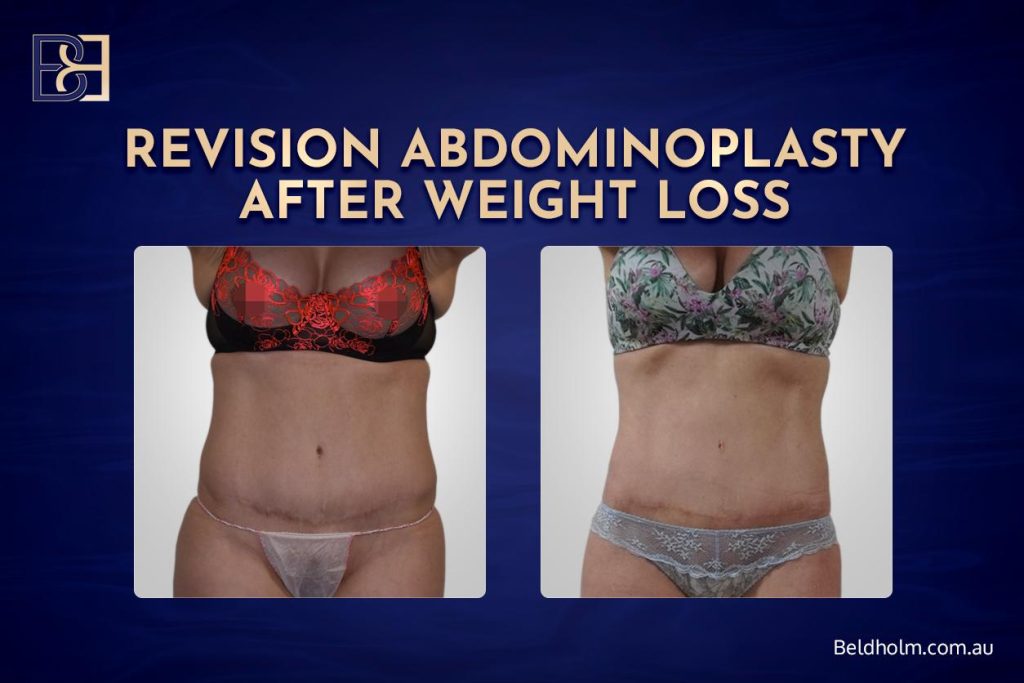
Disclaimer: All surgery has risks, Results Vary, seek a 2nd opinion. Before and after result. Dr Beldholm surgeon for 2nd operation.
This article explains why these results happen, what I look for at assessment, and what correcting them actually involves.
In this article I cover:
Revision surgery is more demanding than the first operation, not less. Results vary between patients, and whether any of this applies to you is something that can only be worked out at consultation after a GP referral.
What Revision Abdominoplasty Is, and What It Is Not
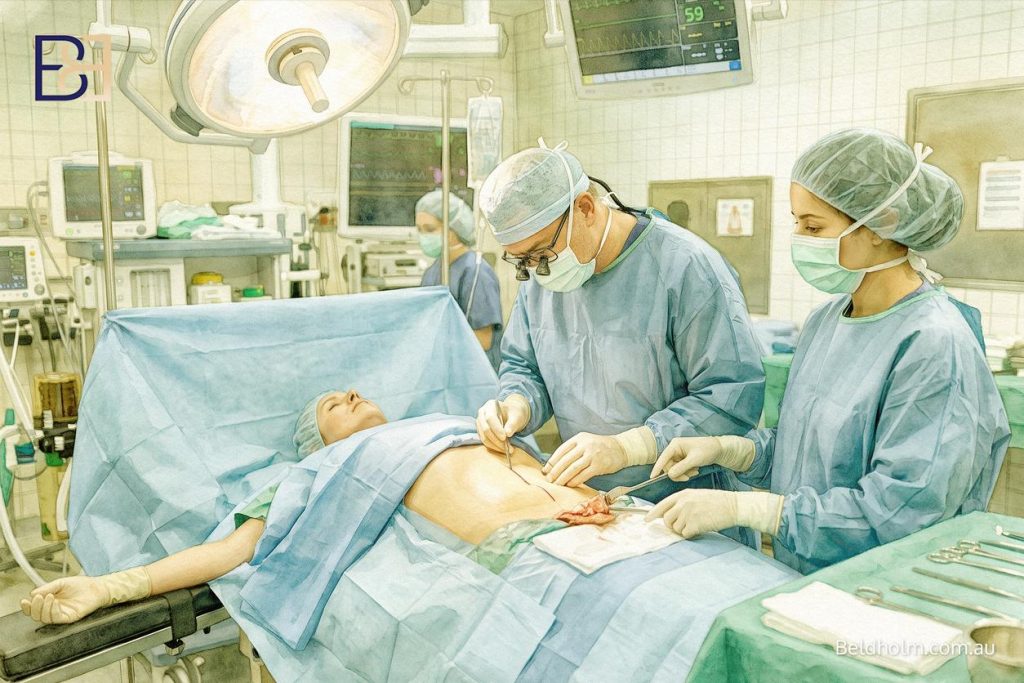
Revision abdominoplasty is a second operation done to correct a problem left by an earlier abdominoplasty (tummy tuck). The aim is to treat a specific issue, not to repeat the initial procedure from scratch. You may also hear this called a tummy tuck revision surgery or an abdominoplasty revision surgery.
What that involves depends entirely on what is wrong. For most of my post weight loss revision patients the problem is residual loose skin, so the operation is about removing skin that the first procedure left behind and placing the scar where it should sit. For others it is a scar that healed poorly, a belly button (umbilicus) that looks wrong, or a contour irregularity. Some patients need a combination of these treated at once.
It is not always a bigger version of the same operation
There is a common assumption that revision means doing the same thing again, only more of it. That is not how I approach it. The right revision depends on why the first result fell short. If the original operation took too little skin, then a more complete skin excision is what corrects it. If the issue is a localised scar or a dog ear, the correction is far smaller and more targeted.
The abdominal wall in post weight loss patients
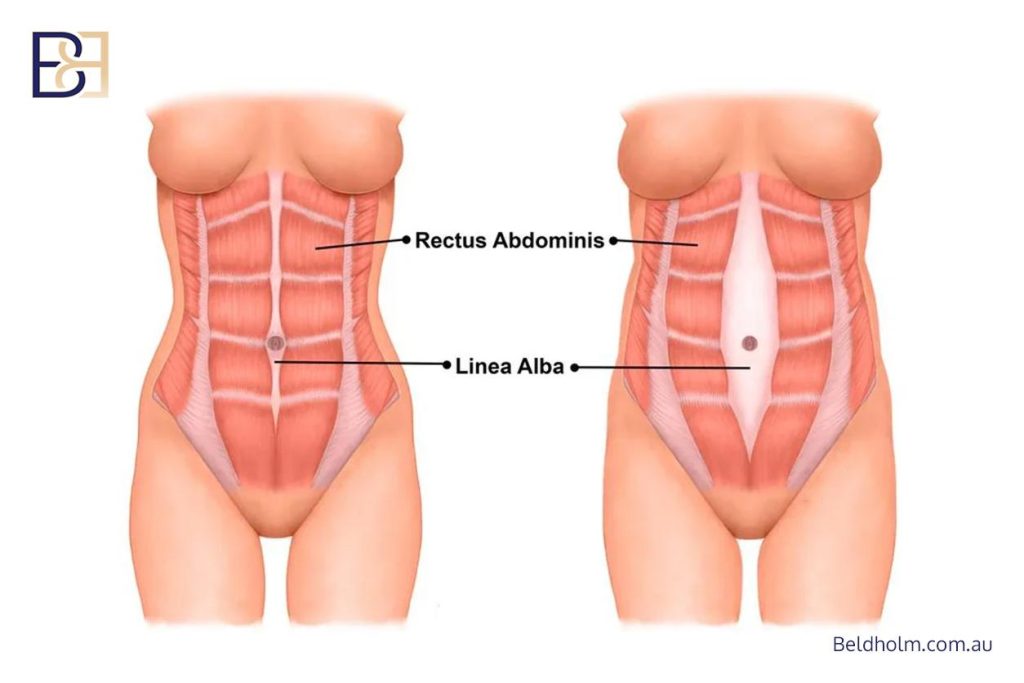
In post weight loss patients, muscle separation (diastasis recti) is not a default finding the way it can be after pregnancy. What I more commonly see is a generalised looseness of the abdominal wall. The wall has been stretched and has not tightened back, so it sits forward and looks full even once the loose skin is dealt with. This is a different problem from diastasis recti, where the abdominal muscles have separated down the midline. Separated abdominal muscles are a post-pregnancy finding more than a post weight loss one.
The two can occur together, but the generalised looseness is the more common finding in this group. Either way the correction is plication. I place sutures to take in the abdominal wall and make it tighter, which allows it to sit flatter. Where the abdominal muscles themselves have separated, the same plication provides muscle tightening. How much of this is needed, and whether true muscle separation is also present, is decided on examination rather than assumed.
What revision cannot do
Revision can correct the things I have described. It cannot stop the skin ageing that continues for everyone over the years, and it cannot guarantee a particular outcome. A previous scar is permanent and revision works around it rather than erasing it. Being clear about these limits at the start is part of deciding whether a second operation is the right step at all.
Why Post Weight Loss Patients Present for Revision
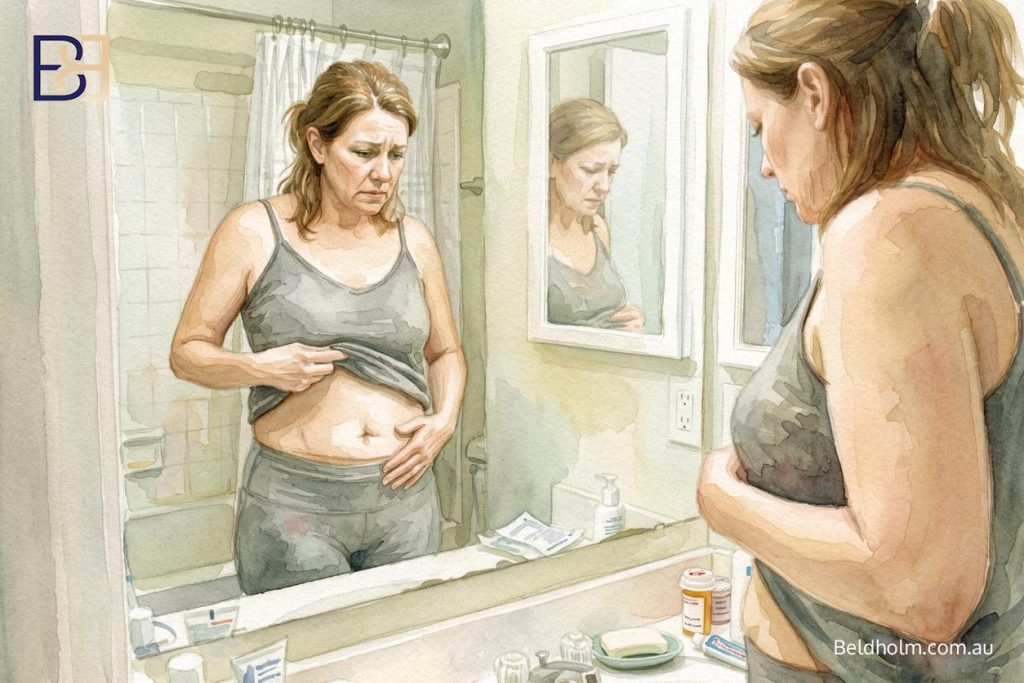
This is the part of the article that matters most, because it explains the pattern I see again and again.
The first operation was sized for the wrong patient group
Most of my revision patients had their first operation, a previous tummy tuck (abdominoplasty) surgery, done elsewhere, either with another surgeon in Australia or overseas. In most cases nothing went wrong during that operation. The surgery healed. The problem is that the operation chosen did not match the amount of loose skin they had.
Post weight loss patients often carry significant skin laxity and loose skin across the whole abdomen. It hangs down, and it is also loose from side to side. A full or extended abdominoplasty (tummy tuck), whether a full abdominoplasty or an extended abdominoplasty, is designed mainly to remove skin in the up-and-down direction and tighten the lower abdomen. For a post-pregnancy abdomen that is often enough. For a post weight loss abdomen with a large skin excess, it frequently is not (1).
When that mismatch happens, the operation removes some skin but leaves a band of loose horizontal skin behind, usually across the upper abdomen and around the sides. The patient is left flatter than before but still with skin that folds, bunches, or hangs. That is the most common reason this group comes to see me.
What this looks like at assessment
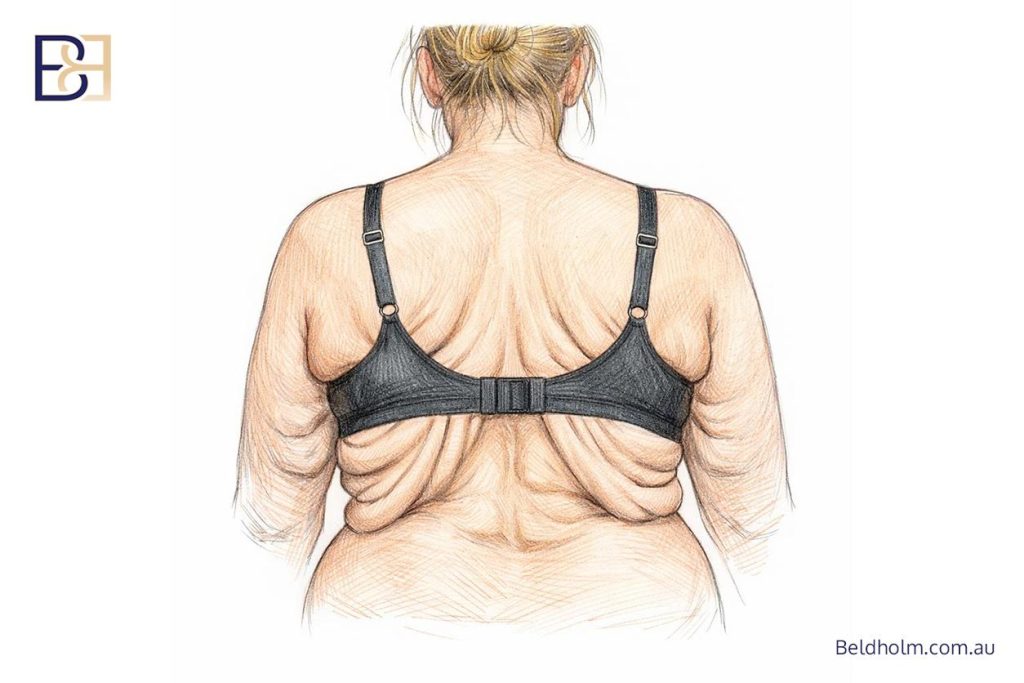
When I examine these patients, the findings are fairly consistent:
- Loose skin remaining across the upper abdomen that the first operation did not reach
- Skin that gathers towards the sides rather than lying flat
- A scar that is sitting too high, because the skin could not be brought down far enough
- In many cases, a stretched abdominal wall that was not tightened
The skin that is left is real excess. It is not swelling and it does not retract with time. Correcting it means excess skin removal, which is why the right revision is often a more complete operation than the first one rather than a touch-up.
Recurrent laxity from weight change
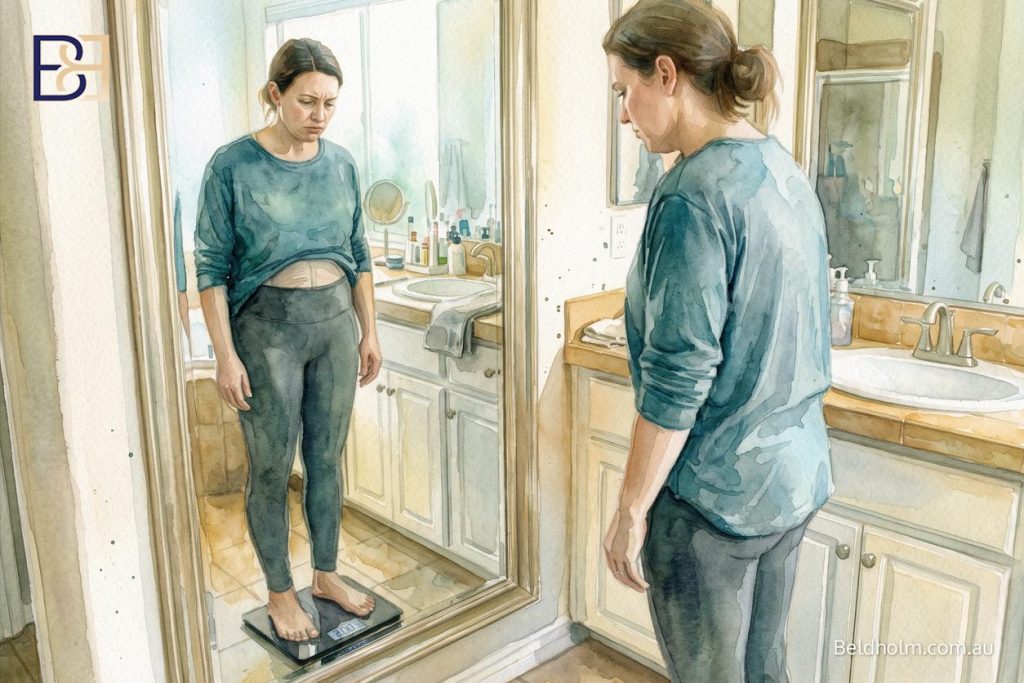
A smaller group present because of significant weight fluctuations after the first operation. Significant weight gain, or further weight loss, stretches the skin again, and skin that has already been operated on has reduced skin elasticity and less ability to retract. This is a different situation from an undersized initial surgery, but it produces a similar result of loose skin returning.
For these patients, weight stability before any revision matters a great deal. Operating on someone whose weight is still moving tends to lead back to the same problem. I cover how I assess this in the next section.
Subsequent pregnancy
Occasionally a patient has had an abdominoplasty and then a pregnancy afterwards. Pregnancy stretches the skin and the abdominal wall again, and the earlier result is undone to some degree. This is uncommon in the post weight loss group, but when it happens the assessment is the same. I look at the skin, the abdominal wall, and the scar, and plan the correction around what is actually present.
Smaller Issues I Correct at Revision
Not every revision is a large operation. Alongside the patients who need a more complete skin excision, I see patients whose first result was largely satisfactory but who have one or two specific issues left over. These are more localised corrections, though they are still surgery and still carry the usual risks.
Localised fat pockets
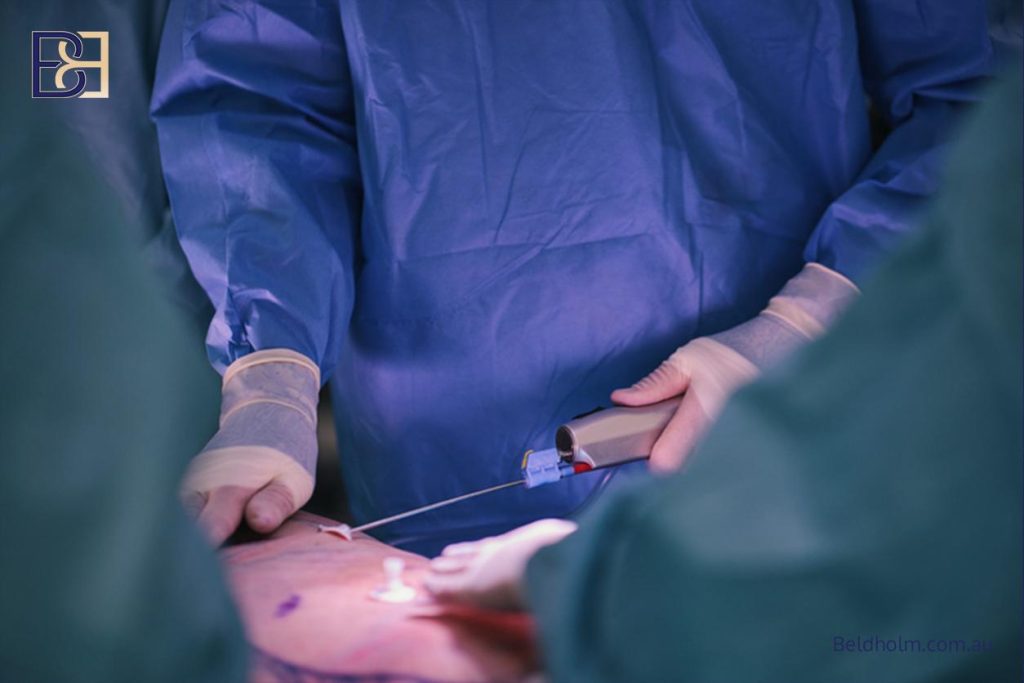
Some patients are left with a localised pocket of excess fat that sits out of line with the rest of the abdomen. Where the skin is otherwise sitting well, this can be treated with liposuction (suction-assisted lipectomy) to even out the contour. I am careful here, because removing fat from an area that also has loose skin can leave the skin looser still, so this only suits patients whose skin tone is reasonable in that area.
Dog ears
A dog ear is a small bunch of excess skin left at the end of the scar, usually out towards the hip. It happens when the skin at the ends of the incision was not fully taken in. Correcting it means removing that excess skin and, at times, extending the scar slightly so it lies flat. It is one of the more straightforward corrections, but it does mean a return to the operating theatre.
Belly button (umbilicus) shape
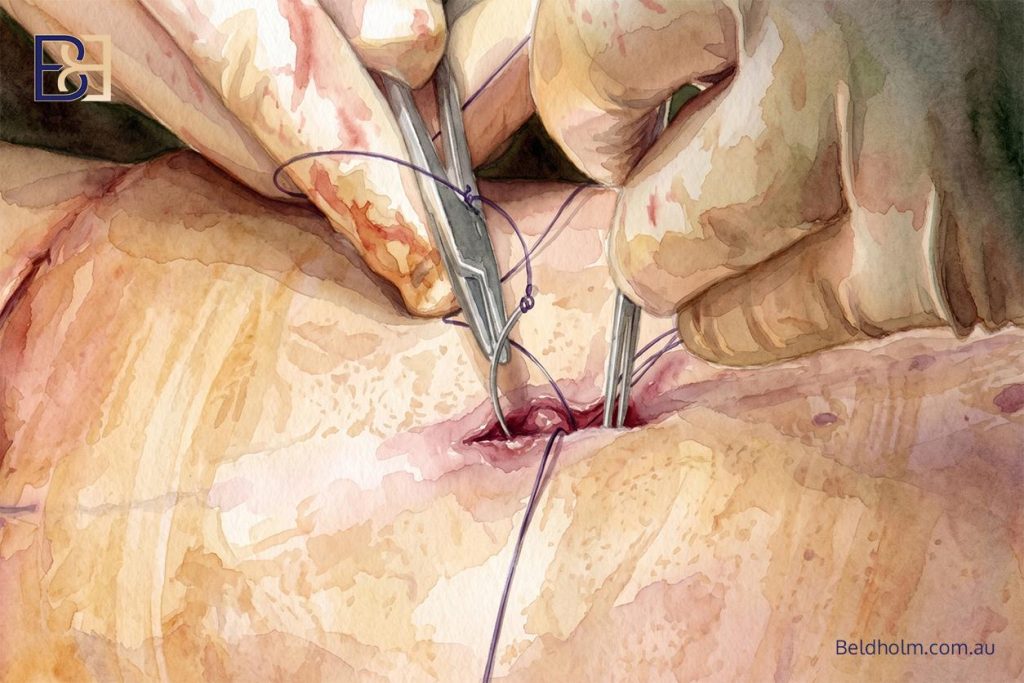
The belly button (umbilicus) can end up looking wrong after the first operation. It may sit too high or too low, have an irregular shape, or be ringed by a scar that draws attention to it. Revision of the belly button (umbilicus) reshapes it and repositions the surrounding skin so it looks less operated on. In post weight loss patients the belly button is often stretched to begin with, which is part of why it can be hard to get right the first time.
Scar revision
A scar that healed wide, raised, or in the wrong position can be revised. This involves removing the old scar and closing the area again with more attention to incision placement and where the final line sits. A scar revision does not erase a scar. It replaces an unsatisfactory scar with a new one that I aim to place where clothing will cover it. How any scar settles still varies from person to person.
Diastasis recti repair or a lax abdominal wall not previously treated
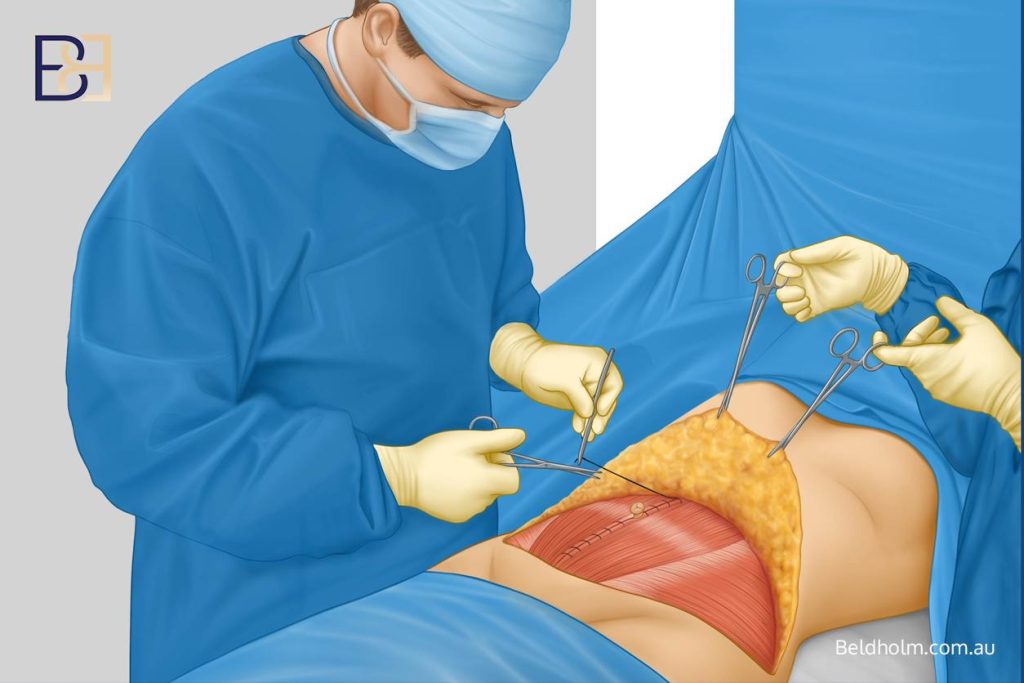
Less commonly, a patient comes to me with muscle separation (diastasis recti) that was present at the first operation but not repaired, or with a stretched abdominal wall that was left loose. Where this is contributing to the abdomen sitting forward, I correct it with plication at the time of revision. As with the first operation, I only do this where examination shows it is warranted.
How I Assess Whether Revision Is Appropriate
A second operation is a bigger decision than the first, not a smaller one. Before I plan any revision, I want to assess that surgery is the right answer and that the timing is right. Assessment happens at consultation.
Weight needs to be stable
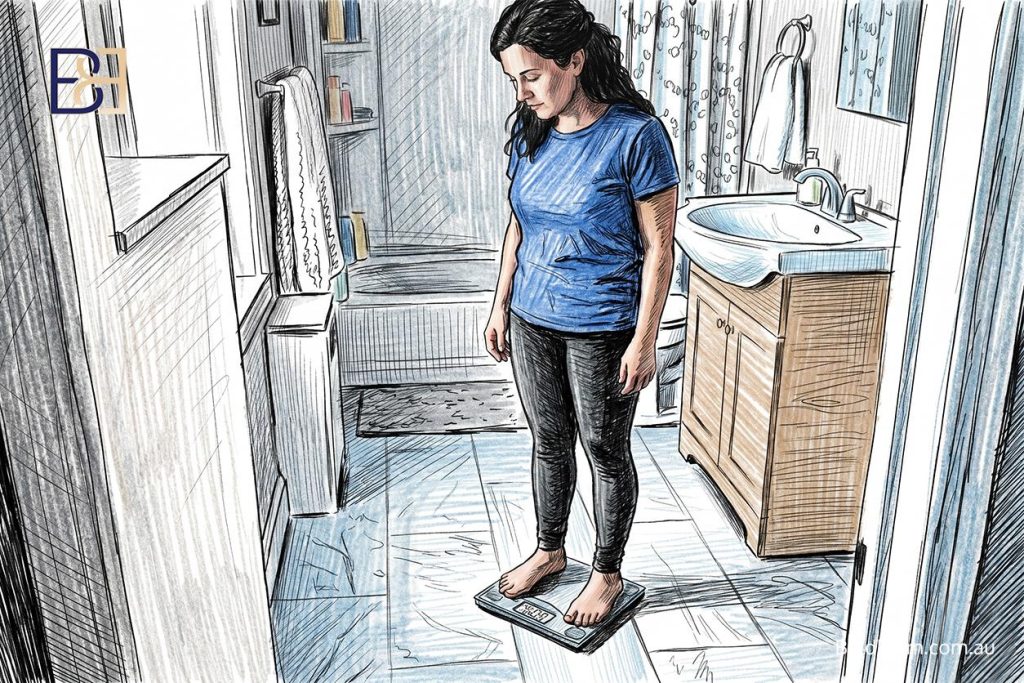
This is the first thing I look at in post weight loss patients. If weight is still moving, the skin will keep changing, and operating in the middle of that tends to lead back to loose skin. I want to see weight that has settled and held before planning a revision (3). Stable weight is the clinical reason to wait, not an arbitrary threshold.
Nutritional status affects healing

Many post weight loss patients have nutritional gaps that developed during major weight loss, particularly those who lost weight after bariatric surgery or with weight loss medications (2). These gaps matter more for a revision, because a second operation in scarred tissue places more demand on healing. Before surgery, I check nutritional status through a standard pre-operative blood panel and correct what needs correcting, including support for a balanced diet.
I have covered the detail of this elsewhere, so I will not repeat it here. It comes down to one thing. Going into a revision well nourished gives the tissue the best chance to heal. You can read more in my articles on nutritional deficiencies after weight loss and on protein before and after abdominoplasty.
The first operation is part of the assessment
Revising someone else’s work has a particular challenge. If the previous surgery was done elsewhere, I often do not have the operation notes, so I cannot be certain exactly what was done to the muscle, the fascia, or the blood supply of the skin. I take this into account when I plan. It is one of the reasons revision can be less predictable than a first operation.
What I assess at consultation
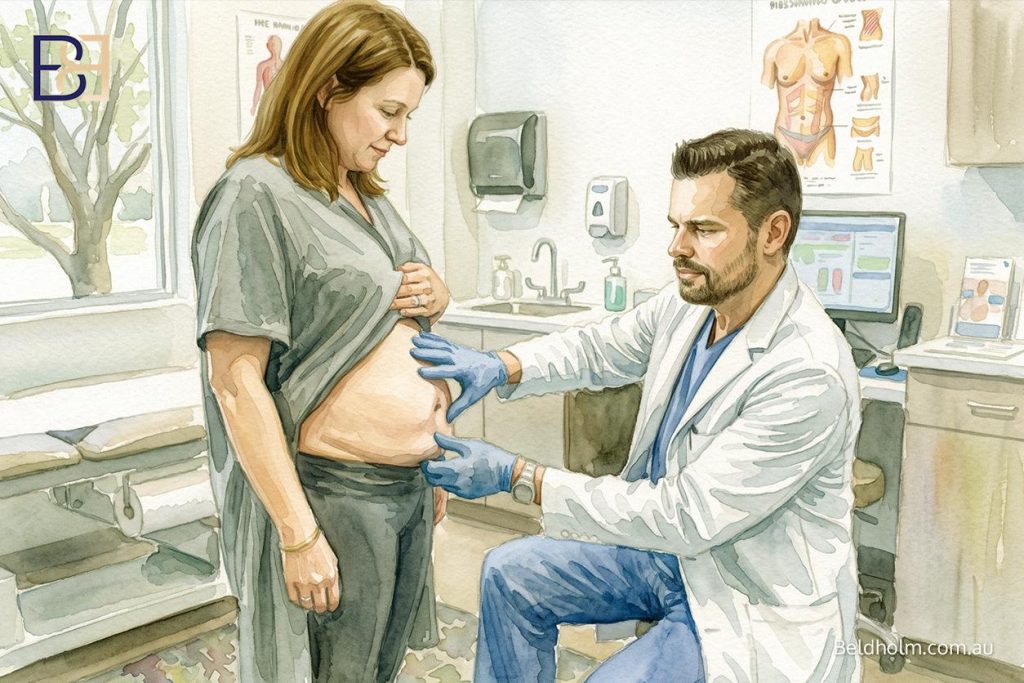
For patients undergoing revision abdominoplasty, at the consultation I:
- Examine the skin laxity, the abdominal wall, and the existing scar
- Take clinical photographs for the record
- Work out what is actually causing the result the patient is unhappy with
- Talk through what a correction would and would not involve
- Go through the risks and the recovery honestly
Only after that can I say whether revision is appropriate for that person, and what it would involve. It is not a decision that can be made before meeting the patient.
Book your appointment online now
Revision After a Complication of the First Operation
Most of the patients I have described did not have a complication. Their issue is residual skin or a localised problem. A smaller number come to me because something went wrong during or after the primary procedure and left a problem behind.
It is worth being clear that most complications of abdominoplasty (tummy tuck) are managed at the time without ever needing revision surgery (4). Revision comes into it only when a complication leaves a lasting problem with the contour, the scar, or the tissue. The ones I see most often are below.
Infection and wound breakdown
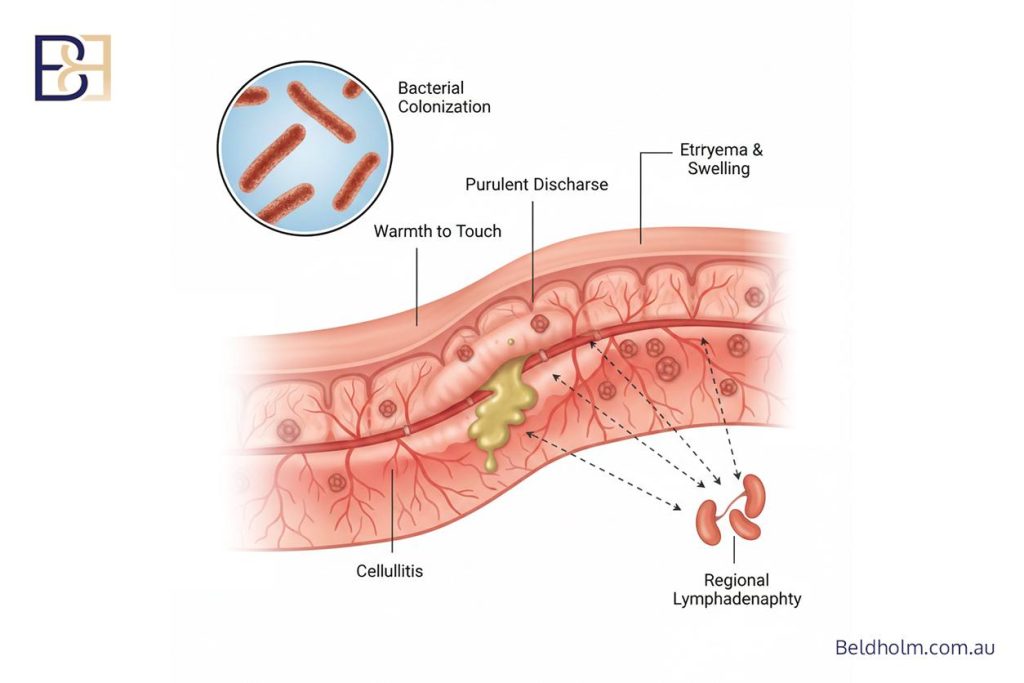
Infection or poor wound healing can leave a thickened, wide, or tethered scar, or a contour irregularity where tissue was lost. Once everything has settled and the tissue is stable, that residual problem can be revised. The revision is planned around what the healing left behind, not around the original infection itself.
Haematoma

A haematoma is a collection of blood under the skin. Most are dealt with early. Where one has left scar tissue, a firm area, or a contour irregularity after healing, that can be corrected at revision once the area has matured.
Seroma and pseudobursa
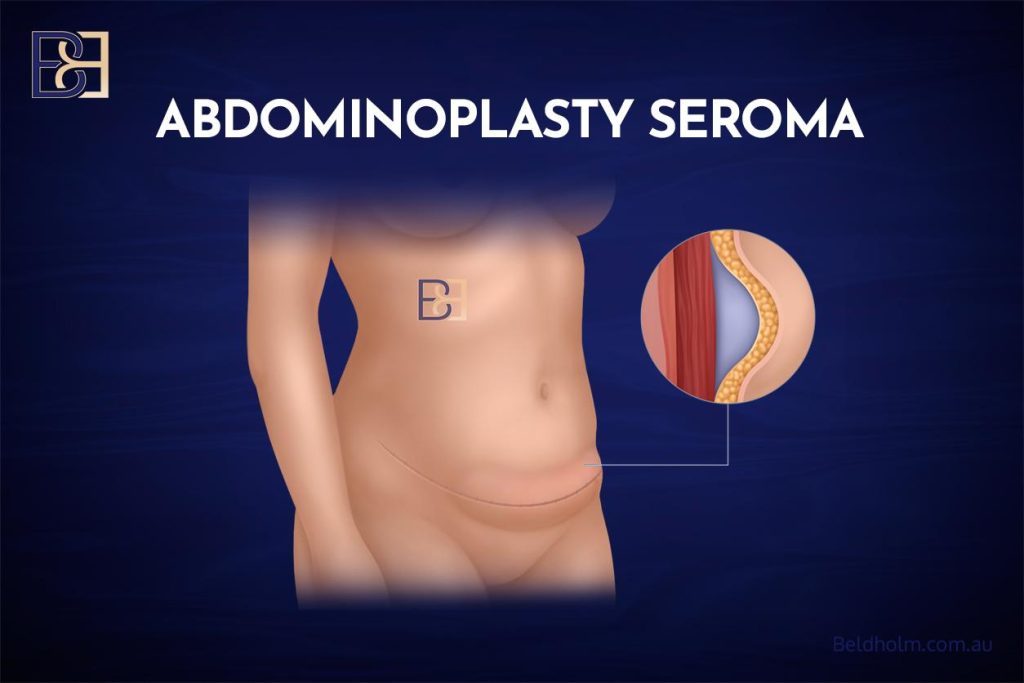
A seroma is a collection of fluid under the skin. Most settle with time or with drainage. A seroma that keeps coming back can form a pseudobursa, which is a lining of scar tissue around the fluid space. A pseudobursa does not resolve on its own. Removing it and closing the space properly is a revision procedure, and a large one may need a more complete operation to correct.
A note on timing
Timing depends on the type of complication. Some need early treatment. A growing haematoma or a seroma that is not settling is dealt with promptly rather than left. Others are better left alone until the tissue has matured. A scar that has healed poorly, or a contour irregularity, should not be revised while the area is still inflamed or settling, because operating too early tends to give a worse result. For these I wait until things are stable, which can take several months. Which path applies depends on what the complication is and how the tissue is behaving.
Choosing the Right Operation for the Individual

This brings me back to where the article started. The reason most post weight loss patients need revision is that the first operation did not match their skin laxity. So the heart of planning a revision is choosing the surgical procedure that does match it. This is decided for each patient at consultation, based on what the examination shows.
Matching the operation to the direction of the laxity
Loose skin after weight loss is not all the same, and the direction it sits in guides the operation.
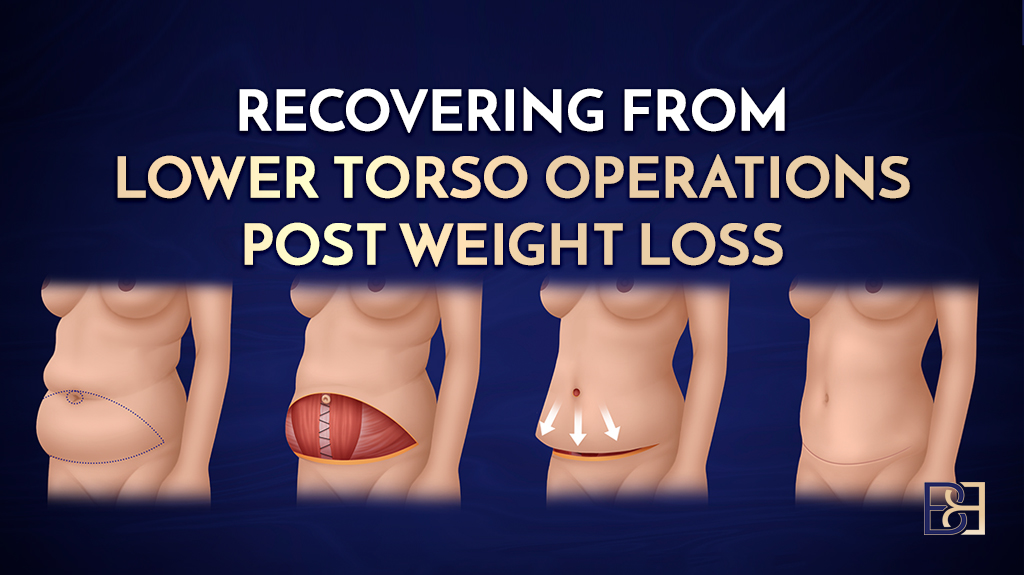
- Where the excess is mainly up and down, a standard abdominoplasty (tummy tuck) removes it by taking out a band of skin between the belly button (umbilicus) and the lower incision.
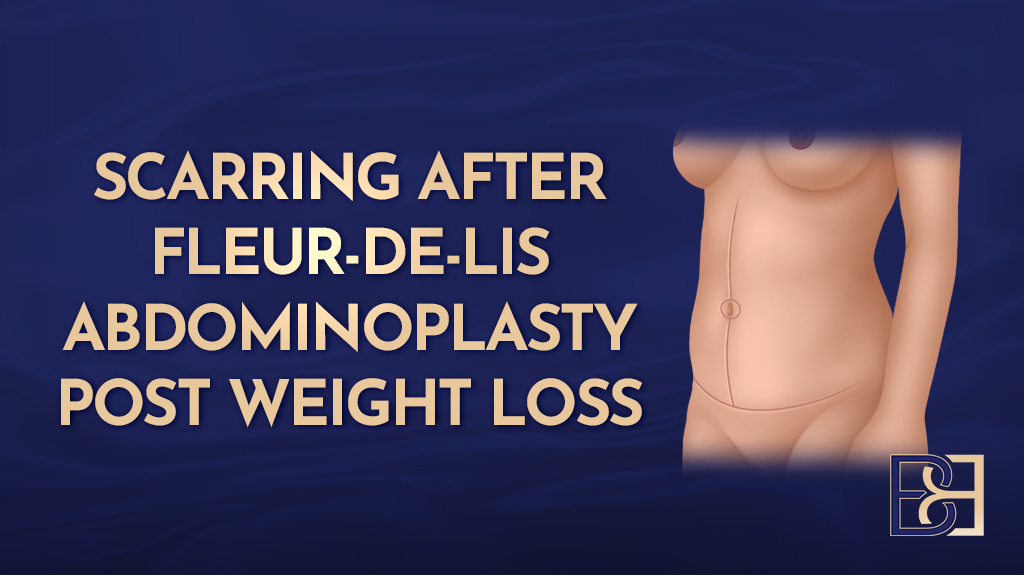
- Where there is also significant side-to-side looseness across the upper abdomen, removing skin in only one direction leaves the horizontal excess behind. This is the exact problem that brings many revision patients to me. Adding a vertical midline excision, as in a Fleur-de-Lis abdominoplasty, removes excess skin and fat in both directions and lets the upper abdomen lie flat (1). It does mean a vertical scar up the midline, which I discuss carefully beforehand.
- Where the looseness continues around the sides and onto the back, the laxity is circumferential. Correcting that means a body lift (belt lipectomy), which removes a belt of skin all the way around.
None of these operations is better than the others on its own. The right one is the one that matches the skin the patient actually has.
Why the correct revision is sometimes a larger operation
For patients whose first operation was too small, the honest answer is that the surgical correction is often a more complete operation than the one they had. That is not about doing more for its own sake. It is about removing the excess skin that was left behind, which a smaller operation by definition cannot reach. I would not recommend a larger operation than the laxity calls for, and I would not talk anyone into adding procedures they did not come for.
One operation or more than one
Where a patient is suited to it, treating the loose skin in a single operation means one anaesthetic and one recovery rather than repeating those steps. For some patients that is the appropriate plan. For others, the extent of the work, their medical history, or their nutritional status means staging the correction across more than one operation is the appropriate path. Staging is a legitimate choice, not a lesser one. Which applies is worked out for the individual at consultation, not decided in advance.
What Recovery After Revision Is Realistically Like
Recovery after a revision should not be underestimated. A second operation works through scarred tissue from the first, and the blood supply to the skin has already been altered once. That makes healing less predictable than after a first operation, not more straightforward. How long the recovery period takes depends a great deal on the size of the revision.
A small revision versus a larger one
A localised correction, such as a dog ear or a scar revision, is at the smaller end. Recovery from that is shorter, though it is still surgery with a wound that needs to heal.
A more complete operation to remove excess skin, particularly one with a vertical component or one that goes around the body, is a larger physiological event. The recovery is correspondingly longer, and I make sure patients understand that before they decide.
The general pattern
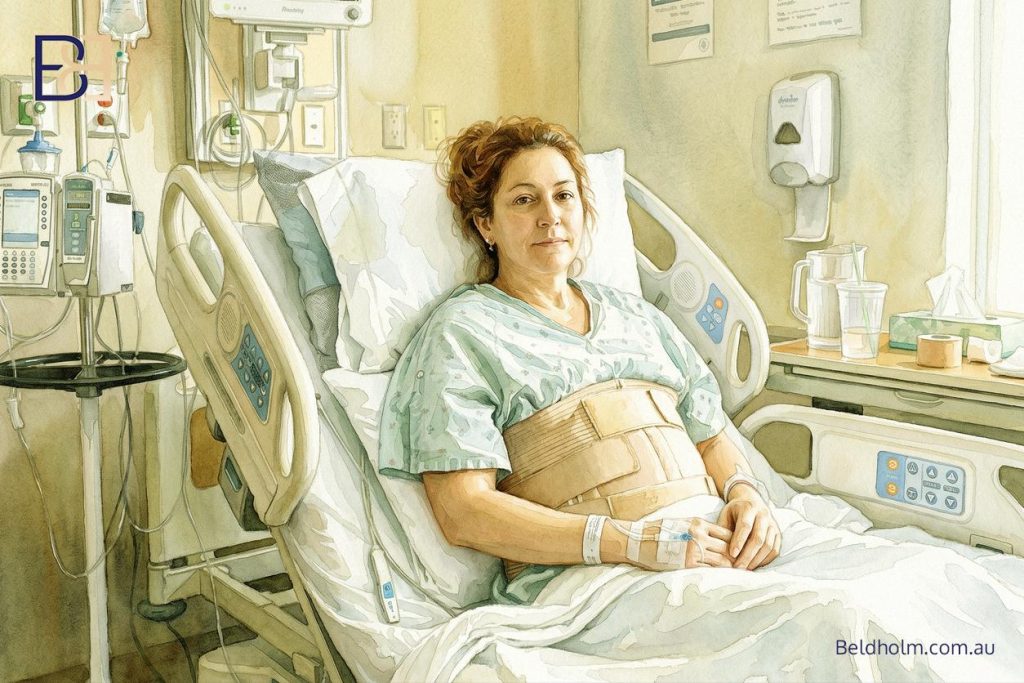
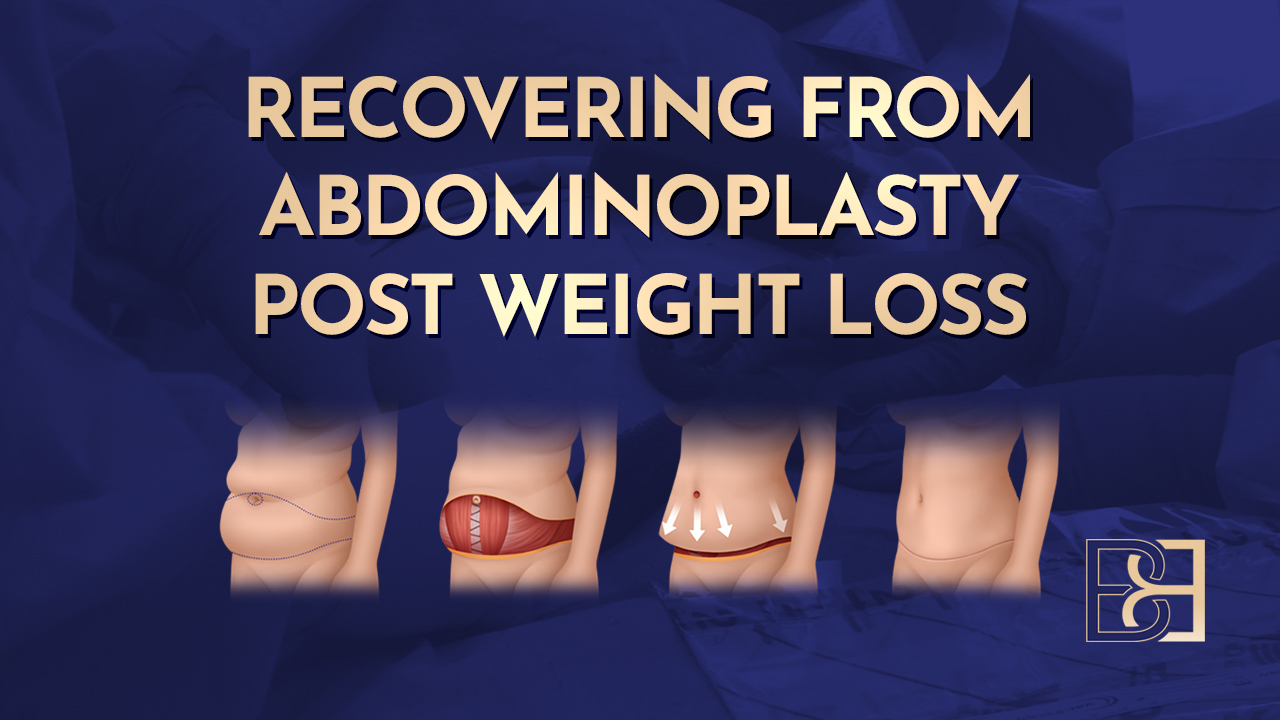
For a larger revision the pattern is much like a first abdominoplasty (tummy tuck):
- A hospital stay of a few nights for the bigger operations
- Closed suction drains for several days, removed once the output settles
- Pain medication for the first several days, stepped down as comfort allows
- A compression garment worn full-time for around four weeks, then part-time for a further two
- Walking from the first day after surgery, building up gradually
- A single lifting limit of around 10 kilograms in the early weeks
Getting back to normal

Most people in a sedentary job are back at work around four weeks after a larger revision. Manual or physical work takes longer, usually six to eight weeks. These are general figures. Healing in revised tissue can be slower, so I clear each patient to step activity up at their follow-up visits rather than against a fixed calendar.
I give clear post operative instructions before discharge. I review my patients at four weeks, three months, six months, and twelve months after surgery, and I hand care back to your GP at the four-week visit. The healing process continues for many months, and scars take up to two years to settle and fade (5). A revision scar is no different in that respect.
Realistic Expectations
Revision abdominoplasty (tummy tuck) is elective surgery, and it can correct the problems I have described in this article. It is worth being just as clear about what it cannot do.
What revision can and cannot change
A revision can remove excess skin that was left behind, alter the abdominal contour, reposition or reshape the belly button (umbilicus), and tidy a scar that healed poorly. What it cannot do is return the abdomen to how it was before any weight was gained, or stop the ageing and skin changes that continue for everyone afterwards.
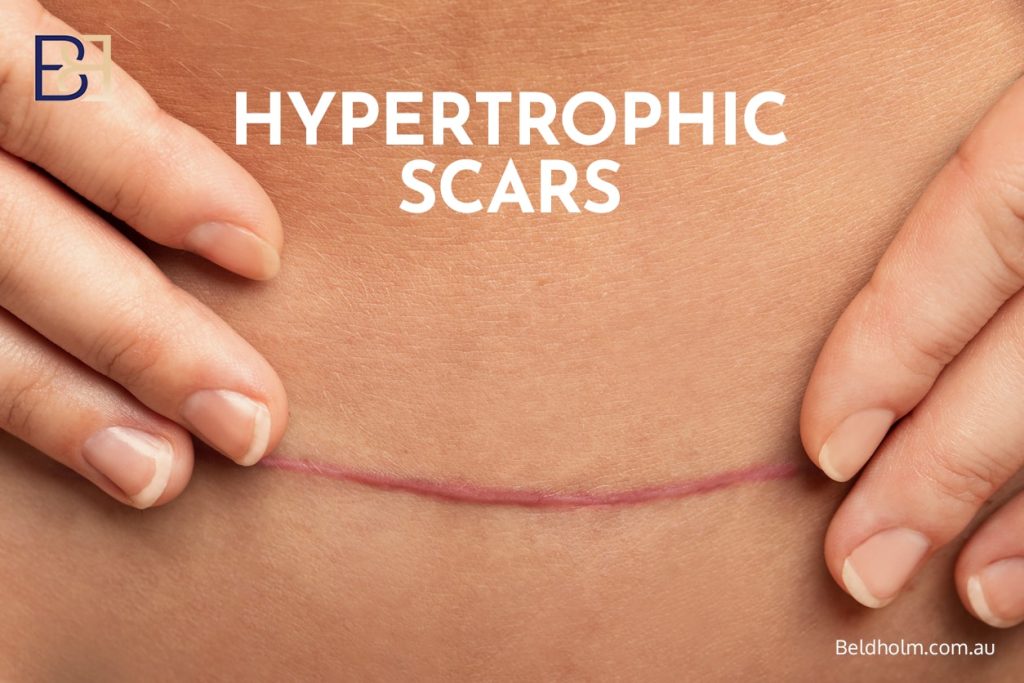
Every revision leaves a scar, and a revised scar is still a scar. I aim to place it where clothing covers it, but I cannot make it disappear, and how any scar settles varies from one person to the next.
A second operation is not always the last
Working in scarred tissue is less predictable than a first operation, and occasionally a further small surgical intervention is needed down the track. That does not mean something has gone wrong. It is part of the reality of revision surgery, and it is better understood before the operation than after it.
Results vary
The result of any revision depends on the starting point, the tissue, how it heals, and the individual. Results vary between patients, and no two abdomens behave the same way. That is why I assess each person individually rather than promising a particular surgical outcome. A realistic understanding of what is achievable is, in my experience, the foundation of being satisfied with the result.
My Final Thoughts

The thread running through this whole article is operation selection. The patients who come to me for revision after weight loss have, in most cases, been treated as though they were post-pregnancy patients, with an operation that was too small for the loose skin they carried. The skin that was left behind is the problem, and correcting it means matching the operation to the laxity that is actually there.
That is also why post weight loss patients deserve to be thought of as their own group. The skin behaves differently, the abdominal wall behaves differently, and the operation that suits a post-pregnancy abdomen often does not suit theirs. Getting that right the first time is the best way to avoid a revision altogether.
References
- Javadian S, Berg JO. Aesthetic results in twin case undergoing transverse abdominoplasty versus Fleur-de-Lis abdominoplasty after massive weight loss. JPRAS Open. 2024. doi:10.1016/j.jpra.2024.07.016.
- Toninello P, Montanari A, Bassetto F, Vindigni V, Paoli A. Nutritional support for bariatric surgery patients: the skin beyond the fat. Nutrients. 2021;13(5):1565.
- van der Beek ESJ, van der Molen AM, van Ramshorst B. Complications after body contouring surgery in post-bariatric patients: the importance of a stable weight close to normal. Obes Facts. 2011;4(1):61-66.
- Makarawung DJS, Al Nawas M, Smelt HJM, Monpellier VM, Wehmeijer LM, van den Berg WB, et al. Complications in post-bariatric body contouring surgery using a practical treatment regime to optimise the nutritional state. JPRAS Open. 2022;34:91-102.
- Han HS, Choi SY, Kim WS, Choi YJ, Yoo KH. A narrative review of scar formation. Med Lasers. 2023;12(2):90-95.