


Auto-augmentation is a way of lifting the breast and adding fullness to the upper part of the breast using your own tissue, without an implant. In this operation I reposition a section of your own lower breast tissue, keeping it attached to its own blood supply, and move it to sit higher on the chest. The same operation lifts the breast and repositions the nipple.
For patients who want more upper pole fullness than a mastopexy (breast lift) alone would give, but who would rather not have an implant, this is one of the options I discuss at consultation.
What this operation does
A standard mastopexy (breast lift) raises the nipple and areola to a higher position, removes loose skin, and reshapes the remaining breast tissue. It changes breast position and shape. On its own it does not add volume.
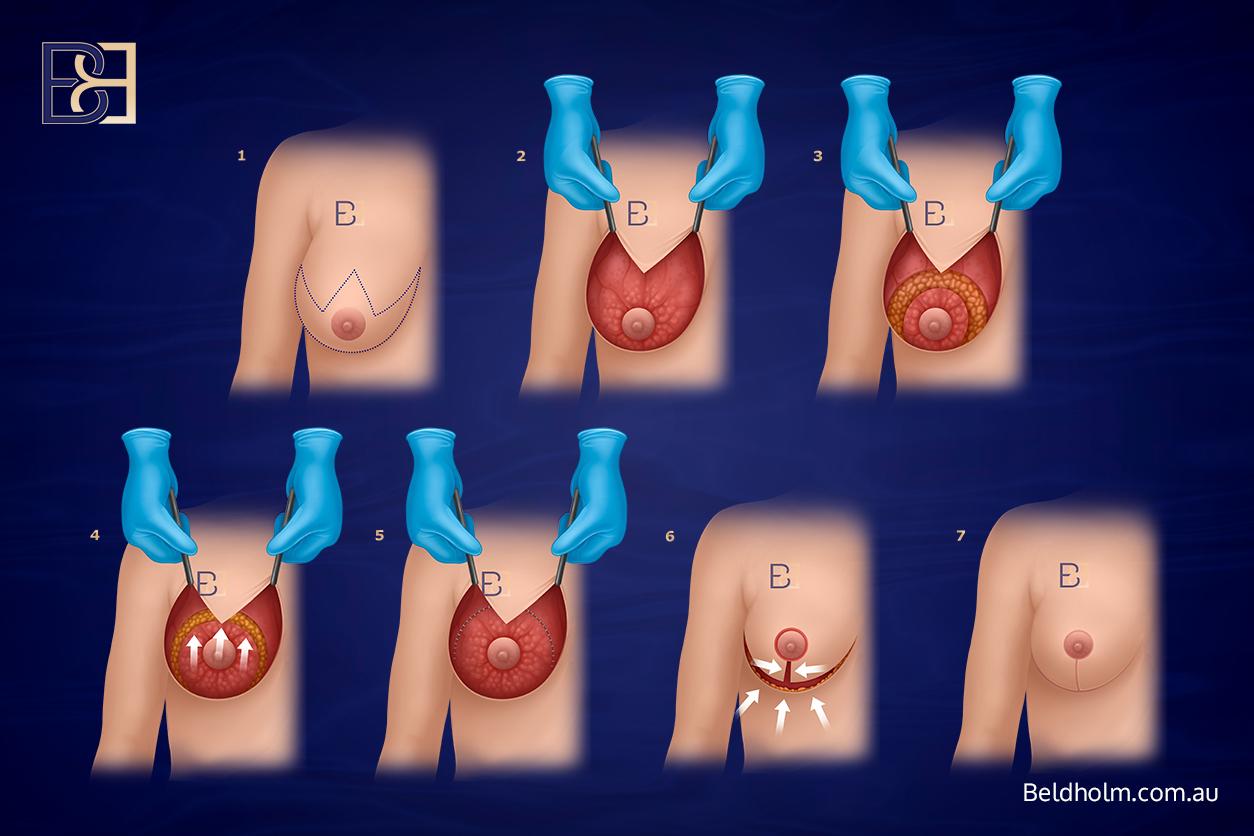
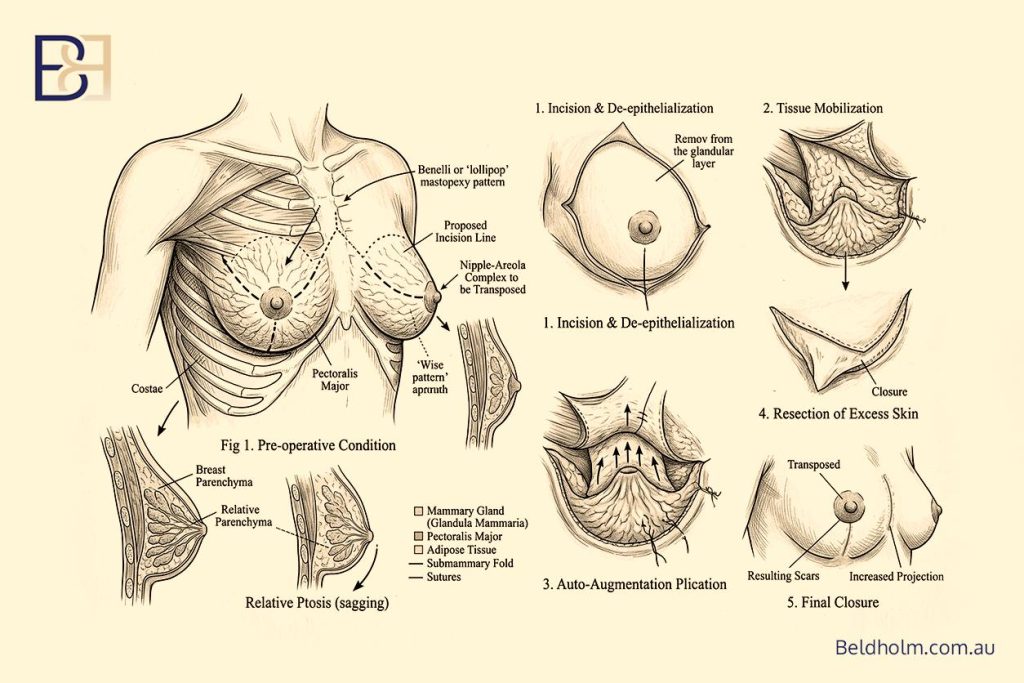
Auto-augmentation builds on that. Instead of discarding lower pole tissue, I keep it as a flap on its blood supply and secure it higher on the chest wall. That flap adds volume and projection to the upper part of the breast at the same time as the lift. The volume comes from tissue you already have.
What it does not involve
This operation uses your own breast tissue only. It does not use an implant.
Some patients want more volume than their own tissue can provide. For those patients, a mastopexy with implants is a separate operation, and I cover that on its own page. The two are alternatives. Auto-augmentation is the route for patients who want to avoid an implant.
Table of Contents
Is it right for you?
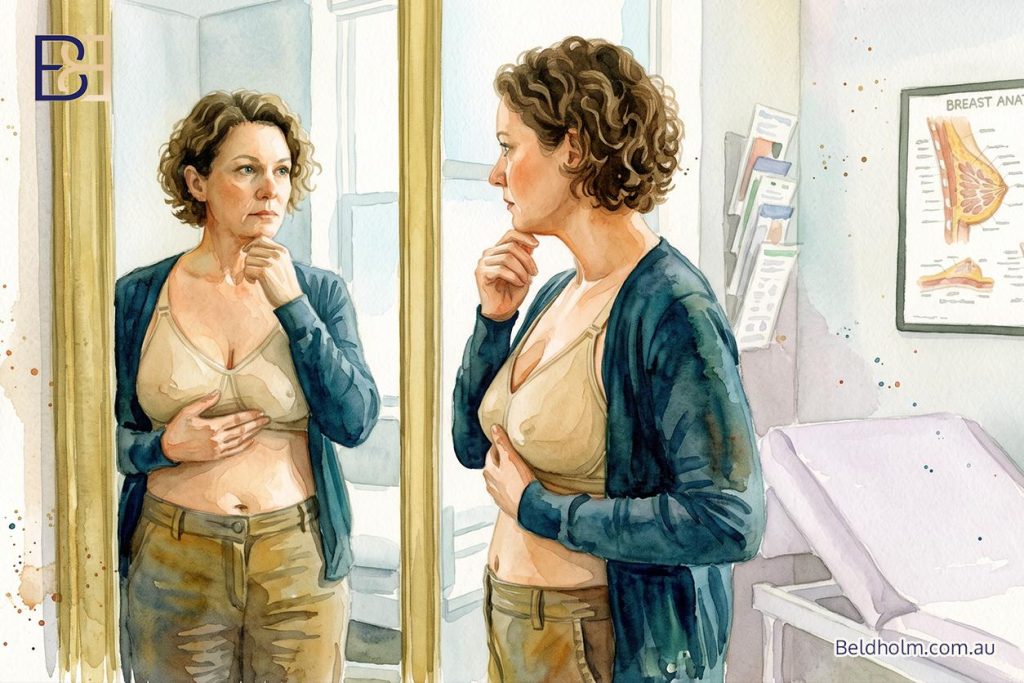
Whether auto-augmentation suits you depends on how much lower pole breast tissue you have to work with, your breast position and skin laxity, and what you want from surgery. Not everyone has enough tissue for this approach to add meaningful upper pole volume, and I assess that individually.
A GP referral is required before your consultation. Suitability is decided at that consultation, after I have assessed you. Results vary between patients.
What auto-augmentation is
Auto-augmentation means using your own breast tissue as the source of upper pole volume, rather than a breast implant. The volume you gain is tissue you already have, repositioned to sit higher on the chest.
The tissue stays alive because it stays attached
The part that makes this work is the blood supply. When I reshape the breast, I keep a section of your lower breast tissue attached to the blood vessels that feed it. That attached section is called a pedicle flap. Because it keeps its own blood supply, the tissue stays alive when I move it.
Rather than removing lower pole tissue, I fold or rotate that flap upward and secure it against the chest wall in the upper part of the breast. That is where the added fullness and projection come from.
What it adds, and where
Over time and with changes such as pregnancy, weight change, or the effect of gravity, breast volume tends to settle into the lower part of the breast, and the upper part can lose fullness. Auto-augmentation moves volume back toward the upper pole and the centre of the breast, and holds it there.
In the same operation I also:
- Raise the nipple and areola to a higher position
- Remove loose skin and tighten the skin envelope
- Reshape the remaining breast tissue
So the lift and the added upper pole fullness happen together, in one operation, using one set of incisions.
How it differs from a lift alone
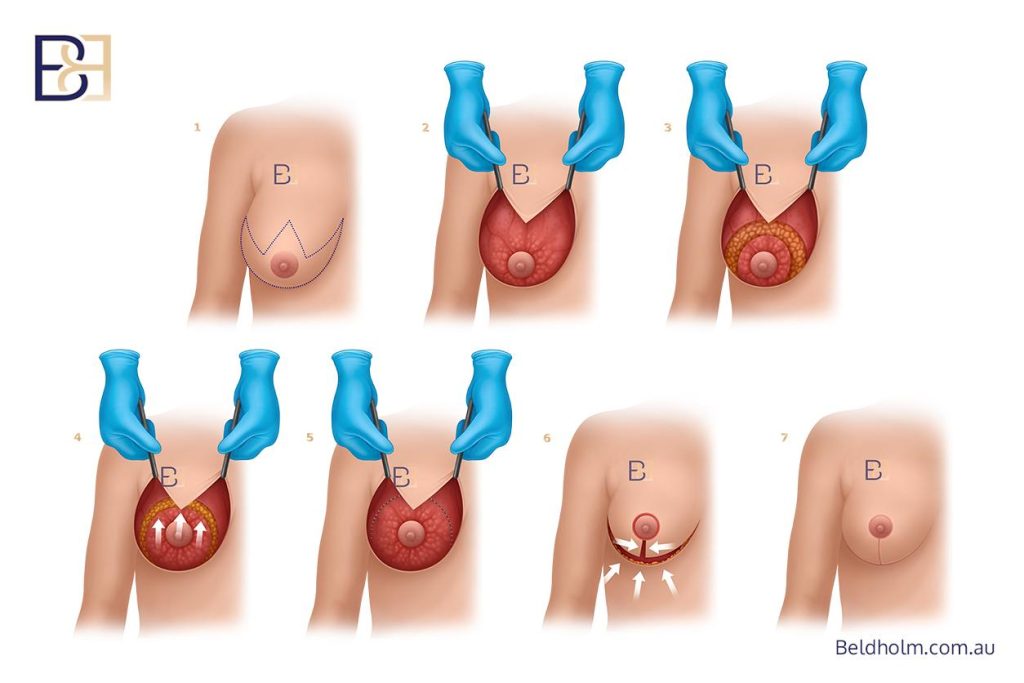
A mastopexy (breast lift) on its own raises the nipple, removes loose skin, and reshapes the breast. It changes shape and position. It does not add volume, and some patients find that a lift alone leaves the upper pole flatter than they hoped.
Auto-augmentation is the step beyond that. By keeping and repositioning tissue that a lift alone might tighten around, it puts fullness back into the upper pole at the same time as lifting the breast.
It is not an implant
This matters for patients who would rather not have an implant, whether because of the long-term maintenance an implant involves, or simply a preference to avoid a device. Auto-augmentation is limited by how much of your own tissue is available to reposition, which is one of the main things I assess when deciding whether it suits you.
Who I assess for this, and how
Auto-augmentation suits some patients and not others. A few factors carry most of the weight.
Enough of your own tissue to reposition
The volume in this operation comes from your own breast tissue, so there needs to be enough tissue to move upward and make a difference to upper pole fullness. This is the main factor that decides whether auto-augmentation is worth doing for you.
If there is limited breast tissue to work with, repositioning it may not add the fullness you are looking for. In that case auto-augmentation may not be the right operation.
A preference to avoid an implant
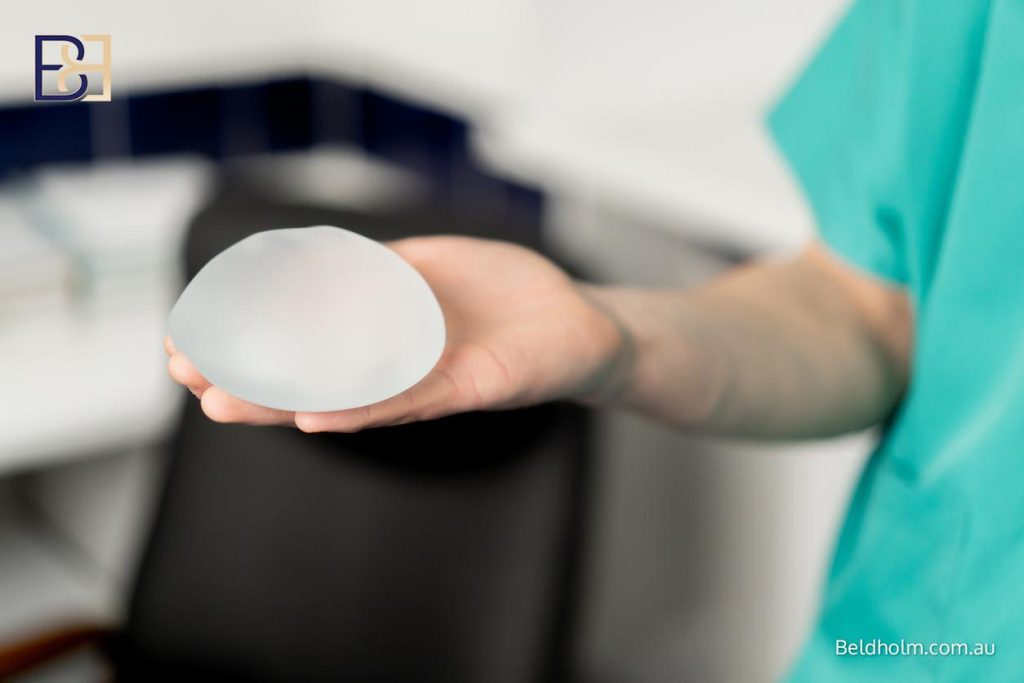
Auto-augmentation is chosen by patients who would rather not have a breast implant. If you are open to an implant and want more volume than your own tissue can provide, a different operation may suit you better. I cover that choice further down.
Breast position, shape and skin
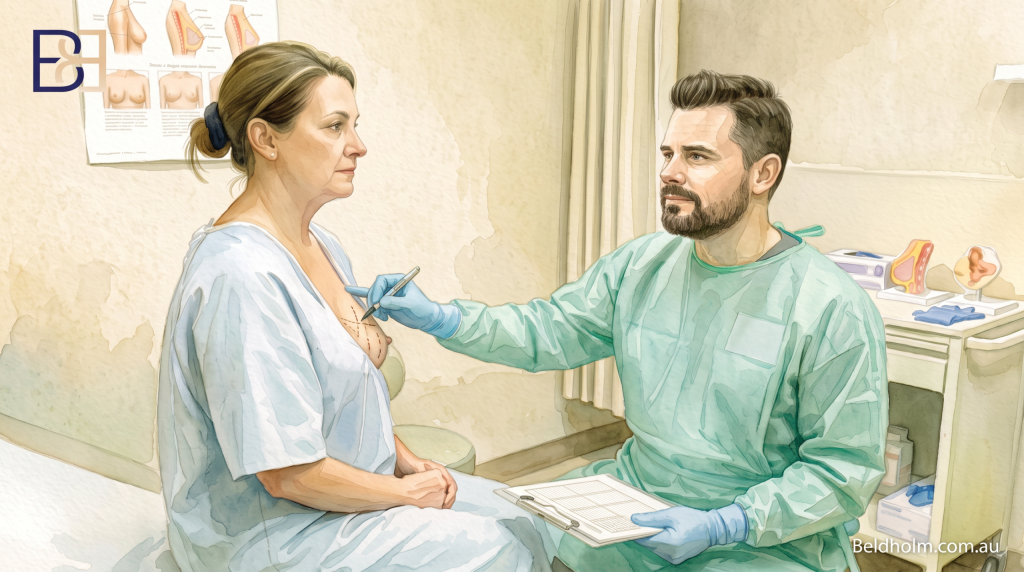
During consultation I assess:
- Breast position, including the degree of ptosis and where the nipple and areola sit
- Skin laxity and skin quality
- How your breast volume is distributed
- Breast tissue quality
- Nipple and areola position, and the blood supply to the nipple
The blood supply to the nipple is central to any lift, and it guides which incision pattern and which technique I use.
Your general health
Your general health forms part of the assessment. I take a full medical history, review your medications, and assess your suitability for anaesthesia and surgery. I ask patients who smoke to stop for six weeks before and six weeks after surgery, because smoking affects wound healing and the blood supply that the repositioned tissue depends on.
Every patient is assessed individually
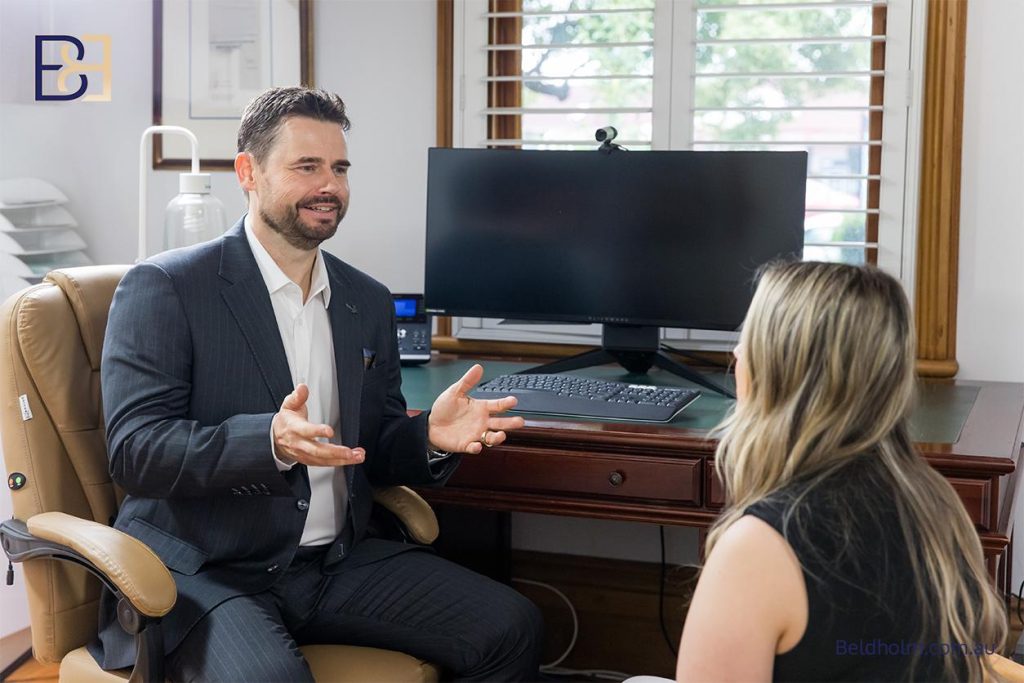
No two patients arrive with the same breasts, the same history, or the same goals. At consultation I take a full medical history, examine you, and judge whether auto-augmentation suits you on your own anatomy and health, rather than on any general rule. That individual assessment is what decides whether this is the right operation for you.
Preparing for surgery
Auto-augmentation relies on your own tissue healing well in its new position, with a good blood supply. Preparation supports that healing, so the weeks before surgery matter. Here is what I put in place.
Your GP referral
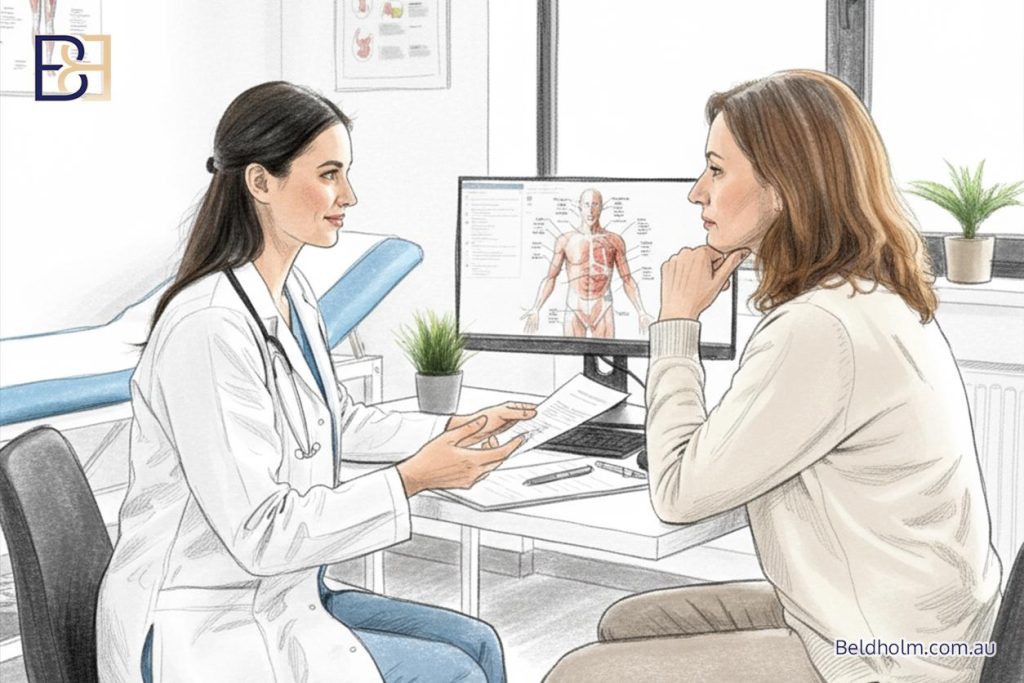
Your GP stays part of the process throughout. I copy your GP in on your pre-operative blood results, and I hand back to your GP for long-term care at your four-week post-operative visit.
Pre-operative blood tests

I arrange a set of blood tests for every breast surgery patient to check your general health before surgery. The panel covers a full blood count, urea and electrolytes, liver function, and a coagulation screen, along with hepatitis B, hepatitis C, and HIV. For women of childbearing age I include a pregnancy test (HCG).
Breast imaging
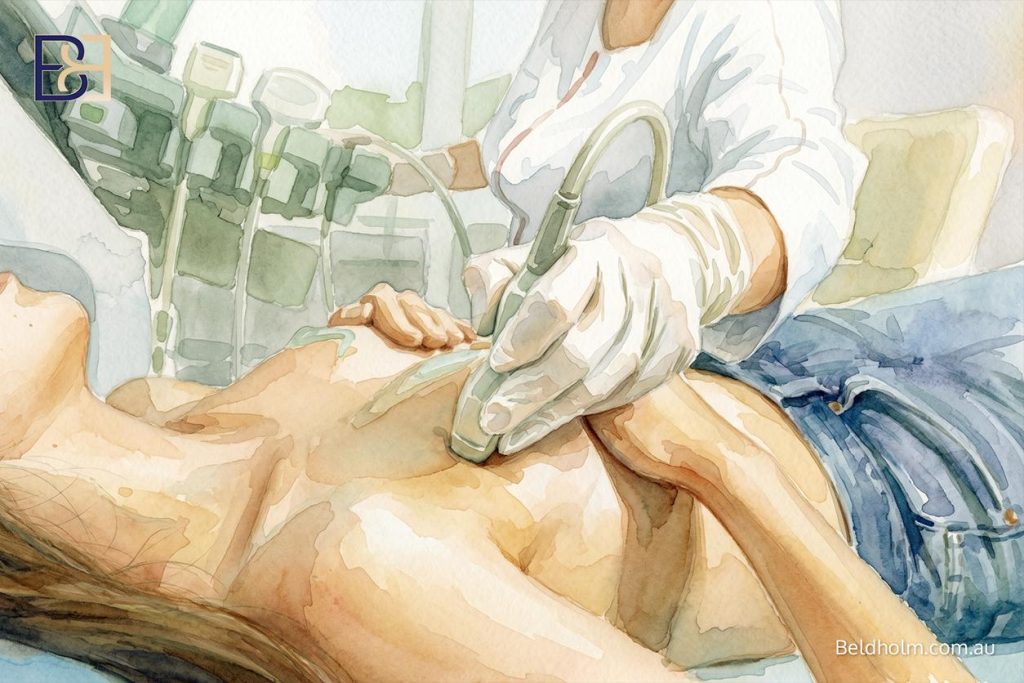
Breast imaging is part of your pre-operative assessment. I arrange mammography for older patients and ultrasound for younger patients. This is standard before breast surgery and forms part of your ongoing breast health record.
Medications, blood thinners and clot risk
At consultation I assess your risk of a blood clot in the legs or lungs (DVT and VTE), and put in place whatever clot prevention you need based on your individual risk.
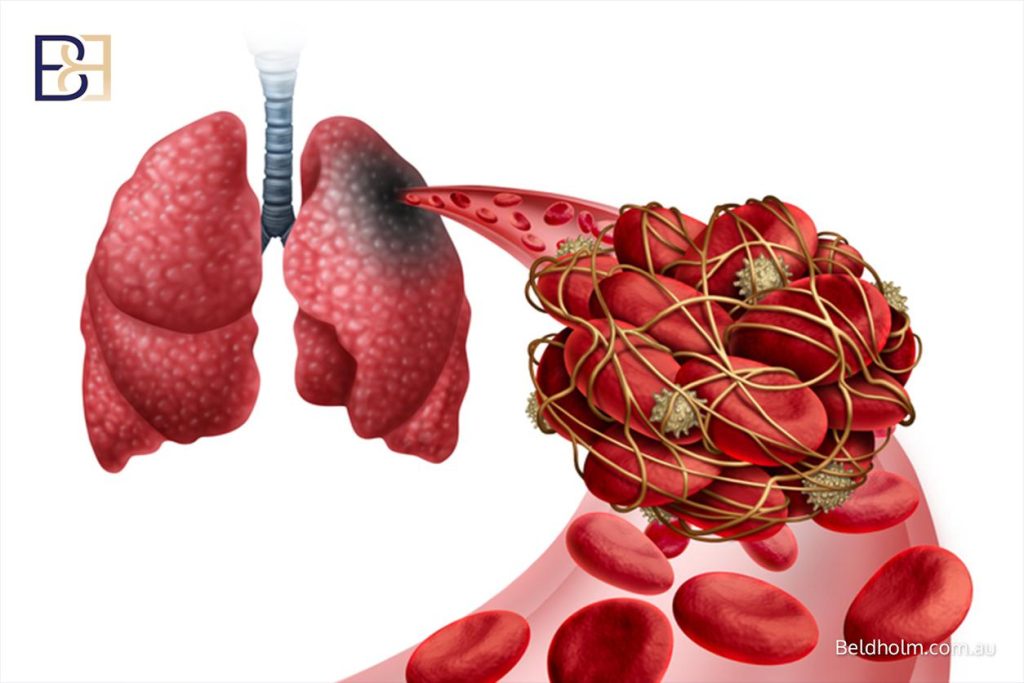
If you take aspirin or a blood thinner, it is usually stopped about a week before surgery. Some patients need to continue through surgery, and I plan that well in advance. Do not stop any medication on your own. I will tell you exactly what to stop and when.
Your anaesthetic consultation
Most anaesthetic consultations happen by phone before your surgery. Your physical check, including your airway, is done on the day of surgery by your anaesthetist.

Timing after pregnancy or breastfeeding
If you have recently been pregnant or breastfeeding, I plan surgery for once breastfeeding has finished and your breasts have settled. There is no fixed waiting period. The right timing is assessed individually at your consultation.

The operation
Auto-augmentation is done under general anaesthetic. Most patients have it as a day-stay at Maitland Private Hospital and go home the same day. Some stay overnight, usually where drains are used. Here is what happens during the operation.

Marking and planning
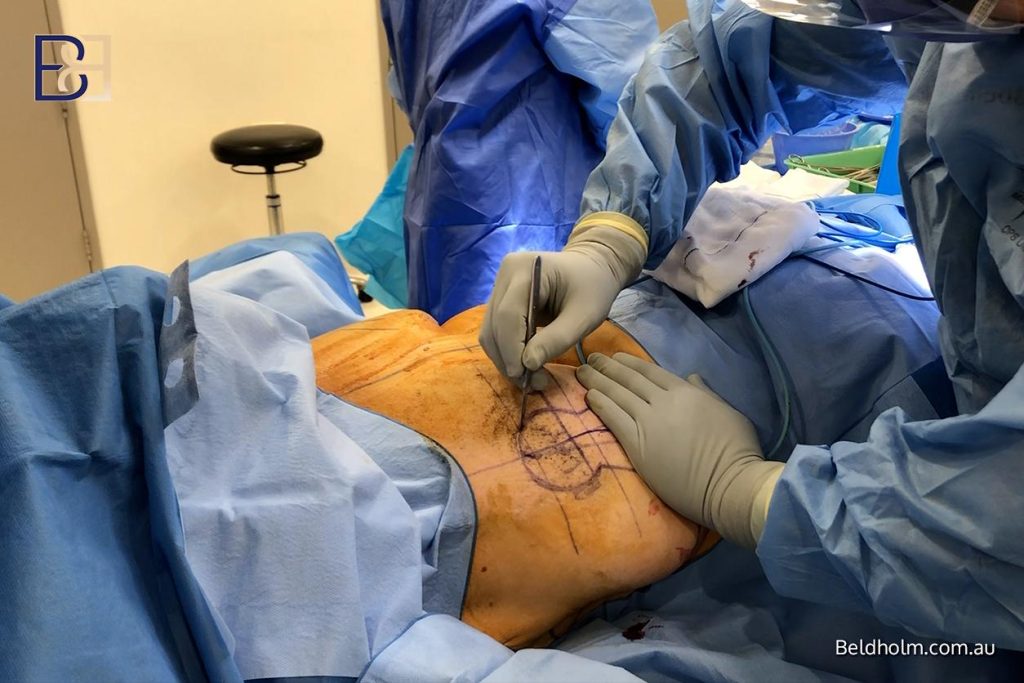
Before surgery I mark your breasts while you are sitting upright. I mark the new position for your nipple and areola, the skin pattern I will use, and the section of lower breast tissue I plan to reposition. Marking you upright matters, because that is the position your breasts sit in day to day.
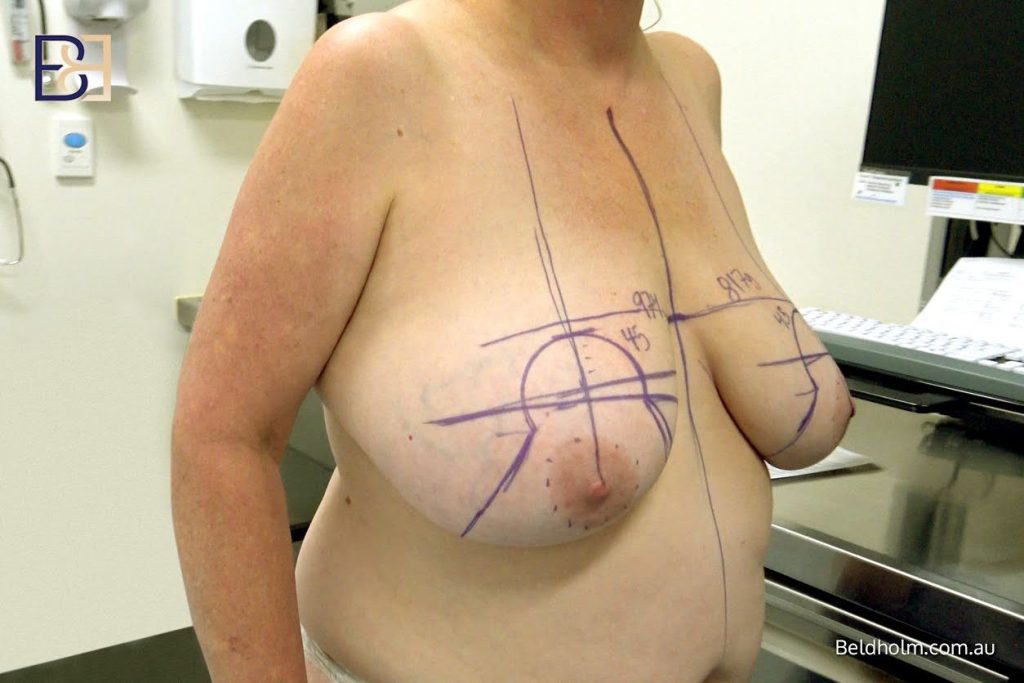
Raising the flap
The first step is de-epithelialisation. I remove the outer surface layer of skin over the area I am going to use, while keeping the breast tissue underneath. That tissue is then raised as a flap, staying attached to the blood vessels that feed it. Keeping the flap on its blood supply is what allows it to survive in its new position.
Repositioning your own tissue
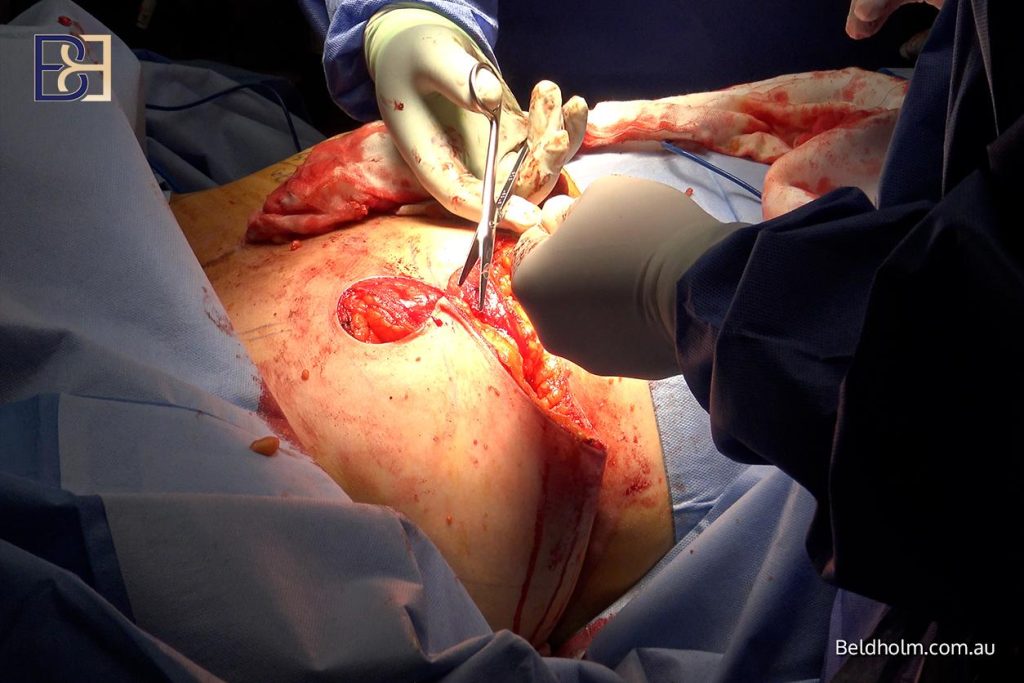
I move the flap of your lower breast tissue upward and secure it against the chest wall in the upper part of the breast. This is the step that adds fullness and projection to the upper pole. I reshape the remaining breast tissue around it, so the breast holds its new shape from the inside.
The nipple and areola
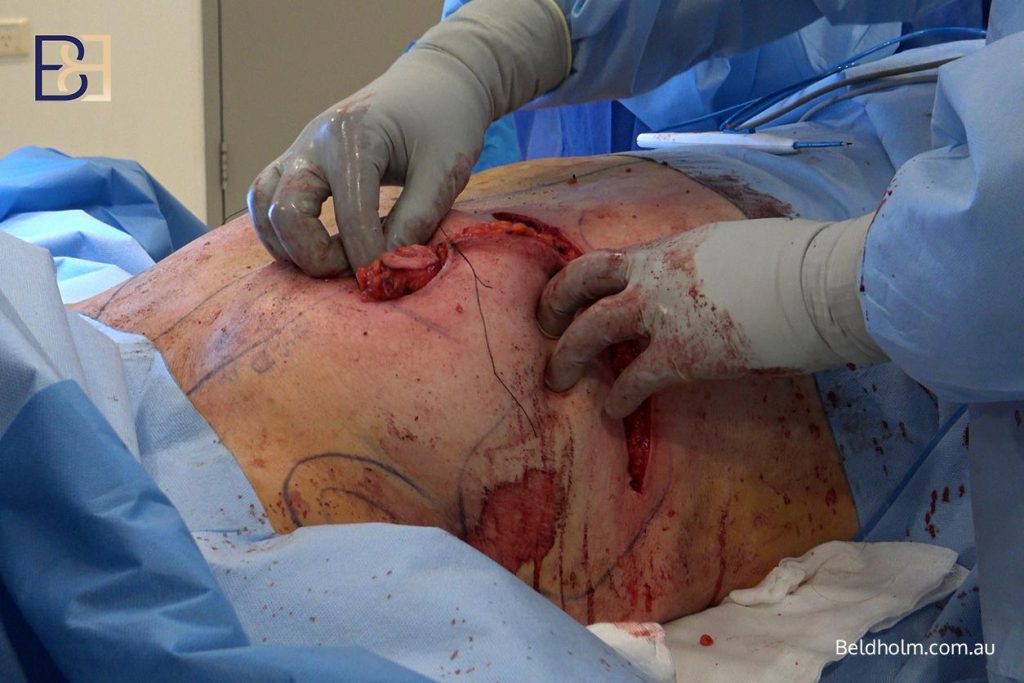
Your nipple and areola are moved to a higher position. They stay attached to their own tissue and blood supply throughout, so they remain alive and, in most cases, keep their sensation. Protecting the blood supply to the nipple is the central consideration in this operation, and it guides how I plan every other step.
Incisions and scars
The incision pattern depends on how much skin needs to come out and how much lift you need:
- A vertical pattern leaves a scar around the areola and a vertical line running down to the crease beneath the breast. This is sometimes called a lollipop pattern.
- An inverted-T pattern adds a horizontal scar along the crease beneath the breast, and suits patients who need more skin removed.
The scars are permanent. They are usually raised and pink early on, and they settle and fade over the following months, though the rate and the final appearance vary between patients. I talk you through where your scars will sit before surgery.
Closing, drains and dressings
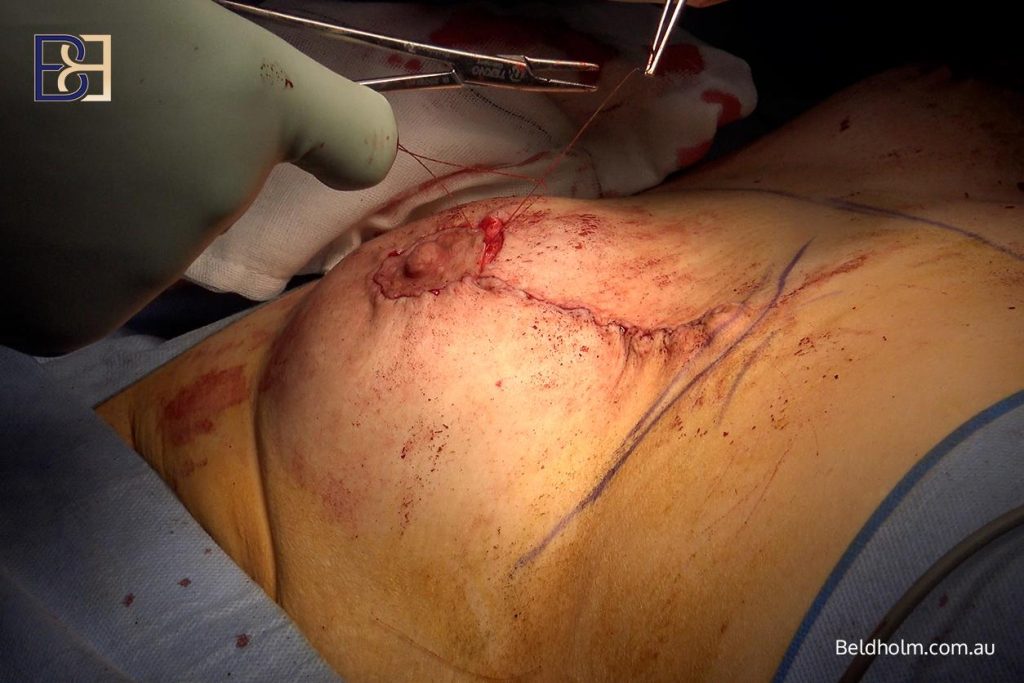
I close the breast in layers with dissolving sutures. Where I use a drain, it comes out through a small separate site and is usually removed within a day or two, once the fluid draining each day drops below the level I look for. Your dressings are applied at the end of the operation, and you go home in a support bra.
The operation itself takes a few hours, depending on the extent of the work and whether both breasts are being done.
Auto-augmentation or an implant: how the choice is made
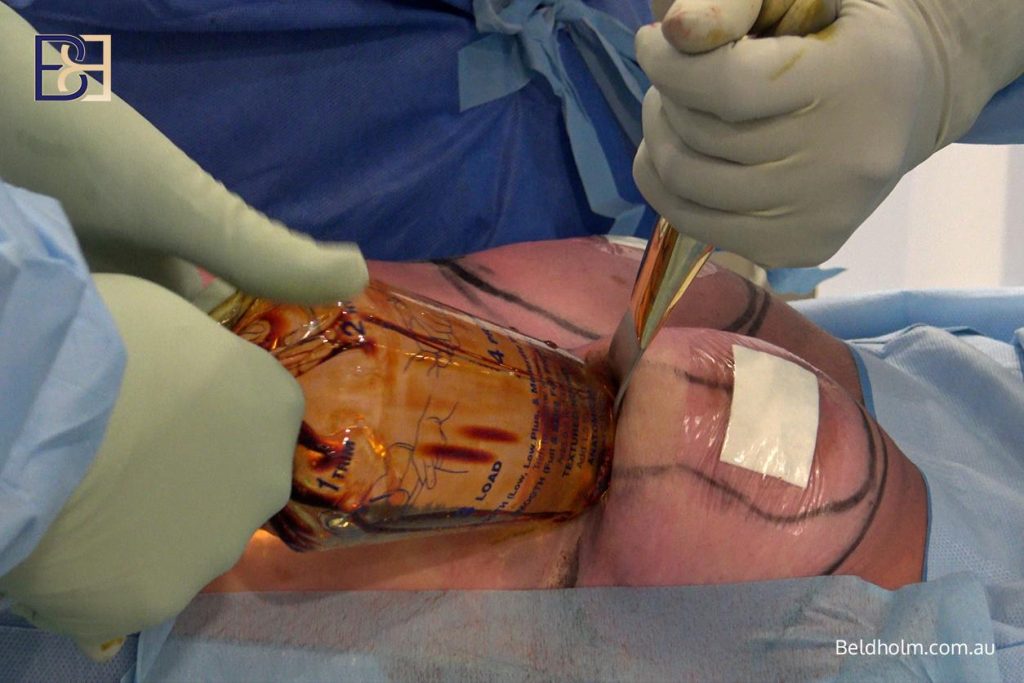
Auto-augmentation is one way to add fullness to the upper pole at the time of a lift. An implant is another. They are different operations, and which one suits you comes down to how much added volume you are after and how much of your own tissue is available to reposition.
What the decision turns on
- Auto-augmentation is limited by how much lower pole tissue you have to move. It adds the volume that your own tissue can provide, and no more than that.
- If you want more volume than your own tissue can give, an implant is how that volume is added. That is a mastopexy (breast lift) with implants, which is a separate operation.
- If you would rather avoid an implant, and your own tissue can provide the fullness you are looking for, auto-augmentation may be the option for you.
The main trade-offs
To help you weigh it up:
- Auto-augmentation uses your own tissue and places no device in the breast. The amount of volume it can add is set by how much of your own tissue there is to reposition.
- An implant can add volume beyond what your own tissue provides. A breast implant is a medical device, and it comes with its own long-term considerations, including that implants do not last forever and may need attention or replacement over time. I cover those on the implant page.
Which of these matters most to you is personal, and there is no single right answer. The point of the consultation is to match the operation to what you want and what your anatomy allows.
Recovery and what to expect

Recovery from auto-augmentation is a real recovery, and it helps to plan for it. Most patients go home the same day in a support bra. The first couple of weeks ask the most of you, and things ease from there.
The first two weeks
Expect swelling, bruising, and discomfort in the first fortnight. I prescribe pain relief, and most patients manage well with it. You will need to rest and keep activity light.
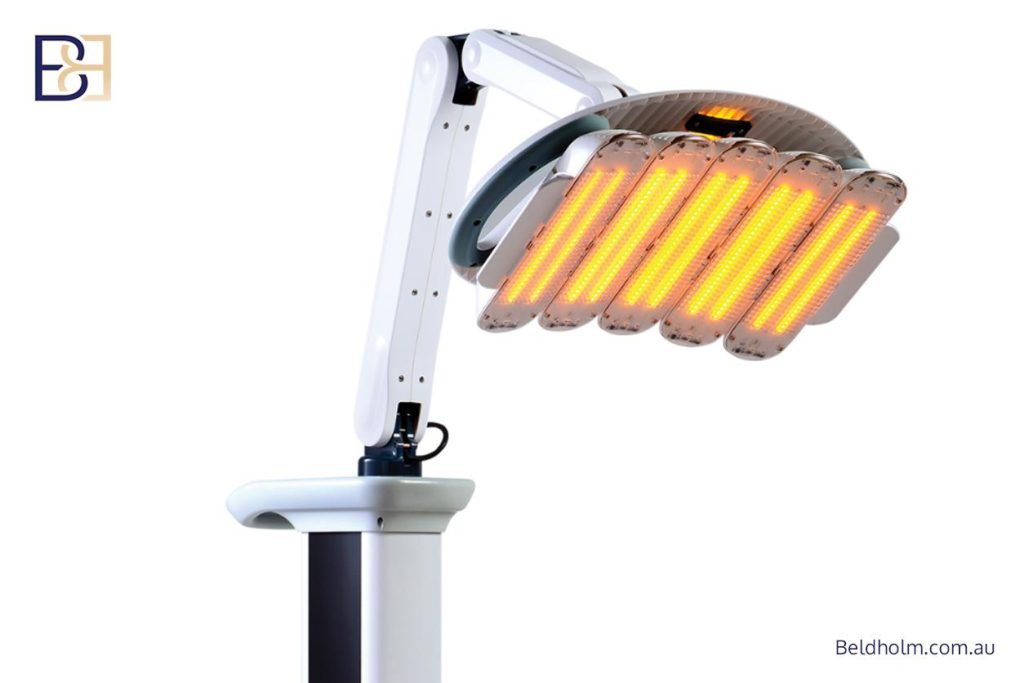
During these two weeks I see you in clinic often, usually two to three times a week, together with my nursing team. Part of these visits is Healite II LED light therapy, which I use to support healing. Your dressings are Comfeel, and I manage them at these visits.
Your support bra

The support bra does a lot of the work in holding your new breast shape while it heals. The pattern I use is:
- Full-time for the first four weeks
- Daytime only for the following two weeks
- An underwire bra permitted from six weeks
Getting back to activity

Give yourself time. As a rough guide:
- Desk-based work: often around one to two weeks, depending on how you feel
- Physical or heavy work: longer, and discussed with you individually
- Heavy lifting and strenuous exercise: avoided for about six weeks, then reintroduced gradually
These are guides, not fixed rules. I set your restrictions to your operation and how you are healing.
Follow-up beyond the first fortnight
After the intensive early period, I review you at four weeks, three months, six months, and twelve months. Your GP is kept informed throughout, with a formal handover for long-term care at your four-week visit.
How your breasts settle
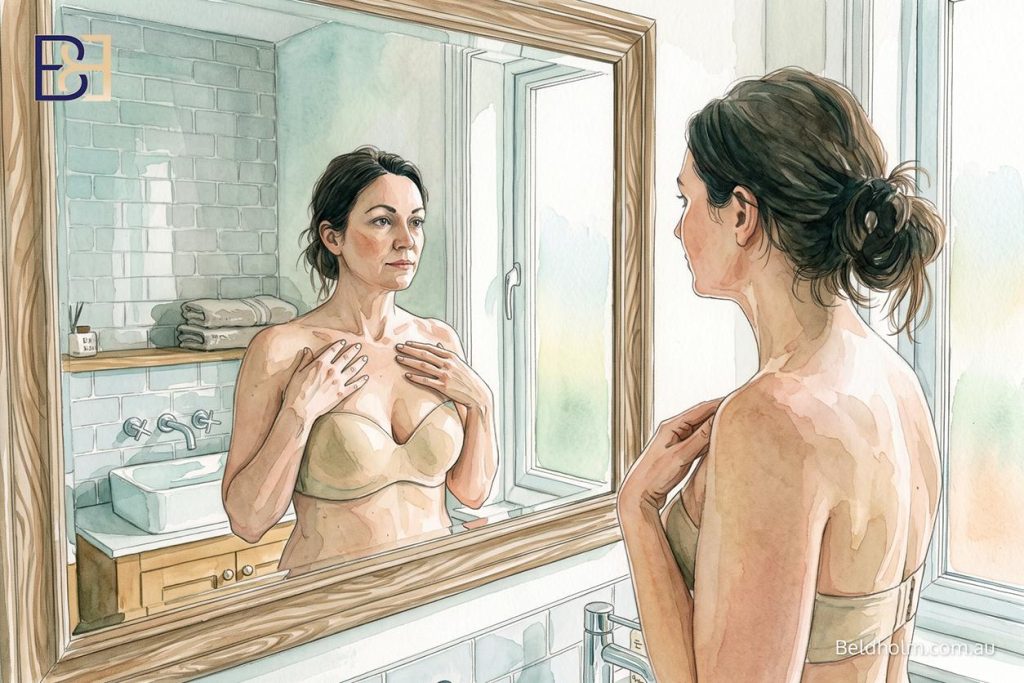
Swelling settles over weeks to months, and your final breast shape takes months to show itself. Your scars are usually raised and pink early on, and they fade over the following months, though the rate and the final look vary between patients.
Sensation in the nipple and breast skin can change after surgery. For many patients this settles over time, but in some it is lasting. I talk you through this before your operation.
Future pregnancy and breastfeeding

Future pregnancy and breastfeeding can change your result, because your breasts change again with pregnancy. Breast surgery can also affect your ability to breastfeed in future. I talk through timing at consultation if you are planning a family.
If something is not right

If you have a concern after surgery:
- In working hours, call the rooms and the team will manage it
- After hours, call Maitland Private Hospital, where nurse-led phone triage will guide you
- If you need a physical assessment, go to your local emergency department
- In a life-threatening emergency, call 000
Maitland Private Hospital is not an emergency department, so anything needing urgent physical assessment goes to your local ED.
Planning your surgery
Your consultation
Book your appointment online now
Everything starts with a consultation. I examine you, talk through whether auto-augmentation suits you, and explain the operation, the risks, and the recovery in full. We decide together, based on what I find and what you want from surgery.
If auto-augmentation is not the right operation for you, I will tell you, and we will talk through the alternatives. Surgery is not the only path for everyone. I would rather be direct with you than have you go ahead with something that does not suit you.
What it costs
You will receive three separate quotes, so you can see the full picture before you commit:
- My surgical fee, which includes your support bra and all of your follow-up care
- The hospital fee
- The anaesthetist’s fee
My patient coordinator arranges the hospital and anaesthetist quotes for you. I go through the surgical quote with you once your plan is clear, because the detail depends on your individual operation.
What auto-augmentation can and cannot do
Auto-augmentation lifts and reshapes your breast, and adds the upper pole fullness that your own tissue can provide. It does not add volume beyond your own tissue, and it is not an implant. At consultation I am direct with you about what is achievable for your breasts, so that what you expect matches what the operation can do.
Deciding whether it is right for you
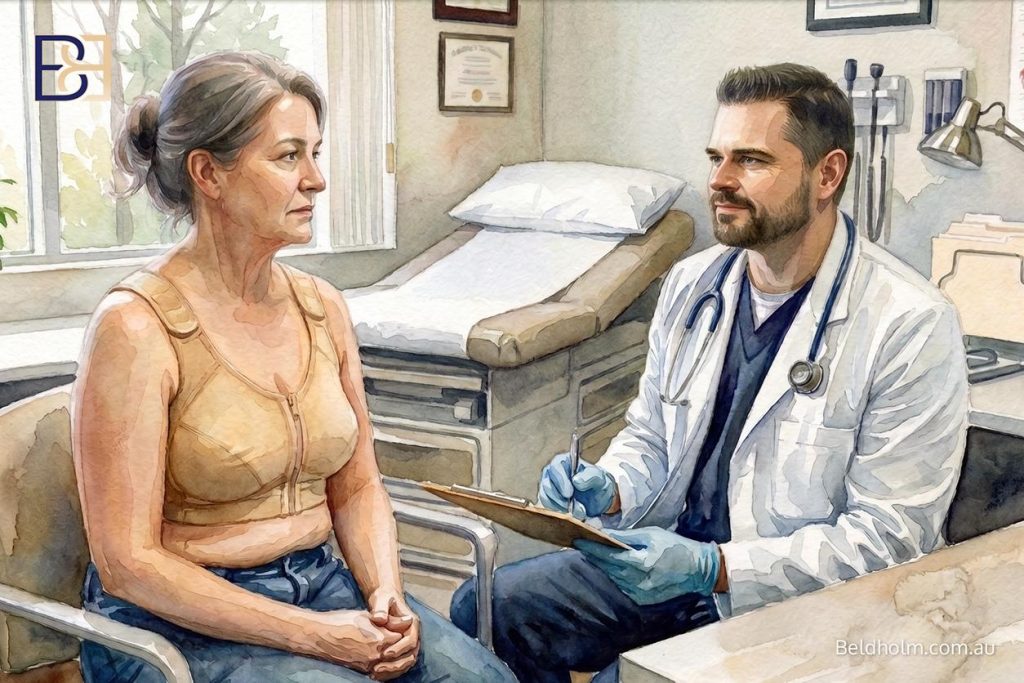
Whether auto-augmentation suits you is decided at your consultation, after I have assessed you, and a GP referral is required before we meet. Results vary between patients, and the right operation for you depends on your own anatomy, your health, and what you want to achieve.