


If you have breast implants, there may come a point where you decide to have them removed and replaced. In my practice, patients come to this for different reasons. An implant may have ruptured, and a ruptured implant usually needs to come out. Capsular contracture may have changed how the breast feels or sits. Your existing implants may have shifted, you may want a different size or type, or your old implants may have been in place for a long time. Some patients also ask how long implants last and when to think about swapping them for new implants. Whatever the reason, one of the first questions is nearly always the same. What is recovery like?

Book your appointment online now
The answer depends on what the operation involves. You may also hear this called breast implant revision surgery, a breast implant exchange, or breast implant removal and replacement. Removal and replacement of breast implants (implant exchange) is not one set procedure. It ranges from exchanging one implant for another through your existing pocket, to a longer operation that removes scar tissue, moves the implant to a different position, or combines the exchange with a mastopexy (breast lift). Recovery tracks that extent. A shorter operation is a smaller physiological event than a longer, more involved one, and your recovery reflects which one you had.
This article walks through what to expect week by week, what makes recovery longer or shorter, how scars settle, when your breasts reach their final shape, and the warning signs that mean you should call. Everything here is general information. Your own recovery is assessed individually at consultation.
What removal and replacement of breast implants (implant exchange) involves
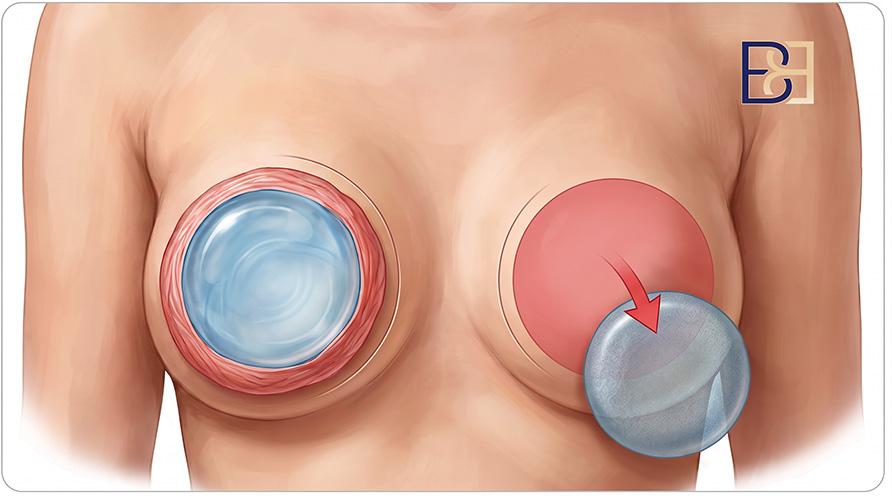
The operation covers a wide range, and the range is the reason recovery is not a single number.
At its most contained, removal and replacement of breast implants (implant exchange) takes out one implant and inserts another through the pocket that is already there, with little new dissection. This is the situation when, for example, an implant has ruptured (implant rupture) or you want a change in size or fill, and the existing pocket and plane from your initial surgery are still suitable. An operation like this can take around an hour.
At the other end, the operation does more than exchange the implant. It may involve:
- Removing the capsule of scar tissue around the implant, either partly or completely (a capsulectomy), which is often the case with capsular contracture
- Moving the implant to a different plane, for example from in front of the muscle to behind it, which means creating a new pocket
- Correcting implant position, such as an implant that sits too low or too far to the side
- Combining the exchange with a mastopexy (breast lift) to reposition the breast and remove excess skin
An operation that includes a capsulectomy or other significant revision surgery can take three to four hours. The surgical technique and implant placement depend on what needs to be done.
Why recovery varies so much
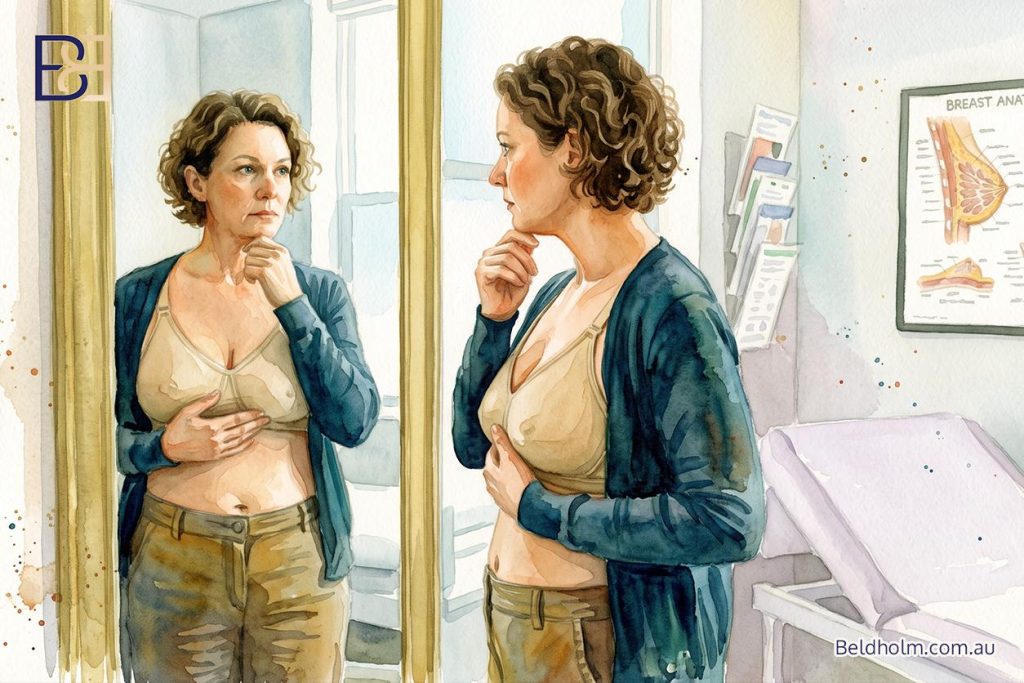
Two patients can both have removal and replacement of breast implants (implant exchange) and have quite different recoveries. The things that drive the difference are:
- How much dissection is done. Reusing an existing pocket involves less tissue work than removing a capsule or creating a new pocket.
- Whether the implant plane changes. Moving an implant behind the muscle involves the chest muscle, and muscle dissection is a more demanding part of recovery.
- Whether a mastopexy (breast lift) is added. A lift adds skin work, scars, and repositioning of the nipple, which lengthens recovery and changes what the early weeks look like.
- Whether drains are used. More extensive dissection makes a drain more likely, which affects your first week.
- Your own healing. General health, medical history, and how your tissue heals all play a part, and these differ between people.
This is why I do not give every patient the same recovery timeline. The plan follows the operation, and the operation is decided with you at consultation after assessment. What follows is a general guide to the milestones most patients move through, so you can prepare with a realistic picture in mind.
Planning ahead for your recovery
Recovery goes more smoothly when the practical side is sorted before you go in. It is much harder to organise while you are sore and tired in the first few days. I ask patients to have the following in place before the day of surgery.
Arrange help and time off
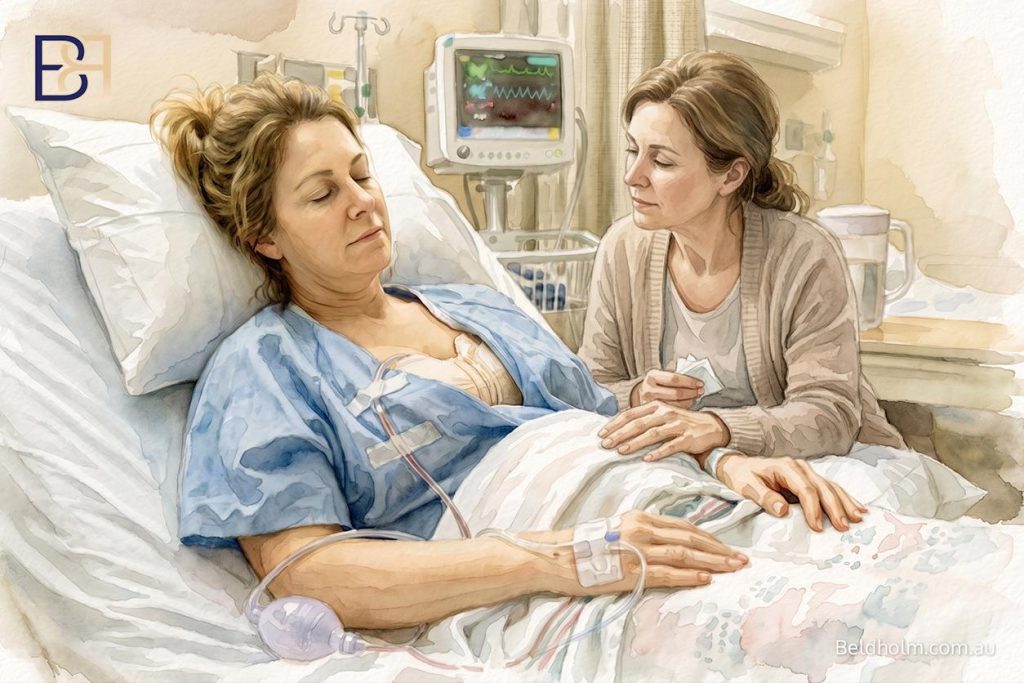
Removal and replacement of breast implants (implant exchange) is surgery under general anaesthetic, and you will not be able to drive yourself home. Arrange for someone to collect you and to stay with you for at least the first night. For the first day or two you will want help with anything that involves reaching, lifting, or carrying, including children, shopping, and pets.
How much time you need away from work depends on the operation and on what your job involves. I give you a realistic figure at consultation once the plan is set. A desk-based return is usually sooner than a physically demanding one. Plan for more time rather than less, so you are not pushing yourself back too early.
Set up your space at home
- A comfortable spot where you can rest propped up rather than lying flat. Many patients use a bed with extra pillows or a recliner.
- Loose, front-opening tops, so you do not have to lift clothing over your head in the first weeks.
- Everyday items moved to waist or bench height, so you are not reaching up to high shelves.
- Meals prepared or bought ahead for the first few days. Eating a healthy diet supports your body’s healing process.
- Your prescriptions filled after leaving hospital surgery, so pain relief is on hand when you get home.
Your support garment and dressings

You go home in a support garment and keep it on as instructed. Having a second one is useful so you can wash and rotate them. Your dressings are managed by the team, and I use Comfeel dressings for breast surgery. I will tell you how to look after them and when they come off.
Medications and blood thinners
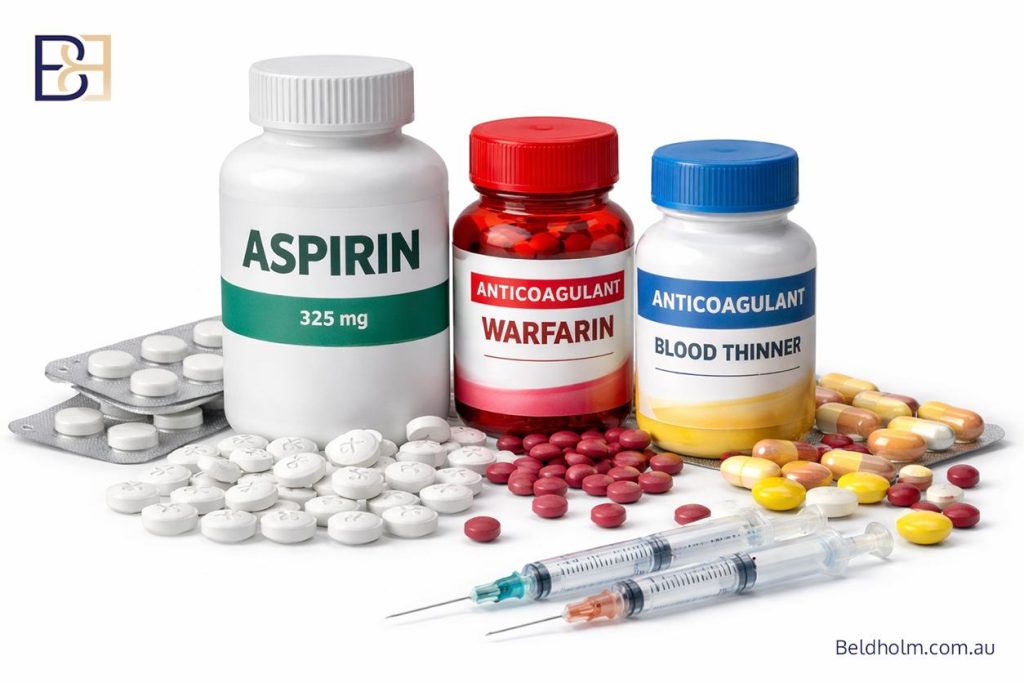
If you take aspirin, other anti-inflammatory drugs, or a blood thinner, do not stop them on your own. I decide what to stop and when, usually about a week before surgery, and I plan this well ahead. Some patients need to keep taking their medication through surgery, and that is planned in advance too. The same applies to any supplements that can affect bleeding. Bring an up-to-date list of everything you take to your consultation.
Before all of this: your consultation
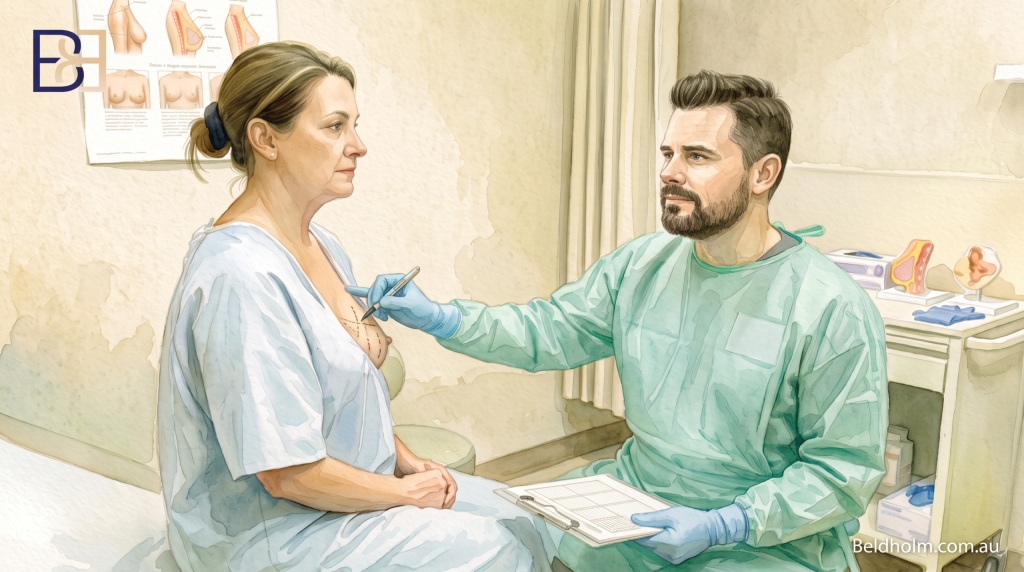
Everything above follows a treatment plan set at your consultation, where I assess you and we decide what your operation involves. The preparation I ask of you is tailored to your operation, not a set checklist that is the same for everyone.
The day of surgery and the first 24 hours
Removal and replacement of breast implants (implant exchange) is done under general anaesthetic. Most patients have it as a day procedure and go home the same day. Some stay overnight, and I plan that ahead when the operation is more extensive, when a drain is in place, or by personal preference. An overnight stay can also suit patients with private health insurance.
Waking up after surgery
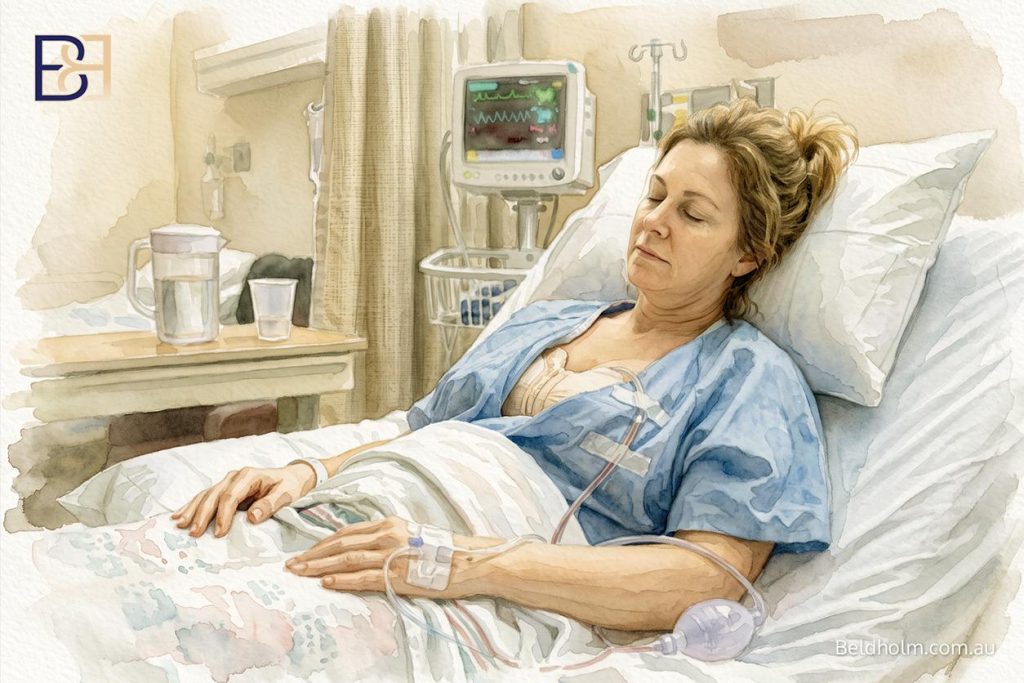
You wake in the recovery area, where the nurses monitor your blood pressure, heart rate, and temperature until you are stable. A general anaesthetic takes time to clear, so it is normal to feel slow, drowsy, or foggy for the rest of the day. Some patients feel nauseated, and the team can treat that.
Once you are awake and comfortable, you move to the ward. You have something to eat and drink, and the nurses go through your discharge instructions and your medications with you before you leave.
What you go home with
- A support garment, already on, which you keep wearing as instructed.
- Comfeel dressings over your incisions. These are water-resistant, and I will tell you when you can shower and when they come off.
- A drain, in some cases. A drain is more likely after a capsulectomy or more extensive dissection. If you have one, the team shows you how to manage it before you go home.
- Pain relief and any other medication, with instructions on what to take and when.
Getting home and the first night

You cannot drive after a general anaesthetic, so someone needs to collect you and stay with you for the first night. Expect to feel tired and sore in the early recovery period once the anaesthetic wears off. Take your pain relief as directed rather than waiting for discomfort to build.
It is normal to feel tightness or pressure across the chest in the first day or two, particularly if the implant sits behind the chest muscles or a new pocket was created. Rest propped up rather than flat, keep your movements small, and let the people around you do the reaching and lifting.
The first week
The first week is when your body does the early work of healing, and it asks you to rest. Most patients find discomfort is most noticeable in the first few days, then eases across the week. How much you feel depends on what your operation involved, and a longer or more extensive operation tends to make the first week more demanding.
Discomfort and how it settles

Expect soreness, tightness, and a feeling of pressure across the chest, especially if the implant sits behind the muscle. Stay on top of your pain relief, and most patients step down from the stronger pain medication over the first several days as the soreness eases. Tell the team if your pain is not settling or is getting worse, because that is something I want to know about.
Your support garment

Keep your support garment, a surgical bra, on day and night through this first week. This supportive bra holds everything in position, helps reduce swelling, and supports the tissue while it settles. Only take it off as instructed, for example to shower once you are cleared to.
Showering and looking after your incisions

I use Comfeel dressings, which are water-resistant, so most patients can shower the day after surgery. Keep the dressings intact, let the water run over them rather than scrubbing, and pat the area dry afterwards. Do not soak in a bath, pool, or spa while you are healing, as this can interfere with wound healing. Leave the dressings alone and let me manage when they come off.
Rest, sleep, and movement

- Sleep propped up on your back, not on your side or front. Extra pillows or a recliner help.
- Keep your movements small and close to your body. You may notice mild discomfort with certain movements. Avoid reaching overhead or lifting in this first week.
- Short walks around the house help your circulation. You do not need to push beyond that.
- Let other people do the reaching, lifting, and carrying.
Your early reviews and drain
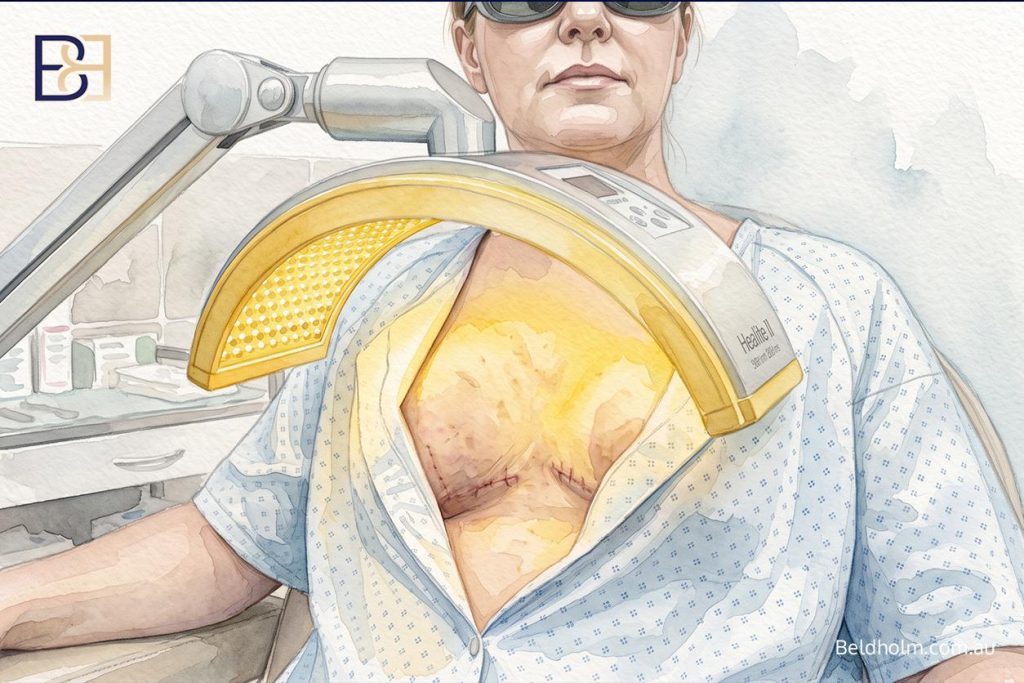
Review is intensive in the first two weeks. You are seen two to three times a week by me and the nursing team, and these visits include Healite II LED light treatment as part of your recovery care. If you went home with a drain, it usually comes out within the first week once the output has dropped, and the team removes it at one of these visits. After the first fortnight, reviews space out to the standard schedule.
It is normal to feel tired and low on energy this week. That is your body directing its resources into healing. Rest is not time wasted here, it is part of the recovery process.
Weeks two to six: returning to activity
This is the stretch where you gradually build back towards your normal routine. The pace depends on what your operation involved and on how you are healing, so treat the timings below as a general guide rather than set dates. I give you your own clearances at your follow-up appointments.
Driving

Most patients are right to drive again about a week after surgery, once you are off the stronger pain medication and can brace, steer, and do an emergency stop without hesitating. Do not drive while you are still taking anything that makes you drowsy. If reaching the wheel or pulling the seatbelt across your chest is uncomfortable, you are not ready yet.
Returning to work

A desk-based job is usually manageable from around a week, once you are off the stronger pain relief. Work that involves lifting, reaching overhead, or physical effort takes longer, and I give you a timeframe based on your operation and your job. If you can ease back part-time or on lighter duties at first, that helps.
Your support bra over these weeks
Plan to wear your support garment, a compression garment or supportive bra, full-time, day and night, for about four weeks. After that, most patients move to wearing it during the day for a further two weeks. I usually clear patients to return to an underwire bra after that six-week mark. I confirm the timing with you, because it depends on how you are healing.
Movement, lifting, and exercise

- Light activities around the house build back from around two weeks, within comfort.
- Hold off on heavy lifting, and on chest and upper body exercise, for longer. I generally clear strenuous exercise from around four to six weeks, and later than that if your operation was more extensive or included a mastopexy (breast lift).
- Let your arm and shoulder movement return gradually. Do not force stretches.
- Build up rather than jumping straight back to your previous training load.
Pushing too hard too soon can set your recovery back, so increase your activity in steps and stop if something hurts.
Swelling and bruising
Across these weeks the early swelling and any bruising settle. Your breasts will still be changing shape as this happens, and they have not reached their final position yet. That takes longer, and I cover it further on.
How the extent of surgery changes your recovery
Because removal and replacement of breast implants (implant exchange) covers such a range, it helps to see how the main variations change what recovery looks like. The more the operation involves, the more your body has to recover from.
A contained exchange through the same pocket
When one implant is exchanged for a new implant through the existing pocket, with little new dissection, recovery sits at the shorter end of the range. This is still surgery under general anaesthetic with a genuine recovery period, but there is less new tissue work for your body to heal.
When a capsulectomy is part of the operation
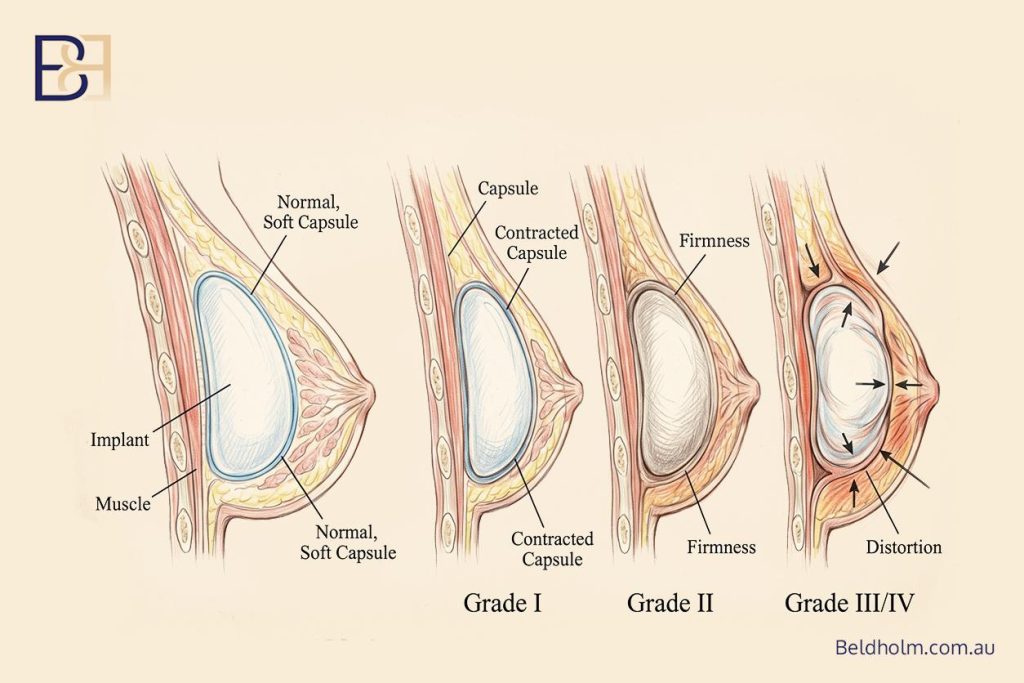
If the capsule of scar tissue around the implant is removed, in part or in full (a capsulectomy), that is more dissection. This is often the case with capsular contracture, which is one of the more common reasons implants are removed and replaced (1). Expect a drain to be more likely, more swelling and bruising early on, and a longer recovery than a contained exchange.
When the implant moves to a different plane or pocket
Moving an implant to a different position, for example from in front of the chest muscle to behind it, means creating a new pocket. Where the muscle is involved, you can expect more tightness and muscle-related soreness in the early weeks, and upper body activity is held back for longer.
When a mastopexy (breast lift) is combined with the exchange
Some patients have a mastopexy (breast lift) at the same time as their implants are exchanged, to reposition the breast and remove excess skin. Combining a lift with an implant in one operation is more complex surgery than either on its own. It adds skin work, more scars, and repositioning of the nipple, and recovery is longer and more involved as a result. Changes in nipple sensation can also occur.
For some patients this combined operation suits them, and can mean one anaesthetic and one recovery rather than two. For others, staging the lift and the implant across separate operations is the more appropriate path. With a lift and implant together, the balance between blood supply to the nipple, skin tension, implant position, and scar quality can favour staging. Staging is a legitimate clinical choice, not a lesser one.
Which approach suits you is a decision I make with you at consultation, after assessing your breast tissue, skin, and medical history. A larger single operation places greater demand on the body, which is why preparing well beforehand matters. Whether one operation or staged surgery is right for you is determined at that consultation, a GP referral is required, and results vary between patients.
If implants are removed without replacement
Some patients decide to have their implants removed and not replaced. That is a different operation, implant removal or explant surgery, with its own recovery, and I cover it separately.
Scars and how they settle
Any operation leaves scars, and removal and replacement of breast implants (implant exchange) is no different. What is helpful to know is where the scars usually sit, how they change over time, and what you can do to give them the best chance of settling.
Where the scars are
In most cases I work through your existing scar from your original surgery, usually a breast augmentation (breast enlargement), so the operation does not add a new scar line. Where more needs to be done, the scar may be a little longer than before. If a mastopexy (breast lift) is combined with the exchange, that adds further scars, usually around the areola and running vertically down the breast, and sometimes along the crease beneath it. I talk you through what applies to your operation before surgery.
I close the incisions with absorbable sutures placed under the skin, with nothing to remove afterwards.
How scars change over time
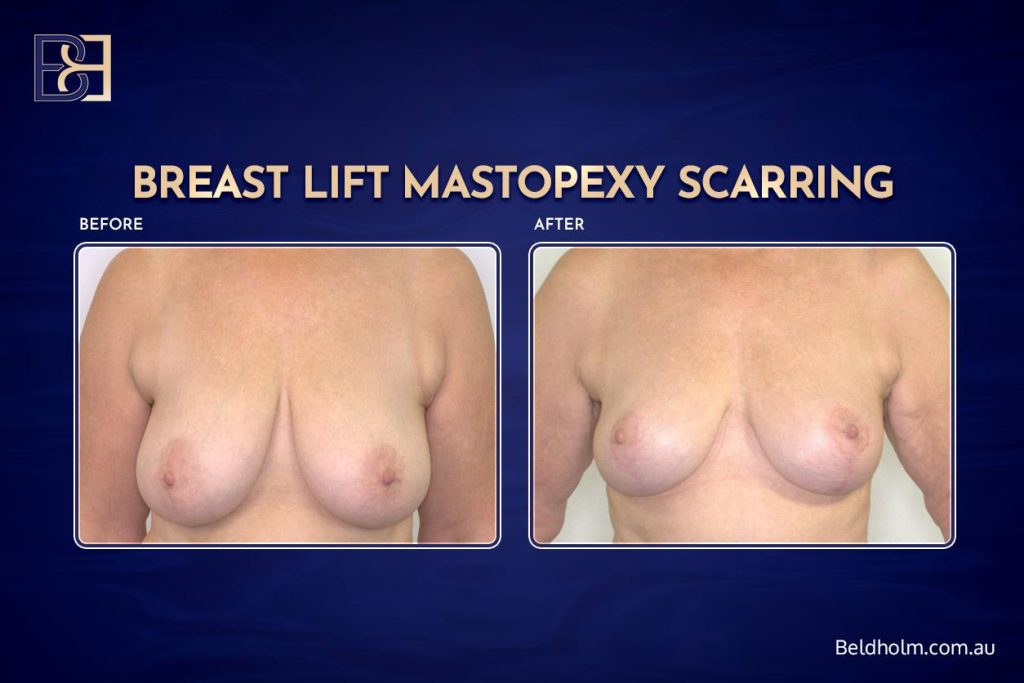
Disclaimer: results vary, surgery has risks, seek second opinion. Operation performed by Dr Beldholm
A new scar is not a finished scar. Expect it to look firm, raised, and pink or red in the early months. This is the normal course of healing. Over the following months, as the healing tissues settle, the scar gradually flattens, softens, and fades. Scar healing continues well beyond the early weeks. Scar maturation takes time, often up to a year and sometimes longer, and the final appearance varies from person to person (2).
Giving your scars the best chance
- Keep them out of the sun. Ultraviolet light can darken a healing scar, so cover up or use sun protection once the area has healed.
- Once I have cleared you, silicone gel or silicone tape can support scar settling. Do not apply anything to the incisions until I tell you it is right to.
- Do not smoke. Smoking interferes with healing and affects how scars settle.
- Follow the dressing and garment instructions you are given, as these support the tissue while it heals.
Why scars differ between people
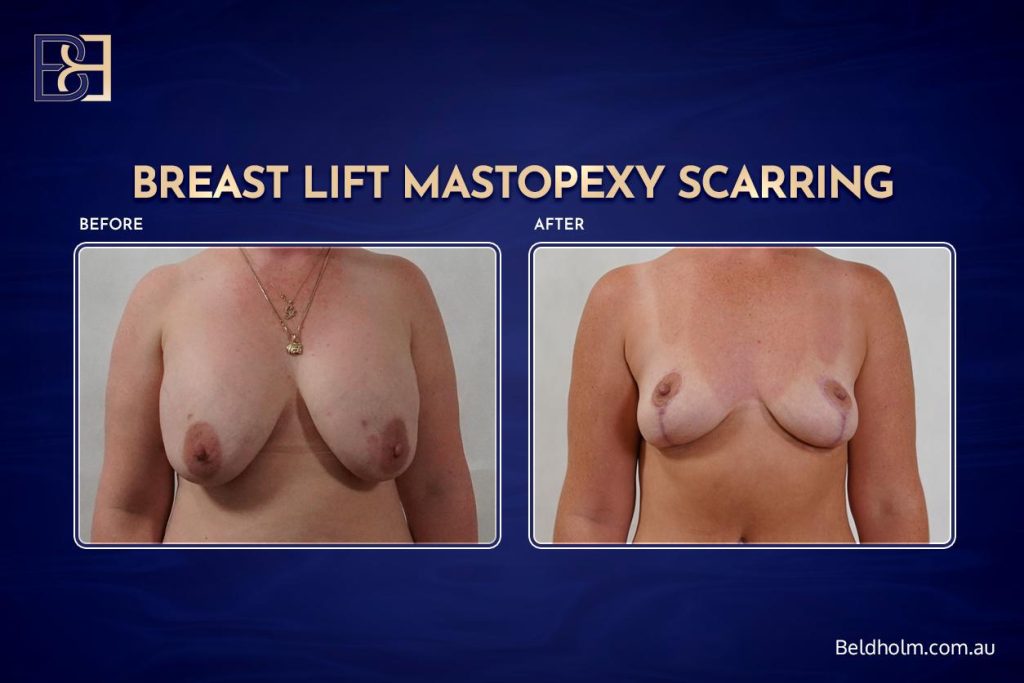
Disclaimer: results vary, surgery has risks, seek second opinion. Operation performed by Dr Beldholm
How a scar settles depends on your skin, your genetics, the tension across the wound, and factors such as smoking. Some people are prone to thicker or raised scars, and some skin types are more likely to form keloid or darker scars. If you have scarred poorly in the past, tell me at consultation, because it helps me plan and set your expectations. Your scars are permanent, and while they usually fade and settle, they do not disappear.
Book your appointment online now
Swelling, settling, and your final result
The shape you see in the first weeks is not your final result. After removal and replacement of breast implants (implant exchange), your breasts keep changing for some months as the swelling resolves and everything settles.
How swelling settles
Swelling is part of healing, and it comes down gradually rather than all at once. Most of the early swelling settles over the first several weeks. More subtle swelling can take longer to resolve. During this time your breasts may feel firm, sit higher, or look fuller than they will once things settle.
When your breasts settle into position
As the swelling goes down and the tissues relax, the implants settle into position and the breasts soften. This takes time. Many patients notice their breast shape and breast appearance settle somewhere around three to six months, though this varies with what your operation involved and with your own healing. Scars continue to mature beyond that, often up to a year or longer.
If a mastopexy (breast lift) was part of your operation, the settling can take longer again, because both the implant and the repositioned tissue are settling.
Your follow-up schedule
The first two weeks are an intensive period, with several in-clinic visits where the nursing team and I review you closely, usually two to three times a week. After that the reviews space out. I follow you up at set points across the first year to track your healing and settling:
- 4 weeks
- 3 months
- 6 months
- 12 months
At your four-week visit I formally hand over to your GP for your longer-term care, and your GP stays informed throughout. If anything comes up between visits, you contact us rather than waiting for the next appointment.
What can change your result over time

Your breasts can still change after surgery. Future pregnancy, breastfeeding, weight changes, and the normal effects of time can all alter them. If you are planning a pregnancy, it is worth discussing the timing with me, because pregnancy can change your result.
Warning signs and when to contact the hospital
Recovery usually runs its course without a problem, but you need to know the signs that something needs attention, and who to contact. If something concerns you, or you have other health concerns, do not wait for your next appointment. It is always better to have it checked.
Signs to act on

Contact us or the hospital if you notice any of the following:
- Rapid or one-sided swelling, increasing firmness, or fast-building pain in a breast. This can be a sign of bleeding under the skin.
- Spreading redness, heat, or increasing pain around an incision, or fluid or pus coming from a wound. These can be signs of infection.
- A fever or chills, or feeling generally unwell.
- A wound edge opening, or a change in the colour of the skin over the breast.
- A change in the colour of a nipple, such as it turning dusky or pale. This matters more if a mastopexy (breast lift) was part of your operation.
- Pain that is severe or getting worse and is not controlled by your pain relief.
- Persistent nausea or vomiting, or being unable to keep fluids down.
Signs that need urgent care

Some symptoms need immediate attention:
- Pain, swelling, redness, or warmth in a calf or leg can be a sign of a deep vein thrombosis (DVT), a clot in a leg vein. Contact the hospital promptly.
- Chest pain, shortness of breath, or coughing up blood can be a sign of a pulmonary embolism (PE), a clot that has travelled to the lungs. This is an emergency. Call 000.
Who to contact
- During office hours, call my rooms.
- After hours, call Maitland Private Hospital. The nursing team runs phone triage and will advise you.
- If you need a physical assessment, go to your local emergency department. Maitland Private Hospital is not an emergency department.
- For anything life-threatening, call 000.
I would always rather you called and had something checked than waited. If in doubt, make the call.
Recovery is individual to you
Removal and replacement of breast implants (implant exchange) is not one operation with one recovery. It ranges from a contained exchange through the existing pocket to a longer operation involving a capsulectomy, a change of implant position, or a combined mastopexy (breast lift). Your recovery follows whichever of these you have.
That is why the timelines in this article are a general guide, not a strict schedule. A contained exchange sits at the shorter end. A more extensive operation asks more of your body and takes longer to recover from. I set out what your operation involves, and what to expect from your recovery, when I assess you at consultation.
What stays the same across all of them is the approach to your care: preparing well beforehand, close review in the early weeks, and a clear plan for what to do if something concerns you. Recovery takes patience, and it rewards giving your body the time it needs rather than rushing back.
References
- Headon H, Kasem A, Mokbel K. Capsular contracture after breast augmentation (augmentation mammoplasty): an update for clinical practice. Arch Plast Surg. 2015;42(5):532-543.
- Swanson E. Evidence-Based Cosmetic Breast Surgery. Cham: Springer; 2017.