


Removing and replacing breast implants at the same time as a breast lift (mastopexy) is a combined operation, and the recovery is different from either procedure on its own. In my practice I see patients who are having their existing implants exchanged for new ones and, in the same operating time, having the breast tissue and skin reshaped and the nipple repositioned. This page walks through what recovery from that combined operation involves, week by week, so you know what to plan for.
What the operation involves
The combined operation does two things in one operating time. The removal and replacement of breast implants (implant exchange) takes out your current implants and places new ones. The breast lift (mastopexy) removes excess skin, reshapes the breast tissue, and repositions the nipple and areola higher on the breast. Depending on what I find during surgery, I may also remove some or all of the capsule, the layer of scar tissue your body forms around an existing implant.
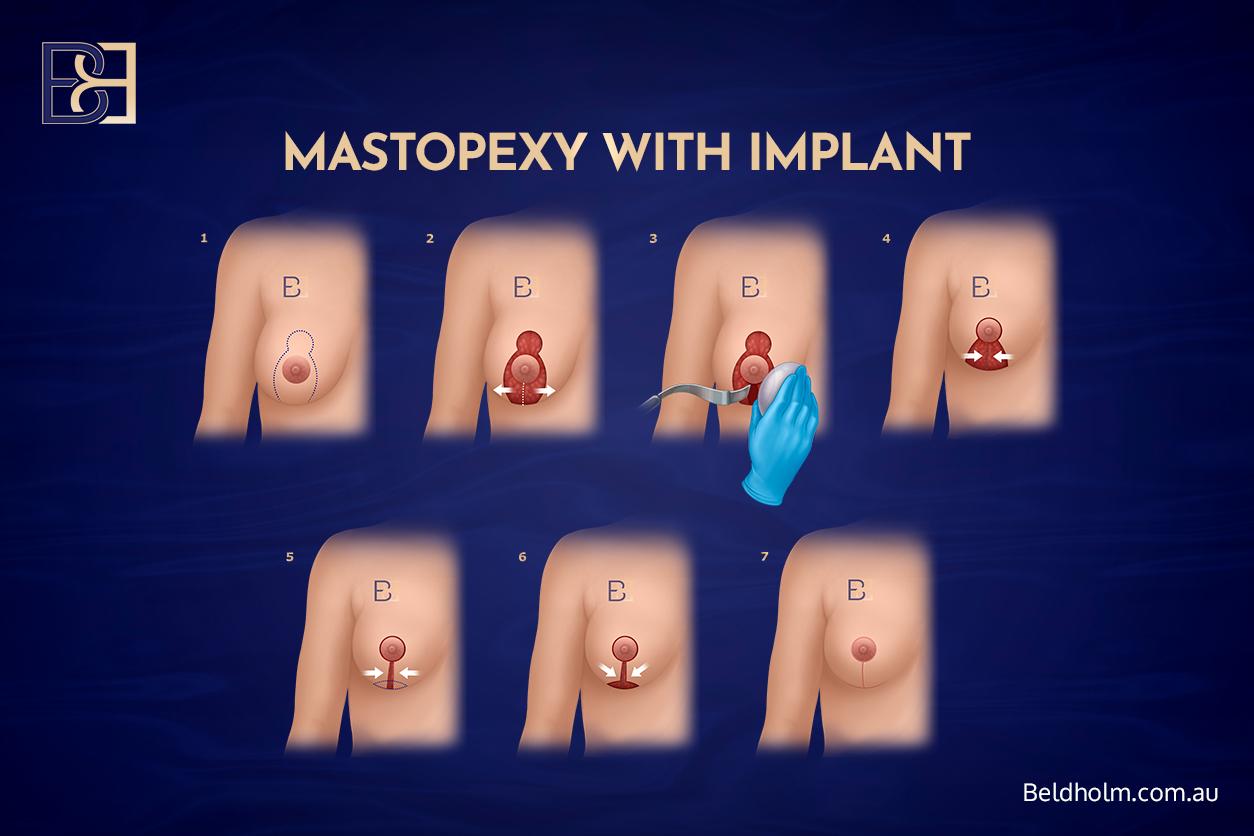
Because the lift adds skin removal, tissue reshaping, and repositioning of the nipple and areola, it also adds incisions and scars that an implant exchange on its own does not. That is the main reason recovery from this combined operation asks more of you than exchanging implants by itself.
Why patients have this operation
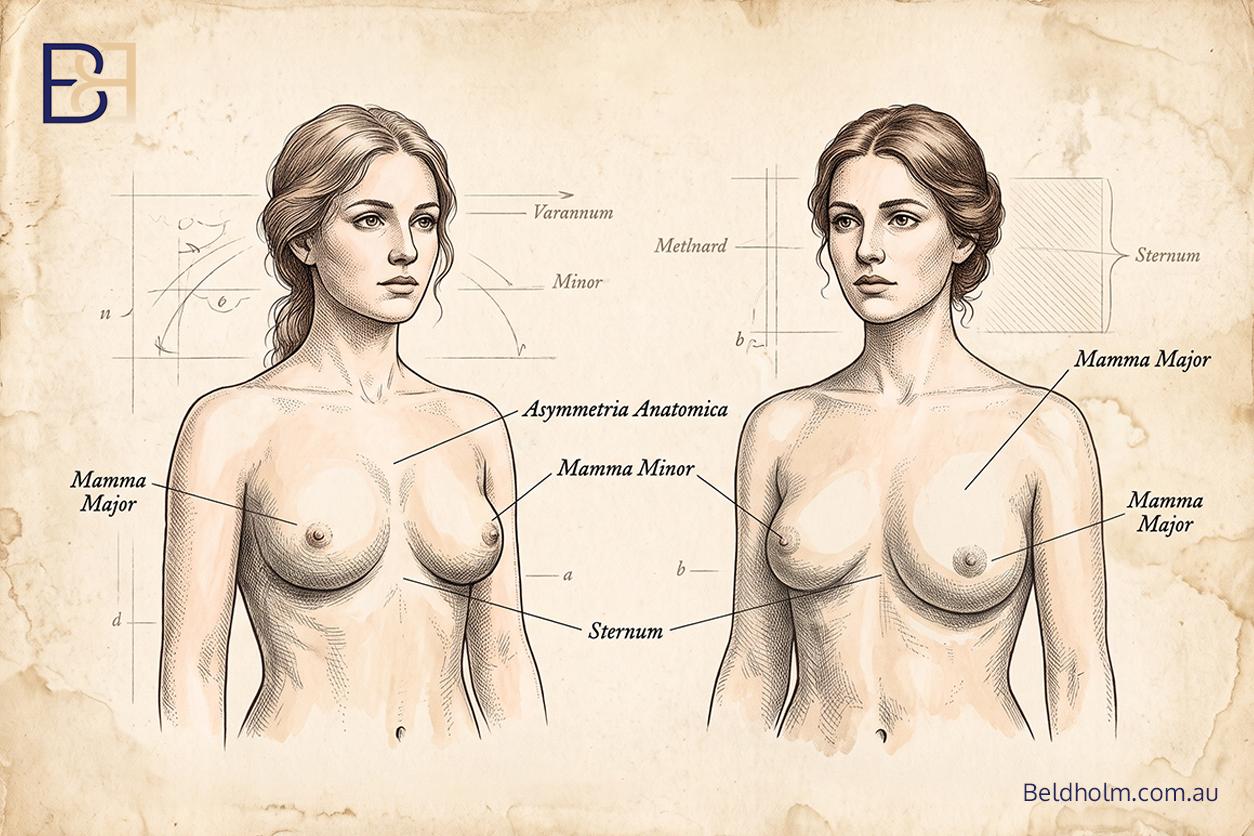
Patients come to me for this combination for different reasons. Some have implants that are many years old and want them exchanged. Some want a change in implant size or position. Some have a change in breast position (ptosis) or skin laxity that has developed over time, after pregnancy, after weight change, or with age, and a lift is needed to reposition the breast in a way an exchange alone would not. Some are having implants removed because of implant rupture or capsular contracture and want new implants and a lift at the same time.
Which of these applies to you, and whether a lift is needed alongside the exchange, is something I assess at consultation.
A larger operation, and a longer recovery to match
Combining an implant exchange with a breast lift (mastopexy) is a larger physiological event than either operation alone, and it should not be underestimated. A longer operation places more demand on your body, and the recovery reflects that. Knowing the timeline in advance, and organising support at home before the day, is worth planning for.
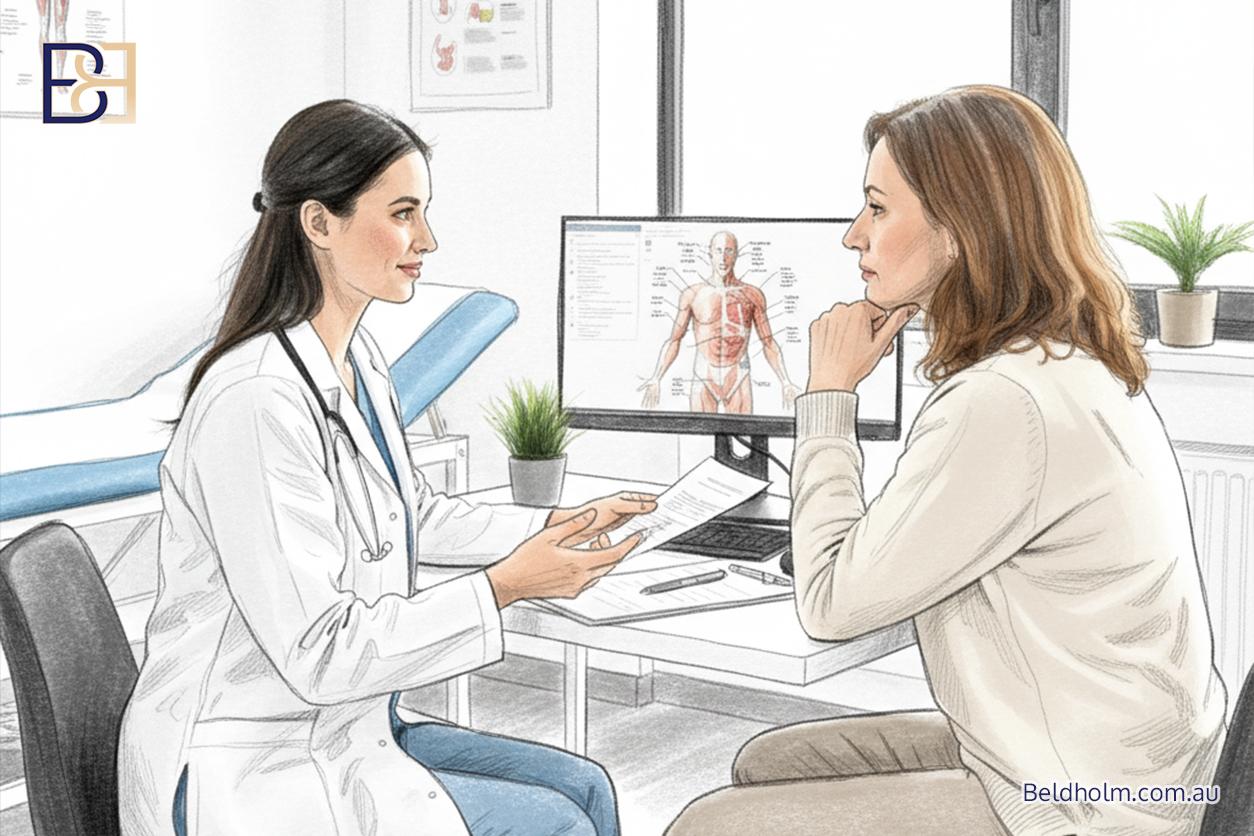
Whether this combined operation suits you, or whether the work is better staged across separate operations, is a clinical judgement I make with you at consultation. A GP referral is required before that consultation, and results vary from patient to patient.
Why recovery differs from an implant exchange on its own
An implant exchange on its own is a contained operation. Your existing implants come out and new ones go in, often through your original scar. When I combine that exchange with a breast lift (mastopexy), the operation changes in several ways, and the recovery changes with it.
More incisions, more scars to heal

A breast lift (mastopexy) removes excess skin and repositions the nipple and areola higher on the breast. That work is done through additional incisions, usually around the areola and running vertically down the lower breast, and sometimes along the fold beneath it. An implant exchange on its own does not create these. More incision means more wound to heal, and the scars take longer to settle than an exchange scar alone.
More internal work, more swelling early on
Reshaping the breast tissue and moving the nipple and areola involves more dissection than lifting out one implant and placing another. More tissue handling means more swelling and bruising in the first weeks. Your breasts will feel tight and sit higher than their final position for some time while that swelling comes down.
A capsule that may need removing
Depending on what I find during surgery, I may remove some or all of the capsule around your old implant. Removing the capsule adds dissection, and it often means I place a drain to clear fluid while the space closes down. An exchange without capsule removal may not need a drain at all.
A longer operation to recover from

Doing both procedures in one operating time means a longer anaesthetic and a longer operation than either part on its own. A longer operation is a larger physiological event, and the first week or two reflects that. Combining the work is appropriate for many patients, but it should not be underestimated, and it is worth planning your recovery around a bigger operation rather than a minor one.
Whether the lift and exchange are best done together or staged across separate operations is a judgement I make with you, and I come back to that later on this page.
The day of surgery and going home
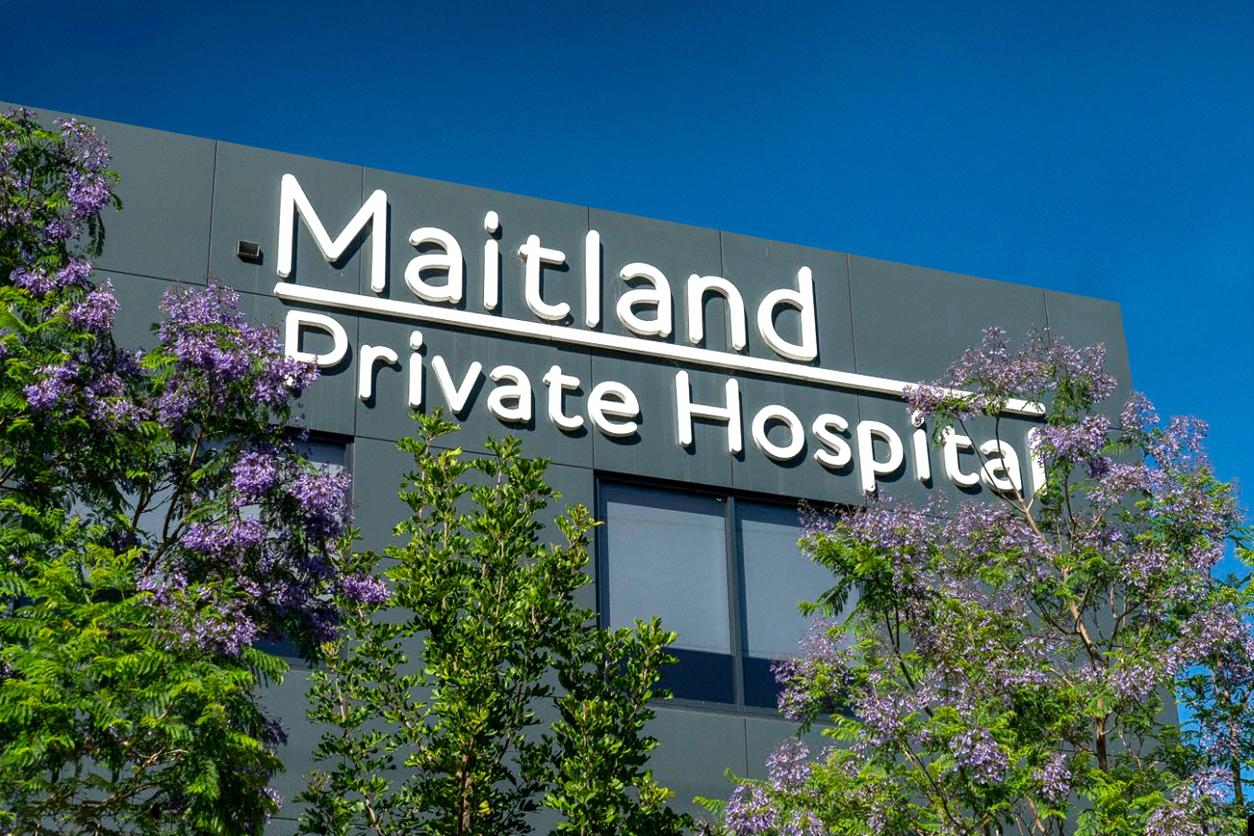
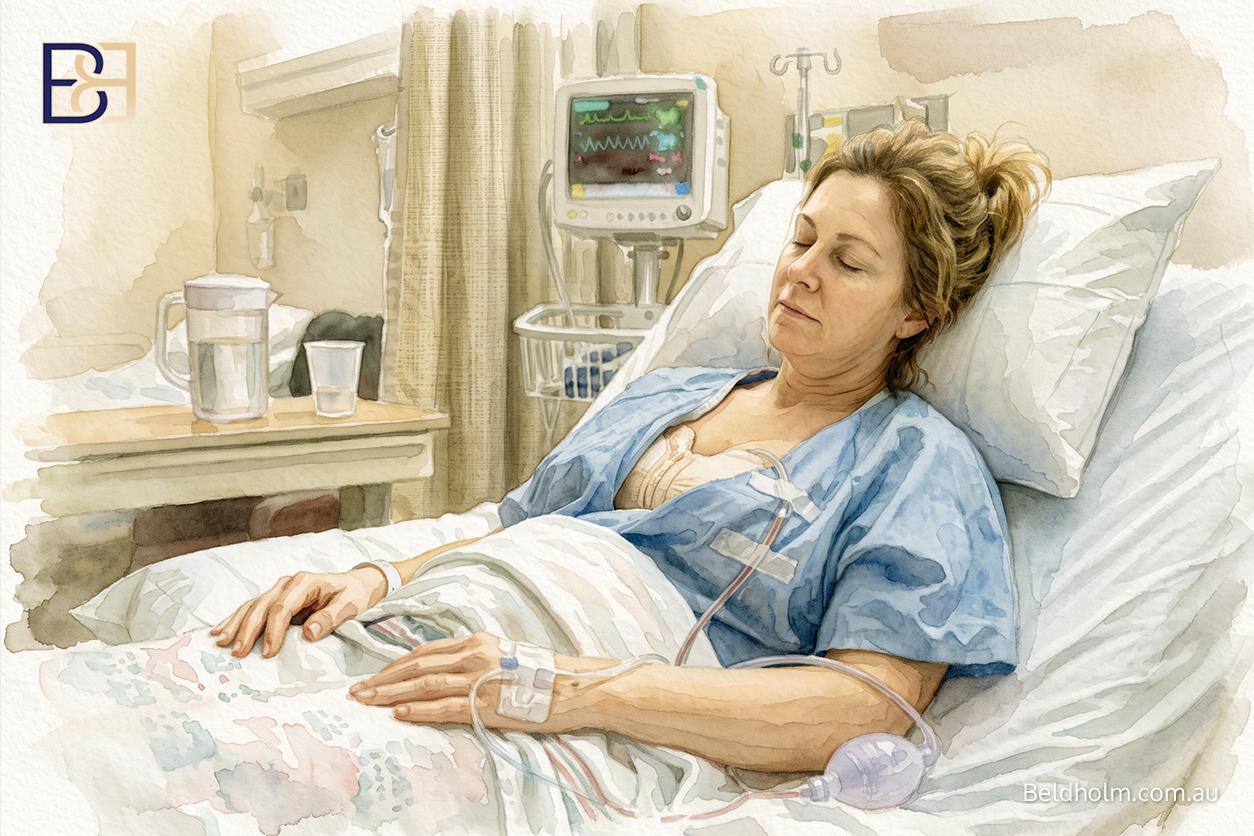
I perform this operation under general anaesthetic at Maitland Private Hospital in the Hunter Valley. Most patients have it as a day-stay, which means you come in on the morning of surgery and go home the same day, once you have recovered from the anaesthetic. Some patients stay overnight, usually by their own preference or because a drain has been placed. Whether you stay overnight is something we sort out before the day.
The anaesthetic
You are asleep throughout the operation under a general anaesthetic. Most anaesthetic consultations happen by phone beforehand, and the anaesthetist checks your airway and examines you on the day, before you go to theatre.
Dressings and support bra
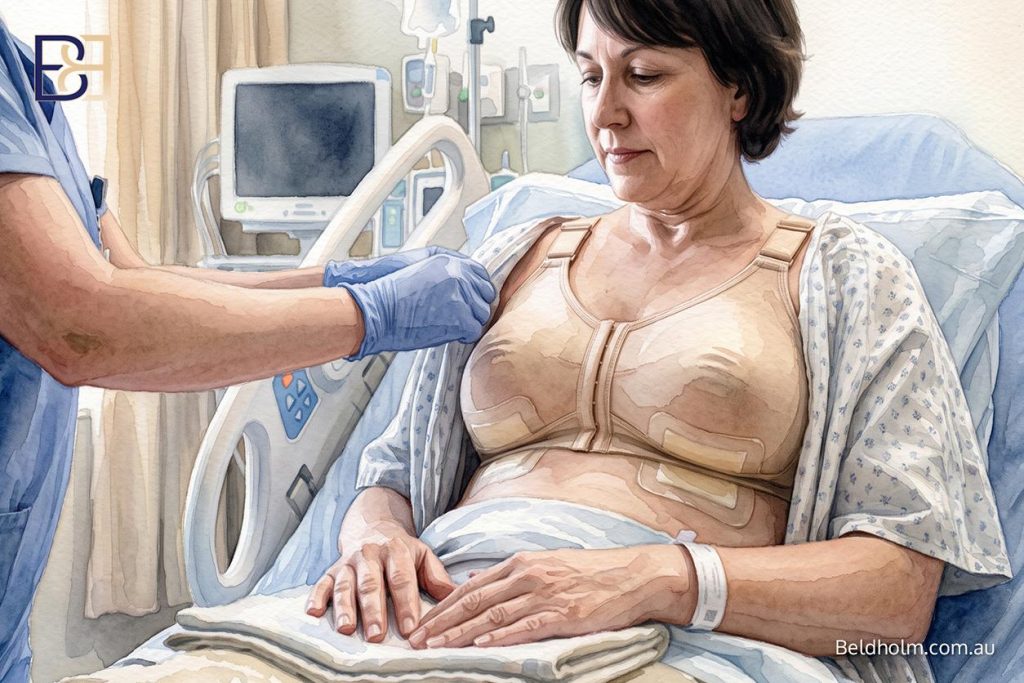
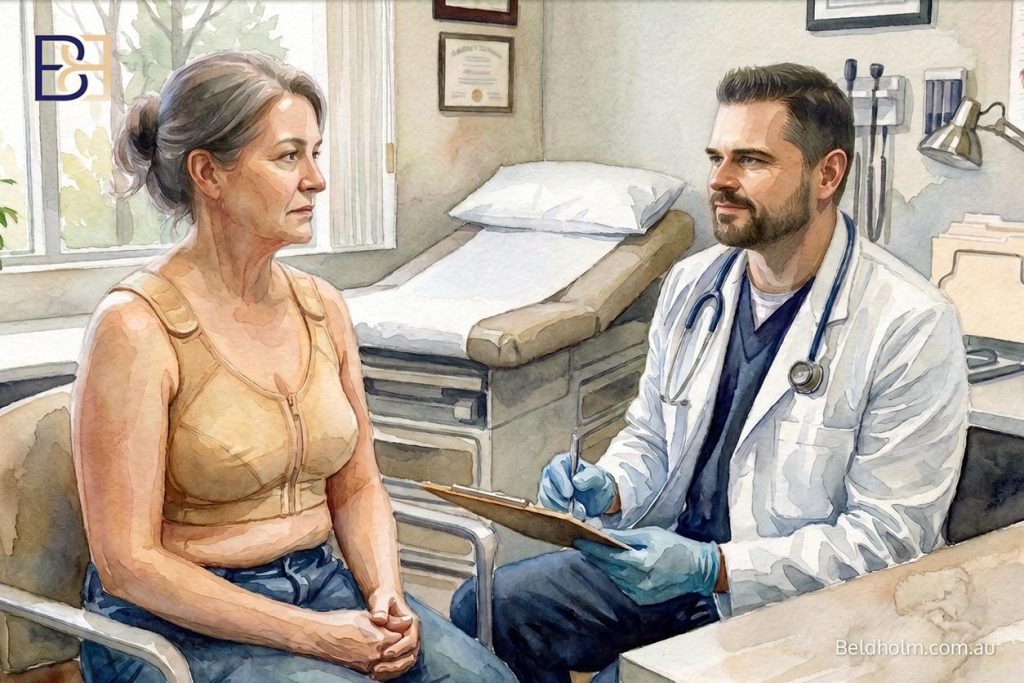
When you wake, your breasts will be covered with dressings and you will be in a support bra. I use Comfeel dressings over the incisions. The support bra holds the breasts in position while swelling is at its highest, and you wear it as I direct through the early weeks.
Drains, if you have them
If I have removed the capsule around your old implant, or the breast lift (mastopexy) has created a space that needs draining, I may place a drain. A drain is a thin tube that clears excess fluid from the surgical space while it closes down. My nursing team shows you, and whoever is helping you at home, how to manage a drain before you leave, and I go through when it comes out below.
Going home
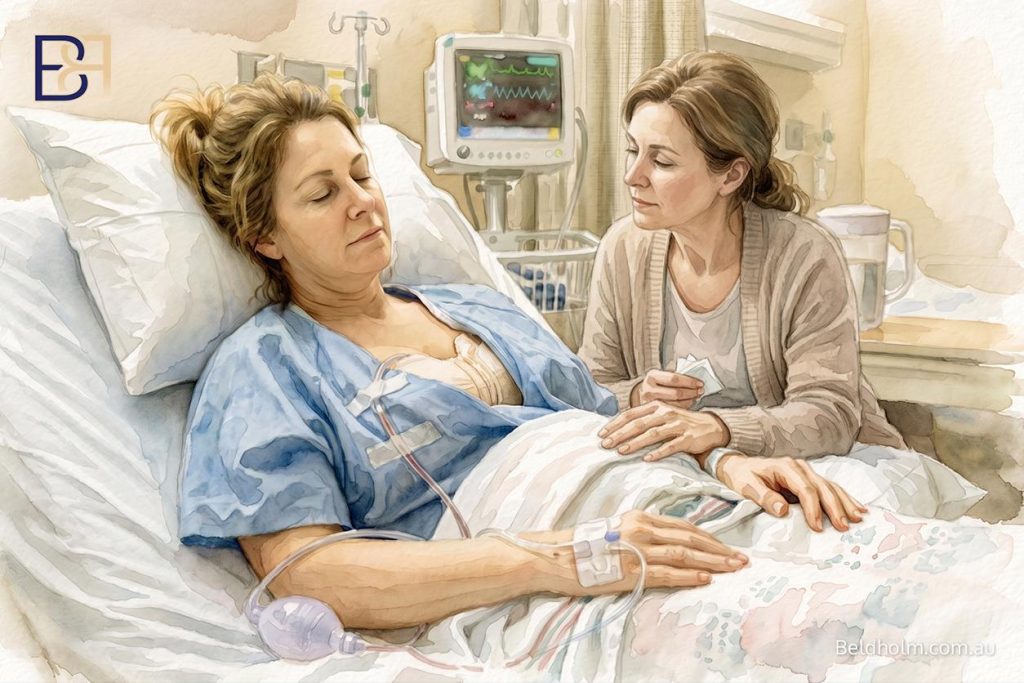
Because you have had a general anaesthetic, you cannot drive yourself home, and you should not be on your own for the first night. Arrange for someone to collect you and stay with you. Set your recovery space up before the day, so you are not organising it while sore.
The first week
The first week asks the most of you. Swelling and bruising are at their peak, and this is when you will feel most sore, so plan to rest and have help on hand.
Pain and swelling

Expect soreness, tightness across the chest, and bruising in the first few days. I prescribe pain relief and tell you how to take it. For most patients the discomfort eases over the first week, though it does not disappear overnight. Your breasts will look swollen and sit high, and they will feel tight. That is expected at this stage and is not your final result.
Your drains
If you went home with a drain, my nursing team will have shown you how to empty it and record the amount each day. I remove a drain once it is putting out less than 20 mL over 24 hours, which is usually within the first several days. Until then, the drain stays in and you manage it as shown.
Dressings and keeping the area dry
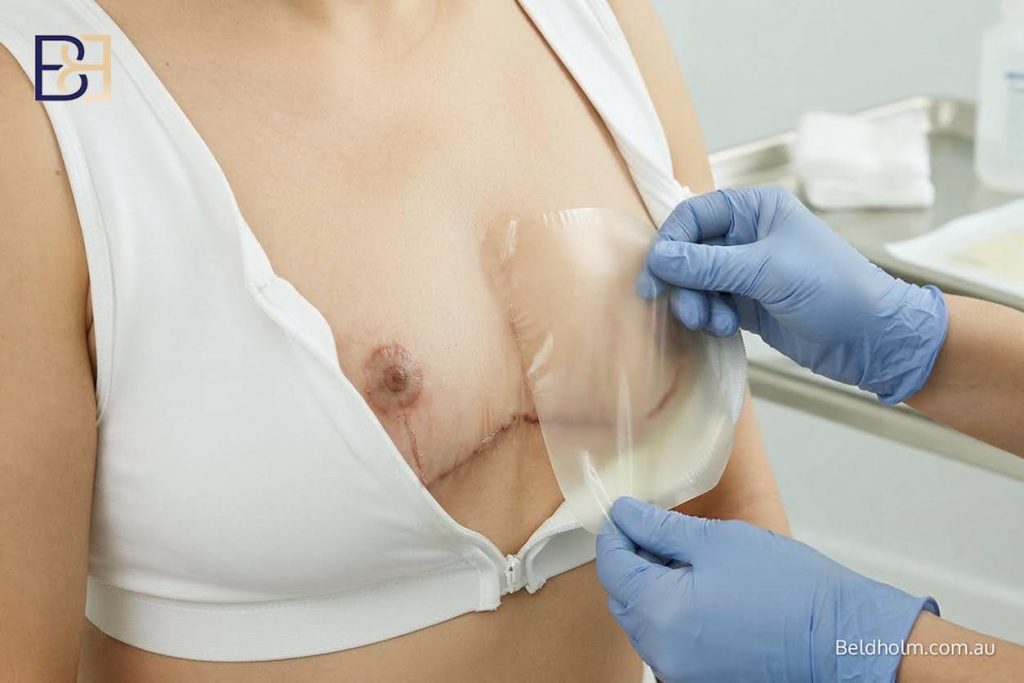
Leave your Comfeel dressings in place and keep them dry. Do not remove or soak them. I tell you when and how you can shower, and when the dressings are changed. Follow those instructions rather than a general rule you have read elsewhere.
Moving around
Get up and move about from the first day. Short, regular walks around the house help your circulation and reduce the risk of a clot. What you must not do in the first week is lift anything heavy or reach up over your head, because that pulls on healing tissue and the lift. Keep your arm movements low and controlled for now.
Sleeping

Sleep on your back, propped up on pillows, through the first weeks. Do not sleep on your front or side while the breasts are healing and swelling is high. Being propped up also helps the swelling come down.
What to have organised at home

Set yourself up before surgery so the first week is manageable:
- Someone to help at home, at least for the first few days
- Meals prepared ahead so you are not cooking
- Front-opening or loose tops, so you are not raising your arms to dress
- Your pain relief and anything you take regularly, within reach
- Help with children, pets, or anything that involves lifting
Your first review
I see you back in clinic within the first few days, and reviews are frequent through the first two weeks.
Weeks two to six
By the second week the worst of the early soreness is behind most patients, and the focus shifts to healing, your reviews, and gradually getting back to parts of your routine. This is still a recovery window, not a return to normal.
Your review schedule and light therapy
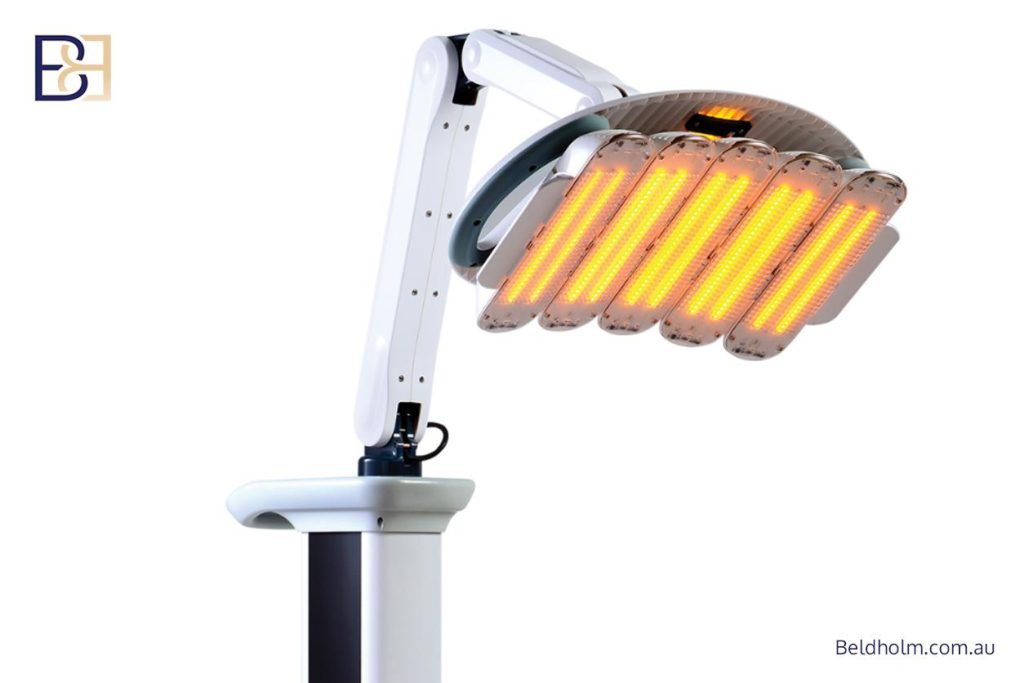
I see you often in the early part of this period. Through the first two weeks you come in to the clinic two to three times a week, so my nursing team and I can check your wounds, manage your dressings, and keep an eye on your healing. At these visits we use Healite II LED light therapy, which supports wound healing and comfort during recovery. After the first two weeks the visits space out, and I see you at set milestones from there.
Your support bra

The support bra does a lot of work in these weeks. It holds the breasts in position while the tissue heals and the swelling settles. My protocol after a breast lift (mastopexy) is:
- Full-time, day and night, for the first four weeks
- Daytime only for the next two weeks
- Underwire permitted from six weeks
Wearing the bra as directed matters for how the breasts heal and settle, so stay with the schedule even once you are feeling better.
Going back to work

When you return to work depends on what your work involves. Patients with desk-based work are often ready at around two weeks, provided they are off any pain relief that impairs them and can manage a shorter or lighter day to start. Work that involves lifting, physical effort, or reaching overhead needs longer, and I give you a clearer timeframe based on your operation and your job. Do not rush this.
Driving
Do not drive while you are taking pain relief that impairs you, or while you cannot move your arms freely enough to steer and react. For most patients this means not in the first week, and often not until around two weeks. Check that you can perform an emergency stop and turn the wheel without hesitation before you drive.
Sleeping

Keep sleeping on your back, propped up, through this period. Most patients can return to their usual sleeping position once the breasts have settled and it is comfortable, which I guide at your reviews.
Your scars and how they settle
A breast lift (mastopexy) is done through more incisions than an implant exchange, so you will have more scarring than an exchange alone. Where the scars sit depends on the technique your breasts need.
Where the scars are
The most common pattern after a breast lift (mastopexy) is:
- Around the edge of the areola
- A vertical line running from the areola down to the crease beneath the breast
- Sometimes a line along the inframammary fold, the crease beneath the breast, where more skin is removed
The implants are usually removed and replaced through these same incisions, so the exchange does not tend to add a separate scar of its own. I talk through the pattern you are likely to have at consultation, based on your breast position and how much skin needs removing.
How scars change over time
Scars are raised, firm and pink or red in the early months. They soften and fade over the following months, and most continue to settle for up to a year, sometimes longer. The final appearance of a scar varies from person to person, and depends partly on how your skin heals, which is not something any surgeon can fully control.
I give you scar care advice at your reviews. Keeping new scars out of direct sun while they are healing helps, because sun exposure can darken a scar that is still maturing.
Changes to nipple sensation
Repositioning the nipple and areola can change the sensation in them. In the early weeks it is common to have numbness or altered feeling in one or both nipples. For most patients this settles as the nerves recover, though the timeframe varies. Published research indicates that lasting change in nipple sensation after a lift with implants is uncommon, affecting a small percentage of patients (1).
I go through this with you before surgery so you know what to expect.
Returning to activity and exercise
Getting back to exercise happens in stages, not all at once. Pushing too hard too soon pulls on healing tissue, and after a breast lift (mastopexy) that risk is higher than after an implant exchange alone. I set your pace at your reviews, based on how you are healing.
The early weeks
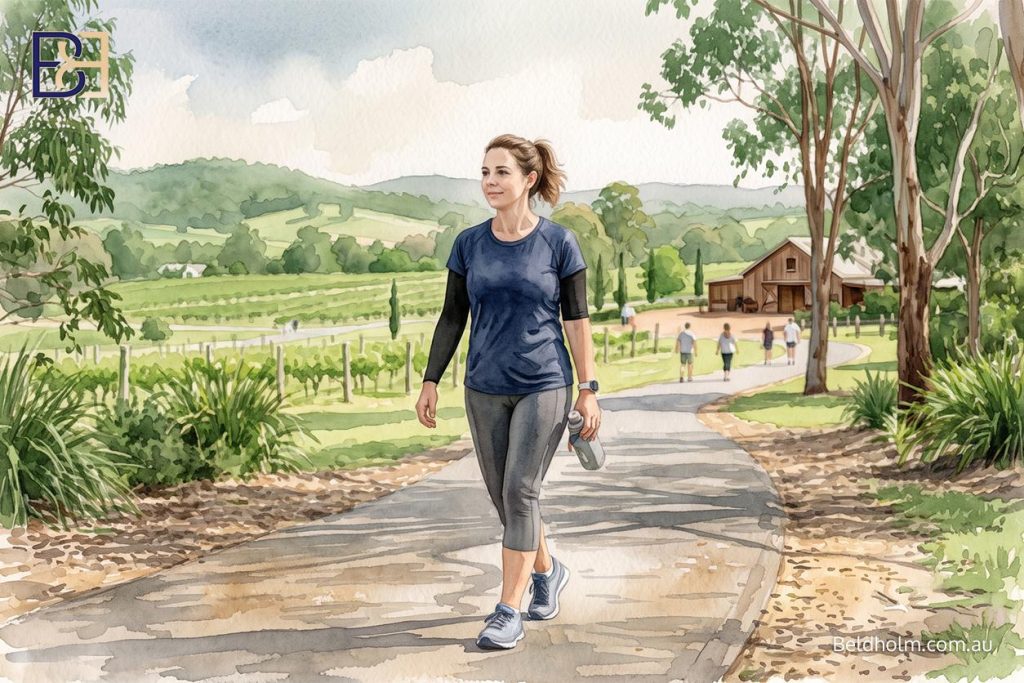
Walking is your exercise for the first few weeks. Short, regular walks from day one are good for your circulation and are enough to start with. Beyond walking, keep to the restrictions I give you: no heavy lifting, no straining, and no reaching or lifting your arms above shoulder height while the tissue is healing.
Building back up
From around six weeks, most patients are ready to add more, though this is individual and I confirm it with you rather than working to a fixed date. When you do build back up:

- Lower-body and light cardio come back before chest and upper-body work
- Chest exercises, pushing, and heavy lifting wait until I have cleared them, because they load the area where the implant sits and the lift has healed
- Impact activity such as running needs a supportive, well-fitted bra, and is held back until you are comfortable and cleared
Do not rush the chest and upper body
The chest and upper body are the last to come back for a reason. Loading them early can affect how the implant sits and how the lift heals. If something pulls, aches, or swells when you increase activity, ease off and let me know at your next review.
How your breasts settle over time
The shape you see in the first weeks is not your final result. After this combined operation the breasts sit high and tight, and they take months to settle into their final position and shape.
The first three months
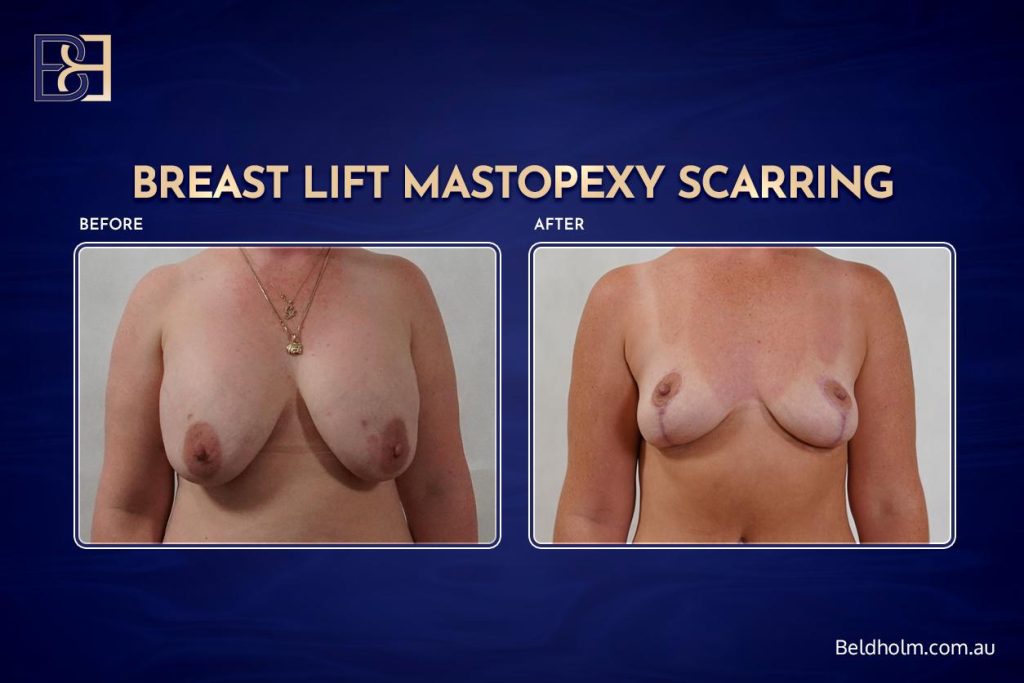
Disclaimer: Results Vary, surgery has risks, seek second opinion. Operation performed by Dr Beldholm
Most of the early swelling comes down over the first six to twelve weeks. As it does, the breasts soften, and the lower part of the breast fills out and settles. Early on the breasts often look high and full at the top. This evens out as the tissue relaxes and the implant settles into position.
Reviews and the longer settle
After the frequent early reviews, I see you at four weeks, then at three, six and twelve months. Across this time the breasts continue to settle, the scars fade, and the shape you will keep becomes clear. For most patients the shape is close to final by around 6 to 12 months.
What affects how you settle
The pace at which the breasts settle, and how fully they settle, differs from person to person. Skin quality and elasticity, how much skin was removed, implant size and position, and your own healing all play a part. That is why I do not put a single fixed date on the final result, and why I follow your progress across those set reviews.
Warning signs and who to contact
Most recoveries run to plan. Now and then something needs checking sooner rather than later, and it is always better to call than to wait and wonder. The signs below mean get in touch. This is a short list, and the dedicated article on complications covers them in more detail.
Book your appointment online now
Contact us if you notice
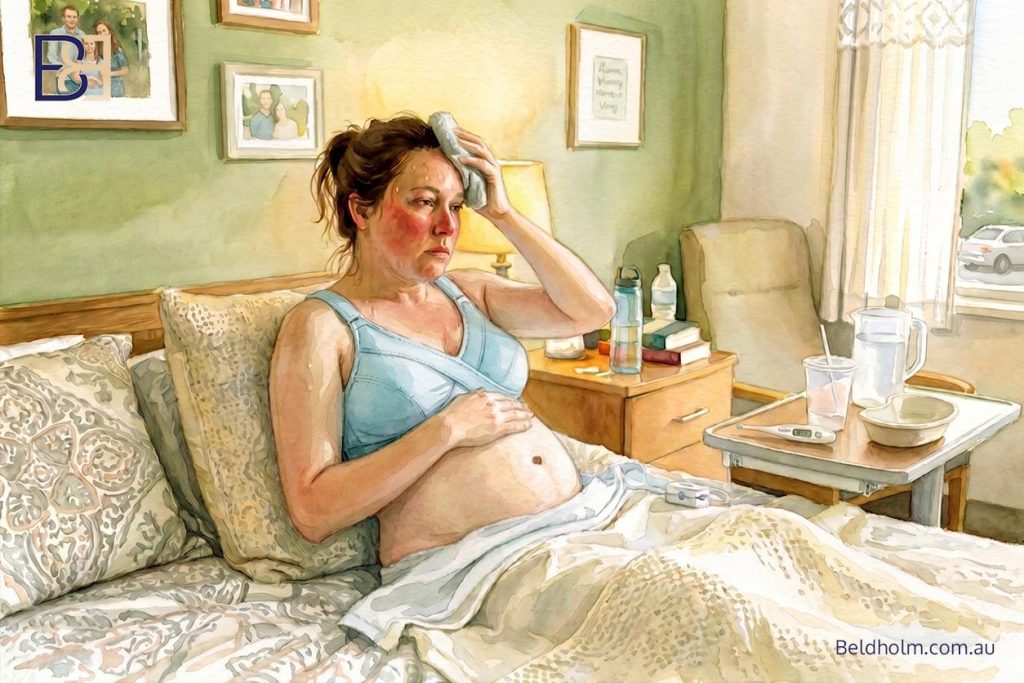
- A temperature or fever, or feeling generally unwell
- Pain that is getting worse rather than better, or is not controlled by your pain relief
- Increasing redness, heat, or swelling in a breast
- A wound that opens, or any unusual discharge from a wound
- One breast becoming larger, firmer, or more painful than the other
- A change in colour of the nipple or the skin of the breast
Seek urgent help straight away

Call 000 or go to your nearest emergency department if you have:
- Chest pain or difficulty breathing
- Pain or swelling in a calf
- Heavy or continuing bleeding
These can be signs of a clot or another problem that needs immediate care.
Who to call

- In clinic hours: call my rooms and my team will manage it.
- After hours: call Maitland Private Hospital, where nurse-led phone triage will advise you.
- If you need a physical assessment: go to your local emergency department. Maitland Private is not an emergency department.
- In an emergency: call 000.
Single-stage or staged, and what it means for your recovery
Some patients have their implant exchange and breast lift (mastopexy) done together in one operation. For others, the work is better divided across two separate operations. Which of these suits you affects your recovery, so here is how they differ.
Why one operation can suit some patients

Where a patient is medically suited to it, doing the exchange and the lift in a single operation means one anaesthetic, one hospital admission, and one recovery period to work through, rather than repeating each of those steps twice. That is the benefit of combining the work, and for suitable patients it is a sensible one.
This is a preference, not a rule, and it is not right for everyone. Whether it suits you is decided with you at consultation, after assessment.
Why staging can be the better path
For some patients, doing everything in one operation places more demand on the body or the tissue than is appropriate. Staging the lift and implant across separate operations is then the safer and more appropriate path. With a breast lift (mastopexy) and an implant in particular, spreading the work out can protect the blood supply to the nipple and the quality of the scars. Staging is a clinical choice, not a lesser option or a fallback. For the patients it suits, it is the right approach.
How each affects recovery
A single combined operation means one recovery to plan for, but it is a larger physiological event, and the recovery reflects that. It should not be underestimated. Staged surgery means two shorter operations and two recoveries, each less demanding than the combined operation but repeated. Neither is automatically the lighter option. They are different paths, and the right one depends on you.
How the decision is made
Whether one operation or staged surgery suits you is a clinical judgement I make with you at consultation. It follows assessment of your medical history, your tissue quality, the extent of skin laxity and breast position, and what can be done well in one operating time. It is decided with you, after assessment, not before.
Preparing for your recovery
Because this is a larger operation, the work you do beforehand matters. Good preparation supports your healing and makes the recovery more manageable. Here is what I ask of you before surgery.
Stop smoking
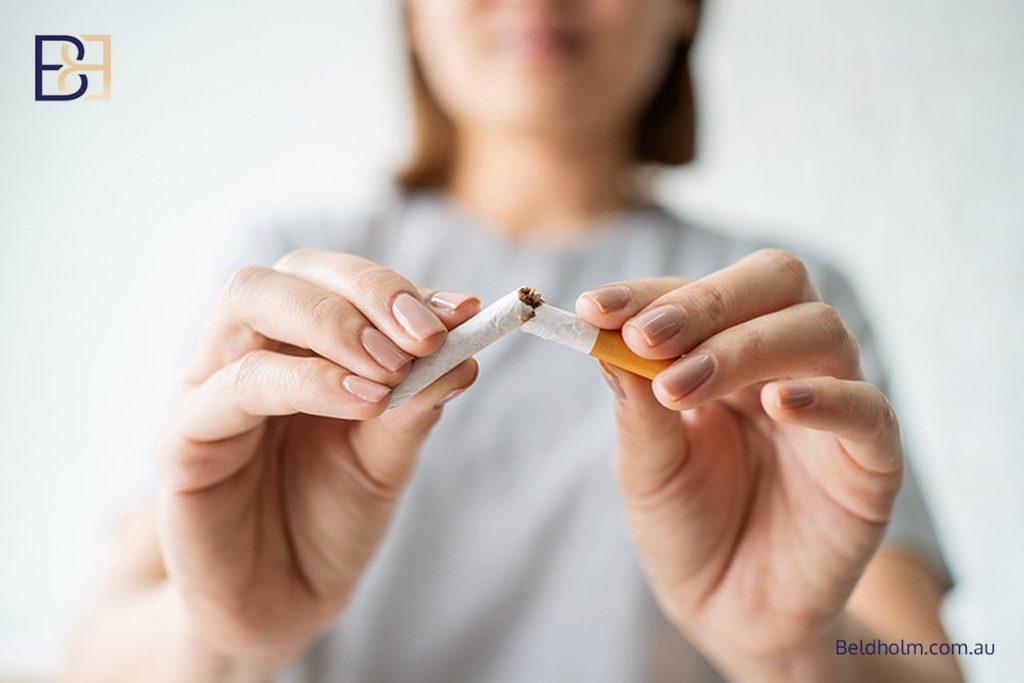
If you smoke, stop at least six weeks before surgery and stay off it for at least six weeks afterwards. Smoking narrows the blood vessels that supply the skin and the nipple, and after a breast lift (mastopexy) that blood supply matters a great deal for healing. Smoking raises the risk of wound healing problems and poor scars. This one is not negotiable for this operation.
Pre-operative blood tests
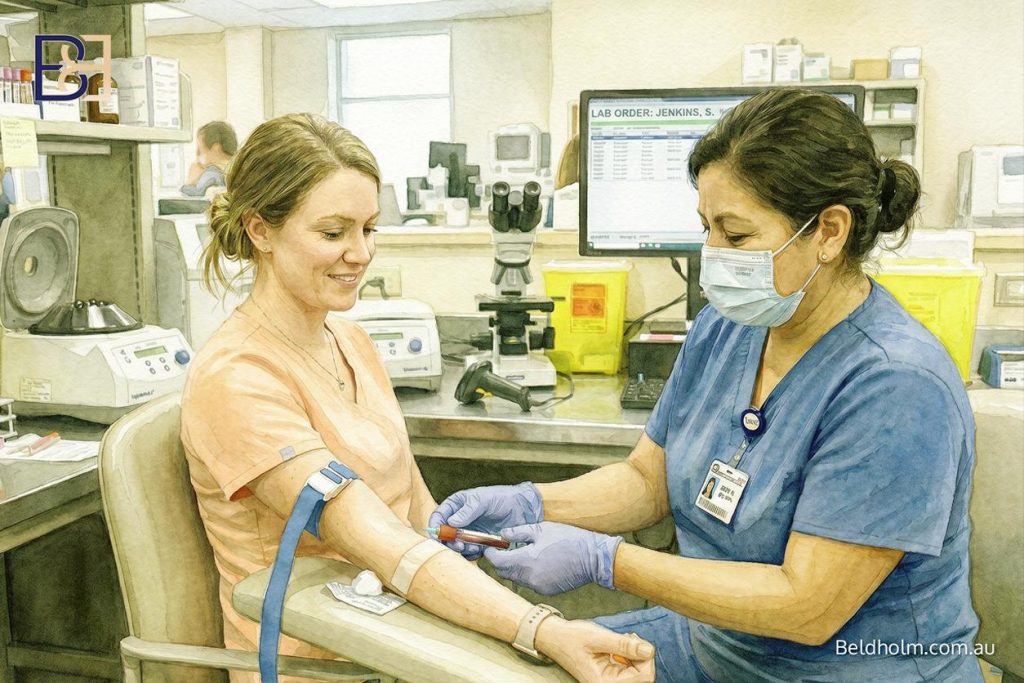
I arrange a set of pre-operative blood tests before surgery, so we go into the operation with a clear picture of your health. My rooms organise these, and your GP is kept informed.
Get yourself in good shape for surgery

In the weeks before surgery:
- Eat well and stay well hydrated to support healing
- Keep any medical conditions well managed
- Go through your regular medications with me, including any anti-inflammatory drugs, blood thinners, or herbal supplements, as some need to be stopped or adjusted before surgery. Do not stop anything on your own
- Aim for a stable weight, as weight change after surgery can affect your result
Organise your support at home

A combined operation needs a proper recovery set-up. Arrange time off work, help at home for the first week, and someone to drive you and stay the first night. Getting this in place before the day is worth planning for.
The decision is made at consultation
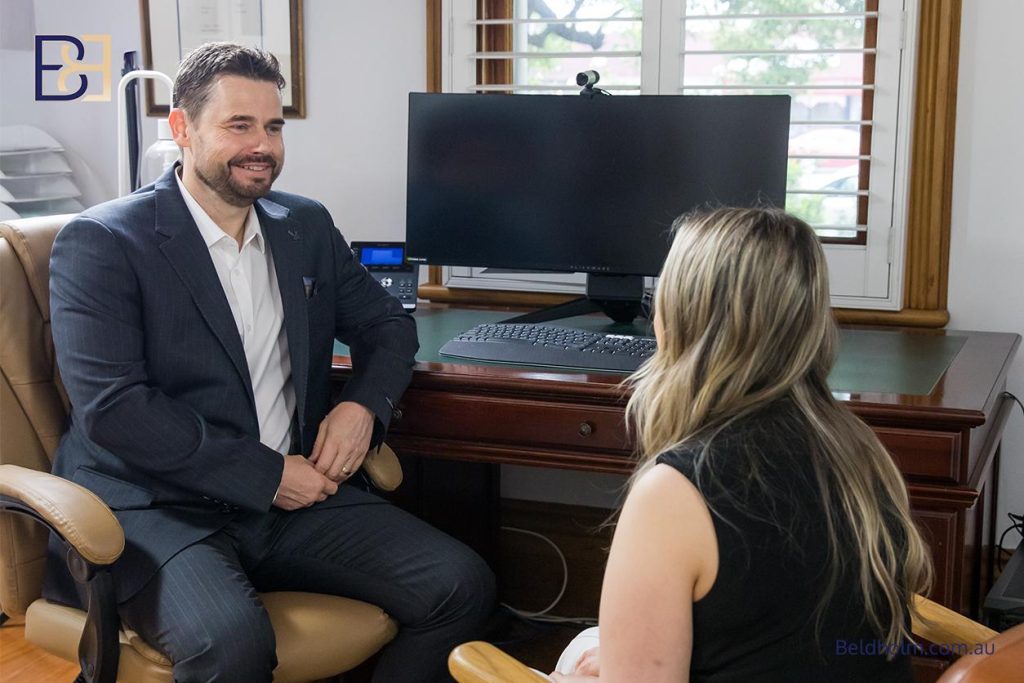
Whether this combined operation, or staged surgery, suits you is decided with you at consultation, after assessment of your health, your tissue quality, and your breast position.
Frequently asked questions
How long does recovery take?
The first week is the most demanding, and most patients are through the worst of the early soreness by around two weeks. Desk-based work is often possible at around two weeks, and exercise is built back up from about six weeks. The breasts keep settling and the scars keep fading over the following months, with the shape close to final by around six months. Your recovery timeline is individual, and I guide it at your reviews.
When can I go back to work?
It depends on your job. Many patients with desk-based work return at around two weeks, provided they are off pain relief that impairs them. Work involving lifting, physical effort, or reaching overhead needs longer. I give you a timeframe based on your operation and your work.
When can I exercise again?
Walking from day one. Beyond that, most patients build back up from around six weeks, starting with lower-body and light cardio and leaving chest and upper-body work until I have cleared it. I confirm your pace at your reviews rather than working to a fixed date.
How long do I wear the support bra?
After a breast lift (mastopexy), I ask you to wear the support bra full-time, day and night, for the first four weeks, then daytime only for a further two weeks, with underwire permitted from six weeks.
Will I be able to breastfeed after this surgery?
Breast surgery can affect future breastfeeding, and this differs from person to person. Published research indicates that breastfeeding is possible after breast surgery, though some people find their milk supply is affected (2). I talk through what your particular operation may mean for future breastfeeding at consultation.
Does a future pregnancy affect the result?
A pregnancy after surgery can change your breasts again in volume, shape and position. For that reason, where it applies to you, surgery is generally planned once your family is complete and breastfeeding has finished. The timing is assessed with you individually.
References
- Swanson E. Breast augmentation. In: Evidence-Based Cosmetic Breast Surgery. Cham: Springer International Publishing; 2017. p. 33-74.
- Cruz NI, Korchin L. Breastfeeding after augmentation mammaplasty with saline implants. Ann Plast Surg. 2010;64(5):530-533.