


If you are planning to have your breast implants taken out, one of the first things you will want to know is what the recovery is actually like. This guide to breast implant removal recovery walks through it week by week, from the day of surgery to the point months later when your breasts have settled into their final shape.
The focus here is breast implant removal (explant surgery) on its own, where the implants come out and are not replaced. That includes removal with capsulectomy, where the capsule of scar tissue around the implant is also taken out, either in part or completely. Removing the capsule adds to the operation, and I explain later how that changes what recovery asks of you.
Book your appointment online now
What this article covers
Why women have their implants removed
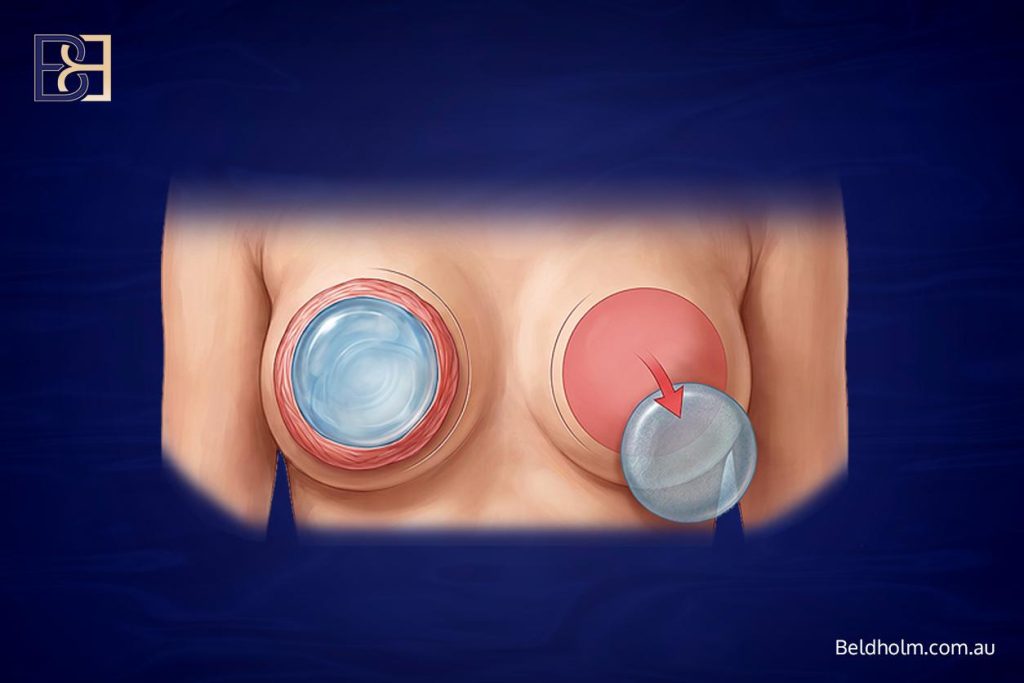
Women choose to have their breast implants removed for many reasons. Some have a problem with the implants themselves, such as capsular contracture or implant rupture. Some have health concerns they associate with their implants, sometimes described as breast implant illness. Others are moving away from textured implants, and some prefer to remove implants for personal reasons.
Some people have their implants removed and replaced with new ones, or combine removal with a breast lift (mastopexy) at the same time. Both of those change the recovery, and I cover them in separate articles. This one is about removal alone.
Every recovery is individual. How your recovery unfolds depends on your health, your tissue, whether the capsule is removed, and how your body heals.
What the operation involves, and why it shapes recovery
Breast implant removal (explant surgery) takes the implants out and does not put new ones in. How much work that involves, and therefore how demanding your recovery is, depends mainly on what happens to the capsule.
The capsule
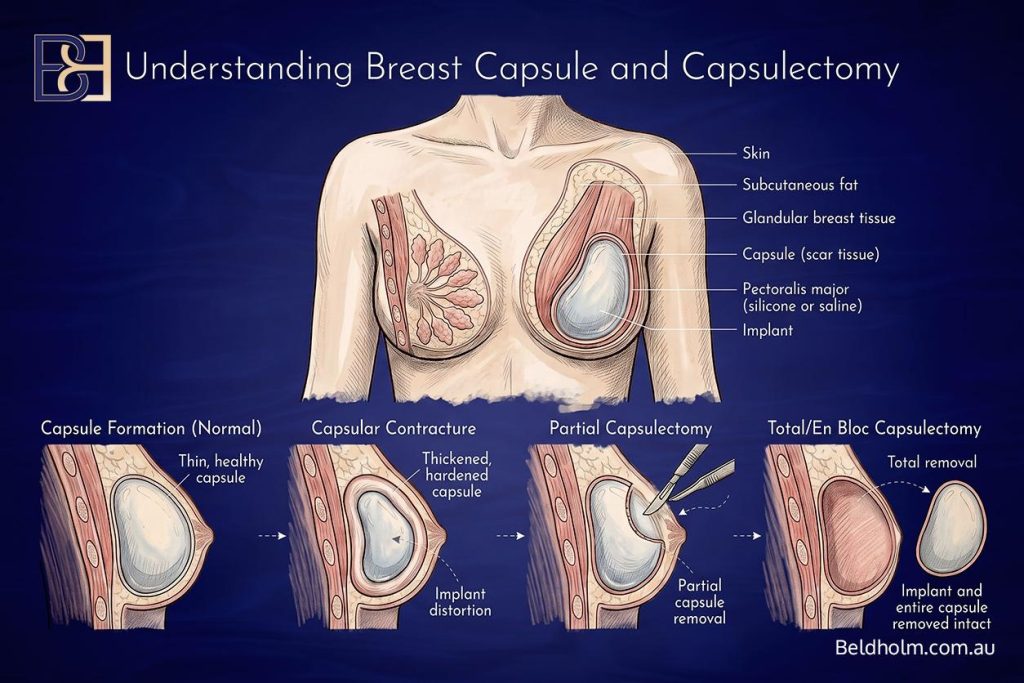
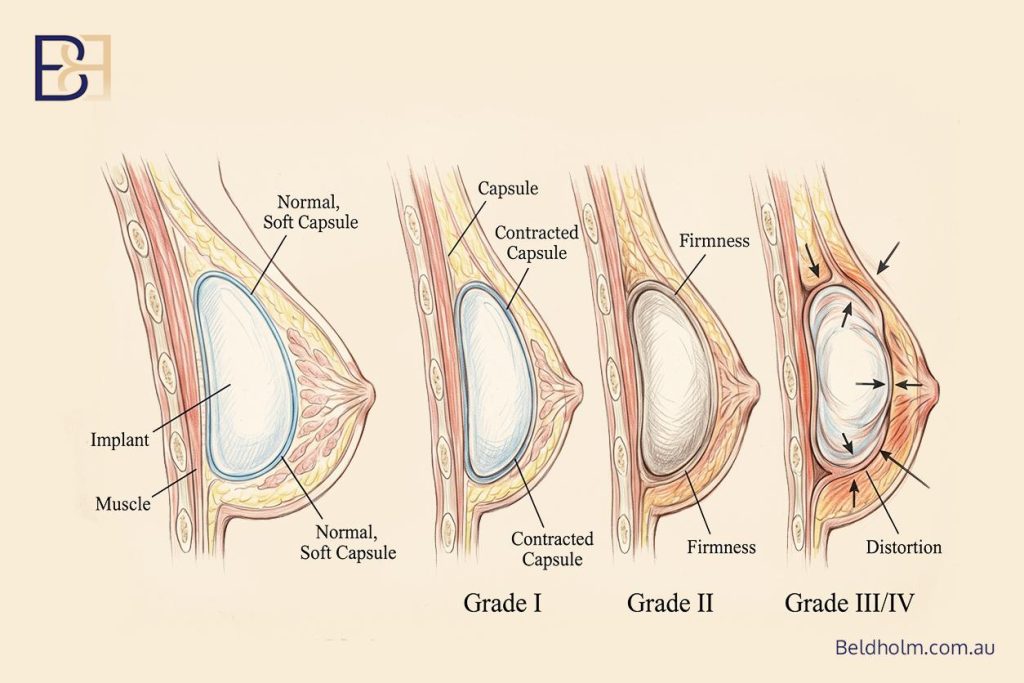
Whenever an implant sits in the body, a layer of scar tissue forms around it. This is called the capsule, or scar capsule, and it is a normal response to any implant.
Options for capsule:
- Leaving the capsule in place. When the capsule is thin, soft and causing no trouble, it can be left where it is.
- Removing part of the capsule (partial capsulectomy). Some of the capsule is taken out and some is left.
- Removing all of the capsule (total capsulectomy). The whole capsule is dissected off the chest wall and removed.
- Removing the implant and capsule together in one piece (en bloc). The capsule is taken out intact around the implant.
Why capsule work changes your recovery
Taking the implant out on its own is the least demanding version of this operation. Removing the capsule adds to it. A total capsulectomy means dissecting scar tissue off the chest wall, which involves more surgery, takes longer, and asks more of your body afterwards. Published research indicates that removing the full capsule increases bleeding during surgery and carries a risk of air entering the space around the lung (pneumothorax) (1). The more capsule work your operation involves, the more you should expect from your recovery in terms of soreness, swelling and time.
Where your implant sat also matters. An implant placed behind the chest muscle involves working near the ribs, which can add to early discomfort compared with an implant that sat in front of the pectoralis major muscle. Whether you have saline implants or silicone implants, they are removed the same way.
Where it happens
I perform breast implant removal (explant surgery) at Maitland Private Hospital under a general anaesthetic. For most patients it is a day procedure and you go home the same day. Some patients stay overnight, depending on the extent of the operation and how the day goes. A general anaesthetic has its own effect on how you feel for the first day, separate from the surgery itself.
The first 24 hours
Waking up
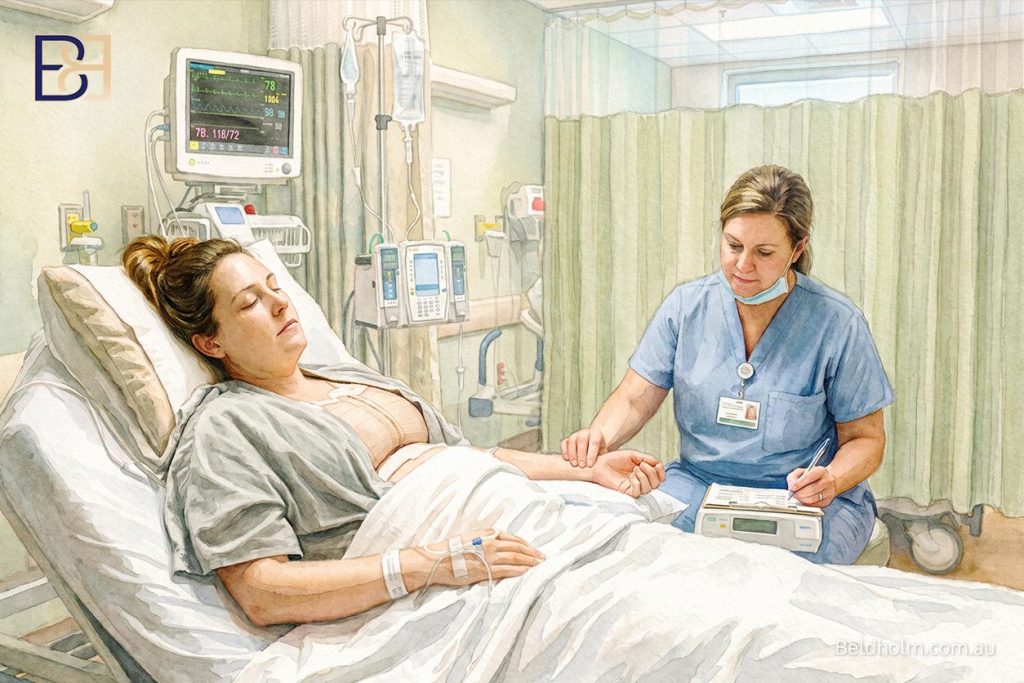
Your operation is done under a general anaesthetic, so the first thing you are aware of is waking in the recovery room. Nursing staff monitor you closely there before you go back to the ward. It is normal to feel groggy, and some people feel nauseated for a while after a general anaesthetic. Your chest will feel sore and tight, and staff manage that with pain medication while you are with them.
Drains and dressings
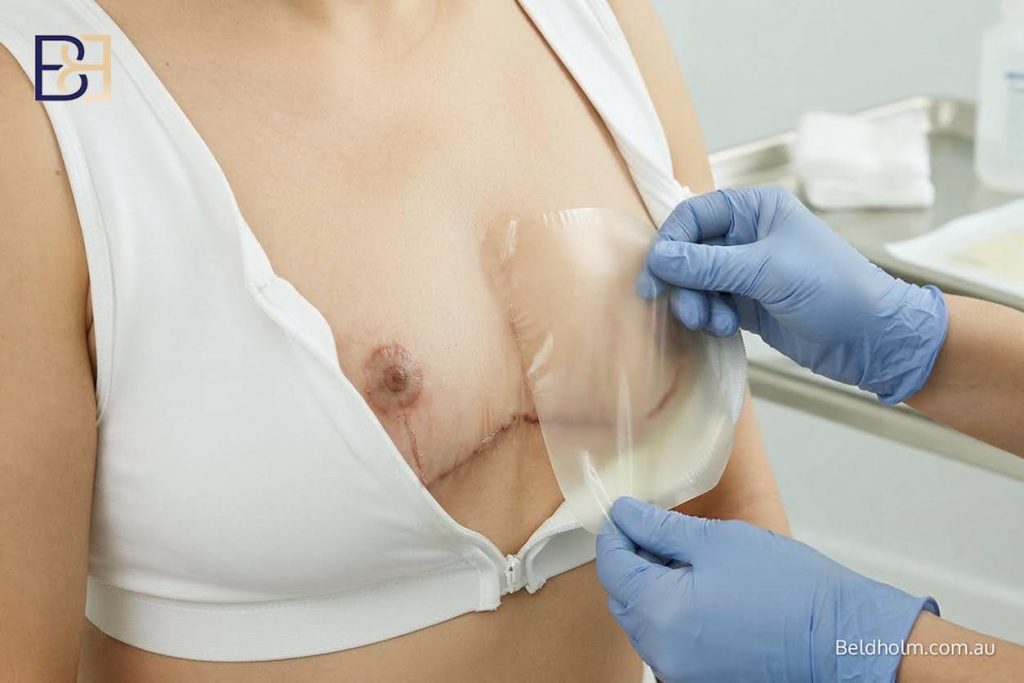
If drains are used, you will have one thin tube on each side. A drain sits in the space where the implant was and carries away fluid that would otherwise collect there. It passes through the skin to the side and connects to a small bottle. Not everyone needs drains, and whether you have them depends on the extent of your operation, particularly how much capsule work is done. When drains are used they usually stay in for a few days and come out at a follow-up visit.
Your incisions are covered with Comfeel dressings. Over the top you wear a surgical bra. This supportive compression garment holds the breast steady and helps manage swelling, and you wear it day and night for 4 weeks.
Going home
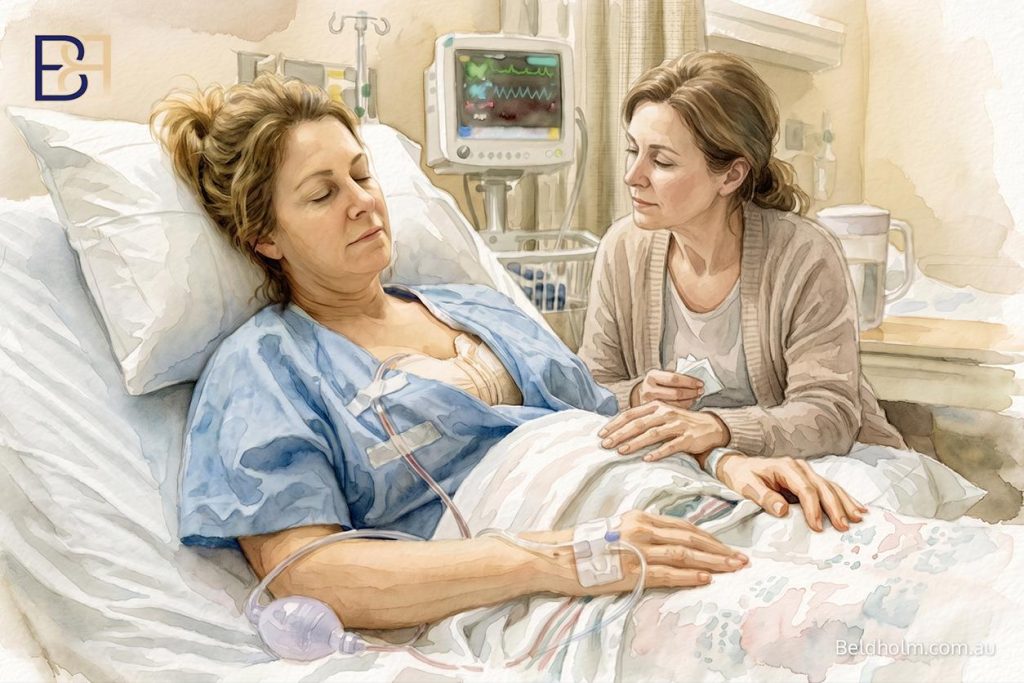
For most patients this is a day procedure, so you go home the same day once the anaesthetic has worn off, you are comfortable, and the nursing staff think you are ready. Some patients stay overnight, depending on how extensive the surgery was and how the day has gone.
You cannot drive after a general anaesthetic, so arrange for someone to drive you home. Have someone stay with you for the first night as well, since you will still be shaking off the anaesthetic and will not be at your usual capacity.
That first evening
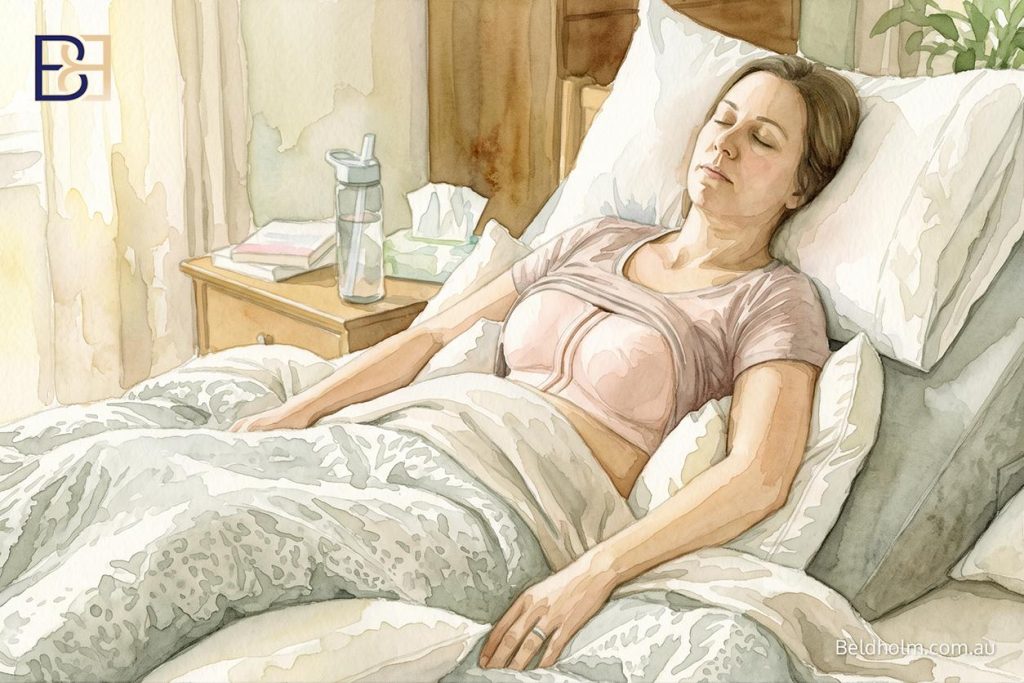
Once you are home, the plan for the first evening is rest. Take the pain medication you are given as directed, keep your dressings dry, and do not plan to do anything much. Most people find sleeping propped up on a couple of pillows, with the upper body elevated, more comfortable than lying flat.
The first week at home
The first week is when you feel the operation the most. How much you feel it depends on how extensive your surgery was, and in particular on how much capsule work was done. Someone who had the implants removed on their own usually finds this week less demanding than someone who had a total capsulectomy.
Pain and discomfort
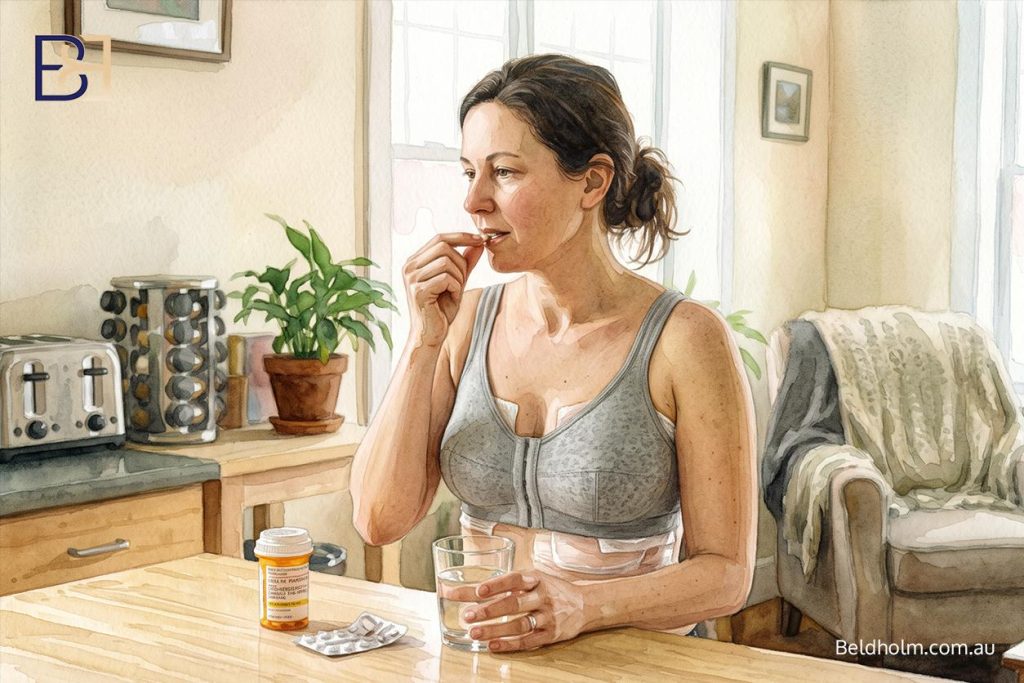
Expect soreness, tightness across the chest, and a bruised, heavy feeling in the first few days. This is usually at its most noticeable in the first two to three days and then starts to settle. You will have pain medication to take, which may include anti-inflammatory medication, and it is better to stay on top of your pain management in the early days than to wait until you are already uncomfortable.
Movements that pull on the chest, such as reaching overhead or lifting, will let you know about it. Keep your arm movements small and within comfort for now.
Swelling, bruising and how the breasts feel
Swelling and bruising are normal and expected. The breasts may feel firm, tight, or numb in patches, and the skin across them can feel tight while things settle. This is part of the healing process and it changes over the following weeks.
Rest and moving about

Rest is the priority this week, but that does not mean lying completely still. Getting up and moving around the house at a slow pace, regularly, helps your circulation and lowers the risk of blood clots (deep vein thrombosis). The balance to aim for is frequent short walks with no strenuous activity.
Showering
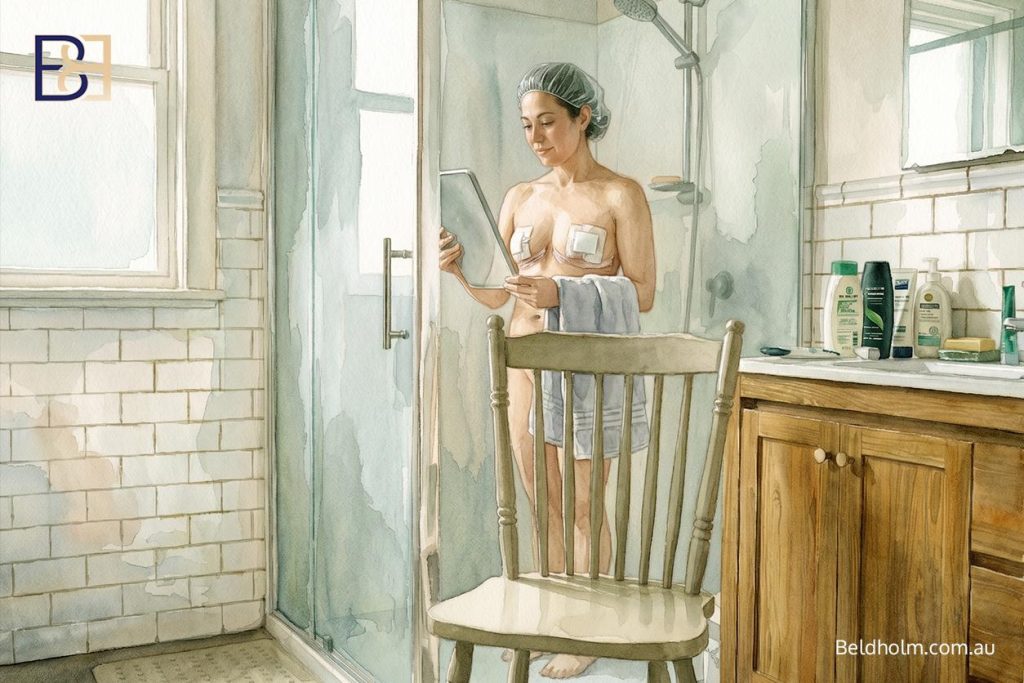
Keep your dressings dry until you are told otherwise. You will be given specific instructions on when you can shower, which is usually within the first few days. Baths, spas and swimming wait until your wounds have fully healed and I have cleared you for them.
Sleeping
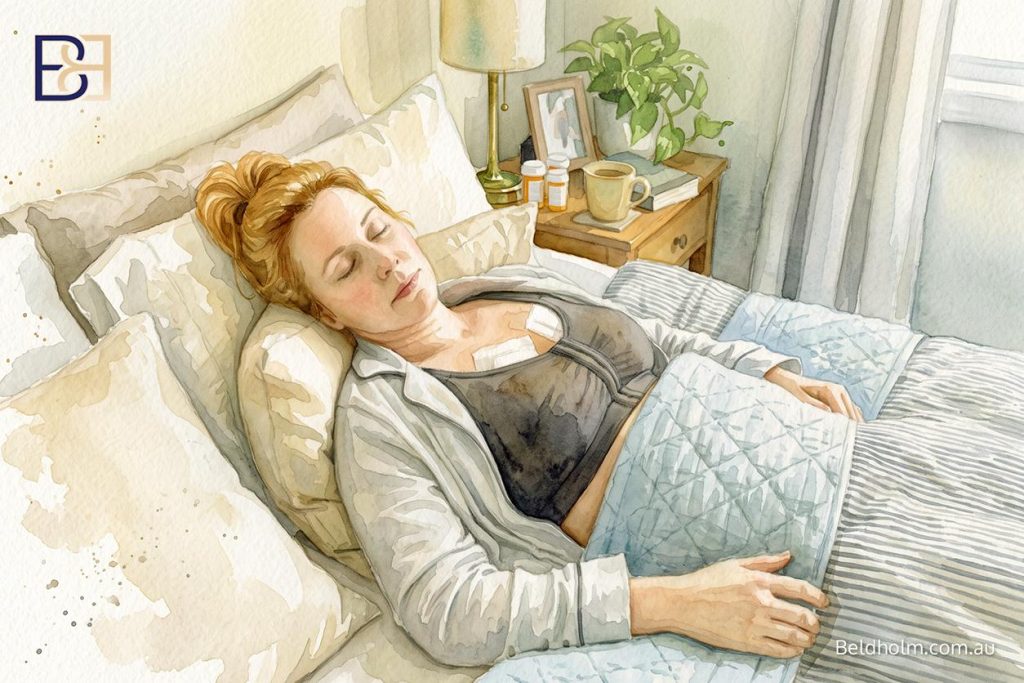
Most people are more comfortable sleeping on their back, propped up on pillows, for the first week or two. Sleeping on your front puts pressure on the healing area and is best left until it no longer hurts to do so.
How I follow you through the first two weeks
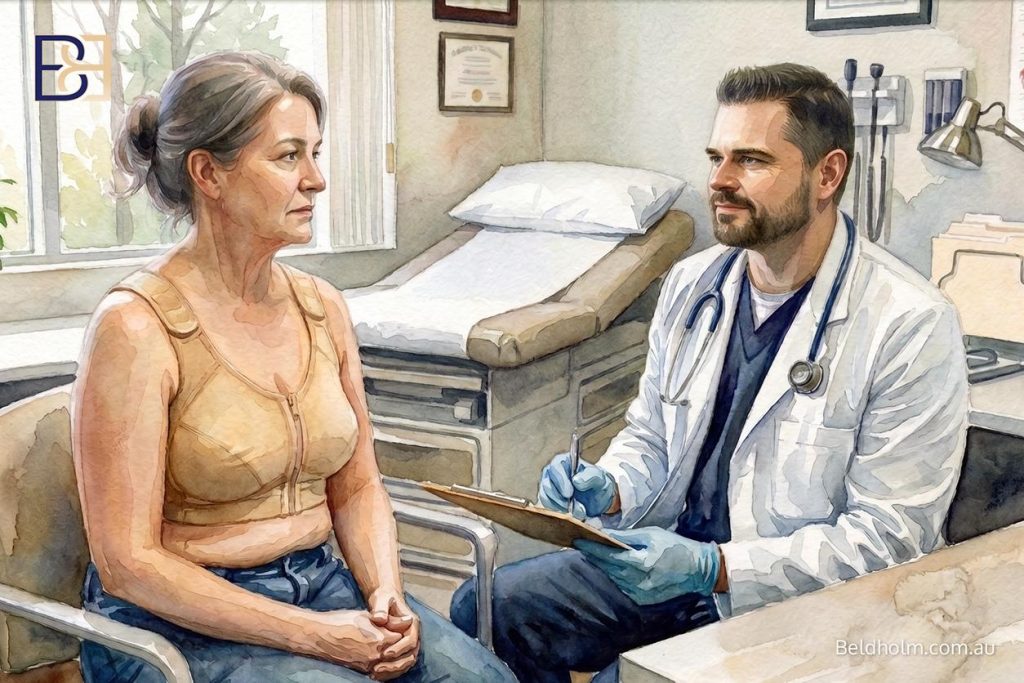
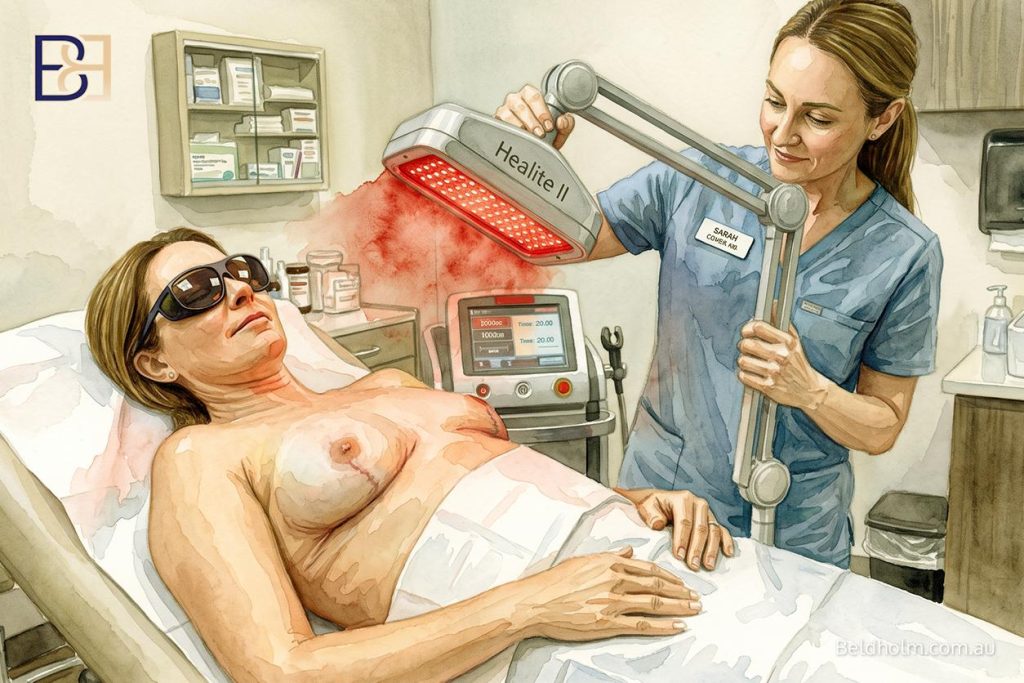
You are not left to manage this week on your own. Over the first two weeks I see you often, with two to three visits a week for nurse or doctor review. At these visits we check your wounds, change your dressings, look at how your pain and swelling are tracking, and manage your drains if you have them. These visits also include Healite II LED light therapy, which forms part of your care in this early period.
Weeks two to six
By the start of the second week, most people are past the worst of the early soreness and moving more comfortably. This is the stretch where you gradually build back towards normal activity, guided by how you are healing rather than by the calendar alone. Everyone moves through it at a different pace.
Drains and dressings
If you had drains, they usually come out during this period, once the fluid draining away has dropped to a low level over a 24-hour stretch. I check this at your follow-up visits and remove them when the output is low enough. Your dressings are changed at these visits, and I let you know when your wounds no longer need covering.
The surgical bra
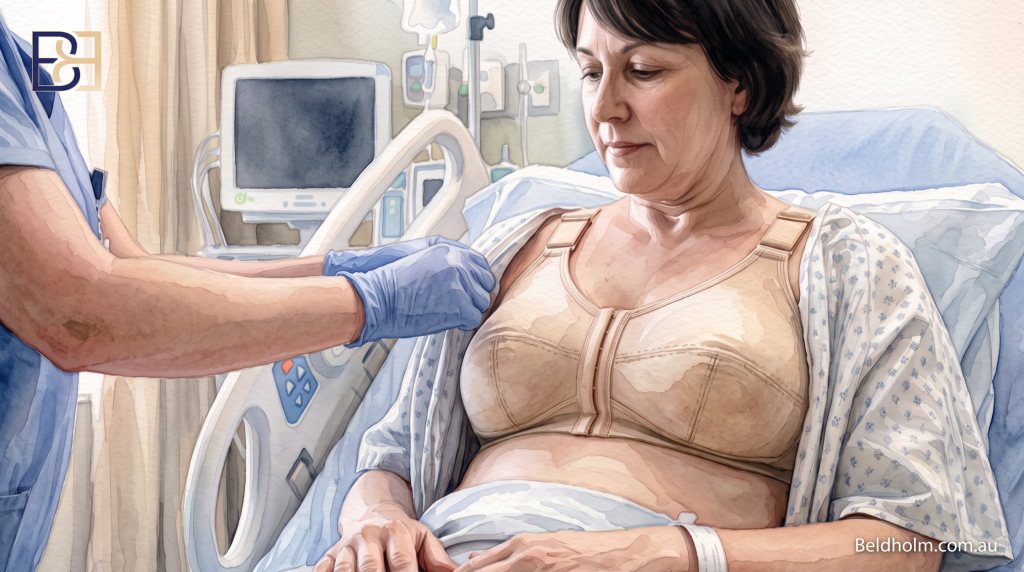
You keep wearing the surgical bra through this period, day and night at first. This compression bra steadies the breast, helps with swelling, and takes tension off the healing tissue. I tell you when you can stop wearing it around the clock, which is usually after the first few weeks.
Driving

Do not drive until you can move your arms freely, steer and brake without hesitation, and perform an emergency stop, and until you are off any pain medication that affects your reactions. For most people that is somewhere around the two-week mark, but it depends on your recovery and how extensive your surgery was.
Work
When you go back to work depends on what your work involves. A desk-based job is usually manageable within one to two weeks, provided you are comfortable and off strong pain medication. Work that involves lifting, reaching overhead, or physical effort needs longer, often several weeks, and I give you a timeframe based on your job and your recovery.
Lifting and activity
Through the first few weeks, avoid heavy lifting and anything that strains the chest or pulls on the wounds. Keep lifting light in the first two weeks and build up gradually after that. Pushing, pulling, and overhead reaching all wait until the tissue has had time to knit.
Exercise

Exercise comes back in stages, not all at once. Walking is fine and encouraged from early on. Light lower-body activity can usually resume after a couple of weeks. Anything that involves the chest, arms or shoulders, and anything high-impact, waits longer, commonly until around the six-week mark, and I clear you for it at your follow-up. Going back to strenuous exercise too soon risks swelling, fluid collection, and problems with wound healing.
How your breasts look and settle after removal
One of the most common questions I am asked is what the breasts will look like once the implants are out, and how removal changes breast appearance. It helps to understand this before surgery, so your expectations match what removal actually does.
What changes when the implant comes out
An implant adds volume and fills the breast skin. When it is removed and not replaced, that volume is no longer there, so the breast is smaller than it was with the implant in place. How the breast looks then depends on several things: your own breast tissue, the elasticity of your skin, the size of the implant that was removed, and how long it was in place.
Where an implant has stretched the skin over years, the skin may be loose after removal, and the breast may sit lower on the chest (ptosis). Large implants, or ones that have been in for a long time, tend to have stretched the skin more than smaller or more recent ones.
It settles over time
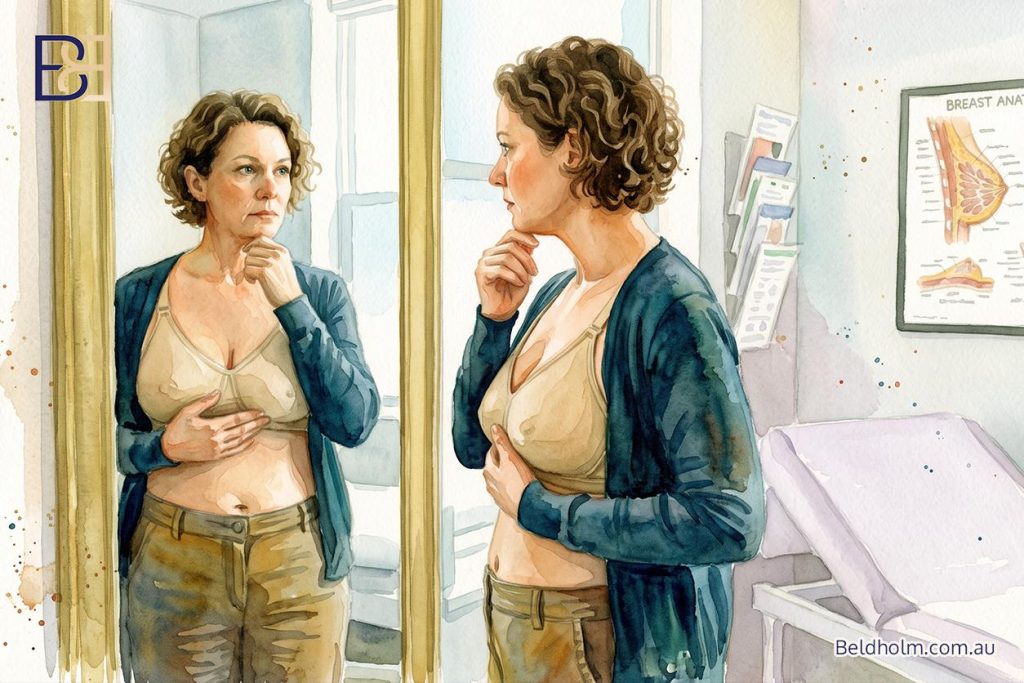
The way your breasts look in the first weeks is not how they will look once everything has settled. Early on there is swelling, and the tissue has not yet had time to soften and take up its resting position. Over the following months the swelling resolves and the tissue settles. Skin has some capacity to retract, though how much varies from one person to the next and cannot be predicted exactly.
If you are thinking about shape and volume
Some patients are content with their breasts after removal on its own. Others, particularly where there is skin laxity, consider a breast lift (mastopexy), which repositions the breast tissue and removes excess skin, or other approaches to change breast shape and volume, such as fat transfer. Whether any additional procedures are appropriate for you is a separate decision, assessed individually.
Where a lift is being considered, there can be sense in removing the implants first and letting the breast settle over several months before deciding, since the settled result may change what, if anything, you want to do next. A lift as a combined procedure at the same time as removal, and a lift as a later separate operation, are both options. Which one suits you depends on your anatomy, patient preference, and what can be done well in a single operating time, and it is worked through at consultation.
Scars and wound healing
Where the scars are
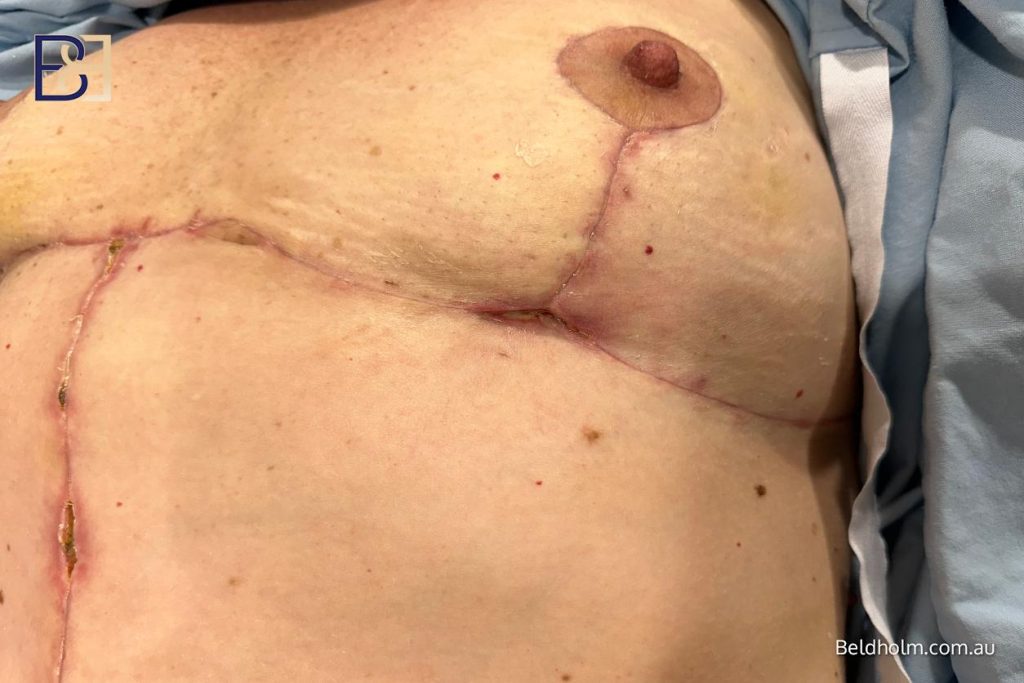
In most cases your implants can be removed through your existing scars, using the same incision as your original surgery. That is usually in the crease under the breast (inframammary) or around the lower edge of the areola (periareolar). Working through the existing scar means no new scar in a different place. Where more capsule work is needed, or the original incision does not give enough access, the scar may need to be extended.
How the wounds are closed
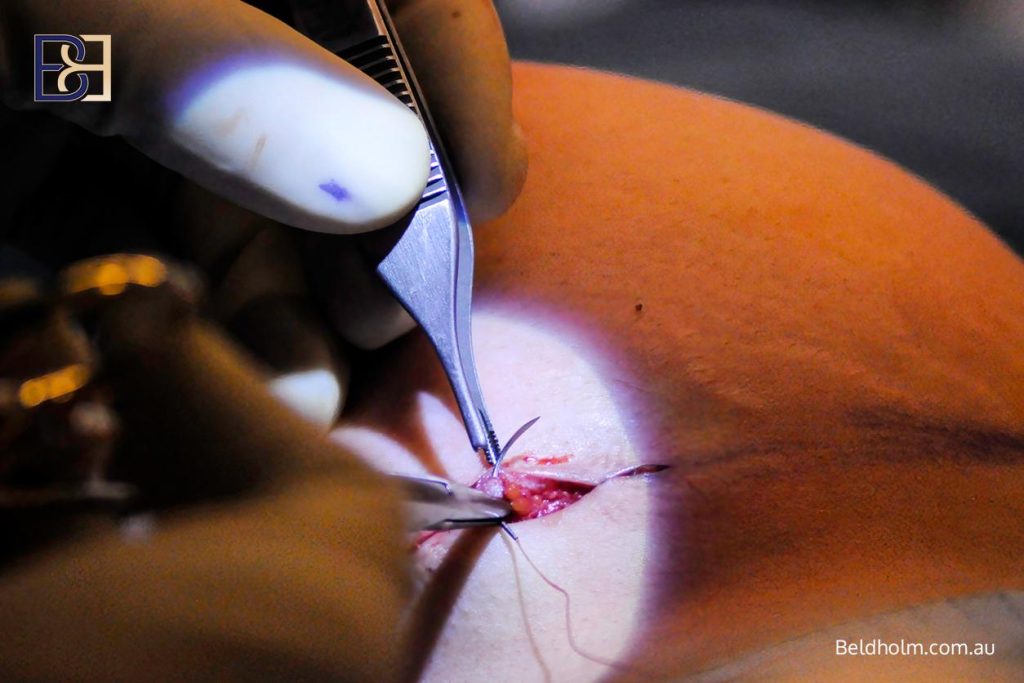
I close the incisions with absorbable sutures placed under the skin, so there are no stitches on the surface to be removed. Comfeel dressings go over the top. The sutures dissolve on their own over the following weeks.
How scars change over time
A scar is not finished when the wound has closed. In the early months a scar is usually pink or red and can feel firm or raised. Over the following 12 to 18 months it gradually fades, flattens and softens. The final look of a scar depends on your skin, your genetics, and how you heal, and it varies from one person to the next. Some people scar more than others.
What helps your scars
- Keep the surgical site clean and follow the wound care instructions you are given
- Protect healing scars from the sun, since sun exposure can darken them
- Do not smoke, as smoking impairs wound healing and worsens scarring
- Silicone gel or tape can support scar maturation, and I let you know when it is appropriate to start
- The Healite II LED therapy at your early follow-up visits supports wound healing in this period
If a scar is healing in a way that concerns you, raise it at a follow-up visit. There are ways to manage a scar that is thickening more than expected.
Swelling and the longer road to your settled result
The recovery process does not finish at six weeks. The visible swelling settles a good deal in the first month or two, but the deeper settling of the tissue takes longer, and the breast keeps changing gradually for several months after that.
Why it takes time
When the implant and, in some cases, the capsule come out, the tissue that was stretched around them needs time to settle into a new resting position. Swelling comes down in stages rather than all at once. It is common for the breasts to feel firmer or look fuller early on, and for this to ease month by month. Some swelling can linger, particularly on the side where more capsule work was done, and the two sides can be uneven for a while. Wearing your surgical bra as directed and keeping active help reduce swelling through this period.
The timeline to your final result
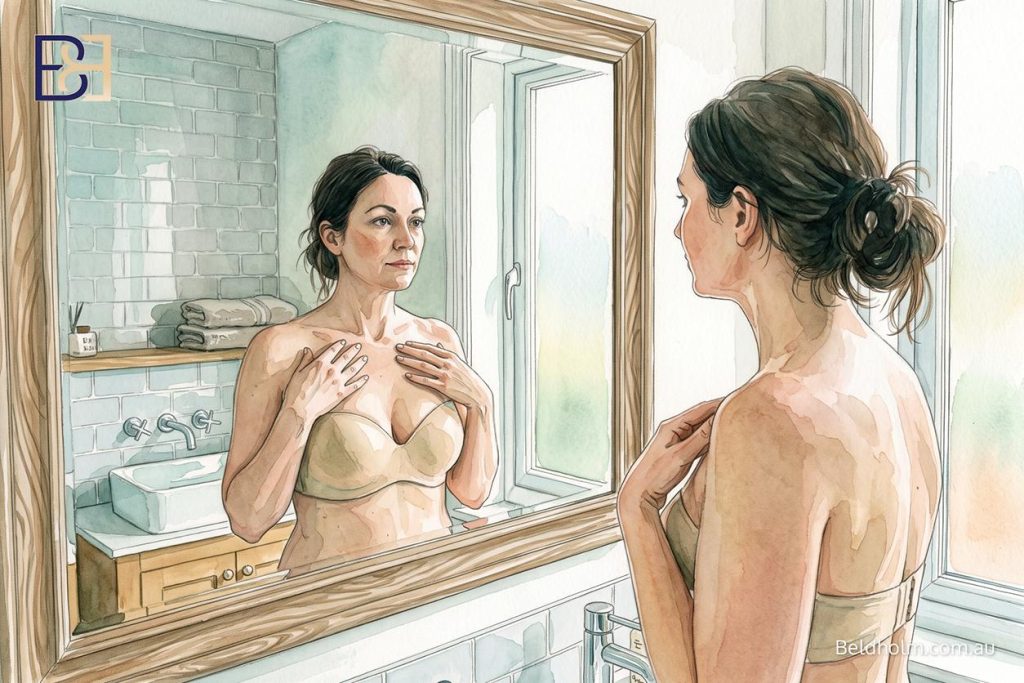
In most cases, the bulk of the swelling has gone by around three months, and the breast is close to its settled shape by around six months. The final result, including how the skin has retracted and how any scars have matured, is usually clear by around twelve months. Firmness, numbness or changes in breast sensation can take this long to settle as well, and in some cases altered sensation is longer lasting.
Because of this timeline, I would not judge your result in the early weeks. If you are weighing up anything further, it makes sense to wait until the breast has settled before deciding.
What you might notice along the way
- Swelling that is worse at the end of the day and better in the morning
- One side settling faster than the other
- Areas of numbness that slowly return, though some numbness can be permanent
- Occasional twinges, tightness or itching as the tissue heals
These are usual parts of the healing process over the months. Anything that concerns you is worth raising at a follow-up visit.
Book your appointment online now
Recovery risks and warning signs
Breast implant removal (explant surgery) is a surgical procedure, and like any surgical or invasive procedure it carries risks. Most people recover without a serious problem, but you need to know what can go wrong and what to watch for, so you can act early if something is not right.
Risks in the recovery period
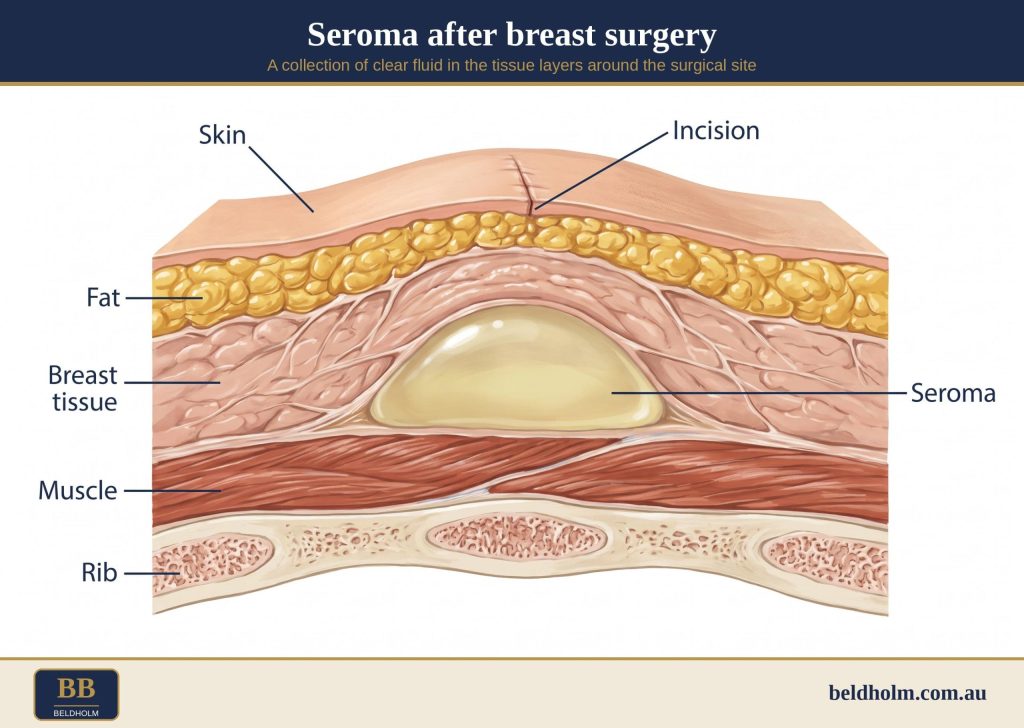
- Fluid collection (seroma). Fluid can gather in the space where the implant was. Small collections often settle on their own, while a larger one may need to be drained. Drains are used partly to lower this risk.
- Blood collection (haematoma). Bleeding into the space can cause a haematoma, usually in the first day or two. A significant one may need a return to theatre to wash out.
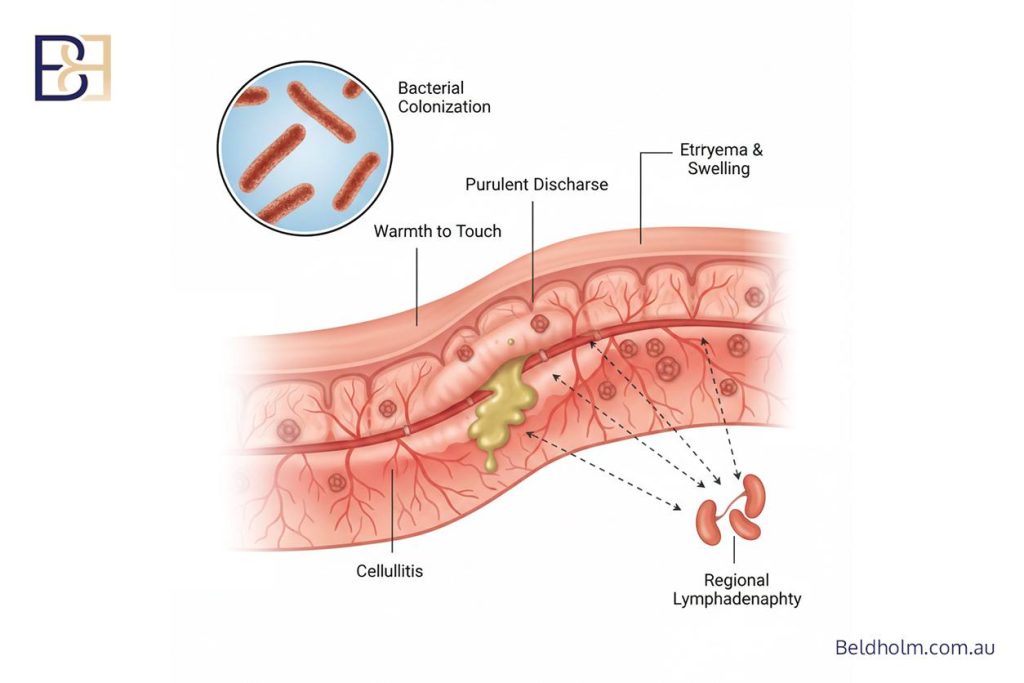
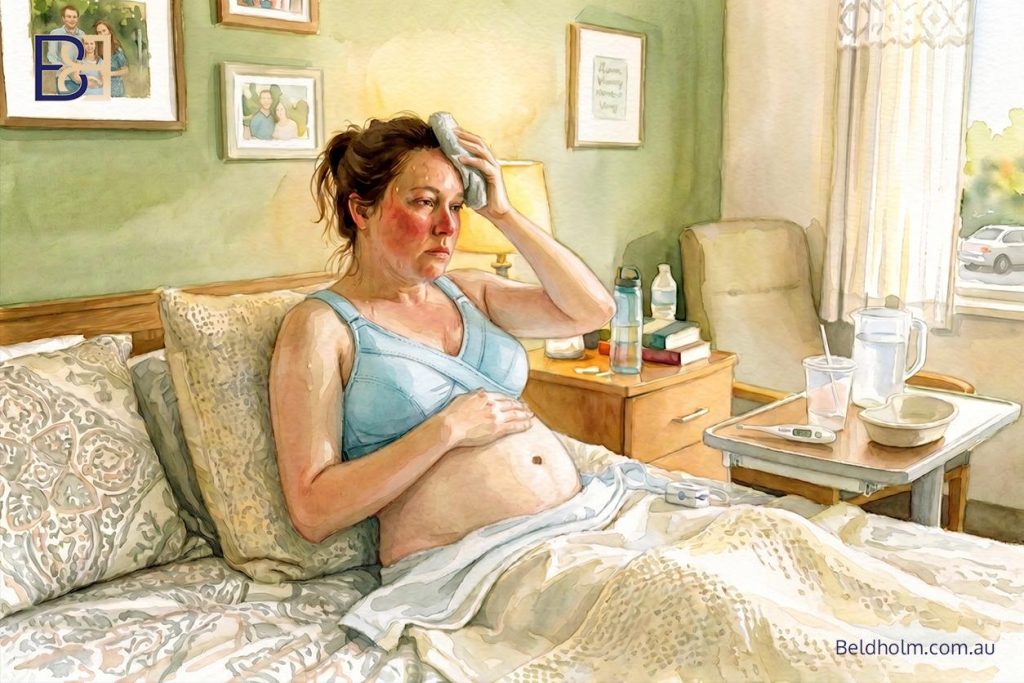
- Infection. Any wound can become infected. Signs include increasing redness, heat, swelling or pain, or discharge, sometimes with a fever. Infection may need antibiotics and, occasionally, further surgery.
- Wound-healing problems. Wounds can be slow to heal, or a small area can open. This is more likely in smokers and where the skin is thin.
- Changes in breast sensation. Feeling in the nipple or breast skin can change after surgery. It often recovers over the following months, but in some cases the change is lasting.
- Asymmetry. The two sides can settle differently in size, shape or position, and some difference between sides is usual.
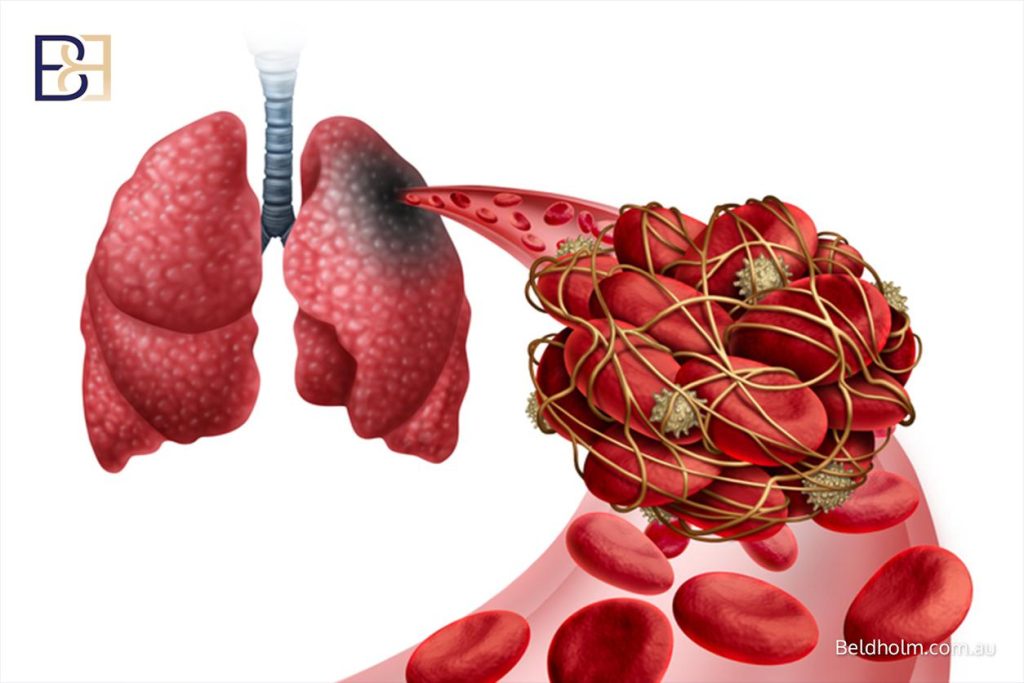
- Blood clots (deep vein thrombosis and pulmonary embolism). A clot can form in a leg vein (deep vein thrombosis) and, less commonly, travel to the lungs (pulmonary embolism). I stratify your risk before surgery and put measures in place to lower it, and early walking after your operation is part of that.
Warning signs to act on
Contact us if you notice:
- Worsening pain that your pain medication is not controlling
- Growing redness, heat or swelling in a breast
- Discharge from a wound, or a wound starting to open
- A fever, or feeling generally unwell
- One breast suddenly becoming larger, firmer or more bruised than the other
- Pain, swelling or redness in a calf
Some symptoms need urgent attention. Get emergency help straight away for:
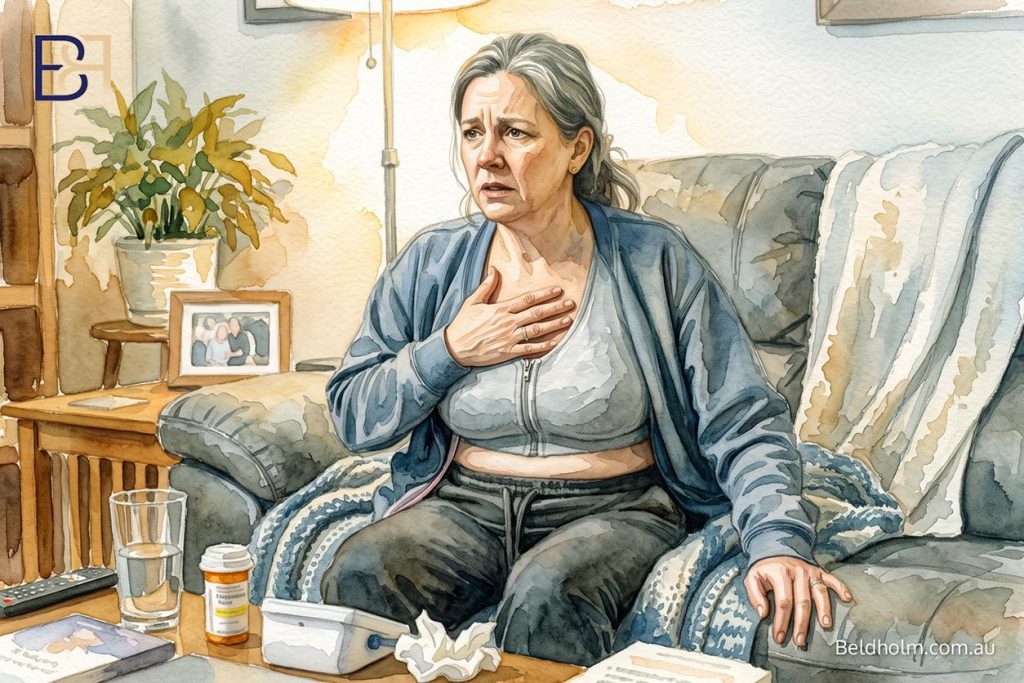
- Chest pain
- Shortness of breath or difficulty breathing
- Coughing up blood
These can be signs of a clot in the lungs and are a medical emergency.
Who to contact
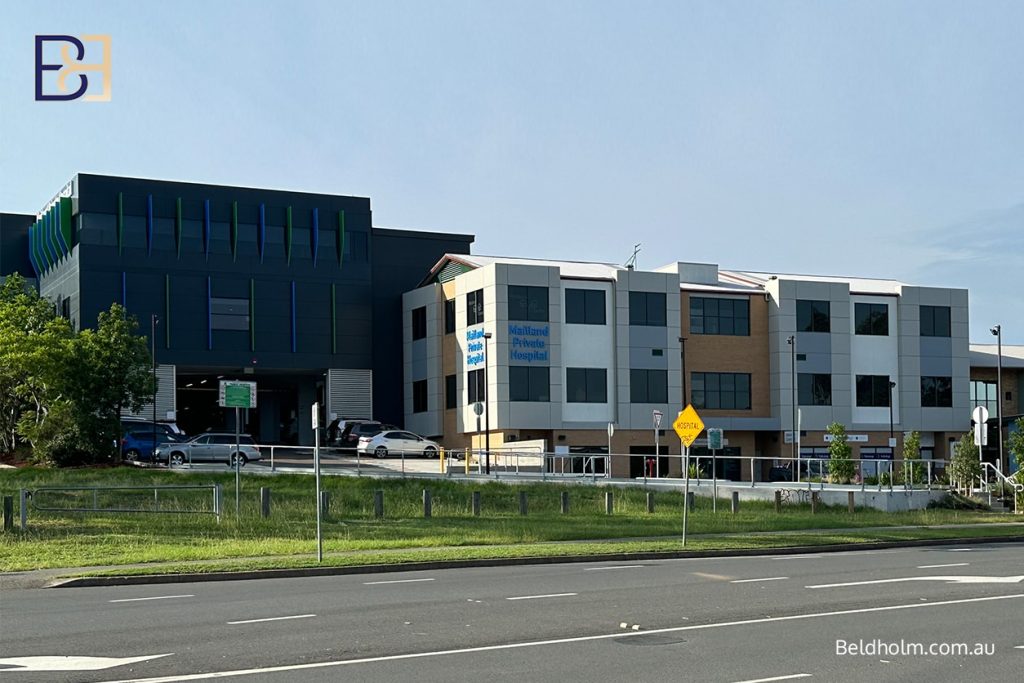
During office hours, call the rooms. After hours, call Maitland Private Hospital, where nursing staff provide phone triage and can advise you. If you need to be physically examined, go to your local emergency department. For anything life-threatening, such as chest pain or trouble breathing, call 000. Maitland Private Hospital is not an emergency department, so genuine emergencies go to 000 or your nearest emergency department.
Setting yourself up for a good recovery
A lot of how your recovery goes is set before you reach the operating theatre. The steps below give you the best footing.
Your general health
Being in good general health, with proper nutrition, helps you heal. If you have medical conditions, having them well managed before surgery matters. I go through your health and your medications with you at consultation.
Stopping smoking

Smoking impairs wound healing and raises the risk of wound-healing problems and infection. If you smoke, stopping well before surgery and staying off it through your recovery gives your wounds a better chance. I talk this through with you before your operation.
Pre-operative blood tests
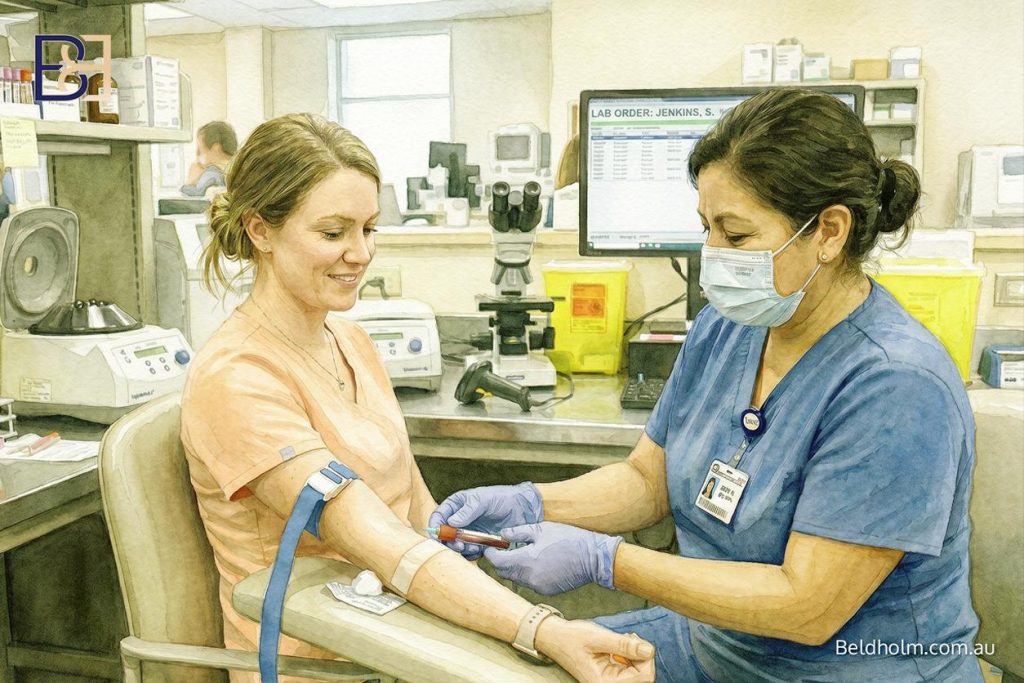
Before surgery you have a set of routine blood tests. These check your full blood count, your kidney and liver function, and your blood clotting, along with hepatitis B, hepatitis C and HIV, and a pregnancy test where applicable. Your GP is copied in on the results. You can read more about what these involve in my article on pre-operative blood tests.
Medications and blood thinners
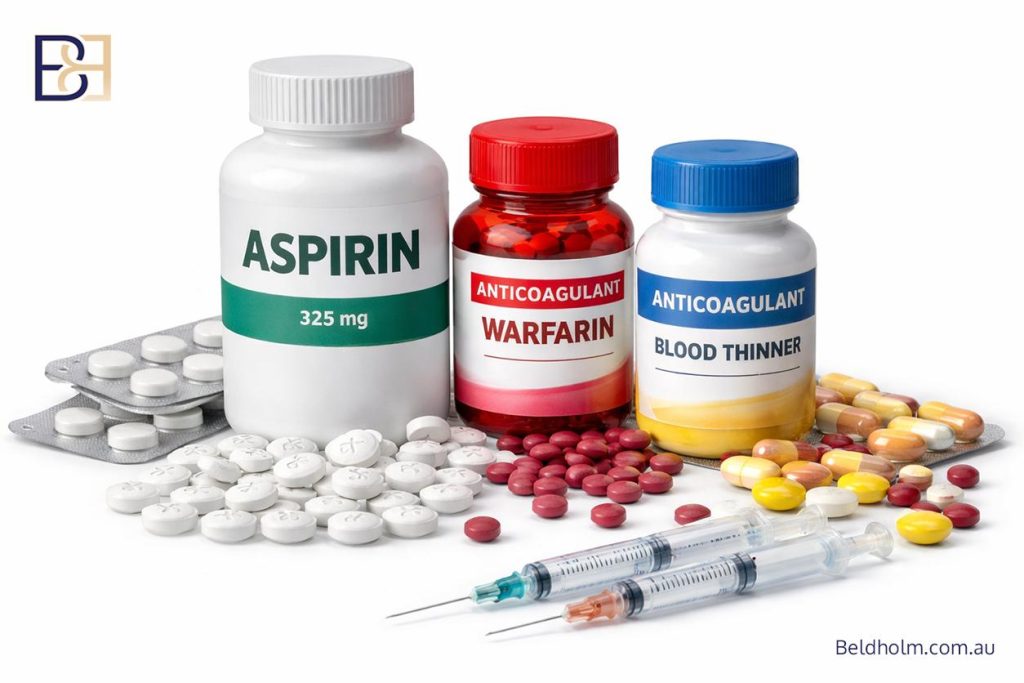
Some medications, including aspirin and other blood thinners (anticoagulants), increase bleeding and are usually stopped about a week before surgery. Some patients need to keep taking them through surgery, and that is planned well in advance. Do not stop or change any prescribed medication on your own. I tell you exactly what to do with your medications before your operation.
Support at home

Arrange help at home for the first few days. You will not be able to lift much, reach overhead readily, or drive at first, so having someone to help with children, shopping and household jobs means you can rest properly in the early days. Set up a comfortable place to rest, with pillows to prop yourself up and your pain medication, water and anything else you need within reach, so you are not stretching for things.
Your follow-up schedule
Your recovery is followed closely. After the intensive reviews in the first two weeks, I see you at 4 weeks, 3 months, 6 months and 12 months. At the 4-week visit I hand your ongoing care back to your GP, who helps monitor breast health and your long-term care. These visits let me check your healing, track how the breast is settling, and pick up anything that needs attention.
Deciding whether removal is right for you
Whether breast implant removal (explant surgery) is right for you, and how it should be done, follows a surgical plan worked out at consultation after a full assessment. Your recovery, and your result, will be individual to you, and the timelines in this article are a guide.
Frequently asked questions
How painful is breast implant removal (explant surgery)?
Most people describe soreness, tightness and a bruised feeling rather than severe pain, worst in the first two to three days and settling after that. You go home with pain medication, and how much you need depends on how much capsule work was done. Removing the implants on their own is usually less sore than a total capsulectomy.
How long do I need off work?
A desk-based job is usually manageable within one to two weeks, once you are comfortable and off strong pain medication. Physical or manual work needs longer, often several weeks. I give you a timeframe based on your job and your recovery.
Will I have drains?
You might. Whether drains are used depends on the extent of your operation, particularly how much capsule work is done. When they are used, they usually stay in for a few days and come out at a follow-up visit once the fluid draining away has slowed.
When can I exercise again?
Walking is fine from early on. Light lower-body activity can usually resume after a couple of weeks. Anything that involves the chest, arms or shoulders, and anything high-impact, waits longer, commonly around six weeks, and I clear you for it at your follow-up.
How long until my breasts settle into their final shape?
The bulk of the swelling settles by around three months, and the breast is close to its settled shape by around six months. The final result, including how the skin has retracted and how scars have matured, is usually clear by around twelve months.
Do my implants need to be replaced when they are removed?
No. Breast implant removal (explant surgery) can be done without putting new implants in. Some patients choose to have new implants, or a breast lift (mastopexy), at the same time or later. What suits you is a separate decision, assessed at consultation.
References
- Swanson E. Complications of breast augmentation (augmentation mammoplasty). In: Evidence-based cosmetic breast surgery. Cham: Springer International Publishing; 2017. p. 79-101.