


Breast augmentation (augmentation mammoplasty) is one of the more common cosmetic procedures I perform, and it is also an operation I spend a long time talking about before anyone books a date. A large part of that conversation is complications. Every operation carries risk.
This article sets out the complications of breast augmentation (augmentation mammoplasty) as I explain them at consultation. My aim is to give you a clear, factual picture of the possible complications, how often each problem occurs, what the warning signs are, and how each one is managed if it happens. Understanding breast augmentation complications is central to giving informed consent.
Book your appointment online now
Why I go through this in detail
Consent to any cosmetic surgery is not a signature on a form. It is a decision you make once you understand the trade-offs. Breast implants are a good example of why this matters. They are medical devices placed inside your body, and they behave like devices. They can develop problems over time, and they are not designed to last a lifetime. Understanding that before surgery changes how you think about the decision.
Breast implants are regulated medical devices

In Australia, breast implants are regulated by the Therapeutic Goods Administration (TGA) as medical devices (1). Every implant placed and removed can be recorded in the Australian Breast Device Registry, which supports long-term monitoring of device safety (2).
Breast augmentation surgery involves placing breast implants inside the body, you are not only having an operation, you are living with a device. Some of the complications in this article relate to the surgery itself, and some relate to the implant over the years that follow.
What this article covers
A few things to hold in mind
Two points sit behind everything that follows.
First, results vary from patient to patient. Your anatomy, your tissue quality, your general health and the choices we make together all affect your risk profile. Figures quoted from research describe groups of patients. They are a guide to what is likely, not a prediction for you specifically.

Second, whether breast augmentation (augmentation mammoplasty) is appropriate for you at all is a decision made at consultation, after assessment. A GP referral is required before that consultation.
How common are complications overall
Before I break the complications down one by one, it helps to have a sense of the overall picture. How likely is it that something will need attention at some point?
The largest long-term dataset we have comes from United States Food and Drug Administration post-approval studies, which followed 99,993 patients with breast implants (3).
At seven years after primary breast augmentation (augmentation mammoplasty), around 35.9% of patients had experienced a complication, a reoperation, or both (3). Put another way, over a seven-year window, roughly one in three patients had something happen that counted as a complication or led to additional surgeries.
Research findings show the following:
- The data includes everything from minor issues to complications requiring surgery.
- The percentage represents a cumulative total over seven years, not the risk at any single time.
- It reflects outcomes for a large group, while individual risk varies based on personal anatomy, health, and surgical details.
Further surgery is part of the picture
A separate figure from the same study is worth stating on its own. At seven years, about 11.7% of primary augmentation patients had undergone at least one reoperation (3). The most common reason for that further surgery among breast implant patients was capsular contracture, followed by a patient-requested change in size (3).
I raise reoperation early because it connects to a point I make with everyone. Breast implants are not designed to last a lifetime, and further surgery at some stage is expected. I come back to this later in the article, in the section on reoperation and revision.
Why reported rates vary
If you read widely, you will find complication rates quoted anywhere from about 12% to 47%, depending on the study, the length of follow-up, and the type of surgery (4). The higher figures tend to come from longer follow-up and from revision or reconstruction cases rather than first-time cosmetic augmentation. That spread is not a contradiction. It reflects how much the population studied and the timeframe change the numbers.
Early complications: the first days and weeks
The early complications are the ones that show up in the days and weeks after surgery. They matter because this is the window where noticing a problem early and acting on it changes how things turn out. I would rather a patient contact the practice about something that turns out to be nothing than sit on a warning sign at home.
Here is what I watch for, and what I ask you to watch for, in the early period.
Bleeding and haematoma

A haematoma is a collection of blood in the pocket around the implant. It usually happens in the first day or two after surgery. Haematoma occurs in fewer than 5% of patients (5).
The signs are usually one-sided: rapid swelling on one breast, increasing pain, firmness, and bruising that is getting worse rather than better. A small haematoma may settle on its own. A larger one needs a return to theatre to drain the blood and stop the bleeding point.
The main things that reduce this risk are careful control of bleeding during surgery and stopping aspirin and other blood-thinning medications about a week before surgery, planned in advance. You should never stop prescribed medication on your own. That decision is made with me before your date.
Seroma
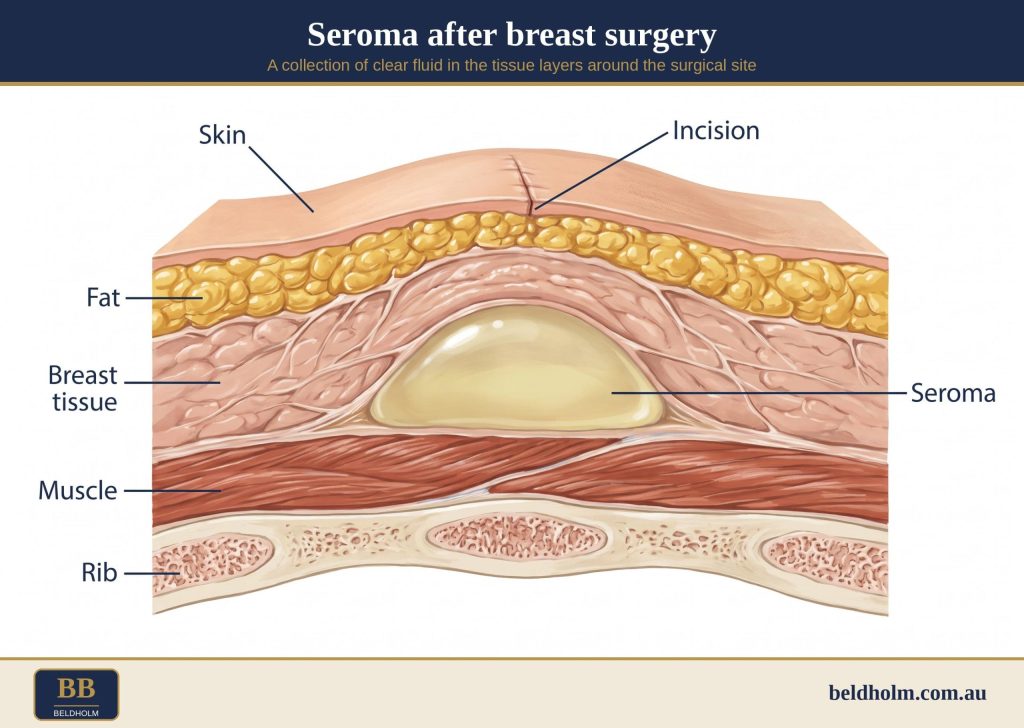
A seroma is a collection of clear fluid, rather than blood, around the implant. Early seromas are usually reabsorbed by the body within about four to five weeks (5). A larger collection can be drained with a needle, often under ultrasound guidance.
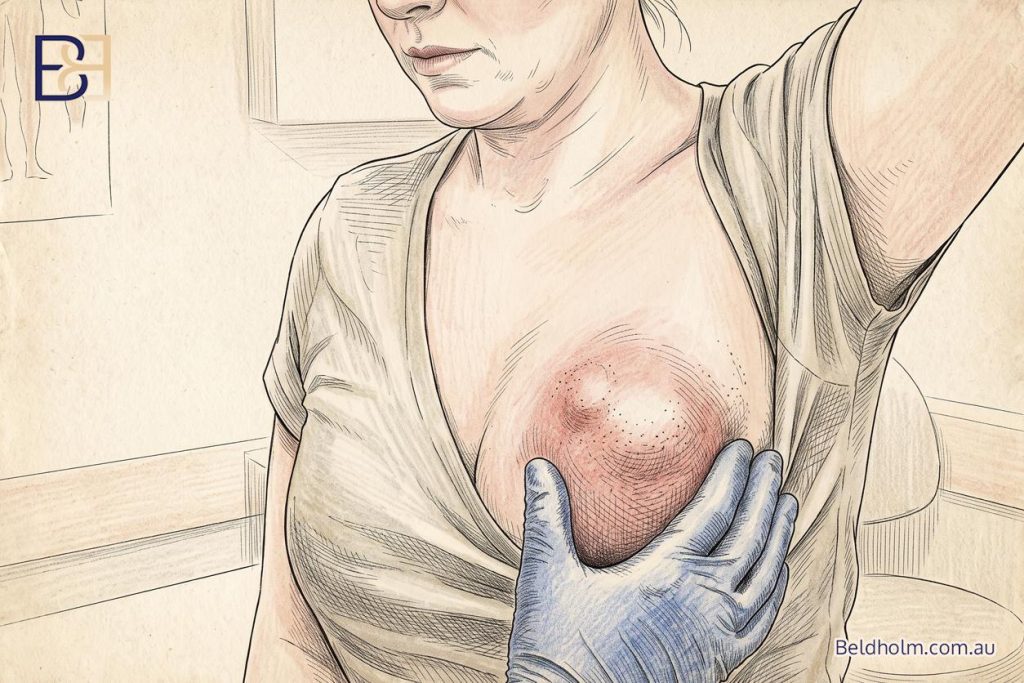
A seroma that appears a year or more after surgery is different. Late seromas are uncommon, reported in roughly 1.4% to 1.9% of cases, and are more often linked to textured-surface implants (5). Any late seroma is investigated, and the fluid is tested, because a late fluid collection can be one of the signs of BIA-ALCL, a condition I come back to later in this article.
Infection
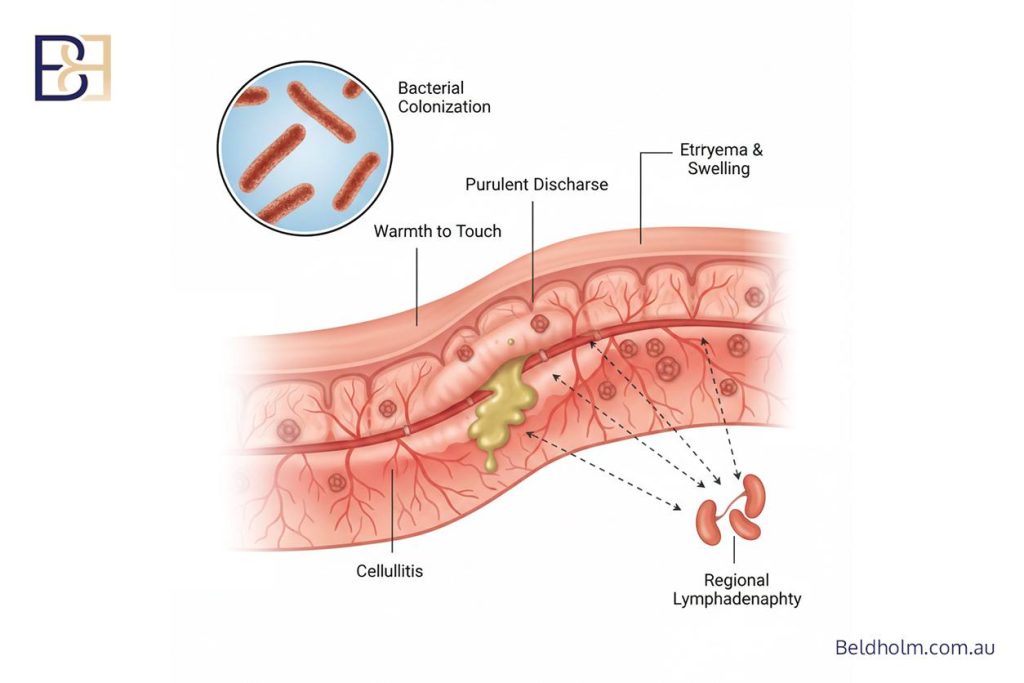
Infection after breast augmentation (augmentation mammoplasty) is uncommon, with a reported incidence of about 1% to 7% (5). It tends to show up in the early weeks.
The warning signs are increasing redness, warmth, swelling and pain, sometimes with fever or discharge from the wound. Early or surface infection is often managed with antibiotics. A deeper infection around the implant itself is more serious and can require a washout in theatre, and in some cases temporary removal of the implant until the infection has cleared. I reduce this risk with sterile no-touch handling of the implant and antibiotic cover at the time of surgery.
Delayed wound healing
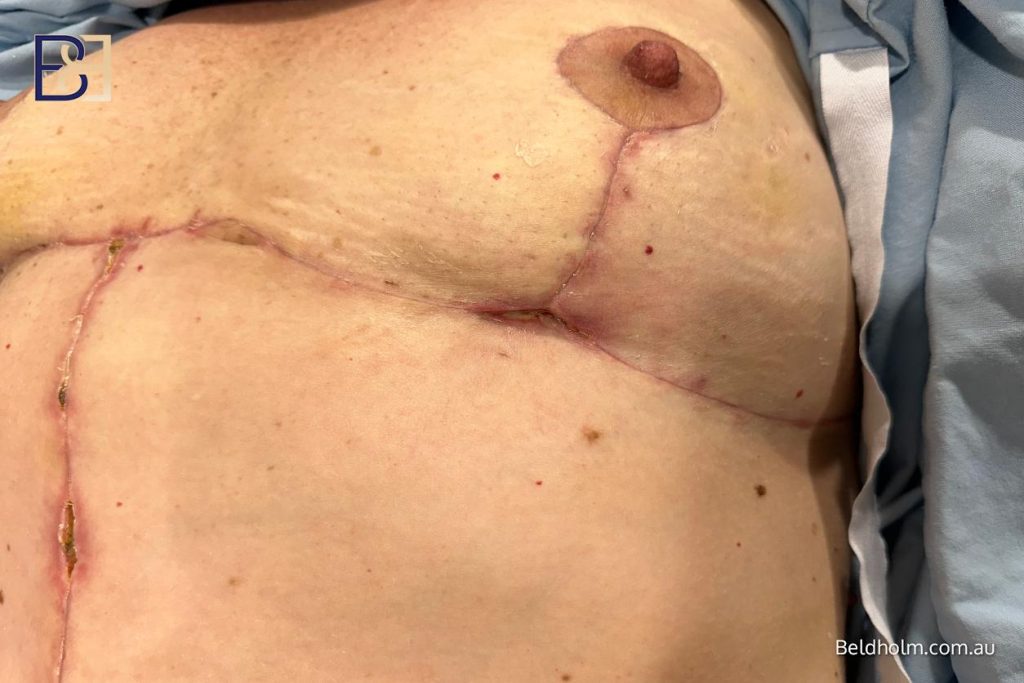
Sometimes the wound edges are slow to heal or partly separate. This is uncommon in an otherwise healthy patient having first-time augmentation, and is more likely where there is tension on the surgical site or an infection (6). In the worst case, a wound that breaks down can expose the implant, which then usually needs to be dealt with surgically.
Smoking and poorly controlled diabetes both raise this risk, which is one of the reasons I go through your general health carefully before surgery. I use Comfeel dressings for breast wounds.
Anaesthetic risk
Breast augmentation (augmentation mammoplasty) is done under general anaesthetic, which carries its own risks separate from the surgery. Most are minor and short-lived, such as nausea, a sore throat, or grogginess. Serious anaesthetic reactions are rare. Your anaesthetic assessment is usually done by phone beforehand, with the airway examination done on the day of surgery.
Blood clots
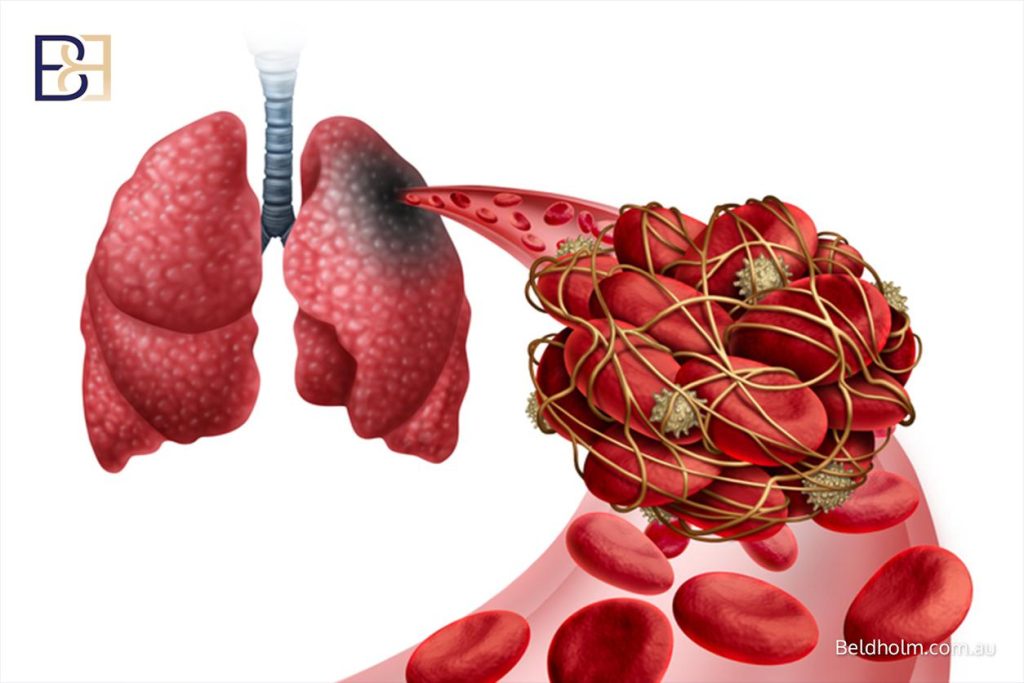
Any operation carries some risk of a clot forming in the leg (deep vein thrombosis) that can travel to the lungs. Breast surgery generally sits at lower risk for this than abdominal operations, but I still assess each patient’s risk individually and decide on clot prevention accordingly. The signs to act on are calf pain or swelling, or chest pain and breathlessness, which need urgent medical attention. I go into this in more detail in my article on DVT risk and breast surgery.
When to make contact
The pattern I ask you to look for is anything that is getting worse rather than better: swelling, pain, redness, or fever that climbs over hours rather than easing. During business hours, contact my rooms. After hours, contact Maitland Private Hospital, where a nurse will triage the call. For something that needs a physical assessment, your local emergency department is the right place. For anything life-threatening, call 000.
Capsular contracture
Capsular contracture is the complication I spend the most time explaining, for two reasons. It is the most common implant-related complication after breast augmentation (augmentation mammoplasty), and it is the single most common reason augmentation patients come back for further surgery (3) (5).
Why it happens
Your body forms a layer of scar tissue, called a capsule, around any implant. This is normal and happens to everyone. The capsule is usually thin and soft, and you never notice it.
Capsular contracture is when that capsule thickens and tightens around the implant, squeezing it. The implant itself does not change. The tissue around it does.
The exact trigger is not always clear, but the evidence points strongly to a low-grade bacterial film on the implant surface, called a biofilm, as a major driver (7). Anything that seeds bacteria or inflammation around the implant raises the risk. In practical terms, an early complication such as a haematoma, seroma or infection increases the chance of contracture developing in the first year several times over (8). Previous radiation to the breast also carries an increased risk.
How it is graded
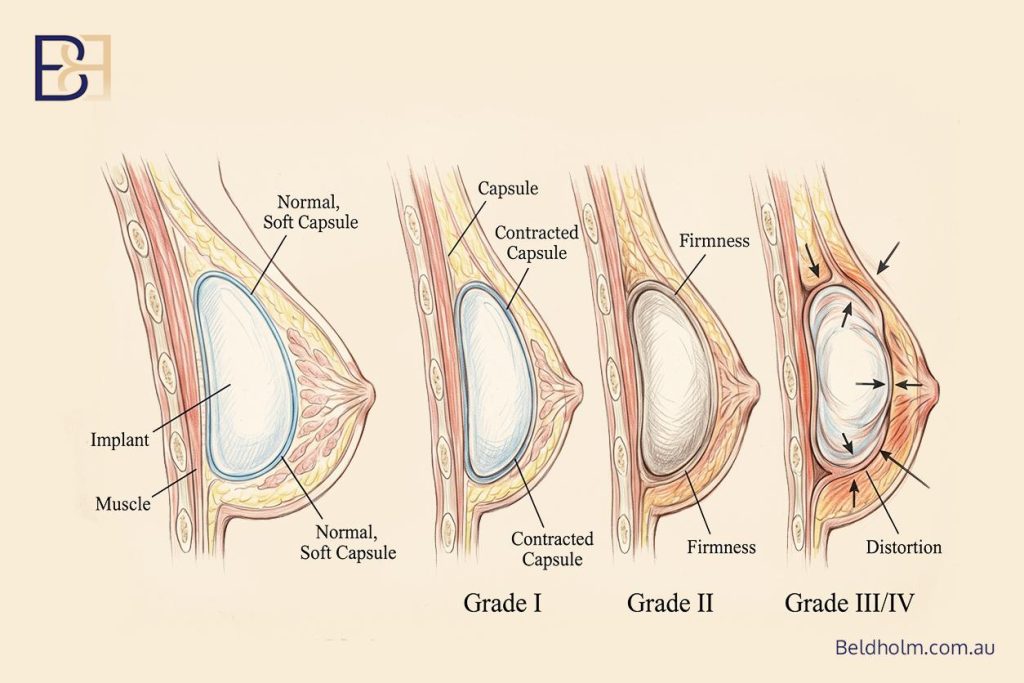
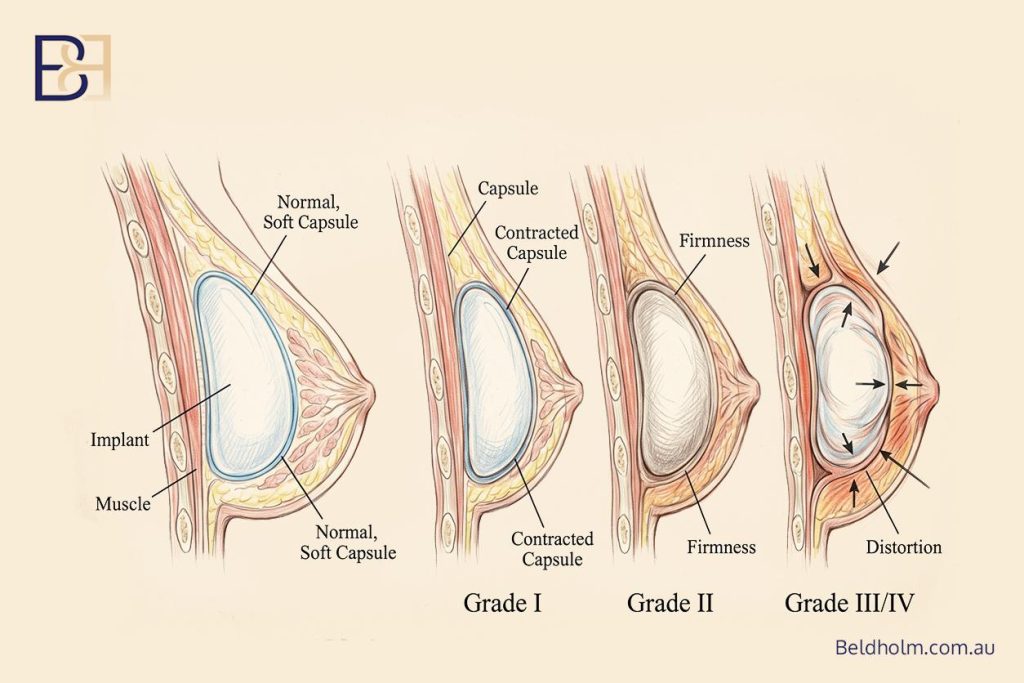
Surgeons describe capsular contracture using the Baker scale, which runs from grade I to grade IV (5) (7).
- Grade I: the breast is soft and looks and feels normal.
- Grade II: the breast is slightly firm but still looks normal.
- Grade III: the breast is firm and the shape has visibly changed, often looking rounder or sitting higher.
- Grade IV: the breast is firm, distorted and painful.
Grades I and II are mild and common, and often need nothing done. Grades III and IV are the clinically significant ones, where the breast has changed shape or become painful. These are the grades that usually lead to further surgery.
How common it is
In the large FDA dataset, clinically significant contracture (grade III or IV) occurred in about 7.2% of primary augmentation patients over the follow-up period (3).
Where the implant sits makes a measurable difference. Contracture has been reported more often when implants are placed above the muscle (around 8.6%) than below it (around 2.8%) (5). This is one of the reasons implant plane is a considered decision rather than a default. The evidence on implant surface and contracture is mixed, and surface choice also interacts with the BIA-ALCL question, which I deal with later in this article.
What you would notice
Contracture can appear in the first few months or come on gradually over years. The signs are a breast that feels firmer than it did, a change in shape, an implant that starts to ride high or look round, and in the higher grades, discomfort or pain. It can happen on one side or both.
How I work to reduce the risk
Because bacterial contamination is central, most of what I do to lower the risk is about keeping the implant and the pocket as clean as possible. I follow the established 14-point plan for reducing bacterial load at the time of augmentation, handle the implant with a no-touch technique, and take care with control of bleeding to avoid a haematoma (9). Implant plane is chosen with contracture risk in mind, among other factors.
None of this removes the risk. It reduces it.
How it is managed
Mild contracture that is not bothering you is usually monitored rather than operated on. Grade III or IV contracture that has changed the shape of the breast or become painful is generally treated surgically. That normally means removing the tightened capsule, often with exchange of the implant, and sometimes changing the plane the implant sits in (7).
Contracture can come back after treatment, which is a point I make clearly before any revision, because it affects how you weigh up the decision.
Implant rupture and deflation
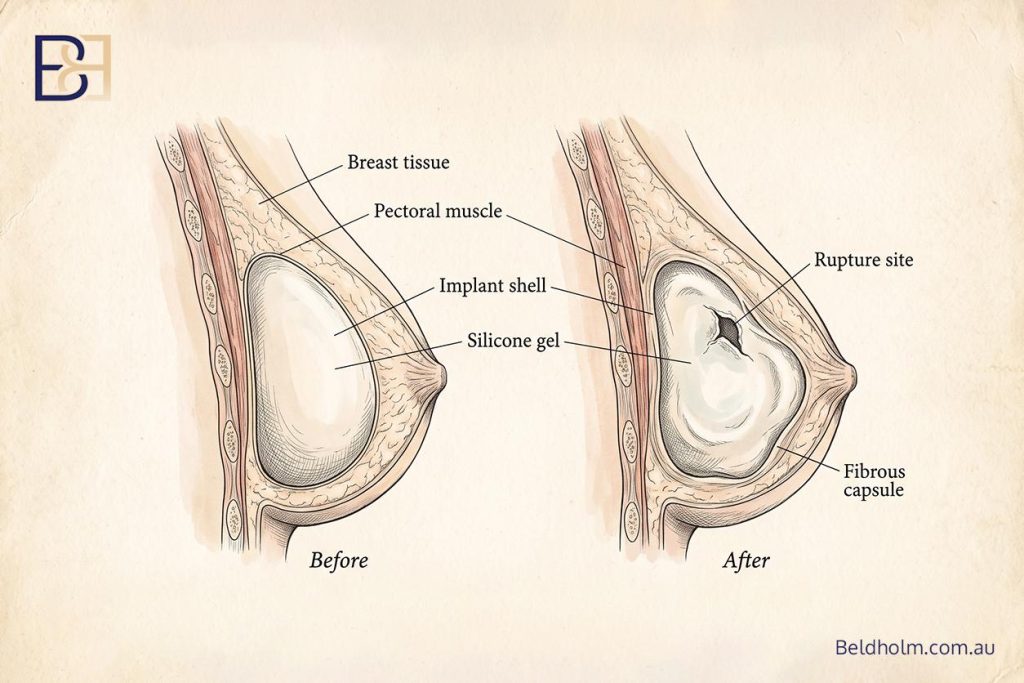
A breast implant is a manufactured device with an outer shell. Over enough time, that shell can fail. What you would notice, and what it means, depends on what the implant is filled with.
This is also where I make one of my most important points to patients. Breast implants are not lifelong devices. Whatever you choose, you are signing up to the likelihood of further surgery at some stage.
Silicone rupture is usually silent
Modern silicone implants are silicone gel filled implants, using a cohesive silicone gel that mostly holds its shape. When the shell of a silicone implant tears, the gel usually stays inside the surrounding scar capsule. This is called an intracapsular rupture, and it accounts for most silicone ruptures, around 78% (5).
Because the gel stays put, there is often nothing to feel or see. This is what is meant by a silent rupture. Physical examination alone misses more than half of silicone ruptures, which is the whole reason imaging matters (5).
Less often, gel escapes beyond the capsule into the surrounding breast tissue, which is an extracapsular rupture, around 22% of cases (5). In that situation silicone can travel to nearby lymph nodes. Separately, a very small amount of silicone can seep through an intact shell over time, which is called gel bleed (5).
Saline deflation is obvious
Saline implants behave differently. If the shell of a saline filled breast implant fails, the sterile salt water inside leaks out and is absorbed by the body, and the breast visibly loses volume over hours to days. Because it is so obvious, this is called deflation rather than rupture, and no scan is needed to diagnose it (5). Saline deflation has been reported in roughly 1% to 5% of implants over the first two years, with the likelihood rising the longer the implant is in place (5).
How common breast implant rupture is
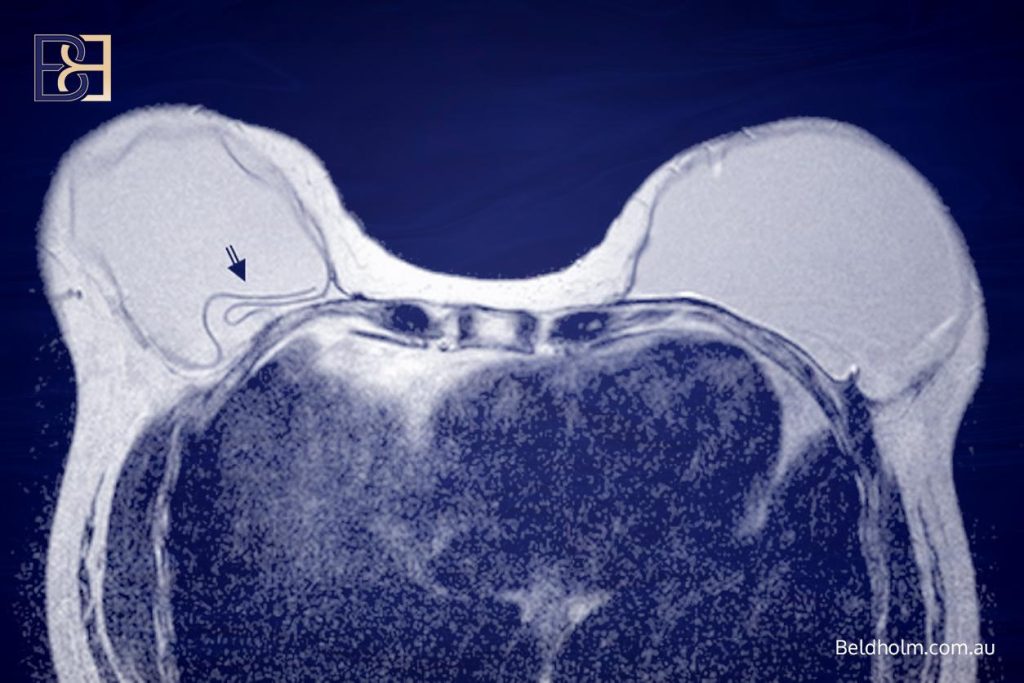
The exact rupture rate is difficult to pin down, partly because silent ruptures go unnoticed unless someone images for them (5). Older-generation implants failed far more often than current ones. For modern silicone gel implants, reported cumulative rupture sits in the order of 8% to 15% by around 8 to 12 years, though estimates vary between studies (3) (10). Most ruptures happen after the first six to seven years, and the risk keeps accumulating with time (10).
The practical message is the one I opened with. The longer an implant is in place, the more likely rupture becomes, and no implant is built to last forever.
How rupture is found
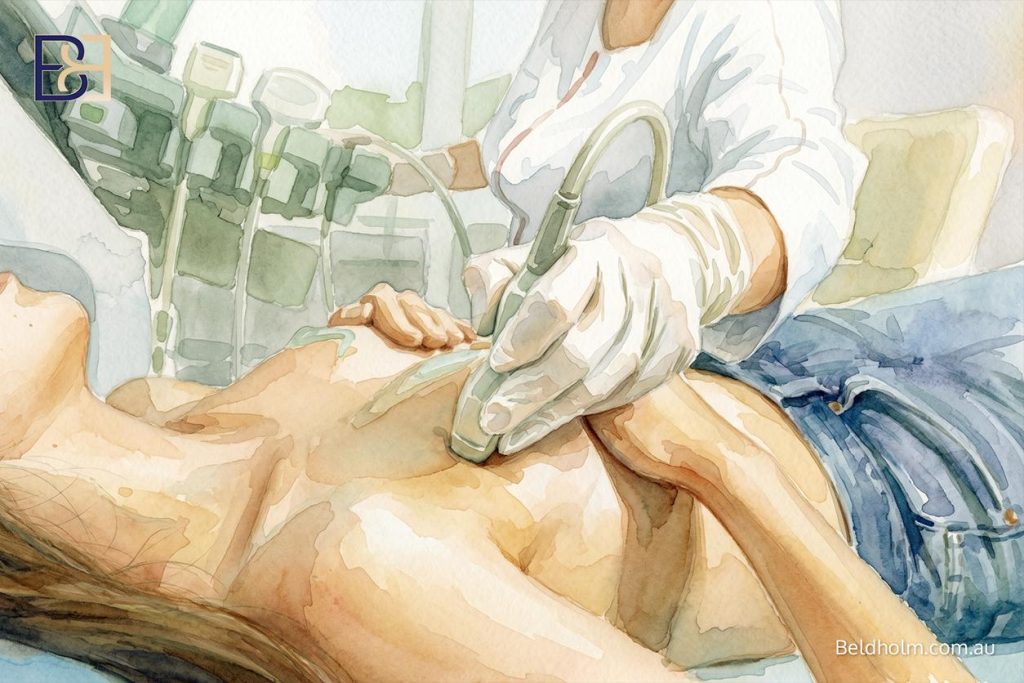
Because silicone rupture is so often silent, imaging is how it gets picked up. Ultrasound is frequently the first test used. Magnetic resonance imaging (MRI) is the most accurate way to assess a silicone implant and is the scan regulators point to for this purpose (5). In my practice I use imaging to investigate when there is a symptom, a change, or uncertainty about an implant, rather than as a routine on every patient. There are also recommendations for periodic imaging to check for silent rupture over the life of an implant, which is something I discuss individually.
What it means and how it is managed
A confirmed silicone rupture is generally managed by removing the implant, usually with replacement at the same time, or with explant alone if you decide not to replace it. A deflated saline implant is replaced if you wish to keep the result. Either way, this is further surgery, which ties back to the point that implants are a long-term commitment rather than a one-off.
Whether a ruptured silicone implant causes the systemic symptoms some patients worry about is a separate question, and I deal with that later in this article where I cover the conditions associated with implants.
Changes in implant position and breast shape

After capsular contracture, problems with where the implant sits and how the breast looks as a result are the next most common reason patients come back for revision breast surgery (11). These are largely mechanical. They come down to the pocket the implant sits in, the weight of the implant, and the quality of the tissue holding it.
Here are the main ones, and what drives them.
Bottoming out
Bottoming out is when the implant gradually settles too low on the chest, below where the breast crease should be. The nipple can end up pointing slightly upwards, and the lower part of the breast stretches. It tends to happen when the pocket is dissected too low, when a large or heavy implant stretches thin tissue over time, or both. In one series it was reported in about 6% of augmentations (6) (11).
Double-bubble
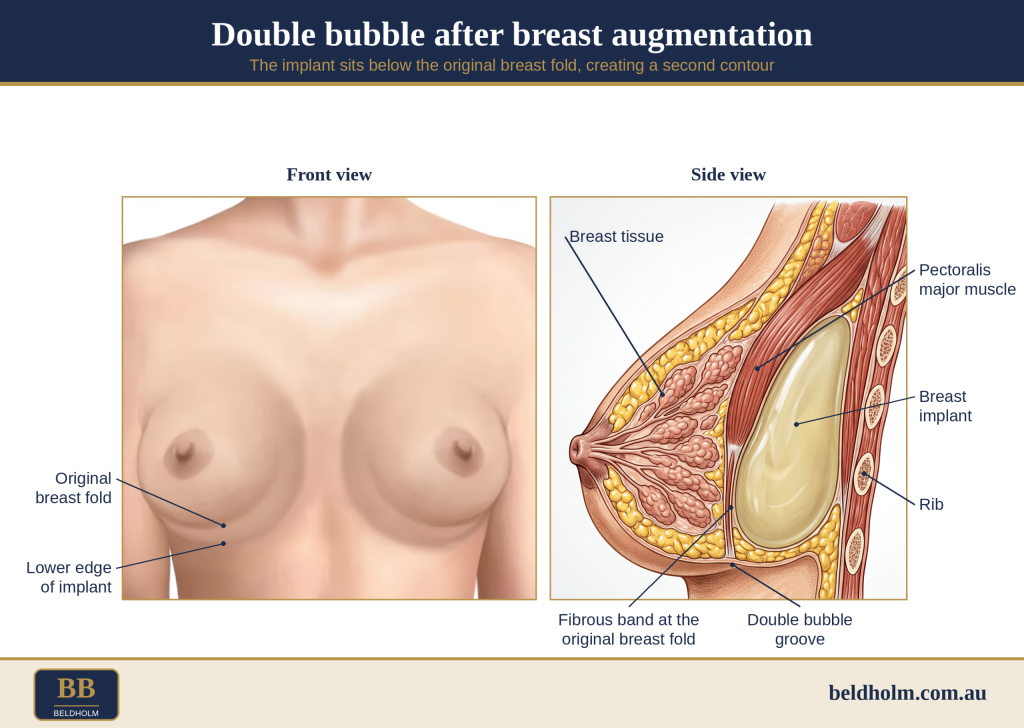
A double-bubble is a second crease across the lower part of the breast, where the original crease stays visible as a groove below the new one. It is more likely when the breast has a tight or constricted lower pole, when a large implant is used, or when the crease has to be lowered during surgery. It was reported in around 3% of cases in the same series (11).
Lateral displacement
Implants can drift outwards towards the armpit over time, widening the gap between the breasts, particularly with under-the-muscle placement (12). You may notice the implants sitting further apart when lying down.
Symmastia
Symmastia is when the two implant pockets meet in the middle and the implants sit too close together, so the natural gap between the breasts is lost (5). It is linked to over-release of tissue at the breastbone (6).
Rotation
Rotation only affects shaped, or anatomical, implants, which are designed to sit a particular way up. If a shaped implant turns in its pocket, the breast shape distorts. Round implants avoid this problem entirely, because they look the same whichever way they sit. Reported malposition rates for one shaped implant were in the range of 4.7% to 5.2%, though most cases were corrected by repositioning the implant without further surgery, and only around 0.7% needed a reoperation (6). In my practice I mainly use round implants.
Rippling and palpability
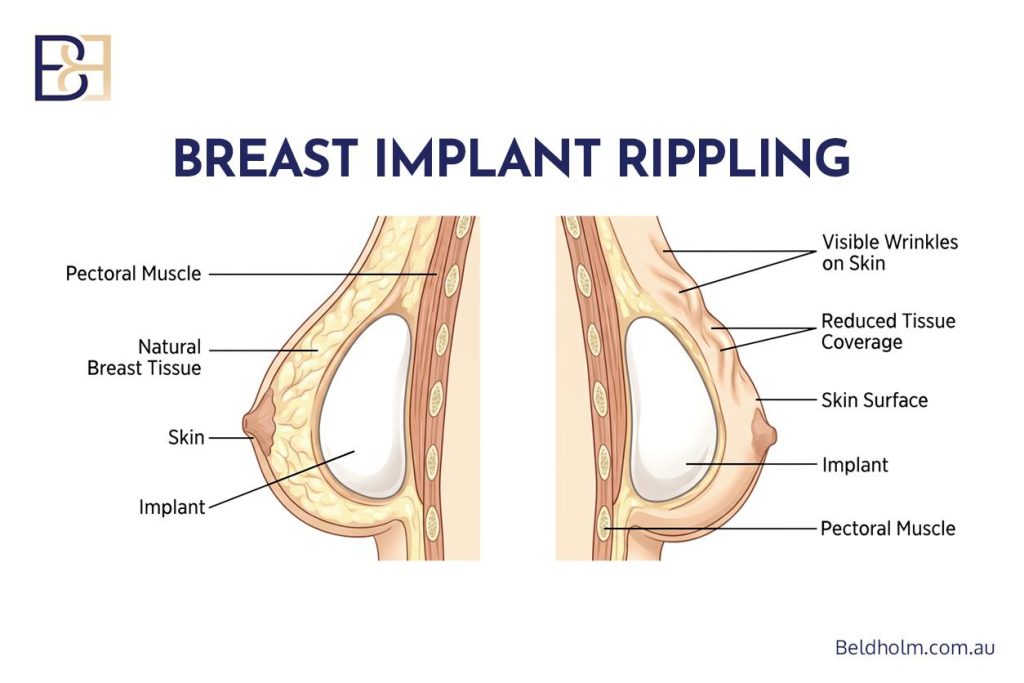
Rippling is when folds in the implant shell become visible or can be felt through the skin, usually at the edges. It is more likely in patients with small amount of breast tissue to cover the implant, with placement above the muscle, and with saline rather than cohesive silicone (12).
Animation deformity
When an implant sits under the pectoral muscle, or chest muscle, contracting it can pull on the implant and briefly distort the breast shape. This movement is common after under-the-muscle placement, reported in around 77.5% of patients, though it is usually minor (6). It matters most if you are very active or muscular, and it is one of the trade-offs I weigh when we discuss implant plane. Placement above the muscle avoids it.
Asymmetry
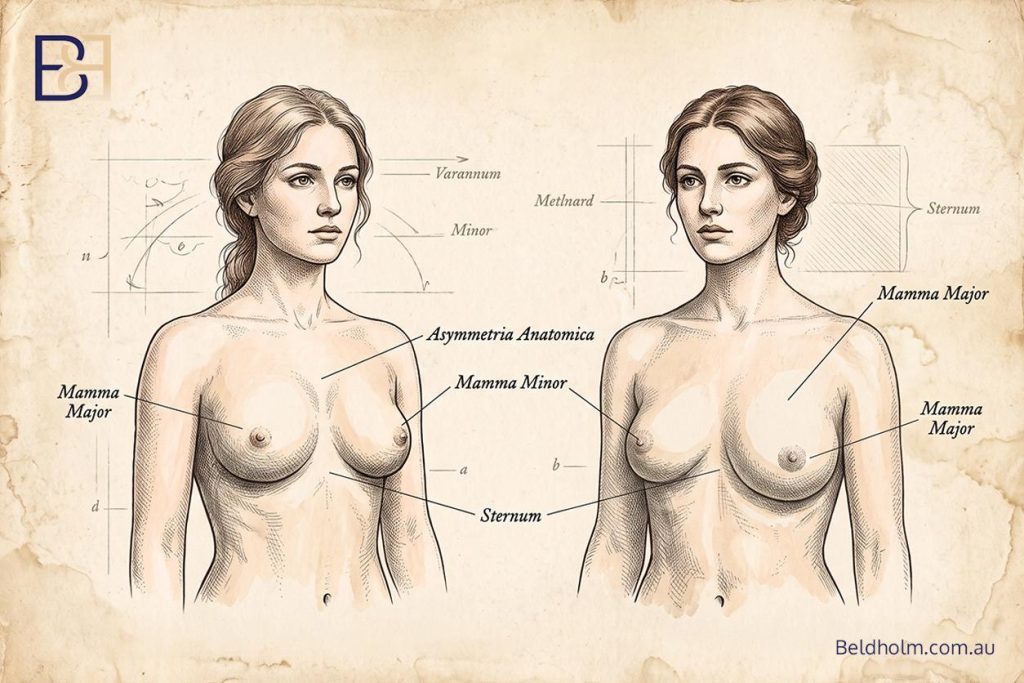
Some difference between the two breasts is normal and is present in most people before any surgery. Surgery works within that starting point rather than erasing it, and a degree of asymmetry can remain or become more noticeable afterwards. Exact symmetry between two breasts is not something any operation can guarantee, and I make that clear at consultation.
How these are managed
Most position and shape problems that bother a patient are managed with revision surgery. Depending on the issue, that can mean adjusting or reinforcing the pocket with internal sutures, changing the implant, adding internal soft-tissue support, or changing the plane. Minor implant rotation can sometimes be managed without surgery. As with everything in this article, revision is further surgery with its own risks, which is why the decision is never taken lightly.
Changes to nipple and breast sensation

Sensation matters to most people considering breast augmentation (augmentation mammoplasty). When I ask, nearly everyone tells me nipple sensation is important to them, and the research agrees: around 95.6% of women rate it as important (6).
Why it happens
The feeling in your nipple and areola is carried mainly by one nerve, the lateral cutaneous branch of the fourth intercostal nerve, which runs up through the breast from the side of the chest (6) (13). Placing an implant stretches the breast tissue and creates a pocket close to where that nerve travels. The nerve can be stretched or, less often, injured during surgery. Larger implants stretch the tissue and the nerve more, which is one reason implant size is not purely a cosmetic decision (14).
What you might notice
Sensation change can go in either direction. Most commonly it is reduced feeling or numbness in the nipple, areola or breast skin. Occasionally it is the opposite, with heightened sensitivity for a time. It can affect one side or both.
How common it is, and whether it recovers
Some altered sensation early on is common. Temporary numbness has been reported in around 39% of patients in the early period, and in most people this settles as the nerve recovers, often by about six months (6) (14).
Lasting change is less common, but it does happen. Reported rates of persistent sensation change vary with the study and how long patients are followed, ranging from about 2% up to around 20% (6). Data referenced by the United States Food and Drug Administration put loss of nipple sensation at roughly 8% to 10% at three years and around 10% at five years (14). Reviews looking specifically at nerve injury during augmentation put the risk in the order of 13% to 15% (13).
You might expect the incision site or implant size to change this risk a lot. The pooled evidence is actually mixed, and large reviews have not shown a clear difference in sensation between inframammary and periareolar incisions, or between different implant sizes and planes, even though the periareolar approach has long been suspected of carrying more risk (13).
Increased sensitivity
A smaller group of patients report the reverse, with increased nipple sensitivity after surgery, somewhere around 23% to 26% in one study (6). The reason for this is not understood.
Permanent change is possible
In a minority of patients, sensation change is permanent, including numbness that does not fully return. The ability of the nipple to respond to touch and temperature is usually preserved, with complete loss on one side reported in only about 1% of patients, but it is not guaranteed (6). There is no way to promise your sensation will be unchanged, and that uncertainty is something you weigh up before deciding.
Scarring and skin changes
Every breast augmentation (augmentation mammoplasty) leaves permanent scars, and the skin of the breast itself can change as it stretches over an implant. I cover both here, because scars are one of the trade-offs people most often underestimate.
Surgical scars
The scar from the operation depends on where the incision is made. The common options are in the breast crease, around the lower edge of the areola, or in the armpit (6). Each leaves a permanent mark, and no incision is scarless.
I close the wounds with absorbable sutures placed under the skin, with nothing on top, and use a Comfeel dressing. How a scar matures after that comes down largely to your own healing, which varies from person to person and is not something I can promise in advance. Most scars settle and fade over the months following surgery.
Some people form thickened scars, called hypertrophic scars, or raised scars that spread beyond the original wound, called keloid scars. This is more likely if you already know you scar that way, and it can run in families. A scar placed around the areola sits at the border between two skin types and can be more noticeable in some patients. I review your scars at your follow-up appointments as part of routine care.
Stretch marks
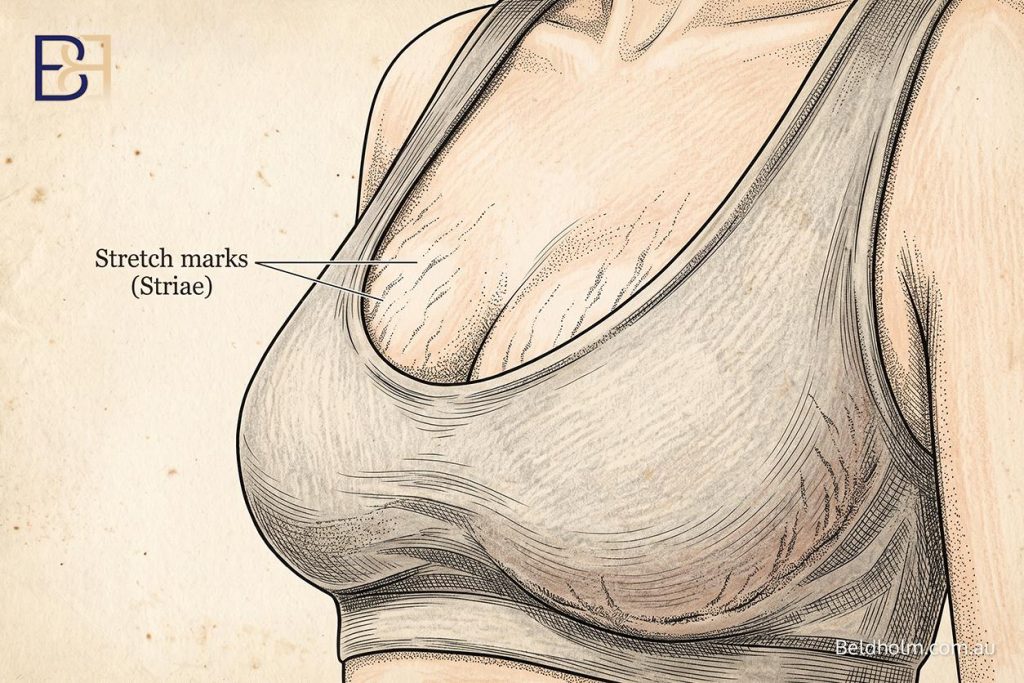
New stretch marks, known medically as striae distensae, can appear on the breast skin after augmentation. They form as the skin envelope stretches to accommodate the implant (15).
In one study following 409 patients, new stretch marks developed in about 4.6% within the first year after surgery (15). They tend to appear between four and twelve weeks after the operation, starting red or purple and fading to a paler colour over time (16).
Some patients are more prone to them than others. The risk is higher in younger patients, in those who have not had a pregnancy, in patients with a higher body mass index, in those using the oral contraceptive pill, and in anyone with a personal history of stretch marks (15). These links are thought to relate to oestrogen levels and skin quality. One point that surprises people is that the same study found no clear relationship between stretch marks and the size of the implant, the pocket it sat in, or its profile (15).
Like stretch marks anywhere on the body, once they form they tend to fade but do not fully disappear. This is worth factoring into your decision if your skin is prone to them.
Book your appointment online now
Breastfeeding and breast screening after implants
Two questions come up often, usually from patients who are younger or who plan a family later. Will implants affect breastfeeding, and how does having implants change breast cancer screening? Both deserve a clear answer, and I cover each in more depth in separate articles. Here is the summary.
Breastfeeding after augmentation

The evidence here is genuinely mixed.
Some studies find that implants do not affect a woman’s ability to establish breastfeeding at all (14). Other research, including a large review, finds that women who have had augmentation are less likely to establish full breastfeeding than women who have not (13). A longstanding review by the United States Institute of Medicine concluded that all breast surgery, including augmentation, raises the likelihood of insufficient milk supply when a woman tries to breastfeed (17).
Put those together and the practical position is this. Many women with implants breastfeed without difficulty, but augmentation can reduce the likelihood of full or sufficient breastfeeding for some, and there is no way to know in advance which group you will fall into.
A few specific points:
- The nerve and the ducts involved in milk supply run close to where the surgery is done, which is the reason for the concern. You might expect an incision around the areola to carry more risk, but pooled data has not shown a clear difference between incision types (13).
- If you have recently been pregnant or breastfeeding, surgery is planned once breastfeeding has finished and the breasts have settled. That timing is judged individually, not set to a fixed number of months.
- Future pregnancy and breastfeeding can change your breasts again after augmentation and affect the result.
Whether and how augmentation might affect your own breastfeeding is something to raise at consultation. I go into this in detail in my article on breastfeeding after breast surgery.
Breast screening with implants
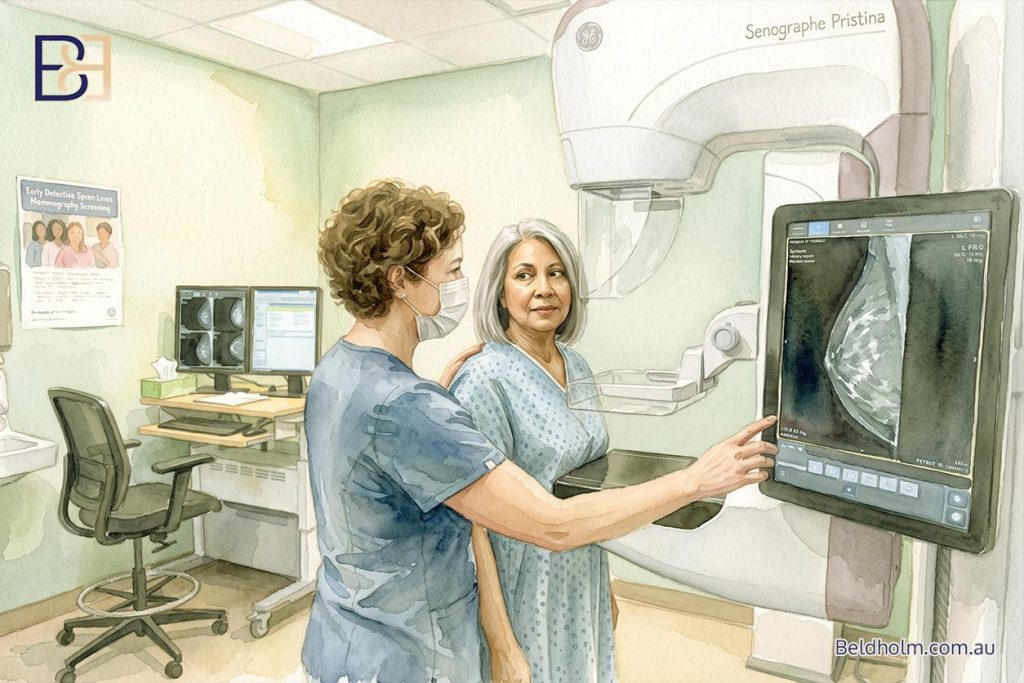
Implants change how a screening mammogram is done, but they do not stop you being screened.
On a standard mammogram, an implant shows up as a solid white shape that the x-ray cannot see through. This can hide breast tissue. Studies have found implants can obscure around half of the breast tissue on standard views, which can conceal a cancer sitting below the implant (17).
Radiographers manage this with extra images, called implant-displacement views, that reposition the implant and bring more breast tissue into view (17). This means more images are taken than in a standard mammogram. Tell the clinic you have implants when you book, so they plan for it. Ultrasound and MRI are used as additional tests where needed.
In Australia, BreastScreen Australia actively invites women aged 50 to 74 for free screening every two years, and screening is available to women from age 40 (18). Having implants does not change your eligibility. If you had augmentation in your twenties or thirties, you will reach screening age with the implants still in place, so this is worth keeping in view for the long term. Your GP is the right person to guide your individual screening plan.
I cover screening and pre-operative breast imaging further in my article on breast screening with implants.
Rare conditions associated with breast implants
There are a few uncommon conditions linked to breast implants that I always raise.
BIA-ALCL
BIA-ALCL stands for breast implant-associated anaplastic large cell lymphoma. It is a rare cancer of the immune system, a type of lymphoma. It is not breast cancer. It develops in the scar capsule around an implant rather than in the breast tissue itself. It is now recognised as a distinct disease in the World Health Organization classification (19).
The important point for implant choice is that BIA-ALCL is associated with textured-surface implants, not smooth ones. In Australia, no cases have been reported to date in patients who had only smooth implants, though this remains an area of active monitoring (20). In my practice I mainly use smooth-surface implants.
What it looks like matters, because early diagnosis is what drives a good outcome. The most common sign is a fluid collection around the implant appearing more than a year after surgery, sometimes with a lump or a change in breast shape (21). This is the reason any late seroma is investigated and the fluid tested rather than simply drained.
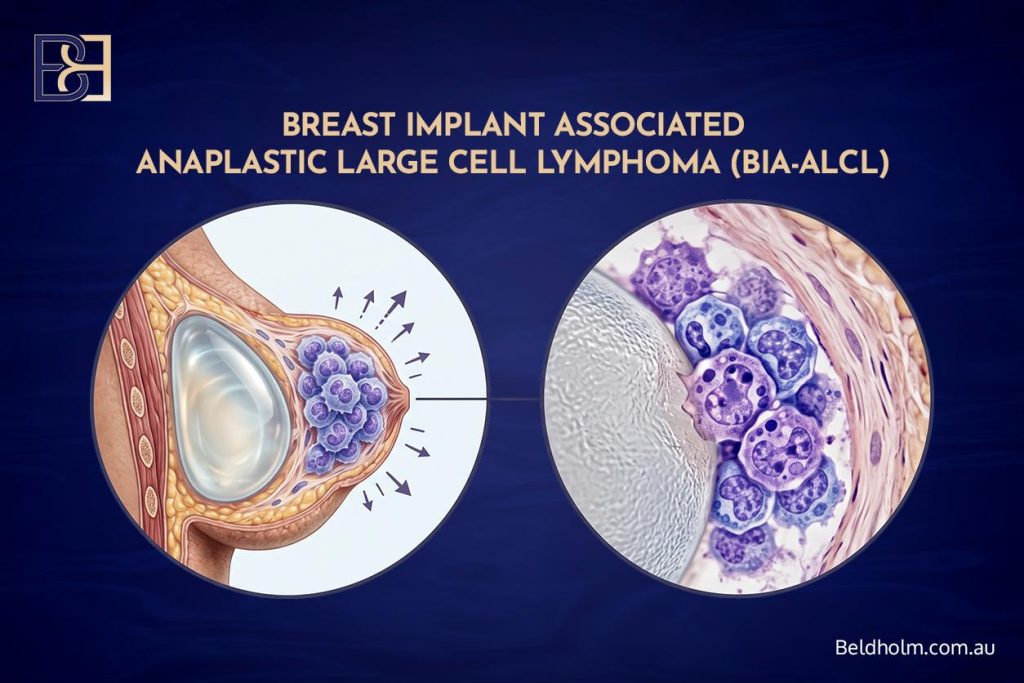
How common is it? Rare, but the risk depends heavily on the implant type, and it concentrates in textured devices. An Australian study of textured-implant patients estimated an overall prevalence in the order of 1 in 300, with the risk far higher for heavily textured devices than lightly textured ones (4). Reported case numbers keep rising as awareness grows, so any single figure dates quickly.
When it is found early, BIA-ALCL is often treated effectively, usually with surgery to remove the implant and the surrounding capsule. It can be serious, and deaths have occurred, which is why symptoms are acted on promptly rather than watched.
A few things about how this is handled in Australia:
- I do not manage BIA-ALCL myself. If it is suspected, your GP refers you directly to a breast cancer surgeon.
- Every confirmed case must be reported to the Therapeutic Goods Administration within 10 days (20).
- The BIA-ALCL risk is included in the information supplied with every implant, and your implant is recorded in the Australian Breast Device Registry (2) (20).
- For patients who already have textured implants and no symptoms, the TGA does not recommend removing them just because of this risk (20).
BIA-SCC
More recently, a different and even rarer condition has been reported: breast implant-associated squamous cell carcinoma, or BIA-SCC. This is a separate type of cancer, again found in the capsule around the implant (22).
The numbers are very small. When the United States Food and Drug Administration reviewed the published literature up to early 2023, it identified 19 reported cases worldwide (22). Unlike BIA-ALCL, it has been reported with both textured and smooth implants, and with both saline and silicone (22). It has tended to appear a long time after surgery, anywhere from about 7 to 42 years, usually presenting as breast swelling or pain, sometimes a lump or skin change (22). A small number of deaths have been reported.
Its cause, how common it is, and who is at risk are all still unknown (22). On current advice, having implants is not a reason to remove them solely because of this risk if you have no symptoms. The sensible approach is to be aware of it, monitor for changes, and report anything new (22).
Other reported tumours
Separate from these two, other lymphomas and some rare tumours have occasionally been reported in the capsule around implants, and regulators continue to evaluate them (23). These are rare and, on current understanding, an incompletely understood area. I mention them for completeness rather than as a common concern.
Systemic symptoms associated with breast implants
Some patients with implants report a cluster of ongoing symptoms they attribute to the implants, most often fatigue, joint pain, and difficulty concentrating, often called brain fog. This was widely known as breast implant illness. Current literature increasingly uses the more neutral term systemic symptoms associated with breast implants, or SSBI, because it describes the symptoms without asserting a single defined disease (24).

What the evidence shows:
- SSBI is not a defined medical diagnosis, and there is no test that confirms it. Symptoms like fatigue and joint pain are common in the general population and have many causes.
- These symptoms are reported often. Pooled data suggest around half of implant recipients report systemic symptoms of this type at some point (24).
- Large reviews of the population have not shown that silicone implants cause systemic or connective-tissue diseases, because these illnesses occur at a similar rate in women with and without implants (25).
- At the same time, many patients report that their symptoms improve after breast implant removal. Studies have reported improvement in a majority of patients, and the improvement occurs whether or not the capsule is removed as well (26) (27). Removing the capsule entirely, sometimes called en bloc, has not been shown to be necessary for symptom improvement (27).
- Not everyone improves after removal, and ongoing symptoms in some patients suggest other causes may be involved (25).
My approach is to take these symptoms seriously and not dismiss them. If you have them, part of the work is looking for other treatable causes as well. Implant removal is an option we can discuss, but I will not promise that it will resolve your symptoms, because the evidence does not support a guarantee. Whether the capsule is removed at the same time is a clinical judgement made case by case, not a fixed rule.
The common thread
These conditions are part of why I describe an implant as a device you live with and monitor, not something you have placed and forget. The signs worth acting on are a new fluid collection or lump, a change in the shape of a settled breast, or persistent unexplained symptoms. Report those to your doctor. Your routine breast care and the device registry both support keeping an eye on things over the long term.
Reoperation and revision
I have mentioned further surgery in almost every section above, and this is where I pull it together. Reoperation is not a sign that something has gone wrong. With breast implants it is a built-in part of the decision, because an implant is a device with a finite lifespan sitting in tissue that changes over the years.
How likely further surgery is
In the large FDA dataset, about 11.7% of primary augmentation patients had at least one reoperation within seven years (3). That is the medium-term figure. Over a longer horizon of decades, the likelihood rises, because the chance of rupture and of changes in the breast both accumulate with time. It is realistic to plan on at least one further operation at some point if you have implants for life.
The common reasons for revision
The reasons patients come back are the complications covered above, and they fall into a fairly consistent order:
- Capsular contracture. This is the single most common reason for revision after augmentation (3) (4).
- Rupture of a silicone implant or deflation of a saline one.
- A change in implant position or shape, such as bottoming out, displacement, or rotation of a shaped implant.
- A patient-requested change in breast size, which is a common reason in its own right (3).
- Rippling that becomes bothersome.
- The rare implant-associated conditions, where removal is indicated.
Separately from the implant, the breast itself changes over time. With age, weight change or pregnancy, breast volume and position shift regardless of what the implant is doing. Some patients later consider a breast lift (mastopexy) to sit alongside or in place of implant revision. That is a factual change in the breast over time, not a fault in the surgery, and I cover it in my content on breast lift (mastopexy).
An Australian cohort put some numbers to this. Among patients who needed revision, the most common reason was capsular contracture, followed by concerns about breast position and asymmetry, then mechanical issues such as rotation, displacement and rupture (4).
Revision is usually a bigger undertaking than the first operation
Revision surgery tends to carry more risk than the original augmentation, not less. In one cohort, complications occurred in about 15.6% of revision procedures, a higher rate than for first-time surgery (4). Scar tissue, the existing capsule, and altered anatomy all make a second operation more complex to plan and to perform.
What revision can involve
Depending on the problem, breast implant revision surgery can mean removing the scar capsule, which was done in around 76.5% of revisions in that cohort, exchanging the implant, changing the plane it sits in, adjusting or reinforcing the pocket with internal support, or removing the implant without replacing it (4). That last option, explant, is one some patients choose, and I cover it in my content on implant removal.
How the decision is made
Each revision is its own surgical procedure, with its own consent, risks and recovery, decided at consultation after assessment. If a change in breast position means a breast lift (mastopexy) is being considered alongside implant work, whether to do that in one operation or to stage it across two is a clinical judgement made for the individual. For some patients a single operation suits, and for others staging is the more appropriate path. That is decided with you, not in advance.
Reducing your risk, and what to do if you notice a problem
All surgery carries risks, and complications cannot be eliminated. They can be made less likely, and when they do happen, the outcome is usually better if the problem is caught early. This final section covers the three parts of that: what I do, what you do, and how we keep an eye on things together afterwards.
How I work to reduce risk

A good deal of risk reduction happens before you reach theatre.
- Assessment and selection. A full history, examination and pre-operative breast assessment, with blood tests and breast imaging where indicated, tells me whether surgery is appropriate for you and flags the associated risks. Deciding not to proceed, or to change the surgical plan, is itself a form of risk reduction.
- Getting you in the best condition. Stopping smoking well before surgery, good control of blood sugar if you are diabetic, and a planned approach to blood-thinning medications all lower the risk of wound and bleeding problems. Aspirin and anticoagulants are usually stopped about a week beforehand, planned in advance, and never stopped by you on your own.
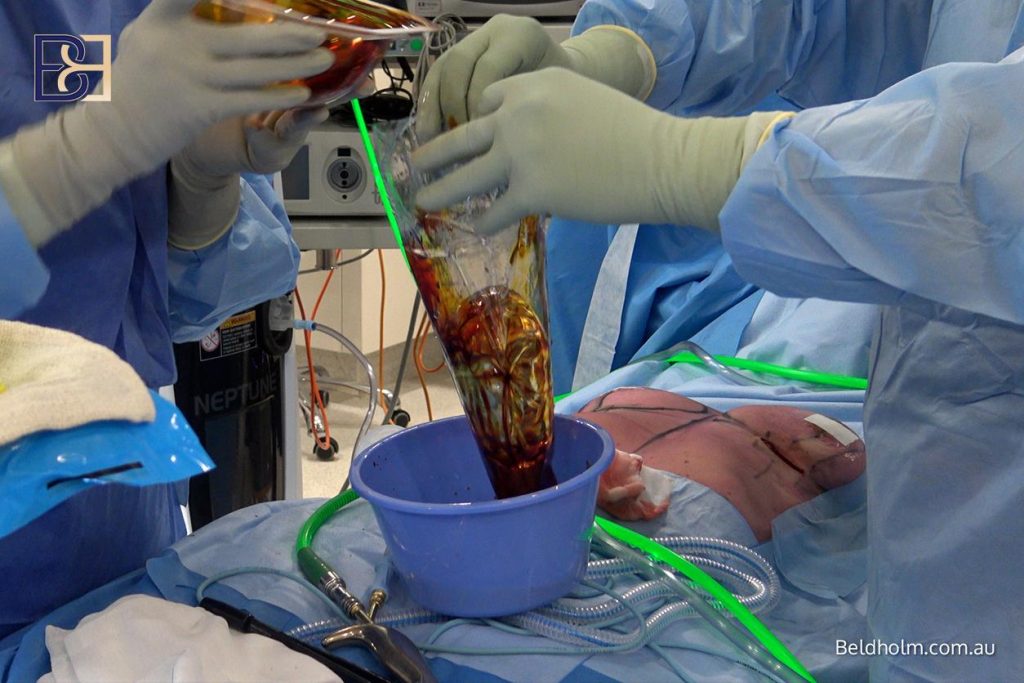
- Surgical technique. Because bacterial contamination drives capsular contracture and infection, much of my technique is aimed at keeping the implant and pocket clean to prevent complications. I follow the established 14-point plan to reduce bacterial load, handle the implant with a no-touch technique using a delivery funnel, take care with control of bleeding, and choose the pocket and plane with your anatomy and risk in mind.
None of this removes risk. It lowers it, and I would rather be clear about that than oversell what surgery can promise.
Deciding together
Everything in this article exists to support one thing: a decision you make with a clear understanding of the trade-offs. There is no pressure to proceed, and deciding not to have surgery is a good outcome of a consultation.
Your part: what to watch for

Once you are home, you are the person most likely to notice a problem first. The patterns worth acting on are:
- In the early weeks: anything getting worse rather than better, such as swelling, pain, redness or fever that is climbing rather than settling.
- Over the longer term: a change in the shape of a breast that had settled, a new lump, a fluid collection appearing a year or more after surgery, or persistent unexplained symptoms.
If something concerns you, contact my rooms during business hours. After hours, contact Maitland Private Hospital, where a nurse will triage the call. For anything that needs a physical assessment, your local emergency department is the right place, and for anything life-threatening, call 000.
How we follow you up
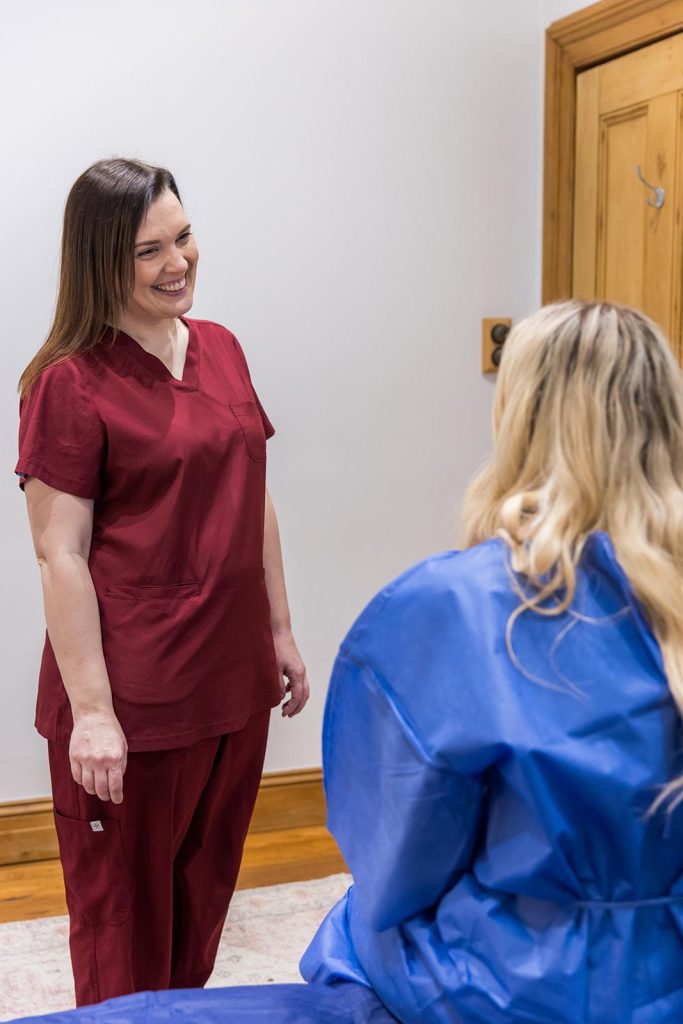
You are not discharged and forgotten. In my practice the first two weeks involve close review by both the nurse and me, including LED light therapy as part of those visits. After that, I see you at scheduled reviews at 4 weeks, 3 months, 6 months and 12 months, and I keep your GP informed so your long-term care is joined up.
Beyond the first year, an implant remains a device you live with and monitor. Knowing the warning signs above, keeping up your routine breast screening, and raising anything new with your doctor are what carry that monitoring forward.
The bottom line

The figures throughout this article describe groups of patients, and results vary from one person to the next. They are a guide, not a prediction for you. Whether breast augmentation (augmentation mammoplasty) is appropriate for you at all, and which choices suit your anatomy and your priorities, is decided at consultation after a proper assessment.
References
- Therapeutic Goods Administration. Breast implant hub: regulation of breast implants in Australia. Woden (ACT): TGA. Available from: https://www.tga.gov.au/products/medical-devices/breast-implant-hub. Accessed 6 July 2026.
- Australian Breast Device Registry (ABDR). Melbourne: Monash University. Available from: https://www.abdr.org.au. Accessed 6 July 2026.
- Coroneos CJ, Selber JC, Offodile AC 2nd, Robinson JC, Butler CE. US FDA breast implant postapproval studies: long-term outcomes in 99,993 patients. Ann Surg. 2019;269(1):30-36.
- Kolasinski J, et al. BIA-ALCL epidemiology in an aesthetic breast surgery cohort of 1501 patients. Aesthet Surg J. 2023. [CONFIRM full author list, volume and pages]
- Norena-Rengifo BD, et al. MRI for the evaluation of complications of breast augmentation. RadioGraphics. 2022. [CONFIRM full author list, volume and pages]
- Swanson E. Evidence-Based Cosmetic Breast Surgery. Cham: Springer; 2017.
- Pharmacological approaches for the prevention of breast implant capsular contracture: a review. [CONFIRM full author list, journal, year, volume and pages]
- Capsular contracture and postoperative complications with smooth versus textured breast implants in the first year of follow-up. Plast Reconstr Surg. 2022;149(2):373-380. [CONFIRM authors and exact title/pages]
- Adams WP Jr, Deva AK. Surgical best practices: the 14-point plan to reduce bacterial contamination in breast implant surgery. [CONFIRM exact source, journal/monograph, year and pages]
- Breast implant rupture: causes, incidence, clinical impact and management. Plast Reconstr Surg. 2013. [CONFIRM full author list, volume and pages]
- Salgarello M, et al. Staying out of double-bubble and bottoming-out deformities in dual-plane breast augmentation: anatomical and clinical study. Plast Reconstr Surg. 2017. [CONFIRM full author list, volume and pages]
- Tebbetts JB. Dual plane breast augmentation: optimizing implant-soft-tissue relationships in a wide range of breast types. Plast Reconstr Surg. 2006;118(7 Suppl):81S-98S.
- Do breast implants influence breastfeeding? A meta-analysis of comparative studies. [CONFIRM full author list, journal, year, volume and pages]
- Filiciani S, et al. Cohort study to assess the impact of breast implants on breastfeeding. Plast Reconstr Surg. 2016;138(6):1152-1159. [CONFIRM full author list]
- Basile FV, Basile AR, Basile AVD. Striae distensae after breast augmentation. Aesthetic Plast Surg. 2012. [CONFIRM volume and pages]
- Striae distensae after breast augmentation: expected findings. [CONFIRM full author list, journal, year, volume and pages]
- Reasonably safe? Breast implants and informed consent. [CONFIRM full author list, journal, year, volume and pages]
- BreastScreen Australia program. Australian Government Department of Health, Disability and Ageing. Available from: https://www.health.gov.au/our-work/breastscreen-australia-program. Accessed 6 July 2026.
- Alaggio R, Amador C, Anagnostopoulos I, et al. The 5th edition of the World Health Organization classification of haematolymphoid tumours: lymphoid neoplasms. Leukemia. 2022;36(7):1720-1748.
- Therapeutic Goods Administration. Breast implants and anaplastic large cell lymphoma. TGA safety alert. Available from: https://www.tga.gov.au/safety/safety-monitoring-and-information/safety-alerts/breast-implants-and-anaplastic-large-cell-lymphoma. Accessed 6 July 2026.
- Long-term safety of textured and smooth breast implants. Aesthet Surg J. 2018;38(1):38-48. [CONFIRM full author list]
- US Food and Drug Administration. UPDATE: reports of squamous cell carcinoma (SCC) in the capsule around breast implants. FDA safety communication. Issued 8 March 2023. Available from: https://www.fda.gov/medical-devices/safety-communications/update-reports-squamous-cell-carcinoma-scc-capsule-around-breast-implants-fda-safety-communication.
- US Food and Drug Administration. Risks and complications of breast implants. Available from: https://www.fda.gov/medical-devices/breast-implants/risks-and-complications-breast-implants. Accessed 6 July 2026.
- Systematic review and meta-analysis of systemic symptoms associated with breast implants (breast implant illness), covering studies 2018-2024. [CONFIRM full author list, journal, year, volume and pages]
- Self-reported breast implant illness: the contribution of systemic illnesses and other factors to patient symptoms. Aesthet Surg J Open Forum. [CONFIRM full author list, year, volume and pages]
- McGuire P, Glicksman C, Ferenz S, Haws M, Lawrence M, Black S, Faasse K. Symptom improvement after explantation with no capsulectomy for systemic symptoms associated with breast implants. Aesthet Surg J. 2024;44(8):820-828.
- Glicksman C, McGuire P, et al. Impact of capsulectomy type on post-explantation systemic symptom improvement: findings from the ASERF Systemic Symptoms in Women-Biospecimen Analysis Study, part 1. Aesthet Surg J. 2022. [CONFIRM full author list, volume and pages]