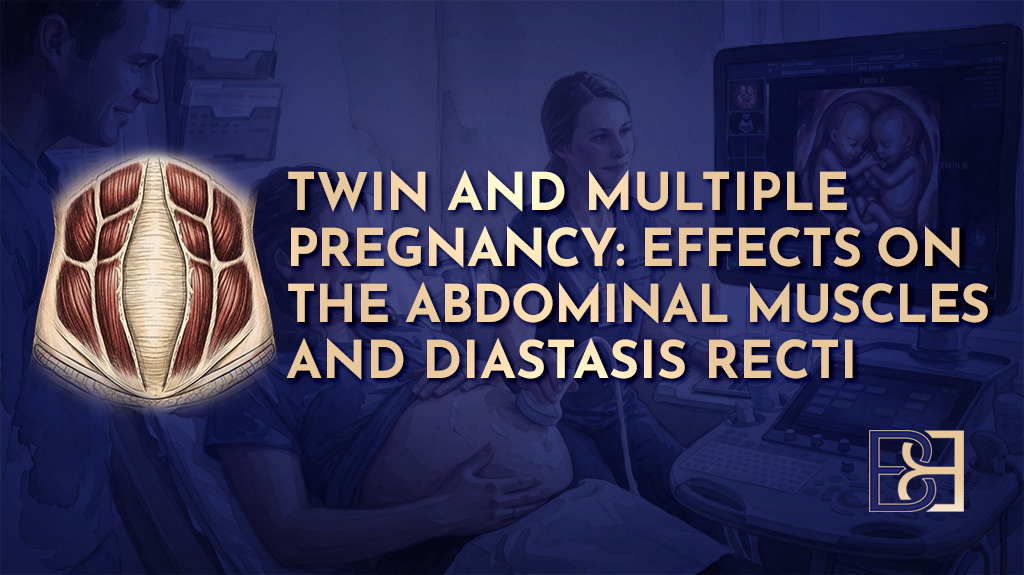
Your rectus abdominis muscles are the pair of long muscles that run down the front of your abdomen, 1 on the left and 1 on the right. Down the middle, joining them, is a band of connective tissue called the linea alba. In everyday terms this is what people picture as the “six-pack” muscles and the seam that runs between them.
During pregnancy, your uterus grows and the front of your abdominal wall has to stretch to make room. As it stretches, the linea alba widens and the 2 rectus muscles move apart from the midline. That widening is diastasis recti, also called abdominal muscle separation. It is driven by a combination of the physical stretch of a growing baby and the hormonal changes that soften and loosen connective tissue so the body can accommodate a baby.
This is a normal, expected change of pregnancy, not a flaw in your body. The abdominal wall is doing exactly what it is built to do when it makes room for a baby. Whether the separation settles on its own, whether it causes any symptoms, and whether anything further is worth considering are separate questions, and I work through them with each woman individually.
When I assess muscle separation (diastasis recti), I am looking at the gap between the 2 muscles. This is measured as the inter-rectus distance. In the medical literature, a gap of roughly 2 cm or more is the figure most commonly used to describe diastasis recti, though the exact measurement varies with where along the abdomen it is taken and how it is measured (1).
It is worth separating that clinical figure from the Medicare definition, because the 2 are not the same thing. For the Medicare item that can apply to this surgery (MBS item 30175), the separation has to be at least 3 cm, measured on diagnostic imaging, and it also has to be causing documented symptoms and have failed to settle with conservative treatment including physiotherapy (2). So a 2 cm gap may well be diastasis recti in the clinical sense while still sitting below the threshold Medicare uses. I work through how that eligibility is assessed individually, and cover it in more detail separately.
How Common Diastasis Recti Is, and How It Settles After Pregnancy
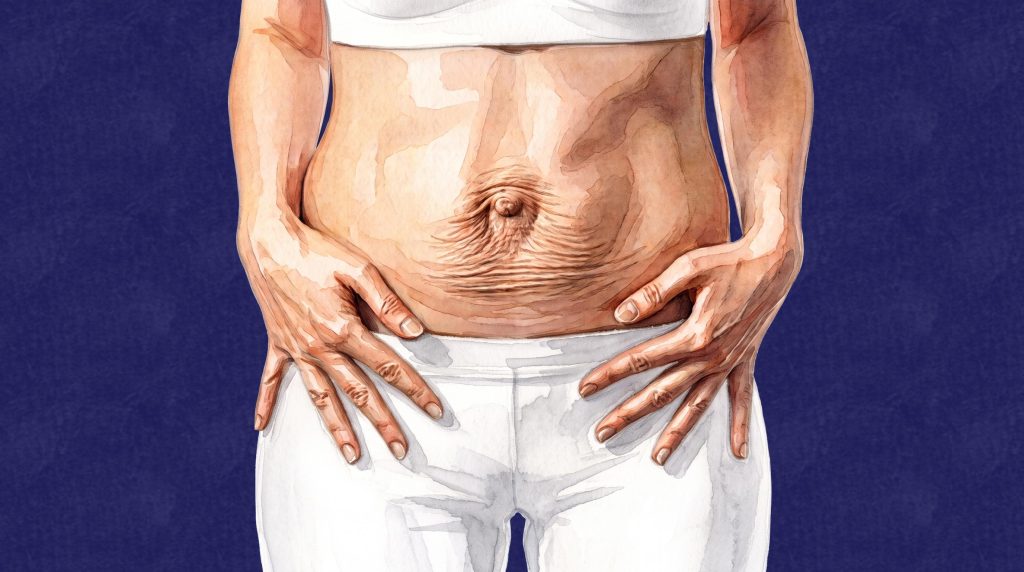
Some degree of muscle separation (diastasis recti) is very common by the end of pregnancy and in the first weeks after birth. It is one of the ways the abdominal wall responds to carrying a baby, so finding it after pregnancy is expected rather than unusual.
Prevalence figures vary quite a bit between studies, mostly because researchers measure at different times, use different cut-off points, and check at different spots along the abdomen. With that caveat, the general pattern is consistent:
- Diastasis recti is at its most common late in pregnancy, particularly in the third trimester, and immediately after giving birth, when published research estimates it is present in at least two-thirds of postpartum women (3).
- The separation then tends to narrow on its own over the early weeks. Most of that natural improvement happens in the first weeks postpartum, and the gap often stops narrowing much beyond around 8 weeks after birth (3).
- For a meaningful number of women it does not fully close. Research has found diastasis recti still present in roughly 39% to 45% of women at 6 months after birth, and around a third at 12 months (4).
So for many women the separation settles quietly on its own and nothing further is needed. For others it persists past the first year. Neither situation is a failure of your body. What matters clinically is not the size of the gap on its own, but whether it is causing symptoms and how it is affecting the way your abdomen works. That is what I look at when I assess it.
How to Check for Diastasis Recti at Home
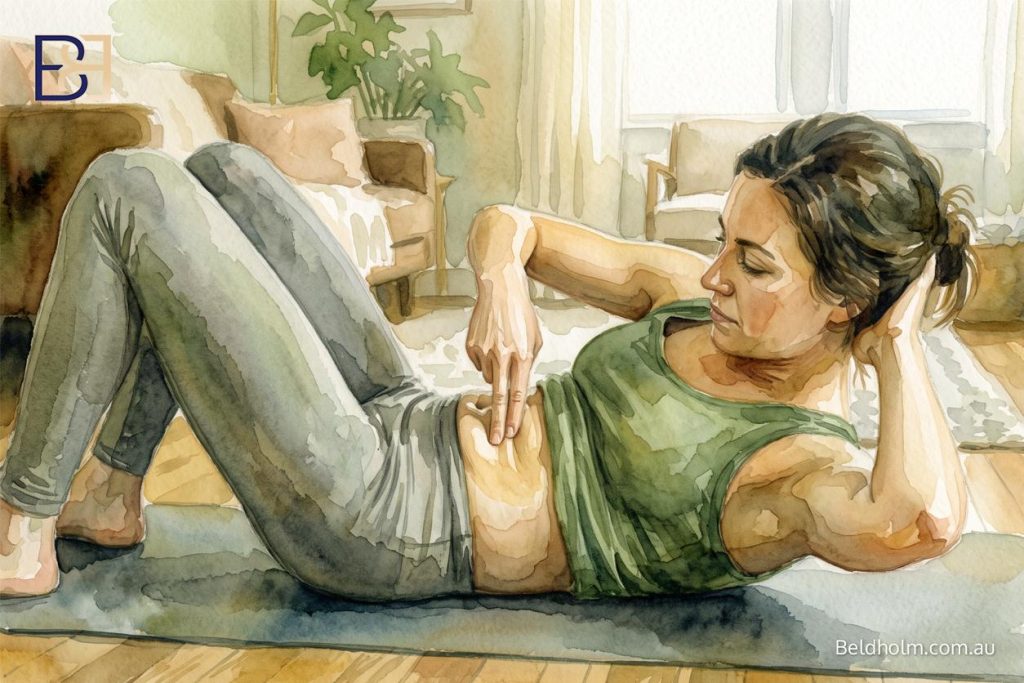
You can get a rough sense of whether you have muscle separation (diastasis recti) with a basic check at home. It is not a diagnosis, but it is a reasonable starting point.
- Lie on your back with your knees bent and your feet flat on the floor.
- Place the fingers of 1 hand along the midline of your abdomen, just above your belly button, with your palm facing you and your fingertips pointing down towards your feet.
- Lift your head and shoulders a small way off the floor, as if starting a small curl-up. This tenses the muscles so you can feel their inner edges.
- Feel for the gap between the 2 muscle edges. Note roughly how many finger widths wide it is, whether that is 1, 2 finger widths or more, and whether the midline feels soft or sinks inwards.
- Repeat the check at your belly button and a little below it, because the separation can differ along its length.
A few finger widths of gap is common after pregnancy, particularly in the early weeks, and on its own it is not a cause for alarm. Some women also notice a soft ridge or doming along the midline when they sit up or strain.
Keep in mind that a home check only tells you so much. How wide the separation feels under your fingers is not the same as a measured inter-rectus distance, and the Medicare pathway I mentioned earlier relies on the separation being measured on diagnostic imaging rather than by hand. If you want to work through it more carefully, I cover the self-assessment in more detail in my guide on how to tell whether you have diastasis recti, and I assess it directly at consultation.
What the Evidence Says About Exercise for Diastasis Recti
Before going through the exercises themselves, it helps to be realistic about what they can and cannot do, because a lot of what is written about diastasis recti online overstates the case.
Here is where the research currently sits.
- Targeted abdominal and core exercise can modestly reduce the size of the separation. In one randomised trial, postpartum women following either a conventional abdominal program or a hypopressive program narrowed their inter-rectus distance by a few millimetres over 6 weeks, with a similar result from both approaches (5). Women who had been through more than 1 pregnancy tended to benefit the most (5).
- The overall evidence base is still limited. The studies are mostly small, they measure in different ways, and the researchers themselves note that firmer conclusions need larger trials (5).
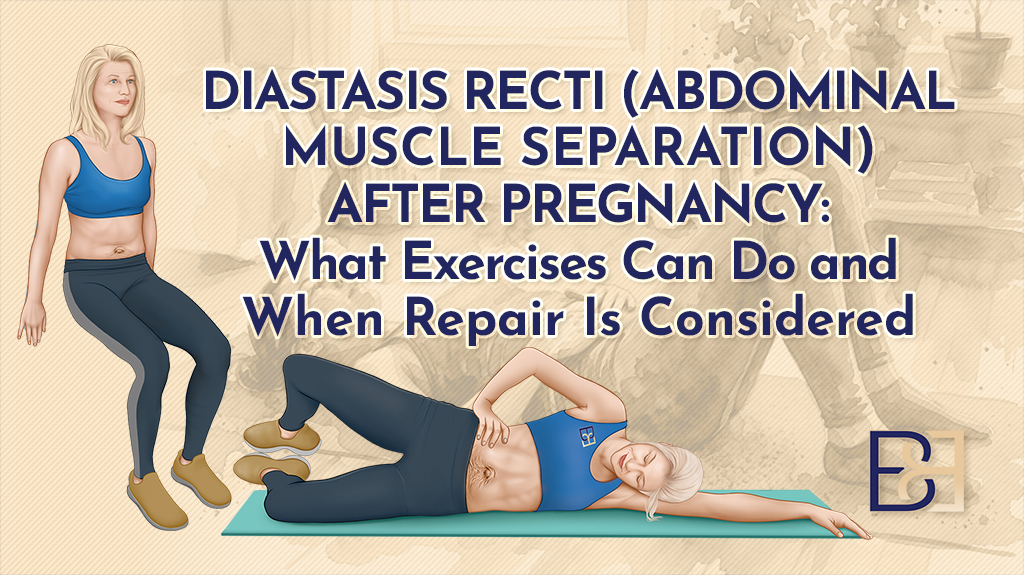
- Exercise does more than change a measurement. Working the deep core muscles and pelvic floor supports core strength and trunk control, and has been linked with improvements in how women feel about their abdomen after birth, though the effects reported have been modest (3).
The practical summary is this. For many women, a sensible set of diastasis recti exercises post pregnancy helps. It can narrow the gap somewhat, and it supports the way the abdominal wall works day to day. What it does not reliably do is fully close a wide, established separation, and results vary from one woman to the next. That is not a reason to skip it. It is a reason to go in with realistic expectations, and to get individual guidance rather than follow a generic online routine.
Core and Pelvic Floor Exercises I Suggest After Pregnancy
The following exercises are the ones I most often suggest for rebuilding core control after pregnancy. They focus on the deep core muscles and the pelvic floor rather than the outer “six-pack”, because those deeper muscles are what support the midline.
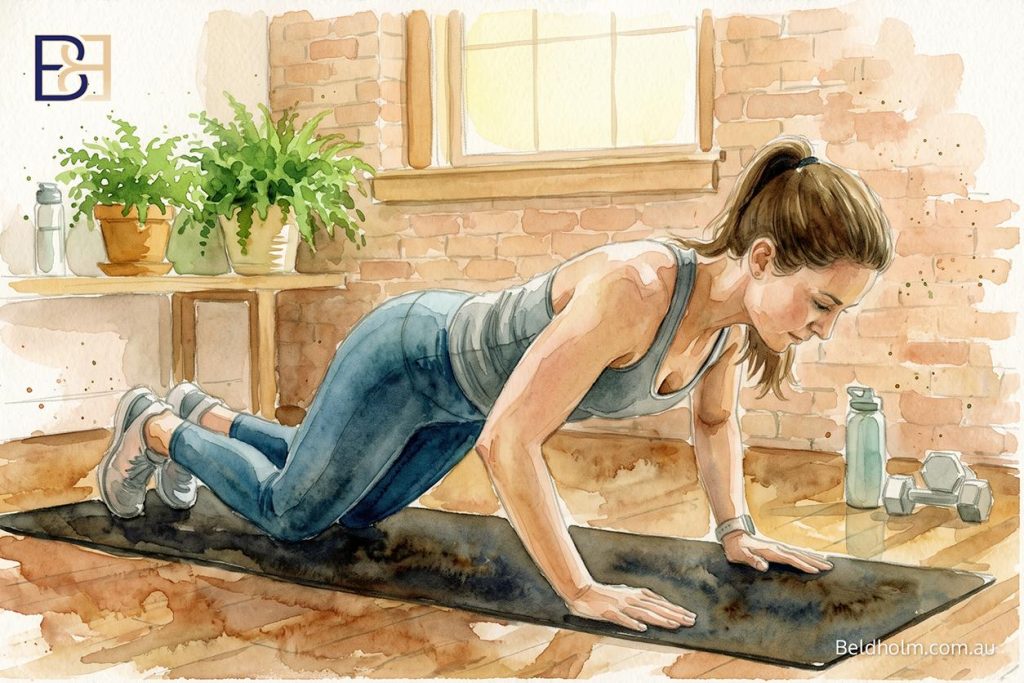
2 things before you start:
- Get the timing and your technique checked first. It is worth being cleared to exercise after birth and, where possible, having your technique looked at by a physiotherapist who works with postnatal women. Technique matters more than repetitions here.
- Watch your midline. Through all of these, draw your lower abdomen inwards and try to keep the midline flat. If you see it push up into a ridge or doming as you work, that is your sign to ease off, do fewer repetitions, or drop back to a smaller version of the movement.
Build up gradually. Start with the first few, which switch on the deep muscles, and add the later ones as your control improves.
Transversus Abdominis Breathing
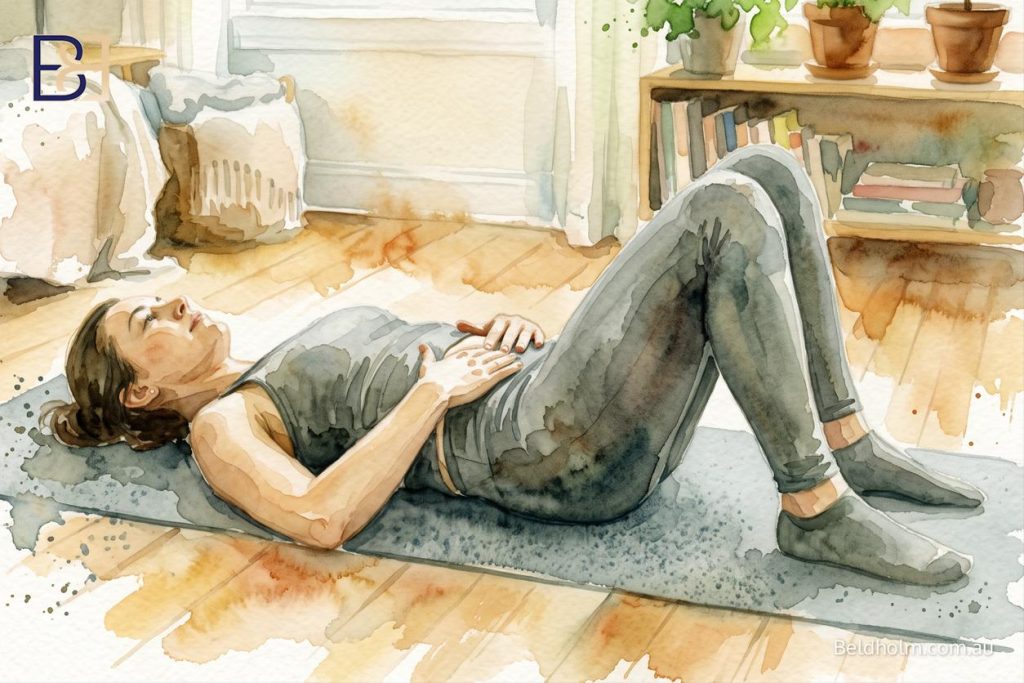
This is the foundation, and the one to get comfortable with first. It activates the transverse abdominis, also written transversus abdominis, the deepest abdominal muscle, which wraps around your midsection like a corset.
- Lie on your back with your knees bent, or sit upright, whichever is more comfortable.
- Breathe in through your nose and let your lower abdomen relax.
- As you breathe out slowly, draw your lower abdomen inwards towards your spine, as though you are easing into a tight waistband. A soft “ssss” on the out-breath can help.
- Hold the draw-in for a few seconds while breathing normally, then release.
Pelvic Floor Activation (Kegels)
Pregnancy and birth load the pelvic floor as well as the abdominal wall, and the 2 work together. You can do these anywhere.
- Squeeze the muscles you would use to stop the flow of urine, without holding your breath or clenching your buttocks.
- For slow holds, squeeze and hold for around 5 seconds, then fully relax for the same time. Repeat up to 10 times.
- For faster ones, squeeze and release in a steady rhythm.
- The release matters as much as the squeeze, so let the muscles fully relax between repetitions.
Pelvic Tilts
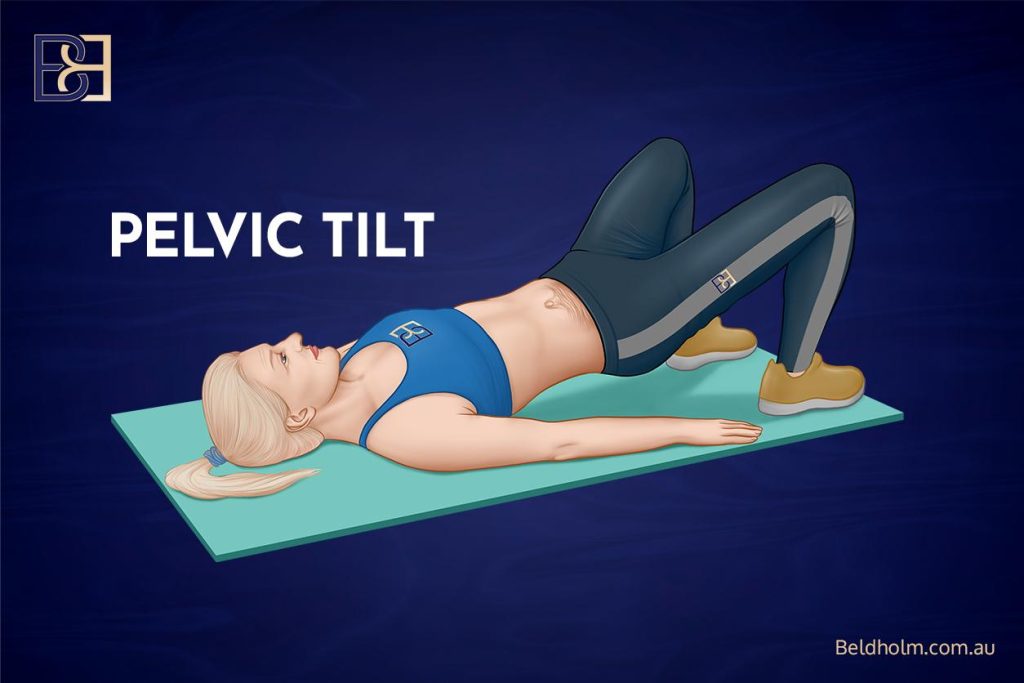
A basic movement that connects the deep abdominals with the lower back, and often comfortable in the early weeks.
- Lie on your back with your knees bent and feet flat.
- Draw your lower abdomen in and tilt your pelvis so your lower back presses lightly into the floor.
- Hold for a few seconds, then release.
Heel Slides
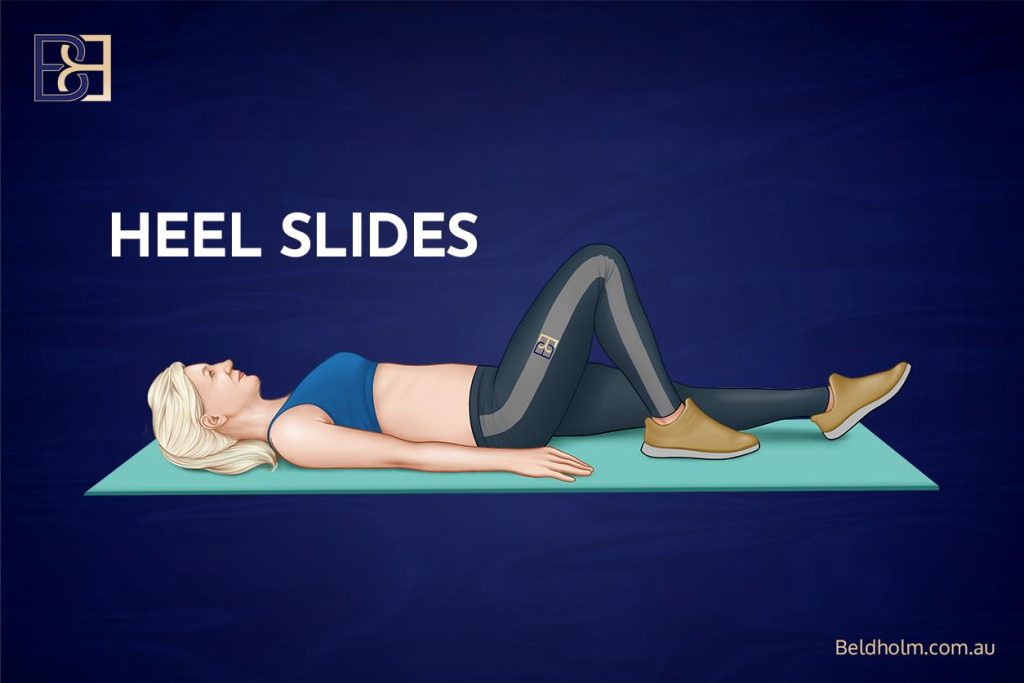
- Lie on your back with your knees bent and feet flat.
- Draw your lower abdomen in to steady your core.
- Slide 1 heel along the floor until the leg is straight, keeping the midline flat, then slide it back.
- Alternate legs, slow and controlled.
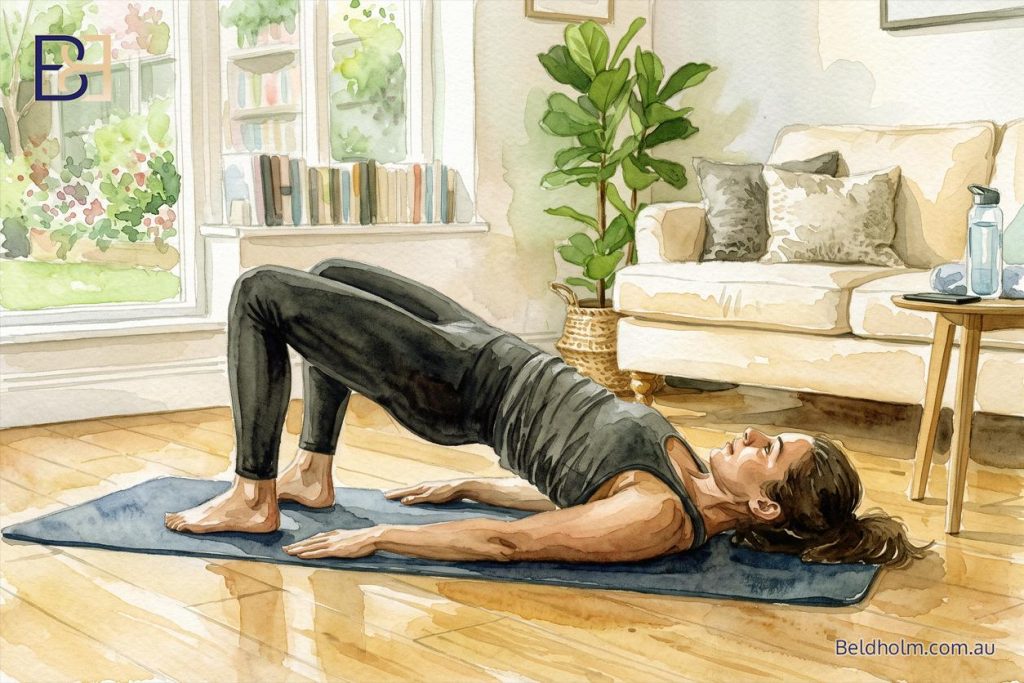
Bridges
Works the glutes and deep core together, and can ease lower back discomfort.
- Lie on your back with your knees bent, feet flat and hip-width apart.
- Draw your lower abdomen in, then lift your hips until your body makes a straight line from shoulders to knees.
- Hold for a few seconds, lower slowly, and repeat. Build towards 2 or 3 sets of 10.
Dead Bug
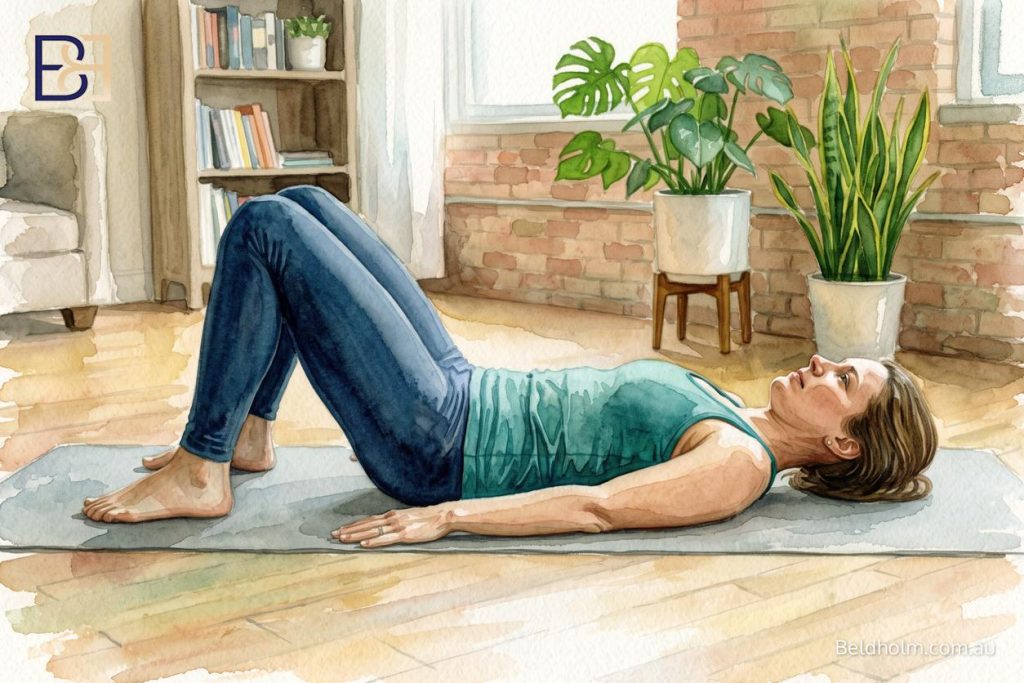
- Lie on your back with your knees bent up over your hips and your arms reaching towards the ceiling.
- Draw your lower abdomen in and keep your lower back in light contact with the floor.
- Slowly lower 1 arm overhead and straighten the opposite leg towards the floor.
- Return to the start and swap sides. Keep the midline flat throughout; if it domes, reduce how far you reach.
Bird-Dog
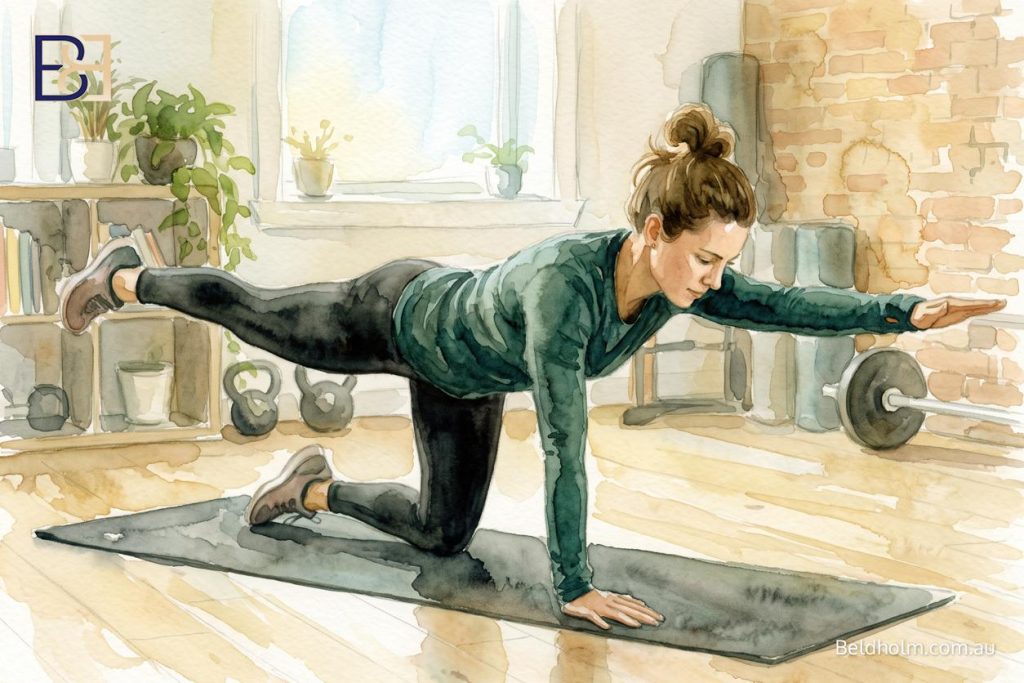
- Start on all fours in a table-top position, hands under shoulders and knees under hips.
- Draw your lower abdomen in to steady your spine.
- Reach 1 arm forwards and the opposite leg back until both are level with your body, without letting your back sag or twist.
- Hold briefly, return, and swap sides. If both at once is too much, start with just the arm or just the leg.
Clams
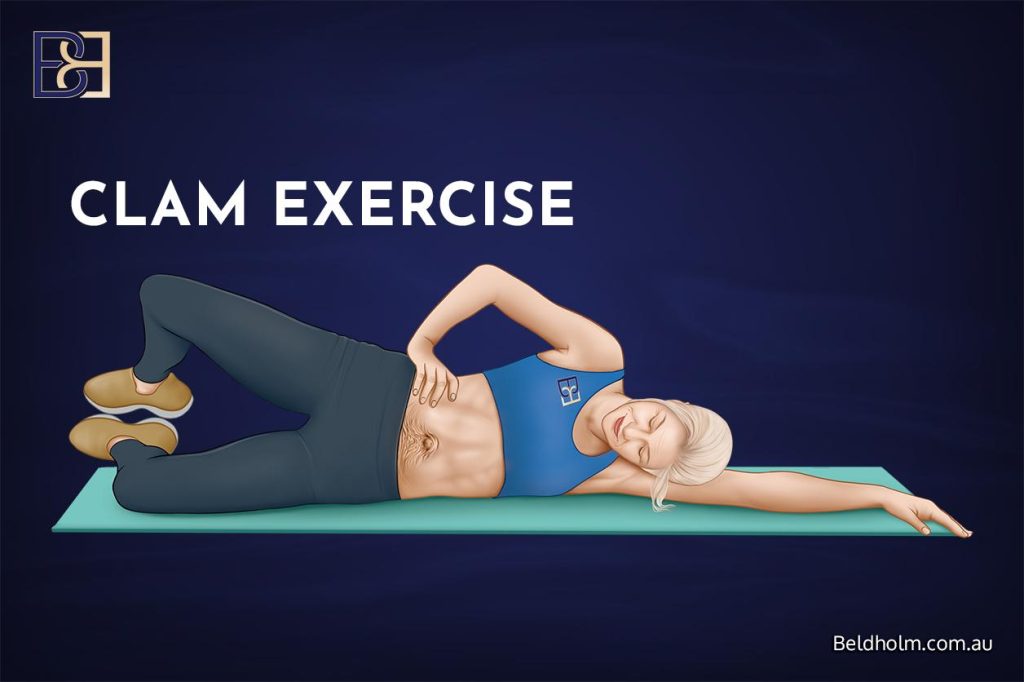
Targets the hips and helps stabilise the core.
- Lie on your side with your knees bent and stacked, hips and shoulders in line.
- Keeping your feet together, open your top knee like a clam shell, without rolling your hips back.
- Lower slowly and repeat, then swap sides.
Wall Sits
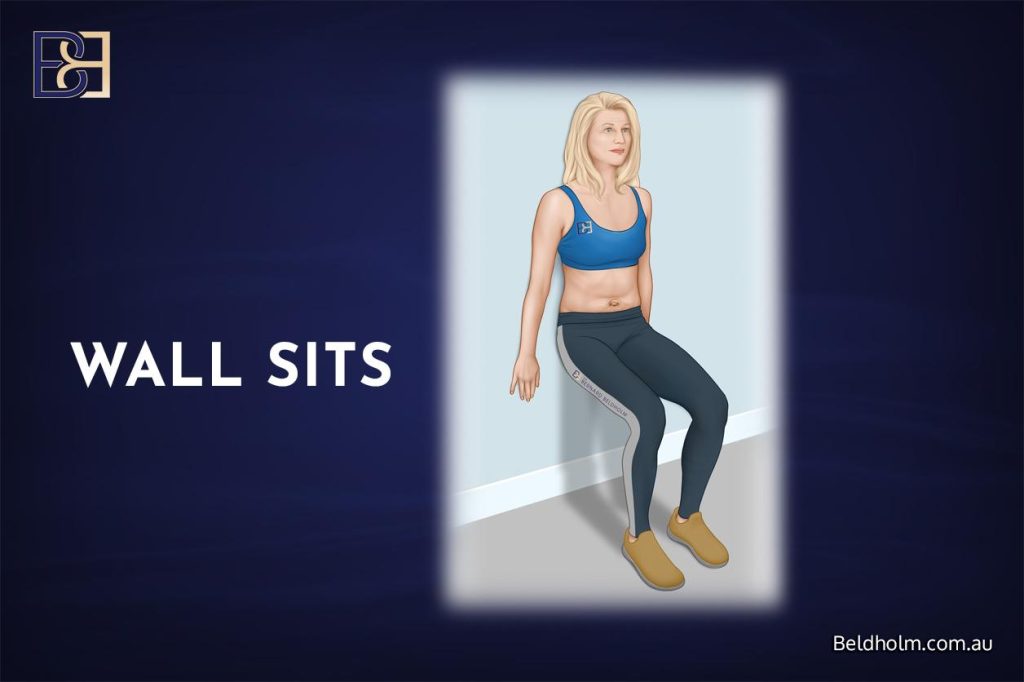
A steadier way to build endurance once you are moving well.
- Stand with your back flat against a wall and walk your feet out a little.
- Slide down until your knees bend towards a right angle, keeping your back against the wall.
- Draw your lower abdomen in and hold for as long as your form stays good, then stand up and rest.
Exercises and Activities to Approach With Care
You will often read that certain exercises must be avoided completely with diastasis recti, usually crunches and planks. The evidence is more mixed than that advice suggests. One study in pregnant women found that curl-up movements actually narrowed the separation in the moment they were performed (6), which is the opposite of what a blanket ban would predict. Rules about which exercises are always fine or always harmful do not really hold up.
What matters more than any single exercise is how your abdomen copes with the load. In the early weeks after birth, before your deep core control has returned, heavier abdominal work can push the midline into a dome and make the separation worse, and that is worth respecting.
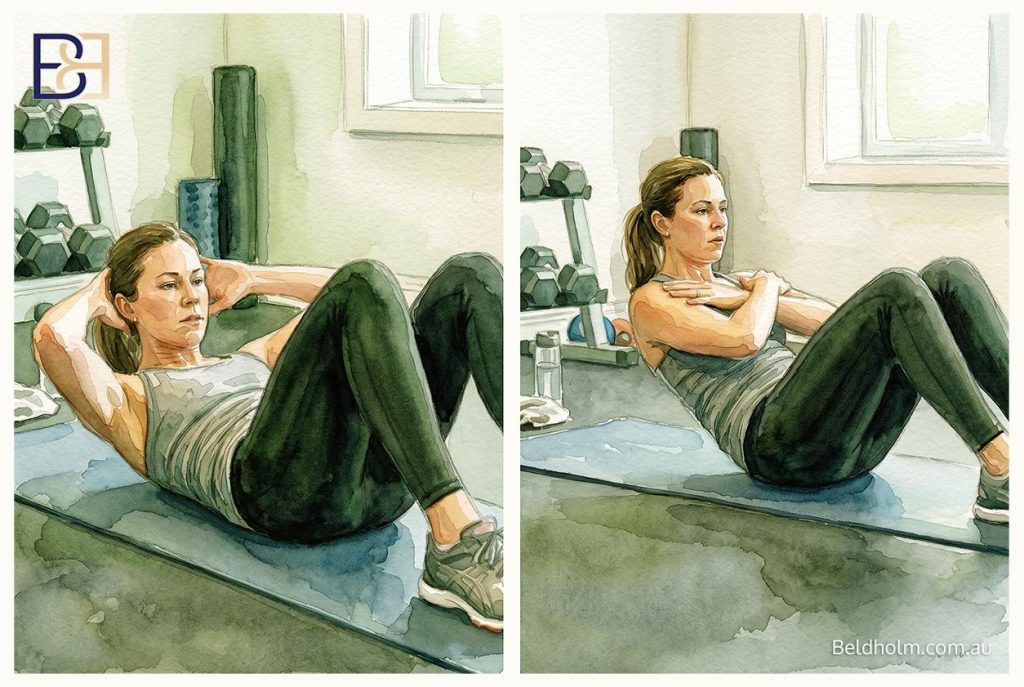
With that in mind, these are the ones I suggest building up to gradually rather than starting with:
- Full sit-ups and crunches
- Double leg raises, and other movements that lift both legs off the floor at once
- Front-loading planks held for long periods
- Heavy lifting, including awkward lifts of a toddler or a pram
None of these is off-limits for good. The point is the order you get to them. Start with the deep-core and pelvic floor work, rebuild control, and add heavier loading once you can manage it without the midline doming. If a movement makes the midline dome, puts excessive pressure on it, or you cannot keep the deep abdominals engaged, that is your signal to ease back, whatever the exercise is.
As with everything here, what suits you depends on your own recovery, and it is worth getting individual guidance rather than relying on a fixed list of dos and don’ts.
Symptoms Sometimes Associated With Diastasis Recti
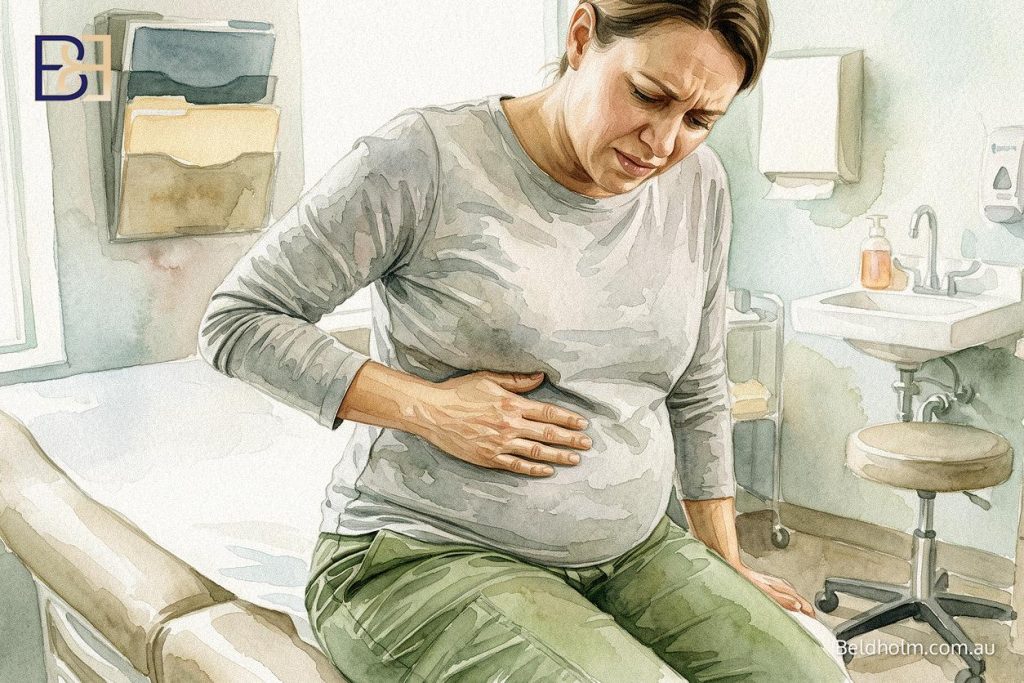
Plenty of women have diastasis recti and notice nothing at all, and the width of the gap does not neatly predict whether it causes trouble. Where researchers have looked at symptoms, the evidence is stronger for some than others.
- Reduced core strength. A wider separation has been linked with weaker and less enduring trunk muscles, because the connective tissue down the midline is what the abdominal muscles pull against (1). Some women notice this as a core that feels weak or unsupported.
- Abdominal discomfort. Abdominal pain has been reported more often in women with diastasis recti in a systematic review of the research (4).
- Lower back and pelvic pain. This one is often assumed, but the evidence does not clearly support it. A systematic review found no clear correlation between diastasis recti and the presence or severity of low back pain (4). Some women have both, but the separation is not necessarily the cause.
- Pelvic floor and urinary symptoms. The abdominal wall and pelvic floor work together, so a link with pelvic floor dysfunction is often suggested, but here too the research is inconsistent. The same review found no clear correlation between diastasis recti and urinary incontinence (4).
- A change in the shape of the midline. Some women notice a soft doming or a ridge along the middle of the abdomen when they sit up or strain. This is the separation itself showing through, rather than a separate problem.
A couple of points worth keeping straight:
- Diastasis recti is not a hernia. The 2 are different. A hernia is a gap through which tissue can push, whereas diastasis is a thinning and widening of the midline tissue with the muscles still intact. The 2 can occur together, and if I find a hernia during assessment, I deal with it on its own terms.
- Symptoms, not gap size, are what count clinically. That is why the Medicare criteria I mentioned earlier hinge on documented symptoms and not on the measurement alone.
When Conservative Care Is Not Enough: Repairing Diastasis Recti
Book your appointment online now
For most women, the separation settles with time, or it stays but causes no real problems, and surgery never comes into it. Exercise and patience are the starting point, and often the finishing point too.
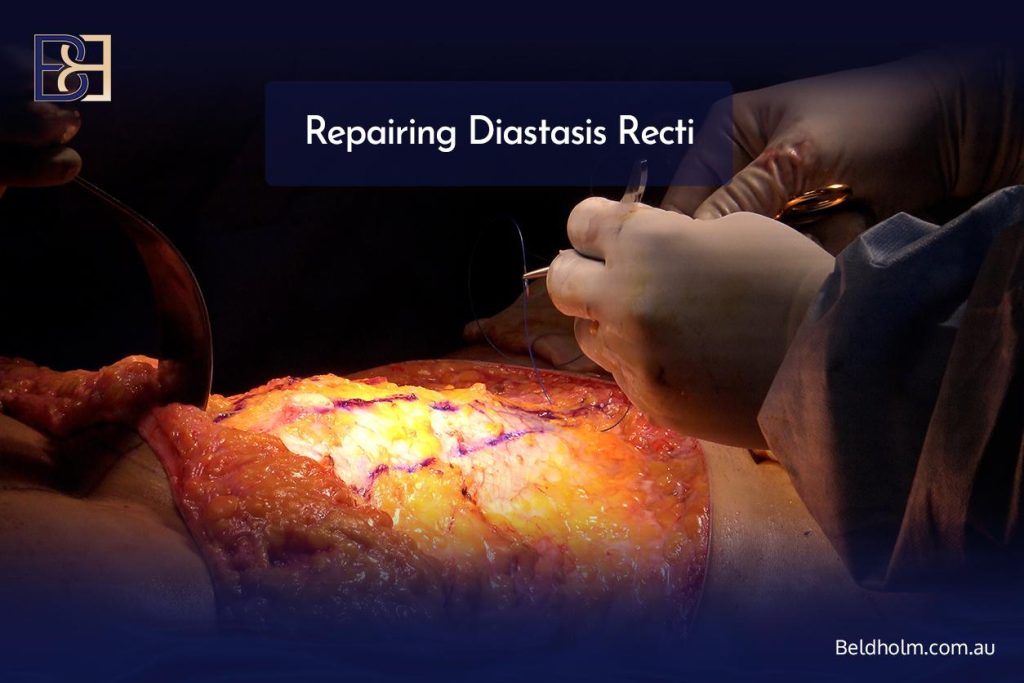
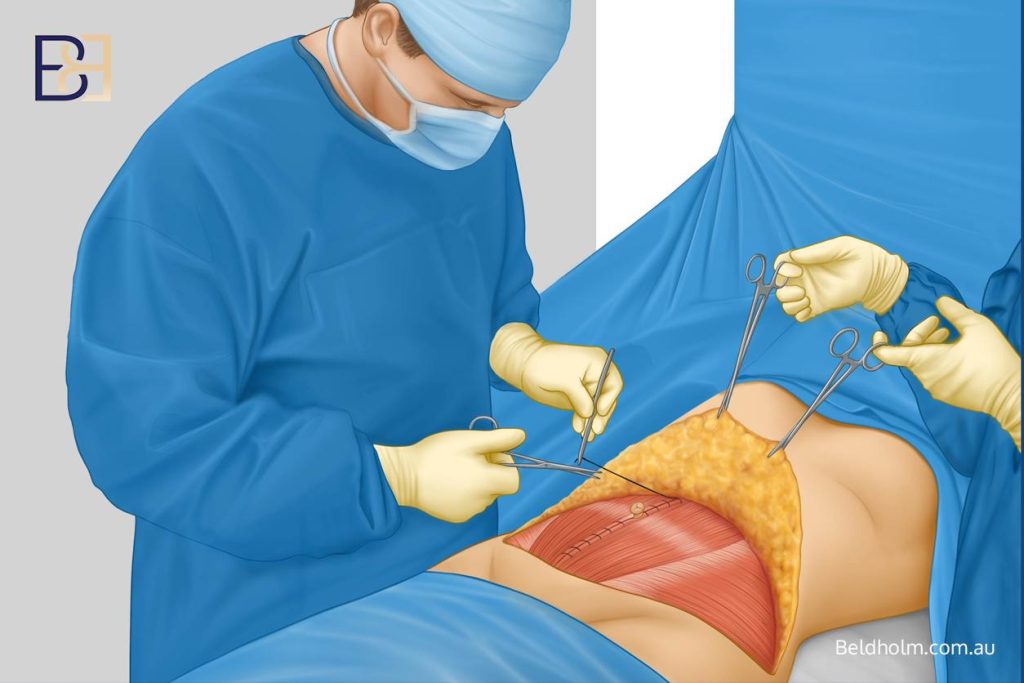
Surgery becomes something to consider only in a narrower situation: when the separation persists, is significant, and is causing symptoms that have not settled with conservative treatment, including a proper trial of physiotherapy. In that situation, repairing the muscle separation as part of an abdominoplasty (tummy tuck) may be a reasonable option to discuss.
What the operation involves
In an abdominoplasty with diastasis recti repair, I bring the separated muscles back towards the midline and stitch the connective tissue between them, which is known as plication. Any loose skin left over from pregnancy is removed at the same time, and the extent of that part is tailored to the individual. The muscle repair is the part that brings the midline back together and gives the abdominal wall something firmer to work against.
What the research shows
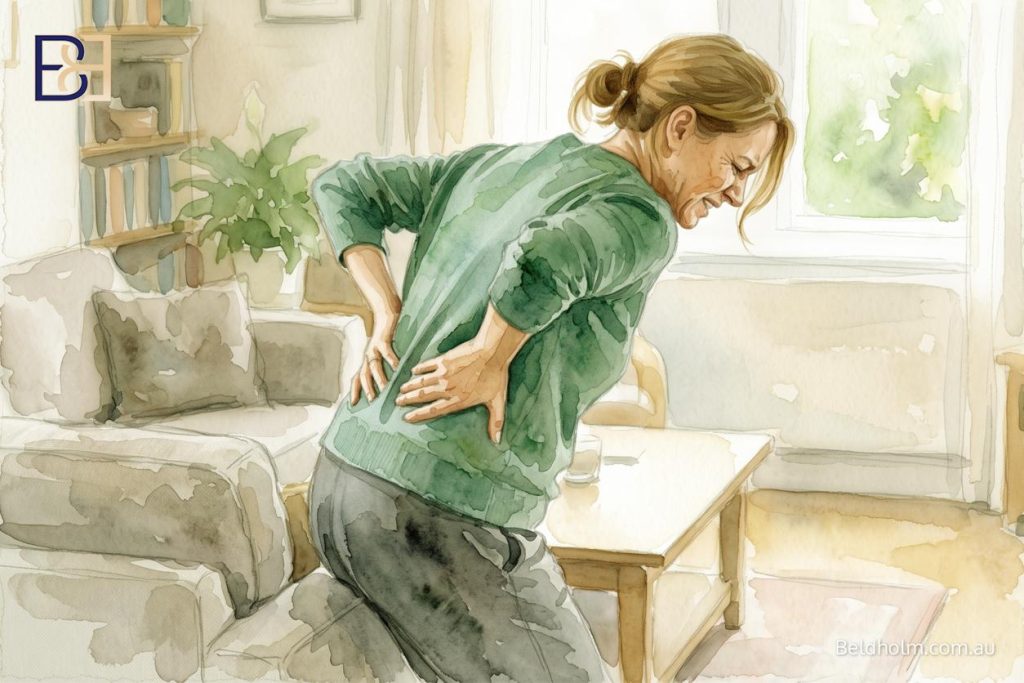
Published research in women having this repair after pregnancy has reported improvements in low back pain and urinary incontinence following abdominoplasty with muscle repair (7), and gains in measured core strength after repair of the separation (8). These are averages reported in studies, not a promise. Results vary from one woman to the next, which is why I talk them through individually rather than quote a guaranteed outcome.
Timing and the pathway
A few things shape when and whether this is appropriate:
- Family complete and breastfeeding finished. I plan this kind of surgery once you have finished having children and finished breastfeeding, because a later pregnancy can undo the muscle repair and change the result. Timing is judged individually, not set to a fixed number.
- At least 12 months since your last pregnancy. This is part of the Medicare criteria, and it also gives the abdominal wall time to settle.
- A GP referral and a consultation. A GP referral is required before any consultation, and whether surgery suits you at all is decided there, after assessment, not before.
Surgery is a bigger undertaking than a set of exercises, and it carries real risks and a real recovery, which I go through next.
Risks and Recovery
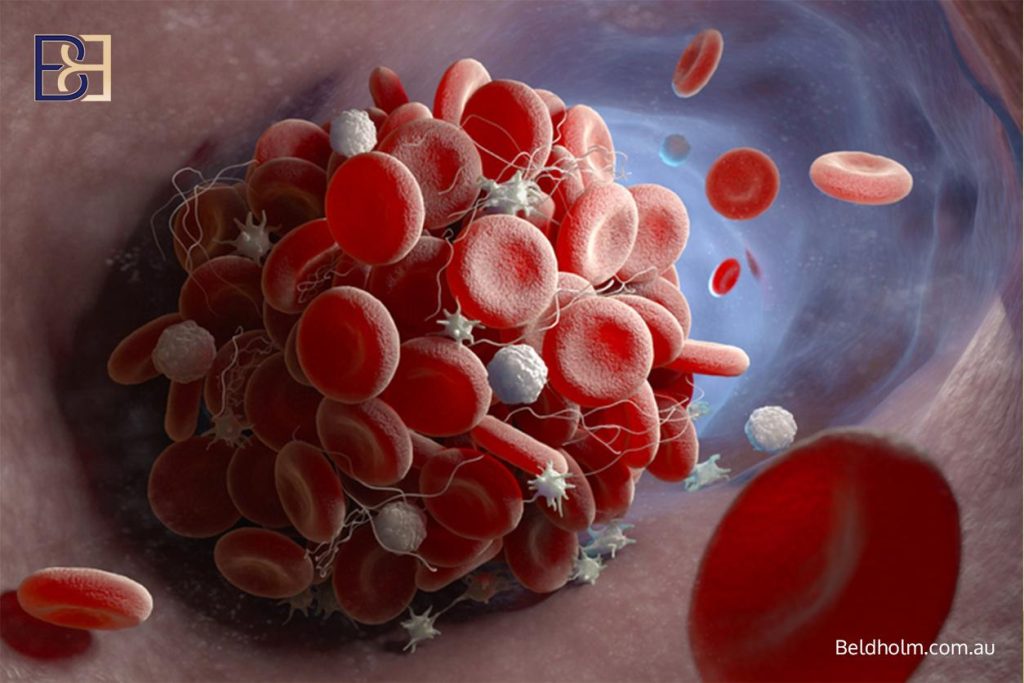
If surgery is on the table, here is what it actually involves. An abdominoplasty with diastasis recti repair is major surgery done under general anaesthetic, and it carries real risks and a real recovery. It is not a decision to take lightly.
Risks
Every operation of this kind carries some risk. The ones I talk through include:
- Bleeding, and collections of blood (haematoma) or fluid (seroma) under the skin
- Infection
- Problems with wound healing, including areas of the wound separating or healing slowly
- A permanent scar, which varies between women in how it settles
- Changes in sensation across the lower abdomen and around the scar, which are common early on and usually improve over time
- Blood clots in the legs or lungs, which is why clot prevention is planned as part of your surgery
- The general risks that come with any general anaesthetic
Which of these matter most for you depends on your health, and I assess and plan for them individually.
Recovery
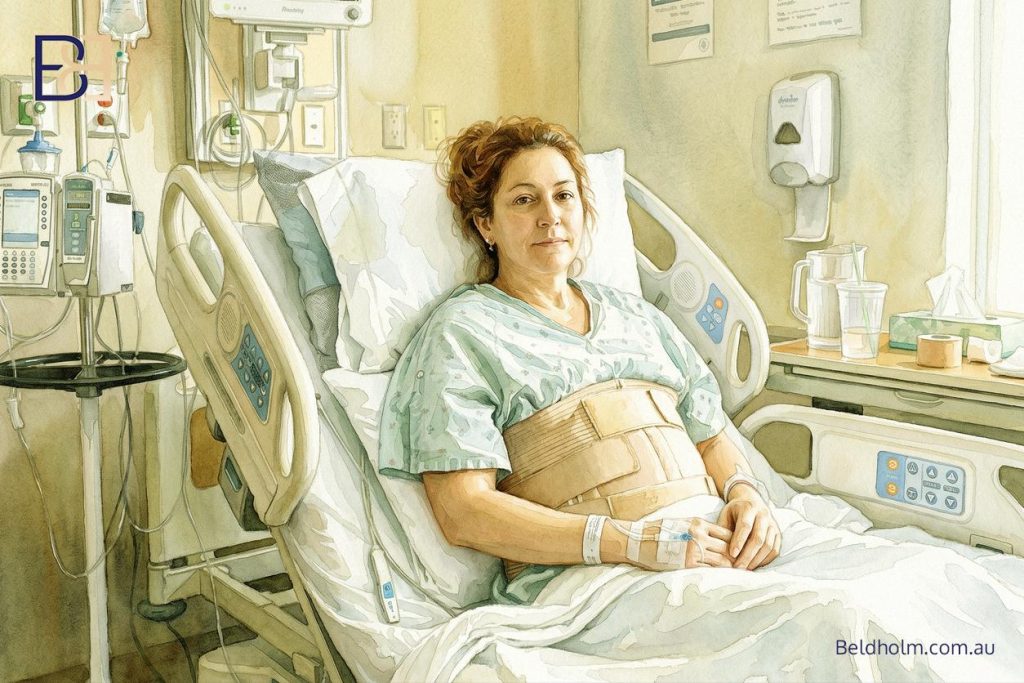
Recovery takes time, and it is worth planning for.
- Most women stay in hospital for 1 to 2 days.
- You will wear a compression garment and need to take it steady for the first few weeks, with no heavy lifting.
- Caring for young children is the part worth planning around. In the early weeks you will not be able to lift a toddler or a heavy pram the way you normally would, so having help at home makes a real difference.
- Return to exercise is staged, starting with walking and building back up over the following weeks under guidance.
- The scar continues to settle and fade over a long period, commonly 18 months to 2 years.
Recovery varies from one woman to the next, and I go through what to expect for your situation at consultation.
Final Thoughts

Diastasis recti is one of the normal ways the body responds to pregnancy. For most women it settles on its own or causes no real trouble, and a sensible core and pelvic floor program is a good place to start, as long as you go in with realistic expectations about what it can do.
If the separation persists and is causing symptoms that have not settled with time and conservative treatment, then repairing it as part of an abdominoplasty (tummy tuck) is worth discussing. Whether that is right for you is not something to decide from an article. It depends on your own examination, your symptoms and your circumstances.
If you are not sure where you sit, the sensible next step is an assessment, so the advice you get is based on your body rather than a general rule.
References
- Du Y, Huang M, Wang S, Yang L, Lin Y, Yu W, et al. Diastasis recti abdominis: a comprehensive review. Hernia. 2025;29:222.
- Australian Government Department of Health and Aged Care. Medicare Benefits Schedule (MBS) item 30175. Canberra: Department of Health and Aged Care. Available from: https://www.mbsonline.gov.au.
- Keshwani N, Mathur S, McLean L. The impact of exercise therapy and abdominal binding in the management of diastasis recti abdominis in the early post-partum period: a pilot randomized controlled trial. Physiother Theory Pract. 2021;37(9):1018-1033.
- Fuentes Aparicio L, Rejano-Campo M, Donnelly GM, Vicente-Campos V. Self-reported symptoms in women with diastasis rectus abdominis: a systematic review. J Gynecol Obstet Hum Reprod. 2021;50(7):101995.
- Soto-Gonzalez M, Da Cuna-Carrera I, Lantaron-Caeiro EM, Pascoal AG. Effect of hypopressive and conventional abdominal exercises on postpartum diastasis recti: a randomized controlled trial. PLoS One. 2024;19(12):e0314274.
- Theodorsen NM, Moe-Nilssen R, Bo K, Haukenes I. Effect of exercise on the inter-rectus distance in pregnant women with diastasis recti abdominis: an experimental longitudinal study. Physiotherapy. 2023;121:13-20.
- Taylor DA, Merten SL, Sandercoe GD, Gahankari D, Ingram SB, Moncrieff NJ, et al. Abdominoplasty improves low back pain and urinary incontinence. Plast Reconstr Surg. 2018;141(3):637-645.
- Bruno A, Calicchia A, Schirosi M. Restoring core strength after rectus diastasis repair: a prospective controlled study of abdominal muscle function following abdominoplasty. Aesthet Plast Surg. 2026;50:2277-2286.