


Brachioplasty (Arm Lift) Post Weight Loss in Newcastle NSW
Brachioplasty (arm lift) removes excess skin and fat from the upper arm, most often after significant weight loss when the skin can no longer retract. In my practice this usually means an extended operation that follows the inner arm from the elbow through the armpit (axilla), and where needed onto the side of the chest wall. This page covers the essentials. For a full discussion of the operation, techniques and evidence, read my comprehensive guide to brachioplasty after significant weight loss.
Is Brachioplasty the Right Operation for Your Arms?
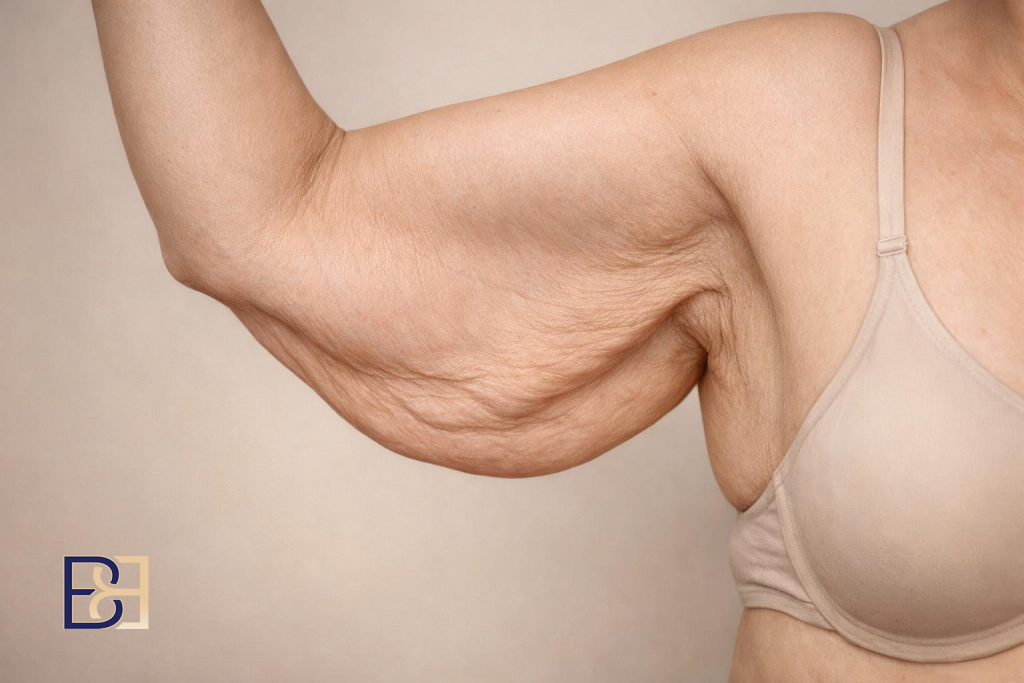
Brachioplasty suits arms where loose skin hangs from the upper arm and does not retract, no matter how much training you do. Exercise builds the muscle underneath but cannot remove skin that has lost its elasticity. After significant weight loss, the excess often runs beyond the arm itself, through the axilla and onto the side of the chest wall, which is why I usually plan an extended excision rather than a short one.
Where the problem is mainly fat with skin that still retracts, VASER liposuction (ultrasound assisted lipectomy) alone may be enough, and I assess this at consultation. Where skin laxity is present, no amount of liposuction will fix it, and excision is what treats it.
What the Operation Involves
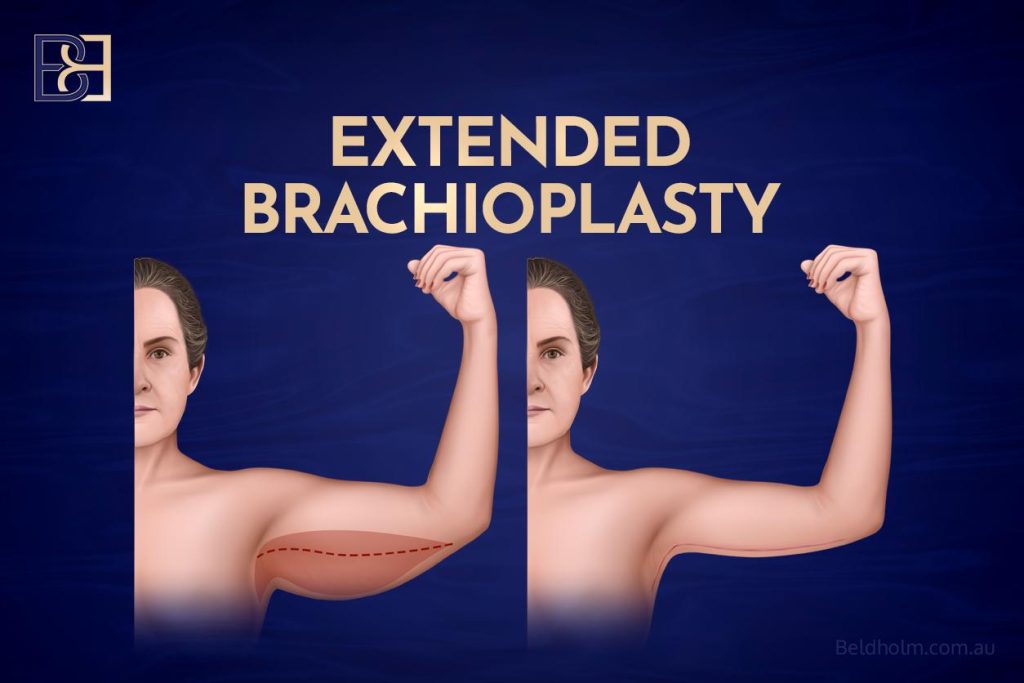
- Incision along the inner arm from elbow to axilla, extended onto the lateral chest wall where the skin excess requires it
- Removal of excess skin and fat as a wedge excision
- VASER liposuction (ultrasound assisted lipectomy) where indicated to thin the arm before excision
- General anaesthetic
- Operating time around 2 to 4 hours depending on the extent
- Performed at Maitland Private Hospital
- Day procedure or 1 night in hospital depending on the extent of surgery and your circumstances
- No drains in most cases
- Comfeel dressings applied in theatre, left in place until review
- Compression garment fitted after surgery and worn for several weeks
Why Come and See Me
I am a Specialist Surgeon (FRACS) and my practice is focused on body contouring surgery after significant weight loss. Arm surgery in post weight loss patients is a regular part of my operating lists, not an occasional add-on.
- All surgery is performed at Maitland Private Hospital, with 24-hour medical cover and an on-site ICU
- I do daily ward rounds while you are admitted
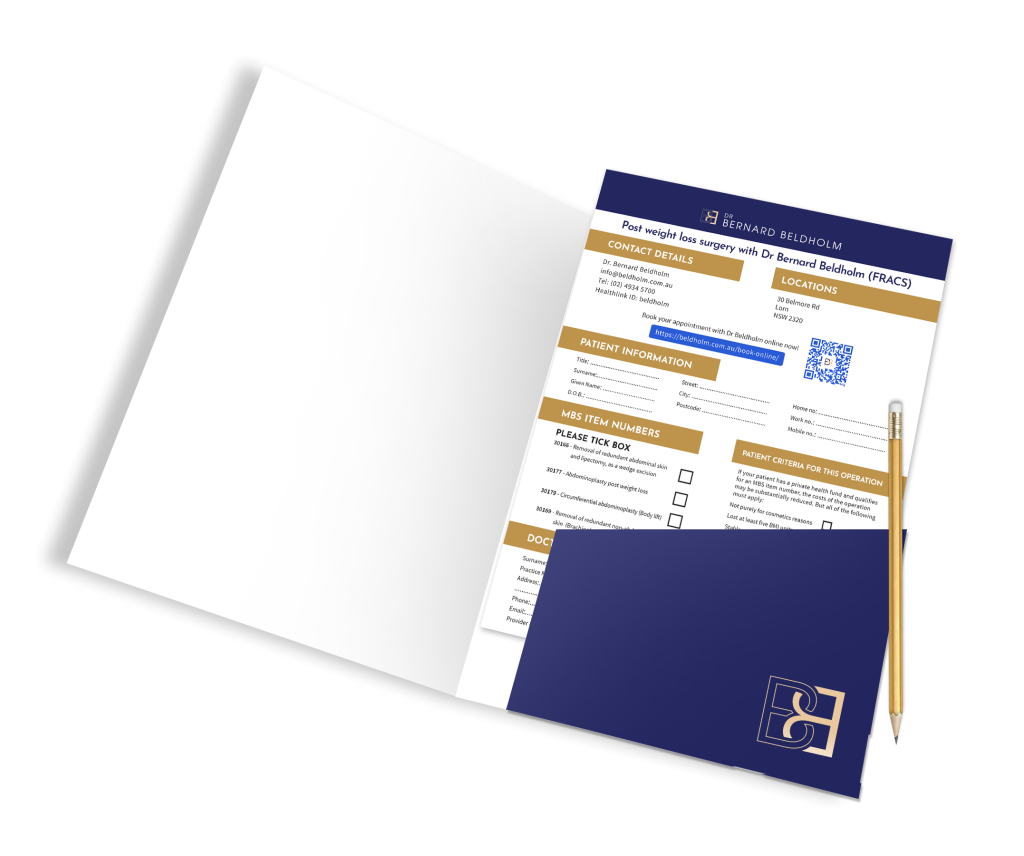
- Your first consultation runs for about 1 hour, and a second consultation before surgery is at no cost
- Telehealth consultations are available for regional patients, with the physical assessment completed before surgery
- Follow-up is structured and included in the surgical fee: 2 weeks of intense follow-up straight after surgery, then reviews at 4 weeks, 3, 6 and 12 months
I developed the circumferential hybrid abdominoplasty and dual vector abdominoplasty techniques, and the same approach of matching the excision to the individual pattern of skin excess applies to how I plan arm surgery.
Risks and Recovery
Brachioplasty is major surgery and it leaves a long scar along the inner arm. The scar is the main trade-off of this operation and it takes 12 months or more to mature. Complications can occur, including wound healing problems, seroma, infection, bleeding, changes in sensation, and scarring that may need revision. Recovery takes weeks, with lifting and arm movement restricted early on, and results vary between patients. I have written in detail about both, so before you decide, read my articles on brachioplasty complications and brachioplasty recovery.
Cost and Medicare

Brachioplasty after significant weight loss may attract Medicare item number 30169, which covers removal of redundant non-abdominal skin where you have lost at least 5 BMI points, your weight has been stable for at least 6 months, and the loose skin causes functional problems. Meeting the item number affects your Medicare rebate and health fund cover, and I have set out the fees, criteria and what your quote includes in my brachioplasty cost article.
Your Steps to Surgery
1. Get a GP referral
This is required before any consultation and preserves your Medicare rebate for the consultation.
2. Book your consultation
We spend about 1 hour going through your history, examining your arms and planning the operation. A second consultation before surgery is at no cost.
3. Receive your written quote
Itemised, with surgical, anaesthetic and hospital fees set out.
4. Prepare for surgery
Pre-operative blood tests, nutritional optimisation where needed, and instructions on medications.
5. Have your surgery at Maitland Private Hospital
6. Structured follow-up
2 weeks of intense follow-up straight after surgery, then reviews at 4 weeks, 3, 6 and 12 months, included in the surgical fee.