


What to notice and record before you see your GP, a physiotherapist or me about muscle separation after pregnancy.
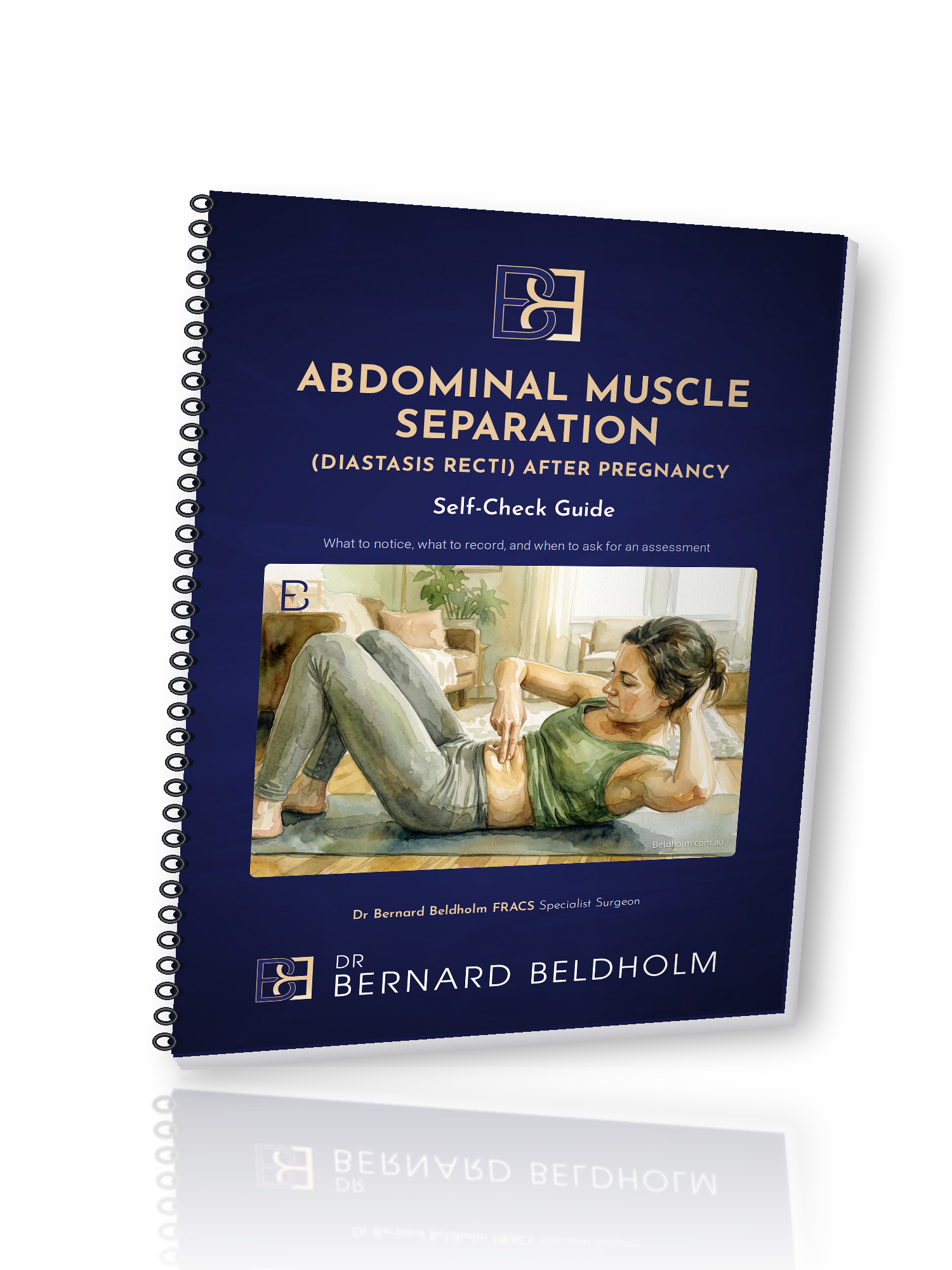
During pregnancy the pair of long muscles at the front of the abdomen move apart as the tissue between them stretches. This is a normal change. In many women the gap narrows again in the months after birth. In some it persists. This guide sets out the self-check I ask patients to do at home before an assessment: how to check, what to record, which symptoms to note, and when surgical assessment is considered. It is a preparation tool, not a diagnosis. Whether surgery suits you is decided at consultation, after a GP referral.
What is inside
- A 5 step self-check you can do lying on your back, with the finger widths recorded rather than interpreted
- A findings table for 3 dated checks, on white pages you can print and fill in by hand
- The 7 symptoms to record, and which ones may need a separate assessment
- Why a supervised physiotherapy program comes first
- When surgical assessment is considered, what repair involves, the risks, and what to bring to a consultation
The guide is emailed, usually within a few minutes. Check junk if not received. A member of my team may call to confirm it arrived and answer questions about the consultation process. Occasional educational emails follow. Unsubscribe at any time. By requesting the guide you confirm you are 18 or over. See our privacy policy.
Before deciding on surgery, read my overview of abdominal muscle separation (diastasis recti) after pregnancy, including what exercises can do and when repair is considered.