


Limited Abdominoplasty (Tummy Tuck) After Pregnancy in Newcastle NSW
Pregnancy changes the abdomen. The skin stretches, the abdominal muscles can separate, and for some women the lower abdominal skin and fat do not settle back, even once weight and activity have returned to where they were. Diet and exercise support general health, but they do not tighten skin that has lost its elasticity.
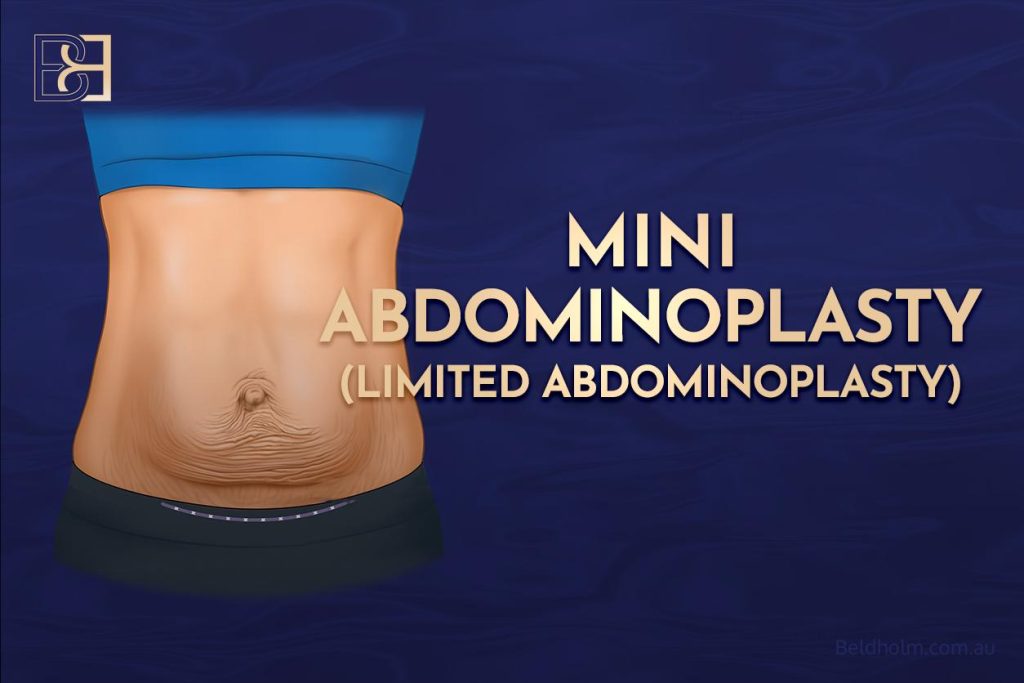
A limited abdominoplasty (tummy tuck) is one operation I discuss with women whose loose skin and fat sit mainly in the lower abdomen, below the belly button. On this page I explain what the operation involves, who it may suit, when a different operation is the better choice, and the risks and recovery to weigh up. It is general information, and whether any surgery is appropriate is something I assess individually at consultation.
What a limited abdominoplasty involves
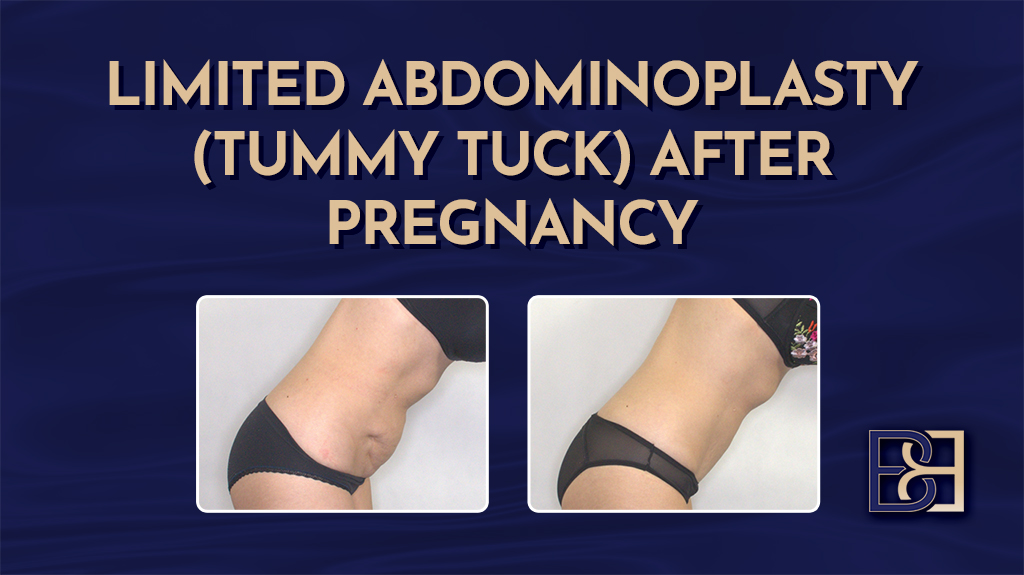
Disclaimer: Surgery has risks, results vary, seek 2nd opinion. Operation performed by Dr Beldholm
A limited abdominoplasty removes a section of loose skin and fat from the lower abdomen, through a low horizontal incision that can be hidden by underwear. The incision is shorter than a full abdominoplasty, less skin is removed, and the belly button is usually not repositioned. That does not make it a minor undertaking. It is still surgery, performed under general anaesthetic, with a genuine recovery period and the risks that come with any operation.
In my practice I use two versions of this operation. Which one suits a patient depends on whether there is excess fat to treat as well as loose skin.
Limited abdominoplasty with ultrasound-assisted suction lipectomy (VASER liposuction)
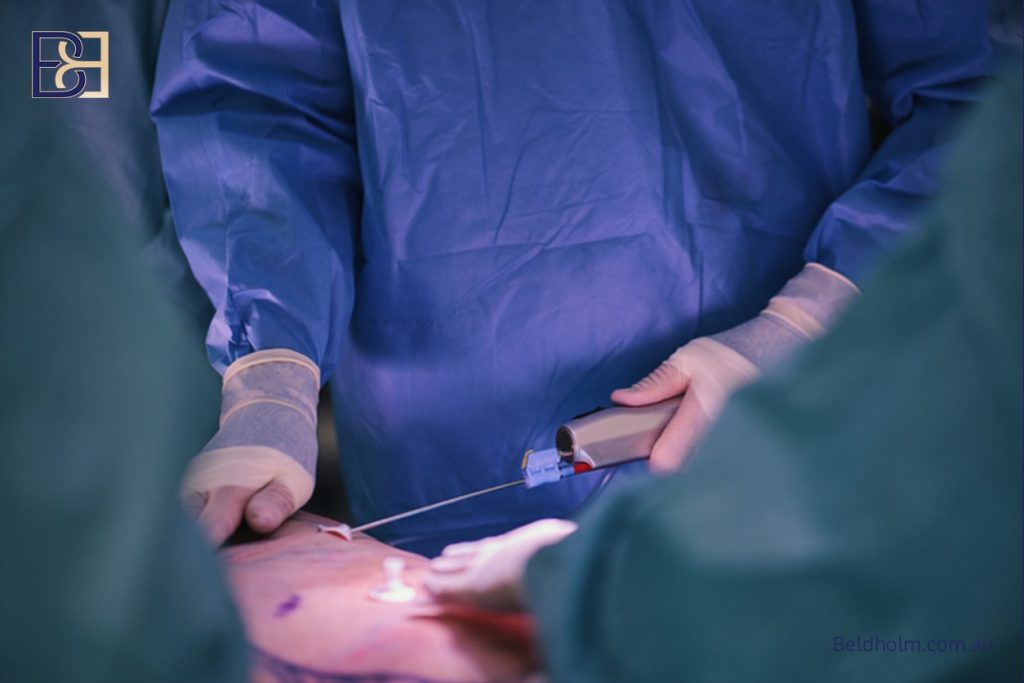
This combines removal of loose lower abdominal skin with ultrasound-assisted suction lipectomy (VASER liposuction), which refines the contour of the lower abdomen and flanks. Most of the women I see have this version, because it treats both the loose skin and the fat that commonly sits in this area. Published research on abdominal contouring describes how patients are matched to the right extent of surgery, including limited skin removal combined with suction-assisted lipectomy (1).
Skin-only limited abdominoplasty
This removes loose lower abdominal skin only, without suction-assisted lipectomy (liposuction). It tends to suit women with only a limited amount of loose skin in the lower abdomen, often skin that hangs over a caesarean scar, where there is little excess fat to treat.
What both versions involve
The procedure usually takes between one and three hours. The skin removal itself takes around an hour, and where suction-assisted lipectomy is included it adds a further one to two hours depending on the extent treated. Depending on the individual and the extent of the work, it may be done as a day procedure or with a short stay at Maitland Private Hospital, where I review patients on my rounds. Skin removed from the lower abdomen takes any stretch marks within that area with it, although this is not the aim of the operation, and skin outside the removed area is unchanged.
A limited abdominoplasty is not a weight-loss procedure and is not a substitute for reaching a stable weight.
Who it may suit
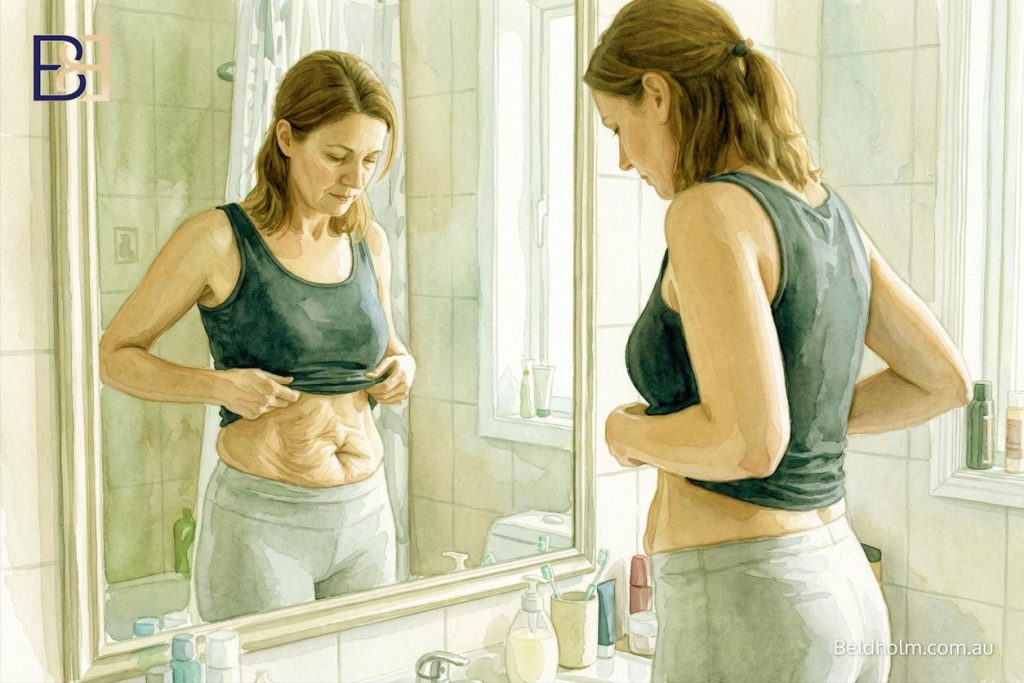
Whichever version is used, a limited abdominoplasty tends to suit women who:
- have loose skin, with or without excess fat, confined to the lower abdomen below the belly button
- have little or no separation of the abdominal muscles
- are at or near a stable weight they can maintain
- in some cases have skin that sits over a caesarean scar
Separation of the abdominal muscles, called diastasis recti (abdominal muscle separation), is a common and normal change after pregnancy. Published research that followed women through pregnancy and the first year afterwards found diastasis recti in 60% at six weeks postpartum, 45% at six months, and 33% at twelve months (2). Exercise has a role in recovery, but the evidence that abdominal exercise reliably closes a significant separation is limited (3).
This matters for choosing the right operation. A limited abdominoplasty treats loose skin and fat in the lower abdomen. It does not repair muscle separation (diastasis recti) that extends above the belly button. At consultation I examine for diastasis recti and check where the skin laxity sits, because that is what decides which operation fits.
When a full abdominoplasty is the better choice
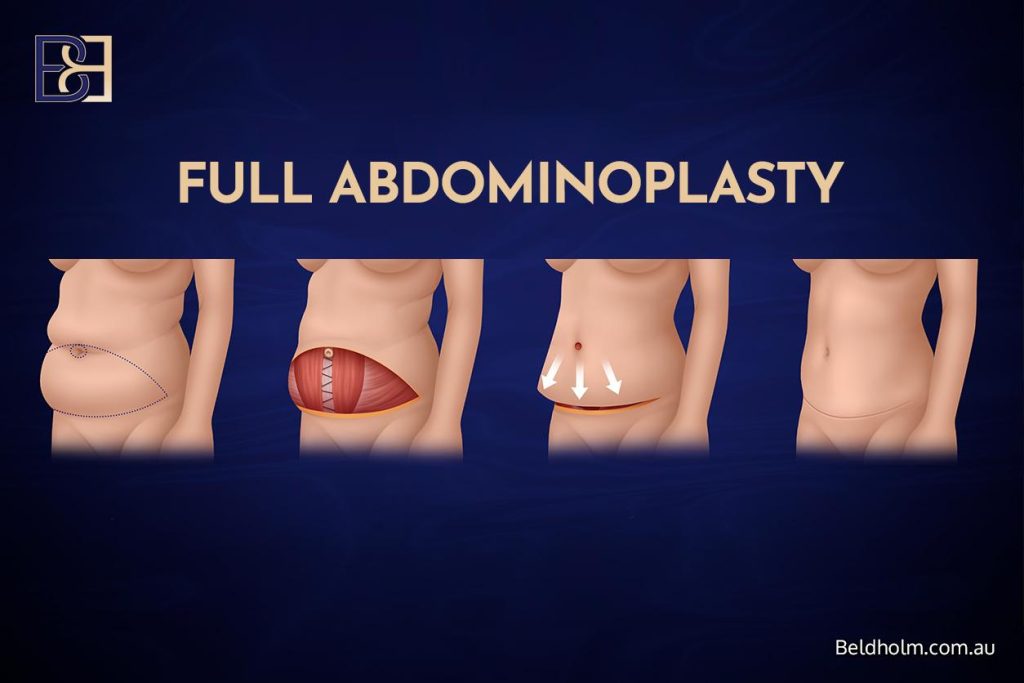
A limited abdominoplasty is the right operation only for a particular pattern of change. If there is significant diastasis recti, or loose skin that extends above the belly button, a limited abdominoplasty will not treat it. In that situation a full abdominoplasty, which repairs the separated muscles and removes loose skin from a larger area of the abdomen, is usually the more appropriate operation. You can read more on the full abdominoplasty after pregnancy page.
Each operation suits different patterns. Which one fits you is a clinical decision I make with you at consultation, after examining the abdomen, and not something that can be settled beforehand or chosen from a price list. A larger operation is also a bigger physiological event than a limited one, which is part of that discussion.
Timing after pregnancy and breastfeeding
I plan this surgery once breastfeeding has finished and the abdominal wall has settled after the most recent pregnancy. The abdomen continues to change in the months after birth, so operating too early risks working on tissue that is still settling.
I also recommend that surgery is planned once your family is complete. A further pregnancy can stretch the skin and abdominal wall again and affect the result of an earlier operation. There is no fixed interval that applies to everyone. The right timing depends on your recovery from pregnancy, breastfeeding, and general health, and I assess it individually at consultation.
Risks and recovery
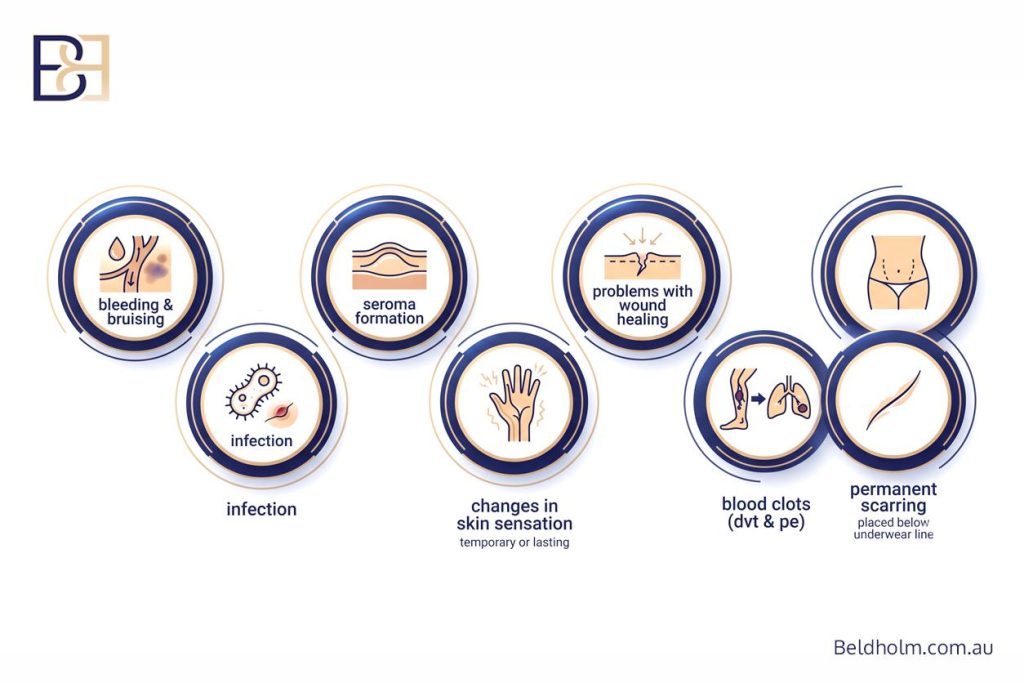
All surgery carries risk, and a limited abdominoplasty is no exception. The risks I discuss with patients include:
- bleeding and bruising
- infection
- seroma, a collection of fluid under the skin
- changes in skin sensation, which may be temporary or lasting
- problems with wound healing
- blood clots in the legs or lungs (deep vein thrombosis and pulmonary embolism)
- scarring, which is permanent, although the incision is placed low so it sits below underwear
- a result that does not match what you hoped for, and the possibility of revision surgery
I assess each patient’s risk of blood clots and decide on the measures needed to reduce it.
Recovery takes time and should not be underestimated. You will wear a compression garment, your activity and lifting will be restricted for several weeks, and you will need time away from work and from your usual routine. For most women I see, recovery happens alongside caring for young children, which is demanding, so it is worth arranging help at home in advance. Recovery times differ from person to person, and results vary between patients.
Preparing for surgery
A GP referral is required before any consultation, and your GP stays involved in your care.
In the lead-up to surgery I review your general health and your fitness for an operation and an anaesthetic. Any regular medications are reviewed and planned around the surgery well ahead of time, and you should not stop any prescribed medication on your own. If you smoke, stopping well before surgery supports wound healing.
What preparation you need is worked out individually at consultation, based on your health and history.
Deciding whether it is right for you
Whether a limited abdominoplasty, a full abdominoplasty, or no surgery at all is the right path depends on your anatomy, your medical history, and what you want to achieve. It is a decision I make with each patient at consultation, after a thorough examination. I offer a second consultation so you have time to consider the information without pressure.
Surgery after pregnancy is a serious decision and results vary from one person to the next. The aim of a consultation is to give you accurate information about what an operation can and cannot do for your particular situation, so you can decide what is right for you.
References
- Matarasso A. Abdominolipoplasty: a system of classification and treatment for combined abdominoplasty and suction-assisted lipectomy. Aesthetic Plast Surg. 1991;15(2):111-21.
- Sperstad JB, Tennfjord MK, Hilde G, Ellstrom-Engh M, Bo K. Diastasis recti abdominis during pregnancy and 12 months after childbirth: prevalence, risk factors and report of lumbopelvic pain. Br J Sports Med. 2016;50(17):1092-6.
- Benjamin DR, van de Water ATM, Peiris CL. Effects of exercise on diastasis of the rectus abdominis muscle in the antenatal and postnatal periods: a systematic review. Physiotherapy. 2014;100(1):1-8.