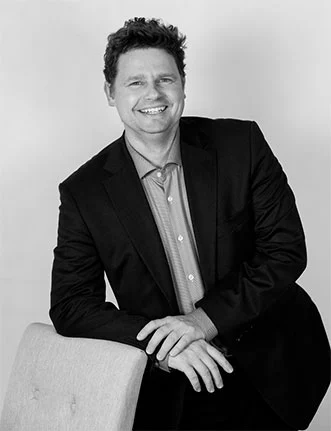
Dr Bernard Beldholm
MBBS BSc(Med) FRACS FACCSM· Specialist surgeon

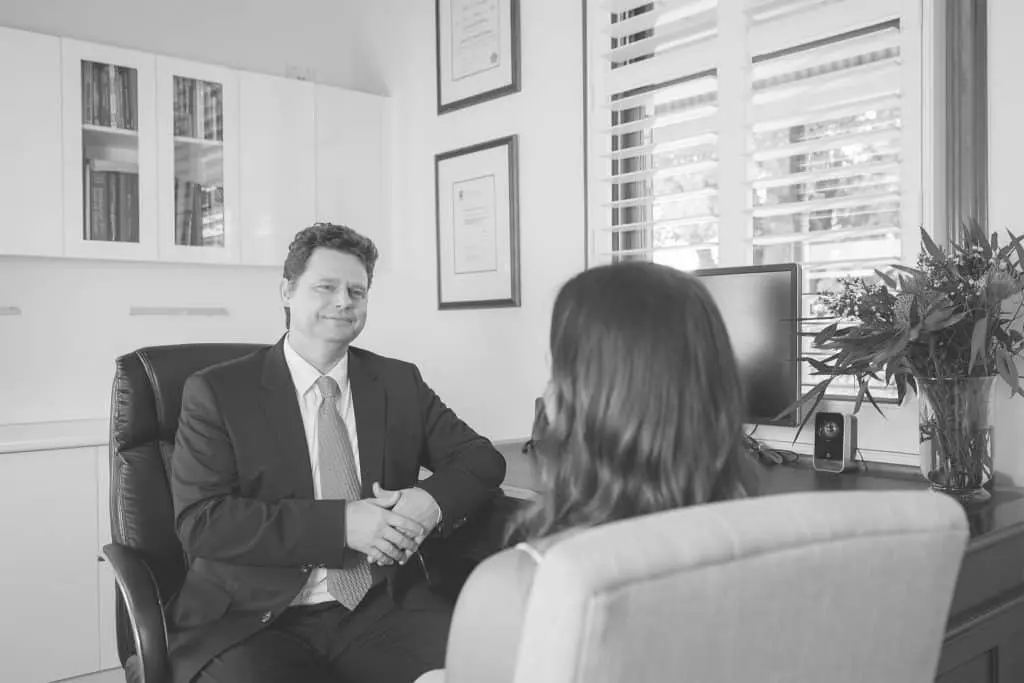
I am a specialist surgeon (FRACS), and since 2010 my practice has been cosmetic and reconstructive surgery of the body, breast and face: body contouring after significant weight loss and after pregnancy, breast surgery, face and neck surgery, gynaecomastia surgery, liposuction and lipoedema surgery, and fat grafting. I have performed more than 10,000 surgical procedures, and I operate every week at Maitland Private Hospital in the Hunter Valley. Every consultation and every operation is with me, and every review afterwards is with me and my surgical nurse.
I see the same conditions again and again, so by the time you sit in front of me I will usually have treated your situation many times before. That is also why I will tell you when an operation is not the right answer, or when what you have in mind needs a different procedure, or more than one, from the one you came in asking about. Most of what I explain in a consultation is already on this website and on my YouTube channel, so you can read and watch first and arrive knowing what you want to ask.
Book an Online Consultation
What I operate on, and how often
My practice covers seven areas. Every operation named here has its own page on this site.
After significant weight loss
Skin that remains after weight loss, whether the weight came off with surgery, medication or diet, does not respond to exercise, and the operations that remove it are the largest I do. They include abdominoplasty (tummy tuck) and fleur-de-lis abdominoplasty; the two operations I developed for skin patterns a standard abdominoplasty does not manage, the dual-vector abdominoplasty and the circumferential hybrid abdominoplasty; belt lipectomy (body lift); brachioplasty (arm lift); thighplasty (thigh lift); bra-line lipectomy (upper back lift); gluteal lipectomy (buttock lift); and monsplasty. Most operating weeks include at least one of these. Where more than one area needs surgery, I plan the sequence at the first consultation, because which operation comes first changes the result of the ones that follow.
After pregnancy
Abdominoplasty with repair of the separated abdominal muscles, usually with ultrasound-assisted liposuction of the flanks in the same operation, and limited abdominoplasty where the loose skin sits below the umbilicus (belly button). Breast surgery after breastfeeding, and the two combined in one operation when that is the right plan. Where the muscle repair meets Medicare criteria, part of the cost is rebated; the cost pages set out how that works.
I have performed more than 1,000 abdominoplasties over the last 15 years, across all of the variants above. I have done them without drains for more than ten years, using liposuction as part of the technique, with VASER (ultrasound-assisted) liposuction for the last ten. I presented that ten-year VASER series at Cosmetex in August 2026.
Breast surgery
Augmentation mammoplasty with implants, with fat transfer, or with both (hybrid augmentation); mastopexy (breast lift) with or without implants; reduction mammaplasty; removal and replacement of implants; removal of implants (explant) with or without mastopexy or fat grafting; and gender-affirming breast surgery. Whether implants, fat, or both is the right choice is decided at consultation from your own tissue and what you want.
Face and neck
Rhytidectomy (facelift), including deep plane facelift; cervicoplasty (neck lift), including deep neck lift and platysmaplasty; direct excision of neck skin; VASER liposuction of the neck; upper blepharoplasty (eyelid surgery); and browplasty (brow lift). All of these are done at Maitland Private Hospital under general anaesthesia with a specialist anaesthetist, not in rooms.
Men
Gynaecomastia surgery, for which I developed a treatment-driven grading system that I presented at Cosmetex in August 2026; abdominoplasty and torsoplasty (upper body lift) for men after weight loss; and VASER liposuction of the abdomen, flanks and chest. The first step with gynaecomastia is working out how much is gland and how much is fat, because that decides whether liposuction alone, excision, or skin removal is needed; the grading system exists to make that decision consistent.
Liposuction (suction assisted lipectomy) & lipoedema
VASER (ultrasound-assisted) liposuction of the abdomen, flanks, back, arms, thighs, calves and ankles, on its own or as part of another operation, and liposuction for lipoedema. Lipoedema is a medical condition, not a weight problem, and is often unrecognised for years; assessing whether it is present, and how far it has progressed, is the first part of the consultation. Treatment is usually staged over more than one operation.
Fat grafting
Autologous fat grafting, moving fat taken by liposuction to the breast or to areas of the body that need volume, on its own or combined with the operations above. Not all grafted fat survives; a proportion is reabsorbed in the first months, and a second graft is sometimes needed to reach the volume planned.
What “specialist surgeon (FRACS)” means

I moved to Australia from Sweden in 1994 to study medicine at the University of New South Wales and graduated in 1999 with a Bachelor of Science (Medicine) and a Bachelor of Medicine, Bachelor of Surgery. I have been in continuous medical practice since.
Between 2002 and 2008 I completed accredited surgical training with the Royal Australasian College of Surgeons. This is the training program that produces specialist surgeons in Australia and New Zealand: a competitive selection, then years of full-time supervised operating with in-training assessment, courses and examinations, ending in the specialist Fellowship examination. Completing it is what allows a doctor to be recognised by AHPRA as a specialist surgeon. The College explains this on its own page about specialist surgeons.
My training rotated through St Vincent’s, Prince of Wales, Liverpool, St George, Bankstown and Sutherland Hospitals in Sydney, with rural terms in Albury and Coffs Harbour, and included terms in general, colorectal, vascular, trauma, cardiothoracic and reconstructive surgery. I passed the fellowship examination in September 2008 and was admitted as a Fellow of the College (FRACS) in general surgery in January 2009.
General surgery is one of the nine surgical specialties recognised in Australia, and it covers most organ systems. It includes surgery of the head and neck, such as the thyroid, the parotid gland and tumours of the neck; breast and endocrine surgery; surgery of the abdomen and the abdominal wall, including the liver, the bowel, hernias and transplant surgery; trauma; burns; and surgery of the skin and soft tissues.
It is also the specialty that trains surgeons to look after patients who are unwell after major operations. Almost everything I operate on now sits on that foundation. Abdominoplasty and its variants are abdominal wall operations, and repair of the abdominal muscles after pregnancy is the same surgery as hernia repair. Breast surgery was part of my general surgical training before it was part of my cosmetic practice. Face and neck surgery uses the same anatomy I learned operating on the neck for other reasons.

After obtaining my FRACS I completed a further two years of supervised training in cosmetic surgery through the Australasian College of Cosmetic Surgery, now the Australasian College of Cosmetic Surgery and Medicine. My logbook from that period records 531 cosmetic operations performed under supervision. I passed the written examination of the American Board of Cosmetic Surgery and a five-member panel oral examination, and was admitted as a Fellow of the College’s Faculty of Surgery (FACCS) in March 2011. This fellowship is a college training qualification; it is not a specialist registration.
All of this can be checked. My registration, specialty and any conditions on it are on the AHPRA public register under my registration number, MED0001186274.
Dr Bernard Beldholm (MED0001186274) MBBS BSc(Med) FRACS is a registered medical practitioner and specialist surgeon (specialist registration in Surgery, general surgery). FRACS is Fellow of the Royal Australasian College of Surgeons.
Why I operate in the Hunter

I finished surgical training in 2009 and opened a cosmetic and reconstructive clinic in Sydney’s eastern suburbs in 2010. In the same period I was appointed as a specialist general surgeon at Maitland Public Hospital, and I held that position until the Sydney clinic grew to the point where I no longer had the time to give to the public system. I kept consulting rooms in the Hunter from then on, and for the next five years I ran both: a busy Sydney practice and a Hunter practice that grew steadily beside it.
My twins were born in 2013, and in 2016 we left Sydney and moved to the Hunter for good. Family was part of the decision. The other part was Maitland Private Hospital, where I had been accredited since 2010. It has an on-site intensive care unit and medical staff in the building 24 hours a day, which means I can take on long operations, combined procedures, and patients with a higher medical risk who would otherwise be turned away. It is a 154-bed hospital with around 300 credentialed doctors, and it has expanded twice since 2013 as the region has grown.
I have operated at Maitland Private every week since, and I have served on its Medical Advisory and Credentialing Committee since 2010.

The theatre team I operate with has been the same for many years, and so have many of the ward nurses who look after my patients afterwards. They know each of my operations and what my patients need at every stage of the stay. My rooms are ten minutes away in Lorn. Most of the people I operate on live in the Hunter and Newcastle, one of the fastest-growing regions in the state, and many come from the north of the state, from Tamworth, Port Macquarie, Coffs Harbour and the towns between. Others travel from Sydney or interstate. How that works if you are travelling is on the location and travel page.

How I manage risk
Every operation I do carries risk, and the larger the operation the more of it there is. I cannot remove that. What I can do is control who I operate on, where, with whom, and what happens when something does not go to plan.
Selection comes first. There are conditions I ask every patient to meet before I will book surgery: weight that has been stable for long enough that the result will hold, no nicotine in any form, and medical conditions under control.
Every patient receives written information specific to their operation, covering what it involves, what recovery is like and what can go wrong, and signs a procedure-specific consent document after a cooling-off period.
I operate only at Maitland Private Hospital, with specialist anaesthetists, and with the intensive care unit and 24-hour medical cover described above. Patients having major body contouring surgery stay in hospital afterwards.
I keep a Morbidity Audit and Logbook Tool (MALT) record with the Royal Australasian College of Surgeons and formally audit my results at least once a year, and I attend the audit meetings of the Australasian College of Cosmetic Surgery and Medicine. I am also an instructor for the Royal Australasian College of Surgeons’ Care of the Critically Ill Surgical Patient course, which trains surgeons to recognise and manage a patient who is deteriorating after an operation.
Teaching other surgeons

I am a preceptor for the Australasian College of Cosmetic Surgery and Medicine, which means surgeons training in cosmetic surgery through the College come to Maitland to operate with me and learn. I have also served on the College Council. Outside the training program, specialist surgeons have come to Maitland over the years to learn body contouring techniques by watching me operate.
The techniques I have developed are taught the same way, by operating and by presenting: the dual-vector abdominoplasty and the circumferential hybrid abdominoplasty for skin patterns after weight loss, a grading system for gynaecomastia surgery, and abdominoplasty without drains using VASER liposuction. The last two were presented to other surgeons at Cosmetex in August 2026.
Outside cosmetic surgery, I am an instructor for the Royal Australasian College of Surgeons’ Care of the Critically Ill Surgical Patient course and previously served as the New South Wales regional representative on its committee. I was an associate lecturer at the University of New South Wales, and I have sat on the Medical Advisory and Credentialing Committee of Maitland Private Hospital since 2010, the committee that reviews which surgeons may operate there and what they may do.
I also provide independent expert opinion in cosmetic surgery and body contouring surgery to regulators, courts and medical defence organisations, when a case needs a surgeon in this field to assess what was done and whether it met the standard expected.
I have appeared on Australian television, including The Morning Show on the Seven Network and 9 News, discussing body contouring surgery after weight loss and other operations I perform.


Conference presentations
I present regularly at Cosmetex, the annual international conference of the Australasian College of Cosmetic Surgery and Medicine, and at other meetings in cosmetic surgery and aesthetic medicine, on abdominoplasty technique, liposuction, arm surgery, complications of cosmetic breast surgery and complications of non-surgical treatments. The most recent are listed first. Where a talk was recorded, the title links to the recording.
Cosmetex 2026, Sydney, 13 to 14 August 2026
- A treatment-driven grading and classification system for gynaecomastia surgery
- Ten-year surgical experience with VASER liposuction drainless abdominoplasty
Cosmedicon 2023, Sydney, 2 to 5 March 2023
- Experience and treatment outline for late-onset inflammatory response to hyaluronic acid dermal fillers
Cosmetex 2013, 18 to 19 April 2013
- What is the ideal shape of an umbilicus, and how to create it during an abdominoplasty
- Smoking: bad for beauty and bad for surgery
- New trends in abdominoplasty using liposuction
- New techniques in arm lifting (brachioplasty)
Cosmetex 2010
- Smoking: bad for beauty and surgery
- Fat grafting: still in its infancy
Earlier
- Australasian College of Cosmetic Surgery conference, May 2009: Pneumothorax after breast augmentation, recognition and treatment
- Royal Australasian College of Surgeons Annual Scientific Congress, Perth, May 2005: a free paper on surgical experience with post-infarct left ventricular free wall rupture, and two posters on sentinel lymph node identification in breast cancer
Publications
I am first author on the following papers and abstracts in peer-reviewed journals, including the ANZ Journal of Surgery, the Medical Journal of Australia and the Journal of Thoracic and Cardiovascular Surgery.
- Beldholm BR. New trends in abdominoplasty using liposuction. Journal of Cosmetic Surgery & Medicine. 2012;7(1).
- Beldholm BR. Necrotising fasciitis and cosmetic surgery. Journal of Cosmetic Surgery & Medicine. 2011;6(1).
- Beldholm BR, Lee AU. An endoscopic technique for retrieving a long foreign body from the stomach. ANZ Journal of Surgery. 2007;77(7):560-561.
- Beldholm BR, Lee AU. No laughing matter. Medical Journal of Australia. 2006;185(11-12):606.
- Beldholm BR, Grant P, Manganas C. Surgical experience with post-infarct left ventricular free wall ruptures. ANZ Journal of Surgery. 2005;75(Suppl):A35.
- Beldholm BR, et al. Comparison of subareolar and peri-tumoural injection of radiocolloid or blue dye in identifying sentinel lymph nodes. ANZ Journal of Surgery. 2005;75(Suppl):A32.
- Beldholm BR, Bonar F. Comparison of patent blue dye and technetium-99m in identifying sentinel lymph nodes. ANZ Journal of Surgery. 2005;75(Suppl):A32.
- Beldholm BR, Wilson M, Gallagher R, et al. Reconstruction of the trachea with a tubed free radial forearm flap. Journal of Thoracic and Cardiovascular Surgery. 2003;126(2):545-550.

Who I am
I was born in Sweden and came to Australia in 1994 to study medicine. I have lived in the Hunter since 2016 with my wife and our three children. When I am not operating I fly, train in Muay Thai, play tennis, bushwalk, and spend time with my family.
Some of what I do takes most of a day in theatre and some takes an hour, and I approach both the same way. I plan every operation myself, I do every part of it myself, and the last stitch gets the same attention as the first.
If you want to hear how I explain things before you meet me, my YouTube channel has hundreds of videos on the operations I perform, recovery and complications, and the Body Contouring Podcast covers the same ground in longer form.
Book Online NowYour steps to surgery
Consultation

Book a consultation with me at my rooms in Lorn, or by video if you are travelling from outside the Hunter. Bring a referral from your GP. I will examine the area you want treated, go through the operations that apply to you, and tell you what I would recommend and why. If you are travelling, you will still need to see me in person before surgery.
Plan
If we agree that surgery is the right course, I will prepare a written plan for your operation with your procedure-specific information and consent documents and a quote. Guide fees for each operation are published on the cost pages so you can see them before you book. You then see me for a second consultation before anything is booked, and there is a cooling-off period of at least seven days between consent and surgery. A GP referral, two consultations and a seven-day cooling-off period are now required for cosmetic surgery in Australia; I have worked this way since long before they were required, because one consultation is rarely enough to plan an operation properly, and that includes the smaller ones.
Surgery and follow-up

Your operation is at Maitland Private Hospital. I see you in hospital and frequently over the first two weeks, then at routine reviews at one, three, six and twelve months. My surgical nurse manages your dressings and is your first contact between reviews, and you are given an after-hours number for the weeks after surgery. I live in the Hunter, so unless I am in theatre I can see you at short notice. If you live far away, some of the later reviews can be by video, and I write to your GP so your care continues at home.