Reference Summary: Thiamine (B1) and Vitamin B6 for Body Contouring Surgery
What they are: Thiamine (vitamin B1) and vitamin B6 are two water-soluble B vitamins that do very different jobs, but both matter to me before I operate on a post-weight-loss patient. Thiamine drives energy metabolism and nerve function. Vitamin B6 is a cofactor in over 100 enzymatic reactions, including collagen cross-linking and homocysteine metabolism.
Why they matter for body contouring: Thiamine stores can deplete within a few weeks of poor intake or persistent vomiting. Severe deficiency causes Wernicke’s encephalopathy, a neurological emergency with potentially irreversible damage. Vitamin B6 deficiency impairs wound healing by reducing collagen cross-linking and contributes to elevated homocysteine levels, which are linked to venous thromboembolism risk. Both nutrient deficiencies are common in bariatric surgery patients, both sit on my routine pre-operative panel, and both influence whether I proceed with theatre as planned or delay to correct the deficiency. Prompt thiamine supplementation, where needed, is one of the quickest correctable variables I work with.
Who should pay attention: Anyone who has had a gastric bypass, sleeve gastrectomy, or any form of metabolic and bariatric surgery, anyone on weight loss medications, and anyone with a history of persistent vomiting or rapid weight loss considering abdominoplasty (tummy tuck), body lift (belt lipectomy), thighplasty (thigh lift), brachioplasty, or mastopexy.
How I test. Australian reference ranges:
- Whole blood thiamine: 70 to 180 nmol/L
- Plasma pyridoxal-5-phosphate (PLP): 20 to 125 nmol/L
- Homocysteine (ordered only if B6, B12 or folate are low): under 15 µmol/L
- MBS item 66605 covers multiple B-group vitamins, so testing thiamine and B6 together is Medicare rebatable with appropriate clinical criteria
Thiamine. My dosing approach:
- Maintenance: covered by a good-quality multivitamin or a post-bariatric-specific multivitamin
- Confirmed low on bloods (mild to moderate): 12 to 50 mg per day oral
- Severe deficiency or neurological signs: intravenous thiamine, hospital-administered, not oral
- Recheck at 6 to 8 weeks after starting repletion
Vitamin B6. My dosing approach:
- Maintenance: 1.3 to 2 mg per day in a comprehensive multivitamin
- Confirmed low on bloods: 50 to 100 mg per day for active repletion
- Upper limit for sustained dosing: 100 mg per day. Above this, peripheral sensory neuropathy is a real concern
- Recheck at 6 to 8 weeks; downgrade to maintenance dose once replete
Brands I recommend (Australian availability):

- Multivitamin with B-group coverage: Celebrate Vitamins Bariatric Multivitamin, Centrum Advance, or Cenovis Multivitamin
- Activated B-complex (contains methylfolate, methyl-B12, and PLP form of B6): Thorne Basic B Complex or Ethical Nutrients Mega B
- Stand-alone high-dose thiamine: Blackmores Executive B Stress Formula (contains 100 mg B1) or a pharmacy-compounded 50 mg tablet
- Stand-alone PLP (active B6): NOW Foods P-5-P 50 mg, available via iHerb
Where to buy: Chemist Warehouse, Pharmacy Direct, Amazon AU, iHerb. For IV thiamine, administration is hospital-based only.
Red flags that change my approach:
- Ongoing vomiting or reflux in the weeks leading up to theatre
- Persistent brain fog, unsteadiness, memory lapses, or new numbness/tingling
- Stacked supplements: multivitamin plus activated B-complex plus an energy drink habit can push B6 into the toxic range without the patient realising
- Long gap since last bloods: patients who have undergone bariatric surgery and dropped out of follow-up need a full re-work before I proceed
Clinical disclaimer: The doses and reference ranges listed above are what I use in my practice for patients I am personally assessing and managing pre-operatively. They are not a substitute for individual clinical assessment. If you are considering body contouring after weight loss, the right approach is to have bloods done, review them with your surgeon or GP, and individualise supplementation based on your specific results. Do not self-prescribe high-dose B vitamins. Results vary.
Introduction
Most of the nutrition conversations I have with post-weight-loss patients centre on protein, iron, and vitamin D.
These are the headline nutrient deficiencies. They deserve the attention.
But there are two B vitamins sitting on my pre-operative blood panel that don’t make the headlines and probably should: thiamine (B1) and vitamin B6.
I’ve written about them together because they show up in the same group of patients. And because they fail in two very different ways.
Both sit within a wider picture of malnutrition that affects a meaningful proportion of people who have undergone weight loss surgery, and both can compromise surgical safety or surgical outcome if they go unrecognised. These are vitamin deficiencies with very different mechanisms.
Thiamine is the one that can hurt a patient fast
The body stores very little of it. A few weeks of poor intake, ongoing vomiting, or rapid weight loss can push stores into the red zone.
Severe thiamine deficiency causes Wernicke’s encephalopathy. This is a neurological emergency where damage can be permanent if treatment is delayed.
In the bariatric population, this isn’t rare enough to ignore:
- Thiamine deficiency after sleeve gastrectomy is around 9% at one year, rising to around 25% at two years.(1)
- Across all types of metabolic and bariatric surgery, prevalence sits between 10% and 30%.(2)
- In patients on GLP-1 medications, the rate is much lower, around 0.1%. But it isn’t zero.(2)
Vitamin B6 is the one that quietly affects how well a wound heals
It’s a cofactor in more than 100 enzymatic reactions.
Most importantly for me, it’s directly involved in collagen cross-linking. That’s the process that gives a healing scar its tensile strength.
B6 also sits in the same metabolic pathway as folate and B12. When it runs low, homocysteine tends to climb. Raised homocysteine is associated with an increased risk of venous thromboembolism, which is already a concern in post-weight-loss body contouring (3).
Deficiency rates of 14% to 18% at one to two years after gastric bypass have been documented in published research, even in patients who were taking a multivitamin (4).
There’s also a B6 problem I see more often than a deficiency
Patients who have been told to take B vitamins after bariatric surgery sometimes end up with too much, not too little.
Stacked supplements, a multivitamin plus an activated B-complex plus an energy drink habit, can push B6 into a range that causes peripheral sensory neuropathy.
In my clinic, I actively look for this when I review a patient’s product list (5).
What this article covers
None of this replaces the conversation I’ll have with you in consultation.
It’s the pre-operative homework I do with every post-weight-loss patient. Patients who understand the why tend to engage with the what a lot better.
Thiamine (B1): the rapid-depletion vitamin

Thiamine is the vitamin I lose sleep over in post-weight-loss patients.
Not because deficiency is common in the everyday population. It isn’t. But in the specific group of patients I see (post-bariatric, post-massive-weight-loss, often with a history of vomiting or on GLP-1 medications), the clinical profile is completely different.
What thiamine actually does
Thiamine is a water-soluble vitamin that your body converts into its active form, thiamine diphosphate (TDP). TDP is a cofactor for several enzymes that sit right at the centre of how your cells make energy (6).
In practical terms:
- It helps turn the carbohydrates you eat into usable cellular energy
- It supports mitochondrial function, which is where the energy is actually produced
- It’s required for proper nerve conduction, including in the brain and the peripheral nervous system
- It plays a role in neurotransmitter synthesis
- It’s involved in amino acid metabolism, which is part of wound healing
When thiamine is low, the enzymes that depend on it start to fail. The nervous system is usually the first place this shows up, because neurons are energy-hungry and don’t tolerate stress well (6).
The body barely stores any of it
This is the point that surprises most people.
Unlike vitamin D or B12, which the body can store for months, thiamine reserves are tiny. Published research indicates that body stores can be depleted within 9 to 18 days of inadequate intake (6).
Two or three weeks. That’s the buffer.
If a patient stops eating properly, starts vomiting, or has their absorption compromised by bariatric anatomy, they can move from “fine” to “deficient” in the time it takes to plan a holiday.
Why weight loss surgery patients are vulnerable

Four things stack up in this patient group:
1. Reduced intake. After a sleeve gastrectomy or gastric bypass, the stomach is smaller. Patients eat less overall, and what they do eat is often protein-focused rather than grain-focused. Thiamine is concentrated in whole grain foods, legumes, and fortified cereals, which are exactly the foods that often get crowded out.

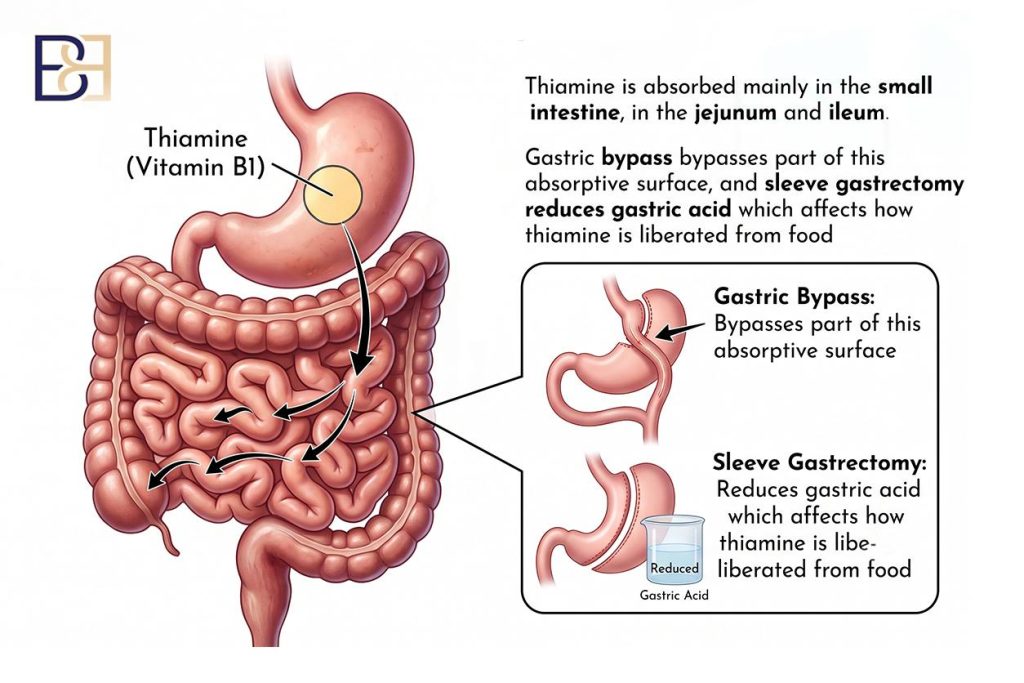
2. Malabsorption. Thiamine is absorbed mainly in the small intestine, in the jejunum and ileum. Gastric bypass bypasses part of this absorptive surface, and sleeve gastrectomy reduces gastric acid which affects how thiamine is liberated from food (7).
3. Vomiting. This is the single biggest trigger I watch for. Patients who have undergone bariatric surgery can develop recurrent vomiting for many reasons: strictures, food intolerance, rapid eating, and reflux. Recurrent vomiting both depletes existing stores and prevents replenishment. Research has observed that recurrent vomiting and rapid weight loss significantly increase the risk of thiamine deficiency after gastric bypass (8).

4. Small intestinal bacterial overgrowth (SIBO). After some bariatric procedures, bacteria can overgrow in the altered small bowel. These bacteria consume thiamine that would otherwise be absorbed through the gastrointestinal tract. This is a recognised mechanism of post-bariatric deficiency (1).

Add weight-loss medications to this picture, and it gets more nuanced. The formal deficiency rate among patients on weight-loss medications alone is low, at around 0.1% (2). But appetite suppression can reduce overall food intake, and if a patient also has a history of bariatric surgery, the two effects compound.
The numbers don’t lie
Here’s what published data shows for thiamine deficiency after bariatric surgery:
- Post-sleeve: around 9% at one year, around 25% at two years (1)
- Across all bariatric operations: roughly 10% to 30% prevalence, depending on procedure type (2)
- So-called “bariatric beriberi”: the post-surgical form of thiamine deficiency, has been reported in around 27% of bariatric surgery patients in some series (7)
- Weight loss medications alone: around 0.1% (2)
These numbers matter to me when I’m booking theatre. A patient who is two years post-sleeve has a one-in-four statistical chance of being thiamine deficient on the day I measure it. That’s not a risk I’m willing to take to theatre unchecked.
Current ASMBS guidelines recommend routine preoperative screening for thiamine deficiency before body contouring in patients who have undergone bariatric surgery (2). In practice, this means that thiamine supplementation is initiated whenever the blood test indicates it, rather than waiting for symptoms.
The follow-up problem makes this worse

Here’s something that doesn’t get discussed enough.
Research has shown that only around 29.6% of patients return for structured follow-up care at five years post-bariatric surgery (9). That means roughly 70% of the patients I see for body contouring have fallen out of formal vitamin surveillance by the time they reach my clinic.
For thiamine specifically, this matters. A patient who had perfect bloods at one year post-bariatric may be drifting slowly into deficiency at year three, four, or five, with nobody checking.
This is why my first step with any bariatric surgery patient isn’t surgical planning. It’s bloods.
The IV glucose trap: a safety point worth knowing
There’s one piece of physiology every person who has undergone bariatric surgery should understand, even if they never need it.
In a thiamine-depleted patient, glucose administration in high doses (for example IV dextrose in hospital) can precipitate acute thiamine deficiency. The glucose drives cellular metabolism that consumes whatever thiamine is left, and a patient who was borderline can tip into Wernicke’s encephalopathy within hours (6).
This is well known in emergency and anaesthetic medicine. It’s one of the reasons I communicate a patient’s bariatric history clearly to the anaesthetist and the hospital team before any surgery. If IV fluids or glucose are needed, thiamine administration comes first, not as an afterthought.
For weight-loss surgery patients undergoing abdominoplasty (tummy tuck), body lift (belt lipectomy), thighplasty (thigh lift), brachioplasty, or mastopexy, this is another reason why pre-operative optimisation matters.
What this means for you
If you’ve had bariatric surgery and you’re considering body contouring, the practical takeaway is: thiamine status can change quickly, follow-up drops off over time, and symptoms are a poor warning system.
This is why I order a full B-group vitamin panel as standard for every post-weight-loss patient, regardless of how long it’s been since bariatric surgery.
Thiamine deficiency: what it looks like clinically

Thiamine deficiency doesn’t announce itself with a single dramatic symptom.
It tends to creep in. Early signs are vague and easy to attribute to other things. By the time symptoms are severe enough to be obvious, the damage can already be partly irreversible.
This is why I’d rather catch it on bloods than wait for symptoms to tell me.
The early signs are easy to miss

In the initial stages, thiamine deficiency often shows up as:
- Fatigue that feels disproportionate to what the patient has actually done
- Muscle weakness, particularly in the legs
- Unsteadiness on feet or mild gait issues
- “Brain fog”: difficulty concentrating, slower thinking
- Low mood or irritability
- Numbness or tingling in the hands or feet
- Poor appetite (which then worsens the deficiency)
- Constipation, which is common in this group, can worsen nutritional absorption
Any one of these in isolation is non-specific. A patient who has undergone bariatric surgery might reasonably attribute fatigue to weight loss, or tingling to anxiety, or unsteadiness to deconditioning.
The problem is that several of these cluster together in someone with concerns. That’s the pattern I’m looking for when I take a history.
Published research shows that early signs of thiamine deficiency after bariatric surgery can include gait ataxia, muscle weakness, and convulsions, and these can progress to severe conditions if not treated promptly (2).
Beriberi: the classical clinical picture

“Beriberi” is the traditional name for symptomatic thiamine deficiency. There are two main forms, and people can have features of both.
Wet beriberi
Wet beriberi affects the cardiovascular system. The heart muscle doesn’t have enough energy to pump effectively.
Signs can include:
- Shortness of breath, especially on exertion
- Swelling in the legs and ankles
- A fast or irregular heartbeat
- Fatigue that worsens with activity
In its severe form, wet beriberi causes heart failure, and the cardiac picture can mimic other, more common causes of heart failure, which sometimes delays diagnosis (6).
Dry beriberi

Dry beriberi affects the nervous system rather than the heart.
Signs can include:
- Progressive weakness in the legs, then the arms
- Loss of sensation or altered sensation in the hands and feet
- Difficulty walking
- Loss of reflexes
- Muscle wasting in severe cases
- Seizures in severe or advanced deficiency
Patients often describe the peripheral neuropathy as “pins and needles that won’t go away” or “my feet feel wrong”. Over time, this can progress to actual weakness and coordination problems (6).
Wernicke’s encephalopathy: the emergency

Wernicke’s encephalopathy is the acute neurological form of thiamine deficiency. It’s characterised by a classical triad of:
- Confusion: disorientation, apathy, difficulty following conversation
- Ataxia: an unsteady, broad-based gait; the patient may look as if they’ve been drinking
- Eye signs: nystagmus (jerking eye movements), double vision, or weakness of the eye muscles(10)
The problem is that only a minority of patients present with all three features. Many have only one or two. That’s why published research describes Wernicke-Korsakoff syndrome as “under-recognised and under-treated”. The classical presentation is the exception, not the rule (10).
A patient in this group presenting with confusion and unsteadiness should be treated as possible Wernicke’s encephalopathy until proven otherwise. This is a medical emergency in which early diagnosis can change the outcome. The time window for preventing permanent damage ranges from hours to days, not weeks (6).
Korsakoff syndrome: the long-term cost of missing it

If Wernicke’s encephalopathy isn’t treated promptly, it can progress to Korsakoff syndrome.
Korsakoff is characterised by profound short-term memory loss, often accompanied by confabulatory tendencies, in which the patient unconsciously fills in memory gaps with plausible-sounding but inaccurate information.
This is frequently permanent. Damage to specific brain regions, particularly the mammillary bodies and parts of the thalamus, doesn’t reverse even with thiamine replacement (6).
This is the reason I take the early signs of thiamine deficiency as seriously as I do. The cost of missing it isn’t just a few weeks of symptoms. It can be lifelong cognitive impairment.
Why this matters around the time of surgery
The perioperative period is a window where several things align badly for a marginally deficient patient:
- Fasting before theatre reduces oral intake further
- Post-operative nausea and vomiting are common after any general anaesthetic
- IV glucose administration in hospital can precipitate acute deficiency in someone already borderline (as covered above)
- The stress of surgery increases metabolic demand
- Pain medications, particularly opioids, can reduce appetite and slow bowel function
A patient walking into the theatre with borderline-low thiamine is a patient who may walk out with a problem that wasn’t there before.
This is why I don’t rely on symptoms to tell me a patient is thiamine-deficient before theatre. By the time symptoms are clear, I’ve missed the window to fix it safely.
What I look for when taking a history

In consultation, I ask specifically about:
- Any episodes of vomiting in the last few months, even if the patient thinks they weren’t significant
- Changes in eating pattern, meal size, or food type
- Any new numbness, tingling, or “weird” sensations in the feet or hands
- Recent falls or unsteadiness
- Difficulty with memory or concentration that feels new
- Whether there’s been a recent weight loss phase
If several of these are present, I’m on high alert regardless of what the bloods eventually show.
Importantly, if a patient tells me they’ve been vomiting repeatedly in the weeks before planned theatre, I will delay the procedure until the cause is investigated and thiamine status is confirmed. This is one of the situations where “let’s just push through” is the wrong answer.
The key takeaway
Thiamine deficiency has a classical picture, but the classical picture is the minority of cases.
Most people who are drifting into deficiency have vague symptoms that could be attributed to almost anything: fatigue, tingling, brain fog, low mood. The combination is what matters, and in a weight loss surgery patient, the combination should trigger a blood test.
Once deficiency is severe enough to cause Wernicke’s encephalopathy, the clock is measured in hours. That’s why I take the pre-operative bloods seriously.
When IV thiamine is needed and how it’s managed

Most thiamine deficiency I see in clinic is subclinical. The patient feels reasonably well. The bloods show a level that’s below the reference range, but nothing dramatic. Oral supplementation will usually correct this within a few weeks.
But there’s a second scenario that changes everything: the patient with symptoms, or with a level so low that oral intake won’t fix it fast enough.
That’s when intravenous thiamine becomes the right answer.
The decision between oral and IV
The clinical decision comes down to three questions:
1. Does the patient have neurological signs?
If there’s any suggestion of confusion, ataxia, abnormal eye movements, new significant peripheral neuropathy, or memory disturbance, the working assumption is Wernicke’s encephalopathy. The answer is IV thiamine, without waiting for blood results to confirm.
This sounds aggressive. It isn’t. The cost of giving IV thiamine to a patient who turns out not to need it is close to zero. The cost of waiting on bloods in a patient who does need it can be permanent brain injury.
2. How low is the blood level?
Whole blood thiamine in Australian units runs 70 to 180 nmol/L. A result well below 70, particularly in a patient with risk factors or any symptoms at all, pushes the decision toward IV.
3. Can the patient tolerate intake by mouth reliably?
A patient who is actively vomiting, or who has a bariatric anatomy that impairs absorption, or who has just had surgery and can’t take tablets, may need IV even if the numbers don’t look catastrophic on paper. Thiamine tablets that don’t get absorbed don’t do the job.
What IV thiamine actually looks like
IV thiamine is delivered through an intravenous line in a hospital or clinic setting. It’s not a take-home treatment.
A commonly used protocol for treating or preventing Wernicke’s encephalopathy involves 100 mg of thiamine hydrochloride diluted in 100 mL of normal saline, given intravenously.(11) For severe or established deficiency, protocols often involve higher doses (for example 200 mg three times a day, or 500 mg daily for several days) followed by maintenance oral dosing once the patient has stabilised.(2)
Guidelines for post-bariatric patients with established thiamine deficiency often recommend parenteral thiamine in the range of 50 to 200 mg per day until symptoms clear, followed by thiamine of 10 to 100 mg per day for ongoing maintenance.(7)
The exact dose and regimen are determined by the treating team based on severity and clinical response. What matters from a patient’s perspective is that IV thiamine is a hospital-administered treatment. It’s not something you self-dose at home.
Why the “thiamine before glucose” rule matters
This is a point I mentioned earlier and it’s worth coming back to here, because it’s the most important single safety rule around thiamine.
In a thiamine-depleted patient, giving IV glucose without first giving thiamine can lead to or worsen acute thiamine deficiency. The glucose accelerates the metabolic pathways that use thiamine as a cofactor, and the last remaining reserves are consumed.(6)
The rule that’s taught in emergency and anaesthetic practice is: thiamine before glucose in any patient at risk.
For this group going into theatre, this is why I communicate the bariatric history clearly to the anaesthetist and to Maitland Private Hospital’s nursing team before the procedure. If IV fluids containing glucose are going to be administered, we want thiamine on board first.
This isn’t about over-cautiousness. It’s about recognising which patients need a different default.
How I manage this in my practice
Pre-operatively, my approach in a post-weight-loss patient is straightforward:
Step 1: Bloods. Whole blood thiamine is ordered as part of the standard pre-op panel for every post-weight-loss patient, along with the rest of the B-group vitamins. This happens 4 to 6 weeks before planned theatre.
Step 2: Interpret in context. A mildly low level in an asymptomatic patient gets repletion by mouth, usually 12 to 50 mg per day. A profoundly low level, or any level in a symptomatic patient, triggers a different conversation. This is typically a discussion with the patient’s GP, and potentially a referral for IV thiamine before booking.
Step 3: Recheck. After 4 to 6 weeks of oral supplementation, I repeat the blood test. If the level hasn’t moved, that tells me oral isn’t being absorbed effectively, and we escalate.
Step 4: Communicate on the day. Every patient’s surgical file has their bariatric history and B-vitamin status flagged clearly for the anaesthetic and nursing teams. This ensures perioperative decisions about fluids, anti-emetics, and analgesia are made with the full picture in front of them.
If a patient needs IV thiamine, I’m not the one giving it

This is worth being clear about.
IV thiamine in Australia is administered through a GP, a medical specialist, or in a hospital setting under nursing supervision. In practice, for my post-weight-loss patients who need it pre-operatively, this usually happens via:
- The patient’s GP, who can arrange it as an outpatient infusion
- A specialist physician, if there’s a broader work-up needed
- Maitland Private Hospital, if the IV thiamine is being given as part of planned admission
Post-operatively, if a patient develops concerning signs after discharge, the process is the same as for any urgent medical issue. They call the after-hours number at Maitland Private, where an experienced nurse will provide advice and, when needed, contact me directly. For anything requiring urgent physical assessment, the patient goes to their local emergency department. For life-threatening symptoms, 000.
I’m the surgeon. My job is to recognise the risk, order the right tests, interpret the results, and make the right decisions about whether and when to operate. The administration of IV thiamine sits with the treating medical team, and that’s the appropriate division of roles.
What this means for you as a patient
If you’re currently experiencing symptoms that might be thiamine deficiency, new tingling, unsteadiness, memory issues, significant fatigue, I’d rather know about this at consultation than after the procedure. Early honesty changes the plan. Late honesty changes the outcome.
Vitamin B6: the collagen cross-linking cofactor
If thiamine is the vitamin that worries me because of what it can do to the brain, vitamin B6 is the one that worries me because of what it can do to a scar.
Thiamine deficiency is loud when it shows up. B6 deficiency is quiet. A patient can be walking into clinic for abdominoplasty (tummy tuck) looking perfectly well, and still have a B6 level that’s going to compromise how their wounds heal.
This is the vitamin that matters for the surgical outcome itself, not just for patient safety.
What vitamin B6 actually does
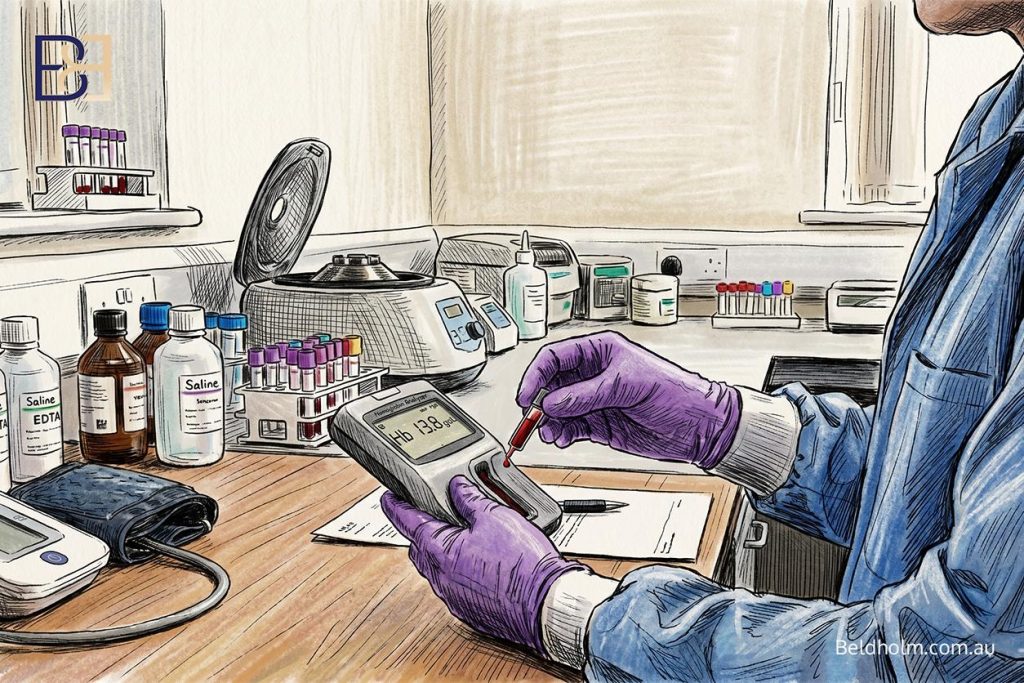
Vitamin B6 is the name for a group of related compounds. The active form in the body is pyridoxal-5-phosphate (PLP). When I test “B6” on bloods, PLP is what I’m actually measuring (2).
PLP is a cofactor for over 100 enzymatic reactions. That’s a staggering number for a single vitamin. The reactions it supports include:
- Amino acid metabolism: building the protein structures your body uses for everything from hormones to tissue repair
- Haemoglobin synthesis: B6 is directly involved in making the red blood cells that carry oxygen
- Neurotransmitter synthesis: serotonin, dopamine, GABA, and others all depend on B6
- DNA synthesis: required for cell division, including the cells that rebuild wounded tissue
- Glycogen metabolism: how the body stores and releases glucose
- Homocysteine metabolism: converting homocysteine to less harmful compounds
That last one has implications for DVT risk, and I’ll come back to it.
The collagen cross-linking story
This is the part that matters most for body contouring surgery.
When a surgical wound heals, the body lays down new collagen fibres. But collagen on its own is weak. What gives a healing scar its tensile strength is cross-linking, the chemical bonds that form between individual collagen fibres and knit them into a strong, stable matrix (12).
Vitamin B6 is a cofactor for lysyl oxidase, one of the key enzymes that catalyses this cross-linking. Without enough B6, the cross-links form poorly. The collagen is there, but the weaving is loose.
In practical terms, this means:
- Scars that take longer to gain strength
- Higher risk of wound dehiscence (where a healing wound pulls apart)
- Greater vulnerability to tension-related scar stretching or widening
- Potentially poorer final scar quality
Collagen cross-linking is a team effort. Vitamin C is needed for collagen synthesis in the first place. Zinc is involved in fibroblast function. Protein supplies the raw materials. But B6 is the cofactor that makes the collagen structurally sound once it’s there.
Published research has observed that B6 deficiency impairs wound healing through impaired DNA synthesis and reduced collagen cross-linking (2).
Why bariatric patients are vulnerable
The mechanisms are similar to thiamine, but there are some B6-specific twists.
Reduced absorption. Vitamin B6 is absorbed in the upper small intestine. Gastric bypass bypasses the duodenum and upper jejunum (where much of the B6 in foods is absorbed) cutting out significant absorptive surface. Sleeve reduces gastric acid, which impairs the liberation of B6 from food protein (7).
Protein metabolism pressure. B6 demand rises with protein intake. Post-bariatric patients are often on deliberately high-protein diets to preserve muscle mass during weight loss. Higher protein intake means higher B6 turnover, and without adequate intake, deficiency develops faster than the patient realises.
Multivitamin inadequacy. Standard multivitamins contain pyridoxine hydrochloride, which is the inactive form. Bariatric patients need to convert this into the active PLP form, and that conversion requires riboflavin (B2), zinc, and magnesium, all of which are commonly also low in this group. A patient can be taking a multivitamin every day and still be functionally B6 deficient because the conversion isn’t happening efficiently.
Weight loss medications. Appetite suppression reduces overall food intake. While formal B6 deficiency rates in patients on Weight loss medications alone are reported at around 2.6%, the picture can worsen if the patient also has a bariatric history (2).

The numbers in published research
Here’s what the data shows for vitamin B6 after bariatric surgery:
- Post-gastric-bypass patients: 17.6% deficiency at one year, 14.2% at two years, despite taking a multivitamin (4)
- Across all bariatric operations: 10% to 30% prevalence depending on procedure type (2)
- Patients on Weight loss medications alone: around 2.6% (2)
The 17.6% figure is the one I find most striking. These were patients who were doing what they’d been told, taking a multivitamin, and they were still deficient.
That tells me two things:
- A generic multivitamin isn’t always enough in this population
- Testing matters, because you can’t assume supplementation is working without measuring
These are the sort of nutritional deficiencies that only show up on bloods, not on how the patient feels day to day.
Where B6 fits in the DVT picture
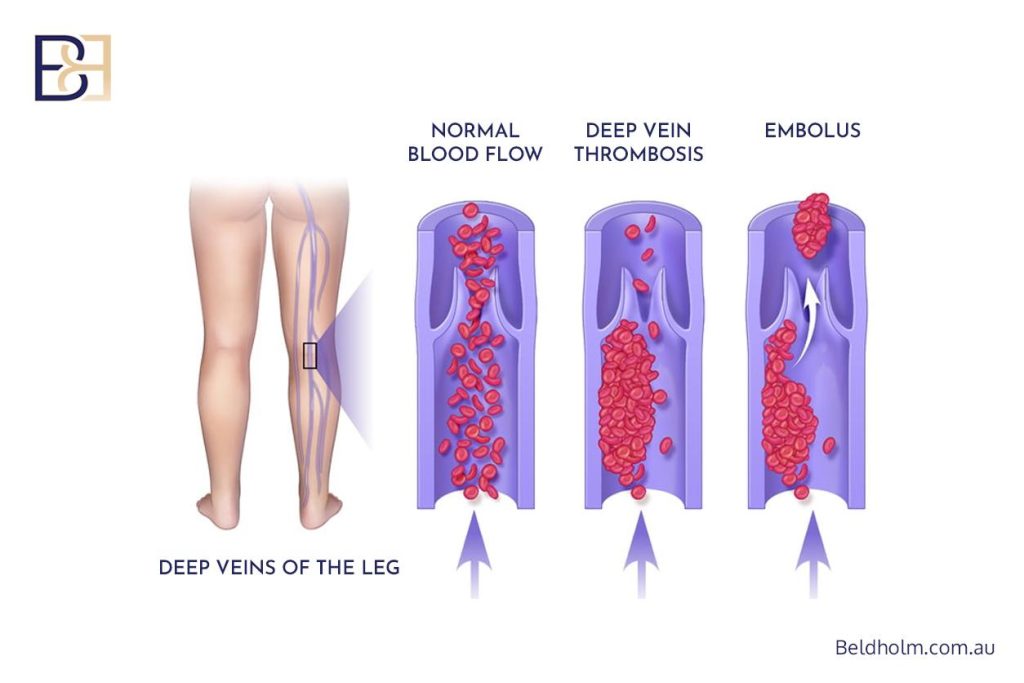
DVT prevention is a topic that deserves its own detailed discussion, and I’ve written about it separately. But B6 plays a specific role that’s worth mentioning here.
Homocysteine is an amino acid that the body produces as part of normal metabolism. Normally, it’s quickly converted into other, less harmful compounds. The enzymes that handle this conversion depend on three B vitamins: B6, B12, and folate.
When any of these three are low, homocysteine can accumulate. Raised homocysteine, above 15 µmol/L in Australian units, is associated with an increased risk of venous thromboembolism, reportedly two- to three-fold in some published data (3).
In my practice, homocysteine is not tested routinely on the first pre-op panel. I order it as a reflex test if B12, folate, or B6 come back low. This approach matches current Australian pathology practice and Medicare rebate criteria.
If homocysteine does come back elevated, the correction strategy involves combined supplementation of B6, B12, and folate, not B6 alone. The three work together in the pathway, and correcting one without the others gives incomplete results (3).
For a post-weight-loss patient going into body contouring surgery, where DVT risk and related surgical complications are already a clinical consideration, a low B6 that’s dragging homocysteine upward is something I want to identify and correct before theatre.
For a detailed breakdown of DVT risk and prevention in body contouring, please see my dedicated article on that topic.
What this means for the surgical outcome

The short version: low B6 is a wound-healing problem.
It’s not as dramatic as thiamine deficiency can be. A patient with low B6 isn’t going to end up in the hospital with neurological signs the day after the procedure.
But they may end up with:
- A slower recovery
- Wounds that feel weaker for longer
- Higher risk of scar separation at areas of tension
- Elevated homocysteine that adds to their DVT risk
These are the things I’m trying to prevent by checking B6 at the front end. Pre-operative optimisation isn’t just about whether surgery can happen safely. It’s about whether the result will be what both the patient and I are hoping for.
In the post-weight-loss group, achieving that result requires a clinical focus on nutritional status that wouldn’t be necessary in a patient who hadn’t undergone bariatric surgery or massive weight loss. That’s the reality of this patient population, and it’s why pre-operative optimisation is a non-negotiable part of how I work.
PLP (active form) versus pyridoxine HCl: why the form matters
Here’s a question patients rarely ask but should: “What form of B6 is actually in my supplement?”
Most of the time, the answer is pyridoxine hydrochloride, the inactive form. For a healthy patient with normal gut function, that’s fine. The body converts pyridoxine HCl into the active form and uses it.
For a weight-loss surgery patient, it’s often not ideal. And this is one of the reasons the 17.6% B6 deficiency rate after gastric bypass persists despite patients taking a multivitamin.(4)
The two forms explained
Vitamin B6 exists in several related forms in nature and in supplements. The two that matter for this conversation are:
Pyridoxine hydrochloride (pyridoxine HCl)

This is the inactive, storage form. It’s what’s in almost every standard multivitamin, every standard B-complex, and most of the B6 you’d find in a supermarket. It’s chemically stable and has a long shelf life.
The problem: it needs to be converted in the body before it can do anything useful.
Pyridoxal-5-phosphate (PLP, P5P)
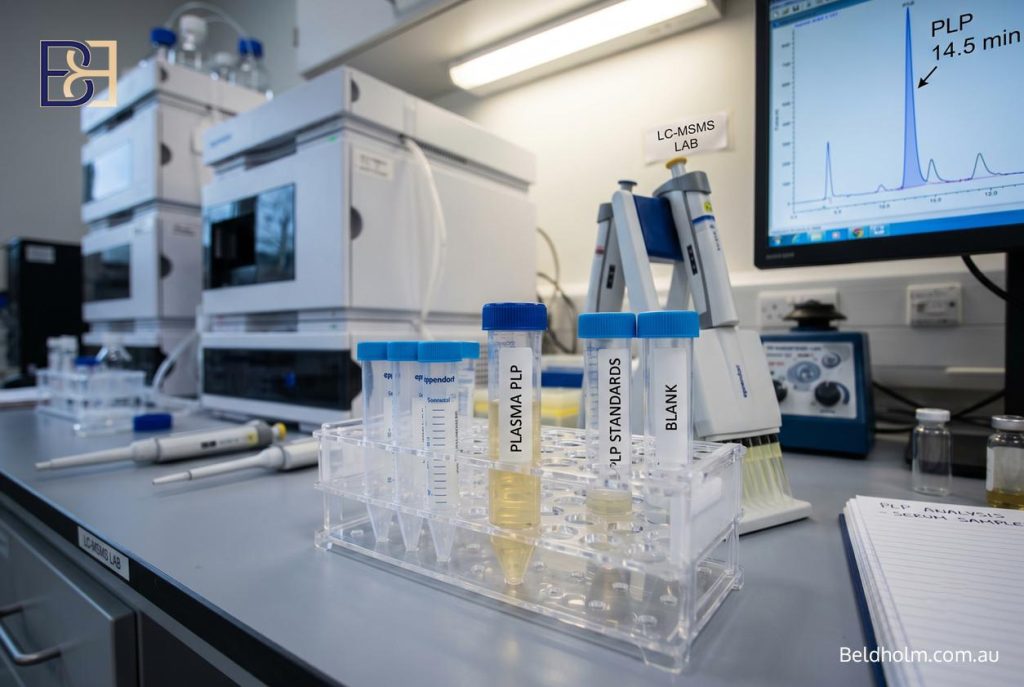
This is the active, biologically available form. It’s the form that actually does the work in your cells. PLP is the cofactor for all those enzymatic reactions I mentioned in the previous section. It’s also the form I measure on bloods (2).
In a healthy patient, the liver converts pyridoxine HCl into PLP through a two-step process.
Why the conversion can fail in this group
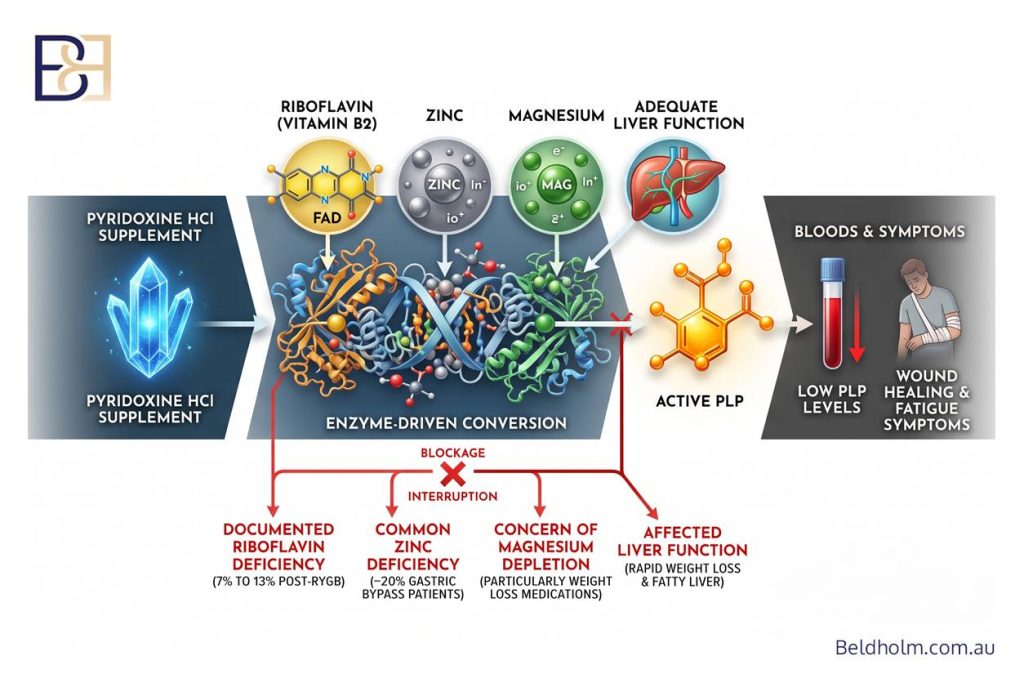
This is the key clinical point.
The conversion from pyridoxine HCl to PLP is enzyme-driven, and those enzymes have their own cofactor requirements. Specifically, the conversion depends on:
- Riboflavin (vitamin B2)
- Zinc
- Magnesium
- Adequate liver function
Here’s the problem. In these patients:
- Riboflavin deficiency is documented at 7% to 13% at one to two years post-RYGB, even with supplementation (7)
- Zinc deficiency is common, affecting around 20% of gastric bypass patients (2)
- Magnesium depletion is a concern, particularly in patients on weight loss medications
- Liver function can be affected by rapid weight loss and associated fatty liver changes
Stack these together and you have a patient who is taking pyridoxine HCl daily in their multivitamin, but whose body can’t efficiently convert it into the active form. On bloods, their PLP comes back low despite supplementation. On symptoms, they may have the wound healing and fatigue picture of B6 deficiency.
This isn’t a theoretical problem. It’s one of the practical reasons I measure PLP directly rather than trusting that “taking a multivitamin” is enough.
What to look for on a supplement label
When I review a patient’s vitamin stack in consultation, I’m specifically looking at what form of B6 they’re taking.
If the label says:
- “Pyridoxine hydrochloride” or “pyridoxine HCl”: inactive form
- “Pyridoxine” (no qualifier): almost always the HCl form
- “Vitamin B6 (pyridoxine)”: same
- “Pyridoxal-5-phosphate” or “P5P”: active form
- “Pyridoxal-5′-phosphate”: same thing, different notation
In Australia, most mainstream multivitamins (Centrum, Cenovis, Blackmores standard B-complex) contain pyridoxine HCl. You need to look at activated B-complex formulations or dedicated P5P products to get the active form.
The Australian brand picture

These are the options I discuss with patients when PLP form matters:
Activated B-complex products (contain PLP rather than pyridoxine HCl):
- Thorne Basic B Complex: contains PLP, methylfolate (5-MTHF), and methyl-B12. High quality, available via iHerb
- Ethical Nutrients Mega B Complex Activated: Australian brand, contains active forms of the B vitamins
- Pure Encapsulations B-Complex Plus: contains PLP and active folate, available via iHerb
Standalone PLP products:
- NOW Foods P-5-P 50 mg: high-dose standalone, via iHerb
- Thorne Pyridoxal 5′-Phosphate: 33 mg per capsule, via iHerb
Bariatric-specific multivitamins:
- Celebrate Vitamins Bariatric Multivitamin: formulated for these patients, typically contains active forms where it matters
- BN Multi (Bariatric Advantage): similar formulation philosophy
When I’d use the active form specifically
Not every person needs to take PLP. The decision depends on context.
I’d typically recommend the active form when:
- The patient has a confirmed history of gastric bypass (duodenal bypass affects conversion efficiency)
- Bloods show low PLP despite existing multivitamin use
- Riboflavin, zinc, or magnesium are also low on the pre-op panel
- The patient has a history of fatty liver or alcohol use
- There’s a specific concern about wound healing or scar quality
Standard pyridoxine HCl is usually adequate when:
- The patient is pre-bariatric or has had a sleeve gastrectomy with good absorption
- PLP on bloods is within range on a standard multivitamin
- The patient’s broader nutritional picture is well-controlled
The key principle is that we test, we interpret, and we adjust. The supplement is the tool. The blood level is the measure.
The key takeaway
Taking a multivitamin is not the same as having adequate B6 status.
For a post-bariatric patient, the form of B6 in the supplement, and the availability of the other nutrients needed to activate it, often determines whether supplementation actually works.
This is why my approach is:
- Test PLP directly, not total B6
- Check the full B-group panel at the same time, including riboflavin where clinically indicated
- Review the patient’s actual product labels in consultation, not just what they say they’re taking
- Use the active form of B6 (PLP) when the clinical picture indicates, particularly in post-RYGB patients
- Retest after 6 to 8 weeks to confirm the plan is working
The goal isn’t to put every person on every active form of every B vitamin. The goal is to make sure the patient who comes to theatre has the biochemistry to heal well.
The B6 overuse problem: when more isn’t better
There’s a specific pattern I see in my clinic that most people don’t know about.
A post-bariatric patient comes in, motivated, doing all the right things. They’re taking a comprehensive multivitamin. On top of that, they’ve added an activated B-complex because they read somewhere it was better absorbed. They’re drinking a couple of energy drinks a week because the weight loss phase left them feeling flat.
Then they describe new tingling in their feet. Or numbness in their fingertips. Or a sense that their balance is slightly off.
They’re not B6 deficient. They’re B6 toxic.
The paradox of B6
Vitamin B6 is one of the few water-soluble vitamins where too much can actually cause problems.
Most water-soluble vitamins, like vitamin C or the other B vitamins, are well tolerated at high doses. Excess gets excreted in the urine. Toxicity is rare.
B6 is different. Published research has shown that sustained high-dose B6 intake can cause sensory peripheral neuropathy. This is damage to the peripheral nerves that carry sensation information back to the brain. The symptoms can include numbness, tingling, loss of sensation, and impaired coordination (5, 13).
The mechanism isn’t fully understood. The leading theory is that when pyridoxine HCl is consumed in very high doses, the liver’s normal conversion to PLP gets overwhelmed. Unconverted pyridoxine then accumulates, and it appears to be directly neurotoxic at high concentrations (13).
Where the upper limit actually sits
Published evidence places the upper limit for sustained B6 dosing at around 100 mg per day (3).
Short-term higher doses, used under medical supervision to treat a documented deficiency, are generally safe. A patient taking 50 to 100 mg per day for four to six weeks to correct a low PLP is not at meaningful neuropathy risk.
The problem is chronic high-dose use. Patients taking 200, 300, or 500 mg per day for months at a time (often without realising how much they’re actually getting) are the ones who develop the neuropathy picture.
Where the accidental overdose comes from

In my clinic, the toxicity pattern rarely comes from a single product. It comes from stacking.
Here are the common sources I see:
Standard multivitamins. A typical adult multivitamin contains 1 to 2 mg of B6. Not a problem on its own.
Post-bariatric multivitamins. These often contain higher B6, typically 2 to 10 mg per tablet, sometimes taken twice daily. Still within a safe range when taken alone.
Standalone B-complex products. A standard B-complex can contain 25 to 50 mg of B6 per capsule. Some high-potency formulations contain 100 mg per capsule.
Energy drinks. Many popular energy drinks contain 10 to 40 mg of B6 per can. A patient who drinks two or three cans a day is adding 20 to 120 mg of B6 before they’ve taken any supplements.
“Nerve support” or “stress” formulations. These often contain high-dose B6, sometimes 50 to 100 mg, marketed for completely different purposes.
Pre-workout powders. Often contain 10 to 50 mg of B6 per serving.
When a patient stacks two or three of these (for example a bariatric multivitamin plus an activated B-complex plus a daily energy drink) the cumulative dose can push well past 100 mg per day.
Published research has specifically identified the problematic rise of vitamin B6 supplementation overuse and the potential risk in this population as a recognised clinical concern.(5)
What B6 toxicity looks like

The early signs of B6-induced peripheral neuropathy often mirror the early signs of B6 deficiency, which is confusing for patients and for clinicians.
Early signs can include:
- Numbness or tingling in the hands or feet
- “Pins and needles” that persists
- Altered sensation (feeling like socks are bunched up when they aren’t, for example)
- Loss of fine motor coordination
- Unsteadiness on feet
- Difficulty distinguishing hot from cold in the extremities
As toxicity continues, the symptoms can progress to:
- Permanent sensory loss
- Significant balance problems
- Impaired gait
The key clinical point is that B6 toxicity neuropathy is often reversible if caught early and the excess B6 is stopped. If it’s allowed to continue, nerve damage can become permanent (13).
How to tell deficiency from toxicity
Because the symptoms overlap, you can’t diagnose this from signs alone.
This is why the blood test matters. PLP measurement will clearly distinguish:
- Low PLP (below 20 nmol/L in Australian units) = deficiency
- Normal PLP (20 to 125 nmol/L) = adequate
- Very high PLP (above the upper reference range) = toxicity likely, audit supplements immediately
A patient who walks into clinic with new peripheral neuropathy symptoms doesn’t get guesswork. They get bloods.
How I audit a patient’s vitamin stack
When I see one of these patients in consultation, I don’t just ask “are you taking a multivitamin?”
I ask the patient to either bring every bottle to the appointment or to photograph the labels and send them through before consultation. Then I add up the B6 content across everything they’re actually consuming.
The specific things I’m looking for:
- Total daily B6 dose across all sources
- What form of B6 is in each product (pyridoxine HCl versus PLP)
- Whether any “bonus” products are stacked on top of the multivitamin
- Energy drink or caffeinated beverage consumption
- Any pre-workout, “nerve support”, or “stress” formulations
If the cumulative dose is above 100 mg per day on a sustained basis, we have a conversation about which products to step back from.
A specific warning for motivated patients
Post-weight-loss patients are, as a group, highly motivated and well-informed. Many have done significant reading on nutrition, supplementation, and optimal dosing.
This is usually a good thing. But it has a specific pitfall with B6.
“If some is good, more must be better” doesn’t apply here. The dose-response relationship for B6 is a curve that goes up, plateaus, and then comes back down into harm.
I’d much rather have a patient taking 50 mg per day of PLP under clinical guidance, monitored with repeat bloods, than a patient self-dosing 200 mg per day of pyridoxine HCl because they read it was “safe for B vitamins”.
What this means if you’re preparing for surgery
If you’re on multiple B-group products and you’re preparing for body contouring with me, expect two things:
- I’ll ask you to list everything: supplements, energy drinks, pre-workouts, “nerve support” formulas, everything
- I’ll test PLP directly rather than trusting that your symptoms tell me which direction you’re off in
If you develop new numbness, tingling, or balance issues in the weeks leading up to theatre, tell me. Don’t assume it’s nerve compression, anxiety, or “just one of those things”. The cause may be simpler, and easier to fix, than you think.
How I test thiamine and B6: and what the results mean for surgical timing
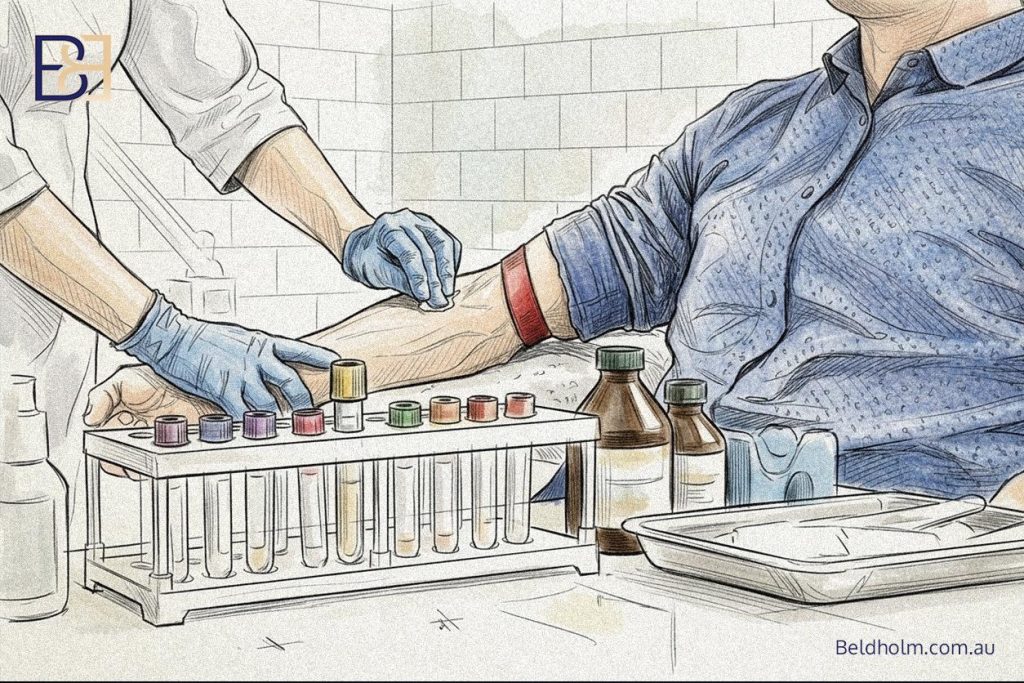
Everything I’ve covered so far comes down to two blood test results.
A post-weight-loss patient can have every risk factor in the book, bariatric anatomy, vomiting history, weight loss medication use, stacked supplements, five years out of formal follow-up, and still have adequate thiamine and B6 levels. Or none of those risk factors and still be deficient.
The only way to know is to measure.
Both tests sit on my standard pre-op panel
For every post-weight-loss body contouring patient, I order a comprehensive blood panel approximately 4 to 6 weeks before the planned surgery. Thiamine and vitamin B6 (PLP) are both on this panel as standard.
Under the Australian Medicare Benefits Schedule, both are rebatable under MBS item 66605, which covers multiple B-group vitamins in a single request, with appropriate clinical criteria. Post-bariatric or post-weight-loss history qualifies.
This matters because I’d rather test routinely and find nothing than test reactively and find something too late.
Whole blood thiamine: Australian units and reference range
Reference range: 70 to 180 nmol/L (whole blood)
Australian pathology labs increasingly report thiamine in nmol/L on whole blood. Some older protocols report in µg/dL, the conversion is straightforward if you need it (µg/dL × 29.6 = nmol/L), but most people will see the nmol/L figure on their results.
What the numbers mean:
- Above 70 nmol/L: within reference range. In a patient without symptoms or significant risk factors, this is reassuring.
- 50 to 70 nmol/L: borderline. In a patient with bariatric history or any concerning signs, I’ll usually treat this as low-enough-to-act-on and start repletion.
- Below 50 nmol/L: clearly low. Oral supplementation starts immediately, and I’m watching for any clinical signs that would push the decision toward IV.
- Below 30 nmol/L or any level with neurological symptoms: this is a conversation about IV thiamine before elective procedures goes ahead.
There’s no single number that’s a hard cut-off for surgery. The decision always depends on the whole clinical picture, the symptoms, the other bloods, how long we have before theatre, and whether the patient can reliably tolerate oral supplementation.
Plasma pyridoxal-5-phosphate (PLP): the B6 measurement

Reference range: 20 to 125 nmol/L (plasma PLP)
As I mentioned earlier, PLP is the active form of B6 and it’s what I measure directly. Some US protocols report B6 in ng/mL, the conversion is ng/mL × 4.046 = nmol/L. Australian labs report in nmol/L.
What the numbers mean:
- Above 125 nmol/L: high. This is the toxicity warning flag. Audit the patient’s vitamin stack.
- 20 to 125 nmol/L: within reference range. Adequate for surgery assuming the rest of the picture looks right.
- Below 20 nmol/L: low. Oral repletion starts, with specific attention to which form of B6 the patient is taking.
- Very low (below 10 nmol/L) or elevated homocysteine alongside: this changes the plan. Combined B6/B12/folate supplementation, and likely a recheck before surgery is confirmed.
Homocysteine: the reflex test

I don’t order homocysteine routinely. It’s only ordered if one or more of B6, B12, or folate come back low on the initial panel.
This approach matches current Australian pathology practice and Medicare rebate criteria. Under MBS, homocysteine is rebatable as a reflex test to an abnormal B12 result (item 66839 as a reflex to 66838).
Reference range: below 15 µmol/L
If it comes back elevated, particularly above 15 µmol/L, this is a 2 to 3 times increase in thromboembolic risk, and it’s a clinical finding I want to correct before surgery (3). Correction involves combined supplementation: B6, B12, and folate together. The three work as a metabolic team, and treating one without the others gives partial results.
Recheck at 4 to 6 weeks after starting the combined supplementation to confirm the homocysteine has come back into range.
The decision pathway: what I do with the results
This is the framework I use for most post-weight-loss patients:
Scenario 1: Both levels in range, no red flags
Proceed with surgical planning. Maintain multivitamin through to the day of theatre. Routine post-operative monitoring.
Scenario 2: Thiamine or B6 mildly low, patient asymptomatic
Start oral supplementation. Recheck at 6 weeks. If levels are improving and the patient is otherwise well, proceed with theatre as planned. If levels haven’t moved, escalate.
Scenario 3: Thiamine or B6 clearly low, patient asymptomatic
Start oral supplementation at a therapeutic rather than a maintenance dose. Recheck at 4 to 6 weeks. Surgery may need to be deferred by a few weeks depending on the recovery trajectory. This is a conversation I have directly with the patient.
Scenario 4: Thiamine is profoundly low, or any patient with neurological symptoms
This is the scenario where I’ll involve the GP, consider a referral for IV thiamine, and defer elective procedures until thiamine status is confirmed to be adequate. No post-weight-loss patient with concerning neurological symptoms goes into abdominoplasty (tummy tuck), body lift (belt lipectomy), thighplasty (thigh lift), brachioplasty, or mastopexy until that picture is properly worked up and corrected.
Scenario 5: B6 in toxicity range
Audit supplements. Stop any products contributing to the excess dose. Recheck at 6 weeks to confirm levels have come back into range. Surgery can usually proceed on schedule once supplementation has been adjusted.
Scenario 6: Homocysteine elevated
Combined B6/B12/folate supplementation. Recheck homocysteine and the three B vitamins at 4 to 6 weeks. Surgery timing depends on correction and the overall DVT clinical picture, which is covered in detail in my dedicated DVT article.
How this fits into the overall surgical timeline

For a typical post-weight-loss patient, the timeline looks something like this:
Consultation: Clinical history, physical examination, discussion of the procedure. Bloods ordered.
4 to 6 weeks before planned surgery: Initial pre-op blood panel including thiamine, PLP, and the full B-group. GP is copied on results.
Results review: I review the bloods and adjust the plan. For most patients with well-controlled status, this is a brief conversation. For patients with significant deficiencies, it’s a longer discussion about what we need to correct before surgery.
Supplementation phase: 4 to 6 weeks of targeted oral supplementation, with clinical review if any new signs develop.
Repeat bloods: Retest if initial panel showed deficiency. Retest if correction is uncertain.
Pre-surgical confirmation: Final review of vitamin status before booking. If status is adequate, we proceed. If not, we defer.
Post-operative follow-up: 6 to 8 weeks post-surgery, a handover package goes to the patient’s GP, including the pre-operative and post-operative bloods, the operation report, and the complete vitamin record.
What this means for you
The goal isn’t to make pre-operative optimisation feel like an obstacle course. It’s to make sure that when you come to theatre, your body has what it needs to heal the way both of us want it to. Comprehensive testing, honest discussion of the results, and a plan that reflects your actual biochemistry rather than a generic recommendation, that’s the standard.
Repletion protocols: what I use pre-op
Once bloods have come back and I know exactly what a patient is working with, the next step is correction.
Repletion looks different for thiamine and for B6. The doses are different, the time frame is different, and the monitoring is different. This section covers the practical side: what I actually prescribe, for how long, and with what monitoring.
Thiamine: repletion by mouth for most patients
For a post-weight-loss patient with mildly-to-moderately low thiamine and no concerning signs, oral supplementation is the standard approach.
My typical starting dose: 50 mg per day oral thiamine
Published guidelines recommend 12 to 50 mg per day for thiamine repletion (2). I tend to use the upper end of this range for patients with an active body contouring surgical plan, because the priority is to get blood levels up into the adequate range as efficiently as possible within the pre-op window.
For people who are borderline rather than clearly low (well above the reference range’s lower limit), a maintenance dose delivered through a bariatric-specific or post-bariatric multivitamin is often sufficient.
Typical Australian brand options for standalone thiamine:
- Blackmores Executive B Stress Formula: contains 100 mg of thiamine per tablet, one tablet daily
- Thompson’s B1 50 mg: single-vitamin formulation if the patient only needs B1 supplementation
- Pharmacy-compounded thiamine tablets: available at compounding pharmacies if specific doses are needed
Duration: 4 to 6 weeks before recheck.
Thiamine: IV repletion when oral isn’t enough

As I covered in the earlier section on IV thiamine management, there are specific situations where repletion by mouth isn’t the right answer:
- Any patient with neurological symptoms (confusion, ataxia, significant peripheral neuropathy, eye signs)
- Profoundly low blood levels, particularly below 30 nmol/L
- Patients who can’t reliably absorb oral supplementation: ongoing vomiting, for example
- Failure of oral repletion to improve blood levels at the recheck
In these cases, the decision moves to a referral for IV thiamine. This sits outside my direct administration. It’s managed through the patient’s GP, a specialist physician, or Maitland Private Hospital if part of a planned admission. The hospital treatment protocol typically involves intravenous thiamine hydrochloride delivered in normal saline, with dosing determined by the treating medical team based on severity.
Once IV repletion is complete and the patient has stabilised, we typically step down to maintenance dosing, usually 10 to 100 mg per day, depending on ongoing risk factors (7).
Vitamin B6: oral repletion strategy

The approach to B6 repletion is more nuanced than thiamine, because the form of repletion matters as much as the dose.
My typical dosing:
- Mild deficiency (PLP 15 to 20 nmol/L): 50 mg per day PLP form, or 50 mg per day pyridoxine HCl in a patient where conversion is expected to be adequate
- Moderate to marked deficiency (PLP below 15 nmol/L): 75 to 100 mg per day, preferably as PLP form, for 4 to 6 weeks
- Confirmed poor conversion (low PLP despite taking pyridoxine HCl multivitamin): Switch to PLP form directly
Published guidelines recommend 50 to 100 mg per day for B6 repletion in patients who have undergone bariatric surgery (2). ASMBS guidelines support this range as the recommended dose for active correction, stepping down to maintenance once PLP is in range. ASMBS recommends matching the dose to the degree of deficiency rather than using a fixed protocol.(2) The same principle applies to thiamine administration when repletion is needed.
The 100 mg per day ceiling matters here. This is the same threshold above which sustained dosing becomes associated with peripheral neuropathy risk. Therapeutic dosing below this level for 4 to 6 weeks is well-tolerated. I don’t go above this for any patient I’m managing for pre-operative optimisation.
Australian brand options for active-form B6:
- NOW Foods P-5-P 50 mg: standalone PLP, available via iHerb
- Thorne Pyridoxal 5′-Phosphate: 33 mg per capsule, available via iHerb
- Activated B-complex formulations (Thorne Basic B, Ethical Nutrients Mega B Complex Activated) for patients who need broader B-group support
Duration: 4 to 6 weeks before recheck, then stepping down to maintenance dose (1.3 to 2 mg/day) typically delivered through a comprehensive multivitamin.
Combined B6/B12/folate: when homocysteine is elevated
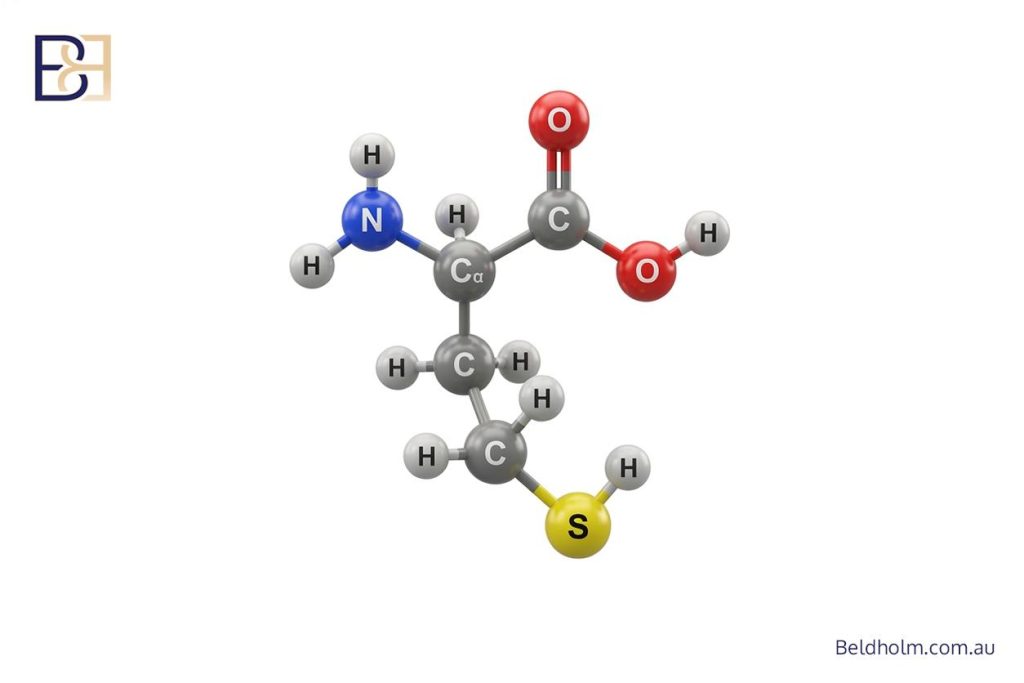
If the pre-op bloods show an elevated homocysteine level, the correction protocol changes.
Homocysteine metabolism depends on all three vitamins working together. Correcting one without treating the others gives partial results and doesn’t reliably bring homocysteine into range.
My combined protocol:
- B6: 50 to 100 mg per day PLP form
- B12: 1000 mcg per day oral or sublingual (methylcobalamin preferred in these patients, IM injection if absorption is genuinely compromised)
- Folate: 1 to 5 mg per day (methylfolate/5-MTHF form preferred, particularly in patients with suspected MTHFR variants)
Duration: 4 to 6 weeks before repeat homocysteine and full B-group panel. If homocysteine is trending toward range, continue at maintenance doses. If homocysteine remains elevated despite adequate B6/B12/folate, that’s a conversation about other underlying contributors.
The cofactor picture: don’t correct B6 in isolation
This is worth stating explicitly.
When I’m correcting B6, I’m usually also looking at:
- Riboflavin (B2) status: needed for the conversion of pyridoxine to PLP
- Zinc status: cofactor for the activating enzyme
- Magnesium status: particularly important in patients on GLP-1 medications
- Liver function: affects the liver’s capacity to convert pyridoxine forms
If any of these are also low, correcting them simultaneously usually yields better results than treating B6 in isolation.
For a patient with good riboflavin, zinc, and magnesium status, pyridoxine HCl will work reasonably well. For a patient with multiple deficiencies, PLP form is the more reliable choice while the broader picture is being treated.
Recheck: non-negotiable
Every post-weight-loss patient who had low thiamine or low PLP on the initial panel gets a repeat blood test before surgery is confirmed.
This is the recheck principle I keep coming back to. Supplementation can fail for multiple reasons:
- Wrong form of the vitamin
- Other cofactor deficiencies blocking conversion
- Absorption issues from bariatric anatomy
- Ongoing losses (persistent vomiting, for example)
- Patient not actually taking it as prescribed
Without the recheck, I don’t know which scenario I’m in. And for a patient going to theatre, assuming everything has worked is not a risk I’m prepared to take.
Recheck interval: 4 to 6 weeks after starting repletion.
If the recheck looks good, the procedure proceeds. If not, we troubleshoot, and that may mean changing the form of repletion, adding other nutrients, checking for underlying absorption issues, or in some cases deferring surgery until the picture is right.
Maintenance after surgery
Once a patient has had surgery and is past the perioperative window, nutritional management transitions back to their GP.
For these patients specifically, the GP manages lifelong nutritional follow-up. This isn’t something I take ownership of beyond the perioperative period. My role is pre-operative optimisation. The dietitian’s role is peri-operative management during the inpatient stay and early recovery. The GP’s role is the long game.
At 6 to 8 weeks post-op, the GP receives a full handover package from my practice. This includes:
- Pre-operative and post-operative bloods
- The operation report
- A complete vitamin record: Tier 1 maintenance and any Tier 2 interventions used, with doses and durations
- Monitoring recommendations for ongoing follow-up
This is how we make sure nothing gets lost in the transition from my care to the long-term management that these patients need.
What this means for you
The goal of repletion isn’t to hit a target number on a blood test. It’s to give your body the biochemistry it needs to heal well from a significant operation. That means a plan targeted to your actual results, not a generic prescription, and surgery timing that reflects your biochemistry rather than the calendar. That’s the standard I work to.
How this connects to the bigger picture
Thiamine and B6 are two vitamins in a panel of many.
No post-weight-loss patient I see has a deficiency in isolation. If B6 is low, there’s usually a reason, and that reason often touches vitamin B12, folate, zinc, or the broader protein and iron picture. Nutritional status in this group is a network, not a list.
This section is about how thiamine and B6 fit into that network, and how the surgical care team works together across the patient’s journey.
The B-vitamin family works as a team

The B vitamins overlap in function and often in deficiency. A patient who is low in one is frequently low in others.
For the thiamine and B6 conversation specifically:
- B6, B12, and folate share the homocysteine metabolism pathway. Deficiency in any of the three can elevate homocysteine and contribute to DVT risk.
- Riboflavin (B2) is required to convert pyridoxine into the active PLP form of B6. Low B2 means B6 repletion doesn’t work as well as the dose suggests.
- Thiamine is independent of the homocysteine pathway but shares many of the same absorption and malabsorption concerns. Same gut, same altered anatomy.
- Zinc and magnesium are cofactors for multiple B-vitamin activating enzymes. They’re not B vitamins themselves, but correcting B6 without considering them often gives incomplete results.
This is why my pre-op panel tests the whole B-group (thiamine, riboflavin where clinically indicated, B6 as PLP, B12, folate, and red cell folate) alongside the minerals. Cherry-picking one or two of these nutrients misses the pattern.
The wider picture of bariatric surgery malnutrition

Thiamine and B6 sit within a broader landscape of malnutrition risk after bariatric surgery. Nutritional deficiencies in this group commonly include vitamin D, vitamin A, vitamin B12, folate, iron, zinc, copper, and calcium among the minerals (2). Each has its own reason for going low, and each has its own clinical consequence.
A few that sit outside the scope of this article but matter to acknowledge:
- Iron deficiency and iron deficiency anaemia are common after gastric bypass, particularly in menstruating women after Roux-en-Y gastric bypass and in obese patients with a history of poor dietary intake before surgery. Low iron affects oxygen delivery during wound healing and is a recognised driver of post-operative complications.
- Copper deficiency is a well-documented complication after Roux-en-Y gastric bypass and biliopancreatic diversion. Copper deficiency can lead to a neurological picture that overlaps with B12 deficiency and with thiamine deficiency, particularly in patients with a long history of obesity. A comprehensive panel rather than a targeted one matters in this population.
- Abnormal calcium metabolism and elevated parathyroid hormone can develop after bariatric surgery, particularly after biliopancreatic diversion or in patients with low vitamin D. This is one reason vitamin D status is checked at baseline and again at 6 to 8 weeks post-op.
- Malnutrition of protein is the most common macronutrient deficiency after bariatric surgery, with published recommendations for postoperative protein intake of 60 to 120 grams per day (2).
In the setting of morbid obesity and in patients with a history of obesity before bariatric surgery, the common thread is that these nutritional deficiencies often coexist. A patient with low B6 also has a higher baseline risk of low B12, low calcium, low zinc, low iron, and low vitamin D. Comprehensive testing isn’t over-investigation. In these patients, it’s the clinical baseline.
The reality for obese patients approaching body contouring is that even a normal-looking dietary intake may conceal vitamin deficiencies that only surface on bloods. Adequate dietary intake of a balanced diet doesn’t always translate to adequate absorption after altered gut anatomy.
Each nutrient has its own dedicated article in this series, and I’d encourage patients to read the ones relevant to them. Thiamine and B6 get the focus here because they’re the two B vitamins with the highest surgical stakes and the lowest clinical recognition outside of specialist bariatric practice.
Thiamine and protein intake: the two-edged sword
Weight loss surgery patients are routinely advised to prioritise protein. Published guidelines recommend protein intake between 60 and 120 grams per day after bariatric surgery (2).
Protein matters. Muscle mass preservation matters. Wound healing depends on it.
But there’s an interaction worth knowing about. Higher protein intake increases the metabolic demand for thiamine and B6. Amino acid metabolism, which is what the body does with ingested protein, requires both vitamins as enzymatic cofactors.
This means a patient who has undergone bariatric surgery on a high-protein diet has higher B-vitamin demand than the same patient eating a regular diet. If intake or absorption of the B vitamins doesn’t keep pace, deficiency can develop faster than expected.
For the practical approach to pre-operative protein intake, I’ve written a dedicated article covering the evidence on protein targets, whey isolate supplementation, and practical strategies for post-weight-loss patients. The key point to carry into this conversation is that protein and B vitamins aren’t independent categories. They’re linked through metabolism.
The DVT picture: where B6, B12, and folate intersect
I’ve touched on this in several places already. It deserves one clear statement here.
Raised homocysteine is associated with a 2 to 3 fold increase in venous thromboembolism risk (3). In post-weight-loss body contouring, where the patient group already has elevated surgical complications and DVT rates compared with non-surgical patients, a B-vitamin driven homocysteine elevation is an additional risk factor I want to identify and correct before theatre.
The correction isn’t B6 alone. It’s combined B6, B12, and folate, because they share the metabolic pathway.
For a detailed breakdown of DVT risk assessment, thromboprophylaxis, and the specific decisions I make around body contouring surgery in post-weight-loss patients, please see my dedicated DVT article. This article is not the right place for that level of detail. That’s why the article series is structured the way it is.
Book your appointment online now
Who manages what: the role split
Pre-op management for a post-weight-loss patient doesn’t sit with any one clinician. It’s divided across three roles, and understanding this division helps patients know who to call, when.
Dr Beldholm’s role: pre-operative optimisation
My focus is the 4 to 6 weeks leading up to theatre. This is when:
- Comprehensive bloods are ordered
- Deficiencies are identified and supplementation is started
- Retesting confirms correction is on track
- Surgical timing is decided based on vitamin status
I’m the specialist focused on getting the patient to theatre in the best possible nutritional state for the specific operation I’m going to perform.
Dietitian’s role: peri-operative management

During hospital admission and early recovery, the dietitian becomes the central figure. At Maitland Private, we have an on-ward dietitian service available, and I frequently arrange dietitian review during admission to optimise recovery nutrition.
Hospital meals are designed for a general inpatient population. For post-weight-loss patients with elevated protein demands and bariatric anatomy, the dietitian can tailor the intake strategy: supplemental protein, texture considerations, pacing of meals, and dietary aids available through the hospital. Patients may also bring their own whey protein isolate if they prefer a specific product.
Early post-operative nutrition is the dietitian’s domain, not mine.
The GP’s role: long-term nutritional management
Once the patient is past the peri-operative window, typically from 6 to 8 weeks post-op onward, nutritional management transitions back to the GP.
For weight loss surgery patients specifically, this is lifelong. A patient who has had a gastric bypass or sleeve gastrectomy will need ongoing vitamin surveillance for the rest of their life. The GP is the right clinician to run that long-term monitoring.
At the 6 to 8 week point, my practice sends a complete handover package to the GP. This includes:
- Pre-operative and post-operative bloods
- The operation report
- A complete vitamin record: every product started, its dose, its duration
- Monitoring recommendations
This handover is clinic-to-GP, direct. Patients don’t carry records between clinicians. That responsibility sits with my practice.
This matters because many post-weight-loss patients still live with residual comorbidities such as diabetes, cardiovascular disease, or sleep apnoea. This matters because many post-weight-loss patients still live with residual comorbidities such as diabetes, cardiovascular disease, or sleep apnoea. Part of what’s communicated in the handover is that this patient benefits from ongoing B-vitamin monitoring as part of their long-term care. As covered earlier, the majority of weight loss surgery patients drop out of formal vitamin surveillance within five years of their operation. Flagging the need for ongoing surveillance to the GP is how we try to change that trajectory for patients who come through my practice.
What nutrition the article doesn’t cover
I want to flag what this article deliberately doesn’t go deep on, because it’s worth knowing where else to look.
Procedure-specific considerations. The B-vitamin picture is broadly similar across abdominoplasty (tummy tuck), body lift (belt lipectomy), thighplasty (thigh lift), brachioplasty, and mastopexy. Pre-operative optimisation principles don’t change by procedure. For procedure-specific questions about incision design, recovery, and what to expect, I have dedicated articles on each operation.
DVT risk breakdown. The B6-homocysteine angle is covered here. The full DVT clinical picture (including operative times, staging decisions, thromboprophylaxis regimens, and the full clinical workup) is in my DVT article.
Other vitamins in the pre-op panel. Vitamin D, vitamin A, vitamin C, iron, zinc, B12, folate, and protein all have their own articles in this series. Each is important. None of them changes the thiamine or B6 message.
Patient selection criteria and surgical candidacy. BMI considerations, weight stability requirements (six months minimum for MBS body contouring item numbers, and typically six to twelve months is my clinical recommendation), and the clinical judgement around who is and isn’t a candidate for body contouring are covered in the patient selection content on my site.
The integrated message
If I had to compress this whole article into one message, it would be this:
Thiamine and B6 are two vitamins in a wider nutritional picture. Both are common to deficient in post-weight-loss patients. Both matter for surgical safety and surgical outcome. Both are straightforward to test and straightforward to correct, but only if they’re tested.
The broader picture is that this patient group needs a team. A surgeon focused on pre-operative optimisation and the procedure itself. A dietitian for peri-operative and early recovery. A GP for the long game. When those roles are working together, the result is a patient who comes through surgery well and has the ongoing support they need afterward.
That’s the standard I aim for in my practice. It’s not the fastest approach, but it reflects the reality of what post-weight-loss patients actually need.
Red flags I ask every patient about
There are specific things I ask every post-weight-loss patient at consultation, regardless of how well they look and how long it’s been since their bariatric surgery.
These are the questions where the answer changes my approach. If any of them are a yes, it prompts a different conversation about testing, timing, and what needs to happen before booking.
I’m putting them here because patients who read this before consultation tend to come in better prepared. A patient who has already thought about whether any of these apply can give me a much clearer history, and we can move faster through the assessment.
1. Ongoing vomiting or reflux
This is the single biggest red flag in this population.
Vomiting depletes thiamine quickly. It also signals that something may not be right with the bariatric anatomy: a stricture, a hiatus hernia, reflux not adequately controlled, or a problem with eating pace or food tolerance.
I ask about:
- Any vomiting in the last three months, even if it was occasional
- Reflux that’s been getting worse
- Food getting stuck or needing to be brought back up
- Any hospital admissions for dehydration or nausea
If any of this is present and unresolved, I’ll often delay surgical planning until the cause is investigated. This is not a “push through” situation.
2. New or worsening neurological symptoms
Anything new in the sensory or balance picture is worth asking about directly.
Specifically:
- Tingling or numbness in the feet or fingers that’s new
- Feeling unsteady on your feet, or like your balance is “off”
- Memory issues or “brain fog” that feels different from usual
- Feeling weaker than you should in the legs when climbing stairs
- New difficulty with fine motor tasks: buttons, writing, typing
These symptoms can point in several directions. Thiamine deficiency is one. B6 toxicity from over-supplementation is another. B12 deficiency is a third. There are others too.
The point is that I don’t want to assume what’s causing it. I want bloods and, if the picture warrants it, appropriate neurological assessment through the GP before surgery.
3. Weight loss medication use and appetite
If a patient is currently on weight loss medications (or was recently), I ask:
- How is your appetite on the medication?
- Are you able to meet your protein target most days?
- Any significant weight loss in the last three months?
- Any nausea that’s affecting what you can eat?
Appetite suppression is how these medications work. But in a patient with bariatric anatomy, reduced appetite on top of reduced capacity can push protein and micronutrient intake below what’s needed for surgery.
Current Australian anaesthetic guidance does not recommend routinely stopping weight loss medications before surgery. I follow that approach. But if a patient can’t meet protein targets because of appetite suppression, that’s a conversation I might have with the treating team about a temporary dose reduction as a clinical judgement call.
Patients should never self-adjust these medications. If there’s a concern, it’s discussed through the treating team.
4. Your current product stack
This is where I want to see everything.
- Every multivitamin, separately or bundled
- Every B-complex or activated B-complex
- Any standalone B6, thiamine, folate, or B12
- Energy drinks, pre-workouts, or “nerve support” products
- Any supplement marketed for “stress”, “mood”, or “nerve health”
I’d rather over-audit than miss something. A patient who stacks a bariatric multivitamin on top of an activated B-complex on top of two daily energy drinks can be unknowingly consuming well over 100 mg of B6 per day, enough to push into peripheral neuropathy territory.
The practical ask: bring every bottle to the appointment, or photograph the labels and send them through before consultation. It takes ten minutes. It tells me more about your clinical picture than almost any other piece of the history.
5. How long it’s been since your last bloods
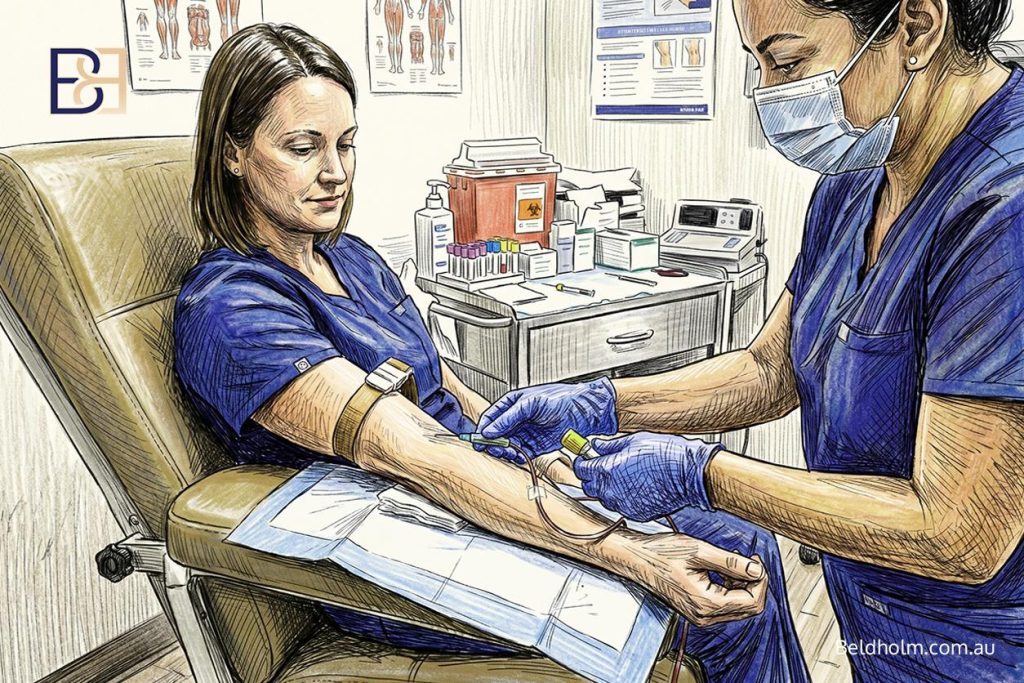
If the answer is “over a year”, I’m ordering a full panel regardless of how well you feel.
Weight loss surgery people can drift into deficiency over time without symptoms. A patient who was perfect at one year post-bariatric may be quietly low by year three or four. The only way to know is to measure.
Specifically I want to know:
- When did you last have a full blood panel?
- Was it a routine GP panel, or was it specifically set up for post-bariatric monitoring?
- Were any abnormalities found, and were they followed up?
- Are you still seeing your bariatric team, or have you stopped that follow-up?
If formal post-bariatric follow-up has stopped, this is something I’ll flag in my handover to your GP after surgery.
6. Your bariatric surgery history
This sounds basic, but the details matter.
- What bariatric operation did you have?
- When was it?
- Were there any complications at the time or since?
- How much weight did you lose?
- Has your weight been stable for at least 6 months?
The type of bariatric operation tells me which deficiencies are most likely. Gastric bypass carries higher concern of B6, thiamine, B12, and iron deficiency than sleeve gastrectomy. Biliopancreatic diversion carries higher concern than either. The timeline matters because some deficiencies develop slowly and some develop fast.
Weight stability before body contouring is a separate topic, covered in the patient selection content on my site, but it’s one of the things I’ll ask about and factor into timing.
7. Any history of falls, unexplained bruising, or slow wound healing
These aren’t necessarily about thiamine or B6 specifically, but they can point to deficiencies that will affect surgery:
- Unexplained falls or near-falls: could be neurological
- Easy or unexplained bruising: could be vitamin K, vitamin C, or platelet issues
- Cuts or scrapes that have taken longer than expected to heal: multiple possible causes, including B6, vitamin C, zinc, or protein issues
- Any history of pressure sores or wound problems after prior surgery
If the patient has had prior surgery with poor healing, that’s particularly important. It’s a signal that the same pattern could play out again unless we treat what’s driving it.
8. Anything else you’ve been putting off mentioning
Patients sometimes downplay symptoms because they’re worried about being told they can’t have surgery. Others forget to mention things because they don’t seem relevant to a body contouring consultation.
It’s far better to know early and plan around it than to find out the day before surgery.
The things most commonly left unmentioned at first consultation:
- Ongoing low-grade nausea
- Episodic dizziness
- Any new medication started in the last six months
- Any other specialist you’re currently seeing for an unrelated issue
- Any change in bowel habit
I’d rather have a longer consultation with the full picture than a short one with pieces missing.
What I do with the answers
Each of these questions is looking for a trigger, something that changes from “routine pre-op workup” to “let’s investigate this further before we book”.
If nothing is flagged, the standard pre-op blood panel and a clinical review is usually all we need.
If something is flagged, we follow it up. That might mean:
- Additional blood tests beyond the standard panel
- Referral back to your GP or a specialist physician for investigation
- Imaging, if there’s concern about the bariatric anatomy
- Neurological assessment, if symptoms warrant it
- A delay in the surgical timeline while the issue is worked up
The delay isn’t a punishment or a setback. It’s the work that has to be done to make the procedure safe and the outcome worth it.
The patient who does this well

The post-weight-loss patients who come through surgery best are the ones who’ve done the preparation thoroughly:
- Honest history
- Full product audit
- Recent bloods before consultation if they have them
- Realistic timeline expectations
- Willingness to treat deficiencies or symptoms before booking
Closing thoughts
Thiamine and vitamin B6 don’t get the attention that protein, iron, and vitamin D do in post-weight-loss nutrition.
They should.
Thiamine is the vitamin that can hurt a patient fast. Severe deficiency causes neurological damage that can be permanent, and post-bariatric anatomy creates exactly the conditions for it: reduced intake, malabsorption, vulnerability to vomiting, and a body that stores almost no reserve.
Vitamin B6 is the vitamin that quietly affects how well a wound heals. Collagen cross-linking depends on it. So does homocysteine metabolism, which ties directly into DVT risk. And unlike most water-soluble vitamins, B6 is one where too much can also cause harm, a pattern I see more often in motivated patients in this group than many clinicians realise.
Both are straightforward to test. Both are rebatable on the standard pre-op panel. Both can be corrected in the weeks before surgery when deficiency is found.
The work isn’t complicated. It just has to actually be done.
What I hope you take from this article
If you’ve read through all of this, a few things are worth holding onto:
- Pre-op optimisation isn’t a formality. It’s a clinical process that affects both safety and outcome.
- Taking a multivitamin doesn’t mean your levels are adequate. The only way to know is to measure.
- The form of B6 matters. If you’ve had gastric bypass, the active form (PLP) is often what’s needed.
- Over-supplementation can be as much of a problem as under-supplementation, especially with B6.
- Symptoms are not a reliable early warning. The blood test is.
None of this is designed to alarm anyone. It’s the pre-operative homework I do with every post-weight-loss patient, and I’d rather have a patient who understands why I’m doing it than one who views the preparation as an inconvenience.
A realistic expectation
The goal of everything I’ve written here is to make sure that when you come to theatre for abdominoplasty (tummy tuck), body lift (belt lipectomy), thighplasty (thigh lift), brachioplasty, or mastopexy, your body has the biochemistry it needs to heal from a significant operation.
That’s what pre-operative optimisation is about.
Results vary from patient to patient based on tissue quality, healing biology, body habitus, and many other factors beyond nutrition. It’s about removing the preventable variables, so that the recovery process has the best possible foundation to work from.
Every post-weight-loss body contouring patient I see goes through this process. It adds time to the pre-operative phase. It can mean a delay if significant deficiency is found. And in my experience, patients who engage with it fully tend to do better through recovery than those who treat it as a box to tick.
If you’re considering surgery

If you’re thinking about body contouring after weight loss and you’re not sure where you stand nutritionally, the practical first step is a consultation with bloods.
Come with your product list, your bariatric surgery history, and an honest account of how you’ve been feeling. Expect a comprehensive pre-operative blood panel. Expect an individualised discussion about what your results mean and what we’d do about them.
Nothing in this article replaces that consultation. But patients who arrive having thought about what’s in here tend to get more out of the appointment.
That’s worth something. To you, and to me.
This article is part of a broader series on pre-operative optimisation for post-weight-loss body contouring surgery. For details on the specific procedures, the DVT risk picture, and the other nutrients discussed here in context, please see the linked articles below.
References
- Tang L, Alsulaim HA, Canner JK, Prokopowicz GP, Steele KE. Prevalence and predictors of postoperative thiamine deficiency after vertical sleeve gastrectomy. Surg Obes Relat Dis. 2018;14(7):943–950. doi:10.1016/j.soard.2018.03.024.
- Mehta A, et al. Nutritional Challenges in Post-Massive Weight Loss Body Contouring: Guidance for Plastic Surgeons on GLP-1 Agonists and Sleeve Gastrectomy. Plast Reconstr Surg. 2025.
- Li M, Ren R, Wang K, Wang S, Chow A, Yang AK, Lu Y, Leo C. Effects of B Vitamins on Homocysteine Lowering and Thrombotic Risk Reduction: A Review of Randomized Controlled Trials Published Since January 1996. Nutrients. 2025;17(7):1122. doi:10.3390/nu17071122.
- Clements RH, Katasani VG, Palepu R, Leeth RR, Leak ZM, Vickers SM, et al. Incidence of vitamin deficiency after laparoscopic Roux-en-Y gastric bypass in a university hospital setting. Am Surg. 2006;72(12):1196–1202.
- Bossard V, Bourmeyster N, Pasini S, Dupuis P, El Balkhi S, Richard E, Alarcan H, Hauet T, Thuillier R. Problematic rise of vitamin B6 supplementation overuse and potential risk to bariatric surgery patients. Nutrition. 2022;102:111738. doi:10.1016/j.nut.2022.111738.
- Mrowicka M, Mrowicki J, Dragan G, Majsterek I. The importance of thiamine (vitamin B1) in humans. Biosci Rep. 2023;43(10):BSR20230374. doi:10.1042/BSR20230374.
- Agha-Mohammadi S, Hurwitz DJ. Nutritional deficiency of post-bariatric surgery body contouring patients: what every plastic surgeon should know. Plast Reconstr Surg. 2008;122(2):604–613. doi:10.1097/PRS.0b013e31817d6023.
- Wilson RB. Pathophysiology, prevention, and treatment of beriberi after gastric surgery. Nutr Rev. 2020;78(12):1015–1029. doi:10.1093/nutrit/nuaa004.
- Shah M, Simha V, Garg A. Review: long-term impact of bariatric surgery on body weight, comorbidities, and vitamin status. J Clin Endocrinol Metab. 2006;91(11):4223–4231. doi:10.1210/jc.2006-0557.
- Isenberg-Grzeda E, Kutner HE, Nicolson SE. Wernicke–Korsakoff syndrome: under-recognized and under-treated. Psychosomatics. 2012;53(6):507–516. doi:10.1016/j.psym.2012.04.008.
- Dingwall KM, Delima JF, Binks P, Batey R, Bowden SC. What is the optimum thiamine dose to treat or prevent Wernicke’s encephalopathy or Wernicke–Korsakoff syndrome? Results of a randomized controlled trial. Alcohol Clin Exp Res. 2022;46(6):1133–1147. doi:10.1111/acer.14843.
- Agha-Mohammadi S, Hurwitz DJ. Enhanced recovery after body-contouring surgery: reducing surgical complication rates by optimizing nutrition. Aesthetic Plast Surg. 2010;34(5):617–625. doi:10.1007/s00266-010-9522-x.
- Cupa N, Schulte DM, Ahrens M, Schreiber S, Laudes M. Vitamin B6 intoxication after inappropriate intake with micronutrients following bariatric surgery. Eur J Clin Nutr. 2015;69(7):862–863. doi:10.1038/ejcn.2015.83.