Quick Reference Summary
What vitamin K does
Vitamin K is a fat-soluble vitamin that exists in two main forms, each doing a different job in the body.
- Vitamin K1 (phylloquinone) acts in the liver as a cofactor for blood-clotting proteins.
- Vitamin K2 (menaquinones) acts in the rest of the body. It activates the proteins that direct calcium into bone and away from blood vessels and soft tissue.
Disclaimer: Operation performed by Dr Bernard Beldholm. Adult content: surgery has risks; individual results vary. Seek a second opinion. Please see the full disclaimer.
Who is most at risk of deficiency?
- Patients after Roux-en-Y gastric bypass or biliopancreatic diversion (fat malabsorption)
- Patients after sleeve gastrectomy (reduced intake, food aversion, altered preferences)
- Patients on weight loss medications with reduced overall dietary intake
- Patients with a history of repeated or prolonged antibiotic courses
- Patients on high-dose vitamin D3 without paired K2
How I assess it pre-operatively
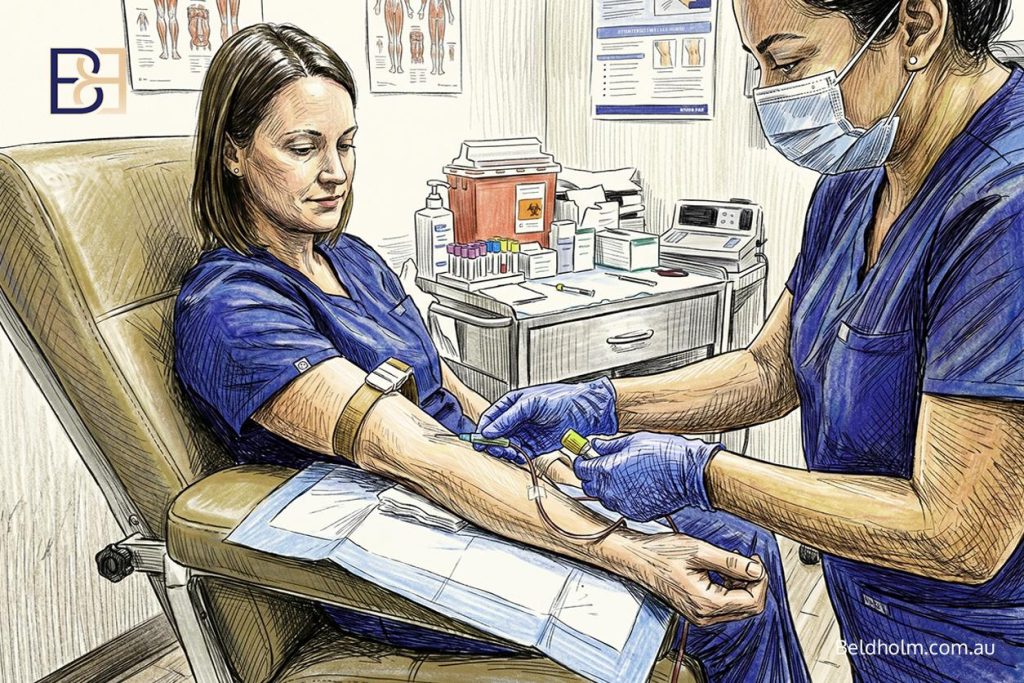
- Prothrombin time on the standard pre-operative coagulation panel
- Clinical history covering weight loss surgery type, years since surgery, supplement history, medication list, and antibiotic exposure
- Patient-reported symptoms such as bruising or unexplained bleeding
- I do not routinely order a standalone vitamin K blood test. It is not well standardised for surgical patients and rarely changes management.
Tier 1 supplement protocol
- Vitamin K2 MK-7 at 100 mcg per day, paired with vitamin D3, is part of my universal Tier 1 supplement list for every post-weight-loss body contouring patient.
- Preferred combined product: NOW D3+K2 5000 IU (single capsule).
- Alternative: Ostelin Vitamin D3 1000 IU paired with a standalone K2 MK-7 100 mcg supplement.
- Available from Chemist Warehouse, Pharmacy Direct, and Amazon AU.
- Commenced at surgical planning, minimum 4 weeks before surgery.
Australian dietary reference intake (AI)
- Women: 60 mcg per day
- Men: 70 mcg per day
- No established tolerable upper intake level for vitamin K in people not taking vitamin K antagonists such as warfarin.
Key interaction to flag
- Warfarin and other vitamin K antagonists are directly affected by changes in vitamin K intake. I manage anticoagulant timing around surgery in partnership with the GP. Patients must not self-adjust.
Clinical disclaimer
The information on this page is general in nature and does not replace individual clinical advice. Results vary between patients, and any nutritional or medication change should be discussed at a consultation or with your GP.
Table of Contents
Introduction
Most patients who come to see me about body contouring surgery after major weight loss already know that protein and iron matter for surgery. Very few arrive having thought about vitamin K. That gap is worth closing, because vitamin K sits at the intersection of two clinically important concerns for this patient group.
The first is surgical bleeding. Vitamin K1 is required to activate the clotting factors your body produces to stop bleeding at the surgical site. If K1 status is inadequate, your ability to clot is reduced. This shows up on the pre-operative blood panel as a prolonged prothrombin time, but it can also be present at a level that standard bloods do not fully capture.
The second is bone and vascular health. Vitamin K2 activates two separate proteins in the body: one binds calcium into bone, and the other prevents calcium from depositing where it should not, such as in blood vessel walls and soft tissue. Post-weight-loss patients are already at elevated risk of bone loss after bariatric surgery. High-dose vitamin D3 supplementation, which is almost universal in this group, increases calcium absorption. Without adequate K2, calcium does not reliably get directed to bone.
In my practice, vitamin K is included in the Tier 1 supplement protocol for every post-weight-loss body-contouring patient. It is not conditional on blood results or specific surgical history. K2 MK-7 is prescribed at 100 mcg per day alongside high-dose D3, from the moment surgical planning begins. This is a deliberate decision based on the published evidence and the clinical profile of this patient group.
This article covers what you need to know going into that conversation.
- What K1 and K2 actually do, and why they are different
- Why fat-soluble vitamin absorption is compromised after Roux-en-Y gastric bypass and biliopancreatic diversion, and less so after sleeve gastrectomy
- How repeated antibiotic courses affect K2 production from gut bacteria
- Why the D3 and K2 pairing matters, and why I never prescribe one without the other
- Dietary sources of K1 and why most post-weight-loss patients under-consume them
- Australian dietary reference intakes and what they tell us
- The warfarin interaction and how it is managed around surgery
- How vitamin K status relates to each procedure I perform: abdominoplasty (tummy tuck), body lift (belt lipectomy), thighplasty (thigh lift), brachioplasty (arm lift), and mastopexy (breast lift)
The content is relevant across every body contouring procedure I perform after major weight loss. Whether the planned surgery is an abdominoplasty, a body lift, a thighplasty, a brachioplasty, or a mastopexy, the underlying nutritional risk profile is the same regardless of the area of excess skin being treated. Body contouring procedures after significant weight loss share a common pre-operative workup, and the supplement framework applies the same way.
What Is Vitamin K? K1 and K2 Explained
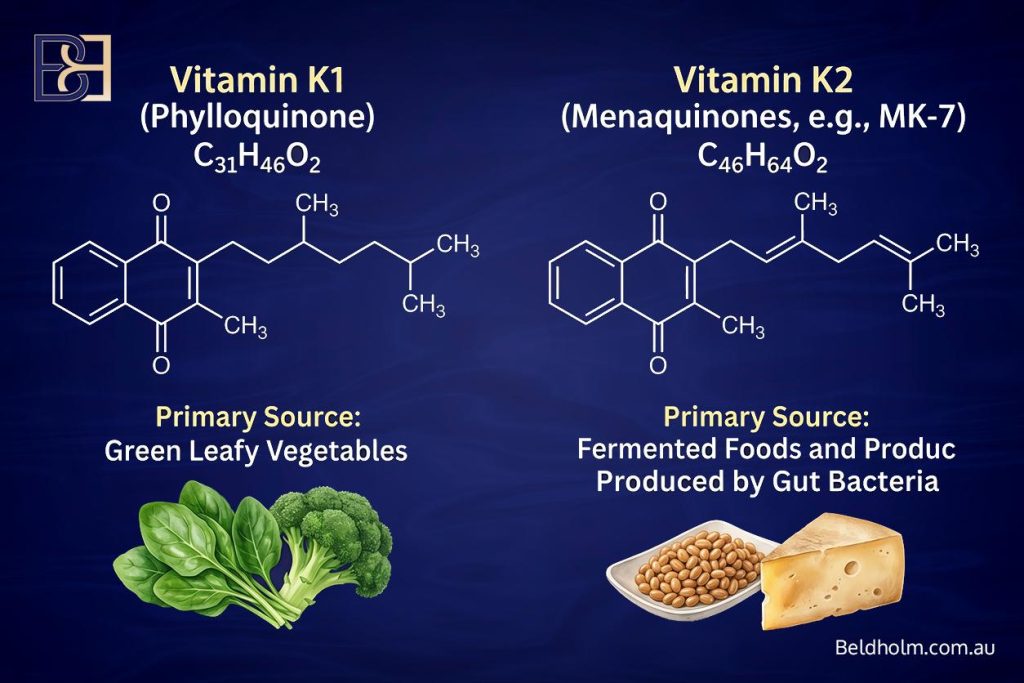
Vitamin K is a fat-soluble vitamin that exists in two main forms. They share a name, but they do different jobs in different parts of the body. Understanding that distinction is the foundation for everything else in this article.
Vitamin K1 (phylloquinone)
Vitamin K1, also called phylloquinone, makes up the majority of total vitamin K intake in most diets (1,2).
- It is found primarily in green leafy vegetables. Kale, spinach, silverbeet, broccoli, and Brussels sprouts are among the richest sources.
- Its main site of action is the liver.
- Its primary role is activating the coagulation proteins responsible for stopping bleeding.
This is the clotting function most people associate with vitamin K. Factors II, VII, IX, and X, along with proteins C and S, all require vitamin K1 to become functional (1). These vitamin K-dependent proteins are the foundation of normal clotting. Without adequate K1, the coagulation cascade fails at multiple points, increasing the risk of bleeding.
Vitamin K2 (menaquinones)
Vitamin K2 is a group of related compounds called menaquinones. They differ in the length of their side chains, which affects how long they remain active in the body.
- MK-4 is the shorter-chain form, found in animal-based foods such as egg yolks, liver, and some cheeses. It has a short half-life in the body (hours rather than days).
- MK-7 is a longer-chain form, produced mainly by bacterial fermentation. It is found in fermented foods, with natto, a traditional Japanese fermented soybean dish, being the richest known dietary source (1,2). MK-7 has a much longer half-life, which makes it the preferred form for supplementation.
Vitamin K2 acts predominantly outside the liver, in extrahepatic tissues. Its two most clinically important jobs are:
- Activating osteocalcin, the protein that binds calcium into the bone matrix.
- Activating matrix Gla-protein (MGP), which prevents calcium deposition in blood vessel walls and soft tissue.
Why the distinction matters clinically
K1 and K2 are often treated as interchangeable in general health writing. They are not.
- K1 drives the liver-based coagulation function. If this is inadequate, the bleeding risk rises.
- K2 directs calcium distribution throughout the rest of the body. If this is inadequate, calcium mobilised by vitamin D3 may not reach bone reliably, and may deposit in places it shouldn’t.
Both forms require adequate intake, and both require intact fat absorption for the body to take them up. Both can be affected by the anatomical and dietary changes that follow bariatric surgery.
For surgical patients, this matters because:
- Pre-operative coagulation status depends primarily on K1.
- Long-term bone health, especially in a patient group already at elevated risk of bone loss, depends on K2.
- High-dose vitamin D3, which is standard in my protocol for this patient group, increases calcium absorption from the gut. Without adequate K2 to direct that calcium, the outcome is not what you want.
A note on K3 and why it is not relevant here
Older literature sometimes refers to vitamin K3 (menadione). This synthetic form is not used in human supplementation and has no role in the clinical discussion of surgical patients. When this article and my protocol refer to vitamin K supplementation, it is K1 or K2 MK-7 specifically.
Vitamin K and the Coagulation Cascade
This is the core surgical concern with vitamin K: adequate K1 status is required for the blood-clotting system to function properly. In the context of body contouring surgery, that means both intraoperative haemostasis at the wound edges and the early post-operative period when small vessels are sealing down, and stable clot formation is still happening.
How vitamin K drives clotting
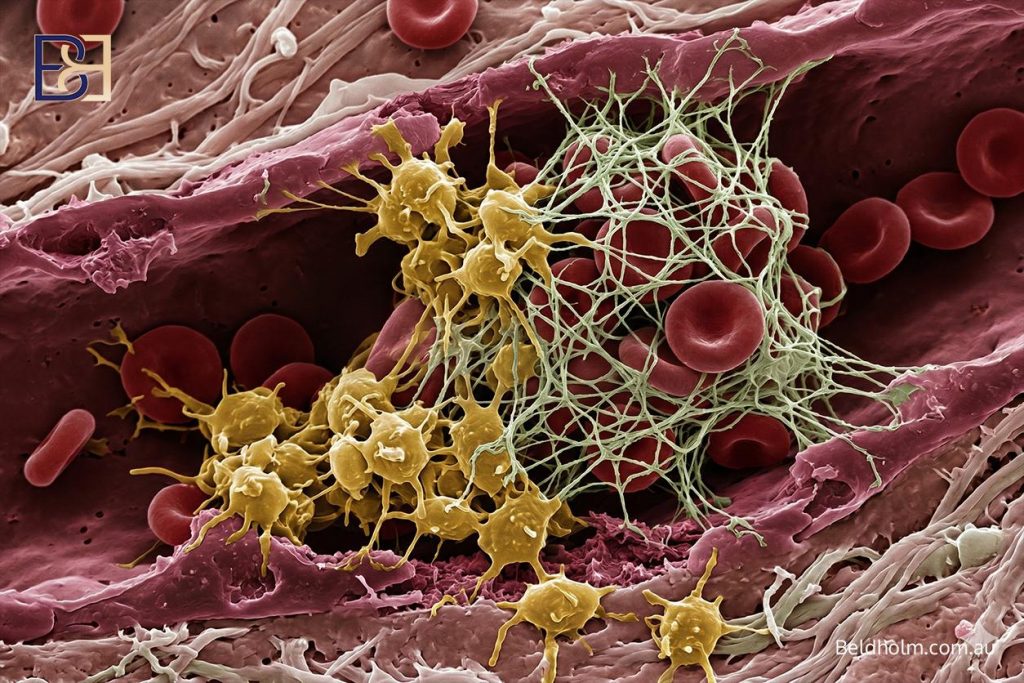
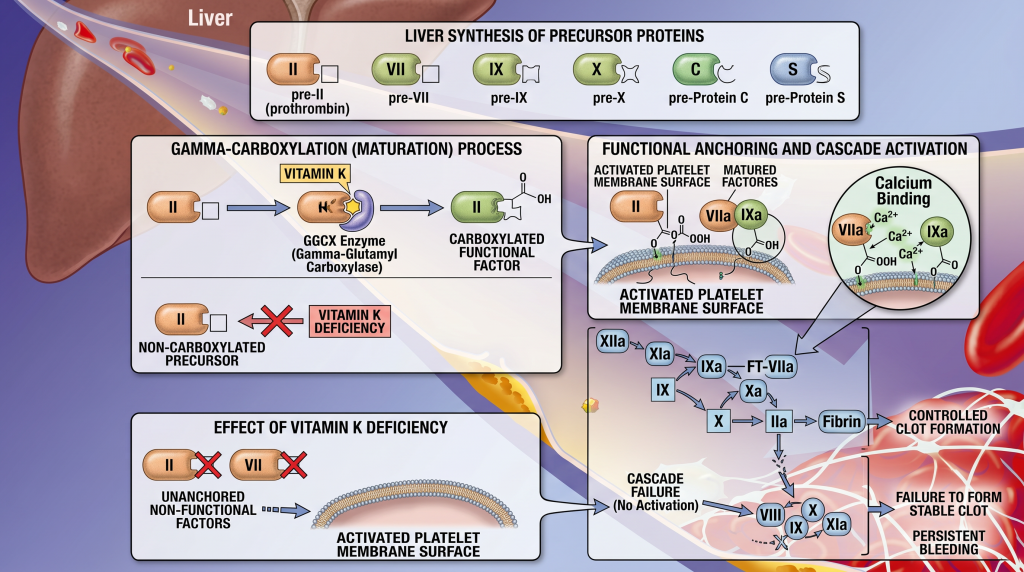
The clotting cascade depends on a series of proteins called coagulation factors. Four of them, factors II (prothrombin), VII, IX, and X, plus the anticoagulant proteins C and S, all require vitamin K to become functional. These are the vitamin K-dependent proteins that allow blood clots to form in a controlled way at the site of an injury.
The process is called gamma-carboxylation. Vitamin K acts as a cofactor for an enzyme that adds a specific chemical group to these proteins. Once carboxylated, the proteins can bind calcium, which is what allows them to anchor to the surface of activated platelets at the wound site and participate in clot formation (1).
Without adequate vitamin K, these proteins are still produced by the liver, but they cannot bind calcium. The clotting cascade fails at multiple points simultaneously. This is the mechanism underlying the bleeding risk in severe vitamin K deficiency, and it is also the mechanism by which warfarin achieves its therapeutic effect, which I cover later in this article.
What I look for on the pre-operative blood panel
Every patient I see for body contouring surgery has a coagulation screen as part of the standard pre-operative blood panel. Three results are relevant here:
- Prothrombin time (PT) measures the time taken for blood to clot through the extrinsic and common pathways, both of which depend on vitamin K-dependent factors.
- International Normalised Ratio (INR) is a standardised calculation based on the PT that allows comparison across different laboratories.
- Activated partial thromboplastin time (APTT) measures the intrinsic and common pathways.
An elevated PT or INR in a patient not on anticoagulant medication is a flag I investigate before proceeding to surgery. The most common causes in my patient group are vitamin K insufficiency, liver function abnormalities, or an undiagnosed coagulopathy. The work-up depends on the clinical picture and is performed in collaboration with the GP or a haematologist, as needed.
The limitation of standard coagulation testing
There is an important limitation in how we assess vitamin K status in routine practice. Prothrombin time is an insensitive marker of vitamin K adequacy. Published research has shown that PT remains within the normal range until vitamin K status is significantly depleted (1).
This means a patient can have inadequate vitamin K stores to fully activate the extrahepatic Gla proteins (osteocalcin and MGP, covered later in this article) while still showing a normal PT. Activation of these vitamin K-dependent proteins is not reflected in the standard coagulation panel.
In clinical practice, this means two things:
- A normal PT does not prove vitamin K status is adequate for all purposes. It proves that the coagulation function is sufficient to stop bleeding.
- For patients with risk factors for K deficiency (fat malabsorption, prolonged antibiotic history, very low dietary intake of green vegetables), I supplement based on the clinical profile rather than waiting for a PT abnormality.
This is one of the reasons K2 sits in my Tier 1 supplement protocol. The coagulation function may be preserved in a patient whose K2-dependent calcium pathway remains inadequate.
Deficiency, bleeding and surgical risk
True vitamin K deficiency bleeding is uncommon in adults in the general population. Frank haemorrhagic events from isolated vitamin K deficiency are rare outside specific clinical contexts such as severe fat malabsorption, long-term parenteral nutrition without K supplementation, or vitamin K antagonist therapy (1).
In post-weight-loss patients, the picture is different. Published data in body contouring populations after massive weight loss show clinically relevant rates of vitamin K deficiency on testing, particularly after Roux-en-Y gastric bypass and biliopancreatic diversion (3,5). I cover the specific figures and the mechanism behind them in the next section.
For body contouring surgery, this translates into two practical concerns:
- Intraoperative and early post-operative bleeding risk if the K status is genuinely low
- Slower haemostasis at the wound edges, which can contribute to bruising, seroma formation, and small vessel ooze in the first 24 to 48 hours
Both are manageable, and the management starts with getting the vitamin K status right before the patient comes in for surgery.
The Fat Malabsorption Problem: Why Post-Weight-Loss Patients Are at Greater Risk
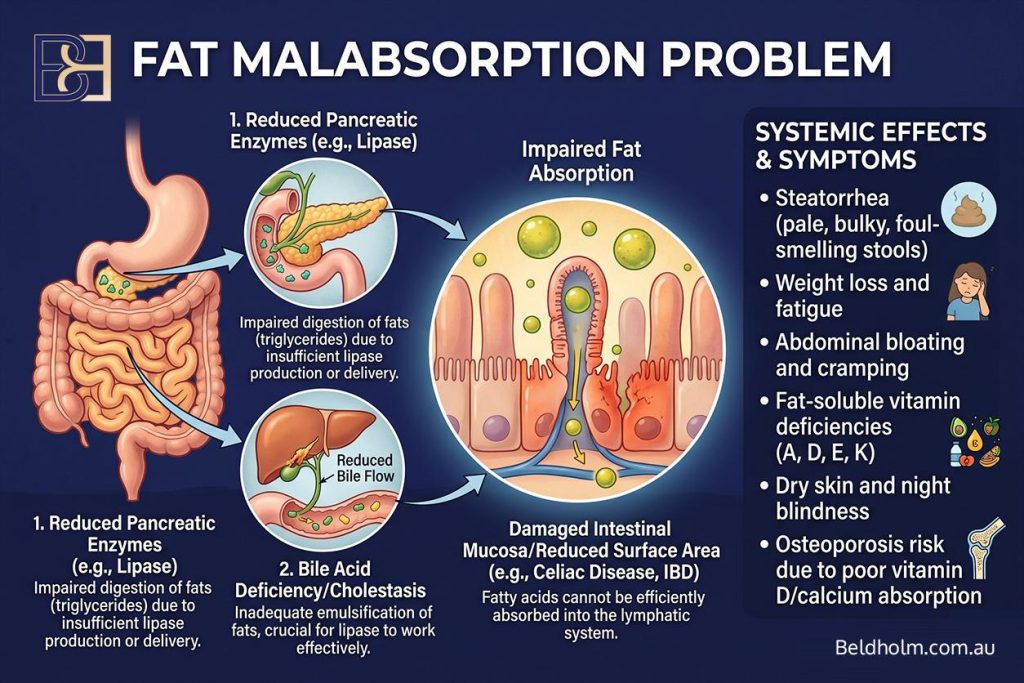
Vitamin K is a fat-soluble vitamin. Like vitamins A, D, and E, it is not absorbed by the body the way water-soluble vitamins are. It needs dietary fat to be taken up in the gut, packaged into chylomicrons in the intestinal wall, and transported into the bloodstream via the lymphatic system (1). Anything that disrupts fat digestion or fat absorption will reduce vitamin K uptake, regardless of how much is consumed in the diet or taken as a supplement.
This is why post-weight-loss patients face a specific vitamin K problem that the general population does not.
How bariatric surgery affects fat-soluble vitamin absorption
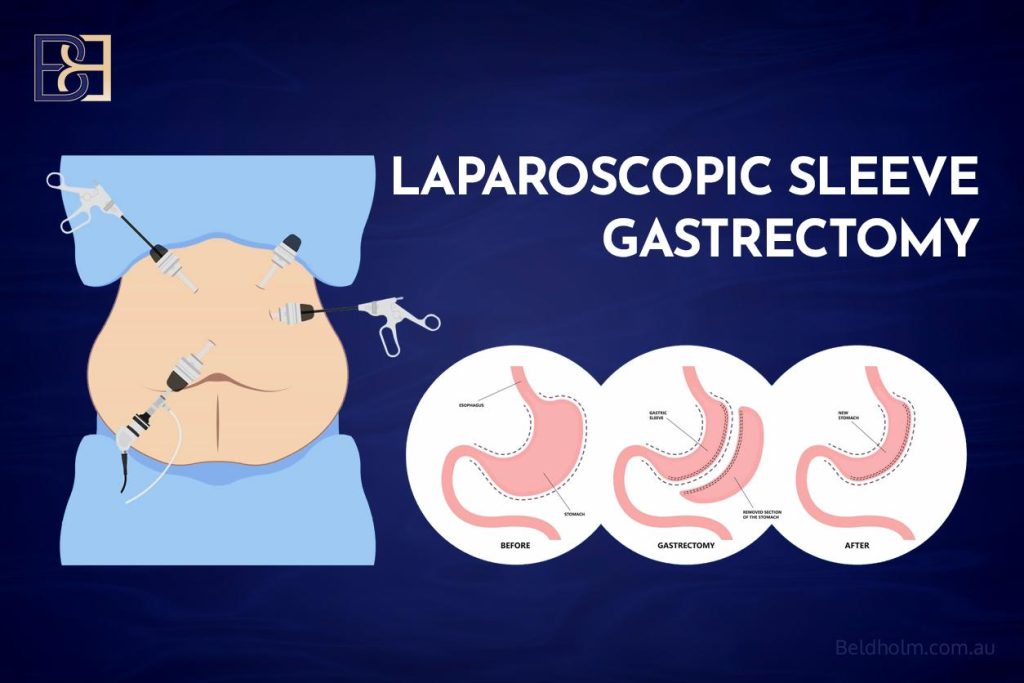
The degree of fat malabsorption varies significantly depending on the weight-loss procedure a patient has undergone.
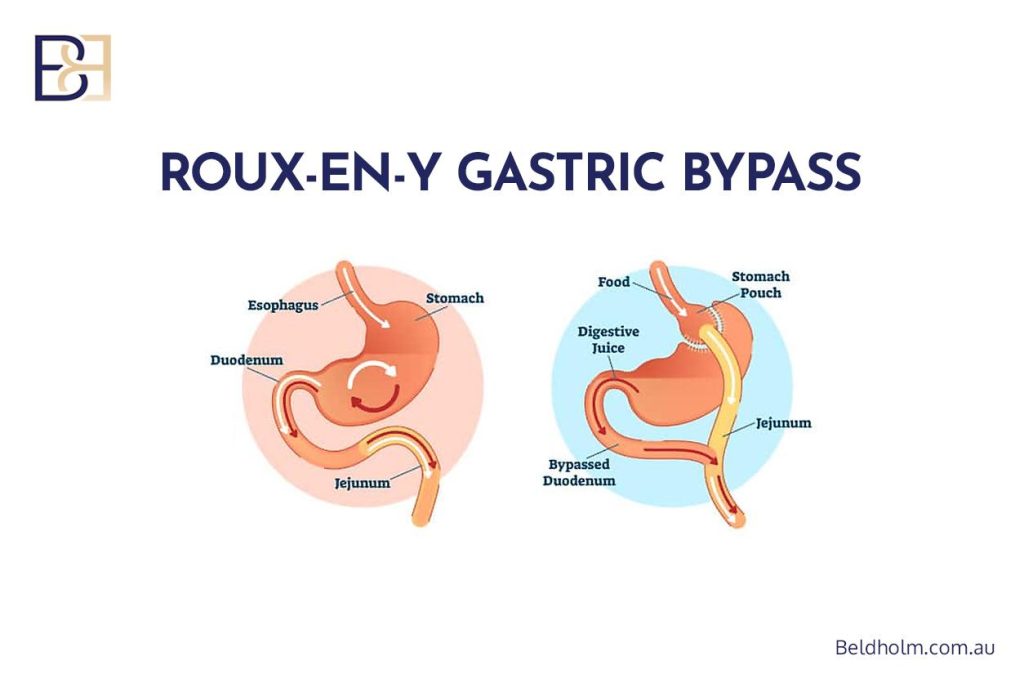
Roux-en-Y gastric bypass involves both a restrictive and a malabsorptive component. The stomach is reduced to a small pouch, and the small intestine is rerouted, so food bypasses the duodenum and the proximal jejunum. These are the sections of the gut where fat-soluble vitamins, including vitamin K, are primarily absorbed. Bypassing them directly reduces uptake, independent of how much K is consumed in the diet or taken as a supplement (3,5).
Biliopancreatic diversion, with or without duodenal switch, is associated with the greatest malabsorption of any bariatric procedure. Fat-soluble vitamin deficiencies are among the most predictable long-term consequences. Published data show vitamin K deficiency rates as high as 68% by year four after biliopancreatic diversion (3). This is the highest deficiency rate of any bariatric procedure and reflects the degree of fat malabsorption the surgery produces.
Sleeve gastrectomy does not involve intestinal bypass. The absorptive surface of the small intestine remains intact. The risk of vitamin K deficiency after sleeve gastrectomy is lower than after Roux-en-Y or biliopancreatic diversion, but it is not zero. Published data show vitamin K deficiency affects approximately 10% of sleeve gastrectomy patients over time (5).
The mechanism in sleeve gastrectomy is different. It is driven primarily by:
- Reduced total food intake due to the smaller stomach volume
- Altered food preferences, including reduced tolerance for fatty or fibrous foods
- Fat intolerance in some patients, particularly in the first 12 to 18 months
- Ongoing dietary restriction even after weight stabilisation
Non-surgical major weight loss

Not every post-weight-loss patient has had bariatric surgery. A growing proportion of my patients have reached their weight loss target through weight loss medications, sometimes with significant dietary restriction alongside.
These patients do not have the anatomical malabsorption of Roux-en-Y or biliopancreatic diversion. Their absorptive gut surface is intact. Their risk factors for vitamin K inadequacy are different but still clinically relevant:
- Appetite suppression reduces total food intake, including foods that are major sources of vitamin K1
- Published data in patients on weight loss medications show approximately 16% lower vitamin K intake compared with dietary reference intakes (6).
- Reduced overall dietary variety and lower vegetable consumption are common in this group
- Prolonged caloric restriction independent of medication use reduces micronutrient intake across the board
This group is often overlooked in the bariatric-focused nutritional literature, but the clinical reality in my practice is that their pre-operative nutritional assessment needs the same attention as patients who have had weight loss surgery.
A practical absorption principle
Whatever the anatomical starting point, vitamin K absorption is better when taken with a fat-containing meal. This is why I advise patients to take their D3 and K2 dietary supplements with a meal rather than on an empty stomach.
Olive oil, avocado, nuts, eggs, and full-fat dairy are all fine. The amount of fat required to support absorption is modest, but it needs to be present at the same time as the dietary supplements. Taking K2 with water on an empty stomach significantly reduces the amount actually absorbed.
This principle also applies to dietary K1. Eating a leafy green salad with olive oil dressing will deliver more usable vitamin K than eating the same greens on their own.
Why supplementation alone may not be enough
In patients with significant fat malabsorption after Roux-en-Y gastric bypass or biliopancreatic diversion, standard oral supplementation may not fully correct vitamin K status. This is why I assess the clinical picture alongside the biochemistry. A patient on a K2 MK-7 100 mcg dose who still shows elevated PT or clinical bleeding symptoms needs escalated supplementation, not just reassurance that they are taking something.
In those cases, I work with the patient’s GP to adjust the approach, which may include higher oral K1 doses, paired with closer monitoring of coagulation markers.
Antibiotics, Gut Flora, and Vitamin K2 Depletion
This is the vitamin K factor that rarely comes up in general pre-operative conversation and almost never in patient-led reading about supplements. But it matters in my patient group because many post-weight-loss patients have had multiple courses of antibiotics across their weight loss journey.
Where K2 actually comes from
Dietary K2 intake in Western populations is generally low. Natto, fermented cheeses, and organ meats are the main dietary sources, and none of these are staples in the typical Australian diet.
The body compensates for this by producing K2 internally. A portion of the body’s K2 supply comes from bacteria in the gut. Specific bacterial species in the large bowel, including some Bacteroides and Escherichia coli strains, synthesise menaquinones as a by-product of their own metabolism. This K2 is then absorbed through the colonic wall and enters the circulation (1,2).
This is not the dominant source of K2 for most people, but it is a meaningful contribution, particularly in a population with low dietary K2 intake to begin with.
How antibiotics disrupt this system

Antibiotics do not just target the specific bacterium causing an infection. They affect the broader gut microbiome, reducing or eliminating many bacterial populations simultaneously, including those that produce K2.
The effect is most pronounced with:
- Broad-spectrum antibiotics, which act on both gram-positive and gram-negative bacteria
- Cephalosporin antibiotics, which have been specifically associated with reduced vitamin K status and prolonged prothrombin time, particularly in hospitalised patients (1).
- Prolonged or repeated courses, which compound the microbiome disruption and allow less time for recovery between exposures
A short, single course of a narrow-spectrum antibiotic in an otherwise healthy person is unlikely to produce clinically significant vitamin K effects. That is not the clinical profile I am concerned about.
Why this matters for post-weight-loss patients
The post-weight-loss patient group commonly arrives with a significant antibiotic history, for several reasons:
- Bariatric surgery itself involves perioperative antibiotic prophylaxis, and some patients have required treatment for post-operative infections
- Recurrent urinary tract infections, dental infections, and skin infections are more common in this patient group before weight loss, and often persist into the post-weight-loss period
- Patients with persistent reflux, cholecystectomy, or small intestinal bacterial overgrowth may have had repeated courses of antibiotics as part of their management
- Body contouring surgery itself involves perioperative antibiotic prophylaxis, which adds a short-term factor at a time when vitamin K status already matters
On top of this, bariatric surgery alters the gut microbiome independently of antibiotic exposure. Roux-en-Y gastric bypass, in particular, significantly alters intestinal bacterial populations, and some of this change persists long-term. The net effect on K2-producing bacteria is a reduction(6).
What I ask about at consultation
When I take a medical history from a post-weight-loss patient at consultation, the antibiotic question is part of the routine. Across a typical weight loss journey, many patients will have had multiple antibiotic exposures that they have forgotten about. I ask specifically about:
- Number of antibiotic courses in the last 12 months
- Any prolonged courses (more than two weeks)
- Any courses of broad-spectrum or cephalosporin antibiotics
- Whether the patient has been on any long-term antibiotic prophylaxis, such as for recurrent urinary tract infections
This information does not change the core of my protocol, which includes K2 as a universal Tier 1 supplement regardless of antibiotic history. But it does change my threshold for investigation if other signs of K insufficiency appear, such as a borderline prothrombin time, bruising, or a history of unexplained bleeding.
The practical takeaway
Patients should not panic about a previous antibiotic course. Antibiotics, when clinically indicated, are essential, and most short courses have no meaningful long-term effect on vitamin K status. The clinically relevant pattern is repeated, prolonged, or broad-spectrum exposure in a patient who already has reduced dietary K intake and fat malabsorption.
That combination is common in my patient group, and the Tier 1 K2 MK-7 supplement is one of the tools I use to offset it.
Vitamin K2 and Calcium: The Bone and Vessel Health Dimension
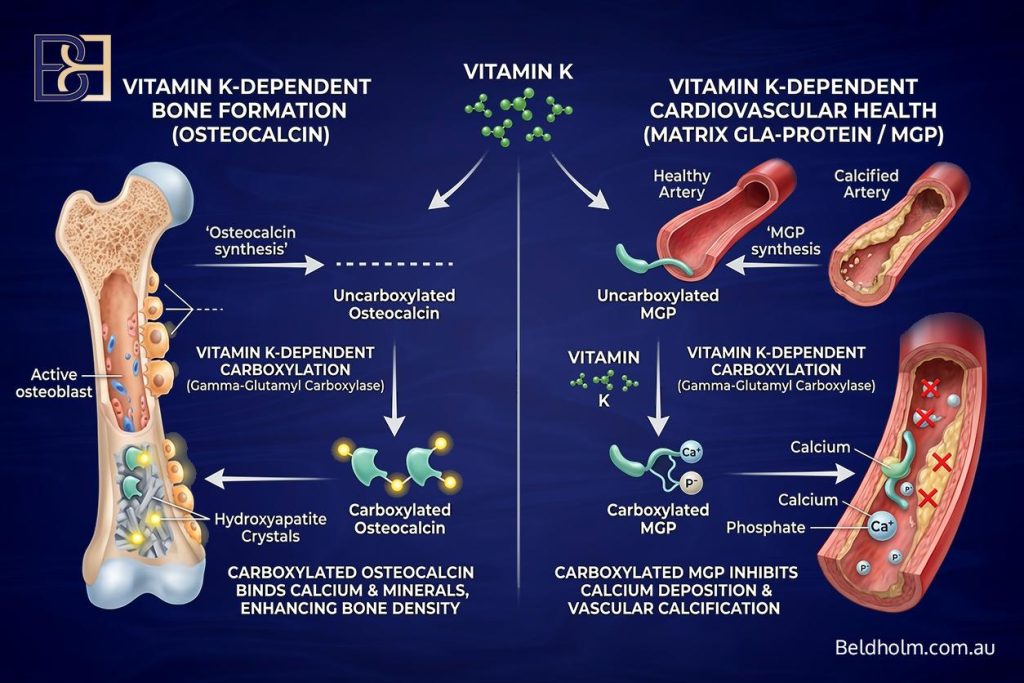
The coagulation function of vitamin K is well-known. The calcium-direction function is less well-known, but in a post-weight-loss patient group, it is arguably the more clinically important of the two. This is why K2 sits as a Tier 1 supplement in my pre-operative protocol, paired with vitamin D3 for every patient.
Two proteins, two jobs
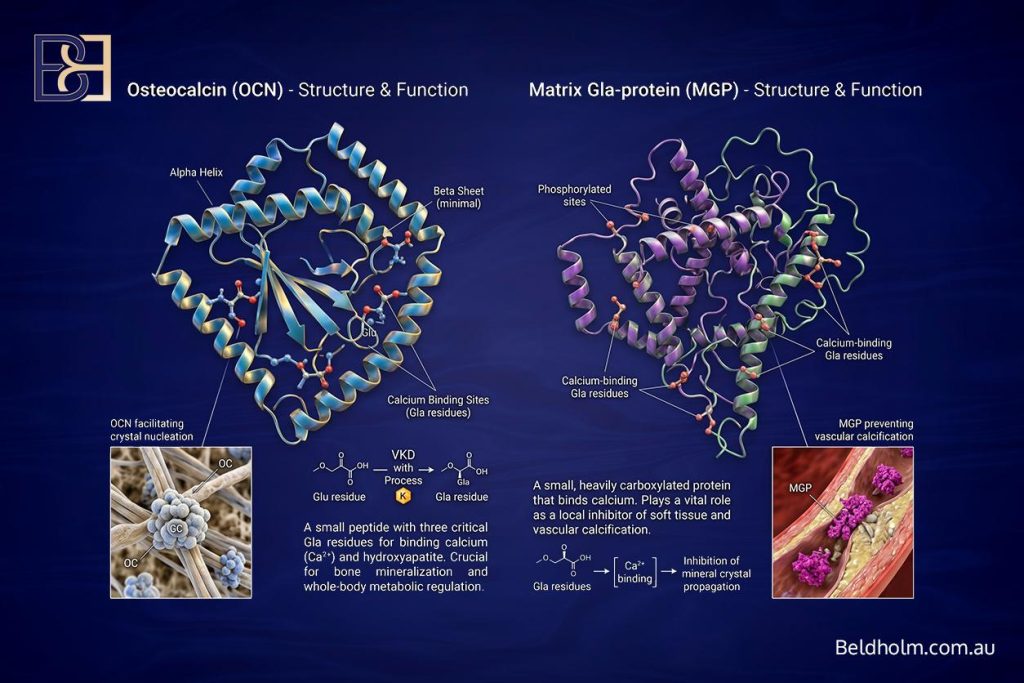
Vitamin K2 activates two specific proteins in the body that together determine where calcium goes. Both are Gla-proteins, which is the name given to proteins that have been gamma-carboxylated (the same process I covered in the coagulation section). These proteins sit at the centre of bone metabolism and vascular health. Without K2, neither of them functions properly.
Osteocalcin is produced by osteoblasts, the cells that build bone. Once activated by K2, osteocalcin binds calcium and incorporates it into the bone matrix. This is how dietary calcium actually becomes part of your skeleton. Without adequate K2, osteocalcin remains under-carboxylated and cannot perform this function effectively.
Matrix Gla-protein (MGP), also written as matrix Gla protein in the research literature, is produced in blood vessel walls and in soft tissue. Its job is the opposite of osteocalcin. Once activated by K2, it actively prevents calcium from depositing where it should not, such as in arterial walls and soft tissues. Without adequate K2, MGP remains under-carboxylated, and its protective effect is reduced (1).
The two proteins work together. K2 activates both simultaneously, and the net result is calcium being directed to bone rather than to blood vessels. Both osteocalcin and MGP are classified as vitamin K-dependent proteins, which ties them to the broader framework of vitamin K status in surgical patients.
The under-carboxylated osteocalcin biomarker
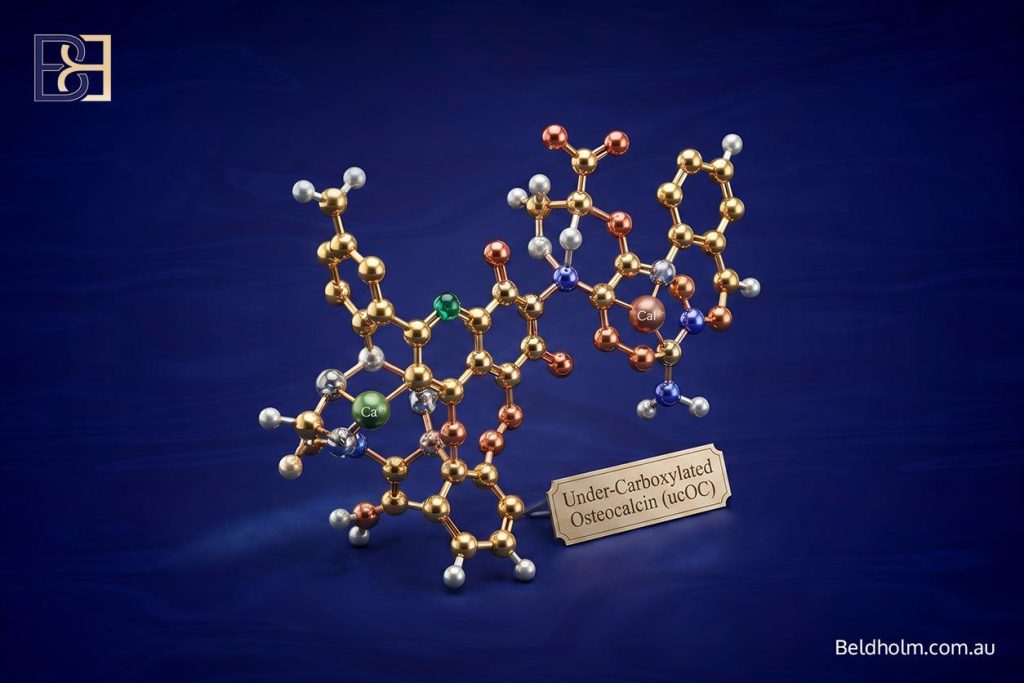
There is a specific blood test that measures under-carboxylated osteocalcin (ucOC). When K2 status is inadequate, the percentage of ucOC in the circulation rises, because the osteoblasts are producing osteocalcin, but not enough K2 is available to activate it.
Elevated ucOC has been associated in published research with:
- Lower bone mineral density
- Higher fracture risk in older adults
- Higher markers of vascular calcification (1).
I do not routinely order ucOC testing in my patient group. The assay is not standardised in Australian clinical practice and would not change the clinical management, which is to include K2 supplementation for this patient group, regardless. But the biomarker is worth knowing about because it is the clearest evidence we have that subclinical K2 inadequacy is a real phenomenon, even in patients with normal coagulation markers.
Why this matters especially in post-weight-loss patients
Post-weight-loss patients, particularly after bariatric surgery, are already at elevated risk of bone loss and reduced bone mineral density. This is well-documented in the published literature across all bariatric procedures, and is driven by several factors:
- Reduced calcium absorption after Roux-en-Y gastric bypass and biliopancreatic diversion
- Vitamin D deficiency, which is near-universal in this patient group, further impairs calcium absorption
- Weight loss itself, which mobilises calcium from bone in the short term
- Reduced mechanical loading on bone in patients who were previously carrying more weight
- Hormonal and nutritional changes specific to bariatric surgery
Published data show bone mineral density reductions in the order of 5 to 10% in the first two years after bariatric surgery, depending on the procedure and patient factors (5,6). Some of this loss is adaptive (less skeletal mass is needed to carry a smaller body weight), but a portion of it is pathological and contributes to increased fracture risk long-term.
In this context, K2 does more than prevent vascular calcification. It ensures the calcium absorbed actually ends up in bone, where it is needed.
The vascular calcification angle
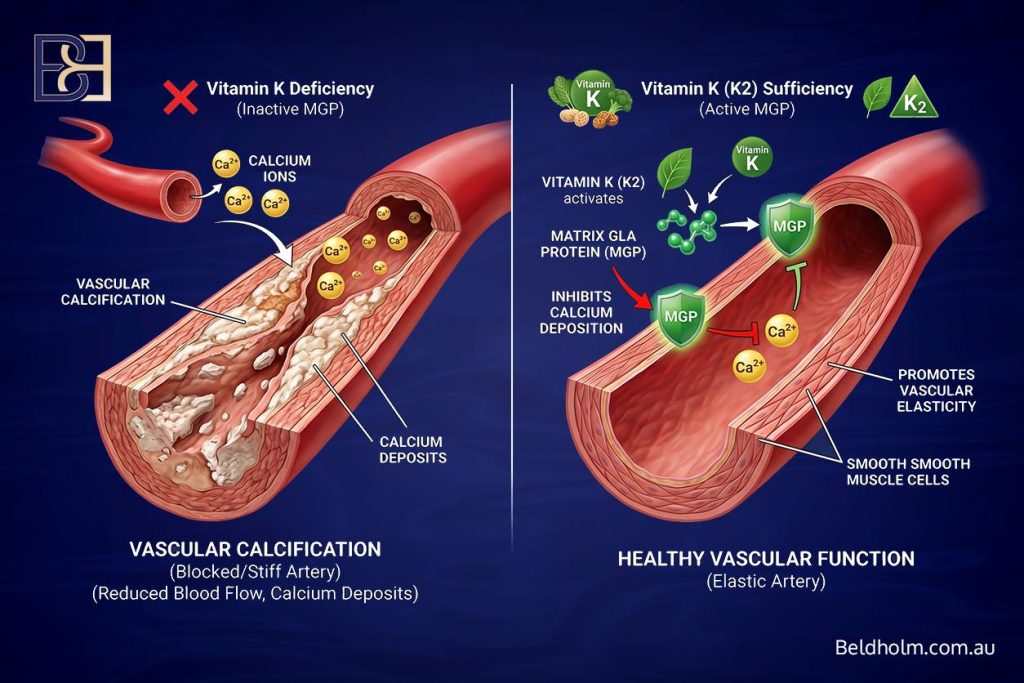
There is a parallel concern on the other side of the MGP function. Without adequate K2, calcium mobilised by high-dose vitamin D3 supplementation may deposit in arterial walls and soft tissue rather than in bone. The mechanism is biologically consistent with the MGP function covered above, and the clinical implication is straightforward: if D3 is being prescribed, K2 should be prescribed alongside it to reduce the risk of misdirected calcium.
Epidemiological research in non-surgical populations has examined whether dietary vitamin K intake influences long-term outcomes such as coronary heart disease and arterial calcification. The evidence in that space is observational rather than definitive. It is not a primary reason I prescribe K2 for pre-operative patients. But in a patient group that is typically on high-dose D3 for 4 to 8 weeks pre-operatively and often long-term after surgery, it provides another reason not to separate the two.
The Vitamin D3 and K2 Pairing: Why I Always Recommend Them Together
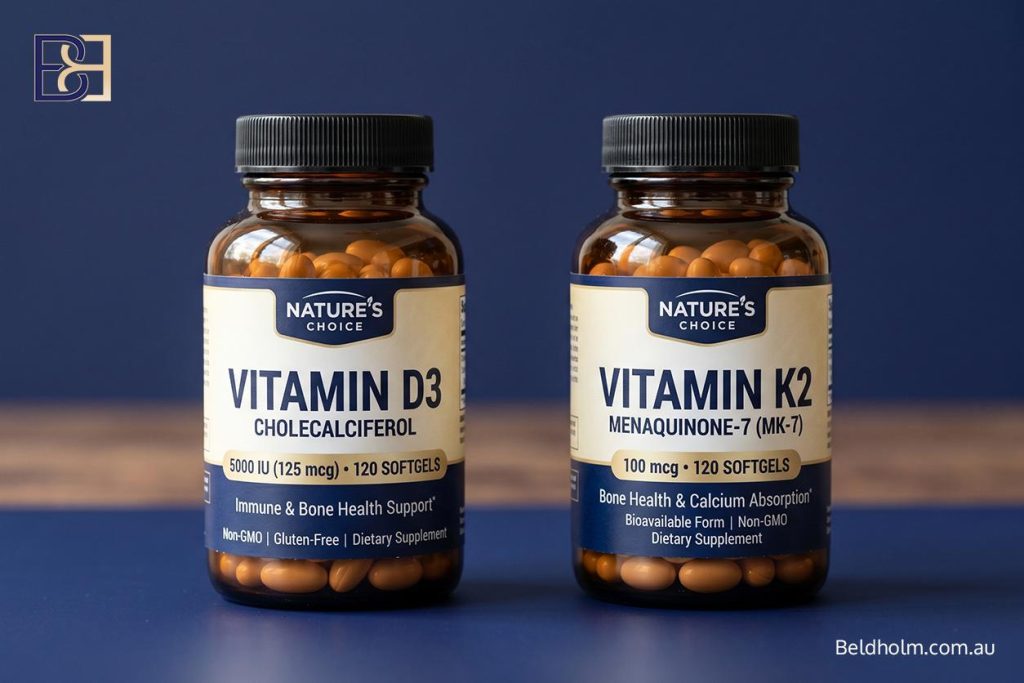
This is the practical decision that flows out of everything in the previous sections. In my pre-operative protocol, vitamin D3 and vitamin K2 are prescribed together as a Tier 1 supplement for every post-weight-loss body contouring patient from the moment surgical planning begins.
I do not prescribe one without the other.
The two-step calcium pathway
Vitamin D3 and vitamin K2 work at different points in the same calcium pathway.
- Vitamin D3 drives calcium absorption from the gut into the bloodstream. Without adequate D3, dietary calcium is poorly absorbed regardless of intake.
- Vitamin K2 directs the calcium that D3 has absorbed. It activates osteocalcin to incorporate calcium into bone, and activates matrix Gla-protein to keep calcium out of blood vessels and soft tissue.
If you give D3 without K2, you have increased the amount of calcium circulating in the bloodstream without activating the system that determines where that calcium goes. In a patient group already at elevated risk of bone loss and already commonly on high-dose D3 supplementation, this is clinically suboptimal.
The same logic runs in the other direction. K2 without adequate D3 means you have activated the proteins that direct calcium, but there is not much calcium for them to work with.
They belong together.
Why this matters specifically at the doses I use
Vitamin D deficiency affects the majority of post-weight-loss patients. Published data show deficiency rates of 60-90% in people with significant excess weight, and this deficiency typically persists after bariatric surgery (3,5). Correcting it requires doses higher than those in a standard multivitamin.
My standard Tier 1 D3 dose is 3,000 to 6,000 IU per day, commenced at surgical planning and continued through the pre-operative optimisation window. This is therapeutic, not maintenance, dosing.
At therapeutic D3 doses, the calcium-direction problem is amplified. More calcium is being absorbed from the gut, so more is moving through the system. Without adequate K2, a larger proportion of that calcium is potentially misdirected. This is why the pairing becomes more important, not less, as D3 doses rise.
At low-maintenance doses (for example, 1,000 IU of D3 per day), the issue is smaller. At the therapeutic doses I use in this patient group, pairing with K2 is not an optional extra.
MK-7 vs MK-4: why the form matters
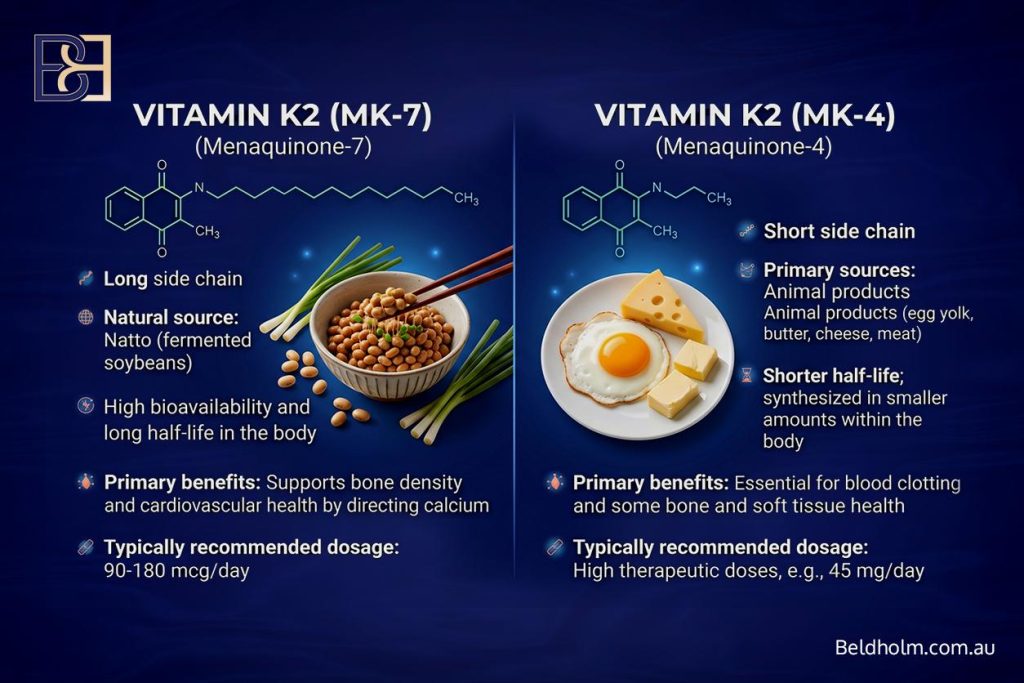
Not all K2 is the same. The menaquinone family has multiple forms, and the two commonly available in supplements are MK-4 and MK-7.
- MK-4 has a short half-life in the body, on the order of 6 to 8 hours. To maintain activation of Gla-proteins across a 24-hour day, MK-4 would need to be dosed multiple times per day at high doses.
- MK-7 has a half-life of approximately 72 hours. A single daily dose maintains stable blood levels and stable activation of osteocalcin and MGP throughout the dosing interval.
For practical supplementation in post-weight-loss patients, MK-7 is the preferred form. Published research has shown that at equivalent doses, MK-7 produces more sustained carboxylation of osteocalcin than MK-4, and compliance with once-daily dosing is obviously better than multiple-times-daily dosing (1).
The standard dose I use is 100 mcg of MK-7 per day. This is well-supported by published research as the dose that produces full carboxylation of vitamin K-dependent proteins in most adults without reaching supraphysiological levels (1).
The preferred Australian products
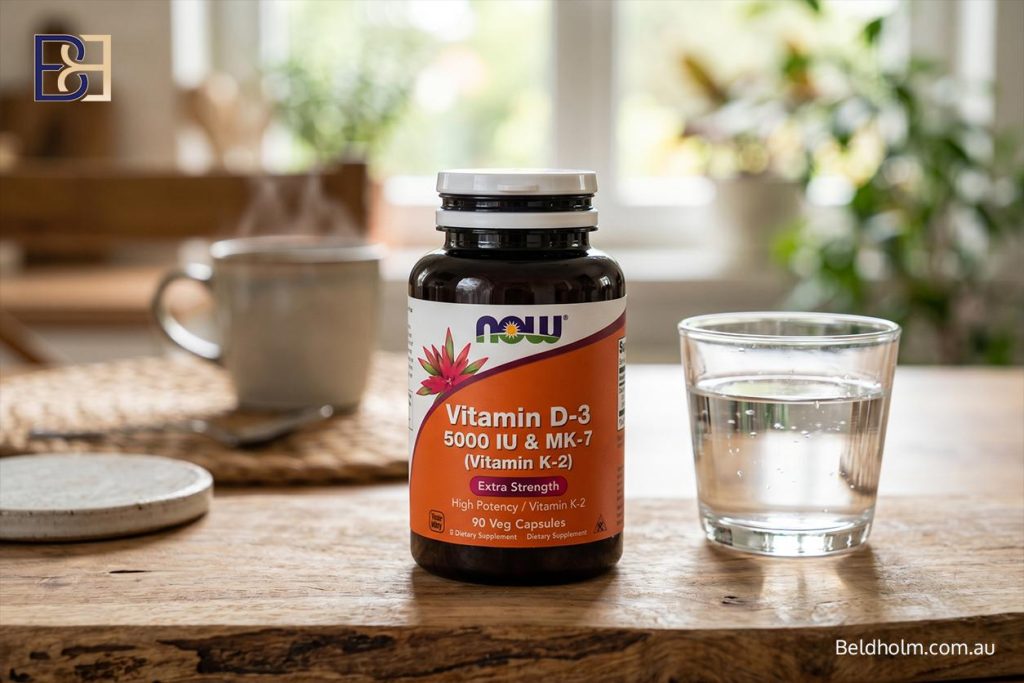
In practice, the way to deliver both nutrients together is a combined capsule.
- NOW D3+K2 5000 IU provides 5,000 IU of D3 and 100 mcg of MK-7 in a single capsule. For patients needing the 3,000 to 6,000 IU range, one or two capsules per day covers the requirement, with the K2 automatically included. Available from Chemist Warehouse, Pharmacy Direct, and Amazon AU.
- Alternative approach: standalone D3 (such as Ostelin Vitamin D3 1000 IU, taken at the prescribed number of capsules to reach the target dose) paired with a separate K2 MK-7 100 mcg supplement. This works clinically but adds a second tablet to the daily routine.
Both approaches are acceptable. The combined product is what I recommend as the default, as it works out to the patient’s D3 requirement. The separate-product approach offers greater dosing flexibility.
As stated elsewhere, I have no financial relationship with any supplement brand. These are product recommendations based on clinical criteria: bioavailable forms, appropriate dosing, established quality control, and Australian availability.
How this fits into the broader Tier 1 framework
Vitamin D3 with K2 is one of the Tier 1 supplements I prescribe universally for every post-weight-loss body contouring patient, alongside whey protein isolate, a complete multivitamin, vitamin C, and zinc at a maintenance dose.
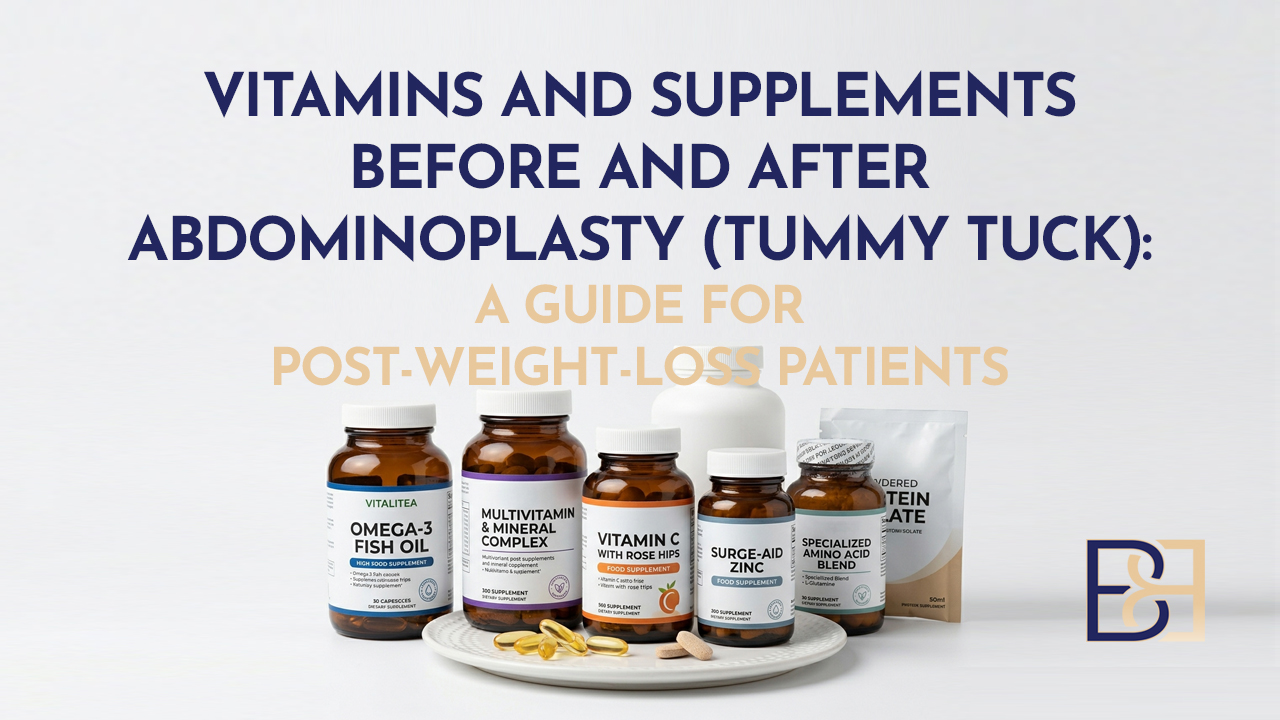
The full Tier 1 and Tier 2 supplement framework, with specific products, doses, and Australian availability, is covered in my guide to vitamins and supplements before and after abdominoplasty (tummy tuck). This section focuses specifically on the D3 and K2 pairing, because the rationale for that specific combination is the direct clinical consequence of everything covered in the previous sections of this article.
Timing
D3 and K2 are both fat-soluble. Both are better absorbed when taken with food containing some fat.
- Take the supplement with your main meal of the day, rather than on an empty stomach
- Consistency matters more than exact timing. The same time each day is ideal
- Continue through the pre-operative window (minimum 4 weeks, 6 to 8 weeks preferred)
- Do not stop the D3+K2 supplement the week before surgery. Unlike fish oil or high-dose vitamin E, D3 and K2 at the doses used here are not associated with bleeding risk and should be continued through the peri-operative period
Dietary Sources of Vitamin K1

Supplementation is the foundation of the Tier 1 approach for post-weight-loss patients, but diet still matters. Vitamin K1 from food is the baseline layer of your vitamin K status, and the quality of that baseline influences how much the supplement needs to compensate for. For patients who can tolerate reasonable volumes of leafy greens, the dietary contribution is real and worth pursuing.
Where K1 comes from in the diet
Vitamin K1 is concentrated almost exclusively in green leafy vegetables. The richer the chlorophyll content, the richer the K1 content. In practical terms, this means:
- Kale is one of the highest-density sources. A single cup of cooked kale provides substantially more than the Australian adequate intake for an adult.
- Spinach (both baby spinach and English spinach) is similarly high in K1.
- Silverbeet (Swiss chard) is an Australian staple that delivers a good K1 dose per serve.
- Broccoli and Brussels sprouts, both in the brassica family, are reliable sources.
- Other leafy greens, including rocket, watercress, parsley, and coriander, all contribute meaningfully.
- Green beans, peas, and asparagus are moderate sources.
- Avocado provides small but useful amounts of K1, along with its monounsaturated fat content.
Cooking does not significantly destroy the vitamin K content of leafy greens. Steamed, boiled, or sautéed greens retain most of their vitamin K content. Cooking in fat (for example, sautéing spinach in olive oil) actually improves absorption, as I discuss below (2).
Where K1 does not come from
This is worth mentioning because the labels on some “green” products can be misleading.
- Green smoothies made from fruit with a token handful of spinach deliver far less K1 than the colour suggests.
- Green powders and green supplement drinks vary enormously in actual K1 content and are not a reliable substitute for vegetables.
- Multivitamins contain some K1, but almost always at doses well below the Australian adequate intake, and the form is not always well specified on the label.
Whole leafy greens, eaten in meal-size portions, are the only reliable dietary source of K1.
The fat absorption principle applies here, too
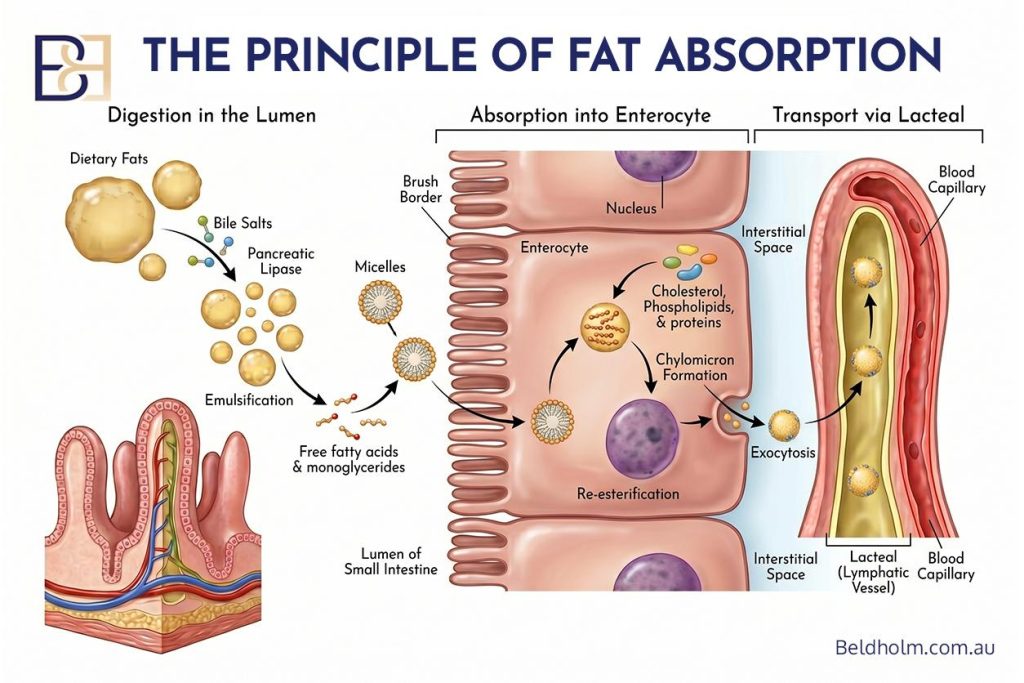
Vitamin K1 is fat-soluble, which means the same absorption principle I covered earlier applies to dietary K1 as well as to supplementation.
Eating greens with a source of dietary fat improves absorption. Practical examples:
- Spinach or silverbeet sautéed in olive oil
- Kale salad with an olive oil and lemon dressing
- Broccoli with a small amount of butter or olive oil
- Greens alongside eggs, avocado, nuts, or full-fat dairy
Greens eaten on their own (for example, steamed with no oil or dressing) deliver significantly less absorbed K1, even if the vegetable itself contains plenty. This is a small practical change that makes a real difference.
Why post-weight-loss patients typically under-consume K1
The published intake data and the reality I see in the clinic both point to the same pattern. Post-weight-loss patients, as a group, eat far fewer leafy greens than the general population.
The reasons vary depending on the patient’s weight loss pathway:
- After bariatric surgery (particularly Roux-en-Y gastric bypass and sleeve gastrectomy), reduced stomach capacity means patients prioritise protein and calorie-dense foods over bulk vegetables. Leafy greens take up volume without contributing much protein or caloric density.
- Food aversions and altered taste are common in the first 12 to 18 months after bariatric surgery. Bitter greens such as kale and rocket are among the foods patients commonly report disliking post-operatively.
- Texture intolerance affects many bariatric patients, particularly for fibrous or stringy vegetables such as silverbeet stems or raw kale.
- Appetite-suppressant weight-loss medications reduce total food intake across the board. When overall intake is low, vegetables are often the category that drops out first, because they fill the stomach without satisfying hunger the way protein or fat does.
- Chronic dietary restriction over years of weight loss efforts produces a pattern where protein and simple carbohydrates dominate, and vegetable intake is an afterthought.
The typical post-bariatric diet is high in protein, moderate in simple carbohydrates, and low in vegetables. This nutritional profile is effective for weight maintenance and protein adequacy, but it is almost guaranteed to under-deliver on vitamin K1 (3,6).
The practical framing for patients
I do not expect patients to completely overhaul their eating patterns. Two realistic adjustments make most of the difference:
- Include at least one serving of leafy greens per day, cooked or raw, with a source of fat for absorption. Even half a cup of cooked spinach or a small kale-based salad makes a measurable contribution.
- Think of greens as an adjunct to protein rather than instead of it. A chicken breast with sautéed spinach delivers the protein target and the vegetable K1 in one meal.
For patients who genuinely cannot tolerate leafy greens, the Tier 1 K2 supplement does much of the work. Diet is an added layer, not the sole strategy.
Australian Dietary Reference Intakes for Vitamin K

Book your appointment online now
Knowing the official dietary reference intake numbers is useful context, but it is equally important to understand what those numbers do and do not tell us about surgical patients. The reference intakes are designed for the general adult population, not for post-weight-loss patients with fat malabsorption and altered dietary patterns.
The Australian and New Zealand figures
The National Health and Medical Research Council in Australia and the Ministry of Health in New Zealand set the Adequate Intake (AI) for vitamin K at:
- Women: 60 mcg per day
- Men: 70 mcg per day
- Pregnant and breastfeeding women: the same 60 mcg per day. No upward adjustment is specified, reflecting the lack of specific pregnancy data rather than an established absence of need (8).
The term “Adequate Intake” is used rather than “Recommended Daily Intake” because the evidence base was considered insufficient to establish a precise recommended intake. The Adequate Intake is set at a level observed in apparently healthy populations with no clinical evidence of deficiency. It is worth knowing that breast milk contains very little vitamin K, which is why newborn babies in Australia routinely receive a vitamin K1 injection at birth to prevent vitamin K deficiency bleeding. The adult Adequate Intake applies to circulating vitamin K status once dietary intake has stabilised in later life.
How Australia compares internationally
There is substantial variation in vitamin K reference intakes across countries and agencies.
- United States and Canada: 90 mcg per day for women, 120 mcg per day for men. This is the highest official reference intake in the major Western guidelines and sits approximately 50% above the Australian figure.
- European Food Safety Authority: 70 mcg per day for adults regardless of sex.
- World Health Organization: 55 mcg per day for women, 65 mcg per day for men.
- Belgium: a range of 50 to 70 mcg per day for adults.
- Japan: 60 mcg per day for women aged 19 to 29, 65 mcg per day for women 30 and older, and 70 mcg per day for men.
This roughly two-fold range across different authorities reflects the lack of consensus on the biological endpoint to define adequacy. Agencies that have based their figures primarily on coagulation requirements arrive at lower numbers. Agencies that have factored in extrahepatic functions, such as bone health and prevention of vascular calcification, arrive at higher numbers (2).
For post-weight-loss patients, the higher end of this range is the more clinically relevant target, because extrahepatic functions (bone and vascular health) are most compromised in this patient group.
Average population intake
Published intake data from Western populations show average daily vitamin K consumption from food of:
- Approximately 122 mcg per day in adult women
- Approximately 138 mcg per day in adult men (2).
On these figures, most adults in the general population meet the Australian Adequate Intake and come close to meeting the higher North American reference intake purely through diet.
Post-weight-loss patients are not in that category. The dietary patterns described in the previous section, combined with fat malabsorption in relevant surgical procedures, mean that actual vitamin K absorption in this group is likely substantially lower than intake, and intake itself is often well below population averages.
No established upper intake level
Unlike some fat-soluble vitamins, vitamin K does not have an established tolerable upper intake level (UL) in Australia or in any of the major international guidelines.
- At clinically used supplemental doses, vitamin K is not associated with toxicity in adults not taking vitamin K antagonist medications such as warfarin.
- The K2 MK-7 dose I use in the Tier 1 protocol (100 mcg per day) is well within the range supported by published research for full carboxylation of vitamin K-dependent proteins, without reaching doses associated with any known adverse effect (1).
- For confirmed deficiency, oral K1 at 5 to 10 mg/day (5,000 to 10,000 mcg) has been used safely in the published literature under medical supervision in patients not on anticoagulants (1).
The important caveat is that this safety profile does not extend to patients on warfarin or other vitamin K antagonists. For those patients, even small changes in vitamin K intake can significantly shift INR, which is why I manage this in partnership with the GP well in advance of surgery. The warfarin interaction is covered in detail in the section that follows.
Why the reference intakes are not surgical targets

Dietary reference intakes across all countries are set to prevent clinical deficiency and maintain normal coagulation in the general population. They are not designed to optimise vitamin K status for:
- Patients undergoing elective surgery with expected blood loss
- Patients with fat malabsorption from bariatric surgery
- Patients at elevated risk of bone loss on high-dose vitamin D supplementation
- Patients with a history of repeated antibiotic exposure
In my practice, reference intakes serve as a reasonable floor rather than a target. The Tier 1 K2 MK-7 supplement at 100 mcg per day, combined with dietary K1 where tolerated, is the protocol that matches the clinical profile of my patient group, not the population-level AI.
Vitamin K Deficiency: What It Looks Like and What We Screen For
Vitamin K deficiency exists on a spectrum. At one end, there is a severe deficiency with overt coagulation abnormalities and clinical bleeding. At the other end, there is subclinical insufficiency with normal blood tests but under-carboxylation of extrahepatic Gla-proteins. Most post-weight-loss patients who come into my clinic sit somewhere along the subclinical end of this spectrum.
The deficiency rates actually observed in this patient group
The published data on body contouring outcomes after massive weight loss are consistent with what I see in practice. Vitamin K deficiency is significantly more common in this group than in the general population.
- After Roux-en-Y gastric bypass, vitamin K deficiency has been documented in a meaningful minority of patients, with prevalence increasing with time since surgery (3,5).
- After biliopancreatic diversion, published data show vitamin K deficiency rates as high as 68% by year four. This is the highest rate of any bariatric procedure (3).
- After sleeve gastrectomy, approximately 10% of patients develop vitamin K deficiency over time (5).
- In patients on weight-loss medications, published data show that vitamin K intake is approximately 16% below dietary reference intakes, driven primarily by reduced total food intake (6).
These figures reflect laboratory-confirmed deficiency. Subclinical insufficiency, in which coagulation markers remain within range but vitamin K-dependent proteins are incompletely carboxylated, is likely more prevalent and is not captured by standard pre-operative blood testing.
Clinical signs and symptoms

At the clinically significant end of the spectrum, vitamin K deficiency can present with:
- Easy bruising, disproportionate to minor trauma
- Unexplained nose bleeds or bleeding gums
- Prolonged bleeding from small cuts or after dental procedures
- Heavy or prolonged menstrual bleeding in women
- Blood in urine or stool, which always warrants investigation regardless of vitamin K status
Most post-weight-loss patients with subclinical insufficiency do not have any of these symptoms. That is part of what makes this deficiency clinically tricky. The absence of overt bleeding does not rule out inadequate K status, particularly in extrahepatic tissues.
What I assess pre-operatively
I do not routinely order a standalone vitamin K blood test. The reasons are practical:
- A specific serum vitamin K assay is not widely standardised in Australian clinical practice
- It is rarely available through standard referral pathways
- It does not reliably capture subclinical extrahepatic insufficiency
- It would not change my management, which is to commence Tier 1 K2 supplementation universally in this patient group
Instead, I assess vitamin K status indirectly through a combination of factors:
- Prothrombin time and INR are on the standard pre-operative coagulation panel, which every patient has as part of the core blood test order
- Weight loss surgery type and years since the procedure
- Current supplementation history, including any multivitamin, standalone K or D supplements, or calcium-containing products
- Medication history, particularly warfarin and other anticoagulants (covered in detail in the section that follows)
- Antibiotic history, specifically recent courses, prolonged courses, or broad-spectrum exposure
- Dietary pattern, with attention to leafy green vegetable intake
- Patient-reported symptoms, including any history of easy bruising, unexplained bleeding, or prolonged bleeding after previous procedures
Where the clinical picture raises concern, I act on it as part of the broader nutritional optimisation protocol before proceeding to surgery.
When I delay surgery
A prolonged prothrombin time in a patient not on anticoagulants is a flag. The work-up depends on the clinical picture and may involve:
- Repeating the test to confirm it is not a laboratory artefact
- Reviewing liver function, since liver disease produces similar coagulation abnormalities through a different mechanism
- Trial of oral K1 supplementation with repeat coagulation testing
- Referral to the GP or to haematology if the picture is not straightforward
If the elevated PT does not correct with vitamin K replacement and investigation of other causes, surgery is deferred until the issue is resolved. This is uncommon in my practice but does happen, and when it does, the decision is made in collaboration with the patient’s GP and, where needed, haematology input.
What this looks like in practice
Most patients in my clinic fall into one of three categories:
- Normal PT, clinical profile suggests subclinical insufficiency. The majority of post-weight-loss patients. Managed with standard Tier 1 D3+K2 supplementation and dietary guidance. Proceed to surgery as planned once the pre-operative window is complete.
- Borderline or slightly elevated PT, no other concerning features. A smaller group. Investigated with repeat testing and trial of K1 supplementation. Usually corrects within the pre-operative window. Proceed to surgery once coagulation is within range.
- Clinically abnormal coagulation, bleeding history, or failure to respond to supplementation. A very small minority. Surgery deferred until the underlying issue is investigated with GP and haematology input.
The majority of the clinical work happens in the first category, and the Tier 1 protocol is designed with that group in mind. The other two categories are managed on an individual basis.
Warfarin and Vitamin K: A Critical Interaction
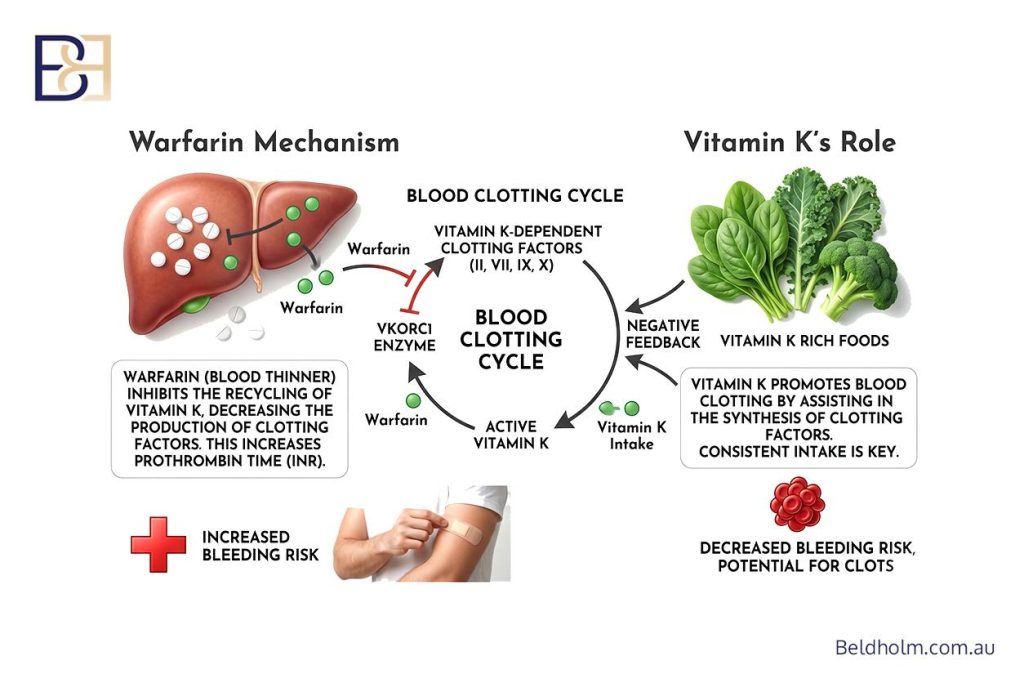
If you take warfarin, the information in this article about supplementation is different for you. This section covers why and how the timing is managed around surgery. It is not a substitute for individualised advice from your GP or treating doctor. Any changes to your warfarin dose, vitamin K intake, or supplement regimen must be discussed with your GP or treating doctor before you make them.
How warfarin actually works
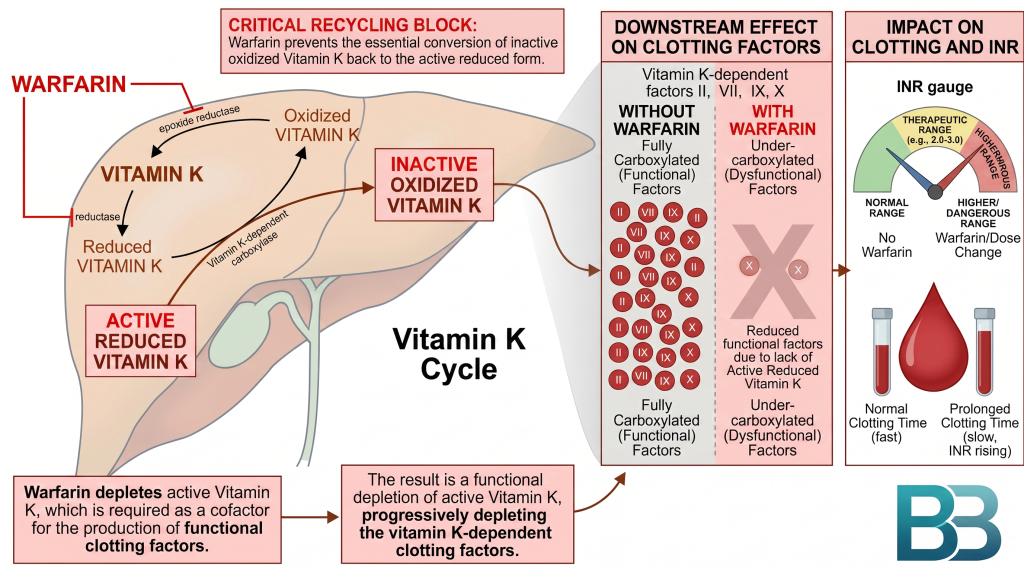
Warfarin is a vitamin K antagonist. Its therapeutic effect depends on interfering with the body’s ability to recycle vitamin K inside the liver.
- Vitamin K normally cycles through an active and an inactive form as it carboxylates clotting factors
- Warfarin blocks the enzyme (vitamin K epoxide reductase) that converts the inactive form back to the active form
- The result is a functional depletion of active vitamin K, which progressively depletes the vitamin K-dependent clotting factors (II, VII, IX, and X)
- With fewer functional clotting factors available, the blood takes longer to clot, as measured by a rising INR (1).
This is the entire basis of warfarin’s effect. This is why INR needs regular monitoring, and why any change in vitamin K intake, up or down, can significantly shift INR.
Why changing vitamin K intake matters on warfarin
Because warfarin blocks vitamin K recycling, the total amount of vitamin K in the system directly affects the drug’s effect.
- Increasing vitamin K intake (through supplements, a sudden change to a leafy-green-heavy diet, or starting a multivitamin that contains K) can reduce the warfarin effect and lower INR. This increases the risk of inappropriate blood clot formation.
- Decreasing vitamin K intake (stopping a long-standing supplement, or a significant drop in dietary greens) can increase the warfarin effect and raise INR. This increases the risk of bleeding, prolonged bruising, and delayed wound healing after surgery.
Stability is the goal. Patients on warfarin are advised to maintain a consistent intake of vitamin K rather than avoid it. The INR is calibrated to the patient’s usual intake over time, and sudden changes to that intake are what cause problems.
For post-weight-loss patients on warfarin who are being prepared for body contouring surgery, this has specific implications.
What this means for the Tier 1 supplement protocol
For patients not taking warfarin, K2 MK-7 at 100 mcg per day is part of the universal Tier 1 protocol as I have described throughout this article.
For patients on warfarin, the situation changes.
- Starting a new K2 supplement in a patient on warfarin will shift INR and may significantly reduce the warfarin effect
- Changing the brand or dose of an existing K2 supplement can have the same effect
- Stopping a long-standing K2 supplement abruptly can increase INR
None of this means K2 cannot be used in warfarin patients. It means the decision is not mine to make unilaterally, and any change must be introduced gradually and monitored through regular INR testing. If you are on warfarin, I do not start, stop, or change your vitamin K supplementation without discussing this with your GP or your treating haematologist.
How I manage anticoagulants around surgery

Anticoagulant management for body contouring surgery is part of my pre-operative assessment. The decision is made by me in partnership with the GP, well in advance of the surgical date. It is not the anaesthetist’s call.
- For most patients on warfarin, we plan to cease the drug approximately one week before surgery to allow the INR to return towards the normal range. This is done in consultation with the GP and, where relevant, the haematologist who originally prescribed the warfarin.
- Some patients need to continue anticoagulation through surgery for specific clinical reasons, such as mechanical heart valves or recent thromboembolic events. In those cases, we plan the management well in advance, which may include bridging with a short-acting anticoagulant.
- Patients on aspirin or other antiplatelet medications generally stop these approximately one week before surgery as well, again managed in partnership with the GP.
- Patients on direct oral anticoagulants (DOACs) do not have a vitamin K interaction, because these drugs work through a different mechanism and are not affected by vitamin K intake. Their cessation timing around surgery is still planned in partnership with the GP, for the same reason any anticoagulant is, but vitamin K supplementation is not a specific consideration for this group.
Patients must not self-adjust anticoagulants, antiplatelets, or vitamin K supplementation without prior discussion. Unsupervised cessation of anticoagulation can have serious consequences, and unsupervised starting of vitamin K supplementation in a patient on warfarin can destabilise INR.
Other medications that affect vitamin K status
Two other medication groups occasionally appear in this patient group and can affect vitamin K status through fat absorption: orlistat (a weight-loss medication that reduces fat absorption) and bile acid sequestrants (used for cholesterol management). Both reduce fat-soluble vitamin absorption, including vitamin K, and, when combined with warfarin, can contribute to INR instability (3).
If you are on any of these medications, I flag this at consultation and involve your GP in planning the pre-operative supplement and medication approach.
The bottom line for warfarin patients
Vitamin K is not your enemy. It is the nutrient your body needs, and chronic deficiency in the extrahepatic functions (bone and vascular health) is a long-term concern for everyone, including patients on warfarin.
What is different for you is that any change needs to be planned, gradual, and monitored. That is the role of your GP and your treating doctor, and it is the role I take on in the pre-operative period before your body contouring surgery.
If you are on warfarin and considering body contouring surgery, the anticoagulant management conversation is part of the consultation, and it begins well before the surgical date is set.
Procedure-Specific Relevance Across Body Contouring
Vitamin K status affects intraoperative haemostasis and the early post-operative bleeding risk across all body contouring procedures I perform after major weight loss. The underlying clinical issue, which is fat malabsorption combined with reduced dietary intake and altered gut flora, does not change based on which area of loose skin is being treated. Neither does the supplement protocol (4,5).
What varies is the degree of surgical exposure, the wound surface area, and the specific vascular considerations for each procedure. That is worth covering briefly here, because it is a common question in consultation. Whether a patient is having an abdominoplasty, a body lift surgery, a thighplasty that treats the inner thighs and potentially extends to the outer thighs, or a brachioplasty to remove excess skin and excess fat from the upper arms, the same pre-operative framework applies. The specifics of each procedure influence the threshold for delaying surgery if pre-operative findings are borderline, but not the Tier 1 supplement protocol itself.
Abdominoplasty (tummy tuck)
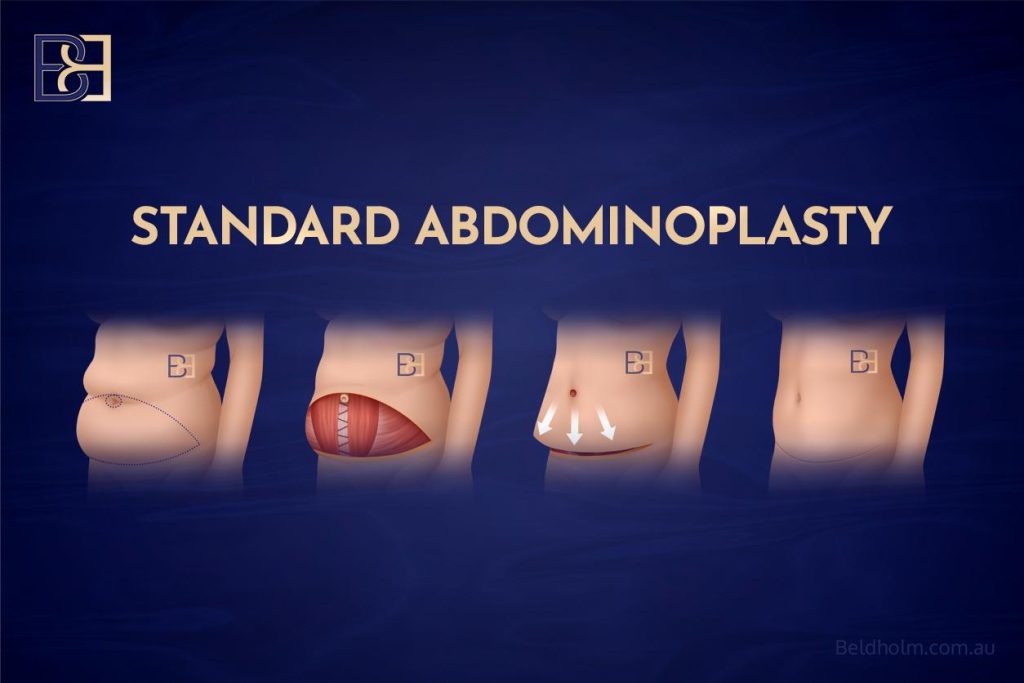
Abdominoplasty is the most commonly performed body contouring procedure in my post-weight-loss patient group. It is designed to remove excess skin from the lower abdomen, treat any residual excess fat, and tighten the abdominal wall. It involves the largest single wound surface area of any body contouring procedure.
- The incision spans hip to hip across the lower abdomen
- The abdominal flap is lifted from the underlying muscle, which exposes a large area of dissected tissue
- Muscle repair (rectus plication) is typically part of the procedure in post-weight-loss patients
- The umbilicus is repositioned, which adds a second smaller wound
- Drains are routinely placed to manage serosanguinous fluid in the early post-operative period
- Compression garments are worn from day one to support the tissues and reduce swelling
Adequate K1 status is essential for haemostasis across the entire wound surface. Small vessel ooze in the first 24 to 48 hours contributes to bruising, prolonged drain output, and, in some cases, seroma formation, all of which can complicate recovery and increase the need for post-operative pain relief. The Tier 1 D3+K2 supplement protocol is started at surgical planning for every abdominoplasty patient.
Body lift (belt lipectomy)
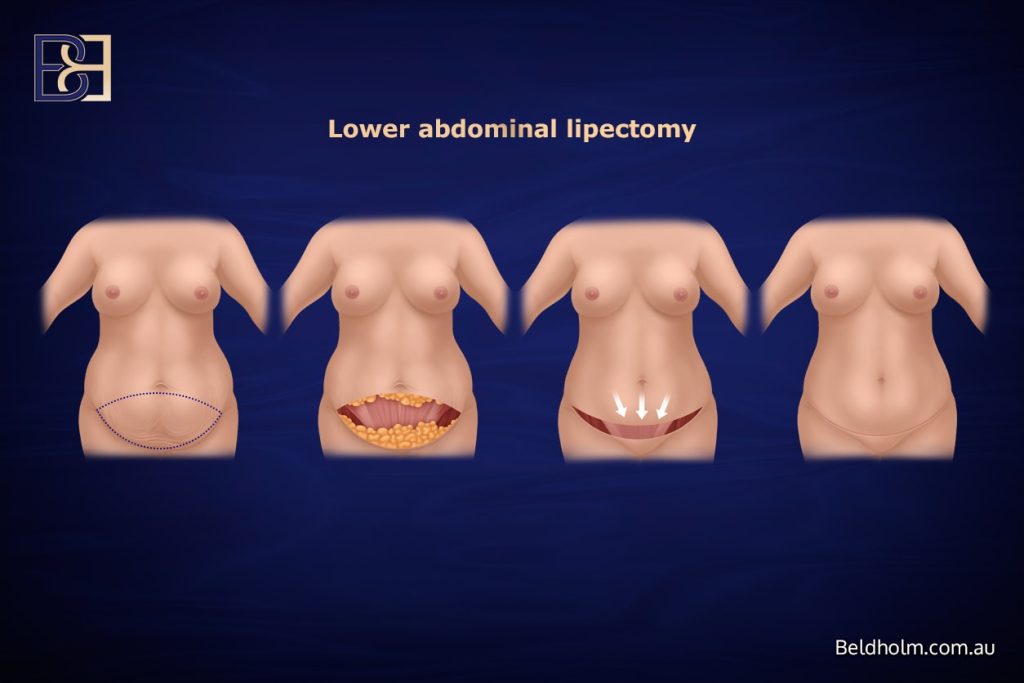
A body lift, also called a belt lipectomy in the surgical literature, is a circumferential procedure that treats excess skin around the entire lower torso. Body lift surgery is the most extensive body contouring procedure I perform, and it is typically reserved for patients with very significant loose skin across the lower body after major weight loss. A lower body lift is commonly requested by patients who have reached a stable weight and want to remove excess skin that exercise and dietary efforts alone cannot treat.
- The wound extends 360 degrees around the patient, from the abdominal scar round the flanks to the back
- This is the longest wound in body contouring surgery
- Dissection is more extensive than in abdominoplasty alone, and the vascular supply to the flaps needs careful preservation
- A body lift removes not only excess skin but also any redundant excess tissue and residual fat deposits around the waist, hips, and upper buttocks
- Drains are placed anteriorly and often posteriorly as well
- Compression garments are worn for several weeks post-operatively to reduce swelling and support healing
Haemostasis across a circumferential body lift wound is more technically demanding than a shorter incision, and any underlying coagulation impairment has a larger clinical footprint. The Tier 1 supplement protocol is the same as for abdominoplasty, started at the same point in the pre-operative timeline. For patients undergoing a lower body lift (belt lipectomy), I am particularly attentive to preoperative PT and INR results. A body lift has the highest demand for stable coagulation of any body contouring procedure. The amount of weight a patient has lost before coming to a body lift surgery often correlates with the amount of extra skin that needs to be removed, and in many cases, the procedure is combined with liposuction to remove excess fat deposits that remain after weight stabilisation.
Thighplasty (thigh lift)

Thighplasty treats excess skin of the inner thighs. It is commonly performed after significant weight loss and can be done as a medial thigh lift or as a vertical thigh lift, depending on the distribution of excess skin. For patients whose loose skin extends to the outer thighs, the procedure may be combined with a body lift (belt lipectomy) to treat the full circumference of the lower body. Excess skin removal from the outer thighs is typically achieved through the body lift incision rather than a separate thighplasty incision.
- The medial thigh lift (thighplasty) incision runs in the groin crease and descends along the inner thigh
- The vertical thigh lift (thighplasty) extends further down the length of the medial thigh
- The femoral vessels run through the proximal dissection territory
- Lymphatic vessels are preserved where possible, but some degree of post-operative swelling is expected
- Compression garments for the thighs are essential to reduce swelling and support healing in the first weeks
The vascular territory of the medial thigh is complex, and careful haemostasis matters for both bleeding risk and for reducing post-operative lymphatic and vascular complications. Adequate pre-operative vitamin K status supports both.
Brachioplasty (arm lift)
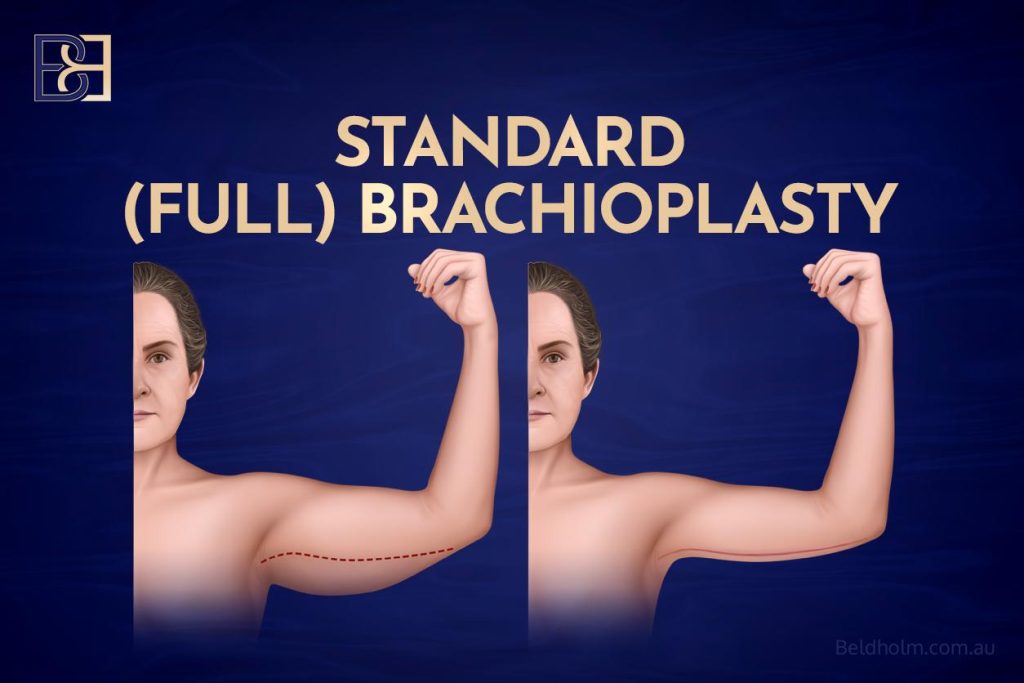
Brachioplasty treats loose skin of the upper arms after major weight loss. In patients with both loose skin and residual fat deposits in the upper arms, the procedure is combined with liposuction to remove excess fat simultaneously.
- The incision runs along the inner aspect of the upper arm, usually from the elbow towards the axilla
- The procedure involves closer proximity to the neurovascular structures of the axilla than many patients realise
- The medial antebrachial cutaneous nerve and its branches run in the field of dissection
- Compression garments for the upper arms are worn for several weeks post-operatively
The surface area is smaller than abdominoplasty or body lift (belt lipectomy), but the precision required at the axillary end means that any bleeding in the field makes the dissection more difficult and increases the risk of inadvertent nerve injury. A stable coagulation status pre-operatively is clinically useful.
Mastopexy (breast lift)
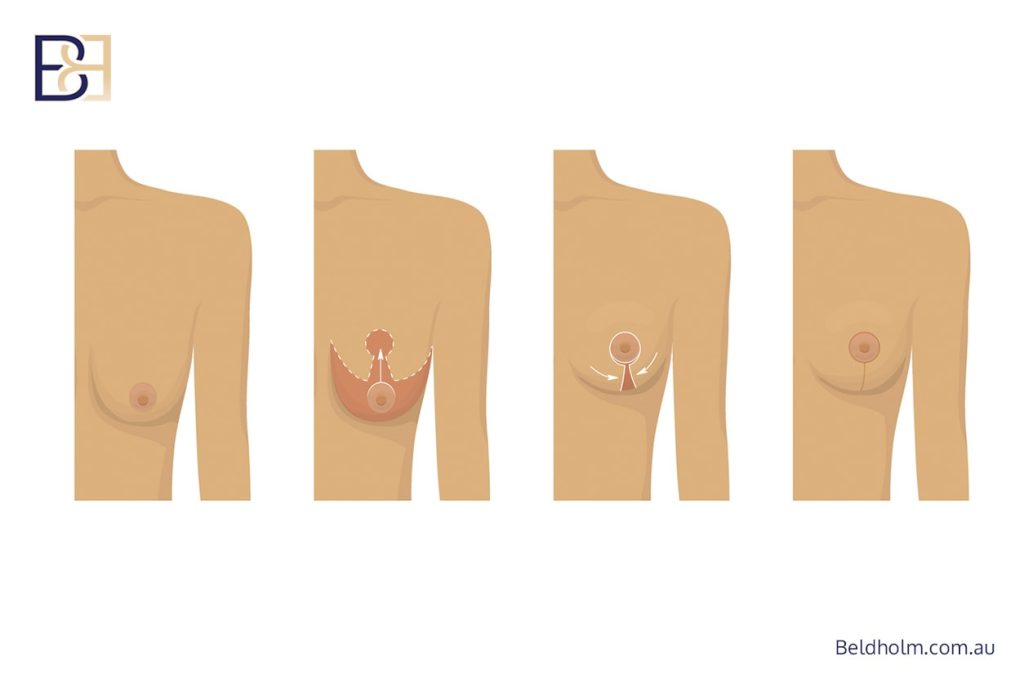
Mastopexy is a breast surgery performed after major weight loss when the breast has lost volume, and the skin envelope is loose. The specific approach depends on the degree of ptosis and the quality of the remaining skin and breast tissue.
- A peri-areolar, vertical, or Wise-pattern incision is used depending on the clinical picture
- Significant dissection of breast tissue and re-shaping of the skin envelope is involved, with removal of excess tissue as required
- The nipple-areolar complex (NAC) is re-positioned, usually on a superior or medial pedicle
- Blood supply to the NAC is the single most important consideration in pedicle selection
Haemostasis is crucial in every breast surgery, but the vascular supply to the NAC is particularly sensitive. Anything that compromises haemostasis increases the risk of NAC compromise, which is the most serious early post-operative concern in mastopexy. Adequate vitamin K status is one of several modifiable factors I treat pre-operatively.
How the protocol adjusts by procedure
The short answer is: it does not.
- The Tier 1 D3+K2 supplement protocol is universal across all procedures
- The pre-operative coagulation panel is the same
- The clinical assessment of vitamin K risk factors is the same
- The pre-operative optimisation window is the same (minimum 4 weeks, 6 to 8 weeks preferred)
What varies between procedures is the threshold for delaying surgery if pre-operative findings are borderline. For a large combined procedure such as abdominoplasty plus body lift (belt lipectomy) plus mastopexy, I have a lower threshold for delaying surgery to correct an abnormal PT or clinical bleeding history than I would for a standalone brachioplasty. The stakes of an intraoperative or early post-operative complication scale with the extent of the surgery.
Combined procedures
Many post-weight-loss patients present with excess skin in multiple areas of the body. After substantial weight loss, the remaining skin rarely retracts evenly, and combined procedures are common in this patient group. Combinations such as abdominoplasty with mastopexy, a body lift (belt lipectomy) with thighplasty (thigh lift), or a lower body lift (belt lipectomy) with brachioplasty allow us to treat multiple areas of excess skin in a single operative session (5,7). In patients who have had prior weight-loss surgery, a well-planned body lift (belt lipectomy) is often the foundational surgery in their body-contouring plan.
For combined procedures, the Tier 1 protocol is unchanged, but the overall nutritional preparation becomes more important. Longer operating time, larger total wound surface area, and greater total blood loss all raise the stakes of any underlying nutritional insufficiency. This is not a reason to avoid combined procedures in suitable patients. It is a reason to prepare thoroughly in advance.
My Pre-Operative Approach to Vitamin K

The full pre-operative nutrition and supplement framework is covered in my pre-operative supplement guide for post-weight-loss body contouring patients. That is the authoritative version, covering the Tier 1 and Tier 2 protocols, the pre-operative blood panel, the clinical history I take at consultation, and the hand-off to long-term GP-led management after the peri-operative window.
This section focuses on vitamin K-specific decisions and does not repeat what is already covered there.
The K-specific decisions in practice
- Tier 1 supplementation includes K2 MK-7 at 100 mcg per day, paired with vitamin D3. Commenced at surgical planning for every post-weight-loss patient, before blood results are back.
- Prothrombin time and INR on the standard coagulation panel are how I screen for clinically significant K insufficiency. A standalone serum K assay is not ordered routinely.
- Antibiotic history, malabsorption history, and bleeding symptoms are part of the structured clinical history and inform whether anything beyond the Tier 1 protocol is needed.
When the standard approach changes
- Patients on warfarin or other vitamin K antagonists: the K2 supplement is not commenced without GP and treating-doctor agreement, and anticoagulant management around surgery is planned in partnership with the GP as covered in the previous section.
- Patients with confirmed biochemical K deficiency (prolonged PT not explained by liver dysfunction or anticoagulant use): oral K1 5 to 10 mg per day is added, in collaboration with the GP, until coagulation corrects.
- Patients with significant malabsorption (particularly after biliopancreatic diversion or revision bariatric surgery): higher K2 doses and closer monitoring, with GP input on ongoing management.
- Patients with an unexplained bleeding history: investigation before surgery, which may include haematology referral.
Setting realistic expectations around body contouring procedures
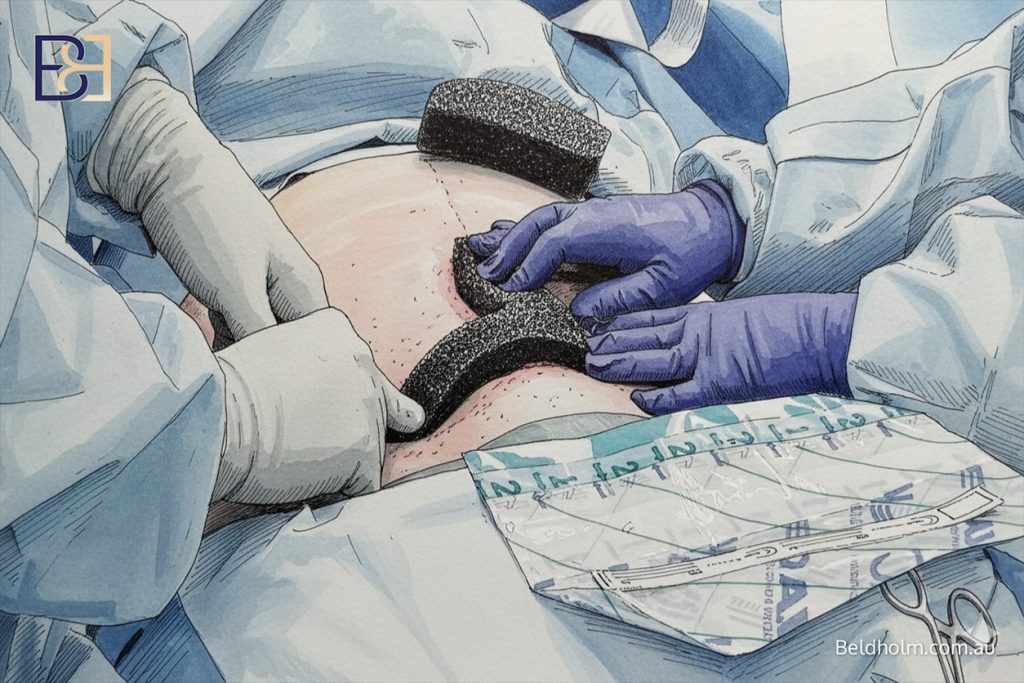
Body contouring procedures after major weight loss carry different expectations than those of a standard cosmetic surgery in a patient who has not undergone a weight-loss journey. For patients who have experienced significant weight loss, the planned surgical procedure sits on top of a patient history that already includes nutritional vulnerability, altered gut anatomy, or a period of sustained caloric restriction. Patients who have undergone bariatric surgery or reached their goal weight through prolonged dietary and medication-assisted efforts often have layered nutritional vulnerabilities that influence healing. Realistic expectations start with understanding that the amount of weight lost, the pace of loss, and the time spent at a stable weight all shape what body contouring surgery can achieve.
My approach is to set these expectations clearly at the consultation. For a patient who has reached their goal weight and maintained it for at least 6 months, body contouring procedures can remove a significant amount of excess skin and treat residual excess fat. For a patient who is still losing weight or whose nutritional status is suboptimal, further surgery is often better delayed until the clinical picture is more favourable. The conversation about vitamin K, blood coagulation, and the broader pre-operative workup is part of setting those realistic expectations from the first visit.
Putting It Together: What Patients Need to Know

Vitamin K is rarely the headline nutrient in pre-operative planning. Protein takes that role, followed by iron and vitamin D. But in post-weight-loss body contouring patients, vitamin K sits at the intersection of two clinically important concerns: surgical bleeding risk and long-term bone and vascular health.
Both concerns are real and manageable with appropriate preparation. That is why K2 sits in the Tier 1 universal supplement protocol for every post-weight-loss patient I see.
The two reasons vitamin K matters
Vitamin K1 and coagulation. Adequate K1 status supports normal clotting during body contouring surgery. An elevated prothrombin time on the standard pre-operative blood panel is the clearest signal of inadequate K1 status, but subclinical insufficiency can exist without any coagulation abnormality on routine testing.
Vitamin K2 and calcium direction. K2 activates proteins that determine where calcium is distributed in the body. It drives calcium into bone through osteocalcin, and it keeps calcium out of blood vessels and soft tissue through matrix Gla-protein. Without adequate K2, calcium mobilised by vitamin D3 supplementation does not reach its intended destination.
Why post-weight-loss patients face a compounding risk
The risk factors do not operate independently. They stack on top of each other.
- Fat malabsorption after weight loss surgery procedures such as Roux-en-Y gastric bypass or biliopancreatic diversion impairs the absorption of all fat-soluble vitamins, including vitamin K
- Reduced overall intake after sleeve gastrectomy (another common weight loss surgery) or on weight loss medications reduces both dietary K1 and the fat needed for its absorption
- Altered gut microbiome after bariatric surgery reduces K2 production from intestinal bacteria
- Repeated or prolonged antibiotic courses further deplete K2-producing gut flora
- A high-protein, low-vegetable dietary pattern delivers less K1 than the general population diet
- Concurrent high-dose vitamin D3 supplementation without paired K2 increases the consequences of inadequate K2 status
This is not a reason to delay surgery
Good nutritional preparation is important. Vitamin K status is one component of that preparation, not a barrier to it.
The pre-operative window of 4 to 8 weeks exists for exactly this reason. It is long enough to make a meaningful difference to nutritional status, and short enough to maintain momentum toward the surgical date. For most patients undergoing surgery to remove loose skin after weight loss, the Tier 1 supplement protocol, initiated at the first consultation, is the entire intervention needed. Dietary supplements in the Tier 1 framework are chosen because their health risks at the doses used are minimal and their potential benefits for wound healing and recovery are supported by clinical evidence in this patient group.
For the minority of patients with specific clinical concerns (warfarin therapy, confirmed deficiency, significant malabsorption, unexplained bleeding history), the approach is individualised in collaboration with the GP, and the pre-operative timeline may be adjusted accordingly.
Realistic expectations

Results vary between patients. Nutritional optimisation improves the conditions for healing and for surgery, but it does not guarantee a specific outcome. Factors that influence how the individual patient responds include:
- Type of prior weight loss surgery and years since the procedure
- Current baseline nutritional status at the first consultation
- Supplementation history, including consistency and duration
- Full medical history, with particular attention to anticoagulants and fat-soluble vitamin absorption modifiers
- Extent of the planned body contouring procedure or combined procedures (for example, a standalone abdominoplasty versus a full body lift surgery combined with thighplasty)
- Individual genetic, metabolic, and general health factors
All of this is assessed during consultation as part of the full pre-operative workup. The conversation about vitamin K and the broader nutritional protocol starts at the first visit rather than being deferred to the anaesthetic consultation or the GP.
The short version
- Vitamin K1 supports coagulation. Vitamin K2 directs calcium to bone and away from blood vessels.
- Post-weight-loss patients face compounding risk from fat malabsorption, altered gut flora, antibiotic exposure, and low vegetable intake.
- K2 MK-7 at 100 mcg per day, paired with vitamin D3, is part of the Tier 1 universal supplement protocol in my practice.
- The protocol applies whether the planned surgery is an abdominoplasty, a body lift, or another body contouring procedure for excess skin after weight loss.
- Patients on warfarin or other vitamin K antagonists have a different pathway, managed in partnership with the GP.
- The pre-operative window of 4 to 8 weeks is when this work is done.
- The outcome of surgery depends on multiple factors beyond nutrition alone, which is why the assessment is individualised at consultation.
If you are preparing for body contouring surgery after major weight loss, vitamin K is one of several nutrients in your nutritional preparation. It is a piece worth getting right.
References
- Shearer MJ, Fu X, Booth SL. Vitamin K nutrition, metabolism, and requirements: current concepts and future research. Adv Nutr. 2012;3(2):182-95.
- Booth SL. Vitamin K: food composition and dietary intakes. Food Nutr Res. 2012;56.
- Agha-Mohammadi S, Hurwitz DJ. Potential impacts of nutritional deficiency of post-bariatric patients on body contouring surgery. Plast Reconstr Surg. 2008;122(6):1901-14.
- Agha-Mohammadi S, Hurwitz DJ. Enhanced recovery after body-contouring surgery: reducing surgical complication rates by optimizing nutrition. Aesthetic Plast Surg. 2010;34(5):617-25.
- Humar P, Robinson B. Preparing patients for body contouring surgery and postoperative surveillance for deep venous thrombosis. Clin Plast Surg. 2024.
- Mehta A, et al. Nutritional challenges in post-massive weight loss body contouring: guidance for plastic surgeons on GLP-1 agonists and sleeve gastrectomy. Aesthet Surg J. 2025.
- Vitagliano G, et al. Preparing patients for cosmetic surgery and aesthetic procedures: ensuring an optimal nutritional status for successful results. Nutrients. 2023.
- National Health and Medical Research Council (Australia), Ministry of Health (New Zealand). Nutrient Reference Values for Australia and New Zealand: Vitamin K. Canberra: NHMRC.