Acute compartment syndrome is a rare complication after brachioplasty (arm lift) surgery. It is uncommon, but when it happens it is a serious condition and a limb threatening surgical emergency. Pressure builds inside a closed muscle compartment in the arm, blood flow to the muscles and nerves is cut off, and without prompt treatment the tissue can be permanently damaged. That is why it needs urgent assessment and, if confirmed, urgent surgery.
I want my post weight loss patients to understand this complication before they have surgery. Not because it is likely, but because recognising it early is what protects the arm. The signs can come on within hours, and the window for treatment is short. Knowing what to watch for, and what to do, matters more than how rare the problem is.
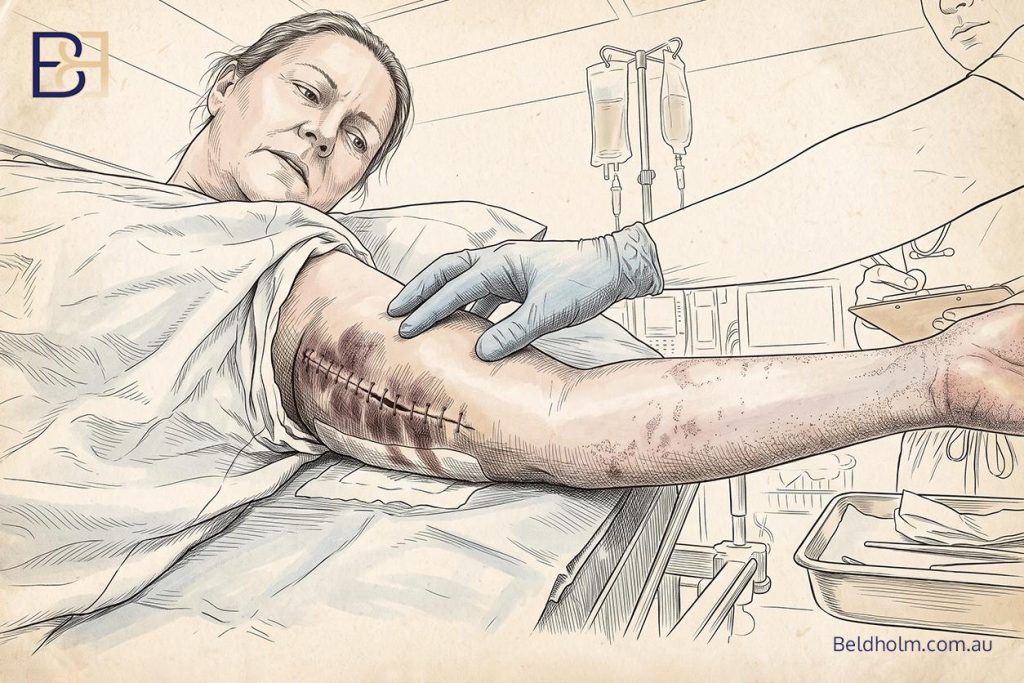
Brachioplasty (arm lift) removes loose skin and, in some cases, fat from the upper arm after significant weight loss. Loose skin in this area is common once a large amount of weight has come off, and an arm lift (brachioplasty) is a common body contouring procedure for this group. Like any operation, it carries risks. Most are minor and settle with time. Acute compartment syndrome sits at the rare but serious end of that range.
This article explains what acute compartment syndrome is, how it differs from the chronic form, why surgery can occasionally trigger it, the warning signs to look for, and exactly what to do if you suspect it after your operation. I also set out how I work to keep the risk as low as possible.
Brachioplasty (arm lift) after weight loss
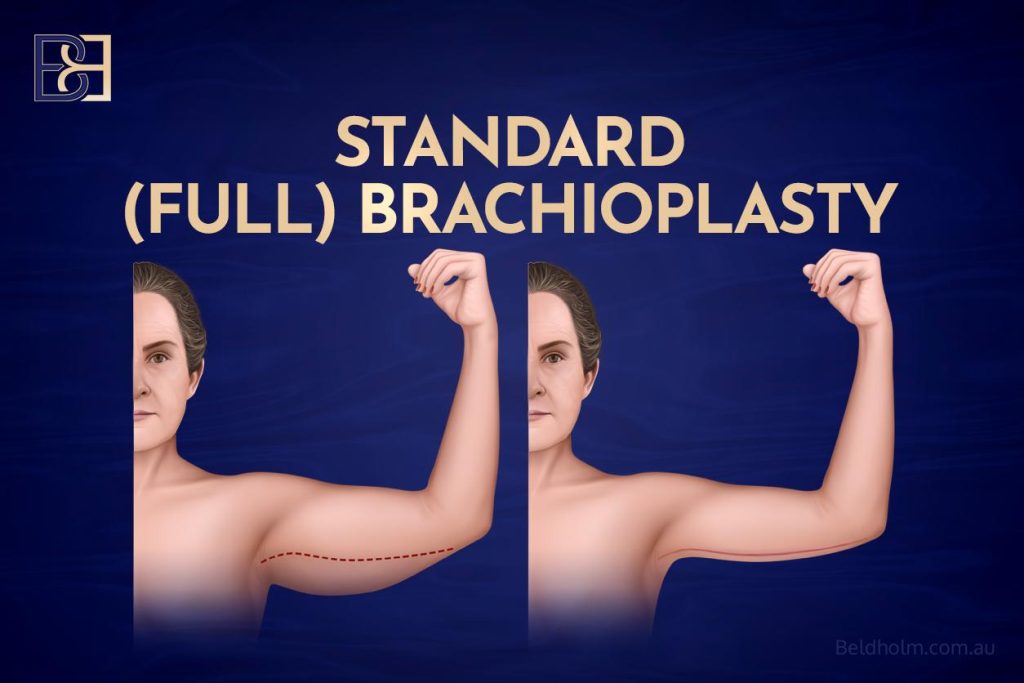
After significant weight loss, whether through bariatric surgery or weight loss medications, loose skin tends to gather along the upper arm, between the armpit and the elbow. This is one of the more common areas for excess skin to settle once a large amount of weight has come off. Upper arm contouring after massive weight loss is a common form of body contouring surgery, and an arm lift (brachioplasty) is used to remove excess skin and tighten what remains.
There is no single version of the operation. The two I perform most often in post weight loss patients are:
- Full arm lift (brachioplasty). The incision runs along the inner upper arm, from the axilla (armpit) to the elbow. It treats the upper arm, where loose skin most often gathers. This is a common stand-alone operation in this group, not a lesser option.
- Extended brachioplasty. The incision continues from the upper arm onto the lateral chest. This suits patients whose looseness carries past the armpit and onto the side of the chest.
In some patients I combine the skin excision with liposuction (suction assisted lipectomy) of the arm, an approach known as liposuction assisted brachioplasty.
How much loose skin sits on the lateral chest varies a lot from one person to the next. Several different body contouring procedures treat that area, and which one suits you depends on where your skin laxity sits and how much of it there is. I assess that at consultation, and I cover the options in more detail on my brachioplasty (arm lift) post weight loss page.
Why the length of the operation matters here
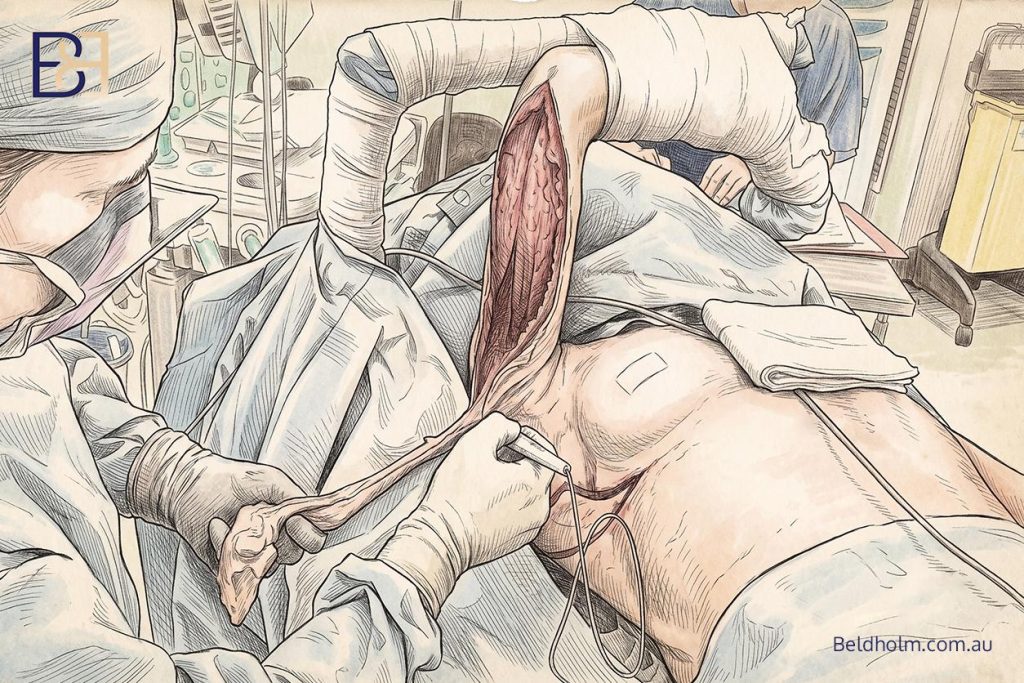
Acute compartment syndrome is rare after any brachioplasty surgery. When it does happen, the risk is tied less to which version of the operation you have and more to how long you are on the operating table and how the arm is managed during and after surgery.
A longer operation keeps the arm under load for longer. That can happen when a large amount of skin is removed, or when the brachioplasty is combined with another procedure in the same session. Combining is not unusual in post weight loss patients, who often have loose skin in more than one area. The longer the arm is positioned and worked on, the more the tissues can swell.
The point to take from this is not that one operation carries less risk than another. It is that operative time and the handling of the arm are the factors that matter, and both are things I plan for. I come back to how I manage them later in this article.
What is acute compartment syndrome?
Your arm is made up of muscle groups. These muscle groups are wrapped in a thin but tough sheet of connective tissue called fascia. The fascia divides the arm into closed spaces known as compartments. Each compartment holds muscle, along with the blood vessels and nerves that supply it.
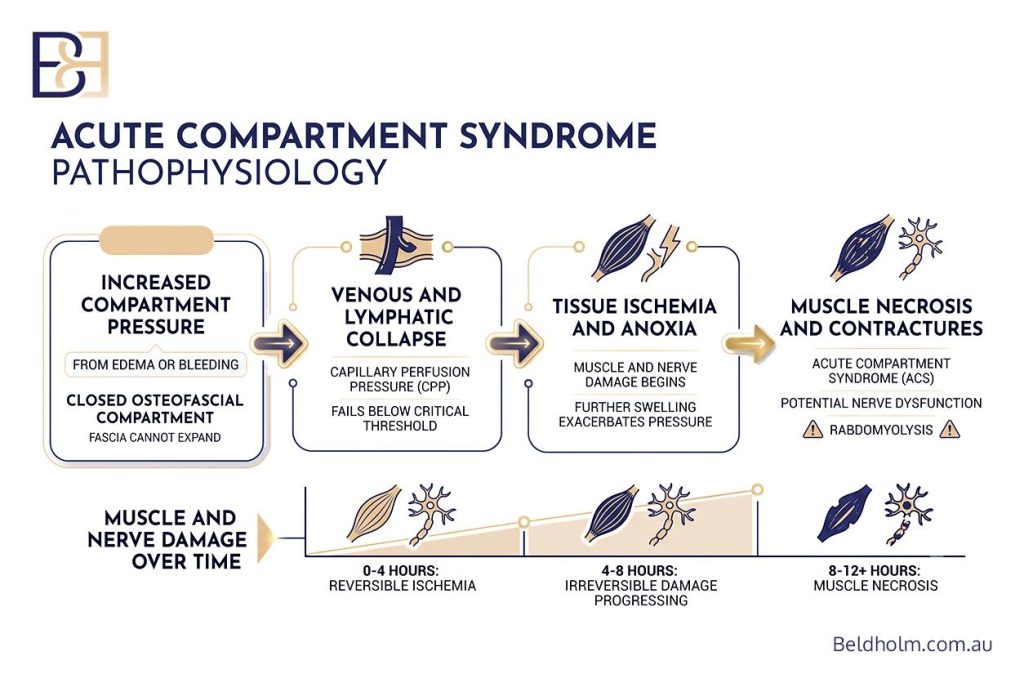
Fascia does not stretch, and that is the heart of the problem. When the compartment swells, the pressure inside this confined space has nowhere to go. As the pressure climbs, it squeezes the small blood vessels first. Blood flow into the muscle and nerve tissue drops. Starved of blood, the tissue begins to suffer, and the first sign is usually pain that is more severe than the operation alone would explain.
If the pressure is not relieved, the loss of blood supply damages the muscle and nerves. Left long enough, that damage becomes permanent. This is why acute compartment syndrome is treated as a surgical emergency, and why time matters so much (1,2).
In the arm, compartment syndrome most often involves the forearm, though it can affect the upper arm as well. After an arm lift (brachioplasty), it is swelling and rising pressure within the upper arm or forearm that raise the concern (1).
Acute and chronic compartment syndrome are not the same thing
The term compartment syndrome covers two different conditions. They share a name but behave very differently, and only one of them is relevant after surgery.
Acute compartment syndrome comes on rapidly, often within hours of an injury or an operation. The pressure inside the compartment rises and does not settle on its own. It is a surgical emergency. Without prompt treatment it can cause permanent muscle and nerve damage, and in severe cases it threatens the limb. This is the form that matters after an arm lift (brachioplasty).
Chronic exertional compartment syndrome is a different problem. The pressure rises with exercise, then eases with rest. It causes aching or cramping during activity that settles once you stop. It can limit sport and be uncomfortable, but it is not an emergency and it does not threaten the limb. It is usually managed with changes to activity, and only rarely needs surgery (3).
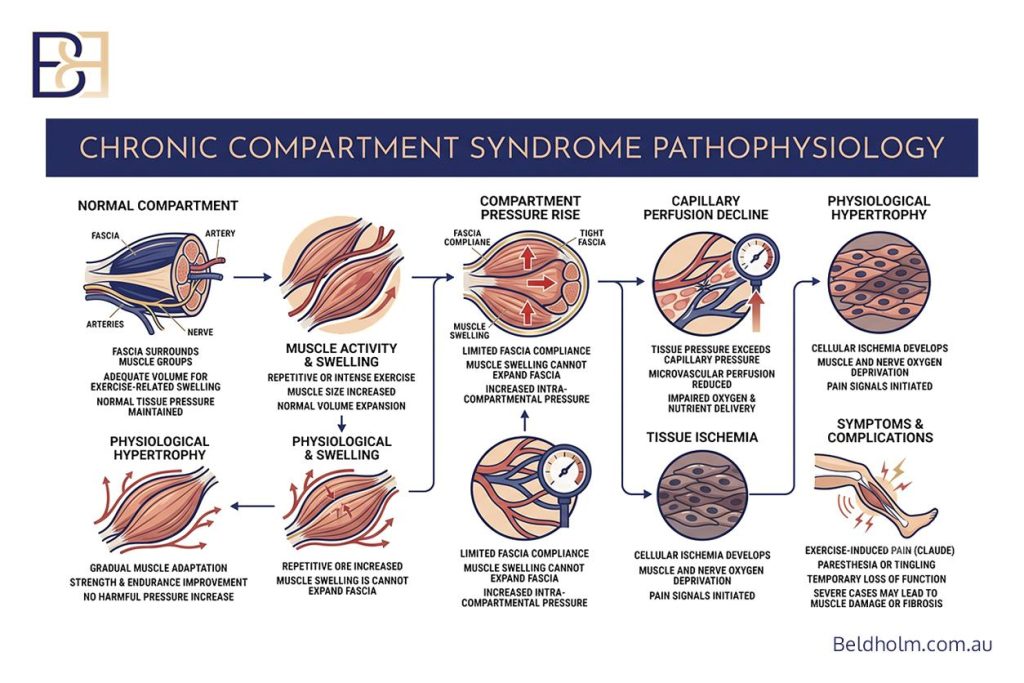
So if you read about compartment syndrome described as something that builds during a run and fades afterwards, that is the chronic form. It is not what this article is about. After surgery, the concern is acute compartment syndrome, and it needs urgent attention.
How brachioplasty can rarely lead to compartment syndrome
Acute compartment syndrome after an arm lift (brachioplasty) is rare. When it does occur, it is usually because pressure has built up inside the arm faster than the tissues can accommodate. A few things can contribute, and most relate to the operation itself rather than anything the patient does.
Bleeding within the arm
A small amount of bleeding under the skin after surgery is common and settles. Occasionally a larger collection of blood, called a haematoma, forms within the arm. If it builds inside a compartment, it adds volume to the affected compartment, which cannot expand, and the pressure rises. A rapidly expanding haematoma is one of the recognised triggers for compartment syndrome (1).
Swelling and operative time
Every operation produces some swelling. The longer the arm is positioned and worked on, the more swelling can develop. This is where operative time matters. A long single operation, or a brachioplasty combined with another procedure, gives more time for swelling to build (4).
External pressure from a dressing or garment
After your operation I apply a Comfeel dressing and fit a compression garment. Compression is useful, but it has to be the right amount. A dressing or garment that is too tight can press on the arm from the outside and add to the pressure within. This is one reason I measure and fit garments carefully, and why you should tell me or my nurse if anything feels too tight rather than leaving it.
Positioning during surgery
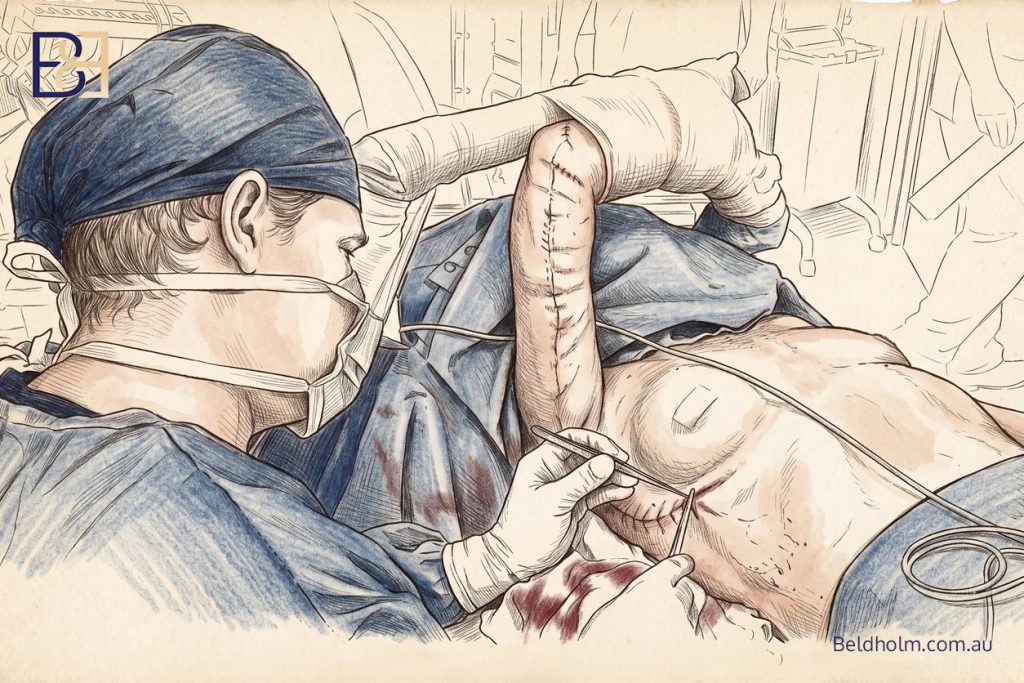
During the operation your arm is supported and held in position so I can work along its length. Over a long procedure, prolonged positioning can contribute to pressure and swelling in the limb. Careful positioning and attention to operative time both help keep this in check.
In most cases no single cause is to blame, and the exact trigger is often not identified. Several of these can be planned for, which is what I do.
How common is acute compartment syndrome after brachioplasty?

Book your appointment online now
It is rare. Acute compartment syndrome is not among the problems that arm lift (brachioplasty) patients commonly face. The more frequent issues after this brachioplasty procedure are things like seroma (a collection of fluid under the skin), delayed wound healing along the scar, and the appearance of the scar itself. Acute compartment syndrome sits well below these (4,5).
How rare is it exactly? The short answer is that there is no reliable percentage. It happens so infrequently after this operation that it appears in the medical literature as occasional case reports rather than as a measurable rate. That also means I cannot give you a precise figure, and any number presented as precise should be treated with caution.
What I can tell you is that it is uncommon, that it is well recognised when it does occur, and that the response to it is well established. Rarity is not the same as impossibility, and that is exactly why recognising the warning signs matters.
Warning signs to look for
Some discomfort, swelling and bruising are expected after an arm lift (brachioplasty). Acute compartment syndrome is different in both degree and pattern. The most useful thing you can do is know the early signs, because that is when treatment is most effective.
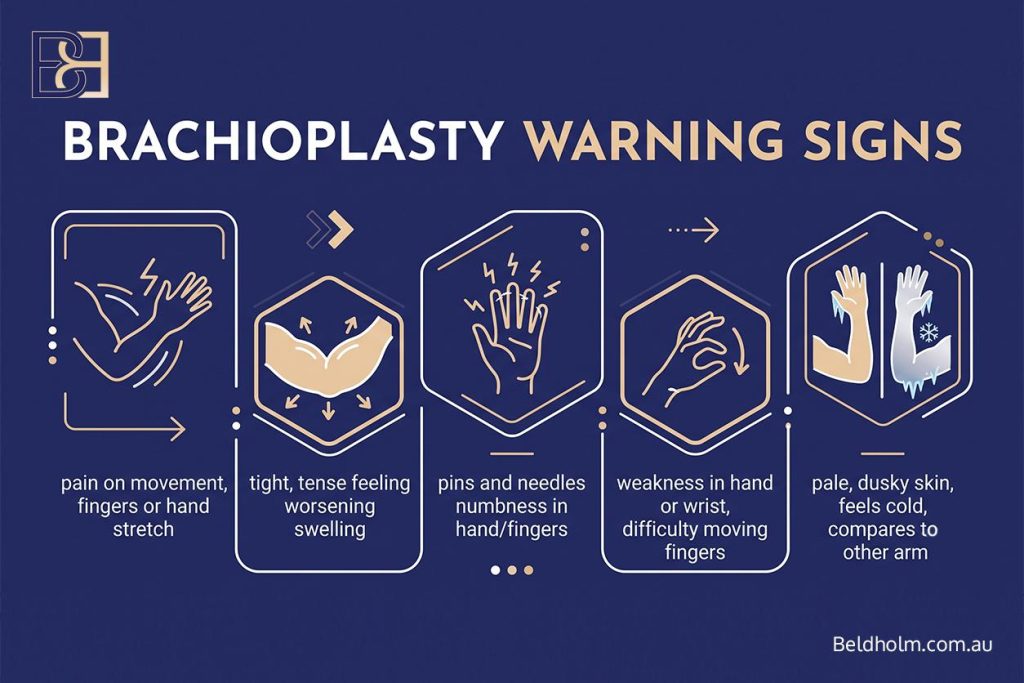
The earliest and most important sign is pain that is out of proportion to your operation. By that I mean pain that is more severe than expected, keeps building rather than easing, and is not controlled by the pain relief you have been given. This is the pain to take seriously.
Other signs to watch for:
- Pain when the fingers or hand are moved or stretched. Movement of the fingers bringing on sharp pain in the arm is a recognised warning sign.
- A tight, tense feeling or unusual swelling in the arm that is worsening rather than settling.
- Pins and needles or numbness in the hand or fingers.
- Weakness in the hand or wrist, or difficulty moving the fingers.
- Skin that looks pale or dusky, or feels cold, compared with your other arm.
The signs higher on this list tend to come first. The later ones, such as weakness, pale skin and a cold hand, suggest the problem is more advanced. You should not wait for these. If your pain is severe and climbing, or your hand is going numb, that is already enough to act on (1,2).
What to do if you suspect it
Acute compartment syndrome is a medical emergency. If you have the warning signs above, in particular severe pain that keeps rising, a numb hand, or a tight arm that keeps getting worse, treat it as urgent. This needs immediate medical attention, so do not wait to see if it settles overnight.

Get assessed straight away
- If the signs are severe, call 000 or go to your nearest emergency department. Compartment syndrome needs to be assessed in person and treated promptly. A hospital can examine the affected area, measure the pressure inside it if needed, and act without delay.
- Let my rooms know during clinic hours. After hours, you can also call Maitland Private Hospital, where the nursing staff provide phone triage. Maitland Private is not an emergency department, so anything that needs a physical examination after hours should go to your local emergency department.
- Do not sit on it. Treatment for compartment syndrome is most effective when it is early, so seek treatment early. Hours matter.
While you arrange help

- Loosen anything that feels too tight. If your compression garment or dressing feels too tight, loosen it. Taking pressure off the affected limb can help.
- Keep the affected arm level with your heart. Do not raise it above heart level. Lifting the arm too high reduces blood flow into it and can make the situation worse. Resting it at about the level of your heart is the right position.
- Do not take extra pain medication to mask it. Pain that needs more and more medication to control is itself a warning sign. Covering it up can hide the very thing that should prompt you to get help.
To be clear: severe, worsening pain or a numb, tight arm after your operation is a reason to get urgent help, not a reason to wait.
How acute compartment syndrome is diagnosed and treated
Diagnosis
Acute compartment syndrome is diagnosed mainly on clinical grounds. That means it is recognised from the history and the examination rather than from a single test. The pattern of severe, rising pain, pain when the fingers are moved, a tense arm and changes in sensation points a treating clinician to the diagnosis.

Where the picture is unclear, the pressure inside the compartment can be measured directly with a needle attached to a monitor. A high reading, considered alongside your blood pressure, supports the diagnosis and the decision to operate. The measurement is most useful when the examination alone does not give a clear answer (1).
Treatment
The treatment is an operation called a fasciotomy. The surgeon makes an incision through the skin and the tight fascia to open the compartment and release the pressure. Once the fascia is opened, blood flow returns to the muscle and nerves. This is the only reliable way to relieve an established compartment syndrome (2).
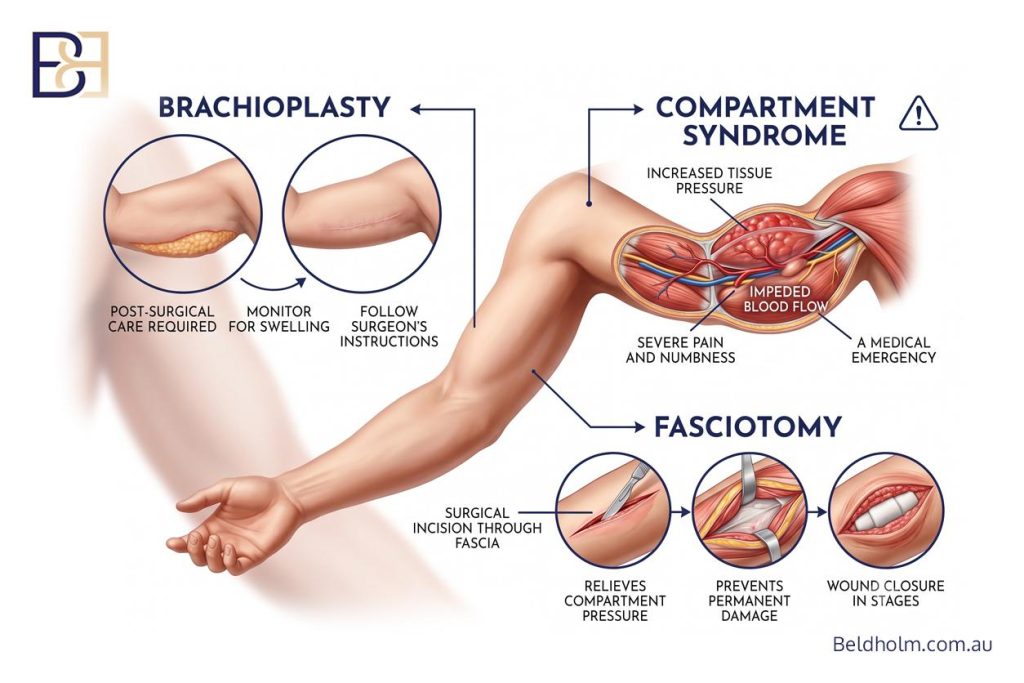
A fasciotomy is done as an emergency, in hospital, by the surgical team caring for you at the time. The wound is usually left open at first to let the swelling come down, then closed in a further procedure a few days later, sometimes with a skin graft. Physiotherapy follows to help the arm recover.
Why timing is everything
Muscle and nerve do not tolerate a loss of blood supply for long. Once blood flow is cut off, the tissue can begin to suffer within a few hours, and irreversible damage can set in if the pressure is not relieved. This is why acute compartment syndrome cannot wait, and why the warning signs are something to act on within the hour, not the next day (2).
What happens if it is not treated in time
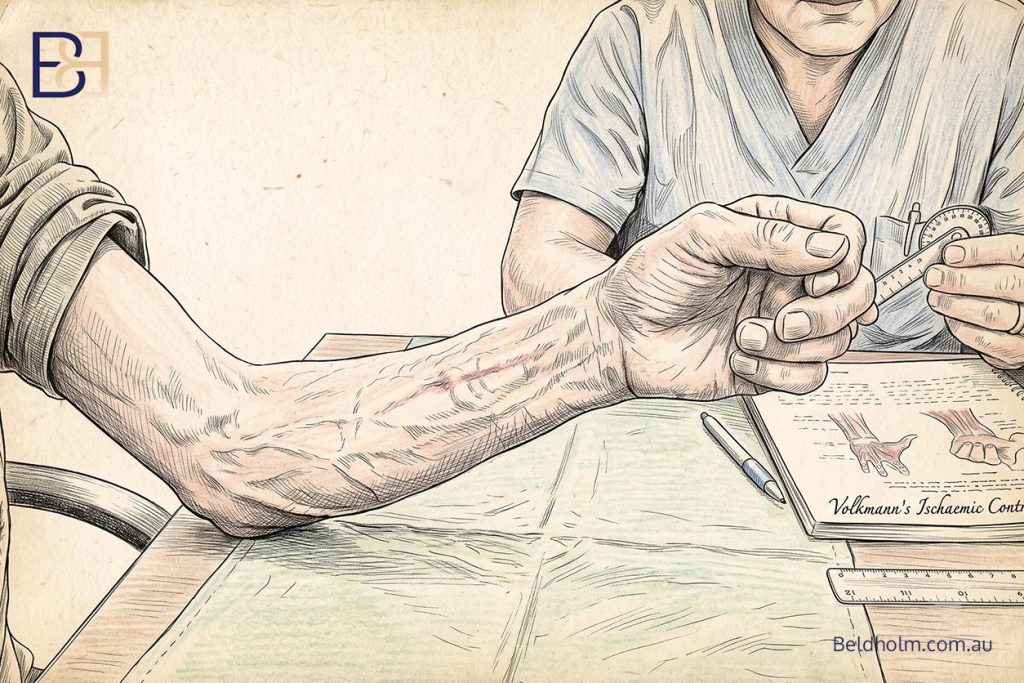
If acute compartment syndrome is left untreated, the muscle that has been starved of blood dies. This muscular damage is gradually replaced by scar tissue, which does not behave like muscle. It is stiff, and over time the forearm muscles shorten and tighten.
In the arm, this can pull the wrist and fingers into a fixed, bent position that cannot be straightened. This late result is called Volkmann ischaemic contracture. It causes lasting weakness, deformity and loss of limb function, including fine motor function of the hand. Once it has set in, it is difficult to put right, and treatment involves further reconstructive surgery with a limited ability to recover full movement (6).
Volkmann contracture is the very outcome that prompt assessment and treatment are there to prevent. Caught early, compartment syndrome is dealt with well before it reaches this stage, and long term outcomes are far better.
Reducing the risk
There is no way to remove the risk of a complication entirely, but several things lower it, and most of them sit with how the operation is planned and carried out.
During and after surgery
- Operative time. A shorter time on the table means less swelling. When an arm lift (brachioplasty) is combined with another procedure, I plan the order and the timing so the arm is not under load longer than it needs to be.
- Controlling bleeding. Careful attention to bleeding during the operation reduces the chance of a haematoma forming afterwards, which is one of the triggers for compartment syndrome.
- Closure and dressings. I avoid closing under excess tension, apply a Comfeel dressing, and fit compression garments that support the arm without pressing too hard.
- Observation. You are watched closely in hospital after surgery and reviewed regularly in the early weeks. Nursing checks and scheduled follow-up are there in part so that a problem like this is picked up early. In the early weeks I also ask you to avoid heavy lifting while the arm settles. My follow-up runs at set points across the first year.
Pre-operative preparation
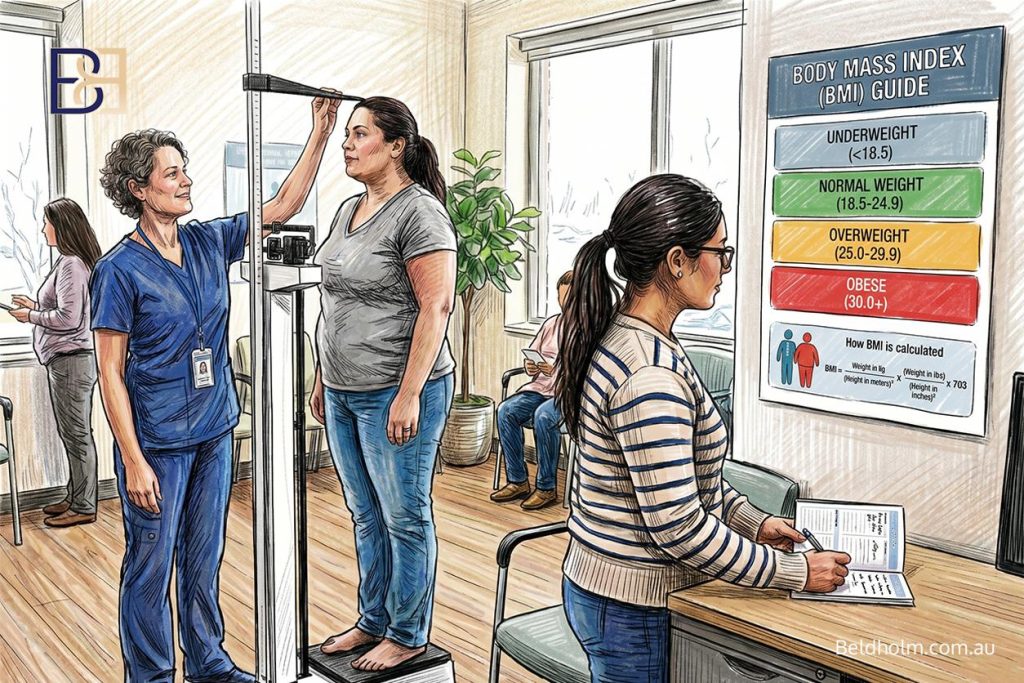
Most post weight loss patients carry nutritional gaps that built up during the period of weight loss. I also prefer you to be at a stable weight before surgery, because active weight loss leaves the body in a deficit that makes healing harder. Going into a major operation with those gaps left uncorrected makes healing harder. Before surgery I check a full set of bloods and work to correct any deficiencies, because tissue that is well nourished tends to cope better with an operation and supports the healing process.
I do not repeat the detail of that preparation here. I have written separately about the nutritional deficiencies common after weight loss, the role of protein in healing, and the vitamins and supplements that matter before surgery. The pre-operative blood panel I use is set out in full on my blood tests page. Getting this right is part of preparing for any body contouring surgery.
Other recognised risks of brachioplasty (arm lift)
Acute compartment syndrome is the focus of this article, but it is far from the most common thing to consider. Like any surgical procedure, an arm lift (brachioplasty) carries potential risks. The potential complications below are ones you should give careful consideration as part of your decision. The more common ones include:
- Scarring. The scar runs along the inner arm and is permanent. It usually fades over time but can stay visible, and in some people it widens or thickens.
- Seroma. A collection of fluid under the skin, which may need draining.
- Haematoma. A collection of blood, which occasionally needs a return to theatre.
- Wound healing problems. Parts of the wound can be slow to heal or can separate, more so in patients whose nutrition has not been corrected before surgery.
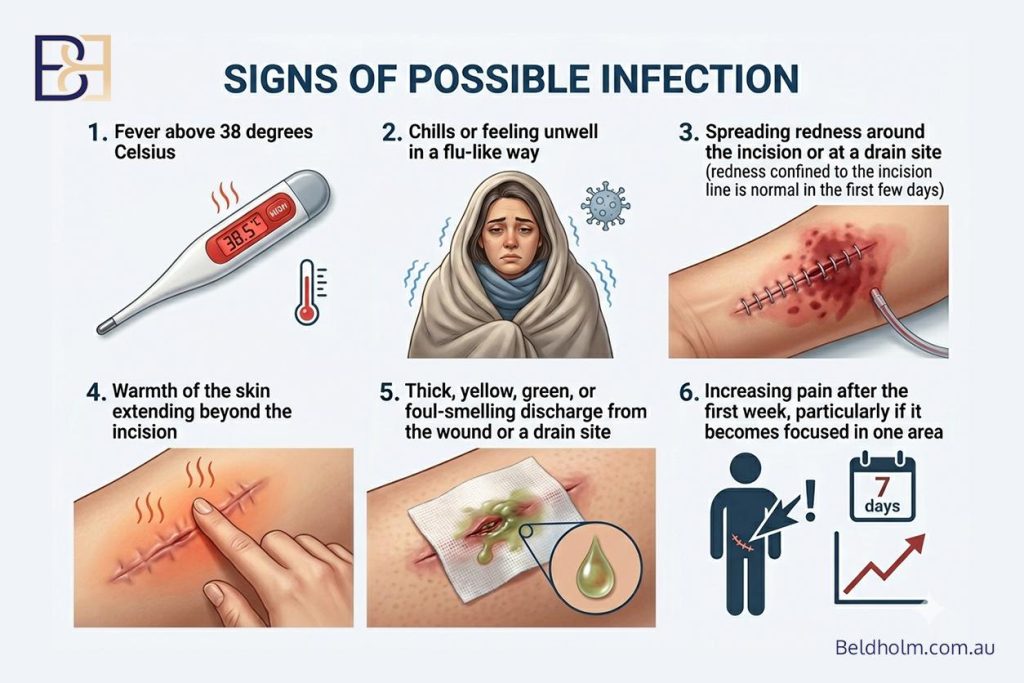
- Infection. Usually managed with antibiotics, occasionally needing more.
- Nerve injuries. Numbness near the scar is common and usually settles. Nerve injuries within the arm are less common. I cover this in detail in my article on nerve injury after brachioplasty.
- Swelling and, rarely, lymphoedema. Longer-lasting swelling of the arm or hand.
- Blood clots. Clots in the leg or lung are a recognised risk of any longer operation. I assess and manage this risk for each patient.
- Asymmetry and the need for revision. The two arms may not match exactly, and some patients choose a further procedure to adjust the result or remove a little excess tissue.
- Risks of anaesthesia. As with any operation performed under general anaesthesia.
Which of these matter most for you depends on your medical history, the extent of your loose skin and the operation planned.
Frequently asked questions
How soon after surgery could compartment syndrome occur?
It is most likely in the early period after surgery, usually within the first hours to the first day or two. This is one reason you are observed in hospital after your operation, and why you should know the early warning signs before you go home.
How do I tell ordinary recovery pain from compartment syndrome?
Pain after an arm lift (brachioplasty) usually eases over the days that follow and responds to the pain relief you are given. The pain of compartment syndrome is different. It is severe, it keeps building, and it is not controlled by your usual pain relief. Pain that is getting worse rather than better, especially with a numb or tight hand, is the pattern to act on.
Does wearing my compression garment make compartment syndrome more likely?
A properly fitted garment is part of your recovery and is not a problem in itself. The concern is only with a garment or dressing that is too tight, which can add pressure from the outside. If yours feels too tight, loosen it and tell me or my nurse rather than putting up with it.
If I combine my arm lift (brachioplasty) with another operation, is my risk higher?
The factor that matters is how long the operation takes, not the number of procedures by itself. A longer time on the table allows more swelling to build. Whether combining or staging the work is right for you is a decision I make with you at consultation, based on your medical history and what is involved. For some patients a single operation suits, for others staging across separate operations is the more appropriate path.
Can compartment syndrome be prevented completely?
No complication can be ruled out entirely, and most patients recover without any sign of it. What can be done is to lower the risk, through careful surgery, sensible fitting of dressings and garments, close observation afterwards, and you knowing the signs to watch for. Caught early, it can be treated before it causes lasting harm.
References
- Torlincasi AM, Lopez RA, Waseem M. Acute compartment syndrome. In: StatPearls. Treasure Island (FL): StatPearls Publishing; 2023.
- Donaldson J, Haddad B, Khan WS. The pathophysiology, diagnosis and current management of acute compartment syndrome. Open Orthop J. 2014;8:185-193.
- Chandwani D, Varacallo MA. Exertional compartment syndrome. In: StatPearls. Treasure Island (FL): StatPearls Publishing; 2023.
- Gusenoff JA, Coon D, Rubin JP. Brachioplasty and concomitant procedures after massive weight loss: a statistical analysis from a prospective registry. Plast Reconstr Surg. 2008;122(2):595-603.
- Knoetgen J 3rd, Moran SL. Long-term outcomes and complications associated with brachioplasty: a retrospective review and cadaveric study. Plast Reconstr Surg. 2006;117(7):2219-2223.
- Mirza TM, Taqi M. Volkmann contracture. In: StatPearls. Treasure Island (FL): StatPearls Publishing; 2023.