Nerve disturbance is a recognised risk of almost any operation, and brachioplasty (arm lift) is no exception. I want to be clear from the start about what this actually means, because the term “nerve injury” sounds far more dramatic than what most patients experience.
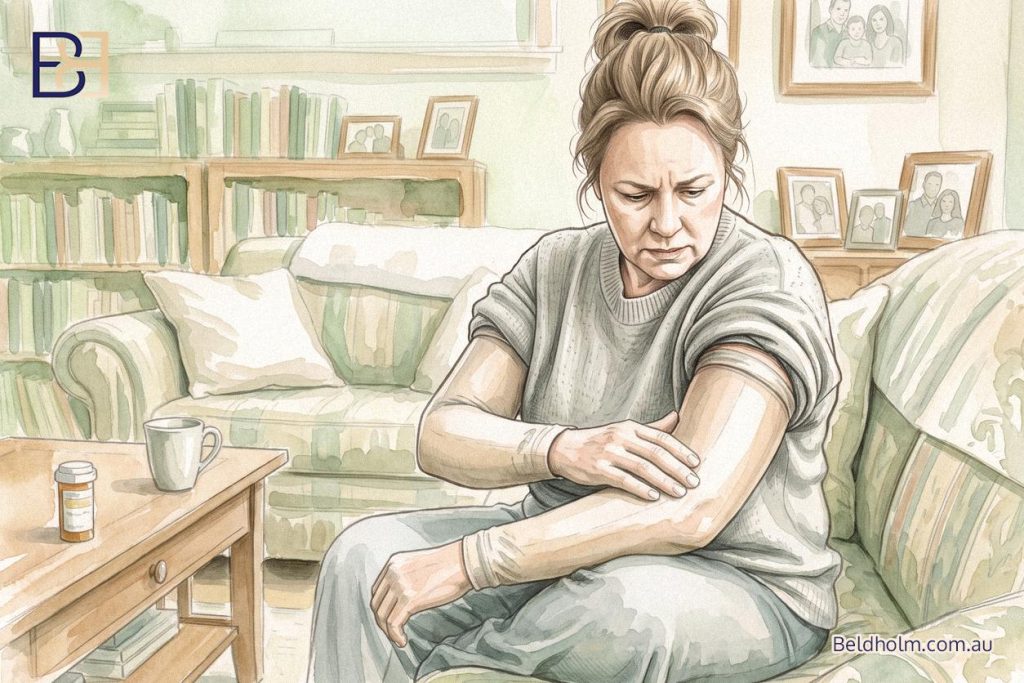
In the great majority of cases, what I see after an arm lift (brachioplasty) is a change in skin sensation. An area of the upper arm may feel numb, tingly, or oversensitive for a period after surgery. This is common, it is usually temporary, and for most people it settles over weeks to months as the small sensory nerves recover. Serious or lasting nerve injury is uncommon.
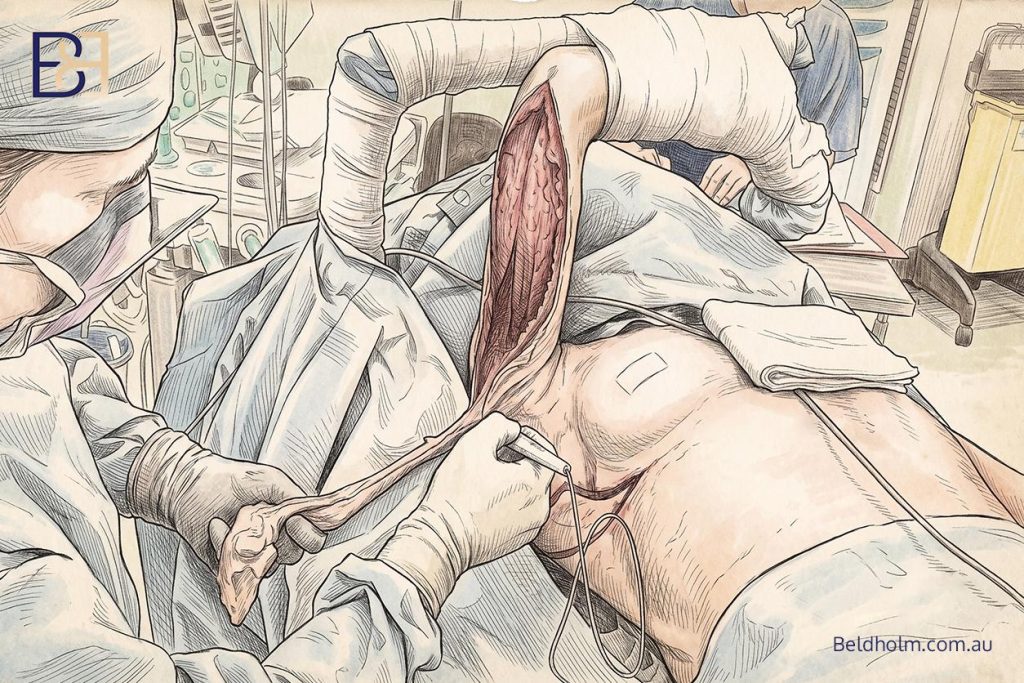
I think it helps to set realistic expectations before surgery rather than after. So this article covers:
- Which nerves are genuinely at risk during an arm lift (brachioplasty), and which are not
- What altered sensation feels like, and how to tell expected changes from a warning sign
- How often these problems happen and how they usually resolve
- What I do during surgery to keep the risk low
- How nerve problems are assessed and treated if they do occur
Why this matters for post weight loss patients
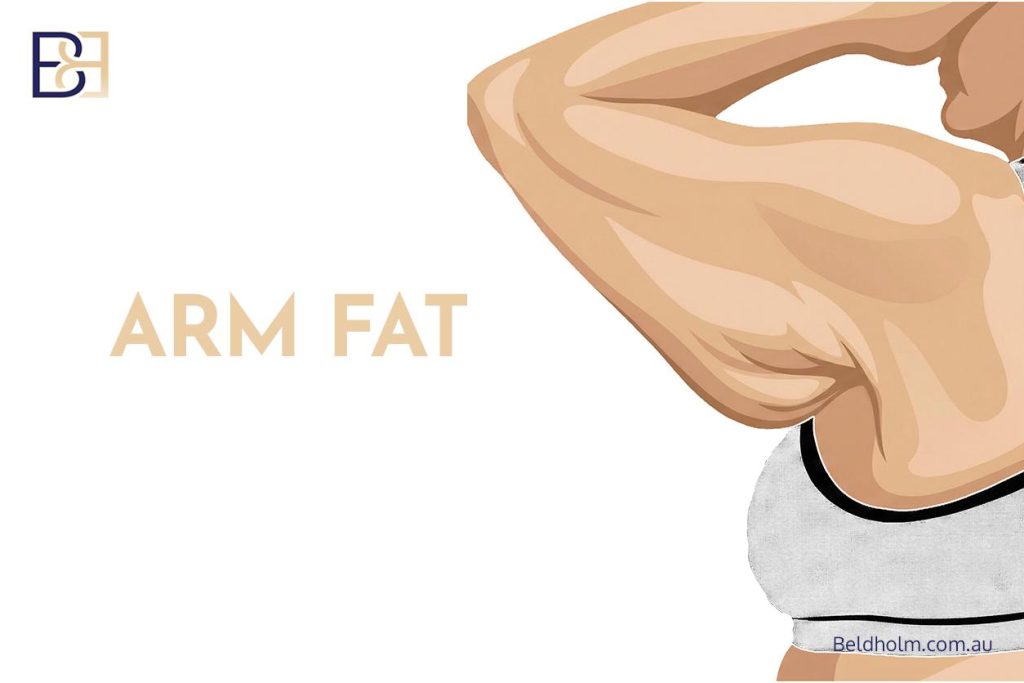
After significant weight loss, often called massive weight loss in the literature, the upper arm is often left with loose, hanging skin as the weight loss reduces skin elasticity. Whether the weight came off through bariatric surgery such as gastric bypass or through weight loss medications, the effect on the arm is similar. Brachioplasty surgery is the operation I use to remove excess skin from the arm and tighten it, and it is one of the body contouring procedures I perform after weight loss. I assess suitability once you are at a stable weight. The amount of skin removed and the length of the skin incision vary from patient to patient, and that variation has a direct bearing on which nerves sit close to the surgical field. I explain that link in the next section.
Brachioplasty after weight loss: why the variation matters
There is no single version of an arm lift (brachioplasty). The operation is tailored to where the loose skin actually sits, and after weight loss that pattern differs a great deal from one person to the next. This matters for nerve risk, because the length and position of the incision determine which sensory nerves sit close to the surgical field.
There are several versions
Post weight loss patients do not all get the same operation. The version is tailored to the skin and fat you present with, and the main variables are how long the incision needs to be and whether liposuction (suction assisted lipectomy) is used as well.
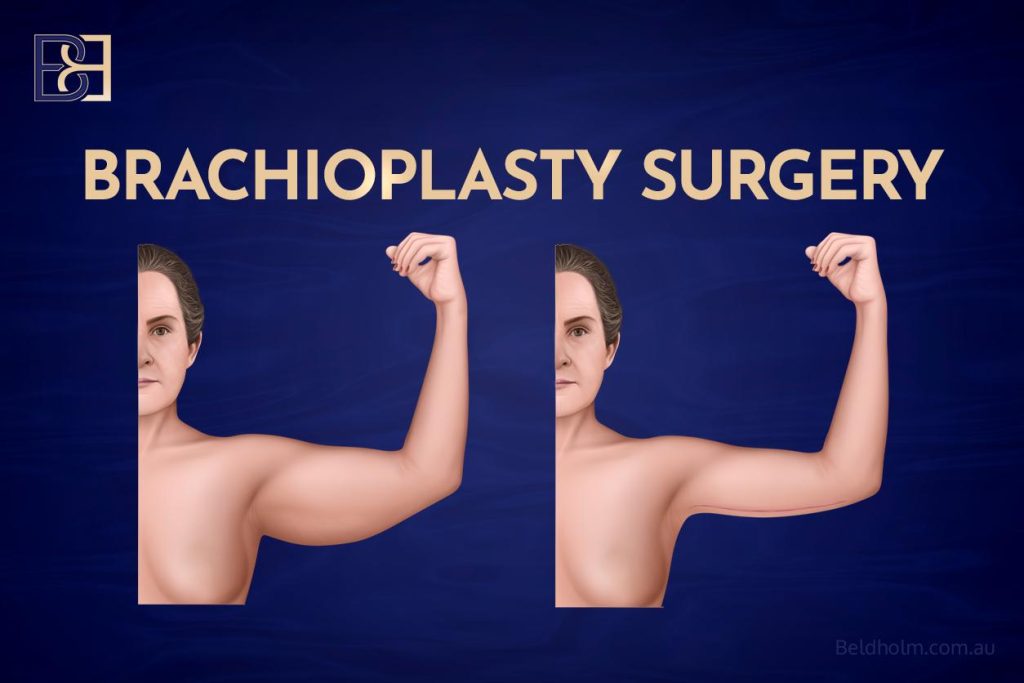
- Under-arm laxity only. Some patients have loose skin confined to the inner upper arm. A shorter incision can be enough, and the work stays within the upper arm.
- Skin extending toward the armpit. A full brachioplasty places the incision along the inner arm, usually from near the elbow up toward the armpit.
- More extensive laxity. An extended brachioplasty carries the incision further into the armpit region for patients with more skin to remove.
- With or without liposuction (suction assisted lipectomy). Some arms carry fat (adipose tissue) as well as loose skin. In those cases I may combine the skin excision with suction assisted lipectomy to debulk the arm. Other patients need skin removal only. Whether it adds value depends on how much fat is present and the quality of the skin.
The right version for you depends on the extent and location of your excess skin and fat. I work this out at consultation.
The chest is a separate question
Some patients have loose skin or fullness that continues past the armpit onto the side of the chest. Some patients also do not want a scar that crosses onto the chest.
Excess tissue on the side of the chest is a separate problem, and this redundant tissue can be treated with a different operation such as a bra line lipectomy, which places its scar along the bra line rather than down the arm. Keeping these as separate decisions means the arm incision can be kept to what the arm actually needs.
How this connects to nerve risk

The small sensory nerves that supply feeling to the inner arm run through the same territory the incision passes along, and liposuction (suction assisted lipectomy) works in that same layer. As a general rule, a longer incision and more dissection mean more of these tiny nerve branches are encountered. This means the discussion about expected sensory changes is matched to your specific plan, rather than quoted as a single figure that applies to everyone.
The next section explains exactly which nerves these are.
Which nerves are actually at risk in brachioplasty surgery
This is where a lot of online information gets it wrong, so I want to be precise.
The nerves that matter for an arm lift (brachioplasty)
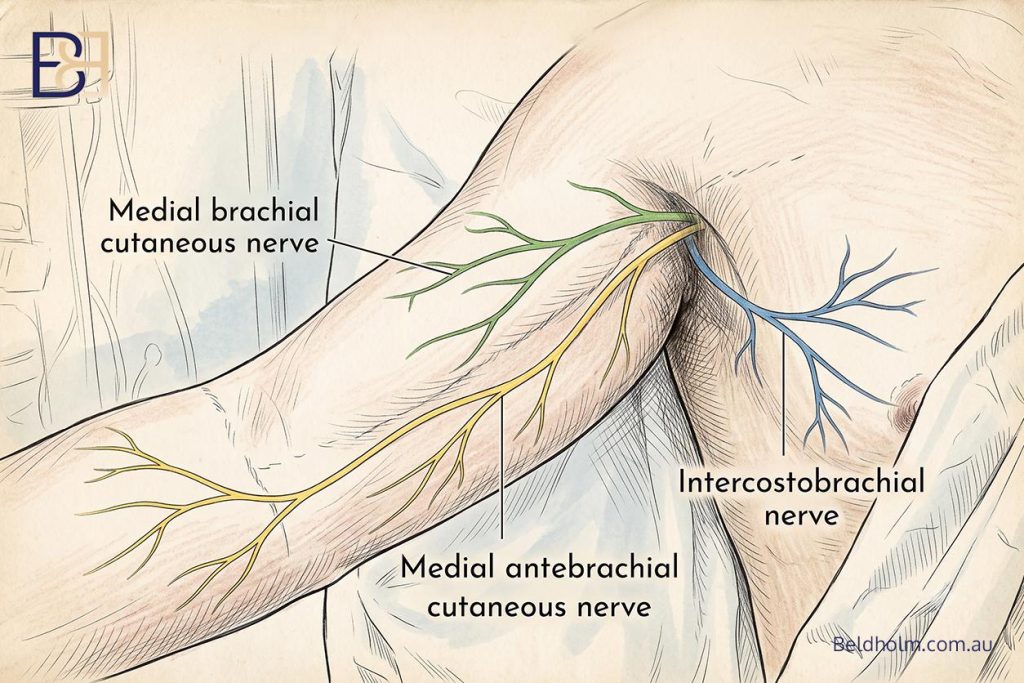
An arm lift (brachioplasty) works in the layer just beneath the skin of the inner upper arm. The nerves that live in that layer are small sensory nerves. They carry feelings from the skin. They do not control muscle or movement. The ones relevant to this operation are:
- Medial brachial cutaneous nerve. Supplies feeling to the skin of the inner upper arm.
- Medial antebrachial cutaneous nerve. Supplies feeling to the skin of the inner forearm. Its course runs through the brachioplasty field, which is why it is the most common nerve injury after an arm lift (brachioplasty).
- Intercostobrachial nerve. Supplies feeling to the skin of the armpit and the upper inner arm. It becomes more relevant when the operation extends into the armpit.
Because these are sensory nerves, the effect of disturbing one is a change in skin sensation in the area it supplies. That can mean numbness, tingling, or an oversensitive patch. It does not cause weakness or loss of arm function.
The major motor nerves: an uncommon but real risk
A good deal of patient anxiety comes from articles that talk about the brachial plexus nerves or the major nerves of the upper limb, the ulnar nerve, median nerve and radial nerve. These are the large nerves that control the muscles and movement of the hand and arm.

These nerves mostly sit deep, beneath the muscle layer and alongside the major blood vessels. A standard arm lift (brachioplasty) works above that, in the superficial fatty layer under the skin. Because of that, injury to the major motor nerves is uncommon. There are specific situations where it rises:
- Removing too much skin. If skin is over-resected and the closure is pulled too tight, deeper structures can be put under tension. Injury involving the median nerve, ulnar nerve and radial nerve has been reported after brachioplasty in exactly this setting.
- Liposuction (suction assisted lipectomy) taken too deep. When this is part of the operation, a cannula passed too deep or used too aggressively can reach beyond the fatty layer. Excessive suctioning is a recognised cause of nerve damage.
- The area near the elbow. Toward the elbow, the sensory nerve branches sit closer to the surface than they do higher up the arm. Dissection that goes too deep in this zone can catch them.
The common thread is that these are technique-related risks. They are managed by careful surgical planning, by knowing where the nerves run, and by not being overly aggressive with either the skin excision or the suction assisted lipectomy.
What this means for you
The picture is this. A change in skin sensation along the inner arm or forearm is a recognised and reasonably common consequence of the operation, because the small sensory nerves sit right in the working area. Injury to the major motor nerves that affect strength and hand function is uncommon and is largely reported when surgery is overly aggressive. Keeping these two ideas separate, the common minor sensory change versus the uncommon major injury, is the single most useful thing I can tell a patient worried about nerve damage.
Book your appointment online now
What nerve disturbance actually feels like
Because the nerves involved are sensory, what you notice is a change in feeling rather than a change in movement. Patients describe it in different ways, and it helps to know what is expected so you are not caught off guard.
Changes that are expected and usually settle
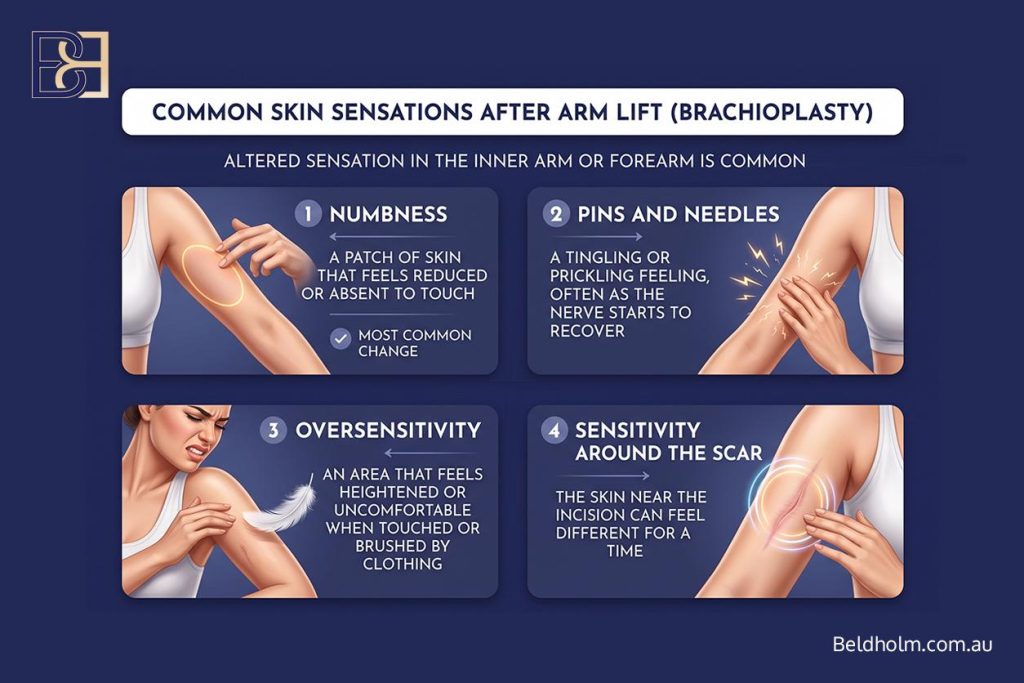
After an arm lift (brachioplasty), it is common to have some altered sensation in the skin of the inner arm or forearm. This can show up as:
- Numbness. A patch of skin that feels reduced or absent to touch. This is the most common change.
- Pins and needles. A tingling or prickling feeling, often as the nerve starts to recover.
- Oversensitivity. An area that feels heightened or uncomfortable when touched or brushed by clothing.
- Sensitivity around the scar. The skin near the incision can feel different for a time.
These changes happen because the small sensory nerves are stretched, bruised, or in some cases divided during surgery. For most patients they improve over weeks to months as the nerves recover, though a small area of permanent numbness near the scar is not unusual and does not affect how the arm works.
Neuroma: a specific type of nerve pain

Sometimes a divided nerve end forms a small sensitive nodule called a neuroma. This can develop weeks or months after surgery. The typical description is a sharp, shooting, or electric sensation when a particular spot is pressed or knocked. A neuroma is not dangerous, but it can be uncomfortable, and there are ways to manage it if it does not settle on its own.
Changes that are not expected
The changes above relate to skin sensation. The following are different, and they are the things I want to know about:
- Weakness in the hand or arm, or difficulty moving the fingers
- Pain that is severe and getting worse rather than easing
- A spreading loss of movement or sensation well beyond the operated area
These are uncommon, but they sit outside the usual pattern of cutaneous nerve recovery, so they should prompt contact rather than a wait-and-see approach. I set out how and when to get in touch further on.
How common nerve changes are, and how they usually resolve
It is fair to ask how likely any of this is. The short answer is that some change in sensation is common, while a lasting or significant problem is much less so.
Temporary sensory change is common
A degree of altered sensation in the skin of the inner arm or forearm after an arm lift (brachioplasty) is common in the early weeks, and it is one of the more frequent surgical complications of the operation. This is the expected result of small sensory nerves being handled, stretched, or divided during surgery. In most patients it improves steadily as the nerves recover, and the area of altered feeling shrinks over time. Permanent nerve injury is far less common.
Lasting sensory change is less common
A smaller number of patients are left with a patch of permanent numbness, usually near the scar. One long-term review of brachioplasty reported an injury to the medial antebrachial cutaneous nerve in about 5% of patients that persisted beyond a year (1).
Two caveats apply to figures like this. Reported rates vary depending on how carefully sensation is tested and how the study defines injury, and many patients do not report a numb patch unless they are specifically asked (2). Such a patch tends to be something patients stop noticing over time rather than something that troubles them day to day.
Major nerve injury is rare
Injury to the larger motor nerves is rare and sits mostly in case reports rather than routine series, and where it has been described, it has tended to follow overly aggressive surgery such as over-resection of skin (3). This is part of why I plan the amount of skin to remove carefully rather than taking the maximum possible.
How recovery usually goes
Sensory nerves can recover when they have been stretched or bruised rather than fully divided. That recovery is gradual and tends to follow a pattern:
- Early numbness as the nerve recovers from the surgery
- Tingling or pins and needles as signalling returns
- A slow return of more normal sensation over weeks to months
Where a nerve has been completely divided, the patch it supplied may stay numb. As above, this is usually small and does not affect function. The pattern and timing of recovery are not the same for everyone.
How I work to reduce the risk during surgery
Nerve protection is part of how this surgical procedure is planned and carried out, not an afterthought. None of the following removes the risk entirely, but each step is aimed at keeping the small sensory nerves out of harm’s way as far as the anatomy allows.
Planning the incision around the nerves
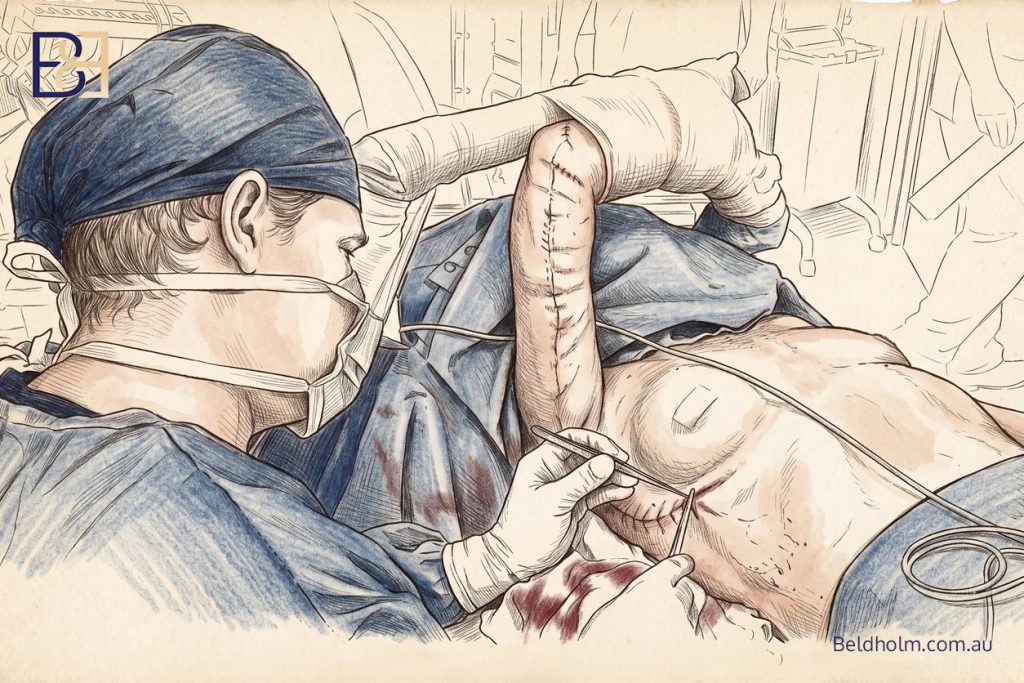
The medial cutaneous nerves of the arm run a reasonably predictable course, and their branches have been mapped in anatomical studies relative to the basilic vein and the bony point on the inner elbow (2). I plan the incision and the amount of skin to be removed with that course in mind, so the dissection works around a healthy nerve rather than across it where possible.
Staying in the correct plane
An arm lift (brachioplasty) is designed to work in the superficial fatty layer just under the skin. Keeping the dissection in that plane, rather than straying deeper toward the fascia and the larger vessels and nerves, is one of the main ways the deeper structures are protected. The major motor nerves sit below that plane, which is why staying superficial matters.
Not removing too much skin
Taking more skin than the arm can comfortably close puts tension on the repair and on the tissues beneath it, which also slows the wound healing process. Because over-resection has been linked to nerve problems, I plan the excision for upper arm contouring to suit the individual arm rather than aiming to remove as much as possible (3).
Extra care near the elbow
Toward the inner elbow, the sensory nerve branches sit closer to the surface and are more crowded together. I treat this as an area to handle carefully, with attention to depth, because it is where small branches are most easily caught.
When liposuction (suction assisted lipectomy) is part of the operation
If this is used to debulk the arm, the depth and force of the cannula matter. Keeping it within the fatty layer and avoiding overly aggressive passes reduces the chance of reaching the deeper nerves.
I talk through these points and the relevant risks with every patient before surgery, so the plan we settle on is one you understand and have agreed to.
When to get in touch after surgery
Most of the sensory changes described earlier are expected and do not need urgent attention. They are part of normal recovery. What follows is how to tell the difference between something that can wait for a routine review and something that should be reported sooner.
Worth mentioning at a routine review
These are not emergencies, but I like to know about them so they can be followed:
- A patch of numbness that is not improving over the weeks and months after surgery
- A tender spot that gives a sharp or electric feeling when pressed, which can suggest a neuroma
- An area of oversensitivity that is bothering you day to day
Report these sooner rather than later
The following sit outside the usual pattern of sensory recovery and should be reported promptly rather than watched at home:
- Weakness in the hand or arm, or trouble moving the fingers
- Pain that is severe and getting worse instead of settling
- Numbness or loss of movement that is spreading well beyond the operated area
Please do not try to diagnose these yourself or wait to see if they pass. It is always better to have them assessed.
Who to contact

- During clinic hours, call the rooms.
- After hours, call Maitland Private Hospital. The nursing staff provide phone triage and will guide you on what to do next.
- If you need to be physically examined after hours, the right place is your local emergency department. Maitland Private Hospital is not an emergency department.
- For anything life-threatening, call 000.
If you are ever unsure whether something matters, it is reasonable to make contact and ask. I would always rather review something early than have you sit at home worrying about it.
How nerve problems are assessed
If a sensory change is not settling, or if there is anything that looks like more than the usual recovery, the next step is to work out what is going on. This does not always mean tests. A good deal can be sorted out in the rooms.
Clinical assessment first

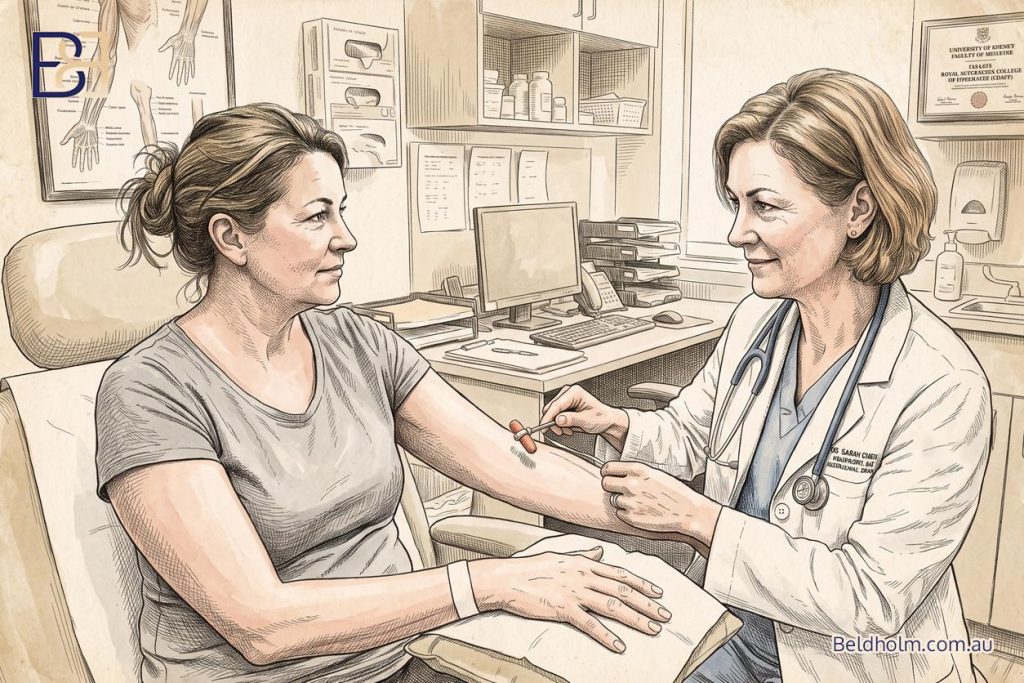
Most of the time, assessment starts with your medical history and a physical exam. I map out the area of altered sensation, check whether it is shrinking over time, and look for a tender point that might indicate a neuroma. I also check that movement and strength in the hand and arm are intact, because that helps separate a minor sensory issue from anything involving the deeper nerves.
Monitoring over time
Because sensory nerves often recover on their own, many changes are monitored across the follow-up visits rather than investigated straight away. Watching how an area of numbness or tingling behaves over weeks and months is often the most useful information, and it avoids tests that would not change what we do.
When further tests help
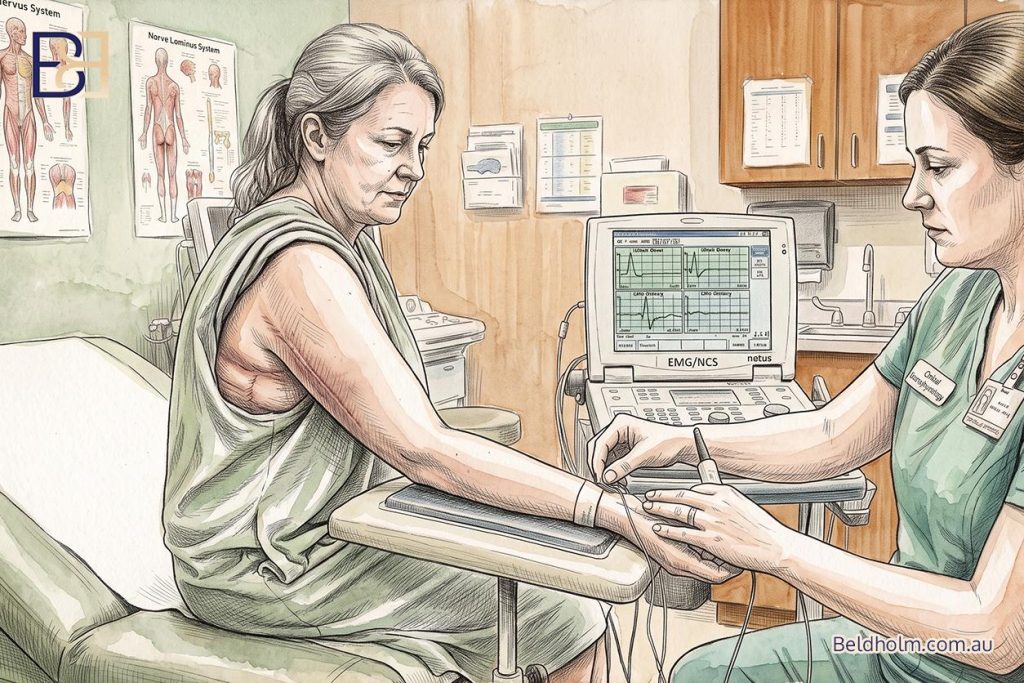
If the picture is not improving, if there are signs the deeper nerves may be involved, or if a problem needs to be pinned down before considering treatment, a few investigations can help:
- Nerve conduction studies and electromyography. These measure how well a nerve is carrying signals and whether the muscle it supplies is affected. They are usually arranged through a neurologist.
- High-resolution ultrasound. This can image the nerve directly, and it has been used to identify post-brachioplasty injury to the medial cutaneous nerves and to locate a neuroma (4).
- Referral to a neurologist or nerve specialist. Where the situation is complex, I involve a colleague who focuses on peripheral nerve problems.
Why timing matters
Some of these tests are more informative after a delay, because the changes they detect take time to appear. So if I suggest waiting before arranging a study, it is to make sure the result is actually useful rather than done too early to mean anything.
Treatment options
Treatment is matched to the problem. Many sensory changes need nothing more than time, so the aim is to do what is proportionate rather than to intervene for the sake of it.
Time and reassurance
For the majority of sensory changes, the most appropriate course is observation. A numb or tingling patch that is slowly improving is recovering on its own, and the best thing is usually to let that continue while keeping an eye on it. Nerve healing is a gradual process, and knowing that this is the expected pattern takes a lot of the worry out of it.
Conservative measures
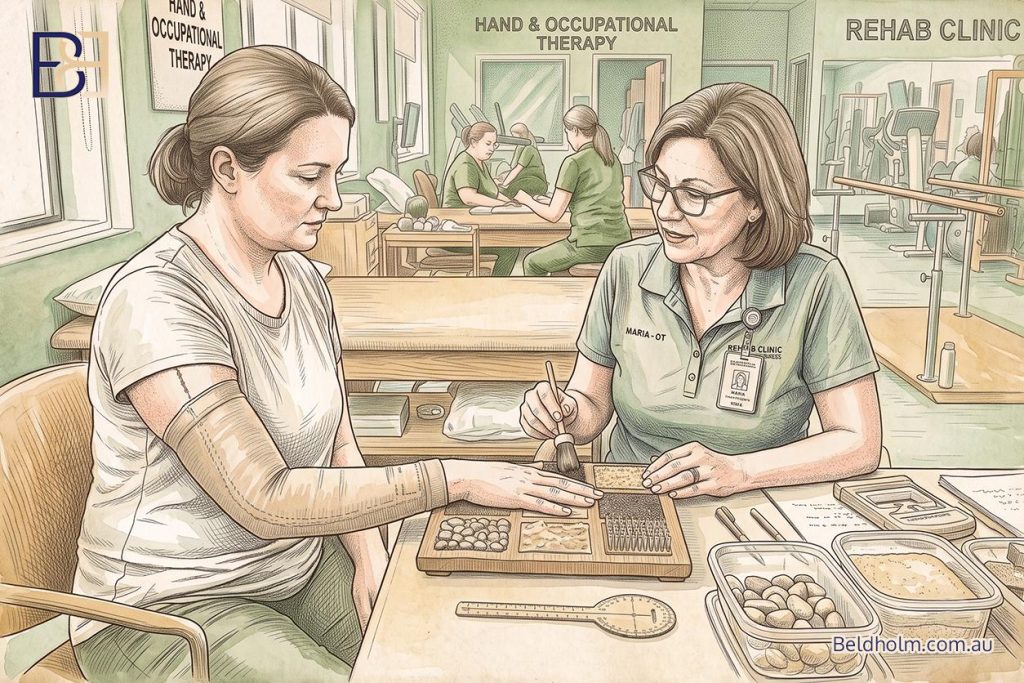
Where a change is more bothersome, several non-surgical measures can help:
- Desensitisation and hand therapy. For an area that is oversensitive, graduated tactile stimulation guided by a therapist can help the skin tolerate touch again.
- Scar management. Where the discomfort relates to the scar, standard scar care can settle the sensitivity over time.
- Medication for nerve-related pain. If there is genuine neuropathic pain, medicines used for that purpose may be prescribed and reviewed. These are tailored to the individual and managed alongside your GP where appropriate.
Treating a neuroma
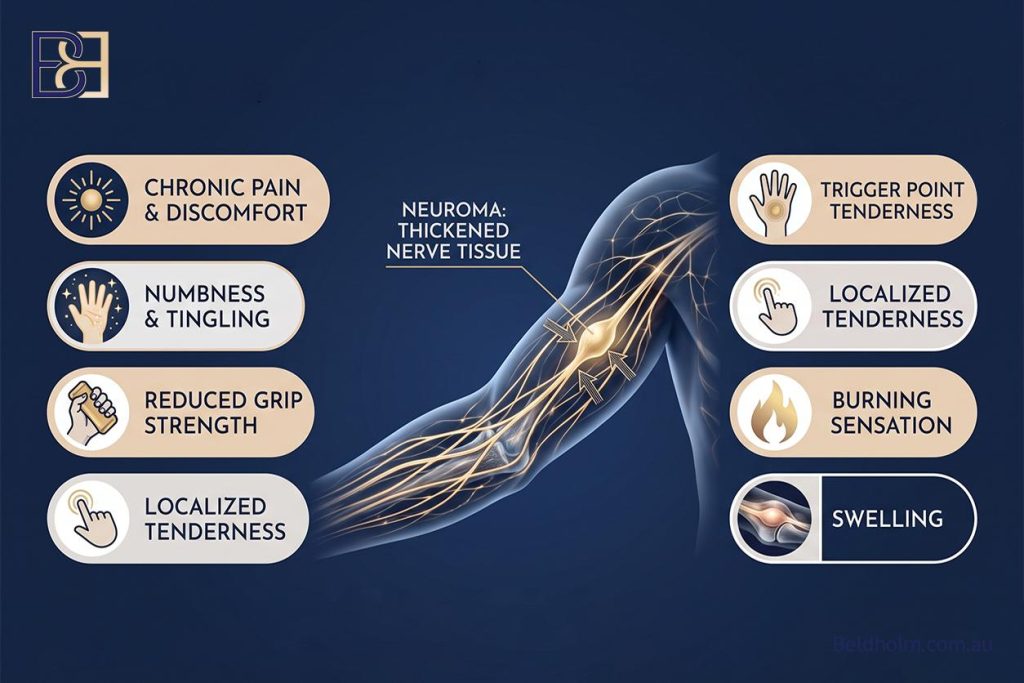
A neuroma is managed conservatively to begin with, using desensitisation and, in some cases, a local injection to calm the area. Many settle without anything further. If a neuroma stays painful despite these measures, a procedure to treat the nerve end can be considered.
Surgery for persistent problems
Surgical intervention is reserved for the small number of problems that do not settle and remain symptomatic. Depending on the situation, that might mean releasing an injured nerve that has become caught in scar tissue, or treating a persistent neuroma. These are considered carefully, because operating on a nerve carries its own risks, and they are only worthwhile when the symptoms justify them.
The point of setting it out this way is that treatment escalates only as far as the problem requires. Most patients never need to go beyond the first step.
Final thoughts
Nerve disturbance after an arm lift (brachioplasty) sounds alarming, but for most patients it means a change in skin sensation rather than a loss of function. As with any body contouring surgery, a numb or tingling patch along the inner arm is common in the early weeks, and it usually improves as the small sensory nerves recover. A small area of permanent numbness near the scar can remain, though it has no effect on movement or strength.
The distinction I keep coming back to is the useful one. The common thing is a minor sensory change. The uncommon thing is an injury to the larger nerves that affect strength and movement, and that is largely tied to overly aggressive surgery, which is why careful planning and conservative skin removal matter.
If a problem does appear, there is a clear path through it: assessment in the rooms first, investigations and a neurologist’s input where they help, and treatment that escalates only as far as the symptoms require. The great majority of patients never need more than time.
Recovery is individual, and the pattern and timing differ from one person to the next. My aim with this article is to give you an accurate picture of the risk so that, if you do go ahead, you know what to expect and what to watch for.
References
- Knoetgen J 3rd, Moran SL. Long-term outcomes and complications associated with brachioplasty: a retrospective review and cadaveric study. Plast Reconstr Surg. 2006;117(7):2219-2223.
- Chowdhry S, Elston JB, Lefkowitz T, Wilhelmi BJ. Avoiding the medial brachial cutaneous nerve in brachioplasty: an anatomical study. Eplasty. 2010;10:e16.
- Al-Qattan MM. Multiple (median, ulnar, radial and medial antebrachial) nerve injury associated with brachioplasty. J Hand Microsurg. 2020. doi:10.1055/s-0040-1715428.
- Al-Qattan MM, Thallaj AK. High-resolution ultrasound as an aid in the diagnosis and treatment of post-brachioplasty injury to the medial brachial and the medial antebrachial nerves: two case reports. Int J Surg Case Rep. 2020;72:520-524.