Why You Stay in Hospital After Extended Abdominoplasty (Tummy Tuck)
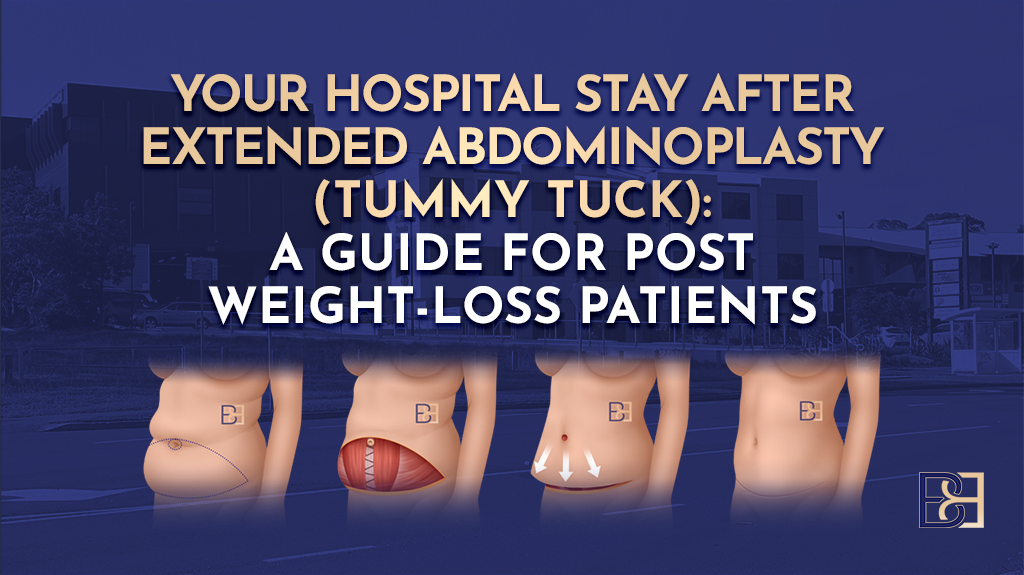
After significant weight loss, the skin across your abdomen has usually been stretched well beyond what it can recover on its own. Reduced skin elasticity means the excess skin does not retract. The looseness rarely sits neatly at the front. It carries around the hips and into the flanks. For most of my post weight loss patients, treating that properly means an extended abdominoplasty (tummy tuck). This is a surgical procedure designed to remove excess skin, with the incision carried beyond the hips and around the sides to take in the excess abdominal skin all the way across.
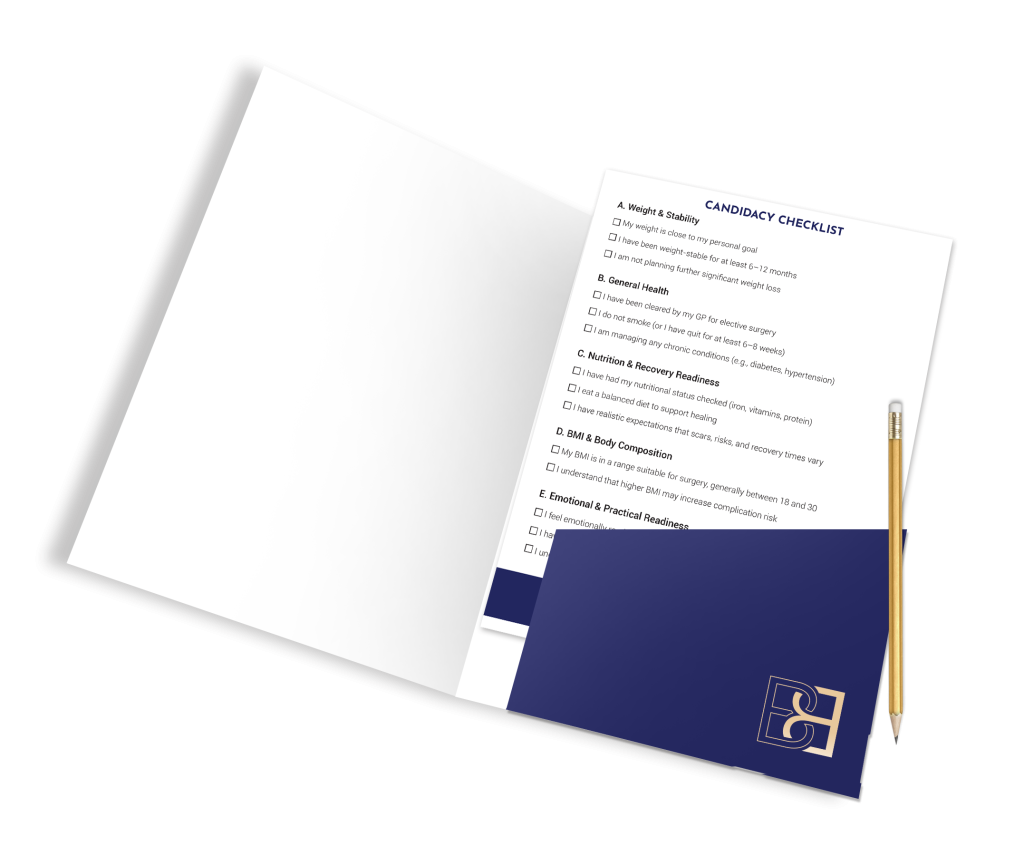
This is a larger operation than a full abdominoplasty. A full abdominoplasty uses a shorter incision that runs roughly hip to hip. It suits many post-pregnancy patients in whom the loose skin is mostly central and the flanks are not heavily involved. Post weight loss patients, especially after massive weight loss, almost never fit that pattern. The volume and spread of loose skin is greater, so the operation needed to treat it is bigger.
Because it is a bigger operation, an extended abdominoplasty is a more demanding physiological event than many abdominoplasty procedures. More skin is removed, the operating time is longer, and your body has more healing to do in the early days. The recovery process reflects that. That is the honest trade-off of treating the laxity in one go, and it is the reason I admit my extended abdominoplasty patients rather than sending them home the same day.
What an inpatient stay gives you
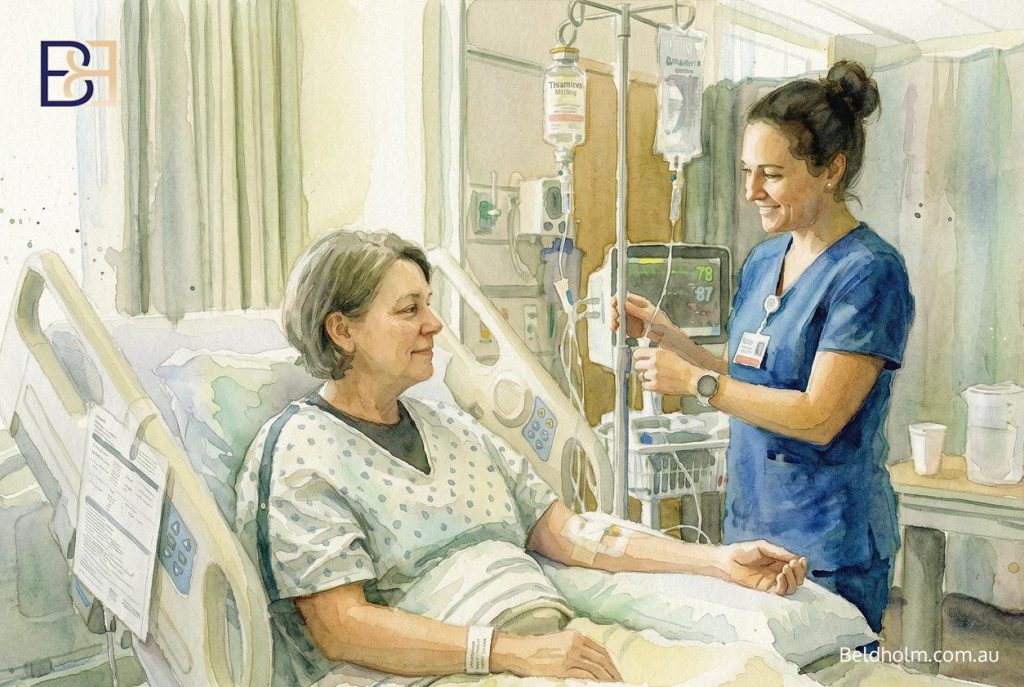
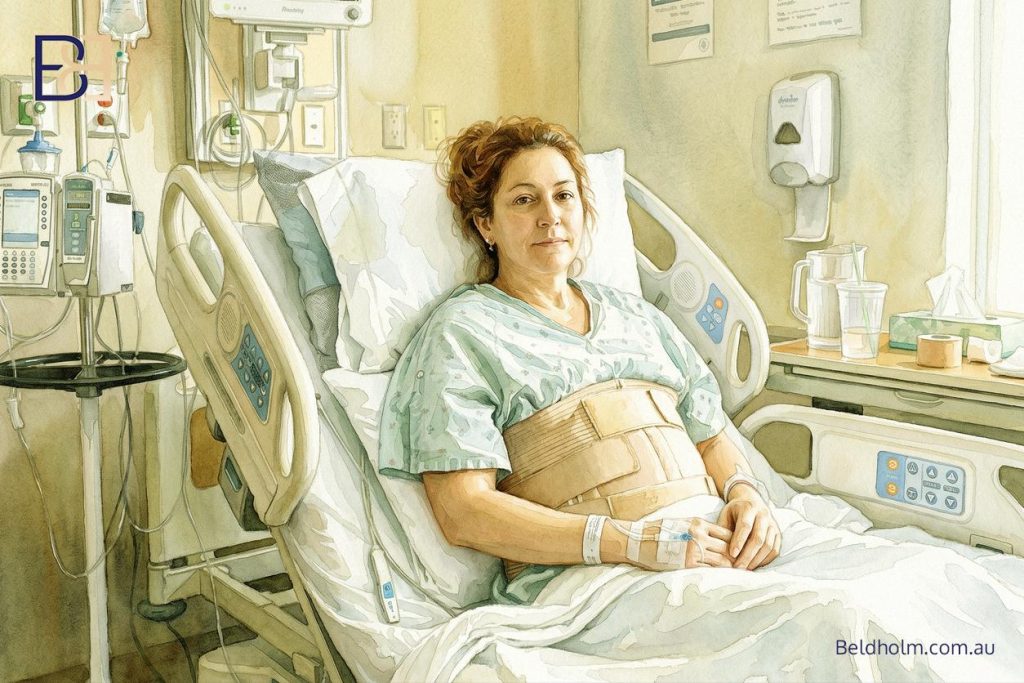
A planned admission means the early recovery period happens where it can be watched and supported. In the first day or two after surgery, you have:
- Nursing staff and medical review on hand around the clock
- Pain relief that is managed and adjusted on the ward
- Help getting up and moving for the first time
- Early detection of any problem with bleeding, fluid, or the wound
- Care of your drains and dressings by people who do it every day
The length of your stay is a clinical decision, not an option you weigh up against going home early. I admit you because the operation needs it. I then review you each day and decide when you are well enough to be discharged. That judgment is based on how you are healing, your pain, your drains, and how you are moving, not on a fixed number of nights.
A note on more extensive procedures
Some post-weight-loss patients need an operation larger than an anterior extended abdominoplasty. A circumferential procedure, such as a body lift (belt lipectomy), a Fleur-de-Lis abdominoplasty, or a dual-vector abdominoplasty, removes skin over a wider area and takes longer in theatre. As a rule, the more extensive the operation, the longer the hospital stay. The technique details for those procedures and what their recovery involves are in the dedicated articles for each one [INTERNAL LINK 1] [INTERNAL LINK 2] [INTERNAL LINK 3].
Whether an extended abdominoplasty, a staged plan, or a more extensive single operation is right for you is decided at the consultation, after assessment of your skin laxity, medical history, and nutritional status. A GP referral is required before that consultation.
How Long You Will Stay
How long you stay after abdominoplasty surgery varies from person to person. Most of my extended abdominoplasty patients stay two to four nights. Where your stay falls in that range, or beyond it, depends on a few things I assess as you recover.
What drives the length of your stay
- How much skin was removed. A larger resection means more excess tissue removed, more healing, and usually a longer stay.
- Whether your muscles were repaired. Most post weight loss patients do not need their abdominal muscles repaired, but some do. Where muscle repair is part of the operation, tightening the abdominal wall where there are separated abdominal muscles, it adds to the early recovery and can mean a longer stay.
- Your blood pressure. The most common issue I see in the first day or two is blood pressure that needs settling. It relates to the anaesthetic and the extent of surgery, and it can take a day or two to come right. Low blood pressure leaves you lightheaded and stops you mobilising safely, so I will not push you to get up until it has settled.
- Your day 1 bloods. I run blood tests on the first day after surgery. If anything comes back abnormal, such as a low blood count, I treat it before you go home. Sorting this out can add a day to your stay.
- Drains do not hold up discharge. You do not have to wait for the drains to come out before going home. Many patients are discharged with drains still in and have them removed at a later visit, based on how much fluid they are collecting.
- How you are moving. Getting up, walking, and managing to the toilet on your own are part of being ready for discharge. Some patients reach that point faster than others.
- Your pain control. You need to be comfortable with tablets you can take at home before you leave.
- Anything noted during or after surgery. If there is a reason to watch you more closely, I keep you in longer.
More extensive procedures mean a longer stay
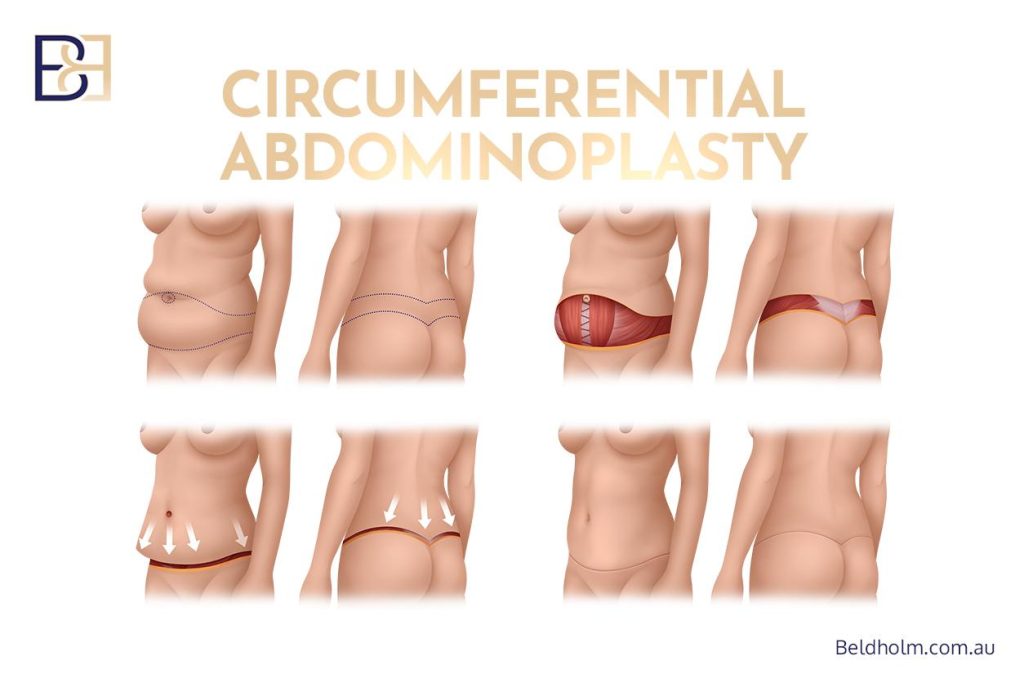
The figures above are for an anterior extended abdominoplasty. If your operation is larger again, such as a circumferential abdominoplasty, the stay is longer, with more surgical drains and more healing involved. Those operations and their recovery are covered in their own articles [INTERNAL LINK 1] [INTERNAL LINK 2] [INTERNAL LINK 3].
I will give you a realistic estimate of your likely stay at your pre-operative consultation, once we have settled on the operation that suits you. Treat it as a guide. The actual length is decided day by day on the ward, based on how you are healing.
The First Day After Surgery

It helps to know how the early days are counted. The day of your operation is day 0. The first day after surgery is day 1. Most of what follows happens from day 1 onwards.
The day of surgery (day 0)
After the theatre, you will spend time in the recovery room before going to the ward. The rest of that day is for resting and letting the anaesthetic wear off. You will feel drowsy, your throat may be dry, and you will be sore. Nursing staff check on you regularly, keep your pain controlled, and monitor your vital signs and your wounds. I do not expect you to do much on the day of surgery beyond resting. This is the initial recovery, and the early stages are mostly about settling and pain control.
Getting up on day 1
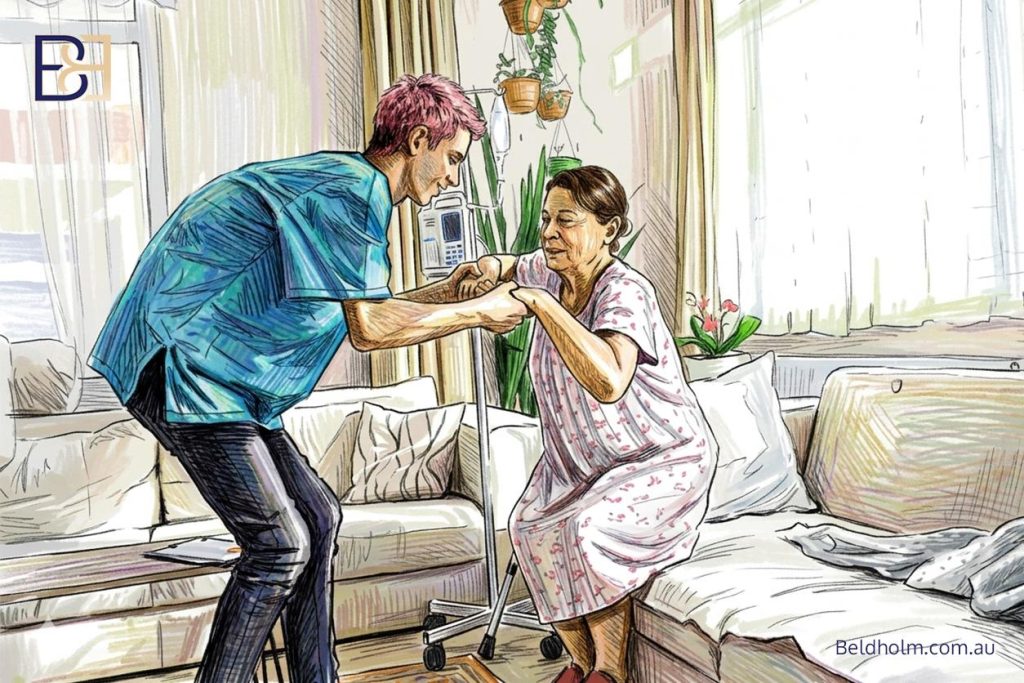
The aim on day 1 is to get you up and walking. Even a short walk to the bathroom and back is a good start. Moving early helps in several ways. It helps promote circulation, helps your lungs clear, encourages your bowels to wake up after the anaesthetic, and lowers the risk of a clot forming in your legs.
You will not do this on your own the first time. A nurse helps you sit up, then stand, then take your first steps, and stays with you. Most patients are surprised they can move more than they expected, as long as the pain is controlled and they take it slowly.
If you cannot get up straight away
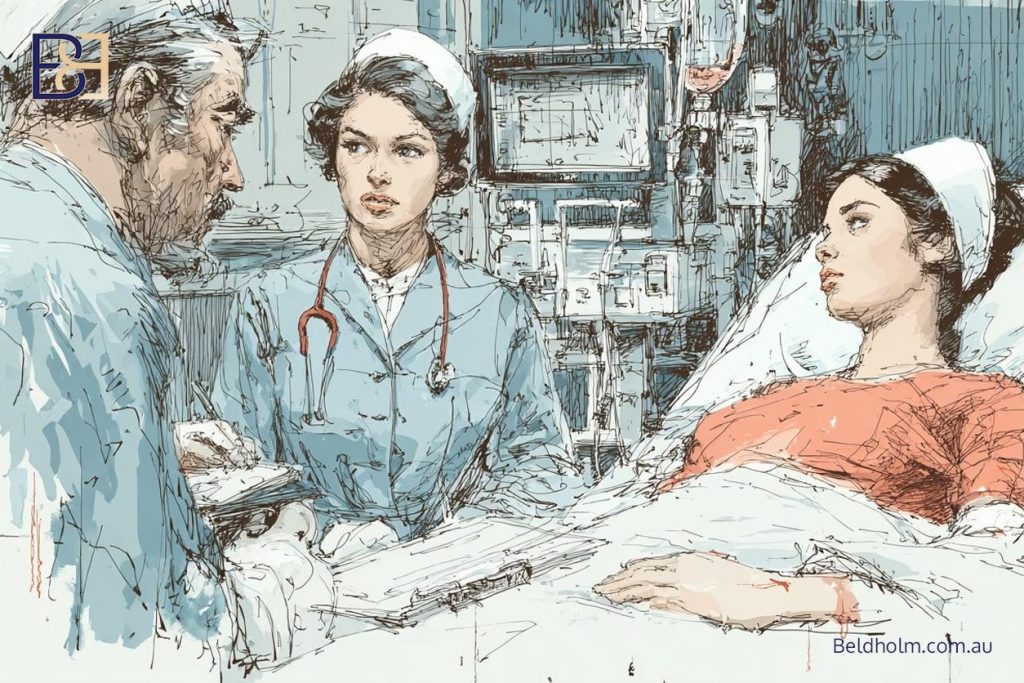
Some patients are not ready to walk on day 1, and that is fine. The usual reason is blood pressure that has not yet stabilised, which can leave you lightheaded when you sit or stand. If that is the case, we take a step back. Sitting out of bed in a chair is a good first goal, and we build up to walking once your blood pressure is steady and you feel steady on your feet. There is no benefit in pushing through dizziness, and I would rather you progress a day later than have a fall.
This is not a race. The point of moving early is to protect your recovery, not to tick a box. We go at the pace your body allows.
Blood Clots: Risk and Prevention in Hospital
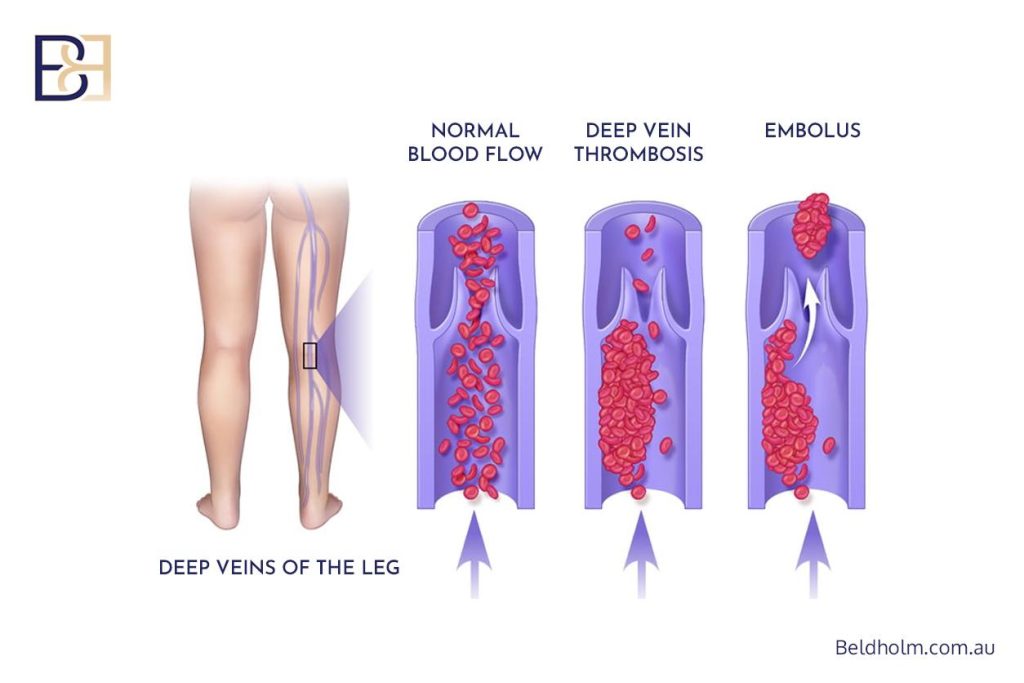
Any major operation carries a risk of a blood clot forming in the deep veins of the legs. This is called a deep vein thrombosis (DVT). The concern with a DVT is that part of it can break off and travel to the lungs, which is called a pulmonary embolism. This is uncommon but serious, and preventing it is one of the main reasons I keep a close watch on you in the hospital.
Extended abdominoplasty raises this risk for two reasons. It is a longer operation, and the early recovery involves a period of reduced movement (3). Post weight loss patients can also carry other risk factors, such as a history of cardiovascular disease or other underlying health conditions, which I weigh against your overall health and medical history. Managing all of this is part of your surgical care.
I decide your clot prevention, not the anaesthetist
Working out your clot risk and deciding how to prevent it is my responsibility as your surgeon. I assess your individual risk before surgery and, with the medical team, put in place a prevention plan that suits you. That plan may combine several measures.
In hospital, prevention usually involves:
- Getting you moving early. This is the single most useful thing, which is why we work on standing and walking from day 1.
- Mechanical measures. Calf compression devices or stockings support circulation in your legs while you are resting in bed.
- Blood-thinning injections. Every patient is given a blood-thinning injection while in hospital. Most patients then continue these injections for about two weeks after surgery, which you or a family member can be shown how to give at home.
Blood thinners you already take
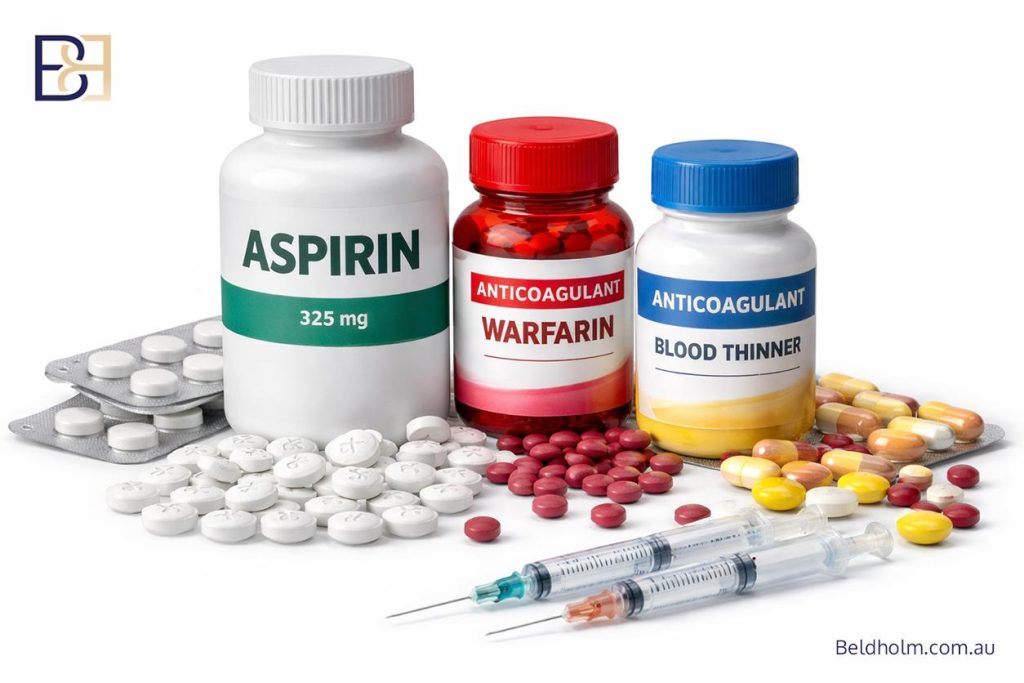
If you already take aspirin or a blood-thinning medication, we plan how to manage it well before your surgery date. As a general rule these are stopped about a week before surgery, but not always. Some patients need to stay on them right through the operation, and where that is the case it is planned carefully in advance.
The important point is that you must never start or stop any of these medications on your own. Changing them at the wrong time carries its own risks. We make that decision together, ahead of time, as part of preparing you for surgery.
I have a separate article that goes into clot risk and prevention across body contouring surgery in more detail [INTERNAL LINK 4].
Drains, Dressings, and Your Compression Garment
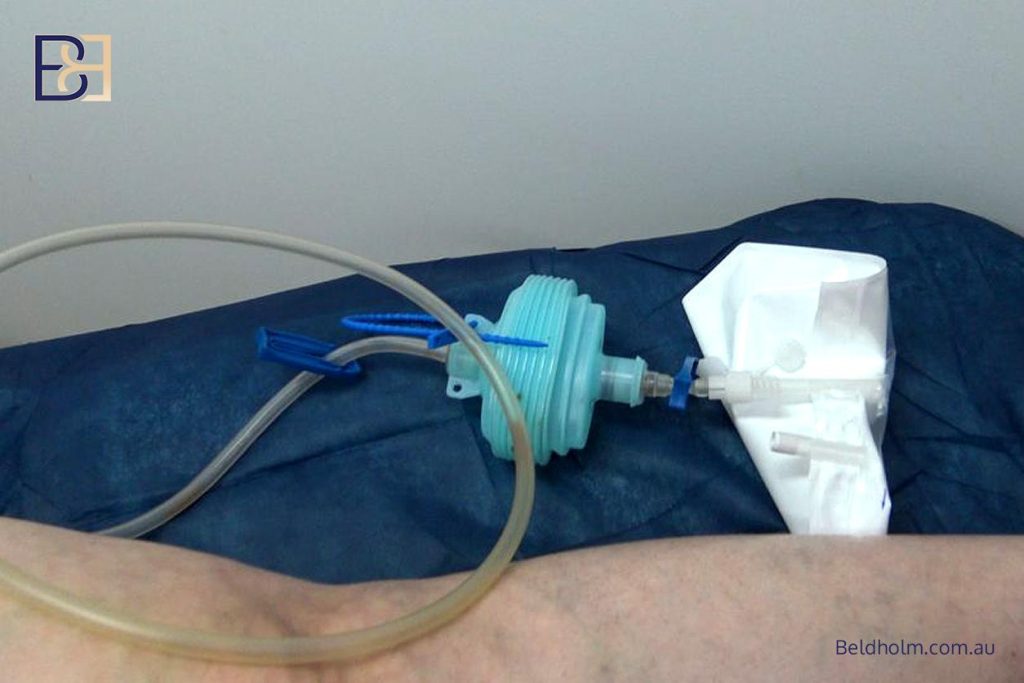
These three things are part of your recovery from the first day and, in the case of the garment, for some weeks after. Knowing how they work makes the early period less daunting.
Your catheter
During surgery, a tube called an indwelling urinary catheter (IDC) is placed to drain urine from your bladder. It saves you from getting up to the toilet while you are still recovering from the anaesthetic and your blood pressure is settling, and it lets the nursing staff keep an accurate record of your fluid intake.
The catheter is still in place on the morning after surgery. Whether it comes out then depends on how you are moving. If you are up and mobilising, it is removed, and you are encouraged to get to the toilet yourself. If you are not yet mobilising, the catheter stays in until you are.
Drains
When a large area of skin is lifted and removed, fluid tends to accumulate in the space beneath it as it heals. Drains carry that fluid away so it does not build up.
I use two closed suction surgical drains, one on each side, which exit through small openings near the hips, away from the main surgical site. They are held in place with a stitch and connected to a collection bottle. The amount of fluid is measured daily, as drainage is highest during the early healing process.
A drain opens once the fluid it collects drops below a set level. That usually happens somewhere between two and seven days, depending on how things settle for you. As covered earlier, you do not have to stay in the hospital until the drains are out. Many patients go home with one or both drains still in and have them removed at a follow-up visit. The nursing staff will show you how to empty and record them before you leave.
Dressings
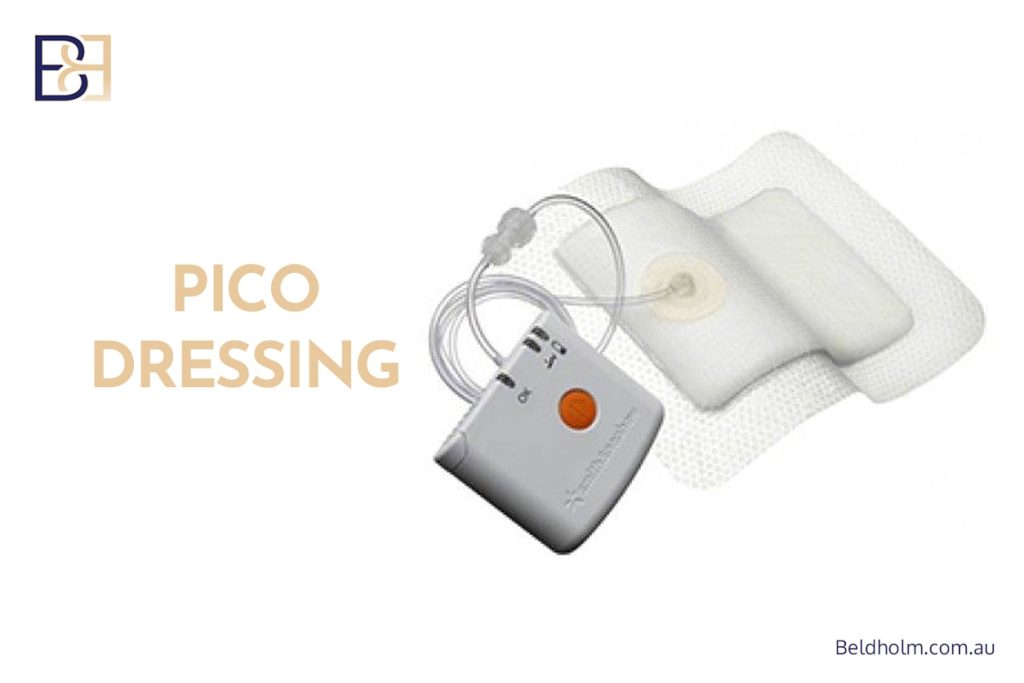
Your incision is covered with a PICO dressing. This is a dressing that applies negative pressure across the wound to support healing and manage fluid at the skin surface (5). It stays on for about seven days.
At around day 7 the PICO dressing is removed and replaced with Hypafix, a soft adhesive tape that sits over the incision line. From that point the dressing is less bulky and lower maintenance. If you notice any skin irritation under the tape, let us know.
Your compression garment
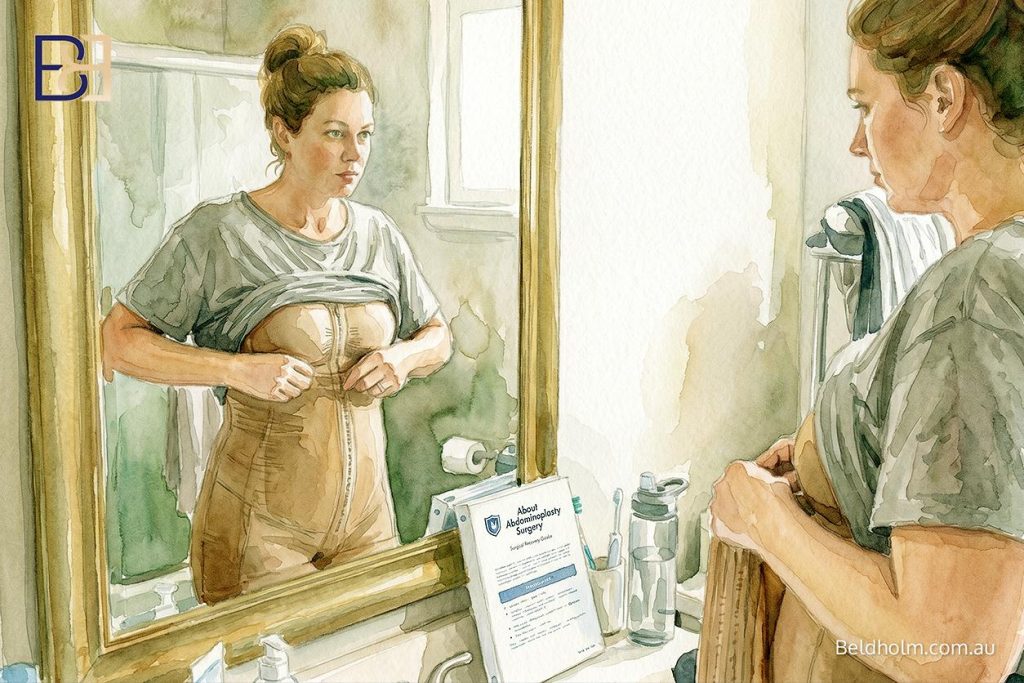
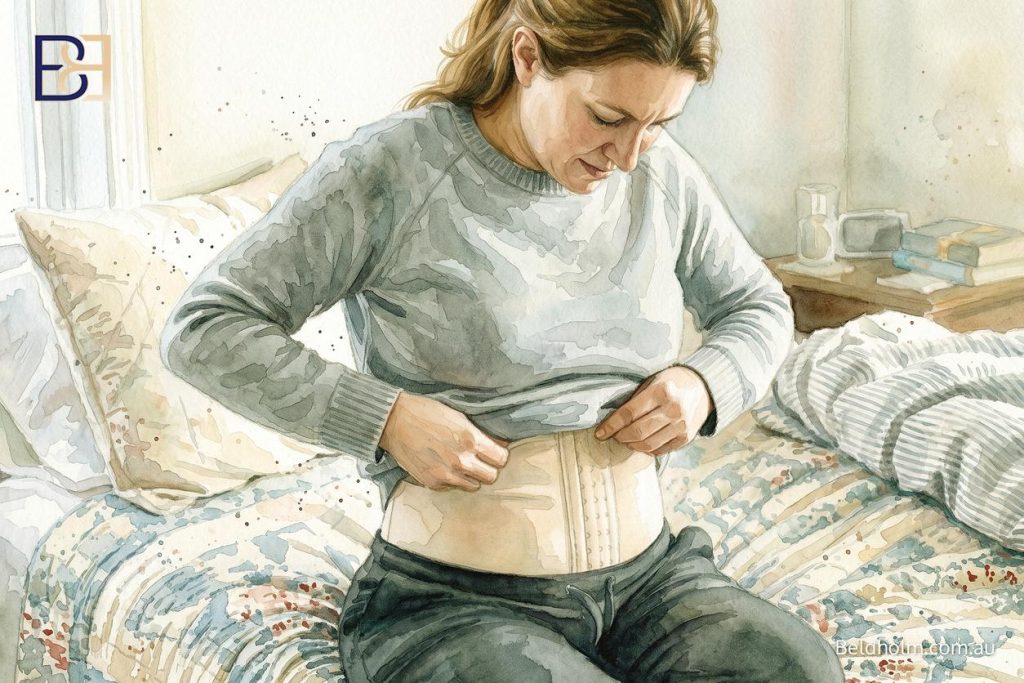
You will be fitted with a compression garment, sometimes called an abdominal binder. Compression garments support the tissues while they heal, help minimise swelling, and many patients find they make moving more comfortable. Some residual swelling across the abdominal area is normal for weeks afterwards.
The usual plan is:
- Four weeks full-time. Worn day and night, taken off only to shower and to wash the garment.
- Then two weeks part-time. Worn through the day, with the nights freed up.
Daytime wear is the priority in those last two weeks. I will give you specific advice for your situation, but the schedule above is what most of my patients follow.
Book your appointment online now
Pain Management on the Ward
An extended abdominoplasty is a big operation, and there will be pain afterwards. What I can tell you is that pain after this surgery is expected, it is manageable, and it is something the ward team works on actively from the moment you arrive.
What it feels like
Most patients describe a tight, sore, pulling feeling across the lower abdomen rather than a sharp pain. It is usually at its most noticeable in the first couple of days and eases from there. Standing up straight can feel difficult at first because of tightness, which is normal and improves as the swelling settles.
How we manage it

I use more than one method at once, because combining approaches works better than relying on any single one. Your pain relief is given on a regular schedule rather than only when you ask, so it stays on top of the pain instead of chasing it.
During your stay this may include:
- Pain relief through your drip in the early stage
- Regular tablets, including standard pain relievers taken around the clock
- Stronger pain relief available when you need it
- Local anaesthetic measures used at the time of surgery, which help in the first day or so
The nursing staff ask you about your pain regularly and adjust what you are given. If something is not working, tell them. Pain relief works far better when we stay ahead of it, so there is no value in holding off until you have pain.
Why good pain control matters
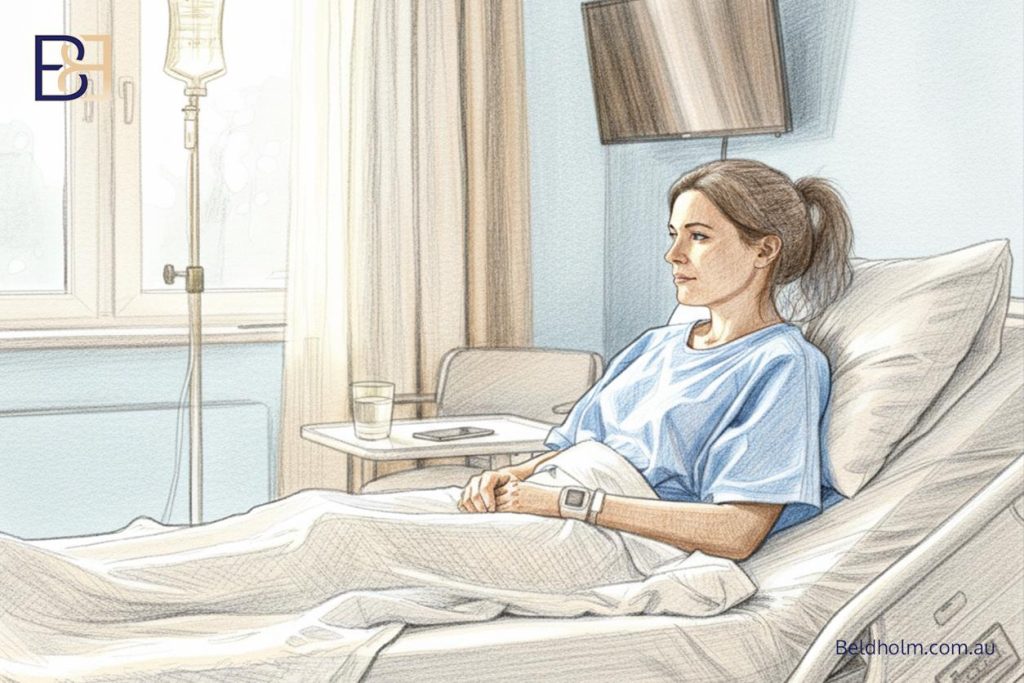
Keeping your pain controlled is not just about comfort. You move better, breathe more deeply, and rest more when the pain is managed, which helps your recovery and lowers your risk of complications.
A practical note on constipation
Strong pain relief slows the bowels, and after abdominal surgery, this is very common. We manage it with laxatives and by getting you moving and drinking. Expect it, and mention it to the nurses early rather than waiting.
Before you go home
You need to be comfortable with the prescribed pain medications you can take at home before you are discharged. Staying ahead of the pain on a regular schedule is what keeps it from becoming severe pain. Moving off the drip and onto oral pain relief, while still managing well, is one of the signs I look for when deciding you are ready to leave.
Nutrition and Protein During Your Stay

Healing runs on good nutrition, and protein in particular. Your body needs it to repair the tissues that were lifted and stitched during surgery. This is one of the areas where post weight loss patients need a bit more attention than most.
Why this matters more after weight loss
Significant weight loss, whether through surgery, modern weight-loss medications, or other means, often leaves people with gaps in their nutrition that have built up over time. Low protein and low levels of certain vitamins and minerals are common and can slow healing if not corrected (1,2).
This is why I treat the weeks before surgery as a window to get your nutrition into good shape. I assess this carefully before I operate, and I have separate articles that explain the protein side and the broader nutritional picture in detail [INTERNAL LINK 5] [INTERNAL LINK 6]. Getting this right beforehand is part of preparing you for a larger operation.
Nutrition while you are in the hospital

The work you have done before surgery carries straight through your admission. The nursing staff support your eating and drinking while you recover, with a focus on protein. A dietitian is available on the ward if there is a particular issue with your nutrition, rather than seeing every patient as a routine matter.
A few practical points:
- Protein supplements are available on the ward. The hospital stocks a range, so if you are not getting enough protein through a balanced diet alone, there are options to top you up.
- You are welcome to bring your own. If you already use a particular whey protein isolate and prefer to stick with it, bring it in. Many patients prefer to stick to what they know.
- Eat as you are able. In the first day or two, your appetite may be down, which is normal after an anaesthetic. The nursing staff will work with you to rebuild your intake at a pace that suits you.
The aim is steady, adequate nutrition through the admission, with protein as the priority, so your body’s healing process has what it needs.
What We Watch For in Hospital
Part of the reason you stay in the hospital is so that any early problem is picked up and dealt with before it becomes a bigger issue. Complications after extended abdominoplasty are uncommon, but they do happen, and I would rather you knew what they are. Here is what the team keeps an eye on.
Bleeding and haematoma
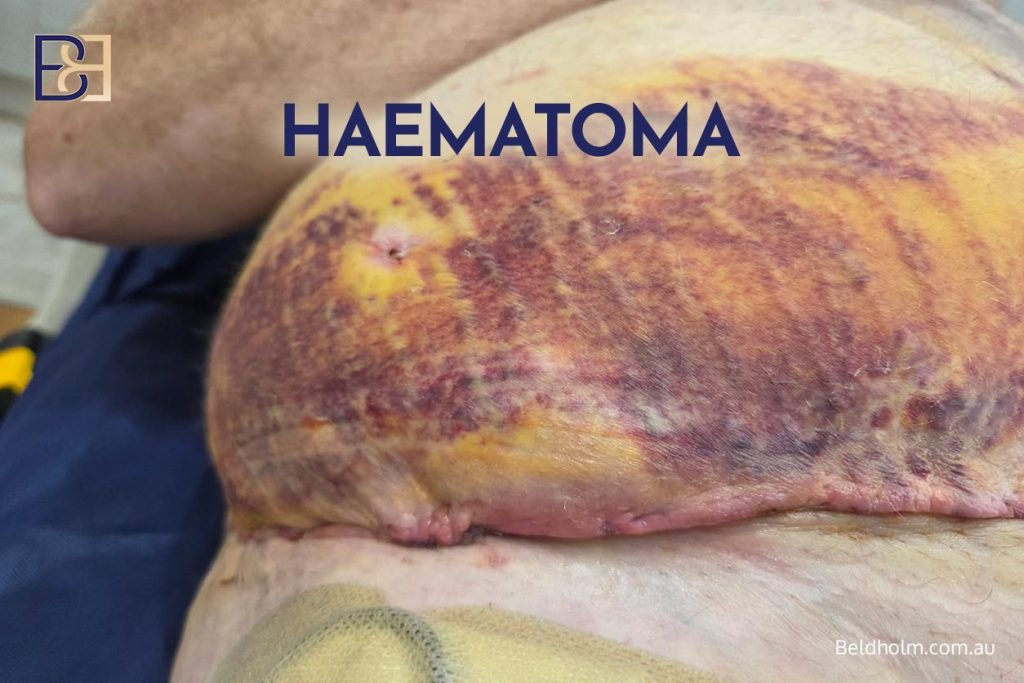
In the first hours after surgery, the staff watch your wounds, your drains, and your observations for any sign of bleeding. A haematoma (a collection of blood under the skin) is uncommon, but if one forms, it is usually early, which is one reason the first day is spent in hospital. A larger one occasionally needs a return to the theatre to wash it out, which is rare.
Seroma
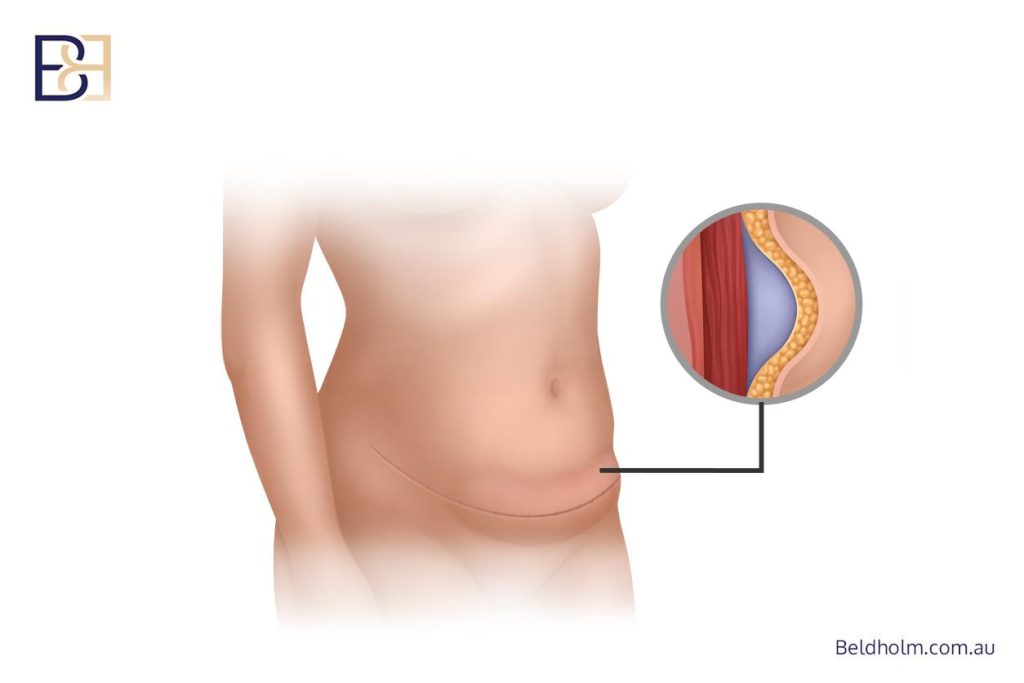
A seroma (a collection of clear fluid under the skin) is the most common local complication after abdominoplasty (4). It can build up in the space where skin was removed. The drains are there to reduce the chance of one forming. A seroma can still form after the drains come out, sometimes once you are home. If it does, it is usually straightforward to manage, often by drawing the fluid off with a needle in the clinic.
Wound healing and infection
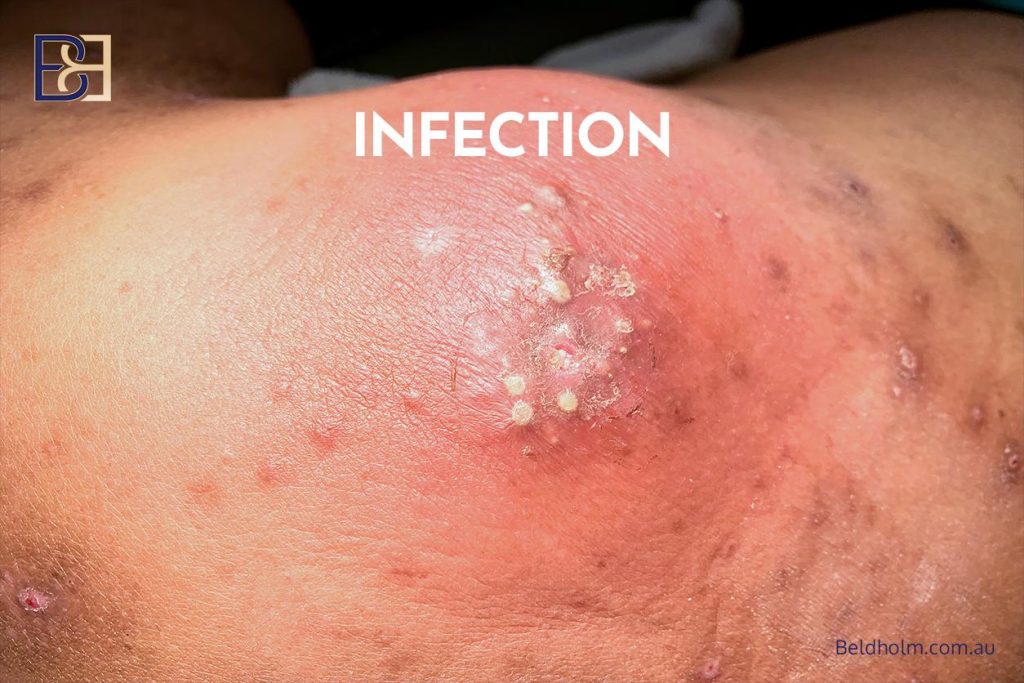
Post weight loss patients can have reduced skin elasticity and thinner skin quality, plus a longer incision, so wound healing gets close attention. The team checks the surgical site and your temperature for any early sign of infection, such as increasing redness, warmth, or discharge. Any of these findings requires medical review, and if an infection develops, it is treated, usually with antibiotics. Small areas of slow healing along the incision can occur and are managed with dressings and time.
Your observations
Your blood pressure, heart rate, temperature, and oxygen levels are checked regularly as part of routine medical review. These vital signs are the early warning signs for most problems, including the blood clots covered earlier [INTERNAL LINK 4]. Catching a change early is exactly what the monitoring is for.
The point of all this
I am not listing these to alarm you. The opposite, really. Knowing what we watch for is reassuring, because it shows that the early recovery is closely supervised and that anything that does come up is caught and treated promptly. Setting realistic expectations matters here. Results vary among patients, and I go through your individual risks with you in detail before surgery.
Going Home and What Comes Next
When you are ready to go home
I review you each day and decide when you are well enough to be discharged. By then, you are up and moving; your blood pressure has settled; your day 1 bloods are in order or have been corrected; your pain is controlled with tablets you can take at home; and you are eating and drinking. As covered earlier, you do not need to wait for your drains to come out. Many patients go home with one or both still in.
Before you leave, the nursing staff make sure you know how to look after everything at home, including early wound care. I cover scar care in detail separately [INTERNAL LINK 9].
What you go home with
- Your dressings. The PICO dressing stays on until around day 7, when it is changed to Hypafix tape. You will be told how this is managed and when.
- Your drains, if they are still in. You will be shown how to empty and record them, and told when they will be removed.
- Your compression garment. Four weeks full-time, then two weeks part-time, as covered earlier.
- Your blood-thinning injections. Most patients continue these for about two weeks. You or a family member will be shown how to give them.
- Your pain relief. A supply of tablets and clear instructions on how to take them.
Activity at home
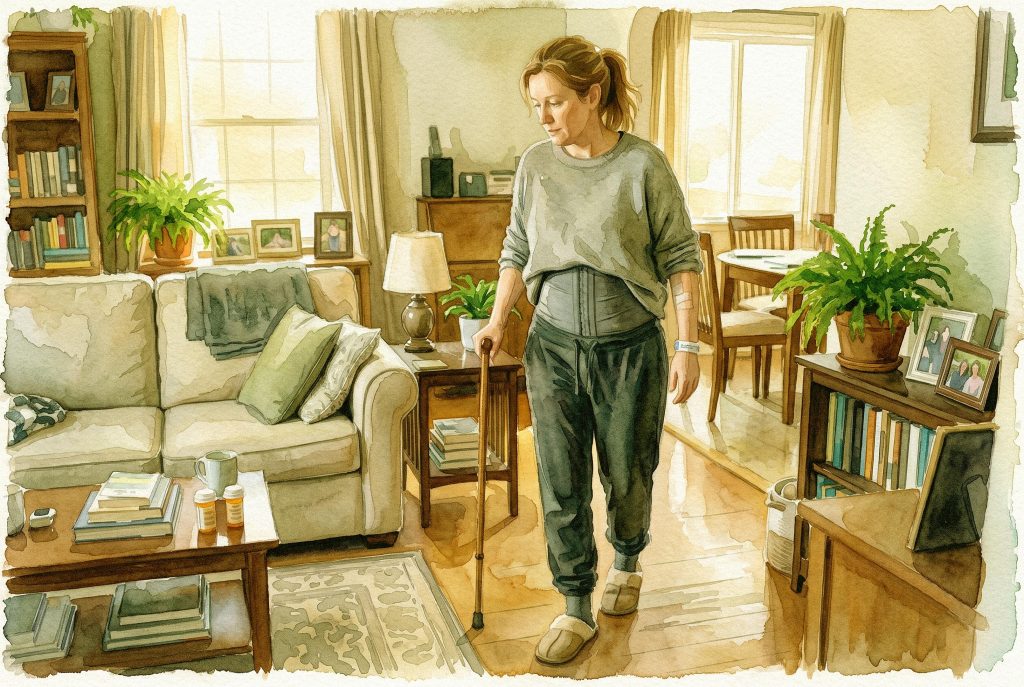
The first few weeks are about steady, careful recovery. Short, regular walks are good for you and help prevent clots while you ease back towards normal activities. Avoid heavy lifting, with a limit of around 10 kg, and avoid strenuous activity while you heal. These steps support a smooth recovery.
When you can return to work and to exercise depends on the type of work you do and how your recovery is going. I cover both in detail separately, including realistic timeframes for desk work versus physical work [INTERNAL LINK 7] [INTERNAL LINK 8]. We also talk it through at your follow-up visits.
Your follow-up schedule
I see you regularly after surgery so I can follow your healing progress. My usual follow-up appointments are scheduled at:
- 4 weeks
- 3 months
- 6 months
- 12 months
If you went home with drains, they are removed at an early visit once the fluid has dropped enough.
Handover to your GP
Your GP is part of your care throughout. They are copied in on your pre-operative blood results, and at your 4-week visit, I formally hand your ongoing care back to them. From there, your GP manages the longer-term aspects of your healing, while I continue to see you at the follow-up points above and keep an eye on your overall recovery as the abdominal contour settles.
Who to Contact Once You Are Home
It is normal to have questions once you are home, and it helps to know in advance who to call. Here is how to reach the right person.
During clinic hours
For non-urgent questions about your recovery, wounds, drains, or medications, contact my rooms during clinic hours. Most queries can be sorted over the phone.
After hours
If something comes up after hours and it cannot wait, call Maitland Private Hospital. The hospital runs nurse-led phone triage, so you will speak with a nurse who can advise you on what to do next. Keep the number with you when you go home.
If you need to be physically examined
Phone triage is for advice. If your problem requires someone to physically examine you and it cannot wait until clinic hours, go to your local emergency department. Maitland Private Hospital is not an emergency department, so your local ED handles urgent physical assessment after hours.
In an emergency

For anything life-threatening, call 000 immediately. That includes:
- Chest pain
- Sudden shortness of breath or difficulty breathing
- Heavy or uncontrolled bleeding
- Collapse or loss of consciousness
These can be signs of a serious problem such as a clot on the lung, and they need an ambulance, not a phone call to the rooms.
Signs worth a call
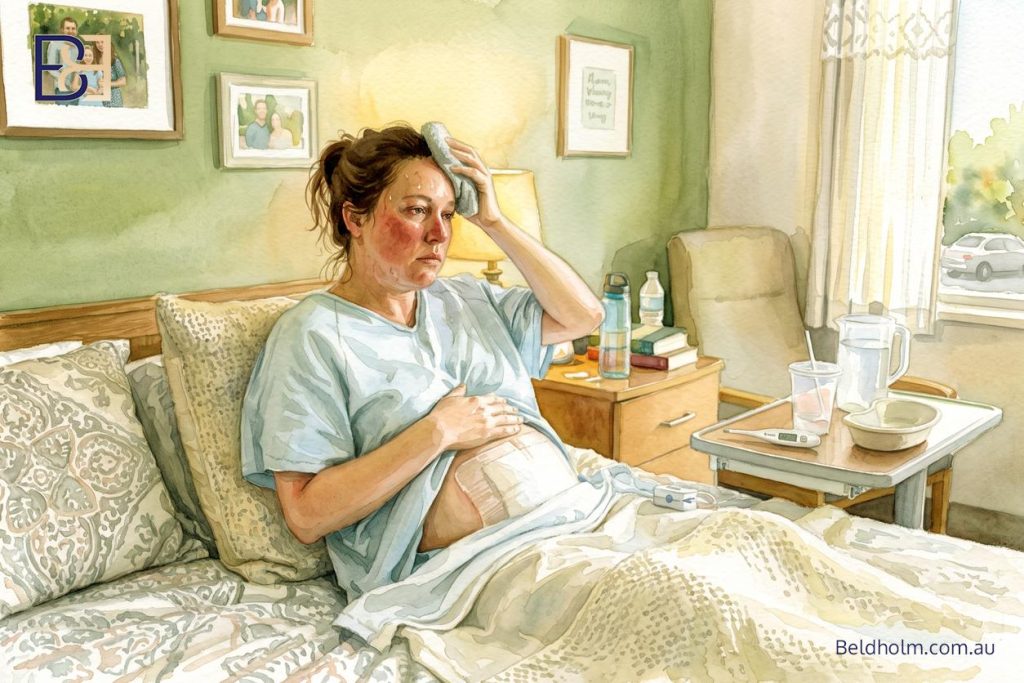
Short of an emergency, these are worth ringing about so we can check them early:
- A fever or feeling generally unwell
- Increasing redness, warmth, swelling, or discharge from the wound
- Pain that is getting worse rather than better, or is not controlled by your tablets
- Pain, swelling, or tenderness in one calf
- A drain that stops working, falls out, or suddenly changes
You will not be a nuisance for ringing. I would much rather hear about something early than have you wait and worry.
Frequently Asked Questions
How many nights will I be in hospital?
Most extended abdominoplasty patients stay two to four nights. The exact length depends on how you are recovering, particularly your blood pressure, your pain control, and how well you are moving. A more extensive operation means a longer stay. I will give you a realistic estimate at your consultation.
What is the difference between an extended and a full abdominoplasty?
First, a point on names. Abdominoplasty is the medical term and tummy tuck is the everyday word for the same operation. The real difference here is between a full and an extended abdominoplasty. A full abdominoplasty uses a shorter, hip-to-hip incision and suits many post-pregnancy patients. After major weight loss the loose skin usually carries around to the flanks, so the incision needs to extend beyond the hips to treat it. That is an extended abdominoplasty, also called an extended tummy tuck, and it is a larger operation.
Can I go home with my drains still in?
Yes. You do not have to wait for the drains to come out before being discharged. Many patients go home with one or both still in and have them removed at a follow-up visit once the fluid has dropped enough. The nursing staff show you how to manage them at home.
Will I be in a lot of pain?
There will be pain after a major surgical procedure of this size, usually felt as tightness and soreness across the lower abdomen. It is managed actively on the ward with pain relief given on a regular schedule, and it eases over the first days. You will not be discharged until your pain is controlled on tablets you can take at home.
Will I need help at home?
Yes. Arrange for someone to be with you for at least the first several days. You will be moving slowly, managing dressings and possibly drains, and avoiding any lifting. Having help with everyday tasks takes the pressure off in the early recovery.
Can I bring my own protein powder to hospital?
Yes. The hospital stocks a range of protein supplements, but if you already use a particular whey protein isolate, you are welcome to bring it in. Good protein intake supports your healing.
Will I have to give myself injections at home?
Most patients continue blood-thinning injections for about two weeks after surgery. You or a family member will be shown how to give them before you leave the hospital.
When can I return to work, driving, and exercise?
This depends on the type of work you do and how your recovery is going, so I cover it separately rather than giving a single number here [INTERNAL LINK 7] [INTERNAL LINK 8]. We also talk it through at your follow-up visits.
References
- Agha-Mohammadi S, Hurwitz DJ. Potential impacts of nutritional deficiency of postbariatric patients on body contouring surgery. Plast Reconstr Surg. 2008;122(6):1901-14.
- Paoli A, Bianco A, Moro T, et al. Nutritional support for bariatric surgery patients: the skin beyond the fat. Nutrients. 2021;13(5):1565.
- Asiry A, Sayegh A, Gangloff D, Mortada H, Gandolfi S, Lupon E. Utility of the Caprini risk assessment model in guiding venous thromboembolism prophylaxis after abdominoplasty. JPRAS Open. 2025;46:305-15.
- Liao CD, Zhao K, Nikkhahmanesh N, Bui DT. Decreasing seroma incidence following abdominoplasty: a systematic review and meta-analysis of high-quality evidence. Aesthet Surg J Open Forum. 2024;6:ojae016.
- Abesamis GM, Chopra S, Vickery K, Deva AK. A comparative trial of incisional negative-pressure wound therapy in abdominoplasty. Plast Reconstr Surg Glob Open. 2019;7(5):e2141.