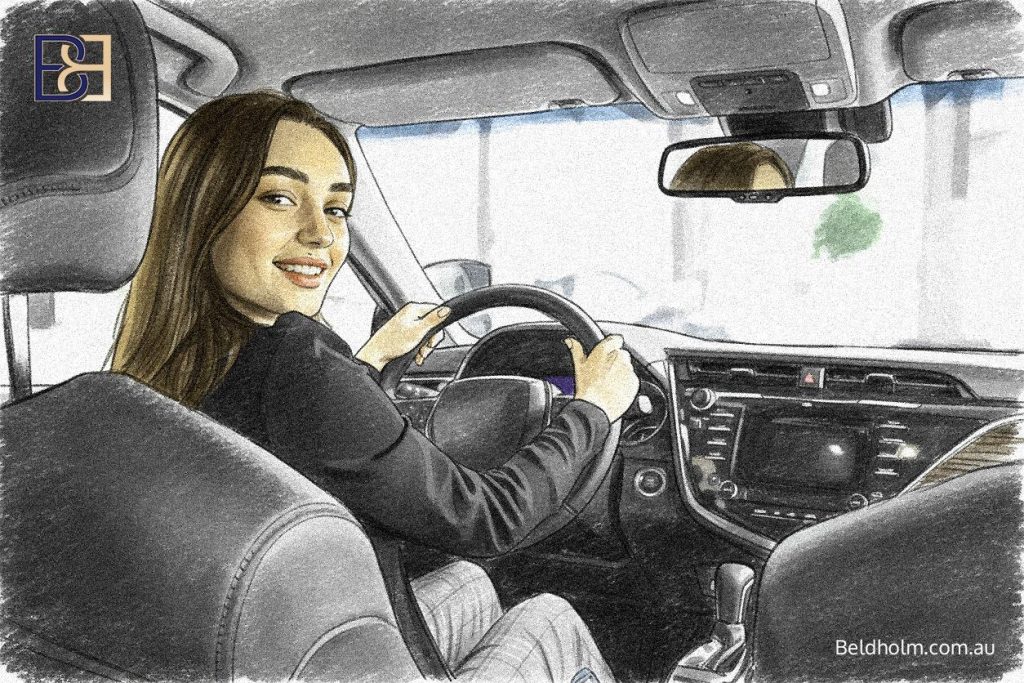
After brachioplasty (arm lift) surgery, most of my post weight loss patients are not back behind the wheel for roughly the first two to three weeks. That is a guide, not a fixed date. When you can drive again depends on you, on how your arms are recovering, and on the medication you are still taking. Results vary from one patient to the next.
In my practice, two things decide when it is reasonable to drive:
- You are clear of the general anaesthetic and any sedating pain medication.
- You have enough pain free movement and grip in both arms to steer, indicate, and make a sudden manoeuvre if you have to.
Both matter. Being off the strong pain medication is not enough on its own if your arms cannot yet do what an emergency stop or a hard turn demands.
Until you meet both, you will need someone to drive you home from the hospital and to your early follow-up appointments. Below, I explain why brachioplasty (arm lift) affects driving, what tends to delay the timeline for post-weight-loss patients, and how to plan for the first couple of weeks so you are not stuck.
Why a Post Weight Loss Brachioplasty (Arm Lift) Affects Driving
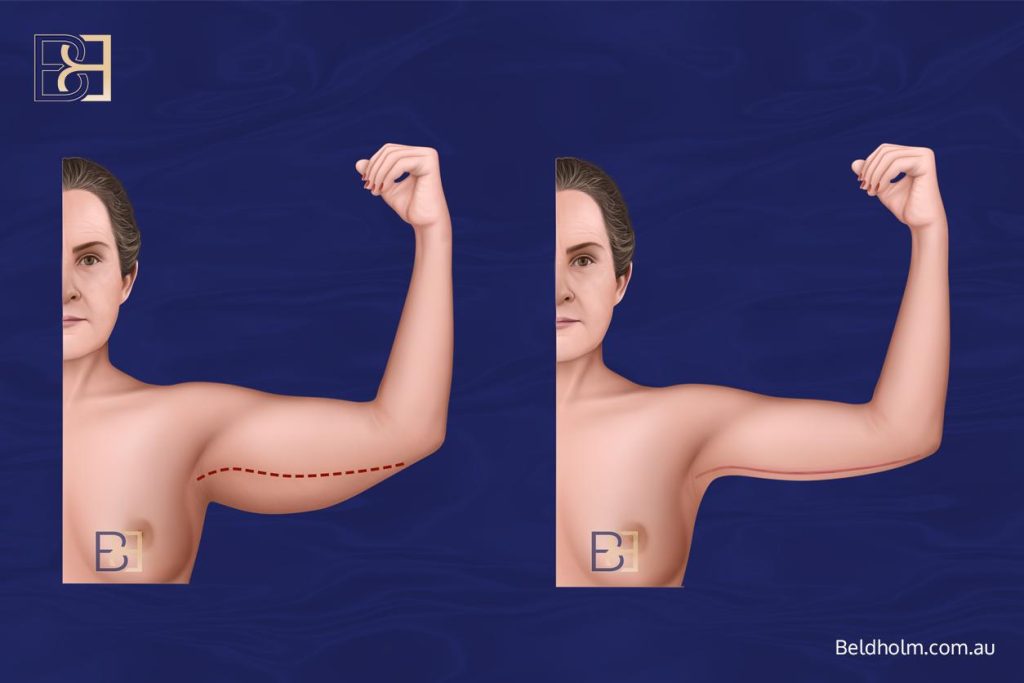
A brachioplasty (arm lift) after significant weight loss is usually a larger operation than the same brachioplasty procedure done for milder skin changes. When a patient has experienced significant weight loss, there is often a long sheet of loose skin hanging along the upper arms. To remove the excess skin, the incision generally runs the full length of the inner upper arm, from near the elbow up into the armpit, and in some patients it extends a short way onto the side of the chest (1).
That longer incision is the reason driving takes a back seat for a while:
- The wound sits where your arm bends and reaches. Steering, gripping the wheel, reaching for the indicator, doing up a seatbelt: all of these pull on the inner arm and armpit in the first couple of weeks.
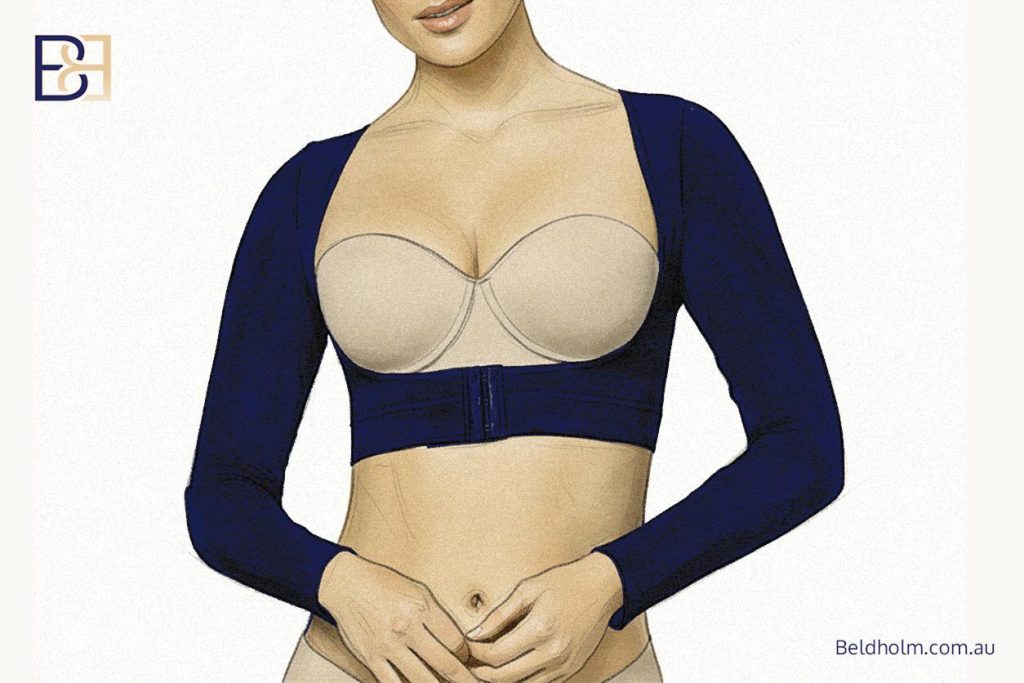
- You will be wearing compression garments on the arms for several weeks. Early on it limits how freely you can move, and you need free movement to drive.
- Some patients have drains for the first few days, which also keep you out of the driver’s seat.
There is one more thing to mention. For some post weight loss patients, the brachioplasty (arm lift) is done at the same time as other upper body contouring work in a single operation, where that suits the individual. Whether a single operation or staged surgery is appropriate is decided with you at the consultation, based on your medical history. If your brachioplasty (arm lift) is part of a larger single operation, recovery is more significant, and the return to driving can take longer. I will give you a timeline based on your own procedure, not a generic one.
The Two Things That Decide When You Can Drive
I get asked for a date. I would rather give you the two checks that actually matter, because they are what keep you and everyone else on the road out of trouble.
1. You are clear of the anaesthetic and any sedating pain medication

Your brachioplasty (arm lift) is done under a general anaesthetic, given by an anaesthetist. The general advice after a general anaesthetic is not to drive for at least 24 hours, because your reflexes take time to return to normal (2).
The bigger limiter is the pain medication. In the first days to weeks, many patients take a strong pain reliever (an opioid). Opioids act on your central nervous system, so they dull pain but also slow reaction time, affect concentration, and make you drowsy (3). Driving while you are taking them is not advisable, and driving while impaired by medication can be an offence and may affect your insurance.
So the first rule is straightforward: no driving until you have stopped the sedating pain medication and feel clear-headed. Everyday paracetamol is fine for pain management and does not count as a sedating medication for this purpose.
2. Your arms can do what driving demands
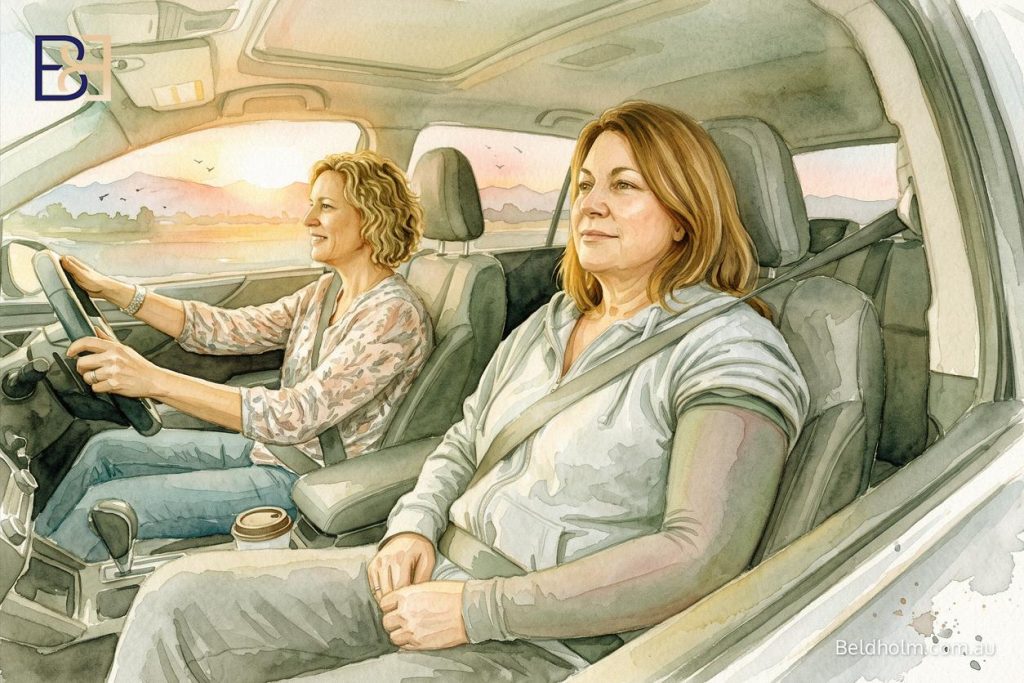
The second check is movement. Ask yourself whether both arms can:
- Hold and turn the steering wheel without pain holding you back.
- Reach the indicator, the gear selector, and the handbrake.
- Put on and take off a seatbelt.
- Make a sudden, firm movement if a child runs out or a car stops hard in front of you.
That last point is the one people forget. Ordinary driving might feel manageable a few days in, but an emergency manoeuvre asks a lot of the inner arm and shoulder, exactly where your incision is. If you cannot do it without wincing or hesitating, you are not ready, whatever the calendar says.
When both checks are met, and not before, it is reasonable to think about driving again. For most of my post weight loss patients that lands somewhere around 2 to 3 weeks, but I assess this with you individually.
Why You Need a Lift Home From Hospital
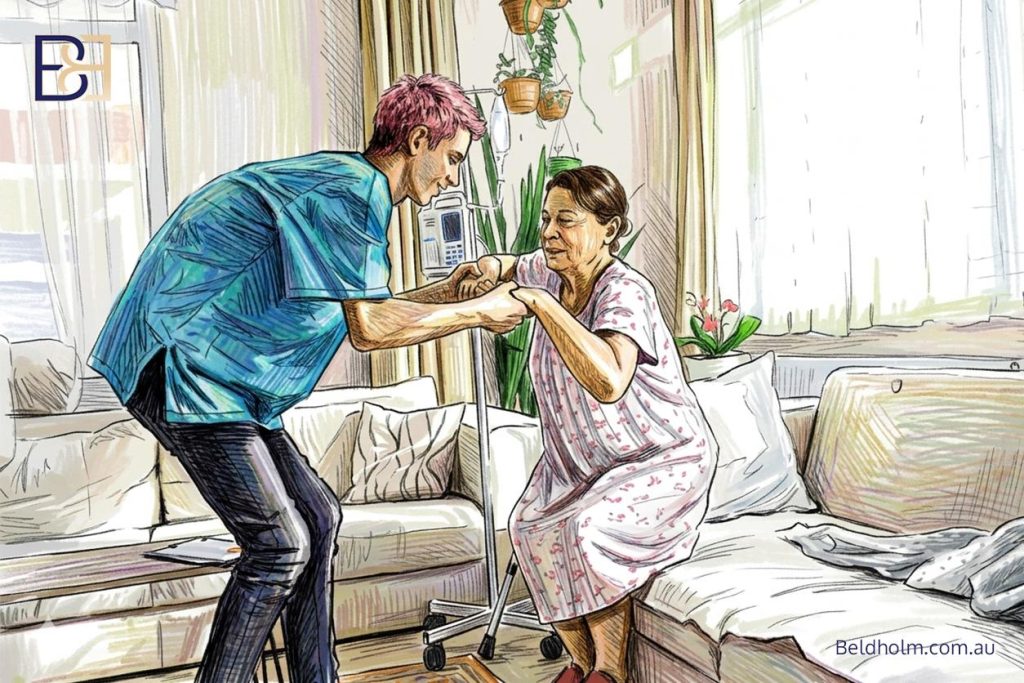
You cannot drive yourself home after a brachioplasty (arm lift). This is not negotiable, and it catches some people out, so plan for it before your surgery date.
There are a few reasons:
- The anaesthetic is still in your system. Even once you are awake and chatting, a general anaesthetic affects judgement and reaction time for the rest of that day. You should not drive, and you should not travel home alone on public transport (2).
- You will be sore and on pain medication. Both your arms have just been operated on. Reaching for a seatbelt, gripping a wheel, or bracing for a sudden stop is the last thing they are ready for.
- Getting in and out of the car is harder than you expect. With both inner arms tender and a compression garment on, you will want a hand with the door, the seatbelt, and your bag.
Arrange for a responsible adult to collect you and take you home. It is also sensible to have someone stay with you for the first night, so you are not managing alone while you are still drowsy and your arms are at their most tender. If you live by yourself, sort this out well before the day.
Many patients stay in hospital overnight, and you will not be fit to drive when you do go home. I will let you know the likely day of discharge as part of planning your surgery, so your driver can be ready.
Getting to Your Early Follow Up Appointments
Book your appointment online now
The first couple of weeks after a brachioplasty (arm lift) are when I want to see you most often. If you have drains, they usually come out within the first several days. There are wound checks, and any garment or dressing questions get sorted at these visits.
The catch is that these early appointments fall inside the window when you should not be driving. So you will need a driver for them, the same as for your trip home from the hospital. Attending your follow-up appointments lets me check the healing process after your brachioplasty surgery and pick up any problems early.
A bit of planning makes this easier:
- Line up a family member, friend, or someone you can rely on to take you to and from these visits.
- If nobody is available, a taxi or rideshare is fine. You are travelling as a passenger, which is not the same as driving yourself.
- Book your appointments at times when your driver can actually get you there, rather than scrambling on the day.
Once you have cleared the two checks covered above and I have reviewed you, we will talk about when it is reasonable for you to start driving to your own appointments again.
Getting Your Home Ready Before Surgery
Because you will not be driving and your arms will be doing very little for the first couple of weeks, the time to prepare is before your brachioplasty (arm lift), not after. A little setting up makes the early recovery process far less frustrating.
Stock up and set things at the right height
- Do a big shop beforehand so you are not relying on a trip to the shops in the first fortnight.
- Move the things you use every day to the bench or waist height. Reaching overhead and bending low both pull on the inner arm, so put the kettle, mugs, and everyday items where you can get them without stretching.
- Prepare and freeze a few meals, or arrange for someone to cook or drop food in.
Get help lined up for lifting and carrying

You should avoid heavy lifting and carrying while your arms heal. That covers groceries, washing baskets, rubbish, pets, and anything with a bit of weight to it. Arrange for someone to handle these jobs for the first few weeks rather than testing your arms too early.
Sort out help with children
If you have young children, you will not be able to lift or carry them for a while. Organise a partner, family member, or friend to help with picking up, baths, the school run, after-school activities, and sports practice, including the driving you would normally do.
Clothing
Front-opening tops are much easier than anything you have to pull over your head, since raising your arms is uncomfortable early on. Lay out a few before your surgery date.
In the early weeks, avoid strenuous activity and keep your arms elevated when resting to help reduce swelling. Light movement around the house helps promote circulation and lowers the risk of blood clots. Getting these things done in advance means you can rest and let your arms recover, instead of pushing them to do jobs they are not ready for.
What Can Delay Your Return to Driving
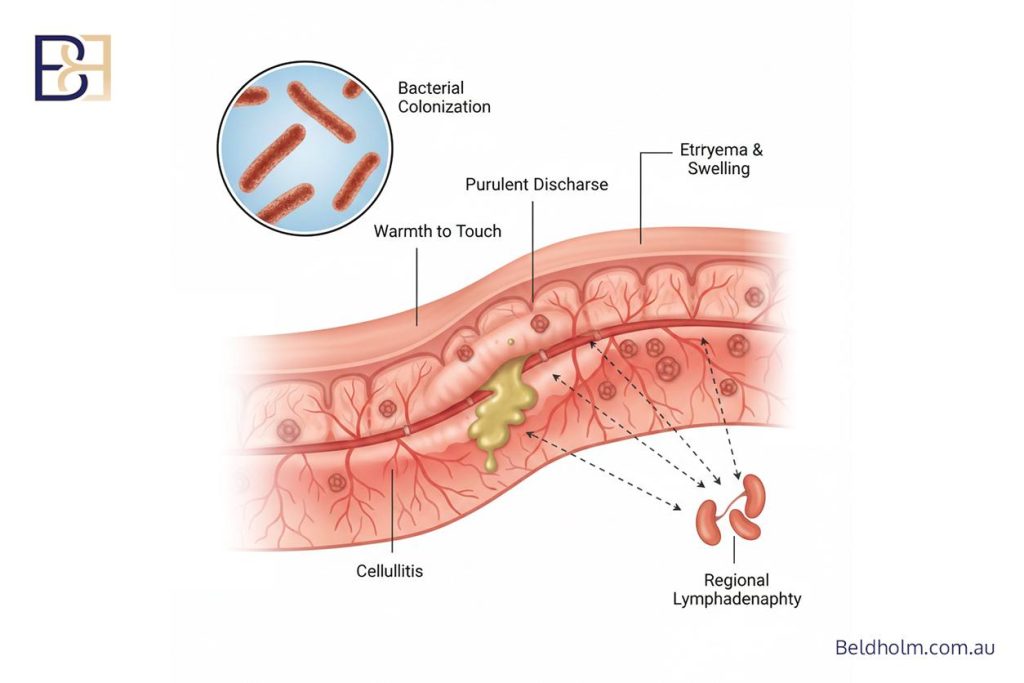
The 2 to 3 week guide assumes things are healing as expected. They do not always, and a brachioplasty (arm lift) carries real risks and possible surgical complications like any surgical procedure. If a complication develops, your return to driving will be later, and that is the right call.
A few things can push the timeline out:
- Wound healing problems. The brachioplasty (arm lift) incision is long and sits under tension on the inner arm. In post weight loss patients, skin quality and the nutritional gaps that often follow significant weight loss can slow healing, and part of a wound can be slow to close or separate (4).
- Infection. A wound infection means more time, sometimes antibiotics, and no driving until it settles.
- Haematoma. This is a collection of blood under the skin. A larger one can need a return to theatre.
- Seroma. This is a collection of fluid, also called fluid accumulation, which is fairly common after this operation and may need draining in the clinic (5).
- Swelling, stiffness, or altered sensation. If your arm or hand is swollen, stiff, or feeling different, your grip and movement may not be up to driving yet.
If any of these come up, contact my clinic. Brachioplasty patients should not push through and drive because the calendar says 2 weeks. The recovery timeline is individual, and it bends around how you are actually healing, not the other way round.
Your First Drive Back
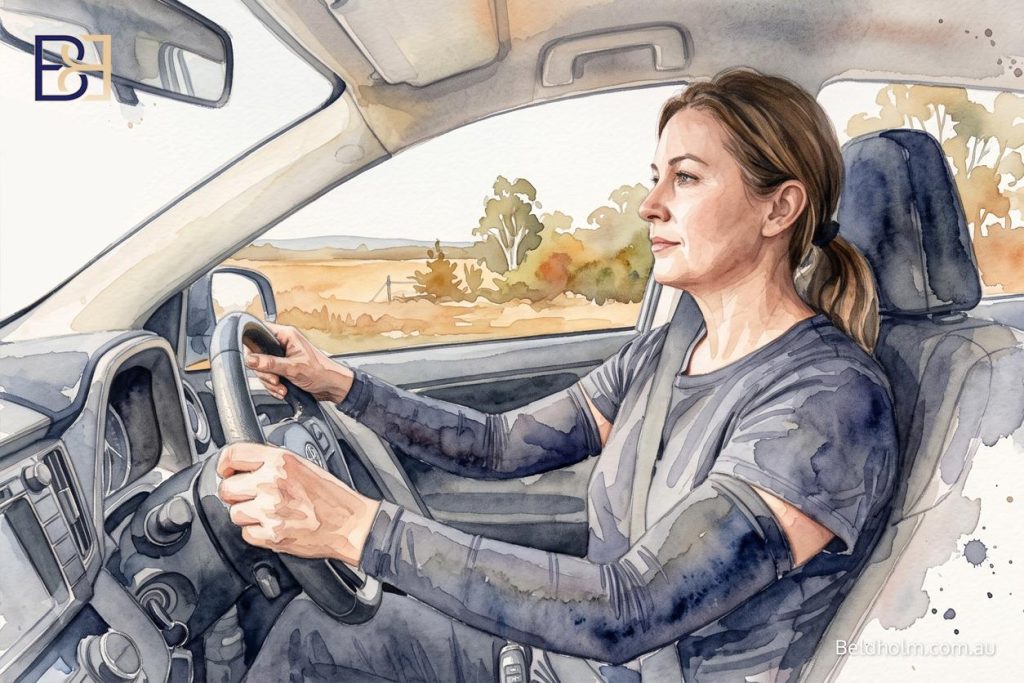
Once you have stopped the sedating pain medication, your arms move freely, and I have reviewed you, you can think about driving again. Ease back into it rather than going straight onto a busy road.
Before you turn the key, sit in the car and test things while it is parked:
- Grip the wheel and turn it fully one way then the other.
- Reach for the indicator, the gear selector, and the handbrake.
- Do up and undo your seatbelt.
- Turn to check your mirrors and over your shoulder.
If any of that brings on pain or you find yourself holding back, you are not ready. Give it more time.
When you do go for that first drive:
- Choose a quiet area with little traffic, in daylight.
- Keep it short. A few minutes around the block is plenty to start.
- Take someone with you the first time if you can.
- Stop if pain or tiredness creeps in.
Returning to driving is a gradual process, so build up from there over the following days as healing progresses, and you return to your normal activities. Longer trips and heavier traffic can wait until your arms will do what you ask of them without hesitation.
My Final Thoughts

Driving is one of the first pieces of independence my patients want back, and I understand why. Being unable to drive yourself to the shops or to an appointment is a real disruption. The 2 to 3 week guide gives you something to plan around, but it is a guide. Some patients are ready a little sooner, some need longer, particularly when the brachioplasty (arm lift) is part of a larger single operation.
What I would ask you to hold onto is this: the calendar does not decide when you drive, your recovery does. You need to be clear of the sedating pain medication, and your arms need to do everything driving asks of them, including a sudden movement in an emergency. Meet both, and driving is reasonable. Miss either, and it is worth waiting.
A brachioplasty (arm lift) after significant weight loss is a significant operation, not a minor procedure, and the healing process for your arms takes a fair bit of time. Giving them that time protects your result and keeps you and others on the road out of harm’s way. Results vary from patient to patient, and I will give you guidance based on your own recovery when I review you.
If you are unsure whether you are ready, ask me at your follow-up appointment rather than guessing. That is what the appointments are for. Follow the post-operative care instructions I give you, and check in if anything during your recovery period does not feel right.
References
- Szymanski KD, Sequeira Campos MB. Brachioplasty. In: StatPearls. Treasure Island (FL): StatPearls Publishing; 2025. Available from: https://www.ncbi.nlm.nih.gov/books/NBK585115/
- Australian and New Zealand College of Anaesthetists. Preparing for your operation. Melbourne: ANZCA. Available from: https://www.anzca.edu.au/patient-information/about-anaesthesia/preparing-for-your-operation
- Healthdirect Australia. Opioid medicines. Canberra: Healthdirect Australia; 2024. Available from: https://www.healthdirect.gov.au/taking-opioid-medicines-safely
- Gusenoff JA, Coon D, Rubin JP. Brachioplasty and concomitant procedures after massive weight loss: a statistical analysis from a prospective registry. Plast Reconstr Surg. 2008;122(2):595-603.
- Aljerian A, Abi-Rafeh J, Ramirez-GarciaLuna J, Hemmerling T, Gilardino MS. Complications in brachioplasty: a systematic review and meta-analysis. Plast Reconstr Surg. 2022;149(1):83-95.