


Facelift (Rhytidectomy)
A facelift (rhytidectomy) is an operation that repositions descended soft tissue of the face and removes excess skin. In most modern techniques, the lift happens at the SMAS layer (the superficial musculoaponeurotic system), which is the layer of connective tissue and muscle that sits beneath the skin of the face. Working at this layer, rather than tightening skin alone, is what gives a facelift (rhytidectomy) its durability. Skin-only tightening tends to be short-lived.
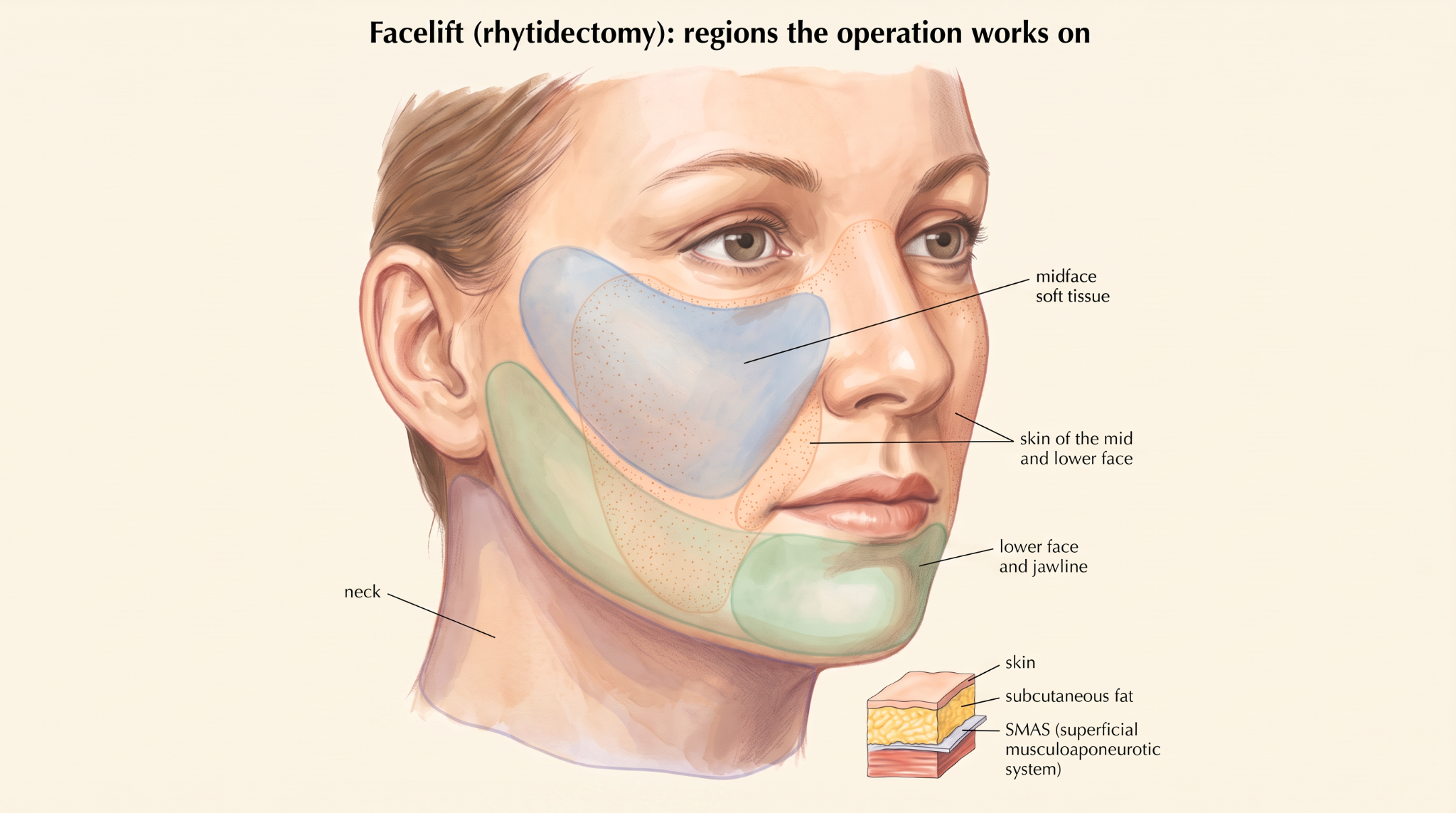
It is just as important to understand what a facelift (rhytidectomy) does not do. It does not add or replace facial volume. It does not change skin texture, pigment, or fine lines. And it does not stop the ageing process. Facial ageing is normal, and the face continues to age after surgery, so results are not permanent in that sense.
Book your appointment online now
What a facelift (rhytidectomy) is suited to
Facial ageing has several components: laxity of the skin, descent of the deeper soft tissue, loss of volume, and changes in skin quality. A facelift (rhytidectomy) works on the first two. It is suited to established descent of soft tissue and excess skin in the mid and lower face.
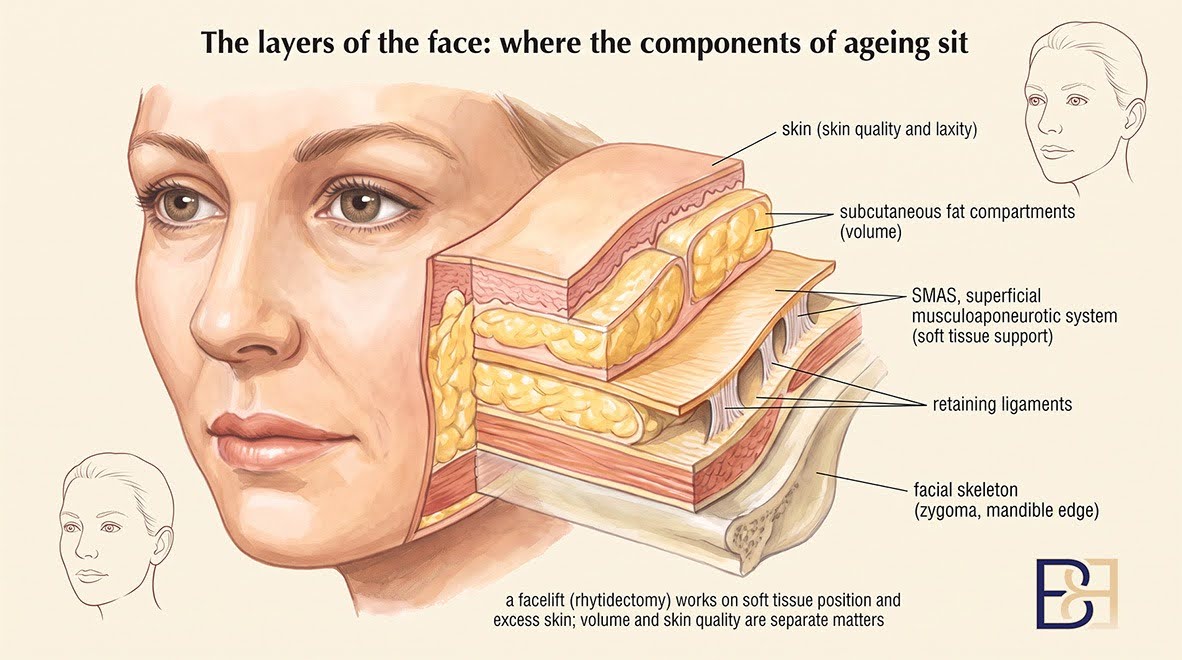
Not every change in an ageing face needs, or is helped by, a facelift (rhytidectomy). Where the changes are minor, or where the main issue is volume loss or skin quality, this operation is not the answer. Some concerns are better suited to non-surgical measures. Understanding which components are present in your face is the first step, and that is what assessment is for.
A facelift (rhytidectomy) and a neck lift (cervicoplasty) are often genuinely indicated together, because the lower face and neck age as a continuous unit. Where that applies, I discuss it at consultation. You can read more on the neck lift (cervicoplasty) page.
Facelift (rhytidectomy) techniques I use
There is no single facelift (rhytidectomy) operation. Technique is matched to what is actually present in the individual face, and that decision is made at consultation after assessment. These are the approaches I use.
SMAS facelift (rhytidectomy)
The SMAS layer is lifted and repositioned, either by tightening it with sutures (plication) or by lifting it as a flap. This is the foundation of modern facelift (rhytidectomy) surgery. Read more on the SMAS facelift (rhytidectomy) page.
Deep plane facelift (rhytidectomy)
The dissection moves beneath the SMAS layer, releasing the ligaments that tether the descended tissue so it can be repositioned as a single unit. Read more on the deep plane facelift (rhytidectomy) page, or see my longer article, deep plane facelift (rhytidectomy) explained.
Limited facelift (rhytidectomy)
You may see this called a mini facelift (limited rhytidectomy). That is a loose term, used in the market to cover a range of operations, from skin-only lifts through to the MACS technique (minimal access cranial suspension). These are not the same operation. Skin-only lifts tend to give short-lived results. The MACS technique works at the SMAS layer through suture plication via a shorter incision, and it is the approach I use where a limited facelift (rhytidectomy) is appropriate. It suits a narrower group of patients with more limited changes, its results are more limited in extent, and it still carries the risks of surgery. Read more on the limited facelift (rhytidectomy) page.
If you want to understand how I decide between these approaches, I have written a detailed article: skin-only vs SMAS vs deep plane vs preservation: how I choose.
My approach

A facelift (rhytidectomy) starts with assessment, not with an operation. At consultation I examine the skin, the deeper soft tissue, the neck, the brow, and the lids, take standardised clinical photographs, and work out which components of ageing are present in your face before any technique is discussed.
Preparation matters as much as technique. Blood pressure is reviewed and optimised before surgery, because raised blood pressure contributes to haematoma risk. Where a patient smokes, cessation is required, because smoking affects skin blood supply and healing.
Book your appointment online now
About Dr Beldholm
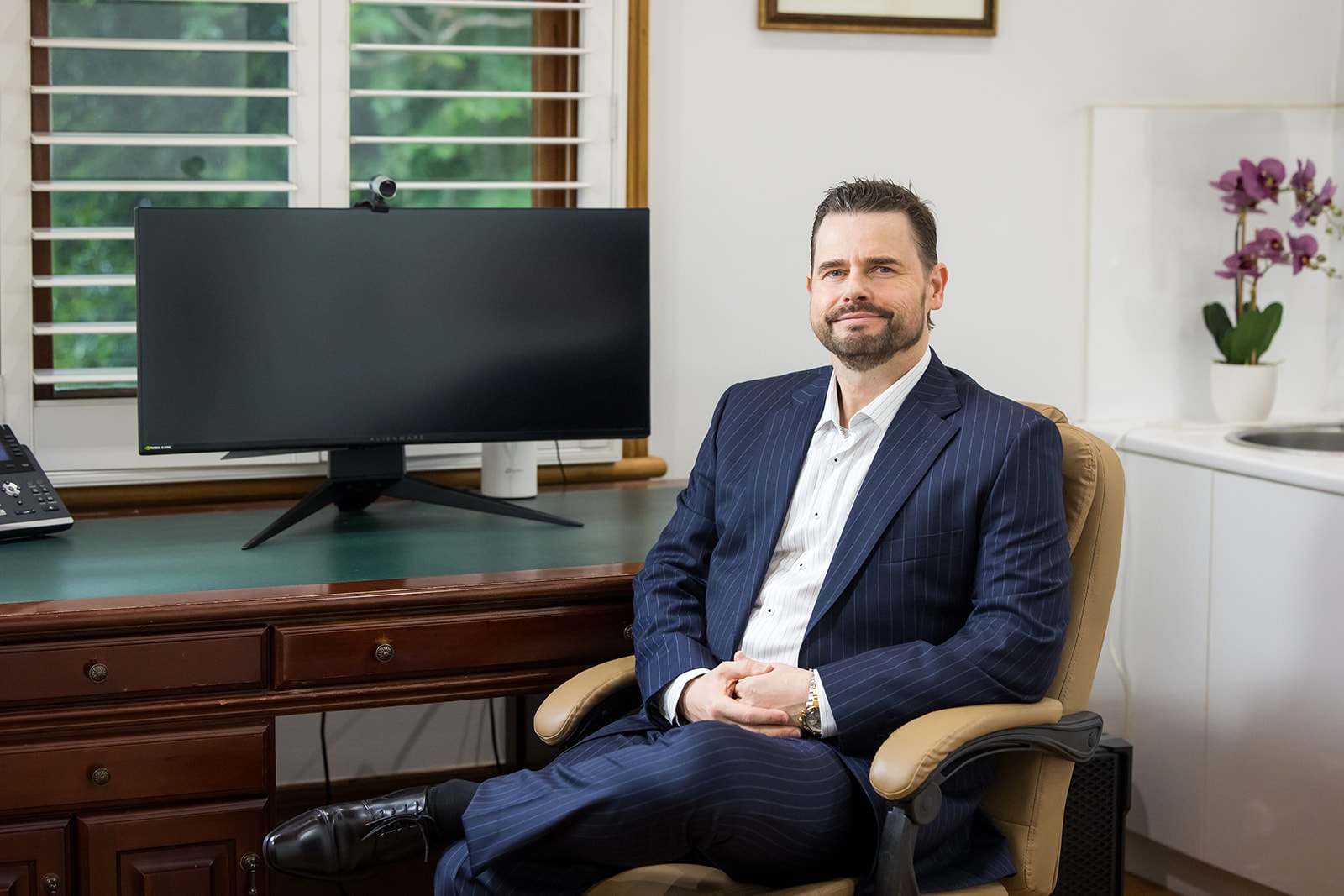
I have been performing surgery of the face and neck for more than 15 years, from smaller procedures through to larger operations such as the deep plane facelift (rhytidectomy), and I also offer non-surgical options where they suit a patient better. I am a Specialist Surgeon and Fellow of the Royal Australasian College of Surgeons (FRACS).
That length of experience, and the breadth of options available within one practice, means I am not limited to recommending a single operation. I can match the approach to what is actually present in your face, and tell you when surgery is not the right step. All surgery is performed at Maitland Private Hospital in the Hunter Valley, NSW.
Your pathway
GP referral
A referral from your GP is required before any consultation.
Consultation
Your initial consultation runs for about an hour. It covers your health and medical history, examination, standardised clinical photography, and a frank discussion of risks, recovery, and what surgery can and cannot achieve. A second consultation, in person or by telehealth, is encouraged and comes at no cost.
Quote
After your consultation you receive a written quote for my surgical fees, including MBS item numbers where applicable and GST for cosmetic cases. The hospital and the anaesthetist provide their own separate quotes, and my patient coordinator organises these for you so you have all three before deciding. A supportive garment is provided by the practice, and all post-operative follow-up with me is included at no additional cost.
Surgery
A facelift (rhytidectomy) is performed under general anaesthesia at Maitland Private Hospital, which has 24-hour doctor cover and an on-site ICU. I do daily rounds while you are admitted.
Follow-up
I review you intensively in the first two weeks, then at 4 weeks, 3 months, 6 months, and 12 months.
Recovery in brief
Recovery from a facelift (rhytidectomy) takes time, and it varies between patients. Expect swelling and bruising in the first one to two weeks, numbness around the ears and cheeks that settles slowly over weeks to months, and a staged return to normal activity. The supportive garment we provide is worn as directed in the early weeks. Most patients take around two weeks off work, longer for physical jobs. Return to exercise is staged, and I will guide you through it at your follow-up visits. Scars around the ears mature over 12 months or more.
I cover the full timeline, week by week, in a separate article: facelift (rhytidectomy) recovery week by week.
Risks
A facelift (rhytidectomy) is a significant operation, and you need to understand its risks before deciding to proceed. The risks include:
- Haematoma. A collection of blood under the skin, and the most common significant early complication of a facelift (rhytidectomy). Raised blood pressure is a contributing factor, which is why blood pressure is optimised before surgery. A haematoma may require a return to theatre
- Facial nerve injury. Injury to branches of the facial nerve can cause weakness of facial movement. This is usually temporary but can rarely be permanent
- Skin flap problems and skin loss. The risk is substantially higher in smokers, which is why smoking cessation is required before surgery
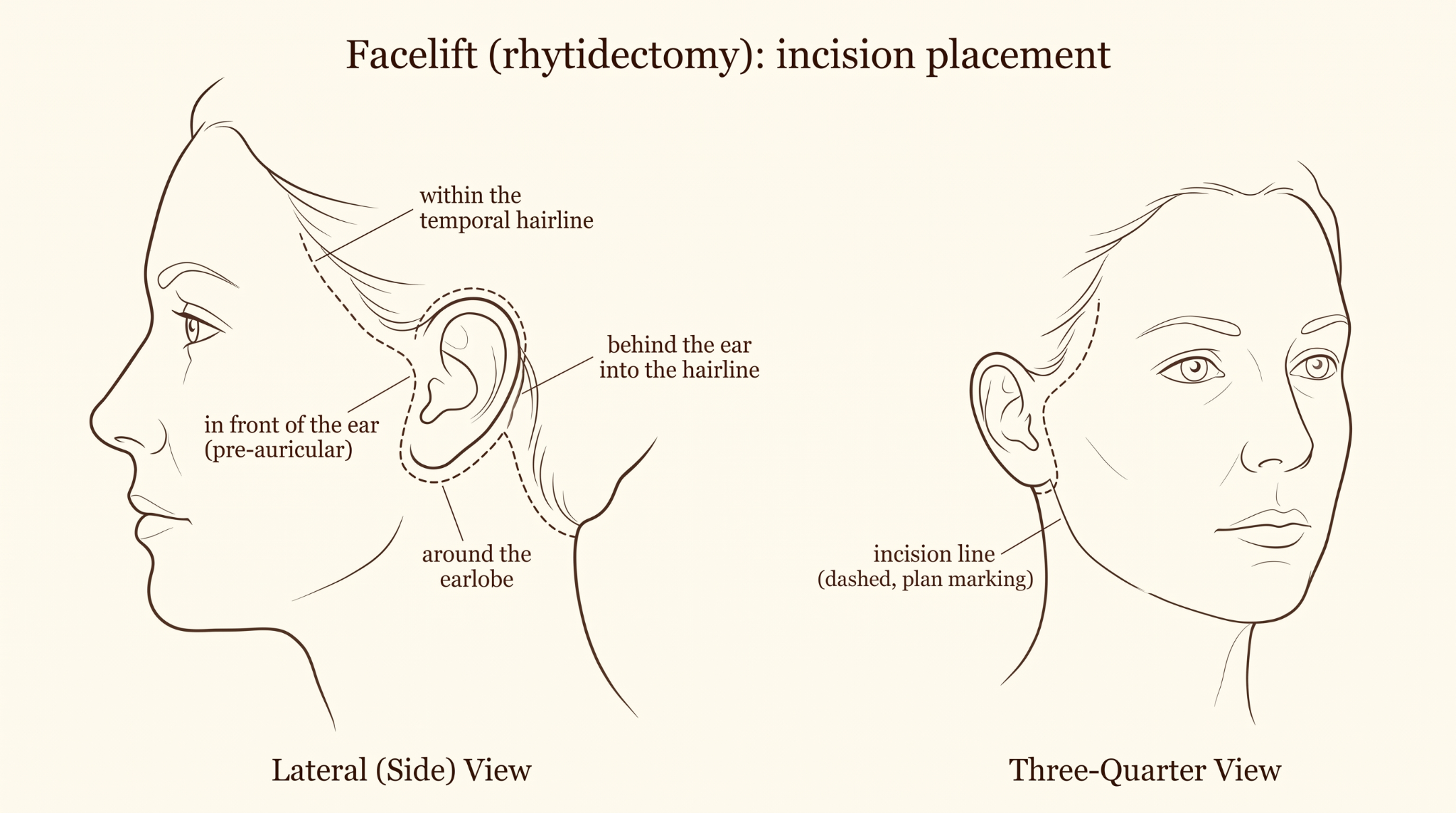
- Scarring. Scars sit in front of and behind the ears and may extend into the hairline. Most mature well, but hypertrophic scarring can occur
- Other risks. Altered sensation, asymmetry, change in the hairline position, infection, delayed healing, and anaesthetic risks. Revision surgery is sometimes needed
Sudden, marked, one-sided facial or neck swelling after surgery is treated as urgent. Call Maitland Private Hospital for after-hours concerns, attend your local emergency department for anything needing physical assessment, and call 000 for anything life-threatening.
Results vary between patients, and no outcome can be guaranteed. I discuss risks in detail, and how they apply to you specifically, at consultation. For a fuller discussion, read facelift (rhytidectomy) risks and complications.
Is a facelift (rhytidectomy) right for you?
That is a question I can only answer at consultation, for you individually. Facial ageing is normal, and surgery is one option for established changes, not the default response to getting older. A facelift (rhytidectomy) may be appropriate when the changes are established rather than minor, when you are medically fit and prepared for surgery, and when you understand the risks, the recovery, and that results vary and are not permanent.
Equally, there are times when a facelift (rhytidectomy) is not the right first step, and I will tell you if that is my assessment.