


Fat Grafting at Implant Removal and Replacement (Implant Exchange) in Newcastle NSW
If you are planning implant removal and replacement (implant exchange), there is a question worth raising at consultation: whether fat transfer breast augmentation (augmentation mammoplasty autologous fat grafting) has a role in the same operation.
For some exchange patients, adding a layer of your own fat around the new implant adds coverage and contour in areas where the tissue has thinned over years with implants. It is not part of every exchange, and it is not something I recommend routinely. It is a separate clinical decision, made after I have examined you and we have discussed what you want from the exchange itself.
This page explains when the combination is used, what it involves, and what it can and cannot do.
Book your appointment online now
Why fat grafting comes up at implant exchange
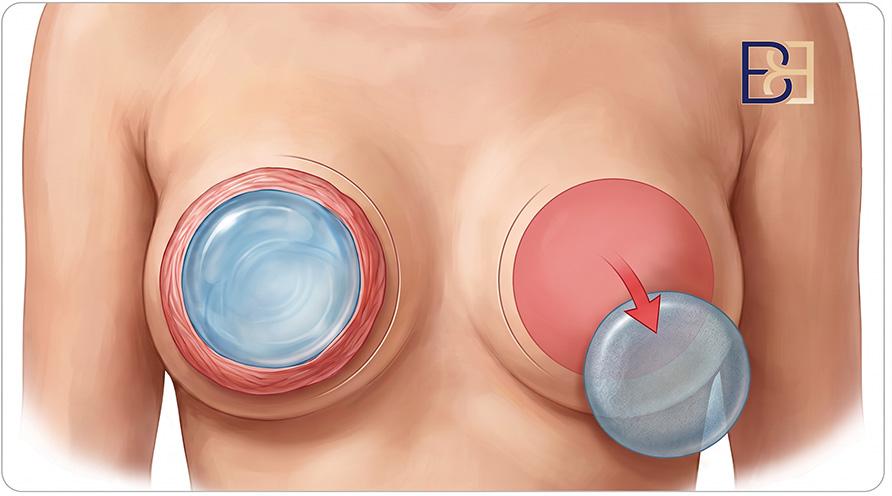
Implant exchange patients are in a different position from first-time augmentation patients. The breast has carried an implant for years, sometimes decades, and the tissue over the implant changes during that time. In some patients the overlying tissue thins, particularly in the upper pole and along the cleavage line. Rippling or implant edge visibility can develop where coverage is thin. The pocket and the soft tissue envelope have both been shaped by the outgoing implant.
An exchange is also a practical opportunity. The operation is already happening: one anaesthetic, one admission, one recovery. Where thin coverage or a contour step is part of the picture, grafting fat during the same operation avoids a separate procedure later. Fat grafting on its own, as a second operation down the track, means another anaesthetic and another recovery for what is often a modest adjustment.
The fat itself does specific work in this setting:
- Coverage. A grafted layer between the implant and the skin adds thickness where tissue has thinned, which can soften implant edge visibility and rippling.
- Contour. Fat can be placed in specific areas, such as the upper pole or the medial breast, to even out a transition the new implant alone would not correct.
- Blending. Where there is a step between the implant border and the surrounding chest, grafted fat can ease that transition.
None of this replaces the implant decision. The exchange itself, including whether to exchange at all, what happens with the capsule, and the choice of replacement implant, is worked through on its own merits. Fat grafting is only considered once that picture is clear.
What the operation involves
When fat grafting is included in an implant exchange, the operation runs in stages under the one anaesthetic.
The exchange comes first
The existing implant is removed, the capsule is managed as planned at consultation, and the replacement implant is placed. I use smooth-surface silicone implants, and the specific implant is selected for your anatomy and discussed with you before surgery.
Fat harvest
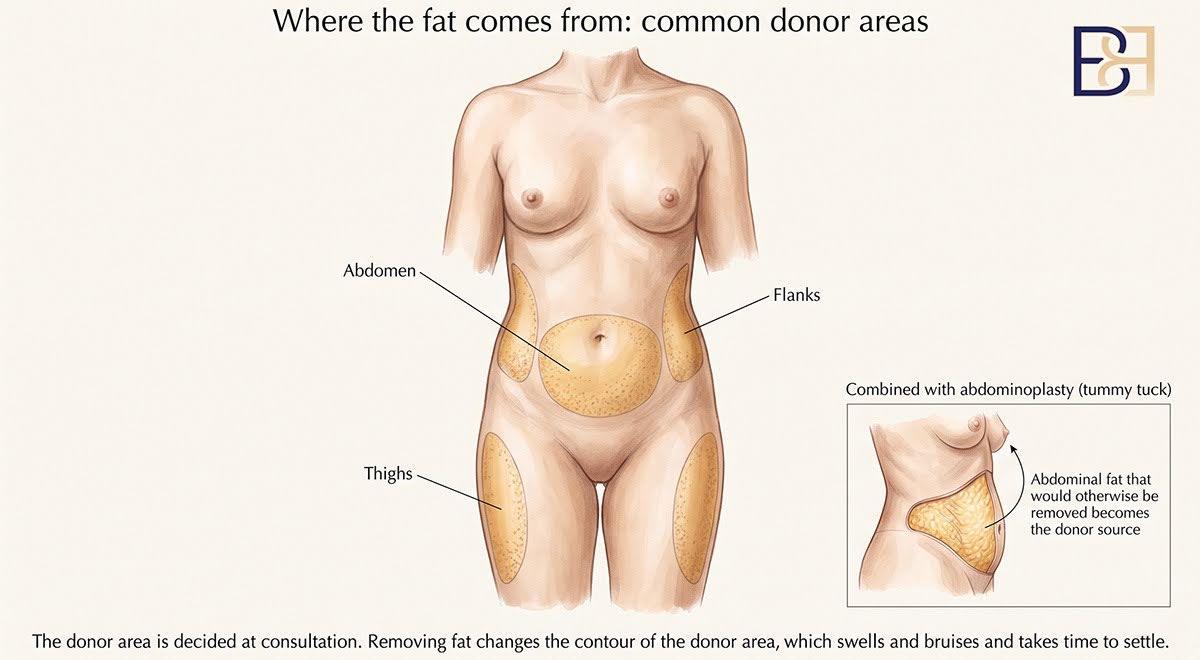
Fat is collected by liposuction (suction-assisted lipectomy) from an agreed donor area, most commonly the abdomen, flanks or thighs. I use VASER ultrasound-assisted liposuction for the harvest. The donor area is a genuine liposuction site: it will be bruised and swollen afterwards and is part of your recovery, not a side detail.
Preparation
The harvested fat is filtered and prepared for grafting, so that what is injected is concentrated fat rather than the fluid collected with it.
Grafting
The prepared fat is injected in small amounts through small access points, placed in the tissue layer over and around the new implant. Placement is deliberate: the areas of thin coverage or contour transition identified at consultation are where the fat goes. Fat is not injected into the implant pocket itself.
The grafting stage adds operating time to the exchange. How much depends on the volume harvested and the areas treated, and this is discussed with you when the plan is made.
What fat grafting cannot do
The limits matter as much as the uses, and I go through them at consultation before any decision is made.
It is not a volume replacement. The implant remains the reliable route to predictable breast volume. Fat grafting at exchange adds coverage and contour refinement in specific areas. It does not substitute for implant size, and it is not a way to go smaller with the implant and make up the difference with fat in any predictable fashion.
Not all grafted fat survives. A proportion of the injected fat is reabsorbed by the body in the months after surgery. How much survives varies between patients and cannot be promised in advance. The result seen at three months is closer to the lasting result than what is visible in the early weeks, when swelling and the full grafted volume are both still present.
A repeat session is sometimes needed. Where retention is lower than hoped, or where a specific area needs further refinement, a second grafting session at a later date is an option. That is a further procedure with its own recovery, and it is discussed as a possibility upfront, not raised for the first time afterwards.
It depends on donor fat. Grafting needs enough suitable fat at a donor site. In lean patients the available volume may be limited, and in some patients the option is not practical at all.
It carries its own risks. Fat grafting adds risks that a standard exchange does not carry, including oil cysts, areas of firmness from fat necrosis, and changes that can appear on breast imaging. These are covered on the complications page linked below and discussed at consultation.
Book your appointment online now
Two decisions, made separately
There are two separate clinical questions, and each is answered on its own merits at consultation.
The first question is the exchange itself. Whether your implants should be exchanged at all, what happens with the capsule, and which replacement implant suits your anatomy. For some patients the right answer is removal without replacement, and that option is on the table too.
The second question is whether fat grafting adds anything for you. That depends on your tissue coverage, the specific contour findings on examination, whether you have suitable donor fat, and whether the likely gain justifies the added operating time, the donor site recovery and the additional risks. For many exchange patients the answer is no, and the exchange proceeds without it.
If the answer to the first question is yes and the second is no, nothing is missing from your operation. A well planned exchange is a complete procedure in its own right.
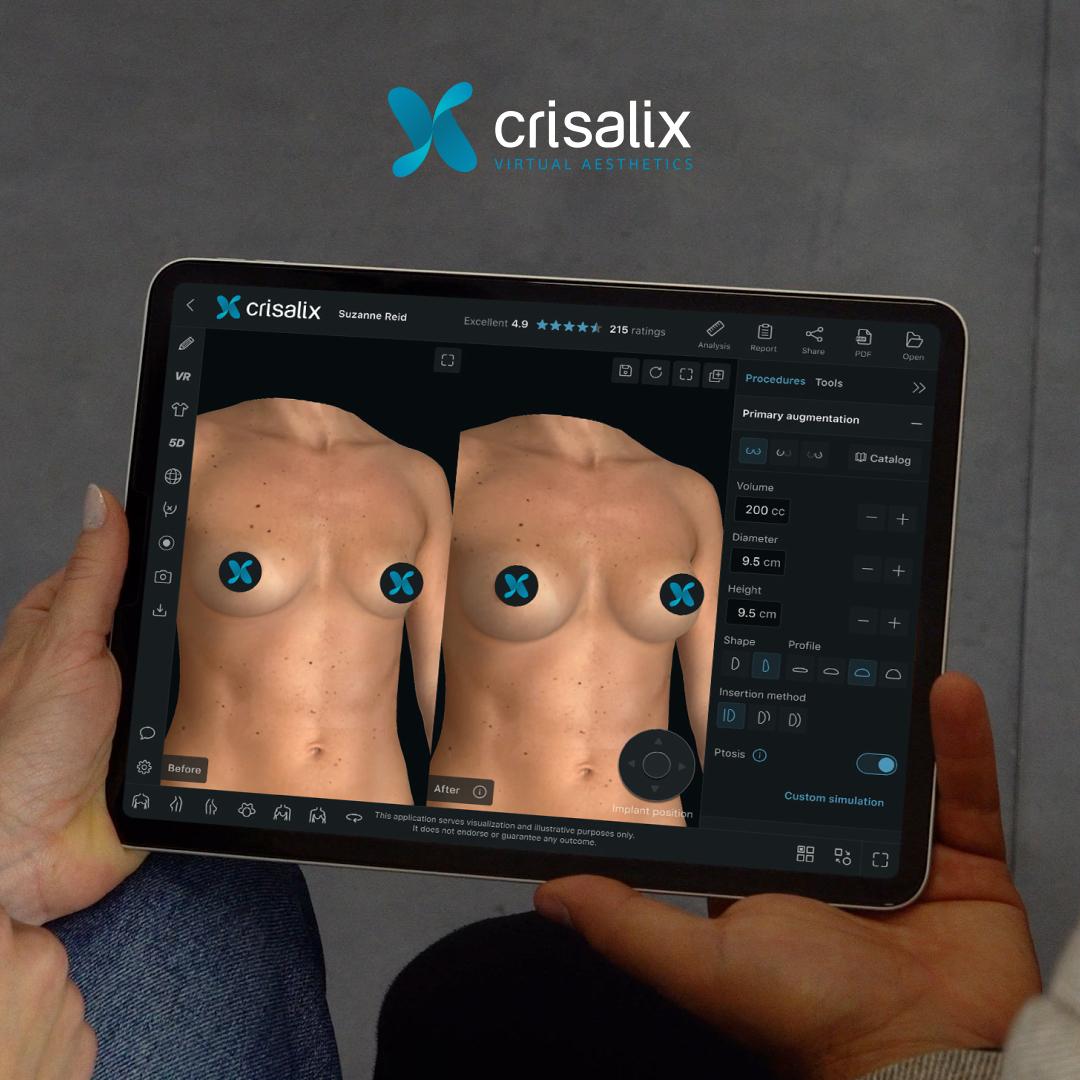
Disclaimer: 3D imaging is a visualisation aid used to support discussion during your consultation. It is a general guide only. It does not predict or guarantee your actual surgical result, and results vary between patients. All surgery has complications, get a 2nd opinion
Is this operation right for me
Whether fat grafting has a place in your implant exchange comes down to what I find on examination and what you are seeking from the surgery. The factors I assess:
- Tissue coverage. Thin coverage over the implant, visible rippling or a palpable implant edge are the findings where grafting has the most to offer. Where coverage is already adequate, there is usually little to gain.
- Contour. A step or hollow at the implant border, upper pole flattening, or a transition the replacement implant alone will not correct.
- Donor fat. Enough suitable fat at a donor site to make the harvest worthwhile. This is assessed on examination.
- General health and healing. Your medical history, medications and smoking status, which affect both graft survival and wound healing.
- Breast imaging. Up to date breast imaging is arranged before surgery where indicated. Grafted fat can produce changes that show on later imaging, so a clear baseline matters. The modality depends on your age and history and is confirmed at consultation.
- What you want from the exchange. If your goals are met by the replacement implant alone, adding a graft adds recovery and risk without a matching benefit.
Some exchange patients are well suited to the combination. Many are not, and proceed with a standard exchange.
Your pathway
GP referral
A referral from your GP is required before any consultation. This keeps your GP involved from the start, and they receive a formal handover at your four week post-operative visit.
Consultation
Consultations are held at my Lorn rooms, or by Zoom where distance makes that practical. I examine your breasts and the potential donor areas, review your implant history and any records of your original surgery, and we work through both questions: the exchange itself, and whether fat grafting adds anything for you. If imaging is indicated, it is arranged before surgery.
Surgery
The operation is performed at Maitland Private Hospital under general anaesthesia. The anaesthetist usually consults with you by phone beforehand, with the physical assessment on the day of surgery.
Follow-up
Review is frequent in the early period, with nurse and surgeon reviews two to three times a week for the first two weeks, then milestone reviews at four weeks, three months, six months and twelve months. The three month review is where the retained graft volume becomes clear.
Why patients choose me
I am a Specialist Surgeon (FRACS) with more than 15 years of experience in breast and body surgery, based in the Hunter Valley. Implant exchange and fat grafting both sit within my regular breast practice, alongside breast augmentation (augmentation mammoplasty), breast lift (mastopexy) and implant removal (explant surgery).
Revision breast surgery asks different questions from first-time surgery. The tissue has already been operated on, the capsule has to be managed, and the plan has to account for what the first operation left behind. My approach is built around a thorough consultation, a plan specific to your anatomy and history, and a structured follow-up that runs from the first post-operative week through to twelve months.
Surgery is performed at Maitland Private Hospital, with consultations at my Lorn rooms or by Zoom.
Recovery and risks
This is invasive surgery under general anaesthesia, and adding fat grafting to an exchange means recovering from two things at once: the breast surgery and the liposuction (suction-assisted lipectomy) donor site. Both bruise, both swell, and both take time. Recovery differs between patients, and the early appearance of the breasts changes over the first three months as swelling settles and a proportion of the grafted fat is reabsorbed.
The risks include those of any implant surgery, such as infection, bleeding and capsular contracture, together with the risks specific to fat grafting, including oil cysts, fat necrosis and changes visible on later breast imaging. I go through all of them with you at consultation.