


Removal and Replacement of Breast Implants with Breast Lift (Mastopexy) in Newcastle NSW
You already have breast implants. Some time has passed since they were placed, and a few things have changed. The implants may be ageing, or you are thinking about a different size or profile. Your breast position may have altered over the years, so the skin and tissue sit differently over the implant than they once did. Now you are weighing up whether to have the old implants removed and replaced (implant exchange), with a breast lift (mastopexy) at the same time.
This is one of the more involved operations I do in this area. It brings together three separate pieces of work in a single operating time: removing your existing implants and managing the capsule around them, placing new implants, and lifting the breast to reposition the nipple and take up skin laxity. Each part has its own considerations, and doing them together is a larger undertaking than any one of them on its own.
On this page I explain what the operation involves, who it suits, how I decide between one operation and staging the work across two, and what the pathway through my practice looks like. Whether this operation is right for you is something I work out with you at consultation, after examining you and going through your history.
Book your appointment online now
What this operation involves
This operation brings together three separate tasks in one operating time: taking out your existing implants and dealing with the capsule around them, placing new implants, and lifting the breast. Whether all of this is done in a single operation or spread across two is a decision I come to with you, and I cover that in the next section.
Removing the existing implants
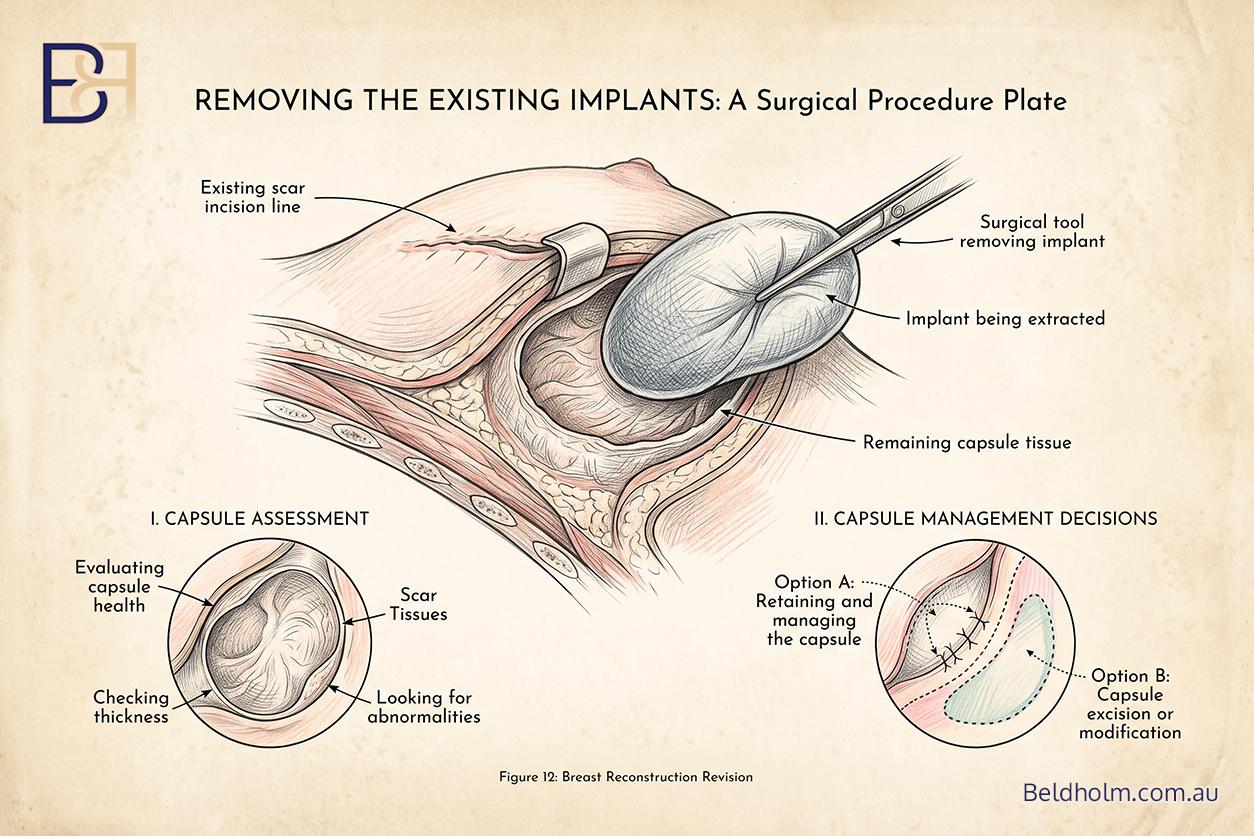
Your current implants are taken out through an incision, usually along the existing scar where that works. Around any implant, the body forms a layer of scar tissue called a capsule. Once the implant is out, I assess that capsule and decide how to manage it.
Managing the capsule
What I do with the capsule depends on what I find during the operation. In some cases the capsule is thin and healthy and can be left in place. In others, where it is thickened, calcified, tight, or where an implant has ruptured, I release it (a capsulotomy) or remove it (a capsulectomy). Removing the capsule involves more dissection and adds to the operation. I talk through the likely approach at consultation and confirm it based on what I find on the day. The risks that go with capsule surgery are set out on the risks page.
Placing the new implants
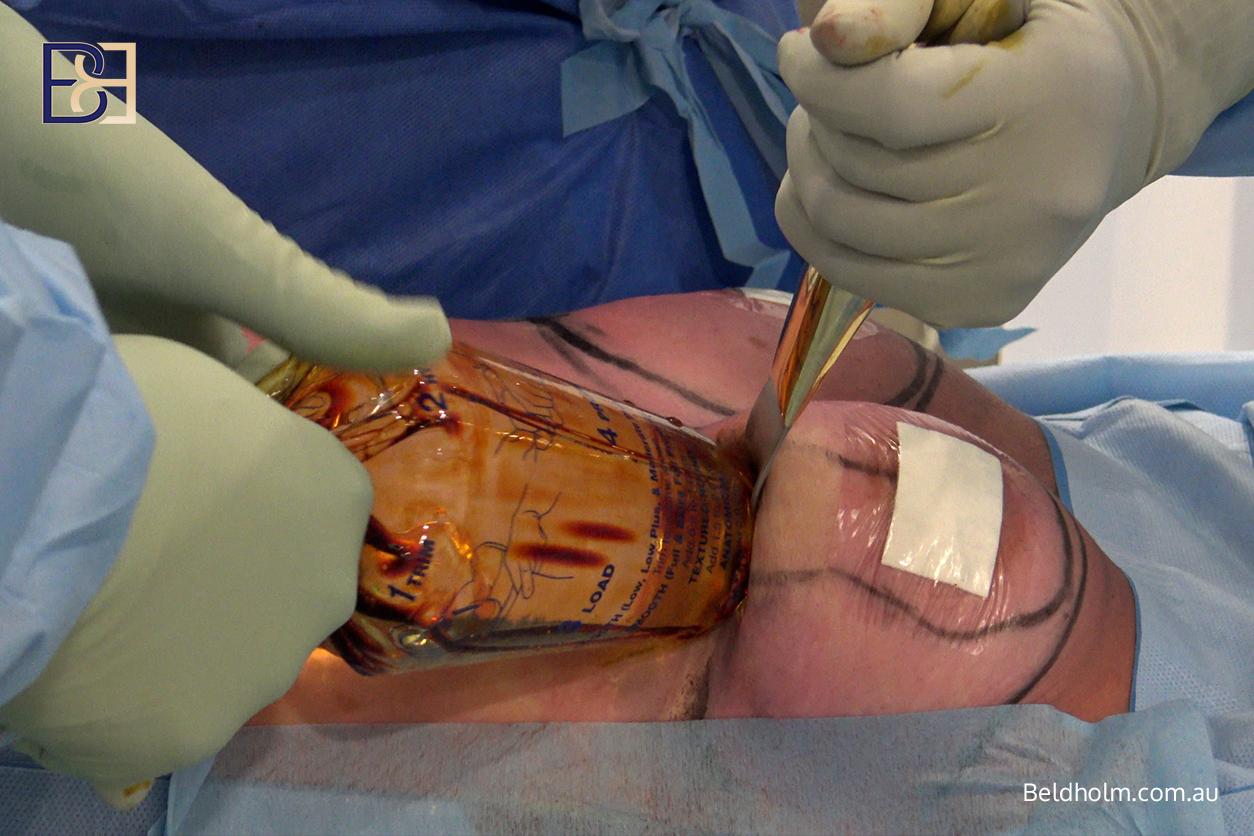
We choose your new implants together before the operation, and I go through the options with you at consultation. I use smooth-surface silicone implants, and I select the fill, shape, profile, and size to suit your measurements and what you are looking for. The implants are placed using a Keller Funnel and a no-touch technique, which limits handling and contact. The placement plane, for example dual plane, is planned to suit your anatomy. Where the tissue needs added internal support, I may use an internal soft-tissue support technique.
Lifting the breast (mastopexy)
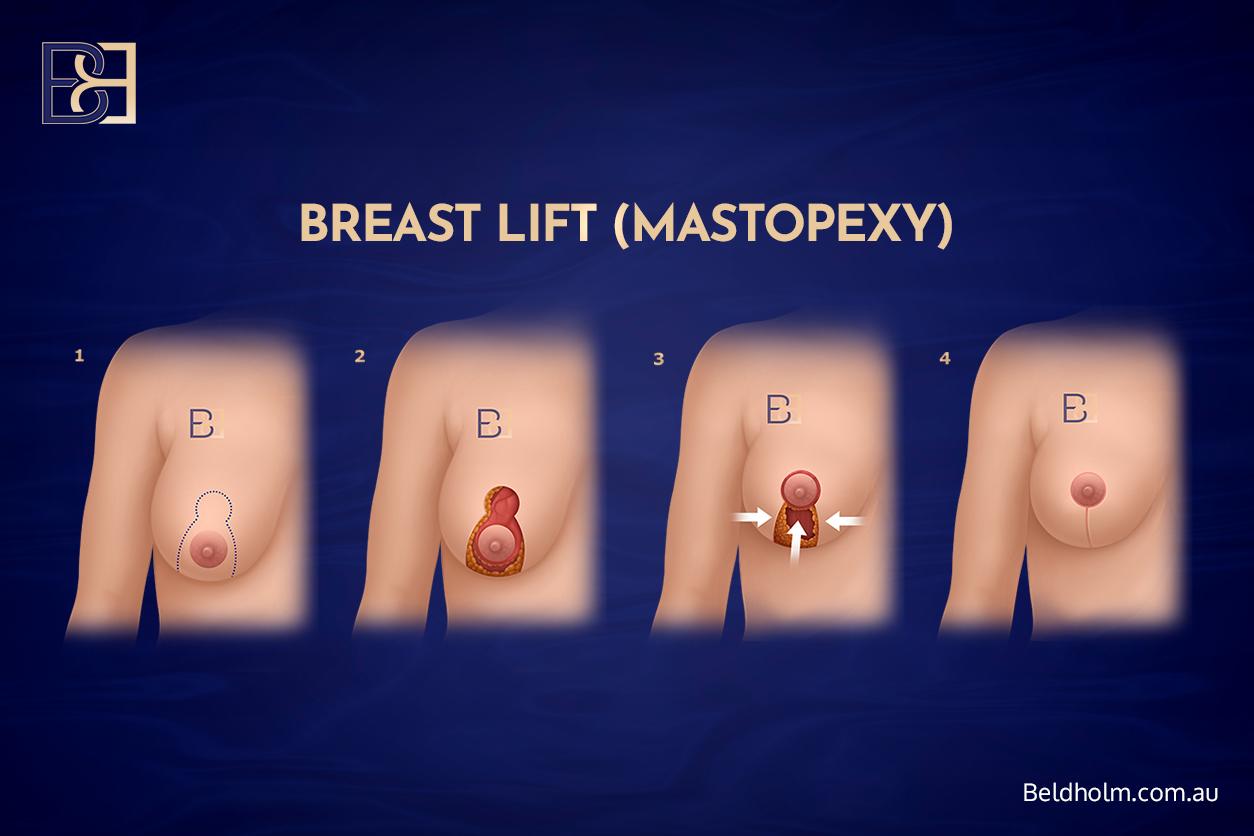
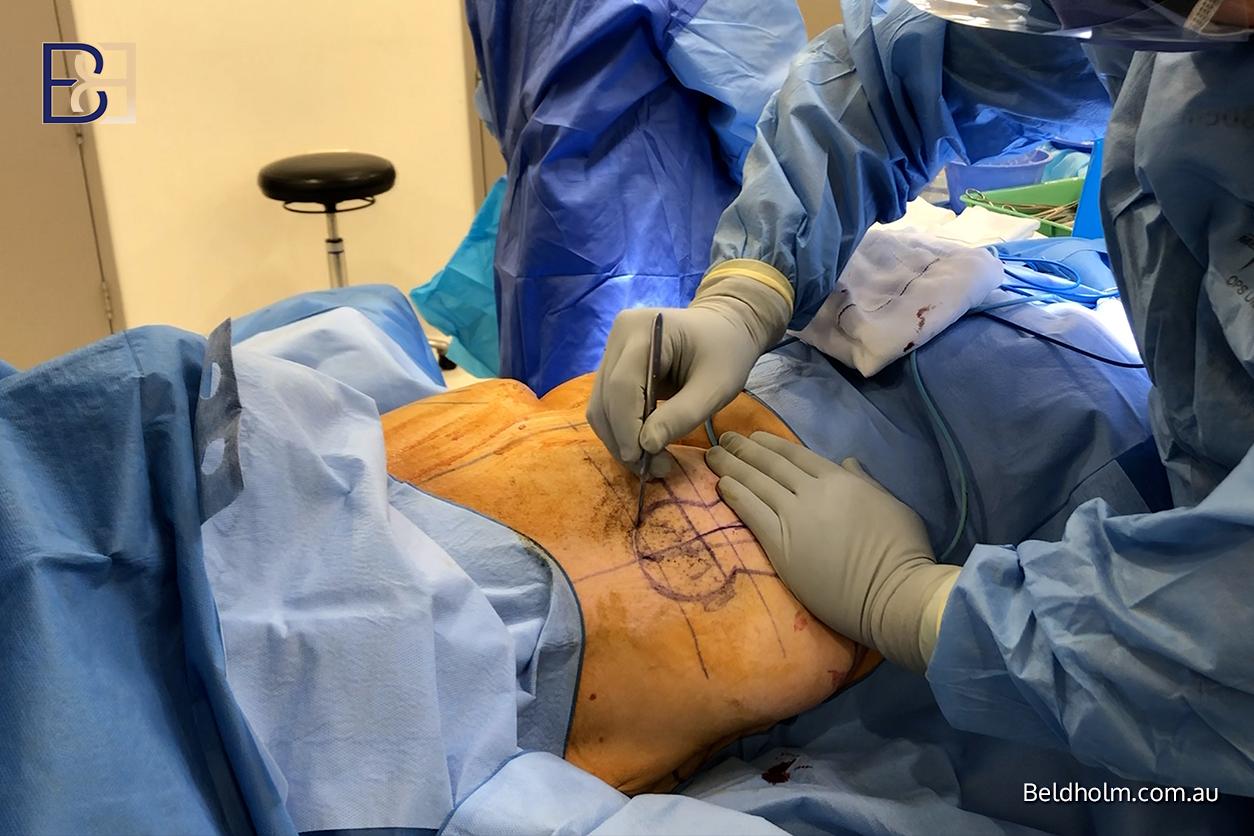
The lift repositions the nipple and areola, removes excess skin, and reshapes the breast tissue over the new implant. How much skin is removed and where the scars sit depends on your starting skin laxity and breast position. The scar pattern may sit around the areola, run vertically below it, and in some cases extend along the fold. I go through the likely scar pattern with you before surgery.
One operating time
Where a patient is suited to it, these tasks are done together in one operating time rather than across separate operations. It is a larger operation than any of these tasks on its own. Whether one operation or two is the right path for you is what I work through next.
One operation or two
Because this brings together removal, replacement, and a lift, a fair question is whether to do it all in one operation or to stage the work across two. Here is how I think about it.
Where a patient is suited to it, I prefer to do the work in a single comprehensive operation. For you that means one anaesthetic and one recovery to work through, rather than repeating those steps. That is the benefit, and it is the only reason I favour a single operation. It is never a reason to add to the scope of your surgery.
This is a preference, not a rule. For some patients, doing everything at once asks more of the body or the tissue than is appropriate, and staging the work across separate operations is the better path. With a lift and an implant together, the balance between blood supply to the nipple, skin tension, implant position, and scar quality can favour staging. When that is the case, staging is the right approach, not a lesser one.
A few things tip the decision one way or the other:
- your general health and how your tissue is likely to heal
- the extent and pattern of your skin laxity and breast position
- the quality of the breast tissue and skin sitting over the implant
- what I find with the old implants and the capsule during the operation
- how much can be done well in a single operating time
A combined operation of this kind is a larger undertaking and a bigger physiological event than any one part on its own. I will not understate that. It asks more of your body, which is why preparation beforehand matters and why I assess suitability carefully. Whether one operation or two suits you is something I work out with you at consultation, after examining you and going through your history.
Is this operation right for me
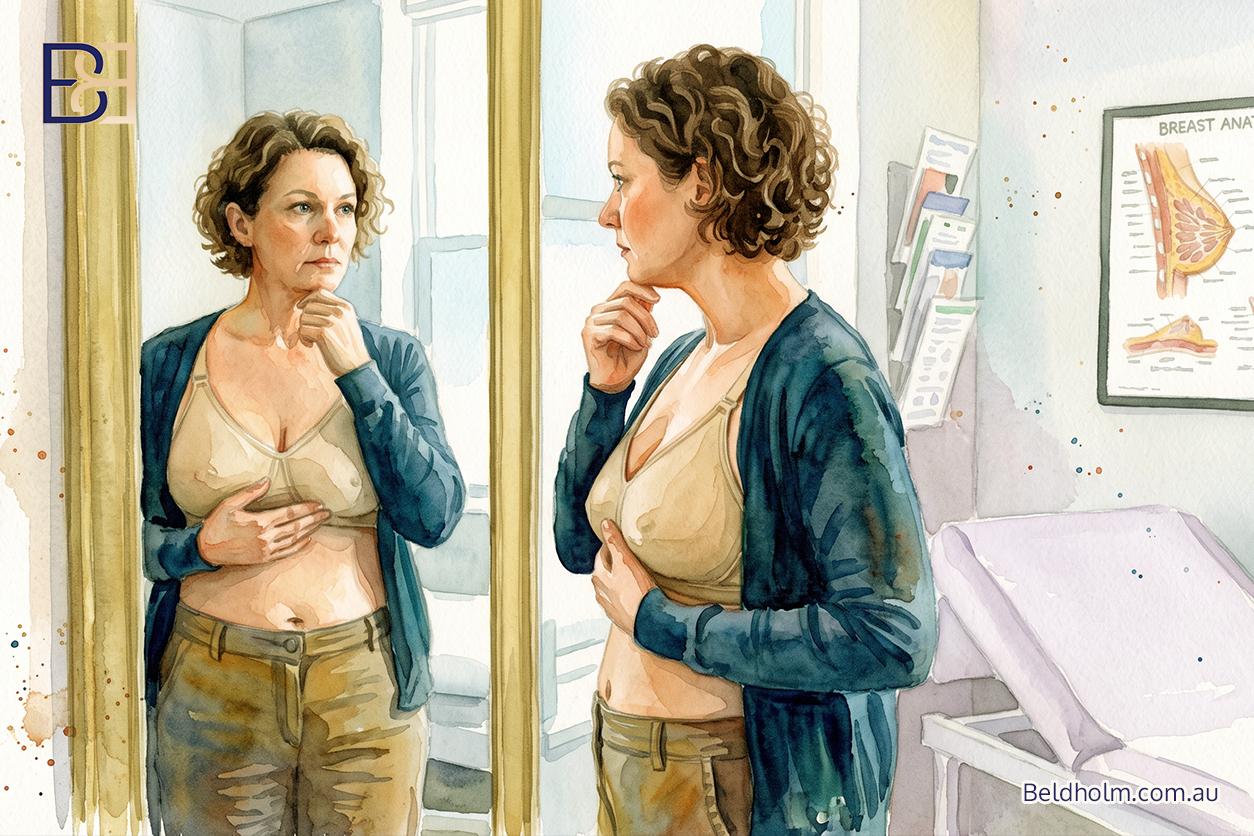
This operation is for people who already have breast implants and are thinking about two things at once: changing the implants, and lifting the breast. Whether it suits you is an individual question, and I work through it with you at consultation.
Why people think about changing their implants
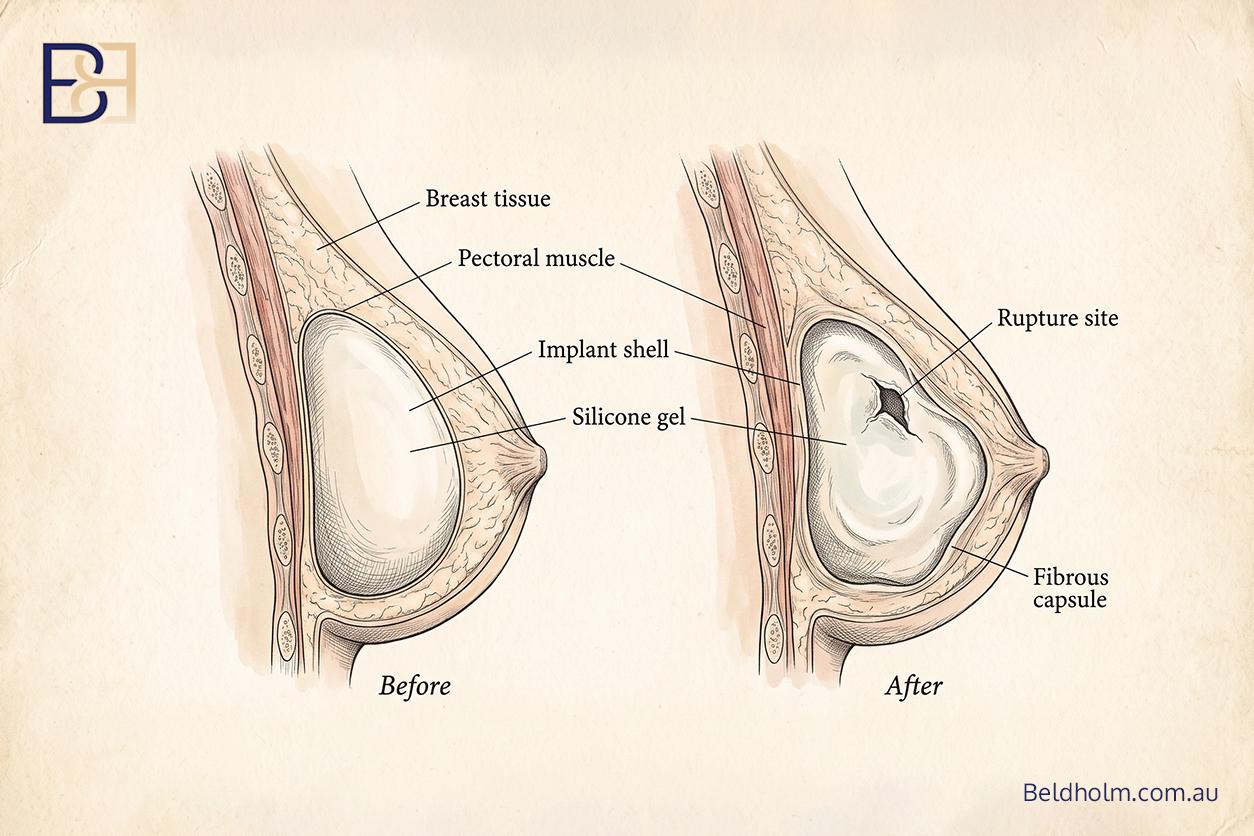
Implants do not need replacing on a set schedule, but there are common reasons people consider it:
- the implants were placed some years ago and you would like a different size or profile
- the capsule around an implant has tightened (capsular contracture), which can change how the breast feels or looks
- there is a rupture, or a concern about the state of an implant
- you have an older textured implant and want to change to a smooth-surface implant
- your preferences have changed over time
None of these means surgery is required. They are reasons people raise with me, and we work through whether an operation makes sense for you.
Why a lift may be part of it

Over time, and with pregnancy, breastfeeding, or weight change, the skin and breast tissue can stretch and the nipple can sit lower on the breast. This is a normal change, not a fault. When it happens over an existing implant, replacing the implant on its own may not match the tissue to the new implant. A breast lift (mastopexy) repositions the nipple and areola and removes excess skin, so the breast tissue sits over the new implant. Whether you would benefit from a lift as well as new implants, and how much of one, is something I assess by examining you.
When it may be better to wait, or not to operate
Surgery is not the only option, and it is not right for everyone. A few things can point towards waiting, or towards not operating:
- if you are planning a pregnancy, that can change the result, so surgery is generally planned once your family is complete and breastfeeding has finished. Timing is worked out individually
- if you smoke, I ask for a period without smoking before and after surgery, because it affects healing
- your general health and the quality of your skin and tissue affect whether an operation is sensible and what it can do
How I work out whether it suits you
At consultation I examine you, go through your history, look at your current implants and breast position, and talk through what an operation can and cannot do for you. From there we decide together whether to proceed, and whether to do the work in one operation or across two.
Book your appointment online now
Planning and implant selection
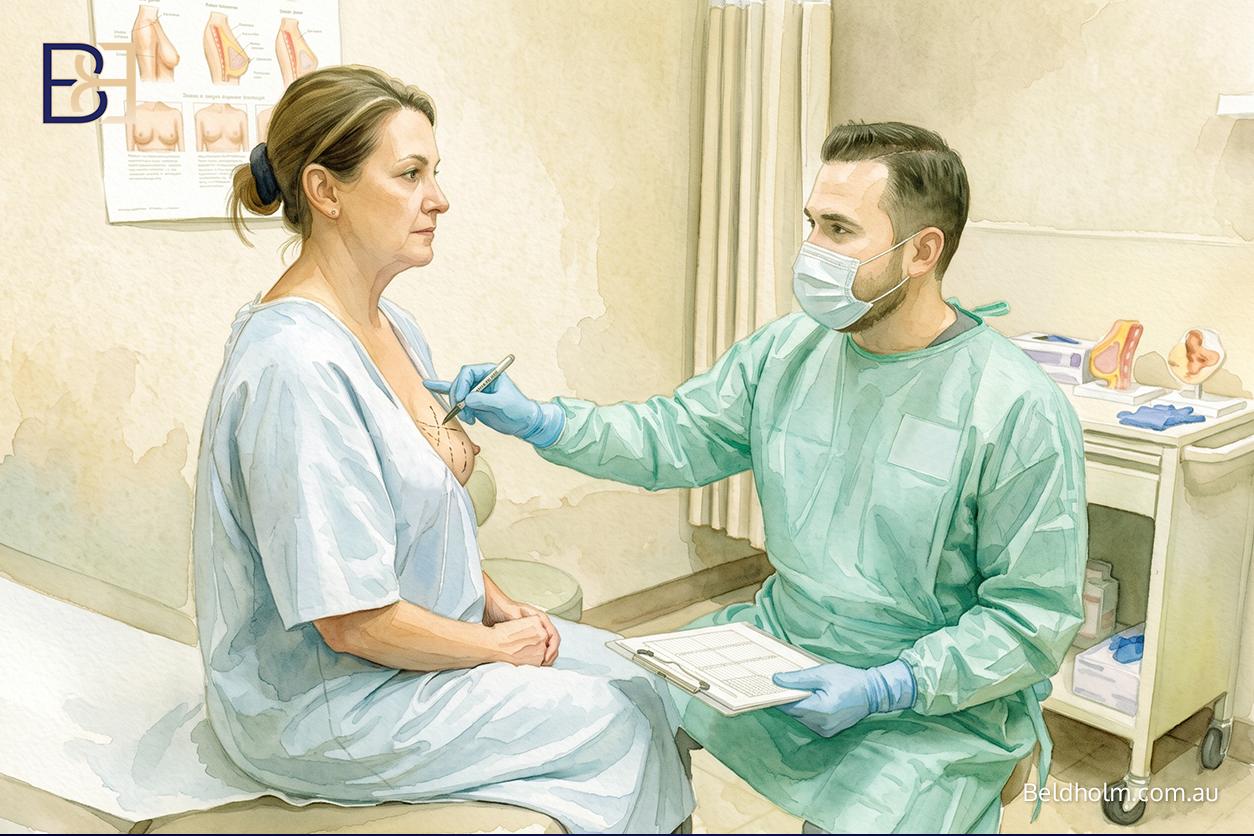
Before any operation, I plan the details with you at consultation. Good planning is most of the work with this kind of surgery.
Assessment and measurements
I examine your breasts and take measurements: chest width, the position and size of your current implants, your skin quality, breast position, and how much tissue sits over the implant. If you have records of your existing implants, bring them along, as they help with planning.
Breast imaging before surgery
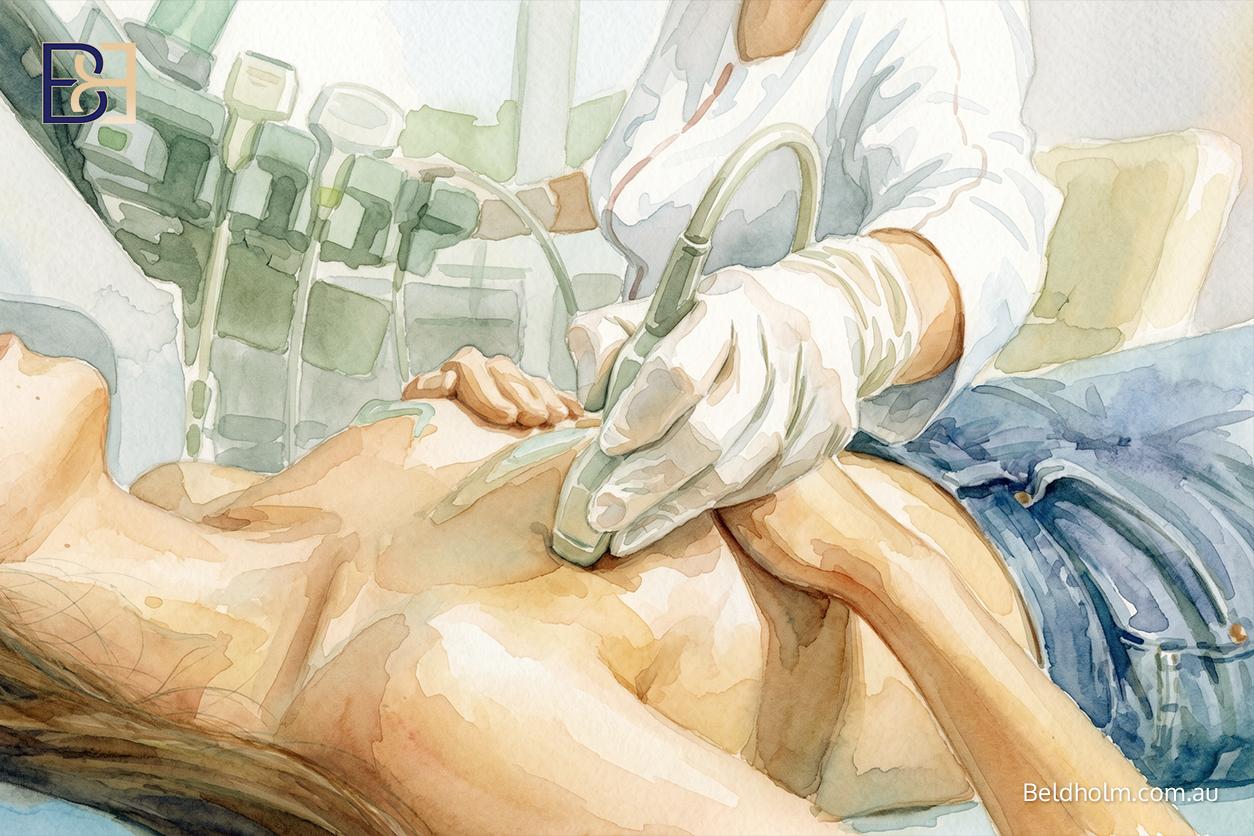
Breast imaging is part of planning before this operation. For older patients I arrange a mammogram. For younger patients, an ultrasound is usually more useful. This is standard pre-operative assessment, and I organise it as part of your work-up.
Choosing your new implants
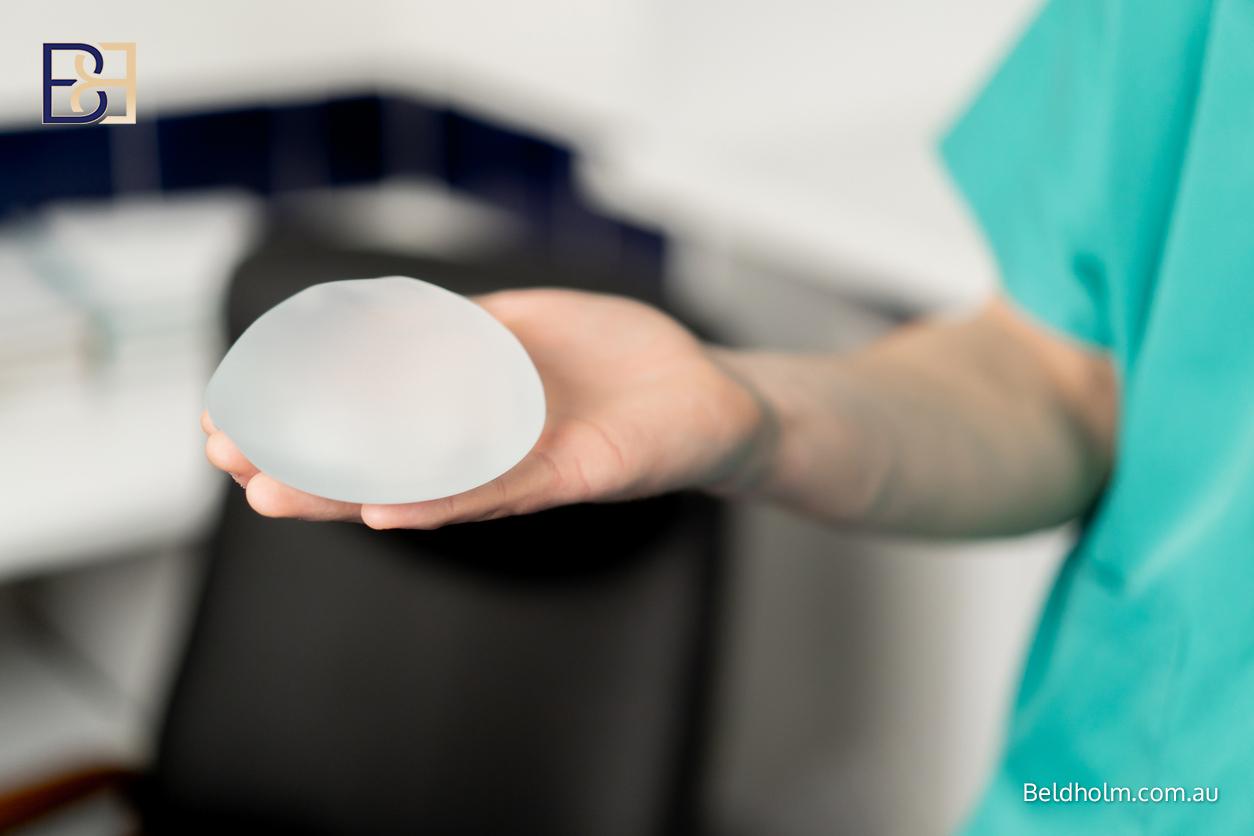
We choose your new implants together, and I go through the characteristics with you: the fill, the shell surface, the shape, the profile, and the size. I use smooth-surface silicone implants. I match the choice to your measurements and what you are looking for, and we use sizers at consultation to help you picture the range.
Seeing the options with 3D imaging
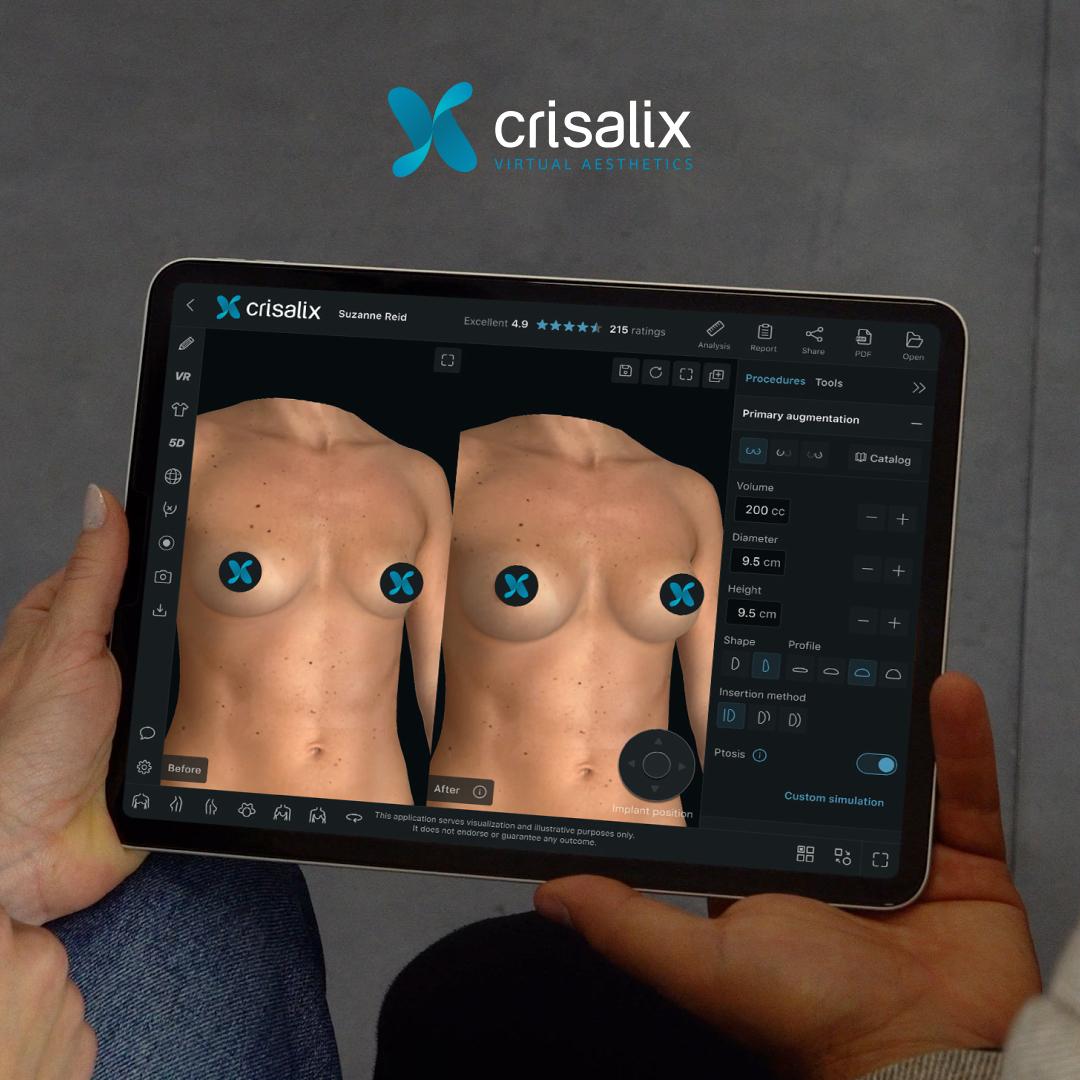
Disclaimer: 3D imaging shows idealised before & After results. Results vary from patient to patient. Surgery has complications, seek second opinion.
During your consultation I may use a 3D imaging tool to help you picture different implant sizes and breast shapes. This is a simulation to support our discussion. It is not a prediction or a guarantee of your result, and results vary from one person to the next. I use it in the consultation as a planning aid, not as a promise of how you will look.
Your pathway through my practice
Here is the sequence from first contact through to your twelve-month review.
A GP referral to start
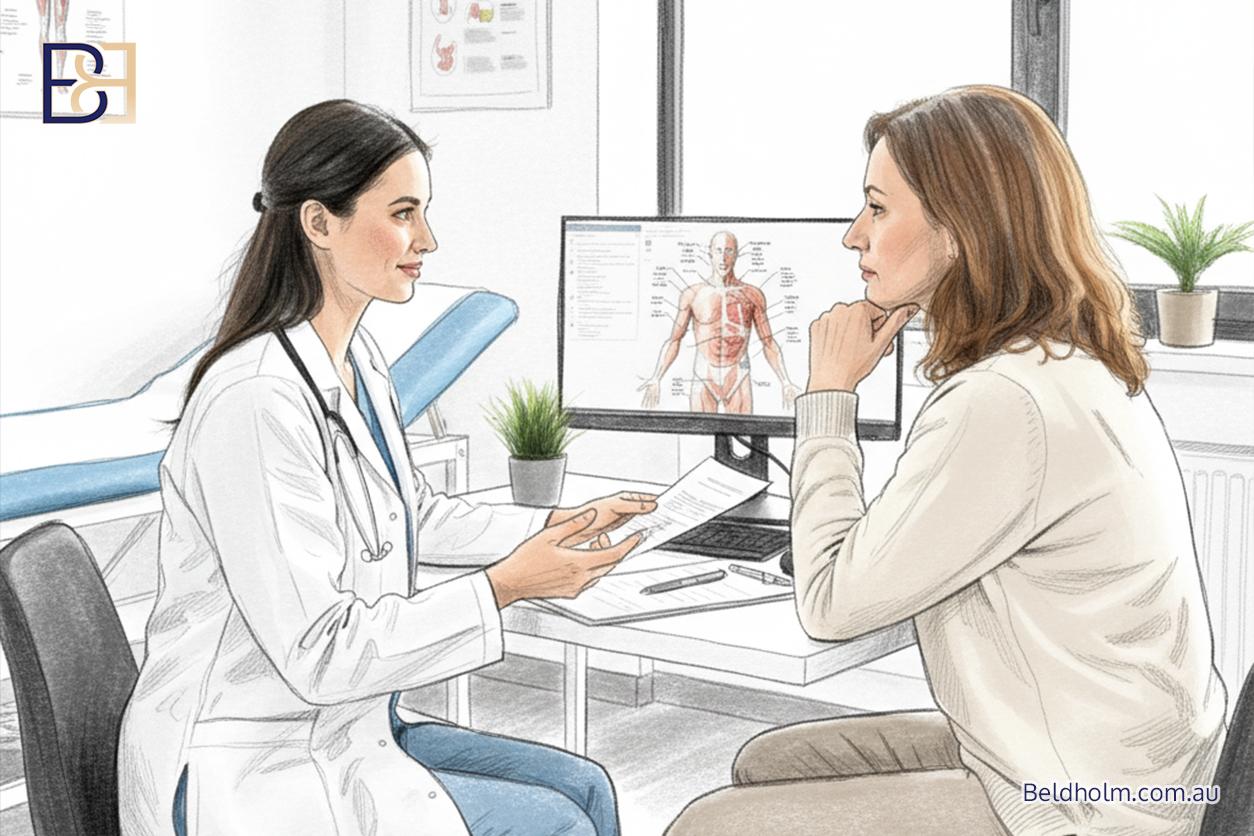
A GP referral is required before your first consultation. Your GP stays involved in your longer-term care, and I hand back to them formally at your four-week review.
Consultation
At consultation I examine you, take measurements, go through your history and your current implants, and we plan the operation together, including whether to do the work in one operation or across two. I go through the risks and the recovery with you, so you can make an informed decision before committing to anything.
Blood tests and getting ready

Before surgery you have a standard set of blood tests: full blood count, kidney and liver function, a coagulation screen, hepatitis B, hepatitis C, HIV, and a pregnancy test where appropriate. You can read more in my pre-operative blood tests guide [LINK: pre-operative blood tests].
Two other points on preparation:
- if you smoke, I ask you to stop for six weeks before and six weeks after surgery, because smoking affects healing
- if you take blood thinners, we plan how to manage them well ahead of time. Do not stop them on your own
Anaesthetic consultation

Your anaesthetic consultation is usually done by phone. The physical check, including your airway, happens on the day of surgery.
Anaesthetic consultation
This is generally a day-stay at Maitland Private Hospital. Some patients stay overnight, depending on their preference or if drains are used.
Follow-up
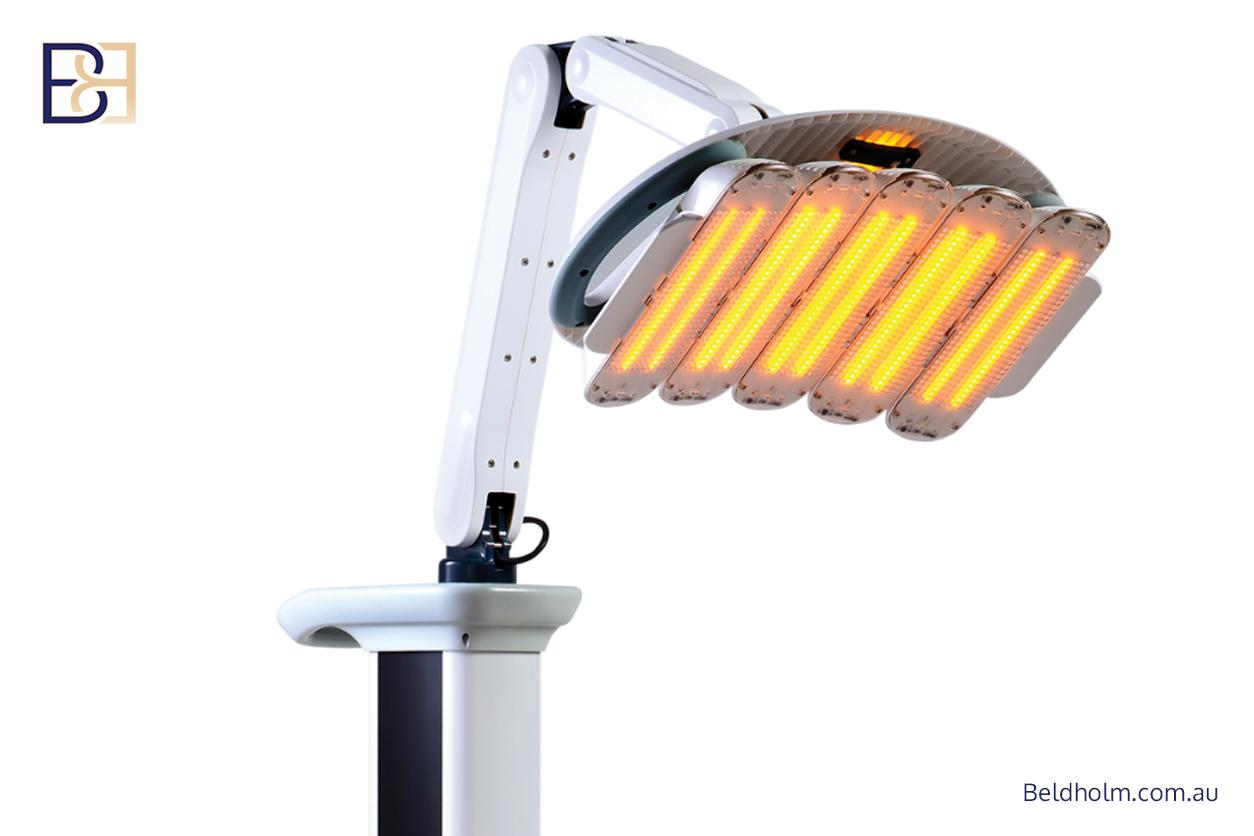
I see you often in the first two weeks, two to three times a week, with my nursing team. These visits include Healite II LED light therapy as part of your after-care. After that, I review you at four weeks, three months, six months, and twelve months. Your GP is kept informed throughout for your long-term care.
Why have this surgery with me
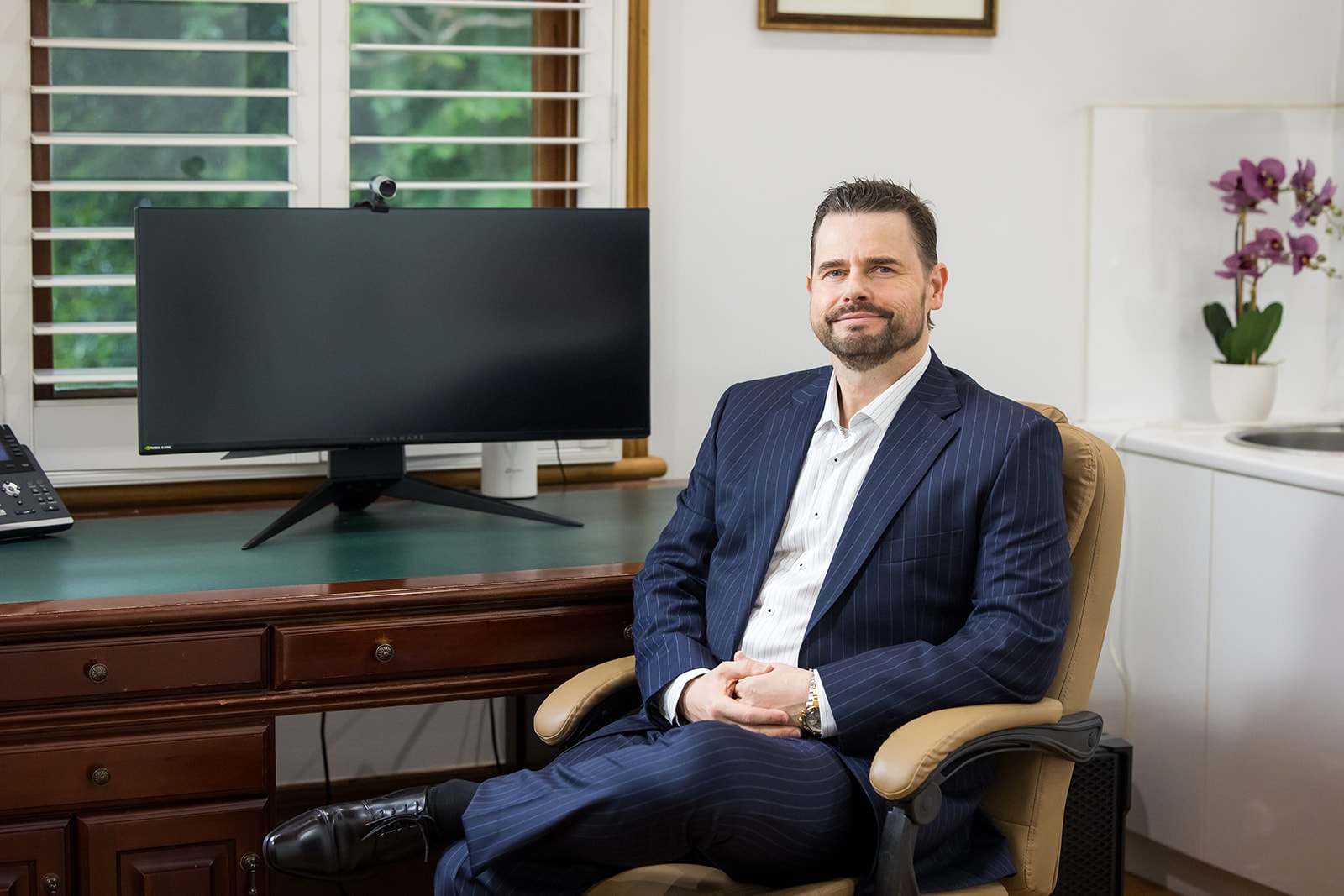
I am a Specialist Surgeon (FRACS) with more than 15 years of experience in body and breast surgery, based at Maitland Private Hospital in the Hunter Valley. Removing and replacing implants, and combining that with a lift, is revision work I do regularly. That experience counts with an operation that has several moving parts.
A few things about how I work:
- Experience across breast and body surgery. Over more than 15 years I have worked with a wide range of breast anatomy and revision situations, which helps when planning an operation that brings together removal, new implants, and a lift.
- Planning comes first. At consultation I take the time to examine you, take measurements, and plan the operation around your anatomy rather than a set formula.
- Considered technique. I use a no-touch technique when placing implants, and plan the lift to match the new implant and your skin.
- Close early follow-up. I see you frequently in the first two weeks with my nursing team, so anything that comes up is picked up early, and I follow you through to your twelve-month review.
- Accredited hospital setting. I operate at Maitland Private Hospital, with an anaesthetist and full theatre support.
- Informed decisions. I go through the risks and the recovery with you in full, so you can decide what is right for you without pressure.
Costs and Medicare

The cost of this operation comes in three separate parts, each quoted for you individually. There is no single set price, because the operation is planned around your anatomy and what it involves.
Three separate quotes
- Surgical fee. My fee for the operation. This includes your support bra and all of your follow-up appointments.
- Hospital fee. Maitland Private Hospital’s charge for theatre and your stay.
- Anaesthetist fee. The anaesthetist’s charge for your care during surgery.
My patient coordinator arranges the hospital and anaesthetist quotes on your behalf, so you have all three in front of you before you decide anything.
Medicare and private health insurance

Whether any part of this surgery attracts a Medicare rebate depends on whether it meets specific medical criteria. Revision or removal done for a medical reason, such as a complication with an existing implant, may attract a rebate. Surgery done for cosmetic reasons does not. This is assessed individually, and I let you know which Medicare item numbers, if any, apply to your situation.
If you hold private health insurance, your level of cover affects the hospital part of the cost. We help you check your cover with your fund before surgery.
You receive itemised quotes before committing, so you can see the full picture ahead of time.
Recovery and risks
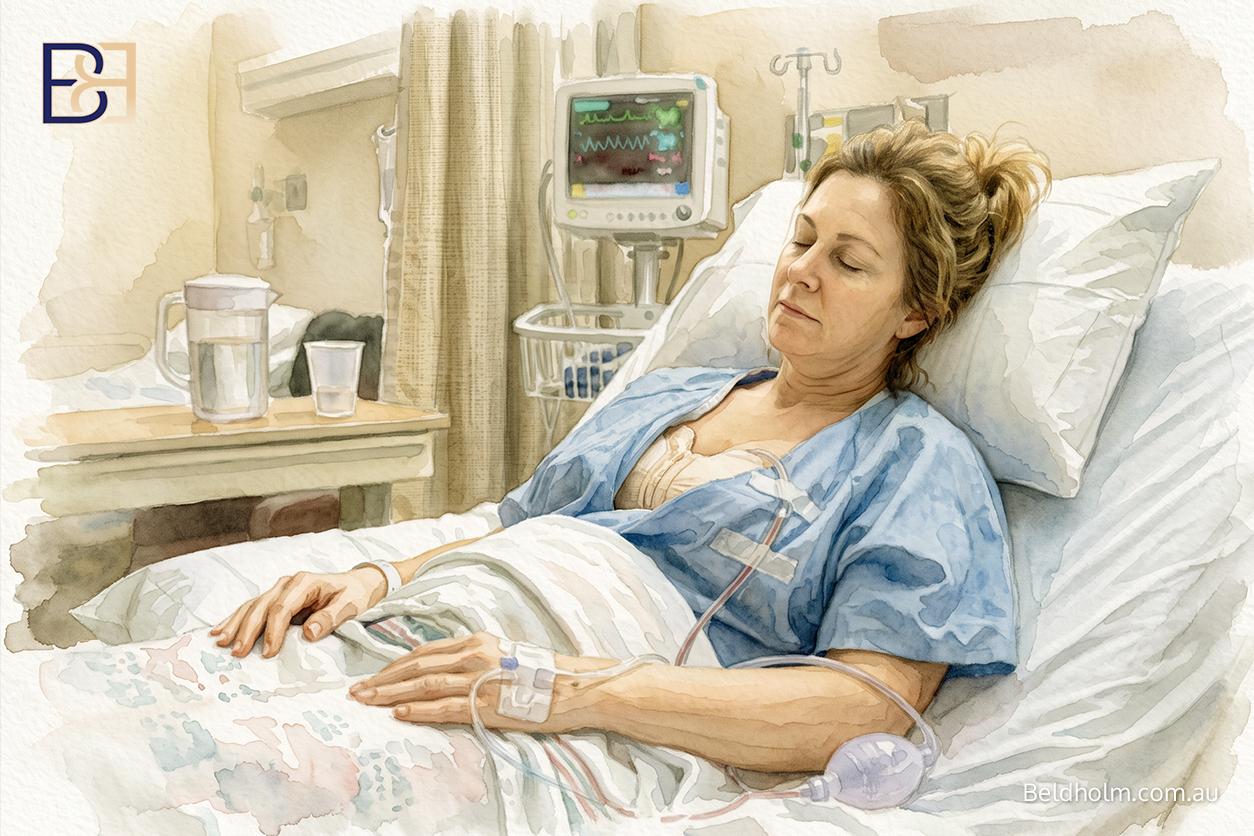
This is a larger operation than any one of its parts on its own, and a bigger physiological event. Recovery takes time and should not be underestimated.
Recovery in brief
The early weeks involve rest and limits on lifting and activity. You wear a support bra for a set period after surgery, and I see you frequently in the first two weeks so healing is watched closely. How long recovery takes varies from person to person, depending on the extent of the work and how your body heals. The full picture, including timeframes and activity restrictions, is on my recovery page, recovery after implant removal and replacement with lift.
The risks
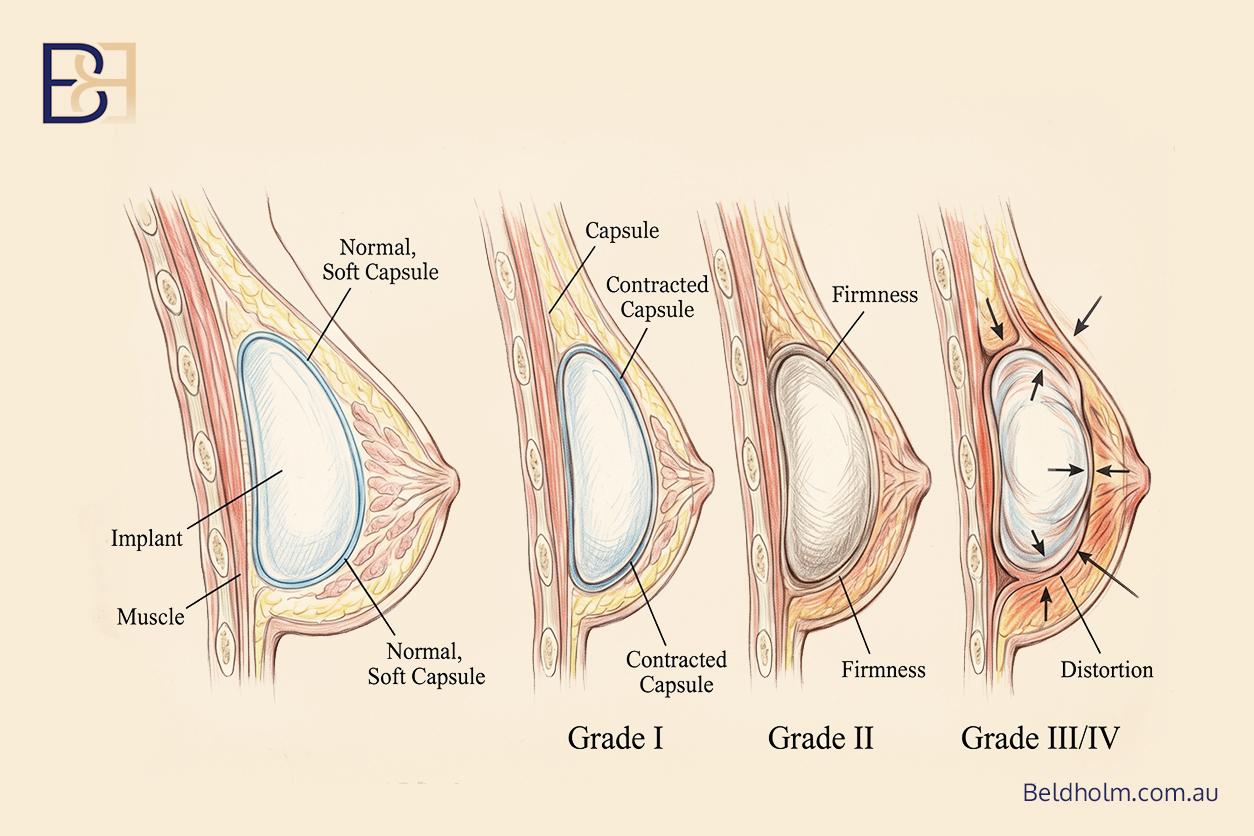
Every operation carries risk. A combined operation like this carries the risks of removing implants, placing new ones, and a lift, together with the general risks of surgery and anaesthesia. These include bleeding, infection, problems with wound healing, changes in nipple or skin sensation, scarring that may not settle the way you hope, asymmetry, capsular contracture around the new implant, problems with the implant over time, and the possibility of needing further surgery. There are also rare but serious risks. I go through all of this with you before you decide anything, and you can read more on my risks and complications page, risks and complications of implant removal and replacement with lift.
If something is not right after surgery
During clinic hours, call my rooms and my team will help you. After hours, contact Maitland Private Hospital, which runs nurse-led phone triage. If you need to be physically assessed, go to your local emergency department. In an emergency, call 000. Maitland Private Hospital is not an emergency department.
Making the decision
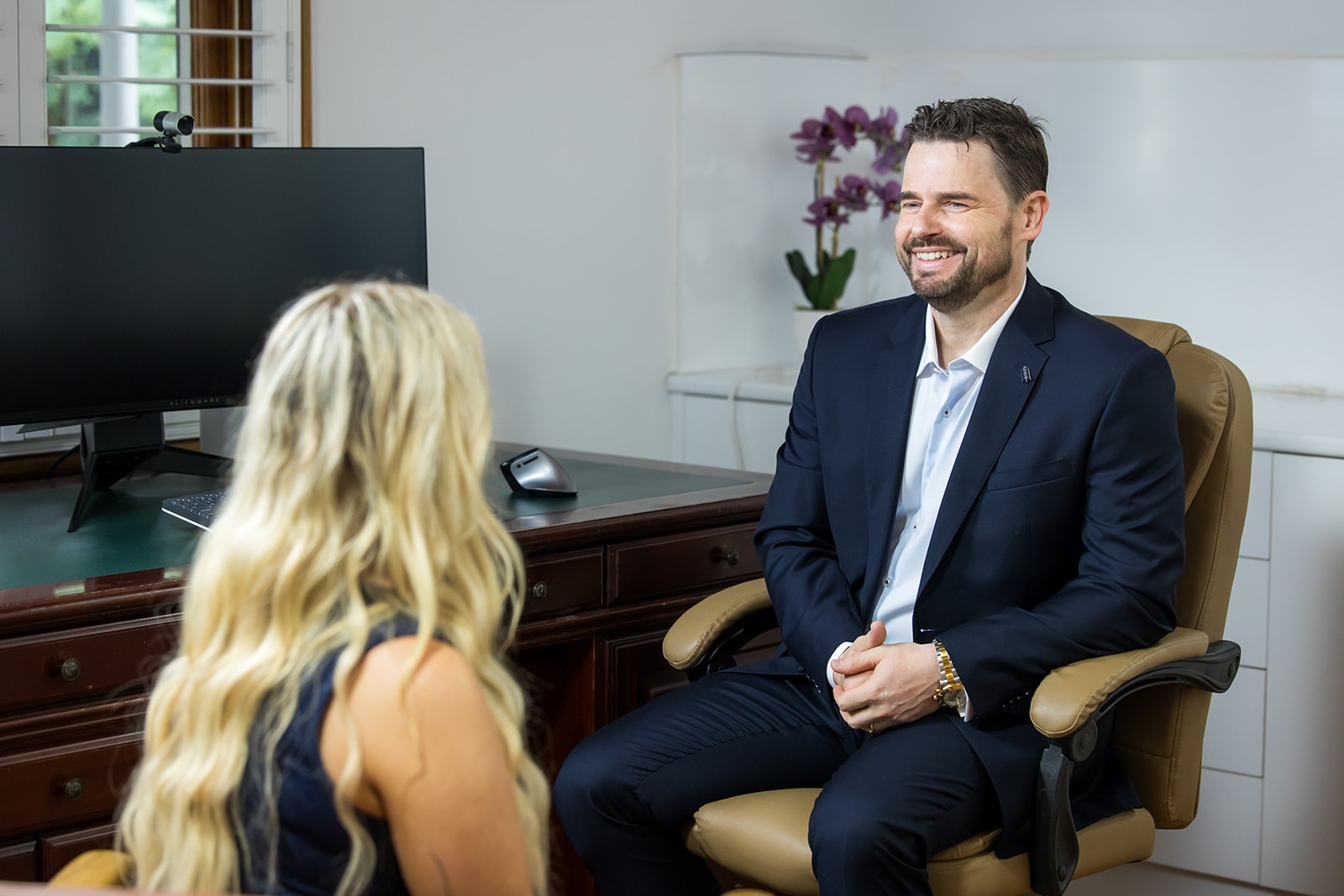
Whether this operation suits you, and whether to do the work in one operation or across two, is something I decide with you at consultation, after examining you and going through your history. A GP referral is required before that consultation. Results vary from one patient to the next, and I go through what is realistic for your situation so you can make an informed decision.