


Dual-Vector Abdominoplasty (Fleur de Lis with Upper Abdominal Lipectomy) in Newcastle NSW
A dual vector abdominoplasty combines a fleur de lis abdominoplasty (tummy tuck) with an upper abdominal lipectomy in a single operation. I developed this approach for post weight loss patients whose loose skin runs in more than one direction and extends into the upper abdomen and lower chest, beyond what a fleur de lis alone can reach. The name refers to the 2 directions of skin removal. For a full explanation of the technique, who it suits and the evidence behind it, see my comprehensive dual vector abdominoplasty article.
Is This the Right Operation for Your Skin Pattern
The direction and location of your loose skin decides the operation.
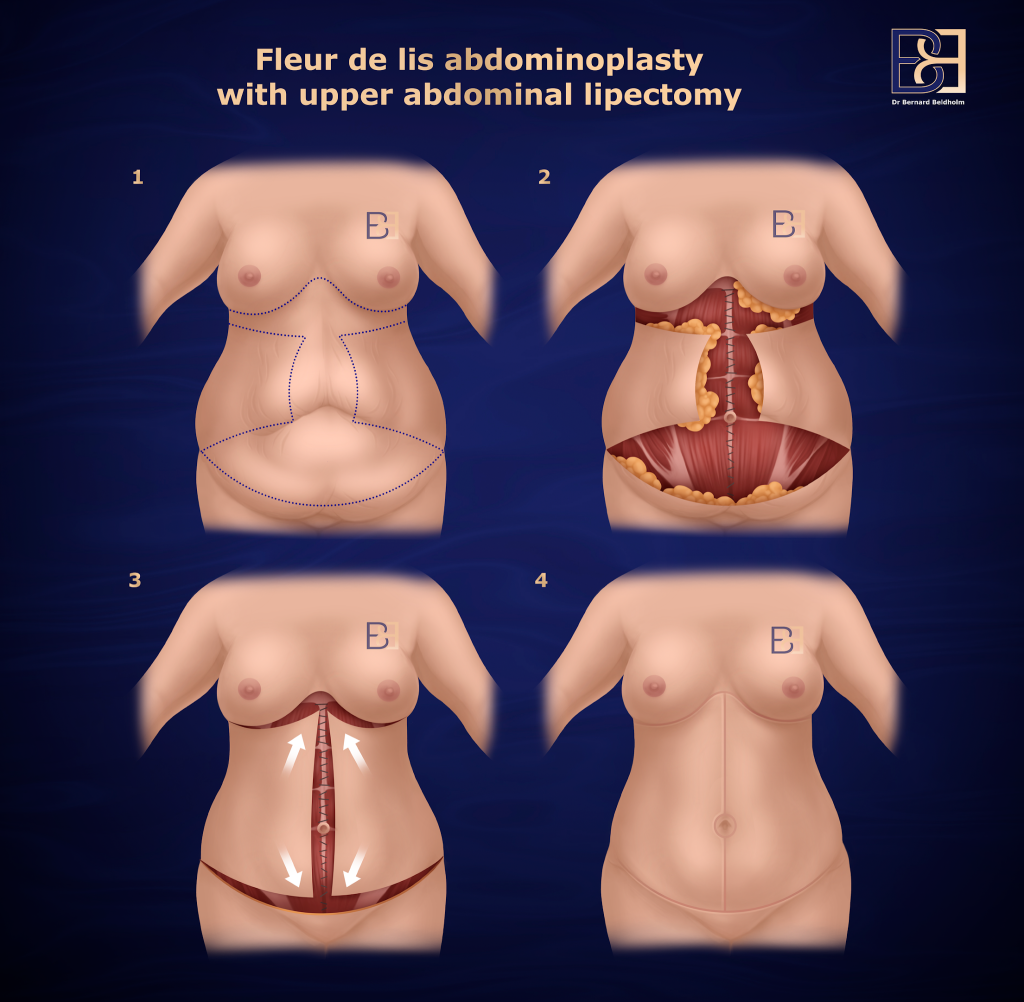
If your loose skin hangs mainly downward from the lower abdomen, a standard or extended abdominoplasty (tummy tuck) with a horizontal incision is usually enough. If you also have loose skin running side to side around the waist, the vertical incision of a fleur de lis abdominoplasty removes that excess.
Some post weight loss patients have a third problem: loose skin in the upper abdomen and lower chest, sitting beneath the rib cage. Neither a standard nor a fleur de lis abdominoplasty reaches this area, because both pull skin downward or toward the midline. Removing it requires a separate excision placed along the crease under the chest. That is the upper abdominal lipectomy component of the dual vector approach.
A useful self-check: stand in front of a mirror. Pinch the skin of your upper abdomen from side to side, then look at whether skin folds or bunches under your chest crease. If you can gather a large fold in both places, you may have the pattern this operation is designed for. I confirm this with a formal assessment at consultation.
What the Operation Involves
- Removal of excess skin and fat through 3 incisions: a horizontal incision across the lower abdomen, a vertical incision up the midline, and a horizontal incision along the crease under the chest. Together they form a sideways H pattern
- Repair of muscle separation (diastasis recti) where present. This is more common after pregnancy than after weight loss alone, and I assess for it at consultation
- Repair of umbilical, epigastric or other abdominal hernias during the same operation where present
- Reconstruction of the belly button (umbilicus)
- VASER liposuction (ultrasound assisted lipectomy) of the flanks or other areas where appropriate
- General anaesthetic, typically 3 to 5 hours of operating time
- Performed at Maitland Private Hospital with a stay of 2 to 4 nights
- 2 surgical drains, usually removed before you go home or at your first review
Why Come and See Me
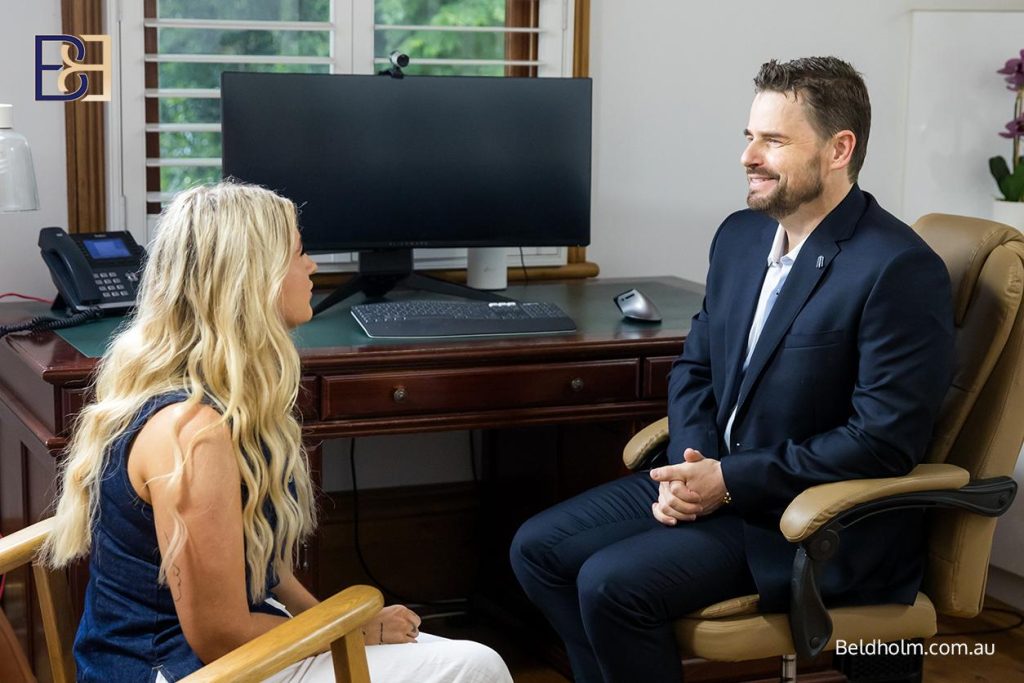
I am a Specialist Surgeon (FRACS) and my practice focuses on body contouring surgery after significant weight loss. This is the work I do week in, week out.
The dual vector abdominoplasty is a technique I developed and named. It grew out of seeing post weight loss patients whose upper abdominal skin was left untreated by a fleur de lis abdominoplasty (tummy tuck) alone. That background matters for an operation like this one: assessing whether you need it, or whether a less extensive procedure would serve you better, depends on experience with the full range of options.
I operate at Maitland Private Hospital, which has 24 hour nursing cover and an on-site ICU. I do my own rounds daily while you are in hospital.
Your first consultation with me runs about 1 hour. A second consultation is always included at no cost, covers your blood results, and can be done remotely if travelling is difficult. Telehealth is available for regional patients.
After surgery you have 2 weeks of intense follow-up, then reviews at 4 weeks, 3, 6 and 12 months, all included in the fee.
Risks and Recovery
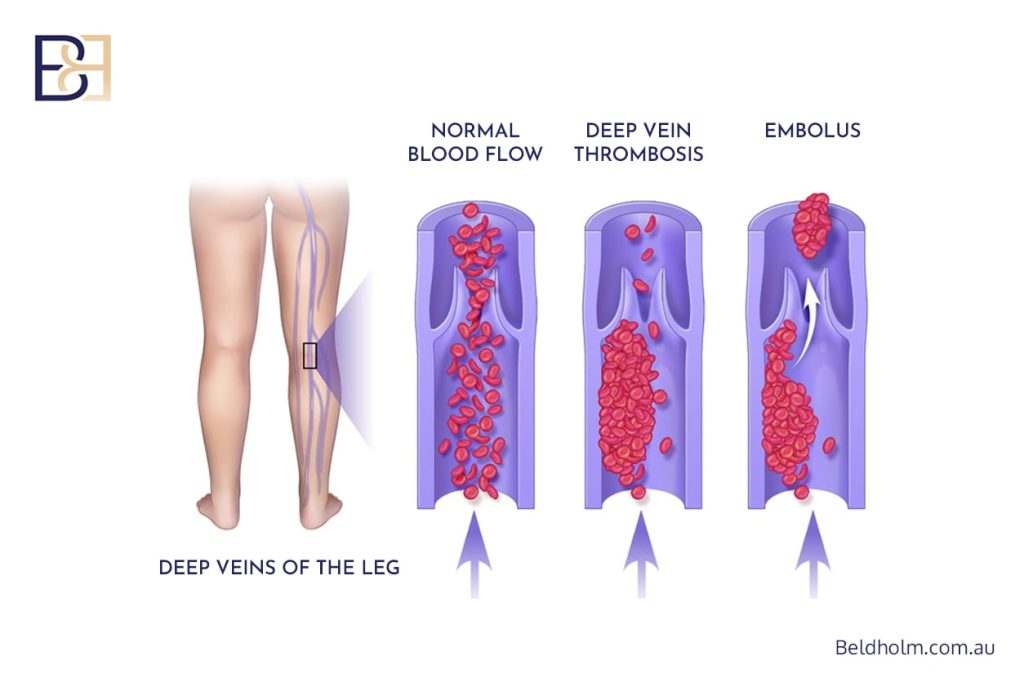
This is major surgery, and it is a larger operation than a standard or fleur de lis abdominoplasty (tummy tuck) because it removes skin along 3 incision lines. The scars are permanent: one across the lower abdomen, one up the midline, and one along the crease under the chest. The junctions where incisions meet are the slowest areas to heal and carry the highest risk of wound breakdown. Other risks include bleeding, infection, seroma, deep vein thrombosis, pulmonary embolism, and the possibility of revision surgery. Recovery is measured in weeks to months, and results vary between patients. I cover both topics in detail in my articles on recovery after dual vector abdominoplasty and complications of dual vector abdominoplasty.
Cost and Medicare

In most cases the operation is claimed under MBS item number 30176, with eligibility against the post weight loss criteria assessed at consultation, and your written quote itemises the surgical fee, hospital and anaesthetist estimates. For a full breakdown of what is involved, see my article on dual vector abdominoplasty cost.
Your Steps to Surgery
1. Get a GP referral
This is required before any consultation and may support Medicare eligibility
2. Attend your consultation
About 1 hour, covering your history, examination, skin pattern assessment and blood tests. A second consultation is always included at no cost and can be done remotely
3. Receive your written quote
Itemised fees, MBS item numbers and hospital estimates, finalised within about 1 week
4. Prepare for surgery
Nutritional optimisation guided by your blood results, weight stability, and any medication adjustments planned in advance
5. Have your surgery at Maitland Private Hospital
with a stay of 2 to 4 nights
6. Recover with structured follow-up
Intense follow-up for the first 2 weeks, then reviews at 4 weeks, 3, 6 and 12 months, all included in the fee