


Thighplasty (Inner Thigh Lift) Surgery
Most patients who come to Dr Beldholm for thighplasty have lost a significant amount of weight and are now dealing with loose, hanging skin around the inner thighs. For these patients, a comprehensive approach is usually needed: a Full Thighplasty combined with VASER liposuction (suction-assisted lipectomy), addressing skin laxity in two directions in a single operation.
Thighplasty is a reconstructive surgical procedure. The aim is functional. Patients commonly describe:
- Difficulty with hygiene
- Recurrent skin chafing or rashes
- Problems with clothing fit
- Limitations on mobility or exercise
The operation removes excess skin and, where appropriate, excess fat.
There is no single thighplasty operation. Five surgical options are available, each addressing a different pattern of inner thigh skin laxity. The right option depends on whether the excess skin runs vertically (hanging from the upper inner thigh), circumferentially (around the thigh contributing to overall girth), or both. Most post-weight-loss patients have both.
Thighplasty is associated with higher complication rates than many other body contouring procedures. Careful patient selection and preparation are part of the process.
My Approach to Thighplasty

When I plan a thighplasty, I start with the pattern of skin laxity, not the procedure. The operation needs to match the patient’s anatomy, not the other way round.
For most post-weight-loss patients, that means a Full Thighplasty combined with VASER liposuction. This combination addresses skin laxity running both up-and-down the inner thigh and around the circumference of the thigh in a single operation. Where the patient’s anatomy and overall health permit, I prefer to address the full pattern in one operation rather than stage smaller procedures.
The reason is practical. Lesser procedures frequently leave residual loose skin in patients with multi-directional laxity, which can lead to revision surgery later. A more comprehensive operation, performed once, is usually the better answer for the right patient.
For the larger reconstructive variants, preparation matters. I have a structured pre-operative nutrition protocol that I work through with patients in the lead-up to surgery. Pre-operative optimisation is part of the plan, not an afterthought.
Thighplasty is reconstructive work. I treat it that way. The goal is functional and clinical, supported by careful patient selection, technique, and follow-through.
Is Thighplasty Surgery Right for You?
Thighplasty is not the right answer for every patient, and timing matters as much as the decision itself. The criteria below are general guidance for self-assessment. A GP referral and specialist consultation determine suitability in any individual case.
When Thighplasty May Be Worth Considering
Thighplasty may be worth considering when:
- Weight has been stable for at least 6 months. Weight changes after surgery can affect the result.
- You are 12 to 18 months post-bariatric surgery (if applicable). Most weight loss has occurred by this point.
- A GP supports the timing and is willing to provide a referral.
- Functional symptoms are present: chafing, hygiene difficulties, recurrent skin rashes, problems with clothing fit, or limitations on mobility.
- Expectations are realistic about scars, recovery duration, and complication rates.
When Timing May Not Be Right
There are situations where deferring surgery is the better answer:
- Weight is still actively changing. Continued weight loss or gain compromises the result.
- Bariatric surgery was within the last 12 months. The metabolic adjustment period needs to complete first.
- A pregnancy is planned in the foreseeable future. Pregnancy involves weight and body changes that can affect the thighplasty result.
- You currently smoke. Smoking cessation for an appropriate period before surgery is required.
- Health conditions are not yet well controlled: for example, diabetes, blood pressure, or other significant medical conditions.
- BMI is above an appropriate threshold. This is assessed individually, with deferral rather than refusal in most cases.
These are starting points for self-reflection, not absolute rules. Final assessment occurs at consultation.
Matching the Procedure to the Pattern of Skin Laxity
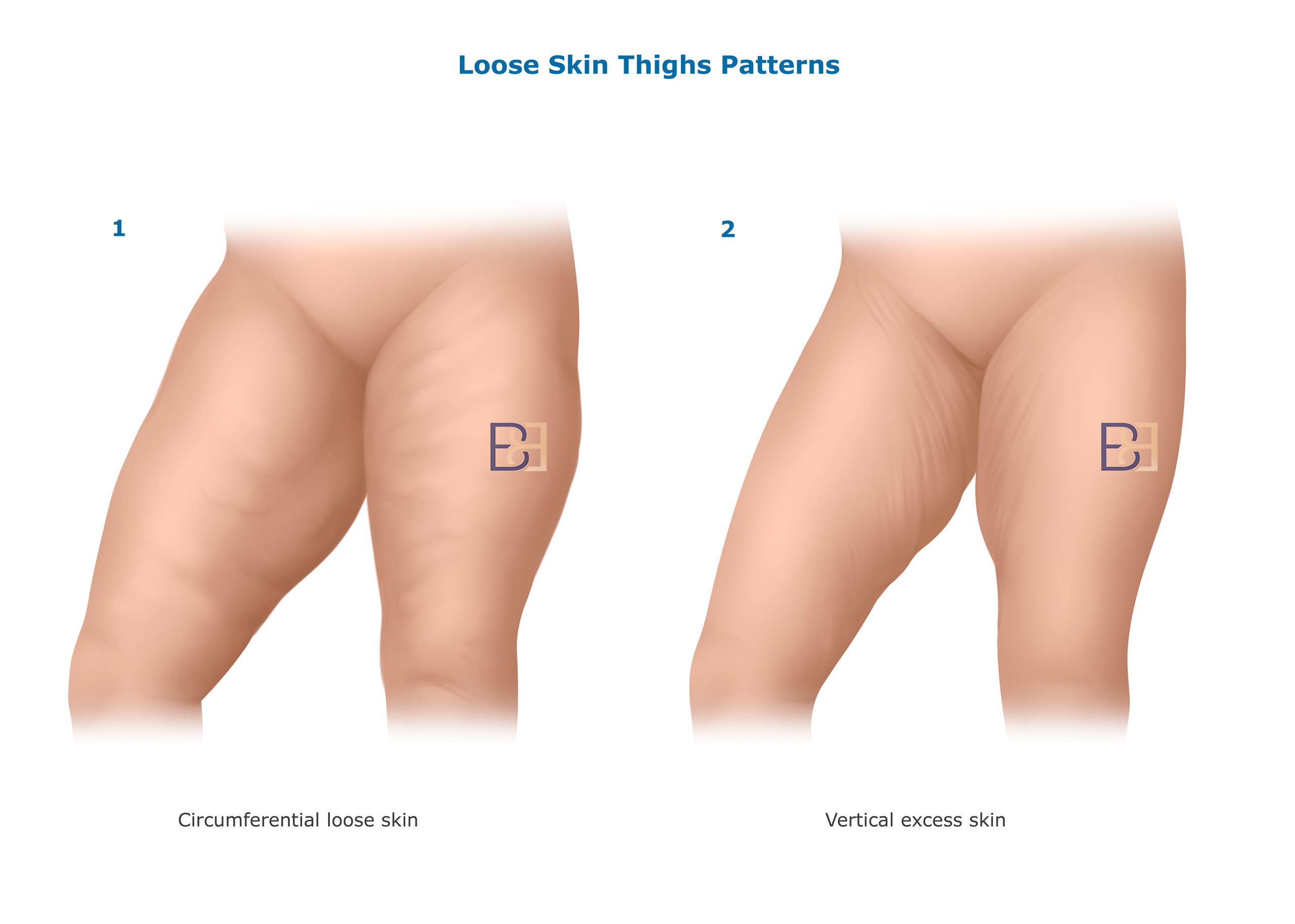
Two patterns of skin laxity drive thighplasty selection. The first is vertical excess: hanging skin, typically in the upper inner thigh, that requires horizontal excision in the groin region. The second is circumferential excess: loose skin around the thigh contributing to overall girth, which requires excision in the vertical plane down the inner thigh. Most post-weight-loss patients have both. Selecting the right operation depends on which pattern dominates and how much of each pattern is present.
The five thighplasty options are grouped below by the pattern of skin laxity each addresses.
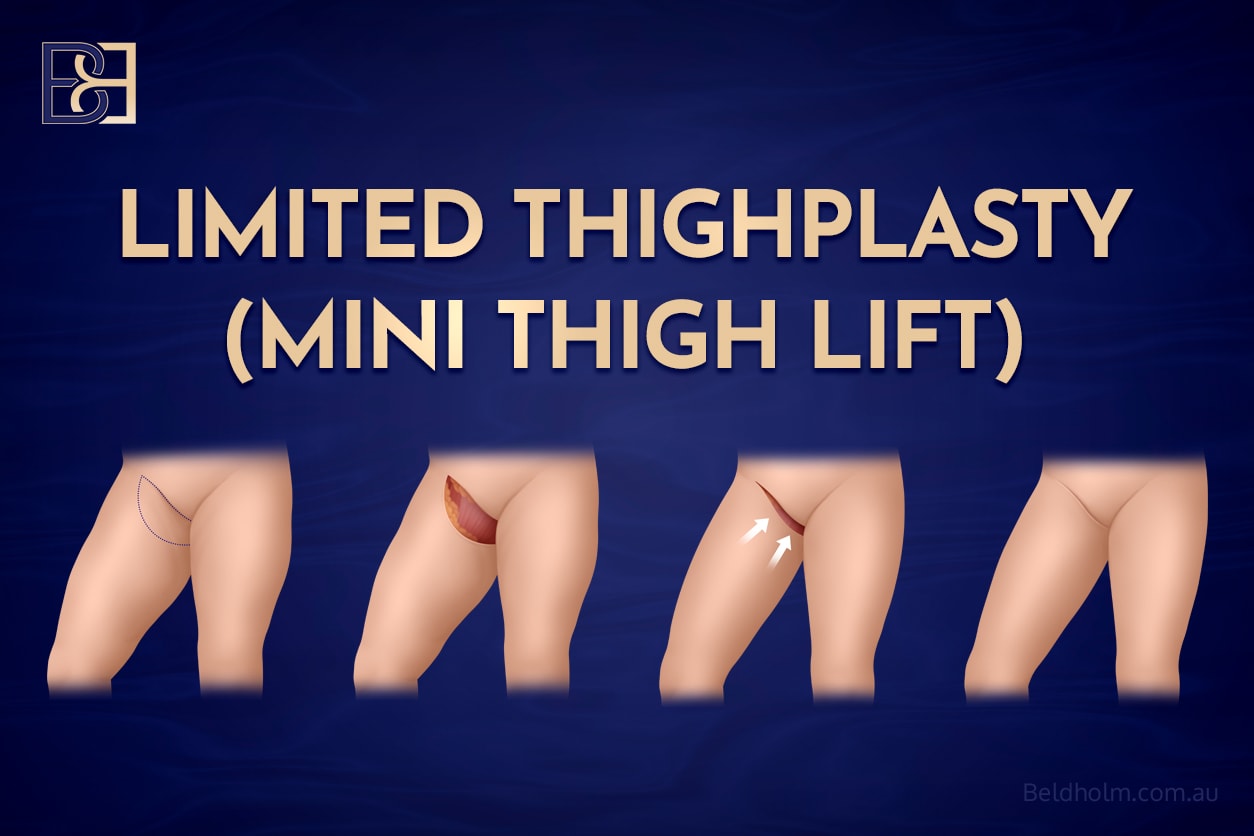
Pattern A: Vertical/Hanging Skin Only (Upper Inner Thigh)
Procedure: Limited Thighplasty
A short horizontal incision is made within the groin crease. Excess skin is removed in the horizontal plane, addressing hanging skin in the upper inner thigh.
- Scar location: within the groin crease
- Scar visibility: visible only when naked or in revealing underwear
- Operative time: 1 hour without liposuction, 2 hours with VASER liposuction
- Hospital stay: day surgery
- Best suited to: small amounts of upper inner thigh skin laxity with good skin elasticity
- Limitation: does not treat circumferential laxity. Only suitable for a small subset of post-weight-loss patients.
Pattern B: Circumferential Excess Only (Mid and Lower Thigh)
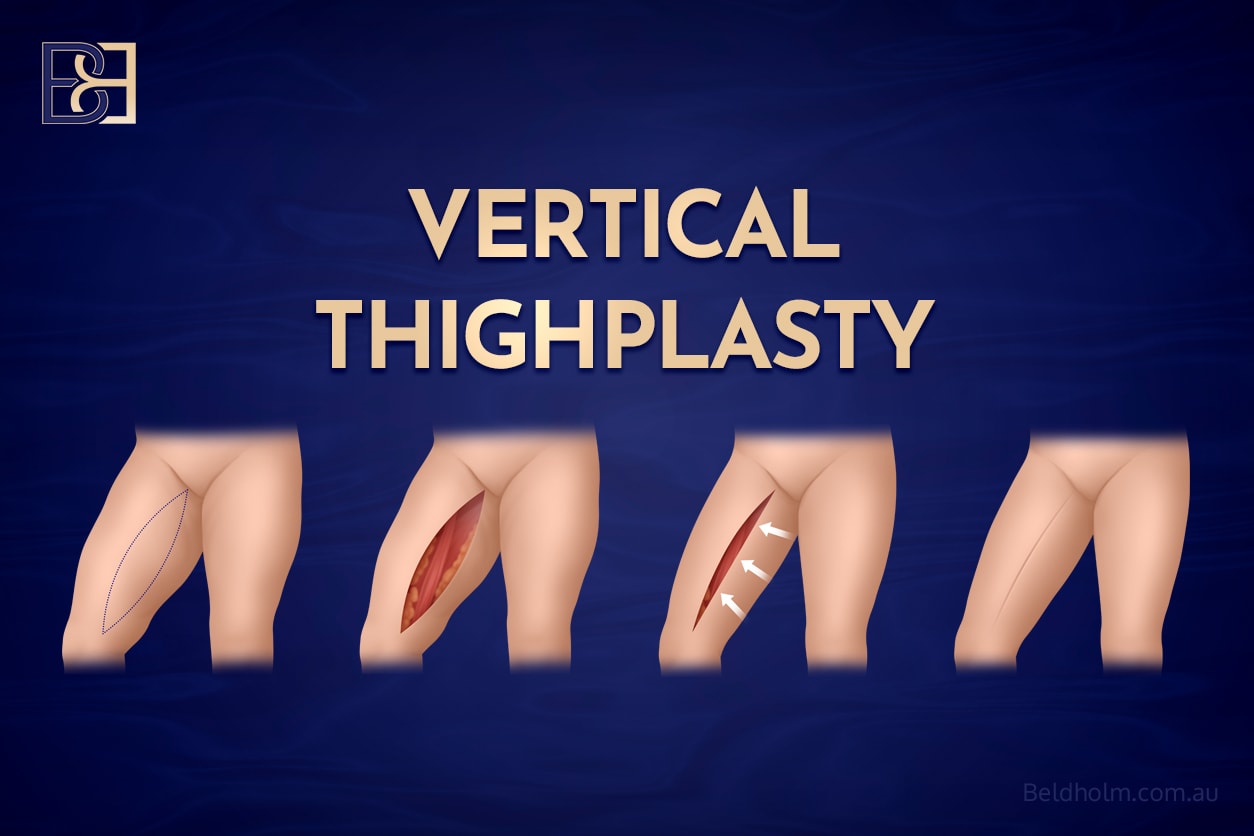
Procedure: Vertical Thighplasty
A vertical incision runs along the inner thigh from the groin to near the knee. Excess skin is removed in the vertical plane, reducing thigh girth.
- Scar location: vertical incision along the inner thigh, groin to knee area
- Scar visibility: the scar sits between the legs on the medial inner thigh, rather than on the outer thigh visible from the front. It can be visible in some swimwear and when the legs are apart.
- Operative time: 2 hours without liposuction, 3 hours with VASER liposuction
- Hospital stay: overnight
- Best suited to: patients whose dominant problem is circumferential laxity, with less hanging skin in the upper inner thigh
- Limitation: does not include horizontal groin excision, so any upper inner thigh hanging skin will remain. Reported complication rates range from 45 to 68% with excision alone, falling significantly when concomitant VASER liposuction is performed.
Pattern C: Both Vertical AND Circumferential (Most Post-Weight-Loss Patients)
This is the most common pattern in post-weight-loss patients. Two surgical options address both directions of laxity.
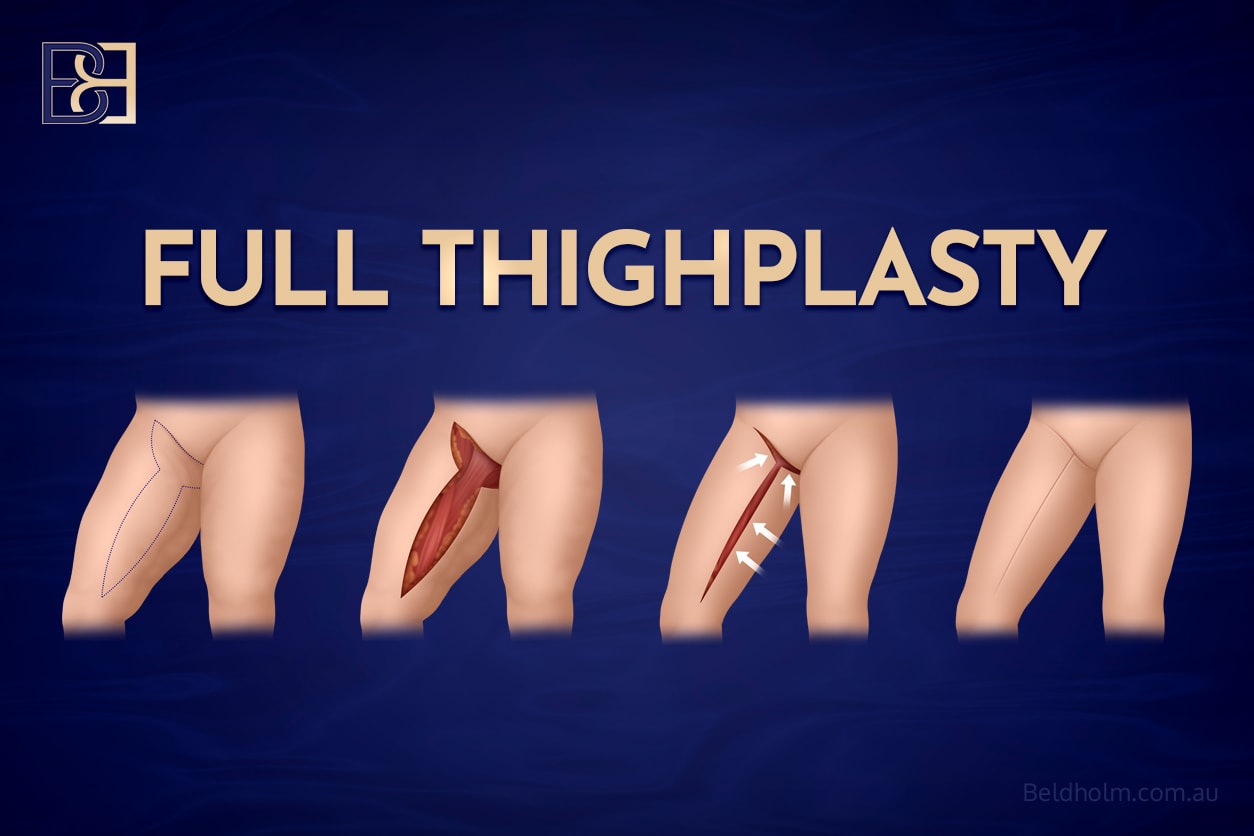
Option C1: Full Thighplasty (T-pattern)
A combined incision: horizontal in the groin crease plus vertical down the inner thigh. The resulting scar is T-shaped.
- Scar location: combined groin crease and vertical inner thigh
- Scar visibility: the same as the Limited Thighplasty scar in the groin crease, plus the Vertical Thighplasty scar between the legs
- Operative time: 3 hours without liposuction, 4 hours with VASER liposuction
- Hospital stay: overnight
- Best suited to: advanced multi-directional skin laxity, where the most complete correction is the priority. The Full Thighplasty is the most commonly performed thighplasty in post-weight-loss patients.
- Limitation: higher reported complication rates with excision alone (68 to 74% in the literature), with wound healing problems most often occurring at the T-junction in the groin crease. Rates fall significantly when concomitant VASER liposuction is performed.
Option C2: J Thighplasty
A J-shaped incision: vertical down the inner thigh plus a shorter horizontal segment in the groin, rather than the full horizontal of a T-pattern.
- Scar location: vertical inner thigh plus a short horizontal segment in the groin
- Scar visibility: similar to the Full Thighplasty, but with less scar in the anterior groin area
- Operative time: 3 hours without liposuction, 4 hours with VASER liposuction
- Hospital stay: overnight
- Best suited to: moderate circumferential excess with less severe vertical laxity, where reducing groin-crease tension is a clinical priority. The shorter groin segment reduces tension at the most common site of wound healing problems.
- Limitation: removes less skin than the Full Thighplasty. Not suitable for severe multi-directional laxity.
Pattern D: Fat-Dominant, Minimal Skin Laxity
Procedure: Suction-Assisted Lipectomy (SAL) Only
Liposuction of the inner thigh, performed using VASER (ultrasound-assisted) technology. No skin excision.
- Scar location: small entry-point scars only
- Scar visibility: minimal
- Operative time: approximately 1 hour
- Hospital stay: day surgery
- Best suited to: persistent fat with good skin retraction. Rarely the right answer for post-weight-loss patients who have significant skin laxity.
- Limitation: does not remove skin. If skin laxity is present and not addressed, the result is incomplete.
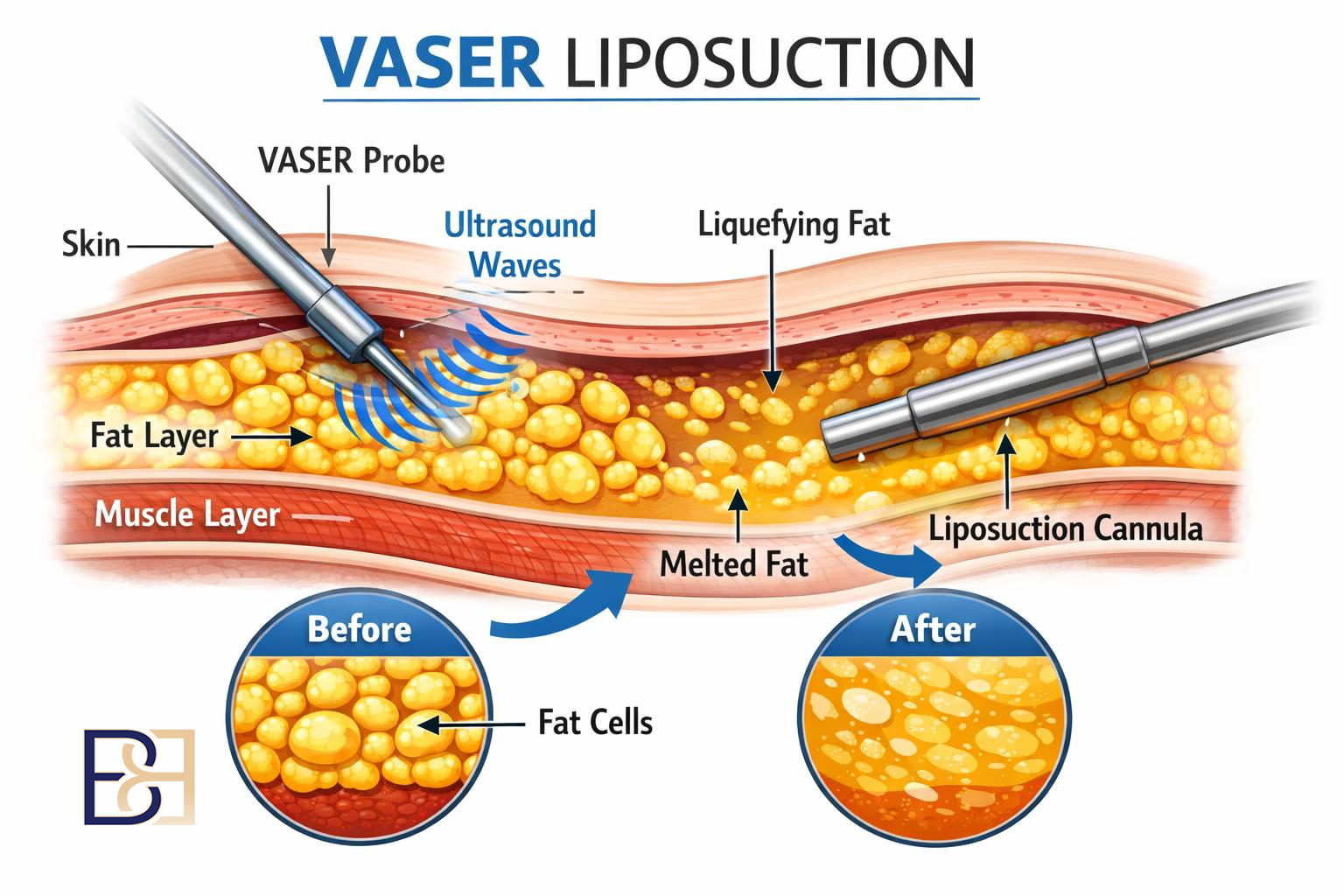
Why VASER Liposuction Is Part of Most Thighplasty Operations
Several retrospective studies and a 2025 systematic review report that liposuction-assisted medial thighplasty is associated with lower overall complication rates than excision-only thighplasty. The 2025 review of 1,113 patients reported 36.75% overall complications with the liposuction-assisted technique, compared with 70.68% in the excision-only group. The reductions were most consistent in seroma, lymphocele, infection, and haematoma. Wound dehiscence was not consistently reduced across studies.
For this reason, VASER liposuction is part of most thighplasty operations performed by Dr Beldholm, unless it is not clinically appropriate for the individual patient.
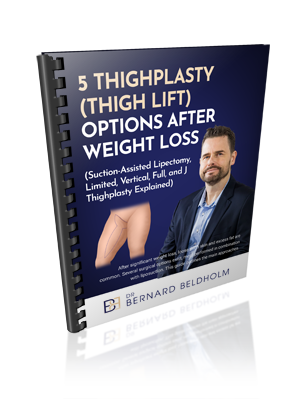
Free Patient Guide: 5 Thighplasty Options Post Weight Loss
A downloadable guide written for patients considering thighplasty after significant weight loss.
Inside the guide:
- The five surgical options explained in plain language
- The pattern of skin laxity each option addresses
- Recovery and complication considerations
- Scarring patterns and what to expect
The guide is intended as a reference to bring to your specialist consultation. It is educational content only, not medical advice, and there is no obligation to book.
About Dr Bernard Beldholm
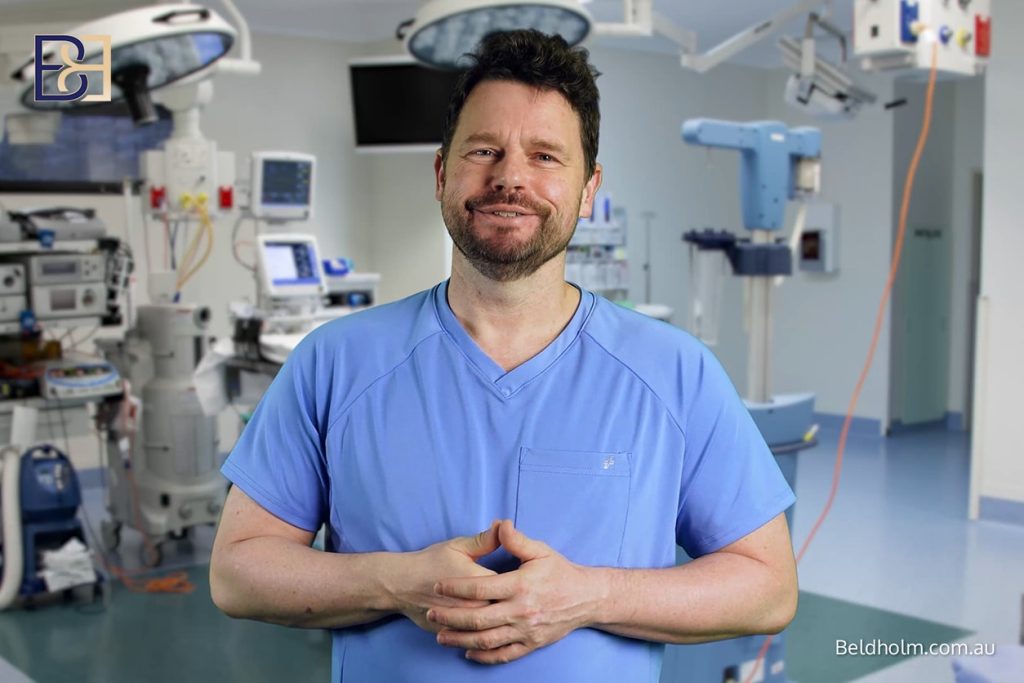
I am a Specialist Surgeon with more than 15 years of experience, and post-weight-loss body contouring is a major focus of my practice. Thighplasty is one of the more demanding operations I perform, and I see it as reconstructive work: surgery aimed at addressing the functional consequences of significant weight loss.
I operate at Maitland Private Hospital in the Hunter Valley, New South Wales. The hospital provides 24-hour medical cover and on-site intensive care, which matters for the larger thighplasty variants where overnight monitoring is part of the post-operative plan.
A GP referral is required for all consultations.
Dr Bernard Beldholm M.B.B.S, B.Sc (Med), FRACS, Specialist General Surgeon. AHPRA Medical Registration number: MED0001186274.
Preparing for Surgery

The larger reconstructive thighplasty variants (Vertical, Full, J) are physiologically demanding operations. The body needs to be in a state to heal a long incision, manage fluid shifts, and recover from the metabolic load of surgery. Preparation is part of the operation, not a separate exercise.
One Operation Where Possible, Staged Where Necessary
For most patients with advanced multi-directional laxity, I aim to address the full pattern in one operation. There are situations, however, where staging is the right call.
Staging is considered when a patient is also undergoing abdominoplasty or belt lipectomy and the combined operative time would be excessive; when medical optimisation needs more time than a single pre-operative window allows; or when the pattern is severe enough that splitting the operation reduces the overall risk profile. The decision is made at consultation, in the context of the patient’s anatomy, overall health, and the other operations they may be considering.
Pre-Operative Nutrition Protocol
For the larger reconstructive variants (Vertical Thighplasty, Full Thighplasty, J Thighplasty), I work through a structured pre-operative nutrition protocol with patients in the lead-up to surgery. The protocol has two tiers:
Tier 1 (universal, started from the planning phase, minimum 4 weeks pre-operatively):
- Protein intake target of 80 to 100 grams per day. This is the priority. Where dietary intake is adequate, supplementation is not needed. In practice, the majority of bariatric patients have difficulty meeting this target through diet alone, and Whey Protein Isolate is added to bridge the gap.
- Complete multivitamin
- Vitamin D3 (3000 to 6000 IU) with Vitamin K2
- Vitamin C (1 to 2 grams perioperatively)
- Zinc (8 to 11 milligrams)
Tier 2 (added based on blood results at the planning consultation):
- Iron, B12, folate
- Vitamin A, B1
- Calcium citrate, selenium, magnesium
- Adjusted to the individual deficiency picture
For the Limited Thighplasty, the nutrition discussion is briefer and adjusted to the patient’s individual needs. SAL only does not require this protocol.
Fish oil is ceased one week before surgery and resumed one to two weeks afterwards.
Other Preparation
- Smoking cessation is required for an appropriate period before and after surgery. Nicotine impairs wound healing and increases complication risk.
- Medical optimisation is coordinated with your GP: blood pressure, diabetes, and any other significant conditions need to be well controlled.
- Weight stability for at least 6 months before surgery is part of the suitability assessment.
- Hydration, sleep, and physical conditioning in the weeks before surgery support recovery.
The aim is to enter the operation in the best possible condition. The bigger the operation, the more this matters.
The Consultation Process

I see thighplasty as a considered decision, not a single appointment. My consultation process is structured across at least two visits, with additional contact as needed. The aim is to make sure the right operation is selected for the right patient, at the right time.
How to Book
A GP referral is required for all consultations. A current referral letter from your GP, with relevant medical history and any imaging or test results, makes the first consultation more productive.
Once you have a referral, consultations can be booked online or by telephoning the practice to speak with the receptionist.
Consultation 1: Assessment
The first consultation is a clinical assessment. We discuss:
- Your medical history, including any prior bariatric surgery and weight stability
- The pattern of skin laxity and which thighplasty option is likely to suit
- Your goals, expectations, and any concerns
- Functional symptoms: hygiene, chafing, mobility, clothing fit
- Realistic outcomes: scarring, recovery, complication rates
You will leave the first consultation with:
- A pre-operative nutrition guide (for patients undergoing the larger reconstructive variants)
- A blood test request form
- Tier 1 supplements direction
- A pathway forward, including the next consultation
Clinical photography is part of the medical record for all surgical patients. Photographs are stored confidentially as part of your file and are not used for any other purpose without your written permission.
Consultation 2: Blood Results and Surgical Planning
The second consultation usually takes place two to four weeks later, once blood results are available. We review:
- Blood test results, including any deficiencies that need addressing
- Tier 2 supplement adjustments where indicated
- The proposed surgical plan in detail
- Any remaining questions
After this consultation, the practice coordinator handles the written quote and surgical scheduling.
Telehealth and Remote Patients
At least one consultation must be in person. Subsequent appointments can be conducted by telehealth where clinically appropriate, which works well for patients living outside the Hunter Valley or interstate. Many remote patients begin their assessment by phone or video before travelling for the in-person consultation.
Anaesthetic Consultation
A separate anaesthetic consultation is part of the standard pathway for thighplasty patients. This is usually conducted by phone, with an in-person review at the hospital on the day of admission.
Quotes and Costs

The thighplasty cost is provided as a written quote after the consultation process is complete. The quote covers the surgical fee, hospital fee estimate, anaesthetist fee, and GST where applicable for cosmetic indications.
Eligibility for Medicare rebates and private health insurance is assessed individually at consultation. Criteria apply, and not all patients qualify. Specific item numbers and the full fee structure are communicated in the written quote, after the clinical picture is clear. This is why fees are not published on this page.
Book your appointment online now
Hospital and Recovery
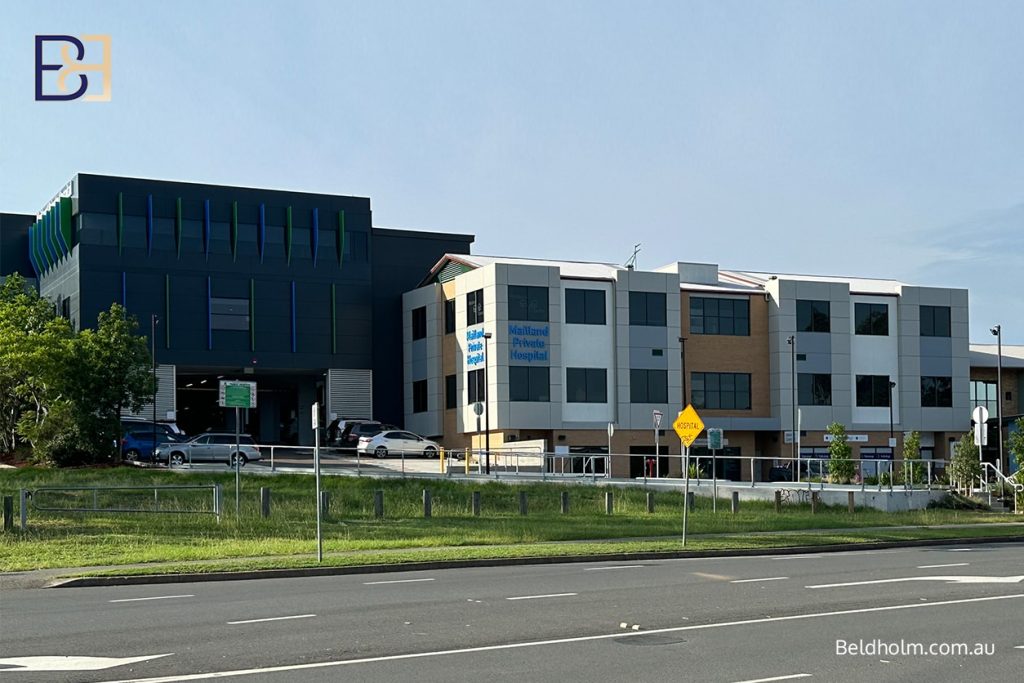
I perform thighplasty operations at Maitland Private Hospital in the Hunter Valley. The hospital provides 24-hour medical cover and on-site intensive care. For the larger reconstructive variants, that level of post-operative support matters.
Hospital Stay by Procedure
Thighplasty can technically be performed as day surgery for all variants. In practice, most patients benefit from at least one overnight stay, and that is the default I recommend.
- SAL only: day surgery
- Limited Thighplasty: day surgery
- Vertical Thighplasty: overnight stay
- Full Thighplasty: overnight stay
- J Thighplasty: overnight stay
For privately insured patients, the overnight stay is generally covered without additional out-of-pocket cost. There is no clinical benefit to going home early after the larger reconstructive operations, and overnight monitoring helps with pain control, drain management, and early mobilisation.
Recovery Timeline
Recovery from thighplasty unfolds over several weeks to months, depending on which procedure was performed and the individual patient’s healing.
- Compression garments are worn for several weeks after surgery to support the tissue and reduce swelling.
- Walking is encouraged early. Short walks from the day after surgery help reduce the risk of deep vein thrombosis and support recovery.
- Strenuous exercise is avoided for at least six weeks. This includes lifting, gym work, and high-impact activity.
- Driving and return to work vary by procedure, by patient, and by the nature of the work involved. Specific guidance is given at consultation and at discharge.
- Drains are rarely used for thighplasty. When used, they are generally removed within the first two to three days, although in some cases drains may need to remain in place for one to two weeks.
- Follow-up appointments are scheduled in the early post-operative period and at intervals afterwards, typically through the first six to eight weeks.
Wound Healing and Complication Management

Thighplasty has a higher rate of wound healing problems than many other body contouring procedures. The groin crease, in particular, is a difficult area for healing. Patients undergoing the larger variants need to be prepared for the possibility of wound healing issues as part of the realistic picture of this surgery.
When they occur:
- Most wound breakdowns are managed conservatively in the rooms, with regular dressing changes and close monitoring over a six to eight week period.
- In some cases, surgical debridement and secondary closure are considered around the four-week mark if conservative management is not progressing.
- The vast majority resolve with appropriate management, although the timeline can be longer than patients initially expect.
This is part of the reason for careful patient selection, the pre-operative nutrition protocol, and the recommendation to combine excision with VASER liposuction where appropriate. The aim is to reduce the rate and severity of these problems, not to eliminate them entirely. The complete picture of risks is set out in the next section.
Risks and Potential Complications

All surgery carries risk. Thighplasty is associated with higher complication rates than many other body contouring procedures, and patients considering this surgery need to understand the risk profile before deciding to proceed.
Reported Complication Rates
The following rates are drawn from published surgical literature and represent reported incidence across multiple studies. Individual risk varies and is assessed at consultation.
- Wound dehiscence (separation of the incision): 18 to 24%
- Seroma or fluid accumulation: 8 to 25%
- Infection: 3 to 9%
- Haematoma (collection of blood): 2 to 7%
- Scar migration or widening over time: 3 to 8%
- Deep vein thrombosis or pulmonary embolism: approximately 0.1%
Complication Rates by Procedure
Reported complication rates vary significantly by which thighplasty option is performed and whether VASER liposuction is included.
- Vertical Thighplasty (excision alone): 45 to 68%
- Full Thighplasty (excision alone): 68 to 74%
- Liposuction-assisted thighplasty: approximately 36%, compared with approximately 70% for excision-only thighplasty (Albanese et al. systematic review, 2025, n = 1,113)
The reductions seen with liposuction-assisted thighplasty are most consistent for seroma, lymphocele, infection, and haematoma. Wound dehiscence is not consistently reduced across studies.
Other Risks
- Anaesthetic risks, including reactions to medications and rare cardiovascular events
- Smoking-related healing complications, which are why smoking cessation is a pre-operative requirement
- Asymmetry between the two thighs in skin removal or scar position
- Changes in skin sensation, including numbness around the scar
- Lymphoedema (fluid accumulation) in the lower limbs, which can be persistent
- Need for revision surgery, either to address residual loose skin or to revise scars
Realistic Expectations
Patients considering thighplasty need to be prepared for:
- A long recovery, with healing continuing for many months
- Permanent scarring, with scar position and visibility depending on the procedure performed
- The possibility of complications requiring additional treatment
- Results that vary between individuals and depend on factors including skin quality, weight stability, and overall health
Results vary. All surgery carries risks. Consultation is required to determine suitability.
Frequently Asked Questions
What is the difference between Thighplasty and a Thigh Lift?
Thighplasty and thigh lift describe the same procedure. Thighplasty is the medical term, while thigh lift is the colloquial term used by patients. Both refer to the surgical removal of excess skin and, in some cases, fat from the inner thigh to address loose skin and improve function. The medical term covers the full range of surgical options described on this page.
Which thighplasty option is right for me?
The right option depends on the pattern of skin laxity. Patients with hanging skin in the upper inner thigh only may suit a Limited Thighplasty. Patients with circumferential excess down the inner thigh may suit a Vertical Thighplasty. Patients with both patterns, which describes most post-weight-loss patients, may suit a Full Thighplasty or J Thighplasty. Patients with fat-dominant concerns and minimal skin laxity may suit suction-assisted lipectomy alone. The selection is made at consultation, after clinical assessment of the laxity pattern and the patient’s overall health.
Is Thighplasty Surgery covered by Medicare or private health insurance?
Eligibility for Medicare rebates is assessed individually. Specific clinical criteria apply, and not all patients qualify. Private health insurance coverage depends on the individual policy and the indication for surgery. Both Medicare eligibility and insurance coverage are reviewed at consultation, and the specific fee structure is communicated in the written quote provided after the consultation process. No fees are published on this page because the relevant clinical picture must be established first.
How visible are thighplasty scars?
Scar visibility depends on which procedure is performed. The Limited Thighplasty scar sits within the groin crease and is visible only when naked or in revealing underwear. The Vertical Thighplasty scar runs down the inner thigh and sits between the legs on the medial surface. It is not visible on the outer thigh from the front, although it can be seen in some swimwear and when the legs are apart. The Full Thighplasty produces both scar patterns combined. The J Thighplasty produces a similar pattern to the Full Thighplasty but with less scar in the anterior groin area. All scars require time to mature, often twelve months or more, and final appearance varies between individuals.
Can patients living outside the Hunter Valley have surgery with Dr Beldholm?
Yes. Many patients travel to Maitland Private Hospital from across New South Wales and interstate. At least one consultation must be conducted in person. Where clinically appropriate, additional consultations can be conducted by telehealth, which allows initial assessment and follow-up to occur without repeated travel. The pathway is discussed at the first contact with the practice.
How long is recovery from Thighplasty?
Recovery occurs over several weeks to months. Most patients return to light daily activities within two to three weeks, with strenuous exercise avoided for at least six weeks. Compression garments are worn for several weeks. Wound healing continues over the first six to eight weeks, with full scar maturation taking twelve months or longer. Return to work depends on the procedure performed and the nature of the work involved, and is discussed at consultation. Recovery is generally longer for the larger reconstructive variants than for the Limited Thighplasty or suction-assisted lipectomy alone.
Next Steps
Thighplasty is a considered decision. The right starting point is a clinical assessment of the pattern of skin laxity, the patient’s overall health, and whether the timing is right.
Two ways to proceed
A GP referral is required. Consultations can be booked online or by telephoning the practice on (02) 4934 5700.
“5 Thighplasty Options Post Weight Loss” is a free reference covering the surgical options, the patterns of skin laxity each addresses, and what to expect. The guide can be brought to your specialist consultation.
GP referral required. Consultation required to determine suitability. Results vary. All surgery carries risks.