


Body Lift (Belt Lipectomy) After Significant Weight Loss
Circumferential Skin Excess After Major Weight Loss
Significant weight loss can leave excess skin that extends around the entire lower torso.
This includes the abdomen, the flanks, and the lower back. When skin redundancy wraps around the waistline rather than sitting only at the front of the abdomen, a body lift (belt lipectomy) may be considered.
What is a body lift (belt lipectomy)?
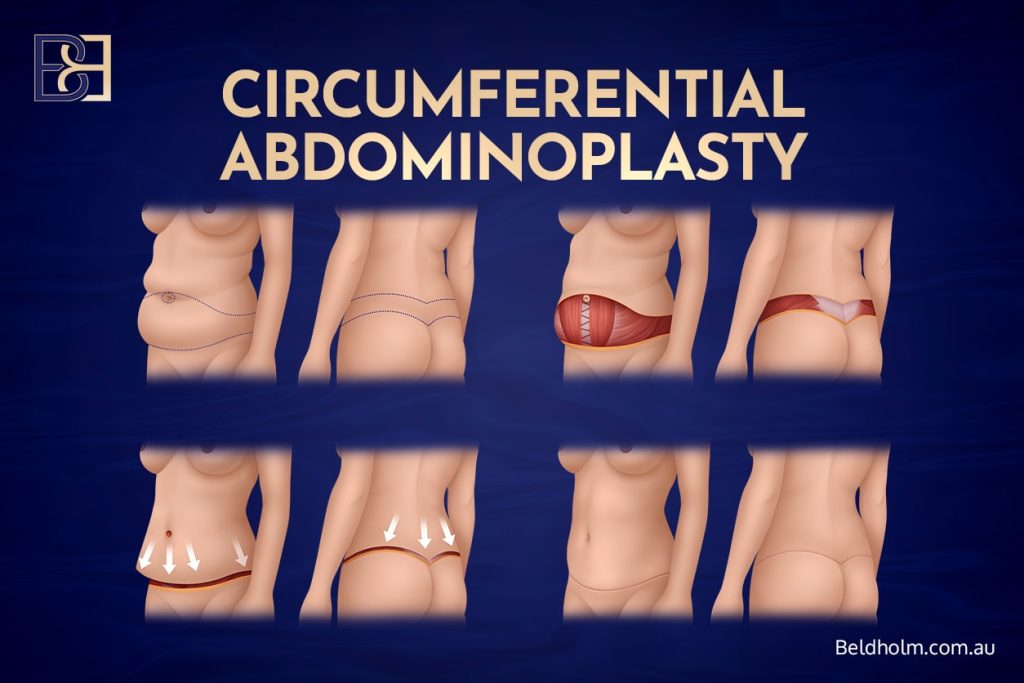
A body lift (belt lipectomy) is a circumferential procedure. It addresses excess skin around the whole lower torso in a single operation.
Depending on the terminology used, the procedure is also referred to as:
- Lower Body Lift
- Circumferential Lipectomy
- 360 Body Lift
Variations and adjuncts
In some patients, the body lift (belt lipectomy) is modified or combined with other techniques based on the pattern of excess skin and residual fat. These may include:
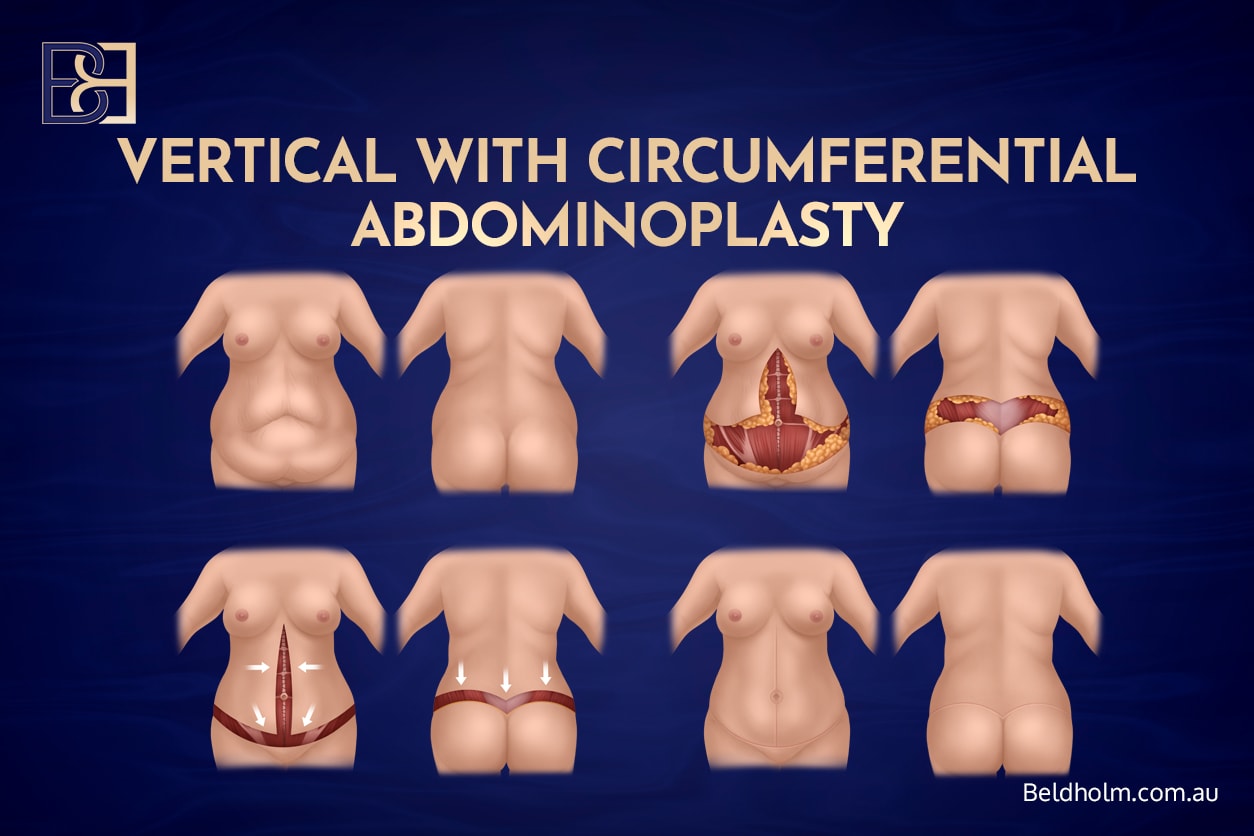
- Circumferential Hybrid Abdominoplasty. Combines a body lift (belt lipectomy) with a Fleur-de-Lis abdominoplasty pattern on the front of the abdomen, for patients with both circumferential skin excess and significant horizontal skin laxity across the abdominal wall.
- VASER liposuction (suction-assisted lipectomy). Used as an adjunct when localised pockets of residual fat remain around the flanks, abdomen, or lower back after weight loss.
The operation differs from a standard abdominoplasty (tummy tuck), which treats only the front of the abdomen.
About Dr Beldholm

Dr Bernard Beldholm FRACS is a Specialist Surgeon with a clinical focus on post-weight-loss body contouring. He operates at Maitland Private Hospital in the Hunter Valley, NSW.
Consultation is required to determine whether a body lift (belt lipectomy) is appropriate for an individual patient. A GP referral is required. Results vary. All surgery carries risks.
How I Approach Body Lift (Belt Lipectomy) Surgery After Weight Loss
After more than 15 years performing post-weight-loss body contouring, I work from three clinical principles when assessing patients for a body lift (belt lipectomy).
The procedure should match the pattern
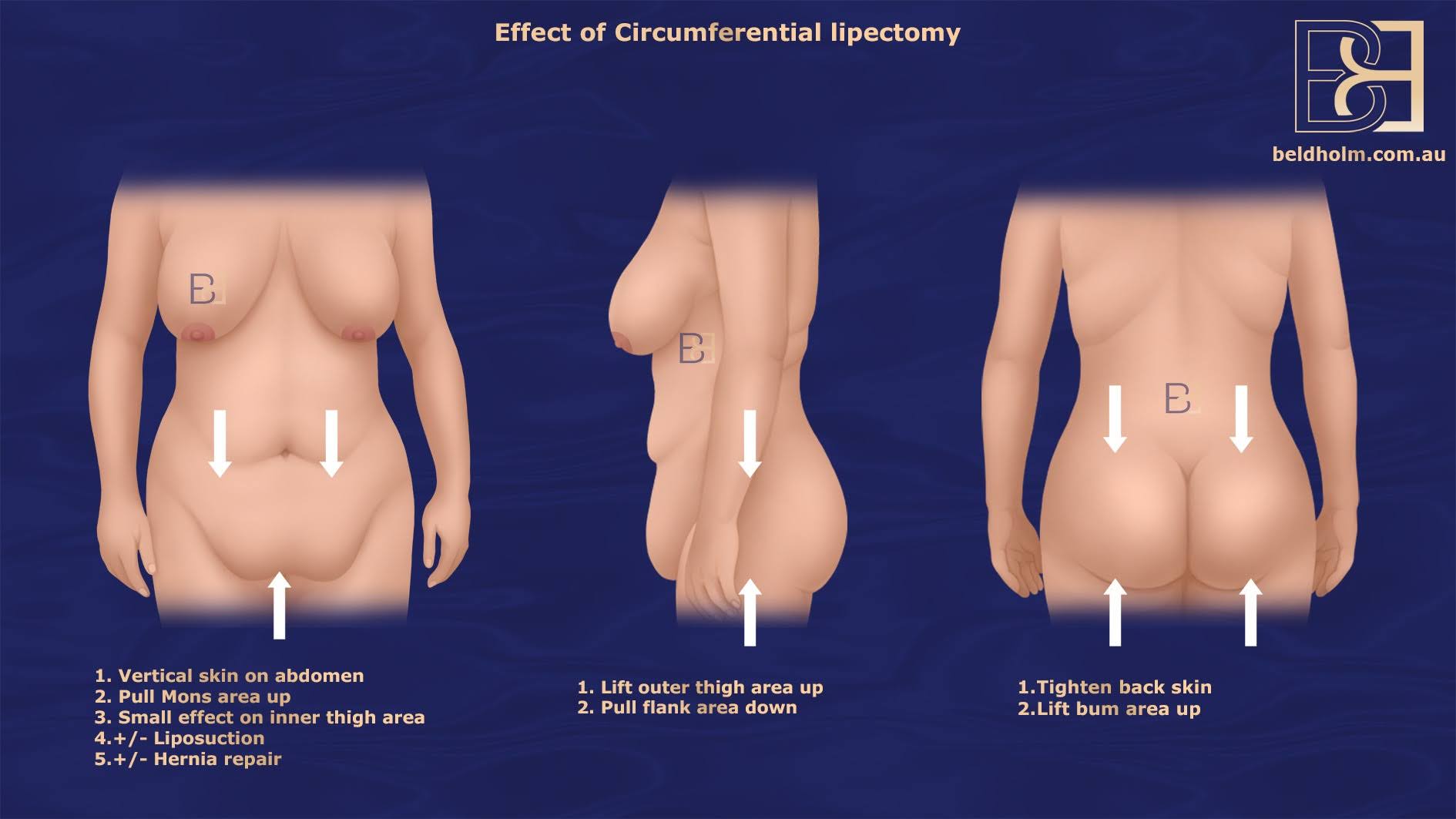
A body lift (belt lipectomy) is the right operation when excess skin wraps around the entire lower torso. If skin redundancy only affects the front of the abdomen, a standard abdominoplasty is usually the closer match. If horizontal skin laxity across the front of the abdomen sits alongside circumferential excess, a Circumferential Hybrid Abdominoplasty may be more appropriate.
The procedure matches the pattern, not the other way around. Part of the consultation is working out which pattern a patient actually presents with.
One operation where possible
Where a patient’s anatomy allows, I prefer to address circumferential skin excess in a single body lift (belt lipectomy) rather than staging the work across separate abdominal and back operations. A single operation means one anaesthetic, one recovery period, and one co-ordinated incision plan.
For a standard body lift (belt lipectomy), the main incision is positioned so it can usually be concealed within underwear or swimwear. A small scar also results from repositioning the umbilicus (belly button).
For a Circumferential Hybrid Abdominoplasty, an additional vertical incision is made down the front of the abdomen as part of the Fleur-de-Lis pattern. This vertical scar cannot be concealed within underwear or swimwear. The trade-off is that the hybrid addresses horizontal skin laxity across the front of the abdomen that a standard body lift (belt lipectomy) alone does not treat. Which pattern of incisions suits a given patient depends on the pattern of skin excess and is discussed during consultation.
Staging is the right choice when the volume of surgery becomes too high for one sitting, or when additional areas such as the arms, thighs, or breasts also need treatment. In those cases I plan the sequence with the patient so each operation builds toward the overall result.
Preparation matters more, not less

Circumferential surgery is a larger operation than a standard abdominoplasty. It involves a longer anaesthetic, a wider incision, and greater physiological demand on the body during healing.
That makes pre-operative preparation more important, not less. Weight stability, blood work, nutritional status, and supplement routines are all reviewed before I book a date. I ask patients to start a core supplement routine at their first consultation, before blood results are back, because the evidence supports near-universal nutritional vulnerability in this group after significant weight loss.
Is a body lift (belt lipectomy) the right procedure, or is it a different operation?
Not every patient with loose skin after significant weight loss needs a body lift (belt lipectomy). The distribution of excess skin across the body is what determines which operation is the appropriate match. Two different patterns commonly present at consultation.
If the loose skin only sits at the front of the abdomen
When excess skin is limited to the front of the abdomen, without significant redundancy wrapping around to the flanks and lower back, a standard abdominoplasty (tummy tuck) or a Fleur-de-Lis abdominoplasty is usually the closer match. These operations remove skin from the front of the abdomen without carrying the incision around the back of the torso.
A body lift (belt lipectomy) in this situation would add incisions and recovery that the pattern of skin excess does not require.
If the loose skin wraps around from the abdomen to the lower back
When excess skin extends around the waistline, across the flanks, and onto the lower back, the pattern is circumferential. A standard abdominoplasty addresses only the front of the abdomen and will leave the flank and back skin untreated. In this situation, a body lift (belt lipectomy) may be the appropriate procedure because it removes excess skin around the entire lower torso in one operation.
Whether a given patient’s skin excess is truly circumferential is assessed clinically during consultation. Some patients who believe they need a body lift (belt lipectomy) turn out to be better served by a different procedure.
Book your appointment online now
Which procedure matches which pattern?
Several post-weight-loss body contouring operations are grouped under the general description of “body contouring after weight loss”. The procedures are not interchangeable. Each one is designed to address a specific pattern of skin excess, and choosing the right operation depends on where the loose skin sits on the body.
Clinical vocabulary
A brief primer on the terminology used below:
- Abdominoplasty (tummy tuck). Removes excess skin from the front of the abdomen using a horizontal incision. Does not address the flanks or lower back.
- Fleur-de-Lis abdominoplasty. A variation of abdominoplasty that uses both a horizontal and a vertical incision on the front of the abdomen, to remove skin in two directions. Does not address the flanks or lower back.
- Body lift (belt lipectomy). A circumferential procedure that removes excess skin around the entire lower torso, including the abdomen, flanks, and lower back, in one operation.
- Circumferential Hybrid Abdominoplasty. Combines a body lift (belt lipectomy) with a Fleur-de-Lis abdominoplasty pattern, to address circumferential skin excess and significant horizontal skin laxity on the front of the abdomen at the same time.
- Bra-line lipectomy (upper back lipectomy). A separate procedure that removes excess skin across the upper back. Not included in a body lift (belt lipectomy), which treats the lower torso only.
- Thighplasty (inner thigh lift) and Brachioplasty (arm lift). Separate procedures for excess skin of the thighs and upper arms. These are sometimes staged with a body lift (belt lipectomy) when the volume of surgery is too high for one sitting.
- VASER liposuction (suction-assisted lipectomy). An adjunct technique used to address localised residual fat pockets. Not a standalone skin-removal procedure.
Front of abdomen only
When excess skin is limited to the front of the abdomen, with no significant circumferential component, the operation should be confined to the abdomen.
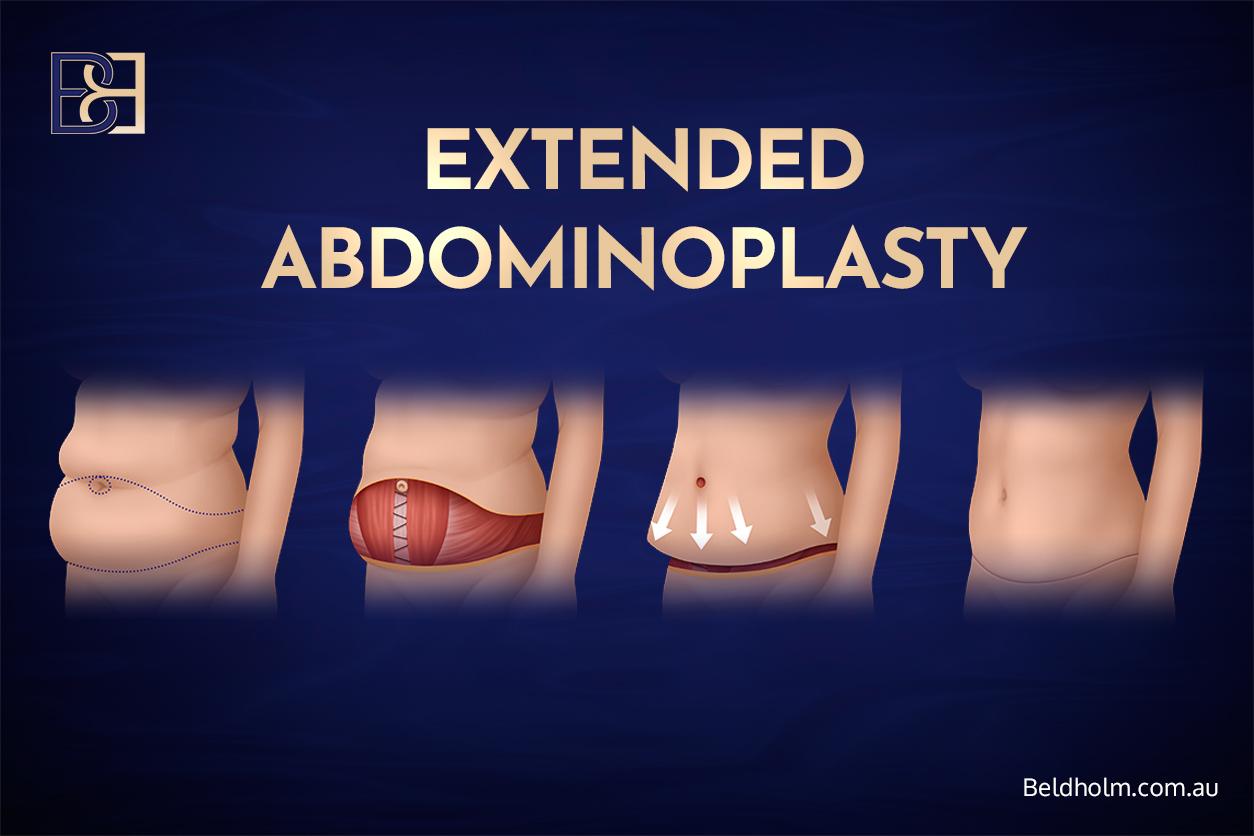
Vertical skin excess only. A standard abdominoplasty (tummy tuck) is usually the closer match. A horizontal incision low on the abdomen allows vertical skin excess to be removed and the abdominal wall tightened where needed.
Vertical and horizontal skin excess. A Fleur-de-Lis abdominoplasty may be considered. The additional vertical midline incision down the front of the abdomen allows horizontal skin excess to be removed as well. The trade-off is a vertical scar on the abdomen that cannot be concealed within underwear or swimwear.
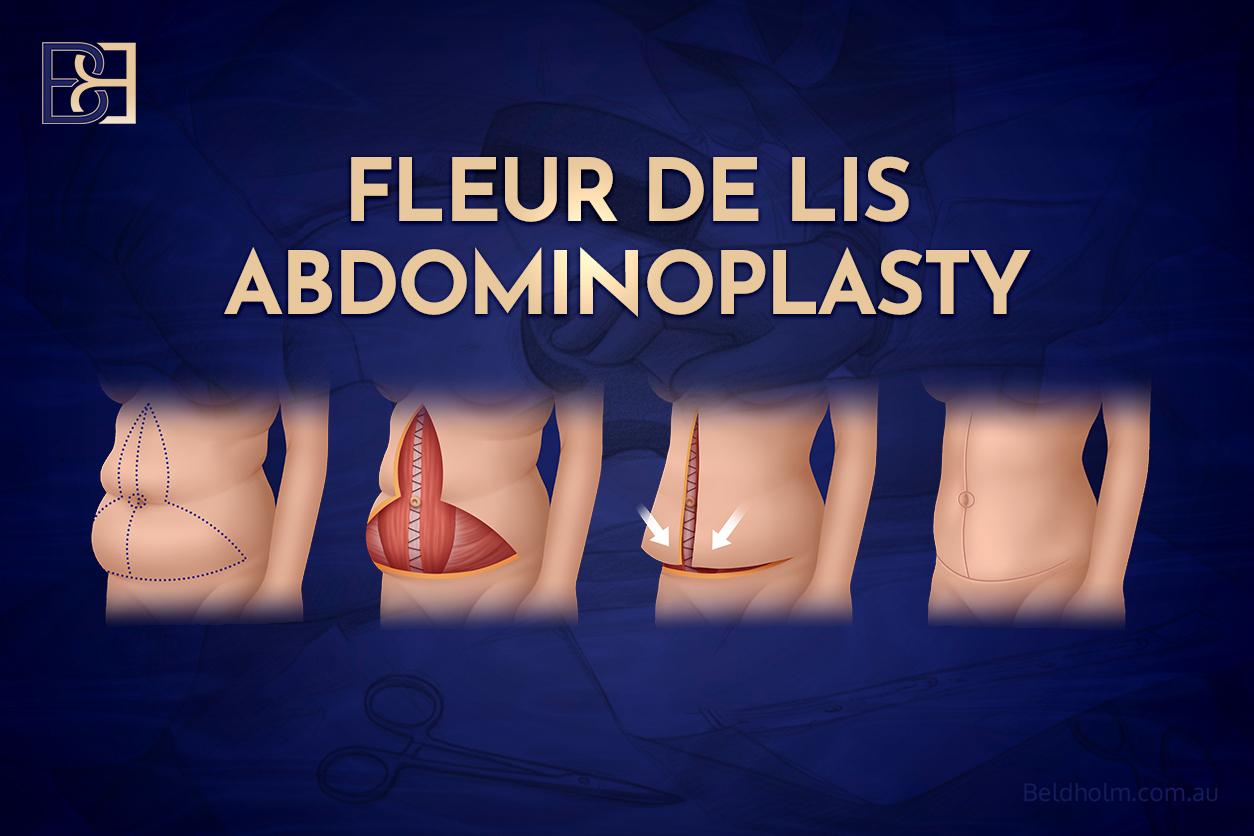
Circumferential pattern around the lower torso
When excess skin wraps around the waistline and extends onto the flanks and lower back, a procedure limited to the front of the abdomen will leave the back and flank skin untreated.
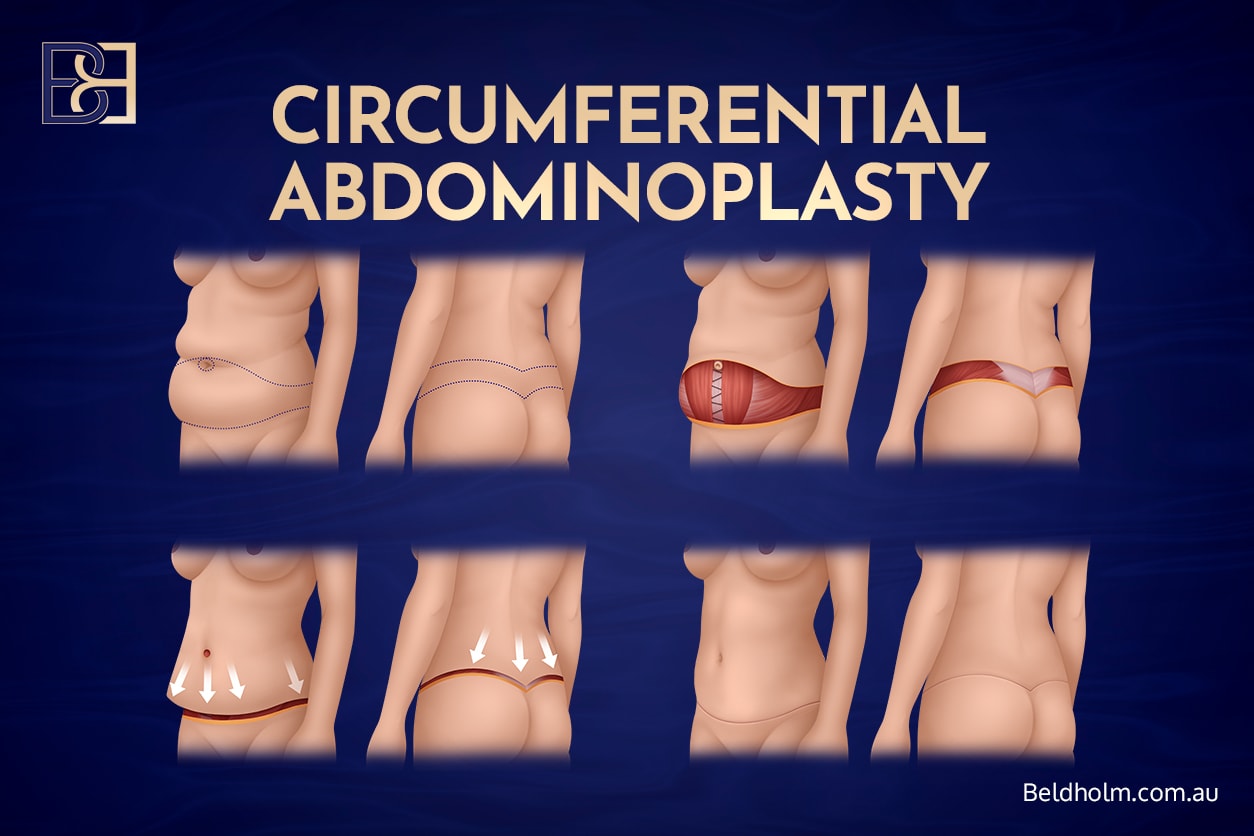
Circumferential skin excess without significant front horizontal laxity. A body lift (belt lipectomy) is usually the match. The circumferential incision removes excess skin around the entire lower torso in one operation.
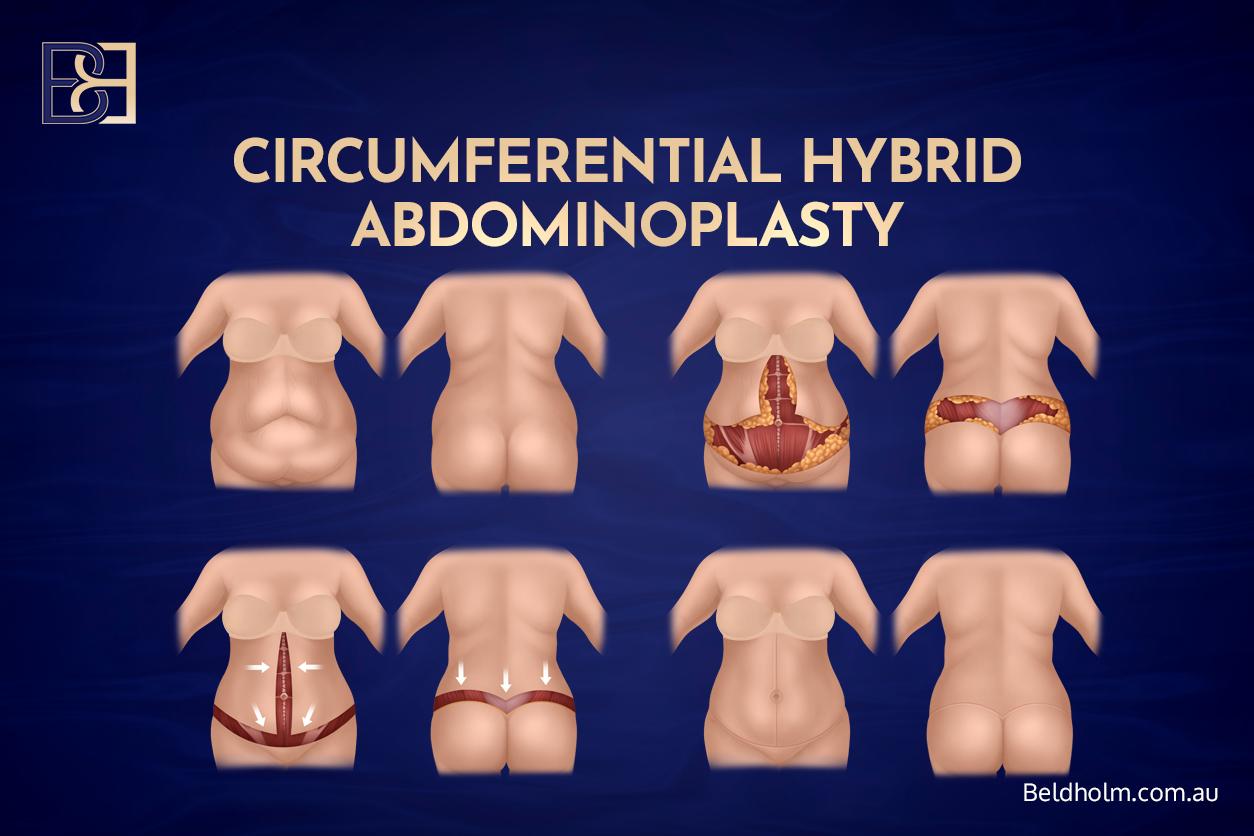
Circumferential skin excess plus significant horizontal skin laxity on the front of the abdomen. A Circumferential Hybrid Abdominoplasty may be appropriate. This combined procedure adds a Fleur-de-Lis pattern on the front of the abdomen to a body lift (belt lipectomy), treating both patterns at the same time. The vertical abdominal scar is the trade-off.
Upper torso and back
Excess skin across the upper back after significant weight loss is a separate pattern from lower torso skin excess. A body lift (belt lipectomy) does not treat this region.
- Upper back skin excess. A bra-line lipectomy may be discussed as a separate procedure. In some patients, this is staged after a body lift (belt lipectomy); in others, it is performed on its own or combined with other upper-body procedures.
Additional regions
Excess skin on the thighs, arms, or breasts after significant weight loss is treated with dedicated procedures.
- Inner thigh skin excess. Thighplasty (inner thigh lift).
- Upper arm skin excess. Brachioplasty (arm lift).
- Breast changes after weight loss. Mastopexy (breast lift), with or without implants, or reduction mammoplasty where breast volume is also excessive.
When multiple regions require surgical treatment, the operations are commonly staged. The sequence is planned during consultation based on the volume of surgery, the pattern of skin excess, and the patient’s overall health.
Residual fat pockets
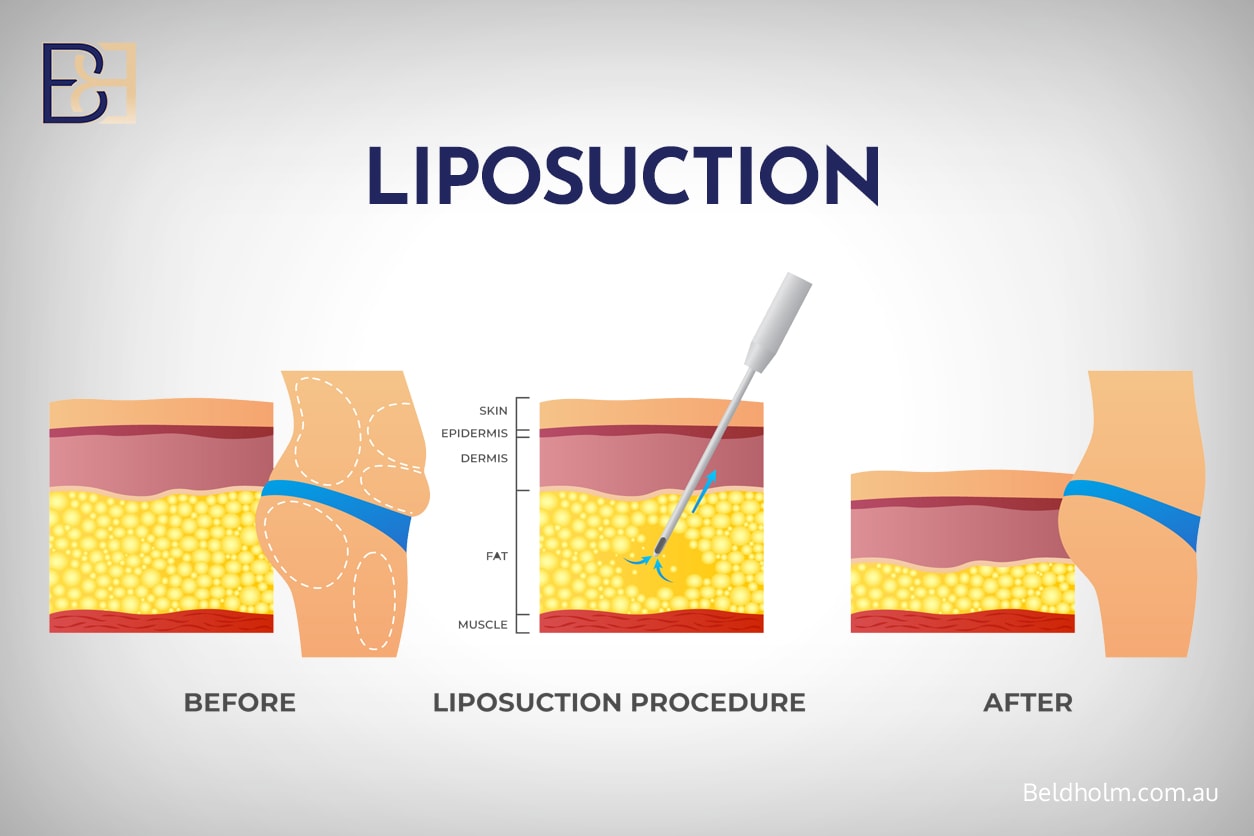
Most patients presenting for post-weight-loss body contouring have relatively little residual fat and primarily require skin removal. Where localised fat pockets remain, VASER liposuction (suction-assisted lipectomy) may be added as an adjunct during a body lift (belt lipectomy) or a standalone abdominoplasty. This is a contouring adjunct, not a replacement for skin removal surgery.
Book your appointment online now
Free Guide: 7 Surgical Options for Loose Skin on the Abdomen, Flanks, and Back
Deciding which procedure matches the pattern of skin excess is the core question after significant weight loss. This educational guide outlines the seven surgical options commonly considered for loose skin on the abdomen, flanks, and lower back, and what each one is designed to address.
The guide covers:
- How each procedure works and which pattern of skin excess it treats
- How the operations differ from one another
- What to consider before a consultation
- Questions to ask when discussing options with a Specialist Surgeon
This is educational information only and does not replace individual medical advice. Every patient’s pattern of skin excess is different, and the appropriate procedure is determined in consultation following a clinical examination.
About my Practice

I am Dr Bernard Beldholm FRACS, a Specialist Surgeon based in the Hunter Valley, NSW. I operate from Maitland Private Hospital, which has 24-hour cover and an on-site intensive care unit.
Post-weight-loss body contouring has been the clinical focus of my practice for more than 15 years. Circumferential procedures, including body lift (belt lipectomy) and Circumferential Hybrid Abdominoplasty, are a regular part of my surgical workload. Patients are referred to my practice by general practitioners and bariatric surgeons across NSW, and I also see interstate patients who travel for consultation and surgery.
My registration type is specialist registration. The “FRACS” credential refers to Fellowship of the Royal Australasian College of Surgeons, which is the Australian specialist surgical qualification.
Consultation is the first step in determining whether a body lift (belt lipectomy) or another post-weight-loss procedure is appropriate. A GP referral is required before a consultation can be booked.
How I Ask Patients to Prepare for a Body Lift (Belt Lipectomy)
Preparation for a body lift (belt lipectomy) starts well before the surgical date. Because this is a larger operation than a standard abdominoplasty, the physiological demand on the body during healing is greater. That changes what I ask patients to do in the weeks and months leading up to surgery.
Weight stability

I ask patients to be at a stable weight for a minimum of 6 months before I book a surgical date. This aligns with the weight-stability criteria in the relevant Medicare Benefits Schedule (MBS) item numbers for post-weight-loss abdominoplasty.
For patients who had bariatric surgery (such as gastric sleeve or gastric bypass), I typically look for a longer period of stability, in the range of 12 to 18 months after the bariatric operation, because weight loss tends to continue for a longer period in this group.
Weight stability is assessed at consultation alongside other factors.
Nutritional optimisation
Significant weight loss, particularly after bariatric surgery, commonly leaves patients with nutritional deficiencies that can affect surgical healing. I ask patients to start a core supplement routine at their first consultation, before their blood results are back, because the pattern of deficiencies in this group is predictable enough that baseline cover is warranted early.
The core routine includes:
- Whey Protein Isolate to support healing, at a target intake of around 80 to 100 grams of protein per day
- A complete multivitamin
- Vitamin D3 with vitamin K2
- Vitamin C
- Zinc
Once blood results are back, further supplementation is added if indicated (commonly iron, B12, folate, or others) and reviewed at the Blood Results Consultation.
Medications to pause

Some medications and supplements need to be paused around surgery. Fish oil, for example, is ceased one week before surgery and resumed one to two weeks after, because of its effect on bleeding and bruising. Other medications are reviewed individually at consultation.
Smoking

I ask patients to be non-smokers before a body lift (belt lipectomy). Smoking increases the risk of wound healing complications, infection, and tissue loss at the incision margins, particularly at the T-junction where incisions meet. This is reviewed at consultation and is a condition of proceeding with surgery.
Single operation or staged
Where excess skin also affects the arms, thighs, or breasts, I discuss with the patient whether these areas are addressed at the same time, or staged as separate operations. Combining procedures reduces the total number of anaesthetics but increases the volume of one operation, which is not always the safer option. The sequence is planned together during consultation.
What Happens at Consultation

Before a body lift (belt lipectomy) can be booked, a patient attends at least two pre-operative consultations with me. Many patients have more than two. The number and format of consultations is tailored to the individual, and some appointments may be in person while others are by phone or video, depending on the patient’s circumstances and distance from the practice. At least one consultation must be in person.
A GP referral is required to book the first consultation.
First consultation
The first consultation is typically an hour and covers the clinical assessment, medical history, and examination. I take clinical photographs for the medical record (these are not shared publicly). I discuss the surgical options that may match the pattern of skin excess, including procedures other than a body lift (belt lipectomy) if another operation is a closer fit.
At the end of the first consultation, patients leave with:
- A request form for pre-operative blood tests, with directions to the nearest collection centre
- A copy of my pre-surgery nutrition guide
- A Tier 1 supplement list to start immediately
- Written information on the procedures discussed
A surgical quote is prepared by my patient coordinator and sent within 1 to 2 days. Hospital and anaesthetist fees are typically confirmed within 1 to 2 weeks.
Blood Results Consultation
The Blood Results Consultation takes place 2 to 4 weeks after the first consultation, once blood tests are back. At this appointment I review the results with the patient, add any Tier 2 supplements that are indicated (such as iron, B12, or folate), and continue the discussion about the surgical plan. This appointment may be in person or by phone or video.
Anaesthetic consultation
A separate consultation with the anaesthetist is arranged for all post-weight-loss body contouring patients. This is a routine part of the process and is handled independently of my consultations. The anaesthetic consultation is usually conducted by phone, with an in-person anaesthetic review occurring at the time of hospital admission on the day of surgery.
Interstate and distant patients
For patients travelling from interstate or from distant parts of NSW, I try to arrange the consultation sequence to reduce the number of trips required. Some appointments can be held by phone or video; however, at least one in-person consultation is required before surgery can be booked.
Booking timeline
Once a patient has completed the required consultations and confirmed they wish to proceed, surgery is typically scheduled 1 to 3 months later, depending on operating list availability.
Book your appointment online now
Hospital Stay and Recovery
The hospital
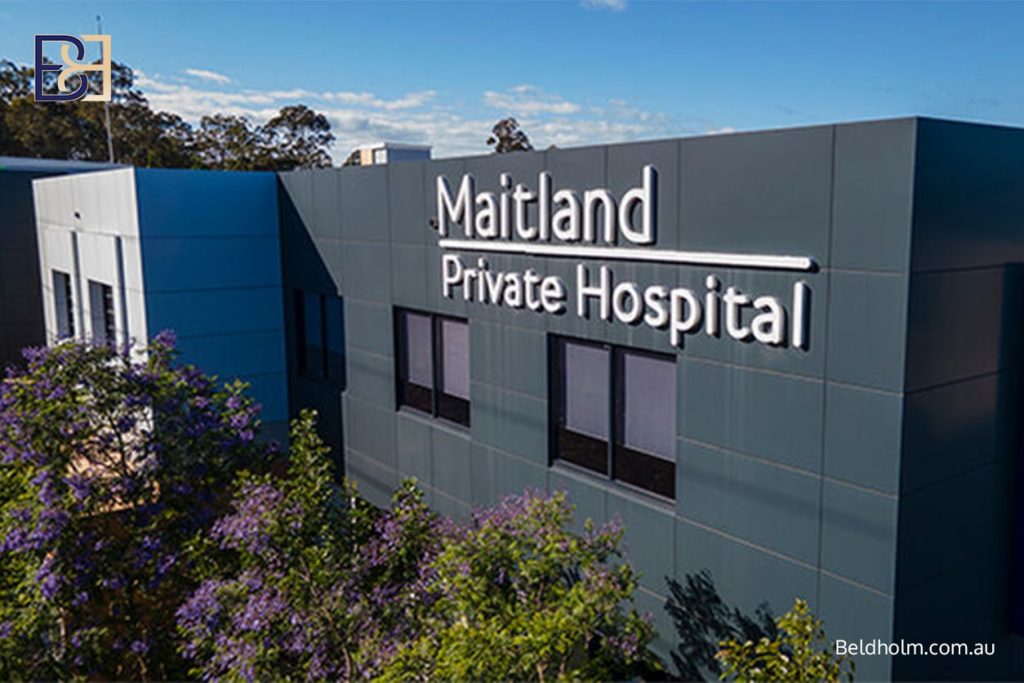
All of my surgery is performed at Maitland Private Hospital in the Hunter Valley, NSW. The hospital has 24-hour cover and an on-site intensive care unit. For circumferential procedures, having those facilities on site matters, because the physiological demand of the operation is greater than for a standard abdominoplasty.
A body lift (belt lipectomy) is performed under general anaesthesia.
Length of stay
The length of hospital stay depends on which procedure is performed:
- Standard body lift (belt lipectomy). Typical stay is 3 to 5 days.
- Circumferential Hybrid Abdominoplasty. Typical stay is 5 to 7 days.
These are general ranges. The actual length of stay is decided on clinical grounds and may be longer if required.
During the hospital stay
In hospital, patients have:
- Regular nursing observations and pain management
- Surgical drains, which are typically removed before discharge
- PICO negative-pressure dressings on the incisions to support wound healing
- Compression garments fitted
- Early mobilisation with nursing support
- A dietitian review for bariatric patients, to support healing nutrition during the stay
After discharge
After discharge, patients return to my clinic for nurse-led follow-up appointments. These appointments are used to review the incisions, change dressings, and check on overall recovery. Low-level laser (LED) therapy is offered during these visits to support incision healing.
I review the patient at key points in the recovery timeline. Patients are given written discharge instructions covering wound care, activity restrictions, medication, and escalation contacts in the event of any concerns.
Returning to activity
Recovery from a body lift (belt lipectomy) is staged. General guidance is:
- Light activity and short walks. From the day after surgery, increasing gradually.
- Driving. Once the patient is off prescription pain medication and can perform an emergency stop; timing varies per patient.
- Return to work. Depends on the type of work; sedentary work is typically resumed earlier than physical work.
- Exercise and lifting. Reintroduced progressively over the weeks following surgery, in line with written post-operative instructions.
These are general timelines only. Actual recovery varies between patients based on the extent of surgery, individual healing, and the demands of work and daily life. Specific guidance for each patient is provided in writing at discharge and reviewed at follow-up visits
Risks and Considerations

A body lift (belt lipectomy) is major surgery. Like all surgical procedures, it carries risks.
The information below is provided so that patients can consider these risks before deciding to proceed. This section is not exhaustive. A full discussion of risks relevant to each patient’s individual circumstances takes place with the surgeon before surgery is booked.
General surgical risks
A body lift (belt lipectomy) carries risks shared with other large body contouring operations. These include:
- Bleeding and haematoma
- Infection
- Adverse reaction to general anaesthesia
- Venous thromboembolism, including deep vein thrombosis and pulmonary embolism
- Delayed wound healing
- Scarring that may be hypertrophic, widened, or irregular in quality
The extent of surgery in a circumferential procedure means that these general risks are present across a longer incision and a larger surgical field than for a standard abdominoplasty.
Risks specific to circumferential surgery
Certain complications are more relevant to a body lift (belt lipectomy) because of the circumferential nature of the operation. These include:
- Seroma (fluid collection under the skin)
- Wound dehiscence (separation of the incision), particularly at points where incisions meet such as the T-junction in a Circumferential Hybrid Abdominoplasty
- Altered skin sensation around the incision
- Asymmetry of the final result
- Changes to the position or appearance of the umbilicus (belly button)
- The possibility of needing a revision procedure
Longer operative time and greater tissue dissection also increase the physiological demand of the surgery compared with smaller body contouring procedures.
Individual risk factors
The risks of a body lift (belt lipectomy) are not the same for every patient. Individual factors that affect surgical risk include:
- Smoking status
- Body mass index (BMI)
- Prior abdominal or bariatric surgery
- Nutritional status following significant weight loss
- Other medical conditions, such as diabetes, hypertension, or cardiac disease
These factors are assessed at consultation. Depending on the findings, a patient may be:
- Advised to proceed with surgery
- Advised that the procedure should be staged rather than performed in a single operation
- Advised to undertake further medical optimisation before proceeding
- Advised that surgery is not appropriate
Surgery is not performed when the clinical assessment indicates that the risks outweigh the potential benefits.
Results vary between patients. Consultation is required to determine whether a body lift (belt lipectomy) is appropriate for an individual patient.
Frequently Asked Questions
Is a body lift (belt lipectomy) the same as an abdominoplasty (tummy tuck)?
No. A standard abdominoplasty (tummy tuck) treats excess skin on the front of the abdomen only. A body lift (belt lipectomy) is a circumferential procedure that treats excess skin around the entire lower torso, including the abdomen, flanks, and lower back.
The two operations address different patterns of skin excess. Which one is appropriate depends on how the skin sits on the body. This is assessed clinically at consultation.
How long after weight loss should a patient wait before having a body lift (belt lipectomy)?
A minimum of 6 months of weight stability is generally required before surgery is booked. This aligns with the weight-stability criteria in the relevant Medicare Benefits Schedule (MBS) item numbers for post-weight-loss abdominoplasty.
For patients who had bariatric surgery, a longer period of stability is usually required, in the range of 12 to 18 months after the bariatric operation. Weight stability is assessed at consultation alongside other factors.
Is a body lift (belt lipectomy) eligible for a Medicare rebate?
Some patients may be eligible for a Medicare rebate on part of the surgical fees, where the operation meets the criteria of the relevant MBS item numbers. Eligibility depends on individual clinical circumstances and is assessed at consultation.
A Medicare rebate does not cover the full cost of surgery. Out-of-pocket costs apply. A written quote is provided by the patient coordinator after the first consultation.
Is a GP referral required?
Yes. A GP referral is required before the first consultation can be booked. This is both a standard requirement for seeing a Specialist Surgeon and a requirement under the AHPRA guidelines for cosmetic and reconstructive surgery.
Patients without a current GP referral should arrange one with their usual general practitioner before contacting the practice.
How long does recovery from a body lift (belt lipectomy) take?
Recovery is staged. Most patients are in hospital for 3 to 5 days for a standard body lift (belt lipectomy), or 5 to 7 days for a Circumferential Hybrid Abdominoplasty. After discharge, patients attend nurse-led follow-up appointments at the clinic.
Return to work, driving, and exercise depends on the individual and on the type of activity involved. Specific guidance is provided at discharge and reviewed at follow-up visits. General recovery varies between patients.
Can a body lift (belt lipectomy) be combined with a thigh lift or arm lift?
Sometimes. When excess skin also affects the thighs, arms, or breasts, the surgical plan may involve staging separate operations or, in some circumstances, combining procedures. Combining procedures reduces the total number of anaesthetics but increases the volume of a single operation, which is not always the safer option.
The sequence is planned at consultation based on the volume of surgery, the pattern of skin excess, and the patient’s overall health.
Next Step
A body lift (belt lipectomy) addresses circumferential skin excess after significant weight loss. Whether this operation is the right match for an individual patient, or whether another post-weight-loss body contouring procedure is a closer fit, is determined through clinical assessment at consultation.
Dr Bernard Beldholm FRACS is a Specialist Surgeon based at Maitland Private Hospital in the Hunter Valley, NSW. Patients are seen by GP referral.
Or call the clinic on (02) 4934 5700.
Dr Beldholm’s companion guide, 7 Surgical Options for Loose Skin After Weight Loss, covers the seven procedures most often considered after significant weight loss. It explains how to identify your pattern of loose skin, what each procedure involves, and what to expect from recovery.
Results vary. All surgery carries risks. Consultation required to determine suitability. GP referral required.