


Arm Tightening Surgery (Brachioplasty)
Arm tightening surgery, also called brachioplasty, is a procedure that removes excess skin from the upper arms to improve arm contour.
Loose or hanging arm skin can develop after significant weight loss, ageing, or reduced skin elasticity. When the skin does not retract naturally, surgical removal of excess tissue may be considered.
Arm tightening surgery focuses on removing excess upper arm skin and reshaping the arm contour. In some patients, liposuction (suction-assisted lipectomy) may also be used to remove excess fat and improve the overall arm shape.
Dr Bernard Beldholm performs arm tightening surgery for patients seeking treatment for loose or excess upper arm skin. The procedure is tailored to the amount of skin excess and the distribution of fat in the upper arms.
What Is Arm Tightening Surgery?
Arm tightening surgery, known as brachioplasty, is a procedure that removes excess skin from the upper arms to address skin laxity and reshape the arm contour.
The procedure is designed for patients whose upper arm skin has stretched and no longer retracts. This may occur after significant weight loss, ageing, or reduced skin elasticity.
During the procedure, excess skin is surgically removed and the remaining tissue is repositioned to create a smoother arm contour. Depending on the distribution of fat in the upper arms, liposuction (suction-assisted lipectomy) may also be performed to remove excess fat and improve overall contour.
The amount of skin removed and the surgical technique used depend on the degree of skin excess and tissue laxity present in the upper arms.
Why Loose Arm Skin Develops
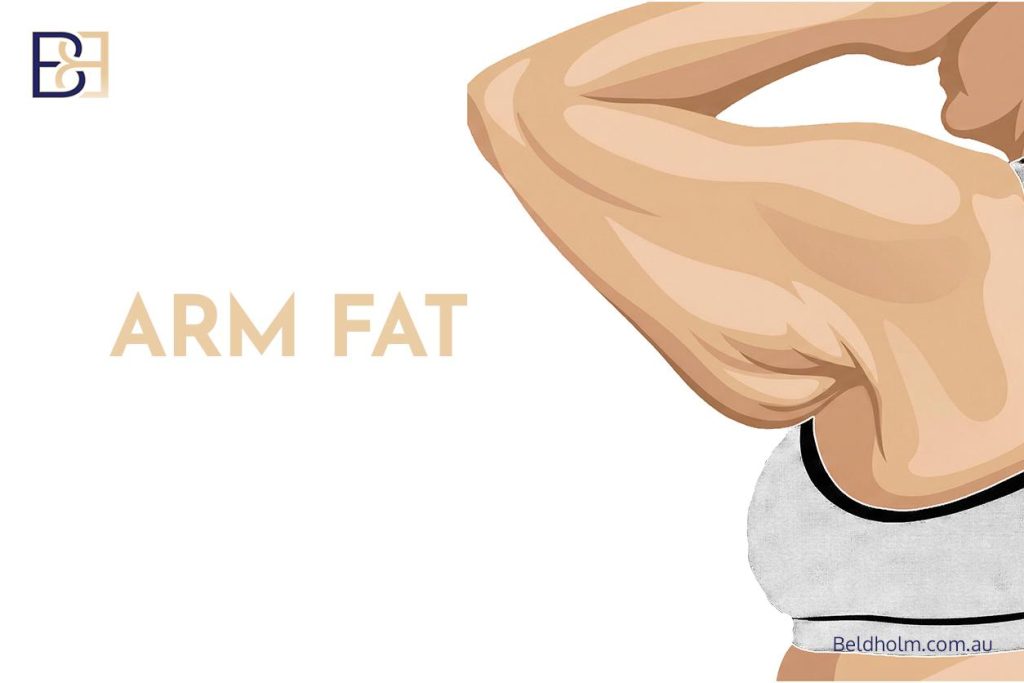
Excess skin in the upper arms can develop for several reasons. The most common causes include weight changes, ageing, and reduced skin elasticity.
Significant Weight Loss
After substantial weight loss, the skin may not fully retract. This can leave excess skin in the upper arms.
Ageing
As skin ages, collagen and elastin levels decrease. This can result in increased skin laxity and changes in arm contour.
Genetics
Some individuals naturally develop skin laxity in the upper arms due to genetic factors affecting skin quality and elasticity.
Previous Weight Gain
Skin that has been stretched for long periods may not fully contract after weight reduction, leaving excess skin in the upper arm area.
When excess skin persists despite stable weight and exercise, arm tightening surgery (brachioplasty) may be considered to remove the excess skin and reshape the upper arm.
Who May Consider Arm Tightening Surgery
Arm tightening surgery may be considered by patients who have excess skin in the upper arms that does not improve with weight loss or exercise.
Some individuals notice loose skin that hangs from the upper arms or changes in arm contour that occur after significant weight loss or ageing. When skin elasticity is reduced, the skin may not tighten naturally.
Patients who consider upper arm skin removal surgery often have:
- Excess or hanging skin along the upper arms
- Skin laxity following weight loss
- Difficulty fitting certain clothing due to arm skin excess
- Skin folds that may cause irritation or hygiene concerns
- A stable body weight before considering surgery
During consultation, Dr Bernard Beldholm assesses the degree of skin excess, skin quality, and fat distribution in the upper arms to determine whether arm tightening surgery may be appropriate.
Book your appointment online now
Types of Arm Tightening Surgery
Several surgical techniques may be used depending on the amount of excess skin and tissue laxity present in the upper arms.
Dr Bernard Beldholm selects the appropriate procedure based on the extent of skin excess, arm shape, and fat distribution.
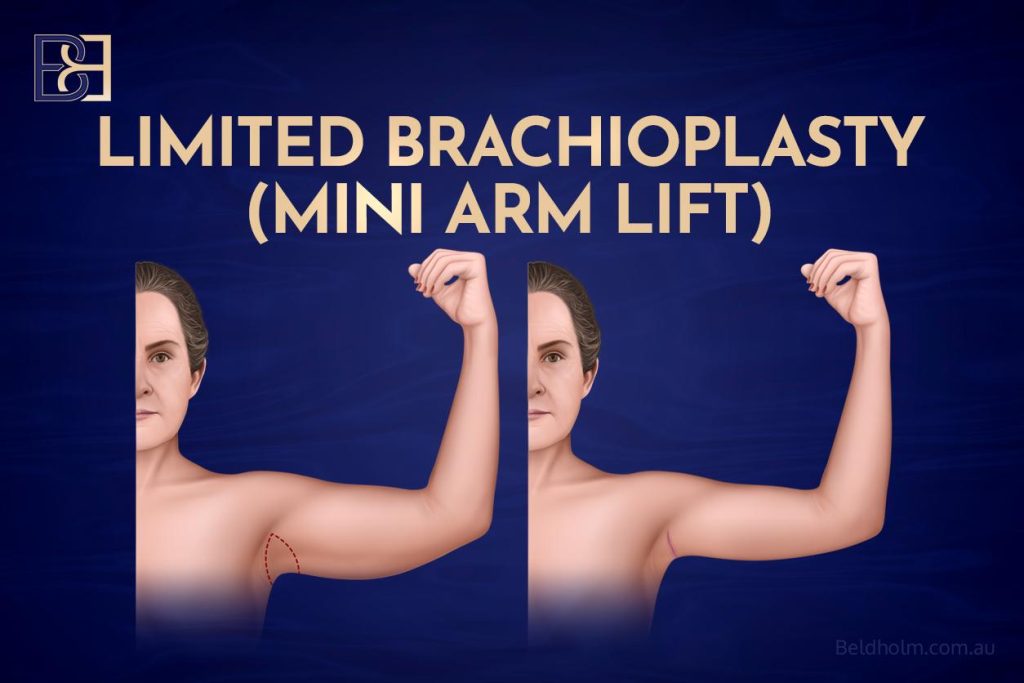
Mini Arm Lift
A mini arm lift may be used when the amount of excess skin is limited. The incision is usually located within the armpit area. This technique is suitable for patients with mild skin laxity.
Book Online NowStandard Brachioplasty
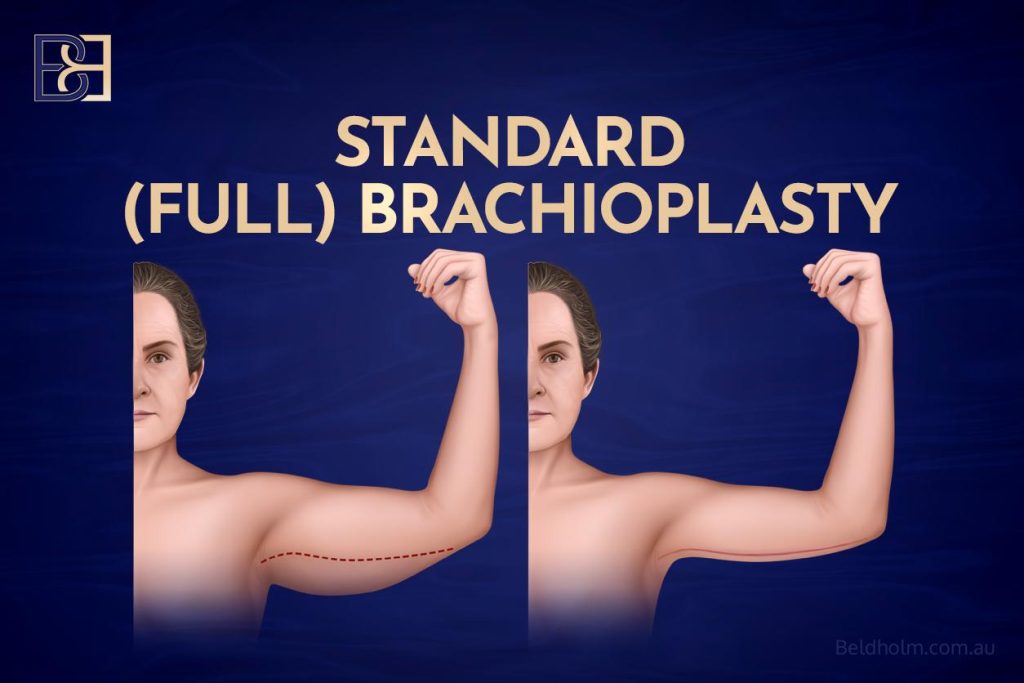
A standard arm lift (Brachioplasty) removes excess skin along the inner upper arm, extending from the armpit toward the elbow. This is the most commonly performed arm tightening procedure when moderate skin excess is present.
Book Online Now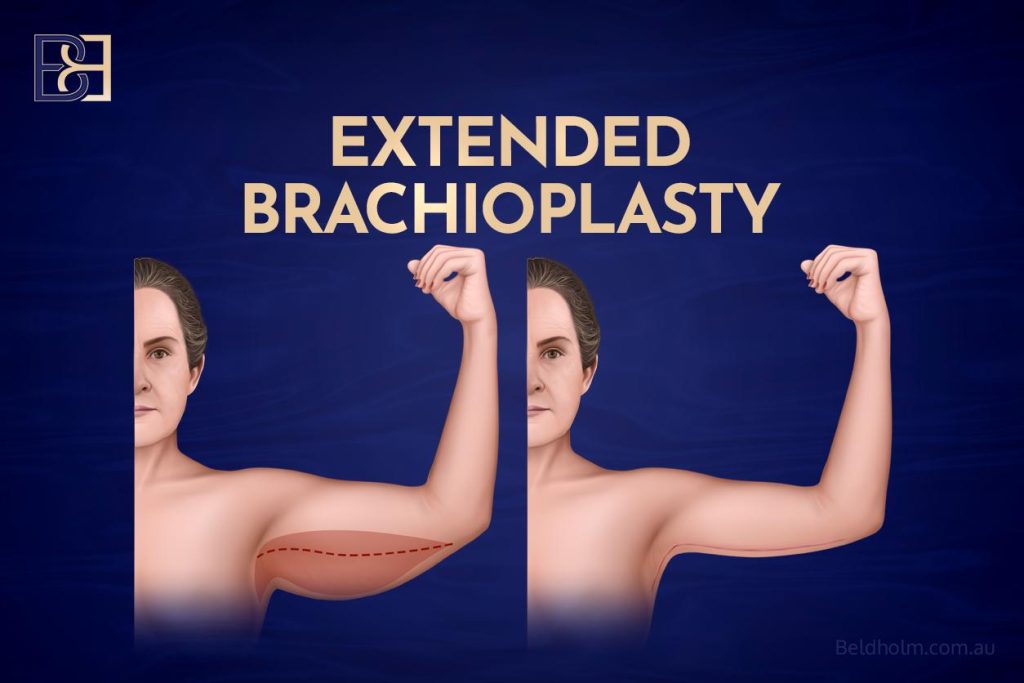
Extended Arm Lift (Brachioplasty)
An extended brachioplasty may be recommended for patients who have experienced significant weight loss and have more extensive skin excess. The incision may extend from the arm toward the chest wall to address additional skin laxity.
In some patients, liposuction (suction-assisted lipectomy) may also be performed during the procedure to remove excess fat and improve the overall arm contour.
Book Online NowThe Procedure

Arm tightening surgery is performed by Dr Bernard Beldholm under general anaesthesia.
The procedure involves removing excess skin from the upper arm and reshaping the underlying tissues to improve the contour of the arm. The incision is typically placed along the inner aspect of the upper arm, where it is less visible when the arms are by the side.
Depending on the surgical plan, liposuction (suction-assisted lipectomy) may also be performed to remove excess fat and refine the arm contour.
Typical procedure times include:
- Mini arm lift (brachioplasty): approximately 1.5 hours
- Standard brachioplasty: approximately 3 hours
- Extended brachioplasty: approximately 4 hours
Arm tightening surgery may be performed as a day procedure or with an overnight stay, depending on the extent of the procedure and the individual surgical plan.
Recovery After Arm Tightening Surgery

Recovery after arm tightening surgery occurs gradually as swelling reduces and the surgical incisions heal.
Dressings are applied after the procedure, and patients are usually advised to wear compression garments to support the arms and help manage swelling during the early recovery period.
Most patients can return home the same day or after an overnight stay, depending on the extent of the procedure.
During recovery, patients may experience:
- Swelling and bruising in the upper arms
- Temporary tightness or discomfort
- Limited arm movement during the early healing period
Patients are typically advised to avoid heavy lifting and strenuous upper body activity while the tissues heal. Light daily activities are usually resumed first, followed by a gradual return to normal activity levels.
Incisions continue to mature over time as the scars soften and settle. Dr Bernard Beldholm provides detailed post-operative instructions and follow-up appointments to monitor healing.
Scars After Arm Skin Removal
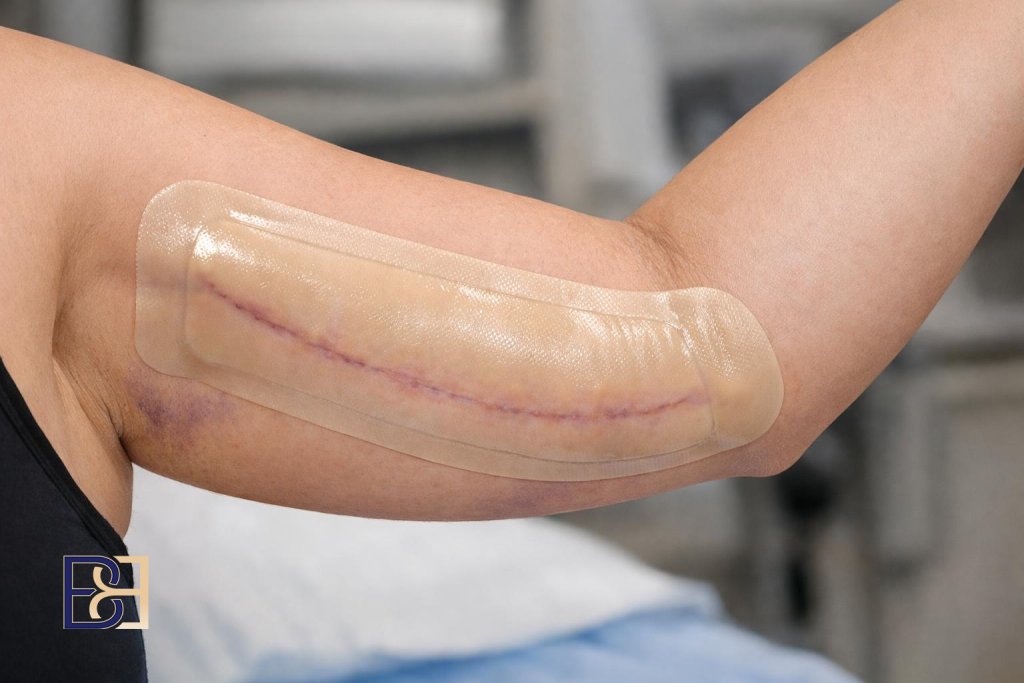
Arm tightening surgery requires incisions to remove excess skin, and scarring is an expected part of the procedure.
The scar is usually positioned along the inner upper arm, extending from the armpit toward the elbow in standard brachioplasty. This location helps place the scar in an area that is generally less visible when the arms are resting by the side.
The length of the scar depends on the amount of skin that needs to be removed. Patients with more significant skin excess may require longer incisions to allow adequate skin removal and reshaping of the arm contour.
In a mini arm lift, the scar may be limited to the armpit area when the amount of skin excess is small. In extended brachioplasty, the incision may extend toward the chest wall when additional skin removal is required.
Scars typically change over time as they mature and gradually soften. Dr Bernard Beldholm provides post-operative guidance on scar care during follow-up appointments.
Possible Complications

All surgical procedures carry risks. These risks are discussed during consultation before proceeding with arm tightening surgery.
Possible complications following brachioplasty may include:
- Bleeding
- Infection
- Seroma (fluid collection under the skin)
- Delayed wound healing
- Wound separation
- Changes in skin sensation
- Visible or widened scars
- Asymmetry
The likelihood of complications can vary depending on individual health factors, the extent of surgery, and healing characteristics.
Dr Bernard Beldholm discusses potential risks and the steps taken to help manage them during the consultation process.
Book your appointment online now
Consultation With Dr Bernard Beldholm
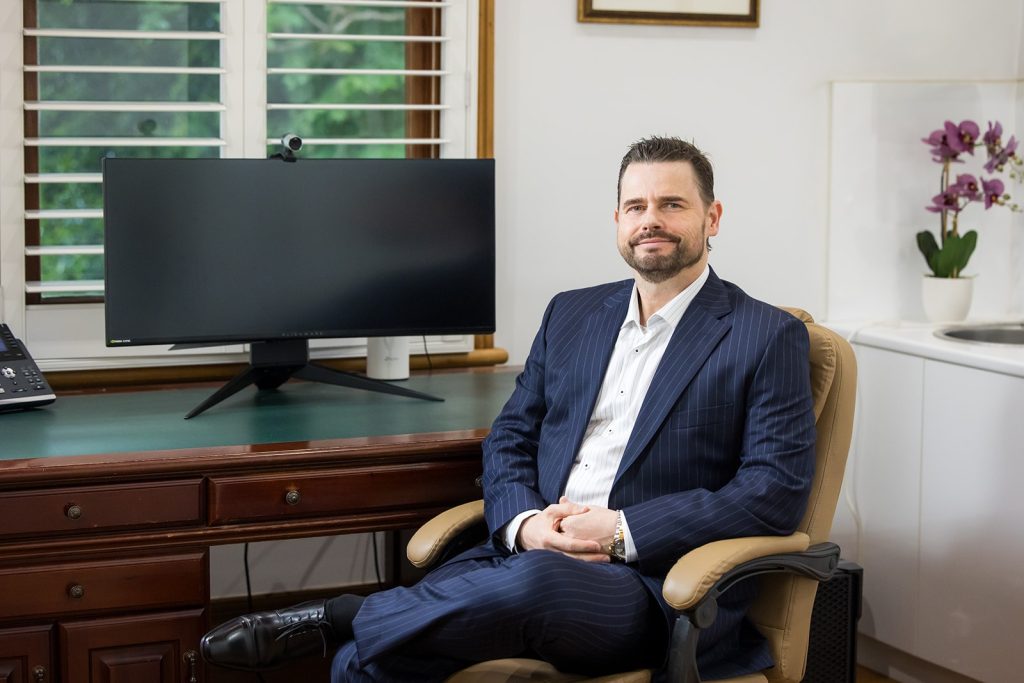
A consultation with Dr Bernard Beldholm allows for an assessment of the upper arms to determine whether arm tightening surgery may be appropriate.
During the consultation, Dr Beldholm evaluates:
- The amount of excess skin in the upper arms
- Skin quality and elasticity
- The distribution of fat in the arm
- Whether liposuction (suction-assisted lipectomy) may be beneficial
- The most suitable surgical technique
Dr Beldholm also discusses the procedure, expected recovery, incision placement, and potential risks.
Patients are encouraged to ask questions during the consultation so they can understand the surgical options and what the procedure involves. A personalised treatment plan is then developed based on the patient’s anatomy and goals.