


Apronectomy (Panniculectomy) After Significant Weight Loss
Apronectomy (panniculectomy) is a surgical procedure that removes the excess lower abdominal skin fold that may develop after major weight loss. The focus of the operation is the overhanging tissue itself, medically described as a pannus or abdominal apron.
Consultation with Dr Bernard Beldholm FRACS, Specialist Surgeon is required to determine whether apronectomy, abdominoplasty, or another post-weight-loss abdominal procedure is the most appropriate option for an individual patient’s pattern of skin excess.
- Suitability assessed during a structured consultation
- Surgery performed at Maitland Private Hospital (24-hour doctor cover, on-site ICU)
- Telehealth consultations available for patients travelling from Sydney and regional NSW
A nutrition calculator is embedded further down this page to help estimate pre-operative calorie and protein targets..
My Approach to Apronectomy Assessment
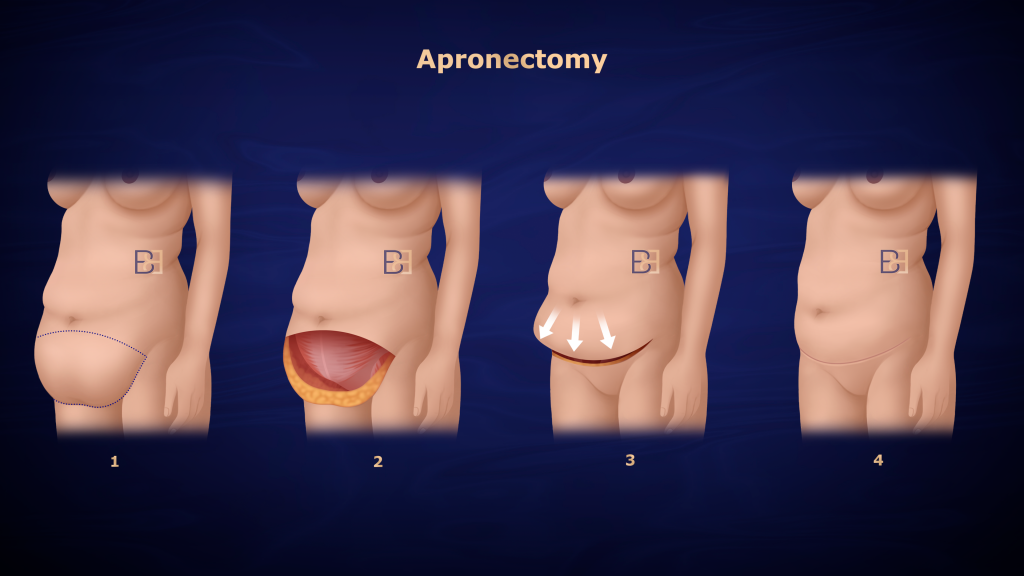
When a patient comes to me asking about apronectomy, my first job is not to book them for apronectomy. My first job is to work out whether apronectomy is actually the right operation for their pattern of skin excess, or whether another procedure would serve them better.
Why the procedure has to match the pattern
Apronectomy is a focused operation for a focused problem. It removes the hanging lower abdominal apron and nothing else.
For the right patient, that is exactly the correct scope. For other patients, the apron is only one part of a broader pattern that may involve:
- The upper abdomen
- The flanks
- The back
- The abdominal wall itself (muscle separation, known as diastasis recti)
Performing apronectomy alone in this second group often leaves unaddressed concerns, and a surgical scar that does not sit where a more comprehensive operation would have placed it.
What I assess during consultation

My examination covers the full torso, not only the area the patient has come in about. I look at:
- Where the skin sits when the patient is standing, sitting, and bending
- The abdominal wall, including any muscle separation (diastasis recti)
- The pattern of any previous surgical scars
- The distribution of skin excess across the upper abdomen, flanks, and back
From that examination, I can tell the patient whether apronectomy fits their anatomy, or whether an abdominoplasty, a Fleur-de-Lis abdominoplasty, or a belt lipectomy (circumferential body lift) would be a better match.
The two groups I see
The patients I see for this assessment fall into two broad groups:
Group 1. A clearly isolated lower abdominal apron, often with a medical component such as recurrent skin irritation beneath the fold. Apronectomy is a reasonable operation for this group.
Group 2. A multi-area pattern that an apronectomy cannot fully address. Another procedure is usually a better match.
Both groups deserve the same honest assessment. My role is to help the patient understand which group they are in before any decision about surgery is made.
Does Apronectomy Fit Your Pattern?
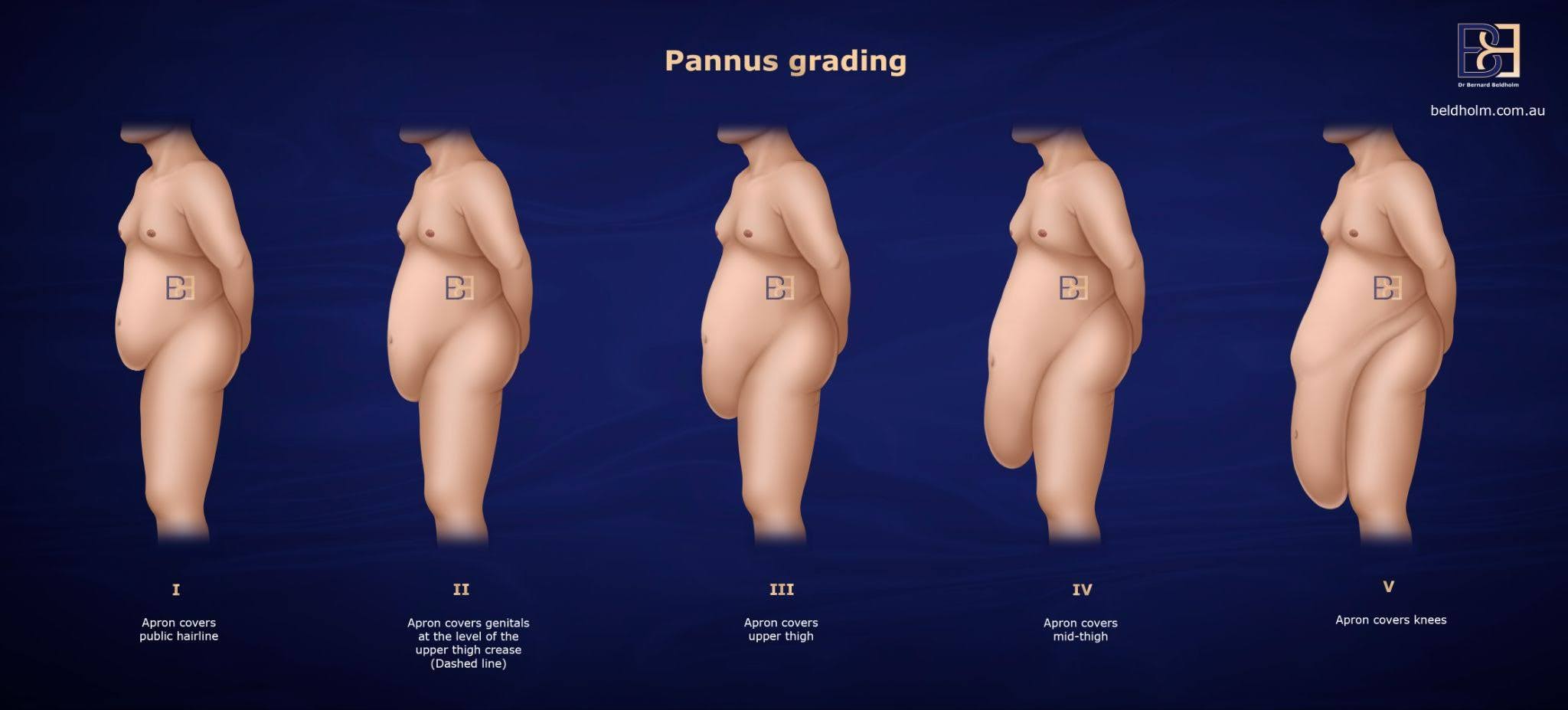
Patients researching apronectomy (panniculectomy) often ask the same underlying question: is this the right operation for me, or would a different procedure fit my pattern better? The answer depends on where the excess skin sits, the state of the abdominal wall, and whether there is a medical component such as recurrent skin irritation beneath the fold.
The two patterns below are a general guide only. A consultation is required to determine suitability for any specific procedure.
When apronectomy may suit
Apronectomy may be a reasonable option when the pattern of skin excess is limited to the lower abdominal apron and the patient is primarily seeking removal of that overhanging tissue. Features that often indicate this pattern include:
- A hanging pannus that is the main physical concern
- Limited skin excess elsewhere on the torso (upper abdomen, flanks, back)
- No significant abdominal wall muscle separation, or muscle separation that the patient is not seeking to address
- A medical component such as recurrent intertrigo (skin irritation or inflammation beneath the fold), chafing, or interference with daily activities
- A preference for a more limited operation with a shorter procedure time
This pattern is more common in patients whose weight loss has primarily settled as a localised lower abdominal fold rather than as generalised multi-area loose skin.
When another procedure may be more appropriate
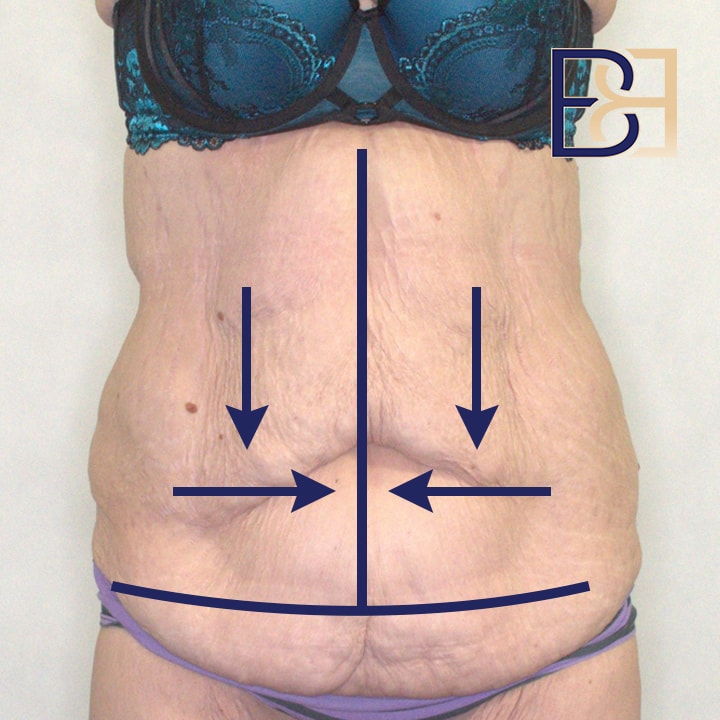
For many post-weight-loss patients, the pattern extends beyond the lower abdomen, and a broader procedure generally fits the anatomy better. Features that often indicate a different procedure include:
- Loose skin affecting the upper abdomen, flanks, or back in addition to the lower apron
- Significant abdominal wall muscle separation (diastasis recti) that the patient wishes to address
- Vertical as well as horizontal skin excess (most often seen after large or rapid weight loss)
- Circumferential skin excess affecting the front of the body, the flanks, and the lower back together
- A preference for a single more comprehensive operation rather than staged surgery across multiple areas
In these cases, abdominoplasty (tummy tuck), Fleur-de-Lis abdominoplasty, extended abdominoplasty, or belt lipectomy (circumferential body lift) may be more appropriate. The correct procedure depends on the individual pattern identified at consultation.
Matching the Procedure to your Pattern
Post-weight-loss patients present with a wide range of skin-excess patterns. The most appropriate operation depends on where the excess skin sits, whether the abdominal wall is involved, and how much of the torso is affected. The groupings below describe how different patterns align with different procedures.
A short clinical vocabulary primer
A few terms appear repeatedly in this section. Understanding them makes the pattern-to-procedure matching clearer:
- Pannus (abdominal apron): the fold of excess skin and soft tissue that hangs from the lower abdomen. Sometimes called a “belly pannus” or abdominal apron.
- Diastasis recti: separation of the abdominal wall muscles (the rectus abdominis), commonly seen after pregnancy or major weight fluctuation. Apronectomy does not address this.
- Vertical skin excess: loose skin in the up-and-down direction. Because the skin gathers perpendicular to its direction of excess, vertical excess typically appears as horizontal folds across the abdomen, most visible when the patient bends forward (folds appear across the front) or compresses the torso vertically. Common after large or rapid weight loss.
- Horizontal skin excess: loose skin in the side-to-side direction, typically visible as vertical folds or bunched-up skin when the patient presses the sides of the abdomen inward toward the midline. Presents as the classic hanging lower abdominal apron when the skin falls under gravity.
- Circumferential skin excess: loose skin extending around the full torso, including the front, the flanks, and the lower back.
Pattern A: Isolated lower abdominal apron
Procedure most often suited: Apronectomy (panniculectomy)
This pattern is characterised by an overhanging lower abdominal apron with limited skin excess elsewhere on the torso. The abdominal wall is reasonably intact, or any muscle separation is not being addressed. Apronectomy removes the apron itself through a lower abdominal incision, without undermining the upper abdomen, without muscle repair, and usually without repositioning the umbilicus. Procedure time is generally 2 to 3 hours depending on tissue volume.
Pattern B: Lower abdominal skin with abdominal wall laxity
Procedure most often suited: Abdominoplasty (tummy tuck)
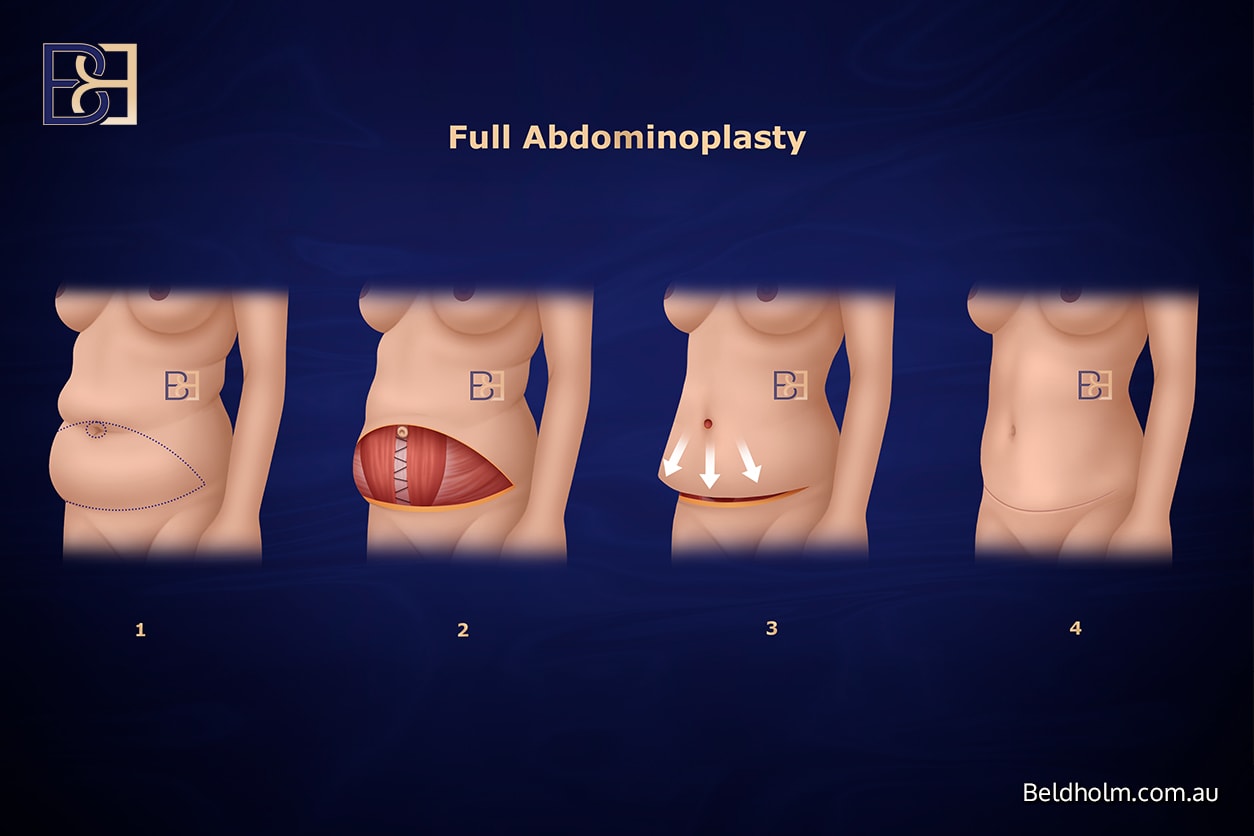
This pattern includes excess lower abdominal skin together with significant separation of the abdominal wall muscles (diastasis recti). Abdominoplasty addresses both: excess skin is removed across the lower and central abdomen, the abdominal wall is tightened through muscle repair, and the umbilicus is repositioned to maintain normal anatomy. This is a more extensive operation than apronectomy and has a correspondingly longer procedure and recovery time.
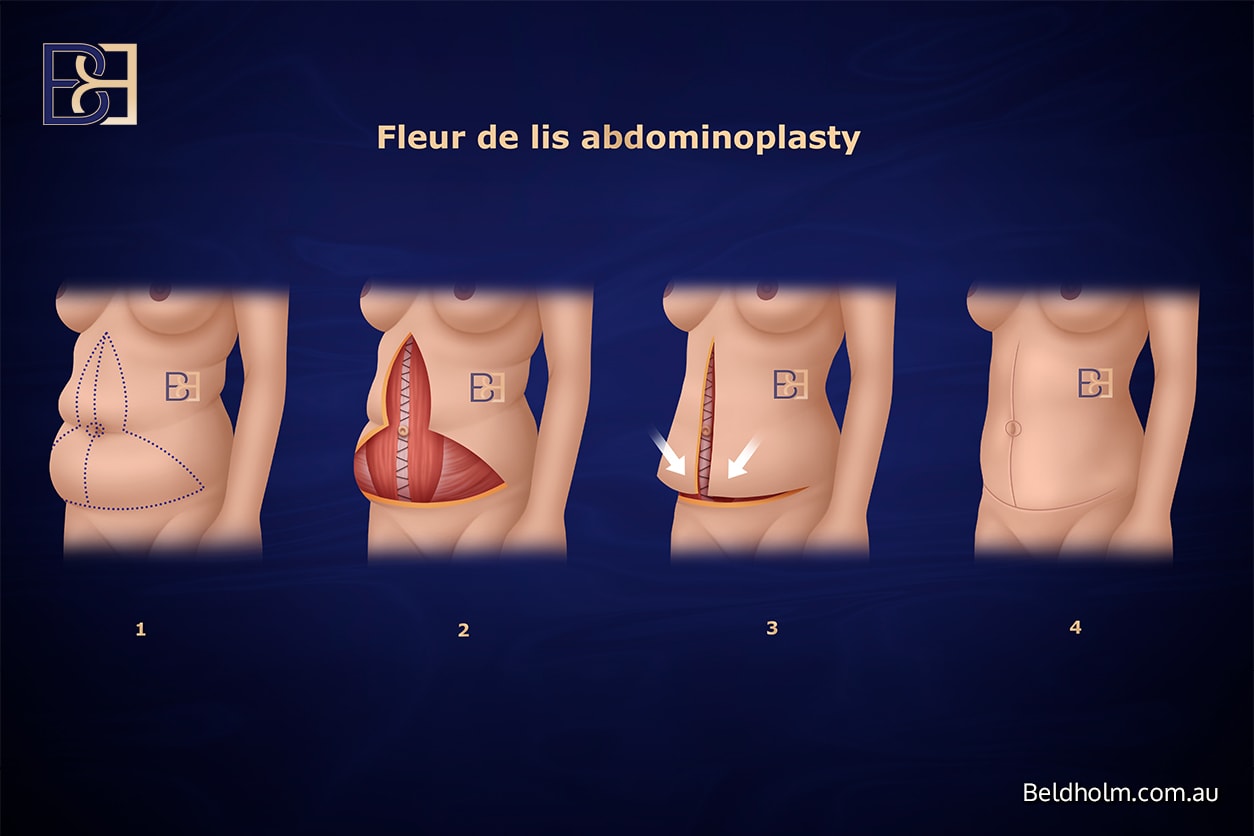
Pattern C: Vertical and horizontal skin excess
Procedure most often suited: Fleur-de-Lis abdominoplasty or extended abdominoplasty
When weight loss has been particularly large, skin excess often runs in both directions at once. A standard horizontal abdominoplasty incision cannot adequately remove vertical excess. Fleur-de-Lis abdominoplasty uses a vertical incision in addition to the horizontal one to remove skin in both directions, at the cost of an additional visible scar running up the midline. Extended abdominoplasty lengthens the horizontal incision toward the flanks to address more side-to-side excess.
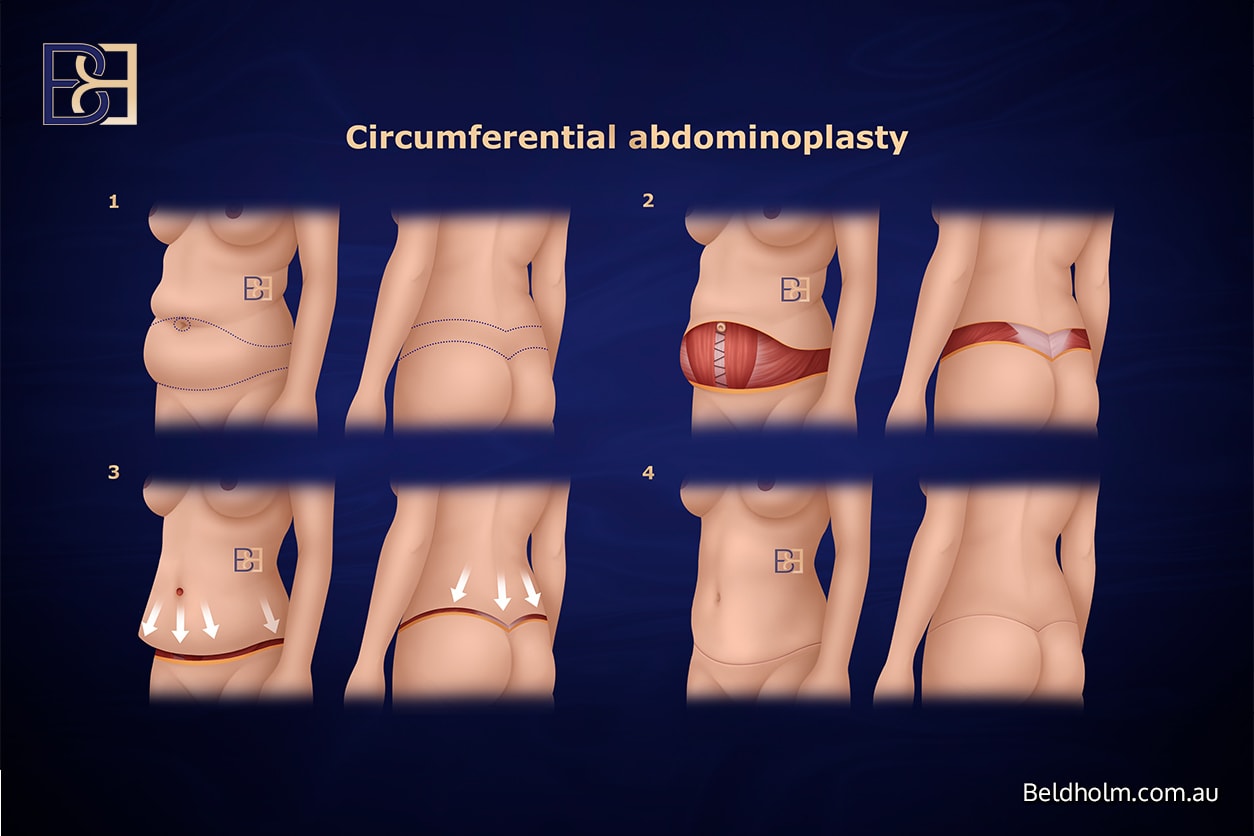
Pattern D: Circumferential skin excess
Procedure most often suited: Belt lipectomy (circumferential body lift)
When skin excess extends around the full torso, including the back and flanks as well as the front, a procedure limited to the anterior abdomen cannot address the full pattern. Belt lipectomy removes skin around the circumference of the torso, typically in a single operation performed with position changes on the operating table. For patients with combined vertical and circumferential excess, a hybrid procedure combining Fleur-de-Lis abdominoplasty with belt lipectomy may be discussed at consultation.
Pattern E: Large pannus with a medical or functional indication
Procedure most often suited: Apronectomy (panniculectomy)
When a hanging pannus causes a medical problem such as recurrent intertrigo (skin irritation or inflammation beneath the fold), chronic chafing, or interference with daily activities, apronectomy is performed to address the functional issue rather than as a cosmetic procedure. Clinical criteria determine whether this applies, and not all patients with a pannus meet them. The distinction is made at consultation following examination and review of medical history.
Determining the right match
The pattern groupings above are a framework, not a diagnosis. The same patient may have features of more than one pattern, and the correct operation often depends on priorities that only become clear during examination. Dr Beldholm performs a detailed torso assessment at consultation and discusses the options that best match the individual’s anatomy, medical history, and goals.
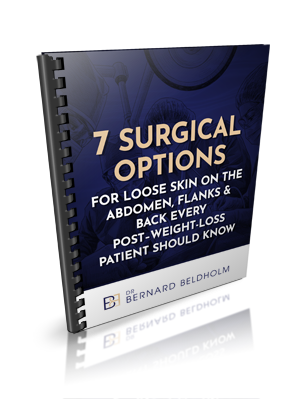
Free Guide: 7 Surgical Options for Loose Skin on the Abdomen, Flanks & Back
For patients who want to understand the full range of post-weight-loss procedures before booking a consultation, Dr Beldholm has prepared a detailed educational guide.
The guide covers each procedure in detail:
- Apronectomy (panniculectomy)
- Standard abdominoplasty
- Fleur-de-Lis abdominoplasty
- Extended abdominoplasty
- Belt lipectomy (circumferential body lift)
- Hybrid circumferential procedures
- Adjunct procedures including suction-assisted lipectomy (liposuction)
Each section describes what the procedure addresses, how it compares with the alternatives, and the factors that influence whether it may be a suitable match for different skin-excess patterns.
Educational content only. Not a substitute for medical advice. Consultation required to determine suitability.
Book your appointment online now
About Dr Bernard Beldholm

I am a FRACS-qualified Specialist Surgeon with more than 15 years of experience in body contouring surgery, working primarily with patients who have achieved significant weight loss or completed their families. My clinical focus is the full range of post-weight-loss and post-pregnancy procedures, including apronectomy, abdominoplasty, Fleur-de-Lis abdominoplasty, belt lipectomy, brachioplasty (arm lift), thighplasty (thigh lift), and mastopexy (breast lift).
Why this range matters for apronectomy patients
Apronectomy is one operation within a broader family of post-weight-loss procedures. Seeing the full range in daily practice is what makes honest pattern-matching possible. When I assess a patient for apronectomy, I am also assessing whether they would be better served by a different operation within that family, and I can discuss each option from direct surgical experience.
Registration and practice details
- Registration: Dr Bernard Beldholm M.B.B.S B.Sc (Med) FRACS. AHPRA Medical Registration number MED0001186274. Specialist registration in Surgery (general surgery).
- Clinic: 30 Belmore Road, Lorn, NSW 2320 (Hunter Valley).
- Hospital: All surgery performed at Maitland Private Hospital, 175 Chisholm Road, East Maitland, NSW 2323.
I take pride in operating with integrity, ethics, and patient-first principles. A GP referral is required before I can see a patient for a surgical consultation.
Preparing for Apronectomy Surgery
Preparation matters more in post-weight-loss surgery than in most other operations. Patients who have lost a significant amount of weight, particularly through bariatric surgery or medical weight-loss programs, often carry nutritional changes that directly affect how the body heals. My pre-operative standard is built around addressing this before surgery rather than after.
Weight stability before surgery

I ask patients to reach a stable weight and maintain it before I operate. My general thresholds are:
- General weight loss: stable weight for at least 6 months (this aligns with Medicare item number criteria where applicable)
- Post-bariatric or rapid medical weight loss: stable weight for 12 to 18 months
If a patient is still actively losing weight, the skin envelope has not yet settled, and operating too early can produce a result that no longer fits the body shape six months later.
Body mass index (BMI)

BMI is one factor in the decision to proceed. A markedly elevated BMI increases surgical and anaesthetic risk, and in some cases I will recommend deferring surgery until weight has reduced further. This is assessed individually at consultation.
Nutrition: the part that most patients underestimate

Post-weight-loss patients, particularly those who have had bariatric surgery, commonly have deficiencies in iron, vitamin B12, vitamin D, and other micronutrients. These deficiencies affect wound healing, scar quality, and infection risk after surgery.
My practice uses a structured two-tier nutrition protocol:
- Tier 1 (universal): Started from the planning phase and continued for at least 4 weeks before surgery. Includes whey protein isolate, a complete multivitamin, vitamin D3 with K2, vitamin C, and zinc. I discuss dosing individually at consultation.
- Tier 2 (blood-guided): Added based on the results of pre-operative blood tests. May include iron, vitamin B12, folate, vitamin A, thiamine (B1), calcium citrate, selenium, and magnesium, depending on what the bloods show.
Supplement details are a clinical conversation that happens at the first consultation and is refined at the Blood Results Consult. The embedded calculator below focuses specifically on pre-operative calorie and protein targets, which are the two nutrition variables patients can most readily track themselves.
Single operation where possible
Where a patient’s pattern allows it, I prefer a single comprehensive operation over a staged approach. For apronectomy, that is already the case: apronectomy is a focused single operation. For patients whose pattern suits abdominoplasty, Fleur-de-Lis abdominoplasty, or belt lipectomy, I will often recommend the comprehensive single operation in preference to multiple smaller surgeries over 18 months. This decision is made individually at consultation, and some medical factors may make staging the appropriate path.
My Consultation Process

My consultation process is structured around two or more appointments before surgery. This is a clinical standard I have set for my own practice, not a regulatory requirement. I use this approach because it gives me time to examine the patient properly, review blood results, and confirm the surgical plan before anything is booked.
Before booking: GP referral
A GP referral is required for all surgical consultations. The referral allows me to review your medical history in context and is necessary for Medicare item numbers to apply where eligibility criteria are met.
Consultation 1: assessment and planning
The first consultation may be conducted in person at my Lorn clinic or via telehealth for patients travelling from Sydney or regional NSW. During this appointment I will:
- Take a detailed medical history, including weight history, bariatric history (where applicable), medications, and previous surgery
- Examine the full torso, including standing, sitting, and bending positions
- Photograph the areas of concern for the clinical record
- Discuss which pattern your presentation fits and which procedures are appropriate
- Provide a nutrition guide and a blood test collection form
- Outline the Tier 1 supplement plan and the direction for sourcing supplements
Patients leave Consultation 1 with the nutrition guide, the blood form, and clear next steps.
Blood Results Consultation: 2 to 4 weeks later
This appointment reviews the results of the pre-operative blood tests. During this consultation I will:
- Review iron, vitamin B12, vitamin D, folate, and other relevant bloods
- Add Tier 2 supplements where the results indicate a specific deficiency
- Discuss the surgical plan in more detail, including timing, hospital stay, and recovery expectations
- Introduce you to my patient coordinator, who arranges a written quote covering surgeon, hospital, and anaesthetist fees, confirms booking dates, and walks through Medicare and private health insurance implications where they apply
Anaesthetic consultation
A separate consultation with the anaesthetist is routine for all post-weight-loss surgery patients. This is usually conducted by phone in the weeks before surgery, with an in-person review at the hospital on the day of admission.
Booking timeline
From Consultation 1 to the date of surgery is typically 1 to 3 months, depending on how quickly bloods are returned, whether additional optimisation is required, and current theatre scheduling at Maitland Private Hospital.
Hospital and Recovery
Maitland Private Hospital

All my surgery is performed at Maitland Private Hospital. The hospital offers features that are particularly relevant for post-weight-loss surgery patients:
- 24-hour doctor cover for the full duration of the admission
- On-site intensive care unit (ICU) for higher-risk patients or any unexpected complications
- Daily ward rounds by me throughout the hospital stay
- Specialist nursing teams familiar with post-weight-loss surgical care
The day of surgery
Apronectomy is performed under general anaesthesia. Procedure time is generally 2 to 3 hours, depending on the volume of tissue being removed and whether any adjunct procedures are being performed at the same time, such as suction-assisted lipectomy (liposuction) of adjacent areas.
Hospital stay
The typical hospital stay for apronectomy alone is 1 to 3 nights. This is shorter than the stay for a full abdominoplasty or a belt lipectomy because apronectomy does not involve muscle repair or circumferential work. Stay length is assessed individually based on recovery progress.
The first two weeks
Post-operative care in the first two weeks is structured around close monitoring:
- 2 to 3 clinic visits per week for nurse and doctor reviews
- Dressing changes and wound inspection at each visit
- LED light therapy offered as an adjunct to support healing
- PICO dressings (negative pressure wound dressings) are typically in place for the first week
- Around day 7, PICO dressings are replaced with Hypafix tape
Daily activity is limited during this period. I give specific instructions at discharge and at each follow-up appointment.
Ongoing follow-up
Longer-term follow-up appointments are scheduled at 1 month, 3 months, 6 months, and 12 months after surgery. Scar maturation and final settling of the skin envelope takes a full 12 months, and the 12-month review is where final healing is formally assessed.
Patients travelling from Sydney or regional NSW
For patients travelling from outside the Hunter Valley, I advise staying within approximately 30 minutes of the hospital for the first 7 to 10 days after surgery. This allows attendance at the close-interval follow-up appointments described above, and access to emergency care if required. My patient coordinator can provide accommodation information at the time of booking.
Risks of Apronectomy Surgery

Apronectomy is a surgical procedure performed under general anaesthesia, and like all surgery it carries risks. Every patient considering apronectomy must understand the potential complications before deciding whether to proceed.
The information below is general. The risks relevant to an individual patient, and the steps taken to minimise them, are discussed in detail at consultation.
General surgical and anaesthetic risks
All major surgery under general anaesthesia carries a range of general risks, including:
- Bleeding and haematoma formation
- Infection
- Adverse reactions to anaesthetic agents
- Blood clots, including deep vein thrombosis (DVT) and pulmonary embolism (PE)
- Delayed wound healing
- Scarring that may be more visible than expected
- In rare cases, more serious complications
The likelihood of each risk varies from patient to patient and depends on factors including:
- Overall health
- Body mass index (BMI)
- Smoking status
- Diabetes control
- Nutritional status
Patients with significant medical comorbidities may be assessed as unsuitable for elective surgery.
Risks specific to apronectomy and post-weight-loss surgery
Apronectomy and other post-weight-loss procedures carry additional risks related to the nature of the tissues being operated on and the patient group typically presenting for surgery. These include:
- Seroma: fluid accumulation under the skin, which may require drainage
- Wound dehiscence: separation of the wound edges before healing is complete
- Skin edge necrosis: loss of viability at the edges of the wound
- Widened or hypertrophic scars
- Persistent sensory changes over the lower abdomen
- Asymmetry
- Revisional surgery may be required in some cases
Two additional points are specific to the post-weight-loss patient group:
- Post-weight-loss patients often carry a higher baseline risk of delayed wound healing, because of the nutritional and metabolic changes that accompany significant weight loss.
- A residual mons pubis or flank fullness may remain after apronectomy if the pattern of excess extends beyond the apron itself. This is a reason the pattern-matching discussion at consultation matters.
How risk is managed in this practice
Dr Beldholm’s pre-operative protocols are designed to reduce, where possible, the risks most specific to the post-weight-loss patient group. These include:
- The minimum 6-month weight stability threshold
- The Tier 1 nutritional protocol
- The blood-guided Tier 2 protocol
- The two-or-more-consultation structure
- The close-interval follow-up schedule in the first two weeks after surgery
These measures cannot eliminate surgical risk. All surgery carries risks. Results vary between individuals. A consultation is required to determine whether apronectomy is appropriate for a specific patient.
Frequently Asked Questions
What is the difference between apronectomy and abdominoplasty?
Apronectomy (panniculectomy) removes the overhanging lower abdominal skin and fat apron through a lower abdominal incision. It does not tighten the abdominal wall muscles, it does not reposition the umbilicus, and it does not address skin excess above the umbilicus.
Abdominoplasty (tummy tuck) is a more extensive operation. It removes excess skin and fat across the lower and central abdomen, repairs any separation of the abdominal wall muscles (diastasis recti), and repositions the umbilicus. Procedure time, hospital stay, and recovery are all longer for abdominoplasty than for apronectomy.
Which operation is appropriate depends on the patient’s pattern of skin excess and the state of the abdominal wall. This is assessed at consultation.
Is apronectomy covered by Medicare?
Many post-weight-loss procedures, including apronectomy and abdominoplasty, have Medicare item numbers that may apply when specific clinical criteria are met. These criteria typically relate to the presence of a medical or functional problem, the amount of weight loss, and the period for which weight has been stable.
Eligibility is assessed individually at consultation, and criteria apply. A GP referral is required. Not every patient with a pannus or loose skin meets the criteria, and patients who do not meet them may still choose to proceed as a self-funded procedure. The patient coordinator provides a written quote covering surgeon, hospital, and anaesthetist fees, and confirms booking dates after the Blood Results Consultation.
How long does apronectomy surgery take?
Apronectomy is generally a 2 to 3 hour procedure under general anaesthesia, with the exact time depending on tissue volume and whether any adjunct procedures are performed at the same time.
How much weight loss should be maintained before apronectomy?
Dr Beldholm asks patients to be at a stable weight for at least 6 months before surgery in the general case. For patients who have lost weight through bariatric surgery or rapid medical weight loss, the weight stability period is 12 to 18 months. Operating before the skin envelope has settled can produce a result that no longer fits the body shape six months later.
Can apronectomy be combined with other procedures?
Yes, in appropriate cases apronectomy can be combined with procedures that address different anatomical areas, such as:
- Brachioplasty (arm lift)
- Thighplasty (thigh lift)
- Mastopexy (breast lift) or other breast procedures
- Suction-assisted lipectomy (liposuction) of adjacent areas such as the flanks
Apronectomy is not combined with abdominoplasty, because abdominoplasty is a more extensive operation that already includes removal of the abdominal apron. The two are alternatives for the same region, not complementary procedures. Which operation fits a patient’s pattern is determined at consultation.
Combination surgery decisions are made on the basis of the specific pattern of skin excess, medical suitability, and overall anaesthetic time. Longer combined operations carry additional anaesthetic and surgical risk, which is factored into the discussion.
How long is the recovery from apronectomy?
The typical hospital stay is 1 to 3 nights. Close-interval follow-up continues for the first two weeks, with 2 to 3 clinic visits per week for nurse and doctor reviews. Most patients can return to light daily activity within a few weeks, but specific return-to-work and return-to-exercise timeframes are individual and are discussed at each post-operative visit. Scar maturation and final skin settling take a full 12 months.
Book a Consultation with Dr Beldholm
Apronectomy is one option within the broader range of post-weight-loss abdominal procedures. Determining whether apronectomy, abdominoplasty, Fleur-de-Lis abdominoplasty, or another procedure is appropriate requires a detailed clinical assessment.
A GP referral is required for all surgical consultations with Dr Bernard Beldholm FRACS, Specialist Surgeon. Consultations may be conducted in person at the Lorn clinic or by telehealth for patients travelling from Sydney and regional NSW.
Or call the clinic on (02) 4934 5700.
Dr Beldholm’s companion guide, 7 Surgical Options for Loose Skin After Weight Loss, covers the seven procedures most often considered after significant weight loss. It explains how to identify your pattern of loose skin, what each procedure involves, and what to expect from recovery.
Results vary between individuals. All surgery carries risks. A consultation is required to determine suitability. Medicare eligibility is assessed individually and criteria apply.