


Surgery for Loose Abdominal Skin After Weight Loss
Abdominoplasty Assessed and Planned Around your Pattern of Loose Skin, not the Other Way Around.
Not every patient’s loose skin after weight loss looks the same. Some have excess mainly below the umbilicus. Others have an upper abdominal roll, or skin that continues around to the flanks and back. The surgery that addresses one pattern will leave another patient with residual skin.
Dr Bernard Beldholm FRACS is a Specialist Surgeon based at Maitland Private Hospital, with 15+ years focused on post-weight-loss body contouring. The consultation starts with your pattern, and the surgical plan follows from there.
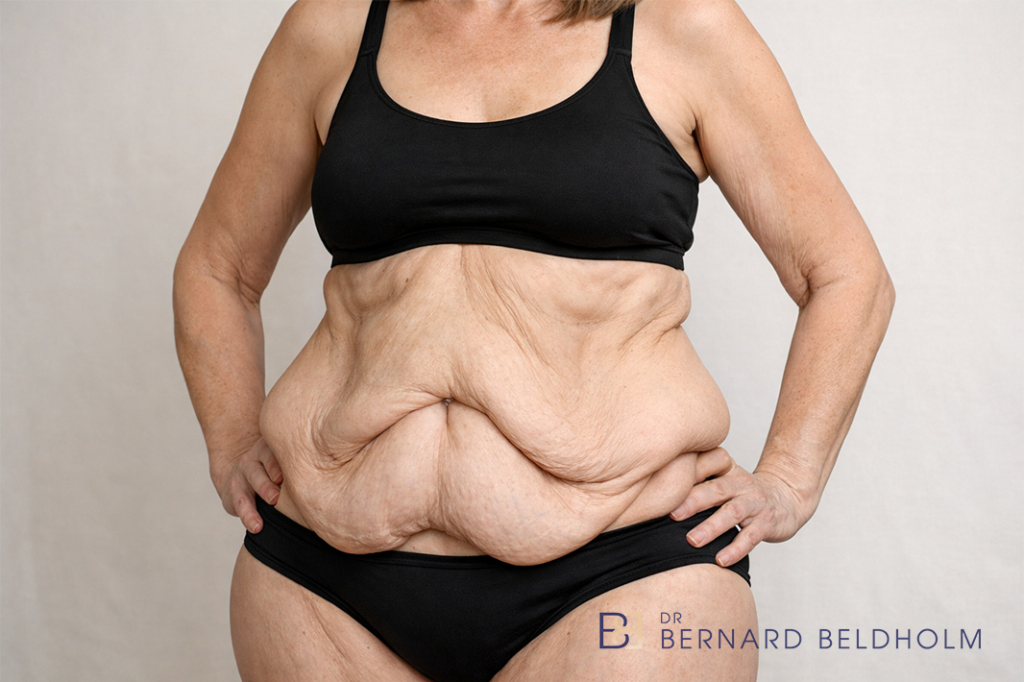
The Dr Beldholm Approach: One Operation, Where Possible
Matching the procedure to the pattern is where my clinical thinking starts, but it is not where it ends.
The operation itself should address as much of the loose skin as can safely be addressed in a single procedure, where the pattern allows. That principle is what determines which operation I offer a patient.
A standard abdominoplasty is the right answer for some.
For others, a Fleur-de-Lis combined with an upper abdominal lipectomy (a dual-vector abdominoplasty) covers the excess that a standard approach would leave behind.
For patients whose laxity continues around the torso, a belt lipectomy combined with a vertical lipectomy (a hybrid circumferential abdominoplasty) addresses three directions of skin excess in one operation rather than staged across two.
The reason I plan this way is practical. My patients consistently tell me they don’t want multiple staged operations. Every staging is another recovery, another period off work, another anaesthetic, another round of dressings and follow-up.
Planning the right procedure from the start for their specific pattern reduces the likelihood of needing a revision or a second operation later.
The flip side is that a single larger operation carries larger physiological demands than a smaller staged one. More tissue removed, a longer procedure, a wider area healing at once.
That raises the importance of pre-operative preparation rather than reducing it. Weight stability, nutritional status, and overall health all matter more when the aim is to address as much as possible in one operation.
Whether any of this applies to you is a judgment I make at your consultation.
Will My Skin Retract On Its Own, or Do I Need Surgery?
This is the first question most patients ask once the weight is off and the skin is not going with it. The honest answer has two parts.
If your skin may still retract
Skin has some capacity to retract, particularly in younger patients, when weight loss has been gradual, and when the amount of weight lost is modest.
If those conditions apply to you, continuing to work toward weight stability and allowing the skin time to settle (generally 12 to 18 months) is worth doing before considering surgical options.
If your skin is unlikely to retract further
After significant weight loss, the skin is unlikely to retract further on its own. This is especially true when the loose skin is substantial, or has been present for a year or more without changing.
Non-surgical tummy skin tightening options (radiofrequency, ultrasound, topical treatments) can produce modest improvement for minor laxity but do not address substantial loose skin, overhanging tissue, or underlying muscle separation.
For patients in this position, the options that meaningfully address the concern are surgical.
Which group you fall into is a clinical judgement that rests on physical assessment. It is one of the first things a consultation clarifies, and it determines everything that follows.
Matching the Procedure to Your Pattern
The procedure that may be appropriate for abdominal loose skin after weight loss depends on where the excess sits, how much there is, and what the underlying abdominal wall looks like.
Loose skin after significant weight loss generally shows up in one of two directions, sometimes both:
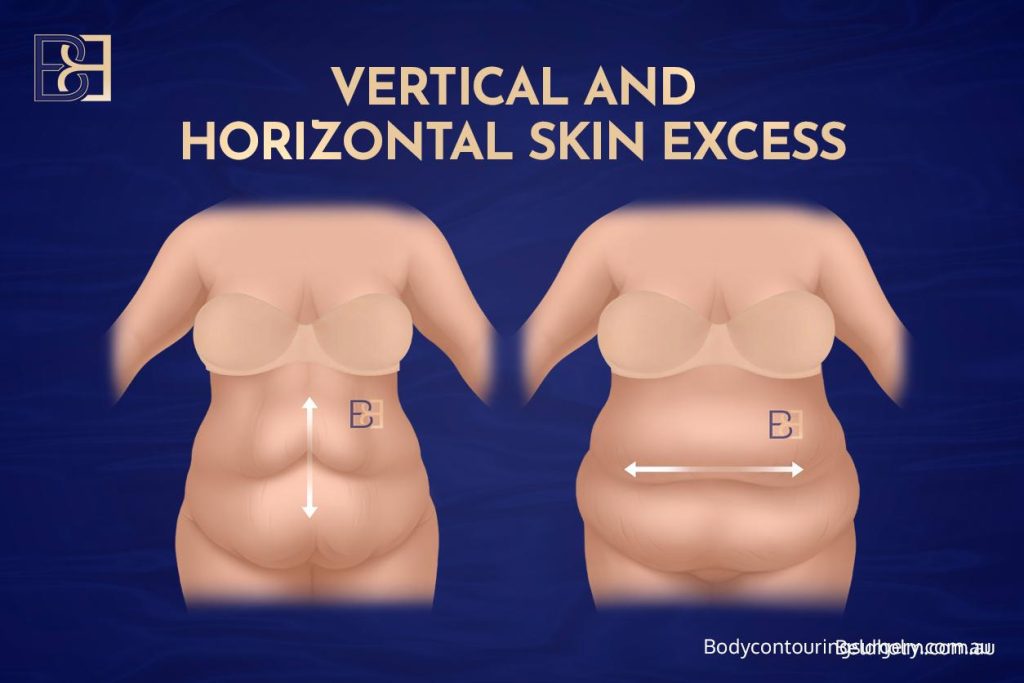
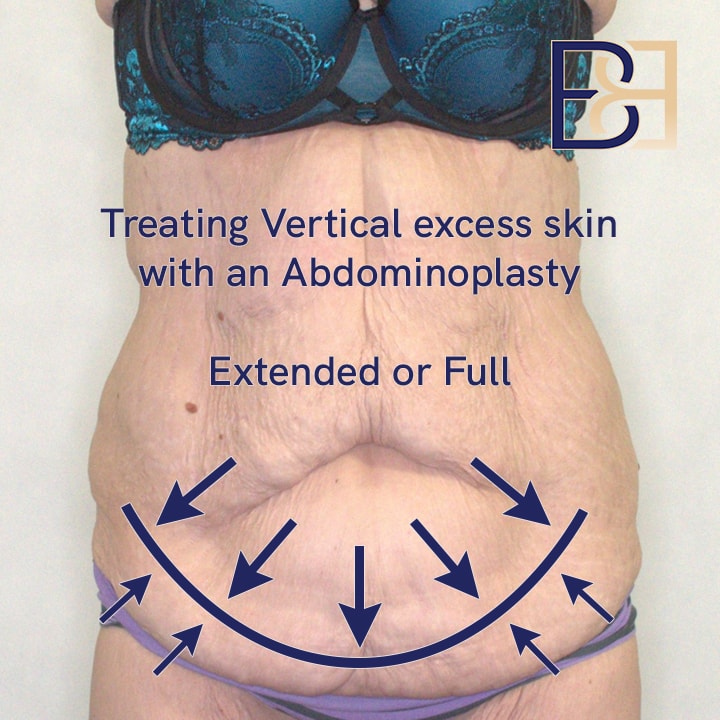
Vertical excess. Loose skin in the up-and-down direction, under the pull of gravity. This is the overhanging apron, or skin that sags downward from above the umbilicus. When this excess also continues around the flanks to the lower back, it is described as circumferential.
Horizontal excess. Loose skin in the side-to-side direction. This is mid-abdominal laxity, often visible when you bend forward as skin hanging in the middle of the abdomen between the flanks.
Most patients have one of these as the dominant pattern. Some have both, which is the situation where combined procedures (dual-vector abdominoplasty, hybrid circumferential abdominoplasty) are considered.
The main options for post weight loss skin removal surgery and the removal of excess abdominal skin are set out below, grouped by the pattern of excess they address.
When skin excess is mainly lower abdominal (vertical excess)
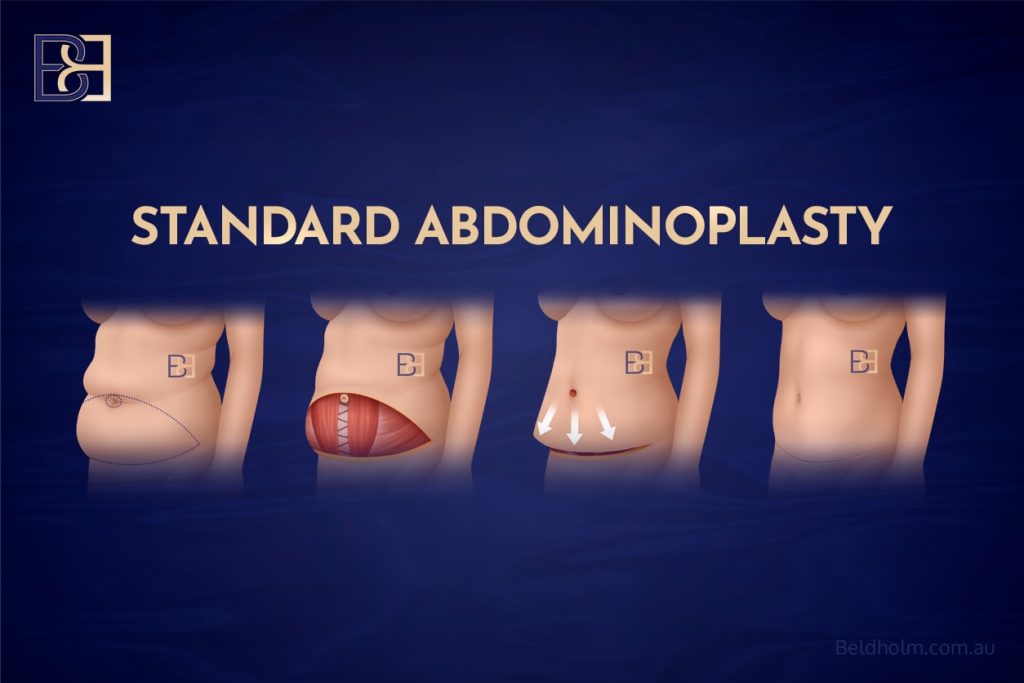
Standard abdominoplasty (tummy tuck post weight loss). A lower abdominal incision is used to remove excess skin below the umbilicus. The umbilicus is repositioned and diastasis recti is repaired where present. Generally considered when vertical excess sits mainly in the lower abdomen.
When vertical excess extends to the flanks
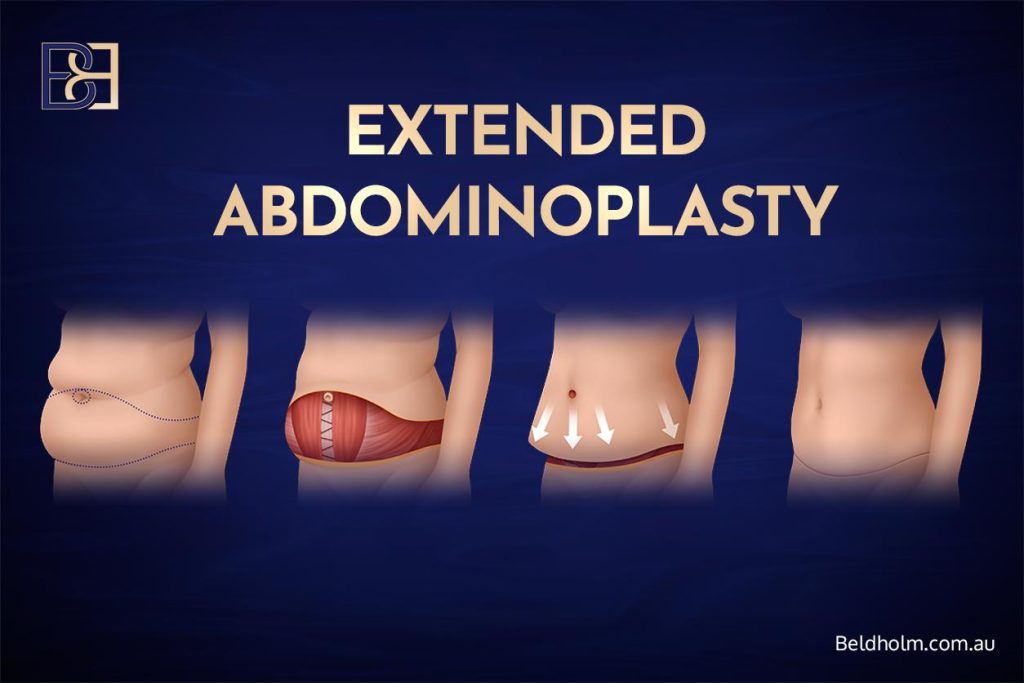
Extended abdominoplasty. Removes excess skin from the lower abdomen, the lateral abdomen and the flank region. Considered when vertical laxity extends laterally but does not continue around the torso.
When vertical excess is circumferential
Belt lipectomy (circumferential body lift). Removes excess skin in a circumferential pattern around the torso, addressing the abdomen, flanks and lower back in a single operation. Considered when vertical laxity extends around the trunk.
When excess is horizontal (mid-abdominal)
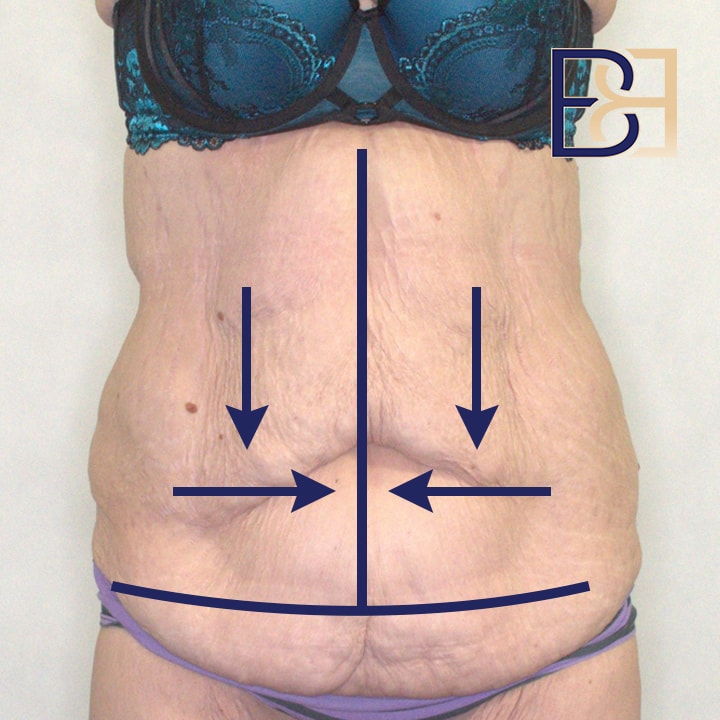
Fleur-de-Lis abdominoplasty. Uses a vertical incision in addition to the horizontal one, to remove skin that sits side-to-side across the mid-abdomen. Considered for patients whose dominant pattern is horizontal laxity.
When both vertical and horizontal excess are present
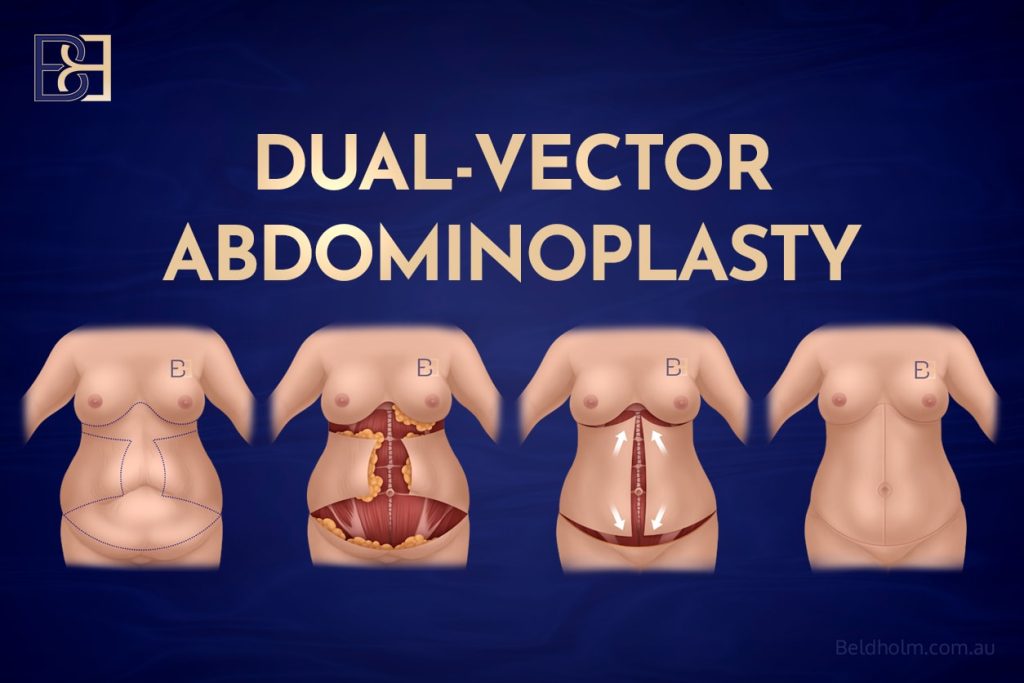
Dual-vector abdominoplasty. Addresses three zones of the abdomen in one operation. It combines a Fleur-de-Lis abdominoplasty (which addresses vertical excess in the lower abdomen and horizontal excess across the midline) with an upper abdominal lipectomy (which addresses vertical excess in the upper abdomen through an incision beneath the breast crease). Post-weight-loss patients frequently have loose skin in the upper abdomen that a standard Fleur-de-Lis alone leaves behind. Dual-vector addresses all three zones in a single operation.
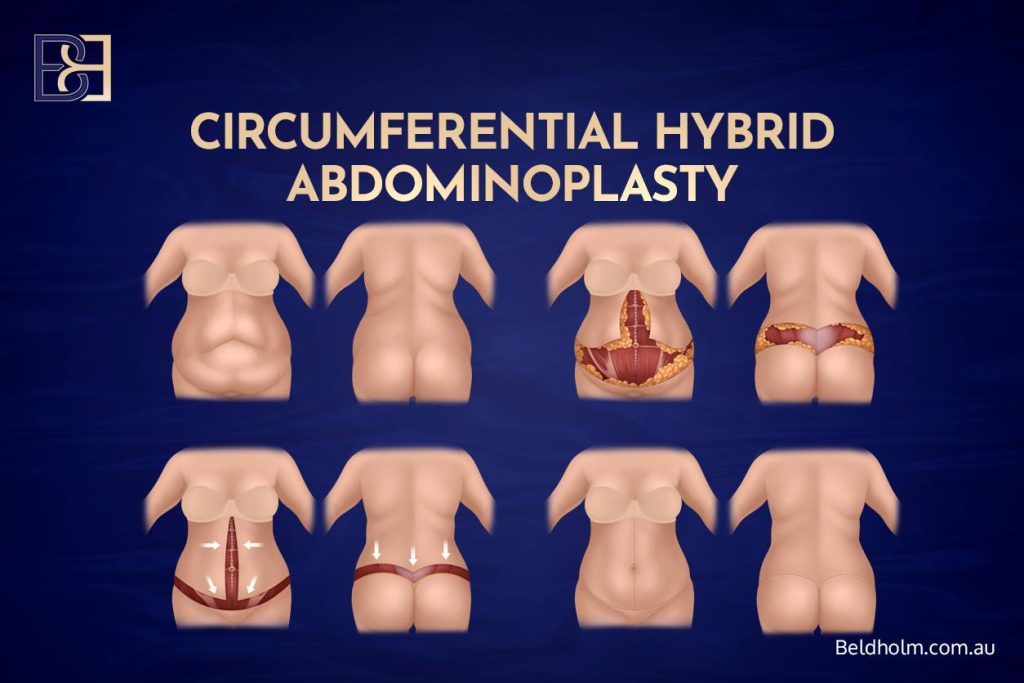
Hybrid circumferential abdominoplasty. Combines a Fleur-de-Lis (for horizontal excess) with a belt lipectomy (for vertical excess extending around the torso). Considered for patients whose excess is both horizontal and circumferential.
When the priority is the removal of an overhanging pannus
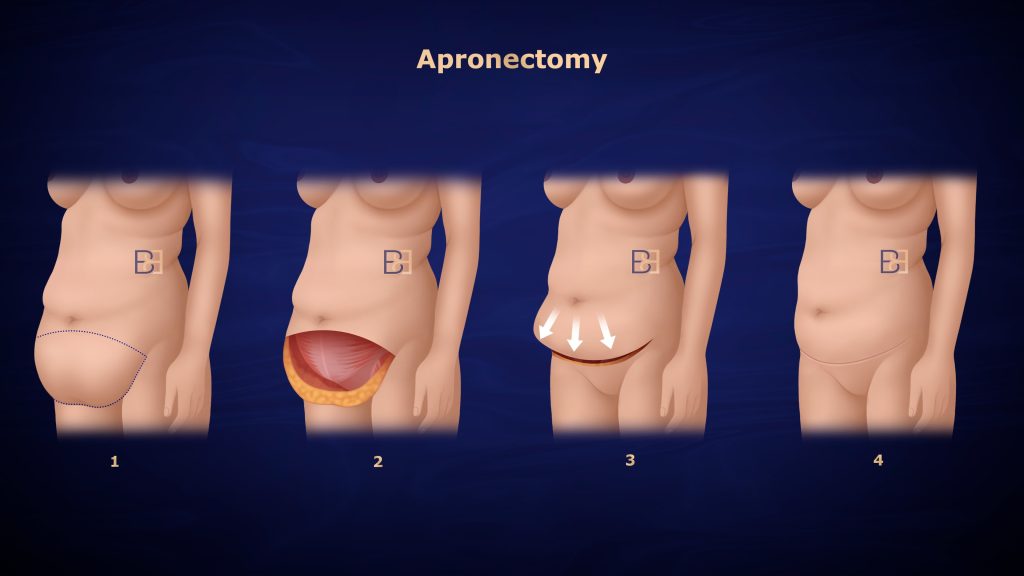
Apronectomy (panniculectomy). Removes an overhanging abdominal pannus (apron) without the full cosmetic refinement of an abdominoplasty. Considered when removal of the overhanging skin itself is the primary clinical concern.
Combined procedures and adjuncts
Abdominoplasty with VASER liposuction. VASER (ultrasound-assisted lipectomy) is used during the same operation to address residual fat deposits in the flanks, upper abdomen or adjacent areas that would not be removed by skin excision alone. This is one of the ways the surgical plan can address more of the excess in a single operation.
Suction-assisted lipectomy (liposuction). Standard liposuction may be used as a general adjunct where clinically appropriate, either combined with abdominoplasty or considered separately where the primary clinical issue is residual fat rather than skin excess.
Which option (or combination) is considered for you depends on individual assessment at consultation.
Want to Understand Your Options Before Consultation?
There’s more than one surgical approach, and the right one depends on your specific pattern of loose skin. Understanding the options ahead of your consultation helps you ask better questions and make a more informed decision.
Dr Beldholm has written a free clinical guide covering the seven main surgical options for loose skin on the abdomen, flanks and back after major weight loss.
Inside the guide:
- The seven surgical options most commonly considered after major weight loss
- How each procedure differs in incision pattern, scope of tissue removal, and expected recovery
- The factors a Specialist Surgeon uses to determine which procedure fits which pattern
- Questions to ask at your consultation
Dr Beldholm: 15+ Years in Post-Weight-Loss Surgery

I’m a Fellow of the Royal Australasian College of Surgeons (FRACS) and a Specialist Surgeon based in the Hunter Valley, NSW.
For over 15 years my clinical focus has been post-weight-loss and post-pregnancy body contouring surgery. Most of the patients I see each week have lost significant weight through lifestyle change, bariatric surgery, or medical weight-loss programs.
I operate at Maitland Private Hospital, which has 24-hour on-site medical cover and an on-site Intensive Care Unit.
Many of the patients searching for a weight loss skin removal surgeon in NSW travel to consult with me from across the state and interstate. I accept GP referrals from both.
Preparing for Surgery: Why Planning and Nutrition Matter

There are two reasonable approaches to post-weight-loss body contouring surgery. One is to divide the work across multiple staged operations, which can be appropriate when medical factors mean a smaller operative load is safer. The other is to address as much as can safely be addressed in a single operation, which is the approach I take by default.
I discuss both approaches with my patients at consultation, and the right choice depends on individual assessment.
When the single-operation approach is the right one, pre-operative preparation carries more weight. A single larger operation means a larger healing demand on you, and the preparation has to match it.
Nutritional status

Loose abdominal skin is not the only thing that can remain after significant weight loss. Nutritional gaps often do too, particularly after bariatric surgery, where absorption of protein, iron, vitamin B12, vitamin D and zinc can be reduced even when you feel well.
Low protein in particular affects wound healing, and wound healing is exactly what a larger post-weight-loss procedure asks more of.
Pre-operative nutritional optimisation matters because it:
- Supports wound healing and reduces the risk of delayed healing
- Reduces perioperative complication risk
Weight stability
I generally recommend that your weight be stable for 6 to 12 months before abdominoplasty after weight loss is considered, so the surgical plan reflects the body contour that will remain.
What preparation looks like for my patients
- Assessment of nutritional status where relevant
- Confirmation of weight stability
- A discussion of realistic recovery timelines and what is involved post-discharge
A tool I built for my patients
To help my patients plan the nutritional side of preparation, I’ve built a pre-surgical nutrition tool that calculates suggested daily calorie and protein intake in the lead-up to surgery.
It’s embedded directly on this page below. I built it specifically for the patients I prepare for larger post-weight-loss procedures, where this preparation matters most.
A detailed pre-surgery checklist is also available for patients preparing for post-weight-loss abdominoplasty.
What to Expect at Your Consultation

I see all my patients at least twice before surgery, and often more. This is my clinical standard.
The first consultation is for assessment. The second is for review of your blood results and final surgical planning. Some consultations happen in person, others by phone or video, whichever is easier for you.
All post-weight-loss patients also have a separate anaesthetic consultation before surgery. This is a routine part of how my practice runs.
Most patients take 1 to 3 months between first consultation and being booked for surgery. Planning the operation well takes time, and this timeline gives us the space to do it properly.
First consultation (approximately 1 hour)
At your first consultation, I will:
- Review your medical history and weight-loss journey
- Examine you clinically to assess the pattern of loose skin and the abdominal wall
- Take standardised clinical photographs in our private changing facilities
- Discuss the surgical options that may be considered for your pattern
- Explain risks, recovery, scarring and post-operative care
- Discuss non-surgical options, and the option of not proceeding with surgery
You’ll leave with a pre-surgery nutrition guide, a blood test request form, and a list of core supplements to start immediately. Your blood tests should be done that day or within a few days.
Blood results consultation (2 to 4 weeks later)
Your second consultation is typically scheduled 2 to 4 weeks after the first. By then your blood results are back and ready to review together. At this appointment, I:
- Go through your blood results with you
- Add any further supplements where your results show they’re needed
- Discuss your surgery plan and answer any remaining questions
My patient coordinator is available at this point to help with surgical dates and quotes.
Anaesthetic consultation
All of my post-weight-loss patients have a separate pre-operative anaesthetic consultation. This is generally a phone consultation with my anaesthetist, who reviews your medical history and discusses any medications you’re taking. It’s rare for this consultation to need to happen in person. On the day of surgery, your anaesthetist will examine you when you come into the hospital.
This appointment is booked for you as part of the surgical planning process.
Further consultations
Many patients want more than two consultations, and I expect that. Major surgery is a significant decision. Take the time you need.
Written quote
The written quote comes in two parts. My patient coordinator prepares the surgical fees, usually within 1 to 2 days, and sends your information to the hospital and anaesthetist. Their quotes typically take 1 to 2 weeks to come back.
The full quote includes surgical fees, applicable MBS item numbers, GST on cosmetic items, and hospital and anaesthetist estimates.
If you have private health insurance, the hospital will run a health fund check. You usually won’t pay for the hospital portion when you have cover, though eligibility depends on your fund and policy.
Medicare rebate eligibility is assessed individually at consultation. Specific MBS item number criteria apply.
GP referral

A GP referral is required before your first consultation. Your usual GP, or a GP working independently of me, can provide this.
Telehealth
Telehealth is available for your initial consultation if you are travelling from outside the Hunter Valley. An in-person consultation with me is required before any surgery is scheduled.
Hospital Stay and Recovery

I perform abdominal skin removal surgery, including abdominoplasty post weight loss, at Maitland Private Hospital, an accredited private hospital with 24-hour doctor cover and an on-site Intensive Care Unit.
Your inpatient stay depends on the operation. A standard abdominoplasty is typically 1 to 3 days. Larger procedures such as a hybrid circumferential abdominoplasty can be 5 to 7 days.
During your hospital stay
- I will see you on daily post-operative rounds
- Nursing care, pain management, and wound monitoring are provided by the ward team
- Early mobilisation is guided by the clinical team
- If you’ve had bariatric surgery, I’ll arrange for a dietitian to review you in hospital to make sure your nutrition is optimised through the inpatient phase
After discharge
- Intensive follow-up during the first two weeks: typically 2 to 3 appointments per week for nurse or doctor review, LED light therapy, and dressing changes
- PICO dressings are usually replaced with Hypafix tape around day 7
- I’ll see you again at 1, 3, 6 and 12 months post-surgery
- All routine follow-up is included in the procedure fee
If you are travelling from further afield
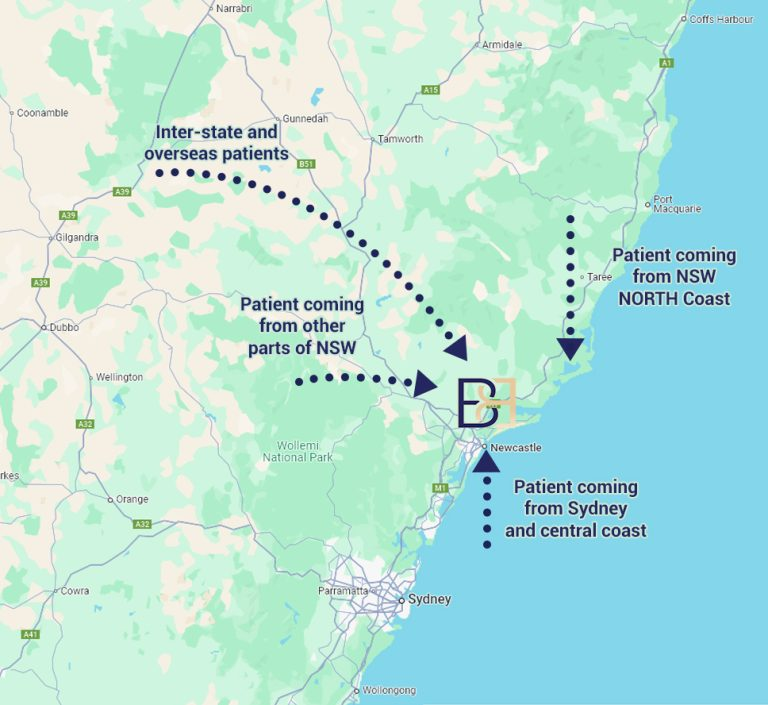
I recommend my interstate and distant-NSW patients stay locally for approximately 7 to 10 days after surgery, so early follow-up happens during the initial recovery phase. Ongoing care can then be coordinated with your local GP, with telehealth review where appropriate.
Recovery timelines vary from patient to patient depending on the procedure performed, the amount of tissue removed, and individual healing factors. Return to normal activity is gradual over several weeks to months.
Risks of Abdominal Skin Removal Surgery

All surgery carries risks. The specific risks of abdominoplasty after weight loss are discussed in detail at consultation.
Possible risks include:
- Bleeding and haematoma
- Infection
- Delayed wound healing or wound breakdown
- Fluid collection (seroma)
- Post-operative pain and discomfort, managed with prescribed pain relief
- Changes in skin sensation, which may be temporary or permanent
- Scarring, including hypertrophic or keloid scarring
- Deep vein thrombosis (DVT) and pulmonary embolism (PE)
- Complications related to general anaesthesia
- Need for revision surgery
- Asymmetry or contour irregularities
Scars from abdominoplasty are permanent. Scar location depends on the specific operation performed and is discussed in detail at consultation. While scars generally fade over 12 to 18 months, they do not disappear entirely.
The risks specific to you depend on your individual medical history, any comorbidities, the procedure performed, and your post-operative course. These are explained in detail at consultation along with how they are monitored and managed.
Frequently Asked Questions
What is abdominoplasty after weight loss?
Abdominoplasty after weight loss (commonly called a tummy tuck post weight loss) is a surgical procedure that removes excess abdominal skin and tissue, repositions the umbilicus, and repairs abdominal muscle separation (diastasis recti) where present. The specific technique used depends on the pattern of loose skin and is determined at consultation.
How is my procedure chosen?
Procedure selection is based on where your loose skin sits, how much there is, and the state of the underlying abdominal wall. Some patients have mainly lower abdominal excess, which is suitable for standard abdominoplasty. Others have vertical and horizontal laxity, which is suitable for Fleur-de-Lis or dual-vector approaches. Others have laxity extending around the torso, which is suitable for belt lipectomy or hybrid circumferential abdominoplasty.
Do non-surgical skin tightening stomach procedures work?
Non-surgical skin tightening has a limited effect on substantial loose skin after significant weight loss. For minor laxity they can produce modest improvement; for overhanging tissue or underlying muscle separation they do not address the underlying issue. Whether you fall into the “wait and see” group or the “surgical options” group is a clinical judgement that rests on physical assessment at consultation.
Where is the surgery performed?
At Maitland Private Hospital in the Hunter Valley, NSW, which has 24-hour doctor cover and an on-site ICU.
Is there a Medicare rebate?
Medicare rebate eligibility for abdominoplasty after weight loss is assessed individually at consultation. Specific MBS item number criteria apply.
How long is the waiting list?
Typical waiting time between finalised quote and surgery is 1 to 3 months, subject to theatre availability and pre-operative readiness.
Take the Next Step
Two ways to find out whether surgery for loose abdominal skin may be appropriate for you.
In person at the Hunter Valley clinic, or via telehealth
for patients travelling from further afield.
7 Surgical Options for Loose Skin on the Abdomen, Flanks & Back
Every Post-Weight-Loss Patient Should Know