


Removal of Breast Implants (Explant Surgery) in Newcastle NSW
Deciding to have your breast implants removed is a considered decision, and the reasons behind it are different for every patient. Some patients come to me because an implant has ruptured, or because they have developed capsular contracture. Some are following up concerns about BIA-ALCL, or symptoms they have connected to their implants. Others have reached a point where they no longer want implants and would prefer to have them taken out.
In my practice I talk through why you are considering removal, what taking out the implants (and, where relevant, the surrounding capsule) involves, and what your breasts are likely to look and feel like afterwards. That last part matters, because removal changes breast volume, shape and position, and I want you to have a clear picture of that before you decide anything.
This page explains what implant removal involves, the options you have at the time of removal, and how the process works in my practice at Maitland Private Hospital in the Hunter Valley.
Book your appointment online now
What implant removal involves
Implant removal is done under general anaesthetic. Wherever possible I take the implant out through your existing scar, so you are not left with an additional one. Once the implant is out, the decision that shapes the rest of the operation is what to do about the capsule.
The capsule
Whenever a breast implant is in place, the body forms a layer of scar tissue around it called a capsule. This is a normal response to any implant. In many patients the capsule stays thin and soft and causes no trouble. In others it thickens, tightens or calcifies, which is what happens with capsular contracture.
At removal there are a few options for the capsule:
- Leaving the capsule in place. If the capsule is thin, healthy and causing no problems, it does not always need to come out. A thin capsule is often reabsorbed by the body over time.
- Partial capsulectomy. I remove part of the capsule and leave the rest, usually where one section is thickened, or where taking out all of it would risk nearby structures such as the ribs or the lining of the chest wall.
- Total capsulectomy. I remove the whole capsule along with the implant, in pieces. This is often the choice when the capsule is thick, calcified or contracted.
- En bloc capsulectomy. I remove the implant and the capsule together as one intact unit, without opening the capsule. This is a more involved operation and is not always achievable, depending on how thin or how adherent the capsule is. It is the approach I plan for when there is confirmed or suspected BIA-ALCL, where keeping the capsule intact around the implant matters.
Which of these suits you depends on the state of your capsule, why you are having the implants removed, and what I find during the operation. I talk through the likely plan with you beforehand, and part of the decision is made in theatre, based on what the tissue looks like once I am operating.
Removing the capsule, and removing it intact, adds time and complexity to the operation compared with taking the implant out on its own. Where drains are needed, I will tell you before surgery and explain how they are managed.
Why patients consider implant removal
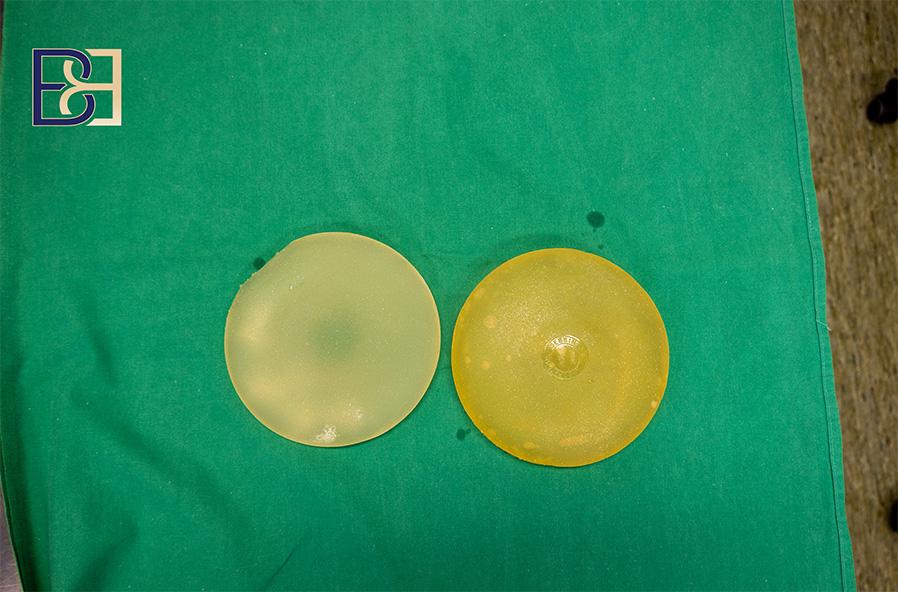
There is no single reason patients decide to have their implants removed. In my practice the common ones are these.
A ruptured or leaking implant. Implants do not last forever. Over time an implant shell can weaken and fail. A silicone implant can leak without any change you are able to feel, which is one reason breast imaging matters. A saline implant that fails usually deflates noticeably. A confirmed or suspected rupture is a common reason to remove or exchange an implant.
Capsular contracture. The body forms a capsule around every implant. When that capsule thickens and tightens, it can change the shape of the breast, make it feel firm, and become uncomfortable or painful. Taking out the implant, and usually the capsule with it, is one way this is managed.
BIA-ALCL. Breast implant associated anaplastic large cell lymphoma (BIA-ALCL) is a rare cancer of the immune system, not breast cancer. It has been linked with textured-surface implants. It most often shows up as a fluid collection or swelling around an implant some years after surgery. This is not something I manage myself. If you have symptoms or concerns that point to it, your GP is the right first port of call, and a suspected or confirmed case is referred on to a breast cancer surgeon who manages it as part of a specialist team.
Symptoms you connect to your implants. Some patients experience a range of general symptoms, such as fatigue, joint aches or difficulty concentrating, that they associate with their breast implants. This is often referred to as breast implant illness. It is not currently a formally recognised medical diagnosis, and research into it is ongoing. Some patients report that their symptoms improve after their implants are removed, and others do not. I take these concerns seriously and I do not dismiss them, and I also cannot promise that removal will resolve them. We talk through what is known and what is not, so you can make an informed decision.
A personal decision to no longer have implants. Some patients reach a point where implants no longer suit their life or their preferences, and they would like them taken out. That is a valid reason on its own. You do not need a medical problem to consider removal.
Whatever the reason, my job is to give you accurate information about what removal involves and what to expect afterwards, so the decision is yours and it is well informed.
What your breasts may look like after removal
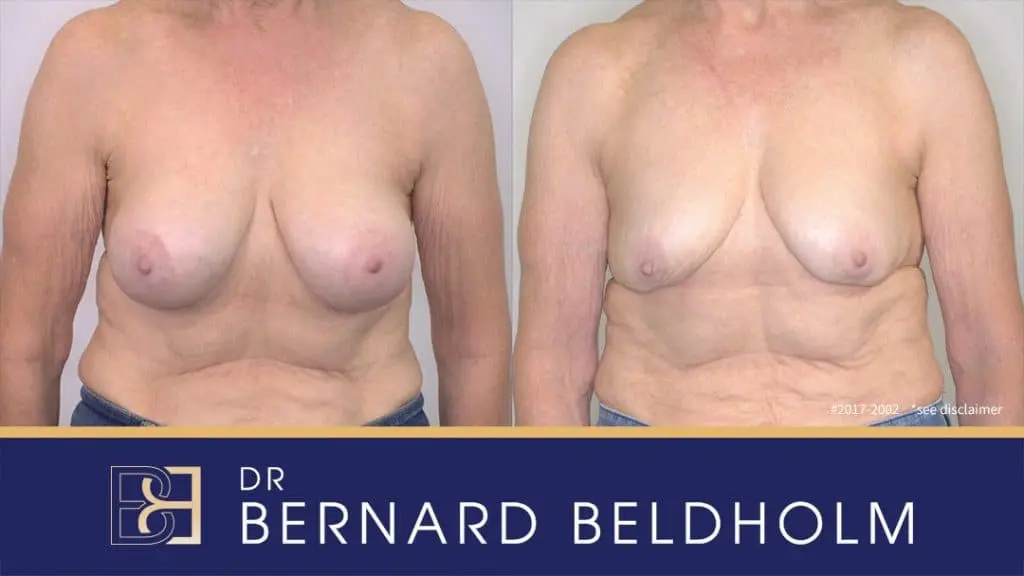
Disclaimer: Results vary, Surgery has risks, seek 2nd opinion. operation performed by Dr Beldholm
Taking the implants out changes the breast, and it is important you have a realistic picture of that.
An implant adds volume and fills the skin envelope. When it comes out, that volume goes with it. What the breast looks like afterwards depends on several things: how much of your own breast tissue you had to begin with, how large the implants were, how long they were in place, your skin quality, and your breast position beforehand.
In general terms:
- Volume. The breast will be smaller than it was with the implant in place. If you had little breast tissue, or the implants were large, the difference will be more noticeable.
- Skin and shape. Skin that has been stretched over an implant for years does not always draw back tight once the implant is out. Some retraction happens over the weeks and months after surgery, but the amount varies a great deal from person to person, and older or thinner skin retracts less.
- Position. The breast may sit lower or flatter than it did with the implant supporting it. How much depends on your starting anatomy and how long the implant was in place.
This is what removing an implant does. For some patients, removal on its own is all they want to do, and the result suits them. For others, the change in skin and position is something they would prefer to do something about at the same time, which is where the options below come in.
I talk through what is realistic for your particular anatomy at consultation, so the decision you make is based on what is likely for you rather than a general expectation.
Book your appointment online now
Your options at the time of removal
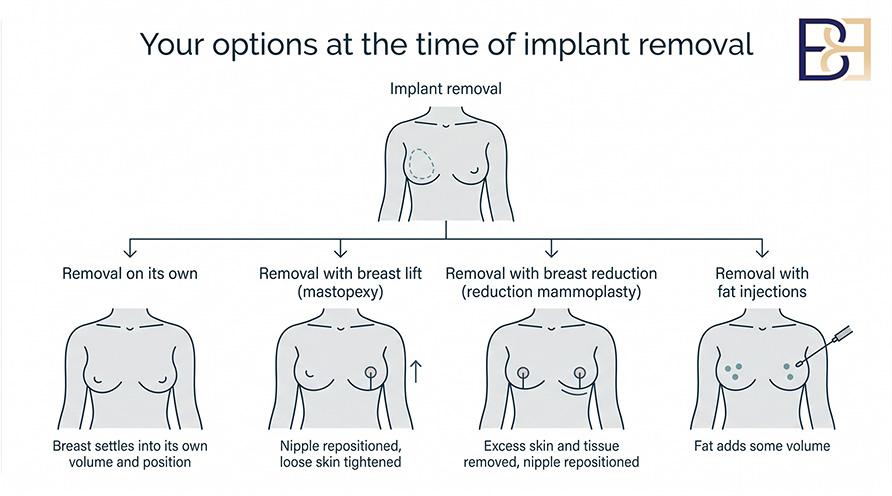
Because removal changes breast volume, shape and position, some patients choose to have removal on its own, and others choose to combine it with a procedure that works on the skin or breast tissue at the same time. There are 4 common paths.
Removal on its own. The implants, and where indicated the capsule, come out, and nothing further is done to reshape the breast. The breast settles into its own volume and position over the following months. For many patients this is all they want.
Removal with a breast lift (mastopexy). A breast lift (mastopexy) repositions the nipple and tightens loose skin, so the remaining breast tissue is supported in a higher position. Patients who have significant skin laxity after removal sometimes consider this.
Removal with a breast reduction (reduction mammoplasty). For a patient who has enough of their own breast tissue and would prefer a smaller, lifted breast, a reduction removes excess skin and tissue and repositions the nipple.
Removal with fat injections. This can add some volume in the breast.
Combining removal with a lift or a reduction is a larger operation than removal on its own, with a different risk and recovery profile. Whether it is sensible to do both in one operation, or to stage them across separate operations, is a clinical decision I make with you at consultation. For some patients one operation is appropriate. For others, staging protects the blood supply to the nipple and the quality of the scars, and is the more appropriate path.
I keep this page focused on removal itself. I have a separate page that works through combining removal with a lift or a reduction in more detail, including how the choice between one operation and staging is made.
Is implant removal right for me?
I cannot answer that from a webpage. Whether removal suits you is worked out at consultation, after I have examined you and understood why you are considering it.
A few things I look at:
- Your reason for wanting removal. Whether it is a medical issue with the implant, symptoms you connect to it, or a personal decision, I want to understand what is driving it and what you are hoping for afterwards.
- Your expectations. Removal changes the breast, and the result depends heavily on your own tissue, the size and age of the implants, and your skin. I want us working from a realistic picture, not an idealised one.
- Your general health. As with any surgery, your medical history, your medications and your general health affect whether and how removal should proceed.
Surgery is not the only path for everyone who is unsure about their implants. For some patients, monitoring with imaging, or having more information, is enough for now, and removal can wait or may not be needed at all.
Your pathway, from referral to follow-up
1. GP referral
Everything starts with a referral from your GP. This is required before I can see you, and it keeps your GP part of the process from the beginning. I keep your GP informed, and I copy them on your pre-operative blood results.
2. Consultation
At your consultation I take your history, examine you, and talk through why you are considering removal and what you want from it. I explain what removal on its own would mean for you, and, if it is relevant, what adding a lift or a reduction would involve. You leave with a clear picture of the options and no obligation to proceed.
3. Imaging and assessment
Before surgery I arrange breast imaging, and I organise a set of blood tests that I run for all breast surgery patients. If you have silicone implants, imaging is also part of checking for a rupture that you may not be able to feel. This is also where I stratify your risk of blood clots and decide on any measures needed around your surgery.
4. Preparing for surgery
If you take aspirin or blood-thinning medication, it is usually stopped about a week before surgery, but you must not stop anything on your own. I tell you what to stop and when. Some patients need to keep taking their medication through surgery, and I plan that well ahead. Your anaesthetic consultation is usually done by phone, with the airway check done on the day of surgery.
5. Surgery
Removal is done under general anaesthetic at Maitland Private Hospital, with a hospital admission. Before the day, I talk you through whether you are likely to have drains and what to wear afterwards.
6. Follow-up
For the first two weeks after surgery you are seen often. You have close follow-up with both my nurse and me across that fortnight, and this early aftercare includes LED light therapy with the Healite II device as part of supporting wound healing. After that I review you at four weeks, three months, six months and twelve months. At the four-week visit I formally hand your ongoing care back to your GP, and they stay involved from there. If something comes up between visits during clinic hours, contact my rooms, and we manage it. Outside those hours and overnight, you contact Maitland Private Hospital, where nurse-led phone triage will help and direct you. Anything that needs urgent physical assessment goes to your nearest emergency department, and for a life-threatening emergency you call 000.
Breast imaging and surveillance
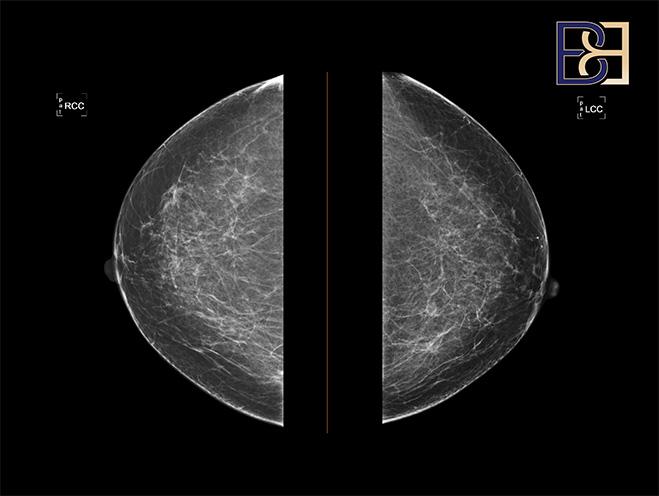
Imaging plays two roles around implant removal: before surgery, and as part of your ongoing breast health afterwards.
Before removal. I arrange breast imaging before surgery. Part of this is planning the operation, and part of it is checking the implant itself. A silicone implant can rupture without any change you are able to feel, and imaging is how a suspected rupture is picked up. The type of imaging depends on your age, your breast tissue and what we are looking for. Ultrasound, mammography and, in some cases, MRI each have a role, and I explain which applies to you.
Ongoing surveillance after removal. Breast cancer screening continues to matter whether or not you have implants. In Australia, BreastScreen invites women aged 50 to 74 for a free mammogram every two years, and women from the age of 40 are eligible. Your GP guides your individual screening based on your age, your history and your risk. Once implants are removed, mammographic imaging of the breast is generally clearer than it is with implants in place, because the implant no longer covers part of the breast tissue.
Whatever your situation, imaging is part of your plan rather than an afterthought, and I keep your GP in the loop so your ongoing screening is not left to chance.
Why patients choose me for implant removal
I have more than two decades of experience as a Specialist Surgeon (FRACS), with a practice focused on breast and body surgery. I am based at Maitland Private Hospital in the Hunter Valley, and removing breast implants, with or without capsulectomy, is a regular part of my work.
A few things that shape how I work:
- Assessment before advice. I do not tell you what you need from a webpage or a phone call. I examine you, review your imaging, and give you advice based on your anatomy and your reasons for wanting removal.
- A clear account of what to expect. I set out what removal will and will not do, including how your breasts are likely to look afterwards, so you can decide with a realistic picture.
- Your GP kept in the loop. Your GP refers you in, is copied on your results, and takes your ongoing care back at the four-week mark. Your care does not happen in isolation.
- Structured follow-up. You are seen often in the first two weeks by my nurse and me, and I then review you at four weeks, three months, six months and twelve months, so your recovery is monitored across the first year rather than signed off early.
If removal is not the right choice for you, or the timing is not right, I will say so. My job is to give you accurate information and sound surgical care, not to talk you into an operation.
Costs and Medicare

What implant removal costs depends on your situation, and I give you specific figures for you rather than a headline number.
Whether Medicare and your private health insurance contribute comes down to why you are having the implants removed. There are Medicare Benefits Schedule (MBS) item numbers that apply to implant removal in defined medical circumstances, for example a ruptured implant or significant capsular contracture. Where your situation meets the criteria for an item number, Medicare and your private health fund may contribute to the cost. Where removal is for personal reasons and does not meet those criteria, it is generally not claimable, and the cost is yours to meet. Eligibility is assessed individually, and I am upfront with you about which situation applies to you.
A few things to know:
- There is more than one fee. A breast operation involves a surgeon’s fee, an anaesthetist’s fee, and hospital costs. These are charged separately.
- You get it in writing. After your consultation, once I know what your operation involves, you are given a written quote that sets out the costs, so you can consider them before you decide anything.
- Whether an item applies is a clinical question. An MBS item applies when your clinical situation meets the criteria. Where an item applies, a Medicare rebate applies with it. What you pay out of pocket then depends on the fees for your operation and, for the hospital costs, your level of private cover.
I would rather you have accurate figures for your own situation than a number from a webpage that may not apply to you. Your consultation is where that detail is worked out.
Recovery and risks
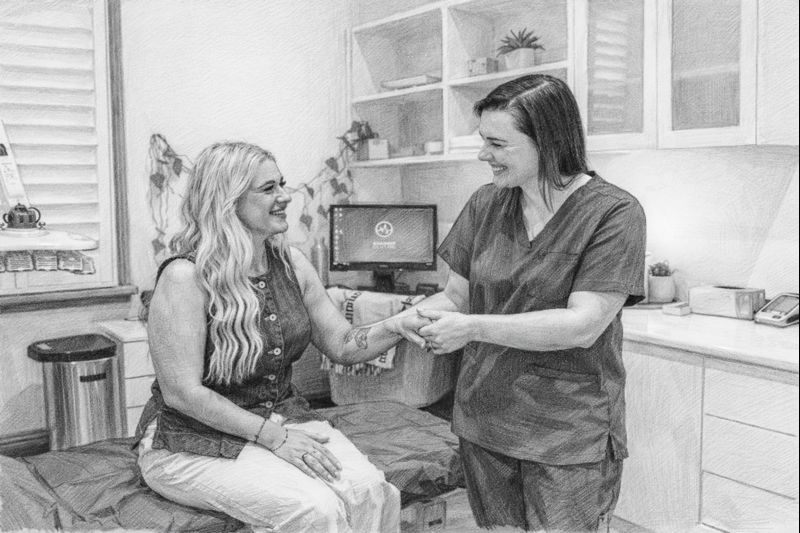
Implant removal is surgery, and it comes with a recovery period and with risks.
Recovery varies with what was done. Taking an implant out on its own is generally a shorter recovery than removing it together with a capsulectomy, and combining removal with a lift or a reduction is a larger operation again, with a longer and more demanding recovery. You will have restrictions on lifting and activity in the early weeks, and I set out what to expect for your particular operation before the day.
Like any breast operation, removal carries risks. These include bleeding, infection, fluid collection, changes in nipple or skin sensation, scarring, asymmetry, and the possibility of further surgery. Which risks are relevant depends on exactly what your operation involves, and I go through them with you at consultation as part of your consent.