Gluteal Lipectomy (Buttock Lift Surgery) After Weight Loss
Book Online NowA gluteal lipectomy (buttock lift) is a surgical procedure that removes excess skin and tissue from the lower back and buttock region. It is most commonly performed in patients who have undergone significant weight loss, in whom the lower body skin does not retract despite reaching a goal weight and maintaining a healthy lifestyle.
A gluteal lipectomy represents the posterior component of a belt lipectomy (lower body lift). In some patients, this back component can be performed as a standalone procedure, while in others it forms part of a circumferential body lift (belt lipectomy).

This article provides a detailed overview of gluteal lipectomy surgery as performed in Dr Bernard Beldholm’s practice, including indications, anatomy, surgical planning, hospital care at Maitland Private Hospital, and how this procedure compares with other buttock and body lift options. Recovery and complications are discussed briefly here, as they are covered in separate dedicated articles.
What is a Gluteal Lipectomy (buttock lift)?

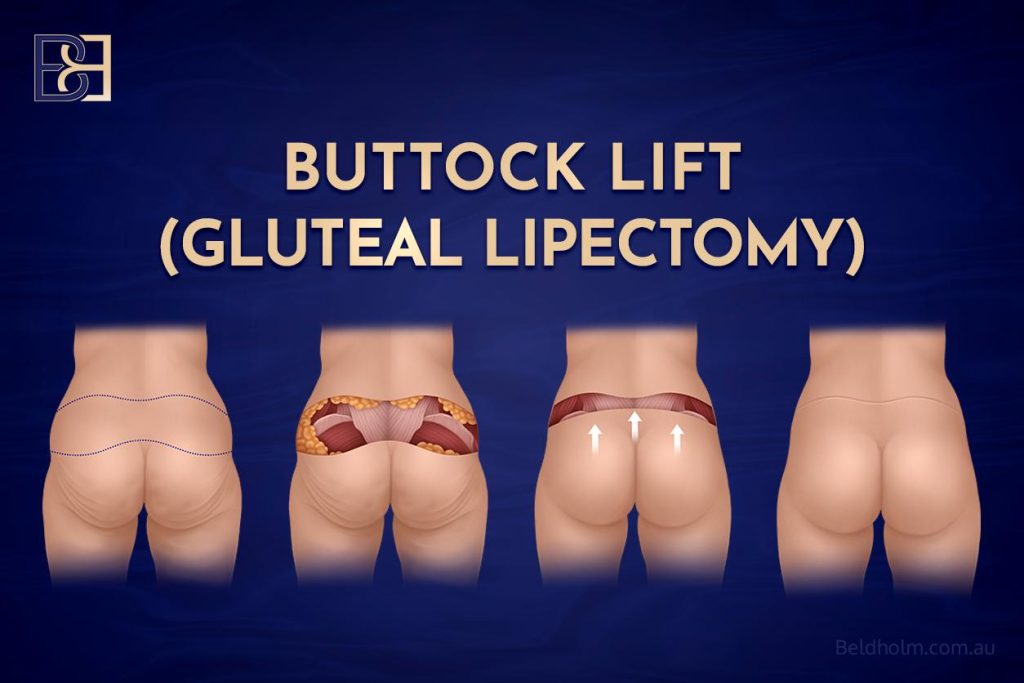
A gluteal lipectomy is a body lift procedure that removes excess skin and fat from the lower back and upper buttocks. The procedure tightens the skin envelope and repositions the buttock tissues upward.
After major weight loss, the skin and fat of the lower body often lose elasticity. This can lead to loose skin that sits below the belt line, folds over clothing, and creates hygiene or comfort concerns. A gluteal lipectomy directly treats this by excising the redundant tissue and closing the incision along the belt line.
Unlike procedures that add volume, such as fat grafting or fat injection, the primary goal of gluteal lipectomy is to lift and tighten, not augment.
Anatomy of the Lower Body and Buttocks
Understanding the anatomy of the lower body helps explain why gluteal lipectomy is often required after weight loss.
The buttock region consists of:
- Skin and fat
- Deep fascial layers
- Gluteal muscles (which are not altered during this surgery)
Weight loss primarily reduces fat volume but does not reliably tighten skin. When skin elasticity is exceeded, excess skin remains. Exercise can strengthen the gluteal muscles, but cannot remove extra skin.
A gluteal lipectomy targets only the skin and fat layers, repositioning the overlying tissues without altering muscle function.
How Gluteal Lipectomy (buttock lift) Fits Into a Lower Body Lift (belt lipectomy)
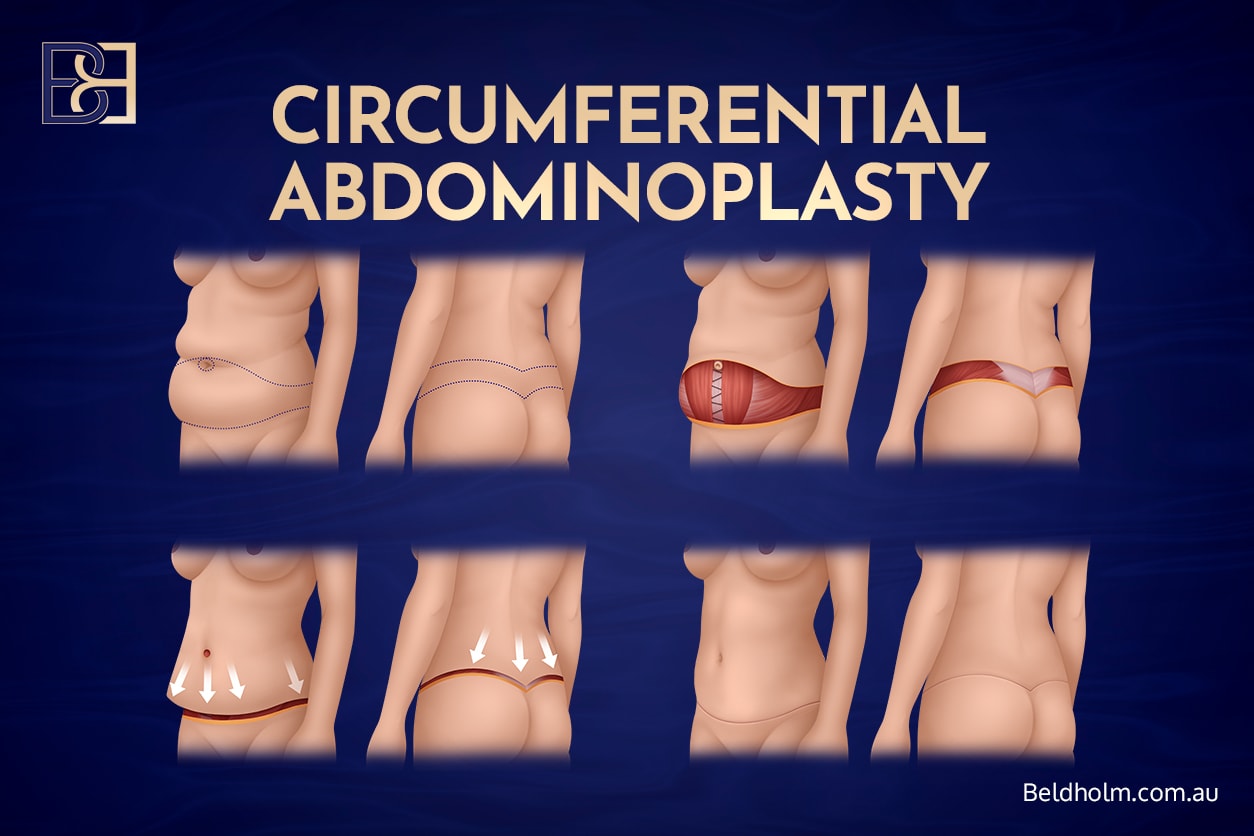
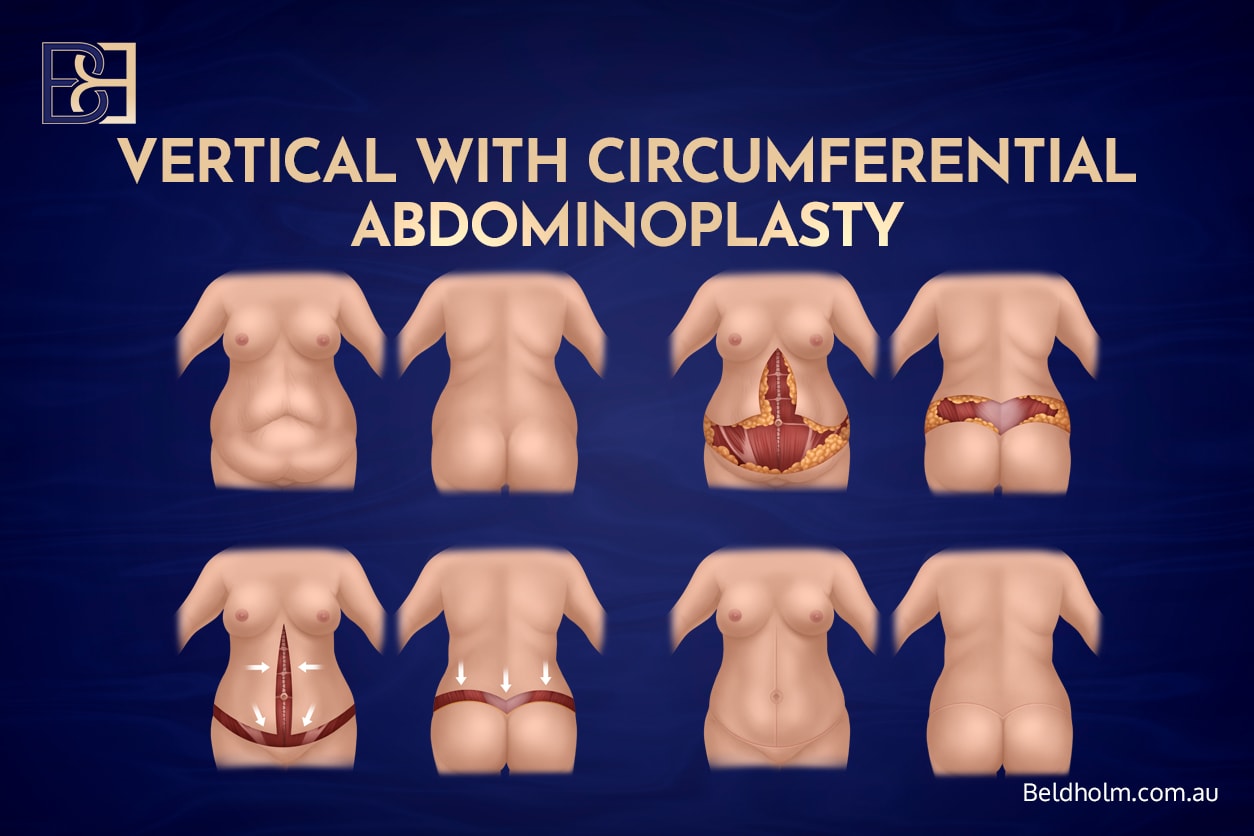
A lower body lift, or belt lipectomy, is a circumferential surgical procedure that removes excess skin from the entire lower torso.
It includes:
- A front component treating the lower abdomen, the “abdominoplasty” part
- A side component treating the flanks and outer thighs
- A back component, which is the gluteal lipectomy (buttock lift)
Some patients present with excess skin only on the back. In these cases, a standalone gluteal lipectomy may be considered. Others benefit from a full body lift for balanced correction of the lower body.
In addition, some patients may elect a staged approach, in which the anterior abdomen (abdominoplasty component) is performed first, followed by a delayed posterior lipectomy (gluteal lipectomy) at a later date. Staging surgery can be considered to reduce the extent of each operation, tailor recovery, or treat priorities sequentially.
The decision depends on the distribution of loose skin, body proportions, overall health, and patient goals.
Who May Be Suitable for a Gluteal Lipectomy?

Gluteal lipectomy surgery may be considered for patients who:
- Have experienced significant weight loss
- Are close to or at a stable goal weight
- Have excess skin affecting the buttock area and lower back
- Experience functional concerns such as skin irritation or difficulty with clothing
- Are medically suitable for surgery under general anaesthesia
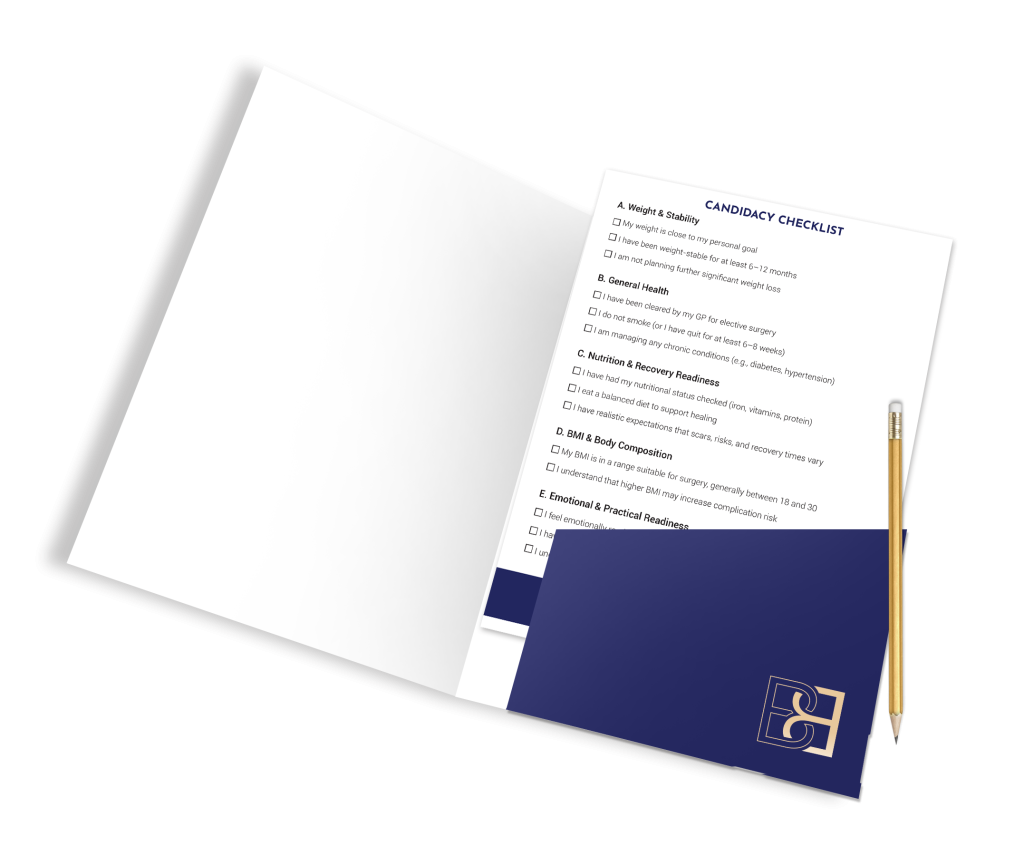
A comprehensive review of medical history, current medications, previous surgery, and overall health is essential. Blood tests are arranged as part of the pre-operative assessment.
Having realistic expectations is important. This surgery removes skin and lifts tissue, but does not create muscle bulk or guarantee specific aesthetic outcomes.
When Is Gluteal Lipectomy Performed as a Standalone Procedure?
Although commonly associated with belt lipectomy, gluteal lipectomy can be performed alone in selected cases.
This may be appropriate when:
- The abdomen does not have significant excess skin
- The primary concern is loose skin at the lower back
- The patient prefers staged surgery rather than a full body lift (belt lipectomy)
Standalone surgery reduces the extent of the procedure but still involves careful planning and recovery considerations.
Consultation Process With Dr Bernard Beldholm

All patients require a GP referral prior to consultation.
First Consultation (Approximately 1 Hour)
The first consultation with Dr Bernard Beldholm, Specialist Surgeon (FRACS), is a comprehensive assessment appointment and typically lasts around one hour. This consultation is designed to provide detailed information and determine whether a gluteal lipectomy (buttock lift), belt lipectomy, or staged belt lipectomy approach may be appropriate.
During the first consultation, Dr Beldholm will:
- Review your full medical history, including weight loss journey, previous surgery, and current medications
- Discuss weight stability, goal weight, and overall health
- Perform a physical examination of the lower body, including the abdomen, flanks, and buttocks
- Assess the distribution of excess skin and fat
- Discuss surgical options such as gluteal lipectomy alone, belt lipectomy (lower body lift), or a staged approach
- Explain incision placement, belt line scarring, and expected scar location
- Outline general risks, limitations, and alternatives to surgery
Standardised clinical photographs are taken as part of the assessment to assist with planning and documentation.
Second Consultation (No Additional Fee)

A second consultation is strongly encouraged and provided at no additional cost. This appointment allows patients time to reflect on the information provided, ask further questions, and confirm their surgical plan.
The second consultation may include:
- Review of the proposed surgical plan
- Discussion of staged versus single-stage surgery
- Clarification of risks and recovery considerations
- Review of hospital stay and follow-up arrangements
Telehealth Consultations
For patients who live outside the local area, an initial telehealth consultation may be arranged. Telehealth consultations are suitable for early discussion, education, and preliminary planning.
An in-person consultation is required before surgery to complete a physical examination, confirm suitability, and finalise consent.
Patients Travelling From Outside the Region

Dr Beldholm regularly treats patients who travel from regional NSW and interstate. Travelling patients are advised to:
- Plan to stay locally for 7–10 days following surgery
- Attend early post-operative reviews in person
- Coordinate ongoing care with their GP once they return home
Ongoing follow-up may be supported with a combination of in-person visits and telehealth, depending on individual circumstances.
Pre-Operative Planning and Preparation

Preparation for gluteal lipectomy focuses on optimising recovery and outcomes.
Patients are advised on:
- Achieving a stable weight
- Maintaining a healthy lifestyle
- Stopping smoking prior to surgery
- Managing medications appropriately
Pre-operative blood tests and assessments are arranged. Detailed planning of incision sites is performed to align scars with the belt line, where possible.
Where Is the Surgery Performed?

Gluteal lipectomy surgery is performed at Maitland Private Hospital, an accredited hospital with comprehensive surgical facilities.
Features include:
- 24-hour medical and nursing cover
- On-site intensive care unit
- Specialist anaesthetists experienced in body contouring surgery
Dr Beldholm performs daily ward rounds while patients are admitted, ensuring continuity of care.
The Surgical Procedure – Overview

The operation is performed under general anaesthesia.
Key elements include:
- Marking of the surgical site and belt line
- Excision of excess skin and fat from the lower back
- Elevation of buttock tissues
- Layered closure of incision sites
Drains may be used temporarily to manage fluid. The extent of the procedure varies depending on whether it is combined with other procedures, such as a tummy tuck (abdominoplasty) or full lower body lift (belt lipectomy).
Scars and Incision Placement

Scars from a gluteal lipectomy are typically positioned along the belt line of the lower back. When combined with belt lipectomy, the scar extends circumferentially around the body.
Scar appearance varies between individuals and is influenced by:
- Genetics
- Skin quality
- Post-operative care
Scar maturation occurs gradually over many months.
Recovery – Brief Overview

Recovery time varies depending on the extent of the procedure and whether other procedures are performed.
In general:
- Hospital stay is several days
- Compression garments are used
- Walking is encouraged early
Detailed recovery timelines and restrictions are covered in a dedicated recovery article.
Risks and Potential Complications – Summary

All surgery carries risks. With gluteal lipectomy, these may include:
- Wound healing issues
- Infection
- Blood clot or pulmonary embolism
- Blood loss or blood transfusion
A full discussion of risks involved forms part of the consultation process. Detailed complication information is provided separately.
Long-Term Considerations and Results

Results from gluteal lipectomy may be long-lasting when:
- Weight remains stable
- A healthy lifestyle is maintained
- Post-operative instructions are followed
Ageing and future weight changes can affect the lower body over time.