


Thighplasty (Inner Thigh Lift) After Weight Loss
Book Online NowThighplasty, commonly referred to as an inner thigh lift, is a surgical procedure designed to treat excess skin and, where appropriate, excess fat of the thigh. At Dr Bernard Beldholm’s practice, thighplasty is planned as a structured reconstructive surgical procedure, primarily for post‑weight‑loss patients with significant loose skin in the thigh area, rather than a purely cosmetic procedure.
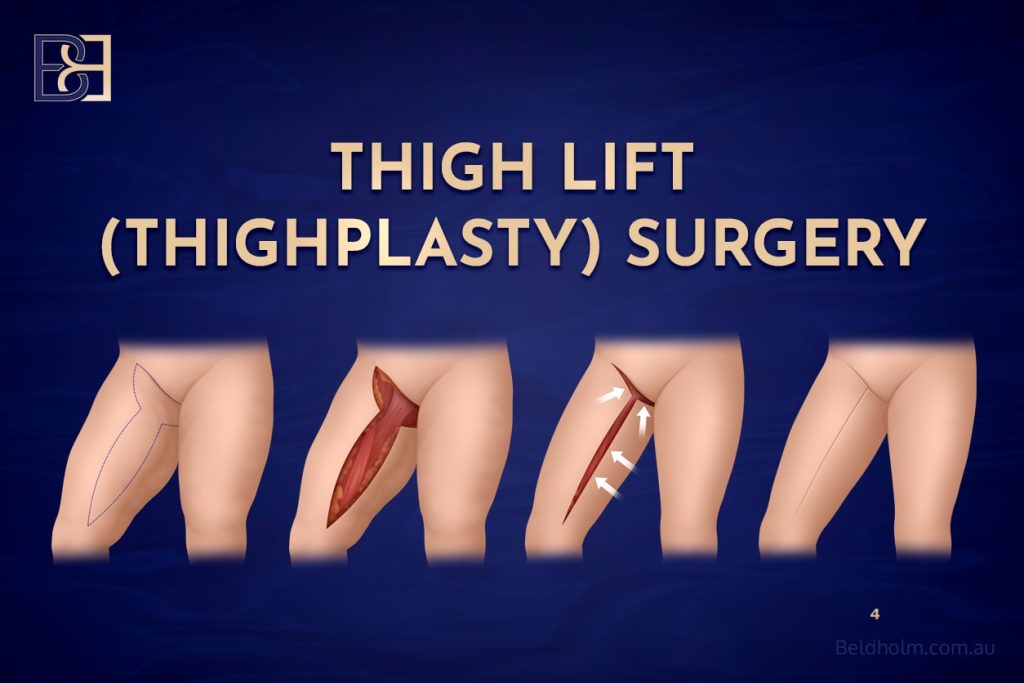
The focus is on enhancing hygiene, function, and mobility of the thigh, particularly the inner thigh, while carefully discussing scars, recovery, and potential risks. Patients are encouraged to have realistic expectations, as thigh lift (Thighplasty) surgery is associated with higher complication rates compared with many other body contouring operations.

Why Excess Skin Develops in the Thighs
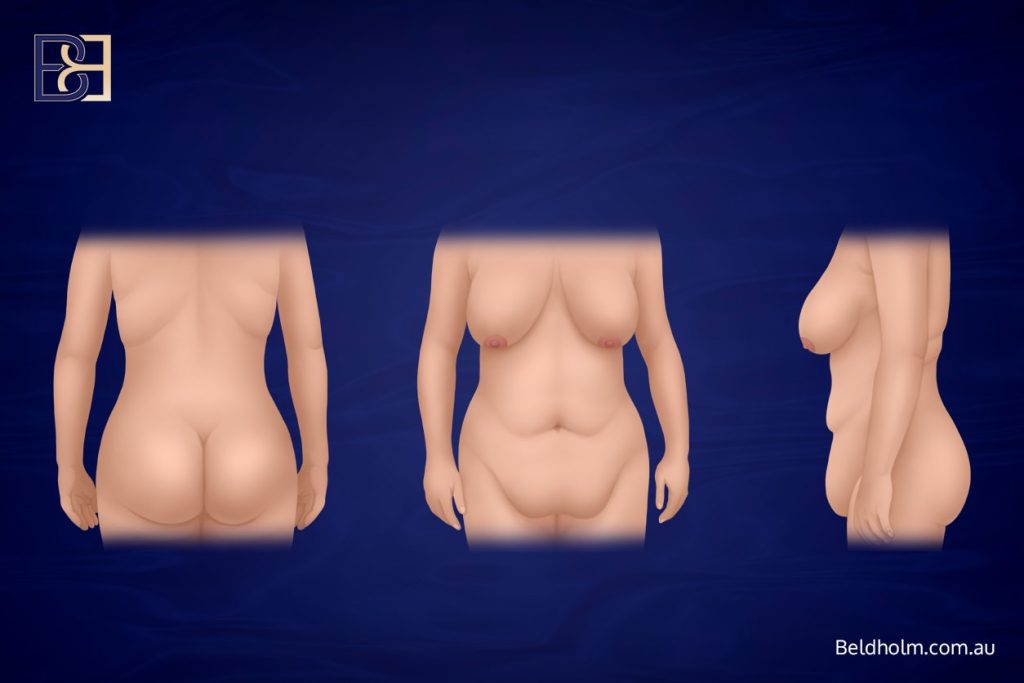
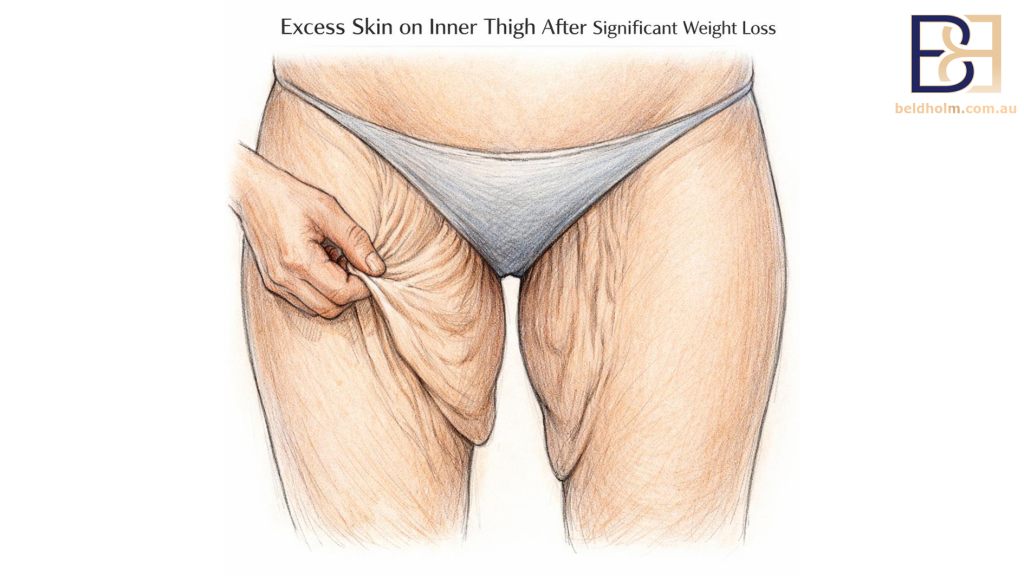
The thigh is a large, three‑dimensional part of the lower body. Following weight loss, the skin and underlying fat layers can lose elasticity, resulting in skin laxity. When this occurs, the skin fails to retract, resulting in excess skin and fat along the medial thigh, outer thigh, upper thigh, or extending toward the knee.
Common problems caused by excess thigh skin include:
- Chafing during walking
- Recurrent rashes and skin irritation
- Hygiene difficulties around the inner part of the thigh
- Discomfort with strenuous activities or prolonged sitting
- Difficulty fitting clothing over the thigh
For many patients, these problems persist even after achieving and maintaining a stable weight.
Understanding Loose Skin Patterns and Choosing the Right Thigh Lift (Thighplasty)
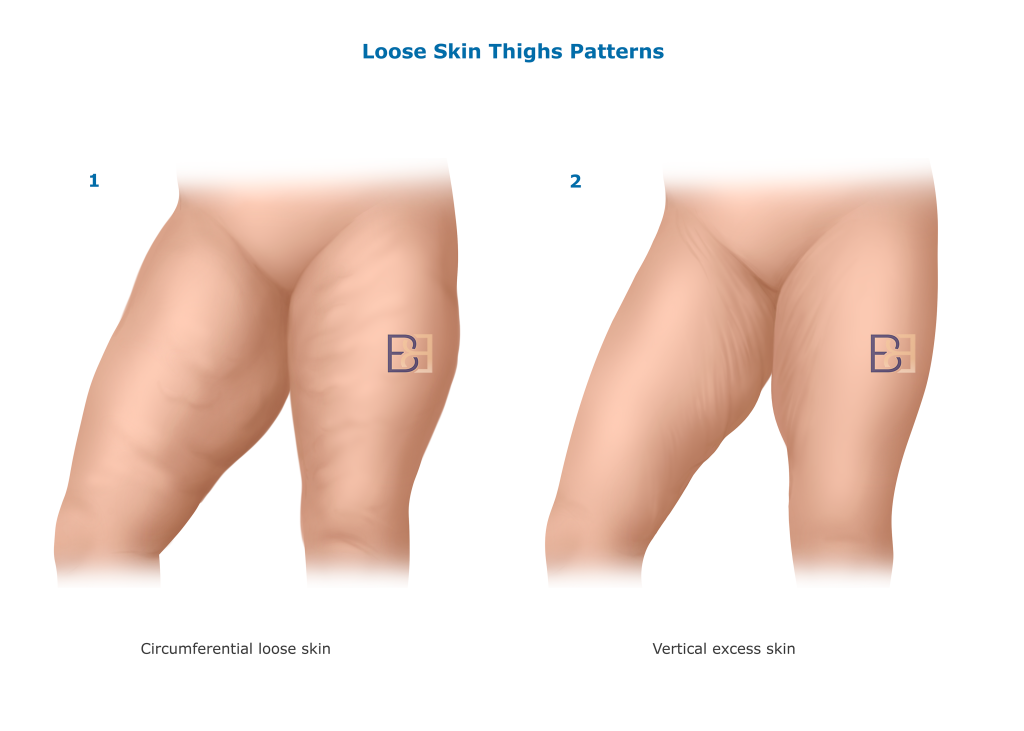
A thigh lift (Thighplasty) procedure is a reconstructive form of plastic surgery focused on removing excess skin from the thigh following significant weight loss. In patients with a significant amount of loose skin, the pattern of skin laxity is rarely one‑dimensional and typically involves both circumferential and vertical (up‑and‑down) excess.
In post‑weight‑loss patients, loose skin often affects the thigh in two key ways:
- Circumferential loose skin around the thigh, which requires excision in the vertical plane (up and down the inner thigh) to reduce the girth of the thigh.
- Vertical excess or hanging skin, most commonly seen in the upper inner thigh, requires a horizontal excision of skin with elevation and support of tissues into the groin region.
The choice of operation is therefore dictated by the direction and severity of skin excess, rather than patient preference alone. Limited procedures that treat only one direction of laxity often leave residual loose skin and may necessitate further surgery.
Consultation and Surgical Planning with Dr Bernard Beldholm

Thighplasty is a complex reconstructive operation, and careful planning is essential. During the initial consultation, Dr Beldholm undertakes a detailed assessment focused on the pattern and severity of loose skin following significant weight loss.
This assessment includes:
- Distribution and direction of excess skin (circumferential versus vertical)
- Severity of loose skin in the upper and lower thighs
- Degree of hanging skin in the upper inner thigh
- Presence of excess fat and its contribution to skin tension
- Skin quality and elasticity
- History of significant weight loss and current weight stability
- Relevant medical history, nutritional status, and medical conditions
For patients who live outside the local region, an initial remote or telehealth consultation may be arranged to review the history, assess the background of weight loss, and determine whether thighplasty is likely to be appropriate. An in-person consultation is required prior to surgery to permit physical examination, clinical photography, and detailed surgical planning.
A second consultation is commonly recommended, particularly for extensive procedures such as a full thigh lift (thighplasty). This allows further discussion of incision placement, expected scars, recovery, and potential risks, and ensures patients have time to consider the information provided.
Because most post‑weight‑loss patients have loose skin in more than one direction, a combination of vertical and horizontal excision is frequently required. No single thigh lift (thighplasty) technique is suitable for all patients, and the final surgical plan is tailored to the individual anatomy, reconstructive needs, and ability to heal following surgery.

The Role of VASER Liposuction (suction-assisted lipectomy) in Thighplasty
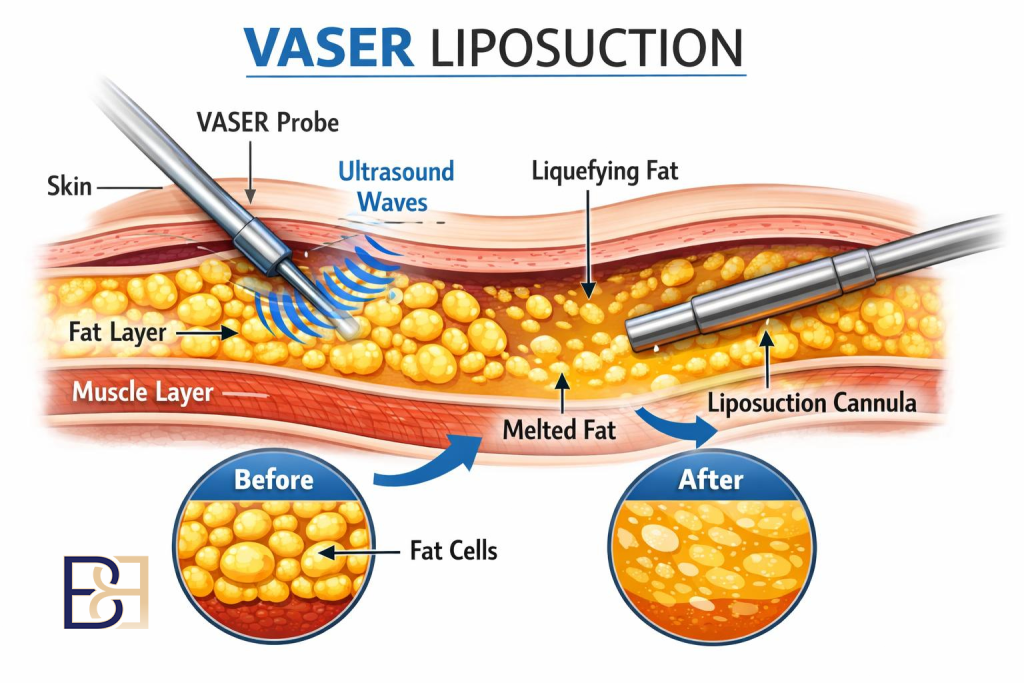
Many patients undergoing thighplasty require VASER liposuction (Ultrasound-assisted lipectomy), an ultrasound‑assisted form of liposuction (suction‑assisted lipectomy), as part of their thigh lift (thighplasty) surgery.
Why Liposuction (Suction-assisted lipectomy) Is Commonly Required
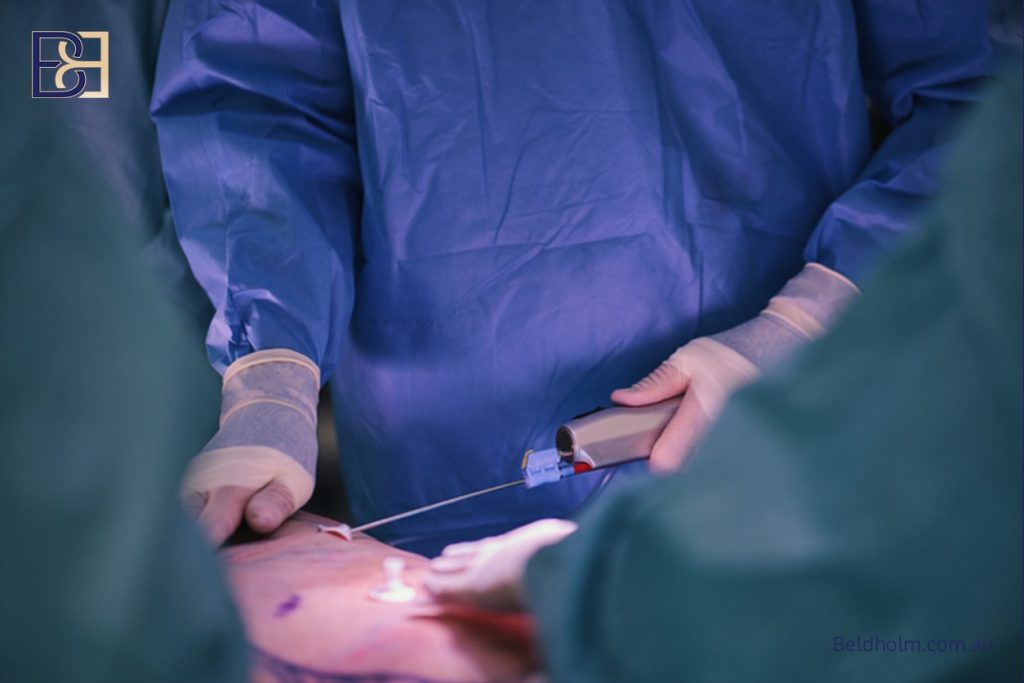
Patients often present with a combination of excess skin and fat. Performing a thigh lift (thighplasty) without treating underlying fat can increase tension at the incision sites, negatively affect wound healing, and increase the risk of complications.
VASER liposuction (Suction-assisted lipectomy) helps:
- Reduce excess fat from the inner thigh
- Decrease tension on the surgical site
- Support smoother redraping of skin
Evidence and Complication Rates
Scientific studies show that liposuction‑assisted medial thigh lift (thighplasty) surgery is associated with lower overall complication rates compared with excision alone [1,2]. Reported data demonstrate:
- Overall complications of approximately 36–38% when liposuction (suction-assisted lipectomy) is combined with thighplasty
- Overall complications of up to 70% when excisional thigh lift (thighplasty) surgery is performed without liposuction
Reductions are most evident in fluid accumulation (seroma), infection, and haematoma rates. For this reason, VASER liposuction forms part of most thigh lift (thighplasty) procedures performed by Dr Beldholm.
Types of Thigh Lift (Thighplasty) Surgery
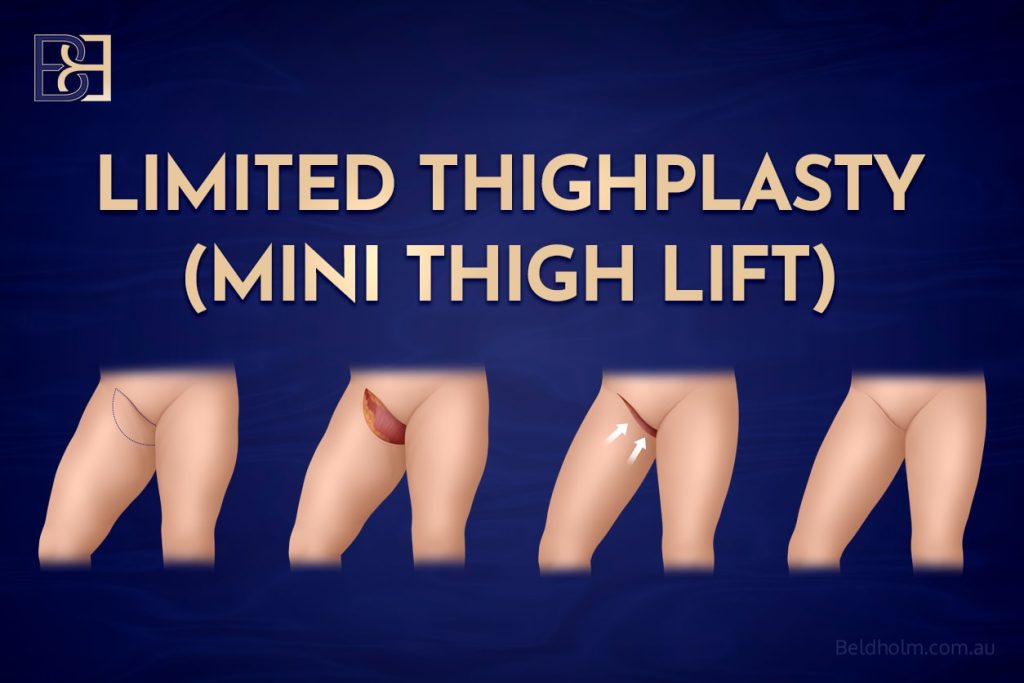
Limited Thighplasty (Mini Thigh Lift)
A limited thighplasty uses a small incision hidden within the groin crease and is designed to treat vertical excess loose skin that is most noticeable in the upper inner thigh area.
This procedure primarily lifts and tightens hanging skin in the groin region through a horizontal excision, without treating circumferential laxity of the thigh.
Book Online NowIdeal candidates include:
- Patients with a small amount of loose skin confined to the upper inner thigh
- Minimal circumferential excess skin
- Good skin quality and elasticity
- Patients who have lost a relatively small amount of weight
Because this operation treats only vertical excess, it is suitable for only a small sub‑portion of post‑weight‑loss patients.
Limitations:
- Does not treat the circumferential loose skin of the thigh
- Does not treat laxity extending toward the knee
- Frequently insufficient in patients with a significant amount of post‑weight‑loss skin excess
- May result in residual loose skin and the need for a second‑stage operation
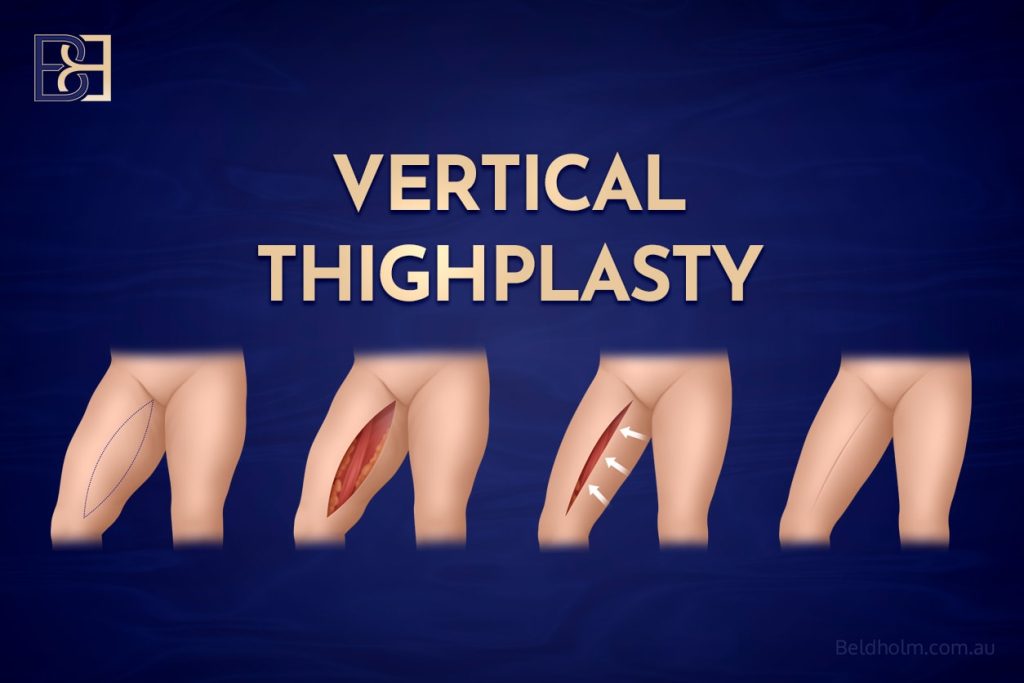
Vertical Thighplasty
A vertical thighplasty focuses primarily on reducing the circumferential excess skin and fat of the thigh. The incision runs vertically along the inner thigh, typically extending from the groin toward the knee, allowing removal of skin in an up‑and‑down direction to reduce the overall girth of the thigh.
This operation is most effective when the dominant problem is circumferential laxity involving the mid and lower thigh.
Book Online NowBest suited for:
- Patients with circumferential excess skin and fat of the thigh
- Laxity involving the mid and lower thigh
- Patients with less hanging skin in the upper inner thigh
Important limitations in post‑weight‑loss patients:
Most post‑weight‑loss patients also have vertical excess loose skin, which is most obvious in the upper inner thigh. Because a vertical thighplasty does not include a horizontal groin excision, this hanging skin is not adequately treated. As a result, a limited vertical thighplasty will often leave residual loose skin in the upper inner thigh region.
Clinical considerations:
- Vertical thighplasty has higher wound‑related complication rates
- Published data report complication rates of 45–68% [3,4]
- Frequently combined with liposuction (suction-assisted lipectomy) to reduce tension and enhance contour
- In many post‑weight‑loss patients, a vertical thighplasty alone is insufficient and may need to be combined with a horizontal component
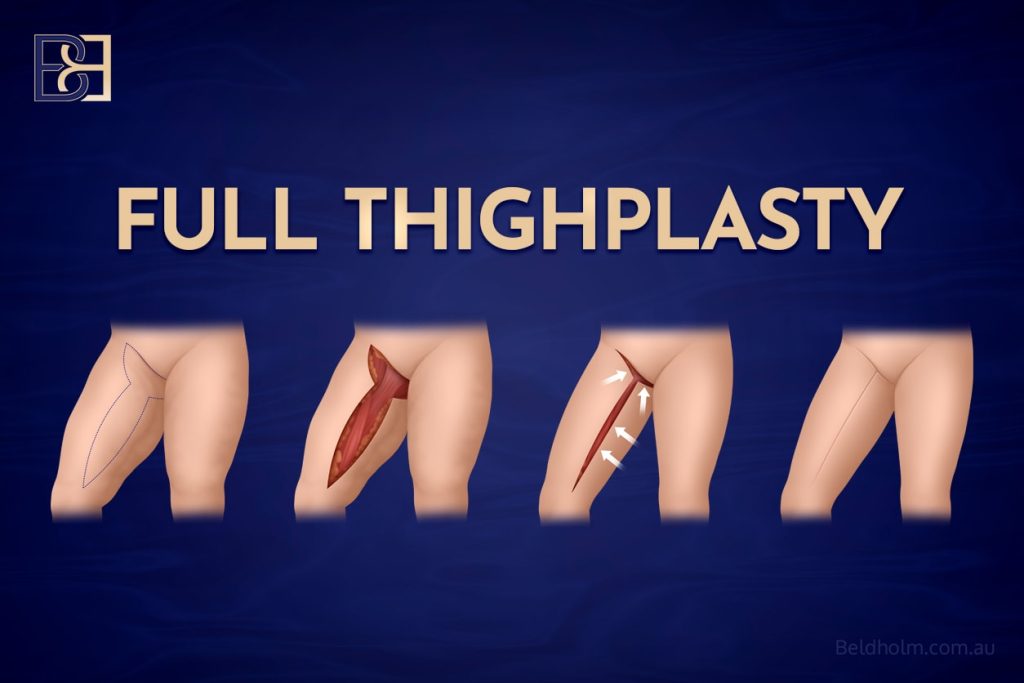
Full Thigh Lift (Thighplasty) (Vertical and Horizontal Components)
A full thigh lift (thighplasty) combines a horizontal groin incision with a vertical inner thigh incision. This operation is specifically designed to treat both vertical and circumferential loose skin of the thigh and is the most commonly performed thigh lift (thighplasty) surgery in Dr Beldholm’s post‑weight‑loss patient cohort.
The principal benefit of a full thigh lift (thighplasty) is that a significant amount of loose skin can be removed. This is particularly important in post‑weight‑loss patients, where skin excess is usually severe, multi‑directional, and functionally limiting.
By combining vertical excision (to reduce circumferential laxity) with horizontal groin excision (to treat hanging skin in the upper inner thigh), this procedure provides the most complete correction available for advanced thigh skin laxity.
Book Online NowKey considerations:
- Treats both circumferential & vertical excess skin
- Allows removal of a significant amount of loose skin in post‑weight‑loss patients
- Provides the most correction of thigh laxity
- Carries the highest reported complication rates, up to 68–74% [3–5]
Important recovery and wound considerations:
The major downside of a full thigh lift (thighplasty) is the high complication rate, particularly related to wound breakdown along the groin and vertical incision lines. If this operation is selected, patients should expect that wound-healing complications are common.
In Dr Beldholm’s practice, wound breakdowns are most often:
- Managed conservatively in the rooms with regular wound dressings
- Monitored closely over 6–8 weeks following the initial operation
- Treated primarily with time, dressing changes, and careful observation
In selected cases, surgical debridement and secondary wound closure may be considered, usually around 4 weeks after the initial operation, once the wound has healed and the surrounding tissues are suitable for closure.
Despite these challenges, this approach is often preferred in appropriately selected post‑weight‑loss patients, as lesser procedures frequently leave significant residual loose skin and may require staged revision surgery.
J Thigh Lift (Thighplasty)
circumferential excess while reducing tension in the groin region. The incision pattern combines a vertical inner thigh incision with a shorter horizontal component in the groin, forming a J‑shaped configuration rather than a full T‑junction.
The primary aim of this approach is to minimise tension at the groin crease, which is a common site of wound healing problems following thigh lift (thighplasty) surgery. By avoiding a full T‑shaped incision, the J thigh lift (thighplasty) may reduce the risk of scar migration, wound breakdown, and prolonged groin wound issues.
Best suited for:
- Selected post‑weight‑loss patients with moderate circumferential excess skin
- Patients with vertical loose skin that is less severe than those requiring a full thigh lift (thighplasty)
- Situations where reducing groin tension is a priority
Limitations:
- Does not remove as much excess skin as a full thigh lift (thighplasty)
- May leave residual loose skin in patients with severe multi‑directional laxity
- Still carries a risk of wound complications, although potentially lower than classic T‑shaped techniques
The J thigh lift (thighplasty) can be a useful compromise in carefully selected patients but is not appropriate for all post‑weight‑loss cases. Surgical planning must consider skin direction, severity of laxity, and the patient’s ability to heal.

Choosing the Right Thigh Lift (Thighplasty) Technique
Selecting the appropriate thigh lift depends on:
- Distribution of excess skin
- Skin quality
- Amount of excess fat
- Patient tolerance for scarring
- Willingness to consider staged surgery
Clear discussion and realistic expectations are essential for satisfactory outcomes.
Is Thigh Lift (Thighplasty) Surgery Major Surgery?
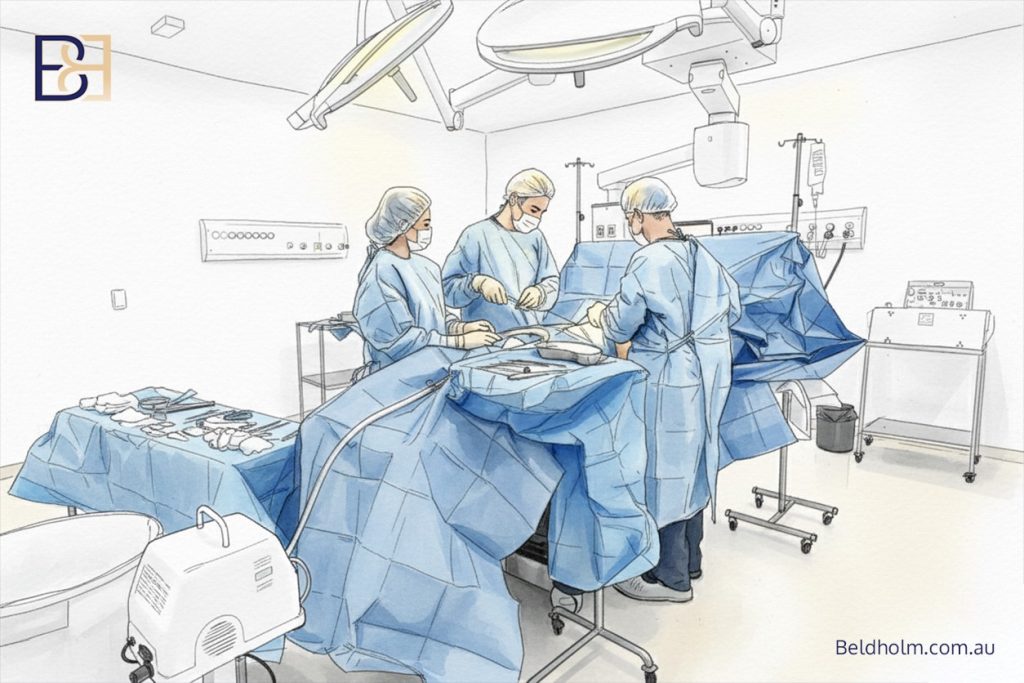
Yes. Thigh lift (thighplasty) surgery is a major surgery performed under general anaesthetic. It involves a prolonged surgery time and extensive soft‑tissue dissection of the thigh.
Recovery After Thighplasty
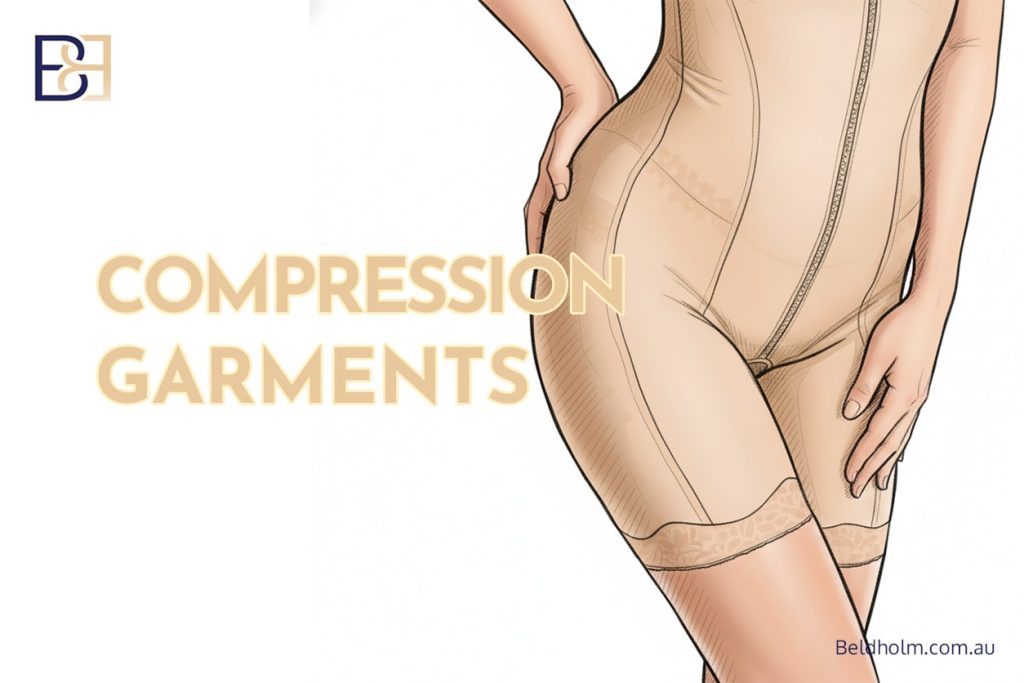
Recovery after a thigh lift (Thighplasty) procedure varies depending on the extent of surgery.
Most patients can expect:
- An overnight hospital stay
- To wear compression garments for several weeks
- Swelling of the thigh that reduces gradually
- Avoid strenuous exercise and strenuous activities for at least six weeks
Following postoperative care instructions and attending follow‑up appointments helps ensure proper healing.
Risks and Potential Complications
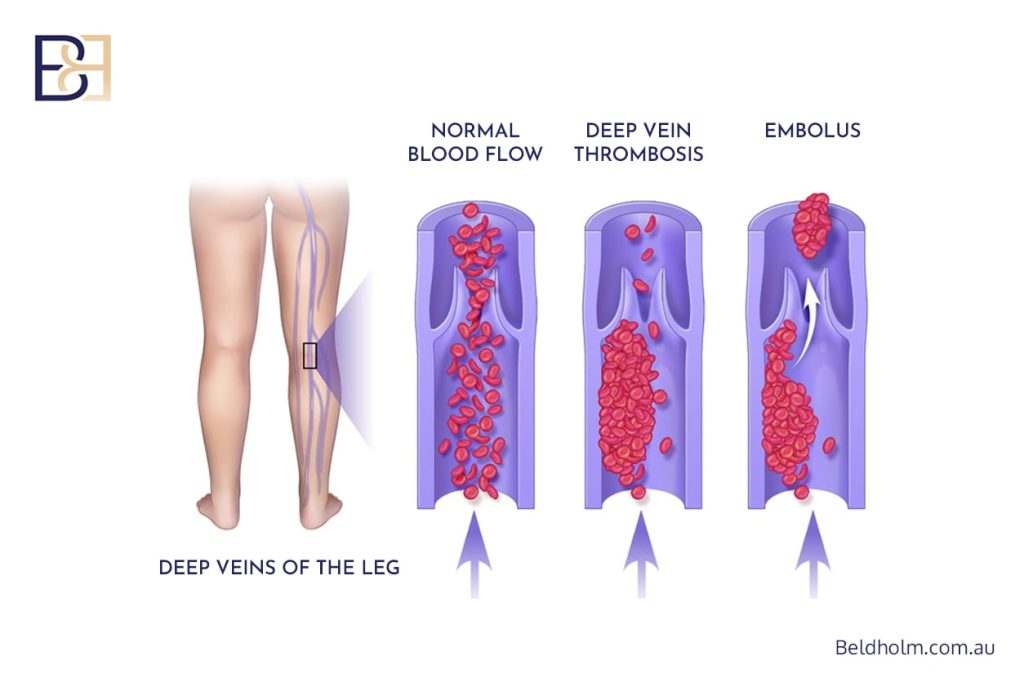
All surgery carries risks. Thighplasty is associated with relatively high rates of potential complications compared with other body contouring procedures.
Reported complication rates include [1,3–6]:
- Overall complications: 42–46%
- Wound dehiscence: 18–24%
- Seroma or fluid accumulation: 8–25%
- Infection: 3–9%
- Haematoma: 2–7%
- Scar migration or widening: 3–8%
- Deep vein thrombosis or pulmonary embolism: approximately 0.1%
Most complications are minor and managed with careful postoperative care.
Dr Beldholm’s Approach to Thighplasty
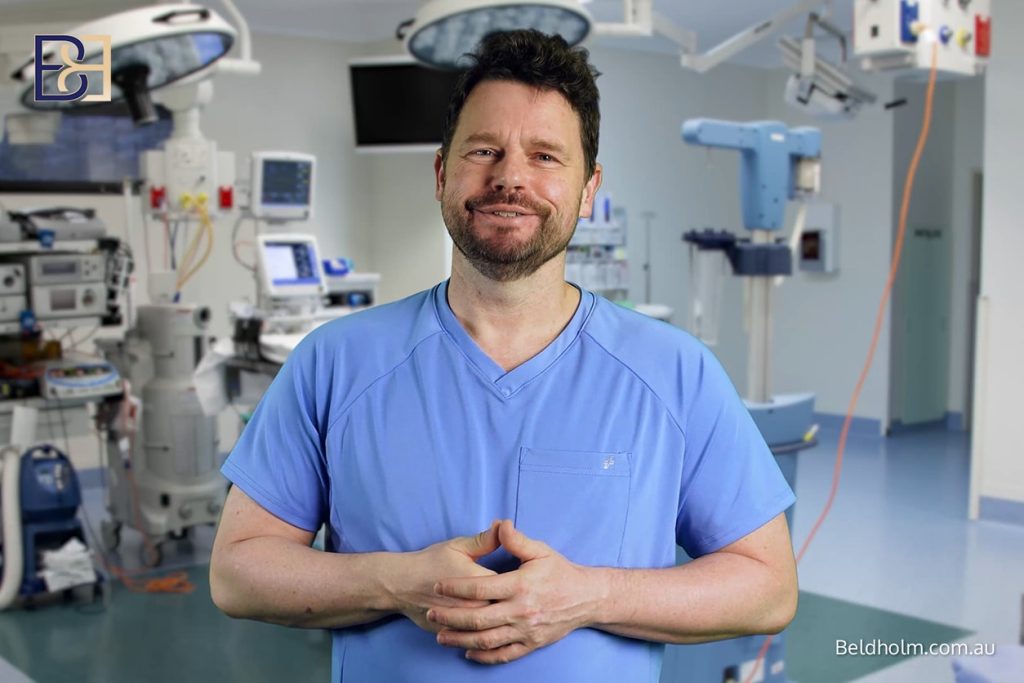
Dr Bernard Beldholm performs thigh lift (thighplasty) surgery using evidence‑based surgical techniques, often combining a full thigh lift (thighplasty) with VASER liposuction (suction assisted lipectomy). While this approach carries higher risks, it provides the most reliable removal of excess skin and reduces the likelihood of revision surgery.
Careful patient selection, detailed preoperative consultation, and close follow‑up are central to his approach.
Learn more about the recovery process following thighplasty (inner thigh lift) after weight loss
Learn more about the potential complications associated with thighplasty (inner thigh lift) after weight loss
Learn more about the costs of thighplasty (inner thigh lift) after weight loss
References
- Gusenoff JA, Coon D, Nayar H, et al. Medial thigh lift in the massive weight loss population: outcomes and complications. Plast Reconstr Surg. 2015;135(1):98–106.
- Capella JF, Matarasso A. Management of the post‑bariatric medial thigh deformity. Plast Reconstr Surg. 2016;137(5):1434–1446.
- Michaels J, et al. Vertical medial thigh contouring. Clin Plast Surg. 2019;46(1):91–103.
- Shermak MA, Mallalieu J, Chang D. Does thighplasty for upper thigh laxity after massive weight loss require a vertical incision? Aesthetic Surg J. 2009;29(6):513–522.
- Xie SM, Small K, Stark R, et al. Evolution in thighplasty techniques following massive weight loss. Aesthetic Surg J. 2017;37(10):1124–1135.
- Thighplasty complication rates literature summary. Body Contouring Surgery Clinic Pty Ltd; 2025.