


Arm Fat Removal Surgery: Brachioplasty (Arm Lift) and Upper Arm Liposuction
Upper arm fullness, loose skin, or a combination of the two may develop after weight loss, with age, or through inherited fat distribution. The appropriate surgical approach depends on which of these is present and how much. For patients with localised fat and good skin elasticity, upper arm liposuction (suction-assisted lipectomy) reduces fat deposits through small entry-point incisions. For patients with loose skin, brachioplasty (arm lift) removes the excess skin, with or without concurrent liposuction where fat is also present.
Dr Bernard Beldholm FRACS assesses the amount of fat, the skin quality, and the degree of laxity at consultation, then recommends one of four pathways: liposuction only, Limited Brachioplasty, Full Brachioplasty, or Extended Brachioplasty. Surgery is performed at Maitland Private Hospital. A GP referral is required before consultation.
The Beldholm Approach to Arm Contouring
When I see a patient about arm fat or loose arm skin, the first thing I do is work out which pattern their anatomy fits. I don’t start with a procedure and look for patients to match. I start with the patient and match the procedure to what their arm actually presents.
Four patterns, four procedures:
- Localised fat with good skin elasticity: upper arm liposuction alone.
- Loose skin with very little underlying fat: brachioplasty alone.
- Fat and loose skin together, common after weight loss: brachioplasty with concurrent liposuction in a single operation.
- Skin laxity that extends from the upper arm onto the lateral chest: Extended Brachioplasty to treat both areas together.
Where I can address what needs doing in one operation rather than two, I will. A single planned session is generally less disruptive to a patient’s life than the same work split across two.
For some patients, the brachioplasty is the only procedure they need. Many post-weight-loss patients, though, have excess skin or fat elsewhere as well: loose breast skin, loose skin across the upper back, loose abdominal skin. Where those areas also need attention and the patient is a good candidate for a longer operation, I may combine the brachioplasty with a mastopexy (breast lift), a bra-line lipectomy, an abdominoplasty, or a combination of these in the same operative session.
The decision to combine versus separate is guided by total operative time, the patient’s medical history and other health conditions, and the complexity of what each area needs. I discuss those trade-offs with each patient individually.
Preparation matters more than most patients initially realise, particularly for post-weight-loss work. I cover the protocols I use for protein, micronutrients, weight stability, and medication management further down this page. Not every arm procedure requires the full regimen.
Is Surgery Right for You?
If you are considering arm fat removal surgery, the first question worth answering is whether surgery is the right response to what you are seeing, and if so, which procedure fits your anatomy.
Not every concern about upper arm fullness needs surgery. Of those that do, the right procedure depends on whether fat, loose skin, or a combination is driving the appearance.
Your arm pattern: fat, skin, or both?
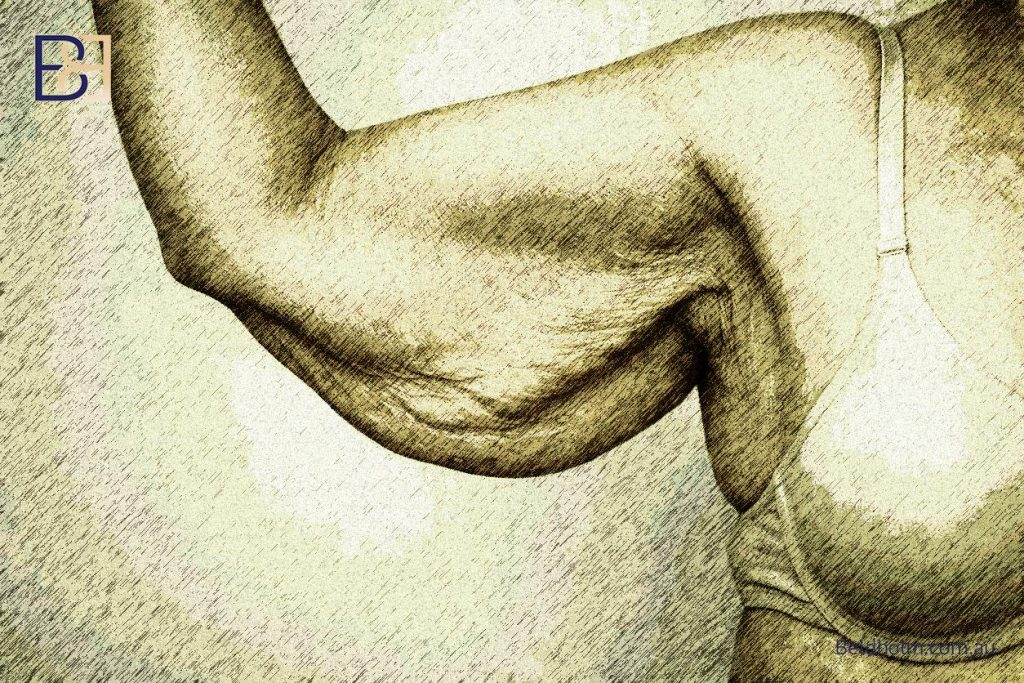
Upper arm fullness usually falls into one of three broad patterns:
- Excess fat, with skin that is still firm.
- Loose skin, with relatively little fat underneath.
- A combination of both.
A rough self-check. With your arm relaxed, pinch the underside of your upper arm between your thumb and forefinger.
- If what you pinch feels mostly soft and thick, fat is likely the dominant factor.
- If what you pinch feels like a thin fold of skin with little underneath, loose skin is the larger contributor.
- If there is both thickness and a clear skin fold, both are playing a role.
Your history matters too.
- Weight-stable patients who have never had significant weight loss often fall into the fat-dominant group.
- Patients who have lost substantial weight through diet, bariatric surgery, or medical weight-loss programs tend to have loose skin that extends along the upper arm, and sometimes onto the lateral chest.
- Patients with age-related changes often have features of both.
The pinch test is a rough guide only. Proper assessment includes physical examination of skin elasticity, the amount of fat present, and how the arm moves. That only happens in consultation.
When non-surgical approaches may be enough
Surgery is not the only option, and not everyone with upper arm concerns is a candidate.
Still losing weight? Surgery is usually deferred until weight has been stable for at least six months. Skin and fat distribution can continue to change during that period.
Mild fat, no loose skin? Resistance training to build underlying muscle tone combined with general weight management may be sufficient. Some patients come in expecting surgery and leave the first consultation with a plan that does not include it.
Normal variation in arm shape, without a genuine excess of fat or skin, is generally not an indication for surgery.
A consultation is the right setting to work out which of these situations applies.
Matching Procedure to Pattern
A short glossary first
- Brachioplasty (arm lift) is a surgical procedure that removes loose upper arm skin.
- Suction-assisted lipectomy (liposuction) is a surgical procedure that removes fat deposits through small entry-point incisions.
- Skin laxity refers to loose skin that no longer retracts to the underlying tissue after weight loss, pregnancy, or age-related changes.
- Concurrent means performed in the same operative session, rather than in two separate operations.
Dr Beldholm uses four distinct procedures, each matched to a specific pattern of fat and skin presentation.
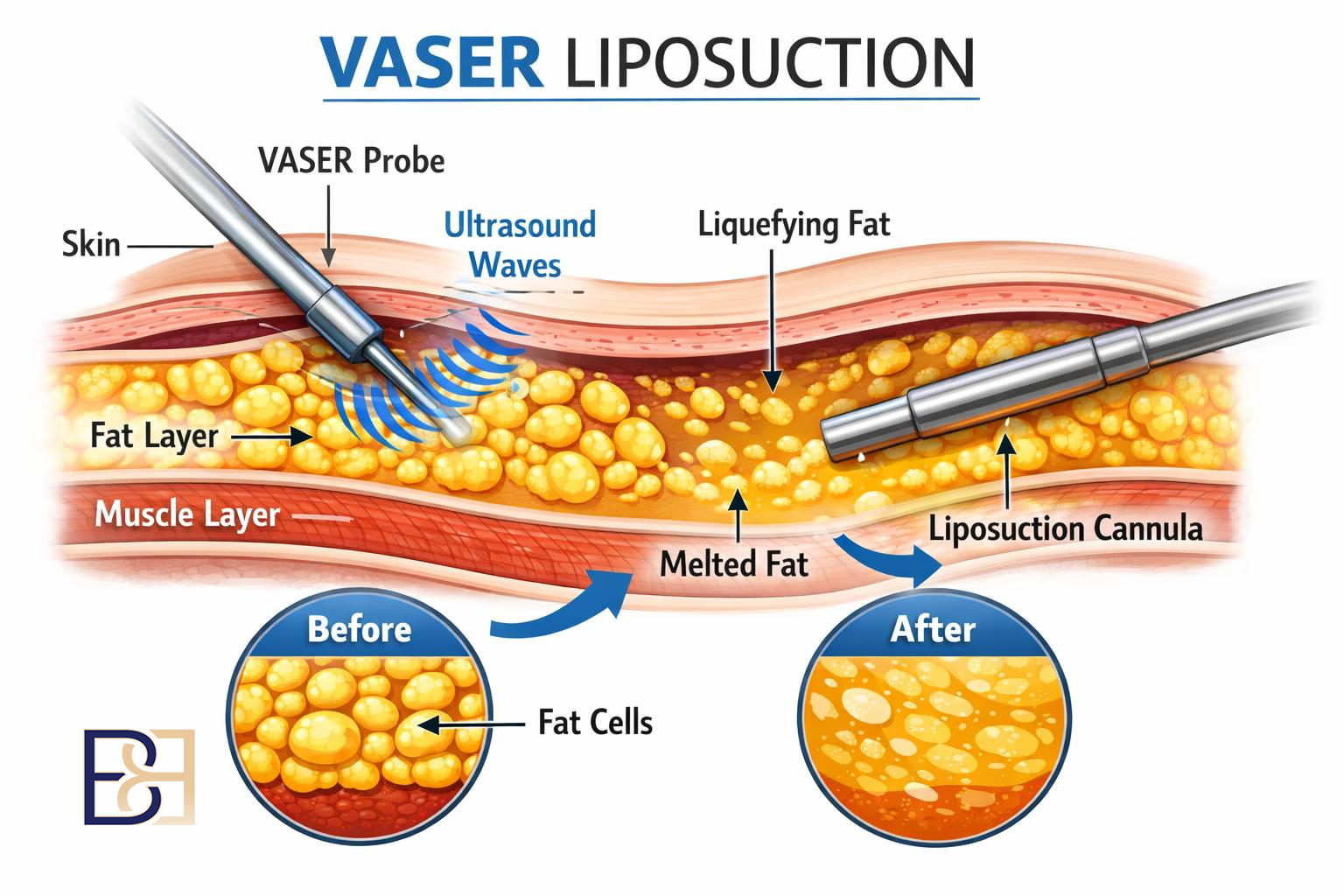
Pattern 1: Excess fat, minimal loose skin → Liposuction Only
Who this fits. Patients with localised upper arm fat whose skin still retracts well when pinched. Typically weight-stable patients whose fat distribution is inherited or age-related, rather than the result of significant weight loss.
The procedure. Upper arm liposuction, performed as a suction-assisted lipectomy. Small entry-point incisions are made at discreet locations around the upper arm. A cannula is used to remove fat through these incisions. No skin is removed.
Scar. Minimal. Entry-point incisions are typically a few millimetres each.
Important limitation. Liposuction removes fat, not skin. If skin laxity is present, liposuction alone may unmask the loose skin rather than address it. This is assessed carefully in consultation.
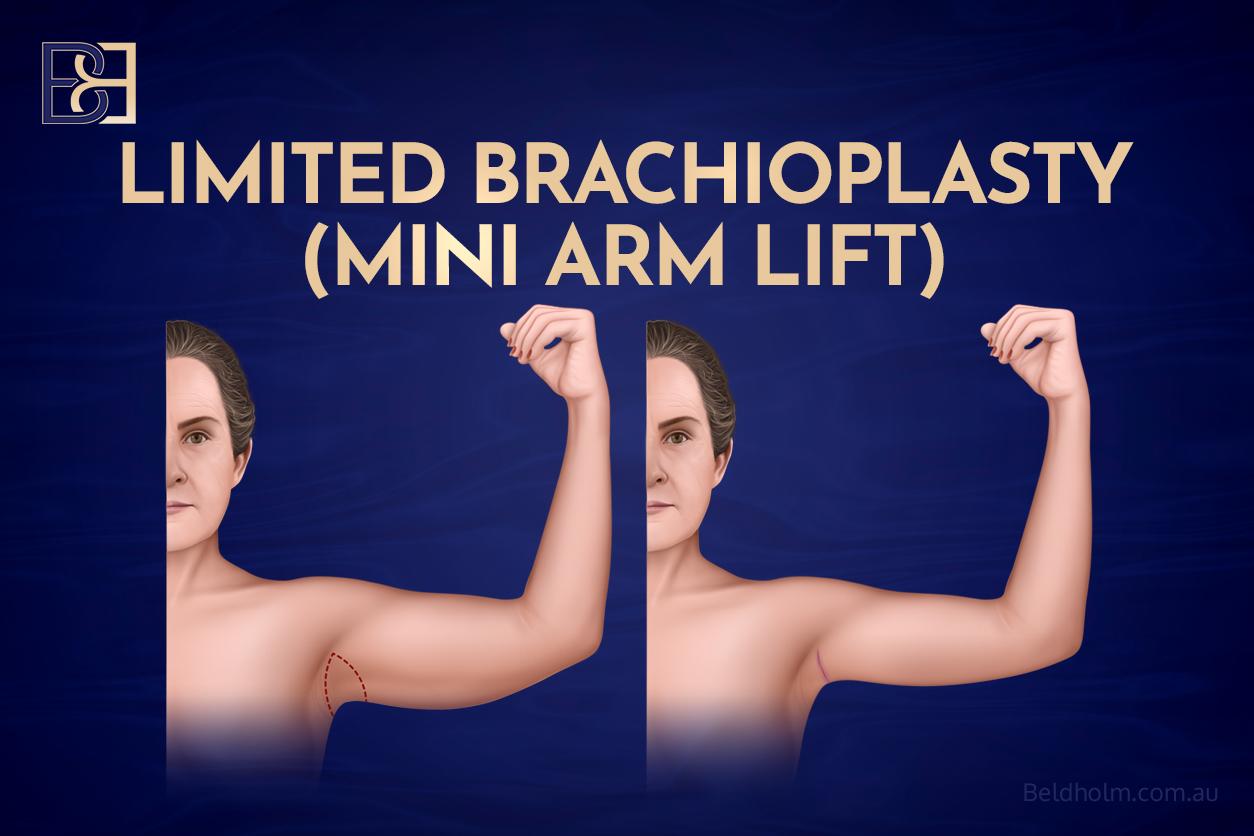
Pattern 2: Mild loose skin near the armpit → Limited Brachioplasty
Who this fits. Patients with a small amount of loose upper arm skin concentrated near the axilla (armpit), with minimal laxity extending along the arm itself.
The procedure. A shorter skin excision performed with incisions hidden in the axilla. Skin is removed and the wound is closed along the natural axillary fold.
Scar. Shorter than full brachioplasty. The axillary position means the resulting scar is largely concealed in natural arm creases.
Important limitation. Only a limited amount of skin can be removed through this approach. Patients with laxity extending along the upper arm will generally need a longer incision.
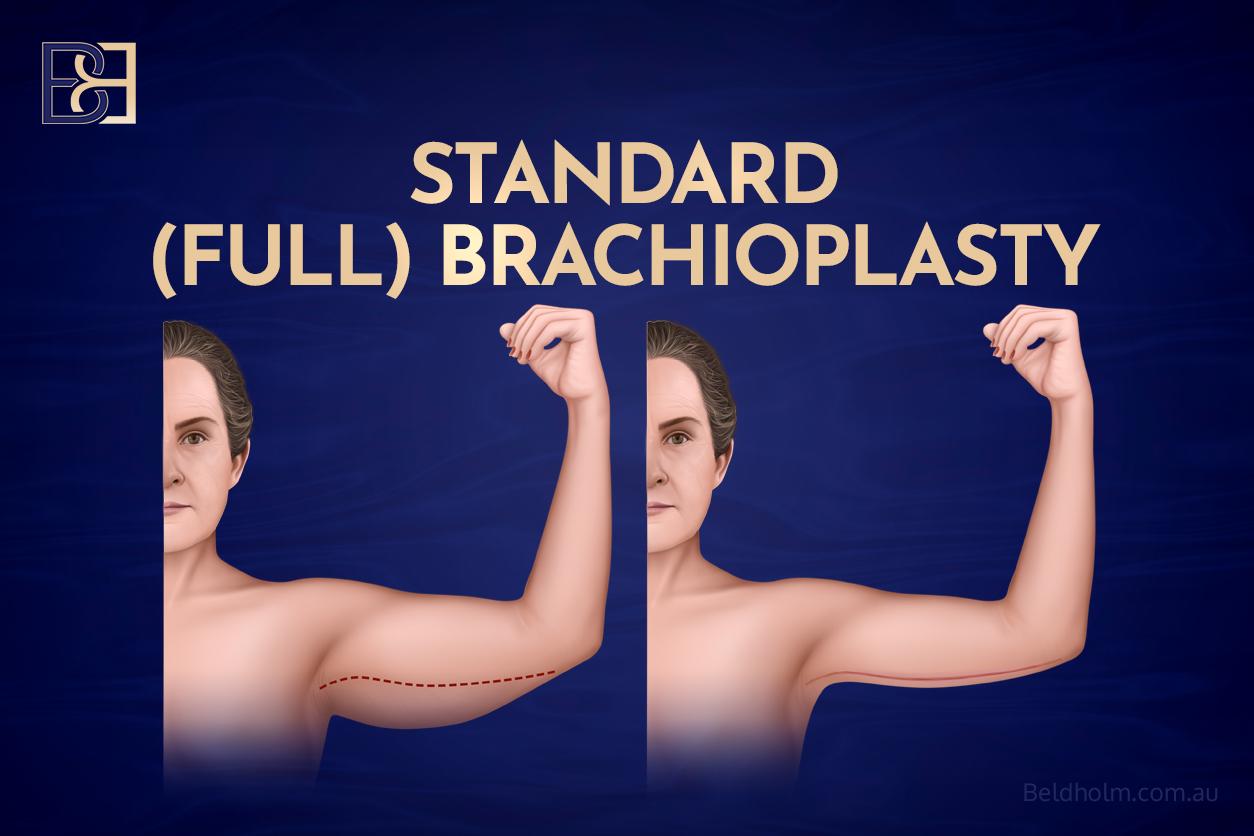
Pattern 3: Moderate to severe loose skin along the upper arm → Full Brachioplasty
Who this fits. Patients with loose skin extending along the length of the upper arm, typically post-weight-loss or significant age-related. The “hanging skin” presentation that persists despite weight stability and exercise.
The procedure. A longer skin excision, with the incision running from the axilla along the inner upper arm toward the elbow. Skin and a small amount of underlying tissue are removed, and the wound is closed along the inner arm. Where fat deposits are also present, concurrent liposuction is commonly added in the same operative session.
Scar. Visible but positioned along the inner arm, where it is less noticeable in most arm positions.
Important consideration. Scar quality varies by individual. Scar management is discussed at every consultation and reviewed at every follow-up visit.
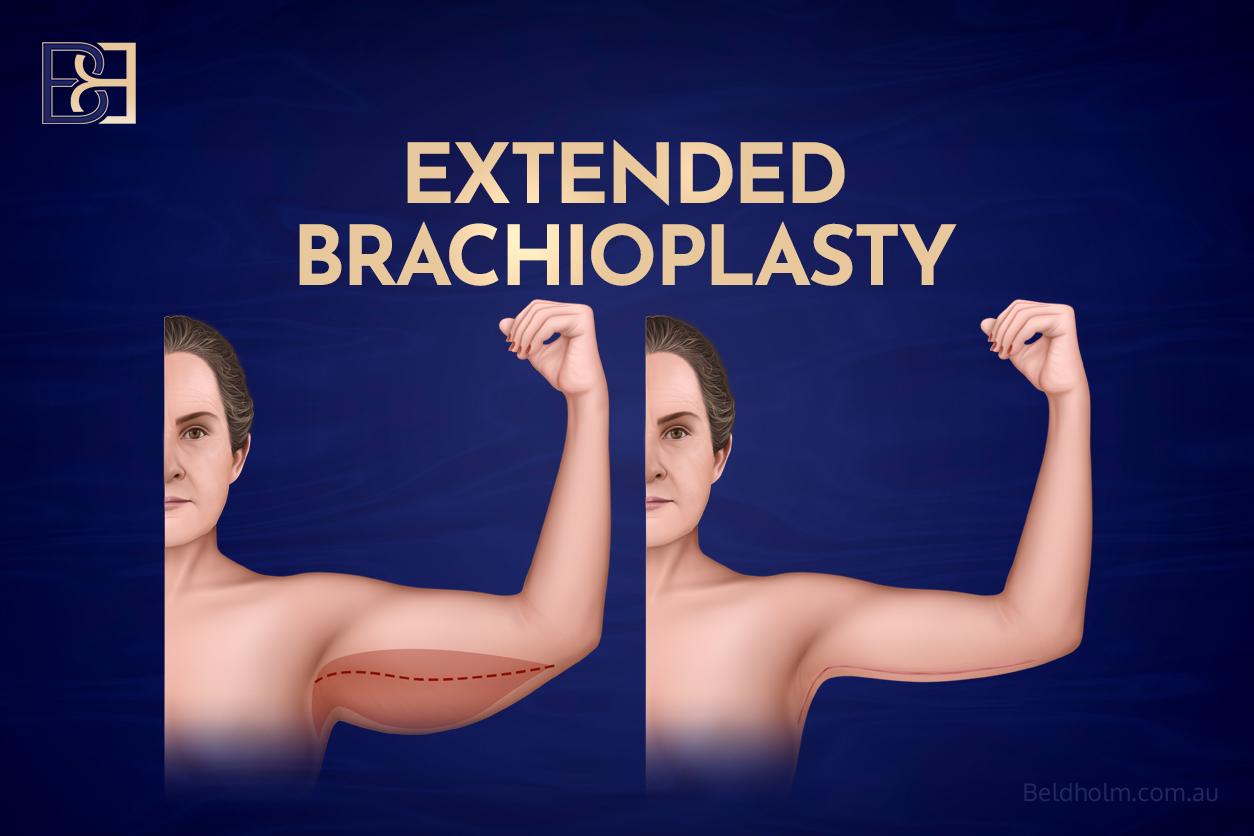
Pattern 4: Loose skin extending onto the chest or lateral breast → Extended Brachioplasty
Who this fits. Patients whose skin laxity extends from the upper arm onto the lateral chest wall or into the lateral breast area. Common after major weight loss or bariatric surgery.
The procedure. A brachioplasty-style arm incision extended onto the chest wall. Both the upper arm and the lateral chest or breast area are addressed in one operative session. Where fat deposits are also present, concurrent liposuction is commonly added.
Scar. Longer than full brachioplasty. The extension onto the chest adds a horizontal component to the incision. Positioning aims to place the chest portion along the natural breast crease or bra line where practical.
Important consideration. The longer incision and broader area of undermining mean this is a larger operation than brachioplasty alone, with correspondingly greater preparation requirements (see Preparing for Your Surgery, below).
How these are chosen
The decision between these four pathways is based on a physical assessment of skin elasticity, the amount and location of fat, the extent of skin laxity, and the patient’s medical history. It is not a choice the patient makes in isolation, and it is not a choice made from photographs or online assessment. It is made at consultation.
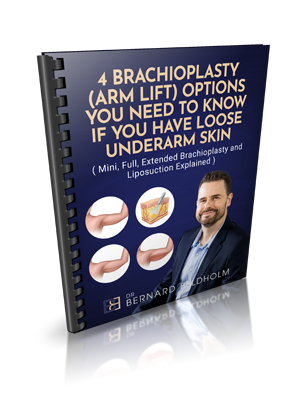
Take the Four Options With You: Free Visual Guide
The four patterns and procedures above are the core of how arm contouring decisions are made. Many patients find it helpful to have a portable reference they can review at their own pace, share with their GP before the referral appointment, or discuss with family members who are involved in the decision.
Dr Beldholm’s free guide, 4 Brachioplasty Options You Need to Know if You Have Loose Underarm Skin, covers:
- Illustrated diagrams of each procedure
- Where incisions are placed and how the resulting scars sit
- The patient pattern each option is designed to address
- The limitations of each approach
The guide is informational only and is not a substitute for a consultation. It is intended as a starting point for your own research and for conversations with your GP.
About Dr Bernard Beldholm
I am Dr Bernard Beldholm, a Specialist Surgeon based in the Hunter Valley, NSW. I have been in specialist practice for more than 15 years, with a clinical focus on body contouring surgery for patients who have lost significant weight.
Clinical focus
My practice concentrates on:
- Post-weight-loss body contouring, including abdominoplasty, brachioplasty, thighplasty, and torsoplasty
- Post-pregnancy body contouring
- Breast surgery, including mastopexy, reduction, and augmentation
- Facial rejuvenation surgery
Brachioplasty forms a regular part of my weekly operating list, particularly for patients who have lost weight through bariatric surgery, medical weight-loss programs, or sustained lifestyle change.
Where I operate
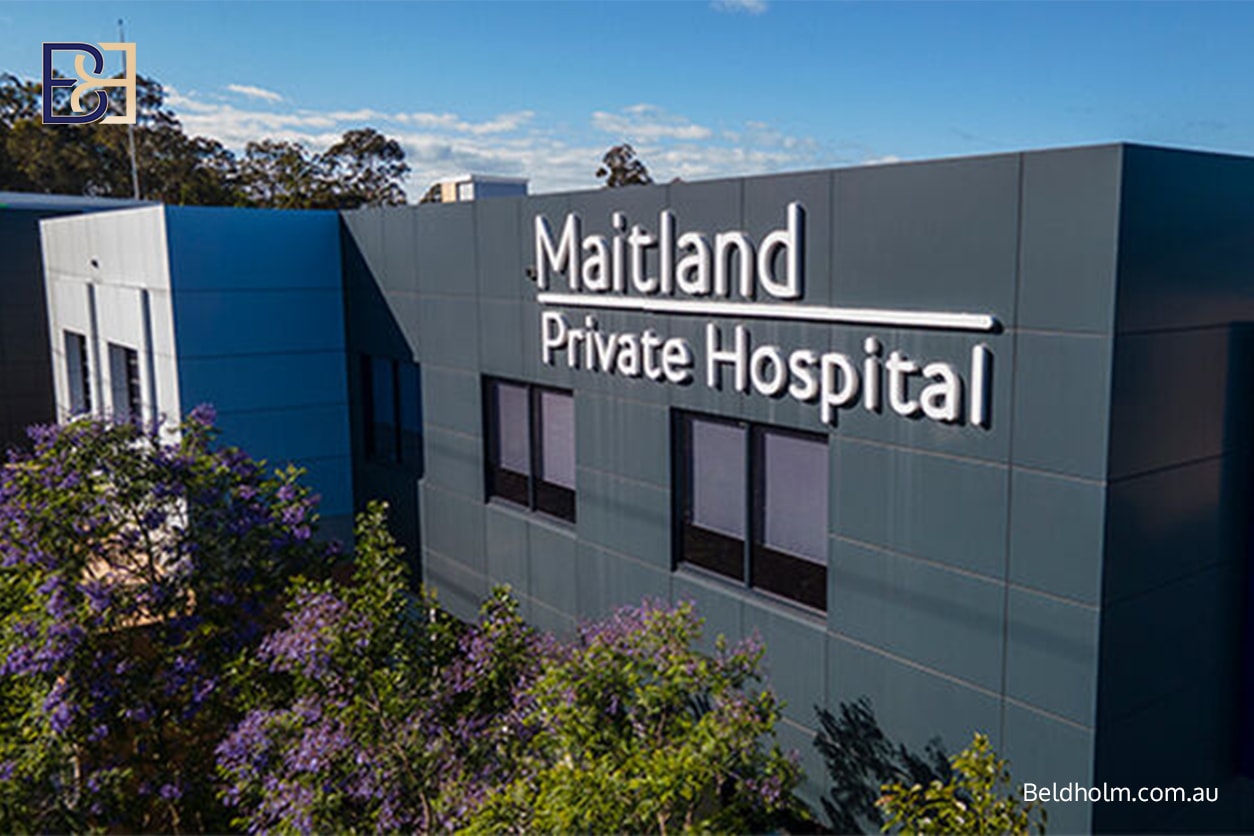
All procedures are performed at Maitland Private Hospital, a fully accredited private hospital with 24-hour medical cover and on-site intensive care support. Performing surgery in an accredited private hospital environment (rather than a day-surgery facility) means that, if extended post-operative observation is ever required, it is available in the same building.
Consultations take place at my rooms in the Hunter Valley. A telehealth option is available for the initial consultation for patients travelling from further afield within New South Wales.
GP referral

A GP referral is required before an initial consultation can be booked. This applies to every new patient and is part of the standard pathway for specialist care in Australia.
Book your appointment online now
Preparing for Your Surgery
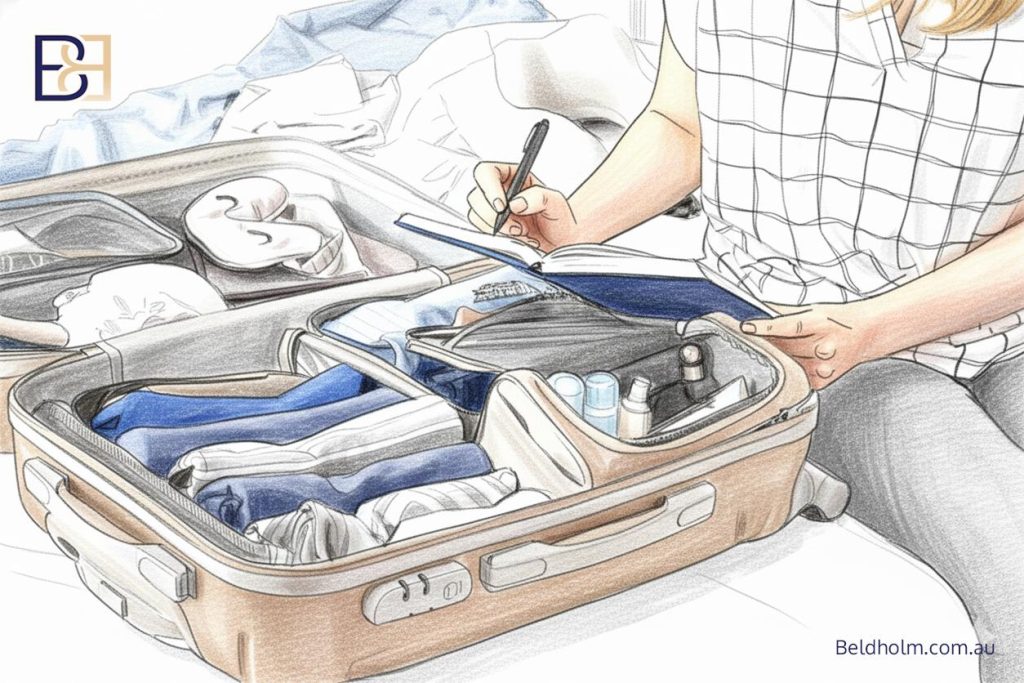
How much preparation a patient needs depends on the operation and the patient. Upper arm liposuction on a weight-stable patient and an Extended Brachioplasty on a patient who has lost significant weight are two very different physiological events. I match the preparation to the operation.
Two pathways, depending on what you are having done.
Pathway A: Liposuction or Limited Brachioplasty
These are the smaller operations in the arm contouring group. Standard surgical preparation is all that is required.
- Weight stability. Weight should have been stable for at least six months. Continued loss or gain during this period can change the underlying fat and skin distribution.
- Fish oil and blood-thinning supplements. Cease for at least one week before surgery. Resume one to two weeks after surgery, once bleeding risk has passed.
- Smoking. If you smoke, I will ask you to stop completely for at least six weeks before and six weeks after surgery. Smoking significantly increases the risk of wound healing complications and scar problems.
- Medications. I review all regular medications at the second consultation and advise on any that need to be held or adjusted before surgery.
- Routine pre-operative bloods. Standard surgical workup. I direct this as part of the consultation process. Anaesthetic consultation is arranged separately, closer to the date of surgery.
No extended nutrition protocol is required for these operations. Your usual diet, with adequate protein, is sufficient.
Pathway B: Full Brachioplasty or Extended Brachioplasty (post-weight-loss patients)

Larger operations in patients who have lost significant weight benefit from a more structured preparation programme. Two reasons: these are bigger operations with greater physiological demand, and post-weight-loss patients are more likely to have underlying micronutrient deficiencies from the period of weight loss itself.
Everything in Pathway A applies, plus:
- Protein. Whey protein isolate, taken daily, commencing at least four weeks before surgery and continuing for several weeks after, to support wound healing. The exact target is set at consultation.
- Tier 1 micronutrients. A complete multivitamin, vitamin D3 with vitamin K2, vitamin C, and zinc. Commenced from the time of surgical planning. Specific dosing is discussed at consultation.
- Tier 2 micronutrients. Added selectively based on your blood results, which are reviewed between the first and second consultations. Post-weight-loss patients often have deficiencies that benefit from correction before surgery.
- Follow-up bloods. Repeat blood tests six to eight weeks after surgery to confirm levels have remained adequate through the recovery period.
All of the above is discussed and individualised at consultation. You will leave the first consultation with a clear, written plan covering what to take, when to start, and when to cease.
Why preparation matters
Preparation is not optional for Pathway B patients. Wound healing, scar quality, the risk of seroma and infection, and the risk of other post-operative complications are all influenced by nutritional status at the time of surgery. The protocol is designed to put you in the best possible position on the day.
Patients who are still actively losing weight, who have very recently had bariatric surgery (within the last 12 months), or who have significant untreated deficiencies on their bloods may be advised to defer surgery until their preparation is complete. This is discussed at consultation.
The Consultation Process
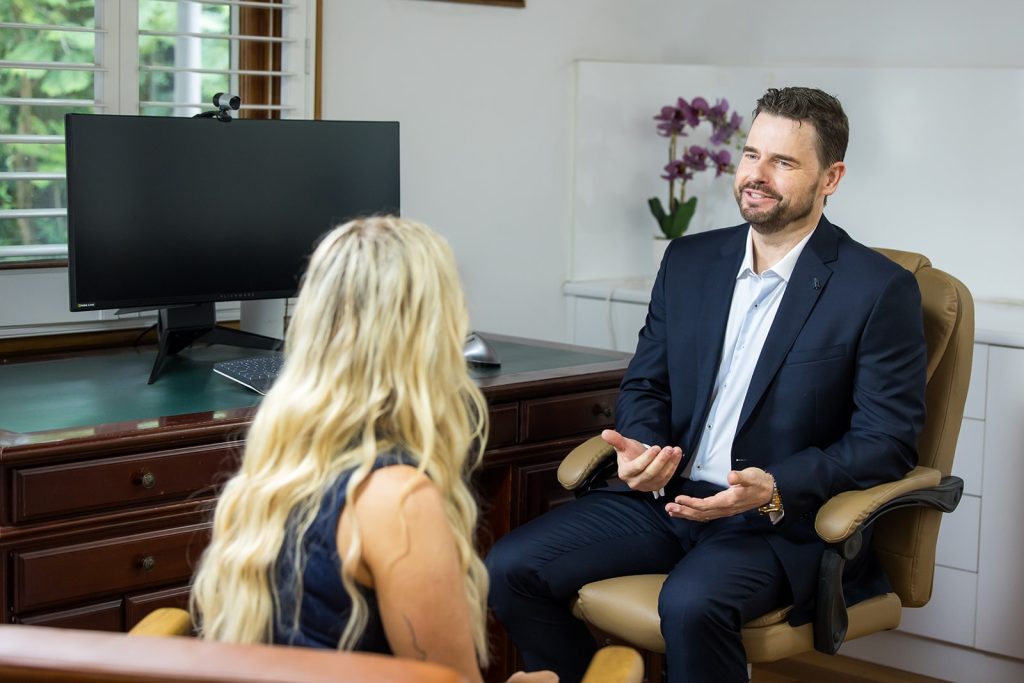
I see every patient at least twice before surgery. There are clinical reasons for this, not commercial ones. Two consultations give us time to assess, to investigate, and to plan, with the second visit informed by the results of the first.
Before the first consultation
A GP referral is required to book. Your GP will provide a letter outlining your medical history, any ongoing conditions, current medications, and the reason for referral. This letter, along with your weight history (particularly if you have lost weight), helps me prepare for the assessment.
If you are a post-weight-loss patient, bring with you the details of how you lost the weight, when, and what your weight has been over the past 12 months. If you have had bariatric surgery, the operative report from your bariatric surgeon is useful.
The first consultation
This is the longest of the visits. I cover:
- Assessment. A focused physical examination of the arm or arms, looking at skin elasticity, the amount and distribution of fat, and the extent of any skin laxity. Photographs are taken for the medical record.
- Medical history. A detailed review of your general health, prior surgery, current medications, and any conditions that affect surgical planning or recovery.
- Discussion of options. Based on what I find on examination, I will explain which of the four pathways I think fits your anatomy and why. We will also discuss the realistic limitations of each option.
- Pathology. If you are a candidate for Pathway B preparation (Full or Extended Brachioplasty in a post-weight-loss patient), I provide a pathology request form for blood tests. These are reviewed at the second consultation.
- Pre-operative supplements. Where indicated, you will leave with a starter list of Tier 1 supplements and the pre-operative nutrition guide.
You will not be asked to commit to surgery at this consultation. I want you to take the information away, think about it, discuss it with family, and return informed.
Between the first and second consultation
This gap is typically two to four weeks. It allows time for blood results to come back, for you to consider what was discussed, and for any questions to surface that did not come up at the first visit. Many patients write down questions during this period.
The second consultation
This is the planning visit. I cover:
- Blood results review. Any deficiencies identified are addressed before surgery, with Tier 2 supplements added as needed.
- Confirmation of surgical plan. Which procedure, whether concurrent liposuction is included, whether any combination with other body contouring procedures is appropriate, and the likely operative time.
- Realistic expectations. A frank discussion of what the surgery can and cannot achieve for your specific anatomy, including scar position and the recovery commitment.
- Risks and consent. A detailed discussion of the procedure-specific and general surgical risks, with time for questions before any consent forms are signed.
- Quote and scheduling. My practice coordinator handles the written quote, including hospital and anaesthetic fees, and discusses dates.
Anaesthetic consultation
A separate consultation with the anaesthetist is arranged closer to the date of surgery, usually as a telephone consultation. The anaesthetist will review your medications, any health conditions relevant to anaesthesia, and the plan for the day. An in-person review takes place at the hospital on admission day.
Telehealth
For patients travelling from interstate or from regional New South Wales, the first consultation can be conducted via telehealth. An in-person consultation is required before any final surgical decision is made.
Booking lead time
Surgery is typically booked one to three months after the second consultation. This allows time for preparation to take effect, particularly for Pathway B patients, and for you to organise leave from work and home support for recovery.
Your Hospital Stay and Recovery
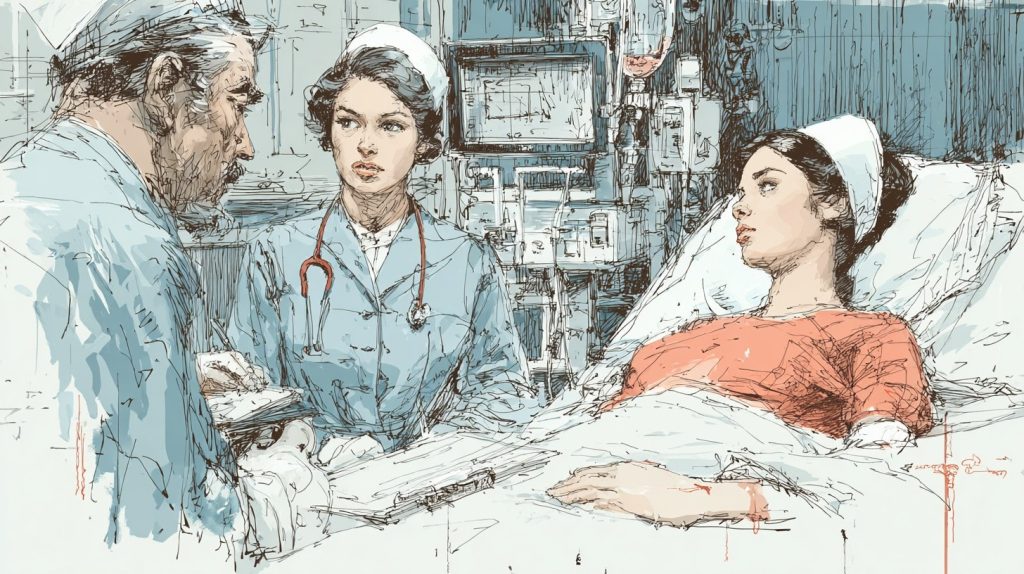
Where surgery takes place
All of my surgery is performed at Maitland Private Hospital, a fully accredited private hospital with 24-hour medical cover and an on-site intensive care unit. I admit my own patients and remain the responsible surgeon throughout the admission and the entire course of recovery.
How long you will stay
Length of stay depends on the operation:
- Liposuction alone: day surgery. You go home the same day, once the anaesthetic has fully worn off and you are comfortable.
- Limited Brachioplasty: day surgery or one overnight stay, depending on the size of the operation and how you are recovering at the end of the day.
- Full Brachioplasty: typically one overnight stay.
- Extended Brachioplasty: typically one overnight stay.
- Brachioplasty combined with other body contouring procedures (for example, abdominoplasty or mastopexy in the same operative session): the length of stay reflects the larger of the procedures involved, and is discussed at planning.
The first two weeks: intensive follow-up
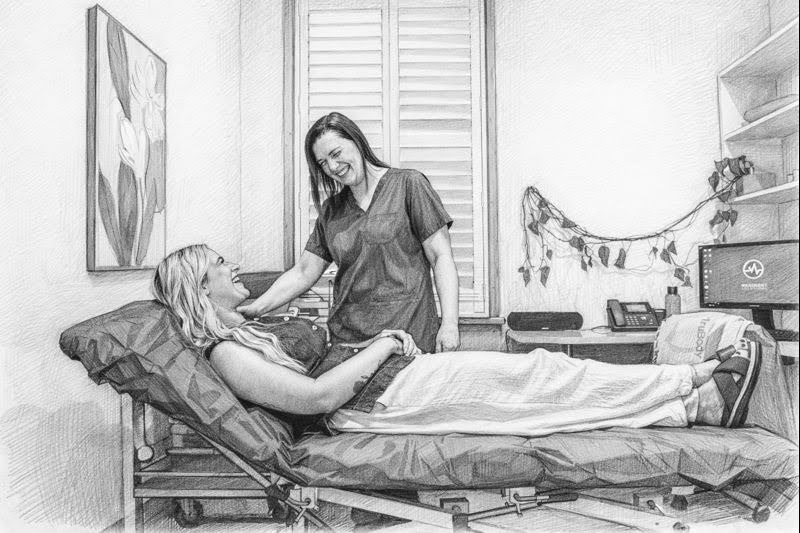
The first fortnight is the most active part of recovery. I see you frequently, and so do my nursing team.
- Two to three nurse or doctor visits per week.
- Dressing changes, wound checks, and LED therapy at each visit.
- A PICO negative-pressure dressing is applied at the time of surgery for brachioplasty cases. This is replaced with a Hypafix dressing at around day seven.
- Compression garments are worn day and night for the first several weeks. The duration is set at consultation based on which operation you have had.
This level of follow-up is part of the surgical fee. You are not charged per visit during the early recovery period.
Weeks two to six
Most patients are off strong analgesia within the first week and are managing with over-the-counter pain relief by the second week. Light daily activity is encouraged from early on. Office or sedentary work is typically possible from around two weeks for liposuction or limited brachioplasty, and from around three weeks for full or extended brachioplasty, depending on individual recovery and the nature of the work.
Driving resumes once you are off strong analgesia, can perform an emergency stop without difficulty, and feel ready to drive. This is usually around the same time you return to office work.
Lifting, gym, and any activity that loads the upper body is restricted for the first six weeks. The repaired tissues need this time to heal before they can take load.
Routine follow-up to twelve months
After the intensive first two weeks, follow-up moves to scheduled review appointments at one month, three months, six months, and twelve months. These reviews track wound healing, scar maturation, and any concerns that develop. Routine follow-up at these intervals is included in the surgical fee.
Scars take twelve to eighteen months to fully mature. This is normal and expected, and the appearance of the scar continues to improve well past the first six months.
Patients travelling from afar
For patients who travel from interstate or from regional New South Wales, I recommend planning for a seven to ten day stay locally after surgery. This covers the most active part of the early recovery and the first round of intensive follow-up before you return home. Ongoing review can be conducted via telehealth where appropriate.
Risks and Possible Complications

All surgery carries risk. The information below is not a complete list, and should be read alongside the detailed discussion at consultation, where risks specific to the individual patient are reviewed. No surgeon can promise a particular result, and individual healing varies.
General surgical risks
These apply to any operation performed under general anaesthesia, including those described on this page.
- Bleeding. During or after surgery. Significant post-operative bleeding may require return to theatre.
- Infection. Of the wound or the surrounding tissues. Usually managed with antibiotics; occasionally requires further intervention.
- Reaction to anaesthesia. Including drug reactions, nausea, and rarely more serious anaesthetic complications.
- Deep vein thrombosis (DVT) and pulmonary embolism (PE). Blood clots in the legs that can travel to the lungs. Risk is reduced through compression devices, early mobilisation, and where indicated, anticoagulant medication.
- Wound healing problems. Including delayed healing, wound separation, or skin loss at the wound edge. Smoking, diabetes, poor nutritional status, and high body mass index all increase this risk.
Risks specific to liposuction
- Contour irregularity. The treated area may not be perfectly smooth and may show areas of unevenness, dimpling, or rippling.
- Asymmetry. One arm may not match the other in shape or volume after surgery.
- Changes in sensation. Numbness, tingling, or altered sensation in the treated area, often temporary but occasionally persistent.
- Seroma. Collection of clear fluid under the skin, which may require drainage.
- Haematoma. Collection of blood under the skin, which may require drainage or evacuation.
- Skin laxity becoming more apparent. Removing fat from a region with marginal skin elasticity can occasionally make underlying laxity more visible.
Risks specific to brachioplasty (Limited, Full, and Extended)
- Scar visibility and quality. The brachioplasty scar runs along the inner upper arm. It is a long scar and is typically visible. Scar quality varies between patients; some develop widened, raised, or thickened scars (hypertrophic scars or keloid). Scar maturation takes twelve to eighteen months.
- Wound separation or breakdown. Particularly at the elbow end of the incision, where tension is greatest. May require dressings over an extended period and occasionally requires revision.
- Seroma. As above. Brachioplasty has a higher seroma rate than liposuction alone due to the larger area of dissection.
- Nerve injury. Damage to small sensory nerves in the upper arm can result in patches of numbness or altered sensation. Major nerve injury is rare.
- Lymphoedema. Persistent swelling of the arm or hand due to disruption of lymphatic drainage. Risk is higher in extended brachioplasty.
- Recurrence of skin laxity. Skin can stretch again over time, particularly with weight fluctuation, ageing, or significant further weight loss.
- Asymmetry. Final arm shape may differ between left and right.
Additional considerations for Extended Brachioplasty
The extended procedure carries the additional considerations of a longer incision, a wider area of undermining, and the chest-wall component of the operation.
- Longer scar. The scar extends from the upper arm onto the chest wall, with the chest portion positioned along the breast crease or bra line where practical. The chest-wall scar is also typically visible.
- Greater risk of seroma and wound healing problems due to the larger surgical field.
- Lymphoedema risk is higher than for full brachioplasty alone.
When concurrent liposuction is added
Combining suction-assisted lipectomy with brachioplasty in the same operative session adds the liposuction-specific risks (contour irregularity, sensation changes, seroma, haematoma) to the brachioplasty risks. Operative time is also longer.
Revision surgery
Some patients require revision surgery. This may be for scar revision, residual skin laxity, contour irregularity after liposuction, or recurrence over time. Revision is discussed honestly at consultation as a possible part of the longer-term picture, not as a routine expectation.
Risk mitigation
Risk cannot be eliminated, but it can be reduced. The pre-operative preparation discussed earlier (weight stability, nutrition, smoking cessation, fish oil cessation, addressing micronutrient deficiencies) is part of how the risk profile is brought down before surgery. Follow-up after surgery, particularly the intensive first two weeks, is the other half. Patients who follow the pre-operative and post-operative instructions tend to have better recoveries than those who do not.
What to do at consultation
A detailed, individualised discussion of risk takes place at the second consultation, before any consent forms are signed. Patients are encouraged to write down questions in advance and to take time over consent. There is no time pressure to proceed.
Frequently Asked Questions
Am I a candidate for liposuction, Limited, Full, or Extended Brachioplasty?
The right pathway depends on whether the dominant issue is fat, loose skin, or both, and on where the laxity sits. As a rough guide: liposuction alone suits patients with localised fat and good skin elasticity. Limited Brachioplasty addresses mild loose skin near the armpit. Full Brachioplasty is for moderate to severe skin laxity along the upper arm. Extended Brachioplasty is for laxity that continues onto the chest or lateral breast, common after major weight loss.
The actual decision is made at consultation, after physical examination of skin elasticity, the amount and distribution of fat, and the extent of laxity. Photographs and online assessment are not substitutes for in-person examination.
How much does arm fat removal surgery cost in Australia?
Cost varies depending on which procedure is performed, whether concurrent liposuction is included, whether the operation is combined with other body contouring procedures, and the length of operative time. The total fee includes the surgeon’s fee, the hospital fee, the anaesthetist’s fee, and the cost of routine post-operative follow-up.
A written quote covering all components is provided by the practice coordinator after the second consultation, once the surgical plan is confirmed. Costs are not quoted before consultation because the procedure cannot be confirmed until anatomy is assessed.
Will Medicare cover brachioplasty (arm lift surgery) after weight loss?
Some patients who have lost significant weight and meet specific medical criteria may be eligible for a Medicare rebate for brachioplasty. Eligibility is assessed individually at consultation, and criteria apply. Where eligibility applies, the rebate covers a portion of the surgeon’s and anaesthetist’s fees; out-of-pocket costs remain.
A consultation with a GP referral is required before any Medicare assessment can be completed. Patients are encouraged to discuss any private health insurance cover with their fund directly, as policies vary.
What does upper arm liposuction recovery involve?
Upper arm liposuction is performed as day surgery, with same-day discharge once the anaesthetic has worn off. A compression garment is worn day and night for several weeks. Most patients are off strong analgesia within a few days and back to office or sedentary work within around two weeks. Lifting, gym, and upper-body loading are restricted for around six weeks.
Bruising and swelling are expected during the early weeks and settle progressively. Final shape is not apparent until swelling has fully resolved, which can take three to six months.
How visible is the scar after brachioplasty?
The scar is typically visible. The position depends on which procedure is performed:
- Limited Brachioplasty: scar is hidden in the armpit and is less noticeable in most arm positions.
- Full Brachioplasty: scar runs along the inner upper arm from the armpit toward the elbow. It is visible when the arm is raised.
- Extended Brachioplasty: as for Full Brachioplasty, with an additional component extending onto the chest wall, positioned along the breast crease or bra line where practical.
Scar quality varies between patients. Some develop widened, raised, or thickened scars. Scars take twelve to eighteen months to mature, and continue to improve in appearance well past the first six months. Scar management is reviewed at every follow-up visit.
How long before I can return to work and exercise?
Return to work depends on the procedure and the nature of the work:
- Liposuction or Limited Brachioplasty: office or sedentary work is typically possible from around two weeks.
- Full or Extended Brachioplasty: office or sedentary work is typically possible from around three weeks.
- Physical work involving upper-body lifting or loading: typically deferred until at least six weeks post-operatively, often longer depending on the role.
Light walking and daily activity are encouraged from the first week. Driving resumes once strong analgesia has been ceased and an emergency stop can be performed without difficulty. Lifting, gym, and upper-body loading are restricted for the first six weeks. Full return to unrestricted activity is generally around twelve weeks, depending on individual recovery.
Book a consultation
Arm contouring is a pattern-matching decision. Whether the right operation is upper arm liposuction (suction-assisted lipectomy), Limited Brachioplasty, Full Brachioplasty, or Extended Brachioplasty depends on the balance of fat, skin laxity, and where that laxity sits. The decision is made at consultation, after physical examination.
Or call the clinic on (02) 4934 5700.
4 Brachioplasty (Arm Lift) Options You Need to Know if You Have Loose Underarm Skin
Before booking
A GP referral is required for every new patient.
Medicare and out-of-pocket costs
Some patients who have lost significant weight may be eligible for a Medicare rebate for brachioplasty. Eligibility is assessed individually at consultation, and criteria apply. Out-of-pocket costs remain in all cases. A written quote covering surgeon, hospital, and anaesthetist fees is provided after the second consultation.
Important information
- All surgery carries risk. Individual results vary and cannot be guaranteed.
- A consultation is required to determine suitability for any procedure.
- Telehealth is available for the initial consultation; an in-person consultation is required before any final surgical decision is made.
- Educational content on this page is general in nature and is not a substitute for medical advice.
- A GP referral is required before booking.