


Abdominoplasty (Tummy Tuck) Cost & Medicare Information
This page explains the cost structure, Medicare eligibility, private health insurance, and the differences between mini (Limited), Full, and extended abdominoplasty. The information is written for patients comparing smaller operations such as a ‘limited tummy tuck’ (mini abdominoplasty) with standard options.
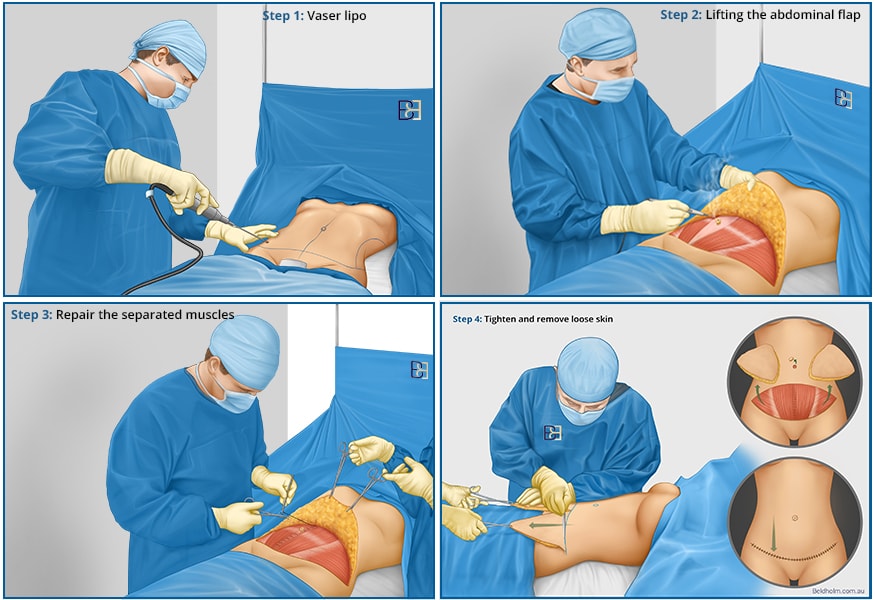
What Is an Abdominoplasty?
Abdominoplasty surgery is a surgical procedure performed to remove excess skin and fat, address rectus diastasis (muscle separation), and support the abdominal wall. Most patients seeking this procedure fall into two groups:
- Post-pregnancy patients with abdominal muscle separation (Diastasis recti) and functional symptoms
- Post–weight-loss patients with redundant skin, chronic skin irritation, or functional concerns
Dr Beldholm performs standard, extended, and Fleur-de-Lis abdominoplasty depending on examination findings, muscle integrity, abdominal wall concerns, and overall anatomy.
This procedure may be medically indicated (reconstructive) or cosmetic, depending on symptoms, documentation, and Medicare criteria.
Book Online Now
Medical vs Cosmetic Abdominoplasty
Abdominoplasty can be classified as either reconstructive (medical) or cosmetic. The distinction influences Medicare eligibility, private health insurance, hospital coverage, and out-of-pocket costs.
Medical (Reconstructive) Abdominoplasty
This applies when the procedure meets strict Medicare Benefits Schedule (MBS) criteria. Two primary categories exist:
1. Post-Pregnancy Rectus Diastasis Item Number
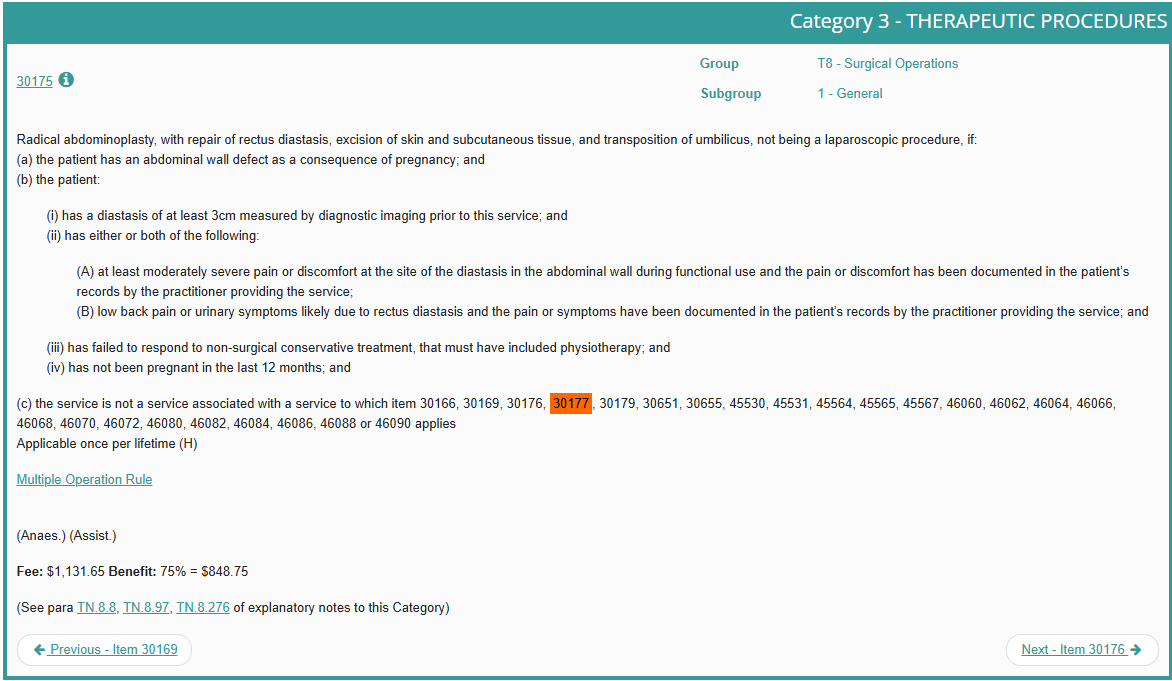
Eligibility may apply when:
- Significant muscle separation is present
- Symptoms affect daily function
- Diagnostic imaging confirms rectus diastasis
- Non-surgical conservative treatment has been attempted
In these cases, repair of the abdominal wall is considered reconstructive.
2. Post–Weight-Loss Abdominoplasty Item Number
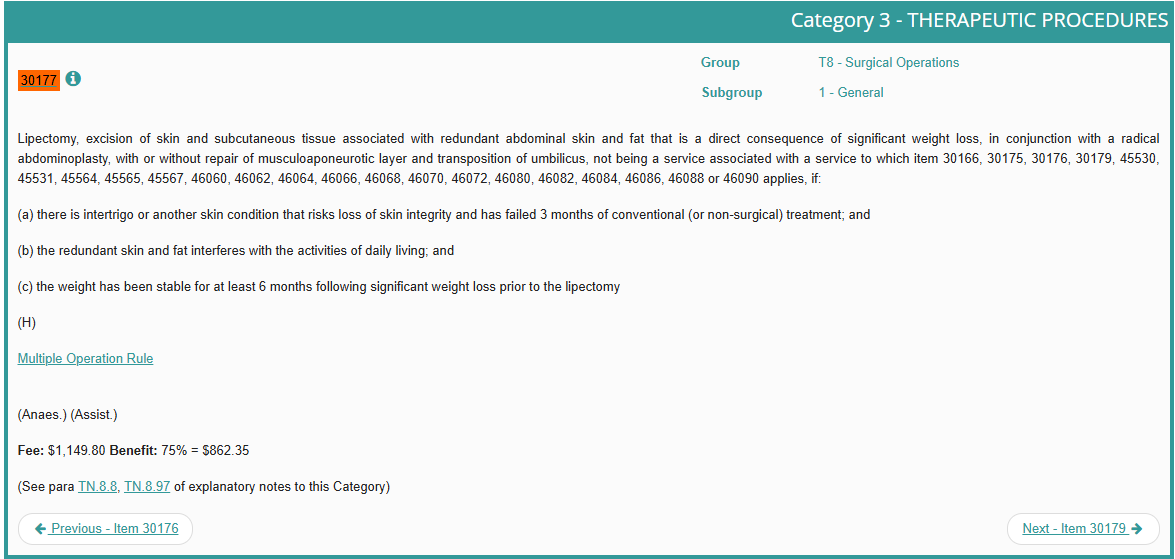
Eligibility may apply after significant weight loss when:
- Redundant abdominal skin causes functional problems
- There are chronic skin conditions or irritation
- Weight is stable
- Conservative treatment has been attempted
This may include standard, extended, or Fleur-de-Lis abdominoplasty.
When a Medicare item number is approved:
- A Medicare rebate applies to the surgeon and anaesthetist fees
- Private health insurers may cover hospital costs (policy dependent)
- Out-of-pocket costs are significantly reduced compared with cosmetic cases
Cosmetic Abdominoplasty
A cosmetic abdominoplasty applies when the patient does not meet MBS criteria. This is common when:
- Muscle separation is mild or absent
- Symptoms are minimal or not documented
- Redundant skin is present but without functional issues or medical symptoms
In cosmetic cases:
- No Medicare rebate is payable
- Private health insurance cannot contribute to costs
- Hospital, surgeon, and anaesthetist fees are paid entirely out-of-pocket
Private Health Insurance & Hospital Cover

If an MBS item number is approved:
- Private health insurance and private health funds may contribute to hospital fees
- The private health fund may cover part of theatre costs
- Out‑of‑pocket expenses or excess may still apply
However, not all private health policies cover abdominoplasty, even when Medicare criteria are met.
Private Health Tiers and Why They Matter
Abdominoplasty MBS item numbers (30175 and 30177) fall under the highest insurance classification tiers, which usually require:
- Gold level cover, or
- Occasionally Silver Plus, depending on the fund.
Most insurers classify these procedures within the Weight Loss Surgery or Reconstructive Surgery category, even for post‑pregnancy rectus diastasis.
This means:
- Basic and Bronze policies do not cover these item numbers.
- Many Silver policies exclude them unless upgraded to Silver Plus or Gold.
12‑Month Waiting Period
If your current policy does not include the relevant category:
- You will need to upgrade your cover, and
- A 12‑month waiting period applies before the fund will pay benefits.
This is standard for all private health insurers for surgeries classified under:
- Weight loss surgery categories
- Reconstructive procedures
The waiting period applies even if the need for surgery is new or unexpected.
What Private Health Funds Typically Cover
When you meet Medicare criteria and hold the correct tier of cover:
- Theatre fees
- Hospital bed costs
- Consumables used during surgery
- Part of the anaesthetist’s fee (depending on your policy)
- minimum of 25% of the MBS Schedule Fee (the portion not paid by Medicare)
You will still pay:
- Any gap between the surgeon’s fee and the combined Medicare + fund rebate
- Your policy excess
- Any hospital co‑payments required by your fund
- Any gap charged by the anaesthetist
Hospital fees and anaesthetic fees are included in written quotes.
Can You Get a Tummy Tuck for Free?
Abdominoplasty is not free in Australia. Even with Medicare and private health, there will usually be:
- Surgeon’s fee
- Anaesthetist fee
- Hospital excess
- Gap payments
Medicare and private health contributions vary.
Medicare Item Numbers for Abdominoplasty
Below are the two primary Medicare item numbers used for abdominoplasty when medically indicated. These determine whether a rebate applies and whether private health insurance can contribute to hospital costs.
Medicare Item 30175 – Post‑Pregnancy Rectus Diastasis Repair
“Radical abdominoplasty, with repair of rectus diastasis, excision of skin and subcutaneous tissue, and transposition of umbilicus”
Eligibility criteria include:
- A documented abdominal wall defect as a consequence of pregnancy; and
- Rectus diastasis of ≥ 3 cm, confirmed by diagnostic imaging prior to surgery; and
- Documented symptoms, including:
- Moderately severe abdominal wall pain during functional use, and/or
- Low back pain or urinary symptoms likely due to rectus diastasis; and
- Symptoms recorded in the patient’s medical records; and
- Failure of non‑surgical conservative treatment, including physiotherapy; and
- No pregnancy in the past 12 months; and
- Not performed in conjunction with excluded item numbers.
Schedule Fee: $1,131.65
Medicare Rebate (75%): $848.75
(Once per lifetime)
Medicare Item 30177 – Post–Weight‑Loss Lipectomy with Radical Abdominoplasty
“Lipectomy with excision of skin and subcutaneous tissue associated with redundant abdominal skin and fat following significant weight loss, performed with radical abdominoplasty”
Eligibility criteria include:
- Intertrigo or other skin condition risking skin integrity, which has failed 3 months of non‑surgical treatment; and
- Redundant skin and fat interfering with activities of daily living; and
- Weight stability for at least 6 months following significant weight loss; and
- Not performed alongside excluded item numbers.
Schedule Fee: $1,149.80
Medicare Rebate (75%): $862.35
These item numbers apply only when strict functional and clinical criteria are met. They significantly influence cost reduction when paired with private health insurance.
There are two primary Medicare pathways for abdominoplasty under the Medicare Benefits Schedule (MBS):
1. Post‑Pregnancy Rectus Diastasis Repair (Muscle Separation)
Applicable when:
- Significant rectus diastasis is present
- Documented symptoms exist (e.g., pain, functional limitation)
- Diagnostic imaging is performed prior
- Non‑surgical conservative treatment has failed
This item number may apply even without major excess skin.
2. Post–Weight‑Loss Abdominoplasty
Applicable when the patient:
- Has lost a significant amount of weight
- Has stable weight
- Experiences functional symptoms from redundant skin
- Has documented skin conditions or irritation from excess skin
This item number can apply with or without muscle repair.
How Medicare, Private Health Insurance & Out‑of‑Pocket Costs Work Together
To understand total cost, these factors must be considered together:
Step 1: Medicare Item Number Eligibility
If your examination confirms eligibility for one of the two MBS item numbers:
- You receive a Medicare rebate for the surgeon’s and anaesthetist’s fees.
- Private health insurance can only contribute if an MBS item number is approved.
Step 2: Private Health Insurance Coverage
If you have insurance and an item number applies:
- Some policies have exclusions or waiting periods.
- Your fund generally covers most hospital fees.
- You may need to pay an excess (typically listed in your policy).
Step 3: Out‑of‑Pocket Costs
Even with Medicare and private health insurance, most patients will have:
- A gap on the surgeon’s fee
- Possible gap for the anaesthetist (depending on their schedule)
- Hospital excess
If no item number applies, all costs (surgeon, anaesthetist, and hospital) are fully out‑of‑pocket.

Why it’s not possible to give an exact quote prior to a full consultation.
Providing an accurate, itemised quote for abdominoplasty before a full in‑person consultation is not possible. Each patient presents with unique anatomical findings, medical circumstances, and surgical requirements that significantly influence the total cost. A detailed assessment is essential to determine whether the procedure is cosmetic or medical (reconstructive), which item number may apply, and what hospital and operative resources will be required.
A proper consultation allows the surgeon to evaluate all factors that contribute to the final price, including the complexity and duration of surgery, eligibility for Medicare rebates, and the level of hospital care needed. Below are the main reasons an accurate quote cannot be issued beforehand.
1. Cosmetic vs Medical (Reconstructive) Classification
A major factor affecting pricing is whether the procedure meets Medicare criteria.
- If cosmetic:
- No Medicare rebates apply.
- Private health insurance cannot contribute to hospital costs.
- GST applies to all fees, as cosmetic procedures are not exempt from GST under Australian taxation rules.
- All hospital, surgeon, and anaesthetist fees are paid out‑of‑pocket.
- If medical:
- Medicare item numbers (30175 or 30177) may apply.
- Private health insurance may contribute to hospital fees—but only with the correct level of cover.
- Out‑of‑pocket costs vary significantly depending on the patient’s fund and policy tier.
Determining eligibility requires clinical examination, documentation of symptoms, medical history review, diagnostic imaging (where needed), and confirmation of failed conservative therapy.
2. Type of Abdominoplasty Procedure Required
The surgical approach is highly individualised and has a direct impact on operative time and cost. Options include:
- Limited (mini) abdominoplasty
- Standard abdominoplasty
- Extended abdominoplasty
- Fleur‑de‑Lis abdominoplasty (for patients with significant vertical and horizontal excess skin)
The larger and more complex the procedure, the longer the operating time and the greater the resource requirements.
3. Factors That Influence Operative Time and Fees
Several clinical variables modify the length and complexity of surgery:
Body Mass Index (BMI)
Higher BMI can increase:
- Operative difficulty
- Time under anaesthetic
- Risk of bleeding or wound healing issues
- Hospital stay duration
Degree of Muscle Separation (Rectus Diastasis)
Repairing mild separation is less complex than repairing a severe or wide diastasis. The repair level directly influences the duration of surgery and whether Medicare criteria can be met.
Skin Redundancy and Tissue Quality
Patients with significant weight loss often have:
- Weak tissue integrity
- Multiple skin folds
- Excessive lateral or vertical laxity
This may necessitate extended or Fleur‑de‑Lis techniques, increasing complexity.
Liposuction Requirements
If VASER or standard liposuction is needed for contouring:
- Operative time increases
- Additional consumables and theatre resources are required
Hernia Repairs
If umbilical or ventral hernias are identified, they must often be repaired at the same time. This may extend the procedure and may alter the MBS item number eligibility.
Previous Surgeries
Scar tissue, mesh, or previous abdominal procedures can significantly alter:
- Dissection planes
- Operative time
- Risk profile
Medical Conditions
Patients with certain conditions may need:
- Longer monitoring
- Extended hospital stay
- Additional perioperative precautions
For example:
- Diabetes
- Sleep apnoea
- Cardiovascular conditions
These factors are assessed during consultation to ensure safety.
4. Hospital Requirements and Length of Stay
Not all patients require the same level of postoperative care. Costs vary with:
- Day surgery vs overnight stay
- Number of nights needed
- Use of postoperative equipment and dressings
- Additional monitoring or interventions
Private hospitals bill based on theatre time, consumable use, and accommodation needs—none of which can be estimated accurately without examining the patient.
5. Anaesthetist Fee Variability
Anaesthetist fees depend on:
- Duration of the procedure
- Complexity of the case
- Patient health factors (e.g., airway management, comorbidities)
Without knowing the expected operative time and medical history, an accurate anaesthetic estimate cannot be provided.
6. Impact of Private Health Insurance Cover
Even if a patient qualifies for a Medicare item number:
- Coverage depends on the tier of their insurance (Gold is usually required)
- Waiting periods may still apply
- Exclusions or restrictions may affect what portion of the hospital bill is covered
Each insurance policy behaves differently, making individual assessment essential.
In summary, abdominoplasty is a highly customised operation. An accurate quote requires a full consultation to assess anatomy, symptoms, procedural requirements, insurance coverage, and medical history. After the consultation, a detailed written quote is provided outlining surgeon, anaesthetist, and hospital fees based on the patient’s specific needs.
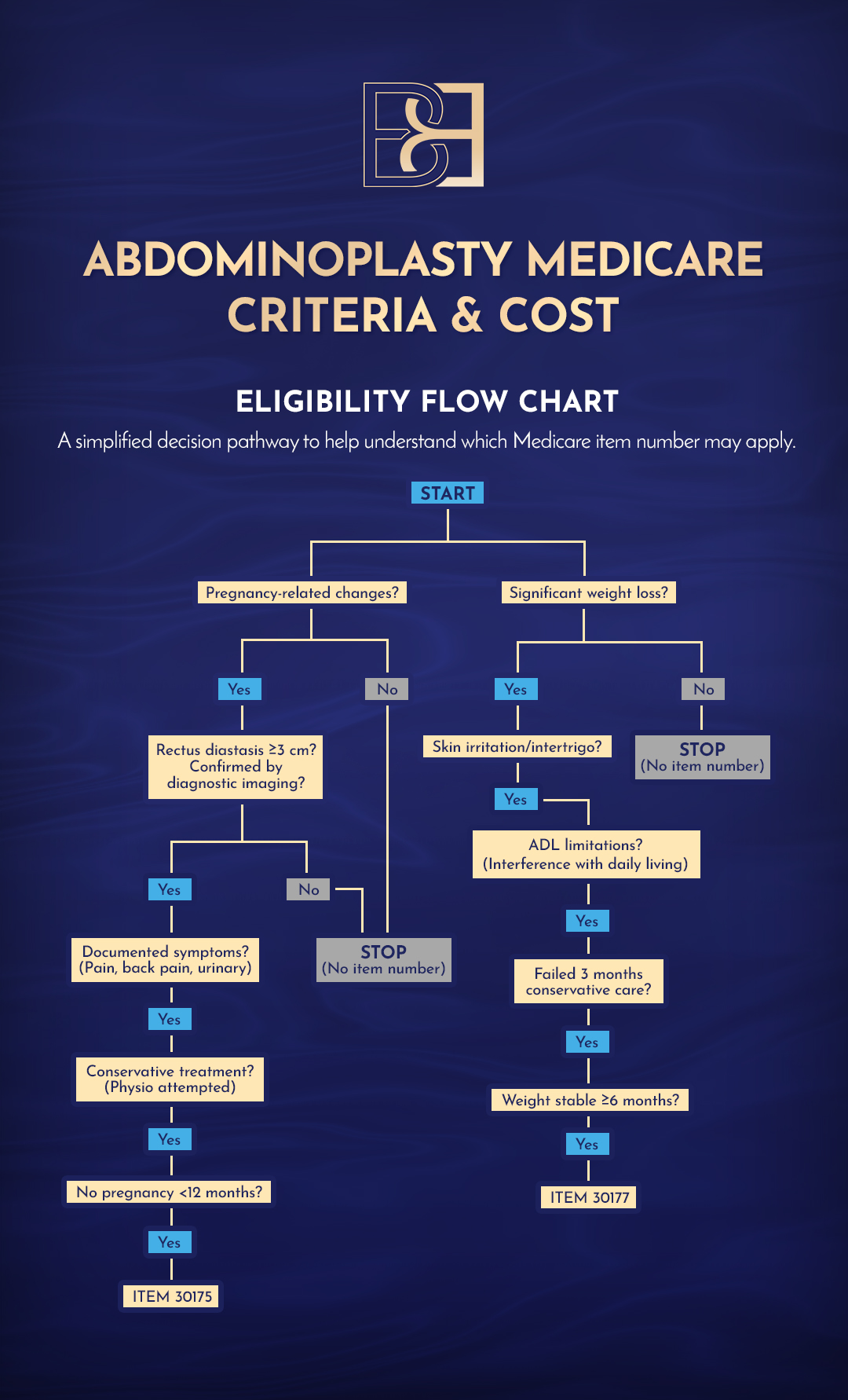
Eligibility Flowchart and Item Number Checklist
The correct Medicare item number depends on whether symptoms arise from pregnancy-related muscle separation or significant weight loss. The following checklists and flowchart outline how this is determined.
Checklist for Item 30175 (Post-Pregnancy Rectus Diastasis)
You may meet criteria for Item 30175 if all of the following apply:
- □ No excluded item numbers are planned concurrently
- □ Abdominal wall defect from pregnancy
- □ Rectus diastasis ≥ 3 cm confirmed by diagnostic imaging
- □ Documented symptoms such as abdominal wall pain, low back pain, or urinary symptoms
- □ Symptoms occur during functional activity
- □ Physiotherapy or other non-surgical conservative treatment has been attempted
- □ No pregnancy within the last 12 months
Checklist for Item 30177 (Post–Weight-Loss Lipectomy with Abdominoplasty)
You may meet criteria for Item 30177 if all of the following apply:
- □ Significant weight loss has occurred
- □ Weight has been stable for at least 6 months
- □ Redundant abdominal skin interferes with activities of daily living
- □ Intertrigo or another skin condition is present
- □ Skin condition has failed 3 months of non-surgical treatment
- □ No excluded item numbers are planned concurrently
Eligibility Flowchart (Text Version)
A simplified decision pathway to help understand which Medicare item number may apply.
The Consultation Process

A 1‑hour consultation includes:
- Medical history review
- Examination of abdominal muscles, skin, fat, and subcutaneous tissue
- Assessment of rectus diastasis
- Clinical photography
- Discussion of risks, recovery, and procedural alternatives
- Review of symptom history and conservative treatment
Telehealth may be suitable for initial discussions; an in‑person assessment is required before surgery.
Recovery and Follow‑Up
Recovery depends on the type of operation. All abdominoplasty procedures require:
- Time away from strenuous activity
- Support garments
- Wound care reviews
- Clinically indicated pain medication
Follow‑up includes:
- Intensive early review schedule
- 1, 3, 6, and 12‑month appointments
Risks and Considerations
All surgery carries risks, including bleeding, infection, seroma, wound healing delays, nerve changes, and risks associated with anaesthesia or further surgery.
A full risk discussion forms part of the consultation.
Why Choose Dr Bernard Beldholm FRACS

- Over 15 years’ experience in body contouring surgery
- Specialist Surgeon (General Surgery – FRACS)
- Expertise with post‑weight‑loss patients
- Skilled in muscle repair, hernia repair, and VASER liposuction
- Comprehensive follow‑up pathway at Maitland Private Hospital