


Abdominoplasty After Pregnancy for Abdominal Skin Excess and Muscle Separation (Diastasis Recti)
Book Online NowModern surgical approaches to tummy tuck (abdominoplasty) surgery may include liposuction‑assisted abdominoplasty to address abdominal skin excess, abdominal wall laxity, and muscle separation (diastasis recti) following pregnancy. In selected patients, contemporary surgical techniques may allow surgery to be performed without the routine use of surgical drains.
These procedures aim to address structural abdominal changes that can occur after pregnancy, including excess skin, abdominal wall laxity, and separation of the rectus abdominis muscles (diastasis recti).
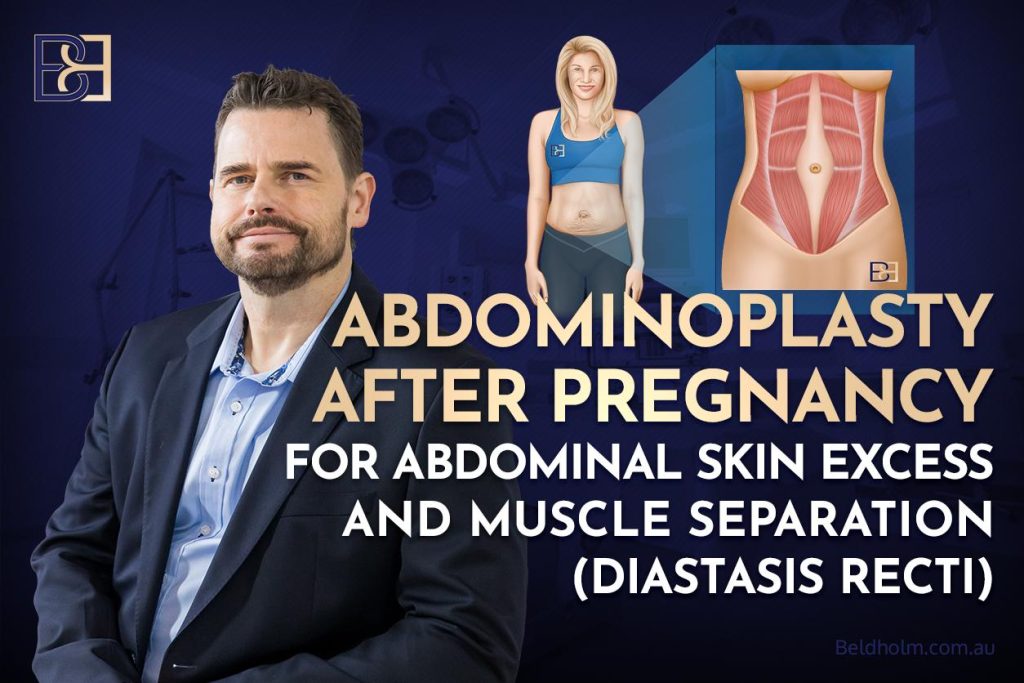
Patients considering a tummy tuck (abdominoplasty) after pregnancy can arrange a consultation with Dr Bernard Beldholm to assess abdominal skin excess, abdominal wall laxity, and possible diastasis recti. A consultation includes a review of medical history, a physical examination, and a discussion of appropriate surgical options.
Request a consultation to determine whether abdominoplasty may be appropriate for your post‑pregnancy abdominal changes.
Understanding Abdominal Changes After Pregnancy
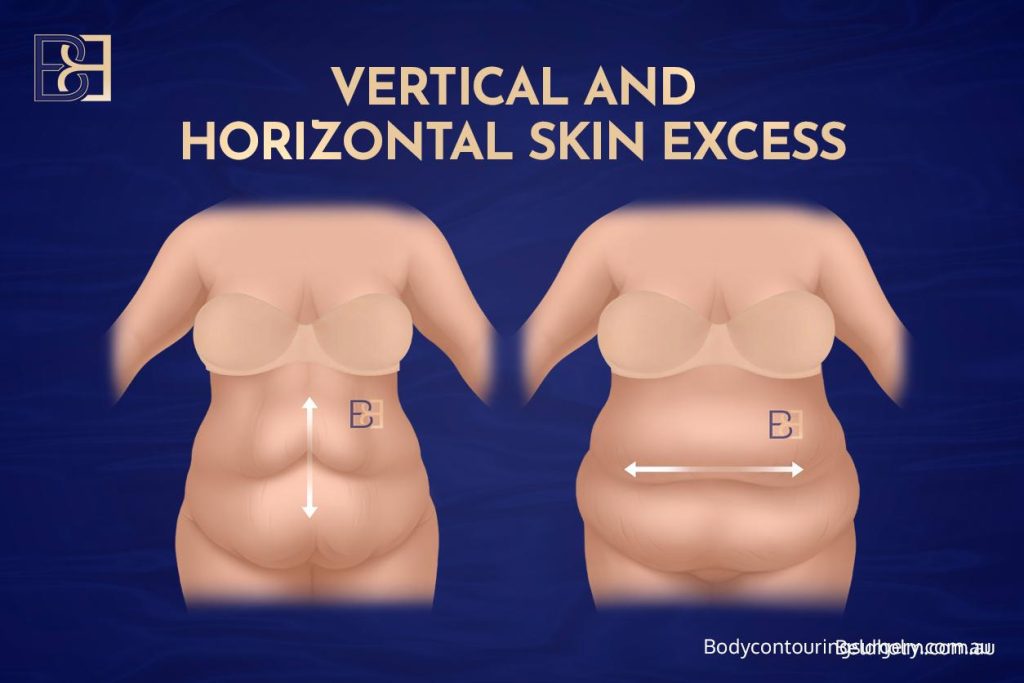
Pregnancy can cause structural changes to the abdominal wall and overlying skin. These changes are one reason some patients seek consultation for abdominoplasty after pregnancy.
Common post‑pregnancy changes include:
- excess abdominal skin
- abdominal skin laxity
- abdominal muscle separation (diastasis recti)
- persistent abdominal protrusion despite exercise
- localised fat deposits of the abdomen
These changes occur because pregnancy stretches the abdominal skin, connective tissue, and rectus abdominis muscles.
In some patients, these tissues do not return fully to their pre‑pregnancy state.
Abdominoplasty (often referred to as a tummy tuck) is a surgical procedure that may be considered to address these anatomical changes. The procedure may involve removing excess abdominal skin and tightening the abdominal wall, depending on individual anatomy.
Patients searching for tummy tuck (abdominoplasty) after pregnancy or post-pregnancy abdominoplasty are usually seeking assessment of these structural abdominal changes. Suitability for surgery requires consultation and physical examination.
What is Abdominoplasty (tummy tuck)?
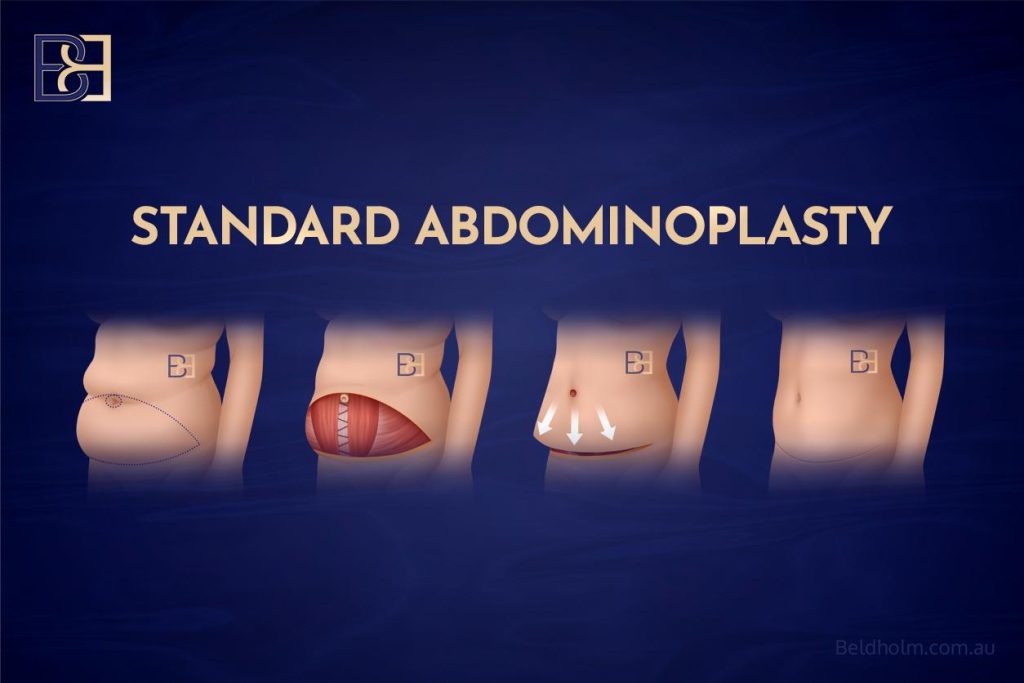
Abdominoplasty is a surgical procedure used to address excess abdominal skin, abdominal wall laxity, and separation of the rectus abdominis muscles (diastasis recti).
The procedure is commonly referred to as a tummy tuck (abdominoplasty).
During abdominoplasty after pregnancy, surgery may involve:
- removal of excess lower abdominal skin
- tightening of the abdominal wall
- repair of muscle separation (diastasis recti)
- repositioning of the umbilicus (belly button)
- contouring of the abdominal area
In selected patients, liposuction‑assisted abdominoplasty may be performed to address localised fat deposits of the abdomen or flanks.
The appropriate surgical approach varies between patients and depends on factors such as:
- degree of abdominal skin excess
- presence of diastasis recti
- abdominal wall laxity
- distribution of abdominal fat
- previous abdominal surgery
Dr Bernard Beldholm is a Specialist Surgeon who performs abdominoplasty procedures for patients with post‑pregnancy abdominal changes.
For more than 10 years, Dr Beldholm has performed drainless liposuction‑assisted abdominoplasty using VASER technology in selected patients. Prior to introducing VASER-assisted techniques, he performed liposuction‑assisted abdominoplasty using conventional liposuction methods.
This represents more than 15 years of experience performing liposuction‑assisted abdominoplasty procedures for abdominal skin excess, abdominal wall laxity, and muscle separation (diastasis recti).
The specific surgical approach used for abdominoplasty after pregnancy or tummy tuck (abdominoplasty) surgery depends on the patient’s anatomy and findings at consultation.
Diastasis Recti After Pregnancy
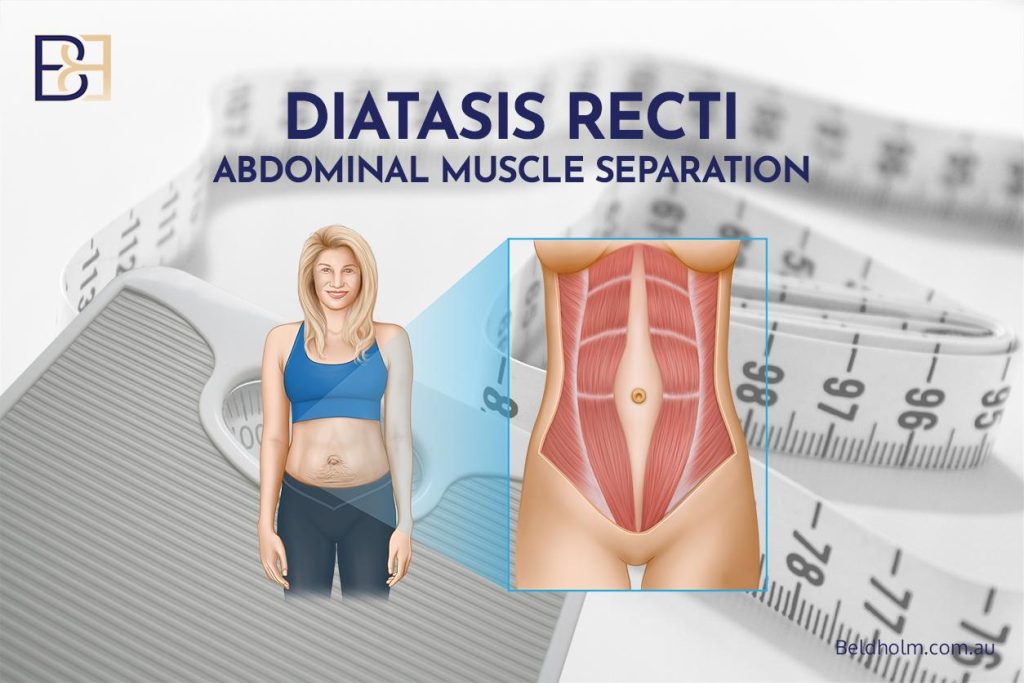
Diastasis recti refers to the separation of the rectus abdominis muscles. This can occur during pregnancy when the abdominal wall stretches to accommodate the growing uterus.
The connective tissue between the abdominal muscles (the linea alba) may widen, resulting in a gap between the rectus muscles. In some patients, this separation persists after pregnancy.
Common features of diastasis recti may include:
- visible or palpable separation of the abdominal muscles
- abdominal protrusion, particularly when sitting up or straining
- reduced abdominal wall support
- persistent abdominal contour changes after pregnancy
Exercise programs may help strengthen the abdominal muscles in some patients. However, when the separation is significant or associated with excess abdominal skin, surgical treatment may be considered.
During abdominoplasty after pregnancy, the rectus muscles can be repaired using sutures to restore the abdominal wall support. This step of the procedure is commonly referred to as rectus plication.
Repair of muscle separation (diastasis recti) is often performed during tummy tuck (abdominoplasty) surgery when clinically appropriate.
Types of Abdominoplasty After Pregnancy
Several types of abdominoplasty after pregnancy may be considered depending on the degree of abdominal skin excess, abdominal wall laxity, and the presence of muscle separation (diastasis recti).
The most appropriate procedure is determined during consultation following physical examination.
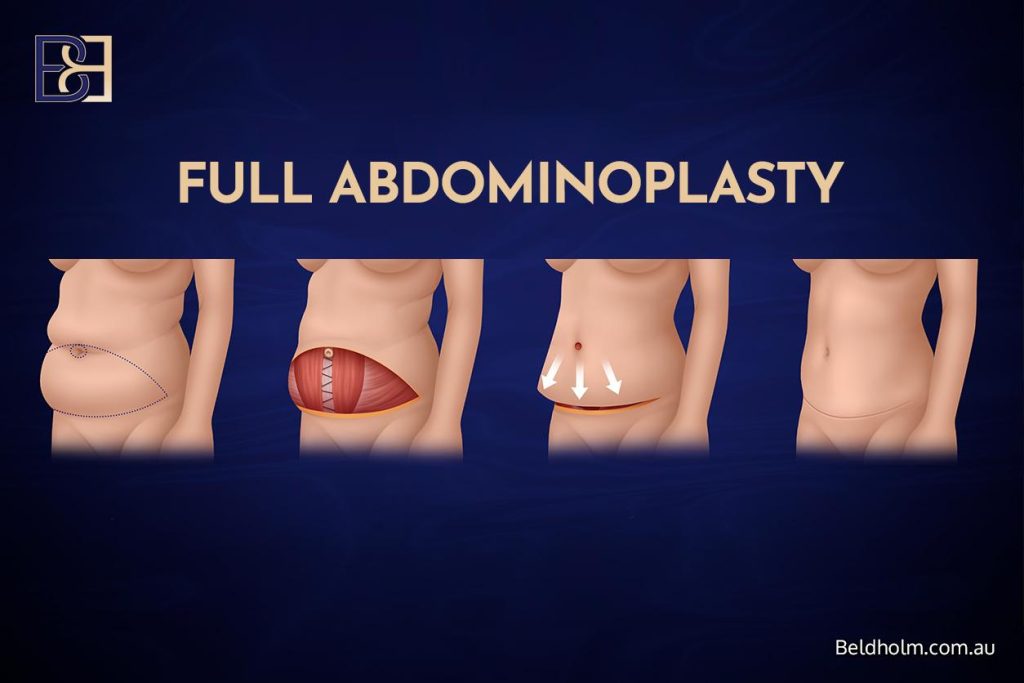
Full (standard) Abdominoplasty
A full abdominoplasty is commonly performed when there is:
- excess skin of the lower abdomen
- abdominal muscle separation (diastasis recti)
- Laxity of the abdominal wall
The procedure typically involves removal of excess lower abdominal skin, tightening of the abdominal wall, and repositioning of the umbilicus (belly button).
Book Online NowExtended Abdominoplasty
An extended abdominoplasty may be considered when skin laxity extends beyond the central abdomen toward the flanks.
This procedure allows the removal of excess skin from:
- the lower abdomen
- the lateral abdominal area
Liposuction-assisted techniques may be used in selected patients to assist with contouring.
Book Online Now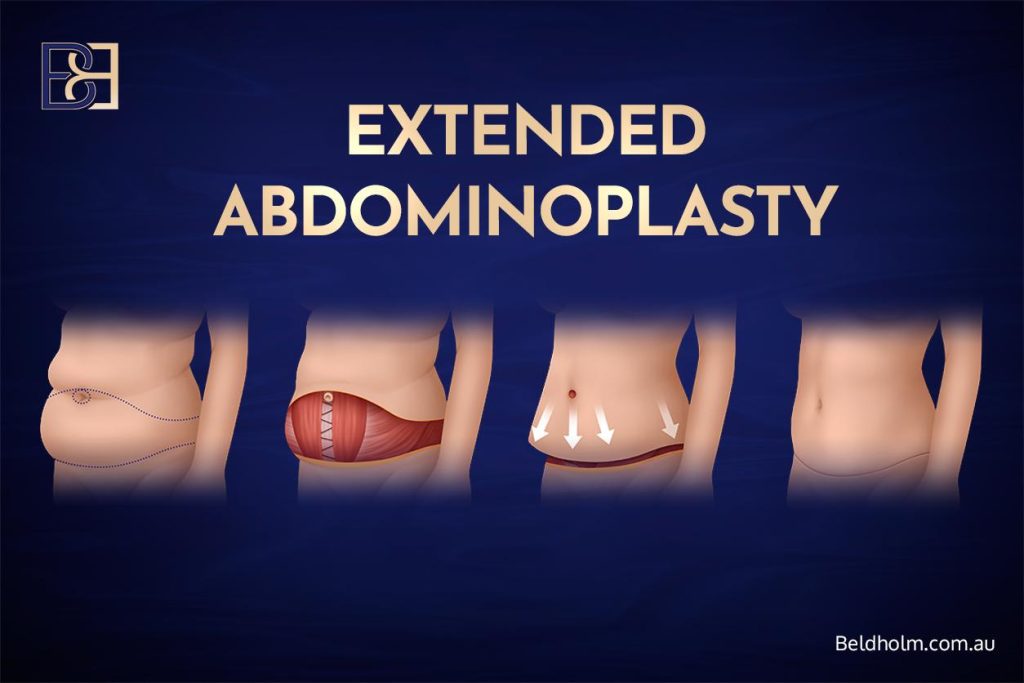
Mini (Limited) Abdominoplasty
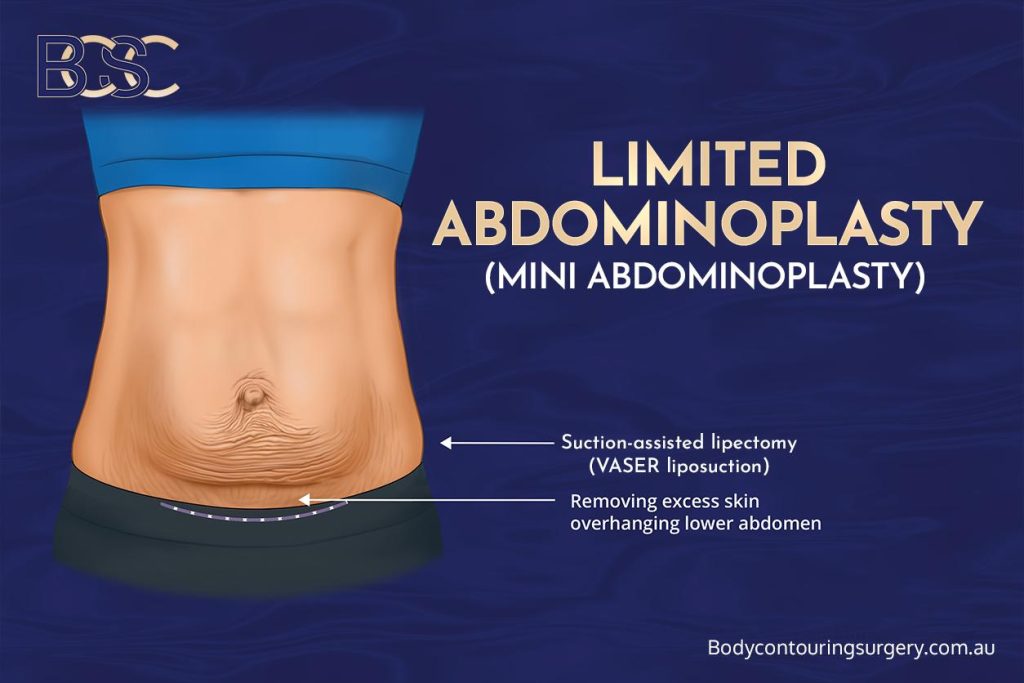
A mini (limited) abdominoplasty may be suitable for patients with limited lower abdominal skin excess.
This procedure focuses on the lower abdomen and may involve a smaller incision. In selected cases, limited repair of muscle separation (diastasis recti) may also be performed depending on the patient’s anatomy.
Book Online NowWho May Consider Abdominoplasty After Pregnancy
Patients may seek consultation for abdominoplasty after pregnancy when abdominal changes persist despite time, exercise, or weight stabilisation.
Common reasons patients consider tummy tuck (abdominoplasty) after pregnancy include:
- excess abdominal skin following pregnancy
- changes in abdominal contour related to muscle separation (diastasis recti)
- abdominal wall laxity
- skin folds of the lower abdomen
- persistent changes in abdominal contour
These changes occur because pregnancy stretches the abdominal skin, connective tissues, and abdominal muscles. In some patients, these tissues do not fully return to their pre‑pregnancy state.
Patients considering abdominoplasty after pregnancy are often advised to wait until:
- planned pregnancies are completed
- body weight has stabilised
- sufficient time has passed after pregnancy for natural recovery
Suitability for tummy tuck (abdominoplasty) surgery can only be determined following consultation and physical examination, where abdominal skin excess, abdominal wall laxity, and the presence of diastasis recti are assessed.
Consultation and Surgical Assessment
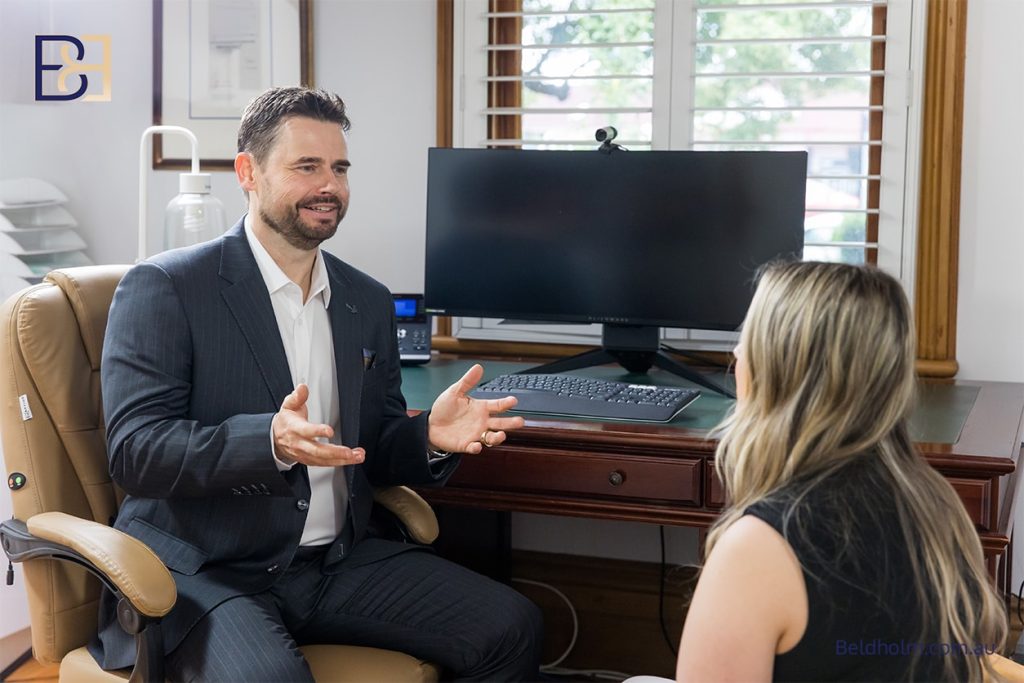
Patients considering abdominoplasty after pregnancy attend a consultation with Dr Bernard Beldholm, Specialist Surgeon, for assessment of post‑pregnancy abdominal changes.
The consultation focuses on identifying the anatomical causes of abdominal contour changes following pregnancy. These may include abdominal skin excess, abdominal wall laxity, and muscle separation (diastasis recti).
During the clinical examination, Dr Beldholm assesses:
- degree and distribution of abdominal skin excess
- abdominal wall laxity
- presence and extent of diastasis recti
- distribution of abdominal fat
- previous abdominal surgery or caesarean section scars
- overall health and relevant medical history
Dr Beldholm performs liposuction‑assisted abdominoplasty, including VASER liposuction–assisted techniques in selected patients. The consultation therefore also evaluates whether liposuction-assisted abdominoplasty may be appropriate as part of surgical planning.
Dr Beldholm has performed drainless liposuction‑assisted abdominoplasty for more than 10 years, and prior to introducing VASER technology, performed liposuction‑assisted abdominoplasty using conventional liposuction methods. This represents more than 15 years of experience performing liposuction‑assisted abdominoplasty procedures.
The consultation allows discussion of:
- whether tummy tuck (abdominoplasty) surgery may be appropriate
- the type of abdominoplasty that may be considered
- repair of muscle separation (diastasis recti)
- recovery considerations following surgery
- risks and potential complications associated with abdominoplasty
Recovery After Abdominoplasty

Recovery following abdominoplasty after pregnancy varies depending on the type of procedure performed, the extent of abdominal skin removal, and whether repair of muscle separation (diastasis recti) has been performed.
In Dr Bernard Beldholm’s practice, patients typically stay 1–2 days in hospital following tummy tuck (abdominoplasty) surgery so early recovery can be monitored.
After discharge, the early recovery period focuses on wound care, monitoring of healing, and gradual return to daily activity.
Early Post‑Operative Care
During the first two weeks after surgery, patients are usually reviewed regularly by Dr Beldholm and the nursing team to monitor healing and recovery.
Post‑operative care in Dr Beldholm’s practice may include:
- structured follow‑up appointments during the first two weeks after surgery
- wound monitoring and dressing management
- use of PICO negative pressure dressings in selected patients
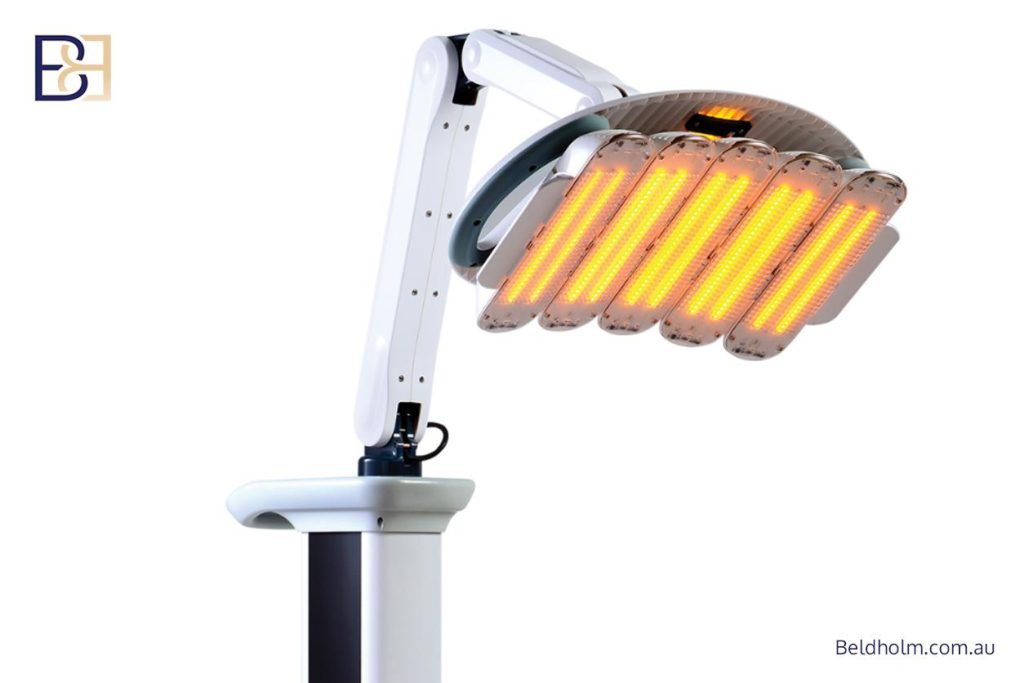
- LED light therapy to support wound healing in selected cases
- guidance regarding compression garments and activity levels
Patients who undergo liposuction‑assisted abdominoplasty, including procedures performed with VASER liposuction, may receive specific instructions regarding compression and activity during the recovery period.
Dr Beldholm often performs drainless abdominoplasty techniques, meaning surgical drains may not routinely be required. The decision to use drains depends on the surgical plan and the patient’s individual anatomy.
Patients are usually advised to avoid strenuous physical activity during the early stages of recovery and gradually increase activity as healing progresses.
Recovery timelines vary between individuals. Specific recovery instructions are provided during consultation and after surgery based on the procedure performed and the patient’s overall health.
Book a Consultation for Abdominoplasty After Pregnancy

Patients considering abdominoplasty after pregnancy can arrange a consultation with Dr Bernard Beldholm, Specialist Surgeon, to assess post‑pregnancy abdominal changes.
The consultation focuses on identifying the anatomical causes of abdominal skin excess, abdominal wall laxity, and muscle separation (diastasis recti).
During the consultation, Dr Beldholm will:
- review medical history and previous abdominal surgery
- examine abdominal skin excess and abdominal wall laxity
- assess for diastasis recti
- discuss whether tummy tuck (abdominoplasty) surgery may be appropriate
- explain potential surgical approaches, including liposuction‑assisted abdominoplasty when relevant
- discuss recovery considerations and possible risks associated with surgery
Because anatomy and medical history vary between patients, suitability for abdominoplasty after pregnancy can only be determined following consultation and physical examination.