


Breast Reduction (Reduction Mammoplasty) in Newcastle NSW
The weight of large breasts can take a daily toll on your body. If you have neck, shoulder or back pain, deep grooves worn by your bra straps, skin irritation in the fold beneath your breasts, disturbed sleep, or difficulty exercising, these are among the most common reasons patients come to see me about breast reduction (reduction mammoplasty).
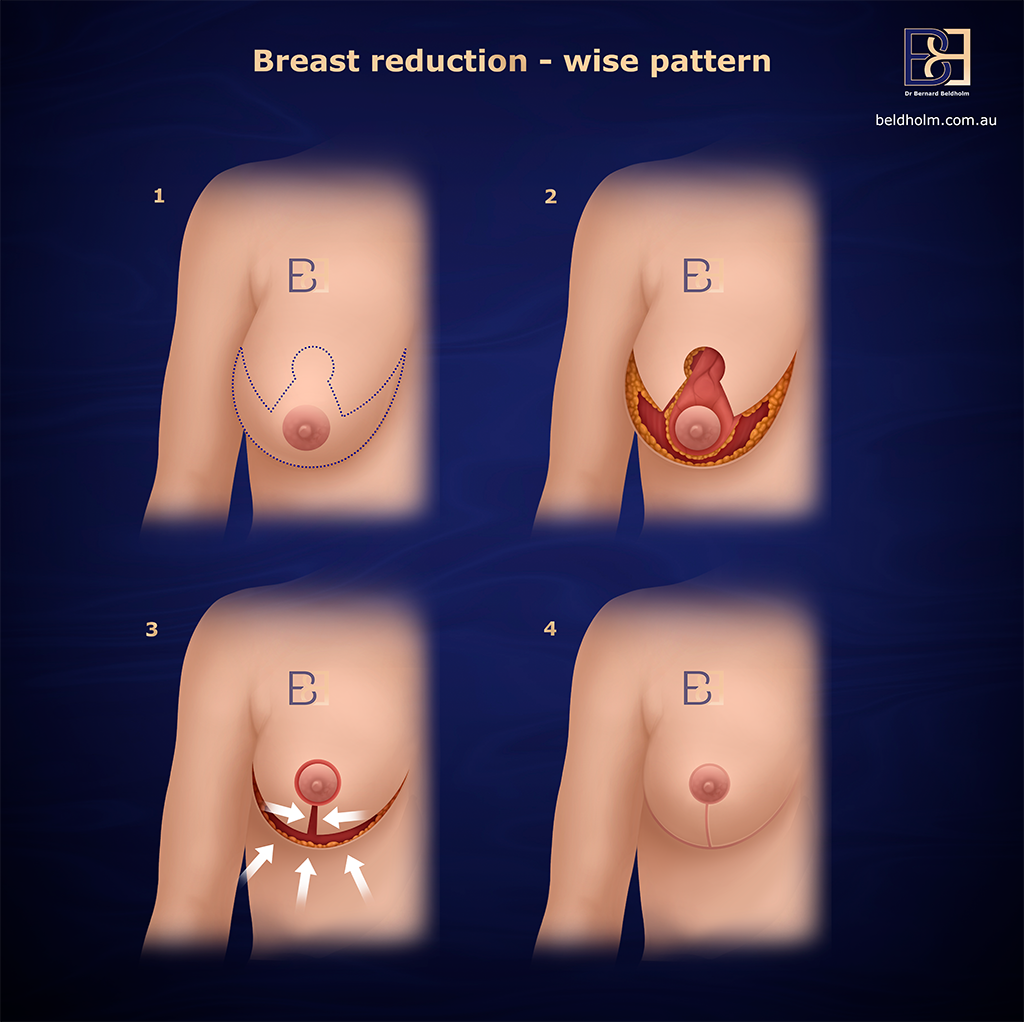
It is an operation I perform to reduce the volume and weight of the breast, removing excess breast tissue, fat and skin, and repositioning the nipple. For many patients, the aim is relief from the physical symptoms that the weight of large breasts can cause.
Book your appointment online now
Is breast reduction (reduction mammoplasty) right for you?
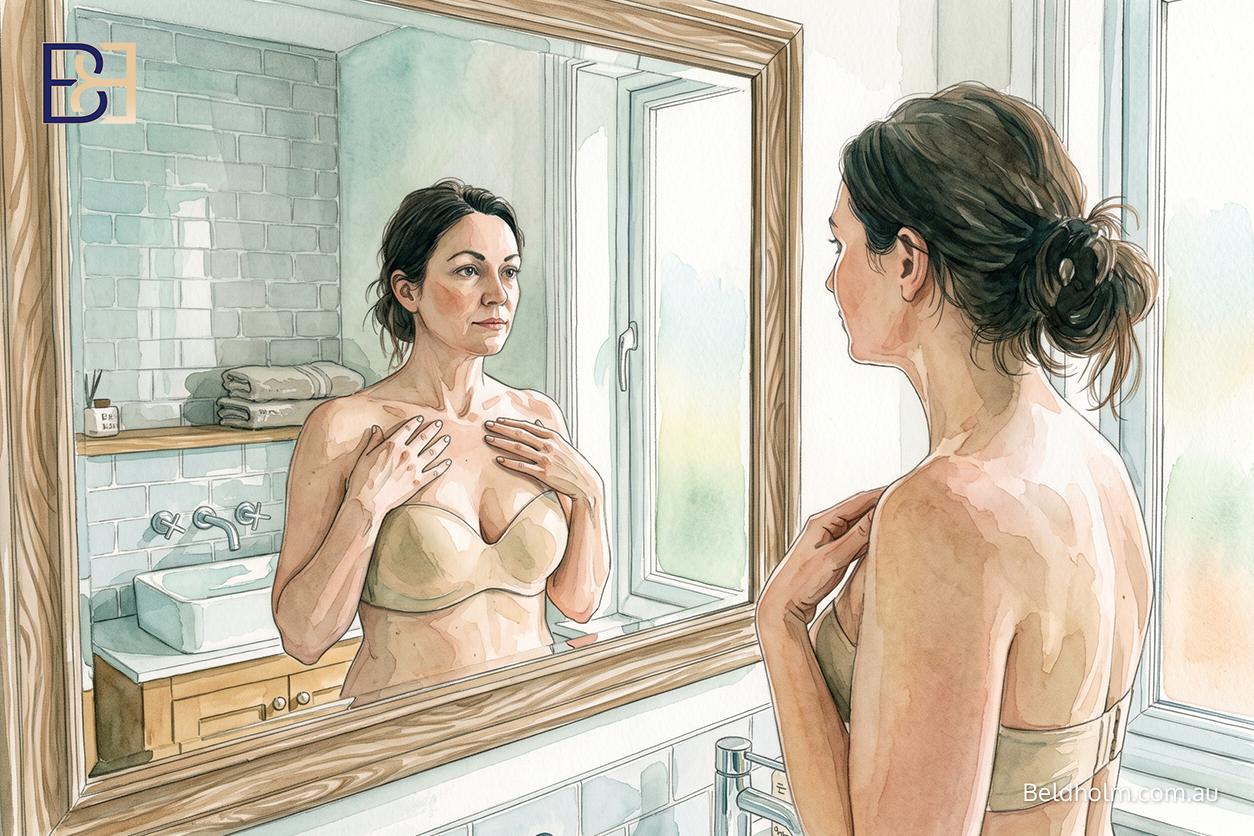
The patients I see for this operation are usually dealing with physical symptoms from the weight of their breasts. If those symptoms sound familiar, the next question is whether surgery will help, and that is something I work through with you at consultation.
When I assess you, I look at your breast size in relation to your frame, the quality of your breast tissue and skin, your general health, and the symptoms you are experiencing. Not everyone with large breasts needs or wants surgery, and it is not the only way to manage these symptoms.
This is a serious operation, and the decision to have it deserves time and thought.
Choosing your size
Deciding on size is one of the most important parts of planning your surgery, and it is your choice. Patients come with different goals, and I work through the options with you at consultation.
Some patients want the smallest result that relieves their symptoms. A reduction can bring the breasts down to around a B cup, depending on your anatomy.
Others are used to fuller breasts and are concerned about becoming too small. These patients keep more volume, often aiming for a C or D cup, while still reducing the weight they carry and relieving their symptoms.
What size can be achieved depends on your anatomy, the amount of breast tissue present, and what can be done well in your case, so the range that suits you is something we discuss when we meet.
During your consultation I use Crisalix 3D imaging to help you picture the different size options we talk through together, so you can make an informed choice. It is a tool to support that discussion, not a guarantee of your final size, and results vary from person to person.
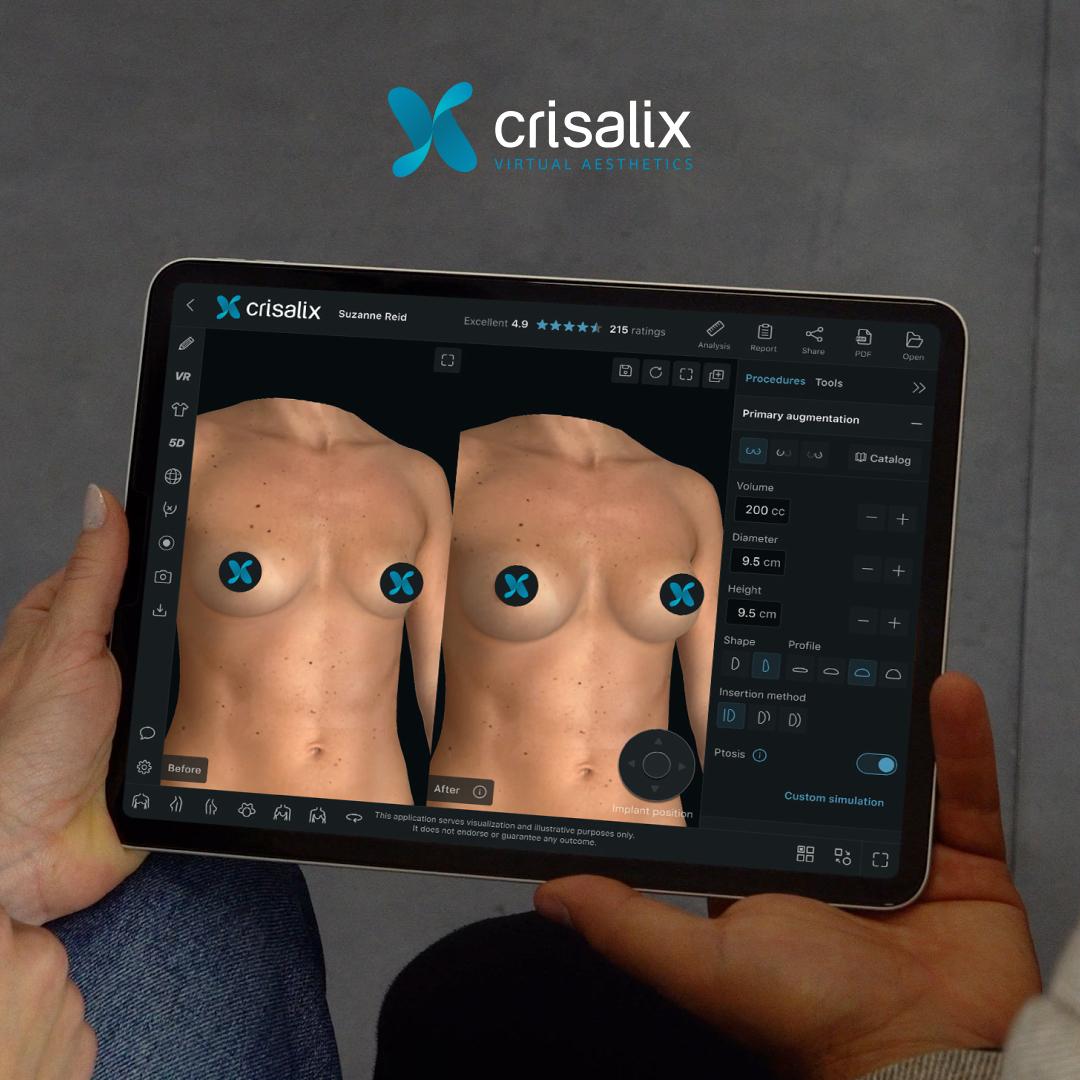
3D imaging is a visualisation aid used to support discussion during your consultation. It is a general guide only. It does not predict or guarantee your actual surgical result, and results vary between patients. All surgery has complications, get a 2nd opinion
The surgery
I perform breast reduction (reduction mammoplasty) at Maitland Private Hospital, under general anaesthetic. The technique I use depends on your breast size and shape, how much tissue needs to be removed, and where the nipple sits. I explain the approach I recommend for you at your consultation.
Does breast reduction (reduction mammoplasty) include a breast lift (mastopexy)?
Yes. Repositioning the breast is part of the operation. When I remove breast tissue, fat and excess skin, I reshape the remaining breast and move the nipple and areola to a higher position. In that sense the operation includes a breast lift (mastopexy) component, so a separate lift is not usually needed. How much repositioning is involved depends on your starting breast position and how much tissue is removed, and results vary.
Surgical techniques
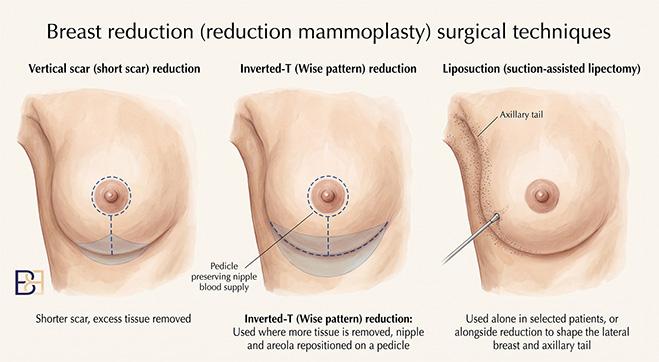
Vertical scar (short scar) reduction. This changes the shape and size of the breast with a shorter scar than the traditional anchor pattern. The incision runs around the areola and vertically down to the fold beneath the breast, and the excess tissue is removed.
Inverted-T (wise pattern) reduction. This is used where more tissue needs to be removed. The incision is anchor-shaped, running around the areola, vertically down, and along the fold beneath the breast. Excess glandular tissue, fat and skin are removed, and the nipple and areola are repositioned, usually on a pedicle that keeps their blood supply.
Liposuction (suction-assisted lipectomy). The operation can be done with or without it. For some patients whose breasts are made up largely of fatty tissue, with good skin quality, liposuction (suction-assisted lipectomy) alone may reduce the volume. More often I use it alongside the main reduction, including VASER (ultrasound-assisted lipectomy), to shape the area, removing excess fat along the side of the breast and the axillary tail, which is the extension of breast tissue towards the armpit.
Your consultation
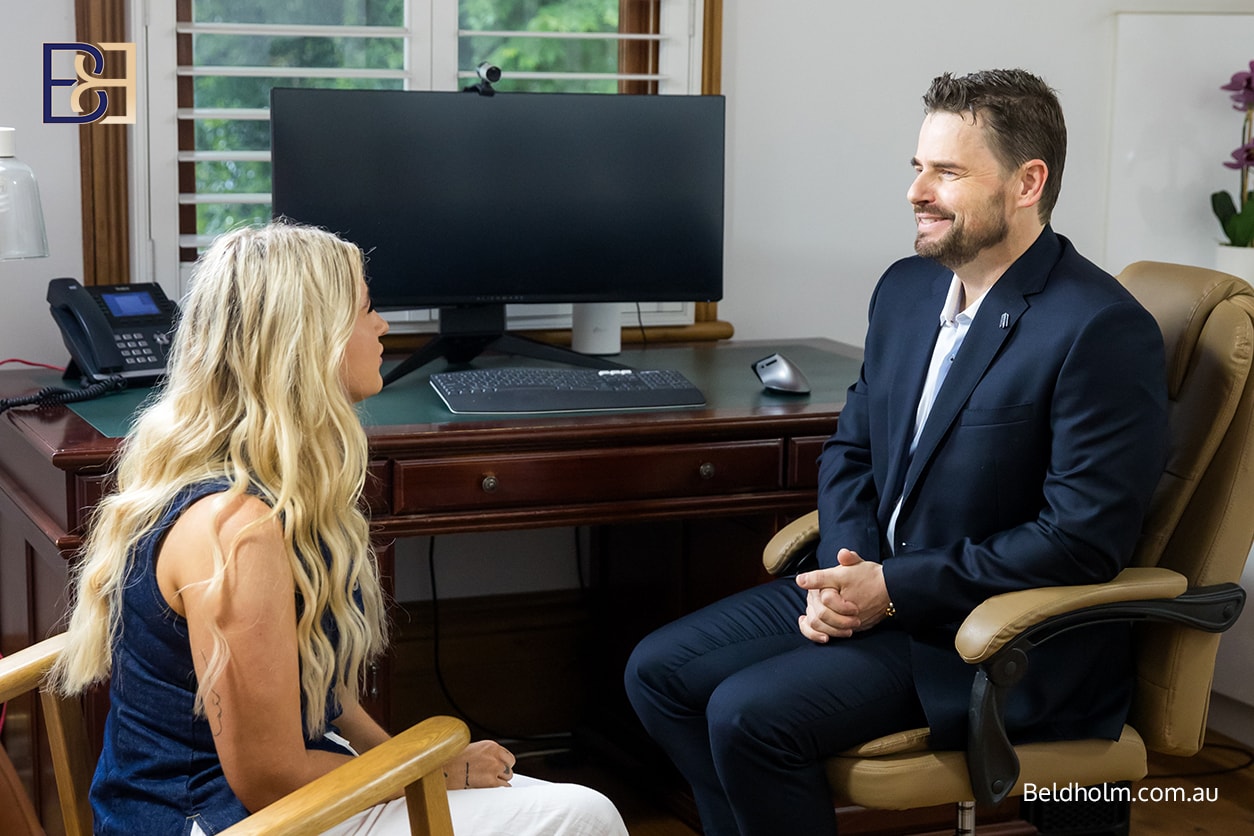
A breast reduction (reduction mammoplasty) is a decision to make carefully, and it starts with a consultation. A GP referral is required before you book one.
As a Specialist Surgeon (FRACS), I examine your breasts when we meet, go through the symptoms you are dealing with and the size you are aiming for, and explain the options that suit you, including what the operation can and cannot do. My aim is for you to have a clear and realistic picture before you decide anything.
By the end of the consultation I will have answered your questions and given you a written quote for the options we discussed. Deciding on surgery is a lot to take in, so I provide written information to take away, and you are welcome to come back for a second consultation before you commit.
Your consultation can be in person or by video:
- In person at 30 Belmore Rd, Lorn, a converted heritage building in the Hunter Valley
- By video consultation on Zoom, if getting to Lorn is difficult
Whether the operation suits you is decided only after I have assessed you, and results vary between patients.
Book your appointment online now
Follow-up care
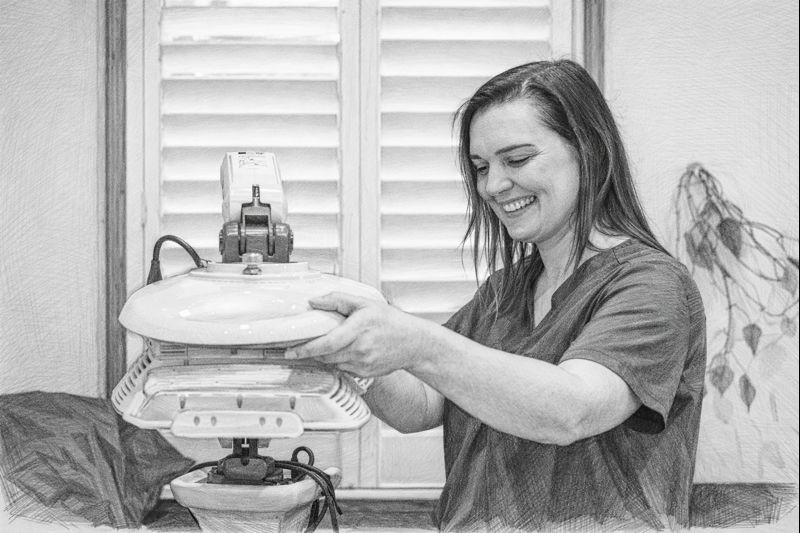
Your care does not end on the day of surgery. Follow-up is the same as for my other operations. In the first 2 weeks after surgery you are seen often, with reviews by me and my nurse and LED light treatment using the Healite II device. After that, I review you at 1 month, 3 months, 6 months and 12 months to check your progress and support your recovery. Your GP is kept informed and looks after your long-term care.