


Extended Abdominoplasty After Pregnancy
Book Online NowExtended tummy tuck (abdominoplasty) for abdominal and flank skin excess following pregnancy
Pregnancy can lead to stretching of the abdominal skin and separation of the abdominal muscles (diastasis recti). In some patients, excess skin extends beyond the central abdomen and may reach the flanks. When this occurs, an extended abdominoplasty may be considered.
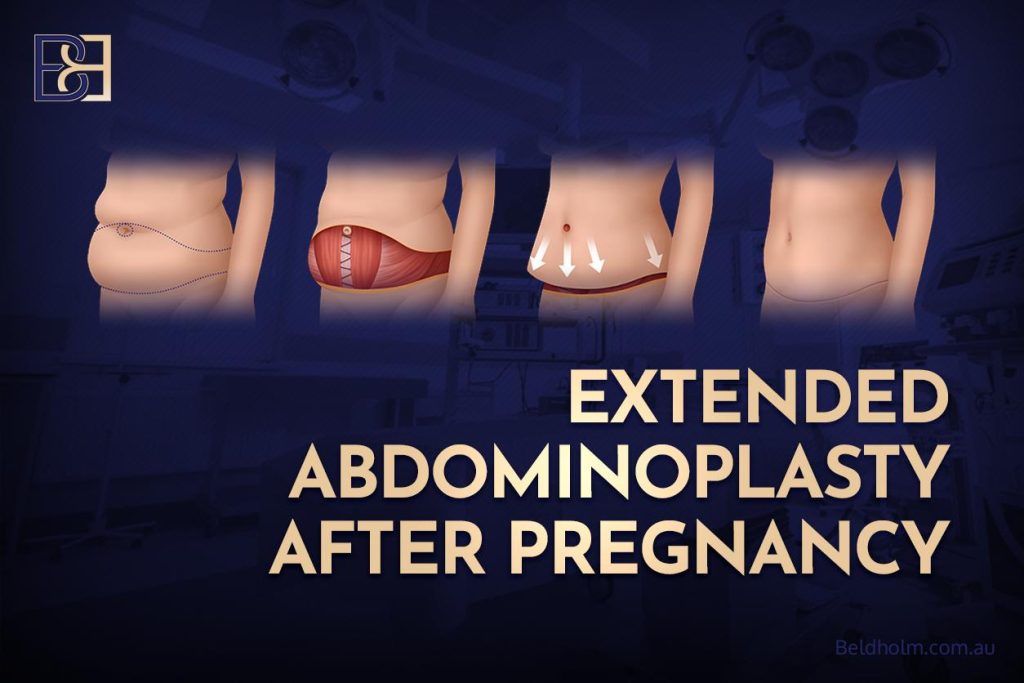
Extended abdominoplasty is a surgical procedure that removes excess abdominal skin and can include repair of abdominal muscle separation (diastasis recti). Compared with a standard abdominoplasty, the incision extends farther toward the sides of the body to address excess skin that extends to the flanks.
The procedure is performed by Dr Bernard Beldholm, Specialist Surgeon, at Maitland Private Hospital.
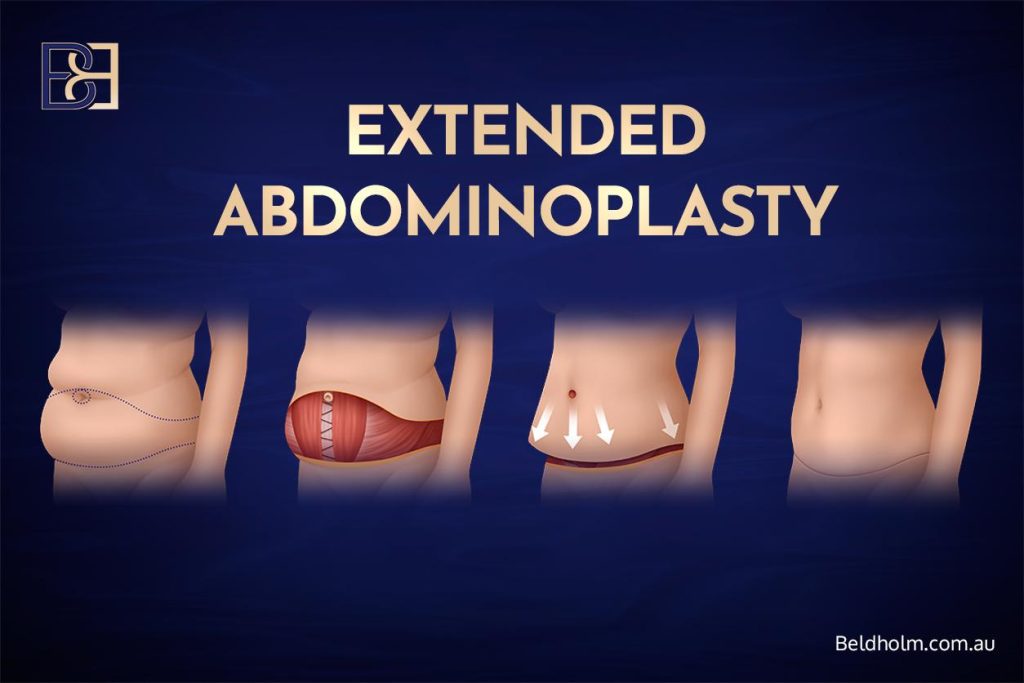
What Is an Extended Abdominoplasty?
Extended abdominoplasty (extended tummy tuck) is a surgical procedure designed to remove excess skin and soft tissue from the abdomen when the skin excess extends beyond the central abdomen toward the flanks.
In a standard full abdominoplasty, the incision typically runs from hip to hip across the lower abdomen. In an extended abdominoplasty, the incision continues further toward the sides of the body to allow removal of skin that extends into the flank region.
This approach may be considered after pregnancy when skin laxity is present across a wider area of the abdomen and sides. In addition to skin removal, the procedure may include repair of abdominal muscle separation (diastasis recti) if this is present.
During the operation, excess abdominal skin is removed, the abdominal wall may be tightened, and the remaining skin is repositioned. The umbilicus (belly button) is typically preserved and repositioned through the abdominal skin.
The most appropriate surgical approach depends on the distribution of excess skin, the degree of muscle separation (diastasis recti), and the overall abdominal anatomy, all of which are assessed during consultation.
When Is Extended Abdominoplasty Considered After Pregnancy?
Extended abdominoplasty may be considered when excess skin following pregnancy extends beyond the central abdomen and into the flanks (sides of the torso).
During pregnancy, the abdominal wall expands to accommodate the growing uterus. After delivery, some patients experience persistent abdominal skin excess and abdominal muscle separation (diastasis recti) that does not improve with time or exercise. In certain cases, skin laxity involves a broader area than just the lower abdomen.
An extended abdominoplasty may be considered when:
- Excess abdominal skin extends beyond the hips toward the flanks
- There is abdominal muscle separation (diastasis recti)
- Skin laxity affects both the lower abdomen and the sides of the torso
- The distribution of excess tissue cannot be adequately addressed with a standard abdominoplasty
The decision to perform an extended abdominoplasty depends on the pattern of skin excess, abdominal wall anatomy, and overall surgical goals, which are assessed during consultation with Dr Bernard Beldholm, Specialist Surgeon.
Extended Abdominoplasty vs Full Abdominoplasty
Both full abdominoplasty and extended abdominoplasty remove excess abdominal skin and may include repair of abdominal muscle separation (diastasis recti). The primary difference between the procedures relates to the area of skin removal and the length of the surgical incision.
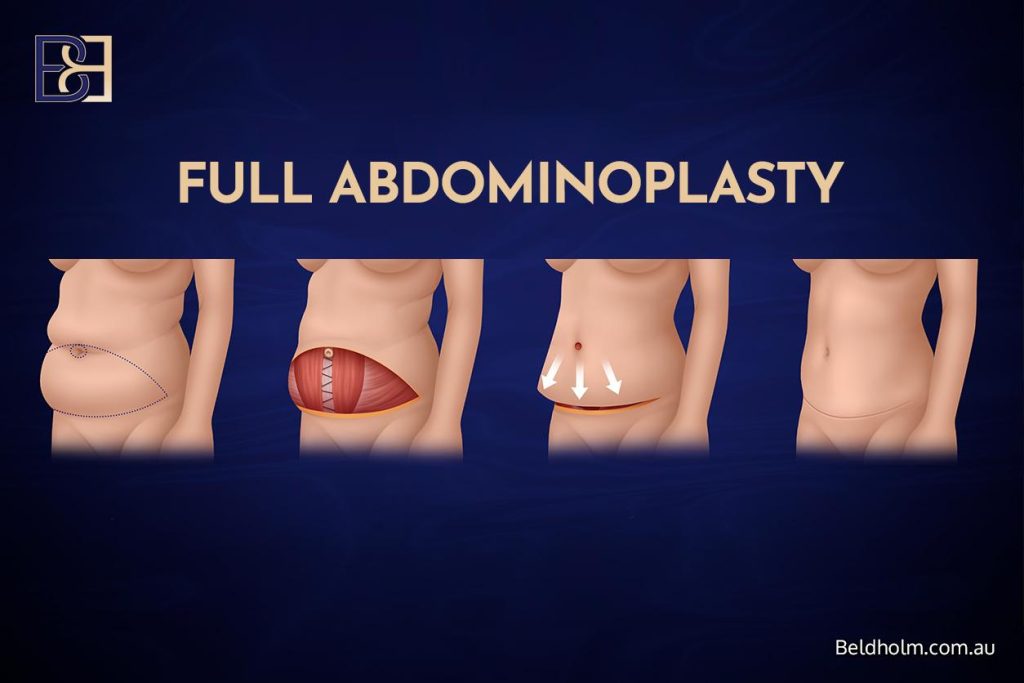
Full Abdominoplasty
In a full abdominoplasty, the incision usually extends across the lower abdomen from hip to hip. This procedure is designed to treat excess skin that is mainly limited to the central abdomen.
Book Online NowExtended Abdominoplasty
In an extended abdominoplasty, the incision continues further toward the sides of the body. This allows removal of excess skin that extends into the flanks (sides of the torso). By extending the incision, a larger area of skin can be addressed compared with a standard abdominoplasty.
Book Online Now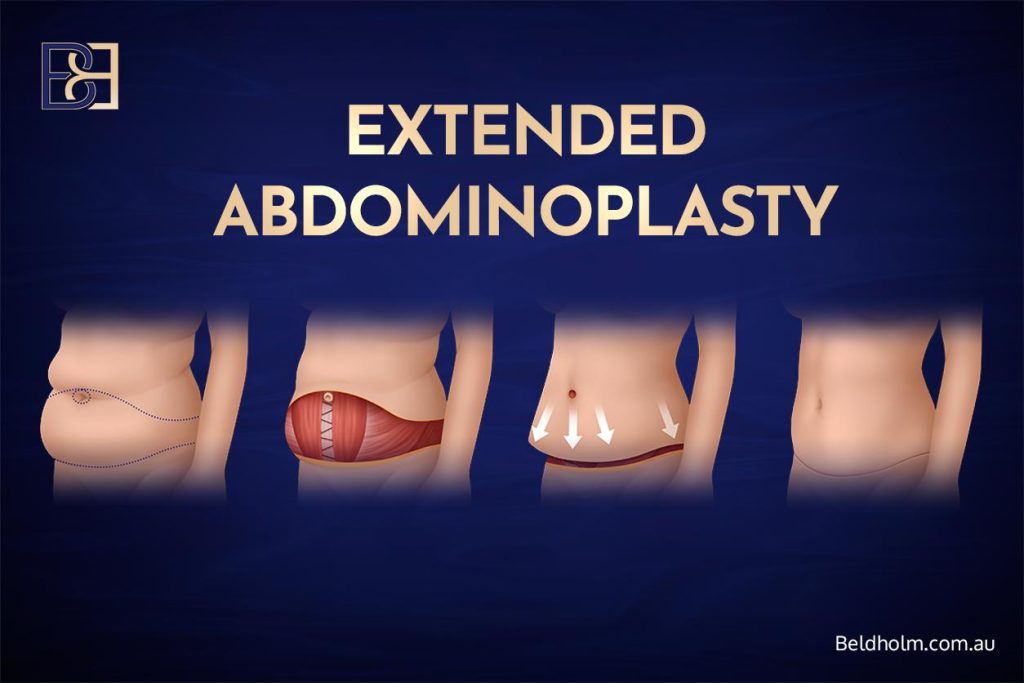
An extended abdominoplasty may therefore be considered when skin laxity following pregnancy affects both the abdomen and the lateral waist area.
The most appropriate procedure depends on the distribution of excess skin, the presence of muscle separation (diastasis recti), and overall abdominal anatomy. These factors are assessed during consultation with Dr Bernard Beldholm, Specialist Surgeon.
Repair of Diastasis Recti During Extended Abdominoplasty
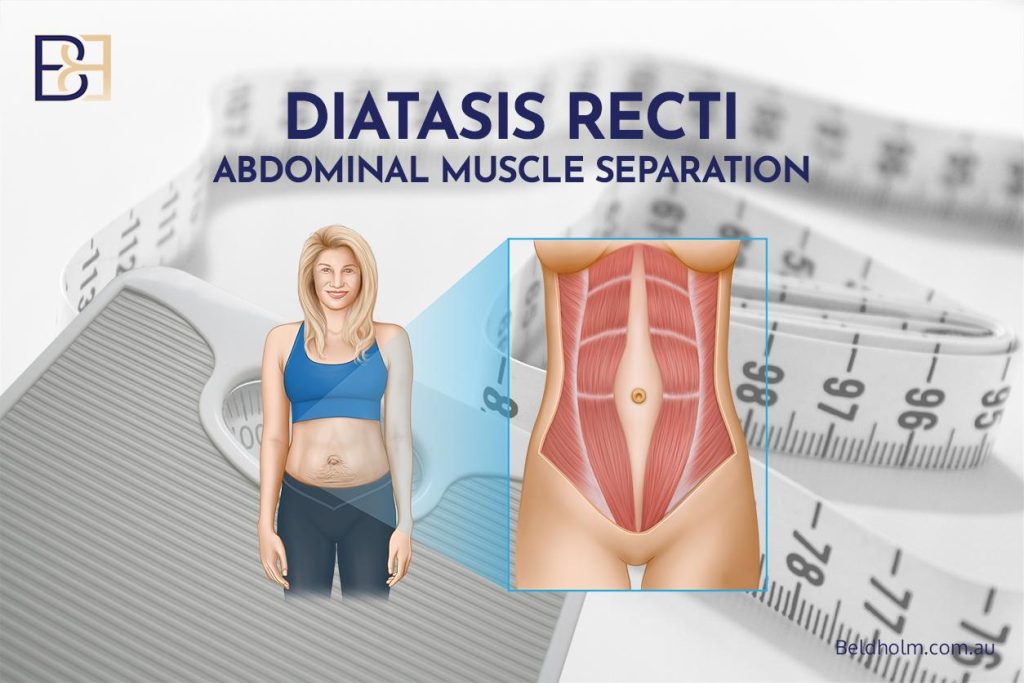
Pregnancy can cause separation of the rectus abdominis muscles along the midline of the abdomen. This condition is known as diastasis recti and occurs when the connective tissue between the muscles (linea alba) stretches during pregnancy.
Diastasis recti may contribute to abdominal wall weakness and midline abdominal widening. In some patients, this separation persists after pregnancy.
During an extended abdominoplasty, repair of abdominal muscle separation (diastasis recti) may be performed when present. After the abdominal skin is elevated, the rectus muscles are brought back toward the midline and sutured together to restore the structure of the abdominal wall.
For Medicare purposes, diastasis recti is generally defined as a separation of 3 cm or greater on imaging. The presence and extent of muscle separation are assessed during consultation and clinical examination.
Repair of diastasis recti is performed as part of the abdominal wall reconstruction component of the procedure. The suitability for muscle repair depends on the individual anatomy and surgical plan, which is discussed during consultation with Dr Bernard Beldholm, Specialist Surgeon.
Liposuction During Extended Abdominoplasty
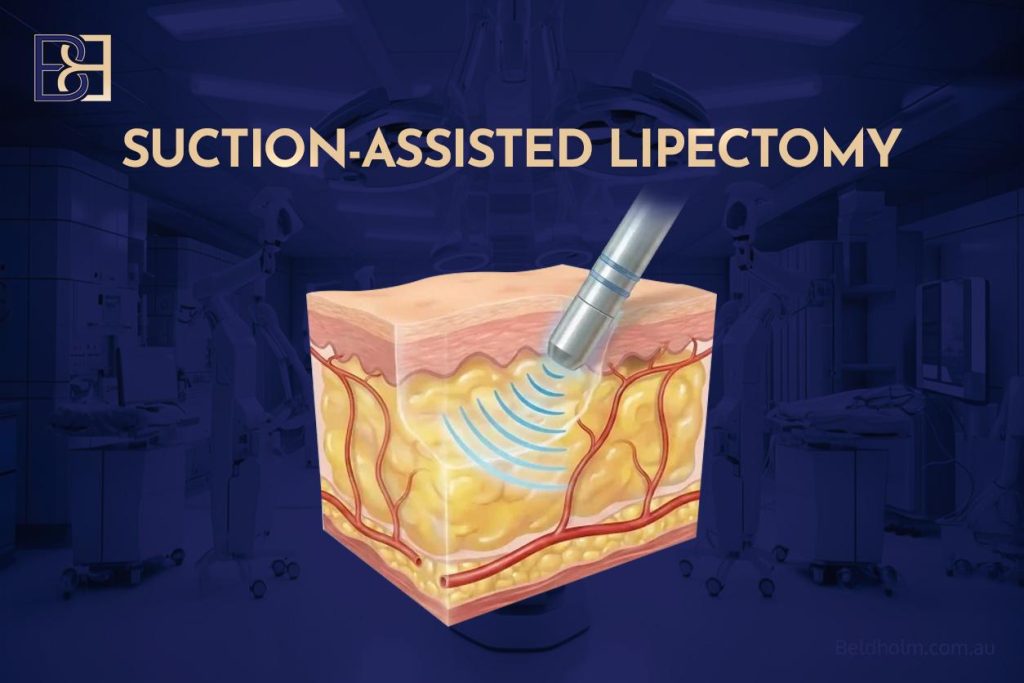
Liposuction (suction-assisted lipectomy) may be performed during extended abdominoplasty to address areas of excess fat around the abdomen and flanks. In Dr Beldholm’s practice, VASER liposuction (ultrasound-assisted liposuction) is commonly used as part of the procedure.
VASER liposuction uses ultrasound energy before the fat is removed with suction-assisted lipectomy. This can allow treatment of areas such as the upper abdomen, waist, and flanks where excess fat may be present in addition to excess skin.
When liposuction is included in an extended abdominoplasty, it is typically performed before the abdominal skin is elevated and excess skin is removed. This allows contouring of the surrounding tissues before the abdominal wall repair and skin resection are completed.
The decision to include liposuction (suction-assisted lipectomy) depends on the distribution of fat, skin laxity, and overall surgical plan, which are assessed during consultation with Dr Bernard Beldholm, Specialist Surgeon.
How Extended Abdominoplasty Is Performed
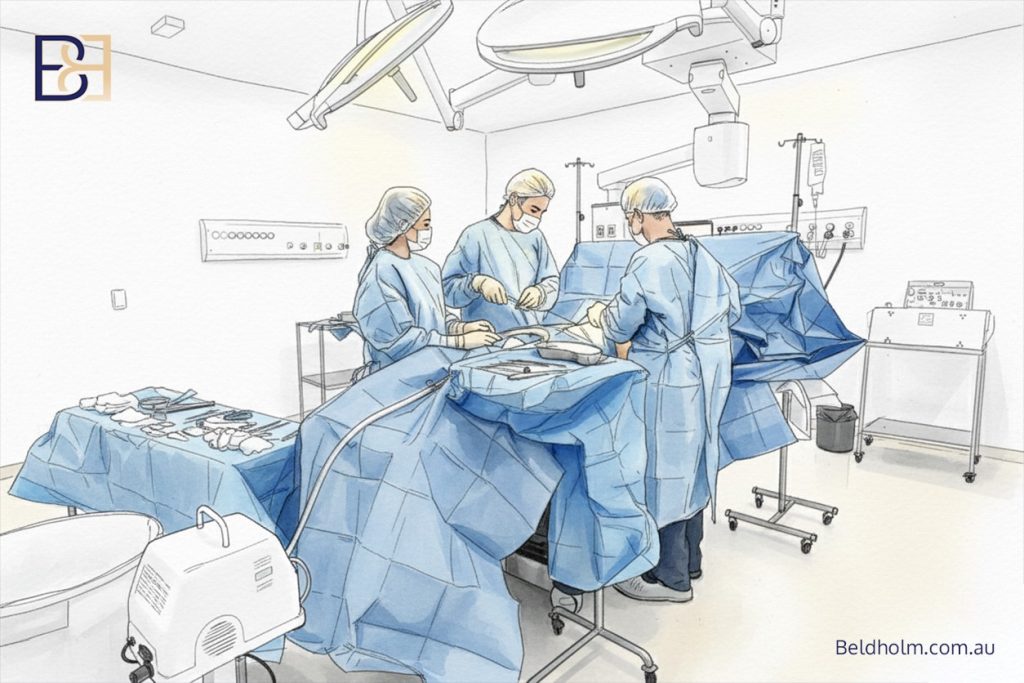
Extended abdominoplasty is performed under general anaesthesia in a hospital setting. The procedure is performed by Dr Bernard Beldholm, Specialist Surgeon, at Maitland Private Hospital.
When liposuction is included, the operation typically begins with VASER liposuction (ultrasound-assisted liposuction). This involves three stages:
- Tumescent (wetting) solution is introduced into the treatment areas. This solution assists with fat removal and reduces bleeding.
- VASER ultrasound energy is applied to emulsify the fat.
- The fat is then removed using liposuction (suction-assisted lipectomy).
After liposuction is completed, the abdominoplasty portion of the procedure is performed.
An incision is made in the lower abdomen, extending beyond the hips toward the flanks. The abdominal skin and soft tissue are elevated to expose the abdominal wall. If present, abdominal muscle separation (diastasis recti) may be repaired by suturing the rectus muscles back toward the midline.
Excess abdominal skin is then removed, and the remaining skin is repositioned. The umbilicus (belly button) is usually preserved and brought through a new opening in the abdominal skin.
Surgery at Maitland Private Hospital
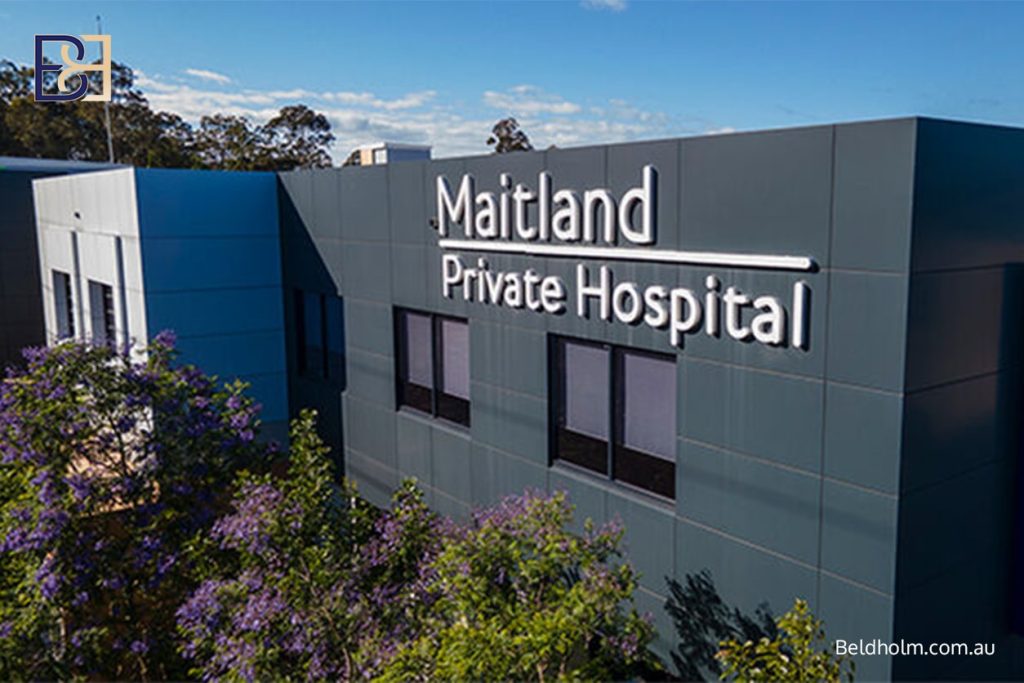
Extended abdominoplasty is performed by Dr Bernard Beldholm, Specialist Surgeon, at Maitland Private Hospital.
Maitland Private Hospital provides a fully equipped surgical environment with modern operating theatres and a multidisciplinary hospital team. The hospital has 24-hour doctor cover, access to intensive care (ICU), and experienced nursing staff who assist with perioperative care and recovery.
Most patients stay in the hospital for 1 to 2 days after surgery. During this time, nursing staff monitor recovery, assist with early mobilisation, and provide postoperative care.
After discharge, patients are regularly reviewed as part of postoperative follow-up. In Dr Beldholm’s practice, this includes close early follow-up during the first two weeks after surgery, when wound healing and recovery are monitored.
The length of hospital stay and recovery plan may vary depending on the extent of surgery and the individual patient’s recovery, which are discussed during consultation.
Recovery After Extended Abdominoplasty

Recovery following extended abdominoplasty occurs gradually over several weeks. The early recovery period focuses on wound healing, mobilisation, and monitoring for potential complications.
Most patients remain in the hospital for one to two days after surgery. During this time, nursing staff assist with early mobilisation and postoperative monitoring.
After discharge, recovery continues at home. Patients are usually encouraged to walk regularly, while avoiding strenuous activity and heavy lifting during the early recovery phase.
In Dr Beldholm’s practice, postoperative care includes structured follow-up during the early recovery period. This includes:
- Regular postoperative reviews during the first two weeks
- PICO negative pressure dressings to support wound management
- LED light therapy is used as part of postoperative wound care
- Monitoring of healing and recovery progress
Most patients gradually increase activity over the following weeks. The timing of return to normal activities varies depending on the extent of surgery and individual recovery.
Risks and Complications of Extended Abdominoplasty
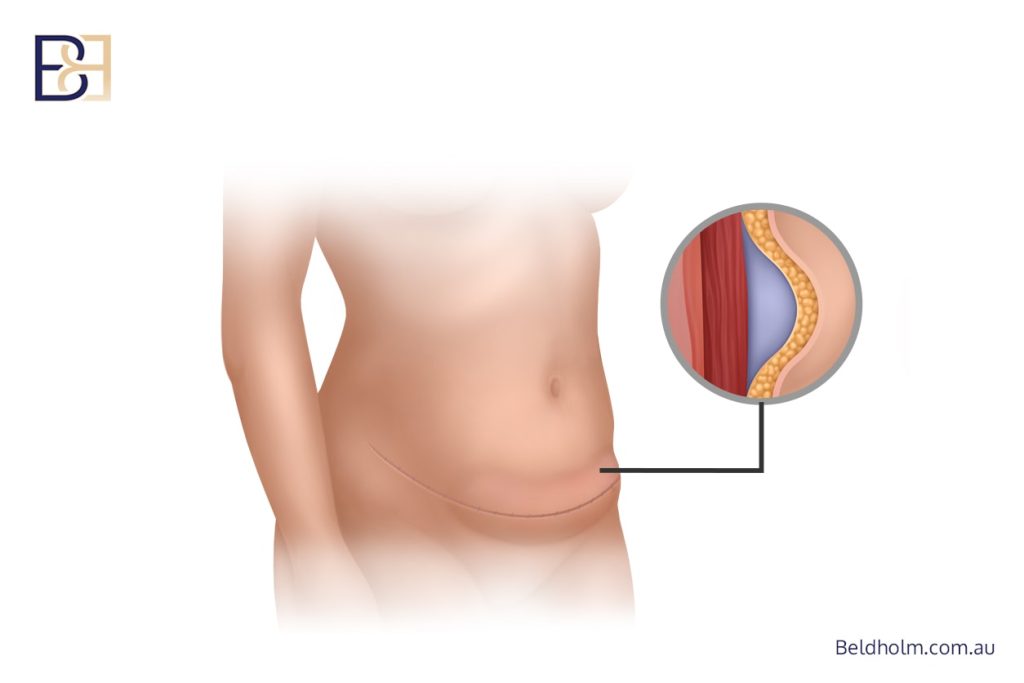
All surgical procedures carry risks. Extended abdominoplasty is a major operation, and potential complications are discussed during consultation before surgery.
Possible risks and complications may include:
- Bleeding (haematoma)
- Infection
- Seroma (fluid collection under the skin)
- Delayed wound healing
- Skin or tissue necrosis
- Scarring
- Changes in skin sensation
- Deep vein thrombosis (DVT) or pulmonary embolism
- Asymmetry or contour irregularities
- Need for revision surgery
Steps are taken during and after surgery to reduce these risks, including careful surgical technique, postoperative monitoring, and structured follow-up care.
However, the likelihood of complications can vary depending on individual health factors, surgical complexity, and the healing process. These risks and the expected recovery process are discussed in detail during consultation with Dr Bernard Beldholm, Specialist Surgeon.
Suitability for Extended Abdominoplasty After Pregnancy
Suitability for extended abdominoplasty is determined during a specialist surgical consultation. The aim of the consultation is to assess the abdominal anatomy and determine which procedure may be appropriate.
During the consultation, Dr Bernard Beldholm, Specialist Surgeon, evaluates several factors, including:
- The distribution of excess abdominal skin
- Whether skin excess extends into the flanks
- The presence of abdominal muscle separation (diastasis recti)
- Skin quality and abdominal wall anatomy
- General health and medical history
- Previous abdominal surgery
Extended abdominoplasty may be considered when excess skin following pregnancy affects both the central abdomen and the sides of the torso. In some cases, a full abdominoplasty or mini abdominoplasty (limited abdominoplasty) may be more appropriate depending on the anatomical findings.
Future pregnancy plans may also be discussed, as pregnancy after abdominoplasty can affect the surgical result.
The most appropriate surgical plan can only be determined following individual assessment during consultation.
Suitability for Extended Abdominoplasty After Pregnancy

A consultation with Dr Bernard Beldholm, Specialist Surgeon, is required to determine whether extended abdominoplasty may be appropriate for your situation.
During the consultation, Dr Beldholm performs a clinical examination of the abdomen and reviews your medical history. The consultation focuses on understanding the distribution of excess skin, the presence of abdominal muscle separation (diastasis recti), and the overall abdominal wall anatomy.
The consultation may include discussion of:
- The type of abdominoplasty that may be appropriate (full, extended, or mini abdominoplasty)
- Whether the repair of diastasis recti may be indicated
- The potential role of liposuction (suction-assisted lipectomy) during surgery
- The expected surgical process and recovery period
- Potential risks and complications associated with surgery
Patients have the opportunity to ask questions and discuss whether surgery aligns with their goals and circumstances.