


Loose Skin After Weight Loss – Surgical Options for the Abdomen and Lower Torso
Book Online NowSignificant weight loss — including after bariatric surgery — may result in excess skin affecting the abdomen, flanks, lower back and lower torso. In some patients, skin laxity may be vertical, horizontal, multi-directional, or circumferential.
Dr Bernard Beldholm FRACS is a Specialist Surgeon who performs post-weight-loss body contouring procedures. Surgical options may include:
- Abdominoplasty (Tummy Tuck)
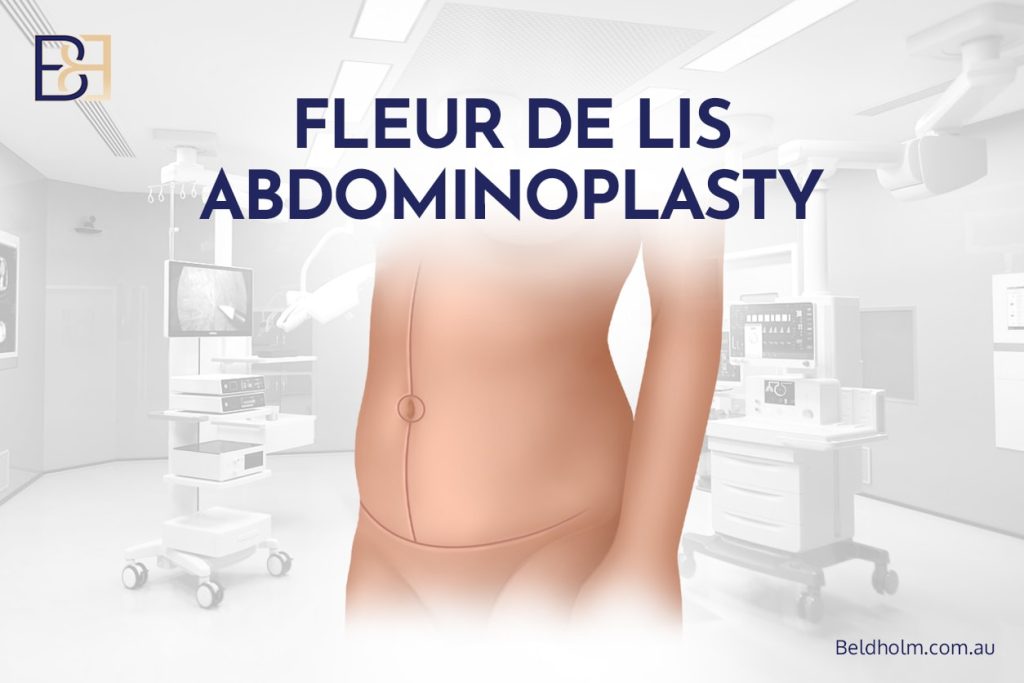
- Fleur-de-Lis Abdominoplasty
- Dual Vector Abdominoplasty
- Circumferential Body Lift (Belt Lipectomy)
- Hybrid Circumferential Approaches where indicated
The appropriate procedure depends on the pattern of excess skin, abdominal muscle separation (diastasis recti), and whether laxity extends beyond the anterior abdomen.
How Is the Right Operation Determined?
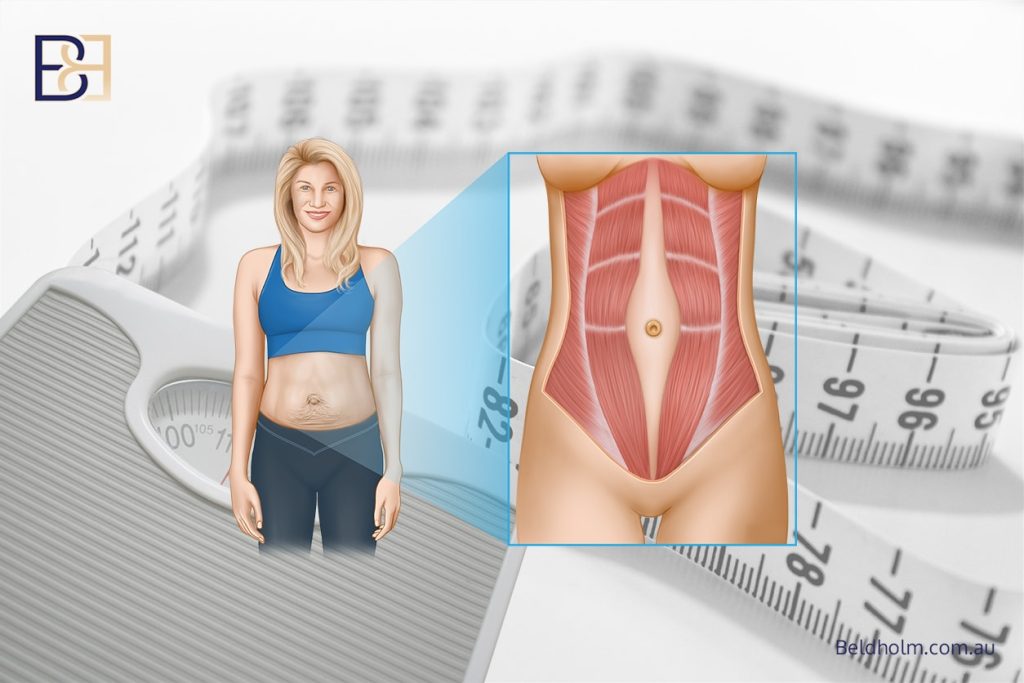
The type of operation required after significant weight loss depends on the pattern and location of excess skin, the degree of abdominal muscle separation (diastasis recti), and the presence of residual adipose tissue.
Assessment focuses on:
- Residual adipose tissue
- Direction of skin laxity (vertical, horizontal, or multi-directional)
- Whether excess skin is limited to the anterior abdomen or extends circumferentially
- Degree of upper abdominal skin redundancy
- Abdominal muscle separation (diastasis recti)
Step 1: Where Is the Loose Skin?
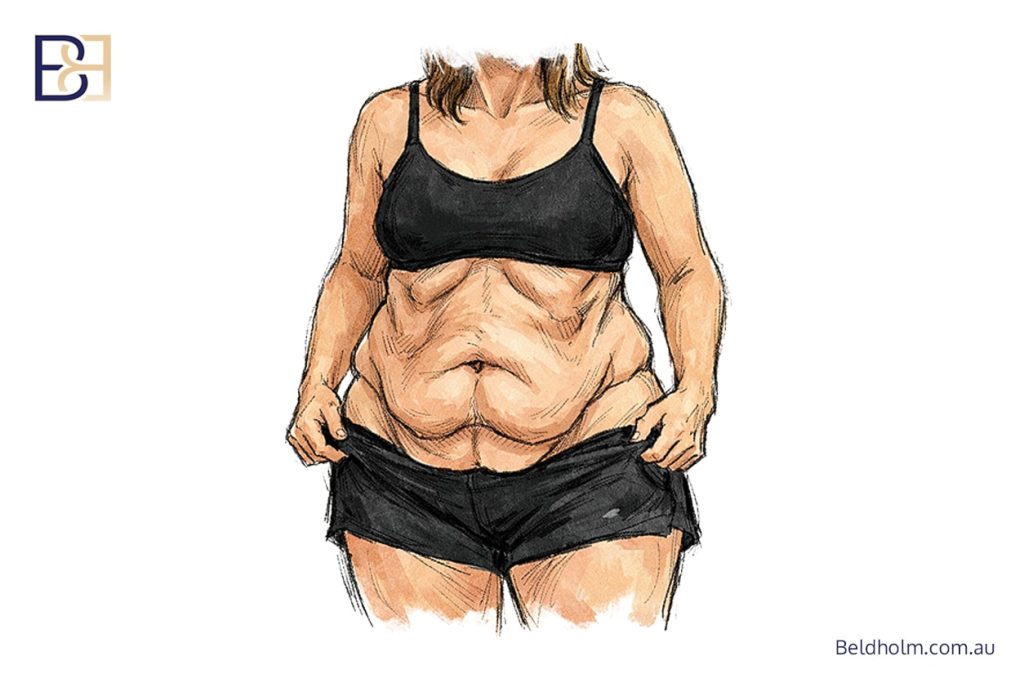
A. Front of Abdomen Only (Anterior Abdomen)
Assessment includes:
- Primary vertical skin laxity
- Primary horizontal skin laxity
- Upper abdominal loose skin
- Abdominal muscle separation
Surgical pathways may include:
- Primary vertical laxity → Standard abdominoplasty (tummy tuck)
- Significant vertical and horizontal laxity → Fleur-de-Lis abdominoplasty
- Vertical, horizontal, and upper abdominal laxity → Dual vector abdominoplasty
B. Loose Skin Extends to the Flanks, Lower Back, Outer Thigh or Buttock (gluteal region)
If excess skin extends beyond the front of the abdomen to involve the flanks, lower back, outer thigh, or buttock region, a circumferential body lift (belt lipectomy) may be considered.
C. Circumferential Loose Skin with Significant Anterior Horizontal Excess
Where 360-degree lower torso laxity is present together with marked anterior horizontal excess skin, a hybrid circumferential approach may be required.
Step 2: Is There Significant Adipose Tissue?
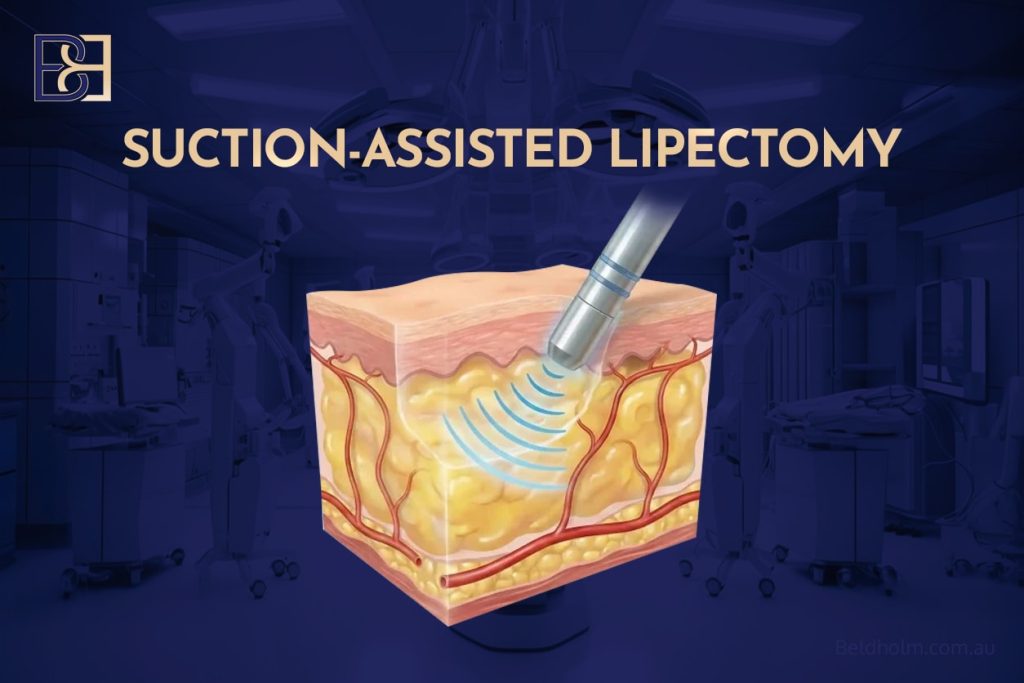
If residual adipose tissue is present, suction-assisted lipectomy (liposuction) may be added as an adjunct where clinically appropriate. Liposuction does not remove excess skin and does not replace skin removal procedures.
Why Skin Pattern Matters After Massive Weight Loss
Massive weight loss often produces multi-directional skin laxity. The skin may stretch vertically, horizontally, or circumferentially around the lower torso. The upper abdomen can behave differently from the lower abdomen, particularly after significant weight reduction or bariatric surgery.
As a result, not all post-weight-loss patients require the same operation.
Book Online NowKey considerations include:
- Vertical laxity, which may respond to standard abdominoplasty (tummy tuck)
- Combined vertical and horizontal laxity, which may require a Fleur-de-Lis abdominoplasty
- Multi-directional laxity involving the upper abdomen, which may require a dual vector approach
- Circumferential laxity affecting the flanks, lower back, or buttock region, which may require a circumferential body lift (belt lipectomy)
Careful assessment of the pattern of excess skin and the condition of the abdominal wall allows the procedure to be selected based on anatomical findings rather than a one-size-fits-all approach.
Overview of Surgical Options After Significant Weight Loss
The appropriate procedure depends on the distribution of excess skin, the degree of abdominal muscle separation (diastasis recti), and whether laxity is limited to the abdomen or extends circumferentially.
Standard Abdominoplasty (Tummy Tuck)
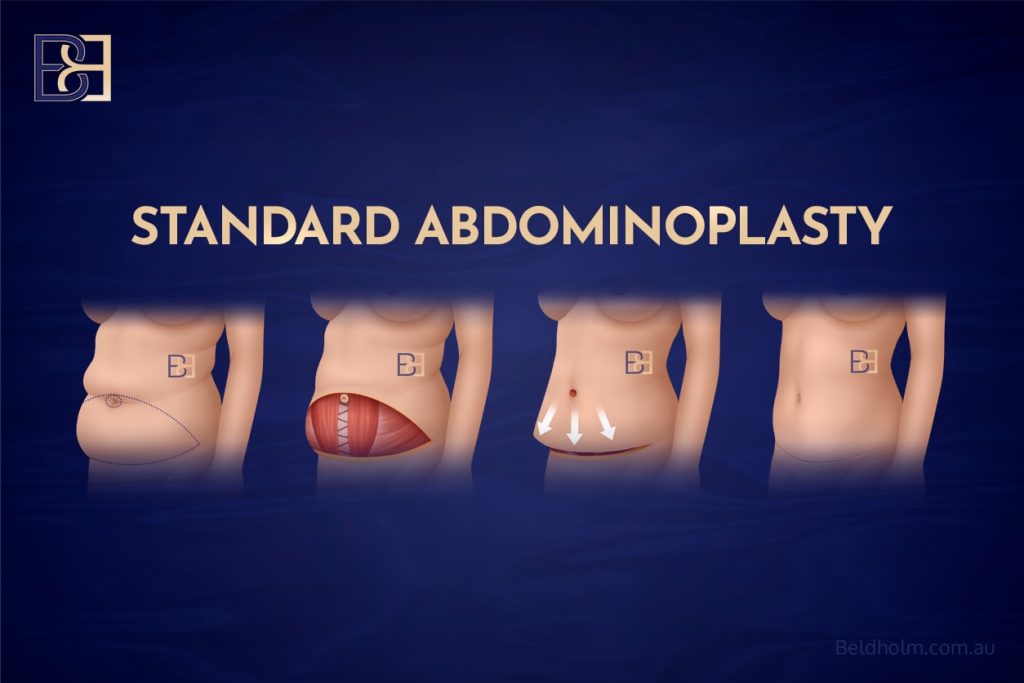
Standard abdominoplasty focuses on the anterior abdomen.
It may involve:
- Removal of excess skin and fat from the lower abdomen
- Tightening of separated abdominal muscles (diastasis recti) where present
- Repositioning of the belly button (Umbilicus)
This procedure is generally considered when skin laxity is primarily vertical and limited to the front of the abdomen.
Book Online NowFleur-de-Lis Abdominoplasty
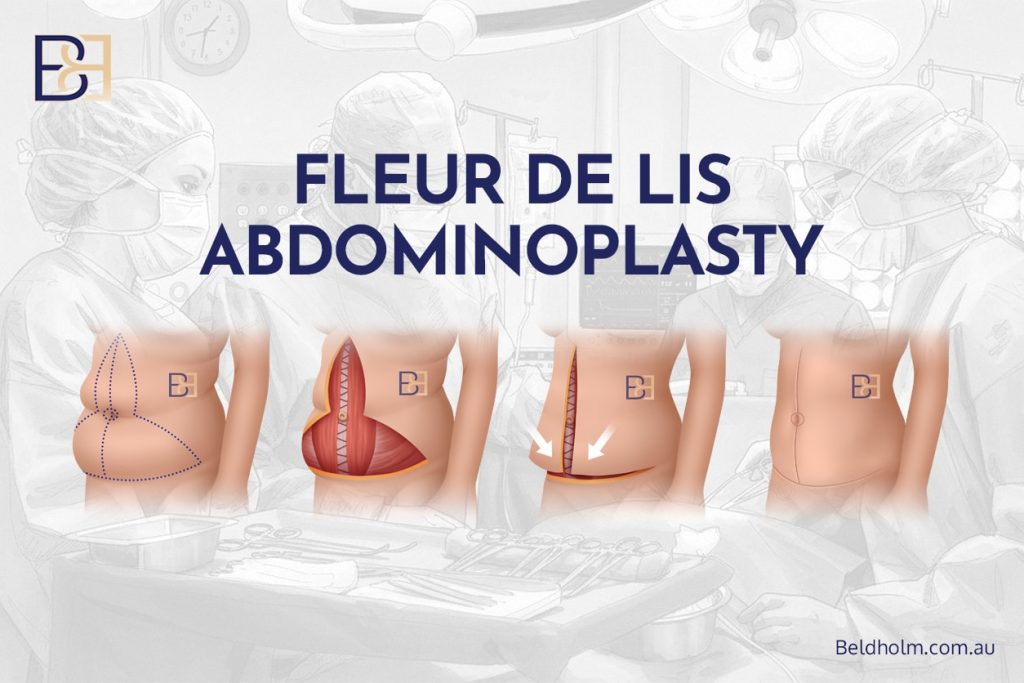
Fleur-de-Lis abdominoplasty addresses excess skin in both vertical and horizontal directions.
It may be appropriate when:
- There is significant midline skin redundancy after massive weight loss
- Excess skin cannot be adequately treated with horizontal tightening alone
This approach results in both a horizontal and vertical scar.
Dual Vector Abdominoplasty
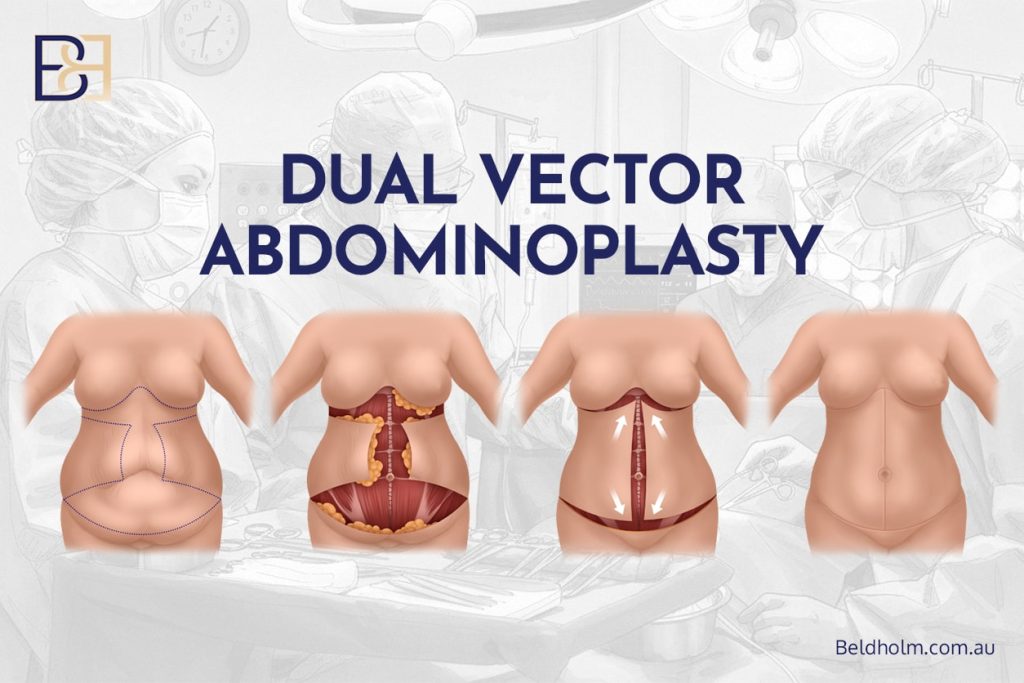
Dual vector abdominoplasty is used when there is multi-directional laxity involving:
- Vertical excess
- Horizontal excess
- Upper abdominal skin redundancy
This approach allows correction in more than one direction when anatomical findings indicate.
Circumferential Body Lift (Belt Lipectomy)
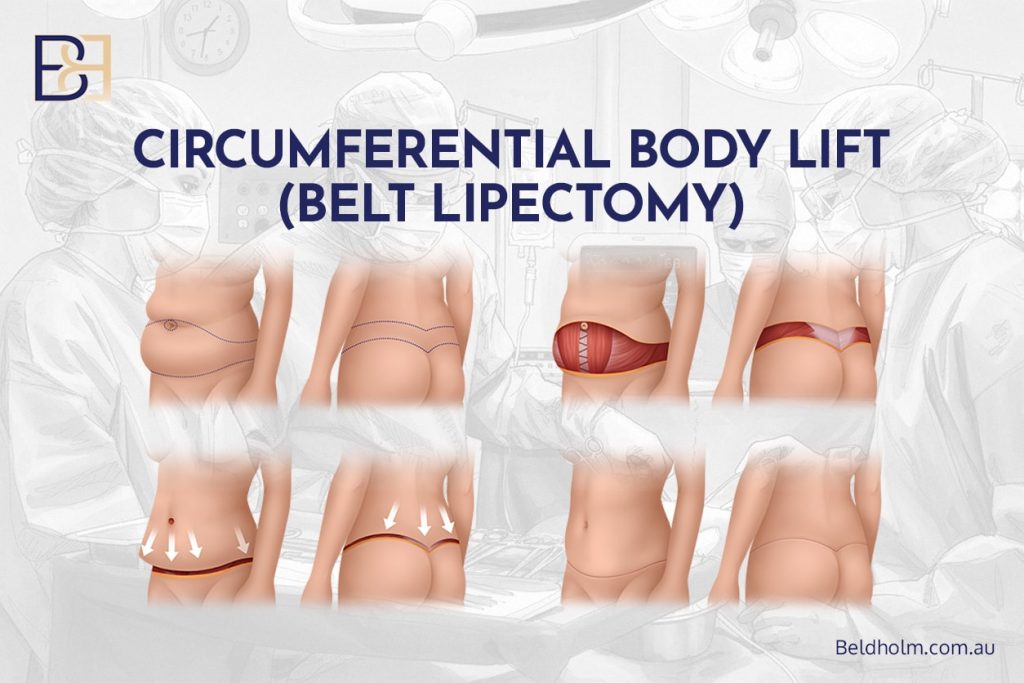
A circumferential body lift addresses 360-degree lower torso laxity.
It may involve the removal of excess skin affecting:
- Lower abdomen
- Flanks
- Lower back
- Buttock region
This procedure is commonly considered after massive weight loss, where excess skin extends beyond the anterior abdominal wall.
Hybrid Circumferential Approach
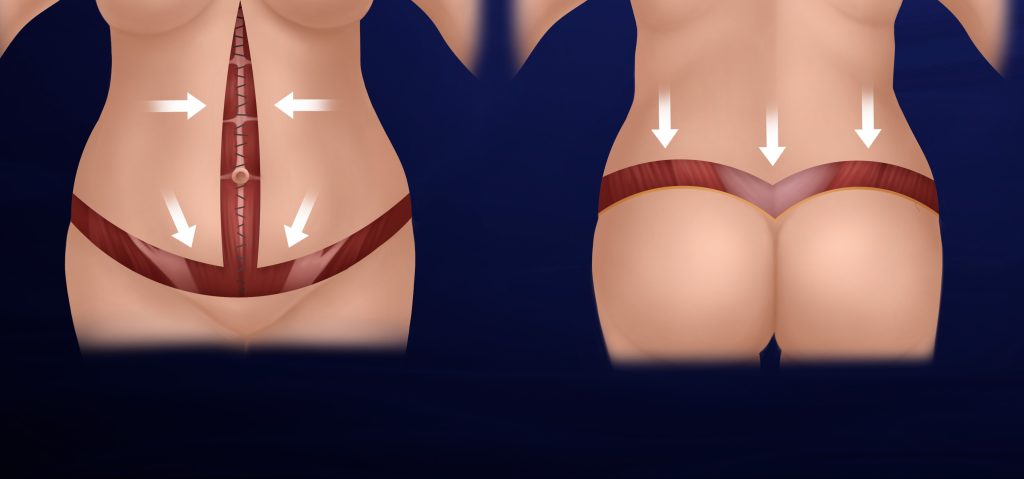
In cases where circumferential laxity is present together with significant anterior horizontal excess, a hybrid circumferential (Circumferential Hybrid Abdominoplasty) approach may be required. This typically combines a circumferential body lift (belt lipectomy) with additional anterior skin excision, resembling a Fleur-de-Lis pattern, thereby providing 360-degree lower-torso tightening and vertical correction of the anterior abdominal wall when indicated.
Liposuction (suction-assisted lipectomy) as an Adjunct
If residual adipose tissue is present, suction-assisted lipectomy (liposuction) may be added where clinically appropriate.
Liposuction (suction-assisted lipectomy) does not remove excess skin and does not replace skin removal procedures.
How Dr Beldholm Assesses Suitability and What to Expect at the Lorn Clinic

Assessment for abdominoplasty (tummy tuck) and post weight loss lower torso surgery is conducted personally by Dr Bernard Beldholm at his Lorn clinic.
During your consultation, Dr Beldholm will:
- Take a detailed medical history, including previous bariatric surgery, weight loss history, and current medications
- Assess weight stability and discuss any recent or planned weight changes
- Examine the abdominal wall for excess skin distribution and abdominal muscle separation (diastasis recti)
- Determine whether laxity is vertical, horizontal, multi-directional, or circumferential
- Assess the flanks, lower back, and buttock region for circumferential excess skin
- Evaluate for hernia or other abdominal wall concerns that may require repair
- Assess residual adipose tissue and whether liposuction may be appropriate as an adjunct
Clinical photographs are taken for surgical planning and documentation.
Dr Beldholm will then discuss:
- Which procedure is anatomically appropriate (standard abdominoplasty, Fleur-de-Lis, dual vector, circumferential body lift, or hybrid approach)
- The location and expected pattern of scars
- Whether muscle repair is indicated
- The anticipated hospital stay and recovery process
- Risks and potential complications, including bleeding, infection, poor wound healing, deep vein thrombosis, and blood clots
Patients are generally considered for surgery when they:
- Have achieved significant weight loss and reached a stable weight
- Have maintained weight stability for an appropriate period
- Are close to their goal weight
- Are medically fit for a major surgical procedure
Smoking status, nutritional status, and overall medical conditions are reviewed, as these factors may influence wound healing and recovery.
A second consultation is encouraged prior to proceeding with surgery to ensure that all questions are addressed and that the chosen procedure aligns with the clinical findings.
What Abdominoplasty and Lower Torso Surgery Do and Do Not Address
Abdominoplasty (tummy tuck) and post weight loss lower torso procedures are designed to address excess skin and reshape the abdominal area and surrounding lower torso following significant weight loss.
These procedures may:
- Remove excess skin and fat from the lower abdomen
- Address excess skin of the upper abdomen where indicated
- Tighten separated abdominal muscles (diastasis recti) when present
- Improve contour of the flanks and lower back in circumferential procedures
However, these procedures do not:
- Remove visceral fat located within the abdominal cavity
- Function as a weight loss procedure
- Prevent future weight gain
- Replace the need for ongoing weight management, healthy diet, and exercise
Patients should be at a stable weight prior to surgery. Significant weight fluctuations after surgery may affect long-term contour and skin quality.
Risks and Recovery After Post-Weight-Loss Lower Torso Surgery
Abdominoplasty (tummy tuck), Fleur-de-Lis abdominoplasty, dual vector abdominoplasty, and circumferential body lift procedures are major surgical procedures performed in a hospital.
Potential Risks and Complications
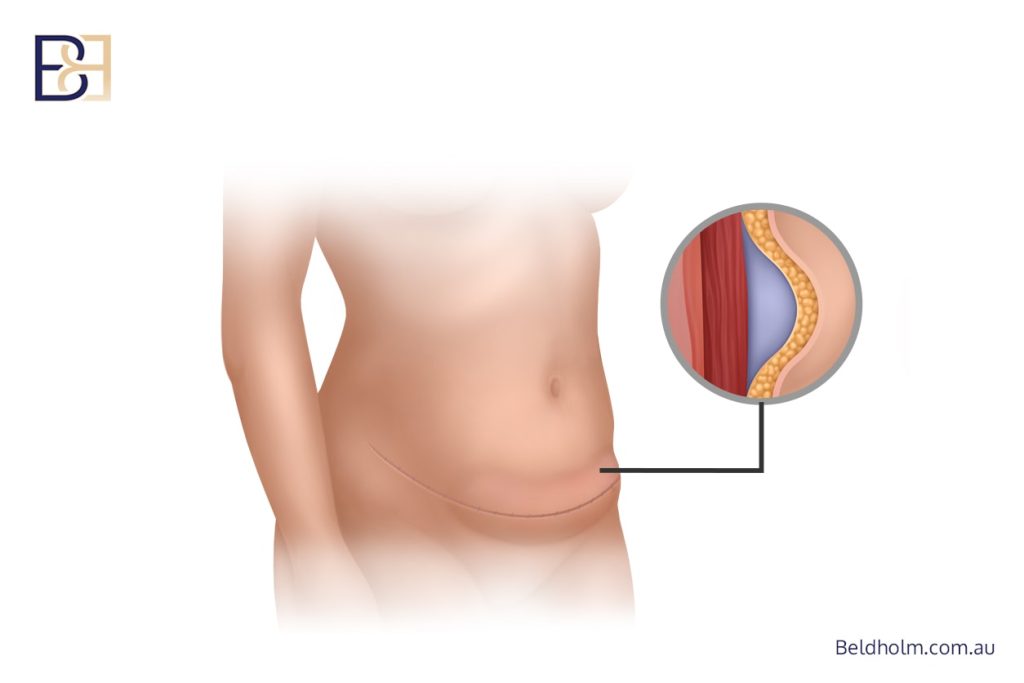

All surgery carries risks. Specific risks associated with post-weight-loss lower torso surgery may include:
- Bleeding or haematoma
- Infection
- Seroma (fluid collection)
- Delayed or poor wound healing
- Wound separation
- Scarring
- Altered skin sensation
- Deep vein thrombosis (DVT)
- Blood clots, including pulmonary embolism
- Need for further surgery or revision procedures
Risk is influenced by factors such as overall health, smoking status, nutritional status, previous bariatric surgery, and the extent of skin removal required.
Recovery Process

Recovery varies depending on the procedure performed and the extent of surgery.
Patients should expect:
- A hospital stay following surgery
- Use of a compression garment
- Temporary limitations in mobility and activity
- Time away from work, depending on occupation
- Regular follow-up appointments for wound review and monitoring
Early mobilisation and adherence to post-operative instructions are important to reduce the risk of complications, including deep vein thrombosis.
Detailed written post-operative instructions are provided, and recovery expectations are discussed thoroughly during consultation.
Frequently Asked Questions About Abdominoplasty After Weight Loss

What happens if I lose more weight after abdominoplasty (tummy tuck)?
Further weight loss after abdominoplasty may result in additional loose skin. In some cases, further skin removal procedures may be required. For this reason, patients are generally advised to reach a stable weight before proceeding with surgery.
How do I know if I need a body lift (belt lipectomy) instead of a tummy tuck (Abdominoplasty)?
If excess skin is limited to the front of the abdomen, a standard abdominoplasty may be appropriate. If loose skin extends to the flanks, lower back, or buttock region, a circumferential body lift (belt lipectomy) may be considered. The decision is based on physical examination and the distribution of excess skin.
Does a tummy tuck (abdominoplasty) remove visceral fat?
No. Abdominoplasty removes excess skin and subcutaneous fat located above the abdominal muscles. It does not remove visceral fat, which is located within the abdominal cavity around the internal organs.
Can exercise replace abdominoplasty after massive weight loss?
Exercise may improve muscle tone and overall fitness. However, it does not remove excess skin or correct significant abdominal muscle separation (diastasis recti) following major weight loss.
How long after bariatric surgery should I wait before having body contouring surgery?
Patients are generally advised to wait until their weight has stabilised following bariatric surgery. This often occurs 12–18 months after the weight-loss procedure, but timing varies among individuals. Suitability is determined at consultation based on weight stability and overall health.
Consultation with Dr Beldholm at the Lorn Clinic
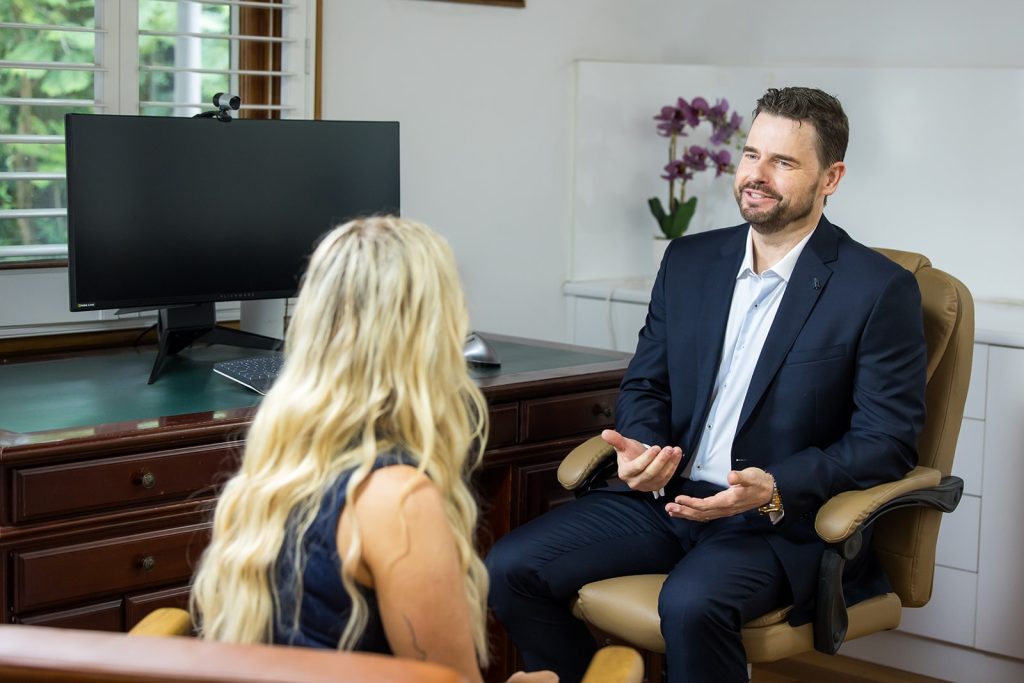
If you have achieved significant weight loss and are concerned about excess skin of the abdomen, flanks, or lower back, the next step is a formal surgical assessment.
A GP referral is required.
Your Initial Consultation

Your consultation with Dr Bernard Beldholm is conducted personally at the Lorn clinic and typically runs for approximately one hour.
During this appointment, Dr Beldholm will:
- Assess the pattern of loose skin (vertical, horizontal, multi-directional, or circumferential)
- Examine the abdominal wall for muscle separation (diastasis recti)
- Determine whether abdominoplasty (tummy tuck), Fleur-de-Lis, dual vector, circumferential body lift, or a hybrid approach is anatomically appropriate
- Evaluate whether liposuction may be indicated as an adjunct
- Discuss scar placement and recovery requirements
- Explain risks and potential complications in detail
Clinical photographs are taken for planning and documentation.
Planning Surgery
If you are considered suitable:
- A written quotation is provided
- Hospital and anaesthetist fees are outlined
- The timing of surgery is discussed
- A second consultation is encouraged prior to proceeding
Telehealth consultations may be available to regional patients; however, an in-person assessment is required prior to surgery.
Next Step
To arrange an assessment:
- Obtain a GP referral
- Contact the clinic to schedule your consultation (call us or do an online booking)