


Fleur-de-Lis Abdominoplasty (FDL) (Fleur de lis Tummy tuck)
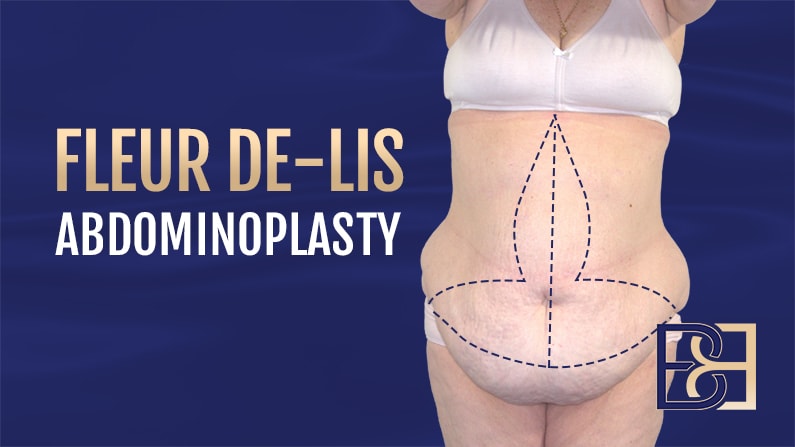
Book Online NowA fleur-de-lis abdominoplasty (sometimes called a fleur de lis tummy tuck) is a surgical procedure for individuals with significant excess skin in both the vertical and horizontal directions of the abdomen. This commonly occurs after significant, massive, or major weight loss where the abdominal skin has stretched beyond what a standard tummy tuck (abdominoplasty) can address.
The technique involves
- A horizontal incision across the lower abdomen
- An additional vertical incision to address the central vertical skin excess
- Muscle repair for separated abdominal muscles
- Removal of excess skin and excess fat
- Repositioning of the belly button
This can create smoother body contours for patients with significant skin laxity in the lower and upper abdomen.
Why Some Patients Need a Fleur-de-Lis Instead of a Standard Abdominoplasty
Patients who have lost a significant amount of weight may develop excess skin in both the vertical and horizontal direction of the abdomen. When the majority of loose skin is vertical, a standard abdominoplasty using a horizontal incision may be adequate. However, many post-weight-loss patients also develop excess skin that extends horizontally across the midline. In these situations, removing skin from the lower abdomen alone will not fully address the central fullness or the remaining folds.
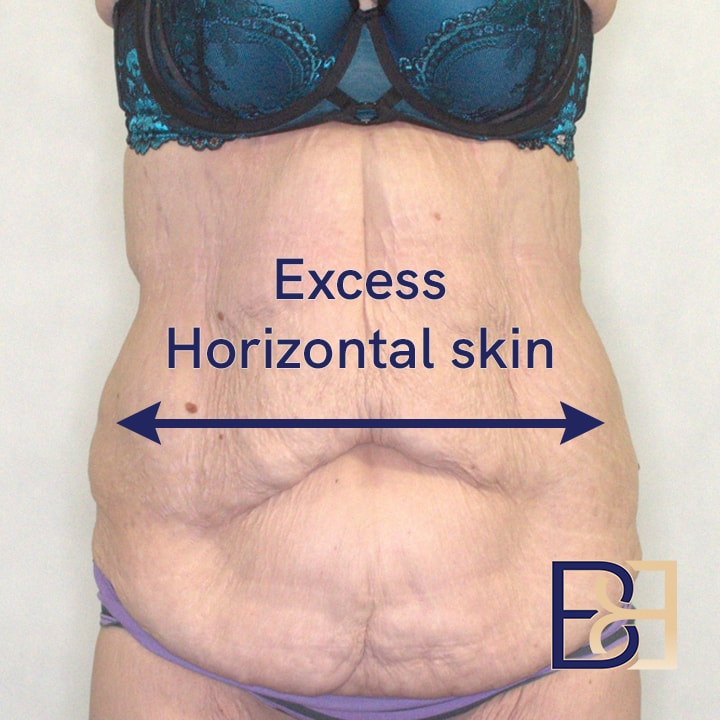
To correct this, a central vertical excision is required in addition to the traditional lower abdominal incision. This combined approach is the basis of the fleur-de-lis technique. The additional vertical incision allows removal of excess tissue through the centre of the abdomen, improving contour in both directions.
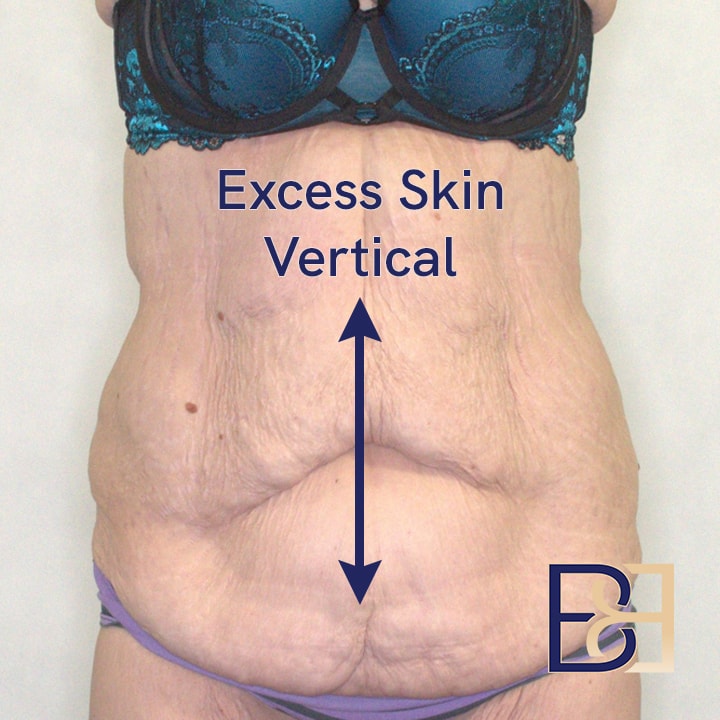
A fleur-de-lis is considered when:
- There is significant excess skin in multiple directions (vertical and horizontal)
- Central abdominal skin folds persist after weight loss
- The abdominal wall requires tightening
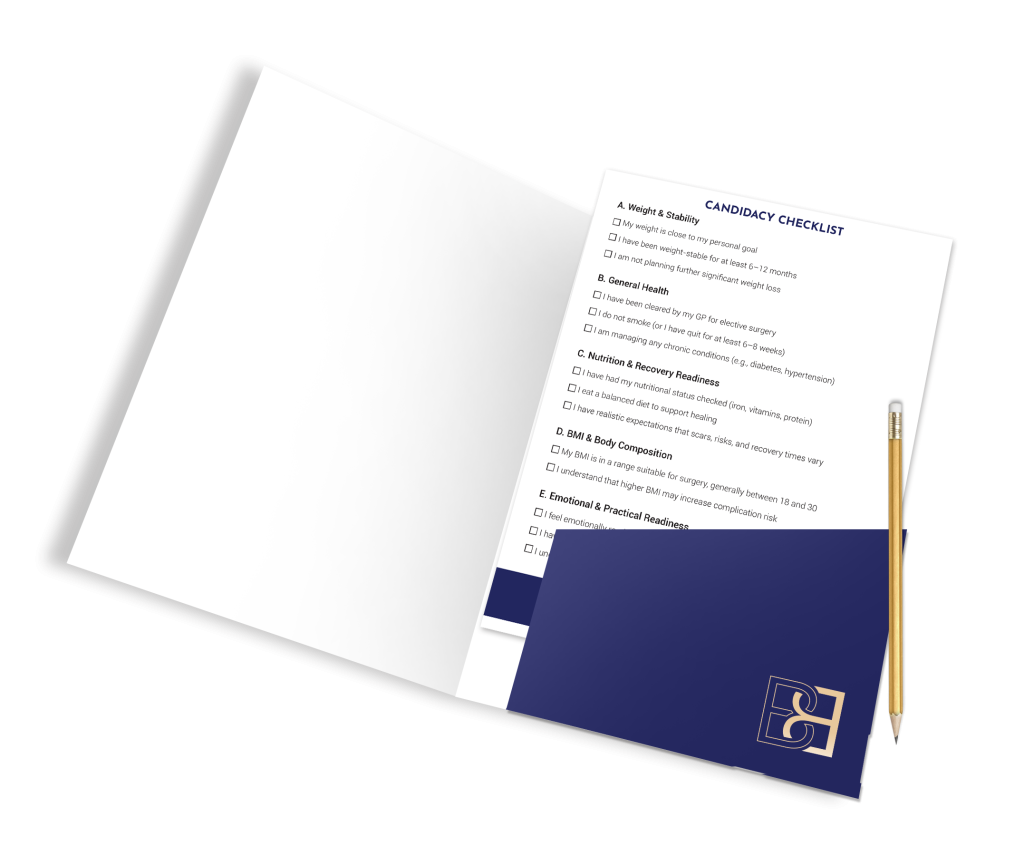
- The patient has maintained a stable weight
- There is persistent loose skin after major weight changes
This is a complex procedure and considered major surgery. Suitability is determined during the physical examination.
Who May Benefit
FDL abdominoplasty may be considered for individuals who:
- Maintain stable weight and follow a healthy lifestyle
- Have loose skin after weight loss
- Have abdominal skin that cannot be addressed with a standard tummy tuck (abdominoplasty)
- Have separated abdominal muscles
- Need excess skin removal in both vertical and horizontal directions
How Dr Beldholm Performs the FDL Procedure

FDL abdominoplasty can be performed in several different ways depending on whether there is excess fat, muscle separation, or a hernia present. Each patient receives a tailored approach based on anatomy and medical history.
1. Skin Removal Only (No Fat to Treat)
Some patients — particularly those who have lost a significant amount of weight — may have minimal remaining fat. In these cases, the focus is on removing excess skin in both the vertical and horizontal direction. The operation involves the fleur-de-lis incisions, tightening of the skin envelope, and repositioning of the belly button as required.
2. Skin Removal + Liposuction (VASER)
For many patients, there is still some excess fat contributing to abdominal fullness. When this is the case, Dr Beldholm performs suction‑assisted lipectomy, often using ultrasound‑assisted VASER technology, to help refine the contour before removing the excess skin. This can improve the overall abdominal shape, particularly around the upper abdomen, waistline, and flanks.
3. Repair of Hernias (If Present)
Some post‑weight‑loss patients also have abdominal wall hernias. If a hernia is identified during consultation or imaging, it can often be repaired during the same operation. This is assessed individually and discussed during the pre‑operative planning.
4. Diastasis Recti (Separated Abdominal Muscles)
Many patients experience separation of the abdominal muscles, especially after previous pregnancies or major weight change. FDL surgery can include repair of these separated muscles to help restore abdominal wall support. This step depends on the findings during examination.
Hospital Stay
- Performed under general anaesthesia
- Conducted at Maitland Private Hospital with on‑site ICU and 24‑hour medical support
Recovery After Fleur-de-Lis Abdominoplasty

Early Recovery
- Compression garments support healing and minimise swelling
- Prescribed medications are used as needed
- Wound care and monitoring for wound healing issues
- 2–3 dressing appointments per week for the first 2 weeks
Follow-Up
- Scheduled reviews at 1, 3, 6, and 12 months
- Telehealth support for patients travelling from regional or interstate areas
Recovery Process
Most patients experience gradual improvement over several weeks. Recovery time varies.
Risks & Potential Complications
Risks include:
- Bleeding
- Infection
- Wound healing problems
- Changes to skin sensation
- Need for revision surgery
All risks are discussed during consultation.

Cost of Fleur-de-Lis Abdominoplasty
Costs vary depending on:
- Amount of abdominal skin to be removed
- Whether muscle repair is required
- Use of suction-assisted lipectomy
- Hospital and anaesthetist fees
- Medicare eligibility (assessed individually)
A formal quote is provided after consultation.
Book Online NowThe Consultation Process

Step 1 — GP Referral
A GP referral is required under AHPRA cosmetic surgery regulations.
Step 2 — Initial Consultation (Approx. 1 hour)
Includes:
- Detailed medical history
- Examination of the abdominal wall
- Assessment of excess skin and muscle separation
- Standardised clinical photographs
- Discussion of risks, options, and the recovery process
Step 3 — Second Consultation
Recommended for reviewing the surgical plan and asking further questions.
Step 4 — Preparing for Surgery
- Weight should be stable
- Health optimisation may be required
- Written quote provided within approx. 1 week
Why Patients Choose Dr Beldholm
- Specialist Surgeon (General Surgery), FRACS
- 15+ years performing post-weight-loss body contouring
- Experience with suction-assisted lipectomy and ultrasound-assisted techniques
- Comprehensive follow-up structure
- Surgery performed at Maitland Private Hospital
Complications to Consider
All surgical procedures carry risks. Fleur-de-Lis abdominoplasty involves a larger area of skin removal and longer incisions than a standard abdominoplasty, which means some complications may occur more commonly. During consultation, Dr Beldholm will discuss these risks in detail and assess your individual factors such as medical history, weight stability, previous surgeries, and skin quality.
Potential complications include, but are not limited to:
Wound‑related Complications
- Delayed wound healing
- Wound separation (dehiscence)
- Seroma (fluid accumulation)
- Haematoma (bleeding under the skin)
- Infection requiring antibiotics or additional care
Scar‑related Issues
- Prominent or widened scars
- Asymmetry between the vertical and horizontal scars
- Hypertrophic or keloid scarring (depending on individual healing tendencies)
Skin and Sensory Changes
- Reduced or altered skin sensation, particularly around the lower abdomen and central vertical incision
- Areas of skin necrosis (rare), more common in patients with diabetes, smoking history, or poor circulation
General Surgical Risks
- Bleeding
- Reaction to anaesthesia
- Deep vein thrombosis (DVT)
- Pulmonary embolism (rare)
Contour or Functional Concerns
- Residual folds or contour irregularities
- Need for revision surgery
- Persistent weakness of the abdominal wall if muscle quality is poor
Your suitability, personal risk profile, and expected recovery timeline are discussed in detail during your consultation, along with steps taken to reduce risks and support healing.
Frequently Asked Questions
What is the difference between a tummy tuck (abdominoplasty) and a Fleur-de-Lis?
A standard tummy tuck (abdominoplasty) removes loose skin using a horizontal incision only. A fleur-de-lis abdominoplasty removes skin in both vertical and horizontal directions using an added vertical incision.
How much does a Fleur-de-Lis tummy tuck (abdominoplasty) cost in Australia?
Costs vary depending on anatomy, skin removal, hospital time, and complexity. A personalised quote is provided after consultation.
Is a Fleur-de-Lis tummy tuck (abdominoplasty) more expensive?
Often yes. It is a complex procedure that usually involves longer operating time.