


Mini vs Full Abdominoplasty (Tummy Tuck)
Book Online NowChoosing between a mini (Also referred to as limited) or full abdominoplasty is an important step in planning abdominal body contouring surgery. Patients who visit Dr Bernard Beldholm FRACS often want to understand how the two procedures differ and which option best aligns with their anatomy and goals.

With more than 15 years of experience in body contouring for post‑pregnancy and post‑weight‑loss patients, Dr Beldholm uses a structured, evidence‑based approach. His assessment considers the upper and lower abdomen, abdominal muscle function, the presence of any hernias or muscle separation, and overall skin quality. Adjunct techniques such as VASER liposuction or hernia repair may be incorporated when clinically appropriate. This ensures the recommended procedure is tailored specifically to your presentation.
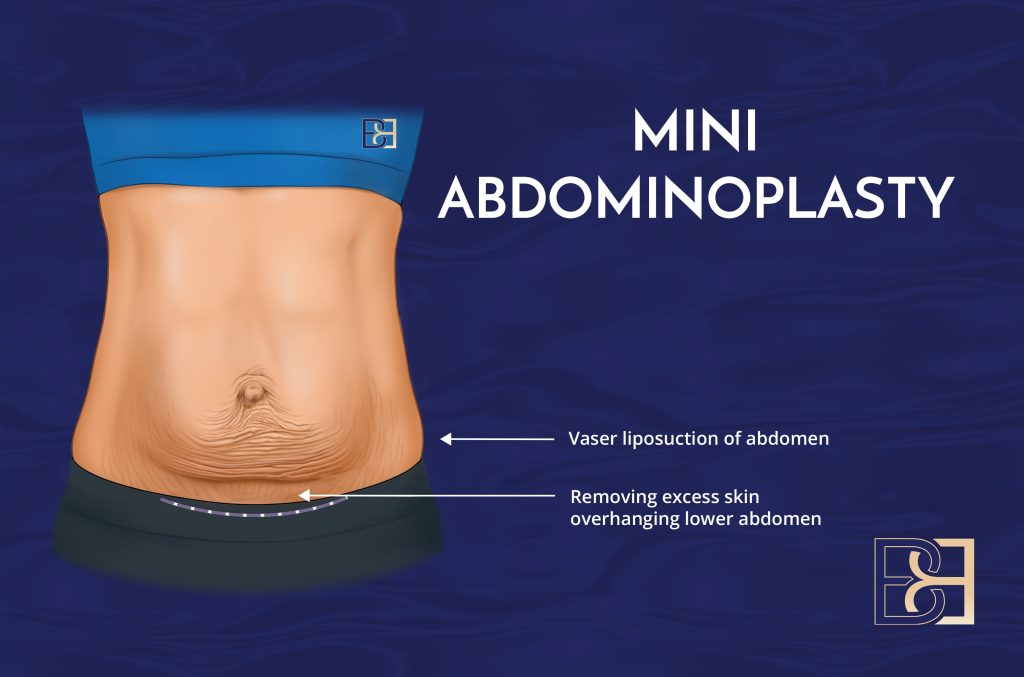
Understanding the Mini Abdominoplasty
- Focuses exclusively on the lower abdomen
- Does not reposition the belly button
- Suitable when skin laxity is mild and limited below the umbilicus
- Often combined with VASER liposuction for contour refinement
Unlike a full abdominoplasty, the mini approach does not involve repositioning the belly button. Instead, a shorter incision is made low on the abdomen, often placed within the natural bikini line. Through this incision, Dr Beldholm can remove excess skin, address small pockets of fat, and tighten the lower abdominal wall when needed. Some patients have minimal separation of their lower abdominal muscles; in such cases, a focused repair may be performed.
In Dr Beldholm’s practice, a mini abdominoplasty is reserved for patients who truly have changes isolated to the lower abdomen. Many patients expect that a mini procedure will achieve the same result as a full abdominoplasty, but this is only possible in select cases. If there is excess skin above the umbilicus, significant muscle separation (Diastasis recti), or more generalised laxity, a mini operation will not address these concerns effectively.
Book Online NowUnderstanding the Full Abdominoplasty
- Treats both upper and lower abdomen
- Allows complete repair of abdominal muscle separation (Diastasis recti)
- Includes repositioning of the belly button
- Often recommended after pregnancy or significant weight loss
A full abdominoplasty is designed to treat the entire abdomen. It is suitable for patients who have excess skin in both the upper and lower abdomen, stretched or separated abdominal muscles (Diastasis recti), or changes following pregnancy or significant weight loss.
In these situations, a full procedure provides the necessary access to repair muscle separation (diastasis recti), tighten the abdominal wall, reposition the umbilicus, and remove excess skin across the entire abdominal region.
The operation involves a low horizontal incision—carefully placed by Dr Beldholm so that it sits low on the abdomen—and a small incision around the belly button to allow it to be repositioned after the skin is tightened. This technique provides access to the entire abdominal wall, enabling a complete evaluation and repair of any muscle separation. For many patients, especially those after pregnancy, the abdominal wall has stretched significantly. Repairing the separation can help restore the internal support of the abdominal muscles.
This is the most frequently performed abdominal contouring procedure in Dr Beldholm’s practice due to its suitability for a wide range of presentations. Many post‑pregnancy and post‑weight‑loss patients benefit from the more comprehensive approach of a full abdominoplasty.
Book Online Now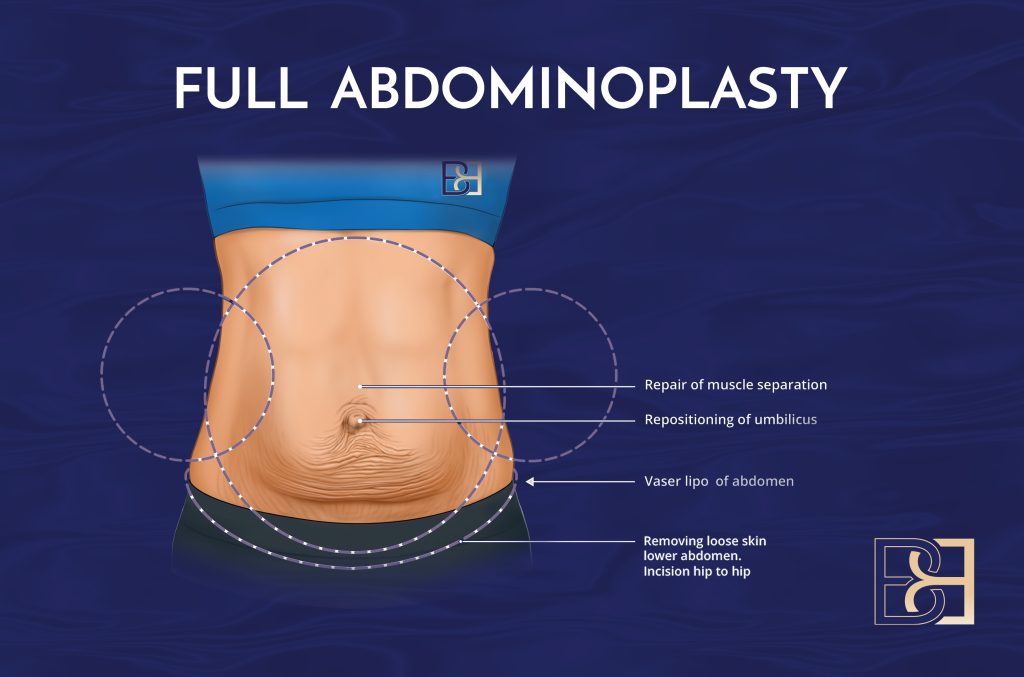
Detailed Comparison: Mini vs Full Abdominoplasty
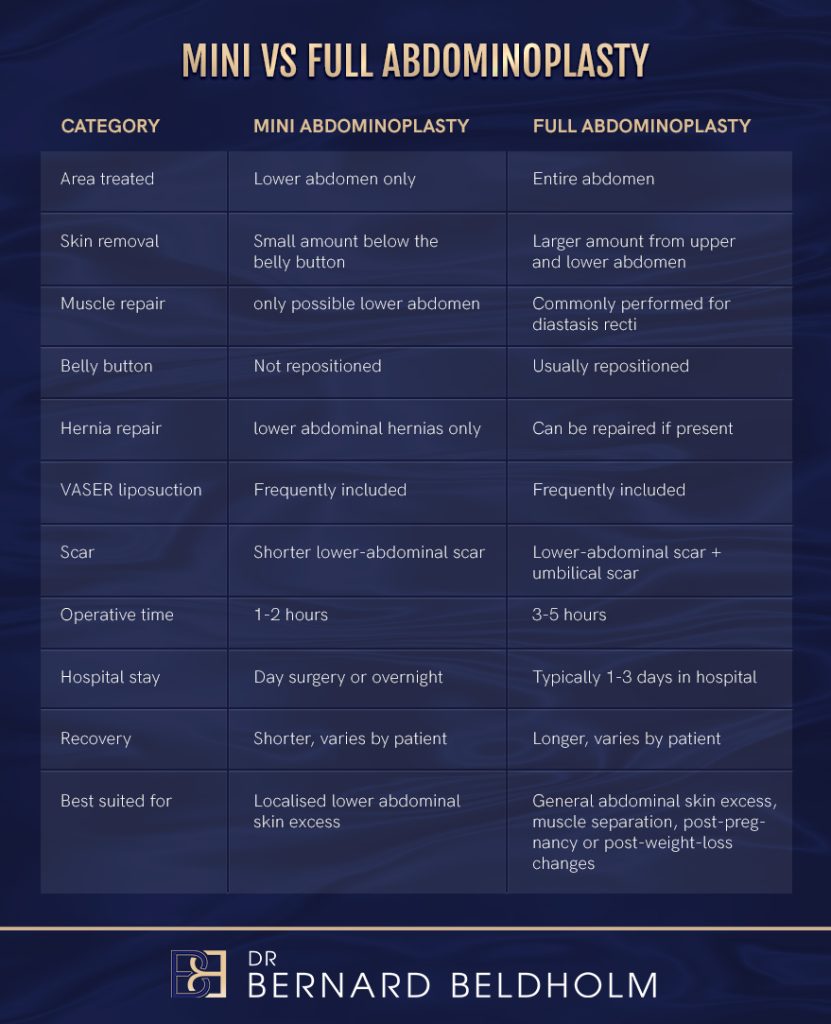
Although both surgeries aim to remove excess skin and address changes in the abdominal wall, they differ in scope, incision placement, recovery, and the types of concerns they address. The following comparison offers a more flowing, narrative explanation of these differences.
Location of Excess Skin
Patients considering abdominal contouring often present with skin laxity. If the laxity is limited to the lower abdomen, a mini abdominoplasty may be sufficient. However, if the upper abdomen also exhibits excess skin, or if the skin drapes unevenly from above the umbilicus, a full abdominoplasty is generally recommended. In these situations, a mini procedure cannot lift or remove upper abdominal skin, which means the result may look incomplete.
Muscle Separation and Abdominal Wall Strength
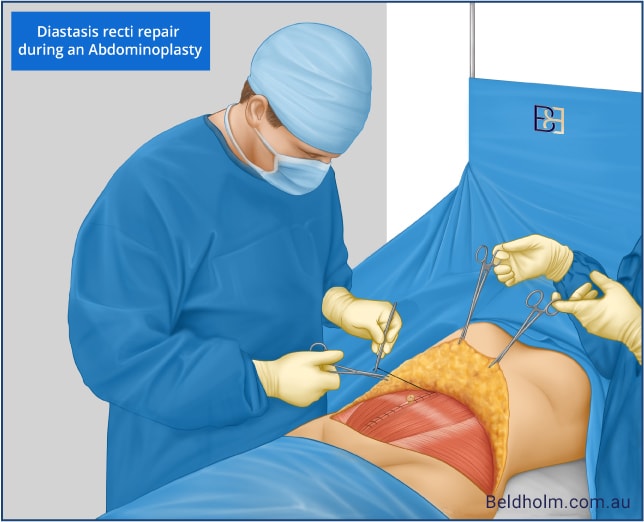
Muscle separation (diastasis recti) is common after pregnancy and weight fluctuations. In a mini abdominoplasty, only the lower abdominal muscles can be repaired. If separation extends above the belly button, a full abdominoplasty is required to repair the entire abdominal wall. Dr Beldholm evaluates this during your examination and explains the extent of muscle laxity and the appropriate repair.
Incisions and Scarring
Both procedures involve a horizontal incision placed low on the abdomen. In a mini abdominoplasty, the incision is shorter as it only needs to access the lower abdomen. A full abdominoplasty requires a longer incision and includes a second, small incision around the belly button to allow repositioning. Dr Beldholm takes care to place incisions in a low position that can usually be concealed by underwear or swimwear.
Belly Button Position
In a mini abdominoplasty, the belly button remains in its natural position because only the lower abdominal skin is removed. In a full abdominoplasty, the belly button is repositioned so that it remains in a natural anatomical position after the skin is tightened. This is not a cosmetic enhancement but a necessary part of achieving a balanced abdominal contour.
Operative Time
Mini abdominoplasty is typically a shorter operation due to the smaller area treated. A full abdominoplasty takes longer—often around three hours—because it involves more extensive tissue work, possible muscle repair, and skin removal.

Recovery Experience
Recovery varies between patients, but a mini abdominoplasty generally involves less downtime. Patients often resume light activities sooner because there is less muscle tightening and a smaller surgical area. A full abdominoplasty requires a longer recovery period due to the more extensive work on the abdominal wall and the larger area of skin removed.
Patients undergoing a full abdominoplasty in Dr Beldholm’s practice have structured postoperative reviews, including frequent nurse visits in the first two weeks, followed by routine appointments at one, three, six, and twelve months.
Expected Outcomes
A mini abdominoplasty provides improvements limited to the lower abdomen. A full abdominoplasty allows reshaping of the entire abdominal area. Understanding these differences helps ensure expectations are aligned with what each procedure can achieve.
Integrated Techniques: VASER Liposuction and Hernia Repair
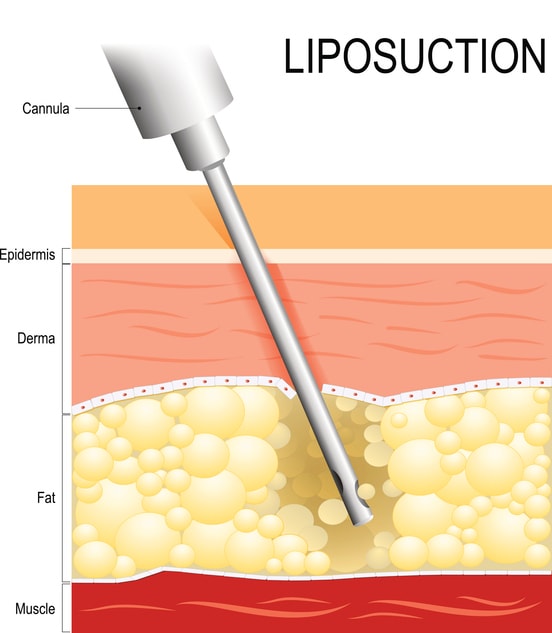
One of the benefits of having surgery with Dr Beldholm is the option to incorporate additional techniques when clinically appropriate. VASER liposuction can be used alongside both mini and full abdominoplasty. This technology assists with treating areas of excess fat by using ultrasonic energy to help separate fat cells before removal.
Hernias—especially small umbilical or ventral hernias—are identified during your consultation or imaging and can often be repaired during the same operation. This allows comprehensive treatment without multiple operations.
Experience and Surgical Setting

Dr Bernard Beldholm FRACS has more than fifteen years of experience in body contouring surgery. His practice focuses on post‑pregnancy and post‑weight‑loss patients, and the systems in place reflect the needs of these groups. All surgery is performed at Maitland Private Hospital, which provides 24‑hour medical cover and on‑site support.
His postoperative care structure includes frequent early reviews, LED therapy as needed, dressing support, and close monitoring during the initial healing phase. Patients who travel from interstate or regional NSW frequently stay locally for 7–10 days to attend early reviews.
Suitability and Consultation
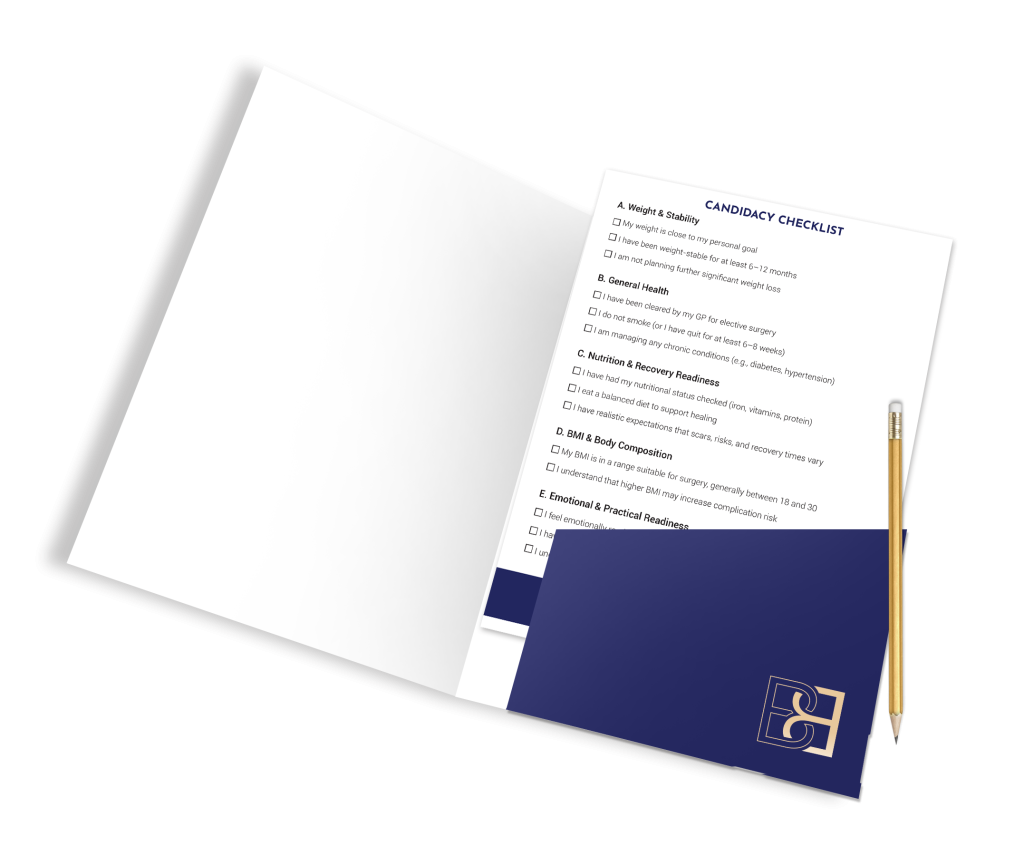
Determining whether a mini or full abdominoplasty is right for you requires an in‑person consultation. During your hour‑long assessment, Dr Beldholm reviews your medical history, examines your abdominal muscles and skin, evaluates the extent of any muscle separation, and discusses your goals. Clinical photographs are taken to assist in planning.
A GP referral is required for the consultation. A second consultation is encouraged before scheduling surgery to ensure adequate time for questions and informed decision‑making.
Risks and Considerations
All surgery carries risks. These may include bleeding, infection, wound healing problems, seroma, scars, anaesthetic risks, or thromboembolic events. These are discussed as part of the consultation, and written information is provided to help you understand the procedure.