


Brachioplasty (Arm Lift) Surgery with Dr Bernard Beldholm FRACS
Book Online NowBrachioplasty (Arm Lift Surgery) is a surgical procedure that addresses excess skin and, where appropriate, excess fat deposits of the upper arms. As a Specialist Surgeon, Dr Bernard Beldholm provides a structured, evidence‑based approach to help patients understand their options, risks, and expected recovery.
What Is Brachioplasty?
Brachioplasty (Arm Lift Surgery) is a surgical procedure used to remove excess skin and manage excess fat deposits in the upper arm region. It may be considered by individuals who experience skin laxity, excess soft tissue, or changes following significant weight loss.
The operation aims to adjust the upper arm anatomy and, when required, the lateral chest area, using techniques that are matched to each patient’s clinical needs.
Who Might Consider Arm Lift (Brachioplasty) Surgery?
Patients may consider brachioplasty if they have:
- Excess skin or excess tissue of the upper arms
- Localised pockets of fat or excess fat deposits unresponsive to lifestyle measures
- Reduced skin elasticity after significant or massive weight loss
- Functional or practical concerns such as restricted movement or difficulty with clothing fit
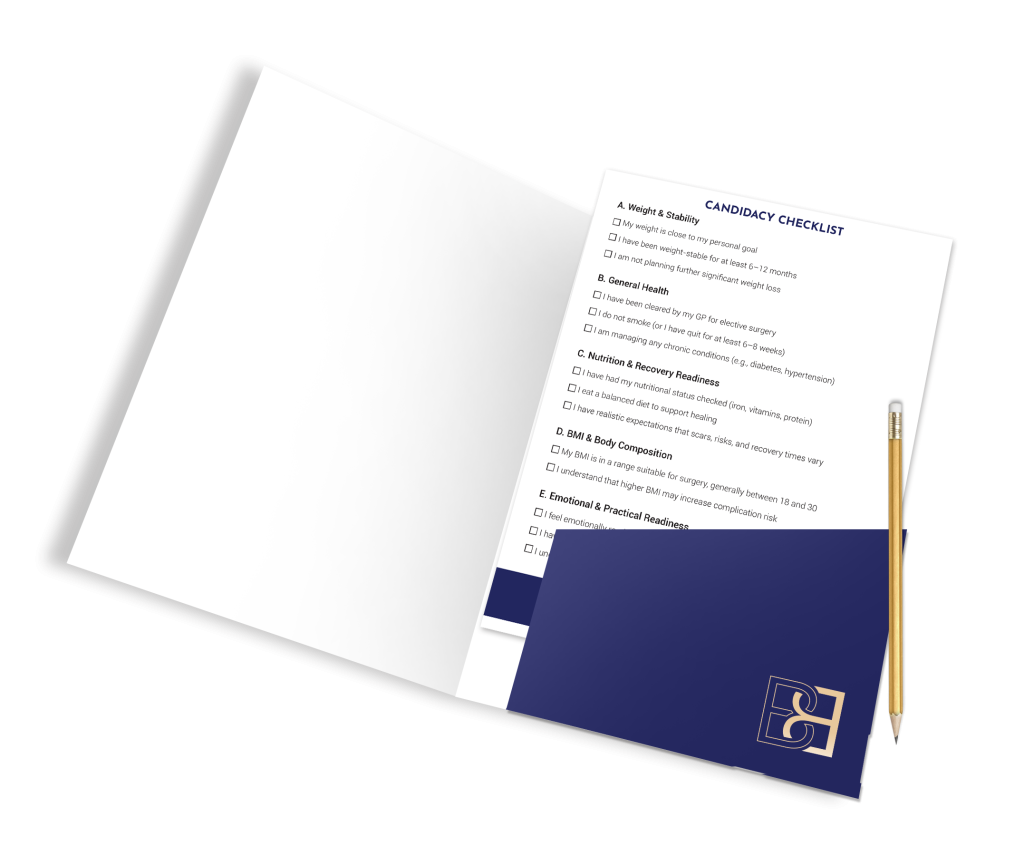
A consultation is necessary to assess suitability, health factors, and realistic expectations.
How Brachioplasty Surgery Works
Brachioplasty (Arm Lift Surgery) can be performed using several different techniques. The choice of technique depends on the amount of excess skin, its location, the presence of excess fat, and whether there is skin laxity extending onto the chest. During your consultation, Dr Beldholm will assess these factors and recommend the most appropriate option.
Mini Brachioplasty
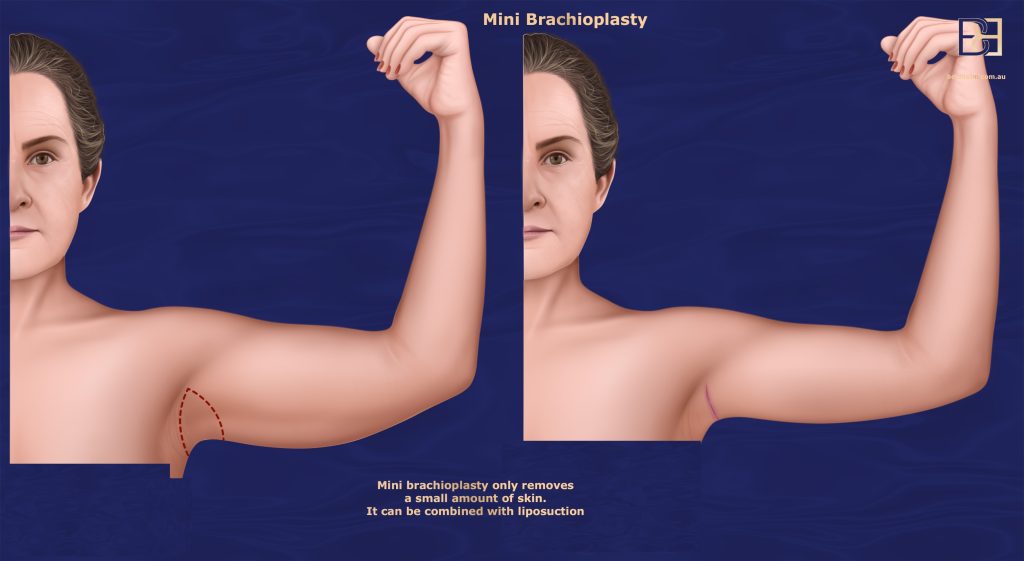
A mini brachioplasty involves a shorter incision, typically confined to the armpit region. While it may be suitable for patients with mild upper‑arm skin laxity, it is not usually recommended for post‑weight‑loss patients, as they often have more significant excess skin that extends along the length of the arm. A mini approach generally cannot address skin that extends from the elbow to the axilla or onto the chest.
Standard (Full) Brachioplasty – Elbow to Axilla
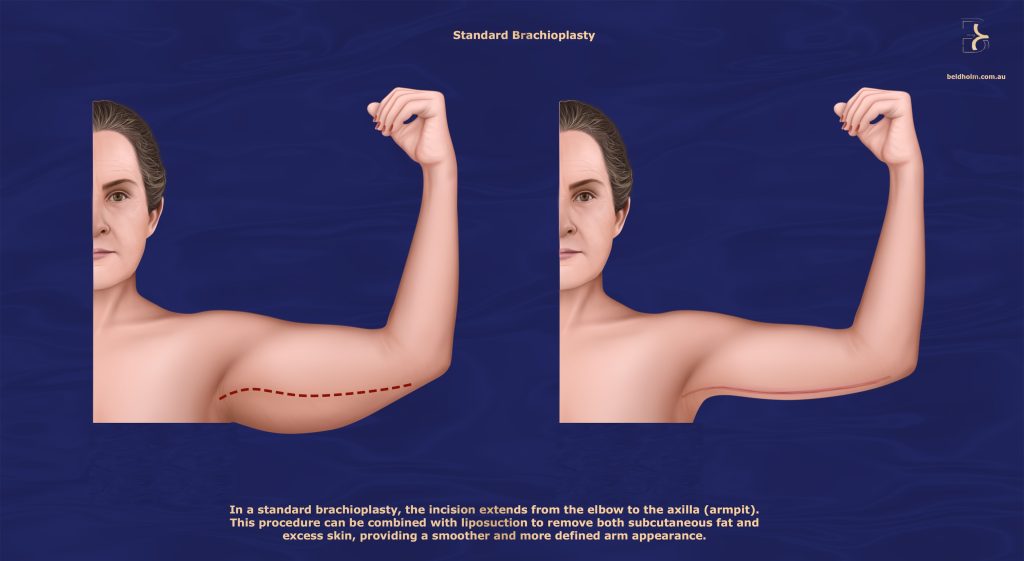
A full brachioplasty is the most common technique for individuals who have undergone significant or massive weight loss. The incision usually extends from near the elbow to the axilla. This approach allows Dr Beldholm to remove excess skin along the entire length of the upper arm and adjust the underlying supportive tissue when needed.
Extended Brachioplasty – Elbow to Axilla and Onto the Chest
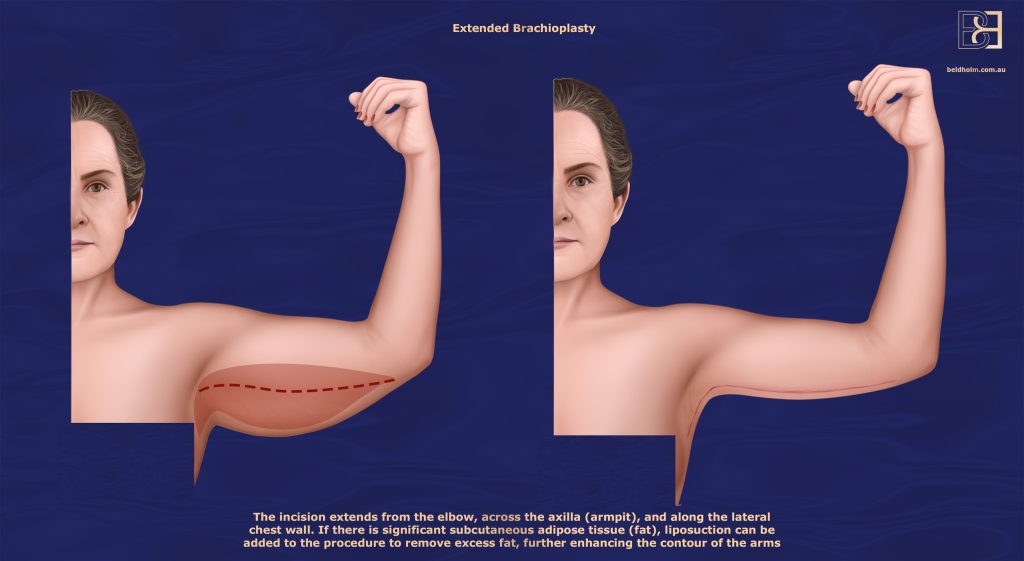
For patients who have excess skin that continues beyond the arm and onto the lateral chest wall, an extended brachioplasty may be the most suitable option. In this technique, the incision starts near the elbow, continues through the axilla, and extends onto the chest. This allows removal of skin folds that cross from the arm onto the chest, which is common after massive weight loss.
Brachioplasty with Liposuction
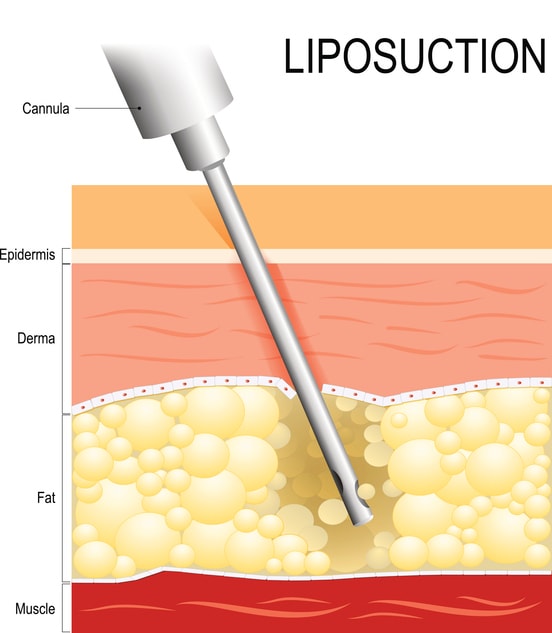
If there is a significant amount of excess fat in the upper arm, liposuction may be performed as part of the procedure. Liposuction helps address excess fat deposits before removing the skin. This approach is commonly used when patients have both excess skin and retained localised fat, allowing the skin to conform more naturally to the adjusted anatomy.
Procedure Overview
Across all brachioplasty types, the steps may include:
- Removing excess skin
- Using liposuction where clinically appropriate to address excess fat
- Tightening the underlying supportive tissue
- Adjusting the incision pattern based on individual anatomy
- Extending the incision onto the chest if required to manage skin laxity in that region
General anaesthesia is used. All operative steps, risks, and potential outcomes are discussed during consultation.
Dr Bernard Beldholm’s Clinical Approach
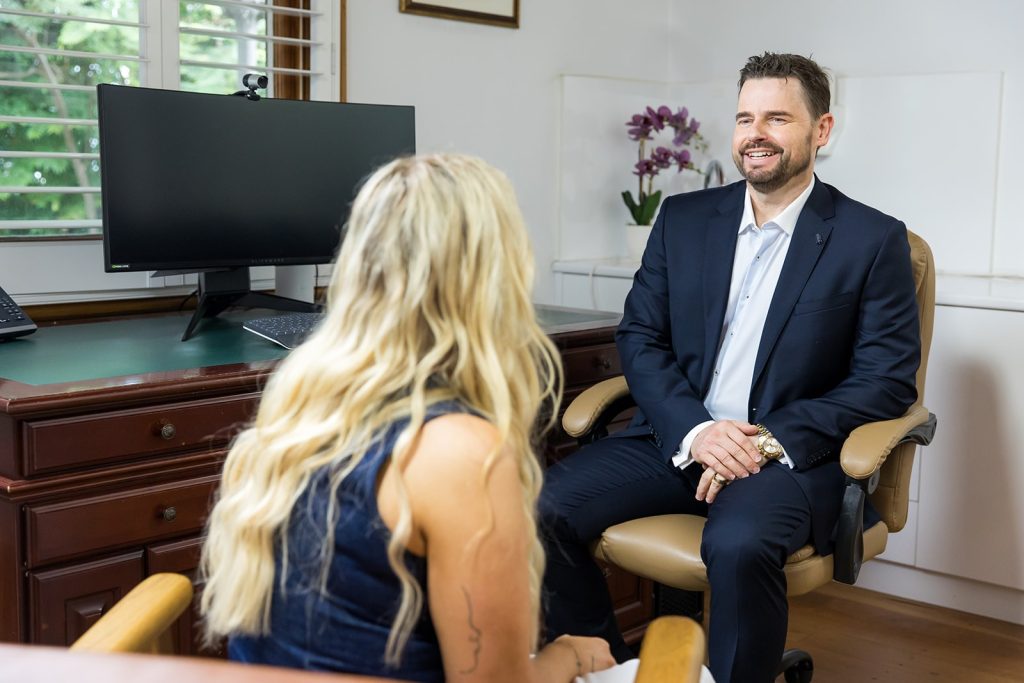
Dr Bernard Beldholm FRACS is a Specialist Surgeon with more than 15 years of experience in post‑weight‑loss body contouring surgery. His approach to brachioplasty is structured, clear, and oriented toward patient safety.
His process includes:
- A detailed explanation of risks, expected recovery, and procedural options
- Consideration of skin elasticity, underlying muscle, and any relevant medical conditions
- A thorough clinical assessment of the upper arm region
- A personalised surgical plan based on anatomy and health considerations
The Consultation Process
Initial Consultation (Approximately 1 Hour)
The first consultation includes:
- Review of general health and medical history
- Examination of excess skin, skin elasticity, and underlying muscle
- Standardised clinical photography
- A detailed discussion of risks, recovery, and operative options
A GP referral is required.
Second Consultation
A second appointment (in person or telehealth) is encouraged to ensure patients have adequate time to review information and ask further questions.
Recovery After Brachioplasty
Recovery varies, and each patient receives a tailored postoperative plan. This may include:
- Wearing a compression garment to help minimise swelling
- Avoiding heavy lifting and strenuous exercise for the recommended period
- Monitoring for unusual symptoms
- Attending scheduled follow‑up appointments
Healing timelines are discussed in detail during consultation, and early recovery is monitored closely by the clinical team.
Risks and Potential Complications
All surgery carries risks. Potential complications of brachioplasty may include:
- Bleeding or infection
- Allergic reaction
- Hypertrophic or prominent scars
- Fluid collections (occasionally requiring a thin‑tube drain)
- Delayed healing
- Sensation changes
- Asymmetry
- Need for revision surgery or further surgery
- Risks associated with general anaesthesia
Certain medical conditions or lifestyle factors may increase risk or impair healing. A full discussion of risks is part of the consultation process.
Scarring
Brachioplasty results in a visible scar along the inside of the upper arm, and it may extend toward the lateral chest depending on the amount of excess skin removed. Scar characteristics vary between individuals and cannot be predicted.
How Long Do Results Last?
Outcomes vary between individuals. Maintaining a stable weight and healthy habits may help preserve changes over time. Natural ageing continues regardless of surgery.
Frequently Asked Questions
How much does brachioplasty cost?
Costs depend on the clinical requirements of the operation. Factors include whether the procedure is cosmetic or reconstructive, the complexity of surgery, garment needs, hospital and anaesthetist fees, and follow‑up care. A formal written quotation is provided after your consultation. GST applies to cosmetic cases.
Is brachioplasty major surgery?
Brachioplasty is a surgical procedure performed under general anaesthesia and requires structured postoperative recovery.
What is the average cost of an arm lift (brachioplasty)?
Costs vary significantly across Australia based on clinical and facility factors. Your specific cost is determined after full assessment.
Is brachioplasty painful?
Patients may experience discomfort requiring analgesia. Expected symptoms and pain‑management options are reviewed during consultation.
How long does an arm lift (brachioplasty) last?
Long‑term stability of results depends on maintaining a stable weight and general health