


Body Lift After Significant Weight Loss (Belt Lipectomy)
Book Online NowExcess Skin Around the Abdomen, Flanks and Lower Back After Weight Loss
Significant weight loss can leave excess skin around the abdomen, flanks, lower back and buttock region (gluteal region). When this skin occurs around the entire waistline, a Body Lift (Belt Lipectomy) may be considered.
A belt lipectomy is a circumferential procedure that removes excess skin around the lower torso. The procedure may also be referred to as a Body Lift, Lower Body Lift, Circumferential Body Lift, Circumferential Lipectomy, or 360 Body Lift, depending on the terminology used. The operation differs from a standard Abdominoplasty (tummy tuck) because it addresses loose skin across the front, sides and back of the lower body.
Dr Bernard Beldholm is a Specialist Surgeon with a clinical focus on post-weight-loss body contouring procedures, including belt lipectomy and complex abdominoplasty.
When Is a Body Lift Recommended After Weight Loss?
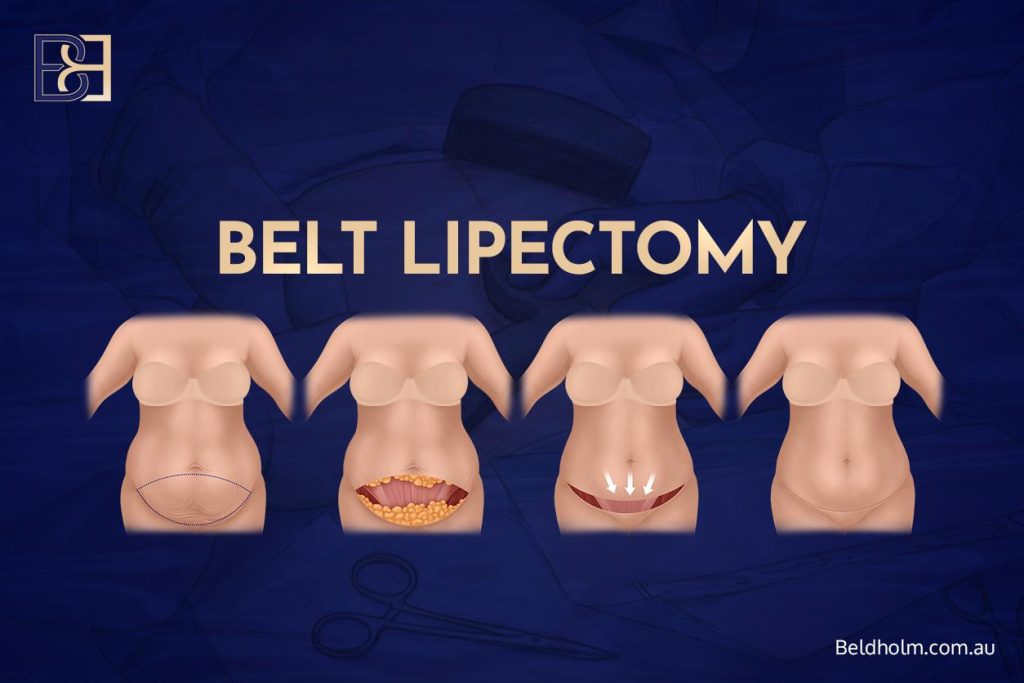
A Body Lift (Belt Lipectomy) may be considered for patients who develop excess skin around the entire lower torso following significant weight loss.
After major weight reduction, the skin of the abdomen, flanks and lower back may lose elasticity. When excess tissue extends around the waistline rather than only the front of the abdomen, procedures limited to the abdomen alone may not address the full pattern of skin redundancy.
A circumferential body lift (belt lipectomy) may be discussed when patients have:
- Excess skin across the abdomen and flanks
- Skin redundancy of the lower back
- Circumferential skin folds around the waist
- Significant skin excess following bariatric surgery or major weight loss
In these situations, a lower body lift (belt lipectomy) may allow removal of excess skin around the entire lower torso rather than treating only the front of the abdomen.
The appropriate procedure depends on the distribution of excess skin, previous weight loss history, overall health, and surgical risk factors, which are assessed during consultation.
Body Lift (Belt lipectomy) Compared With Other Post‑Weight‑Loss Procedures
Patients who have experienced significant weight loss may present with different patterns of excess skin. The appropriate procedure depends on where the skin excess is located and how it extends around the torso. Several operations may be considered depending on this distribution.
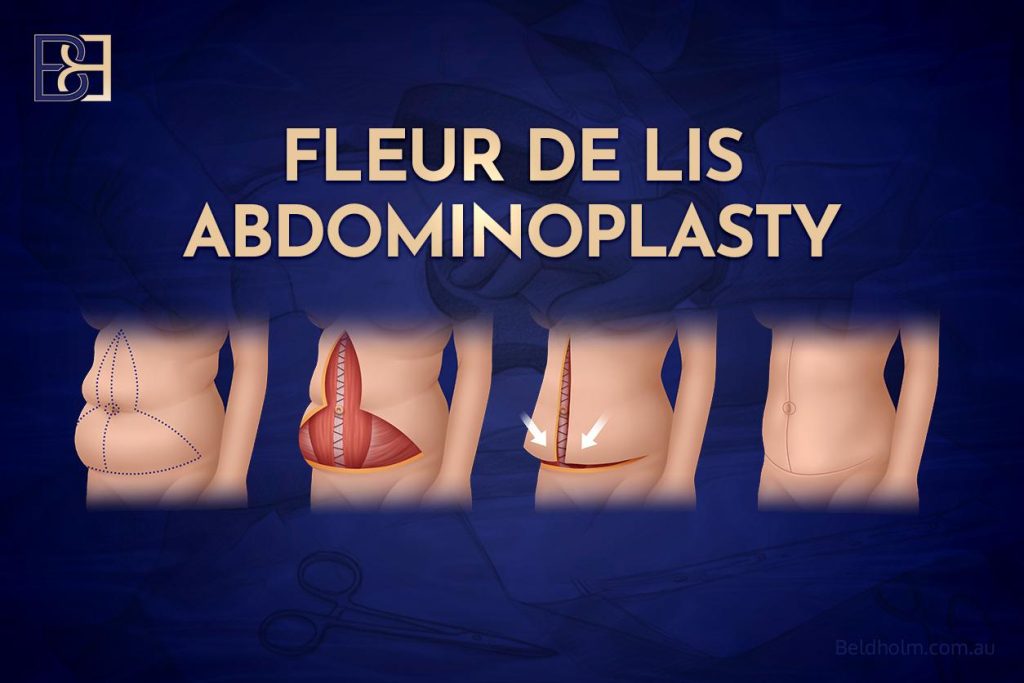
Fleur‑de‑Lis Abdominoplasty vs Body Lift (Belt Lipectomy)
A Fleur‑de‑Lis Abdominoplasty removes excess skin from the front of the abdomen using both horizontal and vertical skin excision. This procedure is typically considered when patients have:
- Significant vertical and horizontal abdominal skin excess
- Midline skin redundancy after major weight loss
- Excess skin is primarily limited to the front of the abdomen
A Body Lift (Belt Lipectomy) may be more appropriate when excess skin continues around the flanks and lower back, rather than being limited to the abdomen alone.
Book Online NowExtended Abdominoplasty vs Body Lift (Belt Lipectomy)
An Extended Abdominoplasty removes excess skin from the abdomen and may extend slightly toward the flanks.
However, this procedure does not typically address skin redundancy across the lower back or the entire waistline.
When excess tissue extends circumferentially around the torso, a circumferential body lift (belt lipectomy) may be considered instead of an extended abdominoplasty.
Book Online Now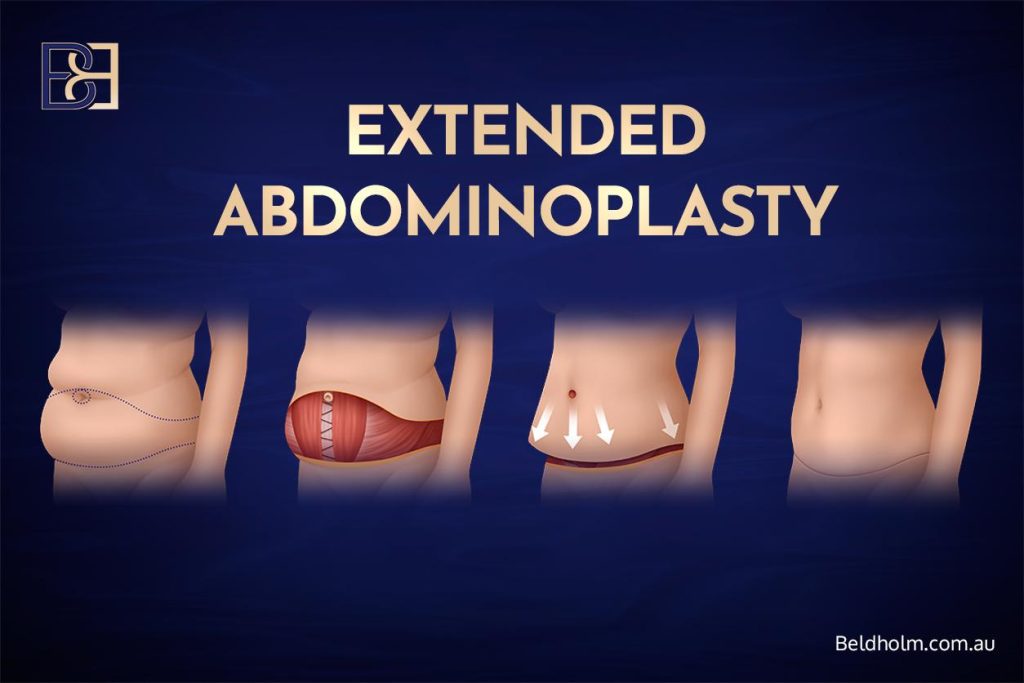
Circumferential Hybrid Abdominoplasty
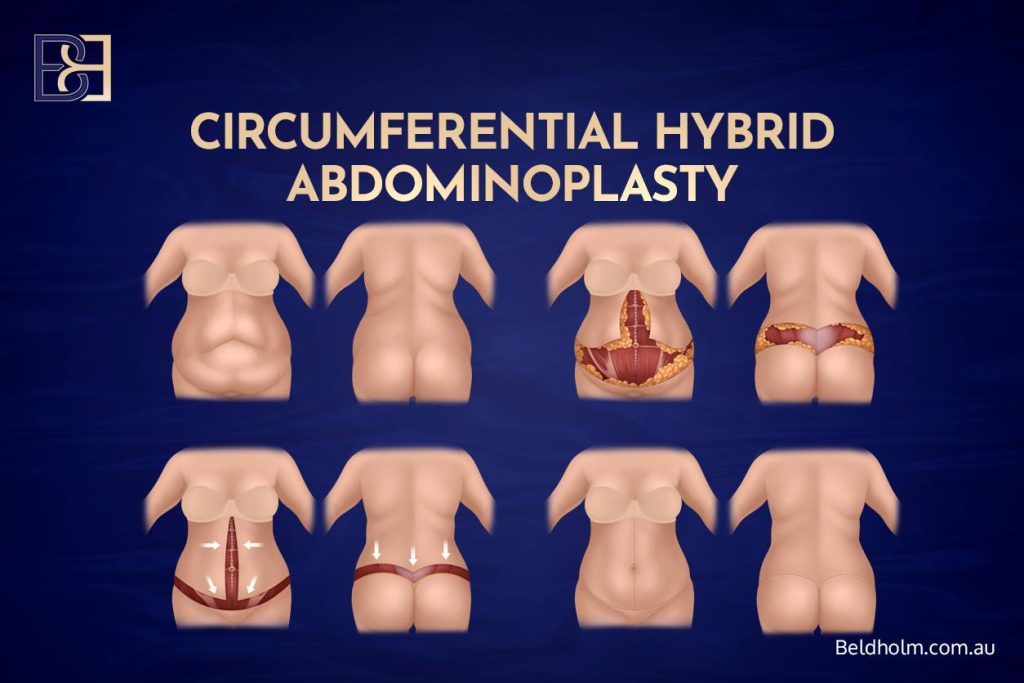
A circumferential lower‑torso procedure primarily addresses vertical skin excess around the waistline. It removes tissue circumferentially and may treat the abdomen, flanks and lower back, but it does not fully correct horizontal skin excess across the front of the abdomen.
When significant horizontal laxity is present on the anterior abdomen, a Fleur‑de‑Lis abdominoplasty may be more appropriate because it removes both vertical and horizontal abdominal skin.
However, a Fleur‑de‑Lis procedure does not address excess skin of the flanks and lower back.
In selected patients with both patterns of skin redundancy, a Circumferential Hybrid Abdominoplasty may be discussed. This approach combines the abdominal skin removal pattern of a Fleur‑de‑Lis abdominoplasty with a circumferential lower‑torso procedure in order to address both horizontal abdominal excess and circumferential skin redundancy around the waistline following significant weight loss.
Book Online NowStaged Body Contouring Procedures
For patients with extensive skin excess affecting multiple areas of the body, procedures may sometimes be staged over more than one operation.
Staging may be considered when additional areas such as the thighs, upper torso, arms, or breasts also require surgical treatment.
The timing and sequence of procedures depend on several factors, including the extent of surgery, overall health, and recovery considerations. Surgical planning is discussed during consultation after a clinical examination.
How Dr Beldholm Assesses Patients After Significant Weight Loss

Patients who have lost a large amount of weight may develop different patterns of excess skin around the abdomen and lower torso. Determining the appropriate procedure requires a detailed clinical assessment.
Dr Bernard Beldholm is a Specialist Surgeon who has been performing post‑weight‑loss body contouring procedures for more than 15 years. His practice includes procedures such as abdominoplasty, Fleur‑de‑Lis abdominoplasty, and Body Lift (Belt Lipectomy) for patients with excess skin after significant weight loss.
During consultation, several factors are evaluated to determine which surgical approach may be appropriate.
Distribution of Excess Skin
The first step is assessing where the excess skin is located. Some patients have skin redundancy mainly on the front of the abdomen, while others have excess skin that extends around the flanks and lower back.
When skin excess occurs circumferentially around the waistline, a Body Lift (Belt Lipectomy) may be discussed.
Vertical and Horizontal Skin Excess
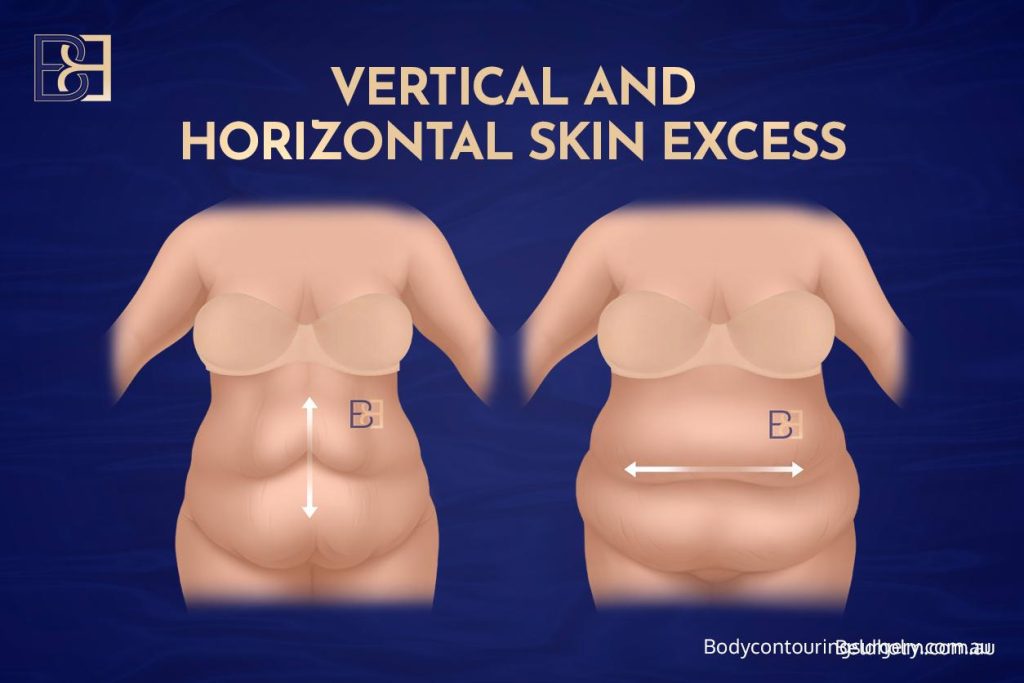
After major weight loss, the abdomen may develop both vertical and horizontal skin redundancy.
- Vertical excess skin may be addressed with circumferential procedures
- Horizontal excess skin across the abdomen may require a Fleur‑de‑Lis abdominoplasty
The presence of both patterns may influence whether a single procedure or a combined surgical approach is considered.
Previous Weight Loss History
The method and amount of weight loss are also reviewed. Patients who have undergone bariatric surgery may present with larger areas of excess skin affecting multiple parts of the body.
Understanding the patient’s weight‑loss history helps guide surgical planning and determine whether procedures should be staged.
Overall Health and Surgical Planning
General health, medical history, and surgical risk factors are also assessed. These factors help determine:
- Which procedures may be appropriate
- Whether surgery should be staged
- The safest surgical plan for the individual patient
Role of Liposuction (Suction‑Assisted Lipectomy)
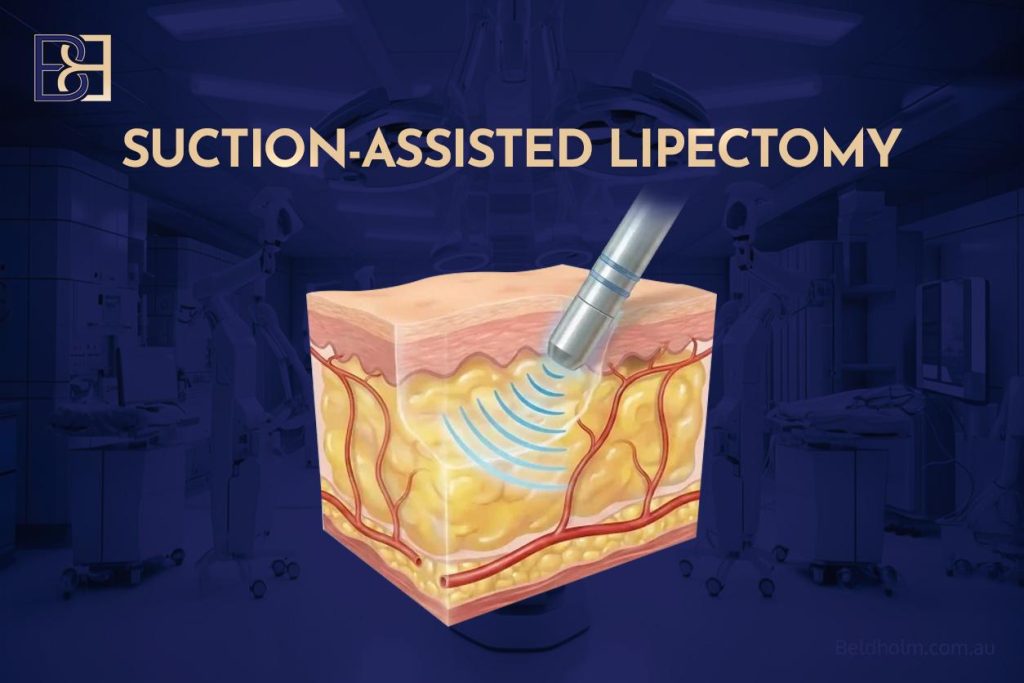
Many patients who have experienced major weight loss have relatively little remaining adipose tissue and primarily require excess skin removal procedures.
However, some patients may still have localised areas of adipose tissue, particularly around the flanks, abdomen, or lower back. In selected situations, Liposuction (Suction‑Assisted Lipectomy) may be discussed as an adjunct to skin removal surgery.
Liposuction may help address residual fat deposits that remain after weight loss and may assist with contouring in specific areas. Techniques such as VASER liposuction (ultrasonic suction‑assisted lipectomy) may also be considered in appropriate cases.
The decision to use liposuction (suction assisted lipectomy) depends on the distribution of remaining adipose tissue and the overall surgical plan.
Additional Procedures That May Be Performed
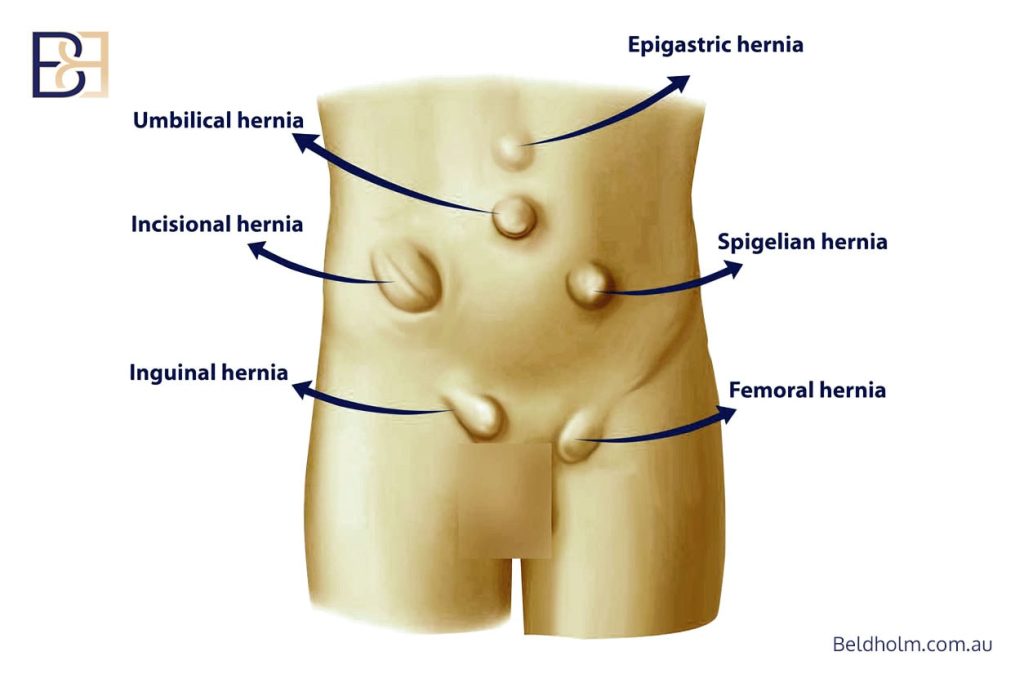
During assessment, other conditions of the abdominal wall may also be identified. In some patients, additional procedures may be discussed as part of the surgical plan when appropriate.
These may include:
- Repair of abdominal wall hernias, which can sometimes be present after weight loss or previous abdominal surgery
- Correction of abdominal muscle separation (diastasis recti) when the rectus muscles have separated along the midline
When present, these conditions may be addressed during abdominal contouring procedures, depending on the individual clinical situation. The decision to perform additional procedures depends on the patient’s anatomy, medical history, and overall surgical plan.
Consultation Process with Dr Beldholm

Initial consultations are typically scheduled for approximately one hour. During this appointment, a detailed medical history is reviewed and a clinical examination is performed to assess the pattern of excess skin and tissue distribution.
Standardised clinical photographs are usually taken during consultation to assist with surgical planning and documentation.
Patients are generally encouraged to have a second consultation, which is provided at no additional cost. This allows time to review the proposed surgical plan, ask further questions, and discuss preparation for surgery.
For patients travelling from outside the Hunter Valley region, one of the consultations may be conducted via telehealth, although an in‑person assessment is required before surgery.
Following this assessment process, the potential surgical options are discussed in detail during consultation.
Body Lift (Belt Lipectomy) Surgery – What the Procedure Involves
A Body Lift (Belt Lipectomy) is a circumferential procedure designed to remove excess skin around the lower torso after significant weight loss. The operation typically addresses skin redundancy affecting the abdomen, flanks, and lower back.
During the procedure, an incision is made around the lower torso, usually positioned so it can be concealed within underwear or swimwear. Excess skin and underlying tissue are removed circumferentially, and the remaining tissue is repositioned to reduce skin redundancy around the waistline.
Because the operation treats the entire lower torso, it differs from procedures that focus only on the front of the abdomen, such as a standard abdominoplasty.
Depending on the patient’s anatomy and surgical plan, additional procedures may be performed during the same operation. These may include:
- Repair of abdominal wall hernias when present
- Correction of abdominal muscle separation (diastasis recti)
- Liposuction (suction‑assisted lipectomy) to address areas of residual adipose tissue
Techniques such as VASER liposuction (ultrasonic suction‑assisted lipectomy) may be used in selected situations when additional contouring is required.
The exact surgical approach varies between patients and is determined during consultation based on the distribution of excess skin, overall health, and the planned surgical objectives.
Hospital Stay and Recovery After Body Lift (Belt Lipectomy)
Body Lift (Belt Lipectomy) surgery is performed in hospital under general anaesthesia. Because the procedure involves circumferential surgery around the lower torso, patients are typically admitted for postoperative monitoring.
Hospital Stay
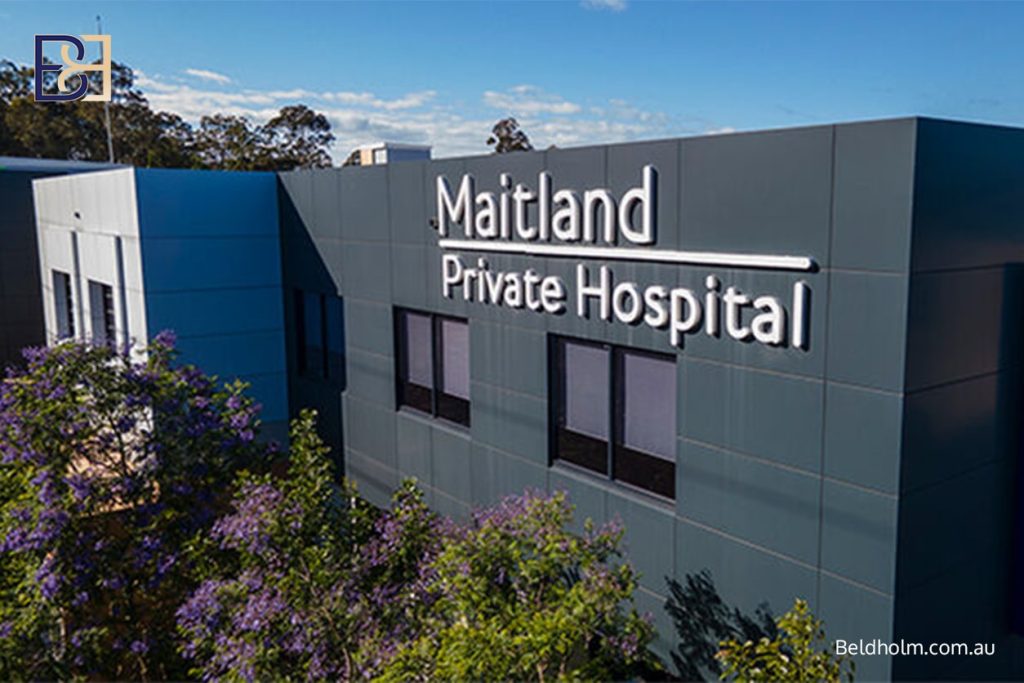
Body Lift (Belt Lipectomy) surgery is performed at Maitland Private Hospital. Patients are typically admitted for 3–4 days following surgery for postoperative monitoring and early recovery.
During the hospital stay:
- Nursing staff monitor recovery and wound sites
- Surgical drains may be used to remove excess fluid
- Compression garments are applied to support the lower torso
Dr Beldholm performs regular postoperative reviews while patients are in hospital to monitor healing and recovery.
Early Recovery
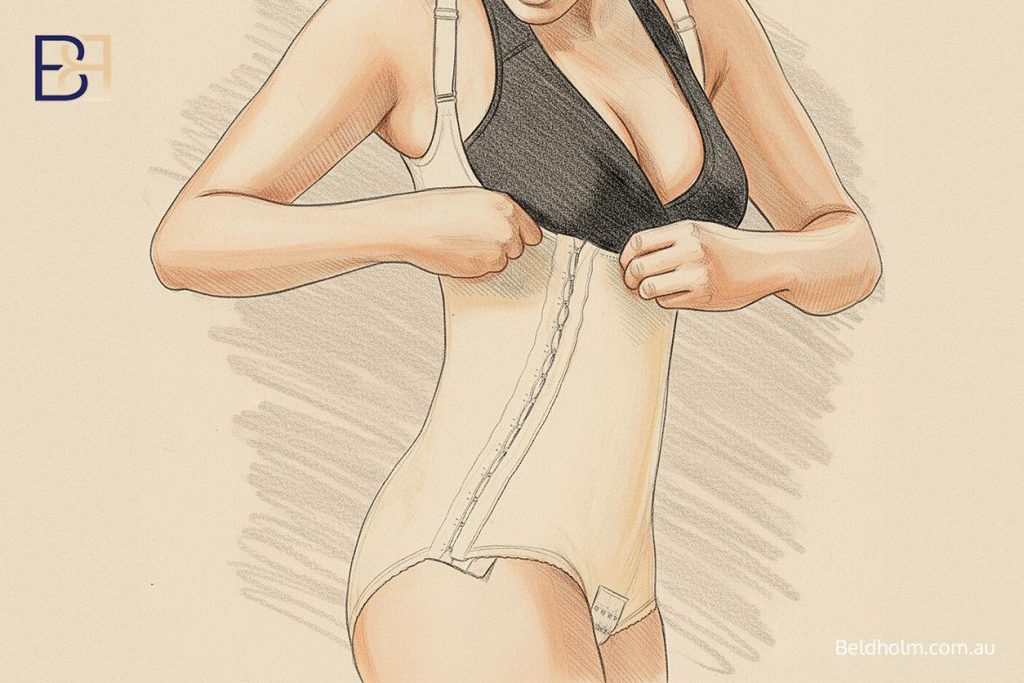
The initial recovery period focuses on wound care, mobility, and gradual return to daily activities. Patients may be advised to:
- Wear compression garments as directed
- Limit strenuous activity during the early recovery phase
- Attend scheduled follow‑up appointments for wound review and dressing changes
Follow‑up appointments are typically arranged to monitor healing and address any postoperative concerns.
Follow‑Up Care
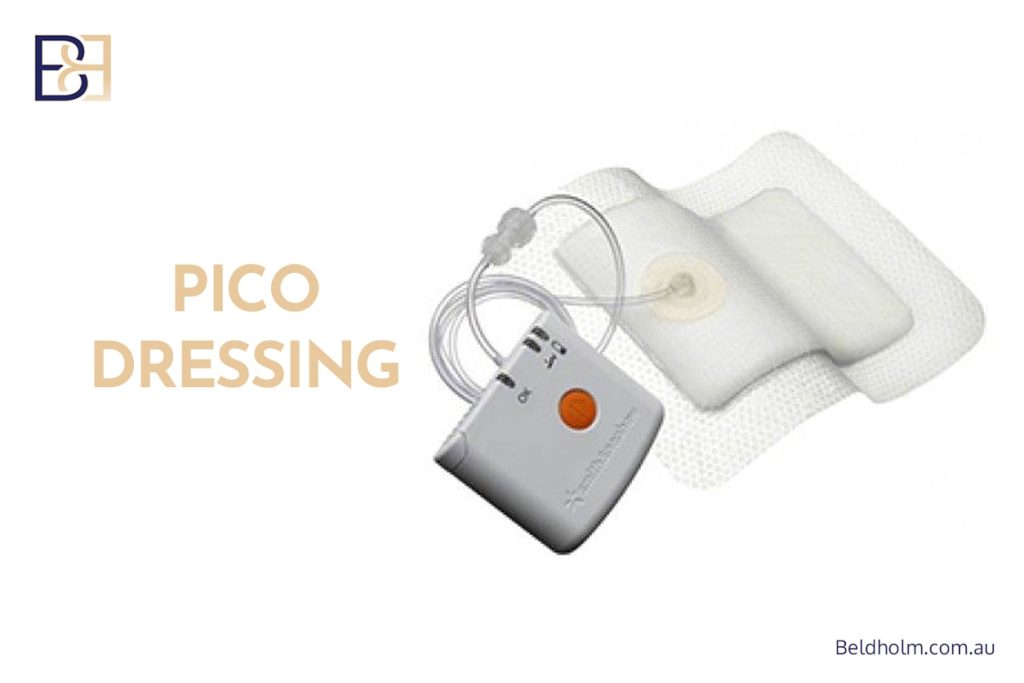
Postoperative care continues after discharge from hospital. Patients attend follow‑up appointments at the clinic for wound assessment and recovery monitoring.
Early postoperative care may include:
- Review of surgical wounds and progress
- PICO dressing changes when used
- LED light therapy to support early wound healing
These nurse‑led postoperative visits form part of the routine recovery pathway after surgery.
Follow‑up appointments allow monitoring of healing, discussion of recovery progress, and guidance regarding activity levels during recovery.
Recovery timelines vary between patients and depend on factors such as the extent of surgery, overall health, and individual healing responses.
Risks and Considerations of Body Lift (Belt Lipectomy)
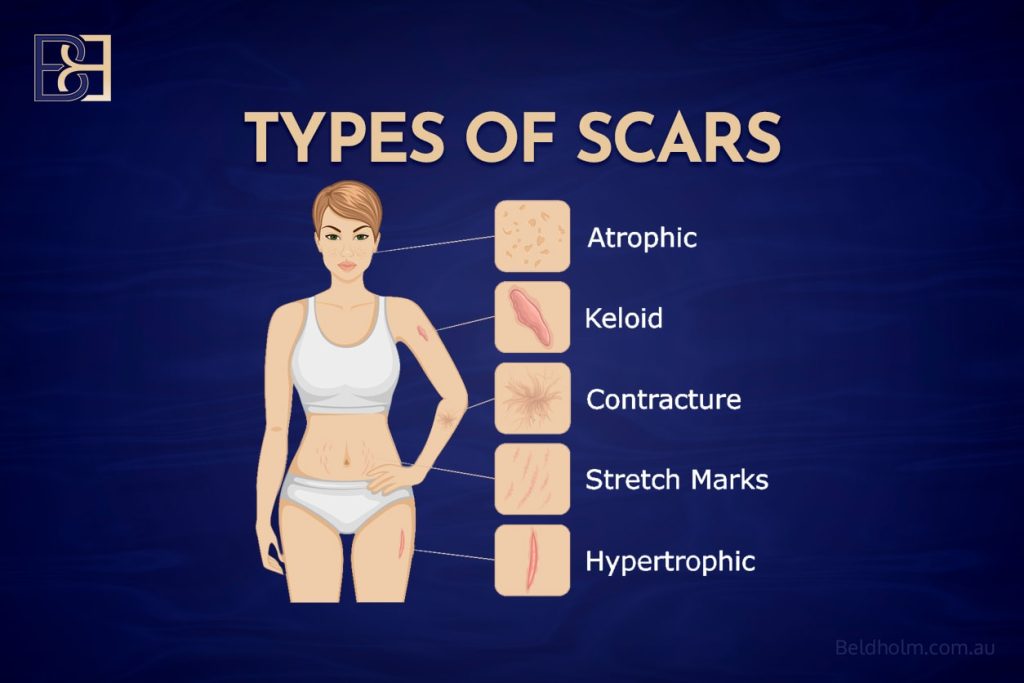
Body Lift (Belt Lipectomy) surgery is a major procedure and, like all surgery, carries risks. These risks are discussed in detail during consultation so patients can make an informed decision about treatment.
Potential risks and complications may include:
- Bleeding
- Infection
- Wound healing problems
- Fluid collections (seroma)
- Changes in skin sensation
- Scarring
- Need for additional procedures in some cases
Because a body lift (belt lipectomy) involves circumferential surgery around the lower torso, recovery requires time and appropriate postoperative care. Patients should plan for a recovery period that allows for reduced activity while healing progresses.
Individual risk varies depending on several factors, including overall health, previous surgery, smoking status, and the extent of the procedure performed.
During the consultation, Dr Bernard Beldholm, Specialist Surgeon, explains the potential risks, expected recovery process, and alternative treatment options. This discussion helps patients understand the procedure and determine whether surgery may be appropriate for their situation.