


Brachioplasty (Arm Lift Surgery)
Book Online NowLoose or hanging skin under the arms is a common concern for patients who have experienced significant weight loss. When skin elasticity is reduced, excess skin may remain despite maintaining a stable weight and regular exercise. In these situations, brachioplasty (arm lift surgery) may be considered to remove excess skin and improve the contour of the upper arms.
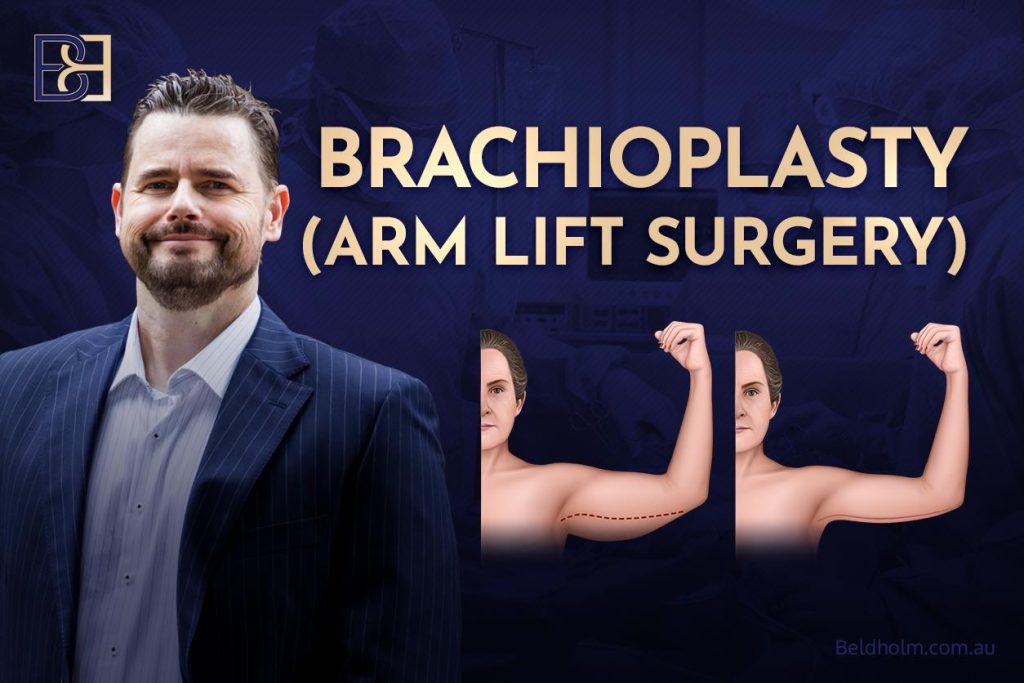
However, arm lift (brachioplasty) surgery is not a single uniform procedure. There are multiple techniques and variations of brachioplasty, and selecting the most appropriate approach is an important part of achieving a balanced result. The choice of procedure depends on several factors, including:
- the amount of excess skin
- the distribution of fat within the arm
- skin quality and elasticity
- whether the skin laxity extends toward the chest wall
In some patients, liposuction (Suction-assisted lipectomy) may be used as part of the procedure to address excess arm fat and improve contour. In others, the primary concern is excess skin, and liposuction may not be required. Determining whether liposuction is beneficial is part of the surgical planning process.
Dr Bernard Beldholm is a Specialist Surgeon (FRACS) with a focus on body contouring surgery following major weight loss. During consultation, patients are assessed individually to determine which brachioplasty technique may be appropriate. This may range from limited skin removal procedures to more extensive brachioplasty techniques used for patients who have experienced massive weight loss.
Brachioplasty is performed at Maitland Private Hospital in the Hunter Region of NSW under general anaesthesia. The procedure involves removal of excess arm skin and, where appropriate, liposuction (Suction-assisted lipectomy) to refine arm contour.
A consultation allows discussion of surgical options, expected outcomes, and recovery following arm lift surgery.
Who May Consider Brachioplasty After Weight Loss
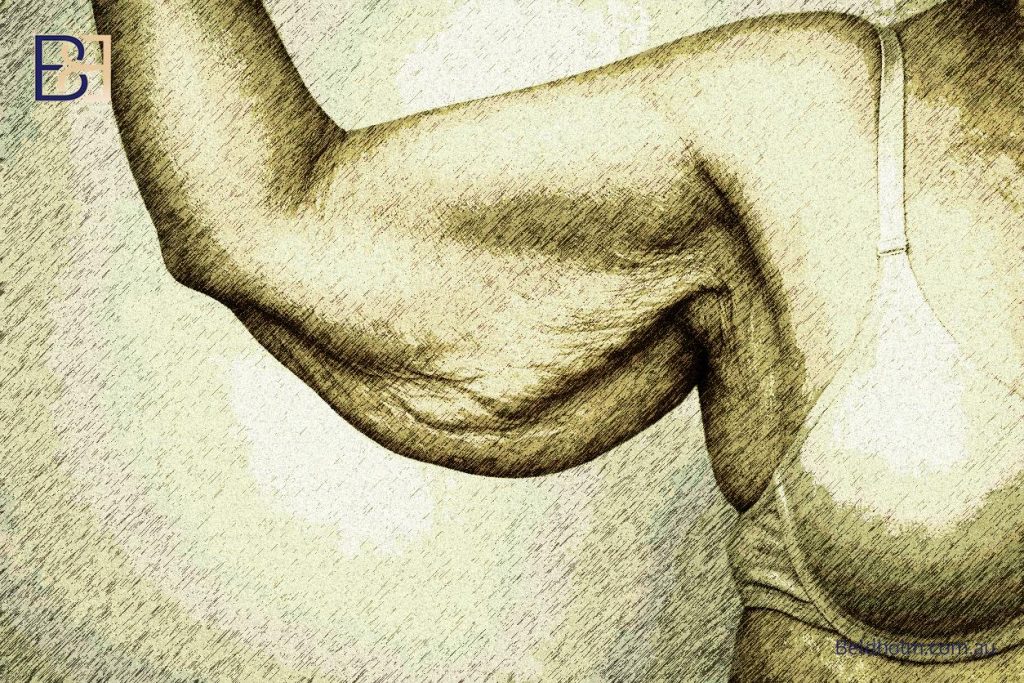
Brachioplasty is commonly considered by patients who have developed loose or hanging skin of the upper arms following significant weight loss. While weight loss can improve overall health and body shape, the skin does not always retract sufficiently, particularly when large amounts of weight have been lost.
Patients often describe concerns such as:
- excess skin hanging from the upper arms
- arms that appear disproportionate compared with the rest of the body after weight loss
- difficulty wearing fitted clothing
- skin irritation or rubbing within skin folds
- difficulty wearing short sleeves due to excess arm skin
These concerns may occur after bariatric surgery, major lifestyle-related weight loss, or long-term weight fluctuation.
Brachioplasty may be considered when weight has been relatively stable for a period of time, as further significant weight changes can affect surgical results. During consultation, Dr Beldholm assesses the amount of excess skin, the distribution of arm fat, and overall skin quality to determine whether brachioplasty may be appropriate.
For some patients, after massive weight loss, arm contouring may form part of a broader body contouring plan, which may include procedures such as:
- abdominoplasty
- belt lipectomy
- Thighplasty
The timing and staging of procedures can be discussed during consultation.
Types of Brachioplasty Procedures
Brachioplasty techniques vary depending on the amount of excess skin, the distribution of fat within the arm, and the location of skin laxity. For patients who have experienced major weight loss, the pattern of excess skin can differ significantly between individuals. Selecting the appropriate technique is therefore an important part of surgical planning.
Several brachioplasty approaches may be considered.
Limited (Mini) Brachioplasty
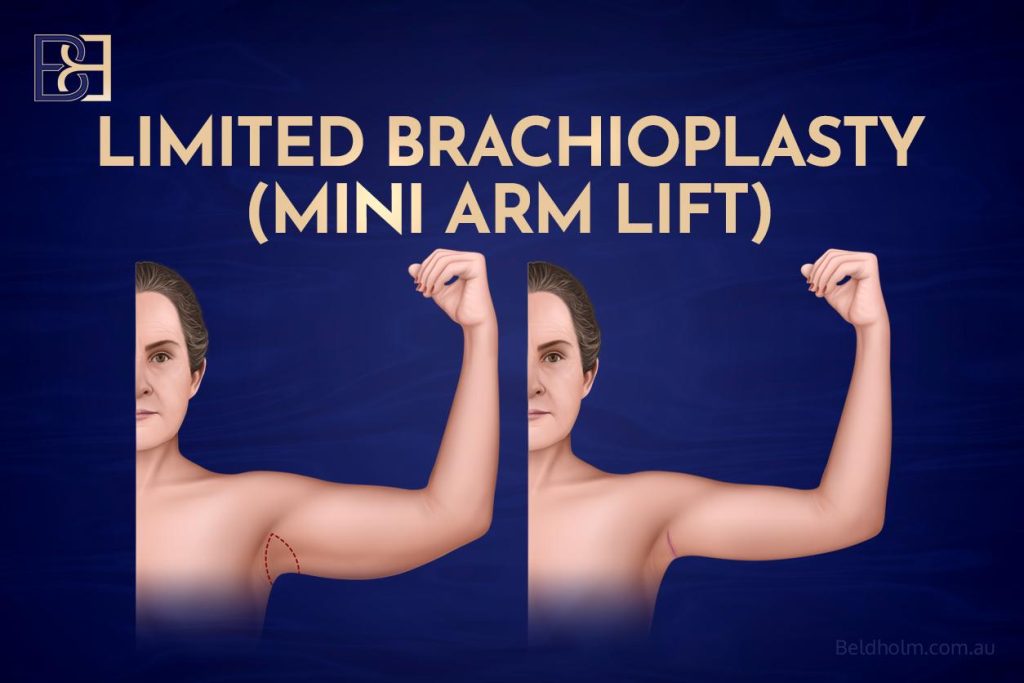
A limited or mini brachioplasty may be suitable for patients with mild skin laxity confined to the upper portion of the arm near the armpit.
The incision is typically shorter and located within or close to the axilla. This technique removes a smaller amount of skin and is generally used when excess skin does not extend along the full length of the upper arm.
Book Online NowStandard Brachioplasty
A standard brachioplasty is commonly used when excess skin extends from the axilla toward the elbow.
In this technique, the incision usually runs along the inner aspect of the upper arm. This allows removal of a larger amount of excess skin and may be combined with liposuction (suction-assisted lipectomy) if excess fat is present.
This approach is frequently used in patients following significant weight loss.
Book Online Now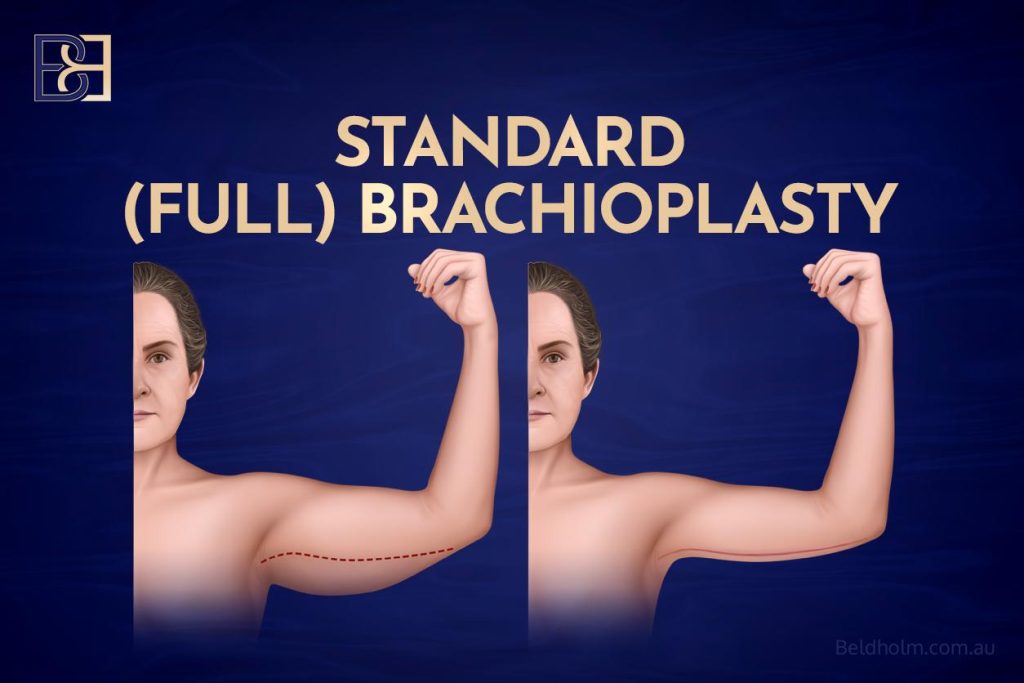
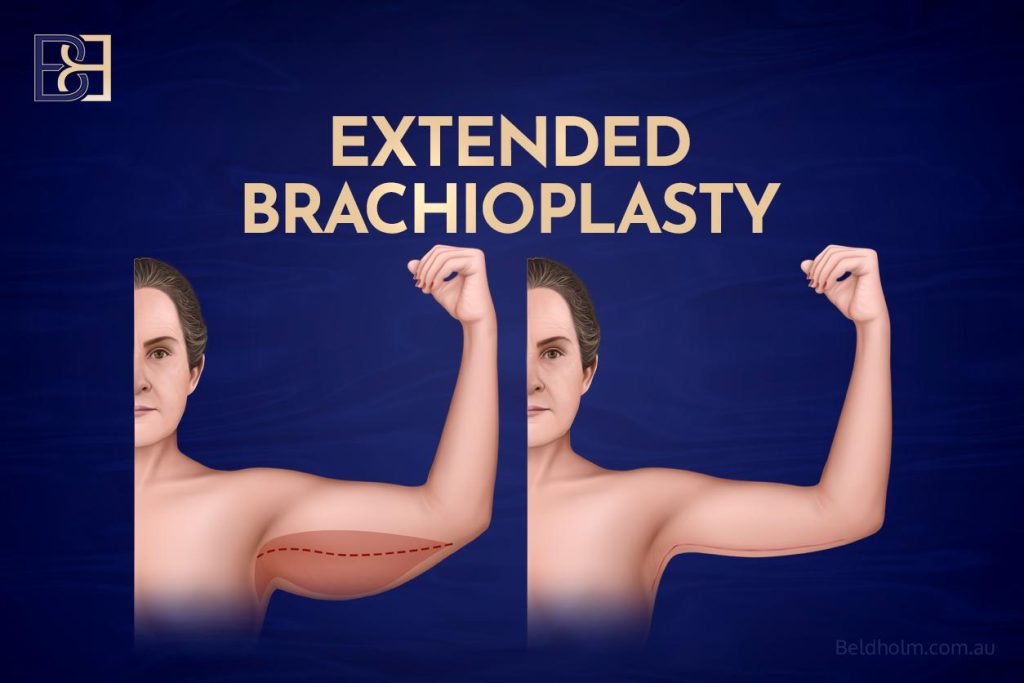
Extended Brachioplasty
In some patients after massive weight loss, excess skin may extend beyond the arm toward the lateral chest wall.
An extended brachioplasty allows removal of skin along the upper arm and may continue toward the chest to address this additional skin laxity.
Book Online NowIndividualised Surgical Planning
The most appropriate brachioplasty technique depends on:
- the degree of arm skin laxity
- the distribution of arm fat
- skin quality and elasticity
- whether excess skin extends toward the chest wall
During consultation, Dr Beldholm assesses these factors to determine which approach may be appropriate and whether liposuction (liposuction-assisted lipectomy) may form part of the procedure.
Liposuction (Suction-Assisted Lipectomy) and Brachioplasty
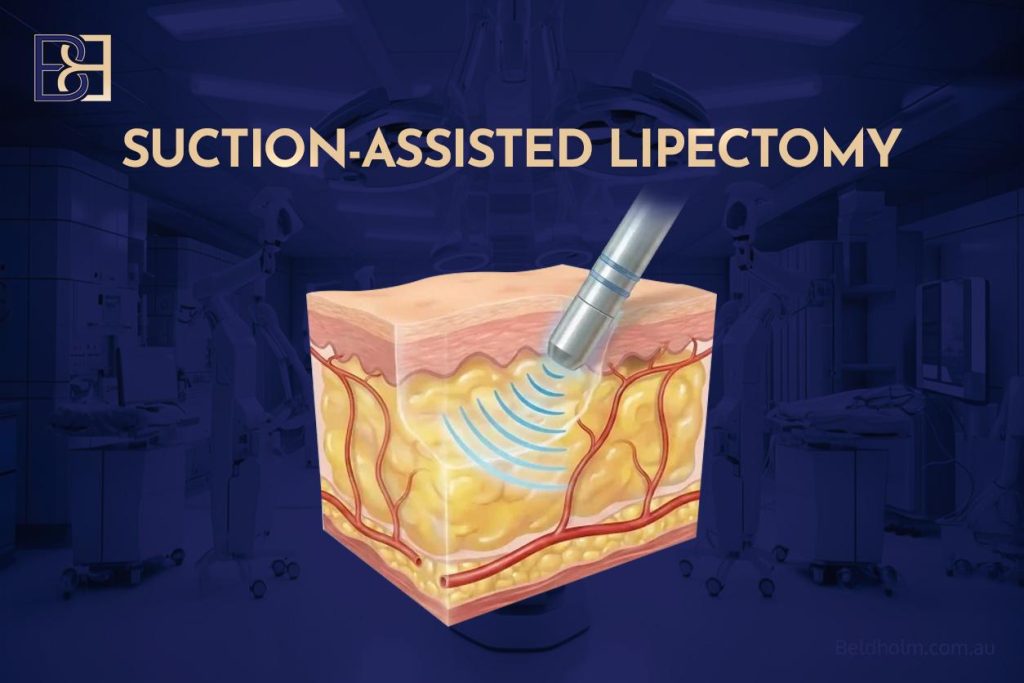
In some patients, excess arm fullness is caused not only by loose skin but also by fat within the upper arm. When this is present, suction-assisted lipectomy (SAL) may be used as part of the procedure to help improve arm contour.
Suction-assisted lipectomy removes fat through small incisions using the lipo-suction technique. During brachioplasty, this may be performed to reduce excess fat before removing skin. This can help refine the overall shape of the arm.
However, suction-assisted lipectomy alone does not remove excess skin. Patients who have experienced significant weight loss often have reduced skin elasticity, meaning the skin may not retract after fat removal. In these cases, removal of excess skin with brachioplasty may be required.
Whether suction-assisted lipectomy (SAL) is included depends on several factors, including:
- the distribution and thickness of fat within the arm
- the amount of excess skin
- overall skin elasticity
- the desired contour of the upper arm
During consultation, the arms are assessed to determine whether suction-assisted lipectomy (SAL) may be beneficial as part of the brachioplasty procedure.
In some patients, brachioplasty is performed without suction-assisted lipectomy, particularly when excess skin is the primary concern.
Book your appointment online now
Brachioplasty Scars
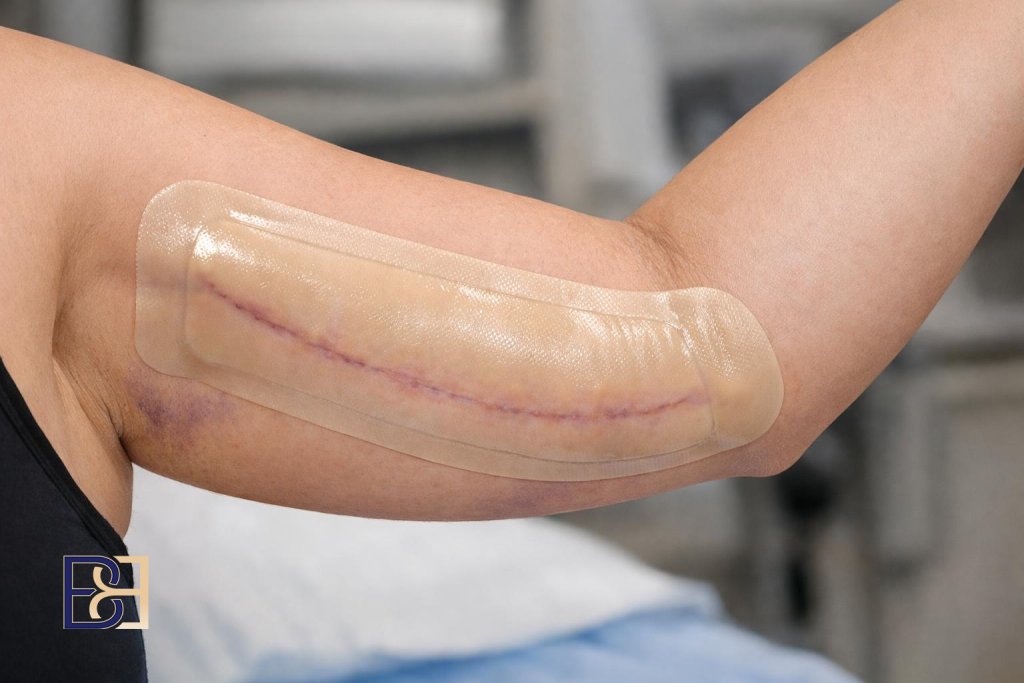
Scarring is an important consideration when planning brachioplasty. Because the procedure involves removing excess skin, an incision is required along the upper arm, and a scar will remain after surgery.
The location and length of the scar depend on the amount of excess skin and the type of brachioplasty performed.
Mini Brachioplasty Scars
In a limited or mini brachioplasty, the incision may be confined to the axillary (armpit) region. This technique is generally used when excess skin is mild and limited to the upper portion of the arm.
Standard Brachioplasty Scars
In a standard brachioplasty, the incision usually extends along the inner aspect of the upper arm, from the axilla toward the elbow. This allows removal of larger amounts of excess skin and is commonly used for patients following significant weight loss.
Extended Brachioplasty Scars
In patients who have experienced massive weight loss, excess skin may extend toward the lateral chest wall. In these situations, the incision may continue from the arm toward the chest to address the additional skin laxity.
Scar Placement
Incisions are generally positioned along the inner or posterior aspect of the arm, where the scar may be less visible when the arms are by the side.
During consultation, the expected scar location and length are discussed based on the amount of skin that needs to be removed. The final scar will vary between individuals and depends on factors such as skin quality, healing, and the extent of the procedure.
How Brachioplasty Surgery Is Performed
Brachioplasty is a surgical procedure designed to remove excess skin and reshape the upper arms. The exact technique depends on the amount of excess skin, the distribution of fat, and the type of brachioplasty being performed.
Pre-operative Planning
Before surgery, the arms are carefully assessed and surgical markings are made while the patient is standing. These markings help determine how much skin will be removed and where the incisions will be placed.
If excess fat is present within the arm, liposuction (suction-assisted lipectomy) may be performed to help contour the arm before skin removal.
Anaesthesia and Hospital Setting
Brachioplasty is performed under general anaesthesia at Maitland Private Hospital.
The duration of surgery depends on the type of brachioplasty being performed:
- Mini brachioplasty: approximately 1.5 hours
- Standard brachioplasty: approximately 3 hours
- Extended brachioplasty: approximately 4 hours
Operative time may vary depending on the amount of excess skin and whether additional procedures are performed.
Skin Removal and Arm Contouring
During the procedure:
- Excess skin of the upper arm is removed.
- Liposuction (suction-assisted lipectomy) may be used if excess fat is present.
- The remaining tissues are contoured to improve the shape of the arm.
- The incision is closed with sutures.
The incision is typically placed along the inner or posterior aspect of the arm.
Recovery Immediately After Surgery
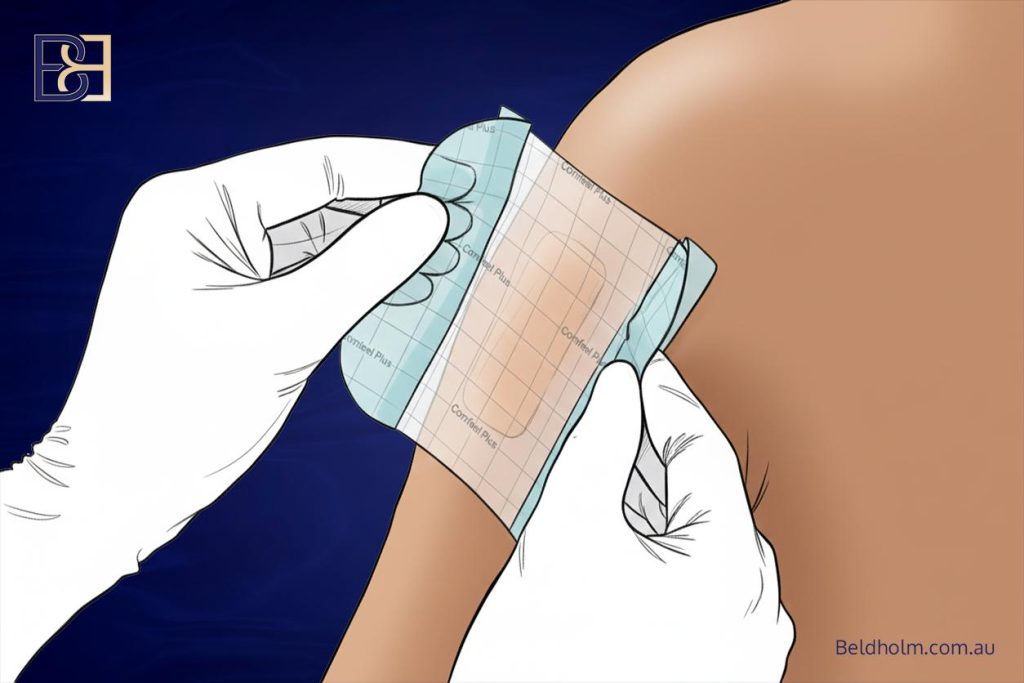
At the completion of surgery:
- dressings are applied to the incision
- the arms are supported to reduce swelling
Depending on the extent of surgery and individual circumstances, brachioplasty may be performed as a day procedure or with an overnight hospital stay. Patients are monitored after surgery while recovering from anaesthesia before discharge.
Brachioplasty Recovery
Recovery after brachioplasty varies between patients and depends on the extent of surgery performed, the amount of skin removed, and whether liposuction (suction-assisted lipectomy) was also performed.
Patients undergoing brachioplasty with Dr Beldholm are followed closely during the recovery period to monitor healing and provide post-operative guidance.
Immediately After Surgery
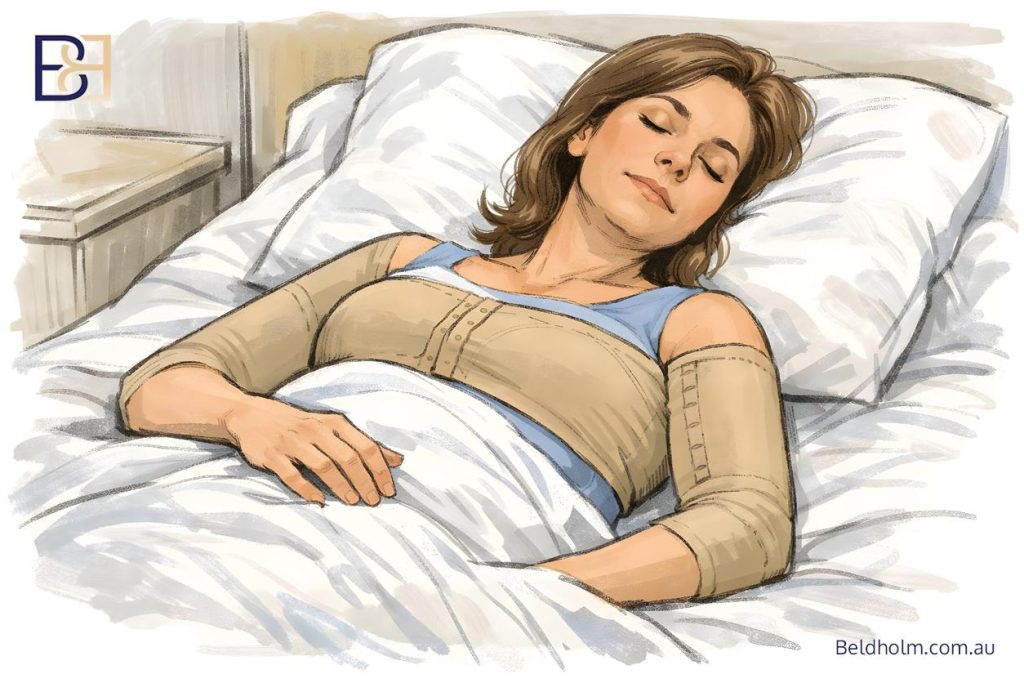
Following brachioplasty, dressings are applied to the arms and patients are monitored while recovering from general anaesthesia.
Depending on the procedure performed, patients may either:
- go home the same day, or
- stay overnight at Maitland Private Hospital for observation.
The arms may feel tight and swollen in the early post-operative period. Bruising and swelling are common and gradually improve over the following weeks.
First 1–2 Weeks
During the early recovery phase patients are usually advised to:
- limit heavy lifting
- avoid strenuous arm activity
- keep arm movements gentle while the incisions begin to heal
Most patients take 1–2 weeks away from work, depending on the type of work they do.
Follow-Up Appointments

Patients are typically reviewed in the clinic following surgery to assess healing and monitor recovery. These appointments allow:
- review of the surgical wounds
- monitoring of swelling and bruising
- discussion of activity progression
Further follow-up visits are arranged as needed during the recovery period.
Weeks 3–6
During this stage:
- swelling continues to settle
- arm movement improves
- patients gradually return to normal daily activities
Strenuous exercise and heavy upper-body activity are generally delayed until healing has progressed sufficiently.
Longer-Term Recovery
Over the following months, swelling continues to improve and scars mature. The final contour of the arms becomes clearer as healing progresses.
Recovery timelines vary between patients and are discussed during consultation so patients understand what to expect after brachioplasty.
Risks and Complications of Brachioplasty
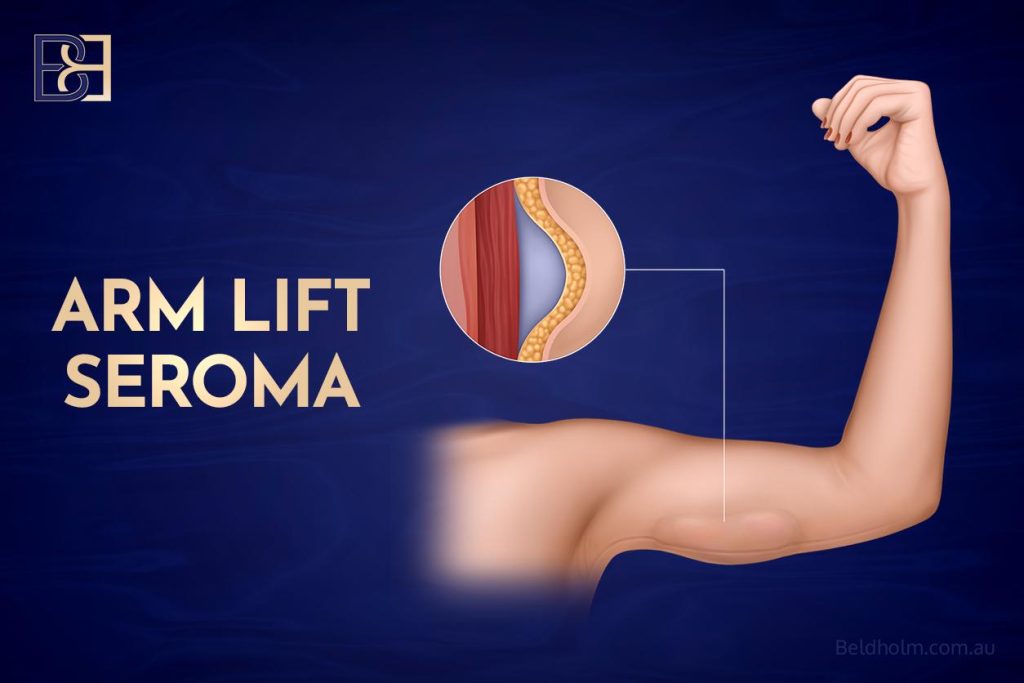
All surgical procedures carry risks, and brachioplasty is no exception. Patients considering arm lift surgery should understand the possible complications associated with the procedure before deciding to proceed.
Some risks relate to surgery in general, while others are specific to procedures involving the skin and soft tissues of the arms.
Possible complications of brachioplasty may include:
- bleeding or haematoma
- infection
- wound healing problems
- fluid collections (seroma)
- numbness or altered skin sensation
- delayed healing along the incision
- widening or thickening of the scar
- asymmetry between the arms
When liposuction (suction-assisted lipectomy) is performed as part of the procedure, additional risks related to fat removal may also occur.
Patients who have experienced massive weight loss may have an increased risk of wound healing issues due to the amount of skin that needs to be removed.
During consultation, these risks are discussed in detail. Patients are provided with information about the procedure, expected recovery, and potential complications so they can make an informed decision about surgery.
Book your appointment online now
Cost of Brachioplasty
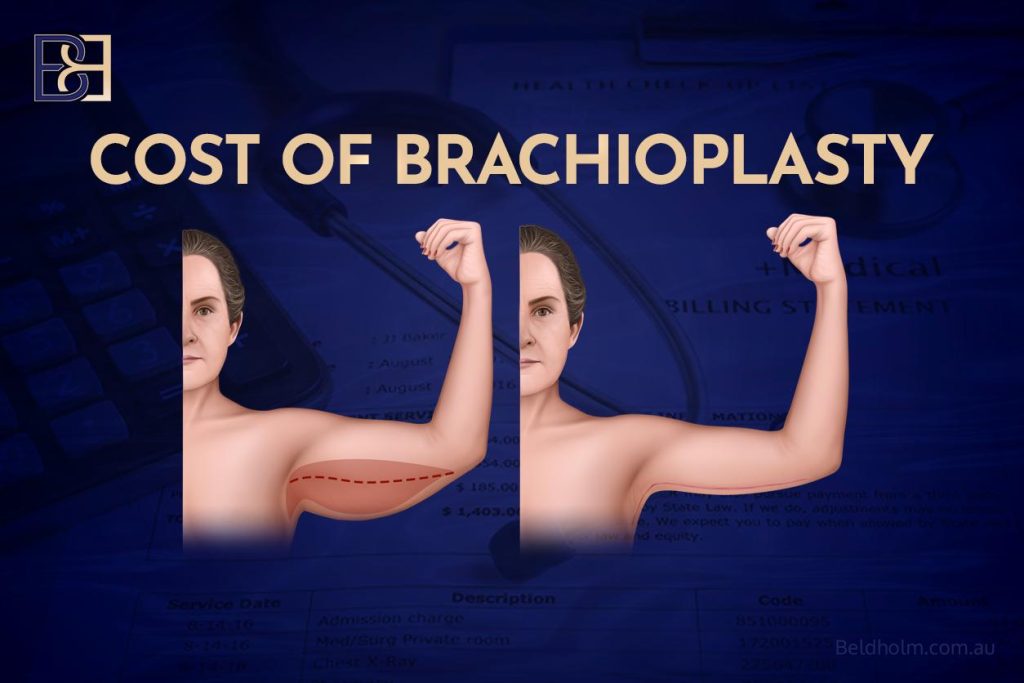
The cost of brachioplasty can vary depending on the extent of surgery required and whether additional procedures are performed.
Factors that may influence the total cost include:
- the type of brachioplasty (mini, standard, or extended)
- the amount of excess skin requiring removal
- whether liposuction (suction-assisted lipectomy) is performed
- hospital fees
- anaesthesia fees
- surgical complexity
Patients who have experienced massive weight loss may require more extensive procedures, which can affect operative time and overall costs.
Because every patient presents with a different degree of skin laxity and arm contour concerns, an accurate cost estimate can only be provided after a consultation and clinical assessment.
During consultation, Dr Beldholm evaluates the arms, discusses the surgical plan, and provides a personalised cost estimate based on the procedure recommended.
Brachioplasty Consultation
A consultation allows a detailed assessment to determine whether brachioplasty may be appropriate and to discuss the most suitable surgical approach.
During the consultation, Dr Bernard Beldholm evaluates several factors that influence surgical planning, including:
- the amount and distribution of excess skin
- the distribution of fat within the upper arm
- skin quality and elasticity
- whether excess skin extends toward the chest wall
- overall body contour following weight loss
The consultation also includes discussion of:
- the type of brachioplasty that may be appropriate
- whether liposuction (suction-assisted lipectomy) may be beneficial
- expected scar location
- recovery following surgery
- potential risks and complications
Patients who have experienced major weight loss may also wish to discuss other body contouring procedures that address excess skin in other areas of the body. In some cases, procedures may be staged over time depending on the surgical plan.
At the end of the consultation, patients are provided with information regarding the proposed procedure, expected recovery, and an estimate of surgical costs. This allows patients to consider their options before deciding whether to proceed with surgery.