


Diastasis Recti Surgery
Book Online NowAbdominoplasty With Abdominal Muscle Repair
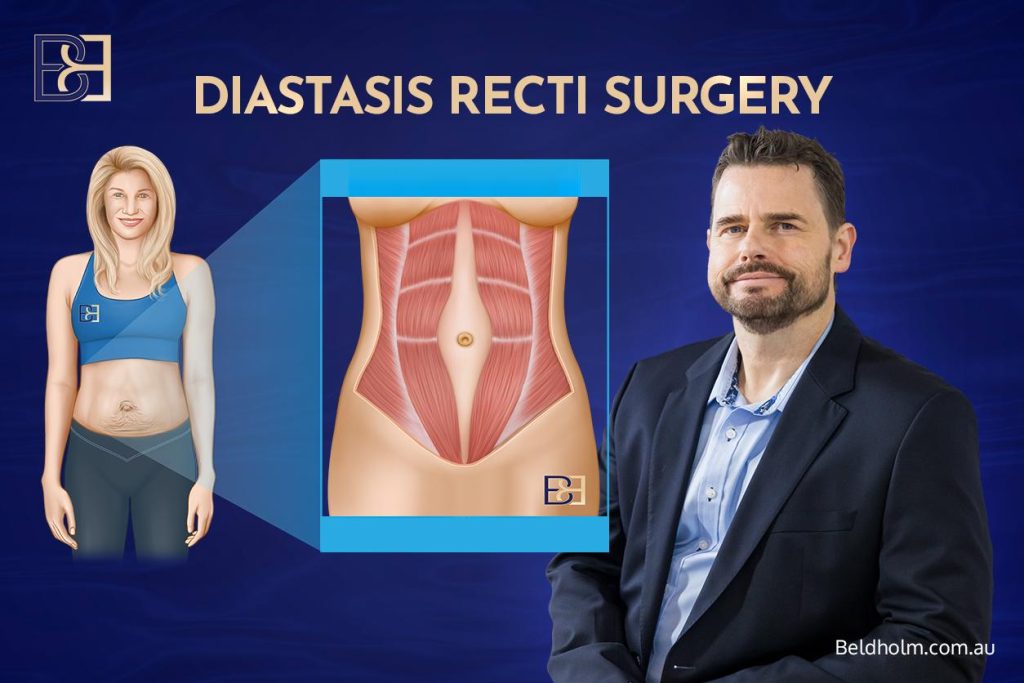
After pregnancy, some women develop diastasis recti, a separation of the abdominal muscles. In certain patients, the muscles do not return to their previous position, leaving a persistent gap in the abdominal wall.
This separation may be associated with symptoms such as:
- midline abdominal protrusion or “doming” when sitting up, coughing, or lifting
- reduced abdominal wall strength and core stability
- a persistent soft or protruding abdomen months or years after pregnancy
- difficulty generating abdominal muscle force during physical activity
Clinical studies have shown that persistent diastasis recti may also be associated with reduced physical functioning and lower quality‑of‑life scores in some patients.
Some patients may also report associated conditions such as lower back pain, pelvic discomfort, or pelvic floor symptoms. However, research findings vary, and these associations are not present in all individuals.
When muscle separation persists despite physiotherapy or exercise, diastasis recti repair surgery may be considered. Surgical repair aims to restore the abdominal muscles toward the midline and reconstruct the structural support of the abdominal wall. This repair is commonly performed as part of an abdominoplasty (tummy tuck) procedure.
Clinical studies have shown that surgical repair of diastasis recti may improve abdominal wall function and core stability in selected patients.
Dr Bernard Beldholm is a Specialist Surgeon who performs abdominoplasty with repair of abdominal muscle separation (diastasis recti) when clinically appropriate.
What Is Diastasis Recti?
Diastasis recti refers to the separation of the rectus abdominis muscles, the paired muscles that run vertically along the front of the abdomen.
These muscles are normally joined in the midline by connective tissue called the linea alba. During pregnancy, the expanding uterus increases tension on this connective tissue, which may cause it to stretch and widen.
When this connective tissue widens, the distance between the muscles increases, and the abdominal wall may lose some of its normal structural support. This widening of the linea alba is referred to as diastasis recti.
In many women, the separation gradually improves during the months after pregnancy. In other patients the separation persists and may remain present years after childbirth.
Diagnosis is made through clinical examination, and in some cases, imaging such as ultrasound or CT may be used to measure the separation.
For Medicare (MBS) assessment purposes in Australia, diastasis recti is generally defined as a separation of 3 cm or greater on imaging.
Classification of Diastasis Recti
Diastasis recti can be described by the width of separation, location along the abdomen, and the functional quality of the connective tissue.
Severity of Separation
Separation is often described as:
- Mild: less than 3 cm
- Moderate: approximately 3–5 cm
- Severe: greater than 5 cm
Location of the Separation
The separation may occur at different points along the midline of the abdomen:
- Supraumbilical (upper abdominal): separation above the navel
- Periumbilical: separation centred around the navel
- Infraumbilical (lower abdominal): separation below the navel
- Full-length separation: extending both above and below the navel
Clinical studies suggest the most common presentation involves combined upper abdominal and periumbilical separation, although patterns vary between individuals.
Functional vs Structural Separation
In some patients, the connective tissue between the muscles maintains reasonable tension and can still support the abdominal wall.
In others, the linea alba becomes weakened and thinned, reducing its ability to transmit force across the abdominal wall and support core stability.
A clinical assessment helps determine the pattern, width, and functional impact of the separation, which guides whether physiotherapy, observation, or surgical repair may be appropriate.
When Is Diastasis Recti Surgery Considered?
Not all patients with diastasis recti require surgery. Many cases improve with physiotherapy, core strengthening, and time after pregnancy.
Surgical repair may be considered when significant muscle separation persists and symptoms continue despite non‑surgical management.
Situations where surgery may be discussed include:
- persistent diastasis recti measuring 3 cm or greater
- Abdominal wall weakness affects physical activity
- Difficulty generating core stability despite physiotherapy
- associated with excess abdominal skin following pregnancy
Diastasis recti repair is typically performed as part of an abdominoplasty (tummy tuck) procedure, where the abdominal muscles are restored toward the midline and the abdominal wall support is reconstructed.
Diastasis Recti Repair Surgery

Diastasis recti repair surgery aims to restore the structural support of the abdominal wall by bringing the separated rectus abdominis muscles back toward the midline.
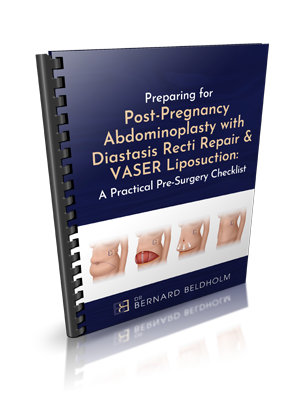
This procedure is most commonly performed as part of an abdominoplasty (tummy tuck) operation. During surgery, the connective tissue between the muscles (the linea alba) is reinforced using sutures so the muscles can function together again as a supportive abdominal wall.
Typical steps of the procedure include:
- access to the abdominal wall through a lower abdominal incision
- identification of the separated rectus muscles
- surgical repair of the separation by suturing the muscles toward the midline
- reinforcement of the abdominal wall support
If excess abdominal skin is present following pregnancy, this may also be addressed during the abdominoplasty component of the procedure.
The specific surgical approach depends on the patient’s anatomy, the width and location of the muscle separation, and whether additional abdominal wall laxity or skin excess is present.
Abdominoplasty With Diastasis Recti Repair
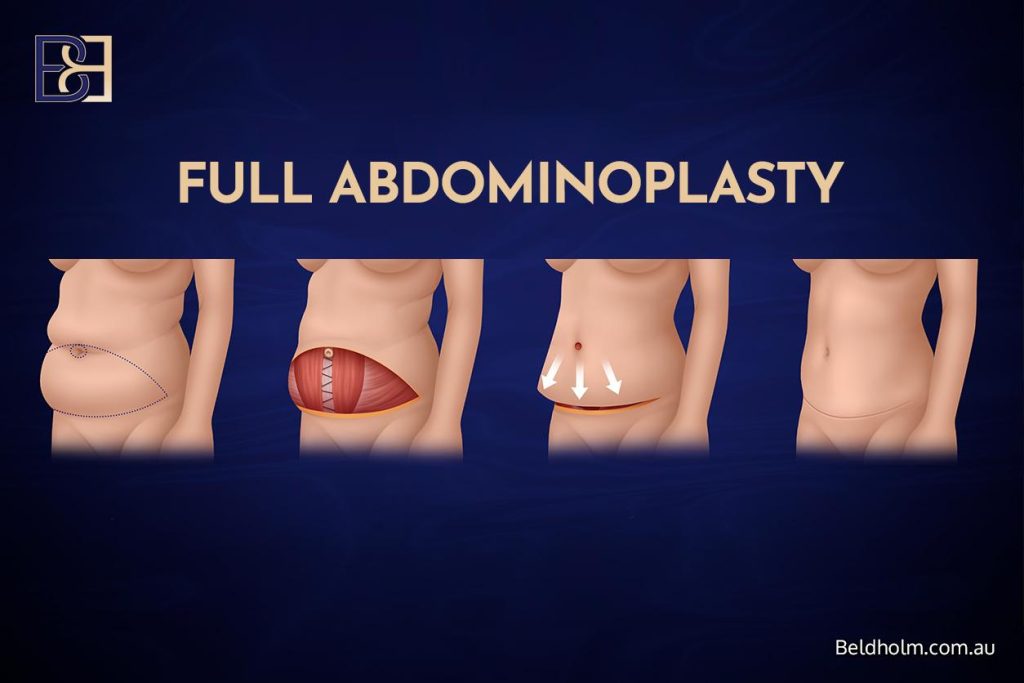
Diastasis recti repair is most commonly performed as part of an abdominoplasty (tummy tuck) procedure.
During abdominoplasty, the abdominal wall is accessed through a lower abdominal incision. The separated rectus muscles are repaired, and the connective tissue between them is reinforced to restore support across the midline of the abdomen.
In many patients following pregnancy, excess abdominal skin and localised fat deposits may also be present. When appropriate, excess skin can be removed during the abdominoplasty component of the operation. Liposuction (suction‑assisted lipectomy) may also be used to reduce localised fat and improve the contour of the abdominal wall and surrounding areas. When appropriate, liposuction (suction‑assisted lipectomy) can also be used to contour adjacent areas such as the flanks or upper abdomen.
The procedure, therefore, addresses several structural changes that may occur after pregnancy:
- separation of the abdominal muscles (diastasis recti)
- excess or stretched abdominal skin
- localised fat deposits of the abdomen or flanks when present
The surgical plan varies depending on:
- Overall abdominal wall anatomy
- the width of the muscle separation
- the location of the diastasis
- the amount of abdominal skin excess
Surgical Techniques Used in Dr Beldholm’s Practice
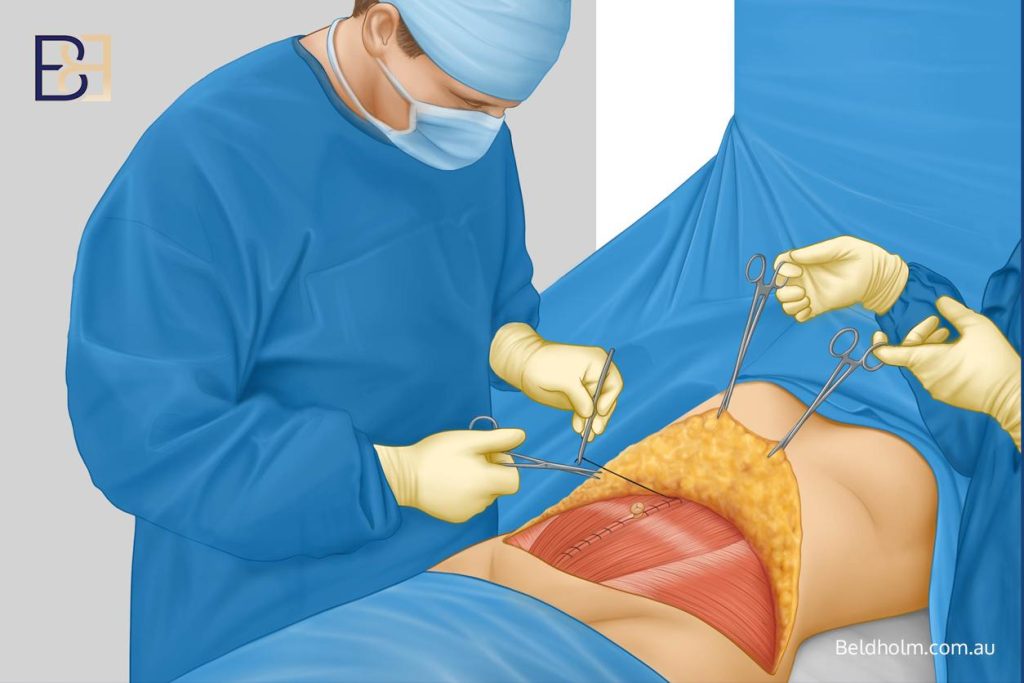
Abdominoplasty with diastasis recti repair can be performed using a range of surgical techniques depending on the patient’s anatomy and the findings during consultation.
In Dr Beldholm’s practice, the procedure commonly involves repair of the abdominal muscle separation, removal of excess abdominal skin when present, and contouring of the abdominal wall.
Techniques that may be used include:
- repair of diastasis recti using sutures to restore the abdominal wall support
- abdominoplasty to address excess abdominal skin
- liposuction (suction-assisted lipectomy) to treat localized fat deposits of the abdomen or flanks when appropriate
In selected patients, VASER-assisted liposuction (suction-assisted lipectomy) may be used as part of the procedure to assist with contouring of the abdominal wall.
The exact surgical approach varies depending on:
- the degree of muscle separation (diastasis recti)
- the amount and distribution of abdominal fat
- The presence of excess abdominal skin
- previous pregnancy or abdominal surgery
Hospital Stay and Early Recovery

Abdominoplasty with diastasis recti repair is performed in Maitland Private hospital under general anaesthesia.
In Dr Beldholm’s practice, patients typically remain in the hospital for approximately 1–2 days following surgery so that early recovery and postoperative monitoring can occur.
Early postoperative care may include:

- monitoring by the hospital nursing team
- specialised dressings such as PICO negative pressure dressings
- compression garments to support the abdominal wall
- early mobilisation after surgery
Structured follow-up is provided during the early recovery period. In Dr Beldholm’s practice, this commonly includes regular review by the surgeon and nursing team during the first two weeks after surgery.
Additional supportive treatments, such as LED light therapy, may be used as part of postoperative wound care when appropriate.
Recovery timelines vary between patients. Detailed recovery guidance and postoperative instructions are provided during the consultation and after surgery.
Consultation for Diastasis Recti Surgery

A consultation is required to determine whether diastasis recti repair surgery or abdominoplasty may be appropriate.
During the consultation, Dr Beldholm performs a detailed assessment of the abdominal wall and discusses potential treatment options.
The consultation typically includes:
- clinical examination of the abdominal wall
- assessment of the width and location of the muscle separation
- evaluation of abdominal skin excess and fat distribution
- review of pregnancy history and previous abdominal surgery
If diastasis recti is confirmed, treatment options may include:
- physiotherapy and core strengthening
- observation if symptoms are mild
- abdominoplasty with diastasis recti repair when surgery is considered appropriate
The consultation also includes a discussion of the procedure, recovery process, and potential risks so patients can make an informed decision about treatment.