Belt Lipectomy (Body Lift After Significant Weight Loss)

Book Online Now
A belt lipectomy is a surgical procedure designed to comprehensively remove excess skin and fat circumferentially around the lower torso — including the abdomen, flanks, lower back, and upper buttocks — in a single operation.. The belt lipectomy procedure specifically targets the abdominal region as well as the flanks, lower back, and buttocks, distinguishing it from procedures that focus only on the abdominal region. You may also see this described as a body lift, lower body lift, circumferential body lift, circumferential lipectomy surgery or 360 abdominoplasty.
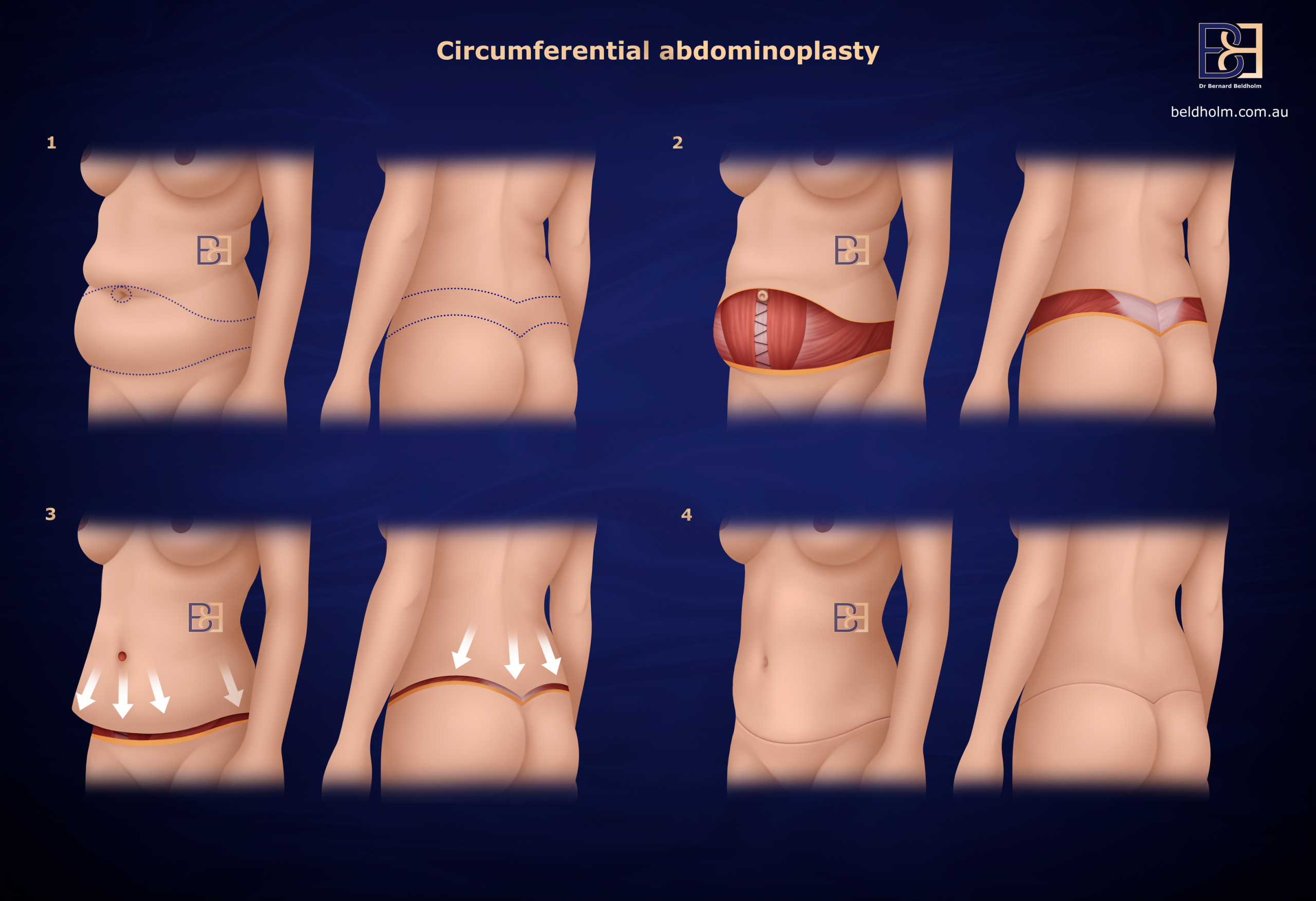
Circumferential Abdominoplasty BB
Patients often seek this procedure after bariatric surgery or a disciplined, healthy lifestyle that led to massive weight loss. Despite reaching a healthy weight, excess skin can remain. That loose skin may cause skin irritation, chafing, rashes, hygiene issues and difficulty exercising or finding clothing that fits.

Key Takeaways

  • A belt lipectomy (body lift) treats the entire lower trunk, not just the front — ideal after significant weight loss when excess skin persists.
  • It can treat function, hygiene and comfort.
  • Expect visible scars
  • The recovery process requires time, garments, and follow‑up. Most people resume light activity within a few weeks.
  • Long‑term results depend on stable weight, healthy lifestyle, and adherence to aftercare.

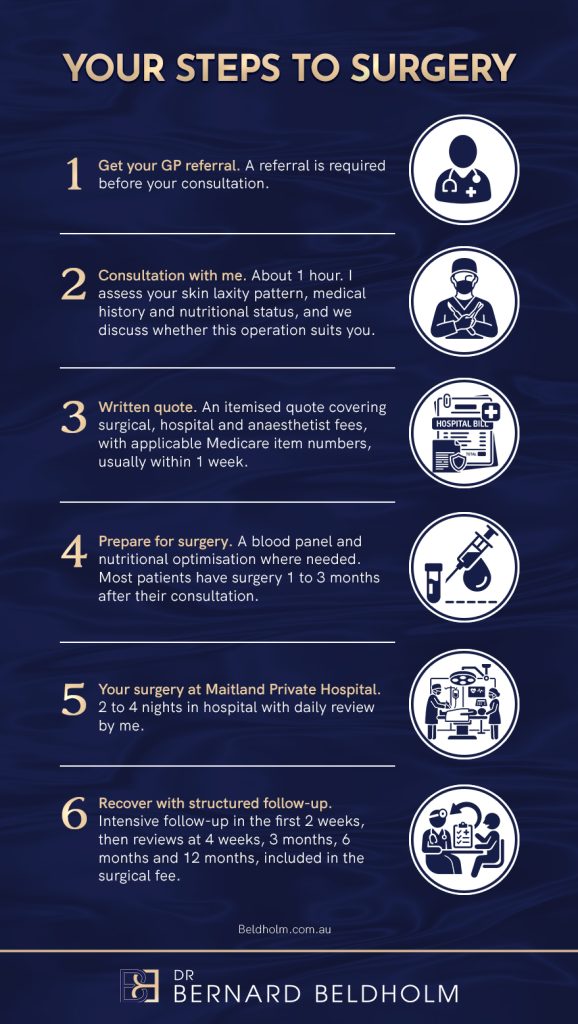
The Patient Journey with Dr Beldholm

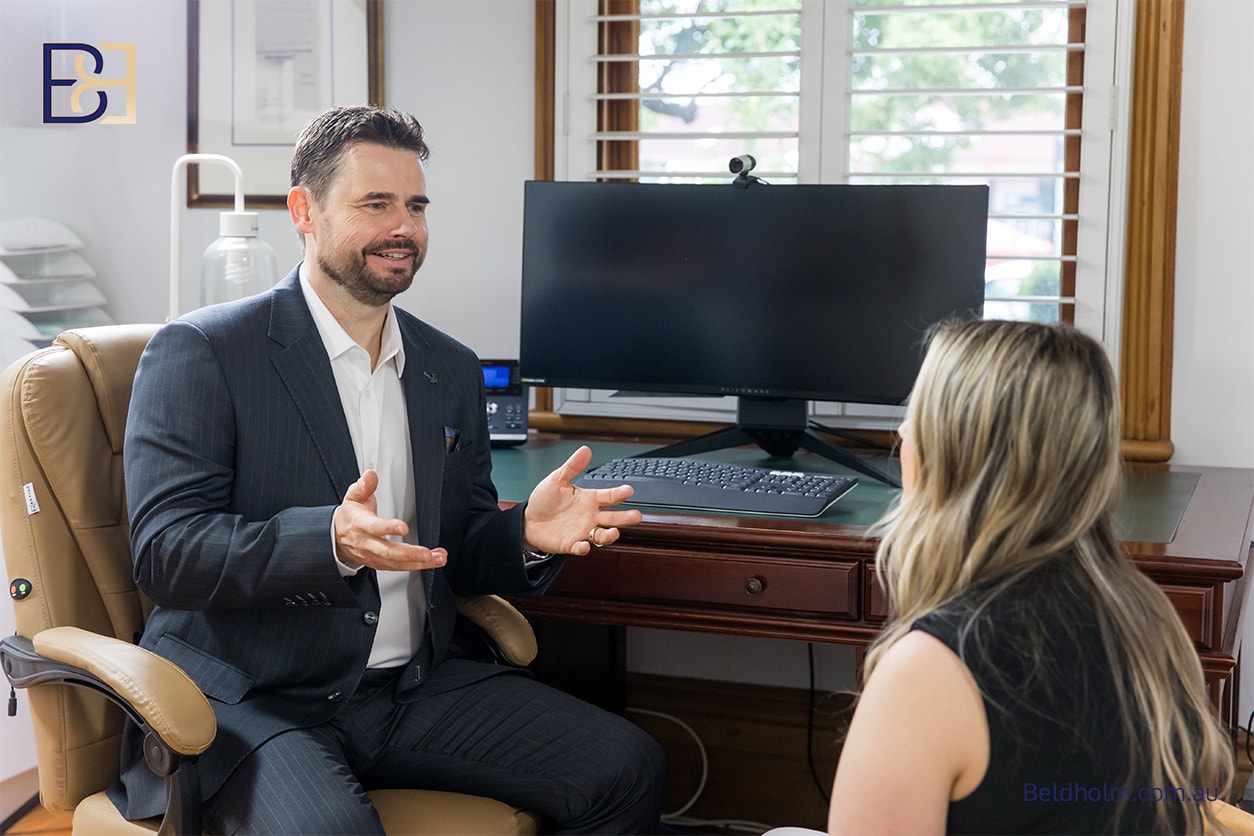
Dr Bernard Beldholm seeing patient

Referral & First Consultation

A GP referral is required. Your first appointment (approx. one hour) includes a health review, medical history, examination, clinical photographs, and a detailed discussion of goals, alternatives, and risks.

Second Consultation & Quote

A second consult (in‑person or telehealth) is encouraged at no cost. Within a week, you’ll receive a written quote outlining the surgical plan, fees, hospital and anaesthetist estimates, and any applicable MBS item numbers.

Scheduling & Hospital

Surgery is performed at Maitland Private Hospital. Our team provides daily rounds while you’re admitted and coordinates your discharge plan and garments.

Follow‑Up & Long‑Term Care

Intensive follow‑up occurs in the first fortnight (nurse/doctor reviews, LED light therapy, dressing changes). Routine reviews follow at 1, 3, 6 and 12 months. Patients travelling from afar are advised to remain locally for 7–10 days before returning home; ongoing care is coordinated with your GP and supplemented with telehealth.

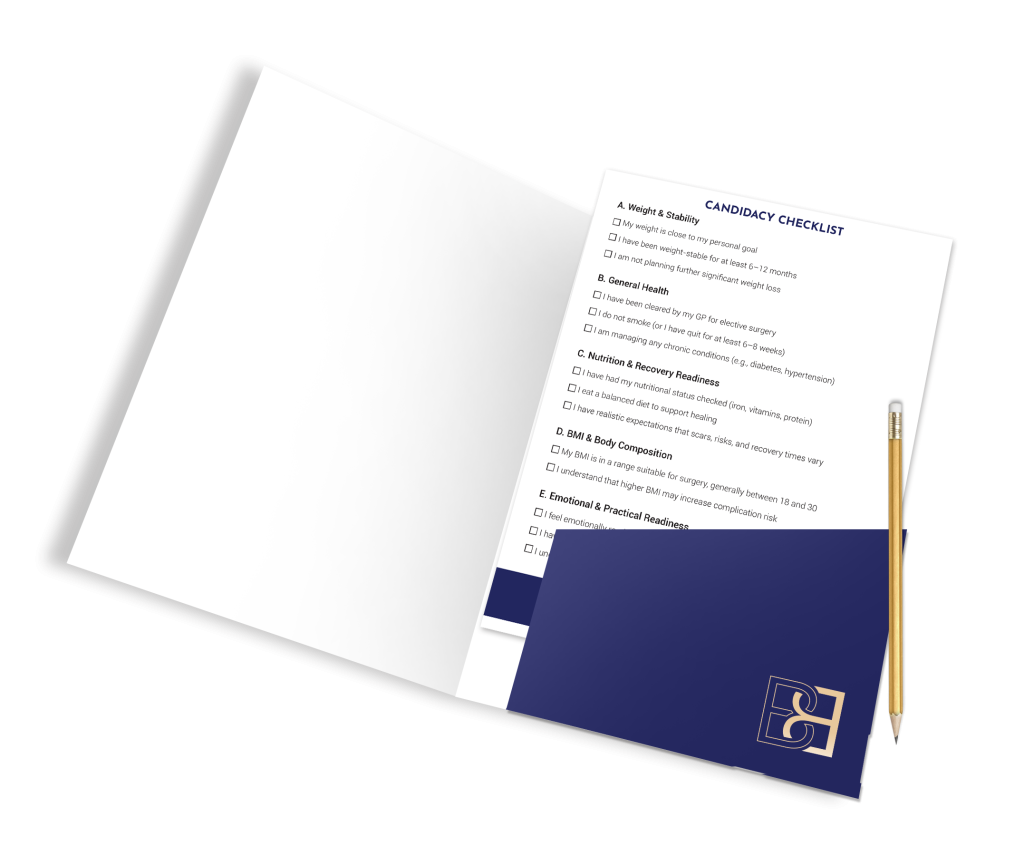
Am I a Good Candidate?

Most patients who consider belt lipectomy have characteristics across four main considerations. Many have previously undergone weight loss surgery, such as bariatric procedures, which result in significant weight reduction and often lead to excess skin and fat that can be treated with body contouring procedures like belt lipectomy.

1. Location and Extent of Skin Excess

Ideal Candidates for Body Lift Surgery

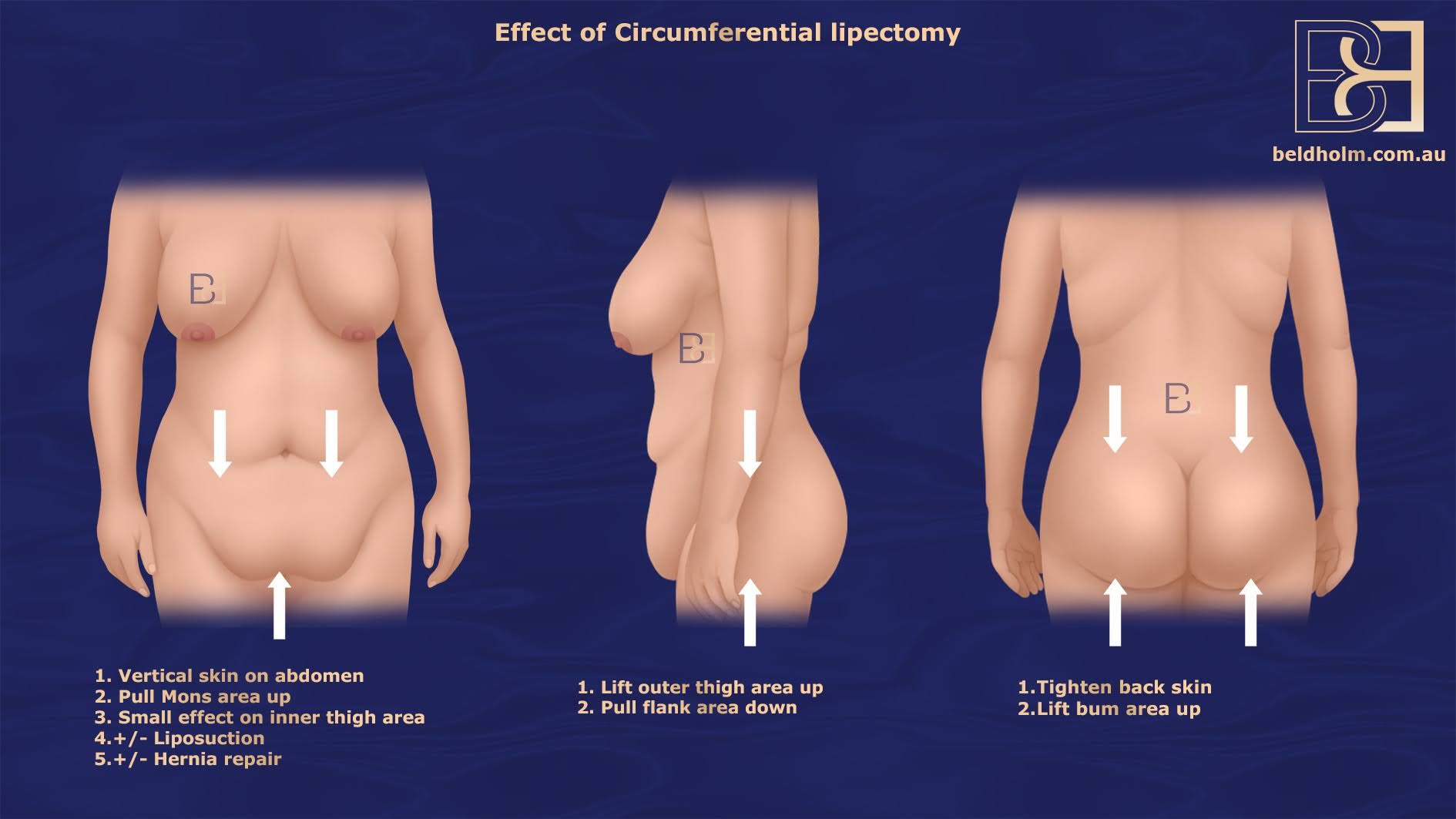
Belt lipectomy primarily treats vertical excess skin that encircles the lower abdomen, flanks and lower back. Tissue removal is a key component of this procedure, as the careful excision of excess skin and fat helps correct skin laxity. It is not designed to treat horizontal skin excess, which may instead require a different technique such as a fleur-de-lis abdominoplasty. During consultation, Dr Beldholm will assess where your skin laxity lies to determine if a circumferential approach is appropriate.

2. Stable Weight

Dr Beldholm usually recommends that patients maintain a stable weight for at least 12 months following major weight loss or bariatric surgery. This period provides time for the body to stabilise and for the skin and tissues to settle before undergoing surgery.

BMI | Dr Bernard Beldholm

This stability is important for several reasons:

  • Medicare and MBS requirements: To qualify for certain MBS item numbers, patients must demonstrate at least six months of stable weight prior to surgery.
medicare
Medicare
  • Predictable results: Stable weight allows the skin and underlying tissues to adapt to the new body composition, which supports body contouring and reduces the chance of new laxity developing.
  • Long-term success: Maintaining steady weight post-surgery helps protect the results and prevents stretching of the tightened skin.
  • Optimising health and recovery: Rapid weight loss often results in loss of both fat and muscle mass. Having an additional period after weight loss to rebuild muscle strength helps recovery, supports posture, and long-term surgical outcomes.

In short, taking time to achieve and maintain a healthy, stable weight — while focusing on rebuilding muscle and overall fitness — provides the best foundation for surgery, effective healing, and lasting results.

BMI Considerations

Dr Beldholm finds that the best results are achieved in patients whose BMI falls within the normal range (18.5–24.9), as the proportion of internal versus external fat is usually most favourable and the skin excess can be treated effectively.

Patients in the overweight range (BMI 25–29.9) may still be good candidates if most of their fat is external (subcutaneous) and can be reduced or refined with liposuction during the operation.

Internal vs external fat

Those in the obese range (BMI 30 and above) face significantly higher complication risks, including delayed healing, wound problems, and less predictable contouring outcomes. For these patients, additional weight loss is recommended before surgery to achieve the best possible aesthetic and functional results.

Higher BMI was consistently associated with increased rates of wound healing issues and postoperative seroma formation (Aesthetic Surg J. 2021)
Higher BMI was consistently associated with increased rates of wound healing issues and postoperative seroma formation (Aesthetic Surg J. 2021

3. Health and Fitness for Surgery

Because belt lipectomy is a long and comprehensive operation, being fit and well is essential. Chronic medical conditions such as diabetes, heart or lung disease, or anaemia must be well controlled. Smoking, vaping, or poor nutrition can impair healing and increase surgical risks. A full health evaluation and preoperative optimisation are part of the preparation process to ensure the best possible outcome.

Discussing health with your GP

4. Related Conditions That May Be Treated Concurrently

Some patients have other abdominal issues that can be treated during the same operation. These may include diastasis recti (separated abdominal muscles), hernias, old scars, or a lax abdominal wall that benefits from tightening. Treating these conditions at the same time can help both function and aesthetics.

A belt lipectomy may also be considered medically indicated in select circumstances when treating excess skin helps relieve recurrent rashes or infections. Your eligibility for any rebates will be assessed individually at the consultation.

How the Operation Works (Step by Step)

An illustration showing the concept of body lift (belt lipectomy) surgery
An illustration showing the concept of body lift (belt lipectomy) surgery | Dr Beldholm

1.) Anaesthesia & Hospital

Surgery is performed under general anaesthesia at Maitland Private Hospital. The facility provides 24‑hour medical cover and an on‑site ICU.

The operation at Maitland Private Hospital
Maitland Private Hospital

2.) Markings & Positioning

Pre‑operative markings are made in the anaesthetic bay before surgery. These guide the precise removal of skin and fat. Once the markings are confirmed, you are positioned on the operating table to allow access to all areas of the abdomen, flanks, and back throughout the procedure.

3.) Anterior Abdomen — Initial Stage

The operation begins with the anterior (front) abdomen. This stage is similar to an extended abdominoplasty. During this phase, additional procedures can be performed if required, such as hernia repair, liposuction (suction‑assisted lipectomy), or diastasis recti repair (tightening of separated abdominal muscles).

4.) Lateral Sides and Back — Circumferential Stages

Once the front portion is completed, the patient is carefully repositioned to the side. The skin and fat are then resected from the flank and back area on one side, with further liposuction performed as needed. The process is then repeated on the opposite side to complete the circumferential abdominoplasty.

Each repositioning step requires re‑prepping and re‑draping, which contributes to the length of the surgery.

5.) Closure, Dressings & Drains

The incision site is closed in multiple layers for strength and to reduce tension on the skin. Surgical drains are commonly used to reduce fluid buildup and help with healing. Dr Beldholm typically applies Comfeel dressings to the back and PICO dressings to the front for optimal healing and wound support.

Applying PICO dressings to the front of the abdomen

6.) Garments & Early Recovery

A wrap‑around compression garment is applied before you wake up from anaesthesia and remains in place while you are in recovery. The garment helps control swelling, supports the surgical site, and promotes even healing. Gentle walking is encouraged early, and activity is gradually increased as swelling subsides.

Surgical Compression garments

You will wear compression garments to help control swelling, support the surgical site, and healing. Gentle walking is encouraged early, with activity scaled week by week as swelling subsides.


Belt Lipectomy vs. Other Body Contouring Procedures

Belt lipectomy is unique in that it treats the lower circumferential part of the abdomen, functioning as a lower abdominal lipectomy operation. It can be thought of as an extended abdominoplasty combined with a lower back lipectomy (gluteoplasty). In some cases, this combination approach is a way to stage the operation for patients with extensive skin removal needs. For patients who have experienced significant weight loss, body lift (belt lipectomy) procedures offer comprehensive lower trunk and body contouring by treating excess skin and fat circumferentially.

Gluteal lift or lower back lipectomy

The main drawback of the circumferential approach is that it does not treat horizontal excess skin on the anterior abdomen. That specific laxity is more effectively treated with a fleur-de-lis abdominoplasty, which adds a vertical component to tighten the midline.

Dr Beldholm sometimes combines the fleur-de-lis abdominoplasty with a circumferential procedure — referred to as a circumferential hybrid abdominoplasty — to manage both vertical and horizontal skin excess in a single or staged treatment. There is a separate article detailing this combined technique.

Combining Procedures (When Appropriate)

Many patients who see Dr Beldholm after significant weight loss have several areas of loose skin that can be treated through different body contouring surgery procedures. Depending on the patient’s health, fitness level, and overall goals, some of these procedures can be combined with a circumferential lipectomy (belt lipectomy), while others may be best staged separately.

Additional Procedures Within a Circumferential Lipectomy

During the circumferential operation itself, Dr Beldholm may perform additional procedures to treat functional issues. These can include:

Femoral hernia repair during an abdominoplasty
Femoral hernia repair
  • VASER liposuction (suction-assisted lipectomy) to remove targeted external fat (Adipose tissue).
  • Hernia repair (ventral, umbilical, or inguinal).
  • Diastasis recti repair – tightening of separated abdominal muscles to strengthen the core.
  • Abdominal wall tightening to reinforce weakened fascia and support a flatter, firmer abdominal contour.

These adjunct techniques can often be completed within the same operation.

Combined Operations Beyond the Circumferential Lipectomy

Some patients benefit from treating additional regions of skin excess through combined or staged operations. Possible combination options include:

  • Mastopexy (breast lift) or auto‑augmentation to reposition and reshape the breasts.
  • Thighplasty to treat excess inner‑thigh ski.
  • Brachioplasty (arm lift) to remove hanging under‑arm skin.
  • Vertical abdominal component – adding a vertical excision to the anterior abdomen when both vertical and horizontal skin excess exist.
  • Upper abdominal lipectomy to treat upper‑trunk skin folds.

The planning and sequencing of these procedures depend on the extent of surgery required, the patient’s fitness for a long operation, and the desired outcomes. Combining or staging operations must always balance aesthetic benefit with recovery capacity.

Recovery Timeline (What to Expect)

Every recovery is individual, but the following is a typical guide. Dr Beldholm has a structured recovery program designed to support healing.

Hospital stay and early recovery
Recovering in hospital
  • Hospital stay: Usually 2–3 nights for monitoring and pain control.
  • First 2 weeks: Intensive in‑clinic follow‑up with nurse and doctor reviews several times a week. LED light therapy is used to reduce inflammation. PICO dressings are replaced with Hypafix tape or Comfeel dressings around day 7, depending on the wound’s progress. Patients are encouraged to rest, take short walks, and maintain hydration and protein intake. Compression garments are worn day and night. Drains are removed when output is minimal, usually within 2-5 days.
  • Weeks 3–4: Transition to standard wound care and less frequent clinic visits. Return to desk‑based work as comfort allows. Continue garments. Avoid heavy lifting and strenuous activity.
  • Weeks 6–8: Begin low‑impact exercise routines (as advised). Most swelling reduces; scars begin to settle and fade. Continue scar management with silicone or taping as instructed.
  • Months 3–6+: Shape refinement continues as swelling subsides. Scars mature and lighten over 12–18 months with proper care. Long‑term reviews occur at 3, 6, and 12 months post‑surgery.

Important: Adhere to all post‑operative instructions, attend follow‑ups, and contact our team if you have concerns such as increasing pain, redness, fever, or leg swelling (possible signs of deep vein thrombosis/blood clot).

Risks & Safety Information

All operations involve risk. Potential surgical complications and surgical risks include:

Haematoma post abdominoplasty | Dr Bernard Beldholm
Haematoma post surgery
  • Bleeding, haematoma, or seroma.
  • Infection or delayed wound healing.
  • Wound separation (dehiscence).
  • Changes in skin sensation.
  • Asymmetry, contour irregularities, or need for a touch‑up.
  • Visible scars/prominent scarring that may widen or be raised.
  • Anaesthetic risks.
  • Venous thromboembolism, including deep vein thrombosis or pulmonary embolism (rare).

Your personal risk depends on your medical history, medications, weight stability, and adherence to instructions (for example, avoiding nicotine, which can impair healing). We utilise hospital‑based protocols, early mobilisation, and garments to support recovery.

Poor scar heeling | Dr Bernard Beldholm

Results & Scarring

A belt lipectomy creates a circumferential scar — often called a “belt scar.” The scar position is planned to sit within typical underwear or swimwear, where possible. Surgeons also aim to limit scar length by carefully planning incision placement, helping to minimise scar visibility and aesthetic outcomes. While scars are visible and prominent scarring in the early months, they generally soften and fade with time. Silicone therapy, taping, sun protection and compression garments can assist. Final shape evolves as swelling subsides, which may take several months.

Book Online Now

Cost, Medicare & Private Health

Costs vary depending on surgical time, hospital stay, garment needs, and whether procedures are combined. After consultation and examination, you will receive a written quote outlining:

Cost, Medicare & Private Health
  • Surgeon’s fee (including all routine follow‑ups)
  • Anaesthetist fees
  • Hospital and theatre costs
  • Garments and dressings
  • Any relevant MBS item numbers (for cases meeting criteria)

Medicare/Private Health: In some cases after massive weight loss, there may be limited rebates when specific criteria are met (for example, medical necessity to treat recurrent rashes or infections due to excess skin). Eligibility is assessed individually at consultation and requires documentation, a GP referral, and stable weight over the required period.

MBS Item Number 30179 — Circumferential Lipectomy

This procedure may qualify under MBS Item Number 30179 (Group T8, Subgroup 1 – General) when strict medical criteria are met. The item applies to a circumferential lipectomy, as an independent procedure, to correct the circumferential excess of redundant skin and fat that is a direct consequence of significant weight loss, with or without a radical abdominoplasty.

Eligibility criteria under MBS 30179 include:

(a) The circumferential excess of redundant skin and fat must be complicated by intertrigo or another skin condition that risks loss of skin integrity and has failed at least 3 months of conventional (non‑surgical) treatment; and
(b) The circumferential excess must interfere with activities of daily living; and
(c) Weight must be stable for at least 6 months following significant weight loss prior to the lipectomy.

This item is not claimable in conjunction with other body contouring items such as 30175–30177, 45530–45531, or other abdominoplasty codes.

Learn more about the recovery process following belt lipectomy (body lift after significant weight loss)
Learn more about the potential complications associated with belt lipectomy (body lift after significant weight loss)
Learn more about the costs of belt lipectomy (body lift after significant weight loss)

Frequently Asked Questions

What is the difference between an abdominoplasty (tummy tuck) and a belt lipectomy?

An abdominoplasty (tummy tuck) treats the front only. A belt lipectomy treats the front, sides and back, producing a more global contour change after significant weight loss.

Does a 360 abdominoplasty (tummy tuck) lift your bum?

Yes. Because the resection continues around the back, there is a posterior lift effect that can elevate the buttock line and improve the transition to the outer thighs. Depending on goals, adjunct body contouring procedures may be discussed.

How long does it take to recover from a full-body lift (Belt lipectomy)?

Most return to daily activities in 3–4 weeks, with gradual return to exercise from week 6 as advised. Full maturation of results occurs over months as swelling subsides.

How much does a 360 abdominoplasty (tummy tuck) cost in Australia?

Costs vary widely based on time in theatre, hospital stay, garments, and whether other procedures are combined. A precise quote is provided after clinical assessment. Where medical necessity exists and criteria are met, limited rebates may apply.

Will I have visible scars?

Yes, visible scars around the torso are inherent to this operation. We plan scars carefully and provide strategies to support the best possible scar maturation over time.

Will I need drains?

Surgical drains are common for a period after surgery. They help reduce seroma risk and are removed when drainage is low.

What are the risks of blood clots?

Major surgery carries a small risk of deep vein thrombosis/blood clot. We support early walking, leg pumps in hospital, and risk‑based strategies to reduce this risk.

References
  1. Aly AS, et al. Circumferential abdominoplasty. Plast Reconstr Surg. 2008;121(1):1–13.
  2. Van Huizum MA, et al. Circular belt lipectomy: a retrospective follow-up study on perioperative complications and cosmetic outcome. J Plast Reconstr Aesthet Surg. 2015;68(2):191–197.
  3. Carloni R, et al. Circumferential contouring of the lower trunk: indications, operative techniques, and outcomes – a systematic review. Aesthetic Plast Surg. 2021;45(3):1020–1033.
  4. Richter DF, Stoff A. Circumferential body contouring: the lower body lift. Clin Plast Surg. 2016;43(4):703–716.
  5. El-Sabbagh AH. Postbariatric abdominal contouring: technical approach and quality of life. Aesthetic Surg J. 2017;37(7):761–770.
  6. Aly AS, Cram AE. Truncal body contouring surgery in the massive weight loss patient. Clin Plast Surg. 2008;35(1):107–122.
  7. Shermak MA, et al. Are there factors predictive of postoperative complications in circumferential contouring of the lower trunk? Plast Reconstr Surg. 2013;132(6):101–110.
  8. Oranges CM, et al. Body contouring in massive weight loss patients receiving venous thromboembolism chemoprophylaxis: a systematic review. J Plast Reconstr Aesthet Surg. 2020;73(2):218–229.

Location

30 Belmore Rd
Lorn NSW 2320

Connect

This website contains adult content. You must be 18 years or over to read. All surgery carries risks. You should seek a second opinion before proceeding. Results vary from patient to patient. See our disclaimer.
This is default text for notification bar