


Inner Thighplasty (Thigh Lift Surgery)
Book Online NowDr Beldholm performs thigh lift (Thighplasty) procedures for patients who have undergone major weight changes or have skin laxity that affects comfort, clothing fit, or function. His approach emphasises precise tissue handling, careful incision planning, and techniques tailored to post‑weight‑loss anatomy. Inner thighplasty is a surgical procedure designed to address excess skin, loose skin, and excess soft tissue affecting the inner thighs. Many patients considering thigh lift surgery have experienced significant weight loss, changes in skin elasticity, or the natural ageing process, resulting in skin laxity.
A thigh lift (Thighplasty) focuses on removing excess skin, managing excess fat when suitable (via liposuction), and improving the inner thigh contours depending on the extent of skin excess.

Who May Consider Thighplasty
Patients often consider thigh lifts when:
- The inner thigh area has persistent excess skin and fat that does not respond to exercise.
- They have had significant weight loss.
- The upper inner thighs have loose skin or sagging skin.
- They wish to reduce friction or improve clothing fit.
- They have achieved a stable weight.
Suitability is determined during consultation, after assessing general health, skin excess, and goals.

Types of Thigh Lift (Thighplasty) Procedures
Dr Beldholm performs three primary thighplasty options in his post-weight-loss body-contouring practice: mini, full (medial), and vertical thighplasty. Each option is selected based on the extent and direction of skin excess, the distribution of excess fat, and changes following weight loss.
1. Mini Thighplasty
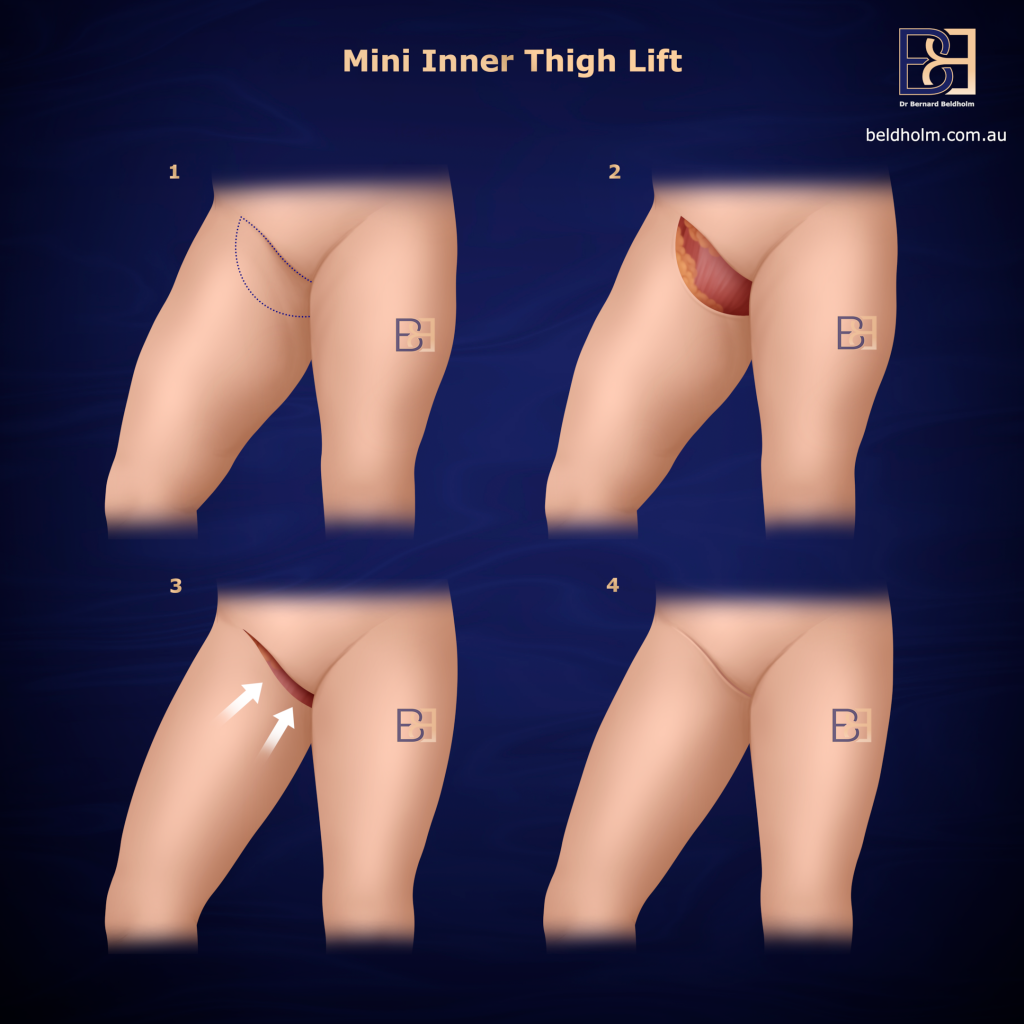
- Suitable for patients with excess skin limited to the upper inner thighs.
- Involves a shorter incision placed in the groin crease.
- Addresses mild to moderate skin laxity.
- May be combined with VASER liposuction if excess fat is present.
2. Full (Medial) Thighplasty
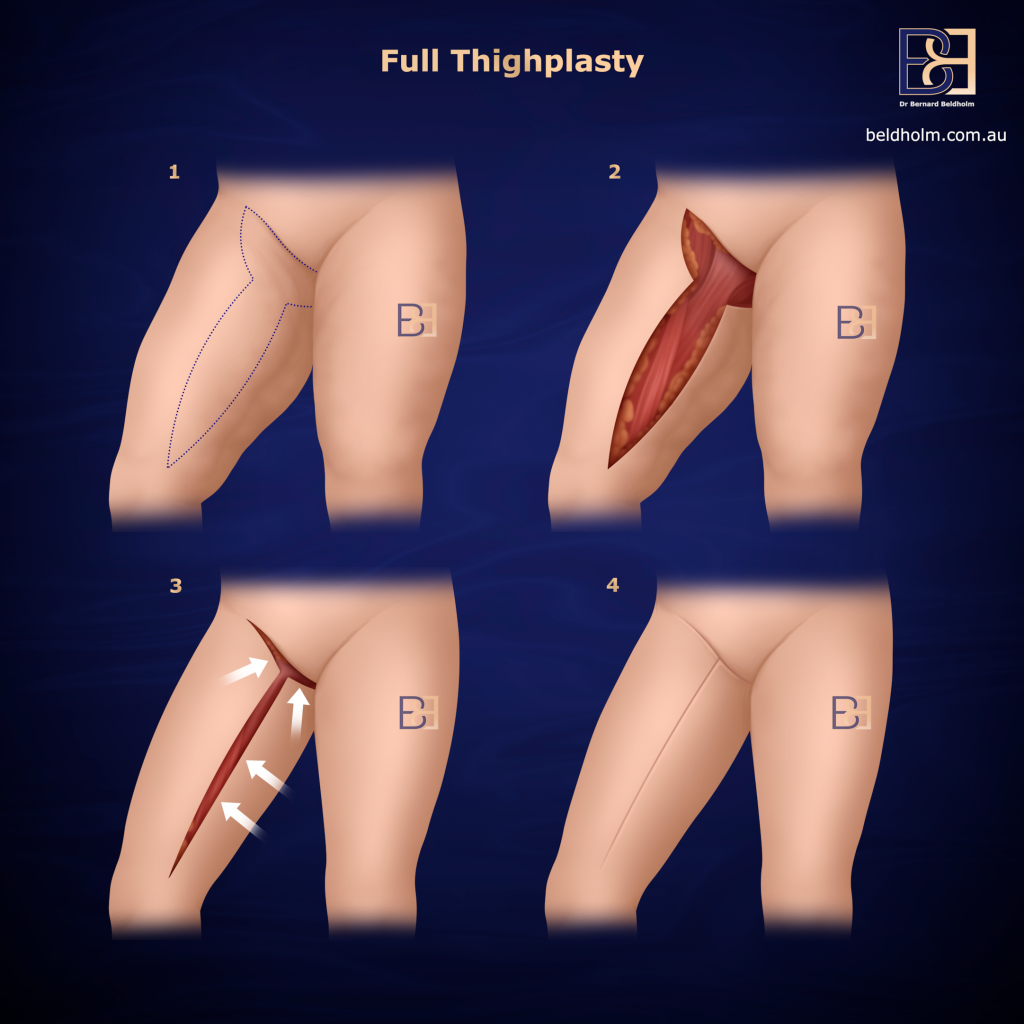
- The most commonly performed option for post-weight-loss patients.
- Targets excess skin and excess soft tissue along the full length of the inner thigh.
- Incision sits along the groin crease and may extend slightly downward depending on the extent of tissue removal.
- Often combined with VASER liposuction to contour the inner thigh before removing excess skin.
3. Vertical Thighplasty
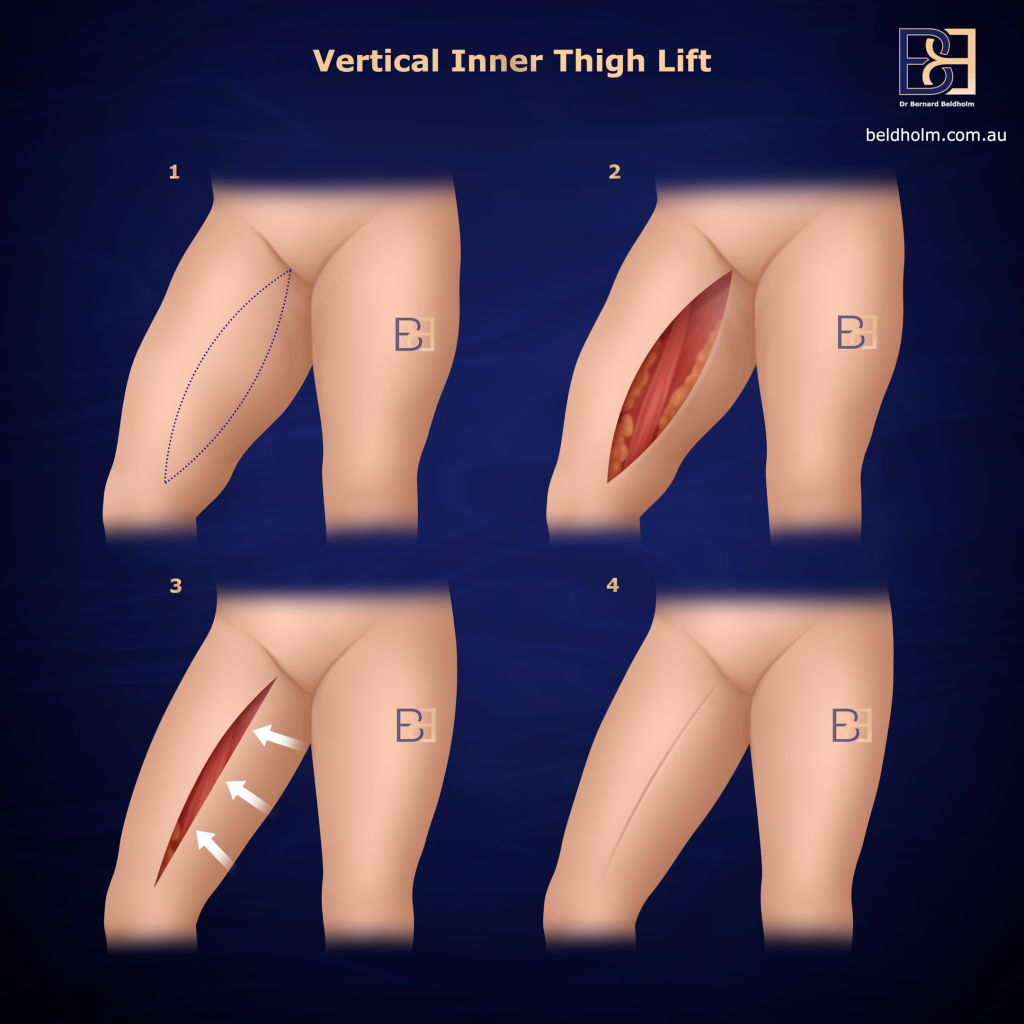
- Selected when there is a significant amount of vertical skin excess that cannot be addressed with a mini thighplasty.
- Involves an incision running vertically down the inner part of the thigh.
- Provides the greatest reduction of loose skin and is frequently required in major weight-loss cases.
- VASER liposuction (suction-assisted lipectomy) may be used to treat excess fat prior to skin removal.
VASER Liposuction (Suction-assisted lipectomy) as Part of Thighplasty
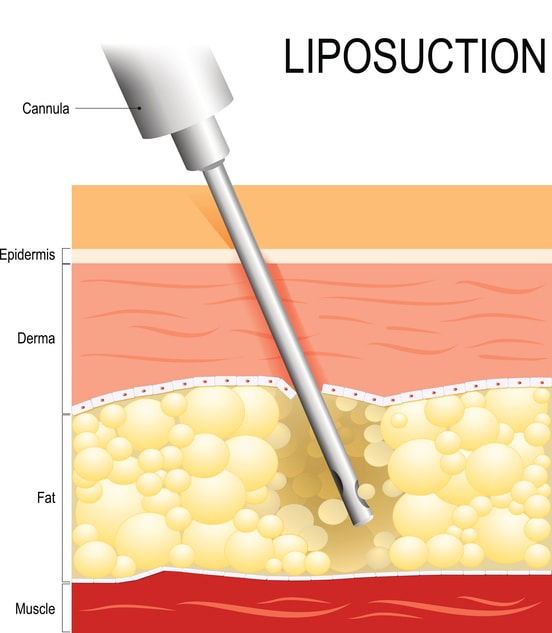
- Many patients have areas of excess fat along the inner thighs even after major weight loss.
- VASER liposuction (Suction-assisted lipectomy) is used to contour these areas while preserving important tissue structures.
- Liposuction (Suction-assisted lipectomy) does not replace the need to remove excess skin, but it can improve shaping and the drape of the remaining skin.
Your consultation determines which thighplasty option is most suitable based on anatomy, goals, and weight-loss history.

What Happens During Surgery
Thighplasty is performed by Dr Beldholm at Maitland Private Hospital, where he operates regularly as part of his body‑contouring practice. The approach used depends on the pattern of excess skin and whether liposuction is required.
- Performed under general anaesthesia or general anaesthetic.
- Incisions depend on the chosen technique and extent of tissue removal.
- May involve liposuction (suction-assisted lipectomy) before removing excess skin.
- Remaining skin is redraped and secured.
- A compression garment is applied to help reduce swelling and support the healing process.
Recovery After Thigh Lift (Thighplasty) Surgery

Dr Beldholm’s patients receive structured postoperative care, including close follow‑up and dressing management. Recovery times vary, and a personalised plan is provided to support safe and steady healing.
Recovery times vary. Most patients will need:
- Compression garments or a supportive garment for four to six weeks.
- Short walks to support circulation and reduce risk of blood clots.
- Adequate rest and avoiding strenuous exercise or heavy lifting for at least six weeks.
- To monitor healing with follow‑up assessments to ensure proper healing and manage the surgical site.
Many people can return to light activities within a few weeks, but full recovery generally requires more time.
Risks and Considerations
All surgery carries risks. Thigh lift procedures may involve:
- Wound healing issues
- Fluid accumulation
- Skin breakdown
- Allergic reactions (anaesthetic or dressings)
- Blood clots
- Potential risks associated with general anaesthesia
- Thigh lift scars which vary depending on the incision type
A detailed review of risks and how to support proper healing occurs during your consultation.
Costs and Fees

A written quote is provided after consultation. Quotes usually include:
- Surgical fee
- Hospital fee and hospital fees estimate
- Anaesthetist fees
- GST for cosmetic indications
Eligibility for Medicare or private health insurance depends on individual circumstances and criteria.
Frequently Asked Questions
What is the difference between thigh lift and thighplasty?
Thigh lift refers to the procedure aimed at reducing excess skin or fat in the thighs. Thighplasty is the medical term for the same operation and is used to describe the range of thigh lift procedures, including medial, vertical, or spiral techniques.
How painful is a thighplasty?
Discomfort varies between individuals. Most patients describe moderate soreness in the early healing process, managed with medication. Walking is encouraged early to reduce the risk of blood clots. Discomfort typically improves within a few weeks.
How much does an inner thigh lift cost?
Costs vary depending on the extent of skin excess, type of thighplasty, hospital time, and whether liposuction (Suction-assisted lipectomy) is needed. A personalised quote is provided after your consultation.
What is the best procedure for loose inner thighs?
The best option depends on factors such as the amount of excess skin, skin laxity, distribution of excess fat, and remaining skin quality. Options include medial thigh lift, vertical thighplasty, or a combination approach.